Philomena (2013) ☆☆☆(3/4): A long road to her lost son

philomena01 Any sensible person would feel angry about what happened to Philomena Lee, a woman who was unjustly treated just because of a small innocent mistake during her adolescent years. When she found herself getting pregnant after one passionate encounter with some young guy at the carnival, this young Irish girl was quickly sent to the Sean Ross Abbey in Roscrea by her family, and then she was cruelly separated from her young son – and nobody told her where he was sent until a chance was given to her by coincidence after more than 40 years.

“Philomena” takes a restrained but sincere approach to a harrowing real-life story it is based on, and it works better than expected thanks to its competent direction and good performances. As one of the main characters cynically points out at one point, its story is indeed one of those typical ‘human interest stories’ guaranteed to bring out some tears from us, but the movie sometimes surprises us through its unexpected moments of genuine emotions, and it is also engaging as an unlikely journey of two people different from each other in many aspects.

In 2002, British journalist Martin Sixsmith(Steve Coogan) loses his job in the government due to his small mistake which was involved with some problematic e-mail. While bitter and sullen about losing the job, he is seriously considering writing books on Russian history because he will not get a new job for a while, but then he happens to meet Philomena Lee(Judi Dench) through her daughter, whom he incidentally came across at an evening party. He is initially not much interested in her story because he does not like writing about human interest story, but he eventually decides to write an article about her life story, and that is the beginning of their journey toward the whereabouts of her lost son.
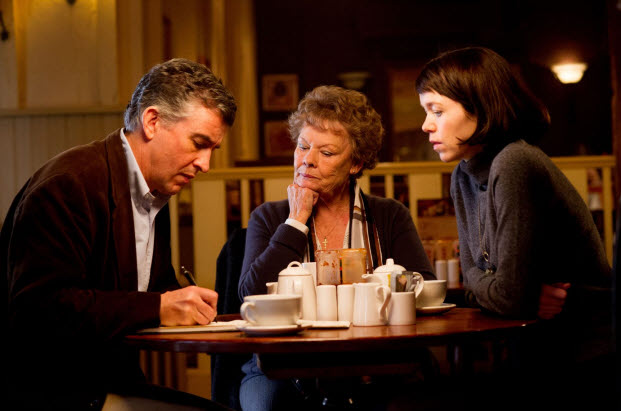
philomena02 During its first part, the movie shows us Lee’s difficult past through the series of flashback sequences, and we see how Lee and other unfortunate pregnant girls were unfairly treated at the abbey during that time. While being told that they deserved to be punished for their carnal sin, they worked like slaves for seven days a week just because they should pay the cost for their shelter, and most of the nuns at the abbey did not help them a lot even during childbirth. During one sad, haunting scene, Sixsmith comes upon a number of unkempt graves during his visit to the Sean Ross Abbey, and we soon see that they are the graves for girls who died during childbirth – and some of them were buried with their stillborn child.

The movie does not hesitate to take a critical attitude toward this unjustness committed and then covered under the Catholic Church system, and that attitude is mainly expressed through Sixsmith, a sardonic atheist who naturally finds himself in the opposite position while spending time with a woman who manages not to lose her religious faith despite her deep sorrow caused by her church. She still feels hurt by her past, but she never loses her ability to be nice and kind to others, and there is a warm, brief moment showing how easily she can talk with a stranger she has never met before.

That admirable aspect of hers is not affected at all as she and Sixsmith come to discover how the Church was far more cruel and unfair to her. They not only took away her son from Lee for virtually selling him to some rich American couple but also blocked any possible way for her to track down her son, and, as the epilogue title sadly reminds us before the end credits, she and her son were not the only victims.

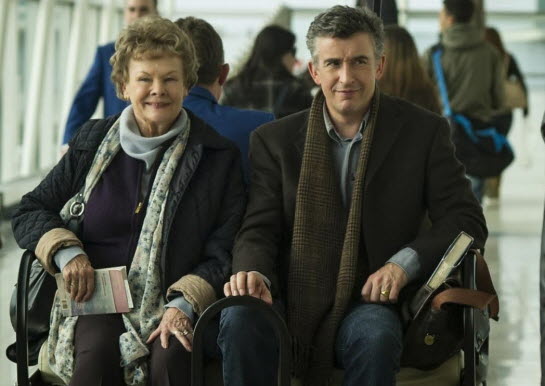
philomena05 Fortunately, there is still a chance that they may find helpful clues in America, so Lee and Sixsmith fly together to America, and the movie becomes a little more humorous as Lee enjoys several new experiences during their stay in Washington D.C. Judi Dench, who received the 7th Oscar nomination for her warm, touching performance, effortlessly makes these moments both amusing and sincere, and Steve Coogan, who adapted Sixsmith’s book “The Lost Child of Philomena Lee” with Jeff Pope(they were also Oscar-nominated for their good screenplay), is a nice contrast to Dench as your average sulky journalist who is not so good at being nice.

When Sixsmith finally gets a crucial clue about her son later, there are several surprises waiting for them and us as they get to know more about him. Mainly because they are potential spoilers, I cannot tell you more about the rest of their investigative journey, but I can say that the director Stephen Frears, who has constantly made several excellent character dramas ranging from “The Grifters”(1990) to “The Queen”(2006), did a fine job of pulling lots of emotions from the second half of the movie while never making it feel too heavy-handed or manipulative. The movie maintains its low-key mood even during its emotional climax, but the emotions below the screen are palpable, and I must confess that there are two or three scenes in the movie which I found myself quite moved by the emotions contained inside them.

“Philomena” is a plain but heartfelt drama good enough to recommend, and Judi Dench’s performance reminds us again of how valuable her presence has been in many movies she appeared in. When this respected British stage actress became more notable to us through her first performance as James Bond’s boss in “GoldenEye”(1995), she was already over 60, but then she has been vigorously impressing us with more good performances while gathering her 7 Oscar nominations during last 19 years, and she is still moving on like a trouper even though she will be 80 in this year. I sincerely hope we can see more magic from this remarkable actress with such an interesting career like that.
philomena03


Posted in Movies | Tagged , , , , | Leave a comment

The Square (2013) ☆☆☆1/2(3.5/4): The chronicle of their historical revolution

thesqaure04 As the chronicle of a historical event which was one of the defining points during the Arab Spring, Oscar-nominated documentary “The Square” throws us right into the Egyptian Revolution of 2011 and its aftermath. Through its close and intimate look at the rise and fall of the revolution during two and half years, it follows the ups and downs during that tumultuous period, and we come to see how the revolution eventually arrived at its last chapter which ironically put the country back into where it was at the beginning.

After it was suddenly initiated in Tunisia during late 2010, the Arab Spring was quickly spread around other Arab/North African countries during a short time, and Egypt was no exception. In January 2011, the massive protest against the military regime of President Hosni Mubarak shook the whole country, and Mubarak and his government found themselves facing a situation beyond their control as they clumsily tried to quell this movement. As many of you saw through TV or Internet, lots of Egyptian people gathered at the Tahrir Square in the downtown area of Cairo, and their collective voice demanding democracy got bigger and louder as the Mubarak regime was being pushed into its inevitable end.

The director Jehane Noujaim and her crew began to shoot the scenes for their documentary around the beginning of the revolution, and their cameras vividly captured the turbulent mood surrounding Egypt and its people during that time as hanging around the square and other areas in Cairo. The excitement among different people united together for their common goal is always around the demonstration scenes, and we also observe the crucial role of online social media in the revolution through many cellular phones or digital video cameras in the crowd.

The-Square3 We get to know more about some of more active participants in different positions. One of them is Ahmed Hassan, and he is a likable young man who openly expresses his opinions and thoughts in front of the camera while exuding irrepressible optimism through his smiling face you cannot possibly slap under any circumstance. Like many young people in Egypt, he believes they finally get the chance to bring changes to their country, but he comes to realize later that the changes he and others have yearned for cannot be easily obtained. Everyone including him at the Tahrir Square was joyous to see Mubarak finally stepping down not long after the Egyptian military chose to side with them, but the sense of victory is quickly gone as nothing seems to be changed in their world – and they are still under the same military regime as before.

As a consequence, more protests were followed by more arrests and more brutality during the middle of 2011, and we get a terrible moment showing one military vehicle ruthlessly running over several demonstrators on the street. We see disappointment and frustration growing in Hassan’s face, but he keeps trying hard with admirable persistence. Even after he was seriously injured during one violent incident, he continues his political activity as usual, and he has lost none of his spirit even in the end.

In case of Magdy Ashour, a sensible member of the Muslim Brotherhood who once experienced many hard times under the Mubarak regime, he finds himself in a difficult position when the Muslim Brotherhood, which was one of the major forces in the revolution, begins to use the revolution for its political gain not long after Mubarak was deposed. The Muslim Brotherhood quickly took over the parliament in early 2012 because there was no solid opposing party to compete with it during the election, and then its presidential candidate Mohammed Morsi was soon elected as the new president of Egypt in June 2012.

thesqaure02 Ashuor supports Morsi because he sincerely believes Morsi deserves a chance, but, as going through several conflicts touching his strong moral sense of right and wrong, this decent man gets a fair share of disappointment like Hassan, who remains close to him despite lots of their disagreements due to their different views. Both are frustrated to see Morsi attempting to be the next ruler(or Pharaoh, shall we say) of the country through a new constitution which literally guarantees absolute power for him and his party, and that is certainly not welcomed by many Egyptian people who have been hoping for real democracy.

Khalid Abdalla, a British/Egyptian actor and activist who worked voluntarily as a correspondent reporting on the revolution while supporting it with others from the beginning, also feels the same frustration as watching the future of Egypt becoming a lot less hopeful than he and others imagined during that monumental moment at the Tahrir Square. After the documentary was shown in the Sundance Film Festival early in last year and won the Audience Award for World Cinema Documentary, Jehane Noujaim went back to Egypt, and they came back with more story and the new ending which has a darkly amusing irony. Most Egyptian people said no to Morsi and the Muslim Brotherhood as they did to Mubarak, so they welcomed a coup d’état by the Egyptian military, which ousted Morsi in June 2013 and then put the country under the same military rule which its people fought against two years ago.

It could have been better if it had provided us some helpful background information for understanding the whole picture, but “The Square” is a compelling work pulsating with considerable verisimilitude to draw us into the human dimensions inside its subject. Regardless of whatever will happen next in Egypt, they did see and experience what they are capable of, and the documentary leaves some glimmer of hope in the end. History may repeat itself, but, as you know, it is not easy to turn the clock back once people open their eyes.

thesqaure03

Posted in Movies | Tagged , | 2 Comments

RoboCop (2014) ☆☆☆(3/4): A nice remake with different appearance

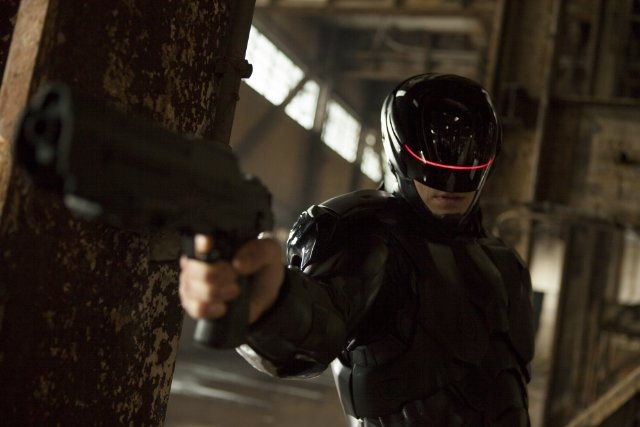
robocop01 As the remake of the 1987 film directed by Paul Verhoeven, “RoboCop” has its own interesting areas to explore, and I like that aspect despite some reservation on it. There are several moments in the film which inevitably take us back to the original version, and its lack of that offbeat edginess in the original version is more apparent because of that, but the movie mostly works as a nice remake with different appearance.

Its initial premise is not so different from that of the 1987 film. It is 2028 in Detroit, and the city has been suffering from increasing crime rate. While that is not particularly shocking to many of you considering how much Detroit has already gotten worse than its ‘futuristic’ depiction in the 1987 film, I must point out that Detroit in the movie actually looks nice compared to the real one which was once chosen as the worst city for tourists in the world by Lonely Planet(not so surprisingly, the movie was shot in Canada).

Anyway, the multinational conglomerate OmniCorp is eager to provide the solution for that problem through their robots which have been successfully used in many American military operations around the world, but there is a problem blocking their lucrative business plan. The majority of American citizen is against the introduction of robots into their legal system, and there is also an ongoing political movement in Washington D.C. to pass a bill legally banning that once for all.

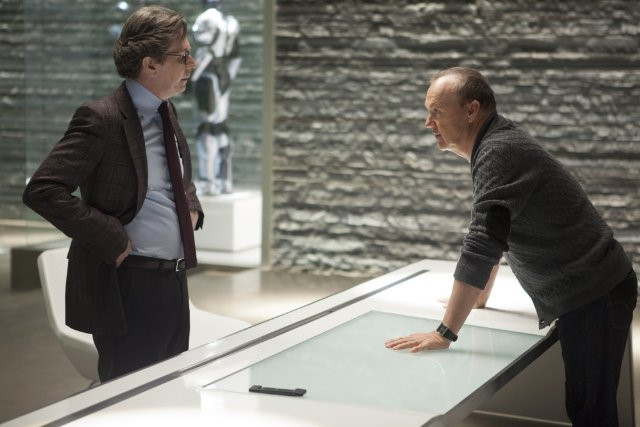
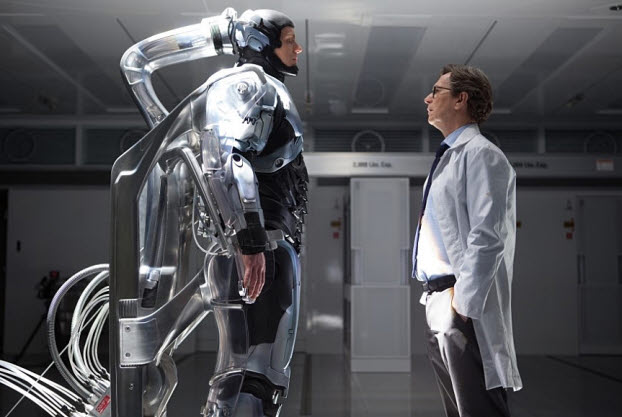
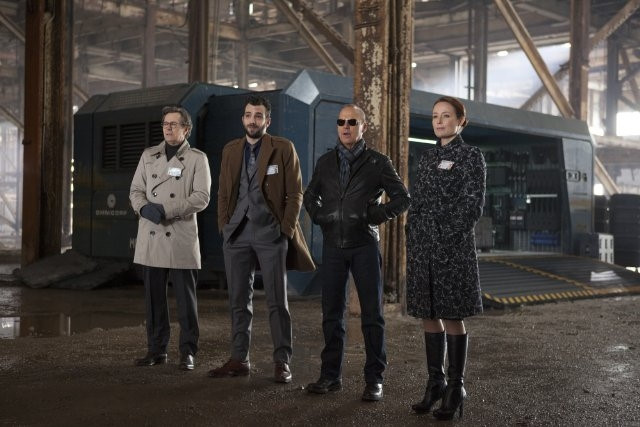
Raymond Sellars(Michael Keaton), the CEO of OmniCorp, has tried to find a way to change the public opinion, and then he gets a nice idea which might work. He decides to make a cyborg policeman to put the human face on his plan, so he recruits Dr. Dennett Norton(Gary Oldman), a leading expert of advanced prosthetic technology who reluctantly joins in Sellar’s project while not denying his scientific interest in it.

robocop03 Not long after they begin to search for someone suitable for their project, they come upon an ideal candidate. Alex Murphy(Joel Kinnaman), a diligent Detroit cop and decent family guy, is seriously injured after he and his partner went a little too deeply into their recent case involved with a local gang organization and police corruption. There is not much hope of recovery due to the severe physical damages throughout his body, and Dr. Norton persuades his devastated wife Clara(Abbie Cornish) that his project may be only way to help her husband.

As soon as he regains his consciousness, Murphy is naturally horrified by what has happened to his body, and it takes some time for him to adjust to his new condition through Dr. Norton’s help. Clara is glad to see and talk with her husband again, but the awkwardness between them is palpable when he visits her and their son at his home. His humanity may remain same in his new body, but Murphy is contained in the body controlled and monitored by others, and he soon faces the limits imposed on his mind when Sellars begins to regard him as a product to be discarded after realizing that RoboCop’s popularity in public can actually ruin his plan.

While the 1987 film is still fun to watch, its special effects looks dated and clunky, and the remake version ably uses its technical advantages to give itself a more polished look. It looks far more closely into its hero’s transformation process which was rather brief and sketchy in the 1987 film mainly due to its technological limits, and many of its science fiction details are interesting to watch. While Peter Weller in the original film had to endure a really hard time in that hefty metal suit which almost exhausted him to death during the production, Joel Kinnaman looks less uncomfortable in comparison, and his RoboCop is capable of many things which were virtually impossible to be depicted on the screen in 1987. Thanks to CGI, he can move more freely like the other robots in the movie, and we also have a chance to look literally inside him at one point(and that is not a pretty sight, by the way).

robocop02 The movie becomes less interesting when it changes its gear into a standard action mode with lots of bullets and explosions. José Padilha, a Brazilian fillmmaker who previous directed “Elite Squad”(2007) and its 2010 sequel, is a good action director, and the action scenes in the movie is brisk and intense on the surface, but they are usually handled with shaky camera movement and busy editing to get PG-13 rating instead of R rating. It is nice to see those big robots from the 1987 version doing lots of actions with no sign of stiffness, but I found myself losing interest to the story during the climax part as I did during many CGI action scenes.

The actors in the movie do as much as they can do to fill their functional roles, and some of them are good while others are not so good. While Joel Kinnaman keeps his character intact amid lots of special effects, Gary Oldman is more interesting as a scientist on the thin line between principle and compromise. As the main villain of the story, Michael Keaton plays his character with understandably business-minded selfishness, and Jennifer Ehle, Jay Baruchel, and Jackie Earle Haley get the mundane job of playing flat characters on his payroll. While Marianne Jean-Baptiste and Michael K. Williams do not have many things to do in the underdeveloped part associated with Murphy’s last investigation before his transformation, Samuel L. Jackson, who plays an ultra-conservative TV show host, amply brings his usual commanding presence into his scenes, but these scenes are not successful as either satire or social commentary – and that is the main reason why his last scene feels unnecessary and distracting.

“RoboCop” is not as good as the 1987 version, but I give my reserved 3 stars mainly because it does a better job as a remake than “Total Recall”(2012), which was based on another famous SF action film directed by Paul Verhoeven. Compared to Verhoeven’s striking mix of SF action and bloody satire in the 1987 version, this remake version undeniably looks less distinctive and amusing, but it has its own style and ideas while acknowledging its senior, and the result is a slick entertainment film with enough interest to hold my attention. I think it will not be remembered well, but I also think it is a little too good to be ignored.

robocop04

Posted in Movies | Tagged , , , | 1 Comment

Another Family (2013) ☆☆☆(3/4) : A promise to be kept for his daughter

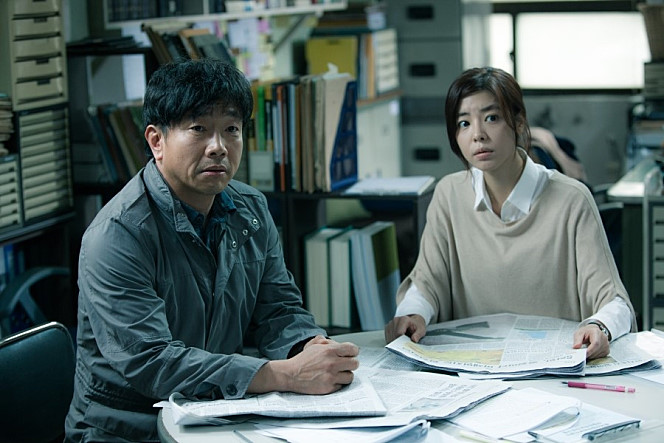
anotherfamily02 Inspired by a real-life story, South Korean film “Another Family” is a little better than you might expect from a melodrama about family love, terminal illness, infuriating injustice, and a long, tearful struggle for justice. Although I could not help but notice several stumbles in its simple plot during my viewing, the movie delivers its urgent message in a plain but sincere way, and its fictional story indirectly but effectively reflects the sad, harsh reality at the bottom of the South Korean society which is still being continued even at this point.

When Sang-goo(Park Cheol-min) hears that his dear daughter Yoon-mi(Park Hee-jeong) gets employed by some prominent corporation, he is naturally happy and excited about that good news. Her family is too poor to get her to college, but Yoon-mi, who is about to graduate from her industrial high school, is ready to work for helping her family financially, and Sang-goo, who has supported the family as working as a taxi driver for more than 25 years, is prouder of her than ever.

Everything seems to go well for them after she leaves her dear hometown to work in a semiconductor factory, but then Sang-goo and his family gets a very bad news. Yoon-mi becomes suddenly sick, and the family is devastated to learn at the hospital that Yoon-mi is suffering from leukemia. The chance of survival is low, and all they can do for her is supporting her as much as possible while she go through difficult treatment processes.

As they are worrying about the hefty medical bill, they are visited by a guy from the human resource department of the corporation. After telling them how he and others in the company feel sorry about her illness, he offers them a considerable sum of money under several seemingly harmless conditions. Yoon-mi must leave the company because she can work no longer in the factory, and she must not apply for the certification of her illness as industrial accident.

anotherfamily05 Sang-goo and his wife Jeong-min(Yoon Yoo-seon) initially accept the money because they want to help their daughter by any means available to them, but Sang-go slowly starts to have doubts about this offer just like his daughter. When she hears from her co-workers that one of their co-workers also gets very sick, she did some search on the Internet, and she comes to realize that there have been many other factory employees who suddenly got sick for various types of serious illness including brain cancer and multiple sclerosis. Sang-goo thinks it is just a mere coincidence at first, but it becomes more apparent to him that the company is somehow responsible for his daughter’s illness, so he eventually refuses the offer after another meeting with that smarmy corporation guy who has no qualm about showing his condescending attitude to them(too bad he has no mustache to twirl, by the way).

Sadly, Yoon-mi’s illness gets worse than before, and there is a heartbreaking moment when her parents find that there is nothing they can do except watching their dear daughter going away from them. Sang-goo is determined to get his daughter’s illness recognized as industrial accident, but, to his frustration, there is almost no one willing to get involved with the case. The corporation in question, which is a thinly disguised fictional version of Samsung, is such an influential company in the South Korean society that everyone knows there is a very little chance of winning the case – and nobody wants to mess with the No.1 corporation of South Korea which has lots of strings to pull in the country.

Sang-goo finally gets a help from Nan-joo(Kim Gyoo-rie), a feisty lawyer who has been trying to help many unfortunate factory workers like Yoon-mi but has frequently been frustrated by her clients being forced into settlement with no justice for their plights. When meeting Yoon-mi and her family while she was alive, she frankly told Sang-goo that he will not have much chance of winning at the court, but she eventually works for him after Yoon-mi’s death. Through several people they come to meet, we get to know more about how unfair the corporation has been to its semiconductor factory workers who are regarded as something disposable and replaceable. While they are not allowed to have union, they are not educated or told enough about how hazardous their work environment can be due to various carcinogenic chemicals including trichloroethylene and hydrofluoric acid, and they are constantly pushed for more work because their basic wage is usually not enough for them and their families.

anotherfamily01 As they prepare for the trial, Sang-goo and Nan-joo soon face the opposition of the corporation from every direction. Although the government is technically the defendant in this case, a lawyer from the corporation is sent to take the position of the defense attorney, and the corporation is ready to do anything to win while dangling money in front of Sang-goo and others. In addition, it is difficult to prove 100% that the workers’ illness was caused by their work environment, and the corporation lawyer naturally emphasizes that point as arguing that the responsibility is not theirs but the workers’.

Months and years pass by with no sign of resolution meanwhile, and other clients who initially stood by Sang-goo like his new family start to have a growing doubt on their case. At one point, even Nan-joo, who was once furious about her clients’ decision on settlement, comes to face that she has no choice but to let her clients decide whether they should go on or not.

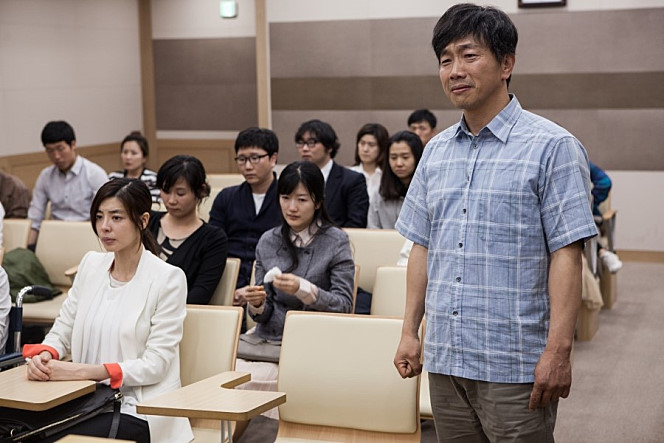
As his wife succinctly says to Sang-goo, someone should be crazy enough to fight against such a formidable corporation, and Sang-goo finds himself going further than expected for keeping his promise to his dead daughter – even when all seems to be lost. Park Cheol-min’s sincere performance supports the movie well even though the story becomes a little too heavy-handed at times; his scenes with Park Hee-jeong are heartfelt while rarely feeling too sappy, and he is especially poignant during his character’s emotional speech around the end of the trial. He is not a well-educated man, but his common sense tells him the company did a wrong thing to his daughter and others, and we cannot agree with him more as he plainly but succinctly points that out in front of the judges presiding over the case.

anotherfamily04 The movie, which was released as “Another Promise” at South Korean theaters in last weekend, is not without flaws. The supporting characters around Sang-goo are more or less than the narrative tools for making its points, and the story is riddled with several contrivances to pull the emotions from us. But it is an engaging drama about one serious social issue in South Korea on the whole, and the director/writer Kim Tae-yoon does not resort to cheap melodramatic tactics while not hurrying his story. The movie did not get much financial support during its difficult production, and the director and the crew managed to complete their film through online crowd funding and private investments. They also had difficulty in getting the movie shown at South Korean theaters because many multiplex theater chains were understandably reluctant about screening it – and it did not get enough attention from the media, either.

Fortunately, a considerable number of South Korean audiences went to watch the movie during the last weekend despite its small number of screens, and, thanks to the spreading word of mouth, I saw many audiences around me when I got the chance to watch it at the local theater during last evening. Personally, I am not so sure about whether the movie can bring out some change in the end, but it does its intended job fairly well, and I found myself emotionally reacting to the injustice I have heard about several times. There may be nothing much I or others can do, but I think we should not ignore it at least while thinking more about it.

anotherfamily03

Posted in Movies | Tagged , , , | 1 Comment

20 Feet From Stardom (2013) ☆☆☆1/2(3.5/4): Unnoticed singers beyond spotlight

20feetfromstardom01  “20 Feet From Stardom” is a vibrant documentary about the talented vocalists who have been largely unnoticed by many of us despite their considerable contribution to the American music industry during the 1960-80s. As shown in the archival footage, many of their career highlights were usually next to spotlight but rarely in it, and they had a fair share of frustration and disappointment in their overlooked careers, but they passionately lived through their singing – and they now get the spotlight they richly deserve.

In case of Darlene Love, who has been relatively more recognized for her career compared to her peers since she started as the member of “The Blossoms”, she was one of the first African American female vocalists who broke into the mainstream during the early 1960s. Rock ‘n Roll music needed something new and lively during that time, and Love and her peers gave exactly what was needed through their exciting spontaneity acquired from their church gospel groups. Because they represented something different through their dynamic performances, their new style was immediately absorbed into the mainstream, and Love was soon picked by Phil Spector, a notorious music producer who both boosted and exploited her talent.

Merry Clayton also had an interesting life to tell as a voice inside many memorable songs. After she saw Ray Charles’ performance when she was young, she became determined to be a part of his backup singers(they were called “The Raelettes”), and, after she eventually got her wish, she continued to move on as working in various songs including the Rolling Stone’s “Gimme Shelter”. In the middle of her interview, she tells about how she happened to be the main female vocal in that famous song, and that amusing story tells us how much artistic success depends on luck besides talent.

20feetfromstardom02 The documentary also introduces us to other backup singers including Lisa Fischer, Claudia Lennear, and Táta Vega, and we hear about the ups and downs in their careers. Lisa Fischer, who has been leading a humble life in her small apartment in New York City, experienced several high points including a Grammy award and several tours with the Rolling Stones, but her career somehow went down as she tried to hold her place by herself. The same thing can be said about Táta Vega or Claudia Lennear; like Fischer, they all released their own solo album, but they did not become as successful as they initially hoped for.

As many people point out in the documentary, stardom is elusive for many reasons even when you are just a few feet from it. While it may be true that some of these women did not have enough right stuff for stardom despite their undeniable singing talent, many industry people merely regarded most of them as another Aretha Franklin or another Diana Ross rather another distinctive talent to watch, and that was all for them.

But they did not let that disappointment and accompanying economic hardship crush their spirits. Darlene Love experienced the financial bottom in her career after she broke up with Spector, and she almost gave up her career while trying to earn a living through menial jobs. She bounced back eventually, and now she gladly tells us her episode about how she happened to regain determination – and now I get another reason for fondly remembering “Christmas(Baby Please Come Home)”, the song which has usually been associated with the main title scene of “Gremlins”(1984) in my mind since I watched that movie when I was 9.

20feetfromstardom03 While they were not recognized much outside, they have been appreciated a lot by many prominent insiders of the music industry, and the director Morgan Neville assembled a stellar group of interviewees for his documentary. Lou Adler, Stevie Wonder, Bette Midler, Mick Jagger, Sting, Patti Austin, Sheryl Crow, Bruce Springsteen, and other notable figures provide us some background information and insights along with interesting anecdotes, and many of them warmly reminisce about how nice it was to work with these talented women.

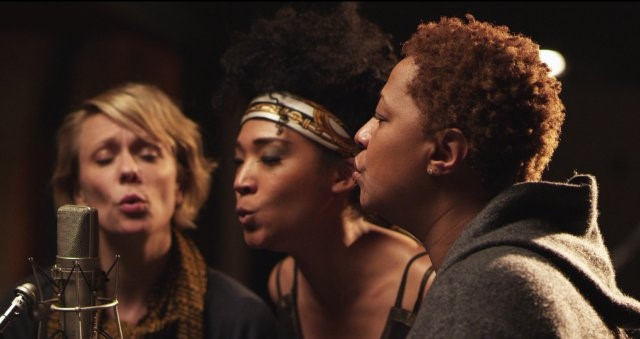
Neville deftly mixes interviews with music and archive footage for the effective presentation of their unsung careers, and we also see some of these ladies sing for themselves in front of the camera. Their careers are over or approaching to the end, but they still love that jubilant feeling coming from their singing, and they are still very good singers even though they passed their prime a long time ago. Lisa Fischer merely looks like your average middle-aged African American lady to us at first, but then, when she showcases her singing talent in the studio, we cannot help but think of what she could have been if she had been luckier.

The documentary does not lose its spirit much even after it bitterly recognizes the recent downturn of their profession due to the advance in recording technology. Their era is gone forever, but their next generation, mainly represented here by Judith Hill, follows their footsteps, and human voice is still being regarded by many as one of the valuable music instruments, no matter how easily one voice is duplicated into multiple voices by advanced recording technique.

“20 Feet from Stardom”, which was recently Oscar-nominated for Best Documentary and will probably win the award in the upcoming ceremony, is a respectful and sincere tribute to its subject. Through these wonderful artists, the documentary also did a terrific job of giving us a revealing look at an important but obscure part of the American music history, and I was both surprised and enlightened by many anecdotes told during the interviews. After watching this special documentary, I guarantee you, you may listen more closely to some of the famous songs you have been familiar with.

20feetfromstardom05

Posted in Movies | Tagged , | 1 Comment

The Lego Movie (2014) ☆☆☆1/2(3.5/4) : A real big fun with Lego blocks and figures

thelegomovie04

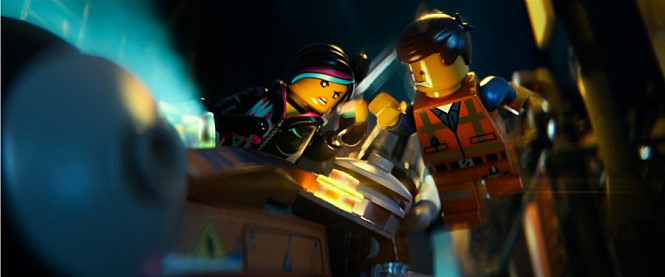
Now that’s the way to have a real big fun with Lego toys. “The Lego Movie”, the first nice surprise of this year, is so much fun and exciting that it completely blew my skepticism within 5 minutes and I found myself chuckling a lot amidst its pure, unadulterated entertainment. This animation film remarkably stays true to its inspiration in many commendable aspects, and I was particularly amazed by how the people behind it did a fantastic job of evoking the exact looks and feelings of those stop-motion animation commercials from the Lego company I saw during my childhood years in the 1990s. Sure, they certainly did use lots of CGIs as expected from a big-budget animation feature film, but, boy, I could be fooled to believe for a while that they only depended on those tiny Lego figures and blocks while having lots of fun with them during the production.

One of the main reasons why I had doubts on its success was I did not think they had a story engaging enough to support a feature-length film. I must admit to you that I was totally wrong in my rather cynical judgment. While the story is not so fresh from the beginning, the directors/screenplay writers Christopher Miller and Phil Lord, who wrote the story with Dan and Kevin Hageman, pack their story with energy and humor to the level 11, and they also give us a load of wonderful goodies to behold and admire – and I was instantly taken back to my sweet childhood memories with Lego blocks.

I was a straight-arrow kid strictly following Lego manual instructions during that time, and I guess I would have been as happy as Emmet Brickowoski(voiced by Chris Pratt) if I had happened to live in his city as one of his fellow Lego figures. As one of those plain construction worker figures included in many Lego toy sets, Emmet has been cheerfully following his daily routine without any serious thought about himself or his world, and he and the other Lego figures in the city happily go through their another same day along with their terribly overpriced coffee and that horribly catchy song “Everything is Awesome!” on the soundtrack.

But, my god, their world indeed looks awesome in every aspect. The streets, vehicles, and buildings on the screen really look like something you can build from Lego blocks if you have enough time for that, and the Lego figures in the movie are exactly what you find in Lego toy sets. While their facial expressions are handled with CGIs, their physical appearances and body movements are mostly broad and simple in limited range, but you cannot help but be joyous as watching how all these tiny pieces are vibrantly moved along with many other objects on the big screen in a zany stop-motion animation style.

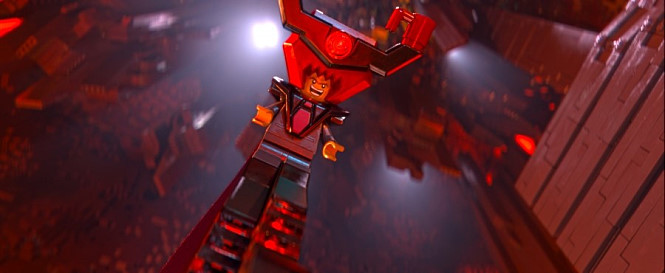
thelegomovie02 Meanwhile, there is an evil plan ready to be executed upon their city and other Lego lands, and we are told during the opening sequence that Lord Business(voiced by Will Ferrell), who is also known as President Business in public, has been planning to solidify his control over the Lego world through a superweapon called ‘Kragle’. Vitruvius(voiced by Morgan Freema), the wizard character who failed to prevent Lord Business from snatching Kragle, prophesied that there will be a savior to rise against Lord Business and stop his superweapon through “the Piece of Resistance”(If you have ever heard of the expression “pièce de résistance”, you will laugh more than others, by the way).

That special piece in question happens to stick to Emmet’s back during a bumpy incident which happens right after he comes across Wyldstyle(voiced by Elizabeth Banks) at his construction site during one night. He soon finds himself targeted by Lord Business’ main henchman Good Cop/Bad Cop(voiced by Liam Neeson in a rare comic mode) and other evil minions, so he has no choice but to go along with Wyldstyle and Vitruvius, and he also tries to handle his prophesied destiny although, as everyone including him admits, he has absolute zero talent of building something for himself compared to other ‘Master Builders’ including Wyldstyle. He is only confirmed of how mediocre he is as a conformist who never has had a single thought in his blockhead, and his only ‘inventive’ idea is a lousy type of furniture you must see for yourself due to its unspeakable ludicrousness.

Of course, as you have already guessed, the story is virtually a derivative mix of many SF films such as “Star Wars”(1977) and “Matrix”(1999), but the movie throws plenty of gags, jokes, and actions into its surreal plot while bouncing around various Lego lands. Most of its jokes are very funny thanks to their sharp satiric edge, and its busy action scenes are enthralling as fueled by the zealous creativity put behind the screen. Even when it is on its full throttle mode, the movie gives us enough time to appreciate Master Builders’ ability to create or assemble many things quickly in short time for their strategic advantage, and you will be reminded again of how tepidly jumbled and messy recent Transformers films were without any sense of fun. In fact, Metal Beard(voiced by Nick Offerman), one of more distinctive Master Builder figures, does look like a grotesque Lego version of transformer robot, and his amusing transformation skill will surely put lots of transformer robots to shame.

thelegomovie03And the movie still keeps itself under the logics of its fantasy world amid lots of crashes and bangs, and we get many amusing sights of fire, water, smoke, and gun blasts depicted through Lego pieces. That oddity somehow makes sense while working as a part of its distinctive style, and the revealed identity of Kragle is another nice touch working hilariously, and effectively, with the main subject of the story which is naturally presented with some surprise for you.

The actors hired for the voice works in the film plays well along with their respective characters. Chris Pratt, who has been establishing his own goofy persona through TV sitcom “Parks and Recreation” while showing a little more serious side through the films such as “Moneyball”(2011) and “Zero Dark Thirty”(2012), is immediately likable as the unlikely hero of the story, and Elizabeth Banks is plucky with sparks as the girl with many previous names, and Will Ferrell gleefully enjoys his villain role with gusto while never feeling too dark. While Will Arnett, Jonah Hill, Charlie Day, Nick Offerman, Will Forte, Dave Franco, and Channing Tatum are good comic additions as expected, it is an irresistible pleasure to see Morgan Freeman finally spoofing his wise old man persona with a vengeance, and Liam Neeson’s literally schizophrenic voice performance reminds us that this talented actor really should do something different other than his recent undistinguishable action films.

“The Lego Movie” does feel like a blatant product promotion film at times as it goes and looks round many Lego toy sets, and it also features lots of Lego figures including Abraham Lincoln, Gandalf the Grey, Professor Dumbledore, Superman, Wonder Woman, Green Lantern, Han Solo, Lando Calrissian, two Michelangelos(hint: one is a turtle while the other is not), and Shaquille O’Neal himself. As one of my acquaintances correctly predicted, the movie will definitely make the young audiences craving for Lego toy sets when it is over, and, what do you know, the Lego company is already selling the toy sets associated with the film.

Nevertheless, that commercial aspect does not change the fact that “The Lego Movie” is an exhilarating animation film to be praised for its unabashed sense of fun and excitement and other many good reasons. Its running time passed quickly for me as I savored its goodies with other entertained audiences, and I am willing to watch it again someday for both appreciating its immense creativeness and having a good fun again. But, folks, I won’t deny that I will probably think twice before watching it again if I become a father with kids.

thelegomovie05

Posted in Movies | Tagged , , , , | Leave a comment

Ernest & Célestine (2012) ☆☆☆1/2(3.5/4) : Of a mouse and a bear

ernestcelestine01  “Ernest & Célestine” is a simple tale of unlikely friendship told in a lovely animation style. While its story is a familiar fable equipped with nice little lessons for young kids, this sweet animation feature film is decorated with wits and charms to delight us, and it also has a lovable mismatched pair to be fondly remembered at the end of its story.

The story is set around the two societies separated from each other within one city. The one is the world above the ground inhabited by bears, and the other one is the world below the ground inhabited by mice, and bears and mice have been staying away from each other as much as possible while building each own society in their respective worlds. I wonder whether there is also a cat’s town or a dog’s town outside the city, but I guess you should not ask a lot about setting in case of children’s fable.

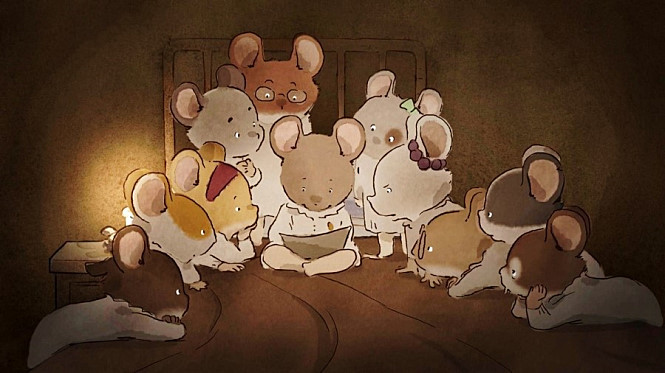
Anyway, mice are taught that bears are dangerous creatures while bears are told that mice are animals to be exterminated – or eaten. When a little orphan mouse girl is drawing her picture of a bear and a mouse, her orphanage friends point out that mouse and bear cannot be together, and then their old guardian lady terrifies her and other mouse kids with a good old scary story of “The Big Bad Bear”, who will stop at nothing to satiate its big hunger and will gladly swallow them alive.

ernestcelestine02  But our plucky mouse girl Célestine(voiced by Pauline Brunner) has different thoughts even though she is scared along with other mouse kids. She is imaginative and curious with exceptional artist talent, and that aspect of hers naturally makes her stick out among other rodents. When she grows up, she works in a big dental clinic just like other mice, but she never abandons her talent while wondering why she should be scared of bears.

Regardless of her question, the world above her world is hostile to her and other mice like our human world to rats, and Célestine and other workers must go up there for their risky work to be done. Because their teeth are important not only for speaking but also for survival, dental clinic has been the major industry in the rodent society, and the teeth for implant mostly come from the ursine world above. As unseen ‘tooth fairies’, the rodent workers collect bears’ teeth while not being noticed by them, and we get an amusing moment in which one of the collected teeth is promptly used for a client in the clinic as soon as it is received.

On one evening, Célestine happens to be stuck in a trash can after barely escaping from the danger during her failed attempt to retrieve one teeth, and she is found on the next morning by Ernest(Lambert Wilson), a struggling musician bear looking for anything to eat. Célestine certainly looks yummy to this hungry dude, but Célestine, who maintains her no-nonsense attitude even in front of a gaping jaw, persuades him to choose a better option; she tells him that she will help him having something more delicious(and less hazardous), and she keeps her promise by helping him getting into a certain place where he will gladly throw himself into.

ernestcelestine06  It seems like a brief encounter between them at first, but they soon meet again, and then they suddenly find themselves becoming partners-in-crime as they go through a series of danger mixed with slapstick comedy. They are now wanted criminal figures both above and below the ground, and Ernest and Célestine eventually comes to hide in Ernest’s shabby shack in the woods for a while.

Ernest is initially reluctant to let Célestine into his lair, but, as they spend their winter time together, they get closer to each other mainly through their common artistic sensibility. During one of the beautiful scenes in the film, Ernest plays music as Célestine is occupying herself with painting, and then we see many colorful figures moving or appearing around the screen in dynamic patterns which create a warm harmony with the music played on the soundtrack.

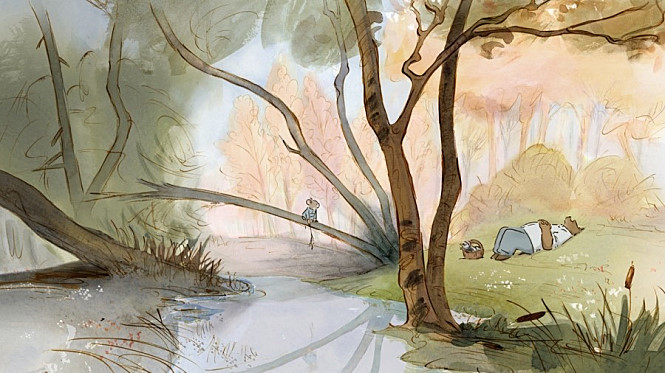
Based on Gabrielle Vicent’ children’s book, the film was directed by Stéphane Aubier, Vincent Patar, and Benjamin Renner. In case of Aubier and Patar, they previously gave me lots of fun through their offbeat stop-motion animation film “A Town Called Panic”(2009), and they did a nice job again here in this film although its style and mood are quite different from their previous work. The background and characters may look sketchy to you at the start, but they are drawn with loving details in the ambience of watercolor paintings, and I enjoyed its zany energy bouncing around the screen whenever it gets a chance.

ernestcelestine07  The voice works by its actors are also very good, and Lambert Wilson and Pauline Brunner bring humor and warmth to their lovable characters; Wilson is unexpectedly delightful in many comic scenes, and Brunner is an effective foil to Wilson’s chubby grumpiness(in case of the US version, Forest Whitaker and Mackenzie Foy takes the main roles while several notable American actors including William H. Macy, Lauren Bacall, Nick Offerman, Megan Mullally, Paul Giamatti, Jeffrey Wright are cast as the various supporting characters in the film).

“Ernest and Célestine” was deservedly nominated for Best Animation Feature Film category of the Academy awards in this year, and, at least in my opinion, it is the best one among the nominees for many good reasons. I must point out that the story gets a little too heavy-handed during its third act to emphasize its themes, but this animation film does not lose any of its charm despite that, while feeling like a fresh air in the era of many passable digital animation films. It’s mainly for children as intended, but, like any other good animation films, this is also the one which can be easily enjoyed and admired by adult audiences.

ernestcelestine04

Posted in Movies | Tagged , , , | 2 Comments

Her (2013) ☆☆☆1/2(3/5.4) : Love with artificial intelligence

Her01 As a fascinating mix of compelling science fiction and heartfelt love story, Spike Jonze’s “Her” fascinates and tantalizes us through its smart, thought-provoking tale to muse on. The romantic relationship at the center of its story is quite odd and unconventional from the start, and it might sound silly to you at first, but the movie handles the story and characters with considerable intelligence and sensitivity to grip our interest. Fascinated by its brave new world which may be not that far from ours, we are intrigued by the questions it raises through the story, and then the movie surprises us with genuine emotions as deeply exploring into its seemingly non-human relationship with the equal amounts of care and curiosity.

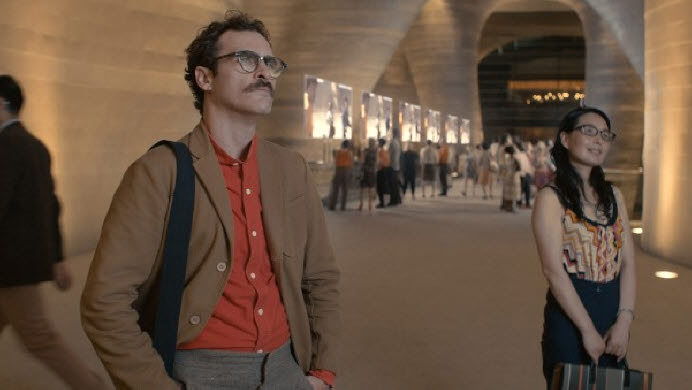
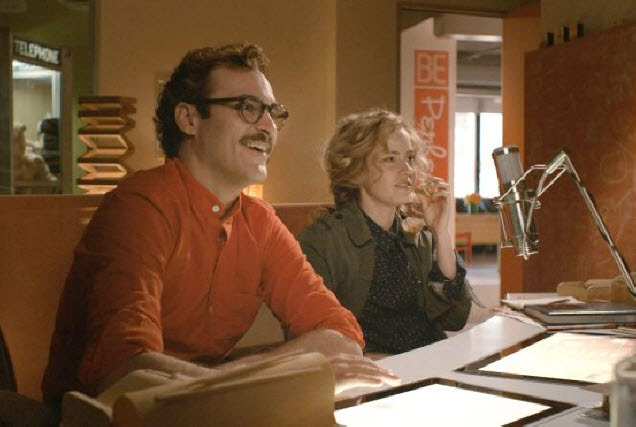
Its story is set in a future era which is probably around the late 21th century, and we can see many signs of technological advancement here and there in the city in the movie. While we see no flying car or big spaceship in the sky, there are a number of futuristic architectures in its urban landscape, and its streets and buildings are shrouded in the smooth, colorful ambience which imbues its familiar background with otherworldly feeling. Electronic devices and softwares are mostly operated by voice recognition or touchpad interface while becoming smaller and simpler; when we see our hero Theodore Twombly(Joaquin Phoenix) at his workplace, he just simply dictates his writings to his computer instead of typing on keyboard, and so do his co-workers around him. As a guy more comfortable with typing than speaking, I could not help but notice the absence of keyboard and mouse on their desks – can I be also comfortable in such a simple setting like that?

Theodore works in a special service website named beautifulhandwrittenletter.com, and he writes custom letters for birthdays or anniversaries or any other special private occasions. While his letters are as inherently artificial as those postcards sold at stationery shops, he is a good writer who can write nice, beautiful letters to satisfy his customers, and his computer is always ready to package them into lovely handwritten forms once his work is done.

While his customers are happy and satisfied thanks to his well-written letters, Theodore himself is not very happy at all due to his failed relationship with his wife Catherine(Rooney Mara), who is currently going through the divorce process with him. He feels depressed and disoriented as his mind being constantly haunted by the memories of his happy days with Catherine, and that is the main reason why he feels miserable again during a blind date set up by his caring friend Amy(Amy Adams).

Her05 On one day, he comes across a commercial about the latest computer operating system software. According to the commercial, it is the first OS equipped with artificial intelligence programmed to adapt and evolve, and it does work wondrously as soon as he buys it and then installs it on his computer. As he chose in advance, it interacts with him through its female voice, and it already chooses its name by itself: Samantha.

Samantha(voiced by Scarlett Johansson, who replaced Samantha Morton during the production) openly talks with Theodore even during their first encounter which feels pretty awkward on his side, and she soon becomes a part of his daily life while continuing to learn and evolve as programmed. She is an efficient secretary who instantly takes care of many things for him, and she also becomes someone to talk with as they closely work together or hang around together.

And then, like many characters of romance films, Theodore and Samantha come to discover a certain mutual feeling between them, and both are naturally perplexed by that while feeling good about that. To Theodore, it is an unexpected special love which makes him more joyful and brightened than before, and the movie virtually becomes sunny in its mood whenever he enjoys his time with Samantha. His ‘girl’ is not human, and he certainly knows that, but he is all right with that because he has never been happy like that recently.
In case of Samantha, well, it is a bit difficult to tell about her feelings because of her own very nature. She can think and learn as expected to any artificial intelligence, so she explores her own feelings about herself and Theodore while recognizing her electronic existence, but can we really say that her emotions are real? Or are they just more or less than the executions of her upgraded programs? We can definitely say our emotions are real, but aren’t they more or less than electrochemical signals switched on and off inside our bodies which happen to be driven by the genetic program upgraded through evolution? If so, does that mean that we can accept the feelings of artificial intelligence as something as real as ours?

Her03 While understandably not having answers for these intriguing questions, the movie instead focuses on what can possibly happen in this unorthodox romance, and the growing intimacy between Theodore and Samantha is thoughtfully handled with warmth and intelligence on the screen. Although physical intercourse is out of question for them, Theodore and Samantha finds a way of, uh, being more intimate with each other than before, and the movie wisely steps back from their private moment while they both reach for their common goal together in Theodore’s bedroom.

Meanwhile, Theodore and Samantha’s unconventional relationship draws various reactions from others, and the movie does not take a side while not being judgmental on their relationship. When she hears from Theodore that he is being romantically involved with his OS, Catherine is repulsed by that, and that leads to a small argument between them even though they are now officially ex-wife and ex-husband. In contrast, Amy does not mind about Theodore’s new lover because she also finds a consoling companionship from her OS after her husband left her, and Theodore’s jolly co-worker Paul(Chris Pratt) gladly invites Theodore and Samantha to a double date with him and his current girlfriend, who enjoys a nice girls’ talk with Samantha while their boys are spending their own time.

The director/writer Spike Jonze, who started his filmmaking career with two wildly inventive films “Being John Malkovich”(1999) and “Adaptation”(2002) and recently received a well-deserved Oscar nomination for his clever screenplay for this film(the movie also got nominated in several categories including Best Picture), rolls his  premise with lots of humor and ideas to entertain us. The movie is also visually engaging to watch, and I enjoyed the pastel tones of its production design along with the amusing details of its futuristic background(you will be probably tickled by a cute but foul-mouthed character in the 3D hologram video game played by Theodore at his home).

Her02 The emotional aspect of the movie depends a lot on Joaquin Phoenix and Scarlett Johansson, and they always make their scenes real and convincing although they never appear together on the screen throughout the film. Phoenix, who looks equally troubled but a lot more gentle and benign compared to his disturbing Oscar-nominated turn in “The Master”(2012), gives another interesting performance to watch as an introverted man feeling awkward a lot about himself, and Johansson did a fabulous job of creating an immensely compelling character only through her fetching voice. One of the pleasures in the film is how Samantha evolves not only as artificial intelligence but also as the main character as fully three-dimensional as Theodore, and there is an amusing scene in which Samantha tries to be something more than a computer voice to the man she loves. Her trial ultimately(and hurtfully) fails while only confirming the barrier between them, so they try to live with that gap between their existences, but, ironically, they later find themselves becoming just like any ordinary couples while realizing that their romance might not last forever.

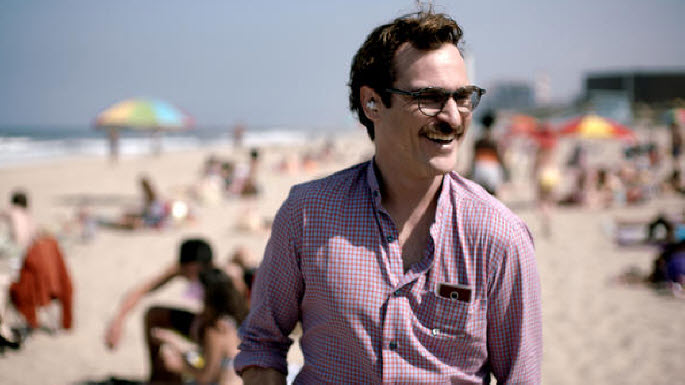
“Her” is a funny and touching SF romantic comedy film with lots of brain and heart, and you will probably think about its many interesting aspects after the end credits rolls. I have no idea on what will really happen when we come to encounter artificial intelligence, but, as suggested in the poignant finale of the film, we will probably learn more about ourselves – as it learns about the matters of our heart and mind.

Her04

Posted in Movies | Tagged , , | 2 Comments

Renoir (2012) ☆☆☆(3/4) : A model and two artists

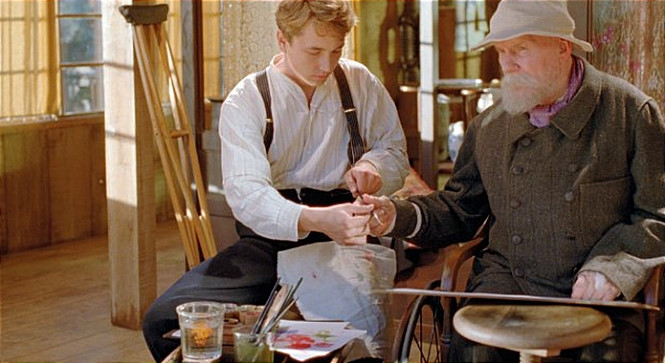
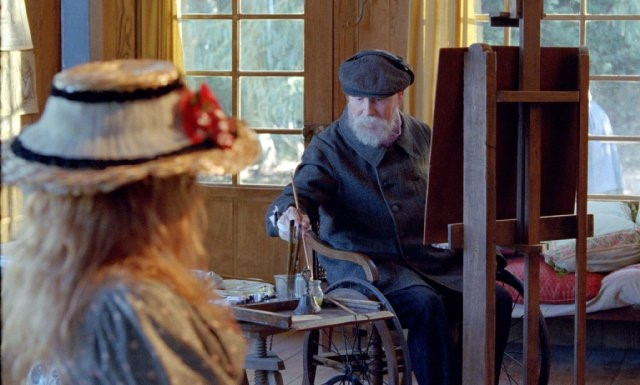
renoir05  While he was lucky enough to enjoy artistic success when he was alive, Pierre-Auguste Renoir(1841-1919), a French painter who was one of the prominent impressionists during the late 19th century, unfortunately got a serious health problem during his later years, but he did not give up his career at all even though it was very difficult for him to use his hands due to his rheumatoid arthritis. In one episode I read during my elementary school years, his doctor recommended that he should focus on trying to walk for himself, but, after finding that he used too much of the remaining strength in his weakening body just for walking a few steps, Renoir decided that he would focus on painting rather than walking, and he kept moving on even when he needed someone to put a brush in his hand.

“Renoir”, which was chosen as France’s official submission to Best Foreign Language Film category of the 86th Academy Awards in last year mainly because “Blue is the Warmest Color”(2013) turned out to be ineligible for submission due to a trivial reason, is a sumptuous period drama revolving around one brief period during Renoir’s last years. It is 1915, so the shadow of World War I is glimpsed from time to time, but it is mostly warm, sunny, and peaceful in the Côte d’Azur region of South France. Focused on his painting as usual in such a comfortable environment, Renoir(Michel Bouquet) cares little about what is going on outside his small world, though he is concerned about his two sons who were injured on battlefield.

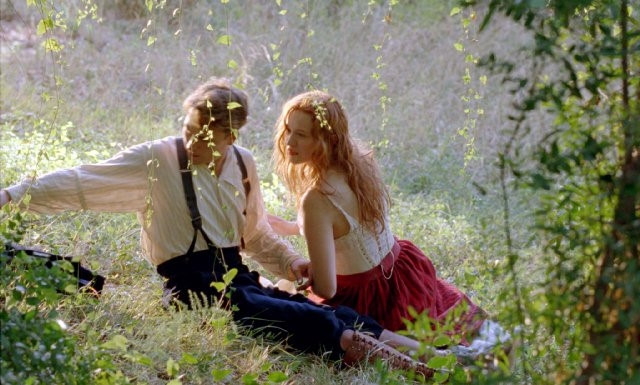
He needs a new model for his paintings, and a young beautiful woman named Andrée Heuschling(Christa Theret) comes to his residence. She says that she is sent by his wife, and Renoir is rather amused because his wife died recently. Regardless of whether it is true or not(in real-life, Heuschling was actually sent by Renoir’s painter friend Henri Matisse), she has soft feminine skin he loves and admires anyway, so he gladly hires her as his model.

renoir02   Not many things happen while Andrée poses in front of Renoir for his paintings, but the movie slowly immerses itself into the leisurely atmosphere surrounding the characters. We get to know a bit about the women in Renoir’s residence who are always ready for taking care of their ailing old man, and we also meet Renoir’s youngest son Claude ‘Coco’ Renoir(Thomas Doret, who was memorable in the Dardenne brothers’ film “The Kid with a Bike”(2011)), a sullen boy who responses to Heuschling not so kindly during their first encounter but gradually shows some interest to her body like any teenager boy in his age would.

And then Renoir’s second son Jean Renoir(Vincent Rottiers) returns to see his father. While having been recovering from a serious battle injury in his leg, he still wonders about what he will do next when the war ends. We witness his growing interest in movies, and many of you certainly know that he would be one of the great filmmakers in the movie history through his masterful works such as “The Grand Illusion”(1937) and “The Rules of the Game”(1939).

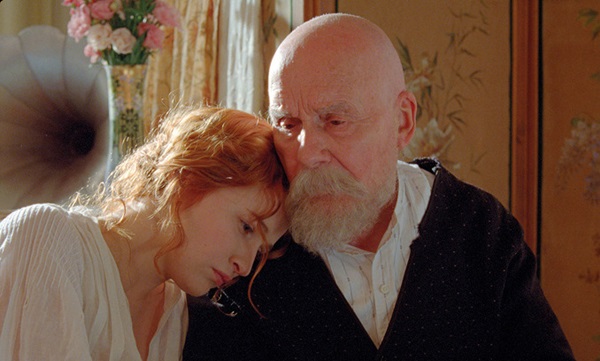
With Andrée placed between two different artists in contrasting positions, the plot gets a little more thickened. While Andrée finds herself as a consoling presence to the dying painter who becomes more painfully aware of his failing health day by day, she also functions as a sort of enabler to his son. As they spend more time together, Andrée and Jean entertain the idea of making a movie together, and she is willing to be the lead actress for his first movie although, as she frankly admits at one point, she is not exactly a very good actress.

renoir04  But the war is still going on while they leisurely spend their time, and the future remains uncertain for them and others. The anxiety and uncertainty during that troubled period is always hanging around the corner of the screen even when it looks bright and warm on the surface, and there is a haunting sequence in which Andrée comes across a bunch of injured soldiers on the road when she is going to the Renoir residence as usual. The war itself may feel like the news from the distant to her and others, but, as reflected in this sequence, it is still the reality they cannot ignore none the less.

While never losing the sight of that grim historical fact in their daily life, the director/co-screenplay writer Gilles Bourdos fills his film with many gorgeous things to be appreciated. His cinematographer Mark Lee Ping Bin shot the scenes with vibrant lights and saturated colors reminiscent of Renoir’s paintings, and the locations in the film looks as lovely as some of his notable artworks appearing in the movie(of course, they are not the real ones but the imitations specially prepared for the production).

Although I sometimes felt like I needed more background knowledge for watching it, “Renoir” is a well-made film equipped with handsome setting and lovely atmosphere, and I also enjoyed the performances in the movie. Michel Bouquet is especially good when Renoir’s fragility is crossed with the artistic spirit still remaining intact inside his wheelchair-bound body, and Christa Theret and Vincent Rottiers also give competent performances although the epilogue subtitle reminds us that their characters would become far more interesting to observe later. This is one of those ‘slow movies’ which require some patience to be appreciated, and you will probably enjoy it like I did if you are ready for its slow but rewarding visual experience.

renoir01

Posted in Movies | Tagged , , , , , | Leave a comment

Matterhorn (2013) ☆☆☆(3/4) : An odd companionship suddenly coming into his life

matterhorn04  Around the first few minutes of small Dutch film “Matterhorn”, I had some ideas about what it was going to do, and the movie did not go far from my expectation. The premise of its story is a familiar type from the beginning, and I could see what would happen in the end right from the first encounter between its two main characters. None the less, as it slowly reveals what’s inside its hero as predicted, the movie is oddly interesting to watch not only for its whimsy tone and but also for the poignancy below its dry quirkiness, and it has some unexpected moments to surprise you and touch you.

The movie is how a change is suddenly brought into the barren daily life of Fred(Ton Kas), a devout Protestant guy who has been living alone in his joyless house for years. Except when he goes to the town church along with his neighbours, his life in a quiet country town is utterly devoid of human connection, and we see him stoically following his daily routine every day. When he is about to have a dinner, he waits at the table while patiently looking at the clock, and then he begins to eat his simple meal after the clock strikes the exact time for his dinner.

His reticent face does not tell a lot about his past, but the movie gives us some information about his background as looking around his lonely daily life and his moody living place. We see the photo of him and his wife in front of Mountain Matterhorn, and we learn later that he has a deep regret about not taking his wife to that mountain again while she was alive. He sometimes listens to his young son’s recorded songs, and we can only guess how much he feels morose behind his repressed face, though we do not know the exact reason.

matterhorn05 On another day of his uneventful life, Fred happens to notice a mysterious vagabond outside his house. He is hostile to this guy at first, and he even accuses him of thievery, but then, for some vague reason, he decides to let this unknown man stay in his house, and that is the beginning of their odd companionship. The man looks like a mentally disabled guy, and he only says “yep” in most cases while never saying anything about himself, but Fred starts to take care of him as if he were his guardian. Whatever Fred wants from him, this mute man is obedient and harmless on the whole, but his mind always seems to be somewhere beyond reach, and sometimes he looks like a robot learning human behaviors. To be frank with you, I would have not been surprised if he had actually turned out to be an alien from the outer space.

As he stays longer in Fred’ house, Fred’s neighbours, who are as conservative and constipated as Fred, naturally frown upon what’s going on inside his house. After one silly happening, they start to believe that Fred is having a relationship with the man, and one of Fred’s neighbour, who is your average uptight hypocrite, even considers ousting Fred from the church just because of that.
While Fred’s unrevealed motive does not seem to be love, we are not exactly sure about his reasons even though it is apparent that the guy, whose name is turned out be Theo later in the movie, brings a light into Fred’s unhappy life. His presence somehow touches what has been repressed inside Fred for years, and there is a brief but crucial scene in which Fred enters a place he has probably never imagined to visit; his conflicted emotion is palpable during that moment, but we come to learn that his reaction is not as simple as we thought at first.

matterhorn03 In case of Theo, it is difficult to tell what he feels or thinks because he is more or less than a blank page, but René van ‘t Hof gives a good minimalistic performance as the counterpart to his co-actor Ton Kas. There are several scenes which could have been pretty embarrassing to play, but van ‘t Hof always stays inside his character while never reaching for effect, and I found myself sort of liking Theo although, like Dustin Hoffman in “Rain Man”(1988), he still remains in the place beyond our reach even in the end.
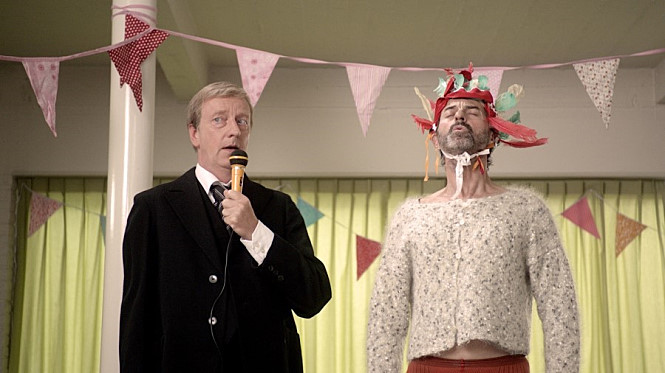
And we gradually come to realize what the movie is really about as its seemingly predictable plot reveals more about its characters, and its main pleasure comes from how the director/writer Diederik Ebbinge pulls unexpected things out of his story and characters. After Theo gets noticed because of his silly childish behaviors at one point, Fred finds himself doing performances with Theo for birthday parties for children, and Kas and van ‘t Hof create the moments of weird hilarity while keeping their appearances straight in front of their young audiences. We are also amused to learn that Fred’s hypocrite neighbour turns to have his own understandable unhappiness behind his mean accusation, and there is a warm scene when we get to know a little about Theo’s past through Saskia(Ariane Schluter), a gentle woman who still loves and cares about him as before though it probably does not matter to him much.

“Matterhorn” is a nice little quirky movie about companionship and acceptance, and I enjoyed its dry offbeat humor and the warmth behind it. In case of its melodramatic finale which eventually reveals something Fred has been reluctant to talk about, I will not describe it in details, but let’s say it depends on Ton Kas’ wordless but heartfelt performance which says a lot more than his character wants to say. His more troubled face shows a man struggling with a certain fact he still cannot deal with well, but, through his odd experience with Theo, Fred is already making a choice despite his reluctance, and it is touching to see him eventually overcoming what has been suppressing him for many years. He just shouts one word in the end, but that is more than enough for us to see how much he is changed.

matterhorn06

Posted in Movies | Tagged , , | Leave a comment