Carlos Reygadas’ 2007 film “Silent Light”, whose recent 4K restoration version came to South Korean theaters in a few weeks ago, is a singular experience to admire for its considerable sublime qualities. While it is basically a typical triangle drama, it instantly draws our attention with the specific details of a distinctively ethnic religious community located in the norther part of Mexico, and then it gradually and patiently immerses us into the universal matters of heart among its several main characters
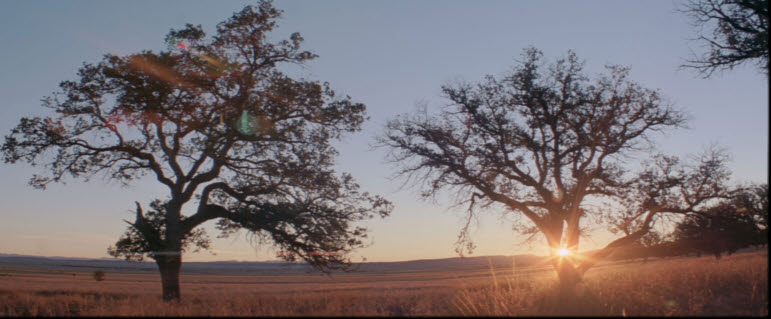
The movie, which was shot in a Mennonite community close to Cuauhtémoc, Chihuahua State, Northern Mexico, opens with a very slow but ultimately breathtaking moment to behold. After looking around the dark sky filled with numerous stars for a while, the camera of cinematographer Alexis Zabé eventually settles on one spot where it steadily observes the beginning of another day, and the subtle dramatic effect of this long-take scene is quite awe-inspiring to say the least (I am still wondering how they actually shot it, by the way).
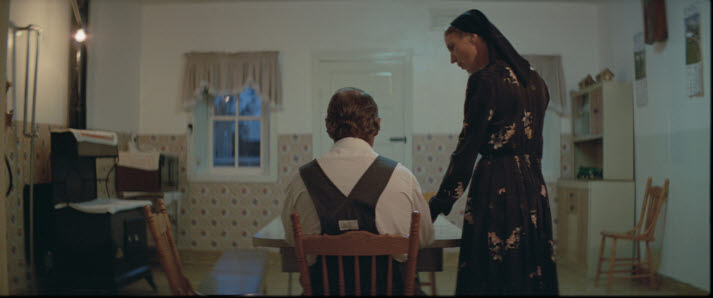
And then we are introduced to a Mennonite farmer named Johan (Cornelio Wall) and his wife and children. Under utter solemness, they sit around their dining table while silently saying grace, and we soon see them beginning their breakfast time. At first, things seem to be going well among them, but we slowly sense something strained between Johan and his wife Esther (Miriam Toews) as they talk with each other in Plautdietsch, a local German dialect which is also called Mennonite Low German.
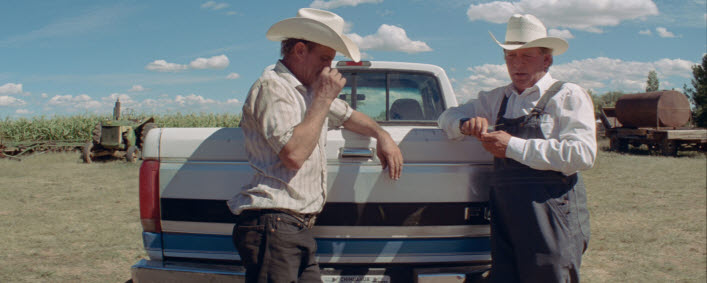
When Johan visits a local garage belonging to a close friend of his for some private conversation, we get to know more about what has been tormenting him. He has actually been having an affair with a local woman named Marianne (Maria Pankratz), and he sincerely believes that he found his real soulmate from Marianne. However, as a devout conservative Christian, he is also well aware of his family duty, and, above all, he still loves and cares about Esther even though his heart continues to yearn for Marianne.
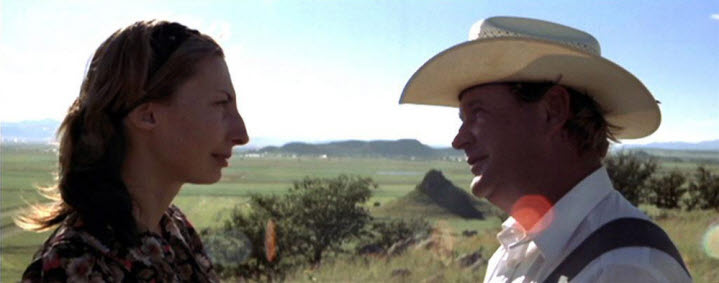
When Johan later has a little private meeting with Marianne, it is apparent that they love each other quite passionately. As the camera lingers on their romantic interaction, we come to sense more of their undeniable emotional bond, and it seems that he can simply leave his wife for his happiness, but then we also observe how close Johan and Esther are as a couple devoted to each other for many years. They instantly sense each other’s thoughts and feelings even when they just exchange a few words between them, and Esther has certainly known everything because her husband did not try to hide his extramarital affair from her at all from the very beginning.
As the circumstance among him, Marianne, and Esther remains unresolved to everyone’s frustration, Johan seeks for any advice from his pastor father, who does not judge his son at all while also showing some understanding and compassion. As a wise old man who clearly had a fair share of life experiences throughout his lifetime, he simply advises Johan that, regardless of whether he likes it or not, he should make a choice between Esther and Marianne sooner or later.
This is certainly a familiar melodramatic situation, but the movie takes its time in its deliberately slow narrative pacing as thoughtfully handling the complicated relationships among its three main characters with admirably restrained sensitivity. When Johan and Marianne happen to meet again, the movie somberly but tenderly observes their another moment of passion and love, and we are not so surprised when it later turns out that Johan fails again in overcoming his ongoing yearning toward Marianne.
I will not go into details on what occurs next among the main characters in the film around its last act, but I can tell you instead that this part, which is clearly influenced by Carl Theodor Dreyer’s great film “Ordet” (1955), absolutely captivated me again just like it did when I watched it for the first time in 2009. The movie does not seem to reach for any emotional response from us on the surface, but then it effortlessly pulls out a genuinely poignant moment of forgiveness and redemption under Reygadas’ confident direction, and then we are served with one of the best closing shots I have ever watched during last three decades.
Most of the cast members of the film are non-professional performers who are also local Mennonites, and their unadorned natural acting certainly brings considerable authenticity to the story and characters. In case of its three main performers, Cornelio Wall’s low-key performance diligently holds the center as required, and Maria Pankratz and Miriam Toews, who is a Canadian author who wrote several novels including “Women Talking” (Yes, this is the novel on which Sarah Polley’s 2022 Oscar-winning film of the same name is based), are also effective in complementing Wall’s earnest acting in one way or another.
In conclusion, “Silent Light” is still capable of mesmerizing us even though almost 20 years have passed since it came out. Sadly, Reygadas has never reached the level of artistic achievement shown here in this film, but the movie remains alive and well with its emotional power quite intact, and I am glad to experience this terrific work from a big movie theater screen along with local audiences today.
Sidenote: However, it should be mentioned that there were sexual abuse allegations on Reygadas in 2019. Please check out this article.