South Korean independent film “Halo” presents a grim slice of life which feels a little too familiar and predictable. Closely and vividly following the growing despair of its plain young hero, the movie did a fairly admirable job of immersing us into his desperate condition of life, but, unfortunately, it does not go further than what I have observed from countless South Korean independent films during last several years. Yes, life can be quite difficult for many working-class lads like him out there, but, despite its considerable realism, the movie turns out to be too thin and superficial to engage me more without distinguishing itself enough on the whole.
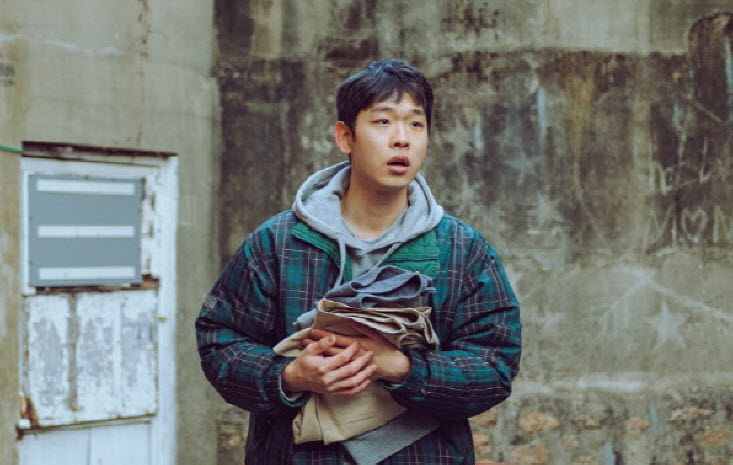
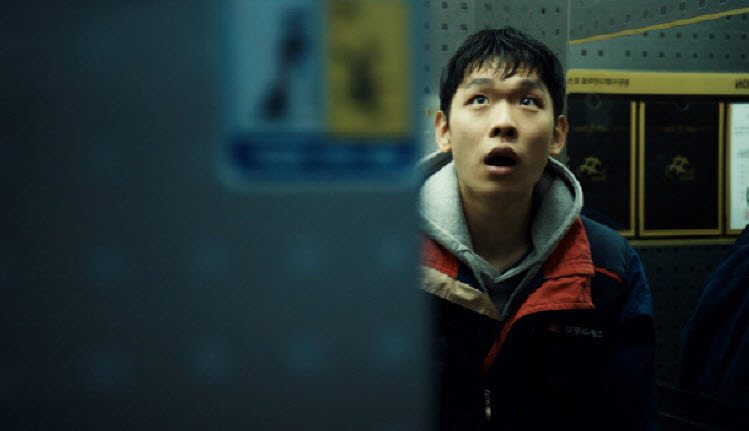
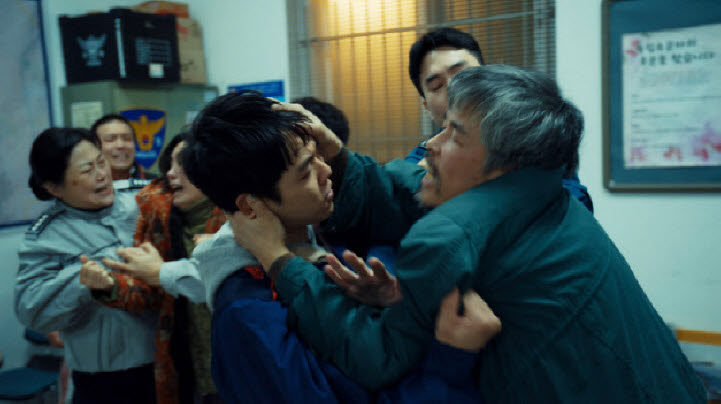
At the beginning, we are introduced to Min-joon (Choi Gang-hyun), a 27-year-old young man who has earned his meager living via working as a delivery guy. We see him delivering assigned packages one by one in some neighborhood in the middle of one night, and then we get to know a bit about his current status of life. He is often short of money, and he also has to sleep inside his delivery van at every night, but this seems to be relatively better than living with his problematic family. While his parents often clash with each other due to his father’s alcoholism, his older brother has a mild case of mental disability, and we later see Min-joon trying to handle their latest messy circumstance at a local police station.
Despite all these difficult things in his daily life, Min-joon still has a little personal aspiration about his future. Since he was very young, he has always wanted to be a filmmaker, and he frequently photographs any interesting sight or stuff he happens to come across while doing his delivery jobs here and there. In fact, he has also been working on the presentation of a supposedly good movie idea, and he certainly feels hopeful when he has a personal meeting with someone who might be interested in his movie idea.
However, not so surprisingly, Min-joon is only told that he needs more experience before getting his future movie made someday. He subsequently receives a generous job offer which may give him some ground from which he can start, but, alas, he cannot possibly leave his current job right now due to his apparently poor financial status, and this makes him all the more frustrated.
And then there comes an unexpected thing into Min-joon’s frustratingly monotonous daily life. Early in the story, Min-joon came to help a middle-aged man who happened to get lost while trying to go to somewhere, and this dude turns out to be a professional astrologist. When they meet again later, the astrologist gives him a free astrological service, and, observing that Min-joon lacks a “halo” he is supposed to have, he seriously advises Min-joon that he must leave his family and South Korea for improving himself and getting that longtime wish of his. Although he is initially skeptical, Min-joon finds himself more attracted to that possible hope glimpsed from the astrologist’s advice, and it looks like he can actually change his life if he works harder for earning and then saving enough money for his future plan.
We are supposed to care more about Min-joon around that narrative point, but, unfortunately, the movie often stumbles in its adamantly minimalistic character development. While there are a number of commendable longtake scenes steadily following or observing Min-joon’s daily work and life, these moments do not add any character detail to observe except his growing frustration along the story, and we only come to observe him from the distance even when the camera persistently follows him.

Furthermore, the movie blatantly pushes its hero into more despair and frustration during its last act, which is filled with many distracting moments of plot contrivance. Min-joon’s family and several other supporting characters in the film remain to be more or less than mere plot elements without much character development at all, and they simply seem to exist for causing more stress and agony for Min-joon. During the finale, the movie becomes rather awkward with a sudden dose of sentimentalism, and this only comes to feel quite jarring considering the following ending, which looks more like a cop-out with what is shown during the end credits.
Anyway, the movie works at times thanks to not only its mundane but realistic mood on the screen but also the earnest lead performance by Choi Gang-hyun, who diligently carries his character as well as the movie itself to the end. During several key scenes where the film wholly depends on his natural low-key acting, Choi is constantly convincing without any misstep, and it is a shame that the movie does not support this promising newcomer’s good efforts that much.
In conclusion, “Halo”, directed by Roh Young-wan (This is his first feature film, by the way), has some engaging elements including its solid lead performance, but it sadly frustrated and then disappointed me in the end. As getting more disappointed during my viewing, I could not help but think of several recent similar South Korean independent films which did a better job in comparison, and I particularly want to recommend “The Final Semester” (2024) right now. That is a really good social drama movie which balances itself well between harsh reality and some quiet but undeniably powerful human moments to observe and remember, and I assure you that you will have a much more interesting experience if you watch it instead.