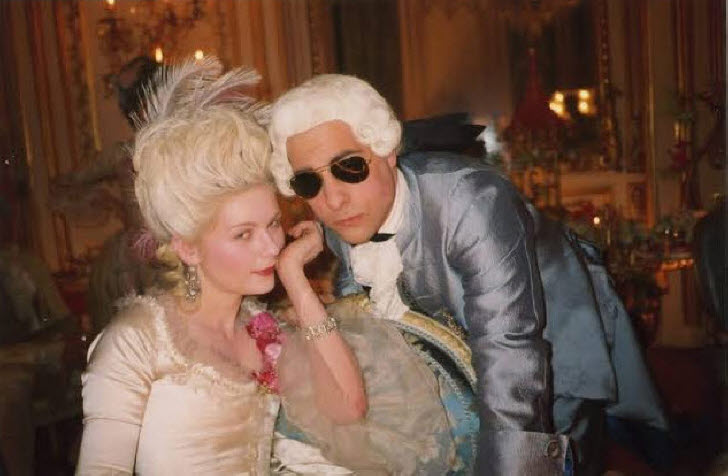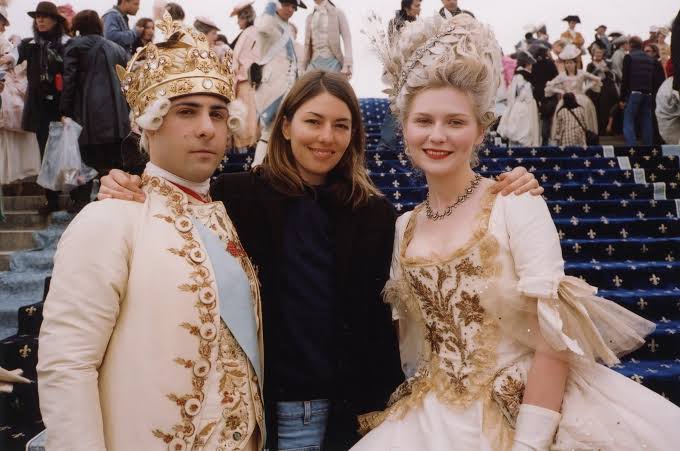
Documentary film “Making Marie Antoinette” gives us a close and vivid look into the making of Sofia Coppola’s 2006 film “Marie Antoinette”. Although it was not received that well by critics and audiences at the time, Coppola’s film has gradually been regarded as one of her best works during last 20 years, and it is certainly interesting to observe how she tried her best for what is still the most challenging movie project in her career.
When Coppola embarked on making “Marie Antoinette” in early 2005, she was another new promising filmmaker on the rise. The early period of her movie career was not so hopeful mainly because of that infamously weak supporting turn of hers in her father Francis Ford Coppola’s 1990 film “The Godfather Part Ⅲ”, but then she surprised everyone with making a successful directorial debut with “The Virgin Suicides” (1999), and then she went further with her second feature film “Lost in Translation” (2003), which incidentally garnered her a Best Screenplay Oscar
Thanks to this considerable success in her filmmaking career, Coppola could move onto the production of “Maire Antoinette”, and, as shown well from the documentary, she was willing to challenge herself with this demanding movie project. Although this was her first period drama film, she had a very clear vision what and how it would be about, and the documentary shows her patiently and steadily handling many different things on the set during next several weeks.
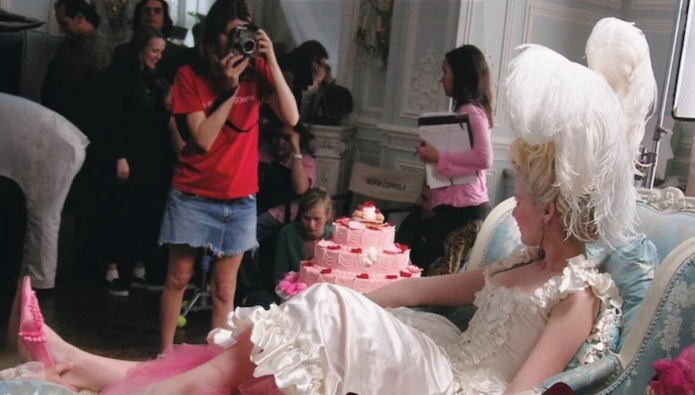
This work process of hers was incidentally documented by Eleanor Coppola (1936-2024), who is Coppola’s mother and was no stranger to filmmaking at all just like her daughter and husband. After all, despite often being overshadowed by the big cinematic achievements by her husband, she made no less than eight documentaries, and one of them is none other than “Hearts of Darkness: A Filmmaker’s Apocalypse” (1991), which has been admired a lot for vividly documenting that notoriously frustrating production period of her husband’s ambitious masterpiece “Apocalypse Now” (1979).
Although what she shot during the production of “Marie Antoinette” was put aside during next several years, Eleanor later returned to that along with her daughter during the COVID-19 pandemic in the early 2020s, and they were working on making a documentary from that before Eleanor died a few years ago. Out of the respect toward her mother, Coppola had her mother credited as the sole director of the documentary while serving as one of its producers, and she also used the excerpts from her mother’s journal for making her mother’s presence more prominent in the documentary (These excerpts are read by Diane Lane in the documentary, by the way).
At first, Eleanor simply followed the production of “Marie Antoinette” as a mere bystander recording one thing after another with her camera, but she and her camera gradually observed more of how her daughter handled the production in her own way. As one of the few successful female filmmakers working in Hollywood, Coppola surely felt quite pressured as reflected by her several personal moments with her mother, and she also had to stick to her artistic vision while often being underestimated by some of her male crew members. At one point in the middle of the production, she understandably came to have a lot of doubts on her movie, but she kept going on nonetheless while handling the production with a lot of care and sensitivity as before.
One of the most striking things in “Marie Antoinette” is its first-rate production design and costume, and the documentary shows a lot of how meticulously Coppola and her crew handled these important elements on a number of various real locations including the Palace of Versailles in France. They frequently needed to get a bunch of costumes and wigs ready for many performers and extras on the set, and this certainly consumed a lot of time to their annoyance. Under the painstaking supervision of costume designer Milena Canonero, every detail of those many colorful costumes was thoroughly examined and then tested, and you will surely have more appreciation of her Oscar-winning achievement.
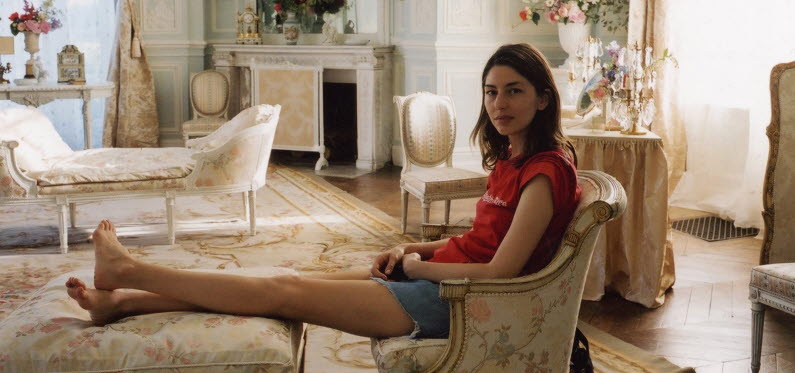
And we also observe more of personal moments from Coppola, her mother, and several other family members of theirs. Her older brother Roman, who has his own distinctive filmmaking career as frequently collaborating with Wes Anderson, gladly worked as her second unit director, and their father sometimes came to the set for extra support and encouragement. There is a little sweet moment when Coppola has a brief private conversation with her father, and he is certainly proud of how his daughter goes all the way for more challenge.
Watching how passionately her daughter worked day by day, Eleanor came to reflect on her own filmmaking career. While she did not have any regret on putting her married life and children above her career, she wondered whether she should have been more active about her own artistic aspiration, and she actually made two feature films later during the 2010s, though they are regarded as a minor footnote compared to her admirable documentary filmmaking career.
Overall, “Making Marie Antoinette” did a commendable job of taking us into the production of “Marie Antoinette”, and it will probably make you appreciate the considerable efforts behind the film more than before. Yes, I only admired it mildly at that time, but the movie has somehow grown on me during last two decades, and now I am considering revisiting it sooner or later.