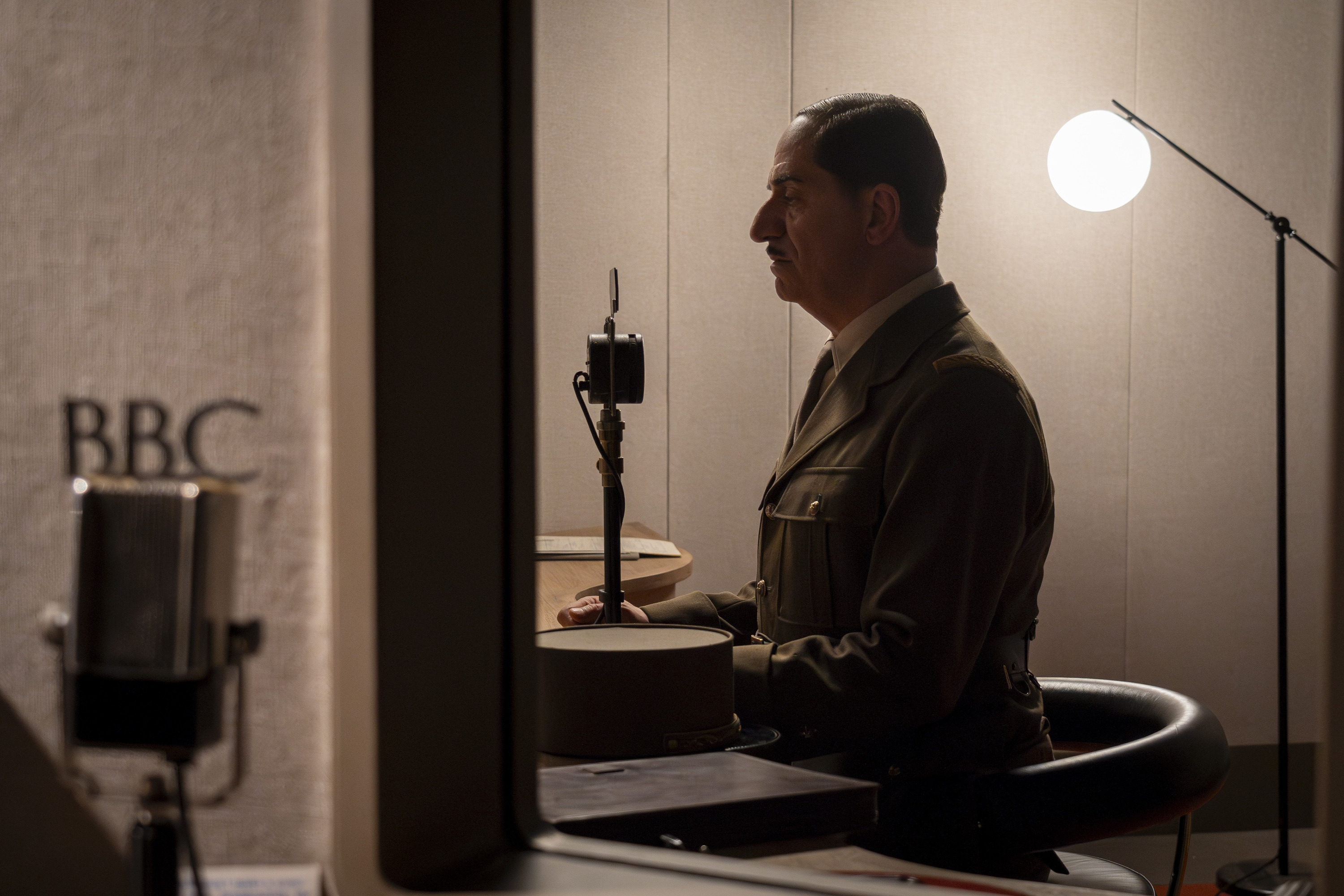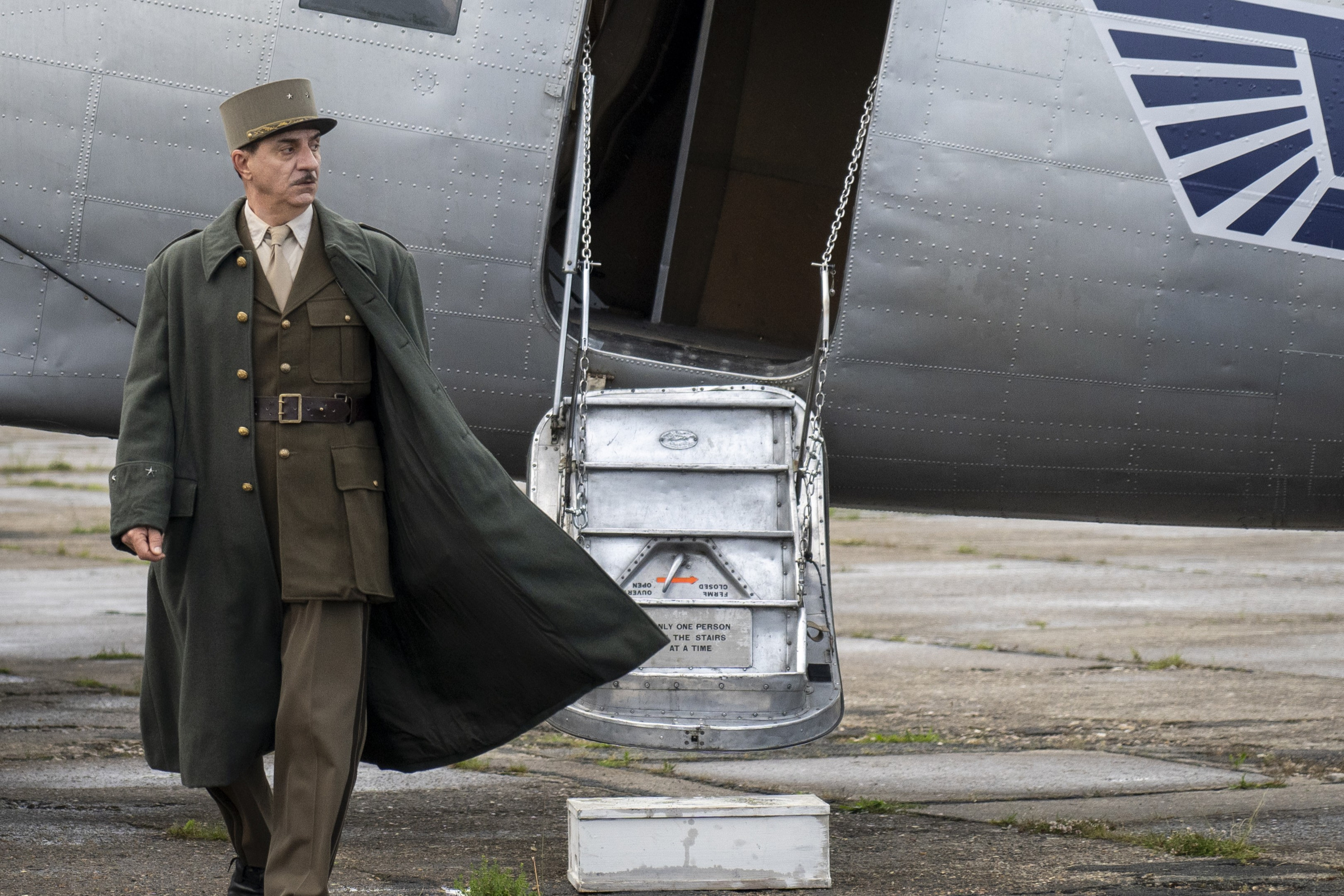
French film “De Gaulle: Résistance”, the first part of the two-part epic biographical drama film directed by Antonin Baudry, bored me without enough human interest to hold my attention. During its long running time (160 minutes), the movie throws a lot of historical incidents here and there, but it often feels merely tedious instead due to its thin characterization and scattershot narrative without giving much insight or depth to its titular hero. In the end, we only get served with some nice history lesson while being only prepared for the second part to come.
Simon Abkarian plays Charles de Gaulle, and the early part of the film depicts how he rose to prominence shortly after the invasion of Nazi Germany into France in 1940. Although the French government represented by General Maréchal Pétain quickly surrenders, de Gaulle keeps insisting on fighting for his country even after he escaped to London, and he soon becomes the leader of French people resisting against Nazi Germany.
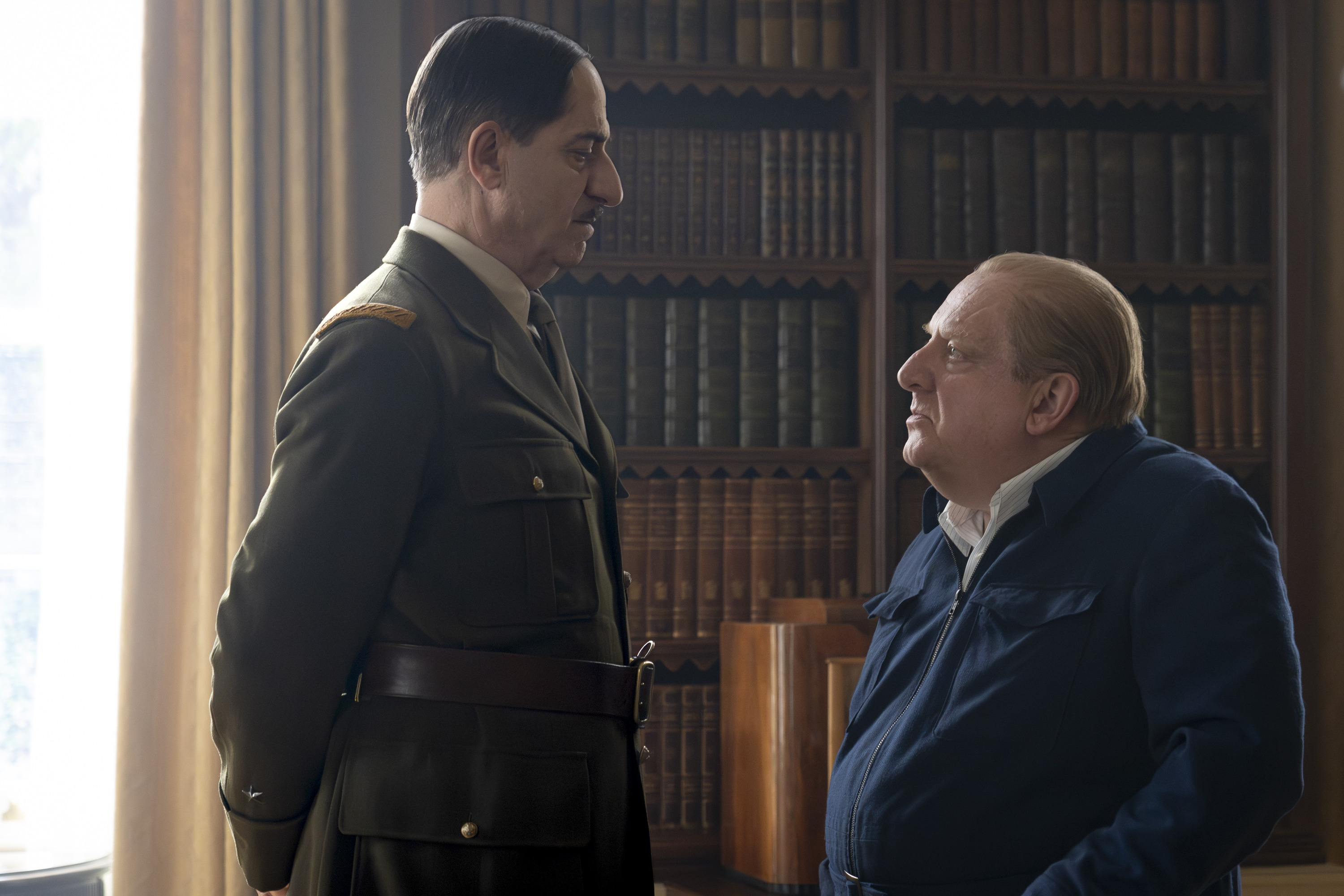
However, de Gaulle is not exactly a popular figure not only to his fellow French compatriots but also the British government led by Prime Minister Winston Churchill (Simon Russell Beale). While instinctively sensing a sort of kinship from de Gaulle as an equally headstrong leader, Churchill also cannot help but feel quite frustrated with de Gaulle due to de Gaulle’s unflappable principle and pride, and we naturally get some little amusing moments as they often clash with each other because of their different viewpoints on the ongoing war.
In case of de Gaulle’s French compatriots, they manage to form his provisional government under his charismatic leadership, but things seem quite hopeless for them at first. After General Pétain’s French government surrendered, every part of not only the country but also its many colonial areas followed this move, but de Gaulle is quite determined to persuade some of these French colonial areas to support him and his provisional government. If he actually succeeds, this will provide more strategic advantage for Churchill, who is still leading a lonely resistance against Nazi Germany because the American government remains reluctant to join the ongoing war.
This mission seems quite impossible even to de Gaulle’s main supporters, but, what do you know, he eventually accomplishes his bold goal to everyone’s surprise. Although only a small part of the French colonial territory in Africa comes to support his provisional government at first, that turns out to be the first significant step for what makes the Allied to win the battles in the Northern African region later.
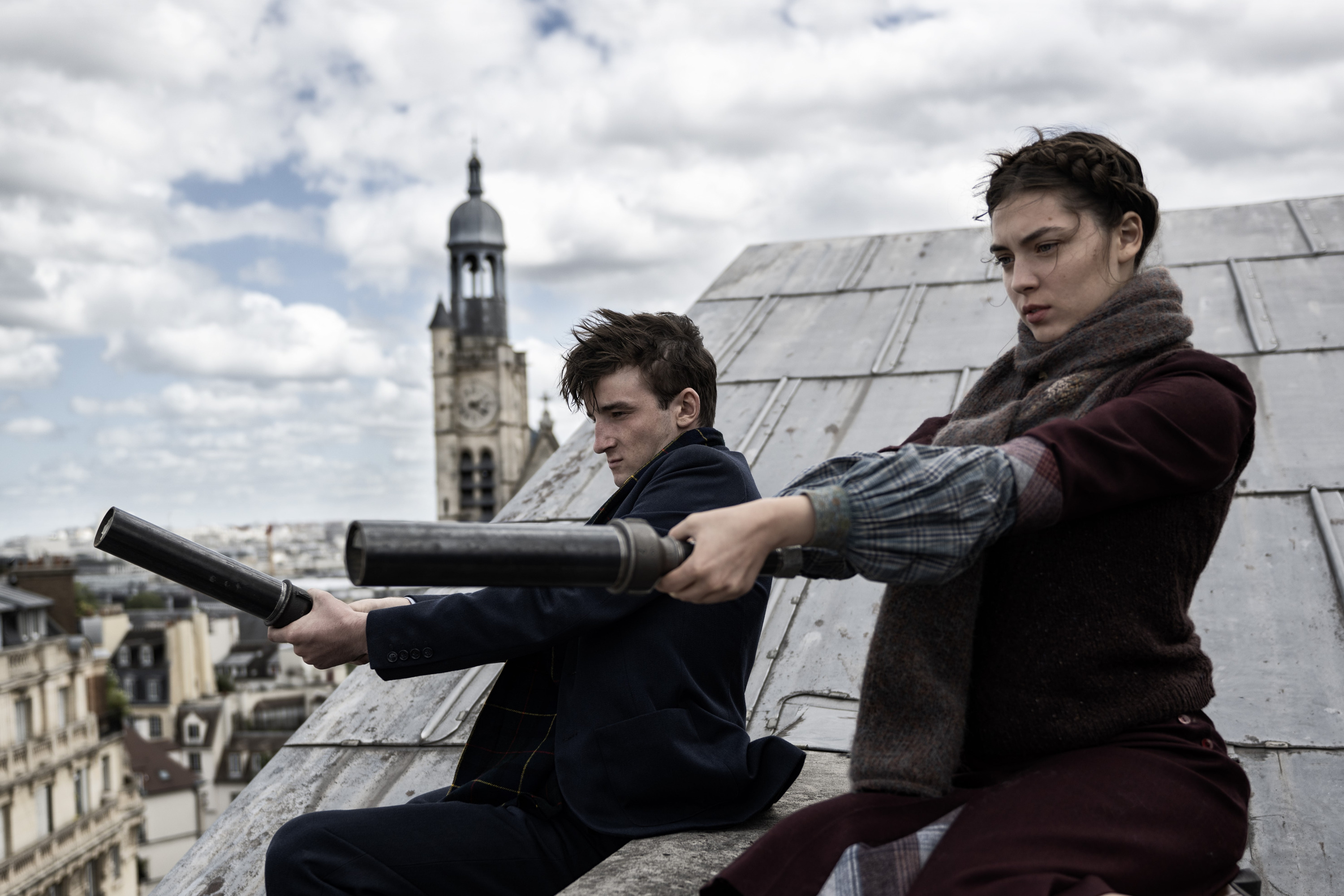
However, as busily juggling so many historical stuffs together, the screenplay by Baudry and his co-writer Bérénice Vila, which is based on Julian Jackson’s book “A Certain Idea of France: The Life of Charles De Gaulle”, feels flat and bland as failing to flesh out its main characters along its broad narrative. While de Gaulle in the film remains to be a merely unflappable heroic figure to admire and behold, none of the other main characters in the story besides him and Churchill is particularly interesting to draw our attention, and a subplot involved with a certain Parisian lad feels redundant before eventually delivering the expected finale for the film. This lad simply just looks angry or frustrated all the time before he finally makes a big decision which changes not only his life but also de Gaulle’s life, and the movie trudges more whenever it focuses on this mediocre subplot.
During its last act, the story gets a bit more interesting as a small group of soldiers belonging to de Gaulle’s provisional government willingly and desperately throw themselves into a supposedly hopeless battle which turns out to be very crucial for not only de Gaulle’s provisional government but also its allies including the British government. Stuck in a fort located somewhere in the Northern Africa, these soldiers must fight against their surrounding enemies as long as possible just for buying more time for their allies, and the movie did a good job of vividly conveying to us how much they suffer and endure before their perilous mission is miraculously accomplished at last several weeks later.
While all these and other many things happen along the story, de Gaulle simply plans something or waits for the results of his plans at his headquarters in London except when he briefly visits the French colonial regions in Africa. While we sometimes sense some fear and insecurity glimpsed behind his brash and confident appearance, the movie never delves that deep into that, and we also never get to know more about his personal sides even during those few brief scenes involved with his close family members who managed to escape from France at the last minute.
As the center of the film, Abkarian carries the film as much as he can with his intense presence, and I can only hope his efforts will show more human nuances during the second part. Many other main cast members of the film are mostly required to fill their respective spots around Abkarian, but Simon Russell Beale has some juicy fun with his role at least (Well, it is really impossible not to have fun with playing Churchill, right?).
Overall, “De Gaulle: Résistance” ends up being more or less than a merely perfunctory warm-up exercise for the upcoming second part, and that is a big disappointment for me. The second part, which was already released in French theaters several months ago, is probably more entertaining with more actions and battles to follow, but I do not expect much at present.