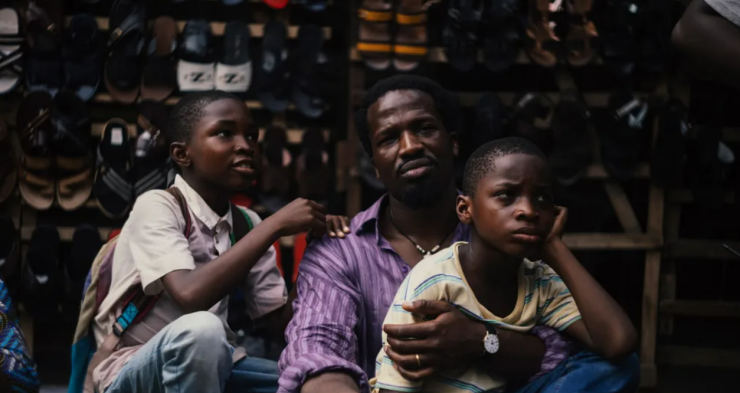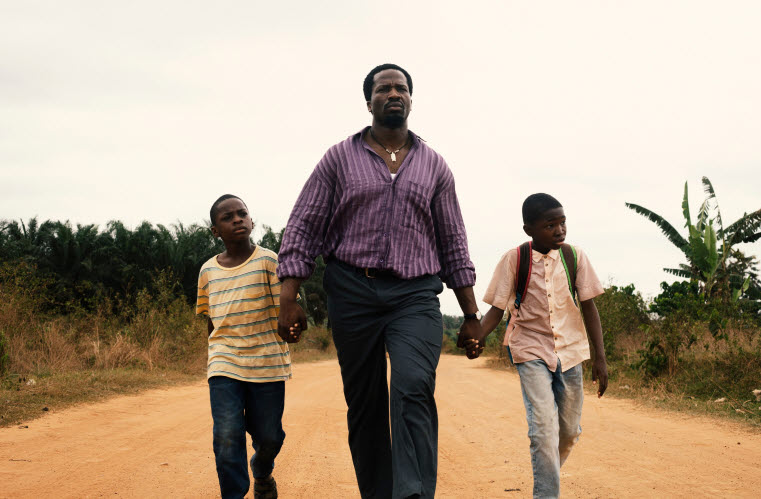
“My Father’s Shadow”, which won the Special Mention for the Caméra d’Or at the Cannes Film Festival and then was selected as the British submission to Best International Film Oscar in last year, is a simple but undeniably touching drama about the relationship between two young Nigerian boys and their father. As following how they spend one day of 1993 with their father in Lagos, Nigeria, the movie deftly mixes historical and personal elements into the story, and the overall result is quite haunting to say the least.
At the beginning, we are introduced to Olaremi (Chibuke Marvellous Egbo) and Akinola (Godwin Chiemerie Egbo), two little young brothers who are often just called “Remi” and “Akin”, respectively. The opening scene shows these two young boys simply spending some time together on one day, and we come to gather that their mother is currently absent because of doing her work outside their family house located in some rural town.
In case of their father Folarin (Sope Dirisu), he has not often been with them a lot due to working somewhere in Lagos, but then, what do you know, Akin and Remi suddenly find that their father has returned to their house. Although he is soon going to go back to Lagos, the boys are glad to see their father again, and they eventually persuade their father to take them to Lagos and then spend a day with them there.
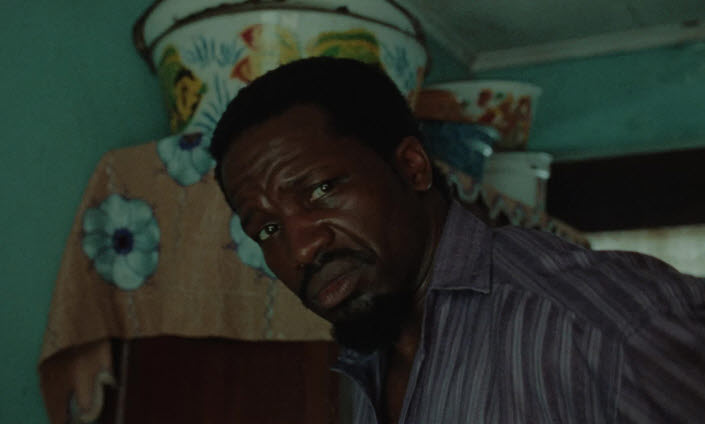
Despite an unexpected setback, the boys and their father manage to arrive in Lagos in the end, and the movie vividly conveys to us the boys’ fascination with what they see here and there in the city. Everything in the city looks curious and interesting to the boys, and the camera of cinematographer Jermaine Edwards busily captures many various sights as we get more immersed in the period background of the movie.
As frequently sticking to Akin and Remi’s rather limited viewpoint, the movie lets us slowly sense the growing sociopolitical unrest surrounding the city and its people. Many people in the country are quite interested in the result of the 1993 presidential election, but it looks like the current government can nullify the result of the presidential election at any chance. We often notice soldiers on the streets of the city, and it is apparent that they are not so welcomed by Folarin and many others in the city.
And we also get to know how things have been desperate for Folarin. At one point, he and his sons drop by a factory where he has worked, and it turns out that he has not been paid at all during last several months. Nevertheless, he keeps trying for his two boys having a good time in the city, and there is a sweet moment when he takes them to an empty amusement park. Thanks to a security guard who happens to be an old acquaintance of their father, the boys have some joyful time in that amusement park along with their father, and the mood accordingly gets lightened up a bit.
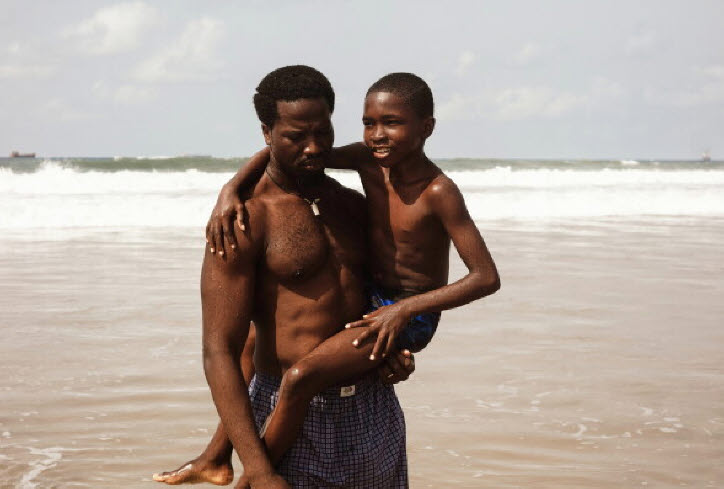
The most touching moment in the film comes from when Folarin and his sons go to a beach outside the city. During his private conversation with Remi, Folarin opens himself more to his son as reminiscing about something in his past, and Remi is reminded again of how much his father cares about him and his younger brother despite his frequent absence.
However, it is often implied to us that there are some hidden problems behind Folarin’s back. For an unspecified reason, his nose often bleeds, and the movie suddenly throws a few ambiguous flashback shots to our bafflement whenever this occurs throughout the story. In addition, it later turns out that he is not exactly a very good father and husband to his family, and this leads to an aching moment of pain and confusion for Remi, which is further amplified by the accumulating sociopolitical unrest surrounding him and his younger brother.
I have no idea on how personal the screenplay by director Akinola Davies Jr. and his brother/co-writer Wale Davies actually is, but the movie is filled with many haunting moments which feel deeply personal, and that is particularly evident from its rather abrupt finale. While it will catch you off guard at first, it will move you a lot nonetheless, and you will reflect more on what happens between the two boys and their father along the story.
The three main performers in the film are convincing in their unadorned natural performance. While Chibuike Marvellous Egbo and Godwin Chiemerie Egbo, two young non-professional Nigerian actors who are also brothers in real life, function as the young and innocent heart of the story, Sope Dirisu, who has been more notable to us since his memorable performance in Netflix film “His House” (2020), gradually takes the center as the weary but gentle soul of the story without overshadowing his younger co-stars at all. He did a superb job of imbuing his character with enough life and presence, and he deservedly received the Outstanding Lead Performance Award at the Gotham Independent Film Awards in last year (The movie also received the Breakthrough Director Award, by the way).
In conclusion, “My Father’s Shadow” is a very poignant movie about one specific father and son relationship, and Davies, who previously received the Sundance Grand Jury Prize for his short film “Lizard” (2020), made a commendable feature film debut here. As far as I can see from the movie, he is a promising filmmaker with considerable talent and potential, and it will be interesting to see what will come next from him after this impressive starting point.