South Korean documentary filmmaker Lee Il-ha’s latest work “Horoomon” is about one defiant Korean Japanese lady standing her ground against hate and racism. As getting to know more about her and her family history, we come to have more understanding on what she and numerous “Zainichi” Korean people in Japan have endured for many years, and that is why it is touching to see how she comes to prevail in the end.
She is Sin Sook-ok, and the early part of the documentary gives a brief overview on her family background. In the early 20th century when Korea was colonized by Japan, her grandmother moved to Japan for better life just like many other Koreans, but they were treated like second-rated citizens, and this social discrimination was continued even after Japan lost in the World War II and then Korea was liberated. For example, they were not legal citizens at all on the record, and that was just one of the many social disadvantages against them in the Japanese society.
Nevertheless, many Korean people including Sin’s grandmother chose to stay as trying to go on with their lives in Japan. Although her life was often not that happy due to her ethnic background, Sin’s mother tried to raise and Sin and her other children as much as possible, and Sin was your average feisty girl who did not give much damn about all the discrimination thrown at her from the beginning.
However, when she was about to enter her adulthood years, Sin became more serious about her life and future. There was not much job opportunity for her except those menial jobs usually taken by her fellow Zainichi Koreans, but, fortunately, she accidentally got a chance to work as a fashion model, and this eventually led her to a much better opportunity. After several years, she came to run a little business of her own, and, thanks to her diligent efforts, she soon became a fairly successful businesswoman with a number of big corporation clients.
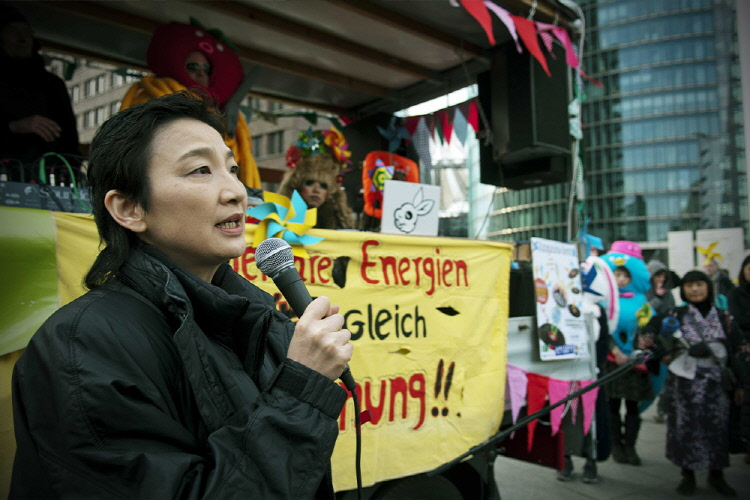
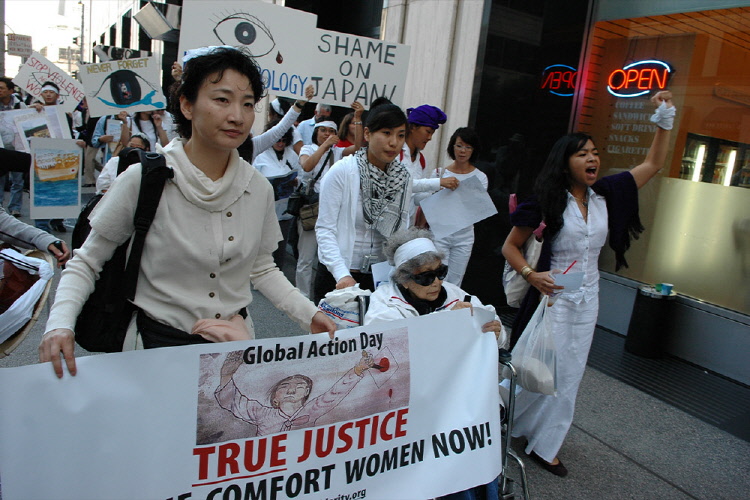
However, this considerable success of hers still did not compensate for what she and many other Zainichi Koreans have to cope with day by day. When one prominent conservative local politician made a public speech quite racist to say the least, Sin decided to step forward for demanding a public apology from that despicably impertinent local politician, and that led her to another career in her life. She decided to be more active about those social issues involved with not only Zainichi Koreans but also several other minority ethnic groups in the Japanese society including a substantial ethnic community in Okinawa Island.
Needless to say, Sin had to quit her business field because many of her clients quickly left her due to her progressive social activities, but she does not regret at all as being more comfortable with her ethnic background than before. There is a little touching scene where she reaches to a bunch of Zainichi Korean people in one local area not long after a big earthquake happened there, and we are surely reminded of that undeniable importance of solidarity.
The second half of the documentary focuses on how Sin went through several grueling years of struggle and resistance. When one conservative local TV show casually threw racist slanders against her and her progressive activities, she did not hesitate to demand a public apology from its big production company, but then she found herself targeted by a bunch of local right-wing people out there. As being constantly bullied and harassed by these utterly deplorable people, she eventually left the country for her and her family’s safety, but her opponents still did not leave her alone at all.

In the end, Sin decided to stand her ground after returning to Japan a few years later, and the documentary examines more of her identity and family background along with her. She recollects more about her painful family history including her uncle who moved to North Korea along with many other Zainichi people during the 1960s but never returned. She also makes more peace with a rather troubled past between her and her mother, who is now “Keiko” after eventually becoming a legally naturalized citizen.
And she also remembers one Japanese high school teacher who actually cared about her. As reflected by not only his little but precious kindness but also a lot of public support Sin has received, the Japanese society is not entirely hostile to her and many other Zainichi Koreans, and Shin’s very long legal battle with that TV production company was an important test on how the Japanese society and its legal system are actually willing to step further for more justice and fairness for Zainichi Koreans and other social minority groups in Japan.
Overall, “Horoomon”, whose very title means grilled offal or organ meat (such as intestines or giblets) in Zainichi Korean cuisine, is worthwhile to watch for its thoughtful presentation of its interesting main subject, and it is certainly another wonderful documentary after Lee’s previous work “I Am More” (2021), an intimate and moving documentary about a young South Korean drag queen. With these two exceptional works, he demonstrated that he is another talented South Korean filmmaker to notice, and I will surely continue to observe whatever may come next from him.