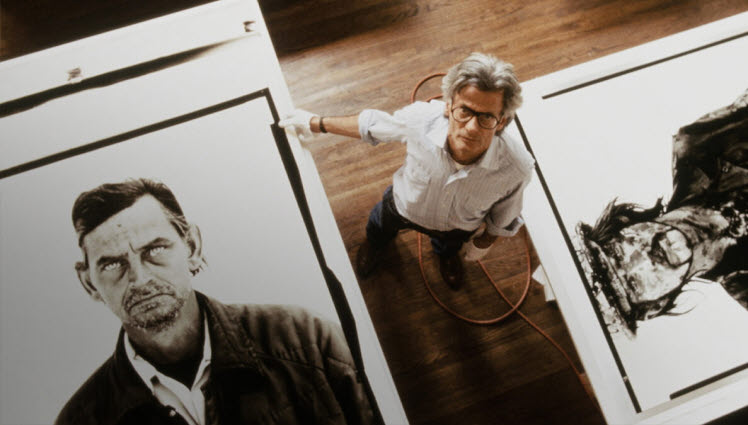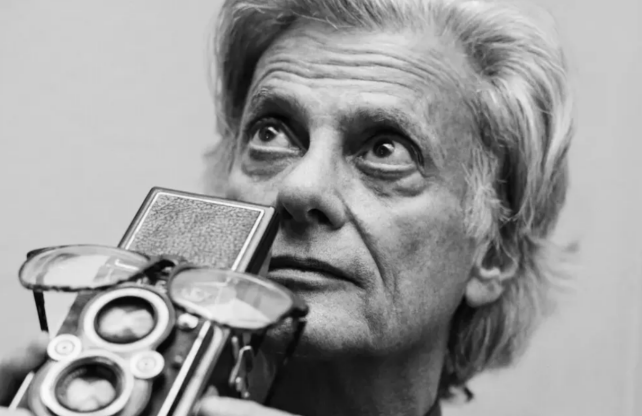
Netflix documentary film “Avedon”, which was released on last Wednesday, gives us a compelling overview on the career of Richard Avedon (1923 ~ 2004), an American fashion and portrait photographer who distinguished himself a lot with his own distinctive art of photography. While mostly focusing on Avedon as an artist, the documentary also provides some revealing glimpses on Avedon as a human being, and the result is a fascinating human portrayal of an artist often driven a lot toward his art and profession.
Consisting of not only various interviewees including several people who worked with him but also the interview recordings and clips from Avedon himself, the documentary begins with how Avedon got interested in photography during his early years in New York City. Although he did not even graduate from his school, young Avedon was a smart and sensitive kid who knew what he wanted to do once he got interested in photography, and then he went all the way as learning more about photography during next several years. During the World War II, he accustomed himself more to photography skills as photographing a lot of soldiers for their military records, and then he subsequently learned more about the art of photography thanks to an encouraging mentor who taught him a lot about how one can be more creative.
As a result, it did not take much time for Avedon to distinguish himself as a new young promising fashion photographer in the city. While working for a number of prominent fashion magazines including Vogue during the 1950s, he quickly got enough respect and reputation in his field, and he even worked as a technical consultant in 1957 Hollywood classic film “Funny Face” (1957), whose romance story was incidentally inspired to some degree by his personal relationship with his first wife.
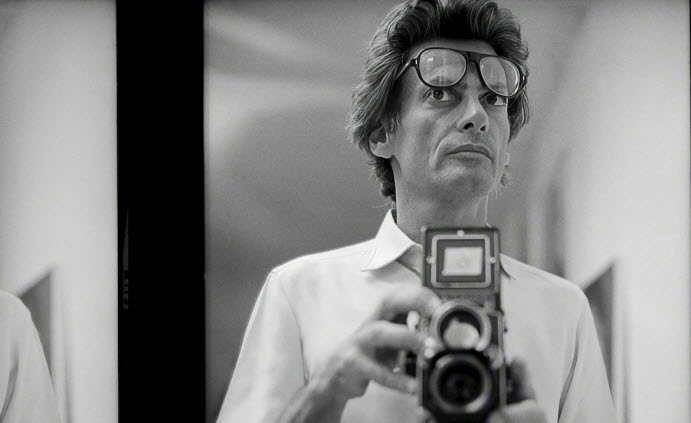
Avedon’s artistic approach to numerous fashion models standing in front of his camera was pretty simple. Although they were just placed in front of big blank canvass, Avedon patiently took his time for capturing whatever looked and felt true and authentic from them, and there is an amusing episode on how he spent a lot of casual time with a female model before eventually photographing her for a very brief time. Once she became more relaxed with him being around her than before, she came to show more of herself in the end, and that was exactly Avedon wanted to capture from her.
Another excellent example of his artistic approach is when he photographed none other than Marilyn Monroe for the public promotion for her 1957 movie “The Prince and the Showgirl”. Again, Avedon took a lot of patience in photographing Monroe, and then, lo and behold, there eventually came a very brief but undeniably priceless moment when Monroe showed a bit of genuine inner vulnerability in front of his camera.
The documentary becomes more interesting when it shows and tells us on how Avedon boldly applied his own artistic approach to other interesting subjects besides fashion. As the American society was shaken a lot by the growing demand for more social change during the 1960s, Avedon, who was incidentally a close friend of renowned African American novelist James Baldwin, willingly photographed many different progressive figures such as Martin Luther King Jr., Malcolm X, Allen Ginsberg, and the Chicago Seven, and he also did not hesitate to go to Vietnam for photographing not only US military figures but also local figures out there.
Not so surprisingly, what Avedon fearlessly achieved during that time was not welcomed a lot by the public during that time. He certainly felt hurt a lot by getting lambasted by critics, but that did not stop him at all, because, well, he remained so passionate about his art and profession. As he kept going as usual, his photographs gradually gained more fame and acclaim, and he was rather amused to see his works later being exhibited in the Metropolitan Museum of Art in New York City.
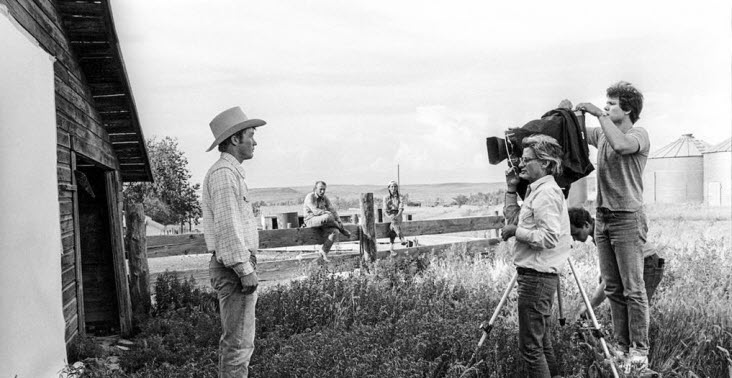
Despite getting a lot more artistic success than before, Avedon seldom stopped pushing his interest artistry more. In case of one big ambitious project of his in 1979, he attempted to capture vivid human qualities of the American West, and the result is quite unforgettable to say the least. Furthermore, he also tried on making TV commercials, and we get several striking examples from this brief but interesting period of his.
As you see, Avedon’s camera was usually drawn to vulnerability and many other deeply human imperfections for making its numerous human subjects feel more truthful. Likewise, the documentary does not overlook his own human flaws at all as occasionally looking into some imperfect aspects of his life. His childhood was not particularly happy mainly due to his stern father, with whom he managed to have a poignant moment of reconciliation not long before his father’s death. Constantly driven by his artistic/professional fashion, he often neglected his second wife and their son, and he even distanced himself from her when she came to have a severe case of depression later, though he remained married to her till her death.
In conclusion, “Avedon” is both engaging and informative as presenting its main subject with a lot of respect and insight, and it is surely another solid documentary from director/co-producer Ron Howard, who has shown more success in producing or directing documentaries as shown from “We Feed People” (2022) and “Jim Henson the Idea Man” (2024) during last several years. In short, this is one of the more interesting documentaries of this year, and I assure you that you will want to check more on Avedon’s works after watching it.