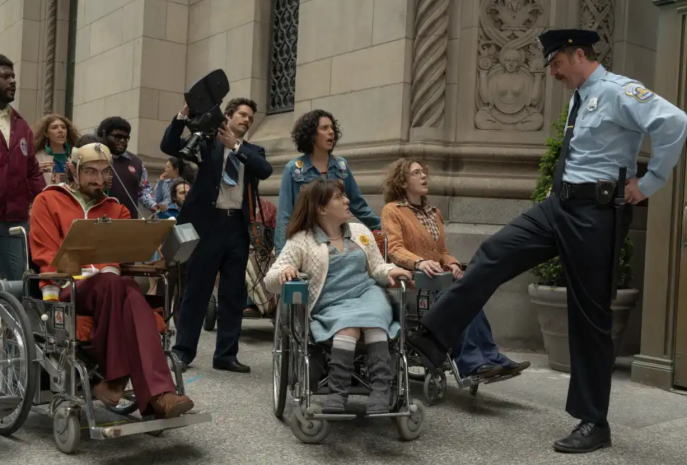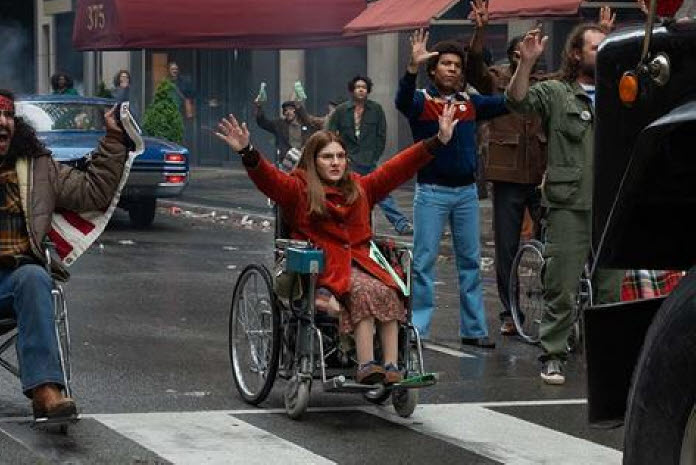
“Being Heumann”, which is currently available on Apple TV, is a story about how a bunch of American disability rights activists fought for their civil rights in 1977. While it is often infuriating to see how they were discriminated and disregarded by the US government at that time, it is also touching to watch how they firmly stuck together for their important social issues to the end, and the movie did a commendable job of presenting their story with enough respect and sensitivity.
The story, which is set in 1977, mainly revolves around Judith Heumann (Ruth Madeley), a disability rights activist who has been a wheelchair user since she survived polio early in her life. The opening scene of the movie shows her and several other disability rights activists trying to draw more attention on the Section 504 of the Rehabilitation Act, which is supposed to protect access rights for disabled people. Although this was already signed by President Richard Nixon in 1973, its official implementation kept getting delayed during next four years, and Heumann and her fellow activists become more determined to put more pressure on President Jimmy Carter’s administration.
At first, they are just going to hold a small demonstration in front of the office building of the US Department of Health, Education, and Welfare in San Francisco. However, Heumann suddenly takes a little more radical approach for drawing more attention from the public as well as Joseph A. Califano Jr. (Mark Ruffalo), the United States Secretary of Health, Education and Welfare. She and many other disability rights activists go inside the building and then start a sit-in demonstration, and this certainly causes a lot of headaches for Califano and several other bureaucrats.
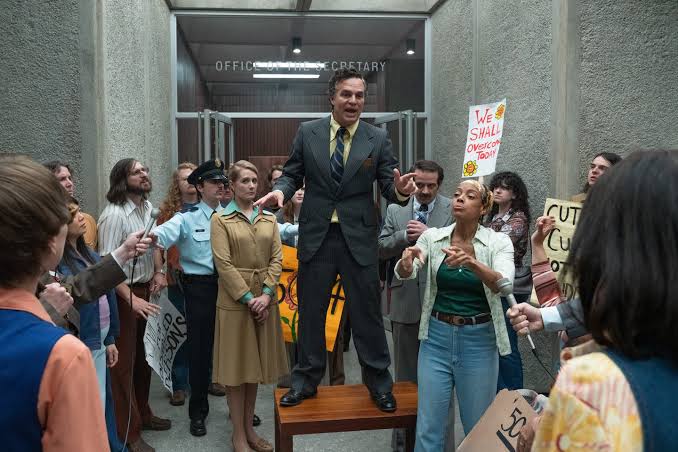
Because Califano and the US government refuse to accept their demand as before, Heumann and her colleagues decide to continue their sit-in demonstration for several more days. Thanks to a sympathetic local rookie TV reporter, their bold act of public protest draws a lot of attention all around the country, and Califano consequently feels more cornered even though he remains quite reluctant to sign on the implementation of the Rehabilitation Act.
Needless to say, Heumann and her colleagues soon find themselves under more pressure as days go by without much progress. While they get some help and support from local Black Panther members, the local police and FBI are willing to stop them by any means necessary, and that reminds them more of what is being stake for them. In the end, Heumann decides to go further for pressuring Califano and the US government more than before, and her several colleagues willingly go along with her decision.
Around that point, the screenplay by director/co-writer/co-producer Sian Heder, who previously directed Oscar-winning film “CODA” (2021), and her co-writer Rebekah Taussig, which is based on Huemann’s memoir “Being Heumann: An Unrepentant Memoir of a Disability Rights Activist” in addition to being informed by interviews with 30 people who had been involved in the protests and an oral history document with Kitty Cone, loses some of its narrative momentum, but it keeps us engaged up to its expected finale at least as being steadily focused on not only Heumann but also other main characters in the story. While they stick together under Heumann’s strong leadership as much as possible, they also sometimes clash with each other due to the differences between themselves, and that is where Cone (Madeline Delp) comes to help Heumann more than expected despite some difference between their opinions.
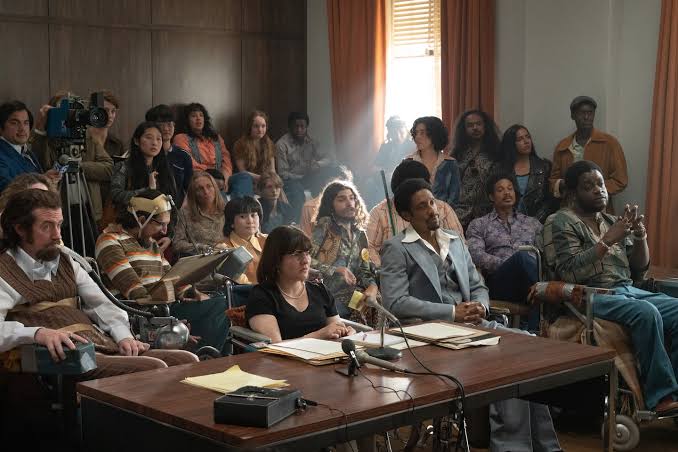
In addition, the movie becomes a bit humorous at times as observing more of their human sides. Just for fighting against the boredom of their sit-in demonstration, many of Huemann’s colleagues come to have some fun time together, and there is even a little amusing moment involved with sexual desire. As a matter of fact, Huemann herself also feels that desire at one point, and the movie handles the following moment with enough restraint and sensitivity.
It surely helps that the movie is supported well by a bunch of good performers who ably fill their respective spots with enough life and personality. While Ruth Madeley diligently holds the center as required, several other performers including Madeline Delp, Russell Harvard, Antwan Tolliver, and Andrew Pilkington are solid as Heumann’s several notable colleagues. In case of Mark Ruffalo, Rob Delaney, Ray Fisher, and Dylan O’Brien, they dutifully play their supporting roles without becoming showy at all, and Ruffalo is effective as a staunch bureaucrat who is supposedly progressive but pathetically obtuse to the urgent demands from Huemann and other disability rights activists.
In conclusion, “Being Heumann”, which was incidentally named as one of the two runners-up of the People’s Choice Award in the Toronto International Film Festival a few months ago (The other one was Peter Farrelly’s “I Play Rocky” (2026), by the way), is a fairly engaging drama worthwhile to watch for not only its important main subject but also its solid storytelling and a bunch of nice performances. As shown from the epilogue scene of the film, the civil rights of disabled people are still in need of more change and improvement even at this point despite a lot of progress in the American society during last several decades, and the movie will make you reflect more on their social issues after it is over.