
Netflix documentary film “Paralyzed by Hope: The Maria Bamford Story”, which was released a few weeks ago, looks into the life and career of Maria Bamford, a singular American female comedian who deserves some more attention in my trivial opinion. While she often amuses us with her own neurotic sense of humor, she is also quite frank about what she has struggled with for many years, and that will certainly come close to anyone having ever coped with mental problem.
The early part of the documentary focuses on her early years in Duluth, Minnesota. While her parents provided a mostly stable domestic life for young Bamford and her older sister, young Bamford’s mind often could not help but become overwhelmed by rather dark and morbid things such as suicide, and that was the main reason why she became interested in performing arts, which helped her a lot in coping with her worsening mental issues.
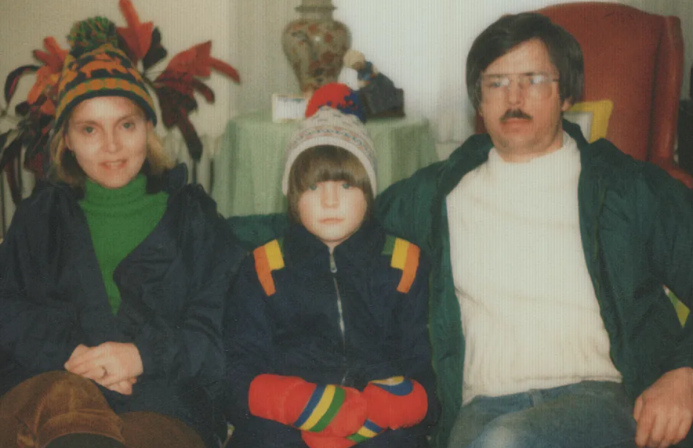
Around the time when she subsequently went to the Minnesota State University, Bamford came to find her natural talent in stand-up comedy, and a series of archival footage clips show how funny and weird she was even during that period. She never seemed to be ashamed of looking odd and strange at all, and she was even willing to make comedy from her dark struggles with mental illness as well as her personal episodes (She was pretty good at imitating her parents and older sister to their reserved amusement, by the way).
After her college years, Bamford did a number of various things including doing some voice performances for several TV animation series including Cartoon Network’s “Adventure Time”, and then there came an unexpected breakthrough in 2005. She happened to get a chance to appear in the Comedy Central TV documentary series “The Comedians of Comedy”, and the excerpts from “The Comedians of Comedy” clearly show how she often held her own place well among several more prominent comedians including Zach Galifianakis.
However, she still could not help herself in case of her longtime mental issues even at that point. While many of stand-up comedians surely have each own anxiety and insecurity, Bamford is a particularly neurotic case, and she was certainly not so easy to be approached by the crew of “The Comedians of Comedy”. In the end, they decided to hire a camerawoman for making her feel a bit more comfortable, and that worked pretty well mainly because the camerawoman herself had struggled with her own mental problems not so different from Bamford’s.
However, Bamford later chose to walk away from all the public attention drawn at her after the considerable success of “The Comedians of Comedy”, and that was the beginning of another long struggle with her mental illness. While things surely went up and down for her many times, she could fortunately get help via medication and therapy, and she also got supported well by her parents and older sister, who came to have more understanding on what she coped with for many years.
Not long after she married her husband Scott in 2015 (They recently divorced not long before the documentary came out, by the way), things seemed to be going well again for Bamford. Thanks to the critical success of Netflix comedy series “Lady Dynamite”, she became more prominent than before, and she was happy to ride on another unexpected success of hers for a while.
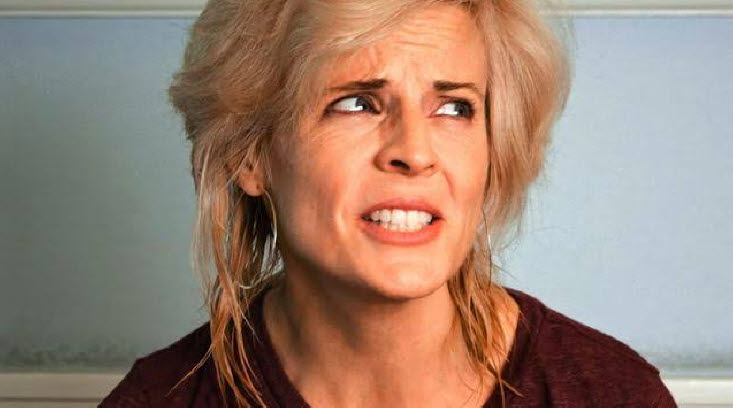
However, her life was subsequently struck by some big downturns. Bamford soon found herself frequently getting quite exhausted due to the demanding shooting schedule of her Netflix show, and it was eventually canceled after its second season. In the early 2020s, she lost her parents, and then there came a catastrophic incident of wildfire in 2024, which burned down almost everything in her neighborhood in California.
Nevertheless, Bamford tried to keep going as usual while also being in peace with her mental issues more than before, and her interview scenes with co-director/co-producer Jud Apatow, who directed and produced the documentary with cinematographer Neil Berkeley, are often funny and sweet as they cheerfully and casually poke fun at each other in front of the camera. She does not mind at all talking about the continuing struggle with her mental issue, and we later see her attending a convention for many different people who have struggled with obsessive compulsive disorder (OCD) just like her. While she makes some joke about their mental illness, she is also quite open and frank about what they have coped with day by day, and that surely reminded me of how we should handle mental illness with more honesty and compassion.
Overall, “Paralyzed by Hope: The Maria Bamford Story” did a fairly good job of presenting its interesting human subject with enough humor and respect, and I must tell you that I often felt close to Bamford’s life story during my viewing. As an autistic guy who has often coped with a lot of depressive things including some suicidal thoughts for many years, I came to have my own odd sense of humor, but people around me are usually baffled as wondering whether I am totally serious or just kidding. I guess I am not that funny, but my little macabre sense of humor has helped myself a lot, and that is surely enough for me.