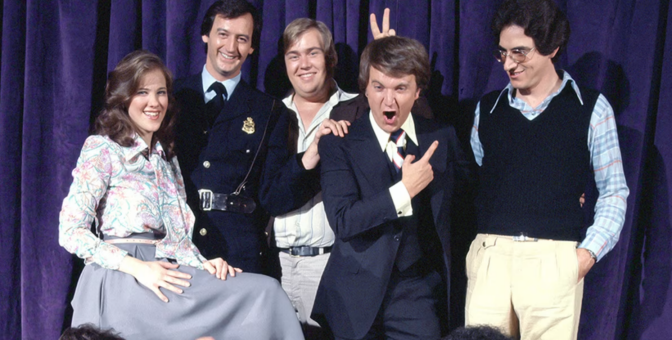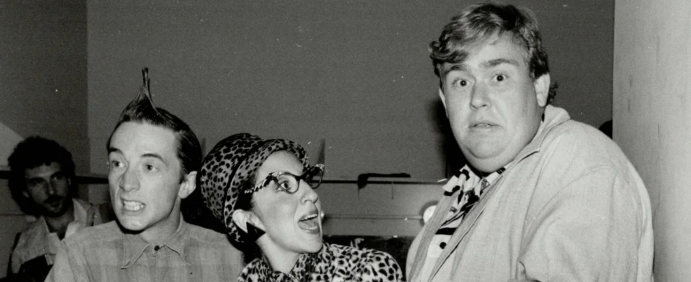
Netflix documentary film “SCTV: The Greatest Show You’ve Never Heard Of”, which was released several days ago, looks back at Second City TV (SCTV), a legendary Canadian TV comedy sketch show which was a big breakthrough for its several notable comedians such as Eugene Levy and Catherine O’Hara. At that time, they were ready for anything funny or amusing, and the documentary did a good job of presenting that exciting time of theirs as some of them fondly reflect on that.
I must tell you that I did not know much about SCTV before watching other recent Netflix documentary “Marty, Life is Short” (2026), which informed me a bit on SCTV as looking into the early career years of Martin Short. He was another prominent member of SCTV during its later seasons, and, as far as I could observed from the archival footage clips presented in that documentary, he and his fellow SCTV members were pretty hilarious thanks to their zany wit and irrepressible comic spirit.
Anyway, the documentary, which directed by Jason Hehir, begins with how SCTV was formed in Toronto, Canada in 1977. After the Second City, a renowned improvisation theater troupe in Chicago, became quite popular in US, more demand for new talented comedians followed, and that eventually led to the foundation of another Second City troupe in Toronto. As its several prominent members including John Candy looked for any possible way for more public recognition, there came an idea of creating a TV comedy sketch show, and that was how SCTV was started.
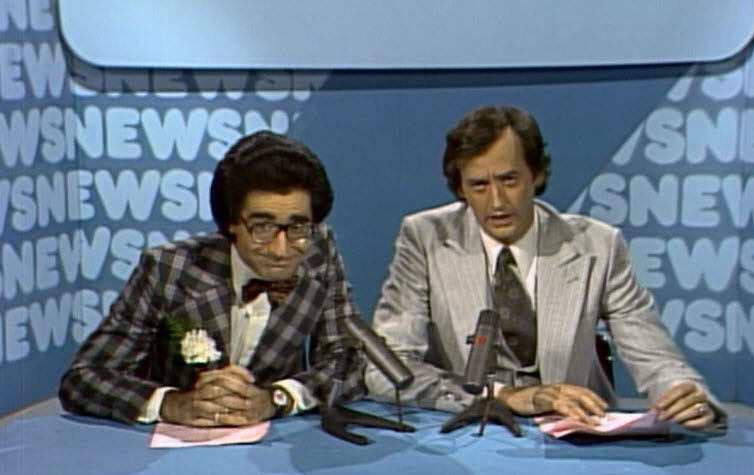
As reflected by its very title, SCTV presented itself a mock TV broadcast company, and its main cast members and a bunch of writers led by Harold Ramis steadily provided a series of comedy sketches packaged as mock TV programs. After almost 50 years, these old comedy sketches look quite old and tacky on the surface, but this glaring weak aspect actually works as a part of their charm and wit, and I must point out that some of them are still hilarious enough to make me laugh more than once (I particularly enjoyed a comedy sketch featuring O’Hara gleefully parodying Katharine Hepburn, by the way).
For the documentary, Levy, Short and O’Hara, who unfortunately passed away early in this year, gather together along with their several old SCTV colleagues, and there are some poignant moments as they watch some of the highlights from their SCTV era, which surely bring back a lot of good old memories from each of them. They remember how nice Candy, who sadly died too early in 1994, was to everyone in SCTV, and they also recollect about how valuable Ramis, who passed away in 2014, was as the head writer of SCTV. Besides being a talented comedian, Ramis also often made a good judgment on whether a comedy sketch would work or not, and every SCTV member was eager to make him laugh and then get his approval.
As SCTV became very popular in not only Canada but also US within a few years, the production team of “Saturday Night Live” (SNL) certainly became interested in recruiting some of the SCTV members, and that caused some unwelcomed tension and uncertainty inside SCTV. In the end, several SCTV members including Candy did an audition for SNL, but the SNL production team eventually decided not to recruit them, and Candy felt quite hurt when he was flatly told not to give up his “day job” after the audition.
Anyway, SCTV advanced more during next several seasons as Rick Moranis joined its main cast in 1980. In addition to working as one of its main writers, Moranis also created one of its most famous comedy sketches along with Dave Thomas, which turned out to be a far bigger success than they expected at first. They simply played two dim-witted Canadian brothers in front of the camera, but something clicked so well between them as they did more improvisation along the process, and, what do you know, the following huge success made them quite more famous and recognizable than the other SCTV members.

Unfortunately, this unexpected success of Moranis and Thomas caused some discord between them and the other SCTV members. Moranis eventually left SCTV not long after SCTV was moved to New York City as a NBC program in 1981, but there is no hard feeling between him and the other SCTV members, who do not say anything bad about him in front of the camera.
Around that point, Short joined SCTV, and we see how often his inspired comic performance enlivened the show. Just like the other SCTV members, he was willing to push him and others further for more laugh and amusement, and they all had a pretty jolly time together as diligently and zealously reaching for any comic possibility out there.
However, despite its critical success accompanied with two Emmy awards, SCTV was eventually shut down after its last season in 1983 as its production team and cast members came to have far less freedom than before. At least, many of its main cast members subsequently enjoyed considerable career success during next several decades, and their achievements in SCTV are still cherished by their various junior comedians ranging from Conan O’Brien to Kathryn Hahn.
In conclusion, “SCTV: The Greatest Show You’ve Never Heard Of” presents an informative presentation on the short but undeniably remarkable history of SCTV. I wish it could tell and show more about its main subject, but it did its job as well as intended at least during its rather short running time (88 minutes), and you will probably want to check out some of the best SCTV comedy sketches after watching it.