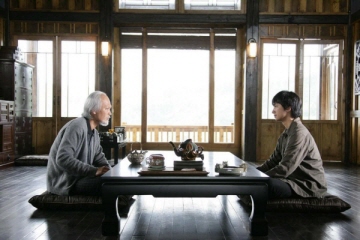
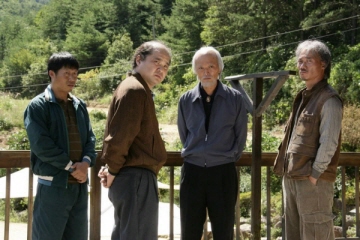
I Saw the Devil (2010) ☆☆☆ (3/4) : It has everything – including a toilet stool

“I Saw the Devil” provides almost everything to shock you and repel you – and I admired it at some degree. The movie acquired its notoriety even before its release in South Korea due to the conflict with Korean Media Rating Board(About 1.5 minutes was cut from the original version in the end). It has been striking our Korean audience with a little mercy since this Thursday while inducing discussions among them about the violence in the movies. I guarantee you, the movie will be the most controversial South Korean movie of this year.

 It deserves that place. Some dismissed it as “snuff film”, but the movie is not a tasteless exercise on the violence and the gore. It definitely belongs to the exploitation genre, but the movie deals with its inflammatory materials quite well while pushing us into lots of, lots of unpleasant situations with its appropriate style. In addition, the movie has some wry, morbid sense of humor amidst of blood, sweat, tear, and, (hold your breath), the excrement. There is the sequence where the character tries to find some object in the toilet stool after taking the laxative, and we get quite a graphic depiction of it. Ewwwww, I don’t like when that happens.

 The story is about a vengeful cat-and-mouse game between two violent characters that goes beyond the simple duel between the good and the evil. The evil one is a ruthless psychotic serial killer(Choi Min-Sik) who is far more diabolical than what he seems to be. You don’t want to come across that kind of seedy guy on the street, while never imagining what he is truly capable of. Whenever he, named Kyeong-Cheol, spots his random prey(always a young woman) in a right situation, he does not hesitate to revel in his murderous instinct. He attacks her, takes her to his lair, kills her, and hacks off her body. The movie does not retreating from his brutality. Although it’s still bloody and grisly to look at, the killing and its outcome are not shown too graphically while effectively making us scared and horrified.
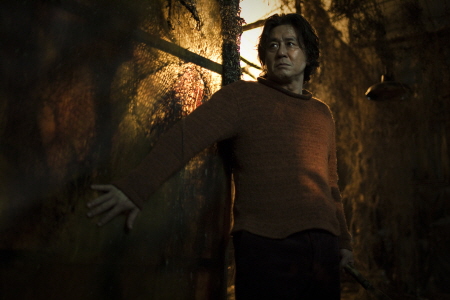
 

His latest victim is Ju-yeon(Oh San-ha), the fiancee of Soo-hyeon(Lee Byung-hun). Some time after she was taken away by the killer, her remains are found by the police and Soo-hyeon becomes devastated. Full of guilt and anger, he decides to deal with the killer for himself. The police has the list of the suspects, which somehow includes Kyeong-Cheol(it is not explained well in the movie). With the consent and that information from Ju-yeon’s ex-cop father(Jeon Kook-hwan from “Secret Reunion”), Soo-hyeon sets upon pursuing the serial killer with his resources.

 Soo-hyeon is not an average man. As seen in the opening sequence, he works in the National Intelligence Agency, and he has the skills and the devices. If he wants, he can sneak into somebody’s house and extract the information he wants from him by any means necessary. He comes to focuse on Kyeong-Cheol after checking other suspects, and eventually succeeds in catching him right on the spot after confirming Kyeong-Cheol is responsible for his fiancee’s death.

 After that, the movie walks into more disturbing area where the morality of the character is questioned. Soo-hyeon has the cold, merciless plan and he wants the killer’s life a living hell for his vengeance as long as possible. He sets Kyeong-Cheol loose, and then he monitors the killer without his knowledge. Whenever Kyeong-Cheol’s evil nature goes rampant, Soo-hyeon appears and pours another harsh punishment upon the killer without any pity. The cycle goes on, and now the predator becomes the prey.

 This repeated ritual of vengeance with escalating intensity on the screen is not comfortable to watch at all. It’s sometimes quite hard to identify with Soo-hyeon. Of course, he has a cause, but does it justify his behavior? Does it make any difference to him or others in the end? Furthermore, he even indirectly harms innocent bystanders in pursuit of vengeance. In one scene, he eavesdrops on Kyeong-Cheol violating the nurse at the hospital. Rather than blocking his action, he chooses to wait more just because he wants to punish Kyeong-Cheol harder by interrupting his pleasure. While preying on and punishing the savage monster, he becomes slowly bogged down in the moral quagmire. Remember that famous quote from Nietzsche about confronting with the monster and the abyss?


 Although it makes some points about the violence and the vengeance, “I Saw the Devil” has several weak spots that bothered me. The story resides in the familiar ground while going in a predictable direction, the characterization is weak, the plot has several holes(especially in the second part), and, above all, it does not stir my emotion as powerfully as Park Chan-wook’s infamous revenge movies. The finale is weak as a payoff and the story does not satisfyingly resolve Soo-hyeon’s problem

  The director Kim Ji-woon makes his movie compelling enough to watch for more than 2 hours. I wondered if he had a try at this for some fun. Like his previous works(“A Tale of Two Sisters”, “The Good The Bad The Weird”), he dabbles with the genre while ensuring his work to be technically polished in many aspects. Sometimes the movie becomes unexpectedly humorous with the plight of the killer, and it even delves into the territory not far from a twisted humor of “The Devil’s Rejects” when Kyeong-Cheol visits some luxurious mansion in the forest with the diabolical savagery hidden inside. There is the moment when some character has to take care of the problem with the screwdriver impaled his hand on the table, and it is both funny and cringe-inducing.

The movie is propelled by two lead performances. I don’t think the casting of Lee Byung-hun is successful, but he has enough presence to sustain our interest. Although we cannot help but think of his great performance in “Oldboy” while watching him, Choi Min-Sik captivates our attention again with a terrifying performance. Kyeong-Cheol is the evil force of nature; the tension of the story mainly depends on the possibility of him getting unleashed. Soo-Hyeon foolishly thinks he can torment this monster and he regrets about his error later. Supporting actors are functional at best, but I’d like to mention the actor Choi Moo-Seong, whose character is somehow horrifyingly entertaining.

After the achievements with uncompromising, skillful handling of the violence such as “Oldboy” and “The Chaser”, I have been very disappointed about how some recent Korean movies deal poorly with the violence as well as the story. As a matter of fact, there are some deplorable movies like “No Mercy” and “Outlaw” this year. Thankfully, “I Saw the Devil” handles its material very well and I’d really like to praise the movie for many good reasons. However, it remains as an exercise, and it goes too far from time to time. I like its humor, but the movie could have done better in this bloody carnage. This dark movie gave me an overwhelming and unforgettable experience, but will I go back to it again? And can I recommend it to you? I’m still debating with myself about it. And I think I warn you enough about what you will get.

Posted in Movies | Tagged , , , | 4 Comments

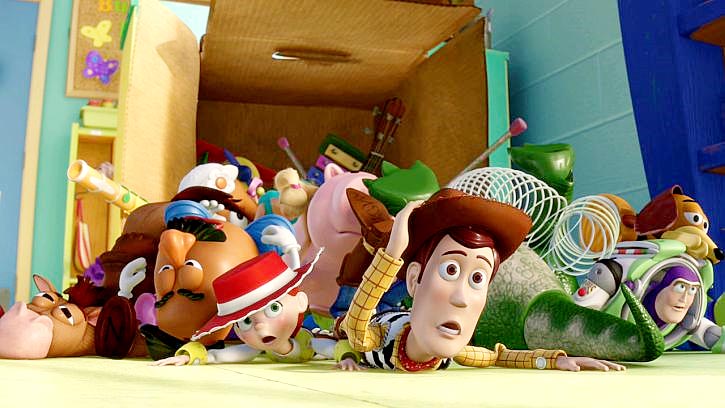
Toy Story 3 (2010) ☆☆☆ (3/4) : A dreaded moment has finally come for them

 “Toy Story 3” has nostalgic quality to me. Come to think of it, I virtually grew up with these two wonderful animations. When I was about to become a teenager, “Toy Story”(1995) was released and I was fascinated by the new kind of animation as a young moviegoer(Ah, I love those days when I could watch the movie as many times as I wanted). When I was about to go to the university, “Toy Story 2” (1999) arrived in a local theater in my town and I was delighted to meet these loveable characters I came to like.

 As a boy, I enjoyed Toy Story series as a fun animation, and I still like it as not only witty animations but also simple but good dramas about toys who are afraid of the instability of their status. While the first movie talked about acceptance and friendship from the story of the rivalry between Cowboy Woody and Astronaut Buz, the story of the second movie went further and the toys became more serious about their future. They were well aware of that they would be abandoned in someday, but, in the end, they chose a limited happiness and love instead of the ennui of immortality.

 In “Toy Story 3”, the day they have surreptitiously been scared of has finally come upon them. As shown in the opening sequence, their sweet time has quickly passed away. Now the toys have been stacked together in the chest instead of being scattered around the room. We notice the absence of some toys from previous movies. Their master, Andy, is not a child anymore. Now, because he is about to go to the university, his toys will spend a long or infinite time without him – if they manage to escape the dreadful fate of being discarded to a garbage truck.

 Through series of mistakes and misunderstandings, Woody(Tom Hanks) and Buz(Tim Allen) and other toys come to Sunnyside daycare center. They are greeted by the resident toys led by a teddy bear named Lotso, who likes to hug other toys in a fishy undertone in contrast his fluffy appearance and the mellifluous voice of Ned Beatty. While Woody still wants to be with Andy, other toys decide to stay in this place and they begin to like this place where they can be with children every day. However, they soon realize the daycare center is not the haven it seemed to them at first. So, their new adventure beyond the infinity begins again in rather fearful fashion.

 Frankly, and basically, the movie is a horror movie. From the Day 1 in the daycare center, the toys in the movie goes through several perilous situations and it is possible that we will may bid early farewells to some of them considering the intensity of situations they are forced to endure. What happens to them in the first close encounter with these ruthless toddlers is supposed to be comedy, and it works well, but sometimes it’s horrific. It’s funny and energetic, but it will probably induce wince not only from these poor toys. And when the denizens of Sunnyside reveal their teeth, the situation for them becomes as sinister as “Coraline”.

 The movie is the darkest story in the series. The situation is dour for Andy’s toys. Even if they succeed in getting out of their imminent dangers, the future is still not bright for them. Unlike previous movies, Andy’s room is not waiting for them at the end of their journey this time, and most of them will probably be just remained as the mementoes being forgotten day by day in the attic. In case of Woody, his situation is a little better, that does not make much difference. Although they willingly made a choice in previous movie because they wanted to be loved even just for one day, they desperately want to avoid its consequence. Eventually, through this dark adventure mixed with the confrontation with their mortality, they come to learn something not different from the one we learn in our life.

 Maybe my description so far sounds daunting to you, but the movie is fun as the model Pixar animation. The screenplay by Michael Arndt(“Little Miss Sunshine”) ,based on the story by John Lasseter, Andrew Stanton, and Lee Unkrich. has some touches of recycling from the formulas in previous movies, but the story has been always in the first place in every Pixar animation. The drama is solid as usual. The villain of the story is presented with an understandable past. There are many witty moments sprinkled throughout the movie, especially when the story follows the footsteps of the prison movies like “The Great Escape”. I’m not sure whether a Mexican gag on Buz is effective or not, but I am happy to report that the audience with me had a big laugh with that gag. On sidenote, I’m curious about how it is presented in Korean-dubbing version, but I do not like to spend money again on watching 3D.

 In case of 3D, well, like any other moviegoers, I’ve been tired of it for a long time. The funny thing about 3D is that it’s noticeable when it’s bad, and it’s unnoticeable when it’s good. 3D effect in “Toy Story 3” is nice, but it does not seem particularly necessary at all and I was again confirmed again of its problem with brightness and other things when I took off my glasses for a while(I recommend you to take off the glasses during home video sequence). At least, “Day and Night”, a short animation before feature presentation effectively uses the 3D effect. It shows that good 3D goes inside the screen, not outside.

 I laughed frequently during watching the movie, and I was joyful to see the guest appearance of Totoro), but I have to confess that I have some reservation about the movie. I like it, but I don’t love it as much as many enthusiastic reviewers. The story tells about the fate we knew it would come to the characters, and we get exactly as much as we have expected as a result. Despite its solidity, the story sometimes is shaken during its frantic actions. Overall, it leaves me the impression of an extended epilogue.

 However, as we saw from “A Bug’s Life” or “Cars”, the average Pixar animation is still better than at least 80% of the animations coming out every year. With great animations like “Ratatouille”, “Wall-E”, and “Up”, the standard for Pixar has gone higher and higher, and “Toy Story 3” just looks like one step down compared with them. It’s not their best film, but people at Pixar know well about how to pull our heartstrings and the finale has undeniable poignancy especially in a brief wordless, bittersweet moment. Goodbye, dear toys, I don’t know whether we’ll meet again, but I had a good time with you.

Posted in Movies | Tagged , , , | 4 Comments

Museum of Science & Industry (Chicago, IL) : 04/06/10

These photos were taken on 04/06/10 at Museum of Science & Industry. Some of them were previously introduced at my Korean blog.
Posted in Chicago, Photos | Tagged , | Leave a comment

Clouds in the Sky – with the campus buildings

There were always the clouds in the sky during the last weekend.
Posted in Photos | Tagged , | Leave a comment

Cats and a Dog

Cats are hungry or sleepy in my campus; a Dog is having a good time with its master.
Posted in Photos | Tagged , , | Leave a comment

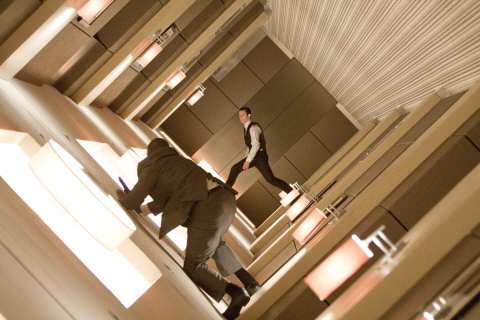
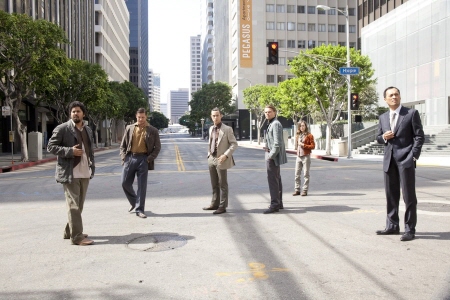
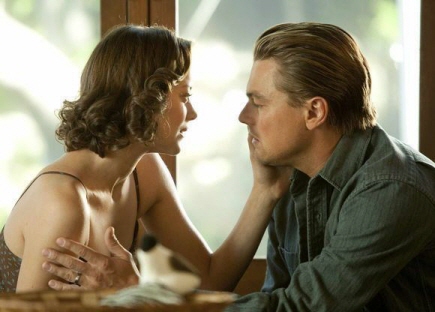
Inception (2010) ☆☆☆1/2(3.5/4) : Descent into the labyrinth of dreams


 Surprisingly to me, “Inception” is a small movie when viewed objectively from the outside. The story is not ground-breaking; it’s in a very familiar area where “Matrix” and other movies about the mind-bending world belong. The movie stays inside its settings and rules, and sticks to them even at the finale.

 Now it probably sounds uninteresting and mundane to you, but don’t underestimate it; “Inception” is definitely one of the most intriguing movies of the year and deserves all the buzz it has gotten. The director Christopher Nolan provides us an intelligent blockbuster we desperately need among tiresome blockbuster sequels in this summer season, and the movie fiercely descends into the labyrinth of dreams, the risky world where the strict rules can be as formidable as the intractable subconsciousness of a human mind.

 With the enormous hit of “Dark Knight”(2008) and a firm support from the major Hollywood studio(the production cost is at least 160 millions dollars), Nolan chose to make the next movie from the screenplay he began to work on around the time when he directed “Memento”(2000), his major breakthrough work. It surely is tempting for any talented director to bloat up his idea in early years when it gets the chance for made into a movie, but Nolan made a relatively small movie while keeping his ground. The result is a tremendously fascinating contradiction. It still retains the scale Nolan might have conceived at first, but you’ll see a huge structure built inside when you plunge into it.

 The movie is both simple and complex. It proceeds the narrative straightforward in its own way and we eventually see how dense the whole story becomes. While delving deeper and deeper into the multi-layered world it builds upon the screen, we see the dream upon the stacks of the dreams like the hero upon the stacks of the heroes in “Memento”. It sounds quite difficult, but it’s easy to appreciate how elaborate the movie is thanks to Nolan’s masterful direction and storytelling. We never lose the sense of the direction even when things get very messy and urgent for the characters.

 In the world of “Inception”, the advanced technology makes it possible to get inside the dream of other people. With a special device looks like a metal briefcase, more than one people can go inside the subconsciousness of the subject through designed dreams. They can steal, or “extract”, the informations or the ideas from the subject they want(Freddy Krueger must have lots of annoyance due to the intruders beside him in this world). It sounds pretty simple, but the human subconsciousness is a tricky area, and it is not a easy job at all even for the professionals like Cobb(Leonard DiCaprio) and his partner Arthur(Joseph Gordon-Levitt as smooth as his suit).

 Because of his expertise in this field and associated illegal activities, Cobb has been a fugitive hiding from the authorities and the companies not so pleased about his doings. He has been separated from his family for a long time and he miss them. One day, a powerful figure named Saito(Ken Watanabe) approaches to him with the offer he cannot refuse. Rather than extraction, Saito wants Cobb to do “inception”. Instead of stealing the information from the target, the heir of Saito’s competing corporation(Cillian Murphy), Cobb is going to plant the foreign idea into the target’s mind. And he will get the immunity if he succeeds in doing this nearly impossible job.

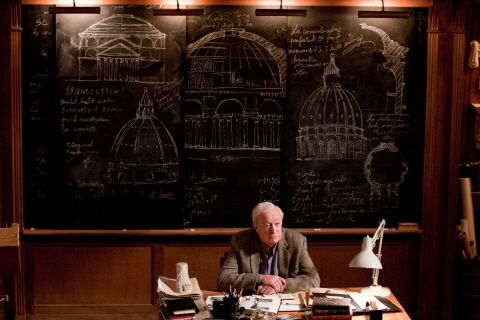
  The story is that of a model caper movie – this job is of course “One last hit” for Cobb, and he recruits other members one by one for this special job. They carefully devise the plan from the preparations and researches. There is an expert(Tom Hardy) who can disguise as anyone in the dream, there is a chemist(Dileep Rao) who can concocts the special medicine for their project, and then there is an young college girl(Ellen Page) recommended by the Professor(Michael Caine), Cobb’s father-in-law, for designing the complex maze they and the target will share in sleep.


 The girl, appropriately named Ariadne, is new to this kind of job, and the rules of the dreamworld are explained to us as well as her by Cobb. Along with her, we learn about things possible and things limited in this world. Anything can happen in the dream, and you can make such a spectacular sight like the city folding into half as shown in the trailers of the movie. However, it is wise for Cobb’s team to draw the attention as little as possible from the subconsciousness, which can be as hostile as our biological immune system to the invaders. Plus, it is also possible that the target has learned how to guard his mind.

 After the test-run with these settings, the movie dives into its world at full-force. Rather than dreamworld of elusive logics like Buñuel or Lynch, the movie is the dreamworld of cold, intellectualized logics (it even features a well-known design from one of M.C. Escher’s famous paintings) and it is probably the main reason why many critics are disappointed with the movie in varying degrees. Nevertheless, what Nolan creates on the screen is equally compelling one in its looks and structure. From the starting ground, he drills with the logics of his story far below to the bottom and he creates the massive network of dreams inside his small world as a result. It’s mind-boggling sometimes and we’re not sure about whether what Cobb sees is real or not at some points, but we clearly know the rules and the mechanism of a big picture.

There is an adamantine mechanism between the layers of dreams. It seems predictable, but it corners Cobb’s team into difficult situations when the variables they ignored or could not predict work into its multiple equations. Nolan consistently increases the level of suspense while making dazzling moments like the sequence with the zero gravity, and he also finds the way of simultaneously proceeding the story and the action in his maze. With frantic but tight editing by Lee Smith and the cinematography with distinctive tones by Wally Pfister, we’re fully absorbed into the characters’ situations. Amid several shootings and chases in the movie, the stake goes higher for the characters we come to care about, and more tension gets compressed harder into such a small story. Watching the plot thickened in the movie is a lot like the house of the cards precariously being built with lots of trembling and shuffling.

 The characters are, above all, the ciphers in the story. You can substitute their names with their occupations, but Nolan has a bunch of reliable, talented performers who can fill some humanity in their roles. While not so different from his performance in Scorsese’ “Shutter Island”, Dicaprio gives another solid performance as a man haunted by his painful memory of his wife. She is played by Marion Cotillard, and she and Dicaprio provide a small heart at the axis of the metallic story. Regardless of how you feel about the story, you’ll know there is the emotional truth in the base. Nolan casts recognizable actors like Pete Postlethwaite even in small roles, and great Michael Caine effortlessly steals the show even with the brief appearance.

 At present, “Inception” is being hailed as Nolan’s another masterpiece by some, and has got some negative reviews from the others. I’m a little skeptical about the former’s claim while understanding the latter’s points, but I could not help but lose myself into the movie by its power. I have to admit that the movie does not go into the other possibilities inherent in the premises(e.g. the supposed conflict between the companies), but the movie sets out to focus intensely on the area it wants to deal with. And it feels relatively short despite its running time(148min) – that fact is interestingly resonant with the story itself.

With breathtaking images and the compelling narrative, “Inception” provides us a memorably awesome world. Among the references of classics like “Solaris” or “Citizen Kane”, Nolan makes us to contemplate on the movie as the dream while depicting how broad and deep world the human mind can be. His dream world is a little too much self-contained and neat, but I admire how he pulls considerable excitement from it while stimulating our thoughts. When I watched the movie on this Wednesday, I saw many of audiences talking about it after the end credit rolls. How often do we come across such a scene like that during the summer season nowadays?

Posted in Movies | Tagged , , , | 4 Comments

Moss (2010) ☆☆(2/4) : A rural mystery – more than 2.5hr


   After so much hoopla before its release, “Moss”, a much-anticipated Korean thriller of 2010, turns out to be very, very disappointing in almost every way you can imagine due to the fatally misguided direction. It is lazy, incompetent, and, above all, not compelling at all. Despite some good basic elements of a thriller in the screenplay, it is more close to the ennui of the bright summer days in a country town, and, boy, the running time is more than 2.5 hours even if you exclude the end credit.

 One of the main problems is immediately shown to us from the very first sequence; it explains about 50% of the mystery so thoroughly that I even wondered whether I came in after the midpoint of the story. In less than 25 minutes, you get nearly everything you need for drawing the outline of a big picture, and, believe me, I do not spoil your entertainment even if I describe what happens during this prologue in the next paragraph.

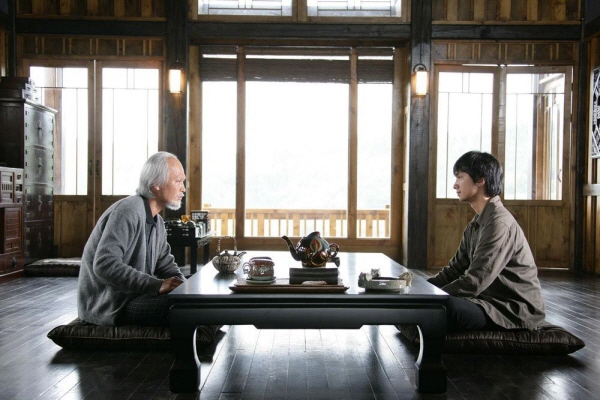
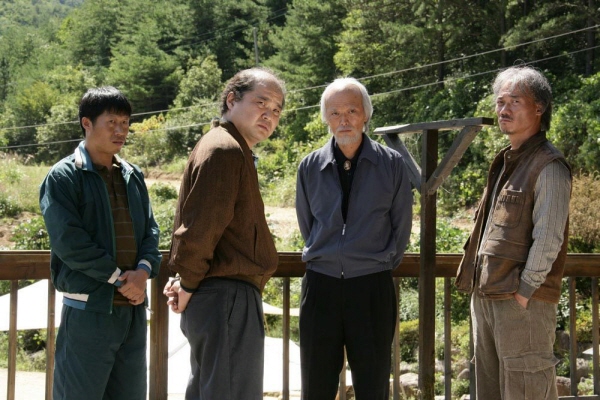
 Instead, I’ll just say that we are introduced to two main characters and are informed about their past which is not so clean. One is the rural cop(Jae-young Jeong) who is good at the violence as well as the manipulation. The other one, Mok-hyung(Jun-ho Huh), is a deeply religious and idealistic man who was betrayed by his peers in his church and got imprisoned after that. We come to learn about how they met each other, how they collaborated with each other, and how they started their secret plan that leads to the creation of their small exclusive community in the rural mountain area.

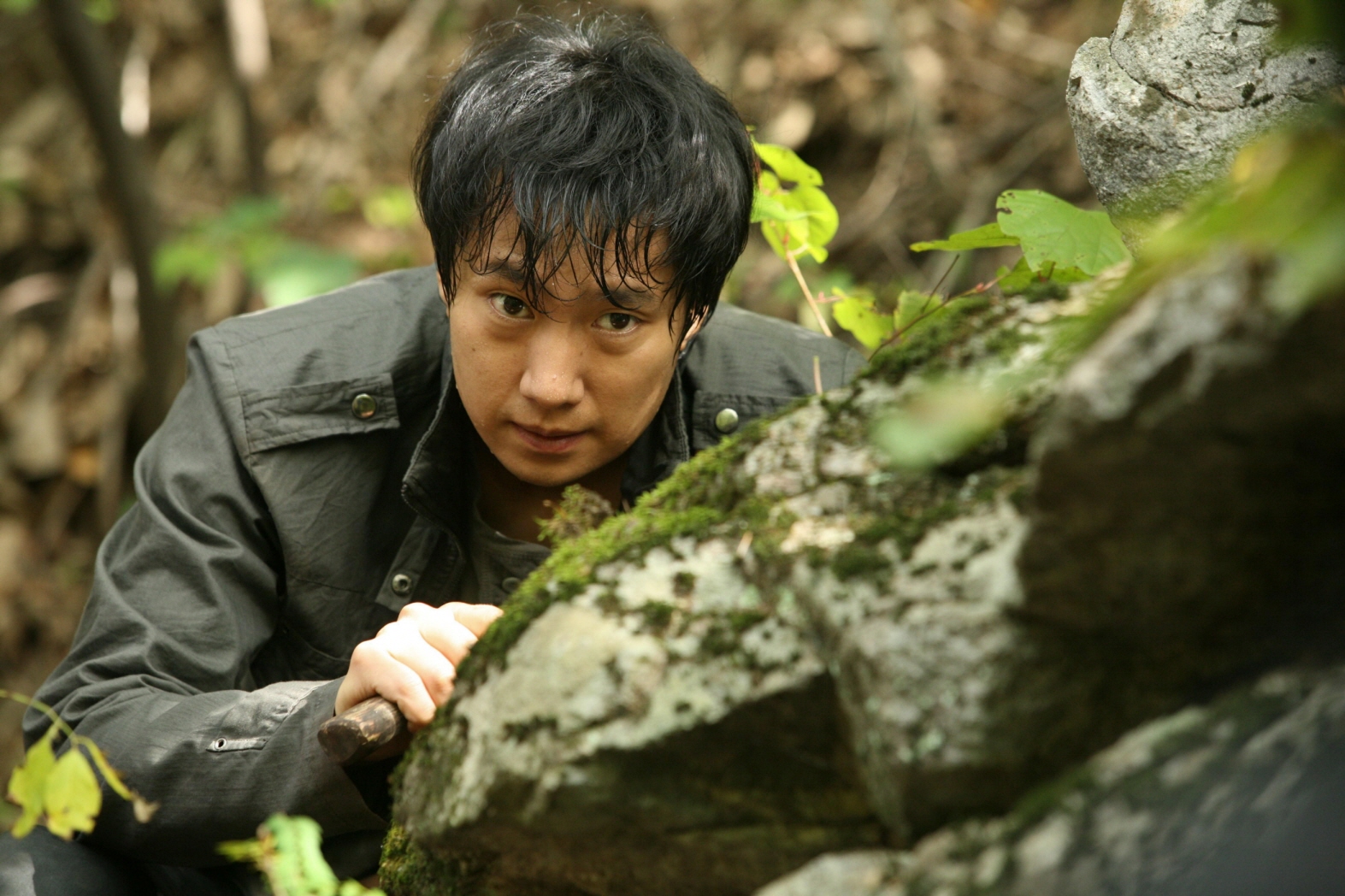
 No, neither of them is our hero. He is Hae-duk(Hae-il Park), the estranged son of Mok-hyung. Mok-hyung left his wife and his son a long time ago, and he has been a lot more like a stranger to his son. Nevertheless, after getting a message, the son comes down to some small, quiet village where his father had led a reclusive life.

 He sees his father’s body in the shabby room of his house. He attends the funeral with other village people. He senses that something is fishy about with his father’s demise as well as the village itself. He begins his own search for the truth, and the things get complicated when he drags in the prosecutor(Jun-sang Yu from “HaHaHa”), with whom he had an unpleasant incident resulting in the recent social downfall of both.


 Because the movie already makes us two or three steps ahead of Hae-duk, there are a few reasons for us to be interested in his investigation. It is quite apparent that the cop, now the head of the village(and still Jae-young Jeong), is a scheming man who knows and controls everything in the town. His house is located on the hill where he can look down on the village, and it even has the switch for the big lighting equipments in the village, not so different from what you see at the baseball stadiums.

 I know an effective thriller can be made with hiding little from the audience. Many good thrillers have their strength in how to get the finale, not in the ending itself. However, “Moss” is disjointed in its approach. After handing out a lot of crucial informations during the first half, it still hangs on one simple mystery while simply going straight to the predictable finale. The tension is desiccated and we lost our interest as a result. And a cheap twist not in the original work does not makes a little of sense at all; it feels more like a tacked-on plot device. Okay, we were fooled, so what? Does it make the story any difference? And how does that scheme work? How can it fit into the whole picture? There may be an explanation, but I could not feel it and I am still baffled about it.

 If the movie were faithful to a popular Korean comics it was based on, even that ending would not be such a big problem. Out of curiosity, I checked several pages of it and I found it very engaging and full of cinematic possibilities. It is the dark portrait of the insidious side of human nature, and the grey world where nobody is entirely clean. Many people interpret it as the allegory of modern South Korean society, but there is an universal aspect in the story in that it depicts the individuals trapped and frustrated by the corruption and many other negative sides of the society.


 The story of the original work is convoluted with the flashbacks(one of them is the prologue sequence in the movie) and the surprising revelations while the background is drenched with the evil influence hidden inside. A frustrated, confused, and flawed character is surrounded by the colorful characters, and they are strikingly, and sometimes grotesquely, depicted in broad touches. With this fabulously twisted noirish setting, you can swallow any ending no matter how preposterous it is.

 You don’t have to be 100% faithful to the original work to make your own movie, but the director Woo-suk Kang does not provide anything intriguing enough to substitute its unforgettable qualities after his thoughtless deconstruction. By making the storyline far more straight, he and the screenplay writer Ji-woo Jung completely eradicate the most compelling thing in the origianl work, and the sense of confusion and frustration is completely lost. With too much and too early explanations, the movie feels redundant and saggy in a desperate need of trimming the running time(163min). The sense of the darkness pervading the pages is vanished on the screen, and the movie is pathetically stuffed with the cheap gags every 5-6 minutes. As a matter of fact, I was so bored that I checked that pattern with my wristwatch while enduring the second half of the movie. We all know how Korean country town can be really creepy and humorous in Joon-ho Bong’s “Mother”; this is quite a degeneration.

 The vivid characters and their intricate relationships are literally butchered in the movie version. The good cast is wasted on this bland, wretched result. I saw some of them in other movies, and I know they are good, talented actors. Unfortunately, they are burdened with the bad script. Their performances are inconsistent or awkward to say the least. Hae-il Park is nicely cast as a struggling hero, and Jae-young Jeong has some presence as the arch-villain, but, like all other actors, they are victimized by one-dimensional characters. Jeong was reported to say during the interview that he didn’t regard highly of Brad Pitt’s performance in “The Curious Case of Benjamin Button” because it was just an actor playing an old man. Sir, in case of yours, you’re just a bully with nothing changed after so many years except lots of make-up.


  The deliveries of the lines is so clumsy that they sound pretty much like the first day of the script reading. It would not make any difference if they were reading the textbooks aloud. The movie is currently shown with English subtitle in Seoul, and I envy non-Koreans who will be buffeted by the subtitle from this distracting sound and fury.

 Woo-suk Kang has made some entertaining commercial films in the past, but, after the big success of “Public Enemy”(2002) and “Silmido”(2003), his recent output were unsuccessful in case of the quality. Two sequels for “Public Enemy” were far inferior additions to the entertaining original, and “Hanbando”(2006) was one of the most atrocious Korean movies in the 2000’s. He said he chose to direct this movie because he needed some change, but the outcome is a turgid, uncharacteristic adaptation due to his delinquency in his own comfort zone. Instead of fully utilizing the possibility of a wonderful country noir, It becomes just another story of simple confliction between the good and the evil with the cardboard characters. I could not care about the story, let alone the characters. How can it build the suspense from that?

 I remember Kang saying two years ago he was shocked by Christopher Nolan’s massive hit “Dark Knight”, and implying he learned a lot from it. Well,  it turns out Kang’s test score is poor despite the long, long answer he has given. Hitchcock said the suspense is like watching a time bomb hidden below the table; “Moss” has only some spare parts of the bomb below itself to bore us.

Posted in Movies | Tagged , , , | 9 Comments

When I get out of the campus cafeteria

 When I get tired of the campus cafeteria, I just go to somewhere and eat something else.  I shot some of them during the last two months when I got the chance to do it.
Posted in Photos | 4 Comments

They cannot be aged, but they’re not boring.

 Grand Poobah’s recent post inspired me to assemble these photos from my personal documents. Yes, some of them are timeless and tiresome, but they looked fabulous in one spring afternoon and I liked them a lot.
Posted in Chicago, Photos | Tagged | Leave a comment

Cloudy or Sunny, It’s hot anyway

 Whether it rains or not, it’s always humid and hot. And people and animals look for some cool places.
Posted in Photos | Tagged | Leave a comment