


-
Recent Posts
- The Last First: Winter K2 (2026) ☆☆☆(3/4): A deadly expedition at K2
- Look Back (2026) ☆☆☆1/2(3.5/4): A collaboration between two talented girls
- Céline and Julie Go Boating (1974) ☆☆☆(3/4): A long but delightful romp
- The Stranger (2025) ☆☆☆(3/4): Nothing matters to him…
- Digger (2026) ☆☆(2/4): Another ambitious misfire from Iñárritu
- The Assassin(s) (2026) ☆☆1/2(2.5/4): Against a cover-up
- Blanket Wearer (2024) ☆☆☆(3/4): Her penniless one-year nomad project
- The Dreamed Adventure (2026) ☆☆☆(3/4): An archaeologist back in her hometown
- Late Fame (2025) ☆☆☆(3/4): Sudden attention to an old ex-poet in New York City
- Possible Love (2026) ☆☆☆1/2(3.5/4): A sublime quartet drama by Lee Chang-dong
Blogroll
Interesting Windows
Movies
Categories
Meta
Archives
My Photos
-
Join 831 other subscribers
Blog Stats
- 1,339,514 hits
Seongyong’s Twitter
Tweets by kaist455
Presumed Innocent (1990) ☆☆☆ (3/4) : A Prosecuted Prosecutor
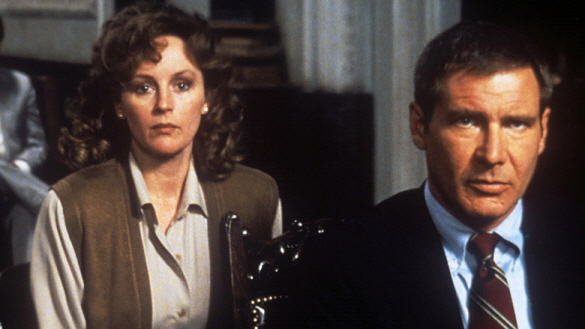
“An innocent man has nothing to fear, remember that.”, said the cop in Hitchcock’s” The Wrong Man” to Henry Fonda’s arrested character, but we all know his saying is not true at all. Guilty or not, our fate will eventually be decided at the courtroom where the lawyers make arguments on your culpability in front of the judges and the jury. And in that inexorable system pursuing the justice, we tremble in fear for the sheer possibility of punishment sentenced upon us.
In Alan J. Pakula’s 1990 movie “Presumed Innocent”, our hero Rusty Savich(Harrison Ford) is the part of that system. In opening sequence where the empty courtroom is shown with the glum solemnity, he explains us what he does in this place that is devoid of hope and optimism. As a prosecutor, he determines who is to be charged, and presents the evidences for his argument for the defendant’s culpability, and waits for the verdict and the following sentence. He is the deputy chief of the district attorney; he knows well about how it works. Now, he finds himself trapped in a deep trouble while being on the other side.
His plight begins with the shocking incident in which one of his attorneys is found murdered in a very brutal way at her home. Because there are less than two weeks left for the election, Rusty’s boss Raymond(Brain Dennehy) wants the case to be solved as soon as possible. He personally demands Rusty to take the case, and Rusty reluctantly follows his instruction due to his past relationship with a murdered attorney, Carolyn Polhemus(Greta Scacchi).
Carolyn is the woman who is very good at playing what roles her men want, and she approached to Rusty as a confident, idealist attorney. She brought him a tough but interesting case, and, after their successful result, they began a secret affair. However, several months ago, their relationship is ended when it was clear that she regarded him as one of stepping stones in her career. He rejected her favor and she dumped him for the other man without any ounce of regret. Rusty still does not get over his romantic obsession toward her, and Rusty’s wife Barbara(Bonnie Bedelia) is very bitter about the fact that her husband remains infatuated with Carolyn even after her death.
Suddenly, the evidences against Rusty start to appear during the investigation and the Hitchockian nightmare begins. He is accused of the crime by his peers. His house is searched for any other crucial evidences. He is even arrested by the police officers at his house. He hires a good lawyer, but the chance of the acquittal is pretty low for him. And several small but strange things perplex almost everyone in the courtroom and lead the trial to unexpected turns.
Amidst of all these happenings, Harrison Ford does as little as possible on the screen while revealing few things about his character’s inner feelings. That is the right choice; we’re never quite sure about his innocence while having some trust in his character. We know Sabich is in deep fear for the outcome of this trial. We know he is a man of the decency and the righteousness thanks to Ford’s taciturn presence. He’s willing to testify honestly about his flaws to the jury although his lawyer strongly advises him not to do it.

Nevertheless, that does not mean that he’s innocent; we also know he’s still deeply haunted by the memories of Carolyn. As one of his peers points out(“you always had the cork too tight”), he represses lots of his emotions behind his stoic face and some possibility cannot be easily discarded. After the big success of Star Wars and Indiana Jones, Ford had tried to do something different in several movies, and the movie was one of his successful turns. He provides a fine balance between the trust and the doubt as the center of the story.
Pakula built his director career with several quiet but impressive thrillers with the hidden dark force such as “Klute” and “All the President’s Men” in the 1970s, and “Presumed Innocent” grips us with the screen filled with that same still uneasiness. Its dextrous storytelling leads us to the finale in a complicated but lucid way without giving too much hints.
He and Frank Pierson(“Cool Hand Luke” and “Dog Day Afternoon”) give a good adaptation of Scott Turow’ mystery novel. Before starting the writer career, Turow(he has recently published the sequel to his book, by the way) had been a lawyer like John Grisham and he provided realistic materials for the movie. Pakula and Pierson focus on making the drama credible as well as authentic. The main details of the murder case are succinctly delivered to us in the tight courtroom drama without losing any suspense. Cinematographer Gordon Willis, “The Prince of Darkness”, provides the daily atmosphere with the dark undercurrents, and John Williams gives exceptionally subtle moments of unstableness and desperation with probably the most brooding score in his career.
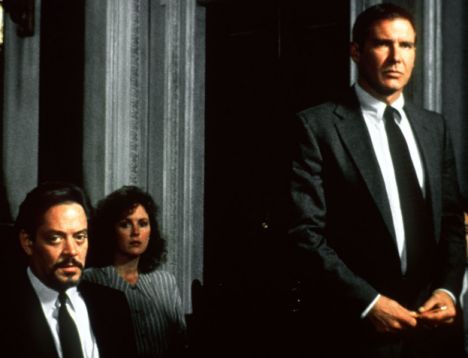
The supporting actors surrounding Ford are talented enough to play human beings who are holding their cards behind the back. You will discover their subtleties on the second viewing. I will not reveal much about them, but I just want to say we have these wonderful and recognizable actors like Dennehy, Bedelia, Scacchi, and other three who are sadly no longer with us now. Raul Julia is unflappable as a smooth, wise lawyer who clearly perceives the situation and what’s the best for his client. John Spencer plays a loyal cop friend of Rusty who prefers the poetic justice to the juristic one, and Paul Winfield is amusing as the judge presiding over the case.
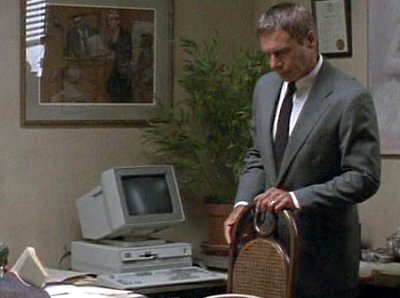
While revisiting the movie in HD, I realized again how some aspects of the movie felt a bit dated(look at these computers!). The forensic techniques are more advanced years after the movie came out, and Rusty will probably face the truth far earlier in our time. Nevertheless, the story itself is compelling enough with our universal fear of being accused and prosecuted. Unlike flashy, quick-cutting styles rampant on TV(CSI, anyone?) and in the movies nowadays, the movie takes considerable time to build the characters and their situations. The tension is mounted step by step in the stillness filled with ambiguity. And we’re agitated because we become to care about what will happen to them. In the end, we don’t see the obligatory sequence where everything is explained; we see how a devastating blow it is to real people.
The Accidental Tourist (1988) ☆☆☆ (3/4) : A Healing Process
 When I observed the lifestyle of Ryan Bingham in Jason Reitman’s wonderful movie “Up in the Air” early in this year, Lawrence Kasdan’s 1988 movie “The Accidental Tourist” came to my mind. Like Ryan, Macon Leary(William Hurt) knows a lot about traveling around by plane. He can tell you how to pack your bag as small as possible(“In travel, as much as in your life, less is invariably more”). He can tell you how important it is to carry several travel-size packets of detergents. He can tell you why a gray suit is a full proof choice in any situations. He also can tell you where to have a real American meal in London.
He does not like traveling much. He’d rather stay at home than going outside, but that is exactly the reason why his publisher saw him as the ideal candidate for the business travel guide writer. For people who don’t like traveling, Macon is the guy who can find useful advices while traveling around the cities. Several excerpts from his guidebook, “The Accidental Tourist”, are humorously quoted in the movie, and you will find them quite useful for your next trip if you want to avoid strangers while feeling like being still at home. Following his advice, I used my Chicago travel guidebook with Blood Meridian as a standby in April.
He has led his life in a way not so much different from his travel guide; he has human interactions as little as possible while maintaining his small world under his control. However, recently, his world is not the same as before. A year ago, the senseless tragedy had struck him and his wife Sarah(Kathleen Turner), and we clearly see the man helplessly paralyzed by the hurt and grief behind Hurt’s detached face. When he saw the dead body of his son, he was completely devastated but chose not to open up his feelings. Now more withdrawn than ever, he has kept that on as if nothing much happened in this emotionless state.
Two changes come to him from the inside and the outside, respectively. The first one comes from his estranged wife. While hurt as much as him, she has been frustrated with her husband’s impassivity and finally decides to move out of their house. Like anything happening around him, Macon accepts her decision with the laconic manner. With some few adjustments, he continues to live and work as scheduled before while trying to deal with his changed situation as well as the sense of the loss still haunting him.
That is just the prelude for the second change, a far bigger one. When Macon goes abroad for another business trip, he is in trouble in finding the place to take care of his son’s dog. The dog seems to have been affected by the tragedy and the changed environment, and its usual kennel rejects it due to its aggressive behavior to strangers. Fortunately, he is helped by a dog trainer named Muriel Pritchett(Geena Davis), and she instantly comes to like him — and instinctively senses that he really needs help. She approaches to him with casual conversations and her sunny personality. He is baffled by this quirky woman. He does not want her in his life and curtly aborts her phone call later.
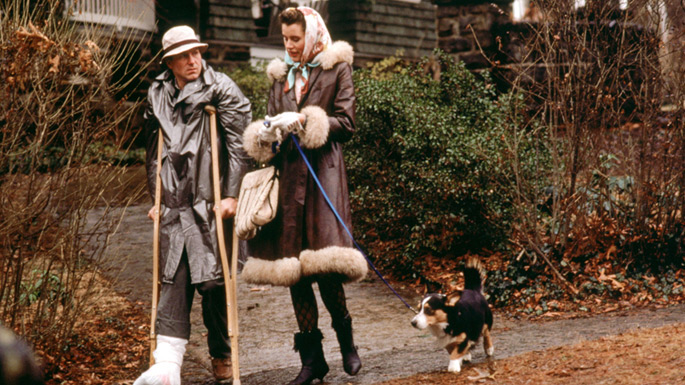
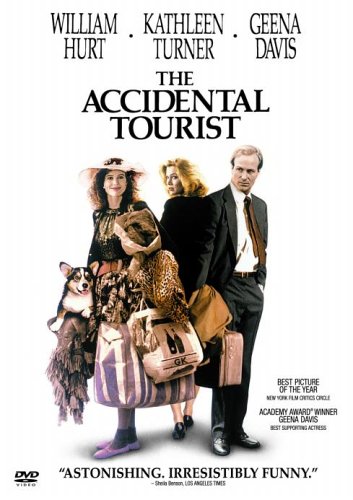 Soon he needs him for the other reason. After the unfortunate domestic accident and his injury caused by it, he temporarily lives with his siblings at the family house. When “the Split Personality” of the dog cannot be ignored more frequently than before, he seeks for Muriel’s help. She comes more close to Macon while fixing its temper.
Under her influence, Macon slowly comes out of his shell. In the warmest moment in the movie, he reluctantly-but eventually-opens up his heart to her even though he initially came to her house for rejecting her dinner invitation in a written note. Muriel tenderly leads him to her bedroom with the soft pink light. They lie together on her bed, and he mutely accepts her(“I just want to sleep.”). After that night, he begins to live with her and becomes a friend of her young petite, unhealthy son. The possibility of the new beginning with them is dawned upon him. However, the chance of going back to his past comes again by his wife. He finds himself at the fork where he really has to decide by himself.
The story belongs to a familiar territory, but “The Accidental Tourist” is enjoyable in its own way. While unfolding the plot in a somber tone with John Williams’ monotonous but sensitive score, it digs small laughs as well as real emotions throughout the story. Macon’s siblings lead more isolated life than him in the family house, and their eccentricity is one of major sources of the humor. For example, they do not mind answering the ringing phone because they don’t feel the need due to a strange but somehow logical reason. Being nearly at a loss at the outside, they find the safety and the comfort only in their family house. They try to make a controlled environment in their house with the routines like ordering the groceries in the alphabetical order.
Their story is both a good contrast and a good comparison to Macon’s. He wants to continue his lifestyle, and he has no problem with going back to his siblings. However, unlike them, he discovers that he cannot go on like that anymore. His problem will be still remained inside and will always hurt him even if he tries to ignore it. Through Muriel, he realizes what he really needs and can’t deny or resist that. Once awakened, there is no going back.
Meanwhile, his sister Rose(Amy Wright) experiences her own change. After a coincidental encounter with Macon’s publisher Julian(Bill Pullman) and the confirmation of their mutual feelings at Thanksgiving party(with the turkey cooked at 58C/140F!), she finally marries him to leave the house. However, her brothers(David Ogden Stires and Ed Beagley Jr. – as colorful as Wright) become very helpless without her in a few days, so she returns to the house and her marriage is strained. That prompts Macon to step in others’ matter, something he has never done before. When Julian tells him about his and Rose’s problem, he advises Julian how to handle the situation by stimulating Rose’s tendency to get things organized: “Get things under control.” After that turning point, intriguingly, each of them finds the way to happiness in the opposite directions.
After writing the screenplay for “The Empire Strikes Back”(1980) and “Raiders of the Lost Ark”(1981), Lawrence Kasdan started his directing career “Body Heat”(1981), a stunning(and steaming) neo-noir masterpiece. Although his directing career is near a moratorium now, he made several good films before falling down to the mess like “Dreamcatcher”(2003), and “The Accidental Tourist” is one of them. Based on Anne Tyler’s novel with the same name, he and co-writer Frank Galati(I saw Becket’s “Endgame” under his direction at Steppenwolf Theater during my trip in April) faithfully transfers the story, the characters, and the atmosphere to the screen while giving the final product its own life. The movie is about small things including gestures and mannerisms; we learn about the characters through these as well as well-delivered dialogues.
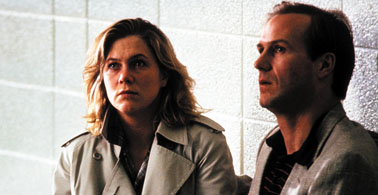 The cast give uniformly good, nuanced performances, and William Hurt’s subdued performance is one of the best in his career. While playing an emotionally shut-out guy, he miraculously conveys the emotions hidden and stuck behind the thick barrier. This is the man who is tempted to sleep more in his comfort blanket while being irreversibly awaken to the sunshine from the outside. With masterfully modulated acting, Hurt illustrates Macon’s emotional rehabilitation process in a subtle, convincing way, and that’s the main reason why the expected ending fabulously works.
Kathleen Turner played together with Hurt as lusty lovers in “Body Heat”. It’s intriguing to see these two actors as another couple in far different light under the direction of the same director. Sarah leaves Macon because she wants feel something, but it’s not easy for her to get out of the habits and she finds herself coming back for the reconciliation with husband. With the character a little softer than in the book, Turner makes Sarah more than the interrupter and the meaningful conversation in the hotel room in Paris has a quiet dramatic power. As sensible adults, both characters admit what cannot be done in their situation and console each other.
The movie was nominated for the Academy award in 1989 in four categories including Best Picture, and Geena Davis won an Oscar for her lively performance. You’ll understand the reason when she appears for the first time on the screen. Muriel is the life force with lots of wackiness as well as heart, and Davis delivers the performance as good as Hurt’s after the careful preparations. While cheery and optimistic with her unconventional appearance, Muriel is also a working-class realist. She wants Macon as her man and the father figure for her son, but that does not mean she tolerates Macon’s indecisiveness on their relationship. However, even when she is probably disappointed by his decision at one point, she never gives him up. She actively pursues Macon because she wants him and knows he needs her. She makes a daring move despite uncertain about the outcome and that ultimately pushes Macon to the crucial point.
While it is slow, muted, depressing, sad, the movie is also funny, humane, and optimistic throughout the story. The characters look weird at first, but they and their story represent the interesting side of the human nature. You’ll find bits of yourself in them; maybe you will be fond of them. We’re also sometimes afraid of the uncertainty outside and try to stick to our way to get the false sense of security. But life does not work as if it were business trip. Good or bad, things just happen and it’s good for us to go outside and connect with people rather than to hide inside the cocoon. When I went around the streets of Chicago, I usually stuck to my guidebook, but many of memorable moments came from the incidents and the improvisation with people there. Embarrassing or not, I find later that they’re valuable materials for the conversations.
I came across “The Accidental Tourist” by accident on cable TV in one fuzzy Sunday morning 8 years ago, and I found myself still amused by this small gem. Its first look is probably as boring as the depression ward to you, but you will find this gray movie quite funny, and willingly follow Macon’s journey. Yes, we all know there is the sunshine is waiting for him at the end of the drab tunnel, but, in this case, the tunnel itself is as joyful as the sunshine.
71: Into the Fire (2010) ☆1/2 (1.5/4) : Awful Hollowness based on a real-life war story
Fortunately, “71: Into the Fire”, officially released on last Thursday in South Korea, is not the bottom of the barrel. But still, it’s near the bottom of the barrel. The movie is not as ideologically repulsive as I feared, but this is awfully hollow without any clear direction, let alone clear emotions. The result is one of the worst war movies since “Pearl Harbor” and one of few saving graces of “71: Into the Fire” is that it’s one-hour shorter than that. The war is hell, the war is a mess, but the war movie must not be a mess at any chance.
After crossing the 38 parallels on June 25th in 1950, North Korean military relentlessly advanced toward the south while capturing Seoul and several major cities except Pusan within a month. They seemed to be near the victory, and South Korean military fought at all cost at the last front line of the Nakdong River to protect Pusan with nowhere else to step behind while desperately waiting for UN troops(As one commander points out in the movie, they would have had no option except jumping into the sea if the line had been broken down). The Battle of Pusan Perimeter was one of the most turbulent moments of Korean war, and many of South Korean soldiers sacrificed their lives. It’s inarguable that our generation owed them a lot for our freedom and prosperity and more.
The movie is based on the one of the combats that actually happened during that time. Because other soldiers must go to Pusan Perimeter, the bunch of boy soldiers, freshly drafted by South Korean military, are left to defend the front line near the city named Pohang at the small school building of countryside. Soon, North Korean soldiers led by their ruthless, charismatic leader(Seung-won Cha) is approaching to their place for the strategic advantage. These young students, little experience and little resource, must secure their front line no matter how.
Before leaving them, The commanding officer(Seung-woo Kim) appoints one of boy soldiers, Jang-Bum(Korean pop star T.O.P), to be the leader of these young soldiers only because he has recently gotten the first taste of battle. Jang-Bum is not so confident about his new role, and so do other soldiers, including some antagonizing bully and his gangs. They cannot accept Jang-bum as the leader at first, but, with massive menace coming toward them minute by minute, they really have to stick together to protect their country and, maybe, to save themselves.
A good setting for war movie, but the movie ruins this in every possible way despite having lots of good things to utilize. Sometimes it reaches to the level of the amusement, mixed with lots of annoyance. I don’t mind about simple black & white situation depicted in the movie, but the characters in the movie are the battalion of cardboards. They are mainly the pawns manipulated by the terrible script with awful dialogues, and no depth is given to any of them. Only Jang-bum is given some space, but that is usually decorated with cringe-inducing, yellow light-coated flashbacks about his mother. There is no convincing character development, and we don’t care about the characters at all. In fact, I was glad to see some characters dispatched during the movie. 
Above all, the movie is repulsive with its alarming shallowness. The director Ja-Han Lee seems to only care about making the movie look nice without any consideration to the story itself – if it ever exists. For example, there is the scene where the commander blows up the bridge while desperate refugees wanting to cross over it. My god, the movie cares far more about the big explosion than the desperation of common people. How spectacularly good it looks!
The massive budget behind the production is clearly shown on the screen, but, oh boy, how clumsy these action sequences are. It seems like to have been made with the thought that only explosions and shaky camera works are everything. I’m sure I can make a better experience at my mother’s kitchen.
In the end, so-called big payoff comes as the entertainment, and we see two main characters(I don’t have to tell you who they are) valiantly do Rambo things at the top of the building while North Korean soldiers become more like zombies. It won’t be a serious matter if it tries to be like “Inglourious Basterds”. However, when the movie sets out to be as serious as “Saving Private Ryan”, that is just like the kiss of death.
Last week, I watched another Korean War movie “Tae Guk Gi” for the comparison, and I think I should have been more generous to that. There still are several things I do not like, but “Tae Guk Gi” is technically and emotionally engaging overall and, above all, has the sincerity behind it. “71: Into the Fire” has none of these virtues, although it has a miraculously(considering the bad script) competent performance by T.O.P., a scenery-chewing presence of Seung-won Cha, and lots of, lots of noises and explosions.
Right or Left, you can’t deny that “71: Into the Fire” is insultingly paper-thin war movie made by hands as inexperienced as these young noble soldiers. You’ll probably think that they will be rolling around in their graves for this. Believe me, if some of boys in the movie had shouted “Wolverine!”, it would have been much more entertaining. What the hell, the movie will make money – that’s a depressing thing.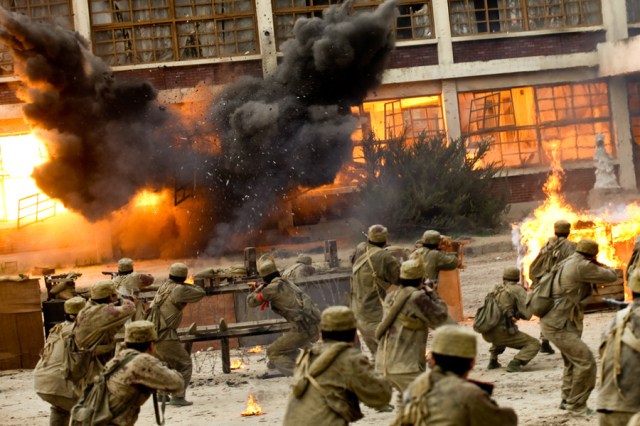
The Ghost Writer (2009) ☆☆☆1/2 (3.5/4) : The Trouble with a Memoir
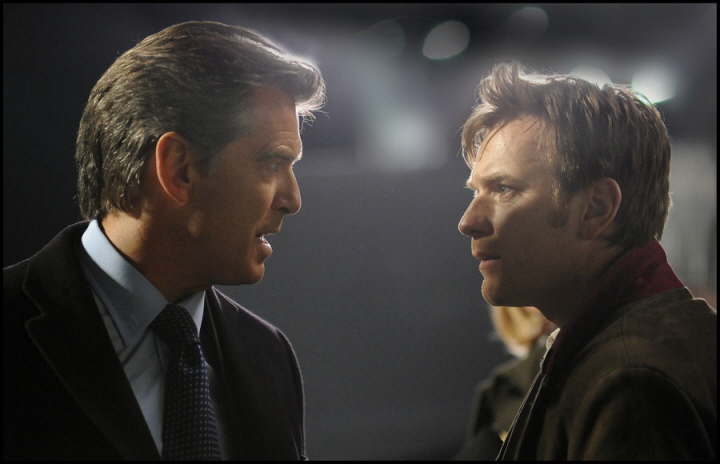
Whatever your opinion about Roman Polanski as a human being is, we all can agree that he is one of the great directors in the film history. In the career as tumultuous as his life, he has made several great films including “Rosemary’s Baby” and “Chinatown” while making very disappointing movies. And now, with his new movie “The Ghost Writer”, it is apparent he is still a immensely talented director who knows how to make a good thriller. With chilly, foreboding atmosphere and a subtle sense of humor, this calm but compelling movie proves that the most important thing for the thriller is how to pull us, not how to ambush us.
After a mundane opening with the dark undertone, we are immediately introduced to The Ghost(Ewan McGregor). His name is never mentioned(The movie seems to have a little small fun with it), and we never know much about this ghostwriter, but McGregor plays him as the plain ordinary man who is smart enough to know what he is going to deal with clearly.
Or does he? His new assignment is the memoir of former British Prime Minister Adam Lang(Pierce Brosnan), who is not so far from Tony Blair. Now residing in the beach house at Cape Cod and surrounded by his staffs and service guards, Lang recently gets in a serious trouble. After the disclosure by his former minister with exposed documents, he will be charged by the International Court for War crimes associated with War on Terror. He can be arrested if he comes back to Britain. His situation apparently mirrors that of Polanski, who will be arrested due to that infamous case in 1977 if he comes back to US.
These easy comparisons just stop around the beginning, and what we get is an slow, elegant waltz of a succinct thriller with the right note. Although the movie was shot in Germany for that reason, the looks of the movie is convincingly American while being effectively alien, creepy, and isolated. The fact that Lang’s original ghost writer died in a suspicious situation adds more uneasiness to hidden tension among people in the house. While Lang tries to solve his problem, Lang’s wife Ruth(Olivia Williams) is frankly bitter about the her husband’s relationship with his secretary Amelia(Kim Cattrall) as well as his plight.
The Ghost is stuck in midst of all these interactions while spending the time with the manuscript by his predecessor. It’s desperately in the need of doctoring, and he thinks he can improve it by digging into Lang’s heart within limited time. However, there is something not quite right about his past, and the manuscript may hide a very dangerous fact the Ghost probably does not wish to know. It is possible that Lang’s memoir will be the last book ever written by the Ghost, if he is not discreet.
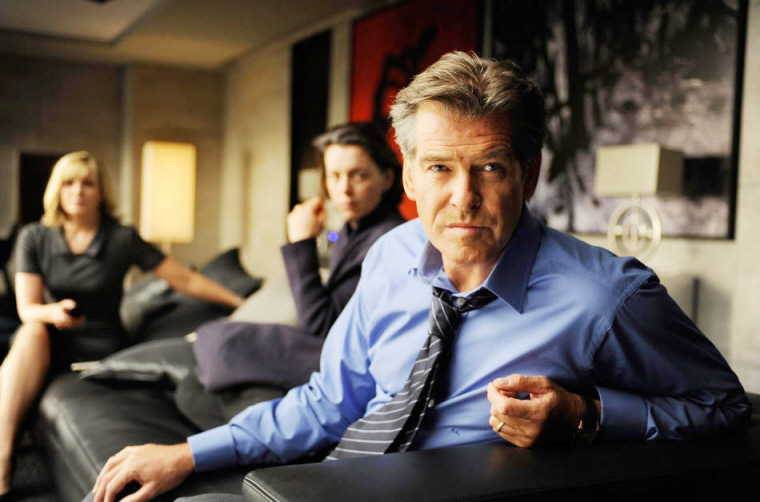 Polanski carefully builds the story and its suspense from the opening sequence without hurrying the story, adapted by Polanski and Robert Harris from Harris’ novel “The Ghost”. With the background mainly comprised of the beach house with gray modern interior and desolate winter beach scenery, the suspense is deftly mounted step by step with the quiet but firm control.
The atmosphere is steady and consistent through the running time. There is an eerie feeling abound in the sequence when the Ghost goes to the place where his predecessor was found dead. Even a small scene like his encounter with an old man who lives nearby is deftly handled while significantly contributing to the creepiness on the screen. Like any other excellent thriller movie scores, Alexandre Desplat’s score with repetitive rhythm is simultaneously alluring and warning. His music is one of the reasons making the movie spellbinding, especially when we see the certain note handed over and over. With these series of deliberate sequences, Polanski precisely hits the nail for the payoff with a great effect in the end.
While many people have already mentions Hitchcock several times, one of South Korean critics I have known for years pointed out that the movie is more close to the Hollywood political thrillers in 1970s. Like these movies, we can feel the unseen brooding presence of the sinister force lurking around the corner in the movie, and the Ghost finds himself as helpless as the heros of these movies. Even though we get the main answer in the end as promised, there are lots of ambiguousness in the story and characters; many of them are still not so clear in the end.
The movie has talented actors who is able to make this cloudy situation intriguing enough to pull us into the story. Maybe he is not a good singer as shown in “Mamma Mia!”, but Brosnan gives one of his best performances as a charming politician who does not like to admit that he is not above an actor he used to be. Williams is wonderful as the wife who knows about her husband more than anyone and rightfully becomes pissed off about his latest behaviors(Her role was originally intended for Tilda Swinton, another good choice for this icy character). Cattrall also gives a good performance and I still wonder whether I really have to see “Sex and The City 2” for confirming its reported awfulness to others. Ever-reliable actors like Tom Wilkinson, Eli Wallach, Timothy Hutton cannot be overlooked even if they are appeared briefly.
“The Ghost Writer” is my first time to watch Polaski’s film in the theater. When the end credit rolled, the man sitting near me said, “This is the worst movie I’ve ever seen in this year”. Sadly, we have to admit that not every moviegoer appreciates a good thriller nowadays and the movie may be too quiet and slow for the average taste of audience. But if you crave for an intelligent thriller or can be as patient as the movie asks you, it will be one of the most satisfying experiences in this year. And you will find that Polanski still retains his touch.


