

-
Recent Posts
- Poetry (2010) ☆☆☆1/2(3.5/4): An old senile lady and poetry
- Kung Fu Hustle (2004) ☆☆☆(3/4): A goofy but spirited martial arts comedy film
- Heart of the Beast (2026) ☆☆1/2(2.5/4): In the Alaskan wilderness with his loyal dog
- Silent Light (2007) ☆☆☆1/2(3.5/4): A triangle drama immersed in patience and silence
- Adiós Buenos Aires (2023) ☆☆☆(3/4): Struggling musicians in Buenos Aires, 2001
- Pig That Survived Foot-and-Mouth Disease (2024) ☆☆☆(3/4): Of Pigs and Men
- Nowhere to Lay My Eyes (2026) ☆☆☆(3/4): When she visits her mother
- Leviticus (2026) ☆☆☆(3/4): Now they should be really careful of each other
- Trainspotting (1996) ☆☆☆1/2(3.5/4): Addiction loves company
- Clayface (2026) ☆☆(2/4): A run-of-the-mill villain origin story
Blogroll
Interesting Windows
Movies
November 2026 M T W T F S S 1 2 3 4 5 6 7 8 9 10 11 12 13 14 15 16 17 18 19 20 21 22 23 24 25 26 27 28 29 30 Categories
Meta
Archives
My Photos
-
Join 832 other subscribers
Blog Stats
- 1,347,932 hits
Seongyong’s Twitter
Tweets by kaist455
Cats and a Dog


Cats are hungry or sleepy in my campus; a Dog is having a good time with its master.
Inception (2010) ☆☆☆1/2(3.5/4) : Descent into the labyrinth of dreams

Surprisingly to me, “Inception” is a small movie when viewed objectively from the outside. The story is not ground-breaking; it’s in a very familiar area where “Matrix” and other movies about the mind-bending world belong. The movie stays inside its settings and rules, and sticks to them even at the finale.
Now it probably sounds uninteresting and mundane to you, but don’t underestimate it; “Inception” is definitely one of the most intriguing movies of the year and deserves all the buzz it has gotten. The director Christopher Nolan provides us an intelligent blockbuster we desperately need among tiresome blockbuster sequels in this summer season, and the movie fiercely descends into the labyrinth of dreams, the risky world where the strict rules can be as formidable as the intractable subconsciousness of a human mind.
With the enormous hit of “Dark Knight”(2008) and a firm support from the major Hollywood studio(the production cost is at least 160 millions dollars), Nolan chose to make the next movie from the screenplay he began to work on around the time when he directed “Memento”(2000), his major breakthrough work. It surely is tempting for any talented director to bloat up his idea in early years when it gets the chance for made into a movie, but Nolan made a relatively small movie while keeping his ground. The result is a tremendously fascinating contradiction. It still retains the scale Nolan might have conceived at first, but you’ll see a huge structure built inside when you plunge into it.
The movie is both simple and complex. It proceeds the narrative straightforward in its own way and we eventually see how dense the whole story becomes. While delving deeper and deeper into the multi-layered world it builds upon the screen, we see the dream upon the stacks of the dreams like the hero upon the stacks of the heroes in “Memento”. It sounds quite difficult, but it’s easy to appreciate how elaborate the movie is thanks to Nolan’s masterful direction and storytelling. We never lose the sense of the direction even when things get very messy and urgent for the characters.
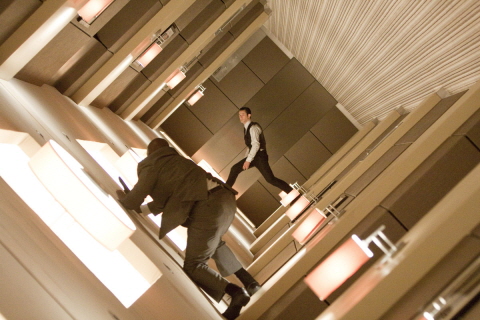
In the world of “Inception”, the advanced technology makes it possible to get inside the dream of other people. With a special device looks like a metal briefcase, more than one people can go inside the subconsciousness of the subject through designed dreams. They can steal, or “extract”, the informations or the ideas from the subject they want(Freddy Krueger must have lots of annoyance due to the intruders beside him in this world). It sounds pretty simple, but the human subconsciousness is a tricky area, and it is not a easy job at all even for the professionals like Cobb(Leonard DiCaprio) and his partner Arthur(Joseph Gordon-Levitt as smooth as his suit).
Because of his expertise in this field and associated illegal activities, Cobb has been a fugitive hiding from the authorities and the companies not so pleased about his doings. He has been separated from his family for a long time and he miss them. One day, a powerful figure named Saito(Ken Watanabe) approaches to him with the offer he cannot refuse. Rather than extraction, Saito wants Cobb to do “inception”. Instead of stealing the information from the target, the heir of Saito’s competing corporation(Cillian Murphy), Cobb is going to plant the foreign idea into the target’s mind. And he will get the immunity if he succeeds in doing this nearly impossible job.
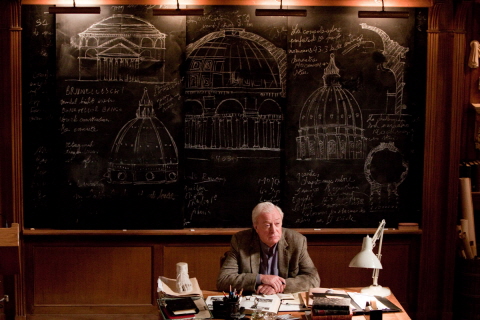
The story is that of a model caper movie – this job is of course “One last hit” for Cobb, and he recruits other members one by one for this special job. They carefully devise the plan from the preparations and researches. There is an expert(Tom Hardy) who can disguise as anyone in the dream, there is a chemist(Dileep Rao) who can concocts the special medicine for their project, and then there is an young college girl(Ellen Page) recommended by the Professor(Michael Caine), Cobb’s father-in-law, for designing the complex maze they and the target will share in sleep.
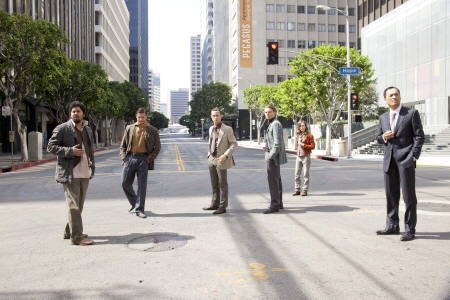
The girl, appropriately named Ariadne, is new to this kind of job, and the rules of the dreamworld are explained to us as well as her by Cobb. Along with her, we learn about things possible and things limited in this world. Anything can happen in the dream, and you can make such a spectacular sight like the city folding into half as shown in the trailers of the movie. However, it is wise for Cobb’s team to draw the attention as little as possible from the subconsciousness, which can be as hostile as our biological immune system to the invaders. Plus, it is also possible that the target has learned how to guard his mind.
After the test-run with these settings, the movie dives into its world at full-force. Rather than dreamworld of elusive logics like Buñuel or Lynch, the movie is the dreamworld of cold, intellectualized logics (it even features a well-known design from one of M.C. Escher’s famous paintings) and it is probably the main reason why many critics are disappointed with the movie in varying degrees. Nevertheless, what Nolan creates on the screen is equally compelling one in its looks and structure. From the starting ground, he drills with the logics of his story far below to the bottom and he creates the massive network of dreams inside his small world as a result. It’s mind-boggling sometimes and we’re not sure about whether what Cobb sees is real or not at some points, but we clearly know the rules and the mechanism of a big picture.
There is an adamantine mechanism between the layers of dreams. It seems predictable, but it corners Cobb’s team into difficult situations when the variables they ignored or could not predict work into its multiple equations. Nolan consistently increases the level of suspense while making dazzling moments like the sequence with the zero gravity, and he also finds the way of simultaneously proceeding the story and the action in his maze. With frantic but tight editing by Lee Smith and the cinematography with distinctive tones by Wally Pfister, we’re fully absorbed into the characters’ situations. Amid several shootings and chases in the movie, the stake goes higher for the characters we come to care about, and more tension gets compressed harder into such a small story. Watching the plot thickened in the movie is a lot like the house of the cards precariously being built with lots of trembling and shuffling.
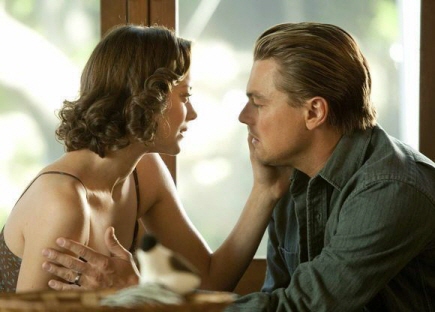
The characters are, above all, the ciphers in the story. You can substitute their names with their occupations, but Nolan has a bunch of reliable, talented performers who can fill some humanity in their roles. While not so different from his performance in Scorsese’ “Shutter Island”, Dicaprio gives another solid performance as a man haunted by his painful memory of his wife. She is played by Marion Cotillard, and she and Dicaprio provide a small heart at the axis of the metallic story. Regardless of how you feel about the story, you’ll know there is the emotional truth in the base. Nolan casts recognizable actors like Pete Postlethwaite even in small roles, and great Michael Caine effortlessly steals the show even with the brief appearance.
At present, “Inception” is being hailed as Nolan’s another masterpiece by some, and has got some negative reviews from the others. I’m a little skeptical about the former’s claim while understanding the latter’s points, but I could not help but lose myself into the movie by its power. I have to admit that the movie does not go into the other possibilities inherent in the premises(e.g. the supposed conflict between the companies), but the movie sets out to focus intensely on the area it wants to deal with. And it feels relatively short despite its running time(148min) – that fact is interestingly resonant with the story itself.
With breathtaking images and the compelling narrative, “Inception” provides us a memorably awesome world. Among the references of classics like “Solaris” or “Citizen Kane”, Nolan makes us to contemplate on the movie as the dream while depicting how broad and deep world the human mind can be. His dream world is a little too much self-contained and neat, but I admire how he pulls considerable excitement from it while stimulating our thoughts. When I watched the movie on this Wednesday, I saw many of audiences talking about it after the end credit rolls. How often do we come across such a scene like that during the summer season nowadays?
Moss (2010) ☆☆(2/4) : A rural mystery – more than 2.5hr
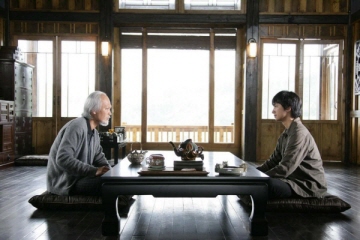
After so much hoopla before its release, “Moss”, a much-anticipated Korean thriller of 2010, turns out to be very, very disappointing in almost every way you can imagine due to the fatally misguided direction. It is lazy, incompetent, and, above all, not compelling at all. Despite some good basic elements of a thriller in the screenplay, it is more close to the ennui of the bright summer days in a country town, and, boy, the running time is more than 2.5 hours even if you exclude the end credit.
One of the main problems is immediately shown to us from the very first sequence; it explains about 50% of the mystery so thoroughly that I even wondered whether I came in after the midpoint of the story. In less than 25 minutes, you get nearly everything you need for drawing the outline of a big picture, and, believe me, I do not spoil your entertainment even if I describe what happens during this prologue in the next paragraph.
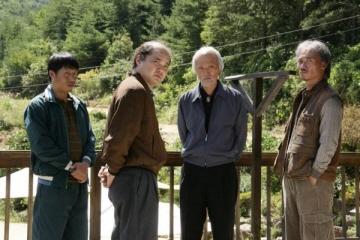
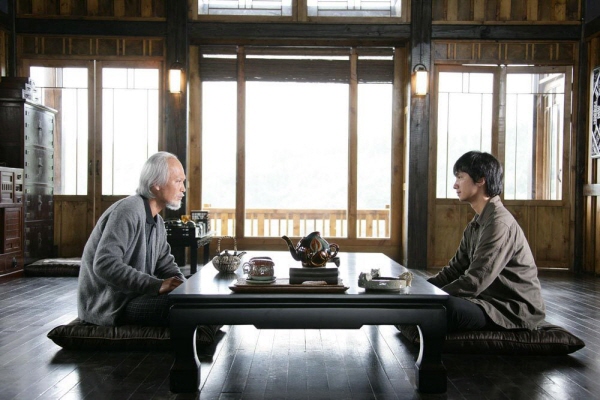
Instead, I’ll just say that we are introduced to two main characters and are informed about their past which is not so clean. One is the rural cop(Jae-young Jeong) who is good at the violence as well as the manipulation. The other one, Mok-hyung(Jun-ho Huh), is a deeply religious and idealistic man who was betrayed by his peers in his church and got imprisoned after that. We come to learn about how they met each other, how they collaborated with each other, and how they started their secret plan that leads to the creation of their small exclusive community in the rural mountain area.
No, neither of them is our hero. He is Hae-duk(Hae-il Park), the estranged son of Mok-hyung. Mok-hyung left his wife and his son a long time ago, and he has been a lot more like a stranger to his son. Nevertheless, after getting a message, the son comes down to some small, quiet village where his father had led a reclusive life.
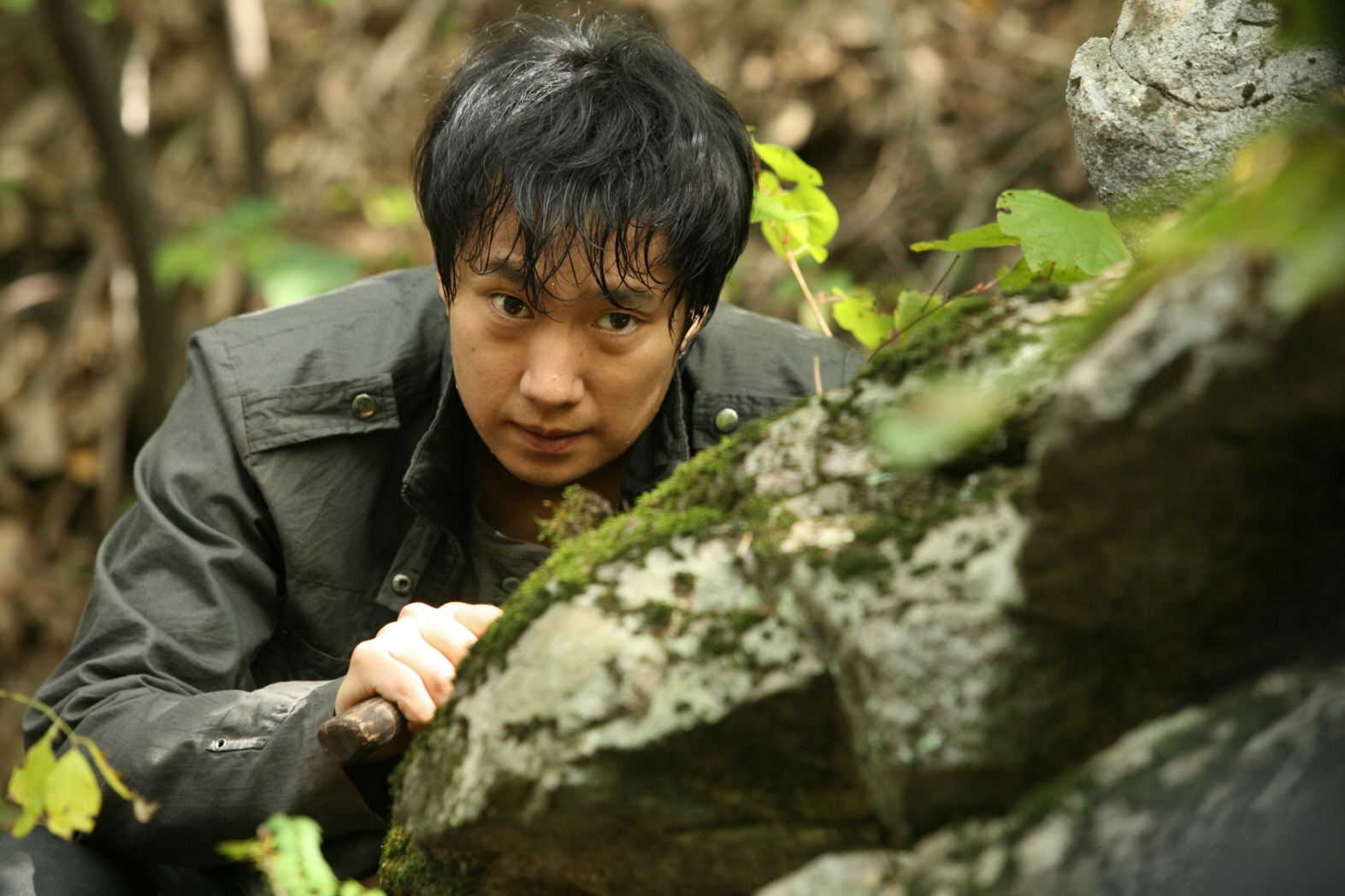
He sees his father’s body in the shabby room of his house. He attends the funeral with other village people. He senses that something is fishy about with his father’s demise as well as the village itself. He begins his own search for the truth, and the things get complicated when he drags in the prosecutor(Jun-sang Yu from “HaHaHa”), with whom he had an unpleasant incident resulting in the recent social downfall of both.
Because the movie already makes us two or three steps ahead of Hae-duk, there are a few reasons for us to be interested in his investigation. It is quite apparent that the cop, now the head of the village(and still Jae-young Jeong), is a scheming man who knows and controls everything in the town. His house is located on the hill where he can look down on the village, and it even has the switch for the big lighting equipments in the village, not so different from what you see at the baseball stadiums.
I know an effective thriller can be made with hiding little from the audience. Many good thrillers have their strength in how to get the finale, not in the ending itself. However, “Moss” is disjointed in its approach. After handing out a lot of crucial informations during the first half, it still hangs on one simple mystery while simply going straight to the predictable finale. The tension is desiccated and we lost our interest as a result. And a cheap twist not in the original work does not makes a little of sense at all; it feels more like a tacked-on plot device. Okay, we were fooled, so what? Does it make the story any difference? And how does that scheme work? How can it fit into the whole picture? There may be an explanation, but I could not feel it and I am still baffled about it.
If the movie were faithful to a popular Korean comics it was based on, even that ending would not be such a big problem. Out of curiosity, I checked several pages of it and I found it very engaging and full of cinematic possibilities. It is the dark portrait of the insidious side of human nature, and the grey world where nobody is entirely clean. Many people interpret it as the allegory of modern South Korean society, but there is an universal aspect in the story in that it depicts the individuals trapped and frustrated by the corruption and many other negative sides of the society.
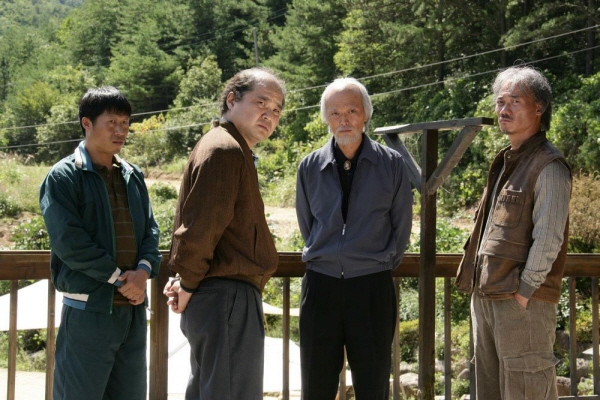
The story of the original work is convoluted with the flashbacks(one of them is the prologue sequence in the movie) and the surprising revelations while the background is drenched with the evil influence hidden inside. A frustrated, confused, and flawed character is surrounded by the colorful characters, and they are strikingly, and sometimes grotesquely, depicted in broad touches. With this fabulously twisted noirish setting, you can swallow any ending no matter how preposterous it is.
You don’t have to be 100% faithful to the original work to make your own movie, but the director Woo-suk Kang does not provide anything intriguing enough to substitute its unforgettable qualities after his thoughtless deconstruction. By making the storyline far more straight, he and the screenplay writer Ji-woo Jung completely eradicate the most compelling thing in the origianl work, and the sense of confusion and frustration is completely lost. With too much and too early explanations, the movie feels redundant and saggy in a desperate need of trimming the running time(163min). The sense of the darkness pervading the pages is vanished on the screen, and the movie is pathetically stuffed with the cheap gags every 5-6 minutes. As a matter of fact, I was so bored that I checked that pattern with my wristwatch while enduring the second half of the movie. We all know how Korean country town can be really creepy and humorous in Joon-ho Bong’s “Mother”; this is quite a degeneration.
The vivid characters and their intricate relationships are literally butchered in the movie version. The good cast is wasted on this bland, wretched result. I saw some of them in other movies, and I know they are good, talented actors. Unfortunately, they are burdened with the bad script. Their performances are inconsistent or awkward to say the least. Hae-il Park is nicely cast as a struggling hero, and Jae-young Jeong has some presence as the arch-villain, but, like all other actors, they are victimized by one-dimensional characters. Jeong was reported to say during the interview that he didn’t regard highly of Brad Pitt’s performance in “The Curious Case of Benjamin Button” because it was just an actor playing an old man. Sir, in case of yours, you’re just a bully with nothing changed after so many years except lots of make-up.

The deliveries of the lines is so clumsy that they sound pretty much like the first day of the script reading. It would not make any difference if they were reading the textbooks aloud. The movie is currently shown with English subtitle in Seoul, and I envy non-Koreans who will be buffeted by the subtitle from this distracting sound and fury.
Woo-suk Kang has made some entertaining commercial films in the past, but, after the big success of “Public Enemy”(2002) and “Silmido”(2003), his recent output were unsuccessful in case of the quality. Two sequels for “Public Enemy” were far inferior additions to the entertaining original, and “Hanbando”(2006) was one of the most atrocious Korean movies in the 2000’s. He said he chose to direct this movie because he needed some change, but the outcome is a turgid, uncharacteristic adaptation due to his delinquency in his own comfort zone. Instead of fully utilizing the possibility of a wonderful country noir, It becomes just another story of simple confliction between the good and the evil with the cardboard characters. I could not care about the story, let alone the characters. How can it build the suspense from that?
I remember Kang saying two years ago he was shocked by Christopher Nolan’s massive hit “Dark Knight”, and implying he learned a lot from it. Well, it turns out Kang’s test score is poor despite the long, long answer he has given. Hitchcock said the suspense is like watching a time bomb hidden below the table; “Moss” has only some spare parts of the bomb below itself to bore us.
When I get out of the campus cafeteria


When I get tired of the campus cafeteria, I just go to somewhere and eat something else. I shot some of them during the last two months when I got the chance to do it.
Posted in Photos
4 Comments
They cannot be aged, but they’re not boring.


Grand Poobah’s recent post inspired me to assemble these photos from my personal documents. Yes, some of them are timeless and tiresome, but they looked fabulous in one spring afternoon and I liked them a lot.
Cloudy or Sunny, It’s hot anyway


Whether it rains or not, it’s always humid and hot. And people and animals look for some cool places.
Presumed Innocent (1990) ☆☆☆ (3/4) : A Prosecuted Prosecutor
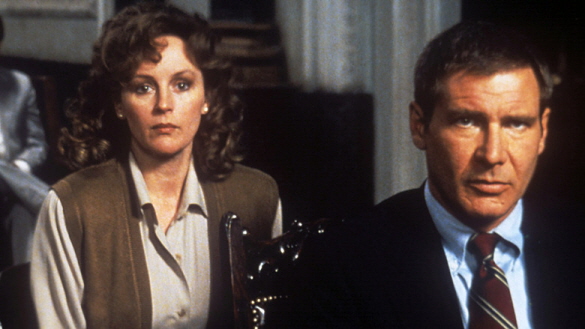
“An innocent man has nothing to fear, remember that.”, said the cop in Hitchcock’s” The Wrong Man” to Henry Fonda’s arrested character, but we all know his saying is not true at all. Guilty or not, our fate will eventually be decided at the courtroom where the lawyers make arguments on your culpability in front of the judges and the jury. And in that inexorable system pursuing the justice, we tremble in fear for the sheer possibility of punishment sentenced upon us.
In Alan J. Pakula’s 1990 movie “Presumed Innocent”, our hero Rusty Savich(Harrison Ford) is the part of that system. In opening sequence where the empty courtroom is shown with the glum solemnity, he explains us what he does in this place that is devoid of hope and optimism. As a prosecutor, he determines who is to be charged, and presents the evidences for his argument for the defendant’s culpability, and waits for the verdict and the following sentence. He is the deputy chief of the district attorney; he knows well about how it works. Now, he finds himself trapped in a deep trouble while being on the other side.
His plight begins with the shocking incident in which one of his attorneys is found murdered in a very brutal way at her home. Because there are less than two weeks left for the election, Rusty’s boss Raymond(Brain Dennehy) wants the case to be solved as soon as possible. He personally demands Rusty to take the case, and Rusty reluctantly follows his instruction due to his past relationship with a murdered attorney, Carolyn Polhemus(Greta Scacchi).
Carolyn is the woman who is very good at playing what roles her men want, and she approached to Rusty as a confident, idealist attorney. She brought him a tough but interesting case, and, after their successful result, they began a secret affair. However, several months ago, their relationship is ended when it was clear that she regarded him as one of stepping stones in her career. He rejected her favor and she dumped him for the other man without any ounce of regret. Rusty still does not get over his romantic obsession toward her, and Rusty’s wife Barbara(Bonnie Bedelia) is very bitter about the fact that her husband remains infatuated with Carolyn even after her death.
Suddenly, the evidences against Rusty start to appear during the investigation and the Hitchockian nightmare begins. He is accused of the crime by his peers. His house is searched for any other crucial evidences. He is even arrested by the police officers at his house. He hires a good lawyer, but the chance of the acquittal is pretty low for him. And several small but strange things perplex almost everyone in the courtroom and lead the trial to unexpected turns.
Amidst of all these happenings, Harrison Ford does as little as possible on the screen while revealing few things about his character’s inner feelings. That is the right choice; we’re never quite sure about his innocence while having some trust in his character. We know Sabich is in deep fear for the outcome of this trial. We know he is a man of the decency and the righteousness thanks to Ford’s taciturn presence. He’s willing to testify honestly about his flaws to the jury although his lawyer strongly advises him not to do it.

Nevertheless, that does not mean that he’s innocent; we also know he’s still deeply haunted by the memories of Carolyn. As one of his peers points out(“you always had the cork too tight”), he represses lots of his emotions behind his stoic face and some possibility cannot be easily discarded. After the big success of Star Wars and Indiana Jones, Ford had tried to do something different in several movies, and the movie was one of his successful turns. He provides a fine balance between the trust and the doubt as the center of the story.
Pakula built his director career with several quiet but impressive thrillers with the hidden dark force such as “Klute” and “All the President’s Men” in the 1970s, and “Presumed Innocent” grips us with the screen filled with that same still uneasiness. Its dextrous storytelling leads us to the finale in a complicated but lucid way without giving too much hints.
He and Frank Pierson(“Cool Hand Luke” and “Dog Day Afternoon”) give a good adaptation of Scott Turow’ mystery novel. Before starting the writer career, Turow(he has recently published the sequel to his book, by the way) had been a lawyer like John Grisham and he provided realistic materials for the movie. Pakula and Pierson focus on making the drama credible as well as authentic. The main details of the murder case are succinctly delivered to us in the tight courtroom drama without losing any suspense. Cinematographer Gordon Willis, “The Prince of Darkness”, provides the daily atmosphere with the dark undercurrents, and John Williams gives exceptionally subtle moments of unstableness and desperation with probably the most brooding score in his career.
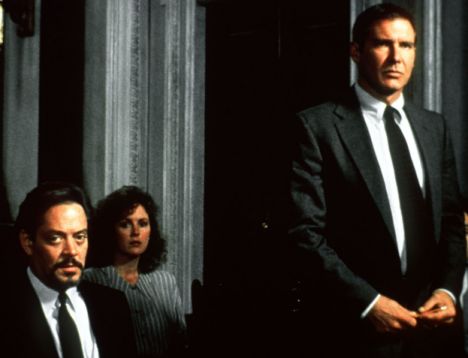
The supporting actors surrounding Ford are talented enough to play human beings who are holding their cards behind the back. You will discover their subtleties on the second viewing. I will not reveal much about them, but I just want to say we have these wonderful and recognizable actors like Dennehy, Bedelia, Scacchi, and other three who are sadly no longer with us now. Raul Julia is unflappable as a smooth, wise lawyer who clearly perceives the situation and what’s the best for his client. John Spencer plays a loyal cop friend of Rusty who prefers the poetic justice to the juristic one, and Paul Winfield is amusing as the judge presiding over the case.
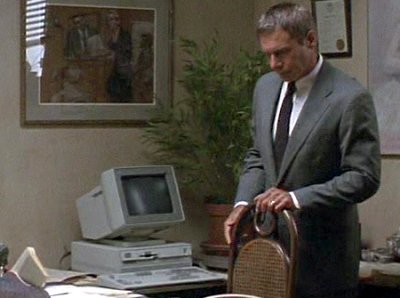
While revisiting the movie in HD, I realized again how some aspects of the movie felt a bit dated(look at these computers!). The forensic techniques are more advanced years after the movie came out, and Rusty will probably face the truth far earlier in our time. Nevertheless, the story itself is compelling enough with our universal fear of being accused and prosecuted. Unlike flashy, quick-cutting styles rampant on TV(CSI, anyone?) and in the movies nowadays, the movie takes considerable time to build the characters and their situations. The tension is mounted step by step in the stillness filled with ambiguity. And we’re agitated because we become to care about what will happen to them. In the end, we don’t see the obligatory sequence where everything is explained; we see how a devastating blow it is to real people.