St. Mary of Angels Church – Flat Iron building – Wicker Park – Nelson Algren House – Polish Museum – Ukrainian Village with two churches(Nicholas and Volodymyr)
04/07/10: It was nightmare in the afternoon. I was in a hurry. I ran down N. Milwaukee Ave. instead of waiting for the bus, and I was soaked with sweat when I waited for someone to open the door of Polish Museum. After visting Ukrainian village, I forgot to buy sneakers again. Damn!
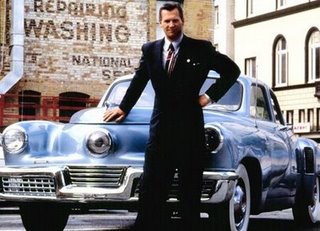
Francis Ford Coppola’s ambitious movie “Tucker: The Man and His Dream”(1988) curiously reminds me of nice-and-clean biography sets for elementary school students I used to read during my childhood years. In those books, there were always good-looking pictures depicting what great men and women did in their lifetime whenever I turned each page, and, of course, they were accompanied by the story written for them. From these books, I learned how great their achievements were, but I do not think I learned anything substantial about them as the human beings from the story. Of course, those books were well-intentioned for me and other kids, and I liked them. The problem is, they were hollow; they did not leave me any big impression except those nice pictures.
And neither does the movie. As a man who has vaguely heard about Preston Tucker, I learned several things about what he did for his dream from the movie while enjoying its surface. However, what I got from the movie is more or less than what I learned from Wikipedia. I only beheld how visionary and optimistic Tucker was in vintage American way. And I only beheld how nice his cars look – too bad he could make only 50 cars, by the way.
From what I learned from in and out of the movie, Tucker probably could have been a successful figure in American automobile industry. Although his situation was not entirely perfect, he really could have made it. He was in the right time for his ideas, and he had the ability and resources to realize his dream. After the stiffness of World War II, American people wanted something new from their cars, and Tucker correctly saw the opportunity for the success. In addition, the ideal car he mapped out at the time had many things like pop-out windshields and safety seatbelt taken for granted in our time later.
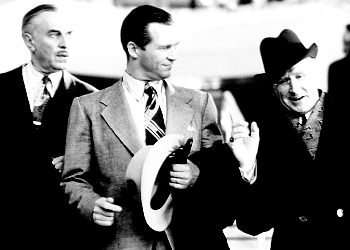
In the story, we see how eager Tucker(Jeff Bridges) is about “The Car of Tomorrow”. He proudly presents his idea in front of his family. They happily support his plan. People of his small company are willing to join him. Although there are several obstacles that worry his associate Abe(Martin Landau) much from the beginning, Tucker is always optimistic about the situation in his blind faith – even in the worst situation.
With that ever-lasting optimism from him, and the aid from Abe, He gets the permit from US government to use the huge empty plant in Chicago for setting his assembly line. As a good salesman, he also masterfully raises the money through big publicity. And he manages to show his car in front of people despite lots of troubles with the car behind the stage.
However, there are more severe problems waiting for him. Big automobile companies in Detroit do not like Tucker’s plan from the beginning. They do not like that even more when his car turns out to be quite successful. So, they try to crush his dream, and they have politicians on their side. The Securities and Exchange Committee soon begins investigation on Tucker’s company. Pragmatic Abe clearly sees what will happen to the vision he comes to admire and love.
And how does Tucker think about his plights? The movie does not show us what he thinks or what he feels. Despite Bridges’ considerable easy-going charm and flawless character embodiment, his Tucker comes to me as the man nothing more than the emblem of optimism with lots of smile rather than a real human being – he is just a thin cover for nuts and bolts of the story. There is no significant insight about him to interest us; we only know that he wants to make a great car and, sadly, that is all. What we get in the end is a typical, bland biography which ends with a big speech at the courthouse.
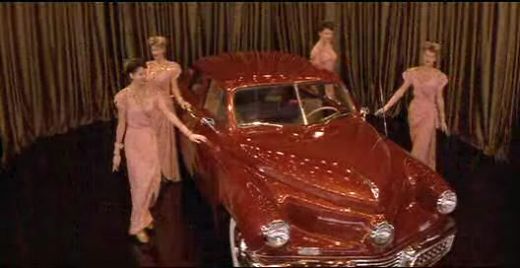
It is too bad considering how much effort and sincerity went into the production; it is apparently shown on the screen. The movie looks fabulous as a first-rate period piece, and production designers Dean Tavoularis and Armin Ganz and costume designer Milena Canonero were deservedly Oscar-nominated for their effort. For the authenticity, real Tucker automobiles, one of the most collectible cars now, were used for the production and they look good indeed.
Coppola had wanted to make this movie for a long time(he even tried to make a musical version of the movie with Leonard Bernstein in the 1970’s), and it is not hard to see Coppola’s plights in real life from Tucker’s at many points in the story. Like Tucker, Coppola wanted to realize his big personal visions in his career and he struggled to do it in his own way. There is the scene where the characters desperately solve the troubles in a hurry behind the stage and Tucker tries to hold the attention of people as long as can until the car is ready. From that, you cannot help but think of how frantic Coppola was when showing his epic masterpiece “Apocalypse Now” to people at Cannes after that infamously troublesome production and a big hoopla spun by himself.
Yes, Coppola and Tucker looked like an ideal match, but sometimes it is not good for the filmmakers to get too personal to their subject. When the director or the writer respects the subject too much, the movie is bound to be limited or, in worse case, crippled by their good intentions and “Tucker” is a classic example. While spending too much time on looking upon an idealistic hero and his cars, the movie loses the human dimensions, let alone the technical dimensions. The movie admires the beauty of Tucker’s automobiles, but it informs us a little about its making process.
Like Bridges’s performance, the good performances from the supporting cast are chained by the flat characterization of the story. Maybe you will be delighted to find Joan Allen(as Tucker’s devoted wife), Christian Slater(as Tucker’s elder son), and Elias Koteas(as one of Tucker’s employees) near the start of their careers. I liked Dean Stockwell’s brief but spooky appearance as Howard Hughes. Martin Landau was Oscar-nominated for his performance, and, although this is not his best, Landau deserved the nomination for playing the most human character in the movie. He has a touching scene where Abe tells Tucker how he is influenced by Tucker’s ideal.
“Tucker: The Man and His Dream” is an interesting film because of the parallels between the director and his subject. However, it failed to show the man behind the dream. While emphasizing the individuality as great American value with all its heart, the movie never tells us about the cost of the struggle against fearful odds on personal level. The movie reminds me of recent movie “Flash of Genius”(2008), a story about a battle between a big automobile company and one man. That movie does not forget the cost for that and it prods us to think about it in feel-good ending. In case of Tucker in Coppola’s movie, well, he does not seem to give a damn about it at all – but who knows?
These photos were taken on 04/14/10 during my Chicago visit. After appreciating lots of artworks at The Art Institute of Chcago, I was tired. Fortunately, the last ones- which belong to contemporary art after 1960 – were profoundly simple – or simply profound.
“The Kids Are All Right” is quite conventional inside in contrast to what it seems on the surface. We see a unconventional family at the beginning, but we begin to see the dynamics within this family is not so different from the one within conventional families. The family has problems familiar to us, the drama of conflicts and hurts is unfolded in a way we expected, and, in the end, everyone is almost all right as we have seen in many family dramas. However, the movie is more than that. It is not just conventionally unconventional; it is also emotionally honest story with lots of heart.
Nick(Annette Bening) and Jules(Julianne Moore) has been a happy lesbian couple for more than twenty years. Nick works as a doctor, and Jules has been going between the role of housewife and several jobs(Her latest occupation is gardening). From the first moment we see them leading their daily life, we can clearly see the difference between them. Nick is a more dominant half; she sort of a father figure setting some strict rules to their kids. And Passive, less confident Jules is a gentler mother to them.
As the title suggests, their teenager kids are all right – nearly all right, at least. Both Nick and Jules were pregnant by same donated sperms and gave birth to their kids, respectively. Joni(Mia Wasikowska) has been an exemplary daughter to her parents, and she will soon go to a good university thanks to her good grades. Although he seems less qualified than his sister, Laser(Josh Hutcherson) is mostly a good son except his no-good friend.
Joni and Laser have been wondering about their biological father, and now they have the right to request the information about him from the institute. Without their parents’ knowledge, they get the information and then contact with Paul(Mark Ruffalo), who has been enjoying the life of a single man free of any commitment and responsibility. Their first encounter is a little awkward at first, but Paul is like a big kid who still does not realize he is approaching 40, and three soon become close. Nick and Jules come to know this unintentionally later, so they exchange greetings with him, regardless of whether they like it or not.
The story and its premise are unusual, but the movie shares familiar territories with other family dramas. Because of the appearance of an unexpected stranger, the problems in the family hibernating in the ennui of happy family life begin to emerge from the inside. Not surprisingly, they stir several feelings including anxiety, confusion, and discontent. Fastidious Nick does not welcome the influence from carefree Paul on her kids. Meanwhile, like any other spouses at the stage of weary married life, Jules finds herself attracted to Paul. As a matter of fact, it would probably not be much different if Paul were a woman.
Now the movie sounds pretty much conventional and mundane to you, but the movie still feels fresh and it is full of the life thanks to a thoughtful screenplay by the Director Lisa Cholodenko and co-writer Stuart Blumberg. They take time to carefully develop well-defined characters and relationships in their story while inserting several small precious moments here and there. For instance, there is a hilarious moment when Nick and Jules try to talk openly with Laser due to their misunderstanding about him. In that scene, Nick and Jules are just like any other ‘normal’ parents, and we cannot help but chuckle at their approach as well as their misguided thought. We also see how Nick and Jules conduct their sex life, and it is depicted as naturally as the affair between Jules and Paul.
The drama between characters is constantly convincing and interesting even when predictable moments come to us during the third act. Some of them are melodramatic as predicted, but they depend on three-dimensional characters and are depicted with sincerity. The movie deftly moves from one spot to another spot with the rhythm of real world until it arrives at open ending, and we can clearly see that things will probably get better for the characters although the problems in the movie are not entirely resolved yet.
The ensemble is very good. Bening and Moore are dependable as usual, and they really look like a couple who have been living together for a long time. Bening is the most effective when Nick has to keep up her face just like any sensible person after learning something painful. Moore makes Jules’ flaws understandable to us(what an interesting year for Moore – she was homosexually seduced in “Chloe” early in this year, and now she is seduced in the opposite way in the same year). Ruffalo imbues Paul with casual charm. After meeting the kids he has never known, Paul begins seriously to think about his life, but he seeks the solution from the wrong corner. Wasikowska and Hutcherson hold their own place well among these talented actors, and Wasikowska clearly shows her talent more than her recent breakthrough in “Alice in Wonderland”.
“The Kids Are All Right” unexpectedly arrives in South Korea earlier then I thought. Coincidentally, the movie is released along with “Lymelife”(2008), another small but good small family drama in this weekend, and they will make a good double feature show for Korean audiences. Unfortunately, both movies are not advertised well. In case of the former, the advertisement makes it look like “It’s Complicated” to us, and I saw some audiences disappointed with the movie probably because of that. I hope there are many audiences who know what they will get from this wonderful family drama. It’s not often we come across the drama that can make us moved and smile.
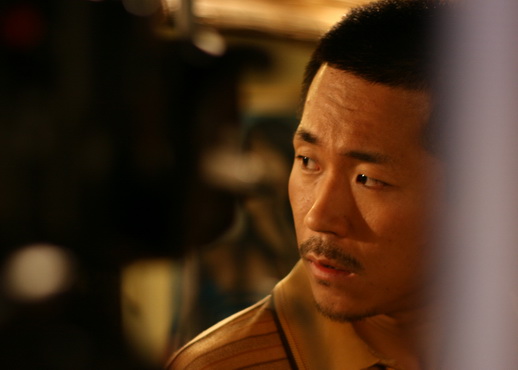
Sang-hoon is a terrifying piece of work. He is someone you never want to mess up with. He is callous, narrow-minded, vulgar and, above all, very volatile. Whenever his hair-trigger fury erupts, there is more than hell to pay – and that happens often. Even when his temper relatively abates, he is still difficult and hostile to communicate with, probably even with himself. In the opening sequence, we see a young woman being beaten by some guy in the night streets. Sang-hoon appears and he savagely beats that guy. And then, he spits at her, smacks her, and insults her.
The main accomplishment of a small but powerful South Korean movie “Breathless”(2009) is making us absorbed in the story of such a repulsive hero like him from the beginning to the end(the original Korean title “Ddongpari” means “Dung Fly”). While we frequently cringe at his deeds, we come to understand him, and eventually have the moments of empathy to this aggressive soul full of irrepressible anger. And through him and others, we see a violent world where the fathers are the most horrible and virulent figures.
Considering his temper, Sang-hoon(Yang Ik-june) made a good career choice; he works as a hired goon and a debt collector under his boss Man-sik(Jung Man-sik). His jobs are sort of the ventilation for his aggressiveness, but, as we see in the movie, it does not seem to be good enough for his boiling anger inside him. He is so good and mindless at his work that Man-sik complains to him in one scene: “Any one of our boys hasn’t been hit by you.”
Not surprisingly, he does not care about people much. But there are some people surrounding Sang-hoon, and they have understood or accepted his nature. Man-sik is a longtime friend and partner, and he knows well about what makes his friend tick. Sang-hoon’s insolent words and behaviors have become sort of mere grouchiness to him. The mood of their private moments is as sunny as grumpy old boys. Plus, Sang-hoon is necessary as an enforcer in his organization; they basically play a good boss and a bad top-lieutenant to their men, who don’t have any love for Sang-hoon due to his relentless harassment.
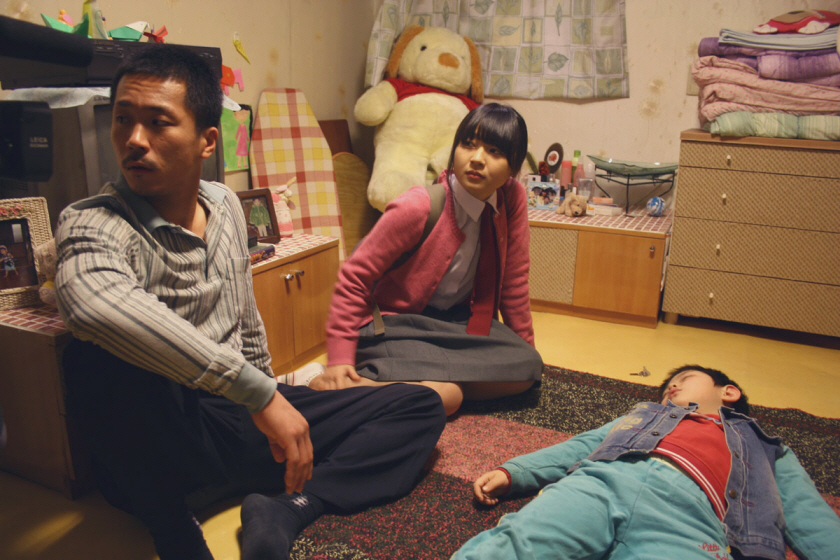
Sang-hoon’s family members know what drives him too well. He has been exposed to the violence since he was young. He was helpless when his abusive father beat his mother. His young sister was accidently killed by their father when she tried to protect their mother from him. While young Sang-hoon was desperately taking her dying body to the hospital, their mother was killed by a car accident when hurriedly going after them. Recently having come out of jail, his father is now a helpless, guilt-ridden old man constantly beaten by his monstrous creation. Only benign and unharmed member of this shattered family is his half-sister, but she has recently left behind the abusive past with her ex-husband, which her young son remembers painfully.
On the surface, the movie tells us about the dark side of South Korean domestic lives affected by the violent society which have been in turn affected by its violent modern history. Some of internationally acclaimed Korean directors have reflected their past experiences with the violence from licensed bullies including fathers, teachers, senior students, and authorities in their movies. The director/writer Yang Ik-june is no exception, and he pulls no punches about his subject. He succeeds in punching the audiences with some direct, scathing lines in addition to the raw, gut-wrenching violence committed on the screen. “The fathers of this country are all f**ked-ups. He’s a f**king fool, but when it comes to his family, he’s Mr. Kim Il-sung”(Kim Il-sung is the former North Korean dictator, the father of current dictator Kim Jung-il).
The story and the characters are specific, but they have elements universal to the audiences outside South Korea. After all, the contagiousness of domestic violence is not an unfamiliar thing to all of us. Haven’t we all heard from newspaper articles and TV news about how the abused becomes the abusers later, and about how this horrible cycle goes on and on? The movie reminded me of Paul Schrader’s “Affliction”, whose story is also about the transmittance of violence between the father and the son. Like James Coburn’s character in that movie, the fathers of “Breathless” turn their sons into someone not so different from themselves. From the view of the movie, they are harmful carriers of the disease called violence. Is it coincidental that Man-sik, the gentlest male character in the movie, is an orphan?
This is a despairing world where the characters can live neither with nor without the fathers from the beginning just because blood is thicker than water. While some are frustrated and tormented for not free from them, others desperately want them. Man-sik wishes he had a father, even if an abusive one. Sang-hoon’s nephew needs his uncle as a father figure although terrified of him. Even with such intense hate toward his father, Sang-hoon cannot stop himself from making a certain choice at the crucial point in the story. But still, his father is someone he cannot live with, let alone forgive. Their past has already been full of scars too deep to be healed by such a simple act.
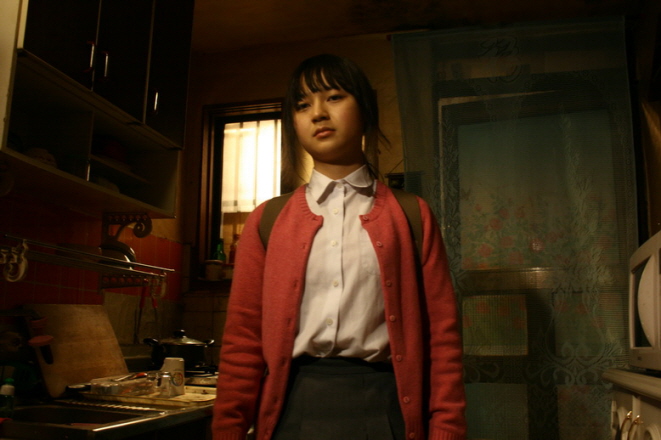
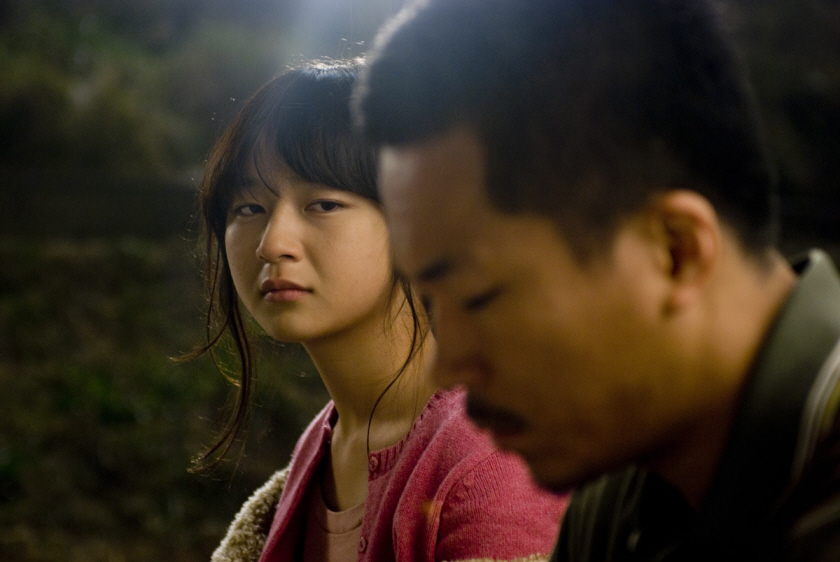
In amidst of all these, the glimmer of a new possibility is shown from an unlikely relationship between Sang-hoon and a high school girl named Yeon-hee(Kim Kot-bi). Their first encounter is unconventional. When they come across each other in an alley, Sang-hoon inadvertently spits on her clothes. She bluntly demands him to sort that out. She slaps him for his rudeness. He punches her in the face as a reflexive response. She faints, and he waits for her to awake. Talking about Meet Tough.
Why does a beauty like her want to hang around this beast? We come to learn early in the movie that it is more than liking a bad boy. Although she has some academic problems at her school, it’s more peaceful for her to be there than being at home; her household is an emotional minefield as dangerous as Precious’ home. Her schizophrenic war veteran father makes violent tantrums every evening. Her younger brother, who can be a younger version of Sang-hoon, threatens and insults her for extorting some money from her every morning. Her mother died years ago, and Yeon-hee alone has to take care of her insufferable family who constantly trample on her feelings. Have been struggling with the domestic violence daily like that, this feisty, tough-talking girl is neither shocked nor scared by Sang-hoon. Both sense some untold kinship between them, and they begin to hang around together after their first encounter.
Despite the easy rapport between them, they’re more like two people with the wall between them. They don’t tell much about themselves (While Yeon-hee pretends she’s some affluent girl with lots of free time, Sang-hoon does not want to tell her about himself much), and don’t even know about how their lives are interconnected in the past and at present. But they cling to the wall out of their need. There is a very moving scene with a quiet power where they meet at the riverside during late night after each of them has just undergone an emotionally draining incident. They start the conversation as if nothing much had happened, but both slowly perceive the exhaustion and angst from the other without letting them out.
This is the first feature-length movie made by Yang Ik-june. It is both a labor of love and a therapy for him. He had a story he passionately wanted to talk, and he struggled to produce it with small crews on a shoestring budget. Although he did not talk much about his background and family in the interviews, we can clearly see his feelings that have been bottled up in his heart shaking the screen. It is so memorable and harrowing that, like any other stunning work that sometimes comes out from first-time directors, it made me instantly worry about his next feature in the future.
The power of the movie comes from brutal intimacy and striking verisimilitude. Throughout the movie, we get the authentic glimpse of the underbelly of Seoul; we see seedy alleys, squalid homes, and the lives of the lower class people mainly through the handheld camera. Shaky handheld camera used in independent movies now becomes sort of a cliché, but, in this case, the approach mostly works well. It’s a little too much dizzy at first, and sometimes it’s near claustrophobic at times, but Yang vividly captures the emotions of the characters even when the brutal violence is rampaging on the screen. The violence depicted in the movie are handled well while never losing the focus on the characters; we feel its influence on them at every frame. It’s so emotionally close and savage that some moments are close to Bergman family drama on thuggish mode.
The movie is also fueled by lots of profanities in the screenplay. It actually can be the guideline of Korean profanities. As far as I remember, I have never been bombarded with Korean profanities so frequently and intensively like this one (Christopher Bourne of The Bourne Cinema Conspiracy: “There are more verbal profanities per minute than any routine Andrew Dice Clay ever dreamt up”). Tough to hear, and also tough to see from the subtitle, but the dialogues are very effective, realistic, and sometimes humorous. The story and characters are solid, and Yang skillfully leads his plot to the resolution that we should have seen coming sooner or later from the beginning.
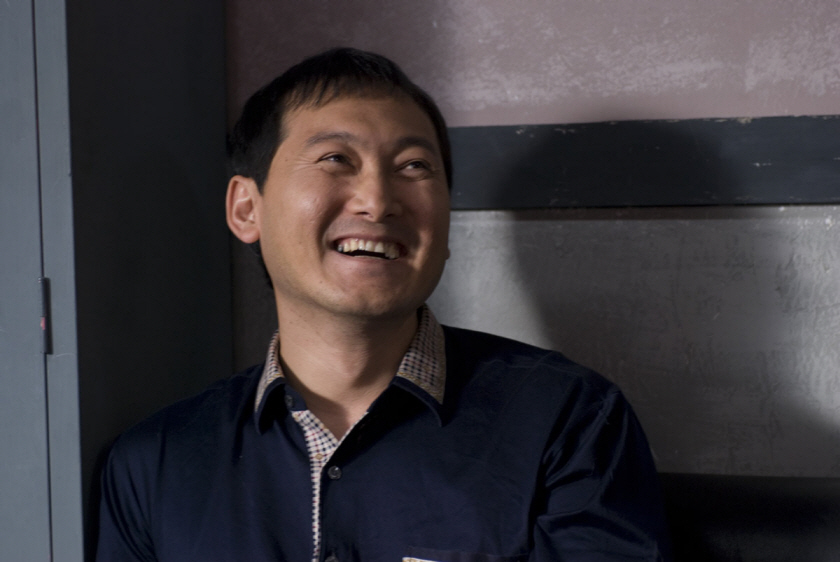
Yang is a good actor, and his lead performance is nothing short of electrifying without being showy. While never allowing his character to be sympathetic or ingratiating, Yang captures our attention by embodying an emotionally stunted man who slowly realizes what he has become (I want to assure you that Yang is a nice person in real life). Sang-hoon is not changed much in the end, but he learns few things within his limits.
And Yang draws natural, well-rounded performances from other talented actors. Kim Kot-bi is not only a convincing high school girl but also an equal match for Yang from their first scene to their last. From her sensitive performance, we see a vulnerable but resilient girl with a strong will to endure every miserable day of hers while maintaining plucky attitude and the ability to love others. Jeong Man-sik is a delightful supporting actor. His character could have been selected as “The employer of the month” if not for his occupation (he gives his men the money envelopes stamped with “Good job” as if he were an elementary school teacher).
“Breathless” is sometimes too gritty to watch for some, but it is emotionally rewarding as a whole. It has a bruised, volcanic heart beating and writhing and crying inside its gloominess and take-no-prisoner attitude. From a very unlikeable hero and his equally unpleasant deeds, we see the inner working of his mind as well as the sheer anger propelling his violence. And we’re surprised to find ourselves caring about him as well as other characters. There are some brief, poetic interludes of peace from time to time in the movie. In them, we see some small possibilities inside these damaged people. However, there is a harsh reality they cannot easily escape. And the circle of violent life commences again.