The Truman Show (1998) ☆☆☆1/2(3.5/4) : It’s a good life

In one science magazine I used to read during my high school years, one of my favorites was the section on the science in SF movies(the magazine is still published monthly; whenever I come across them at the campus book store, it always takes me back to when I was less jaded and more anti-social). It answered my doubt on the climax sequence in “Total Recall”(1990), and it pointed out that there were several implausible aspects in the premise of “Jurassic Park”(1993). In case of the movies like “Armageddon”(1998) and “Independence Day”(1996), well, it did not require a lot of scientific knowledge to discern that they were brainless.

While revisiting Peter Weir’s smart comedy/drama “The Truman Show”(1998), several questions on its premise came back on me as before. How could they build such a huge construction like that, and “the normal world” inside it? How can they control the weather inside it?(it is sort of amazing to see that they have the lighting equipment as bright as the sun itself) How do the actors, who must have been playing their characters for years, and the crew work in this world? Do they have the other life outside the studio? And is it possible that a plain voyeuristic show about one ordinary guy‘s daily life can become one of the most popular TV soap dramas on the Earth? Is there really enough profitability in creating and maintaining it?

The movie could provoke more questions if it were a realistic drama, but the movie is essentially a comic fable on how far we can go with the media technology available to us. Andrew Niccol’s clever screenplay wisely sidesteps some of holes inherent in its premise with lots of humor and intelligence, and, when I checked its running time, I discovered almost half of the film is devoted to its fun with its hidden premise. Though this is more amusing to observe during the second watching, I agree with Roger Ebert that it is best for you to discover its premise for yourself without any information.

However, thanks to its popularity, most of us know well about its big secret which was misguidingly disclosed in the trailer when the movie came out in 1998. Yes, Truman Burbank(Jim Carrey), your average good neighbour, is living in the world completely artificial from the beginning to the end. He seems to be content with this sunny(and well-lit) environment. Every morning, he always greets his neighbours across the road when he leaves for work with his famous catch phrase(“Good morning, and in case I don’t see ya, good afternoon, good evening, and good night!”). At the town square, he always encounters the same people just before he enters into the local insurance company building. He is not particularly unhappy about his mediocre desk job, and, when the day is over, he comes back to his sweet home(equipped with green lawn and white picket fence, of course), and there is his cheery wife Meryl(Laura Linney) who talks and smiles like the latest version of Stepford wife programmed with commercials.

This has been a good life to Truman, but we come to see that his discontent has been silently growing while he smiles like the others in the town do. He knows there is the world beyond his hometown Seahaven, a nice and comfortable island town located between the big ocean and the main land. He has been yearning for getting out of the town, but he has been blocked by several reasons including his fear of water caused by one unfortunate incident in his childhood. And he still misses Laruen(Natascha McElhone), or Sylvia as she revealed to him during their last moment, who was suddenly whisked away from him for some reason when their relationship was about to grow.

The opening sequence of the movie is deceptive. We are presented with the series of behind-the-scene interviews with the producer and the main performers of the TV show. While Truman, who appears as himself in the show according to the credit, is not introduced, Christof(Ed Harris), the producer of this show, succinctly summarizes its concept: “…. there’s nothing fake about Truman himself. No scripts, no cue cards. It isn’t always Shakespeare, but it’s genuine. It’s a life.”

He does not exaggerate it, because Truman has been the hero of the ultimate reality TV show throughout his whole life. He was broadcast even when he was a fetus in the womb. After he was legally adapted by the corporation(he was the first case), every moment of his life in Seahaven has been shown to the billions of viewers around the world, who are eager to see what will happen in the next chapter of his life while wondering how his story will eventually end. Some of them are so obsessed with the show that we see one viewer even watching it in the bathtub.

The show has been continued for nearly 30 years, and its popularity has been steady along with the high rating. Most of viewers know that it is Christof who pulls the strings behind the show, but that is okay for them; Truman is real, so his life is real in spite of being constantly controlled and manipulated. In other words, they cannot resist the voyeuristic fun provided by the show; it is always interesting to us to observe the other’s private life, isn’t it?

The main attraction of the show is that Truman does not know he is a TV star, and that fact has been kept from him for all his life. Although he has the desire for the adventure outside the town, he was raised and educated to be a conformist to the closed system he inhabits in. One of the major sources of comedy in the film is how the actors and crew try to keep Truman in Seahaven and hide the truth from him. My personal favorite is a brief moment from his school days comparable to other funny school lesson scene in “Pleasantville”(1998): “I want to be an explorer, like the Great Magellan.” – “ Oh, you’re too late! There’s nothing left to explore!”

But, as we have seen in the other movies about the closed system, the cracks are bound to surface, so Truman becomes enlightened like the people of Pleasantville. He has never felt wrong about following his daily routine every day, but, once he comes across one small weird incident on one fine day, he begins to perceive the other odd things in his life. His car radio captures a suspicious radio communication. He finds that one building, the one he has taken for granted, is not what it seems to be on the outside. When he actively breaks his usual behavioral pattern during the exciting sequence accompanied with Phillip Glass’ pulsating score from “Powaqqatsi”(1988), everything in his life suddenly looks and feels quite different to him. He senses that some kind of order he has never noticed before is revolving around him, and now he wants to know why.

The movie reveals its serious side beneath its comic surface around this point, and Jim Carrey also becomes more serious than usual. For him, “The Truman Show” was a major turning point in his career where the audiences discovered the quality of everyman beneath his elastic comic persona. It is not so surprising that some mentioned Jack Lemmon when they talked about his attempts with drama performances; as shown in this film and “The Eternal Sunshine of the Spotless Mind”(2004), he is capable of dialing down his rambunctious manic side if it is required, and he is very good at that.

Thanks to Carrey’s well-balanced performance, Truman comes to us a likable ordinary guy we can easily identify with. He looks pleasant in a little too awkward and exaggerated way at first, but we understand that is how he is shaped in this fake world where everyone pretends to look happy and greets each other with smiling faces which feel as increasingly creepy as the pod people. In fact, there is even the scene influenced by “Invasion of the Body Snatchers”(1956), in which everyone in the town gathers in group to search for Truman later in the story.

Carrey also lenders pathos and poignancy to Truman’s supposedly private moments, such as when he tries to reconstruct Lauren’s face with the photos cut from fashion magazines. Everything around him is phony, and his life has been manipulated regardless of his will, but what he feels is real – that is why we feel sorry for him like Sylvia, who came to really like him and care about him unlike others after their eyes were met.

Our lives are certainly not TV show, but the movie implies that, like Truman, we also follow our own mundane routine without any question until we happen to step out of it. I noticed that the viewers of the Truman Show, including Sylvia who has been protesting against the show since she was fired and sent back to the world outside, seem to be stuck in their own spaces isolated from the real world, which is never shown in the film. Come to think of it, I have spent more than 10 years of my life at the campus, and this wide space has frequently showed me new things from here and there, mainly because my minimalistic life has been revolving around few spots – the department building, the library, the dormitory, the gym, and, occasionally, the local theater near the campus. To be frank with you, though I guess it is only a side effect we have in the era of high definition, I sometimes look at the sky wondering whether it is special effect or not(I learned later that the psychiatrists have already reported and termed that kind of delusion “The Truman Show Delusion”, but don’t worry – my case is just a brief amusing thought).

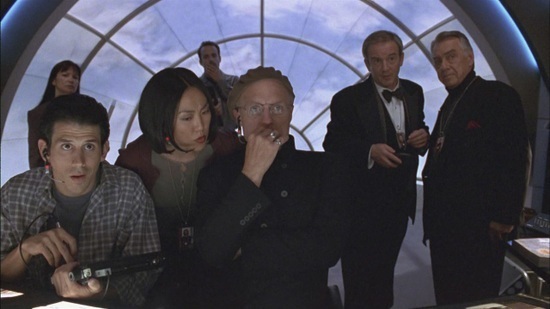
Several reviewers said that the movie never fully presents how sinisterly Truman’s world works(I heard Niccol’s first draft was darker while intended as a thriller), but, as the creator/father of this world who presides over the show at the control station above the sky, Ed Harris subtly suggests the sinisterness behind Christof and his show while never looking like a villain on TV screen. Christof casually talks about his show in his exclusive TV interview, but he never utters any words revealing its true nature. When Sylvia protests to him on the phone in the middle of the interview, he justifies his show with the plausible argument that he gives Truman the world better than the one outside. Christof may care about Truman as Big Daddy(Do I have to tell you what his name signifies?), but the show always the first priority to him, and he is willing to continue it by any means necessary, though the rating is never higher than before when Truman rebels against his domination.
One interesting but unexplored aspect of the show is Truman’s night time with his wife in their bedroom, which has been always hidden from the viewers. I have no clear idea about what they do, but it seems they do have a sex life. We have heard about good actors are willing to do anything for their performances, but can they even give up their body rights for the perfect acting as a real spouse? Judging from Laura Linney’s performance which looks more relatively neurotic than others’, I wonder whether the show has taken a lots of emotional toll on Meryl, who has to do the job probably far harder than “Last Tango in Paris”(1972). Having a sex with her co-actor can be accepted as a part of the acting, but now she is scheduled to get pregnant just for keeping Truman in Seahaven. I am really curious about what conversation she and Christof had during the salary negotiation meeting before she agreed to his plan.

Along with “The Truman Show”, Andrew Niccol made a career breakthrough thanks to another wonderful SF movie of my high school years, “Gatacca”(1997). As a biology major, I cannot help but giggle a little at several technologies depicted in the film while watching it, but the movie is effective none the less as a cautionary dystopian story with the powerful human moments breathing inside its cold future world. It suggests that the humanity may overcome the technology even when it comes to oppress the human society, and so does “The Truman Show”. During the final confrontation, Christof says, as the “God“ who have watched everything in Truman’s life through the technology at his hand, he knows Truman better than Truman himself, but Truman retorts: “You never had a camera in my head!”

More than 10 years have passed since these two films came out, and some aspects in their respective stories become real. With the rapid advance in Biotechnology, we can easily analyze the genomic information of an individual, and my mind immediately went back to “Gattaca” when I heard about the Genetic Information Nondiscrimination Act, which bans the discrimination based on genetic information in health insurance and employment. In case of “The Truman Show”, we saw the huge rise of the reality shows on TV not so long after its theatrical release, though our reality is closer to “Edtv”(1999), another movie with a similar but different premise. The people do not mind about showing themselves on TV, and others go along with that. Truman would be amazed by them.

Truman finally becomes a ‘true man’ in the end, but the technology will prevail. Considering what the last shot of the movie suggests, I think they will try another big project to attract ever-present TV viewers. I remember one article suggesting an outrageous twist for the alternative ending. Truman finally meets Sylvia, and they start their happy life, but it turns out that this ending is just the beginning of the second season of The Truman Show: this time, the whole earth is the studio. It sounds quite preposterous, but who knows? The viewers will gladly watch it again, anyway.

“What else is on?” – “Yeah, let’s see what else is on” – “Where is the TV guide?”

Posted in Movies | Tagged , , , , | 1 Comment

My Week with Marilyn (2011) ☆☆☆(3/4) : His week with one mesmerizing star

No actress can substitute for Marilyn Monroe, who has remained as one of the most famous cultural icons of the 20th century through her movies and photographs. This legendary Hollywood actress has her own natural quality which cannot be possibly imitated; when she appears on the screen, our eyes are always drawn to her, and our hearts are then smitten with that irresistibly innocent sexual appeal from her. She is sexy, but she is never conscious of that, while radiating the power to make a cranky nerd like me smile eventually.

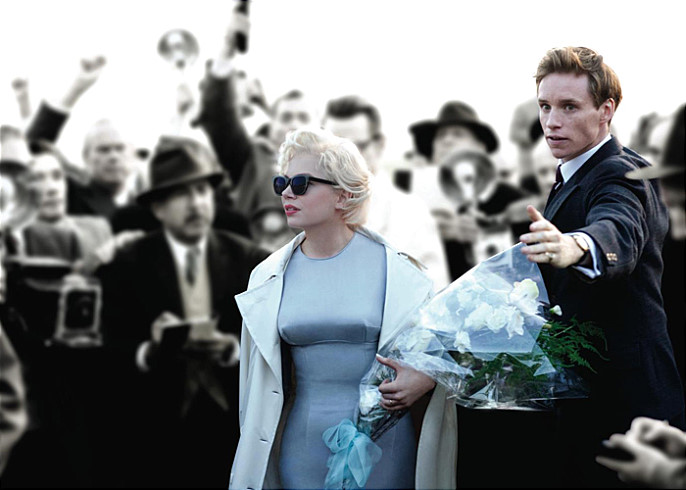
A very good thing about “My Week with Marilyn” is that it succeeds in taking a sidestep around that problem thanks to the beautiful performance by Michelle Williams. We instantly see that Williams is playing Monroe right from her first scene, but, rather than cheaply imitating Monroe, she deftly suggests Monroe’s star aura and its effect on the people surrounding her while recognizing the gap between her and Monroe. Williams is very convincing at least during the running time, and she eventually presents us her character as someone more complex than a mere object of desire in the end.

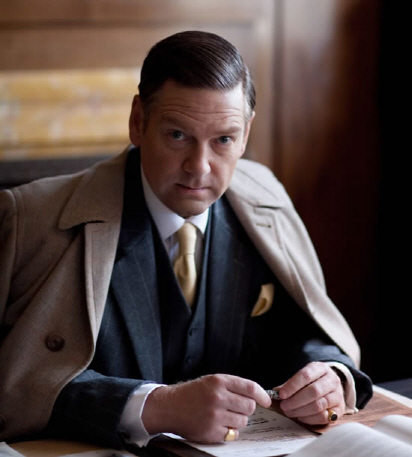
But the story is not about Monroe herself but Monroe viewed by a young man named Colin Clark(Eddie Redmayne), who was the second son of an art historian Sir Kenneth Clark. Clark took his first job as “the third assistant director” for Sir Laurence Olivier(Kenneth Branagh) when Olivier was directing “The Prince and the Showgirl”(1957), and, while acquainted with other people on the set, he encountered Marilyn Monroe, who was brought by Olivier as the heroine of the movie. He wrote his experience with these two stars in his diary, and, after retiring from his career as a successful TV documentary producer, he used his diary for his two books(“My Week with Marilyn” and “The Prince, the Showgirl, and Me”) the movie is based on.

I do not know for sure whether Clark was seriously involved with Monroe or not, but his story is unfolded in front of a funny, interesting variation of backstage drama. Monroe finally arrives in England as soon as her latest husband, playwright Arthur Miller(Dougray Scott), gets out of his problem with the American government, but Olivier soon begins to have the same frustration the other directors in Hollywood had with her. She is always late for the meetings and shootings. Sometimes she spends a whole day in her bed. When she does appear at the studio, there is another source of frustration waiting for Olivier and the crew; she so frequently forgets her lines that they have to shoot again and again in many cases. You probably know that famous story behind the one scene in “Some Like It Hot”(1959). It is just a simple line(“Where’s the bourbon?”), but Monroe kept forgetting it, so the director Billy Wilder put the note with that line written on it in the drawer – but then she pulled a wrong drawer, so Wilder had to put the note in all of the drawers shown in the film.

Olivier is naturally not happy about this difficulty. Furthermore, as a traditional stage actor, he is particularly irritated by the method acting tried by nervous Monroe, who even brings her coach/motivator Paula Strasberg(Zoë Wanamaker) along with her just for making sure that she is doing all right. But he later admits to Clark that it is worthwhile to try to pull something unique from Monroe no matter how much difficult it is to deal with her. Maybe she is not a great actress for the theater, but Monroe is surely a great star actress for the camera. When everything including her works in front of the camera in a priceless moment, it is simply fantastic, and all the agonies and frustrations they have gone through look like a good price for that – ant that is true.

With her own singing and seamless physical presence, Williams gives us a luminous illusion of how wonderful it is to watch Monroe at her fully functional mode as the movie star. The fact that she was nervous about playing Monroe, who must have been also quite nervous at that time, during the production helps making her performance more interesting. There is surely a gap between the two actresses, but they are somehow connected, and we gradually accept Williams as Monroe while following the story.

While going between Olivier and Monroe, Clark begins to see a needy, vulnerable, and unstable girl with unhappy past inside her. Like any other men before him, he falls in love with her, and so does Monroe, who has the tendency to lean on the men whomever she thinks can protect her. Arthur Miller recently disappoints her and breaks her hearts, and now she needs somebody else to be near her, and that is Clark. It eventually turns out to be just a brief affair, but being with Marilyn is absolutely a fantastic experience to be remembered. She is an unhappy woman, but she can be a warm, joyful girl with kindness if she wants. Not many guys can get such a good chance like a skinny-dip with Marilyn Monroe, you know.

As the observer/hero in the story, Eddie Redmayne is rather bland compared to his co-performers, but he does an adequate job as a naive young man impressed by the larger-than-life figures surrounding him. The subplot involved with the relationship between him and the girl working in the costume department(Emma Watson in a thankless role) feels redundant, but at least it is not a fatal weakness to the story itself.

It goes without saying that the other performers have more fun with their relatively showier characters. To Branagh, who is Oscar-nominated along with Williams for this film, playing Sir Laurence Olivier must have been like a karmic role. Both are famous British stage actors, and both are also famous for their respective Shakespearean films they directed, produced, and starred in. Though Branagh gives a subdued performance as an exasperated star/director, that fact outside the film makes his acting more fascinating than it looks.

Julia Ormond is Olivier’s wife Vivien Leigh; not so surprisingly, as an aging actress, she is concerned about her husband working with one of the sexiest women on the Earth, but she sees that directing Monroe is far from being infatuated with her. Toby Jones is Monroe’s publicist Arthur Jacobs, and Dominic Cooper is her agent Milton Greene, who gives a hostile advice to Clark as a man who once was fallen under Monroe’s spell. Judi Dench is witty and kind as Dame Sybil Thorndike; whenever there is a conflict on the set, she always smooths things out as a respected elder thespian with no-nonsense attitude.

You may complain that “My Week with Marilyn” reveals nothing new about Monroe herself, but that is not its intent. This is a little story about that how wonderful it was for some young guy to work with the celebrities and, above all, how unforgettable it was to spend some private time with one of the great Hollywood movie star actresses. The movie is charming and entertaining, and Michelle Williams does a really special job – and she made me smile with recognition, to be frank with you.

Posted in Movies | Tagged , , , , | 2 Comments

Hugo (2011) ☆☆☆1/2(3.5/4) : A family movie from Martin Scorsese(no kidding)

At first, “Hugo” feels offbeat in the career of Martin Scorsese. Can you possibly imagine a PG-rated family movie made by the great American director who has impressed us with the gritty masterpieces like “Raging Bull”(1980) or “Goodfellas”(1990)? However, while it is a fantastic family film in many aspects, “Hugo” has the heart filled with his love and admiration toward the great artistic medium in the modern history, and we are rapturously reminded again of how we dream through the films we love – and why these beautiful moments in the darkness are worthwhile to preserve.

The story begins with a young boy who has been living in one big train station in Paris, which is probably the Montparnasse station, during the early 1930s. When he was younger, Hugo Cabret(Asa Butterfield) was living with his clockmaker father(Jude Law) who also worked at the museum. Hugo’s father found an automaton, the machine which can write or draw by itself after it is winded up, at the basement of the museum, and he was determined to restore it. Many automatons were made during 1860-1910, “the Golden Age of Automata”, and some of them have been well-preserved by the museums and collectors. They still can be operated; they can do not lots of things, but, when I was watching one YouTube clip, I could not help but marvel at how it was meticulously operated by its intricate clockwork mechanisms inside the machine.

Hugo’s father died due to an unfortunate fire incident before completing his restoration job, so Hugo was left alone, and he was brought by his alcoholic uncle Claude(Ray Winstone) to the train station. He learned lots of skills from Claude like he did from his dad, so, while living in the place hidden from the people, he has been working as an unrecognized unofficial maintenance man for the clocks in the station since his uncle was disappeared. He does not get paid, so he usually steals croissant and milk from the cafe in the station while managing to elude the watchful eyes of Station Inspector Gustave(Sacha Baron Cohen, funny in a stiff, straight way) and his loyal Doberman dog Maximilian.

During its first half, thanks to Scorsese’s full command of styles and techniques, we have a joyful fun with the world in which Hugo moves around using the hidden spaces and passages around the station. Right from the opening scene where the movie glides straight from the picturesque night landscape of Paris to the bright interior of the station, the cinematographer Robert Richardson’s camera smoothly moves around the bountifully gorgeous interior designed by Dante Ferretti and Francesca Lo Schiavo  while following the movements of Hugo and other characters. Besides Inspector Gustave, there are also other characters who work at the station: the cafe owner(Frances de la Tour), the newspaper stand owner(Richard Griffith) who likes her, and the flower shop girl(Emily Mortimer) for whom Gustave has been carrying a torch. Observed by Hugo, they provide several amusing moments to us.

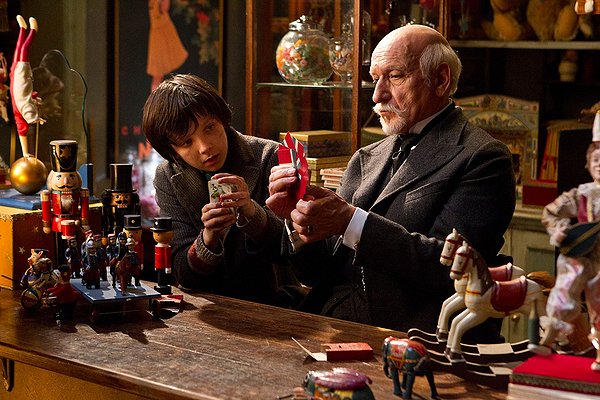
And there is one cranky old man named Georges(Ben Kingsley) for whom Hugo happens to work at his toy shop at the corner of the station. While getting acquainted with Isabelle(Chloë Grace Moretz), a young lively girl who has been raised by Georges and his wife, Hugo and Isabelle come to discover that there is the connection between Georges and his father’s machine he has been trying to fix. In addition, this old man turns out to be none other than Georges Méliès, who was one of the great innovators during the early stage of the film history. Ben Kingsley is superlative as a bitter old man still feeling hurt by his broken dreams in the past. He seems to be mean and heartless at first, but we gradually begin to see his pains and sorrows buried behind his stern face.

Through Méliès’ reminiscence part in the movie, we come to see how wondrous time it was for him and his crews including his devoted wife(Helen McCroy) while they made movies at his studio which looked a lot like a big glass house(They did not have the lighting equipment, so they needed sunlight for film exposure). As a gifted illusionist who dazzled the audiences with his illusions on the stage, Méliès instantly saw the new possibility from the short films of the Lumière brothers when he attended the legendary film screening at the Grand Café in Paris on Dec. 28, 1895. I watched the film in 2D, but I could see why Scorsese decided to use 3D techniques in this film. For instance, in this scene, we are not so scared by the train coming ahead to us on the screen, but 3D will at least help understanding how the audiences at that time felt about the Lumière brothers’s famous film “Arrival of a Train at a Station”(1895). Though I saw it in 2D and I had really no complaint about 2D version, I could notice clearly where Scorsese used 3D effectively in the other good scenes, and I am interested in watching the film again in 3D. Like Wim Wenders’ documentary “Pina”(2011), I guess that is the sign of a good 3D film made by the director who fully understands how to use 3D.

After witnessing this important moment of the film history, Méliès decided to make his own movies and, in the end, he made 531 films between 1896 and 1913. The production of “A Trip to the Moon”(1902), one of his famous films which has been always remembered with that immortal image of the rocket shot from a large cannon and then stuck into the moon’s face(ouch!), is fascinatingly reproduced in Scorsese’s film with lots of details to be appreciated. While trying to create the fantasies on the screen, Méliès developed several important film techniques and special effects to be used by other filmmakers later, and that made him one of the most influential pioneers in the film history.

The heart of “Hugo” lies in the second part of the story. As a young movie fan who used to go to the movie theaters with his dad, Hugo decides to help Méliès by showing him that he and his legacy are not forgotten at all, and that is what must have come close to Scorsese himself, who is both a great director and a great movie buff. I fondly remember how entertaining he was in the documentary “A Personal Journey with Martin Scorsese Through American Movies”(1995). As many of you know, he has been in love with movies since he was young, and, in that documentary, he passionately talks a lot about the movies he loves with his vast knowledge on film techniques and history. Even though you have never heard about the films he talks about, he will entice you to have an interest on them and you will probably see them someday.

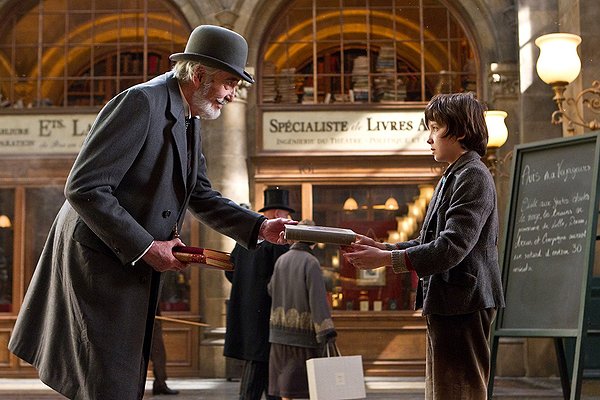
Any movie buff like me will be amused by the growing relationship between Hugo and Isabelle. We love to show others the movies we like, and so does Hugo, who shows Isabelle the world she has never encountered before. In exchange, she leads him to her equally beautiful world filled with many books at the bookstore run by Monsieur Labisse(surprisingly genial Christopher Lee). Asa Butterfield and Chloë Grace Moretz are good together as the smart, inquisitive kids with lots of eagerness; they want to know, and they will certainly not be stopped by the adults surrounding them. That is how they come upon one important book in the library, written by a kind film scholar René Tabard(Michael Stuhlbarg, amiable and gentle) who gives a brief but informative lecture on the early era of the film history to them and us.

Scorsese has been the leading champion of film restoration and preservation, and he emphasizes their importance to us through the painful chapter of Méliès’s life. At the end of his illustrious career, Méliès became bankrupt, and his studio was closed, and he burnt his sets and props out of rage. And, this is the saddest part, most of his films he had were destroyed completely; they were melted down and then used for making shoe heels. As a result, more than half of his works were lost forever; it was a great loss to us.

However, “Hugo” is not just about this despairing loss – it is also about the hopeful rejuvenation through resurrecting dreams. In the end, thanks to the kids’ sincere efforts, Méliès becomes happy to see his works being resurrected and coming back to the welcoming audiences who appreciate his works. As of 2011, around 200 films of Méliès were restored and available, and that fact makes the finale of “Hugo” more moving and poignant. I must mention that, in spite of the recognitions and appreciations he belatedly received, Méliès‘s final years were a little less rosy than what is shown in the finale, but we are dealing with a historical fairy tale adapted by John Logan from Brian Selznick’s award-winning illustrated children’s book “The Invention of Hugo Cabret”, not the precise historical facts.

“Hugo” is a delightful movie for all audiences. It is a lightweight work compared to other notable films in Scorsese’s career, but it is as technically impressive as his best films, and its story as personal to him as theirs. Even if you do not know much about the movies, you will be entertained by its unadulterated energy inside its story. If you know a little more about movies than others, you will be reminded with joy and wonder that why we love to watch movies.

By the way, though the movie is intended as a family film, the kids may be a little disappointed because they do not get what they usually expect from other lesser family films and animations. But some of them may learn something about movies and their artistic values as the portal to the dreamworld shared by their parents. At present, I am considering about showing it to my cousin’s young son. He is a clever elementary school kid, and he likes watching movies with my brother’s laptop. I think he will be very receptive toward what Scorsese wants to show and tell him.

Posted in Movies | Tagged , , , , , , | 3 Comments

My prediction on the 84th Annual Academy Awards

It’s fun to watch the Oscar ceremony. As the award season is being over, each of us has some pretty good idea about how it will end, but we all know that there is always the possibility of upset in every year. Even when our predictions turn out to be right, there are some funny or moving incidents happening during the show, and they always provide small precious entertainment with spontaneity. While the show in the last year was almost disastrous, we remember how funny Kirk Douglas was when he presented Best Supporting Actress Award, or how wonderful it was to see Billy Crystal appearing on the stage even for a few minutes. I think Mr. Crystal will use some, if not all, of his old routines rather than trying something new for this year, but it has been 8 years since he hosted the show for the last time, and I’d love to see him singing the opening number for this year’s Best Picture nominees. After all, he is a veteran expert, and we like him and trust him.

I have been predicting the winners for more than 10 years, but I have never been able to predict correctly. My most correct prediction was in 2004, but, as you know, that was the most predictable year in the last decade due to the complete sweep with 11 awards by “The Lord of the Rings: The Return of the King”(2003).

Anyway, I again submitted my prediction to Roger Ebert’s site, and here’s my guess. Let’s see what will happen on Feb. 26th, folks.

Continue reading →

Posted in Movies | Tagged | 4 Comments

My FFC review for Bullhead (2011)

My Far-flung correspondent review  for “Bullhead”(2011), which is recently nominated for Best Foreign Language Film Oscar, has just been posted at Roger Ebert’s site.

If you want to read it, click here.

The review was revised from my original review written in December 2011.

Posted in Movies | Leave a comment

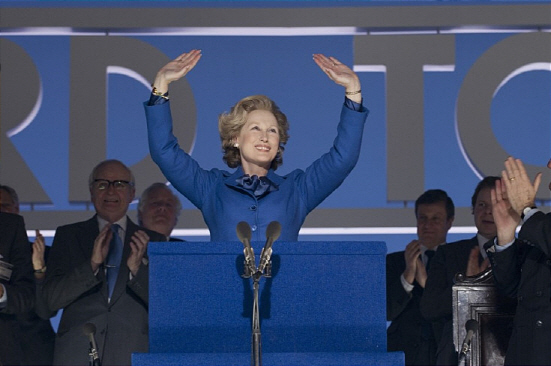
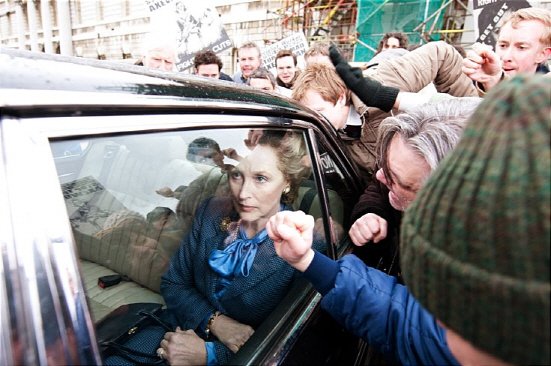
The Iron Lady (2011) ☆☆(2/4) : Meryl Streep as Margaret Thatcher – and what else?

I remember the bland biographies of famous historical figures I read from time to time during my innocent childhood. Written for inspiring young elementary school kids like me, they were usually packaged together and then sold to the good-intentioned parents like mine. They occupied a considerable space on my bookshelves, and I read them at least three or four times, but I got soon bored by their mediocre enumeration of what and when happened during the lifetime of the people like Einstein or Churchill. As a matter of fact, I was not sad when my parents threw them away because my focus was already moved to the science books – and then English and Korean literature later.

Even with a good performance at the center of the story, “The Iron Lady” is unfortunately as bland as them. While covering so many things that occurred during the life of former British prime minister Margaret Thatcher, its unclear tone uncannily reminded me how those biographies in my childhood years were as shallow as, say, 40 pages including the diverse illustrations which impressed me more than the monochromatic texts themselves. One thing happens to him/her in these books, and then, one or two pages after, the other thing happens; one thing happens to Thatcher in this film, and then the other thing happens within 10 minutes. And it goes on and on.

That is certainly not the fault of Meryl Streep, who has always tried her best 100%(or more) whatever characters she accepted to play. When I began to love movies during my elementary school years, she was barely a name of some great film actress to me, but her immense talent had suddenly come upon to me during the end of my undergraduate years in the 2000s. Her terrific performances in “The French Lieutenant’s Woman”(1981), “Sophie’s Choice”(1982), and “Silkwood”(1983) completely knocked me out, and I sort of understood why she has not gotten the third Oscar yet. Well, how can she surpass “Sophie’s Choice”, which features one of the great performances not only in her career but also in the film history?

Shortly after impressing me with her serious movies from the 1980s, she surprised me and others with the second breakthrough in her career through Spike Jones’ smart delightful comedy “Adaptation”(2002), for which she got the recording-breaking 13th Oscar nomination. She then moved on while having more fun ever than before along with additional Oscar nominations. She showed she could sing and dance “Momma Mia!”(2008) while giving another terrific powerhouse performance in “Doubt”(2008). She was inarguably the best thing in “The Devil Wears Prada”(2006) and “Julie & Julia”(2009), and I enjoyed her performances in spite of my reservations toward both imperfect movies.

I think I have said too much about her in this review, but, people, I cannot help it, because “The Iron Lady” gives a very little to Streep to work with and there is nothing much to talk about the movie itself accordingly. Sure, Streep does not disappoint us; right from the point when its production still photos came out, we predicted that she would perfectly nail the role regardless of whether the film would be bad or not. Its trailer re-confirmed our notion while she was gaining the buzz for another recording-breaking Oscar nomination, and, what do you know, she does received it as a serious contender along with several awards including recent BAFTA Best Actress award.

Streep is all ready for her show in the film. She rises to the occasions whenever supposedly big scenes are handed to her, but the people behind the camera do not seem to go along with that. Thatcher still remains as a famous political figure admired or hated by British people for many reasons as shown in the film, so it is understandable that the movie takes a neutral position, but the movie does a worse thing than taking sides – it does not express any opinions or insights on this strong-willed, authoritative woman who rose in the world filled with the men who looked down on her. I only saw her through the world news on TV, but she was distinctive enough to be stored in my childhood memory. Compared to that, the movie did not leave much impression although Streep does an expert impersonation of Thatcher.

The screenplay by Abi Morgan is more or less than the scrapbook of Thatcher’s crucial moments in her life, which are freely reminisced by an old, senile Thatcher in her later years. The movie looks through them with no clear focus or direction. Even before we get interested in one part, the movie quickly moves on to the next stage of Thatcher’s life along with the temporal dragging stop at old Thatcher’s part, and this pattern frustratingly continues throughout the film. The director Phyllida Lloyd tries to speed up the pace with the quick montages of TV news and Thatcher pushing her decisions all the way, but we are left with nothing to think about except watching what many of us have already known. There are threats from IRA, and then there is her harsh decision to close the mines which would leave many workers angered and unemployed, and then there is the Falklands War, which, according to what the film presents to us, did not have much of strategic advantages except it was nice as the show of force for her fellow British people. And then the Cold War is over, and then, well, she is forced to resign.

I do not mind such a storytelling method a little disorienting like that. In another scrapbook biopic film like “La Vie en Rose”(2007), there was enough space for the emotional contents to flesh out its three-dimensional character and hold the fragmented pieces together. However, in case of “The Iron Lady”, while the facts are crammed into less than 2 hours of incoherence, there is not anything besides them to present, and that is not enough to support Streep’s performance. In one scene, Streep is left alone in the meeting room after the other officials left out of the room, and she looks blankly a little above the camera. I knew she was completely in her character, but I personally wondered whether she searched for any direction she could find right at that moment.

The performers playing supporting characters are also as underutilized as Streep herself. Jim Broadbent is playing a dotty, dutiful husband not so far from his Oscar-winning turn in “Iris”(2001). Whether he complains to her or tries to cheer her up, he always stands by her even after he passed away; his character is a pure storytelling device for inducing her to remember her good or bad days. As the younger version of Thatcher, Alexandra Roach deserves better as much as her counterpart. Maybe you can find several recognizable actors like Olivia Colman and Richard E. Grant, but they quickly come in and then quickly come out as the movie is busying itself with running along its facts and chronology.

“The Iron Lady” is a tepid biopic with a plenty of wasted potentials. There is nothing new in it, and it does not even present its subject compellingly. Though Streep is good to watch, the movie sadly fails to elevate her diligent work to the next level while not making any choice. Sometimes it hesitates about whether it should be drama or comedy, so her performance frequently reminds me of her previous performance as Julia Child in “Julie & Julia”(2009). You know that something is wrong with a biopic film if its real-life figure unintentionally makes you recall other one a lot.

Posted in Movies | Tagged , , , | Leave a comment

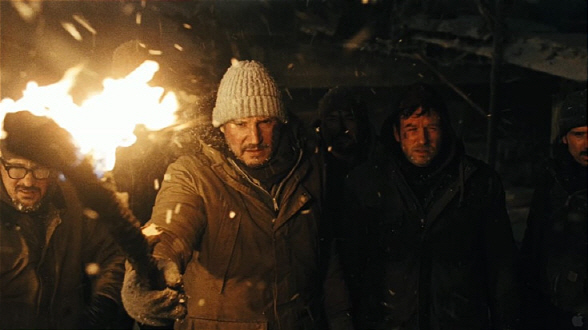
The Grey (2011) ☆☆☆1/2(3.5/4) : All the Scary Wolves – and more

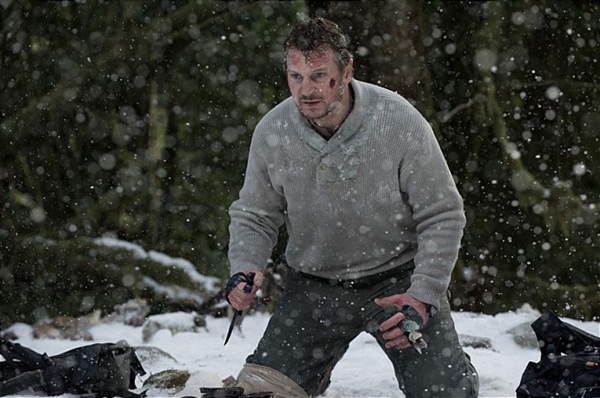
Above all, “The Grey” made me very grateful to our modern civilization. The nature is surely beautiful to look at, but it is also merciless to its inhabitants. Thanks to our civilization, most of us are fortunately protected from being ground by its ruthless ecological order, and that is one of the reasons why I can write this review wearing warm clothes in a heated building at cold winter night.

The movie is about a bunch of unlucky guys who happen to face one of the harshest sides of nature and have to go through it for their survival. The temperature is below zero even during day. The blizzard frequently slaps them with no mercy. They have little chance of being rescued in the vast area surrounding them. To make the matters worse, there is also terrible menace watching on them. They must do something, or they will possibly meet the end worse than the accident they have just survived from.

They are the employees returning from an isolated oil drilling rig in some remote region of Alaska. The job of Ottway(Liam Neeson), a professional hunter, is protecting other workers from the attacks from wild animals in that area. He is very good at what he is paid for; when he sees a wolf suddenly running toward the workers, he instantly shoots it with cool, precise professionalism. To him or other guys, this place is like the dead end of their lives, and we even see him attempting suicide with his rifle at one moment.

So it is ironic that he later becomes the leader for other few survivors after their plane to Anchorage crashes to the snow field in nowhere. They may survive for a while if they just stay there like the survivors in “Alive”(1993), but there is one big problem; there are a pack of wolves, and it seems these beasts will not be content with the dead bodies. Ottway suggests that they go south for more chance of survival, so they set for their rather hopeless journey.

But the wolves are still preying on them. I must say that the wolves in the film terrified me a lot. Through the animatronics, the trained animals, and some CGIs, the movie vividly presents them as the dreadful creatures of nature not only savage but also creepy. One of the most intense scenes in the movie is when the characters realize that they are surrounded by the wolves in the middle of night; only their glowing eyes are shown, but the sense of dread is escalating along with their gradual appearance in the deep darkness. Even when their fangs are not shown on the screen, their howling in the air has enough spooky quality to scare us. But these are not supernatural entities; they are the vicious force of nature, and that makes them more realistically horrible.

And the nature threatens them not only with wolves and cold weather. The director Joe Carnahan, who wrote the screenplay with Ian Mackenzie Jeffers based on Jeffers’ short story “Ghost Walker”, gives us a despairing but gripping tale of survival with extreme human conditions. Though he previously bombarded us to numbness with the mindless actions in “The A-Team”(2010), Carnahan skillfully controls the horror elements in the story to build the suspense and dread at this time. The movie is not entirely humorless, but the level of tension is never lowered even when we are allowed to see the grim humor inside the characters’ circumstance. The cinematography by Masanobu Takayanagi is excellent with bleak icy beauty – it looks beautiful while reminding us its vast cold harshness inside it.

Liam Neeson has been appearing in several films below his talent for a while(and now he will appear in “Taken 2” in this year), but he always brings considerable seriousness to those movies, and he is again good as a tough guy who knows how to confront the dangers surrounding him and others. As shown through his dream/flashback, Ottway has been haunted by the memory of his deceased wife(Anne Openshaw) with despair, and he has almost lost the will to live. But now, his instinct is stimulated again in the middle of wilderness where he is really on the edge of his life, and others follow him with no choice, because they also want to live even though there is not much future for them even if they manage to survive in the end.

The other actors accompanying him, including notable actors like Frank Grillo, Dermot Mulroney, Nonso Anozie, and James Badge Dale, are given less defined characters compared to Neeson, but they are also crucial to the drama. They give their respective characters more humanity and gravity than we expected; they are not the mannequins to be dispatched one by one along the plot. There are some conflicts between them, but they wise enough to stick together for their survival though the chance is pretty low for them. I especially remember one sad scene when one character makes his final choice with intractable logic. Maybe there is still little chance for him, but he knows he is finished, and he chooses to accept that fact along with the inevitable end coming to him. This indeed sounds like a cliché, but the actors make it work, and the movie respects his decision.

“The Grey” is an effective chiller. Its last shot is rather redundant because it exists solely for giving the audiences little relief, but that remains a minor complaint compared to what this terrifying film has built from the start to the finale. It is now mid-February, but it becomes colder again here in South Korea, and I became more conscious of the cold night when I walked out of the local theater right after watching it at last night. I was again thankful for the modern civilization providing me a ride, thick clothes, a warm room where I can sleep. What chance will I have if I am hurled into their situation in the film, as a clumsy, bumbling graduate?

Oh, by the way, when I described its synopsis to one of my lab colleagues a few hours before, he was not so concerned about the wolves. He even joked that they could eat wolves. I’d love to see his reactions while he is watching the movie. Maybe he will propose that we South Koreans also have to make wolf-meat soup along with dog-meat soup, if only for killing them all.

Posted in Movies | Tagged , , , , | Leave a comment

War Horse (2011) ☆☆☆1/2(3.5/4) : A horse going through the horrors of war

While watching “War Horse” on this Thursday evening, I recalled what one South Korean blogger wrote a few years ago. According to him, there are two kinds of manipulative drama films. Both of them try to tug our heartstrings, but one only makes us say “I can see through you” while we are feeling distant from it, and the other makes us absorbed and moved even when we are well aware of that it wants to squeeze our emotions from us.

“War Horse” surely can be criticized as a manipulative sentimental melodrama with its character thrown into the horrors of war, but it is an excellent film belonging to the second category mentioned above, and it is as good as it can be. As a sort of cross between “Black Beauty”(1994) and “Au Hasard Balthazar”(1966) wrapped in war film, the movie has the beautiful scenes reminiscent of those classic films made a long time ago by the great directors like John Ford. When I saw the country village, the wide green field where horses can gallop freely, and the big blue sky above it, all of which rendered gorgeously on the screen during the first half of the film, I nodded with appreciation and delight. When the story moves to the battlefields of World War I, there are equally harrowing moments filled with the horrors of war, and that familiar lesson about war is effectively delivered to us while we are horrified and saddened by what its central character and others go through.

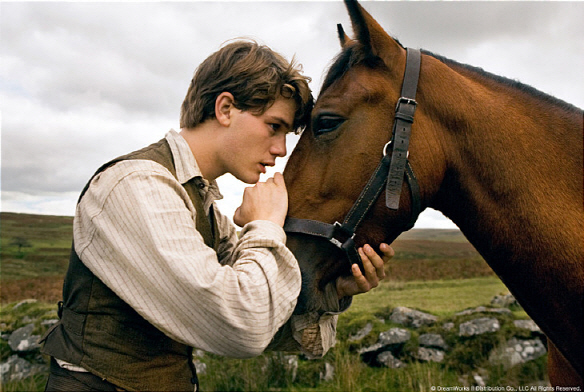
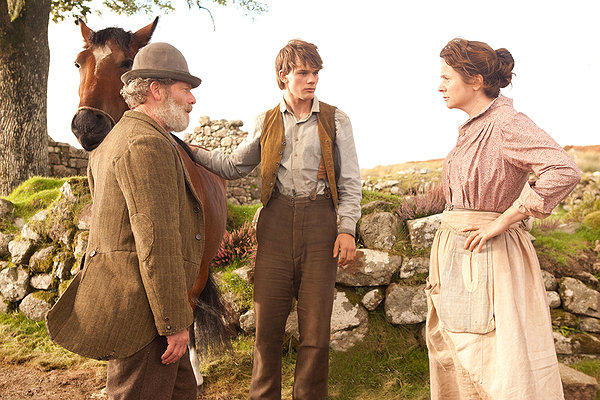
Its central character does not talk, because it is a horse, after all. We see the moment of its birth, and then its happy time with its mother on the green field. When it grows up, it is sent to the auction in the village, and that is how he is owned by Ned Narracot(Peter Mullan), a farmer with drinking problem. Although the horse is a thoroughbred not ideal for his farm work, Narracot is determined to buy it just because he wants to spite his landowner(David Thewlis) who also wants to buy that horse. Narracot wins, but he spends all of the money in his pocket, much to the dismay of his wife Rose(Emily Watson), who must have been tolerating a lot from her husband with understanding and love(“I might hate you more, but I’ll never love you less.”)

Anyway, their son Albert(Jeremy Irvine) is excited to see the horse; he was there when it was born and he has always wanted to have it. While their story is unfolded with the imminent financial problem they have to deal with, the film, shot in Devon and other locations in England, shows the beautiful landscape surrounding them, and the Narracots’ residence adds additional beauty in the middle of this background, with a funny goose whose brash ferocity reminds me of those fearsome avian hoods in my university campus.

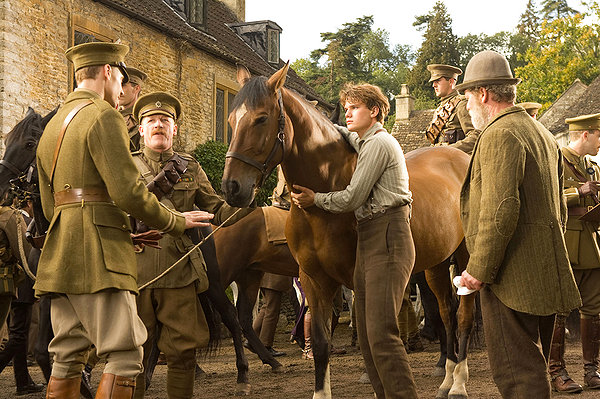
Albert and his horse, named Joey by him, become closer to each other while going through their hard time, but they are soon separated. World War I breaks out, and, because they run out of money, Albert’s father sells to one chivalry officer(Tom Hiddlestone). Of course, there is a moment of tearful goodbye, but the movie does not overplay it. We never get a clear idea about what Joey thinks about its situation in the film(in Michael Morpurgo’s novel, the horse tells us its story like “Black Beauty”, by the way), but the drama in the film works because the director Steven Spielberg indirectly suggests its feelings to us through its eyes and behaviors – that is better than a talking(or narrating) horse.

The second half of the film is about the bleak journey Joey goes through during the war. In the war where the modern weapons like machine gun, tank, and mustard gas were used, using horses in battle are wasteful and pointless, and that point is chillingly presented in one sequence when the British cavalry attempts a sneak attack on their enemy. The sequence is mostly restrained except when the cinematographer Janusz Kaminsky’s camera captures soldiers and horses charging into the field in long shots with the sense of an epic film, but its tragic horror outside the screen is papable even though we only see the German soldiers shooting their machine guns and the horses without riders running past them. There is also a grueling moment when Joey and other horses are forced to drag the big cannon up to the steep hill; I was relieved to see that no animal was harmed during the production, but it looked realistic enough to me.

While managing to survive, Joey is moved around several people it comes across. Whether they are German or British or French, most of them are kind and generous to Joey and they give it some help. Each of them is no more than the place Joey drops by(the actors are good; Niels Arestrup is notable as an old French farmer with his sick but plucky granddaughter), but there are touching moments here and there, such as when the British soldiers and the German soldiers help together the horse entangled in barb wires. Though they are all scared and tired in the trenches, they still have enough human compassion to help a poor creature unintentionally stuck in no man’s land, and they forget for a moment that they are enemies.

While Joey is going through this ordeal, Albert worries about his horse, and he later enlists in the army with his friend when he becomes old enough. I guess I do not spoil any of your entertainment if I say that they finally meet each other in the end. We can see its ending coming from the beginning, but the movie presents it more effective and emotional than we expected. The scene looks achingly gorgeous with the sunset, and John Williams’ Oscar-nominated score dramatically swells, and we are very happy for the ending Joey deserves after so much horror it went through.

“War Horse”, which is nominated for the Academy awards in 6 categories including Best Picture at present, is a movie with respectful classic styles which is quite honest about what it intends to do. We can see instantly that it tries to manipulate your emotion, but Spielberg handles us with deftness as he did in many of his successful works, and the film is a moving story with the good scenes to be remembered and one horse we care about. You can call it a sappy melodrama, but how can possibly we feel nothing when the animal is scared by the danger it cannot fully understand?

Sidenote: Morpurgo’s novel was also adapted into the acclaimed play with the same name, and, from what I saw in those wonderful YouTube clips, it might be more interesting and powerful than this film. I’d love to see the play at theater.

Posted in Movies | Tagged , , , | 1 Comment

My FFC review for The Front Line (2011)

My Far-flung correspondent review  for “The Front Line”(2011) has just been posted.

If you want to read it, click here.

The review was revised from my original review written in July 2011.

Posted in Movies | Tagged , , , | 1 Comment

Nameless Gangster (2012) ☆☆☆1/2(3.5/4) : A dirty rotten scoundrel and his goodfellas

 If you have little background knowledge about South Korean society, you will probably not be able to believe your eyes while watching South Korean movie “Nameless Gangster”, whose subtitle could have been “How to Succeed in Underworld Without Really Trying”. Seriously, you might ask, is it possible that he can be accepted as an elder of the crime organization just because he is an elder to the boss in his family tree, even though he has no experience with their world? Try to imagine that it is a mob family in US, and you will find that outrageously absurd.

But it was possible at least in South Korea during the 1980s, and I and other South Korean audiences who watched the film at last night know that too well. The movie evokes not only the looks and feelings of South Korea during the 1980s, but it also presents the certain disgraceful examples of South Korean male during that era. While watching its pretty unlikable protagonist, I said to myself; oh, I knew such dudes like him. They annoyed me and others like hell with their constant bluff and bragging, especially they were drunk like asshole. And some of them were actually my family members.

His name is Choi Ik-hyeon(Choi Min-sik), and he is a seedy custom employee living in Busan, a big port city which is the second largest city in South Korea. Port city usually draws the crimes like contraband trade, and Busan is no exception; there are always the people trying to smuggle something in or out of South Korea, and it is Ik-Hyeon and his colleagues’ job to catch them – and extort money for ignoring them. Their excuse: everybody does(and that’s true).

Unfortunately, there comes a sudden internal investigation and someone must take a fall, so Ik-hyeon is about to be fired because he has the least number of children among them. However, at one night, he happens to acquire the considerable amount of methamphetamine by chance, so he gets an idea; why not selling it to some local mob organization in the town?

That is how he comes to encounter a rising young boss, Choi Hyeong-bae(Ha Jeong-woo). At first, they are just a seller and a buyer, but Ik-hyeon goes further. Once he finds that Hyeong-bae is a distant relative of his(both are from the Choi family of Kyeong-joo), he begins to insinuate himself into Hyeong-bae’ organization. He proves to Hyeong-bae that he is a valuable asset to Hyeong-bae during the competition with the other local crime boss Kim Pan-ho(Jo Jin-woong), so he soon finds himself at the top – or near the top, at least.

Now, you will wonder, how can he do all these things even though he is just an ordinary ex-public servant who is not so bright? The movie sarcastically tells that all he needs for being successful is the right connections, and he does have them. There are the countless intertwined connections amidst the people in South Korean society based on family ties or school ties or other kinds of ties, and how you are connected with them will affect your life and career considerably if you are born in South Korea.

How Ik-hyeon uses these connections for his advantages and benefits is the funniest element in the film. When he is treated not so nicely by Hyeong-bae and his gangs at their first meeting, he immediately visits Hyeong-bae’s dad, who reminds his son that Ik-hyeon is an elder to Hyeong-bae in their family. Even if he is a tough guy, Hyeong-bae obeys to his father like a good son; he bows politely to Ik-hyeon and begins to treat him like his godfather. Such a mechanism like this works very well for Ik-hyeon in other cases, such as when Hyeong-bae and others are arrested by the local police. All he has to do is finding anyone powerful enough to move the law system in his family tree, to whom he can approach with the money or other kinds of bribes as lubricant through other elder family member who can introduce him as a cousin of uncle of cousin of father of cousin of… never mind.

The director/writer Yoon Jong-bin has been providing the uncomfortable but unflinchingly realistic presentation of the flaws and weakness of South Korean males and their consequent ramification. His first work, “The Unforgiven”(2005), was a low-budget film with the searing insight on how damaging the order of the ranks in South Korean military system is to young men going through their obligatory military service and how meaningless it is outside the system. His second work, “The Moonlight of Seoul”(2008), was a dry, unsentimental film about the daily life of male escorts who are nothing but trouble to the women around them.

“Nameless Gangster”, which is his third work, is no exception. Ik-hyeon is a sleazy ‘half-gangster’ with petty style but no substance. Elated by his new associates, he thinks he is a lion, but he is actually more or less than a greedy, opportunistic hyena who is coward to the strong and pompous to the weak; in other words, he is your average piggish South Korean male during the 1980s who can be far more immoral and unethical than the gang members he is associated with. Compared to him, Hyeong-bae and his gangs look like lesser evil; they certainly are dirty criminals, but they have their own codes and ethics, about which Ik-hyeon cannot care less.

The movie is personal to the director; his father was a high-ranking police officer in Busan, and he witnessed many people visiting his father for a favor, which was not so different from what is shown in the film. Yoon Jong-bin is no Martin Scorsese in case of style and storytelling, but his earnest approach to his story without the glamor we usually expect from gangster films is commendable. The recreation of the 1980s is convincing and realistic to me, especially in case of the cars rode by the characters in the film. I was young at that time, and I wanted to get in those expensive cars like Grandeur made by Hyundai(and I used to get my wish from time to time thanks to my rich relatives).

No matter how they try to look cool, the characters are basically pathetic caricatures stuck in their criminal mindset, but they are colorful ones with which the actors have a ball while doing their job flawlessly. Choi Min-sik, best remembered by the international audiences for his operatic performance in “Oldboy”(2003), is back on his full-throttle mode. His character is so repellent that we do not care about him much, but Choi Min-sik’s riveting performance grips us to his insatiable hunger for power and money. He is a vain and foolish jerk, but he is cunning and manipulative enough to find a way out for himself. We do not like him, but we watch him with amusement and disgust while wondering how far he will go while clashing with others or how he can get out of his troubles.

Choi Min-sik has the terrific ensemble supporting him. Ha Jeong-woo plays his boss character with restrained amusement(this is his third collaboration with the director). Hyeong-bae can tolerate the towering arrogance of his indulgent elder who suddenly become attached to his organization with no reason except their family ties because it is a rule, but he can be ruthless when he thinks it is necessary. Jo Jin-woong, Kim Seong-gyoon, who plays Hyeong-bae’s top lieutenant, and other actors are believable as the individuals of underworld roaming around the streets of Busan; they all wear suits, but you can easily tell apart one from the other even when you do not know their names. Ma Dong-seok is Ik-hyeon’s brother-in-law inadequate as a recruited enforcer(he says he can beat anyone in a fair fight because he is a teakwondo master – I doubt that, though he really is), and Kwak do-won is a bullying prosecutor who is as principled and uncompromising as his ambition and his system allow. Among her co-actors, Kim Hye-eun shines in few scenes as the co-owner of the night club which is the cause of the conflict in the story. As usual, girls know better than boys, and she tries to be tactful as much as she can among her bad boys.


The original Korean title of the film is “War against Crime: Golden Age of the Bad Guys”, which is rather ironic considering how its story ends. The good time is eventually over for these idiotic crooks on October 13th of 1990, when the president of South Korea declared “War Against Crime” on TV and lots of gang members of the criminal organizations around the country were promptly arrested and jailed. There are several betrayals while everything in their world is crumbled down like the house of cards near the finale – and some of the characters will be ended up in prison for a long time.

“Nameless Gangster” is a very entertaining film which is bitingly funny and realistic to me and other South Korean audiences, and you may also enjoy it as a funny guide to the dirty side of South Korean society which still remains with us even after more than 20 years. The movie slyly comments that South Korean government at that time was not that different from the gangsters in the film. The main figures of the government usurped the country with coup d’état just like the gangsters snatch the management rights of nightclubs and hotels with clubs and fists in the film, and, believe or not, there was the time they worked together ‘harmoniously’ when they were useful to each other. As a matter of fact, “War Against Crime” was no more than a public show for the people when the government needed to set an example to cover their latest corruption. In such a society like that, it is no wonder that the line between an ordinary man and a gangster is not clear at all.

Its epilogue reminds us that South Korean society has not been changed much even in the 21th century. People like Ik-hyeon did anything necessary for themselves and their family, and they survive, and they manage to maintain their proud position as someone’s father, or someone’s grandfather later. The movie gives some human side to Ik-hyeon through his few scenes with his family, who gets lots of benefits thanks to his criminal activities. I think he has no regret about his deeds because everything is justified for his family, but how do his kids think about him? I don’t know, but maybe I and other South Korean audiences also have to ask ourselves a question – how did some of our fathers survive through that era for supporting us?

Posted in Movies | Tagged , , | 4 Comments