Lourdes (2009) ☆☆☆1/2(3.5/4) : Religion, People, and ‘Miracle’

 I have never been to Lourdes, one small town near the Pyrenees in southwestern France, but, considering what I saw from Jessica Hausner’s film “Lourdes”, I think Lourdes looks like a nice place to visit. The hotel shown in the film looks good, and they serve visitors with care and respect. The town has several interesting things to observe, and the landscape surrounding the town is nice to look at; at the meadow around the top of some mountains, you can see the green land below and the other mountains covered with snow at their tops.

But most of people do not come to Lourdes just for enjoying fresh air and pretty scenery. As some of you know, Lourdes has been well-known as a place of the mass pilgrimage since a young girl named Bernadette Soubirous serially encountered the Marian apparition at the grotto outside the town in 1858(Her story was later fictionalized into the novel which was then adapted into 1943 film “The Song of Bernadette”, for which Jennifer Jones won Best Actress Oscar) and the Sanctuary of Our Lady of Lourdes was established a few years later. It was said that the water from the spring in the grotto had healing power, and many people have been visiting that place with the hope of miraculous healing. I have a certain amount of doubts(according to the scientific analysis done by the chemists, the water is just plain underground water), but, anyway, several cases of ‘miraculous healing’(or scientifically inexplicable medical cases, shall I say) were reported, and some of them were officially recognized by the Roman Catholic Church.

However, if God exists, and if God really proves his existence to us through the healing water of Lourdes, we may say he is as generous as Las Vegas casino managers. I used the phrase ‘some of them’ in the paragraph above, but that was a mild expression; only 67 cases were recognized as the authentic miracle by the Church after their thorough investigation process(the last recognized one happened in 2005) – that is quite a low odd considering that the place has been visited by around 200 million people since 1860.
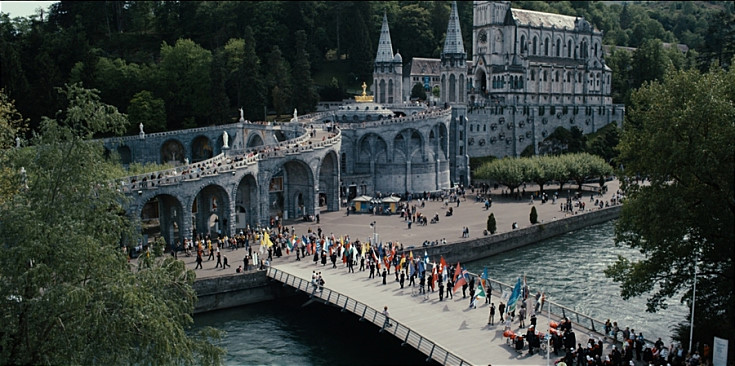
 None the less, the people still have been coming to Lourdes with the hope not so different from the one we have when we come to Las Vegas, although the chance of getting a jackpot is higher than the chance of getting healed by Lourdes water. Whether this is absurd or not, it is good for the town. Around 5 million people come to this small town with the population of 15,000 every season, so the mass pilgrimage has become its main industry. In one brief shot in the film, the people gather together for a group picture with the Rosary Basilica(built in 1899) behind them, and I could not help but think of the castle in Disneyland. Minus their hopes and beliefs, they are more or less than the tourists visiting a theme park.

I am afraid I sound grouchy to you(I must confess; I am a skeptic atheists whose family is officially Buddhist on the record), so I have to assure you that “Lourdes” is neither anti-religious nor religious. Maintaining its neutral position, it calmly observes the people who visit the town and the other people who help them in this religious system. The caregivers are volunteers, and some of them, if not all of them, are devoted to their work. I was a little touched by a young caregiver who has become a little more serious about her duty than before while helping the disabled people.

A group of pilgrims in the film are as diverse as the passengers in the Airport films, coupled with various kinds of illnesses and disabilities. Many of them need wheelchair or walker to move around; some of them can move for themselves, and the others still need others’ help. We see a mother and her mentally ill daughter in wheelchair who have been to Lourdes many times. We also observe a couple of middle-aged women who seem to come here just for tourism(one of them wants her eczema to be cured, but I do not think she is not that serious) and throw sarcastic one-liners from time to time. In case of another middle-aged woman, she is a quiet lady with faith, but she has some questions to ask during this pilgrimage. And we also have the priest, the guards and their chief, and the caregivers and their strict, fastidious supervisor.

But this is not a variation of that famous movie cliché called “Ark movie”. The movie gives us little knowledge about their backgrounds, let alone their names or the information about their illnesses. For instance, one reviewer said one certain character is the other character’s mother, but I am not so sure about that. Some illnesses like dwarfism are quite apparent to our eyes, but, while watching one character in wheelchair, I was not sure about the cause of her general paralysis. Some character suddenly reveals her health status at one point, but it is because her body cannot help itself, not because she wants to show it to others around her; the movie even avoids the possibility of melodrama inside that character and moves on according to the itinerary.

Their procedures over the week observed in the film are interesting to watch even to the outsiders like me. They visit the grotto, and they wait in a long line(the more you are disabled, the sooner you can go inside the grotto), and they bath with Lourdes water or drink it. The blessing ceremony is held at the big hall filled with lots of the people, and there is an amusing sight in which one of them attempts to move closer to the altar because she thinks that will increase the probability of miracle. They watch the video together showing the testimonies of the people who experienced the miracle(or did they?). They and others gather at Rosary square in the evening where the hundreds of candle lights brighten dark night. On the last day, they will have a picnic at the mountain meadow(It’s only for the people who can walk, by the way), and a farewell party in the evening will follow.

Meanwhile, something happens. Is it a miracle? The movie never explains or tries to explain it. There is no music but only silence in that scene, and the camera quietly focuses on one of the pilgrims, Christine(Sylvie Testud), on her bed at one night. And then, she suddenly begins to do something impossible considering her medical condition. On the next morning, everyone is surprised and most of them naturally think it is another miracle from God.

Or is it? She is soon diagnosed by a doctor for confirming whether it is a miracle or not, and the doctor says it might be the temporary recovery observed in many other people who visited Lourdes, but she is happy to be freer than before. Now she does not need the help from others when she wants to enjoy the ice cream for herself at the cafe in the sunny afternoon, and, when she does it, my God, she does look really happy. I do not remember seeing her in other films before except “La Vie en Rose”(2007), but I can say that Sylvie Testud is a wonderful actress. Though she does not move much in her wheelchair, She slowly holds the movie with her serene, weary face while never asking for pity; we come to care about her(well, who can’t?), and we are joyous to see her face far more brightened than before thanks to this sudden happening.

While it is possible that this is not a miracle, there are lots of questions in the film regardless of how you think about it. As one character asks, what should we do if we want a miracle? Is there any particular way for receiving it from the existence high above the sky? And why does God show his power rarely, though he is said to be almighty enough to heal many sick people on the earth who need help? And, at least in some characters’ view, why does God seem to be not so fair, when there must be people more devoted and desperate than Christine? The people in the movie ask such questions and others to the priest from time to time, but the priest does not give any satisfying answer for them – one of his answers is the one you have probably heard many times from the men of monotheistic religions. To be frank with you, I could not help but burst out a laugh when he said that. Oh, come on, father, that is a cliché – but it can be true, perhaps.

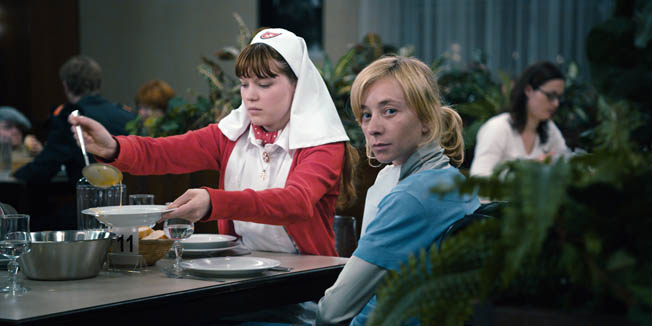
The director Jessica Hausner is not judgmental on her subject or her characters. The camera looks at the people like the unseen observer with a cool, objective attitude and carefully composed shots. In the marvelous opening scene, the camera patiently watches the dining hall while it begins to be occupied by the people one by one, and our attention is slowly increased along with a slow, subtle zoom-in. There is a serious undertone, but the movie is not entirely humorless. There is a small funny joke about Jesus and the Virgin Mary told to the priest, who is a man of religion both easy-going and sincere, and I think it will also make my Catholic acquaintances laugh.

The final sequence of the film, the evening party on their last day, reminds me why some of us, if not all of us, need the religion or its alternatives like Alcoholic Anonymous. The life is basically miserable for most of us(after all, we are approaching to the darkness called death from the beginning), and the life is particularly terrible for the people like Christine, and we all are worried about whether our life has a meaning or not except passing the genetic information to the next generation. Regardless of whether God exists or not, it is nice to be with others, and we are consoled at least for a while that we are not alone, like the people in the film. The music plays, and the people drink, and they dance(but only the people who can move legs, of course). The movie treats Testud and the other actors equally as the human beings with each own matters in its austere but humane view. They show envy and skepticism while congratulating Christine, but it is the behavior as human as the young pretty caregivers showing their interest to the young handsome guards.

“Lourdes” is a very thought-provoking film accessible to you even if you do not have a religion; you will have lots of things to talk and discuss about after watching it. When the final single shot of doubt is hurled in the finale, we have another interesting questions about the ambiguous last shot as a consequence; was it not a miracle, after all, or was it ‘cruel’ miracle and God intended it for a different outcome? And how does Christine think about that? I have no clear conclusion even after re-watching, and neither does the film. Testud neither says nor reveals anything at that moment, either – but let’s say she makes an exit as graceful as the movie does.

Posted in Movies | Tagged , , , , , , | 2 Comments

The Artist (2011) ☆☆☆1/2(3.5/4) : A charming/loving homage to the silent film era

Despite lots of acclaims and awards it has recently garnered throughout the Oscar season of this year at present, I have a feeling that “The Artist” may not get a wide release in South Korean theaters in the next month. Our audiences may have some interest because it is currently Oscar-nominated for ten categories including Best Picture, but they may turn away from it once they learn that it is a silent film, which is usually regarded as dated and old-fashioned.

But I have a sincere wish that they will give it a shot, because the movie is not just a mere homage to the films of the past. The people who made this movie know not only how the silent films during the 1920s look, but also how easily the great silent movies from that era can grip our attention and touch our heart. While you can appreciate its style, you can also care about the story and the characters, and you will be touched by the genuine emotions behind its exemplary technical achievements.

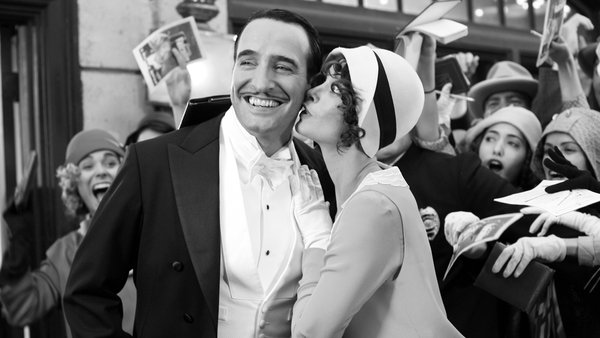
The story is a familiar old-fashioned show business melodrama we have encountered countless time in other films including “The Star is Born”(1954) – and it has a good background for telling the fall of its hero and the rise of its heroine simultaneously. It is late 1920s, and Geroge Valentin(Jean Dujardin) is a quintessential silent film star gleefully enjoying his status at the top. In the opening scene, his latest adventure movie is again received well by the audiences, and he gladly appears in front of the applauding audiences with his usual charming smile at the end of its premiere.

When he comes out of the theater, he accidently comes across a young woman named Peppy Miller(Bérénice Bejo), who is one of his fans as well as an aspiring actress. Their brief encounter luckily helps her career thanks to the reporters surrounding them, so she comes to work in the movie studio where Valentine is one of its major starts. Of course, they meet again later at the movie set, and they soon discover their mutual feelings from each other. As I said, this is a silent film, so they do not talk, but Dujardin and Bejo have nice chemistry together; the scene where Valentin gives Miller one tiny but crucial thing she needs to be a star actress is one of the lovely moments in the film.

 However, their small relationship is interrupted by the sudden progress in their industry. The talkie is introduced, so the new era is about to begin, and Valentin experiences the same decline which many of the silent film actors did during that transition phase. As reflected in “Singin’ in the Rain”(1952), now they must talk in front of the camera, or they will perish into the oblivion. Refusing the talkie, Valentin sees his fame and popularity quickly crashing with the gradual disappearance of silent films. In contrast, Miller is on the rise to her stardom with her talkie films.

The director/writer Michel Hazanavicius made a loving tribute to the silent films of that era he depicts. The screen ratio is 1.33:1 instead of the wide screen ratio we are accustomed to. Its cinematography, production design and costumes are so faithful to the looks and atmospheres it tries to reproduce that you can mistake it for some restored classic film produced during that era. Except the one nightmare scene featuring sound effects and another crucial scene, the soundtrack is mostly covered by the gorgeous score by Ludovic Bource, which is very important in setting the moods and feelings as the scores for the silent films were during that time. There have been some talks about whether it was appropriate to use a part of Bernard Herrmann’s score for “Vertigo” during the melodramatic climax sequence in the film, but, as far as I can see, I do not see any problem with that; they use Herrmann’s music in a respectful way along with the swelling emotions to justify their choice. There is a pretty good chance that Bource will win Best Score Oscar, and, if he does, he deserves the award.

The actors are convincing as the characters living in the world of silent films with the right kind of mannerisms in their performances. Jean Dujardin has received several awards including the Best Actor award at the Cannes Film Festival in the last year for his performance, and he is also nominated for Best Actor Oscar as predicted. In two funny spy parody films directed by Hazanavicius(“OSS 117: Cairo, Nest of Spies”(2006) and “OSS 117: Lost in Rio”(2009)), Dujardin was hilarious as a bumbling(and incorrigibly insensitive) spy while channeling the dashing image of Sean Connery, and now he is channeling the silent film stars like Douglas Fairbanks Jr. As a matter of fact, he could have been a good silent film star; his wonderful work is both delightful and poignant, and the range of emotions – confidence, affection, desperation, rage, and many others – he conveys through his expressive face without any dialogue while swinging through his dramatic character arc is a marvel to behold.

His co-performers are also fun and joy to watch. At his opposite, Bérénice Bejo is marvelous with the quality of the classic movie actress, and their interactions through their faces on the screen remind me why silent films still remain emotionally accessible and effective even when their era ended a long time ago. James Cromwell is reliable as Valentin’s ever-faithful chauffeur, and John Goodman is a nice movie studio boss who willingly follows the change of the trend while feeling sorry about his star. And there is a scene-stealing Jack Russell terrier named Uggy, who plays Valentin’s royal dog. Along with another memorable Jack Russell terrier in “Beginners”(2010), Uggy deserves the award for the best dog performance of 2011.

People around me usually underestimate the power of silent films. I have watched many silent films through DVDs, and I found many of them quite powerful. They do not talk, but they somehow tell me their stories in their own way, and I marvel again and again about how the great silent films work on the emotional level. I fondly remember the moment when I watched “Man with a Movie Camera”(1929) while enthralled by the frantic images and the electrifying performance of Alloy Orchestra at 2010 Ebertfest, Not so long after that, I watched a more restored version of Fritz Lang’s “Metropolis”(1927) in the Jeonju International Film Festival with others, and we were all quietly and completely immersed in that great film during more than 2 hours.

“The Artist” may not be as great or powerful or ambitious as these masterpieces I mentioned above, but it is a small precious germ which is also one of the most charming films in 2011. This is basically exercise in style, but it is a tremendous work with lots of things to be appreciated, and it also has lots of hearts to be felt through its sincere story which is sad but ultimately optimistic. The change is inevitable, but there is always a way to move on(Since this film is a comedy, so this is not a spoiler, folks). I have no idea how the movie will approach to South Korean audiences, but I know one thing for sure; now or then, the silent movies know no language boundary.

Posted in Movies | Tagged , , , , , | 2 Comments

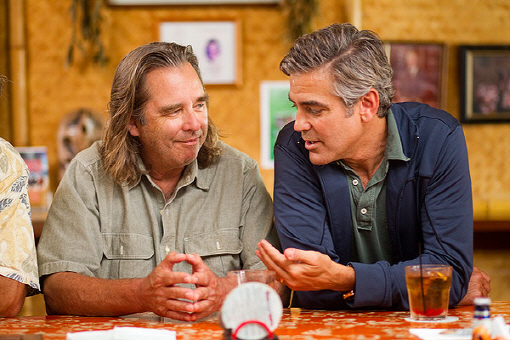
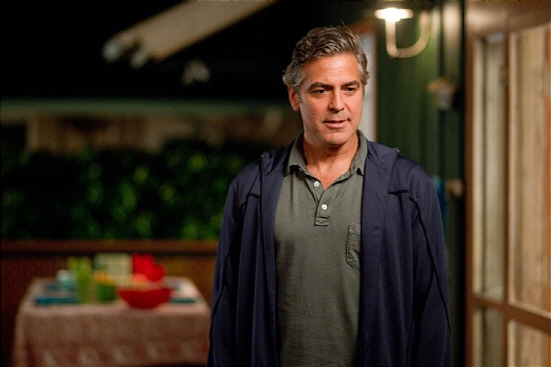
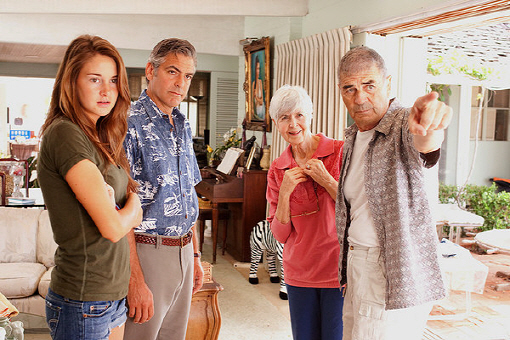
The Descendants (2011) ☆☆☆1/2(3.5/4) : His family matters in paradise

“The Descendants” is about a man who suddenly finds himself at the crucial moment. He has been leading a comfortable life for him and his family without much thought, but, whether he likes it or not, now he has to deal with his imminent family matters. They seem to be separate problems at first, but the things turn out to be not as simple as we thought. The movie is the perfect mix of sadness, pain, and humor, and what we get at the end of the story is the emotional growth of the hero who has forgotten his role and responsibility in his family.

One family matter for Matt King(George Clooney), a lawyer living in Hawaii, is selling the last chunk of the family land for 0.5 billion dollars. He is one of the descendants of the Caucasian family who have become a part of the local society since they acquired the substantial part of the Kaua’i Island thanks to the marriage between one of their ancestors and a Hawaiian princess in the middle of the 19th century. The family assets have been decreasing over the years to support and finance the family members, and now they only have that land, which many of them want to sell to the buyer who will build another vacation facility for the tourists. Matt’s job is simple; as the sole trustee of the land, all he has to do is signing the papers as the final approval after the vote at the upcoming family meeting.

 But he also has the other matter which is more difficult to handle. His wife, Elizabeth(Patricia Hastie), has been in coma after the boat accident, and he is not yet accustomed to his new role, “a backup parent” to his two daughters who had mostly been taken care of by his wife. Now the doctors say that there is no chance of recovery so, as she wished before, they will let her go, and he has to notify others of this news for giving them the chance of saying goodbye to her.

This is certainly not an easy job, but it turns out there is more difficulty for Matt. He happens to learn that his wife has been cheating on him. Though he and she have been distant from each other for a long time, they are still a husband and a wife, so the news naturally comes to him like a sudden jolt. Confused and disoriented in this personal upheaval, he decides to find and meet the guy she had an affair with, so he moves around Hawaii with his two daughters Alex and Scottie(Shailene Woodley and Amara Miller) and Alex’s goofy boyfriend Sid(Nick Krauses).

 The movie follows them in its languid pace with the acute sense of the area the characters inhabit in. Hawaii in this film is not a postcard image we usually think of; it is their hometown they have been living for years. While there is a melancholic undertone generated from their loss and pain, there is also relaxed warmth and intimacy in the landscapes and the places the characters go around. The people are interesting to observe, too; Matt’s family members may look like a bunch of bums or stunt men wearing sandals and short pants, but, like Matt, they are in fact influential figures in their island. One of the amusing things in the film to me is that Matt and his family move between the islands by planes rather than boats. Sometimes we forget how much the Hawaiian islands are apart from each other.

The director Alexander Payne, who adapted Kaui Hart Hemmings’ novel with Jim Rash and Nat Faxon, looks at his characters with that dry but humorous attitude we have witnessed in his previous works. While several sincere moments of pain and sadness organically comes out of the circumstances his characters are dealing with, the movie also finds humor from here and there in its story. The humor does not just lighten the mood; sometimes, observing how funny it is can be led to understanding how painful it is to them. Matt lets out his feeling of being betrayed to his wife at one moment, but, as we and he know well, it is of no use to be angry in front of the woman who cannot even hear what he says, let alone respond to.

Payne does a subtle job of rolling the plot in a seemingly predictable direction. We think we know where it is directed toward, but it surprises us by revealing the unexpected complexity of the characters and their situations. For example, when Matt finally confronts the man he wants to see, he sees that he should be more tactful than he initially thought even though he has no intention of revenge. As the guy in question, Matthew Lillard excels in his scene with Clooney, and Judy Greer is also good as his wife. The interactions between them and how their matter is connected with Matt’s other matter crucially affect the choice he has to make later in the story.

 As the man at the fork of his life path, Geroge Clooney gives one of the best performances of 2011(He deservedly won the Golden Globe award for Best Actor in last week, and he is also nominated for Best Actor Oscar in this week). I heard from somewhere that Payne rejected the idea of casting Clooney as one of the main characters in his previous film “Sideways”(2004) because it was impossible to imagine him as a washed-out actor. It may be also impossible to imagine Clooney as a plain ordinary family guy, but, as he found an unexpected side in Jack Nicholson in “About Schmidt”(2002), Payne correctly finds the right stuff in Clooney to play his hero in this film. Shedding his usual easy-going charm and smooth star actor persona, Clooney is believable as a man who slowly learns what he has ignored and lost in his life while strolling through his difficult emotional journey. Clooney is mostly quiet and reserved on the screen, but we always know what is going on his head full of surging emotions.

Payne also fills his story with the vivid, colorful supporting characters more complex and human than we expected, and they are played by the wonderful cast Payne assembles for supporting Clooney. While Shailene Woodley has been praised as the daughter with some issues who gets close to her dad more than before through their journey(it’s a shame that she did not get nominated for Best supporting actress Oscar, by the way), it should be mentioned Amara Miller is also memorable as her younger sister. Miller has one emotional scene around the finale, and it is one of the saddest moments in the film.

Robert Forster previously disappointed me a lot with his unfortunate appearance in that dreadful trash called “D-War”(2007), so I am very glad to see Forster as Matt’s gruff father-in-law who keeps reminding his son-in-law that her daughter deserved better. It looks like a typical role, but, through his face aged with experiences, Forster makes us understand his character has a good reason for that as the father who cared about his daughter; he conveys a lot of feelings behind that in one small scene when his character is briefly glimpsed by other characters.

 In his brief appearance, Beau Bridges is amiable as Hugh, one of Matt’s cousins. His character could have been easily depicted as the villain, but the movie does not allow such a cheap way like that. It is only the matter of difference of opinions between him and Matt, so, with no bad feelings, he kindly warns Matt about ensuing troubles to come caused by himself and others. Nick Krauses is the major comic relief in the story as Alex’s boyfriend Sid, but he has his own moments when his character is shown to be far more than a clown; to our surprise, Sid reveals considerable intelligence and thoughtfulness along with the truths he sees from others.

Alexander Payne has kept making good films since his debut with “Citizen Ruth”(1996), and, again, he gives us another intelligent drama which is both sad and funny with the keen insights on the human feelings and behaviors. It also has the interesting comments on the relationship between the land and the people accompanied with history and morality, and that makes the movie more interesting. Although there still remain the matters to deal with at the end of the story, it is emotionally fulfilling to watch the last scene which has been compared with the last scene of “Michael Clayton”(2007). They say little, and their future is uncertain to some degrees, but we know their life become a little better than before. As in many good family dramas, that’s quite a progress for them.

Posted in Movies | Tagged , , , | 1 Comment

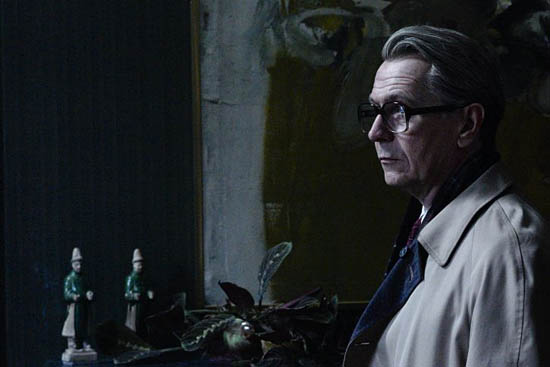
Tinker Tailor Soldier Spy (2011) ☆☆☆(3/4) : A low-key 3D job during the Cold war era

 In John le Carré’s novels, you will not find any glamor or fancy gadget you have seen in James Bond stories. The spies in his novels are more or less than public servants in shadows. They tentatively move around their world where anything, including death, can suddenly happen if they are not watchful. No wonder that they usually guard their thoughts and feelings behind their cool facades even when they are with their men…. or are they?

Thomas Alfredson’s “Tinker Tailor Soldier Spy” is based on one of the well-known novels written by le Carré. The novel was previously made into a 6-hour BBC TV miniseries in which Alec Guinness gave one of the best performances in his career as George Smiley, a quiet, meek, non-sociable man who is very good and natural at the works he does not like much.

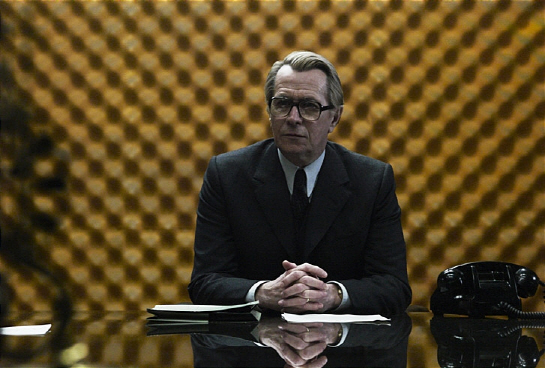
Smiley, a recurring character in le Carré’s works, is a plain middle aged man in appearance, but he is a brilliant spy of MI6 who can play a complex battle of wits with his counterpart in KGB. At the beginning, we see how Smiley is forced to leave MI6, nicknamed “The Circus” by the insiders. The head of MI6, Control(John Hurt), suspects that there is a double agent, or a mole, planted at the highest rank of the Circus. He secretly devises a mission to uncover the identity of the mole while focusing on the possible five suspects including his deputy Smiley(Gary Oldman). Control seems to get a good chance at first, but the mission, which is supposed to be carried out by one of his trusting agents, Jim Prideaux(Mark Strong) turns out to be a trap, so the disastrous incident happens in Budapest, Hungary as a consequence.

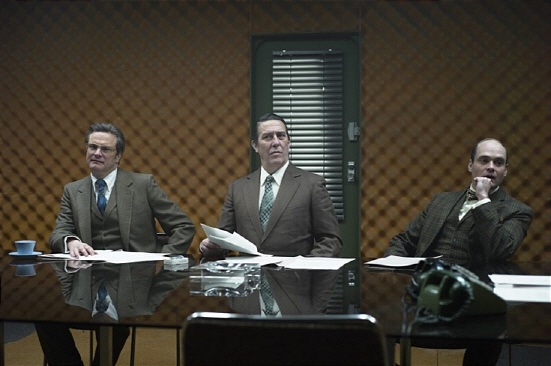
Taking the responsibility for this fiasco, Control resigns, and so does Smiley. Not long after that, Control dies due to heart attack, and Smiley continues his semi-retirement life. However, he is called back by the government; they come to believe that Control’s suspicion is indeed true, and they want Smiley to do Control’s unfinished job. Of course, Smiley is not a mole, so there are now four suspects who become a close inner circle at the top of MI6: pompous Percy Alleline(Toby Jones), who becomes the new head of MI6, suave Bill Haydon(Colin Firth), brusque Roy Bland(Ciarán Hinds), and opportunistic Toby Esterhage(David Dencik). The name of the novel comes from the code names given to them by the Control during his private investigation; Alleline was Tinker, Haydon was Salior, Bland was Soldier, Esterhage was Poor man, and Smiley was Beggarman.

Smiley begins the investigation with the assistance of Peter Guillam(Benedict Cumberbatch), only guy in MI6 Smiley can trust. With the screenplay by Bridget O’Connor(she died before the filming) and Peter Straughan, the movie moves around several flashbacks and turns while Smiley goes around to meet the people or peruses the documents at his temporary headquarter. The pace is slow with its dense storytelling, and it requires a certain amount of patience to follow the story, but it is interesting to observe how the characters behave in their world where it is wise to reveal as little as possible to others while keeping their faces even if you are not a mole. Their occupation can be categorized as “3D job” : Dirty, Difficult, and Dangerous.

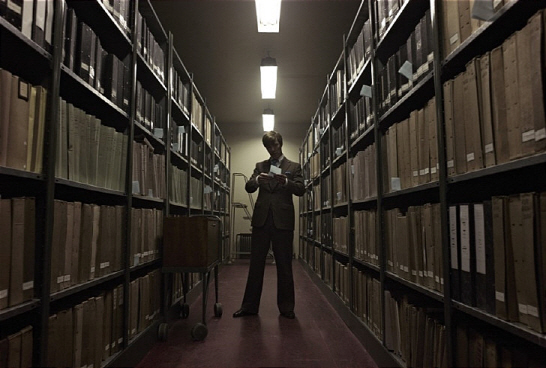
The tension is kept at low levels(after all, this is not as urgent as defusing a bomb), and there is the constant feeling of paranoid around the screen along with gray/brown images of London during the 1970s. Even when one character does a simple job like snatching a certain important file from the record archive, there is a good reason for him to believe that somebody might watch on him. With one false move, his cover can be blown at any minute in front of others in the building – including the mole.

 Gary Oldman is as steady and quiet as the film itself. Oldman has been known for playing diverse roles in his career, and, in contrast to his more flamboyant roles in the past, he gives a restrained performance which subtly holds the center of the story like Guinness’ performance in the miniseries version. He does not talk much, and his face does not say much either, but Oldman masterfully conveys us the soul bitter about not only his works but also his elusive adulterous wife who is almost never shown in the film. Unlike the TV version, the movie does not show Smiley’s first and only encounter with his arch-nemesis in the flashback, but Oldman has a quietly powerful scene where he reminisces that encounter in one monologue(“We are not so very different, you and I. We’ve both spent our lives looking for the weaknesses in one another.”).

The actors surrounding Oldman are as good as they can be. Toby Jones, Colin Firth, Ciarán Hinds, and David Dencik are fine as the human beings with the cards behind their backs rather than mere suspects in the list. With ragged, weary face, John Hurt would have left enough impression even if he had appeared only in the opening scenes. Benedict Cumberbatch, who is currently playing Sherlock Holmes on BBC TV miniseries, does a good job as a man who must sacrifice his personal feelings for his work. Kathy Burke, Tom Hardy, Stephen Graham and Mark Strong have their own small moments when Smiley extracts the information he needs from each of them.

The director Thomas Alfredson is no stranger to the lonely people in the cold, bleak world. His previous work was “Let the Right One in”(2008), which is a gloomy vampire tale about two main characters desperately clinging to each other during cold winter nights. They are outsiders to the society of ordinary people in that film, so do the characters in this movie, who must work in shadows while not being noticed by others.

The atmosphere of the film is impeccable. I liked the melancholic mood surrounding the excellent production designs and good performances. However, I think it may be not easy for you to follow the plot or gather the clues led to the answer at the finale unless you have not read the novel or have not watched the TV version. In addition, in the process of compressing the novel into a 2-hour movie, the movie leaves some gaps and holes that may confuse you. Though TV version is certainly less cinematic, it has enough space to unfold its complex story, and that is where its basic strength comes from.

“Tinker Tailor Soldier Spy” is an interesting film which can hold your attention if you give it a chance. This is a rare spy thriller which is not driven by car chases and explosion but by the mood and the intelligence of the main character. I could appreciate that as much as I enjoyed the actions in “Mission Impossible: Ghost Protocol”(2011), and maybe you can – as long as you are aware of what you are going to get.

Posted in Movies | Tagged , , , , | 8 Comments

We Bought a Zoo (2011) ☆☆1/2(2.5/4) : They start over…. with a zoo

 In Cameron Crowe’s new film “We bought a Zoo”, the hero says at one point that sometimes all you need is twenty seconds of insane courage. I guess that is what he has when he makes an important decision for the life of his family around the beginning of the story, but he eventually needs far more than that for his decision. As the title literally says, he buys a zoo, and he tries to manage it even though he has very little experience with animals except the family dog.

It sounds like a story only possible in movies, but a British guy named Benjamin Mee, a former DIY columnist for The Guardian, actually made such a bold decision in real life. In 2006, he and his family bought Dartmoor Zoological Park in Devon, England, and they renovated the zoo which was nearly shut down at that time. They re-opened it to the public in the next year, and Mee later wrote the book about his experience at the zoo.

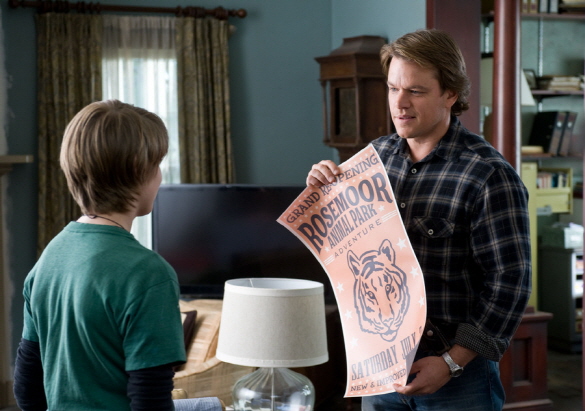
Though the movie is based on his book, you will see that lots of things are changed by Crowe and his co-writer Aline Brosh McKenna if you check Wikipedia. Above all, the background is changed from England to US, so Dartmoor Zoological Park is changed into Rosemoor Wildlife Park located in (mostly) sunny place in South California, US. Under the bright sun, though some of them have some depression problem, the animals in the film certainly look less depressing than the animals which I saw at Lincoln Park Zoo in Chicago, Illinois during one cold early morning of April in 2010.

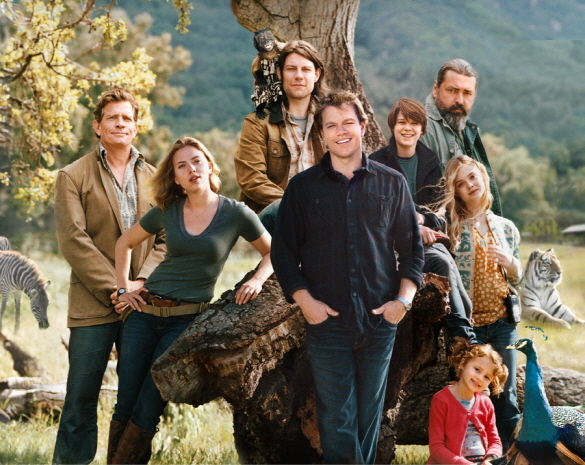
With Mee’s approval, his counterpart in the film becomes a typical widower dad we have seen in Hollywood family movies. Played by earnest Matt Damon, Benjamin Mee is a journalist who still struggles to move on after he lost his wife to cancer. He has managed to be a good dad to his two children, but it has been becoming more difficult. Although his cute little girl Rosie(lively Maggie Elizabeth Jones) is little affected by her mom’s death because she is young, his son Dylan(Colin Ford) is a moody teenager who keeps making troubles because, well, he lost his mom. He is recently expelled from his school with three suspensions, and he does not talk often with his concerning dad.

After finally quitting his job, Ben decides to change the environment, so he searches for the house ideal for him and his children, and, what do you know, he finally finds the dream house he searches for after passing so many nice candidates. However, there is one flaw in this house – there is a zoo right next to the house, and he has to manage the zoo if he buys the house. As a matter of fact, the house is so close to the zoo that they can hear the lion roar. I know the animals in the zoo are safely confined in their places, but I will not be able to sleep well in that house if only the wire fence prevents the lion from attacking me.

Anyone must have some second thoughts, but Ben decides to purchase the house along with the zoo, because 1) his daughter is happy with peacocks and 2) he feels that this is the place for the family. Dylan naturally does not like his dad’s decision because they are now living outside the city, but we all know that 1) he will like the zoo in the end and 2) he will also realize that Lily(Elle Fanning), a younger sister of the lead zookeeper Kelly(Scarlett Johansson), has some feeling toward him.

With slow, easy-going mood, the movie leisurely strolls inside its genre formula we are familiar with. Sometimes its quite predictable story is pushed by common plot devices which always do work, but the movie is comfortable and pleasant as a whole, and there are funny moments I enjoyed(Okay, the snake scene is a little too contrived, but it is funny to see those snakes slithering in front of the house) and warm moments I appreciated. As we expected, Ben and Kelly are getting closer as the time goes by, and Damon and Johansson are nice to look at in their tender scenes, though their mutual major concern is whether they should euthanize that poor aging tiger or not.

 Crowe is a good director/writer who can jump beyond clichés and stock characters as shown in his best works such as “Almost Famous”(2000), but, as in his previous work “Elizabethtown”(2005), he does not do much in this time. That does not mean that he lost his talent; the dialogues are still good and are delivered precisely, and the pace of the story is appropriate though it lags sometimes. Though I could see that Crowe shifted the gears behind the story, but I could also see the real feelings inside the characters, and Crowe does not wisely overplay them. The soundtrack consisting of the score by Jónsi and several pop songs proves again that Crowe is certainly not a director who uses the songs like wallpapers for his movie.

But I think the story is too predictable and generic to recommend this film despite several things I like. I could see where it was going to even when it throws several moments of so-called crisis for injecting some tension to the drama. One of them is represented by a zoo inspector played by John Michael Higgins. He is an obnoxiously fastidious guy who checks every details for judging whether the zoo can be re-open to the public or not, and Higgins has small funny moments before his character inevitably follows the path pre-determined by the plot.

The other supporting performers playing the staff members are more or less than the colorful caricatures filling the background just like the animals they take care of, and most of them, except Johansson and Fanning, do not have many things to do. The animals in the zoo look good and natural thanks to the cinematographer Rodrigo Prieto, but they do not leave lots of impression. However, I must say that I was constantly disturbed by the tigers after hearing from Johansson’s character about how tigers kill their prey with their teeth.

Anyway, I do not want to be sarcastic, so I confirm to you that this is a mild, harmless, and pleasant family film which does most of what it intends to do, and the family audiences will like it more than me. None the less, considering the talents gathered for this movie, I know too well that it could have been far better than that.

Posted in Movies | Tagged , , , , | Leave a comment

Unbowed (2011) ☆☆☆(3/4) : A professor protesting against the unfair legal system.

If you do not know much about South Korean society and take a fair trial for granted, you may find the case depicted in South Korean courtroom drama “Unbowed” absurd and outrageous. So did I while watching it, but, to me and other South Korean audiences, it is painfully funny, because we are well aware that it reflects one of shameful aspects of South Korean society – and most of us know that such a case did happen a few years ago.

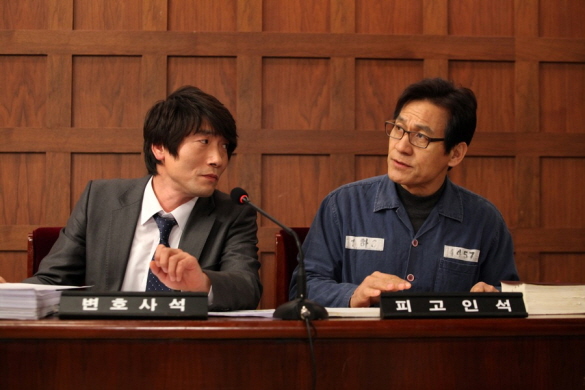
With the names, the circumstances, and other details changed a little bit, “Broken Arrow” tells us the story based on a real-life incident and the following legal procedure that drew a lot of attention from the people and media at that time. In late 2007, one math professor named Kim Kyung-ho(Ahn Seong-gi) is arrested for attempting to assault the judge who presided over a trial on his appeal case. Several years ago, he was fired by his university just because he could not be silent about one faulty problem in some important exam. He filed a lawsuit for this unfair discharge, but he lost. Later, after finding that there was a good chance for his win, he enters an appeal, but that judge dismisses it without any proper reason. He is so angry and frustrated that, one night, he ambushes the judge with his crossbow and threatens him to admit his mistrial.

It cannot be denied that what he resorts to is wrong, as the Professor Kim himself admits that in the courtroom. However, what happens next after this simple criminal case is quite unfair to him. The other judges instantly hold the meeting and declare that this incident is a terror against the constitutional government – this is like publicly announcing to people that any judge selected for Professor Kim’s upcoming trial is biased from the start.

The situation becomes more outrageous during the trial. Though it seemed at first that the judge in question was injured by an arrow projected from Professor’s crossbow, the circumstance at that time has lots of questionable aspects that do not fit together, so, like the characters in the film, we have lots of questions. For instance, where is that broken arrow smeared with blood which was claimed to be collected by the cops at the crime scene? Or, how many arrows were really at the scene, three or four? And why was the blood found only in the judge’s suit and underwear, but not his shirts between them? Is the blood really the judge’s? Did he really get injured as he testified? And is it possible that the judge and others commit perjury, as Professor Kim claims?

 It does not matter at all, because it is clear from the beginning that the judicial officers do not give a damn about confirming whether Professor Kim shot an arrow or not at the scene. The prosecutor half-heartedly submits a bunch of weak, unreliable evidences along with the testimonies from equally unreliable witnesses. The judges presiding over the case accept them without any second thoughts while denying Professor Kim and his lawyers any chance to prove the invalidity of these evidences and testimonies. It seems that all they care about is sentencing Professor Kim several years of imprisonment at the end of the trial.

Unfortunately for them, it turns out to be a tough job, for Professor Kim cannot give up easily. Ahn Seong-gi plays his character as a man for all seasons who is also a major big headache for any lawyer in the world. Besides not accepting any compromise against his principles and belief, as a guy who wears his hearts on his sleeve, he usually says more than his lawyers want in the courtroom. In addition, thanks to his study on the criminal law in the prison, he sometimes acts as if he were his own lawyer; in one tense but amusing scene, he uses his knowledge to corner both the prosecutor and the judge for a while, who must do as he demands if they are really law-abiding public servants.

Not so surprisingly, several lawyers have already given up the case or have been fired by the professor Kim, and his latest choice is an alcoholic lawyer Park Jun(Park Won-sang), who was once a passionate activist lawyer but now is a weary man struggling with financial difficulty. He also soon has troubles with his uncontrollable client, but we all know that he will eventually follow the footsteps of many jaded lawyers whose tarnished ideal in their hearts is awakened by their stubborn clients. We have seen such characters a little too many in lots of courtroom drama movies, but Park Won-sang supports Ahn Seong-gi well, and their scenes at the courtroom have the dramatic power fueled by the outrage happening in front of them and us.

 Outside the courtroom, the movie stumbles, though its heavy-handed handling of the story and characters does not significantly hurt itself. The director Chung Ji-young is not a bad director(this is his first work since 1998, by the way), but the dialogues are stiff and awkward from time to time, and many of supporting performers in the film are wasted mainly due to the flat characterization. I do not think Professor Kim’s wife(Na Young-hee) or the reporter who gets close to Park Jun(Kim Ji-ho) are particularly required for storytelling; their main function in the film is showing the reactions like concerned face or standing by the heroes. And I doubt whether a certain scene in the prison is really necessary, although I understand its intent to add another dimension to the character.

Despite these glaring flaws, “Unbowed” has enough anger to engage me and other audiences. There is also the bitter sense of humor behind the conflict between the absurdities of the legal system and a man of principles against them, so it is rather funny to observe them while it is also infuriating to watch them. After this case, there have been other unjust cases in South Korean courts, and, as usual, the protests have been ignored by the South Korean judiciary authorities backed and controlled by the government of the current South Korean president who are detested by many South Koreans for many good reasons. Thankfully, we do not live in North Korea, so the chance to bring some changes will come through the elections in this year. I won’t miss it in this time.

Posted in Movies | Tagged , , , | Leave a comment

The Girl with the Dragon Tattoo (2011) ☆☆☆1/2(3.5/4) : Meet Lisbeth Salander with a different style

As the remake, David Fincher’s new film “The Girl with the Dragon Tattoo” has its inherent weakness right from the beginning of its production. Around two years ago, the original Swedish picture directed by Niels Arden Oplev, based on late Stieg Larsson’s popular novel, made such a strong impression with its disturbing mystery tale and its cool, fascinating heroine that Fincher’s version was immediately compared to what I saw in the original version. Yes, it does not feel as fresh as the original version did, but the remake version has its own strength along with its own style, and I could enjoy it while admiring how technically polished the product is as the English version made by Hollywood studio.

Though there are notable minor differences, the plot is pretty much same. Around 45 years ago, Harriet Vanger, a young niece of a well-known millionaire Herik Vanger(Christopher Plummer), was suddenly vanished at the family manor located in the island under the classic situation of mystery novel. The island was locked from the mainland while she was disappeared, so it can be assumed that she was murdered and hidden somewhere around the island, but the police did not get any useful clue about her whereabouts, let alone her body. And somebody always sends the package containing a pressed flower to Vanger every year, which was Harriet’s annual present to her dear uncle.

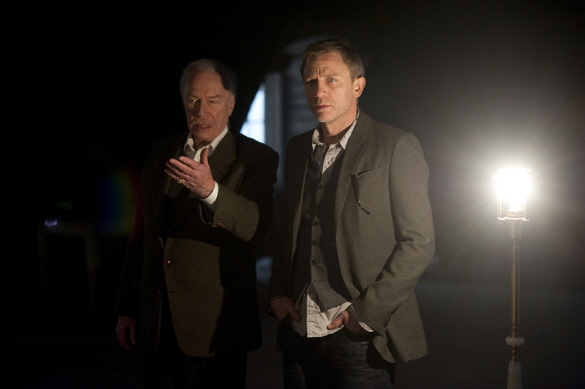
Though he is old and retired, Vanger still has considerable power as the head of the Vanger family and the former CEO of their big family business. Through his family lawyer, he hires a well-known investigative journalist Mikael Blomkvist(Daniel Craig) to find what really happened on that day. Blomkvist is reluctant, but he accepts his offer, mainly because he is in financial trouble after losing the libel suit caused by his mistake. The process is slow at first, but he begins to unearth several clues, and then he is helped by a young hacker named Lisbeth Salander(Rooney Mara), who knows a lot of him and his trouble because of her latest job.

 What they are finally going to uncover is the atrocity associated with Nazism, family abuse, and serial killing. The director David Fincher is no stranger to serial killing, which was the subject of his two excellent films. “Seven”(1995) was a dark tale of gruesome serial killing drenched with that unforgettably brooding atmosphere which still lingers on my mind. “Zodiac”(2007) was a haunting film based on the unsolved real-life serial killing case with the vivid, realistic presentation of San Francisco during the 1970s.

His subtle but stylish handling of Larsson’s novel exists somewhere between these two dark films. Accompanied by “Immigrant Song” performed by Karen O, his movie instantly grips our attention with the main title sequence full of striking images to impress us, and then it pulls us into the compelling mystery inside the story under the calm, controlled direction.

Fincher has always been masterful in case of creating the right atmosphere for his stories to tell. That cold atmosphere in the original version is more cinematic and more enhanced, as shown in the scene in which the Vanger manor reveals itself in front of approaching camera amid snow blowing in the air. Unlike the original version, Fincher made the flashback sequences for showing us the incidents in the island at that time, and its warm, soft tone makes a notable contrast with the cold, desolate atmosphere in the present scenes. The sense of isolation seeps into the quietness, and even the small sound of wind blowing into the house feels quite suspenseful during one important scene. The ambient score by Trent Reznor and Atticus Ross is constantly abrasive and unpleasant; I doubt who can possibly enjoy their 3-hour score album from the beginning to the end, but their sound(I even doubt whether it can be called ‘score’) works as the part of the sound design in the film though it is distracting at times.

The major surprise of the film is Rooney Mara, who played a girl who dumped Mark Zuckerberg in the opening scene of Fincher’s stunning masterpiece “The Social Network”(2010). When I saw Noomi Rapace in the original version, I agreed with many critics that it might be impossible to find an American actress who can replace Rapace, but Mara proves that we were wrong with one of the best breakthrough performances of the last year. I should mention that she does not surpass that coldly fierce presence of Rapace because the movie softens her character a little bit, but Mara is as electrifying as Rapace in her own way. Her Salander is less edgy than Rapace’s, but she is still that unpredictable tough girl with vulnerable sides who can be very ruthless, especially when she chooses a drastic measure to solve the recent problem with her newly appointed legal guardian(Yorick van Wageningen), a disgusting man who makes a big mistake of underestimating what Salander is capable of. The scenes between them are the most unpleasant thing to watch in the film.

Because of the big impression left by the original version, it is a little awkward to observe the actors delivering English dialogues with accent at first, but, thanks to the effective performances by Rooney and the other actors, I did not have much problem with being immersed into the story. When I saw gloomy Michael Nyqvist in the original version, I thought Richard Burton would be a perfect choice if he was alive and younger, but Daniel Craig is a good alternative as the weary but upright journalist who gets a little closer to Salander than others.

Other players also play their characters well, who are more than being the prime suspects or the secondary characters on the boundary of the story. Most of the Vanger family members are shown for a brief time, but they are surely interesting suspects with shady family background. Stellan Skarsgård is well cast(I knew from the beginning that he would be cast in this film) as Vanger’s nephew who runs the company, and so is Steven Berkoff, who plays the family lawyer who may have something to hide. I imagined Hal Holbrook as Vanger, but Christopher Plummer is effective as a wise, willy old man who wants to know what happened to his niece… or does he?

 The adapted screenplay by Stephen Zaillian approaches closer to the novel than the original version, while also sometimes goes farther from the novel. There are some noticeable changes throughout Zaillian’s screenplay, and the major difference is how the mystery in the story is resolved. The answer is not changed, but the resolution in Fincher’s version is more extended than the original version. I am not sure about whether it improves the story or not, but I did not lost any interest while watching it nevertheless.

So, which one is better? It is a little hard to answer. Fincher’s version is technically superior in many aspects, but I also appreciate the direct, unpretentious approach of the original version. I think I am a little more inclined to the original version; after all, it came first and it feels more natural because, well, they speak Swedish. But I won’t deny that Fincher does a pretty good job while injecting his distinctive style into a good story served to him.

Posted in Movies | Tagged , , , , , | Leave a comment

Puss in Boots (2011) ☆☆☆(3/4) : Two cats and one egg

When “Shrek Forever After” was released in 2010, it was advertised as the last installment of the series, but, in the age of countless sequels, we all knew that was far from being true. As a matter of fact, because it was originally titled “Shrek: The Final Chapter” and that reminded me of how they continued Friday the 13th series, I once joked to my twitter friends that they would soon make “Shrek: A New Beginning” in the next year.

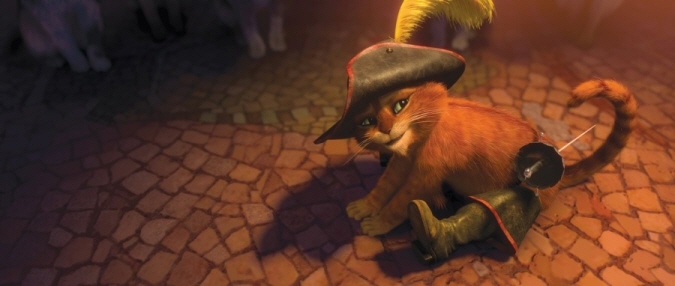
And, what do you know, they indeed made a sort of sequel, but “Puss in Boots” is a little more entertaining than I expected. They wisely left behind the materials which has been running out of steam since “Shrek”(2001), and they instead focused on the best thing in “Shrek 2”(2004) – Puss in Boots, voiced with gusto by Antonio Banderas. Though this is not a fresh try, Puss in Boots is a character interesting enough to carry its own story, and this spin-off/prequel is a good animation with enough energy and humor.

The considerable part of the story is devoted to how Puss becomes a notorious outlaw as we have seen in Shrek animations. When he was young(and cuter, of course), he was sent in the basket to the orphanage run by a kind woman named Imelda(voiced by Constance Marie). This is the land of the fairy tales, so a kitten was naturally treated as equal as other boys in the orphanage; in one scene, we see Puss sitting amid the boys and girls imitating Dickensian orphans in the dining hall. I noticed that some boy has blue skin – from which fairy tale does he come from?

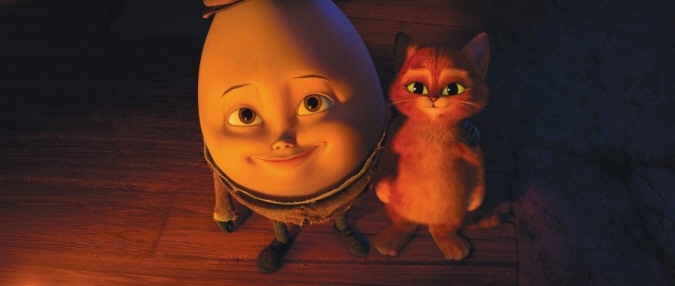
 At that time, Puss was a quiet and shy kitten, but he made a friend of young Humpty-Dumpty, who had lots of ideas and dreams including the magic beans from Jack and Beanstalk story. Humpty-Dumpty is voiced by Zach Galiafinakis, and Humpty-Dumpty is not that different from those walking troubles Galiafinakis has played in the movies; he is a friend who will cling to you in the name of friendship and then will cause major headaches to make you want to punch his head if he were not a fragile egg which cannot be put back into the original shape again.

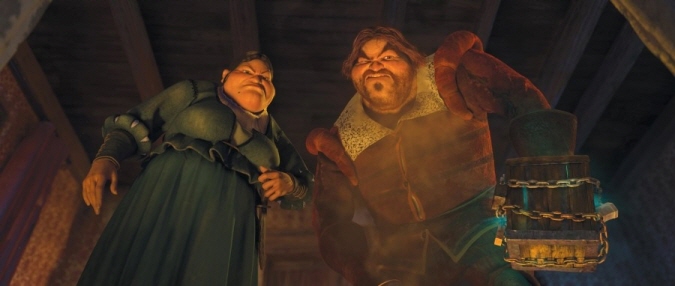
Anyway, thanks to Humpty-Dumpty, Puss, who was once the hero of the town, was disgraced and ran away from the town, and now, while looking for a new juicy job in some other town, he meets Humpty-Dumpty again through Humpty-Dumpty’s sexy accomplice Kitty Softpaw(voiced by Salma Hayek). Though he does not trust Humpty-Dumpty much, Puss joins in their heist plan; they will steal those magic beans kept by a vicious couple Jack and Jill, who are fortunately not played by Adam Sandler but voiced by Billy Bob Thornton and Amy Sedaris.

As a heist/adventure story, “Puss in Boots” works nicely with wits and energy. It provides several action sequences with the spirit of those swashbuckling films and western films; there is a busy chase scene happening around the alleys, and then we get an exciting action sequences between two wagons in the perilous circumstance. Puss is an animal version of Zorro, so we see him doing a lot of things besides wielding his little sword fancifully.

In addition, this is a good-looking animation. I liked the castle floated high above the soft clouds in the sky, which reminded me of Hayao Miyazaki’s “Laputa: Castle in the Sky”(1986) for few seconds. One question came upon to me though I was well aware of that the movie is a fairy tale: how is the castle supported by the clouds? I may accept that outrageous fairy tale premise, but it was a little uneasy to me to watch the characters playing around the clouds, which can easily be wiped even with a small touch.

The movie has some flaws. Its story feels weak especially when compared to “Rango”(2010), which is also a fun but serious parody influenced by western films. The development of the relationship between Puzz and Humpty-Dumpty is quite predictable, and it is resolved in a rather unsatisfying way amid the expected big actions in the third act. The villains in the film are wasted though they surely look mean and menacing. If they cast the actor like Thornton as the villain, shouldn’t they do something more than providing some cheap gag lines on having a normal life?

Thankfully, the movie is short and brisk enough for me to ignore these weak points, and Banderas has a big fun again as a smooth, charming, but sneaky cat with some code of honor and that killer hypnotic look. Though they are not really acting or dancing on the screen, the voice performances of Banderas and Hayek spark with visible chemistry throughout the running time. They are really fun during the confrontation sequence which is the major highlight in the film. Surrounded by countless kittens(some of them are good musicians who delighted me and other audiences), Puss and Kitty Softpaw dance with passionate rivalry in every way possible for them; it does not take a long time for them to meow and cuddle with each other.

On the whole, “Puss in Boots” is somehow better than what we expected as the spin-off of the increasingly tiresome series. Though I would not have minded if it had went straight to DVD market, this animation is certainly more enjoyable and charming than “Shrek Forever After”. Due to its success, it will probably spawn its own sequels, but that sounds less dreadful than “Shrek 5” – at least for now.

Sidenote:

1. I saw it in 3D – I do not think 3D is necessary in this case.

2. Thanks to a certain group of animals roaming around the campus, the students at my campus will have a big laugh during the climax.

Posted in Movies | Tagged , , , , , , | Leave a comment

A Simple Plan (1998) ☆☆☆1/2(3.5/4) : It sounded so simple at first…

 Sometimes the ordinary people becoming evil are more frightening than Dr. Hannibal Lector or Frank Booth. The villains like them are downright scary, but they are basically outsiders with monstrous nature beyond our common sense. In contrast, the characters in Sam Raimi’s crime thriller “A Simple Plan”(1998) are nice, ordinary people we can identify with at least in the beginning. We can recognize their human wishes, desires, and motives. We can understand why they are driven into the plot getting bloodier and more complicated. As a result, it is scary to observe them doing horrible things, and one question is immediately popped up in our minds – what would I do if I were in their circumstance?

Their life at some small rural town in the Midwestern region of US is the emblem of a simple American life. In the opening narration, looking back at what happened during the period possibly the darkest time in his life, Hank Mitchell(Bill Paxton) muses on how plain but happy his life have been until that ‘lucky’ incident happens to him and others. He has a decent job, though it does not pay him much, and he has a loving wife, and he also has the friends and neighbors who like him. This is indeed a nice life to anyone on the earth; as one short South Korean review which I read twelve years ago pointed out, I can imagine them as the people in those weekend country soap dramas shown on South Korean TV when I was young.

That fateful incident happens during the afternoon on New Year’s Eve. After visiting the grave of Hank’s deceased father at the town cemetery, Hank, his brother Jacob(Billy Bob Thornton), and Jacob’s friend Lou(Brent Briscoe) are on the way to their homes together in Jacob’s pickup truck. Suddenly, a fox, with a hen in his mouth, runs across the road in front of the truck, and they decide to go after that fox which runs into a nearby forest. They fail to capture it, but they stumble upon something more tempting than that in the middle of the forest.; they find a small plane which crashed into the forest, and, besides the dead pilot, its cargo is a bag containing 4.4 million dollars in cash.

 At first, Hank think they should call the police, but Jacob and Lou, who have been nearly broke, have a different idea. As far as they know, no one is looking for the plane and the money around their town – so why not keeping the money for themselves? In their view, this is a very good chance to realize each own American dream, and, tempted by this possibility, Hank is ended up being persuaded by them with one condition; he will keep the money in safety for a while until it is confirmed 100% that nobody is looking for it. Then, they will get each own share and live the town forever for avoiding any suspicion.

As the title suggests, this sounds like quite a simple plan to them, but, as you have already guessed, it turns out to be not so simple as they initially thought(It seems they have never watched “The Treasure of the Sierra Madre”(1948) – too bad for them). Thanks to their greed, foolishness, and mistrust, the plan begins to go wrong right from the very moment when they load the money to Jacob’s pickup truck. The troubles keep coming, and they try to cover their tracks and secure their safety, but, every time they try, their plight is growing bigger and bigger like a huge snowball rolling along the snowy slide. When they start to realize how deeply they are stuck with what they have done, it is already too late for them to go back to where they were; they must do anything by any means necessary for not being arrested by the police.

After watching the film on VHS in early 2000, I found Scott B. Smith’s novel at the campus library and read it out of curiosity. The novel is one of the most bone-chilling crime thrillers I read during the last decade; it was thrilling to witness the straitened circumstance of the characters getting out of control step by step, and it was also terrifying to observe the dark portrayal of the human nature under psychological pressure. No wonder Stephen King once lamented that Smith has so far published only one novel besides this work(His second work “Ruins”, which was made into a feature film a few years ago, is another taut thriller with psychological trap squeezing its characters. The premise is a far more unreal, but their mental ordeal is as horrible as the creature menacing them none the less).


 With the adapted screenplay written by Smith himself, the director Sam Raimi made a first-class thriller. It has several suspenseful scenes to be remembered, and some of them are still capable of making my body tightened. The most memorable scene to me is the one where the loyalty of one conflicted character is hanged on the scale and he must choose between other two characters both of whom he cares about. While watching this scene at last night, I was again marveled by the excellent jobs done by Thornton and Paxton. Their facial expressions and their dialogues say one thing while implying the other things, so they keep us guessing and being agitated till the payoff finally arrives. I still wonder to some degrees – was Jacob’s behavior just an act from the beginning or was it more complex than that?

The movie deserves to be categorized as “country noir”(its best recent example is “Winter’s Bone”(2010), whose heroine faces the darkness of her rural town through ruthless criminal people while searching for her missing father). The bleak atmosphere of a Midwestern town on winter days is well-maintained, and a bunch of crows on the bare tree branches render an ominous tone to the background covered with lots of snow, and the characters discover the evil inside themselves while struggling in the twisted plot and helplessly sinking into the moral quagmire.


 Now it sounds a little similar to a certain film made by the Coen brothers. Not so surprisingly, “A Simple Plan” was mainly shot in Minnesota, the same region where “Fargo”(1996) was shot, and Raimi actually got some advices on the location shooting from the Coen brothers, who have been his close friends since the early times in their careers. As a matter of fact, you can easily imagine its finale with Marge Gunderson saying to one of the characters that there is more to life than a little money. I think she would probably solve the case even before the third act of the plot begins, but the town sheriff in this film(Chelcie Ross) is so gullible that he does not sense anything suspicious from his dear neighbors, let alone the outsider whose questionable identity is the major source of the nail-biting suspense in the third act along with several bullets that may not fit into one gun.

Amid the messy situation depicted in the movie, there is a bleeding heart inside the story, and he is Hank’s pathetic loser brother Jacob. The novel version of Jacob is a lot different from Billy Bob Thornton’s appearance(in the book, Jacob is more like Brent Briscoe at least in my imagination), and his role in the story is considerably changed in the film. I do not know anything about how that change was made in the adaptation process, but I can say it was a good choice, because such a dark drama like this film is more effective when it has the character watching what’s going on in horror while standing by the hero being crashing into the abyss.

Thornton’s harrowing performance portrays Jacob as a shabby man with simple wishes. Maybe Jacob is dim and unwise like his drinking buddy Lou, but he turns out to be not as stupid as we thought at first. It may be okay to him to take away the money when nobody looks at him, but what he and his brother do for keeping it begins to trouble him. Their crimes have already taken a toll on his mind, so he desperately clings to his wishes which can be fulfilled by money.

 Thornton has a sad scene with Paxton in which Jacob tells his brother about only girl he has ever dated with. Though it turned out that the relationship was a part of cruel bet, he did not mind about that and he was grateful to her, because it was one of few happy times he had in his miserable life. Jacob tries to believe that he can be happy like that with the money, but the circumstance becomes more unbearable to him, so he arrives at the decision which results in the heartbreaking end of the climactic sequence near the finale.

Bill Paxton, who is good as a corruptible decent man, and Bridget Fonda, who plays Hank’s manipulative wife, are also crucial in making the drama in the film work. As your average decent neighbors, they have been content with their mundane daily life, but now the money brings out the discontent and other negative things hidden inside them, so they are gradually turned into a couple of weasels who will stop at nothing for their safety and, above all, the money. Hank is at a loss about what he has become while losing the conscience his brother retains, but he also finds that, once he crosses the line, the rest is, to his horror, very, very easy to do.

Fonda’s character is the most unlikable character in the movie because she is indirectly responsible for the chaos in the film, but I feel a little sympathy to her. As Lady MacBeth/famme fatale of the story, Fonda gets her own moment when she is at the hospital right after giving birth to her daughter; when she and her husband are left alone in the room, she immediately spins her brain to concoct a new scheme for them while showing tender mother love to her child. Later, there is one bitter monologue scene in which she lets out her dissatisfaction with the life with no visible bright future, and I think many middle-class people at this hard time can understand and identify with her frustration and desire.

 While operating ruthlessly with its logic, “A Simple Plan” is ultimately a morality play fueled by the dark side of the human nature. We all were taught that, if we come across a bag of money, we should call the police, but I am not entirely sure about what I will do if I am in their shoes. Thanks to this film and the Coen brothers’ “No Country for Old Men”(2007), I think I will more likely to do as my teachers and my parents told me, but, as both I and many of you know, we human beings are capable of anything.

The characters in the movie eventually learn that truth while paying the cost far bigger than they have ever imagined. Perhaps they can continue to lead their life while other people around them will never suspect about what kind of the people they really are, but, as Hank bitterly admits in the closing narration, they cannot fool themselves because the consequences of their acts will always be with them for the rest of their life and they know too well about what they can do.

Sandwiched between two major successes in Raimi’s career, “A Simple Plan” can be easily overlooked. Its critical success was a turning point for Raimi; it helped him move on from being the director of “The Evil Dead”(1981) to being the director of “Spider-man 2”(2004). Though “Spider-man 3”(2007) was a disappointing end to his trilogy, Raimi recently proves to us that he has lost none of the horror/comedy skill of his early days through “Drag Me to Hell”(2009), where he plays us like a drum with the sense of a diabolical fun. I hope he will get another good chance to play us like a piano as he did in this film.

Posted in Movies | Tagged , , , , , , , | 2 Comments

The Kid with a Bike (2011) ☆☆☆1/2(3.5/4) : The kid who wants to meet his dad


 “The Kid with a Bike”, a new movie from the Dardenne brothers, is the story about a young confused boy struggling with his changed environment surrounding him. Like their other films, we are thrown into the on-going situation of the characters while getting to know and understand them along with the reality surrounding them, but the movie shows some interesting change which began to emerge in their previous work “Lorna’s Silence”(2008). Though the movie retains gritty realism and abrasive side, the movie is warmer and sunnier than the Dardenne brothers’ other dry, objective, but powerful works. It may be relatively less powerful as a result, but it is one of the most heartfelt films I saw in last year, and the movie does a good job in making me care about a boy whom I initially found not so likable.

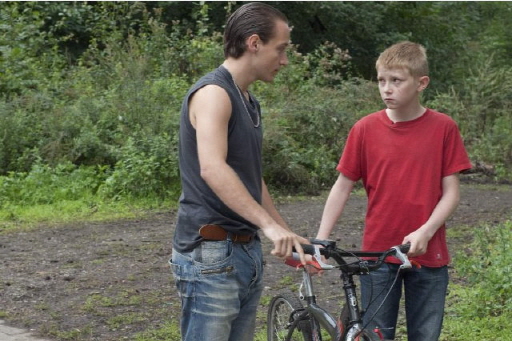
Taking care of a kid like Cyril(Thomas Doret) requires a certain amount of patience. To be frank with you, while watching the film, I sometimes felt more sympathy to the adults who try to help him rather than this stubborn kid. I understood that he just wants to meet his dad, but I also observed that his reckless behaviors propelled by his desperate need cause lots of headaches to others.

But I do not hate him, because I know that, like any kids in his situation, Cyril resists the change in his life while desperately clinging to the decreasing hope inside him. He hates some nursery home for parentless kids where he has to live for now, and he does not want to believe that his dad has walked away from his life. He tries to contact with him using the phone number left to him. He even runs away from the nursery home and tries to get any information about where his father has gone. He goes to the bar of the store in his neighborhood. He also goes to their former apartment. However, no matter how much he tries, the truth he does not want to look at is getting more apparent with increasing frustration.

He is lucky to come across a kind hairdresser named Samantha(Cécile De France, who was one of three main characters in Clint Eastwood’s “Hereafter”(2010)). Though their first encounter is not pleasant(she is coincidentally involved in the struggle between Cyril and the social worker who tries to take him back to the nursery home), but she volunteers to help him as a foster mother during weekends. Samantha may be a woman too good to be true, but De France radiates both warm, natural kindness and no-nonsense attitude. While caring a lot about Cyril, she does not block him from the harsh truth when she decides that it is necessary to do that for him.

 One of the best moments in the film comes from when they finally meet his dad Guy, played by Jérémie Renier. We do not get much information about how he came to decide to leave Cyril behind, but Renier gradually reveals the selfishness of his character in the moment when Guy and Cyril are together in his new workplace. He is not that mean to his son, but he does not want his son enter into his life again. If you have watched the Dardenne brothers’ films, it will be interesting to you to watch Renier in this role, who has given consistently good performances in their several works. In “La Promesse”(1996), he was a son conflicting with his dad over their shady business involved with illegal immigrants. In “L’Enfant”(2005), he was an irresponsible young man who has given away his and his girlfriend’s baby without any hesitation just for money. And now, in this film, he is a lousy father who thinks he can discard his son easily for a new chapter in his life.

The story gets suspenseful when Cyril is swayed into a wrong direction by some juvenile delinquent he encounters on one day. Like Samantha, we can instantly see that Wes(Egon Di Mateo) is no good to Cyril, but Cyril has an aching hole in his heart he wants to fill, and he is willing to do anything for that. As a consequence, he gets involved in a big trouble he cannot solve for himself, with a painful life lesson to learn.

Maintaining their usual calm, objective approach to the story rolling with the free will of the characters, the Dardenne brothers capture several intense moments through their camera which patiently follows the characters or sticks with them. While it is notable that the cuts are more frequent in this film compared their previous works such as “The Son”(2002), there are good long-take scenes like the emotional moment when Cyril gets his heart broken not just once but twice. The camera steadily follows him riding the bike, and he does not say anything and nor does the movie, but the emotional turmoil behind his face races through dark night with him.

As the title role, Thomas Doret gives a solid debut performance while holding his place amid his veteran co-performers. He captures well the complex emotional state of a troubled kid with unpredictability, and the tension in the film depends on what he will do as well as what will happen to him. Doret and De France are very believable in their warm but dynamic relationship between them. Though there is a moment when their wills violently clash with each other, Cyril starts to accept this generous woman as a surrogate mother, and, later in the story, there is probably the sunniest scene in the Dardenne brothers’ career.

“The Kid with a Bike”, which received Grand prize of the Jury award in the Cannes Film Festival in the last year, is a warm film. Although it reminds us and Cyril of the harsh reality through the unexpected development near the finale, the ending is tentatively optimistic while consoling Cyril. I observed that the Dardenne brothers, who have seldom used music in their films, repeatedly used the classic piece by Beethoven in this film whenever Cyril is devastated. Well, who can’t be possibly sorry for this problematic kid?

Posted in Movies | Tagged , , , | 1 Comment