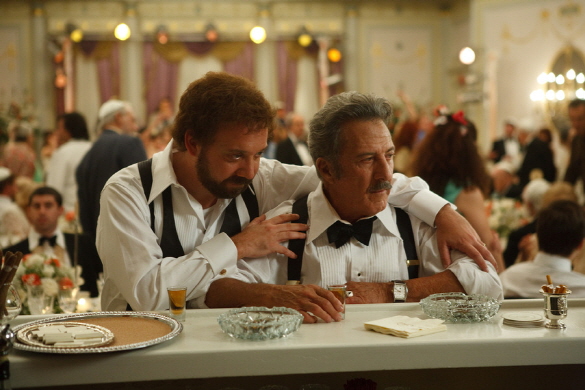
Barney’s Version (2010) ☆☆☆(3/4) : Ups and downs in his life


 Our life is filled with our mistakes and following regrets. Even though I live only for around 29 years, I look back at my 11-year-life at the campus and always feel regretful about several feel-bad moments in my past. It is possible that 2012 may be my last year inside the ivory tower named KAIST, and I ask myself frequently: could I have done it better? Could I have not done that? I always get the same answer: yes, I could have made me and others a lot happier and also could have made my life better than now.

Barney Panofsky(Paul Giamatti), the ordinary hero of “Barney’s Version”, probably asks these questions to himself many times when he is alone with his cigars and whiskey, but I can tell him that his life was not that bad despite his several irreversible mistakes. He met three women in his life, and, though all of his three marriages were failed, he had some moments of happiness while going through his married life; after two failures, he enjoyed his family life along with his third wife and their two children they love , and everything seemed to be fine. However, the happiness of our life always has an expiration date, and the closing chapter inevitably is approaching to him.

 Quite old at present, Barney is not so happy. His third wife left him and has married the guy he does not like much. In addition, a certain book is going to be published to damage his remaining reputation. The book is about some unsolved case associated with him in the past, and the author, an ex-cop who investigated the case at time, alleges that Barney, his prime suspect, got away with murder. What happened at that time?

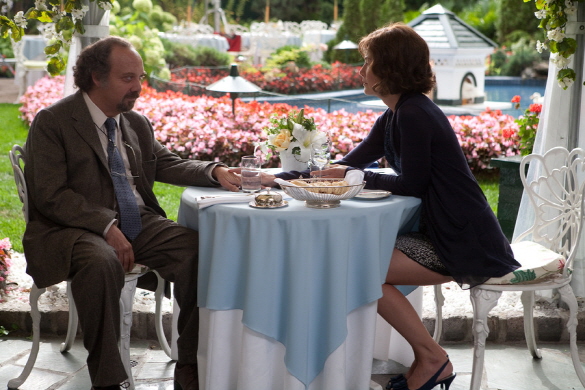
But the movie is not a mystery story. Even Barney seems not to know what exactly happened on that fateful day with his alcoholic writer friend Boogie(Scott Speedman). Moreover, to him, the incident was just one of many unfortunate things in his life which he looks back frequently in his aging mind. For instance, when he was young about thirty years ago, he married a lively but unstable girl named Clara(Rachelle Lefevre) because she said she had his child. Their short marriage life begins to crumble like comedy and then is shattered like tragedy. Barney feels remorseful about that, and the conversation with his father-in-law(Saul Rubinek) does not help him much.
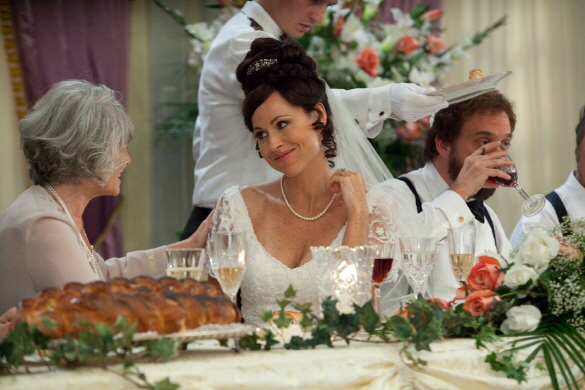
But he is young at least, so the second chance naturally comes to him while he begins to settle in Montreal while working in a TV soap drama production company where he will work for more than 20 years(by the way, who did choose its name, “Totally Unnecessary Production”?). Through the matchmaking job of his uncle, Barney meets a woman with good education and good background(Minnie Driver), but, right after the wedding, he realizes he has made a serious mistake , because he thinks he has just found his true love from Miriam(Rosamund Pike), who happens to attend the wedding party with a family member. What an unlucky guy he is – but he makes a daring choice which is pretty unwise but probably feels right to him at the moment; though he does not know anything about her, he immediately follows her all the way to the train station.

What I described to you above is only one part of Barney’s life. While following his life story step by step, the movie, based on Mordecai Richler’s novel, frequently moves between comedy and drama. Sometimes funny things happen with smile and laugh, and then sad things happen with pain and sorrow. There is warmth and happiness, and then it is followed by bitterness and moroseness. And all of them are accumulated inside him layer by layer while the time passes and he gets relatively fuzzier than before.

Paul Giamatti, who deservedly won a Golden Globe award for his film early in the previous year, is a perfect choice for a flawed good man with lots of heart we can relate to. Barney is impulsive, irascible, blunt, and petty, but he regrets over his foolish mistakes propelled by his flaws. Yes, he screwed the relationships with the people surrounding him, but he cares about most of them and misses them after they leave him in one way or another. Giamatti dexterously controls laughs and pathos in his character, and, thanks to his good performance, the movie is watchable even when it does nothing but trudging along the plot at times.
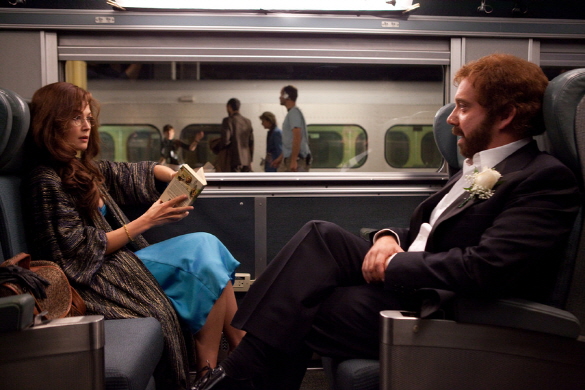
Though their characters are not as three-dimensional as him, three actresses who play the women in Barney’s life give nice performances with different colors. Rachelle Lefevre looks annoying at first, but I felt a little sorry for her character in the end. As “The 2nd Mrs. P”, Minnie Driver is funny as a shallow and selfish girl, and Rosamund Pike is warm and understanding as the most important woman in Barney’s life. Their happy marriage ends with bitterness, but there is still a feeling between an ex-husband and an ex-wife, though it takes some time for them to be good friends mainly due to Barney’s pettiness.

And there are also the warm moments between Paul Giamatti and Dustin Hoffman who plays Barney’s vulgar but loving father. Like Al Pacino’s or Robert De Niro’s, Hoffman’s recent career is not as stunning as before, but he has been far more relaxed in the recent films while receding into the supporting roles than his peers. Hoffman does a good job as a caring dad who gives some advice and lessons to his unhappy son. Barney’s father embarrasses himself sometimes, but, unlike his son, he is comfortable with his mistakes because he has been content with who he is, so he moves on with smile. The last moment of his life may be quite embarrassing to others including his son, but he will make a good joke out of that and laugh with his fellow passengers going to the other side with him.
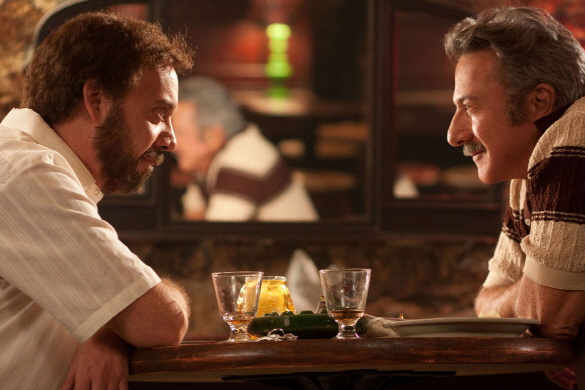
“Barney’s Version” is a funny and, ultimately, poignant drama about the ups and downs of one man’s life. It feels like condensed a little much, but I guess that is what usually happens when you try to fit one guy’s life into a film little more than two hours, and at, least, the movie succeeds in conveying the sense of passing time to us enough to feel sad about the last chapter of Barney’s life(the actors get aged well along the story with the help from Oscar-nominated makeup). In the end, that small mystery in his life is suddenly solved like a bolt of lightning in front of Barney’s eyes, but that does not make any difference to him considering his condition – and it will go away with other things in his state of mind fading into the darkness.

Sidenote:

The movie will be released in South Korea in this month. The new title is “The Third Love”. South Korean distributors are sometimes quite lousy and tasteless in case of renaming the films they imported; for example, Woody Allen’s “Vicky Christina Barcelona”(2008) was released as “I Also Like My Man’s Wife”. Ugh.
Posted in Movies | Tagged , , , , , , | 1 Comment

The Skin I Live in (2011) ☆☆☆(3/4) : A sick doctor and his twisted experiment

 A twisted man and the girl in his captivity have been a constant source of memorably disturbing drama films such as William Wyler’s “The Collector”(1965) and Kim Ki-duk’s “Bad Guy”(2002) in the movie history. “The Skin I Live in”, a new film by Pedro Almodóvar, the master of sensual story with twists and styles, is no exception, but this disturbing tale will definitely make some of you wince because the story turns out to be more uncomfortable than you expected at first. It is a stylish melodrama with twists we expect from Almodóvar, but, the story also has a scary side hidden below the surface(or shall I say the skin?) to make you uneasy.

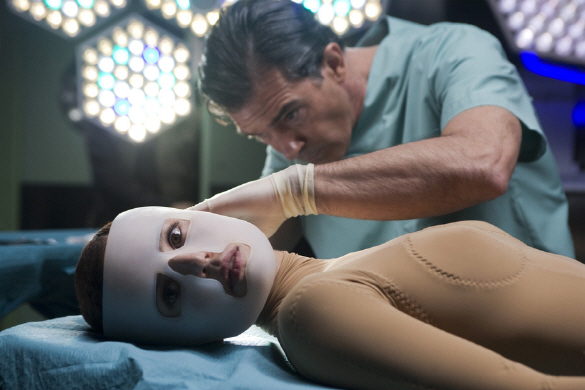
The set-up is familiar. Dr. Robert Ledgard(Antonio Banderas) is a well-respected plastic surgeon in his field, but, what do you know, he is doing a secret experiment of his own at his big house. In many gothic horror films, it is usually a dark gothic mansion filled with shadows, but his house actually look like a bright, clean modern art gallery where I’d love to spend several weeks if the doctor is absent for a while. Besides his private surgery room in his house where he can do the surgery at any time, he even has an expensive germ-free laboratory; as a Biology graduate, I envy him a lot.

There few people in his house. There are three insignificant employees working in the house, and there is a housekeeper named Marilia(Marisa Paredes), who has been devoted to Robert since when he was young. And there is some young woman named Vera(beautiful Elena Anaya with her spotless skin) who has been locked in one of the upstairs rooms. While wearing the special clothes for her, she has been kept there for a long time, but she does not mind about that. Except being locked up, her prison life is quite comfortable; the room is big, cozy, and clean while functioning as a nice space for her artistic expression.

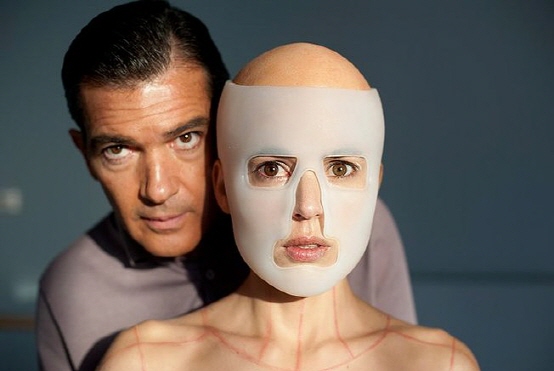
The doctor has a sinister purpose. Besides watching her in the room through a big flat TV screen in his room, he has been using her as the subject of his insidious experiment. After his wife died due to a horrible car accident, he is determined to do something revolutionary in his field; he wants to develop a new type of artificial skin which can withstand any kind of damages. I have no clear idea about how he does it(it is only briefly mentioned that he used the genes from pig for transforming the skin cells, but I guess Almodóvar has not heard about host versus graft disease), but his experiment is almost near the end anyway, and the result is Vera with new, clean skin.

Now you may wonder – how does she think about being exploited by her captor? She is obedient to the doctor’s orders, even when he burns her skin for his work. She knows that he has been making her more beautiful day by day. She senses that he is obsessed with her as much as his work. It is possible that she can be free by becoming closer to him than before.

This is an Almodóvar film, so you cannot expect this weird Pygmalion story unfolded in a straight way. Their equilibrated situation is soon turned upside down when Zeca(Roberto Álamo), the son of Marillia, comes to the house wearing a tiger suit(I am not kidding – and he has a good reason for that). Several secrets inside the characters are revealed to us(but not always to the characters) one by one along with the more twists behind the situation which is already twisted enough.

Around the middle of the story, you will probably begin to grasp how perverted Richard really is, and how bizarrely Richard and Vera are entangled with each other. Besides the three main characters, there also several important supporting characters in their past, including Richard’s unstable daughter who were eventually sent to the mental institution due to the unfortunate trauma in one evening party, which Richard misguidingly believed was directly caused by a young man named Vincente(Jan Cornet).

The movie is based on Thierry Jonquet’s novel “Tarantula”. I have not read it yet, but, from what I have heard from other critics, the novel is the story ideally twisted enough to be filmed by Almodóvar. Almodóvar decorates his tale with his usual colorful approach as shown in the interior of Richard’s house, which is filled with several nice artworks like those big paintings hung on the walls. The movie is visually compelling even when it is outside the house; I was particularly impressed by a very brief scene where Richard makes a speech in front of his fellow doctors in some old-fashioned library. Even in such a inconsequential scene like that, Almodóvar fills the scene with details to draw my attention, and the score by Alberto Iglesias, one of Almodóvar’s main collaborators, imbues the screen with the unstable feelings.

However, despite its amusing references including “Vertigo”(1958) and other classic films and its stylish approach, the movie does not have much of a sense of tantalizing fun we experienced in Almodóvar’s other films such as his previous work “Broken Embrace”(2009). The movie is playful sometimes, but, after all, it is serious about its disturbing subject and its despicable hero played with a good, intense performance by Antonio Banderas. The story gets lost a little in the second act, and we are left with lots of uneasiness remaining unresolved inside us. As a disturbing medical horror drama that makes you cringe at times, “The Skin I Live in” is the film we easily cannot like, but, though it is not Almodóvar’s best work, it did leave some impression on me.

Posted in Movies | Tagged , , , | 1 Comment

Dogtooth (2009) ☆☆☆(3/4) : A family as nutty as North Korea

 When I watched Greek film “Dogtooth” for the first time in early 2010, I thought it was quite a strange film, but now I have some second thoughts after the third watching at last night(The film will be released in South Korean on the next weekend). No, I still do think this is one nutty family, but what recently happened in North Korea made me muse on their behaviors depicted in the film. Living next to one crazy alien society shut down from the world outside, maybe some of our South Korean audiences will not find this film as weird as the other audiences did.

But the family in the film is indeed leading a very strange lifestyle. First, their vocabulary is a little different. For example, they are taught that “Sea” is defined as “a leather armchair.” “Motorway” means “a strong wind”, and “Carbine” is “a beautiful white bird.” As far as I see, the parents only change the definition of several nouns, so they do not have difficulty in communicating with someone from outside – but I wonder what she really means when one of the family members says they will eat burger for dinner.

Living in the big house with a swimming pool in some unknown remote place, this family is shut off from the world outside. They are not only surrounded by the big plants in the garden but also the big, tall fence blocking their view. The family is affluent, and the house is mostly clean, and they do not see any problem with being stuck in this isolated place. They do not watch TV or read newspaper(but they have some books), and only signs of the civilization outside are the planes which fly across the sky above from time to time.

How do they come to have such a bizarre lifestyle? The movie never explains the motive, but it seems that the father initiated this lifestyle probably a long time ago. He is the only one who can go outside with his car(he seems to be the manager of a big plant), so it is his job to supply anything his family needs in their life. He seldom talks about his family in front of other people(he just says that his wife is too ill to meet people), and he blocks anything that may interfere the family life. When he buys foods and water, he painstakingly removes the labels for not giving any outside information. How thoughtful he is.

His wife obeys to him as a good wife(she is physically not ill at all, by the way), and so do their children. They have two daughters and one son. Though they are in late adolescent years, they behave as if they were still little children under the protection of mommy and daddy. They have several strange games to spend their daytime, like “a game of endurance”: they test themselves who can stand longer when they dip their fingers in hot water. In case of their other private game, they anesthetize themselves with chloroform to find out who will wake up first.

They have been leading a good life at least in their view, but it is gradually revealed that something unstoppable is being emerged while their abnormal behaviors, including barking like a dog on their knees when they believe they are threatened by a cat, continue. Though he cannot block everything, the father is determined to stop that by any means necessary, and there are several bursts of violence to shock you mainly due to the clinical, objective attitude of the film.

 The film, which won Un Certain Regard Award at the Cannes Film Festival in 2010 and was nominated for Foreign Language Film Oscar early in this year, has a lot of cold, distant feelings, but it is also interesting and, sometimes, amusing to watch. The director Giorgos Lanthimos, who wrote the screenplay with Efthymis Filippou, keeps everything straight throughout his film with the wry, subtle sense of black humor. The aforementioned twisted vocabulary is used several times in a funny way, and there is also an outrageous scene depicting the way the children celebrate the anniversary of their parent’s wedding. The actors in the film play as seriously as possible to make the twisted reality of their characters mundane – even when they cross the boundary of our ethics out of necessity, they never look self-conscious while supporting the detached tone of the film.

Maybe because of the death of Kim Jong-il two weeks ago and the following response of North Korean people shown on the media, these bizarre human behaviors in the film are not that weird to me as I remembered. I and other South Koreans know too well about how twisted North Korean society have been while shutting up itself from the world and brainwashing its people with the crooked ideas just like the family in the film. One savage scene in the movie reminds me of how severely North Korean people are punished if they are found watching South Korean TV shows.

I remember well when Kim Il-Sung, the former dictator and the father of Kim Jong-il, was dead in 1994. Even we South Koreans were flabbergasted to some degree to see the hysterical mass mourning even though we had been well aware of that he had been literally worshipped as the big daddy of North Korea. Now his son is dead, and his grandson becomes a new leader to be worshipped without much trouble, and we do not find the recent behaviors of North Koreans under this wacky dictatorship particularly weird, mainly because we have seen this before. Compared to this insanity, “Dogtooth” is like a mild fairy tale.

By the way, what is the point of the movie? It does not express its opinion while firmly holding its austere attitude, but I think the lesson from the film is that the kids are bound to grow up no matter how much the parents try to restrict them with their stringent home schooling. Maybe it works for a while, but it cannot last forever. No wonder some North Korean people escape from their country in spite of the constant brainwashing and the possibility of severe punishment.

Posted in Movies | Tagged , , , | Leave a comment

The Girl with the Dragon Tattoo (2009) ☆☆☆1/2(3.5/4) : Meet original Lisbeth Salander

—- David Fincher’s “The Girl with the Dragon Tattoo”(2011) will be released on the second weekend of next January in South Korean theaters. The original Swedish version will be also released in South Korea a week before, so I checked my review on that film which I wrote around late March in 2010, and, as an experiment, I decided to translate the review to post it at my blog. I changed it a little bit because it was written almost two years ago, but I retained what I tried to express in Korean as much as possible. Please feel free to enjoy how clumsy I was even with Korean at that time.

The Swedish film “The Girl with the Dragon Tattoo”(In South Korea, it will be released as “Millenium Part I : The Men Who Hate Woman”) is a fabulous film rare to encounter. After the end credit rolled, it was like reading an excellent mystery novel from the beginning to the end while completely involved in the story. As a good mystery, this satisfying adaptation constantly draws out attention; it is compelling to watch how it peel away its mystery step by step to arrive at the truth while carefully establishing its characters, and, above all, there is an unforgettably fascinating heroine as interesting as the case itself.

Mikael Blomkvist(Michael Nyqvist) is a well-known journalist and the editor-in-chief of the magazine named Millenium, but he is now in a big, big trouble. He wrote the article for disclosing the corruption of a powerful business figure in Sweden, and then he was sued for libel and is recently sentenced to not only pay a fine of 150,000 Krona but also spend his time in jail for three months; in the other words, his career as a journalist is nearly ruined. The people around him suggest appeal, but Blomkvist, whose glum face reminds me a lot of the gloominess of Richard Burton, does not want to do that because he is afraid that his downfall may affect his dear magazine.

Then, through a lawyer, he is asked to investigate some unsolved case during the time left to him before going to prison, and he is invited to the manor in some island. His client is none other than Henrik Vanger(Sven-Bertil Taube), who was once a respected CEO but is retired at present.

Henrik has checked Blomkvist in advance to confirm how trustworthy he is, and, under the condition of considerable reward, he entrust him with the investigation of a mysterious case in the past. Forty years ago, his niece, whom he adored like his daughter, was suddenly disappeared, and, based on the evidences gathered through the investigation at that time, she seemed to be vanished in the island while the island was temporarily shut down from the outside due to the accident which happened on the bridge which connects the island and the mainland.


 Henrik has no idea about what happened to his loving niece, but he believes she was murdered, and he thinks the murderer was possibly one of his big family members. He has a good reason for that; when we see some of important family members gathering in the library, it is clear that the Vanger family members can fill at least two or three Agatha Christie novels. Everyone seems to hide something, and some of them are quite greedy, selfish, and despicable. Furthermore, this family has the shady past associated with the Nazism during the World War II.

While residing in the remote house nearby the Vanger manor, Mikael patiently look over the case while trying to get the new clues. Like the people investigating the case did at the time, he soon arrives at the dead end, but one helper surreptitiously approaches to him. She is a young hacker named Lisbeth Salander(Noomi Rapace), and, thanks to her ingenious talent to break the codes, he has a breakthrough in the investigation. Mikael searches for more clues with Lisbeth, and it turns out that their simple case may be only a tip of a far more horrible thing. And, of course, someone is not so pleased about their progression.

Besides the investigation process, the movie also focuses on the details in the characterization in the story. While their paths are slowly overlapped with each other, Mikael and Lisbeth are established as clear, vivid human beings. Especially in case of Lisbeth, who begins to occupy the center of story right from the first appearance, she is a cool, mesmerizing character. With a black leather jacket and the piercing on her cold, detached face, this ice princess is attractive not because she is lovely, but because she is quite compelling in an enigmatic way. She does not like people much(but that does not mean that she does not have interest in sex), and she seems to have vulnerabilities behind her face along with her unhappy past not explained well in the film. None the less, she is certainly not a woman who steps back from a sadistic scumbag who is recently appointed as her new legal guardian. The subplot associated with the disturbing relationship between them seems to be a little too gratuitous at first, but it turns out to be a crucial factor behind her motives in the investigation process.


 In case of investigation process in the film, there is no such a thing like surprise reversal, but it is very entertaining to observe the process. The flashback could have used, but we are instead put in the position same as Mikael and Lisbeth’s while gathering clues and trying to deduce the answer. In one of the impressive moments in the movie, they use the computer software to scan and blow up the images shot at around the time when the incident might happen. Like any detective stories, the moment for the explanation is required, so the film approaches to that famous cliché named “talking villain syndrome”, but I have to say there exist logical reason and situation for that.

I heard that Noomi Rapace prepared a lot before the shooting, and her effort is clearly shown in the film. Because Rapace is so fantastic that she nearly owns the character, like other critics, I have lots of doubts about how they can possibly get the American actress who can substitute Rapace’s singular sexiness for the American remake version currently in pre-production. Sure, Lisbeth is a wonderful character any young talented actress craves for(I heard Kristen Stewart might be considered), but, as Roger Ebert and James Berardinelli pointed out, recruiting Rapace sounds like a better idea. Opposite to Rapace, Michael Nyqvist supports her well while being in the equal position; Mikael may be less clever than Lisbeth, but he is a good investigator with firm, admirable integrity. Sven-Bertil Taube is poignant as an old man who sincerely wants to know the truth; you feel sorry about him and do not like to deliver a bad news to him.


 Though the running time is over 150 minutes, the director Niels Arden Oplev makes a mystery thriller which does not bore you at all. The screen is filled with chilly, remote Scandinavian wintry atmosphere, and the tension level is constantly maintained in the high level. Usually, the hacking technique in movies is too magical to believe, the depiction in this movie is quite realistic to believe – I wonder whether someone is looking at my laptop while I am writing this review. The screenplay by Nikolaj Arcel and Rasmus Heisterbergdoes not hurry; it deftly prepares the ground for the story to tell, and it does a good job of finishing it while announcing the next story to come.

The movie is based on the first novel of the Millenium series written by Stieg Larsson who died years ago while writing the fourth novel(The series has already been published in South Korea, by the way). The next two novels were also adapted for following two sequels. From what I have heard, the response to them was less enthusiastic, but, anyway, “The Girl with the Dragon Tattoo” itself is a successful adaptation, and it makes me interested in these sequels. And, yes, I won’t forget that it introduces me a wonderful character and a talented actress to watch.

Sidenote:

  1. After several months after I watched “The Girl with the Dragon Tattoo”, I watched those two sequels. Though they were not better than the first film, I enjoyed them all. Noomi Rapace was consistently watchable, and she and her movies were one of the most entertaining things I watched in 2010.

2. I heard Fincher’s film is as good as it can be – and Rooney Mara is very good as the heroine. I know I should be open-minded before watching movies, but I have to admit that I have some expectation at present.

Posted in Movies | Tagged , , , , , | Leave a comment

10 movies of 2011 – and more: part 3

Okay, I also love them, too.

First, there is “Certified Copy”, a light but very engaging movie starring Juliette Binoche and William Shimell; the director Abbas Kiarostami must have been yearning for making this delightful film. And there are two excellent two films from Belgium: “Bullhead”, which was chosen as Belgium’s official submission to the Best Foreign Language Film category of the 84th Academy Awards in 2012 instead of the Darden brothers’ warmer entry “The Kid with a Bike”. Though Lars von Trier behaved like a fool early in this year at the Cannes Film Festival, I admire “Melancholia” a lot.

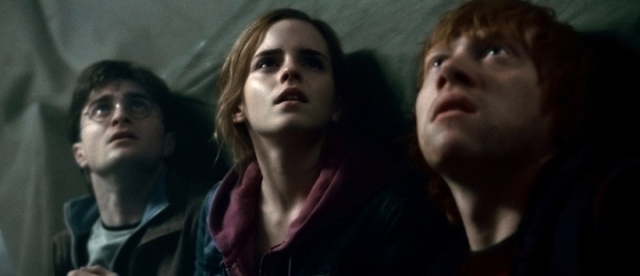
I was both glad and sad that Harry Porter series finally ended with a bang in “Harry Potter and the Deathly Hallow Part 2”, and I was delighted to know that intelligent SF movie is still possible thanks to “Source Code”. I enjoyed “50/50”, a wonderful, balanced mix of comedy and drama, and I still cannot believe the rating of “Life, Above All” is only 6.8 in IMDB – this is a moving drama you cannot miss.

 If you ask me, I’ll say I like them – with my warm 3-star-love.

If there were not much of the films with 3.5 starts, “Hanna” and “Jane Eyre” could be included in my Top 10 list. “Meek’s Cutoff” can be called a “slow film”, but it is rewarding with bleak beauty and the performance of equal bleak beauty by Michelle Williams. While “13 Assassins” is an entertaining Japanese period action film, “Super 8”, “The Rise of the Planet of the Apes”, and “Attack the Block” were a lot more entertaining and intelligent SF films than the gigantic headache called “Transformers 3”.

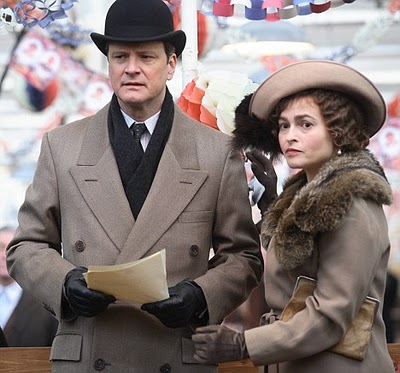
I also had a good time with interesting small character dramas including “Terri”, “Another Earth”, “Trust”, “Beginners”, “A Better Life”, “Tyrannosaur” and “Margin Call”. “Don’t Be Afraid of Dark” and “Contagion” scared me enough, and “Bridesmaids” tickled me enough, and “Warrior” engaged me enough. I think “The Help” is a little too soft, but I like the performances none the less. Finally, at the end of year, here come good action films – “Mission: Impossible – Ghost Protocol”, and “Sherlock Holmes: A Game of Shadow”.

 Special mention

Yes, I watched them in this year and I had a great time with them like you probably did in the last year. I gave 3.5 starts to all of them.

“Another Year”, “Blue Valentine”, “Inside Job”, “127 Hours”, “True Grit”, “The King’s Speech”, and “The Illusionist“.

About documentaries and animations

In case of the documentaries, I have not watched many, but the ones I watched were pretty good ones. First, there is “Bill Cunningham, New York”, a lively documentary about an aging but equally lively fashion photographer who loves his job and will happily die with his job. During late April or early May, I always go to the film festival held at my hometown(Jeon-ju International Film Festival) for watching at least one movie, Werner Herzog’s “Cave of Forgotten Dream” was the one I saw – and it was a good one. “Buck” is a moving documentary about the real-life model of “The Horse Whisperer”(1998) who has a way of connecting with horses despite his abused childhood, and “Tabloid” is about a woman who has a fascinatingly sensational history with elusive sides – this is certainly the most cheerful work from Errol Morris.

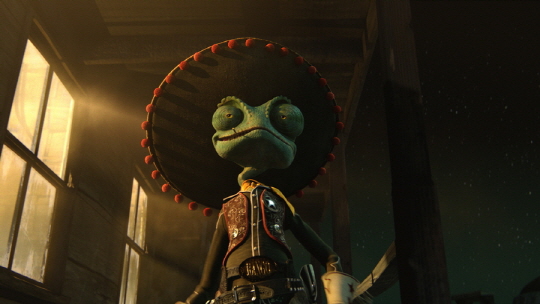
In case of Animation, I have to say “Kung Fu Panda 2” was better than I expected and I had a fun time with it. I missed the chance to write about “Rango”, but I can assure you that this is the best animation film of this year. Though it is generic, I enjoyed its bright animation in “Rio”, and I must confess that I am one of few people who are kind to “Cars 2”. Finally, There is “The Adventures of Tintin”, and it is one of enjoyable experiences I had in this month.

In case of South Korean films…

You have probably never heard about them, but if you have a chance to watch any one of them, don’t miss it, folks.  Continue reading →

Posted in Movies | Leave a comment

10 movies of 2011 – and more: part 2

And here are another 5 movies in my list. Continue reading →

Posted in Movies | Leave a comment

10 movies of 2011 – and more: Part 1

Here are my first 5 movies in my list.  Continue reading →

Posted in Movies | 1 Comment

10 movies of 2011 – and more: Introduction

What the adults had told me when I was young turns out to be right: the older you get, the faster the time flies. I will be 29 after about two months, and I can feel that more than ever. Within a minute, I may find myself being 30. They say the average age of the mankind is increasing, but I have lots of regrets about what I failed to do during last 29 years.

As I told you in last year, I have been busy with reconstructing my academic life with what was left with me during this year. Though it was not my idea, I started my research work with based on some idea for my dissertation because there was not much time for me(Don’t worry, the guys providing me an idea have already gotten a diploma and they did not care about that, so they won’t sue me). I made several mistakes during the process, but there have also have been progresses, and the estranged relationship between me and my advisor professor is nearly restored(no, we did not marry), though he is not so sure about what path I will choose after I get a degree.

To be frank with you, I have been blogging in this site while not telling anyone around me about my private activity. I do exactly as the professor tells me in the lab, but I have always managed to find the time for watching movies and writing about some of them which I thought were worthwhile to write about. At least, if I am really busy, I choose to do what I have to do rather than watching movies and writing reviews, and I think that is the improvement for a guy who wrote more than 350 reviews during 2009. Talk about a recovering “movieholic”.

Anyway, I am happy to see that my academic life is restored with some promise and hope. Even when I was enjoying movies in the dark, I was pretty miserable in the light, but the things are getting better now. If I try harder, I will be able to present the proposal for my thesis during the next semester, and then I will submit my dissertation later around next winter. Then maybe I can attend 2013 Ebertfest if the situation is good for me and I can persuade my parents.

2011 is a good year for the moviegoers like as usual, and I enjoyed writing the reviews on the films directed by Danny Boyle, the Coen Brothers, Darren Aronofsky, Alejandro Jodorowsky, David O. Russell, Clint Eastwood, Mike Leigh, Werner Herzog, Barbet Schroeder, Abbas Kiarostmai, Joe Dante, Hong Sang-soo, Steven Soderbergh, Alejandro González Iñárritu, Terrence Malick, Brad Bird, Steven Spielberg, and other new exciting films. I have not watched “Hugo”, “Shame”, “Take Shelter”, “The Artist”(it will be released here around February), “The Descendants” (it will also be released here around February), “Martha Marcy May Marlene”, “Carnage”, “Tinker, Tailor, Soldier, Spy”, “Kinyarwanda”, “The Guard”(I am going to watch it in this week), “We Need to Talk about Kevin”(I am going to watch it tonight), and the remake version of “The Girl with the Dragon Tattoo”(It will be released here around early January). I will probably watch them soon, and I will mention them in the special section reserved for them if I like them.

Posted in Movies | Leave a comment

Sherlock Holmes: A Game of Shadows (2011) ☆☆☆(3/4) : Dr. Watson’s honeymoon is postponed

When I watched “Sherlock Holmes”(2009) almost two years ago, I wondered whether it was good to inject the seven percent solution of caffeine/adrenaline to one of the most famous detectives in the English literature. I enjoyed its style, moods, and wits provided by its two lead actors, but I did not recommend the film with my 2.5 star rating due to my little dissatisfaction and following reservation gnawing on me: is it acceptable to make Sherlock Holmes into a comic book action hero who can use not only his brain but also his muscle?

Fortunately, the director Guy Ritchie, who directed previous Sherlock Holmes movie, proves that was not a bad thing after all in this smooth sequel. Maybe it is still a little distracting to watch Holmes to use his body besides his brilliant mind to solve his case, but this sequel shows several improvements while retaining what made the previous test run enjoyable to watch. It is grittier and more bombastic(thanks to Hans Zimmer’s aggressively egoistic score), but, the game is afoot, and it is fun to watch Holmes’ another adventure.

When we meet again our faithful chronicler Dr. John Watson(Jude Law), he is just beginning to type his latest story to tell. Europe is continuously disrupted by the serial bombings and other disturbing incidents across the continent, and they are assumed to be perpetrated by a group of anarchists, but Sherlock Holmes(Robert Downey Jr.) has the other idea about what is going on. Shut himself in his residence in a rather hilarious way, he concentrates on literally linking the dots on the wall, and he knows who is behind all these happenings around the world.

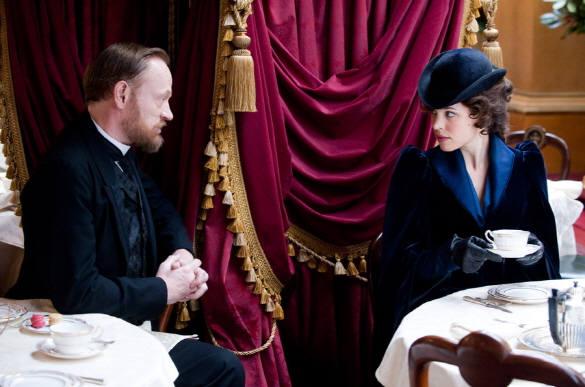
 He is the Professor James Moriarty, played by seemingly suave and courteous Jared Harris. On the surface, he is a well-respected professor in Cambridge well connected with several influential politicians including the Prime Minster(his recent famous book: “The Dynamics of an Asteroid”), but he is also a manipulative criminal mastermind with an insidious plan for the future. He is not so pleased when Holmes starts meddling with his private business; Holmes recently succeeds in intercepting a certain letter to be delivered by Irene Adler(Rachel McAdams), who was once romantically involved with him, and Moriarty, her current employer, is naturally very, very disappointed about his employee’s failure.

The letter is addressed to a gypsy lady named Madam Simza Heron(Noomy Rapace, who was quite electrifying in the Swedish version of “The Girl with the Dragon Tattoo”(2009)) who works as a fortune teller in one brothel in London. Because Watson is going to get married, he is unwittingly dragged by Holmes to that place for “a stag party”, and, though he managed to get married to his fiancée Mary(Kellly Reily) on the next day, we know that our dear doctor’s honeymoon is soon postponed due to a personal reason and poor Mrs. Watson will be waiting for his husband to return – at least we know she will be relieved in the end.

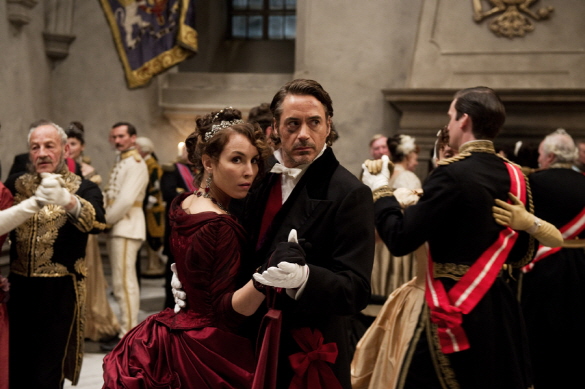
The director Guy Ritchie uses the same bag of tricks we have observed from his previous films, but he is more assured than in his previous Holmes film. Again, he uses that alternating slow and fast motions with choppy rhythms to depict the action sequences, and they are as exciting as before while giving interestingly gritty working class sensibility to the exemplary production designs and costumes for the 19th century background. The situation is more dangerous than before for the characters; not only they race against the time to thwart Moriarty’ evil scheme to ignite the war between conflicting European countries, but also they have to run for their life amid the shells relentlessly falling from the sky. Besides that gloomy London of the late 19th century we all are familiar with, there are various sceneries to be appreciated while Holmes and others move around Europe, including the castle placed on the top of the waterfall among those steep mountains in Switzerland.

 In any action movies, the success mostly depends on how menacing the villain is, and Jared Harris does a good job as the evil genius ahead of his time. As an equal match for Holmes, Moriarty is a cool, calm, and calculating villain who rarely loses his posture even when it is evident that the battle of wits is almost over. It is fascinating to see how their minds work in a pretty much same way in one scene where Holmes and Moriarty try to outsmart each other on the chess board while their respective strategies are working from the distance.

As the title character, Robert Downey Jr. is having a fun while playing a guy who is definitely not your ideal roommates especially if you have a dog. While he is believable as a tough guy who can quickly knock down a bunch of menacing thugs in a short time thanks to his fast thinking, Downey seldom loses his sardonic wits as an intelligent crime solver amid the rapid actions. Opposite to Downey, Jude Law is enjoyable as a straight man who endures his friend a lot even after he leaves the Baker street. Watson wants a normal life with marriage, but, alas, he is always somehow hurled into his disagreeable friend’s adventures, regardless of whether he wants it or not.

The newly added supporting characters are also fun to watch, too, and maybe they will come back in the next film. As an equally eccentric older brother of Holmes, Stephen Fry has his own moment when he walks around being completely naked. Considering her talent, Noomy Rapace does not have many things to do besides moving along with Downey and Law, but she is completely different from Lisbeth Salander in this film, and she shows us that she can hold her place while delivering English dialogues well – I think she can move on for better opportunities on the horizon.

Overall, “Sherlock Holmes: A Game of Shadow” is a more engaging movie than the previous film because of several improved aspects. The story is still shaky in many spots, but the characters and the styles are entertaining enough to float the story. While expressing my reservation, I concluded my Korean review of “Sherlock Holmes” with saying that they would make a good sequel if they did the things right in the next time. I am glad that they did.

Posted in Movies | Tagged , , , | 2 Comments

Perfect Game (2011) ☆☆☆(3/4) : The Clash of the Pitchers

 “Perfect Game”, the latest South Korean baseball film, has plenty of the baseballs to pitch to the audiences. Some are balls and they do not work, but I have to admit that there are also lots of strikes that managed to get me involved in the story it tries to tell. This sports drama throws its balls with diligence and honesty till the end credit rolls, and it earns its  finale which most of its target audiences are well aware of.

Because I am not a baseball fan, I do not know much about one of legendary matches in South Korean baseball history the movie is based on(I was four at that time), and neither do you, perhaps. On May 16, 1987, two famous Korean pitchers, Choi Dong-won and Seon Dong-ryeol, ferociously competed with each other in their final game to be enshrined by ardent Korean baseball fans. The former was an established star pitcher, and the latter was a rising star pitcher. They had been constantly compared with each other at that time, so the clash between these two talented pitchers was inevitable, and the time had finally come for them when they were chosen as the main pitcher in their respective teams.

The first half of the film is about the situation and the people surrounding this match. With its pumped-up score and the utmost serious attitude of the people populating the screen, it is like watching an epic war film version of sports drama movie. Besides Choi Dong-won and Seon Dong-ryeol, there are also other team players, the team managers, the team owners, the government officials, the eager reporters busy with talking about them or bombarding them with lots of questions, and, above all, the zealous baseball fans cheering for their teams. I have no idea about how they really were during the 1980s, but I have to say South Korean baseball fans depicted in this film scared me a lot due to its vivid presentation of them. Outside or inside the field, they are so aggressive and violent that they make British hooligans look like the Red Cross volunteers. I wonder – do they remain same as before even at the 21th century?

 Though it does not dig deep into it while busying itself with lots of materials, the movie makes a small, interesting point about how the South Korean government at that time was involved with South Korean sports world. It was a turbulent time when the demand for democracy from South Korean people was increasing day by day, and the government used the entertainment and sports to distract the people from the politics. It seemed to work at first, but the government did not succeed in the end. The people had indeed a fun time as shown in the movie, but they forgot very little about the dictatorship oppressing them, so the government began to step back only a month after the big match between Choi Dong-won and Seon Dong-ryeol.

While the movie starts literally gathering the storm before the game, the buzz surrounding these two players keeps being heightened. Though they are rivals, Choi Dong-won and Seon Dong-ryeol were like brothers during their early career. The rivalry certainly exists between them, but both have respect and admiration toward each other. They do not particularly want to play against each other, but the situation pushes them to the showdown everyone around them has longed for, and both know that they do their best no matter what will happen in the field.

Though it sets to be the recreation of the real-life incident, but the movie is more like a generic sports drama due to lots of its melodramatic devices. The most blatant element in the story is an aging catcher named Man-su(amiable Ma Dong-seok) who has never gotten the chance to walk into the field. His wife is frustrated about him, mainly because he has been not much of help to his financially struggling family(Being a baseball team member does not always guarantee an affluent life, you know). His young son is not so proud of his dad who has never appeared on TV, though he wants to grow up like his hero, Seon Dong-ryeol. In such a setting like this, when do you think Man-su will get the chance of his lifetime? Do I spoil your fun if I say he does not let down his family as well as his team at the eleventh hour?

And what about a female reporter named Seo-hyeong, played by Choi Jeong-won? I understand that the movie wants to explain lots of things to the audiences like me who have a little knowledge on South Korean baseball, but Choi Jeong-won is wasted in a role as thankless as the female characters in those old World War II films. Except the scenes giving us the basic information, the movie does not know what to do with this functionary character. During the finale, I wanted to ask her: “Why the hell are you wandering around here, ma’am?”

As a consequence, the movie looks more like a fiction, and Choi Dong-won and Seon Dong-ryeol look like the stereotypes rather than the real-life figures. However, thanks to the strong, unpretentious performances by Jo Seung-woo and Yang Dong-geun, who do not feel any urge to imitate their real-life counterparts, they grow on us as the characters we root for; we like them both and we want both of them to win. Fortunately, their sports is baseball, so some of you know such a thing is possible in this case.

When the game eventually begins, the movie is more focused and intense then before with increasing power. Their final match was not the longest baseball game in the world record, but think about this: they did pitch the balls for nearly five hours throughout 15 innings without being replaced. The shoulders are hurting, the fingers are bleeding, the bodies are exhausted, but both of them cannot step back in this ultimate test for their talent and endurance. The movie rarely loses the grip on us throughout this long game, and it was sometimes exhausting for me to watch, but I also felt that the characters were far more exhausted on the screen.

Although there are flaws which could have been easily excised for more improvement, “Perfect Game” is a good, if not perfect, sports drama. The director/writer Park Hee-gon makes a competent product with the sincere nostalgia toward to the match to be remembered. I am sure there are lots of people who can respond to his film more emotionally than me, but that does not mean that the younger audiences born after the 1980s cannot enjoy this entertaining film. This is a good match to behold.

Posted in Movies | Tagged , , , , | 1 Comment