They grow up a little…
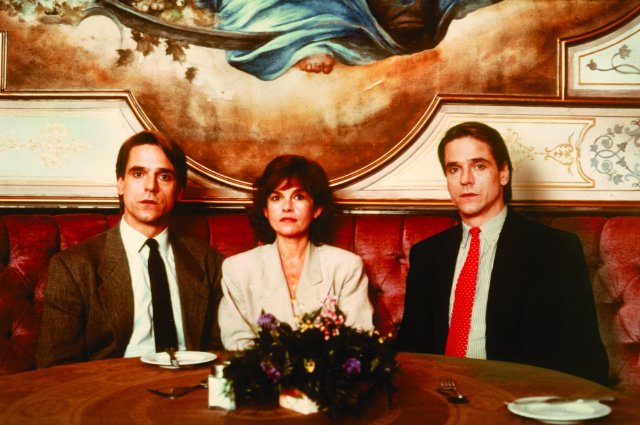 When Jeremy Irons won an Oscar for his icy but humorous performance in “Reversal of Fortune”(1990), he thanked David Cronenberg at the end of his acceptance speech. He had a very good reason; in Cronenberg’s unforgettable medical drama “Dead Ringers”(1988), he gave a stunning performance, or a pair of stunning performances, as the peculiar but prodigious twin gynecologists who are threatened by real emotions and then plunged into the self-destructive chaos where only exit for them may be becoming the one again as they were conceived at first in their mother’s womb.
Dr. Elliot and Beverly Mantle have already shown their brilliance even when they were just undergraduates in medical school. They devised a special retractor which would be the golden standard in their field, and they are now running a fertility clinic in Toronto with considerable reputation among their peers and patients. On the professional level, they treat their patients well, but you may prefer a female gynecologist after watching this film. They are indeed professionals doing their work, but a man examining an internal part of a woman’s body is definitely not a comfortable thing to watch to some of you.
If you think this is uncomfortable, then here is a more disturbing thing about the fabulous Mantle boys. They resemble each other so much that they frequently swap their identities and clinic works whenever it is needed, and they even share their women, most of whom are the patients in the clinic. This strange relationship has been working well for them; Elliot, a dominant brother, publishes the valuable research done by an introverted brother Beverly while Beverly sleeps with the women handed to him by Elliot.
Now it sounds a lot like those sordid stories usually decorating the front page of tabloid papers. You may not be surprised to know that the movie is based on Bari Wood and Jack Geasland’s lurid fiction which was inspired by the sensational real-life case of the Marcus brothers in Upper East Manhattan, who were also well-known twin gynecologists like the ones in the film before their decadent private life was exposed by that tragic incident.
 The movie is not a pleasant experience at all, but it is also compelling to watch thanks to David Cronenberg’s cold, clinical approach to the sensational aspects of the story. Many unpleasant things like an exploding head or a cleavage in belly can happen in his films, but he always observes them with fascination and intelligence not that far from what I observed from my colleagues working at the biological science department, so we keep watching the weird moments in his movies regardless of whether we love them or hate them in the end. I was one of the people who were left confounded by the messy goriness of “Videodrome”(1983), but I could not forget that bulging TV screen into which James Woods’ character put his head, although it was too bad that its rather prophetic idea was regrettably botched in the confusing plot. In case of the surgery scenes in “Dead Ringers”, I do not find the doctors wearing red clothes realistic(As some of you know, red color can exhaust their eyes during long hours of surgery), but they are memorably creepy with a certain religious tone.
With the considerable help from computer-controlled moving-matte photography (the movie was one of the first trials at that time), Jeremy Irons always makes the drama convincing with his masterful handling of the twin characters on the screen. There are subtle hints of the personality differences between them here and there in his performance, so you can always sense who is Elliot and who is Beverly even when they pretend to be each other. Irons also makes it sure that you can never be sure about where the line differentiating them exists in the overlapping area of their personalities, and that’s why his performance has that uncanny quality sometimes observed from identical twins in real life; there are differences, but you cannot separate one from the other easily.
The ambiguity in their relationship becomes more unclear and chaotic while Irons and Cronenberg push each of them in the opposite ways as the plot progresses. They are separate entities on the physical level, but can they be really separated from each other while maintaining each own individual identity? Even Elliot, who has always been a confident half, has some confusion about his identity. In the scene where he spends some private time the twin call girls, he instructs one girl to call him Elliot and then demands the other girl to call him Beverly.
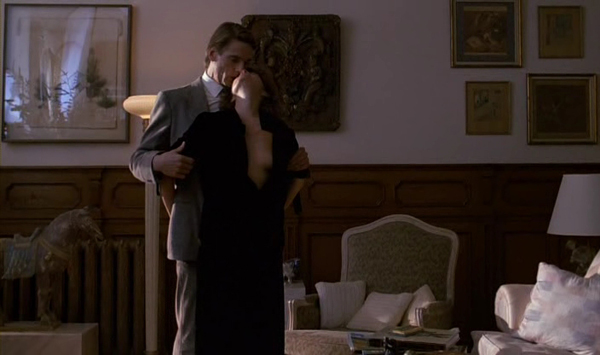 Elliot and Beverly have managed their relationship in equilibrium despite their confusion and doubt, but a major crisis comes upon them with their latest patient Claire Niveau(Geneviève Bujold), a movie actress who has been struggling to have a baby. While Elliot is excited by having a movie star as a patient to sleep with, Beverly is fascinated by encountering a curious case of rare deformity; she cannot get pregnant because she has a trifurcated cervix(no, it is not possible that she can have three babies at once because the sperms will lose their way in her womb).
Since they were very young, the Mantle brothers has always regarded sex and women in their analytic approach(In the odd opening scene, we see these brothers seriously discussing about sex as little nine-year-old boys). In their view, their female patients are more or less than the objects to be examined and studied and, sometimes, exploited, but Claire is a lot different from other patients – especially in Beverly’s view. Although he is reluctant at first about the sexual relationship with her due to her kinky sides, he comes to really like her, and that puts his brother as well as him in a very troublesome situation. Beverly does not want to share her with Elliot, but, as one terrible nightmare scene suggests, they are essentially psychological Siamese twins who are bonded together in their mutual mind far more strongly than they have ever thought.
While trying to resolve their difficult circumstance stuck in this triangle, the Mantle brothers find themselves slowly descended into the territory of twisted obsession and dark madness by external and internal factors. While getting closer to her, Beverly gets addicted to the drugs abused by Claire, and he becomes delusional and paranoid when Claire is absent for a while due to her work outside Canada. Later in the story, he devises a new set of surgery instruments as the radical approach to his ‘mutant patients’. You will probably not want to know what can be possibly done with these weird tools which look a lot like torture tools from the medieval era(they also remind me of those dreadful tools belonging to the sadistic dentist in “Little Shop of Horrors”(1986), by the way).
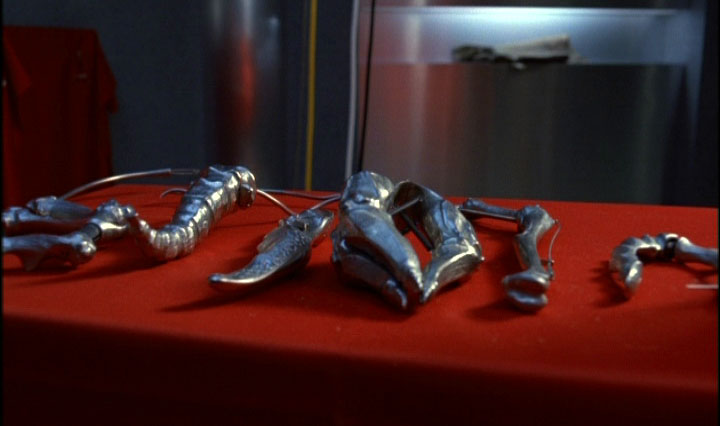
Elliot tries to get their situation under his control because his entire career depends on Beverly’s works, but he is helplessly and willingly dragged to the medical condition of his brother as his other half, and that ensues more chaos and insanity in their private life as a result. What eventually happens at their home is a sad, desolate tragedy accompanied with a gloomy birthday party and the following bloody ritual. Cronenberg has gained lots of notoriety through the gory special effects in his horror films, but, in this case, he thankfully leaves most of the gruesome details of this horrific scene to our imagination, which is already fueled enough by the image of these grotesque surgery instruments ready for their first trial. Even only one thin line of blood flowing below one character is enough to make you cringe, and Peter Suschitzky’s cool cinematography and Howard Shore’s mournful score make this tragic moment both terrifying and depressing.
With “The Dead Zone”(1983), “The Fly”(1986), and this film, Cronenberg began to depart from his previous B-horror films, and he moved to the next step of his illustrious career after this phase. His focus moves from physical horror associated with freakish events to psychological drama associated with the darkness of human mind, and I was not so surprised when he made a fairly conventional period drama “A Dangerous Method”(2011). After all, the bodies of the characters in his early works were the stages for their inner conflicts to be erupted, and a historical drama about Dr. Zigmund Freud and Dr. Carl Jung looks like a logical choice for Cronenberg’s career.
While I find myself always drawn to “Dead Ringers” by its terrific technical aspects(as far as I remember, I watched it five times since 1998 through VHS, cable TV, and DVD), I also recognize several weaknesses in this coldly fascinating drama. Such a story like this really needs woman’s touch, and Geneviève Bujold, who was the beating heart of a sterilized medical thriller “Coma”(1978), gives a strong performance as the sole warm spot of the story. Though she feels humiliated to realize what’s going on between her and the fabulous Mantle brothers, Claire really loves Beverly, and she is sincerely concerned a lot about his fragility. But she is not a weak woman who will succumb to the twin’s demands easily just because she loves one of them, and she makes her point clear to Elliot; she only wants Beverly, not Elliot.
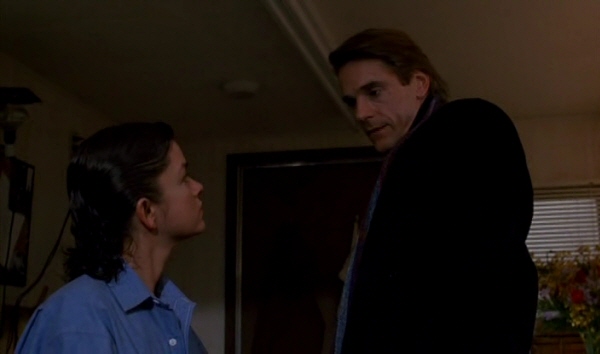
It is a shame that the movie mainly uses Bujold’s character as a plot device during the second half. Considering how Geena Davis’ performance as the lover of the doomed hero in “The Fly”(1986) was important in making its crisis and subsequent climax work with devastating dramatic effects, that’s a big disappointment. The movie also never digs deep into an interesting contrast between Claire and Cary(Heidi Von Palleske), a fellow doctor who is officially Elliot’s girlfriend but would not mind much about sleeping with Beverly. At least, von Palleske and Irons have a good scene where Cary dances together with the twins at their apartment while “In the Still of the Night (I’ll Remember)” by the Five Satins is played.
Whether you like the movie or not, Jeremy Irons’ tour-de-force performance in the film remains one of his great works. It has been the standard to be compared with the other memorable twin performances since the movie came out, and I instantly thought of his work when I saw Nicholas Cage in “Adaptation.”(2002) or when I saw Edward Norton in “Leaves of Grass”(2009).
I do not think I love “Dead Ringers” wholeheartedly, but its creepy memory still sticks to my mind. As a matter of fact, I could not help think of its spooky poster showing overlapped faces when I saw one of the promotional posters for “A Dangerous Method”, which also featured overlapped faces in an equally disturbing fashion. Did Cronenberg think of the Mantle brothers and Claire Niveau when he made that film which was about an intellectual triangle between three doctors? I have no idea, but, as far as I know, the separation was more successful in “A Dangerous Method”- and nobody was dead in that case despite some serious aftereffects on the persons concerned.

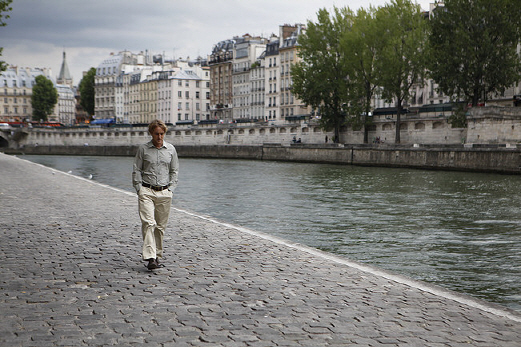 There are lots of details you may not notice while watching Woody Allen’s “Midnight in Paris”(2011), a charming comedy which leisurely strolls around one of the most beautiful cities on the world with its paranormal premise to delight you. I had a fun with the movie while recognizing many famous figures from the era it depicts thanks to my knowledge about them, and I realized later there are more in the film while searching for the additional information on the web, and I found several things in the movie funnier than before during my second watching.
But you do not have to know a lot for enjoying “Midnight in Paris”, because the story itself is a very entertaining comedy besides being full of amusing details. Its laughs mainly come from the situation of the hero who happens to be placed between the two worlds, and the movie handles the following complications with lots of wits and intelligence. In addition, like it did in other films, Paris always looks gorgeous whether it is day or night – or whether it is the early 20th century or the early 21th century.
Though he has desired to be recognized as a novelist, our hero Gil(Owen Wilson) has been unhappily stuck in Hollywood as a fairly successful screenplay writer who usually writes for the movies he does not like much. He has his first novel, but it is still in progress, and he has not shown it to others yet because he is not that satisfied with the first draft while afraid of being criticized.
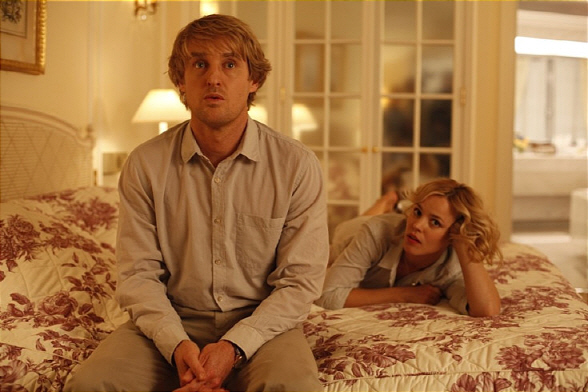 Like his novel, which is about a ‘nostalgia shop’ which sells the things from the past, Gil is nostalgic for the era gone into the past. While he is visiting Paris with his fiancé Inez(Rachel McAdams), who virtually has no interest in whatever he says, he yearns for the era when the literature figure like Ernest Hemingway walked along the streets of Paris. Gil feels like being at home while strolling around the streets and he even considers moving to Paris rather than living in California, but Inez and her rich parents prefer to live in US and they are mostly occupied with shopping and business matters, which are the main purpose of their visit. With such a difference like that, you may wonder how the hell Gil and Inez came to meet and then get engaged.
At one night, due to drinking wine a little too much, Gil chooses to walk alone for a while, and then he encounters something unbelievable happening right in front of his eyes. When he is having a short rest on the steps at some street, the church bell is chimed for midnight, and then an old-fashioned Peugeot comes along the street. He is invited into the car, and he soon finds himself invited to the party for Jean Cocteau in the 1920s. He can’t simply believe his eyes; Cole Porter himself is playing his own song at the party, and there is that famous couple of the Jazz age – F. Scott Fitzerald and his wife Zelda Fitzerald(Tom Hiddleston and Alison Pill).
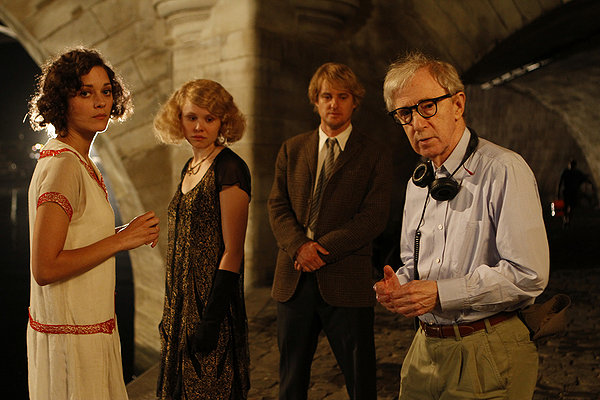
And there are a lot more famous people to enthrall Gill. Through Fitzerald, Gil meets none other than Ernest Hemingway(Corey Stoll), who always seems to be occupied with talking like a tough guy except when he is writing. And through Hemingway, Gil is introduced to Gertrude Stein(Kathy Bates), an American writer who was also a famous art collector and supporter. And through Stein, Gil gets not only the chance to meet the famous artists like Pablo Picasso and Henri Matisse but also the chance to get his novel reviewed by her – and he also encounters the model of one of Picasso’s works, a beautiful model named Adriana(Marion Cotillard).
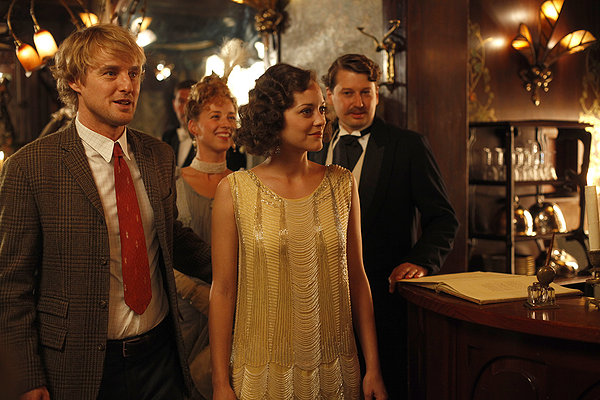 While not delving too deeply into its unreal premise, the movie has a lot of fun with its fantasy world filled with such colorful historical figures like them. Every night, Gil goes to the same spot at the same time(naturally, his fiancé and her parents become pretty suspicious about his questionable night stroll), and then there is always a new surprise waiting for him in the world he adores. While becoming friendly with Hemingway and Stein, he also comes across Salvador Dali(Adrien Brody), Man Ray(Tom Cordier), and Luis Buñuel(Adrien de Van). This trio of surreal artists has no trouble at all in believing what Gil confides to them when he is conflicted about his private feelings, and there is a really amusing moment at their surrealistic party when Gil seeds one particular idea on Buñuel, which will later be developed into one of his great films.
It goes without saying that he is less colorful compared to his showy co-performers, but Owen Wilson imbues considerable sincerity to his performance as the emotional anchor of the story. Like any young aspiring writers, he just feels excited to meet his idols and happy to be accepted as one of their pals. Unlike the others in his world, his new friends show a genuine interest to his novel as literary fellows, and he gladly show it to them for the advices he desperately needs now.
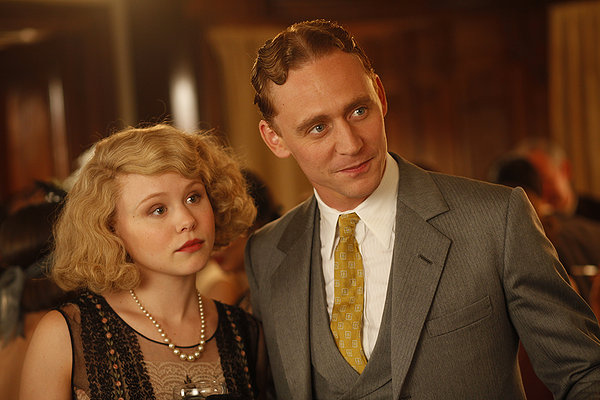 The characters surrounding Gil are basically the caricatures based on what we heard about them through books, but they are entertaining to watch. Tom Hiddleston and Alison Pill have a little poignancy in their broad performances as a man and a woman in ill-fated love, and Kathy Bates leaves a strong impression as Gertrude Stein, who is a wise, generous lady with no-nonsense attitude. Marion Cotillard is lovely as a woman who gets closer to Gil after her relationships with (in chronological order) Modigliani, Braque, Picasso, and Hemingway. Gil and Adriana later find some common ground between them, and that leads to another strange incident which is also left unexplained just like Gil’s own time slip.
Woody Allen deservedly won his third Best screenplay Oscar for “Midnight in Paris” early in this year(it is his 15th nomination – how impressive it is!). Maybe the era when he gave us the movies like “Annie Hall”(1977) or “Hannah and Her Sisters”(1986) is gone and that time will never come back, but Mr. Allen has been moving on while making Woody Allen films as usual and it is always nice to expect a new movie from him every one or two years. “Midnight in Paris” may not be Woody Allen’s best film, but it is good to see that one of the great American director remains as one of the wittiest writers in the world.
 As one of the most interesting movie actresses in the world, Isabelle Huppert always draws our attention whenever she appears on the screen. I saw her for the first time in Claude Chabrol’s dark masterwork in “La Cérémonie”(1995), and I kept encountering her again and again in the other movies after that, and her performances have been always fascinating regardless of whether the movies are disappointing like “I Heart Huckabees”(2004) or compelling like “The Piano Teacher”(2001) or “White Material”(2009).
That is why it was a treat to watch her in Hong Sang-soo’s new film “In Another Country”. She has a lightweight fun as the three different versions of the heroine in the movie and, to a South Korean audience like me, her interactions with other South Korean performers were the constant source of amusement throughout the film. I frequently giggled while watching their awkward but funny exchanges, and I was really engaged by Huppert’s presence on the beach town not far from my hometown.
Huppert plays Anne, the character created by the film student named Won-joo(Jeong Yu-mi). Won-joo is spending some time with her mother(Yoon Yeo-jeong) in one beach town named Mohang in Byeonsan area of North Jeolla province. It seems she and her mother fled from the debt collectors due to the problem of her mother’s brother, and maybe they will have to spend more time in this peaceful town until there is a chance to resolve their difficult circumstance. Bored by the stillness of the town, Won-joo decides to spend her time with exploring an idea in her future scenario. Inspired by one French director she met at the film festival, she starts her story with one simple premise – one beautiful French woman visiting Mohang.
In her first draft, Anne is also a French director, and she happens to visit Mohang with her friend Jong-soo and his pregnant wife(Kwon Hae-hyo and Moon So-ri) on one summer day. It is implied that Moon-soo has some feeling toward Anne, but Anne tactfully manages the circumstance when they have some private moment with each other.
 While strolling around the town, she comes across a lifeguard on the beach played by Yoo Joon-sang. Although his English is clumsy(he does not realize what lighthouse means in Korean until she tries to explain that word to him with several gestures), their conversation is not like talking to the wall at least, so we get one funny scene when the lifeguard invites Anne to his tent and sings an impromptu song for her with his guitar. The movie adds extra deadpan hilarity to this moment by looking at the tent in a long shot from the outside.
Needless to say, the lifeguard is interested in Anne, but what about her? With the actress like Huppert, you cannot be entirely sure about her character, and Huppert plays the first version of Anne as a wise, reserved, and tactful woman who, in spite of the language barrier between her and others, courteously moves through the comic situations on the verge of being social embarrassments. She eventually finds a good chance to show her real feelings, but, unfortunately, the lifeguard has a certain difficulty in understanding her written words. I could feel lots of sympathy to him because I also experienced the same difficulty despite my more fluent English.
And then we move to the second draft of Won-joo’s story, which is then followed by the third draft. The background is same, and the heroine has the same name, but the characters and their situations are changed or modified or adjusted. For example, in case of the second draft, Anne is a rich married woman having a secret affair with a famous South Korean director(Moon Seong-geun), and she is waiting for him to come and spend a day with her at the town. In the third version, Anne is a divorced woman abandoned by her husband(he left her for his South Korean assistant), and she comes to the town with her close South Korean friend(Yoon Yeo-jeong).
 The main pleasure of the movie is how the changes in these different versions work with the recurring characters and elements in each draft. The pension where the characters stay is managed by the same girl(Jeong Yu-mi), who functions differently in each version as a background character. Along with the lifeguard character, the lighthouse in the town works into each version in various ways while he remains struggling to understand what lighthouse means in Korean.
And, at least to the South Korean audiences, it is hilarious to hear the English dialogues delivered with South Korean accent whenever South Korean performers interact with Huppert. Their dialogues indeed sound awkward at first, but they are awkward in a natural way as much as your average non-English speakers; you will not have much trouble in understanding what they say to Anne in English.
Hong Sang-soo is a talented director who knows a lot about how the people talk in real daily life, and he brings a certain degree of spontaneity to his scenes while drawing good performances from his actors. While Huppert is fabulous as the three variations of the heroine character, her South Korean co-actors are also entertaining as the characters revolving around Huppert. I liked the comic earnestness in Yoo Joon-sang’s performance, and I could see why Hong is one of the best directors for the actresses in South Korea through the nice supporting performances by Jeong Yu-mi and Moon So-ri.
As I said in my review for Hong Sang-soo’s previous work “The Day He Arrives”(2011), I did not much like Hong’s films at first because I was not so sure about whether I understood them or not. I do not know whether I have got more acquainted with his movies or his movies become easier and more playful than before, but I recently begin to enjoy his recent films while recognizing the recurring themes in his works. Unlike his characters, I do not have much interest in drinking soju(it’s distilled beverage in South Korea) while having a conversation but I must confess that I was excited to see Isabelle Huppert drinking soju. Huppert on South Korean beach with the bottles of soju is certainly not something you see everyday, you know.

 When I watched one film directed by François Truffaut for the first time during one Sunday afternoon of 2008, I had a little expectation about the movie, which was shown on TV as “Pocket Money”. Although I was already familiar with many of Truffaut’s famous works including “The 400 Blows”(1959) or “Day for Night”(1973), I had not heard about the title, and nor did I know that its alternative title in North America region was “Small Change”. Funny thing is, I remember that alternative title very well because Roger Ebert said in the introduction to the one part of his book “Awake in the Dark” that he still could not explain how he came to choose “Small Change” as the best film of 1976 instead of “Taxi Driver”(1976), which he placed on No.2 in the annual list.
While it goes without saying this cute little movie is not a masterpiece like the latter, you will find “Small Change” is a film heartwarming enough to induce such a misjudgment like that. Full of lively cute kids rolling around the series of humorous vignettes, the movie pleasantly moves and hangs around them with joy and care. Although it honestly recognizes that their world is not always bright and pleasant, the movie is ultimately sunny and hopeful, and it tells us that these lovable kids in one small French town will be probably all right in the end.
With no particular plot to push them, the movie observes their daily life at home and school during the last weeks of spring semester. We see a bunch of boisterous kids running along the streets for attending their school in the opening scene. We see them taught by their teacher in the classroom. He sees one of his students not listening to him, but, as a good educator, he finds an opportunity of teaching something to his students from what that boy was occupied with. And then the class is temporarily interrupted by the news about the teacher’s pregnant wife, and all the kids in the class are excited by whether the baby will be a boy or a girl while he is outside the classroom.
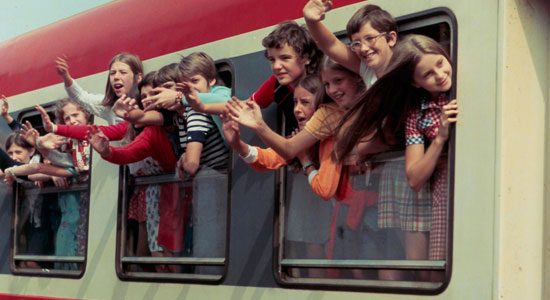 While encountering many kids appearing here and there on the screen, we get a little more acquainted with the relatively more notable ones among them. There are two mischievous brothers who try to earn some pocket money for them in their own hilarious ways. There is a boy whose life at home mainly revolves around his wheelchair-bound widower father. There is a little boy who really needs lots of attention from his mother due to his sheer unpredictability. There is a girl who gets a little friendlier with one of the boys at the school. And there is a poor boy who hides the harsh reality of his home life from his schoolmates while managing to attend the school.
The movie keeps serving us the memorable scenes to be remembered with smile throughout its running time. One of the funniest scenes(and also the scariest one if you are the parents with little kids) is when a little boy unwittingly puts himself in a serious peril when he tries to retrieve his kitten. Not aware of his circumstance, he innocently attempts to do a very dangerous stunt at the window of his home on the 10th floor, and the residents of the high-rise apartment building are helplessly watching him from below. I will not describe what will happen in detail, but let’s say I admire a lot how Truffaut effortlessly pulls a big hearty laugh from nail-biting suspense, and I still find this scene both terrifying and hilarious while confirming to myself that the child actor in the film was not put in danger during the shooting.
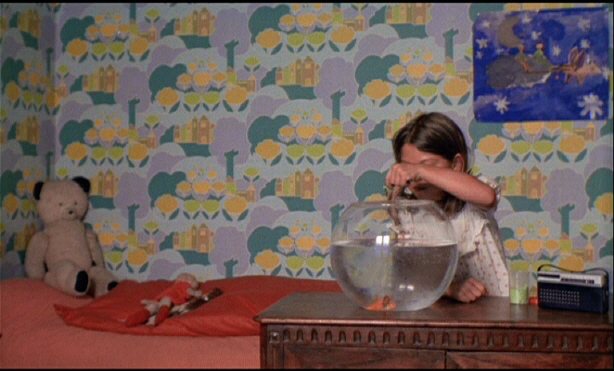
There is the scene featuring a girl left in the apartment by her parents just because she insists on taking her favorite handbag to the family dinner at the restaurant, and it made me chuckle a lot for its cheerful black comedy. She is pissed off, so she locks the front door and drops the key in her fish bowl, but she gets hungry as the time goes by. Her solution is direct and creative; using her dad’s bullhorn, she shouts to her neighbours in the apartment building that she is hungry, and then they help her in another amusingly creative way. If she were older, she would think for a while about how the neighbours will think about her parents after this funny happening, but that does not matter much to a girl at her age, especially when she is starving and the basketful of food(minus a bottle of wine thanks to one adult’s thoughtful intervention) is delivered right in front of her.
 I found one funny moment at the classroom is far different from what I experienced at my elementary school mainly because I and most of my schoolmates usually answered well to our teachers, but I could see how dreadful it is when you cannot answer to the question thrown to you in the class. Around the end of the class, the teacher asks a question to one student. Nervously evading the teacher’s repeated question, he desperately looks at the clock outside the building. Two minutes, one minutes, 30 seconds… and he is finally saved by the bell signifying the end of the class to his relief.
These wonderful scenes and other good ones are separated from each other as the individual episodes, but we gradually see that they are making a bigger picture together in the end. The original screenplay by Truffaut and his co-writer Suzanne Schiffman was constantly changed on the set through improvisations, and the story freely goes around the characters without direction, but the movie somehow establishes the passage of their daily life amidst its various episodes. While we comfortably watch how the kids spend their days, the summer vacation is coming nearer to them, and their episodic experiences become the parts of themselves in the process. One episode is about a boy having the first crush in his life, and we later see him also realizing the impossibility of love for the first time in one painfully funny scene. Looking back at this scene, I wonder how much some of kids in my mother’s class felt miserable when they realized she was a married woman(one of them actually said he wanted to marry her – I am not kidding).
François Truffaut, one of the great directors emerging from the French New Wave, made his debut with “The 400 Blows”, which is a lot different from “Small Change” in many aspects. While the former is a painful coming-of-age drama, the latter is a gentle comedy/drama about children. But both of them look at their respective stories with transparent honesty; while you can sense the personal pain from his unhappy childhood in the former, you feel the avuncular love toward his little characters in the latter.
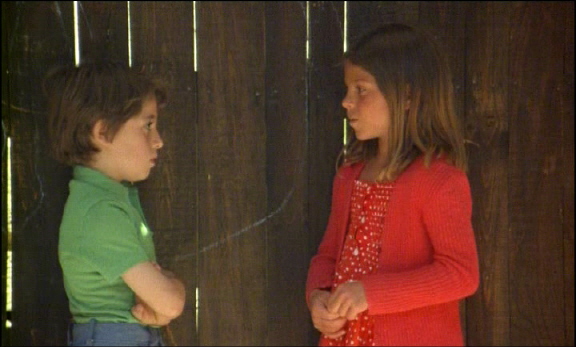 Truffaut was one of the few directors who really understand how children feel and think(no wonder he clicked well with Steven Spielberg on the set of “Close Encounters of the Third Kind”(1977)), and that quality of his is apparently shown through his deft handling of the child actors in the film. They are cute indeed, but, above all, they also come to us as the engaging characters thanks to the excellent natural performances pulled from the ensemble mostly consisting of non-professional child actors. When one of them tells to his friends about one vulgar joke he heard from somewhere, it is both funny and sweet because he just thinks it is funny without knowing why it is funny, and that takes me back to when I embarrassed my parents at one moment when I was 10. While we were in our car, I kept talking about what I read from the magazine article without fully understanding what the condom really is(I assumed it was some urinary equipment for males because the article was about determining the standard for how much water it must be able to contain without being broken).
The movie becomes a little too heavy-handed near the ending when it turns out that one of the kids in the school has been suffering from the domestic abuse. After that incident, the teacher gives a long speech to his students on the last day of the semester, and, when he talks about children’s right and how they should be treated, it is blatantly clear that he speaks directly to us as Truffaut’s mouthpiece. Although I do not wholly agree with some points made by him, I also understand that this flawed speech comes from Truffaut’s sincere heart really caring about children. As a man who once struggled through difficult childhood, Truffaut gives a good pep talk to the children through the teacher’s speech: “Some of us who’ve had a difficult childhood are better equipped for adult life than the ones who are overprotected with love – it’s the law of compensation.”
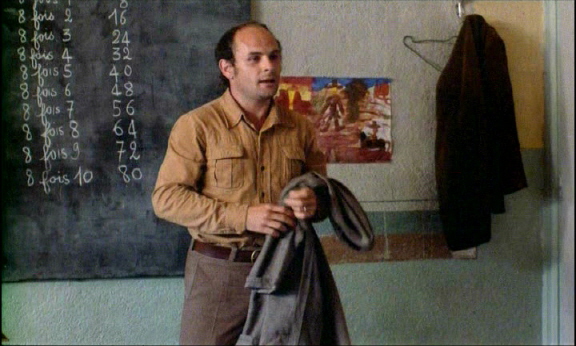 While showing the concern toward the children who will face the hard facts of life while growing up, the movie also expresses the optimism about their future. When the teacher talks about his concern over the dinner with his pregnant wife at his home, she tells his husband one undeniable fact about kids; “Kids are as solid as rock. They stumble through life, but they’re not hurt. They are much tougher than we are.” Though they are the most vulnerable individuals in the society, most of them will move on while growing up. And maybe some of them will find themselves giving the similar speech to the children at the opposite end while hoping for the best like their teacher once did.
“Small Change” is one of the best films about children – and it is also one of the most charming ones. When the movie arrives at the end credit after another funny incident, we are treated with one marvelous sight filling up the whole screen. I was touched by the immense affection inside it when I saw it for the first time, and I again found it lovely during the recent revisit. I am sure your heart will be also melted by it, too.
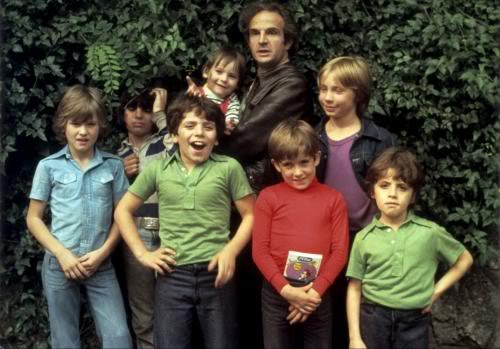
 Okay, Okay, I must admit that I was one of the skeptics asking why the hell we need another sequel for “Men in Black” series. I liked the first film for its fun one-joke comedy, and the sequel, which was made 5 years later, was a mild disappointment which attempted the same joke all over again while wasting its time in trying to bring back one of its main characters in action.
10 years have passed since “Men in Black II”(2002), so it was natural that I and other regarded the news about “Men in Black III” in a rather cynical and tired view. Amid lots of blockbuster sequels coming out at theaters every year, do we really need another sequel designed as a cash cow for the movie studio? “Men in Black III” may indeed be a cash cow, but, thankfully for the audiences like me who just want to have a good time at the theater, the movie has a nice idea for its comic nonsense plot along with one successful case of casting which works far, far better than we expected, and the outcome is the same but creative old joke with different things to show and tell.
As many of you already know, Men in Black, or MIB, is the secret government agency monitoring and administrating alien activities on the Earth. While most of the aliens come for a peaceful shelter for them(the running gag in the series is that the disguises of some aliens are actually the well-known celebrities of the global community, such as Michael Jackson, Steven Spielberg, or Lady Gaga), there are also dangerous criminal aliens threatening the safety of Earth, and it is MIB agents’ job to take care of these annoying alien scums. As one of my friends pointed out, they look too transparent in their attire to unsuspecting civilians while carrying out their missions, but don’t worry, because the people will soon forget about what happened and what these guys in black suits did afterwards – right after a certain tool is activated in front of them.
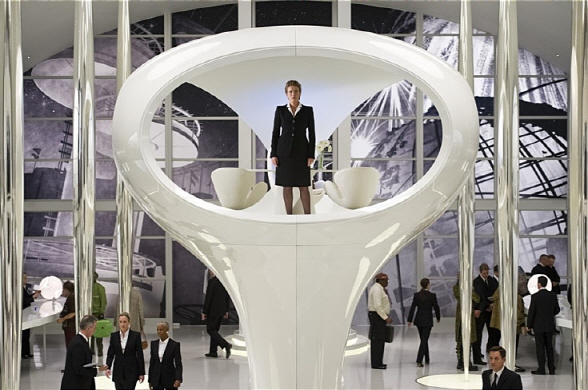
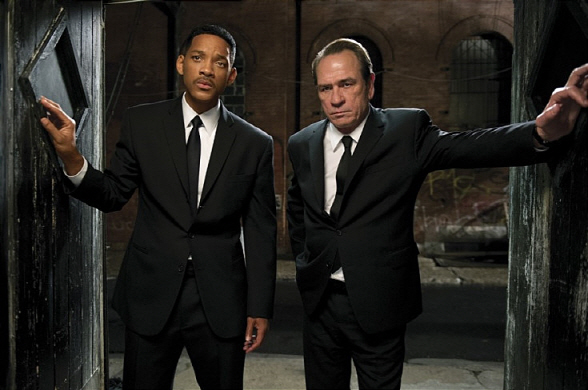 When we meet Agent J(Will Smith) and Agent K(Tommy Lee Jones), they remain pretty much same as when we saw them for the last time, except they get a little more accustomed to each other as the partners for 10 years. While their direct boss is now Agent O(Emma Thompson), Agent K is still a taciturn old dude with lots of things he is not so willing to share with his partner, and Agent J is sometimes exasperated by his partner’s reticence as before. Anyway, there are always works for them to be taken care of, so we see another creative presentation of various aliens created by the special make-up master Rick Baker, who deservedly won an Oscar for the first film. While these aliens look as strange as before, they are always constant amusements to look at in the series.
One of them is Boris(Jemaine Clement), an evil alien who has been incarcerated for more than 40 years in the special prison built on the surface of the moon. He recently escapes from the prison with a little help from his girlfriend(Nicole Scherzinger), and then he schemes to conquer(or destroy) the Earth by eliminating K, his lifelong enemy, from the timeline through the time travel to the past. Jermaine Clement is so good at suggesting the insidious viciousness in the innards of his character that I wondered whether Boris is a distant cousin to John Carpenter’s “The Thing”(1982).
 His scheme seems to be successful. K gets wiped from the timeline, and then the Earth is suddenly invaded by Boris’s spaceships all over the world. Due to some reason which is not so easy to be explained, J managed not to be affected by this change on the universal level unlike others, so now it is his job to prevent Boris from killing K in the past. The movie does not give any plausible scientific explanation on the reason why J has to do a sort of four dimensional bungee jump near the top of the Chrysler building for going to 1969, but I guess the science is the last thing I should search for in this film.
While the movie has some funny gags and jokes associated with the 1960s(Bill Hader is hilarious as Andy Warhol), the most amusing part in the film comes from the interaction between J and a younger version of K played by Josh Brolin. I never thought for a millisecond Brolin looked similar to Jones while watching “No Country For Old Men”(2007), but Brolin does a masterful job of perfectly channeling the speech pattern and mannerism of Jones in the film while never losing that dry, droll sense of humor.
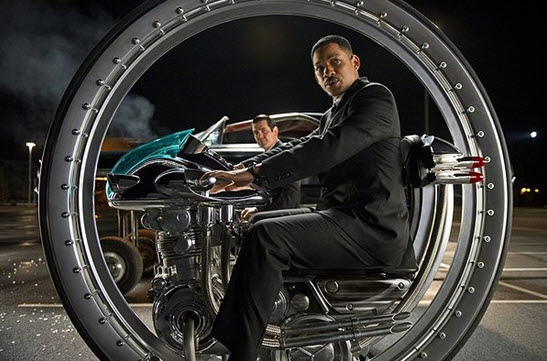 He and Jones create an interesting and sometimes touching relationship dynamic together with Smith, and that is why a relatively humble ending of the story at one certain place is as important as the exciting climax sequence which fatefully happens while Apollo 11 is on its first step of making the history. I still cannot see the whole business in the timeline as clearly as Griffin(nerdy and amiable Michael Stuhlberg), an alien with a funny cap who regards the time as another coordinate of his dimension as the creature of the fifth dimensional world, but I could see the bond between J and K has grown thicker than before in the end. Wait, is “before” the right word for their complicated business in the higher dimension beyond our perceptibility? I think I need Griffin right now, although I will not probably be able to understand what he says in his simple but cryptic manner.
The director Barry Sonnenfeld, who has collaborated with Jones and Smith in the series, made a fun film filled with lots of goodies to be appreciated. Along with Rick Baker’s fabulous job, I liked Bo Welch’s set designs, and I gladly welcomed the return of Danny Elfman’s spunky Oscar-nominated theme. As the others already said, this is not as bad as I and others worried, and I had a fun, so I guess it is not bad to hope that they will return with another good idea for the same old joke.

“… one of the wild ones. Oh, we’ve some of them in every generation. You can’t tame them, you can’t bring them into the community and make them live in law and order. They go their own way. If they’re saints they go and tend lepers or something, or get themselves martyred in jungles. If they’re bad lots they commit the atrocities that you don’t like hearing about: And sometimes – they’re just wild! They’d have been all right, I supposed, born in another age when it was everyone’s hand for himself, everyone fighting to keep life in their veins. Hazards at every turn, danger all around them, and they themselves perforce dangerous to others. That world would have suited them; they’d have been at home in it. This one doesn’t.”
– from Agatha Christie’s “At Bertram’s Hotel”(1965)
In my opinion, Sam Childers neatly fits into the category described in “At Bertram’s Hotel”, one of my personal favorite Agatha Christie mystery novels. While watching real Sam Childers in the footage shown during its end credit, I could see that what I thought about him and his story before watching “Machine Gun Preacher” was probably correct. He was a macho guy with a gun when he was an outlaw in US, and he is still a tough guy with a gun when he is a preacher in Sudan, where his violence can be justified pretty easily. Well, he is protecting these helpless children with nowhere to go, isn’t he?
His story is surely a compelling case of “life imitates trashy art”. Childers was an ex-con with the long history of violence, but he eventually found the religion and became a preacher, and then he later came to believe that God told him to go to Africa to help the people living there. He did go to Africa, and he soon got that nickname, machine gun preacher, while working with SPLA(Sudanese People’s Liberation Army) for saving the children in danger. Raise your hand if you do not think this story sounds like the synopsis of some B-action film.
While it seems he did some good works including building and managing the orphanage for them, Childers is still a controversial figure in the ongoing civil war in Sudan due to his active participation in the war, and his contribution in the war Sudan is questionable to some degrees. I am sure he regards himself as a Christian soldier, but not many people agree with him, so we can say that makes him a more interesting subject, but “Machine Gun Preacher” does not live up to the potential inside its subject. While hesitating between action and serious drama, its well-intentioned but superficial screenplay already loses its way around the time it arrives at its ‘crisis’ moment, and even that moment is resolved into a lackluster ending which left me unsatisfied.
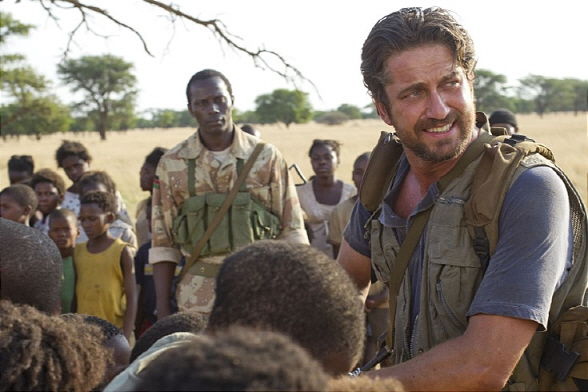 When we meet Childers(Gerard Butler) in the film at first, he has just gotten out of the prison after serving his sentence. He is greeted by his wife Lynn(Michelle Monaghan) waiting for him outside the building, but he instantly shows his unpleasant sides not long before he returns to his sweet home. He becomes mad and furious at his wife because she quits her previous job at a strip bar after finding the religion, in which he does not have the slightest interest. And he also resumes his violent outlaw life with his close friend Donnie(Michael Shannon).
But, what do you know, after one dramatic incident, he is also drawn to the church in no more than 5 minutes. He becomes more responsible than before: he says goodbye to his former life and earns the money through a decent job. Luckily, he gets the chance to start his own construction business, so his family, who has lived in a small trailer, is very happy to get a big house surrounded by forest. In addition, he becomes a preacher working as the guiding light for the sinners like him. I know some of you are probably giggling while reading my description, but Childers is serious about his quest for redemption and so is the movie.
On one day, he decides to go to Africa for helping people living there after hearing about their plight at his church. He goes to Northern Uganda, and, while working on the construction site, he comes to witness the atrocities committed in that area and Southern Sudan. He becomes determined to help the refugees, especially those poor kids who lost their parents. He buys the land, and tries to build an orphanage, but his place is not so far from the active area of LRA(Lord’s Resistance Army). The movie does not explain well about how he comes to choose to buy this dangerous place, but he is willing to protect the kids with his guns, anyway.

While I can understand Childers’ determination a little at least, I am also well aware of the complexity of the civil war. It goes without saying that LRA has committed lots of horrible deeds to more than 400,000 of innocent civilians in the country under the command of its leader Joseph Kony(we see some of their gruesome atrocities in the film and they are surely horrific enough to make me cringe in horror), but we also know this war is not a simple matter of black and white, like other civil wars in recent history. Through one supporting character, the movie throws an interesting point about what Childers does to protect the children, but it does not delve deeply enough into that question. Yes, he has a noble intention at least his view, but what is the difference between him and enemies if both use the violence? I have some suspicion that he feels more at home in Afriaca because nobody blames you for shooting guns.
Besides that ambiguity, the film is seriously marred by weak story and shallow characterization. Gerard Butler is appropriately cast as the title role, but I saw him delivering a more interesting performance with military uniform and guns in “Coriolanus”(2011) – and he was as good as his co-actors in case of delivering those wonderful Shakespeare lines in that movie. Michelle Monaghan is wasted as a wife tolerating and standing by her husband because that is all she is required to do in the story. Although he is tasked with a thankless job as an addict friend of Childers, Michael Shannon again proves that he is the master of intense creepiness who will be the successor of Christopher Walken.
I believe the director Marc Forster and the screenplay writer Jason Keller really tried to make a good story out of their material, but their result is an awkward, disjointed character drama which also clumsily attempts to be an action film. Compared to its disturbing moments, its drama is deficient in believability, and I was not involved much in Childers’ story except caring about the local people struggling through danger. To be sure, the movie reminds me of one of the ongoing problems in our world – but a lot more is required to make a good drama.

 While we had another adaptation of “Jane Eyre” in the last year, there was also another adaptation of “Wuthering Heights”, a brooding romance tale of wild, passionate, and destructive lovers in the gloomy wilderness. Like her sister’s classic novel, Emily Brontë’s equally classic novel has been made into the feature films many times(according to IMDB trivia, it is around 20 at present), and the most famous one among them is William Wyler’s version made in 1939 with Laurence Olivier as Heathcliff and Merle Oberon as Catherine.
While following the basic plot in the novel like other versions, the latest version of “Wuthering Heights” draws our attention from the start due to its unorthodox approach. What we get here is a curious mix of the 19th century gothic romance tale and the independent film style, and, though this attempt is not always successful in the film, this provides several moments of raw emotions in the vivid atmosphere of the wilderness where the wind is constantly blowing over the field with the gray clouds hovering over the characters.
And there is an interesting casting choice in the film. Heathcliff in this version is a Negro character played by Solomon Glave during the first part and then played by James Howson later. As far as I remember, Heathcliff in the novel is just described as a dark-skinned gypsy, but it does not matter – this change makes Heathcliff an unwelcomed outsider more than before, and it works well in the context of the story. What the hell, to be frank with you, what I pictured in my mind while reading the novel was darker than Laurence Olivier in Wyler’s film, anyway.
 As many of you expect, the story begins with one rainy and windy evening as its opening scene. To the family eagerly waiting for his return, Mr. Earnshaw(Paul Hilton) brings a disagreeable surprise – a nameless orphan boy he encountered on the way back to his home. His family is not particularly rich, but, because he believes it is a Christian thing to do, Mr. Earnshaw decides to take this boy under his wing and treat him like a family member, and he later names him Heathcliff.
The relationship between Heathcliff and Mr. Earnshaw’s children is certainly rocky from the beginning. Hindley(Lee Shaw), Mr. Earnshaw’ son, hates Heathcliff right from the first time they face each other, and so does Heathcliff. While Mr. Earnshaw is the head of the household, they manage to live together with growing mutual animosity, but, after Mr. Earnshaw dies at one unfortunate night, Hindley takes the control, and the first thing he does as the new head of the household is more harassment toward Heathcliff, who is banished to the pen and treated like one of the servants in the house.
In case of Catherine(Shannon Beer), Mr. Earnshaw’s unruly daughter, her encounter with Heathcliff can be called Meet Rude; she spits on his face as soon as he is introduced to her family, and he is not so nice even when he is treated with generosity. But Catherine starts to show the interest to him at the same night like the girls at her age usually do. Soon they spend lots of time together in the wilderness surrounding the house, and they begin to feel the bond between them while recognizing each other as a fellow kindred spirit.
The sensitive depiction of this growing relationship between them is the best part of the film, and I think that is why the director/co-adaptor Andrea Arnold was drawn to the film. Her previous film “Fish Tank”(2009) was also about a young wild girl constantly clashing with others surrounding her, and that movie captured well the volatile and uncertain emotional state of a teenager girl through the intimate handheld camera approach to its subject.
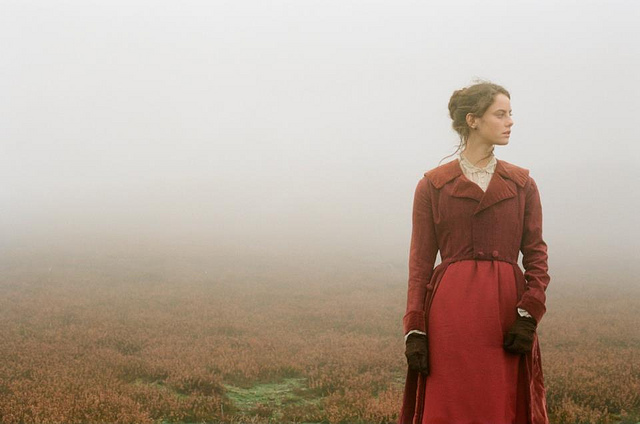 Arnold applies a similar approach to her characters of the 19th century as well. Shot in 1.37:1 ratio with the handheld camera usually following them or running or shaking with them, the movie is a little suffocating at times while looking quite closely at the characters and the objects on the screen, but this approach imbues the film with lots of raw intimacy not often observed in other period drama films. Looking at them closely, we can feel how two characters see each other. Young performers Solomon Glave and Shannon Beer are excellent as a boy and a girl who gradually realizes what their respective hearts want, and they have many good scenes in the film. Cathy and Heathcliff are certainly not mild characters, and their interactions are somewhere between fight and play, so we get a rough emotional moment on the mud field which will haunt them and bind them together forever in their memories.
It must be mentioned that the cinematographer Robbie Ryan provides the vivid background and atmosphere for the story. The wilderness in the film is rarely sunny, but the juxtaposition of the grey sky and the wide green field with rocky mounds has the desolate wild beauty along with the sound of the wind frequently heard in the soundtrack. The people besides the members of the Earnshaws and their employees are rarely seen in the movie except the Lintons, a rich family who unluckily gets involved with the passionate lovers like Heathcliff and Cathy.
That is the point where the movie starts to begin lose its power, and the constant flashback scenes from the first part keep remind us how good it is compared to the second part. I do not blame Kaya Scodelario and James Howson, who play older Cathy and Heathcliff in that part, but their part is less interesting and lively. I must point out that the characters besides them in the film are not defined well, and most of them come to us as flat, bland characters throughout the story.
But I still think this new version of “Wuthering Heights” is an interesting one with considerable power generated from its different attempt. Even when I found the story tedious at times, I enjoyed its mood and the natural performances from its actors. Maybe you will be disappointed by this arthouse movie treatment of a classic literature novel if you expect a juicy melodrama, but it surely has a right stage for a wild boy meeting a wild girl.

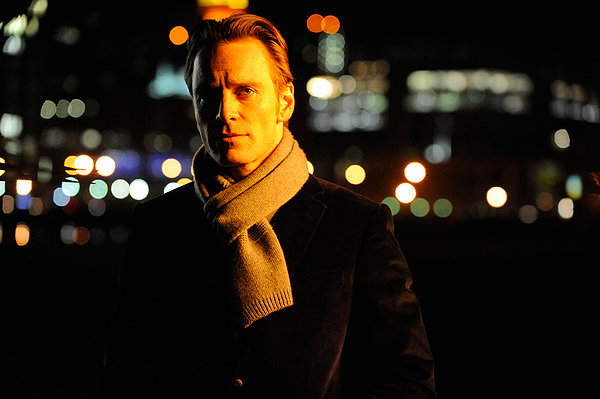 Whatever you think about sex addiction, you will not laugh about it after you watch “Shame”, an unforgettably harrowing film about one desolate human condition driven by sex addiction. Like the other types of addicts, the life of its hero is both driven and inhibited by the constant urge to get the next fix. His mind, while pretty much functional in the world outside, always craves for the pleasure which is no longer pleasure to him. That acquired nature of his distances himself further from the others around him, and that brings him more loneliness and desolation, but the urge still remains inside him, yearning for the next fix.
On the surface, Brandon Sullivan(Michael Fassbender) is an ordinary man with affluent lifestyle. He lives in a luxurious apartment building located somewhere in lower Manhattan area. His home looks clean and comfortable with expensive furnitures and electronic equipments. He has a good job in some financial company. He and his boss get along with each other well like friends, and they go to the bars in downtown whenever they have a chance. Brandon is a good-looking guy, so it is easy for him to get close to the women at the bar if he wants.
However, all he wants from them is sex, with no intimacy or affection. The orgasm is drug for him, and he is driven to get it by any means necessary for fulfilling the constant urge inside him. He calls a prostitute. He searches around porno websites. He masturbates in the company bathroom if necessary. He has a quick sex with a stranger in the dark corner. If he cannot get it from woman, then he gets it from man. Except when he works at his office, his life is wholly focused on getting the next moment of orgasm.
 Maybe there was the time when he enjoyed sex, but he feels no fun or pleasure about his pursuit at present. In the opening scene, he blankly looks upon the ceiling on his bed with his hollowed eyes before he finally gets up to start another day. When he is on the subway train, he looks intensely at a beautiful woman sitting opposite to him. The woman also takes an interest in him and becomes rather playful. But she soon feels that disturbing intensity behind his face, and she seems to sense what he really wants. Their silent interaction becomes uncomfortable, and she quickly escapes from his sight as soon as the train arrives at the station.
He has been managing his private life with addiction well as a fully functioning addict, but it starts to get disrupted when his singer sister Sissy(Carey Mulligan) comes to the town and decides to stay at his apartment for a while. Brandon is cold and distant to Sissy, and he becomes increasingly annoyed when she delves into the area he has no desire to talk about.
The screenplay by Abi Morgan and the director Steve McQueen wisely does not explain the emotional scars shared by Brandon and Sissy, which are probably associated with their unhappy childhood in New Jersey. Unlike her emotionally detached brother, who shuts off his need of affection through his pursuit of empty orgasm, Sissy is open about her need, and she is desperately looking for the love to fill her heart while deeply mired in her unhappiness(you may have some guesses about her recent past from the scars on her wrists). Carey Mulligan has a heart-wrenching moment in the film when her character gives one of the most melancholic renditions of “New York, New York” at the bar while watched by Brandon, who understands the sad desperation behind his sister’s performance more than anyone at the bar. Although they move in opposite ways in their respective private lives, both are lonely damaged people, and that mutual understanding between them brings out tear from Brandon’s eyes, which is one of the most human moments in Michael Fassbender’s performance.
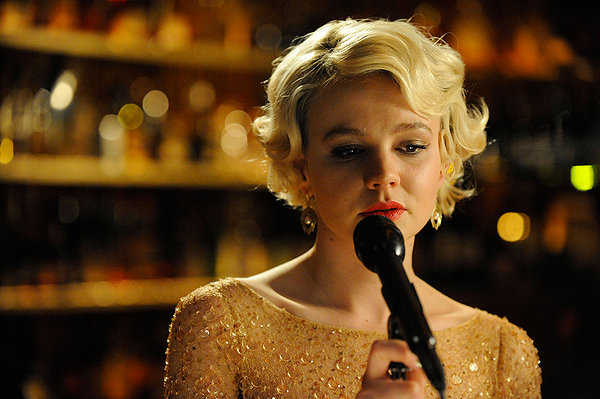 While her presence awakens his shame about what he is, his recent relationship with one of the office workers in his company brings more shame to Brandon. He really likes her, and they have a nice date at the restaurant while getting intimated with each other. However, in the painful scene where he tries to move their growing relationship to the next level, he realizes his body and mind, which have been so accustomed to the impersonal carnal pleasure for a long time, cannot be brought to a real intimate human relationship. He is frustrated, but soon he gets another fix after she is gone.
The director Steve McQueen previously receives a lot of praises for his stunning debut film “Hunger”(2008), which won Golden Camera award at 2008 Cannes. Its sheer dramatic intensity was generated from its unflinching gaze toward the story about the hunger strike of jailed IRA members in 1981, and the same thing can be said about McQueen’s achievement in his second film. While firmly maintaining cold, objective approach to the story, the cinematographer Sean Bobbitt’s camera penetratingly digs into the emotions inside the characters. Even when it only stares into the heads of two characters from their behind for a long time, it is quite apparent to us that how much two characters hurt each other with unkind and angry words in that hurtful scene.
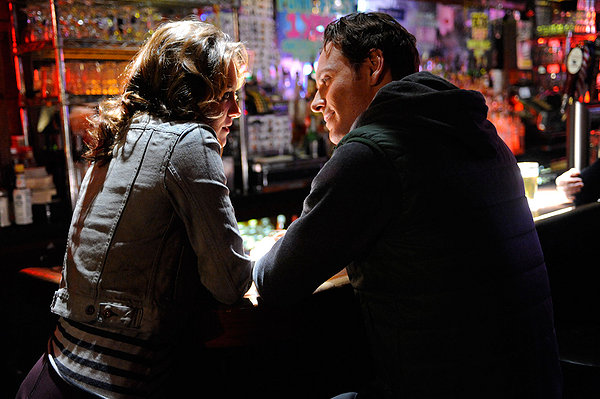 Michael Fassbender, who collaborated with McQueen in “Hunger” and will do again in McQueen’s next film, was unfortunately not nominated for Oscar in this year despite his daring performance in this film and other stellar performances in “Jane Eyre”, “A Dangerous Method”, and “X-Men: First Class”. There is an emotionally devastating moment when his character hits lower bottom than before, and Fassbender bravely goes along with McQueen’s intense direction without any hesitation. There was some talk about his full frontal nudity, but it is nothing compared to what he brings to this scene as a talented actor. The naked bodies surrounding him are no more than the tools for his desire, and there is no pleasure in their mechanical acts, and it is gut-wrenching to see the face of Brandon; you see a man at the bottom of the hell, who feels no joy at all even at the moment of fulfillment.
I somehow managed to watch “Shame” twice, and my initial opinion was not changed much; this is a very powerful drama which is also very tough to watch for some of you. In the end, Brandon cannot deny the barren reality of his life while feeling more shame about himself. He recognizes he has a problem, and that may be the first step for him in the future. But there still is the urge, and he knows it too well.

 “The Raid: Redemption” will be the most single-minded and simple-minded action flick of this year. Until it finally arrives at its ending, the movie relentlessly and ruthlessly pushes its minimalistic premise to the extreme with its sole purpose – killing the bad guys as many as possible and making it exciting as much as possible. I must confess that I was frequently thrilled by the real tough actions of the real human bodies presented in hyper-kinetic style, but I also have to say that I was also increasingly bothered by the viciousness behind this no-hold-barred exercise of violent action.
Its simple premise does not seem to make sense much at the beginning. An Indonesian SWAT team is dispatched to one of the most dangerous places in the city. It is a shabby 30-story building somewhere in the slum area, and we are informed that this is the headquarter of a notorious drug lord named Tama(Ray Sahetapy), who lives on the 15th floor while filling the building with his violent gangs as the landlord. I do not know why he chooses the 15th floor, but I know the movie would be longer if he lived on the 30th floor.
And I do not understand why there are not more policemen to surround or infiltrate into this building. If they know that the building is not an easy place to attack at all, then why are only around 20 members of SWAT team sent to this place with only one riot van? Can’t they accomplish their mission in a far safer way with more supports? The movie later reveals a hidden motive behind this mission, but I am rather amazed that the people incidentally not shown in the movie cannot think of a quieter way of taking care of their private problem with a far less body count.
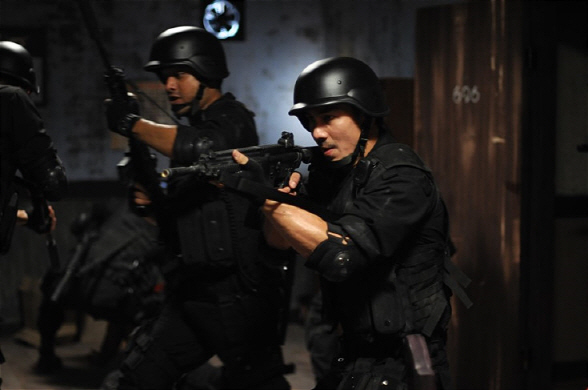 But never mind, folks, because the movie is all about actions to be generated from this barebone premise, not the plausibility of the plot. Under the command of the team leader(Joe Taslim), the SWAT team members quickly go inside the building and move upward carefully while not being noticed. Everything seems to go smoothly at first, but the building has many eyes including the cameras in the hallways and little boys, so they are eventually exposed and all hells break loose upon them instantly. Tama shuts down the entire building along with the communication line(my god, doesn’t any of SWAT team member have a cellular phone just in case?) and then announces the killing time for his guys in the building.
Once the first shooting starts inside the building, the movie hurls the characters into the series of frantic actions with no mercy. Besides the guns, the characters in the movie also use big knives and other objects available around them, and there are lots, lots, and lots of fights and killings happening here and there in the building. Out of curiosity, I checked my wristwatch, and I found at least more than 20 guys were already killed or injured during the first 30 minutes. And that was just a tip of iceberg; there were a lot more violence awaiting for me and the audiences during the rest of the running time, and I already felt numb with this continuing savageness when I watched in disbelief one character who kept fighting with two dudes while a piece of broken fluorescent light bulb was stuck in his neck. Ugh.
 I was impressed by the rapid and ferocious energy pulsating inside the fight sequences in the film. Most of SWAT team members are quickly killed by thugs, and the rest of them, including the team leader and a rookie member named Rama(Iko Uwais), try to escape from the building by any means necessary. As our hero, Rama fights with the bad guys many times for saving himself and others, and, choreographed by the Indonesian martial art experts Iko Uwais and Yayan Ruhian(he played Tama’s fearsome top lieutenant in the movie), these fights sequences feel real, electrifying, and sometimes scary. We can see that the actors on the screen are really fighting while using their body parts in spite of frantic camera movement, and, when the end credit was rolled, I was rather relieved to know that the movie hired 14 doctors and paramedics during the production.
Yes, I worried to some degrees about the actors rapidly going through these dangerous actions, but what about the characters played by them? Well, I have to say there is not much of characterization in the shallow plot which barely supports the actions in the movie. Rama is given some background at the start, but it is not so important to the plot except giving us the reason why we want him to survive through his plight. His wife is pregnant, so we do not want to see a baby without his killing machine dad in the photo, right?
It goes without saying that the other characters besides Rama are more or less than cardboards to be shot or stabbed or slashed or smashed or slaughtered or whatever. There is some melodrama element from the hidden bond between two characters in the plot, but there is no surprise in that. The dialogues are mostly perfunctory amid or between the sound and fury in the soundtrack, and the most memorable line in the movie will be “Ahhhhhhhhhhh!” or “Arrrrrrrrgh!”. I was particularly amused by the cast list, which mostly consists of the nameless characters like “Special Force #16”, “Carrying Bowo Fighter #18”, “Drug’s Lab Guard #21”, “Hole Drop Attacker #8”, and so on. Suppose you appear in the movie – can you boast to your friends about appearing as, uh, “AK-47 shooter #3”?
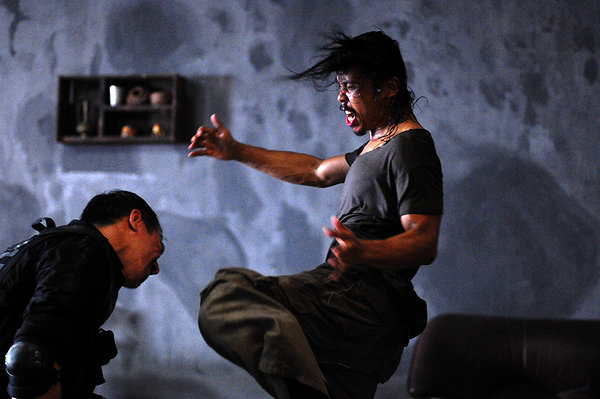 Should I evaluate the movie as a ruthless but exhilarating ballet of martial arts, or a well-made but pointless rampage of brutal action? My feeling remain ambivalent due to its inherent weak points, but the director/writer/editor Gareth Evans made a competent action movie, and Iko Uwais is fully functional and professional as its action hero. His character is thin, but at least we can see how he uses his brain as well as his body in the chaotic circumstances, and I liked his actions more than, say, “Transformers 3”. However, I also remember what Roger Ebert wrote in his review for “Crouching Tiger, Hidden Dragoon”(2000): “The best martial arts movies have nothing to do with fighting and everything to do with personal excellence.”
By the way, the title of the movie was originally “The Raid”, but it was changed to “The Raid: Redemption” when it was released in US, and then it is changed again to “Raid: First Attack” when it is introduced to the South Korean audiences on this weekend. Considering that at least two sequels will be made in future, we can say the movie is now more honest about what it is than before. I sincerely hope they will be able to provide a better story along with good characters for the second attack.