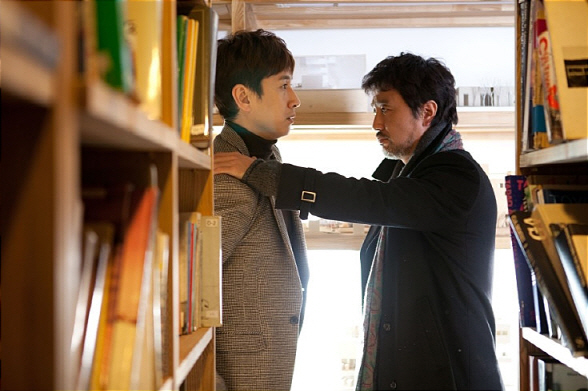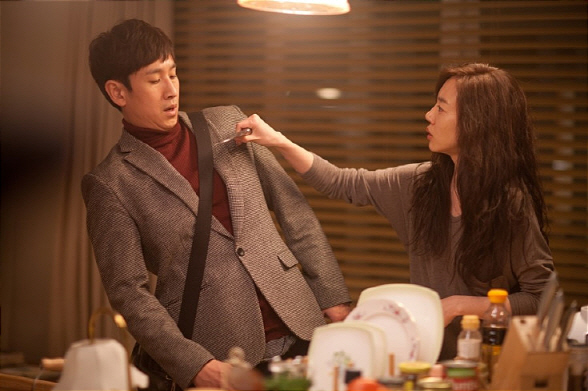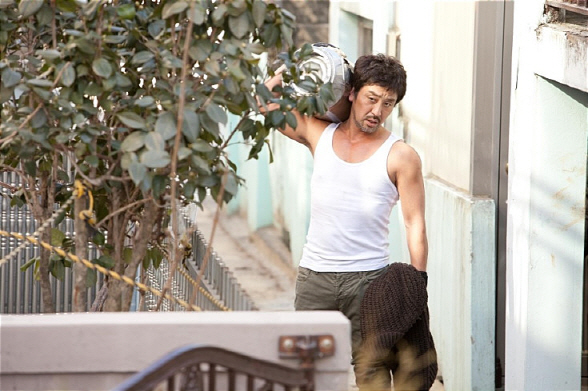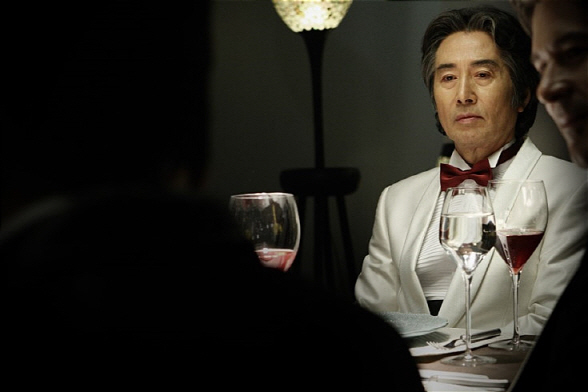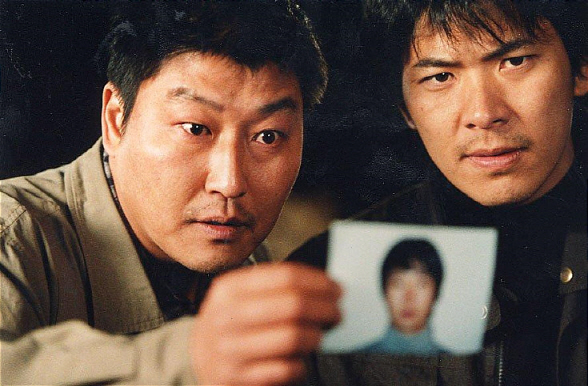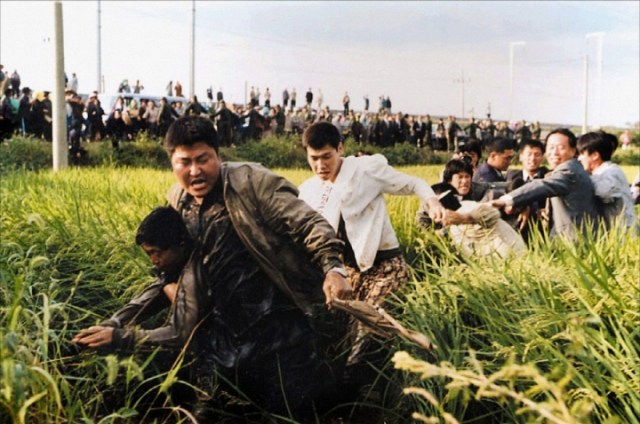
All About My Wife (2012) ☆☆☆(3/4) : He hires Casanova to get rid of his wife

Jeong-in looks like one of the most insufferable heroines I have encountered in recent romantic comedies. A woman of brutal honesty, she always find something to complain and criticize, and then she drives others to the corner with her words as relentless as “The Raid: Redemption”(2011). While watching the first 20 minutes of the movie, I seriously doubted whether I could spend no more than 10 minutes with her in the car.

Fortunately, “All About My Wife”, a new South Korean romantic comedy released in South Korea on this weekend, handles this character well to draw lots of laughs from the audiences and me. It is a little shame that the comic energy it has built during the hilarious first half is considerably decreased when the circumstance surrounding the characters becomes more serious as the genre convention requires, but the film remained buoyed by the fun performances and good comic moments, and the movie is more enjoyable than I thought on the whole.

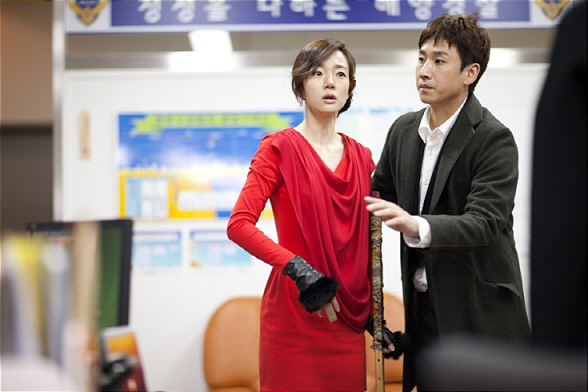
When Jeong-in’s husband Doo-hyeon(Lee Seon-gyoon) came across Jeong-in in the Meet Cute moment accompanied with earthquake in Nagoya, Japan, he had no idea about how annoying she could be at times. Though she is little neurotic, she is pretty and plucky, and there is a funny moment when they speak with each other in Japanese even though they can speak Korean instead. The relationship was quickly formed between them, and, after several months, they married.

Seven years later, Doo-heyon is far from being happy. Though his wife is a wonderful housewife in case of cooking(I really want to be invited to the dinner prepared by her!), the daily life with Jeong-in is hell on earth due to Doo-hyeon right from early morning. She rarely stops her perpetual talking whenever there is a chance to talk about something, and he is sick of tolerating this negative side of hers. The divorce may be a good option, but he doesn’t dare to mention it in front of his domineering wife. He attempts to make her dislike her, but he miserably fails while having a good sex at the kitchen. He tries to get away from his wife by requesting the transfer to the office in the city outside Seoul, but, what do you know, he finds his wife already arriving at his place when he is about to taste the first day of his freedom without his wife.

But, on one day, he discovers a very good chance to attain his goal. He comes to know that his neighbour is an infamous ladykiller who captured and then broke the hearts of the women all over the world. His name is Seong-gi(Ryoo Seung-yong), and he now has little interest in seducing women after so many conquests in his past, but he sees Jeong-in as the challenging task to finish off his legendary record as the South Korean Casanova when Doo-hyeon desperately asks him to seduce his wife and make her leave Doo-hyeon.

What they scheme together is not nice at all, but the movie finds the considerable amount of humor and laugh from their vulgar plan not far from “The Taming of the Shrew”. Like other memorable seducers in literatures, Seong-gi approaches to his target with honesty. While hiding no secret about himself, he deliberately induces her to spend more time with him based on the knowledge given to him by Doo-hyeon, so Jeong-in is drawn to the man with many marvelous talents including massaging the nipples of a milk cow expertly before milking it(he calls it “finger ballet”), so we get a hilarious imitation of that famous scene from “Ghost”(1990) in the pen.

While watching such a fantastic seducer like Seong-gi, you may wonder who Seong-gi really is. The movie treats him like sort of a fantasy character while not delving much into his past(we only know his real occupation and his true love lost long time ago), but he becomes a character with flesh and blood thanks to Ryoo Seung-yong’s lively performance with humorous bravado. Ryoo Seung-yong had a memorable year with his two intense dramatic performances in “The Front Line”(2011) and “War of the Arrows”(2011), and now he shows that he is also a good comic actor. While I do not believe he can be voted as the sexiest men in the world, I can believe his character exudes the irresistible power on the women including Jeong-in. What kind of woman can possibly deny the sweet and caring words from this sophisticated guy, anyway?

Im Soo-jeong’s performance is also convincing in making the seduction in the story work. Her mind still rarely stops finding something to complain, but her heart is mellowed by Seong-gi’s approach, and she gradually reveals a better part of her nature to the people surrounding him. Although I do not believe well that her caustic appearance in the local radio show, orchestrated by Doo-hyeon as the part of the plan, can lead to her national popularity, Im Soo-jeong is charming enough to make it believable, and I came to like her character more than before. As the hapless guy between these two characters, Lee Seon-gyoon is also funny, especially when, to his horror, his wife manages to come to the company party despite his deliberate sabotage and then embarrasses him like a bull in the china shop.

I loved its quick pace, which is always important for comedy, and the abundance of humor during the first act, but the movie ultimately gets the third-act problem which many other rom-coms suffered from before. I must say it was a bit disappointing to see the story becoming mellower when the characters find real feelings inside them. The movie begins to drag around that point, and, while not finding satisfactory finale, the movie lets the characters off the hook too easily in its half-baked ending. But the good performances prevail over the flaws, and I and the other audiences appreciated its diligent delivery of comedy. It is surely generic, but it tries, and it has more successes than failures.

Sidenote: The movie is a remake version of Argentine movie “A Boyfriend for My Wife”(2008).


Posted in Movies | Tagged , , , | 4 Comments

Armadillo (2010) ☆☆☆1/2(3.5/4) : Danish soldiers on duty in Afghanistan

Because we have heard so many news about US Army struggling in Afghanistan, we sometimes overlook the fact that there are also the other soldiers from different nations who are dealing with the same difficulties in that dangerous area as the parts of the International Security Assistance Force(ISAF). “Armadillo” shows us what some of them went through in that difficult war still going on at present. Although it positions its gritty approach ambiguously between feature film and documentary, this is a vivid documentary you cannot forget easily, and, like other recent excellent documentary on the same subject, it takes us close to what they experienced. It is not easy to watch at times, but it is also a gripping and visceral watching experience on the whole.

Like “Restrepo”(2010), another very good war documentary, “Armadillo” focuses on the one period at the forward operating base named Armadillo in Helmand Province in Afghanistan. The base was occupied by British and Danish soldiers, and it was named after the mascot of a Danish company commander who was killed before the base was built completely(this reminded me that the forward operating base shown in “Restrepo” was also named after a soldier killed before it was built).

The documentary follows a group of soldiers from the Guard Hussar(Horse Cavalry) regiment in Denmark, who are about to be dispatched to Armadillo when we first meet them. This is the first mission for them. We see one soldier meeting his family before the departure, who naturally show lots of concern about him. We also see him and his colleagues having some fun time with alcohol and hired strippers. I guess army people always need such things to lose the tension among them.

They board the plane at the airport while their families seeing them off. They arrive at Armadillo. Not long after their arrival, their commander informs them and others at the base of the current situation and their upcoming mission. They go out on patrol, and they try to get the support of the local people around the base, though there is not much success in that.

Their daily routine seems to go on while nothing much happening, but they are well aware of the threat from the Taliban fighters, who may suddenly attack them at any moment. It is not easy for them to distinguish the Taliban fighters from the innocent civilians; at one moment, they are not entirely sure about whether the people moving in front of their eyes are the enemies or not.

I heard that the director Janus Metz Pedersen was very close to many dangers while shooting his documentary with the cinematographer Lars Skree. They prepared for their shooting approach in advance before going to Afghanistan, and they lived in the tent at the base while capturing the daily life of the soldiers, who spend their time in various ways including watching the porno movies downloaded from Internet. As the time goes by, the uneasiness is more apparent, and the documentary provides several beautiful but ominous shots from the harsh environment surrounding the base. Without narration or interview, it feels like a feature film from time to time due to its artificial touches, but that approach can be accepted as a way of providing the hyper-reality to the audiences despite some little awkwardness.

The most memorable parts of the documentary are the engagements between the soldiers and the Taliban fighters. While using the small digital cameras attached to the soldiers’ helmets, Pedersen and Skree also put themselves and their cameras into those perilous situations to capture that imminent feeling of chaotic danger amid real bullets, and the result is quite impressive. Thanks to their Cannon 5D Mark Ⅱ high definition camera, the fatal danger from the faceless enemies is palpable in each frame. War movies may have more spectacular moments, but this is the real situation when the people can get really wounded or killed.

And it is really a serious professional matter to the soldiers. Although they feel good for a while about killing enemies in the combats as the payoff or accomplishment, we also see them discussing about one small trouble caused by what happened during and after one engagement. The documentary does not show the whole situation, but it shows us the horrible moment when the soldiers take care of the consequence of their action during the engagement after the situation is over. It is a little disturbing to see how casually they regard that consequence, but you rarely feel compassion to the enemies on the battlefield when your comrades are shot by them. The trouble depicted in the documentary actually ignited another controversy when it was released in Denmark in 2010, but the soldiers were cleared of any crime after the investigation.

“Armadillo” received the Critic’s Week Grand Prix at 2010 Cannes, and Pedersen and Skree deserved the award for their technical achievement. I have a little reservation about how they present the story in their work, but I admire a lot what they attempted to show to us while more admiring the people doing very difficult and diligent jobs in the unenviable environment.

“Armadillo” have little to say about how these people feel after they safely come back to Denmark, but I remember what I observed from the documentary “Hell and Back Again”(2011). Even after heavily injured in Afghanistan, its marine hero yearns for going back there although he knows it is nearly impossible considering his health state. He probably understands well one of the soldiers in “Armadillo” who is eager to be back in action while going through the recuperation in Copenhagen due to his injury caused by a bomb. He eventually comes back to the base, and, not so surprisingly, the documentary informs us in the epilogue that he is one of the guys who come back to Afghanistan in 2011.

Posted in Movies | Tagged , , , | 1 Comment

The Taste of Money (2012) ☆☆☆(3/4) : 0.01% People Addicted to Money

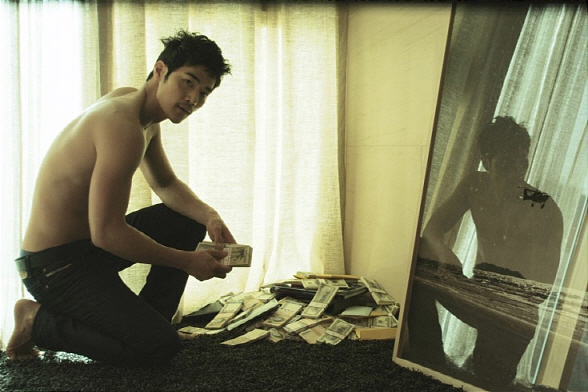
At first, I was about to describe the wealthy family in “The Taste of Money” as the people belonged to 1%, but then I found a more appropriate expression for these superficial human beings in the advertisement of the film. It labeled them as “0.01% people”, and that is not a bloated exaggeration at all because they are really rich and powerful family. As a matter of fact, the opening scene shows the family/company safe filled with the mountains of wons and dollars in cash. I wonder whether they also have another safe for bullions of gold somewhere in the company building.

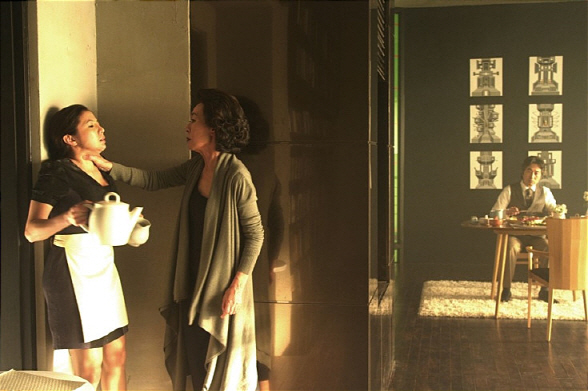
The movie mainly revolves around the daily life of these rich people in their family mansion somewhere near Seoul. Thanks to the first-class production design, their big, sumptuous house is one of the best things in the film and it is a visual pleasure to behold. Along with many expensive paintings hung on the walls, its modern interior design mainly using black marble makes it look like a newly opened gallery ready for its opening day. You may want to look around this expensive place with a glass of wine in your hand even though you cannot afford to live there; I personally liked the big bookshelves above the vast living room and the screening room for watching movies.

Recently, the family company has been in some trouble with the South Korean judicature due to the violation of law associated with their recent inheritance process, but the family members regard it only a minor annoyance to be taken care of easily. After all, they are super-wealthy, so all they have to do is taking out some money from the safe and then handing it to the guys who can take care of their problem, although this problem does not seem to go away easily.

Their life and business go on meanwhile. President Yoon(Baek Yoon-sik), the official CEO of the company and the head of the family, and his son Yoon-chel(On Joo-wan) meet their foreign business partner Robert(the critic Darcy Paquet) for the important deal for expanding/securing their wealth further. All are reported to and approved by Yoon’s aging father-in-law(Kwon Byeong-gil), who still exerts his power as the elder of the family and the company. The movie slyly suggests through his attire and words that this old man had done a lot of dirty works for accumulating the family money during his prime. His occasional use of Japanese cannot possibly escape the notice of the South Korean audiences; I wonder what he did for his business during the Japanese Occupation era.

They and other family members are literally strangers only linked by wealth. The marriage between President Yoon and his wife Geum-ok(Yoon Yeo-jeong) has been estranged a lot during the lifetime of silent mutual blame and resentment. Mired in self-hate, President Yoon is sick of being an employee of his wife’s family company. Geum-ok, the de facto head of the household, is not so pleased about his infidelity, though she has been accustomed to it(it later turns out that she took some measure to prevent the possible complication resulting from that). The daughter, Na-mi(Kim Hyo-jin), does not like her family much, but she knows she cannot live without money. In this cold environment, the children from Yoon-cheol’s failed marriage somehow manage to grow up pretty well as normal kids.

We also see the people working in the house, mainly through the eyes of Yeong-jak(Kim Kang-woo), President Yoon’s right hand. There are three female servants quietly moving around the house while not saying a lot. There is also the old man’s assistant(Hwang Jeong-min), who probably knows a lot about where the bodies were buried. And finally, there is a young filipino maid named Eva(Maui Taylor). Her relationship with President Yoon makes the cracks in the family more opened than before, and that makes his wife far angrier than usual.


The director Im Sang-soo’s previous work “The Housemaid”(2010), which was an interesting remake of the famous South Korean classic film with the same name, was also about the rich people living in another big house decorated with impressive production design. That movie looked at its shallow characters with the cold, objective attitude until it eventually jolted us with the shocking moment followed by the grotesque closing scene, and I finally realized how horrible they really were and how sarcastic the movie was to its characters.

“The Taste of Money” is pretty much like its unofficial sequel which had a warm-up exercise in the previous film(As a matter of fact, you will find the direct and indirect references on “The Housemaid” here and there). The movie laughs at its unlikable characters from the very beginning, and its sarcasm is almost heartless with droll black humor even when some of them try to show their feelings. A good example is the scene where one character attempt to commit suicide; this is supposed to be sad and tragic in his view, but it eventually becomes absurd and pathetic while he finds himself surrounded by other characters. The movie is not kind even to Yeong-jak, one of the few characters we can identify with, so what we get is a very funny fistfight scene between him and the other character. As we learned from Occupy Wall Street movement, no matter how much we are angry and sarcastic about the rich, they are the ones who have the power and the money – and they do think much about us while looking down on us.


The characters are more or less than the ugly caricatures in the expensive dollhouse, but the actors decorate their mannered performances with the sense of humor; they are as interesting as their opulent environment. While Kim Kang-woo gives a straight performance which is gradually smeared by the corrupting influences surrounding his character, Baek Yoon-sik and Yoon Yeo-Jeong rarely lose the sense of decadent fun. Kim Hyo-jin is a jaded daughter more sympathetic than her other family members, and Hwang Jeong-min, who gave a strong lead performance in “Jesus Hospital”(2011), is imposingly ominous in her manly suits. Darcy Parquet has some fun while interacting well with his co-performers(his character’s surname is Altman, by the way), and Maui Taylor is an unfortunate woman who only wants love and happiness in her humble life.

While watching the film on Thursday morning, I got the feeling that it would not be well received by the audiences expecting sensational. Though it features several R-rated scenes, the movie is essentially a cold vicious satire on the superficial people on the top, so you should know what exactly it intends to be for enjoying it. Its ending does not work well, and the story is a little too long in its glacial pace, but I was engaged by its gorgeous looks and wry black humor. It is always good to have some money around you, but these people are not happy despite lots of money near them – and it is hard not to be addicted to it, let alone get out of the addiction.

Posted in Movies | Tagged , , , , | 1 Comment

A goose couple and their progeny (2012/05/15)

                        
They may look cute and peaceful, but the parents are very protective of their children. Don’t underestimate them – one of them tried to bite me when I came closer to them.
Posted in Photos | Tagged , | 2 Comments

Memories of Murder (2003) ☆☆☆1/2(3.5/4) : Savage serial killing and its violent era


When David Fincher’s “Zodiac”(2007) was released at South Korean theaters in August 2007, it was immediately compared to one famous South Korean film by me and other audiences. That movie was also based on the infamous serial killing case still remained unsolved to this day, and it is also about the desperation, frustration, and obsession of the people who wanted to find the man behind these horrific killings.

But comparing Bong Joon-ho’s “Memories of Murder”(2003) to “Zodiac” is akin to comparing tangerine to grape fruit. While both share some common elements as the well-made investigation drama with the vivid recreation of the bygone era, both are a lot different from each other in many aspects. While “Zodiac” firmly looks at the Zodiac case itself, “Memories of Murder” uses the fictional story inspired by its serial killing case as the window to the South Korean society during the 1980s, the era when lots of infuriating injustices and accompanying brutal violence were committed under the military dictatorship.

Even though I was very young at that time, I remember several things about the Hwaseong serial killing case because it was always hot news on TV whenever someone was found murdered. Between 1986 and 1991, 10 women at various ages were savagely raped and murdered in the Hwaseong area in Gyeonggi Province. Around 1.8 million of policemen were put into the investigation, and around 3,000 suspects were questioned, but there wasn’t any breakthrough in the investigation even when the last murder happened. The identity of the killer is still in mystery even after more than 20 years(One guy was actually caught and confessed his crime, but it turned out that he was merely a copycat killer), and it is only assumed that he is currently dead or imprisoned for the other crime.


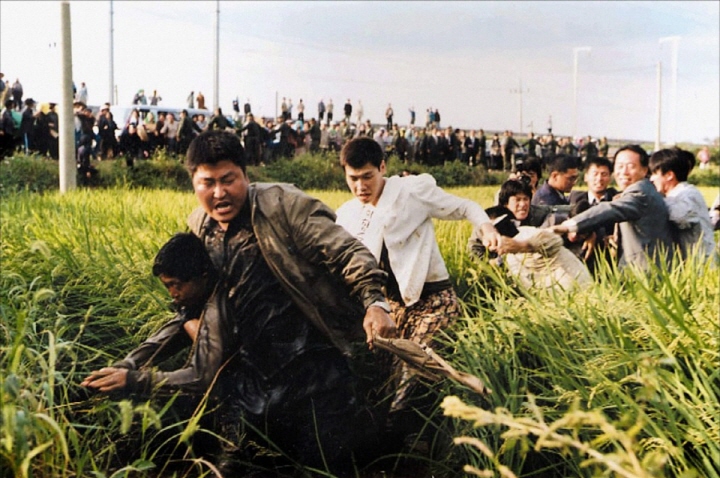
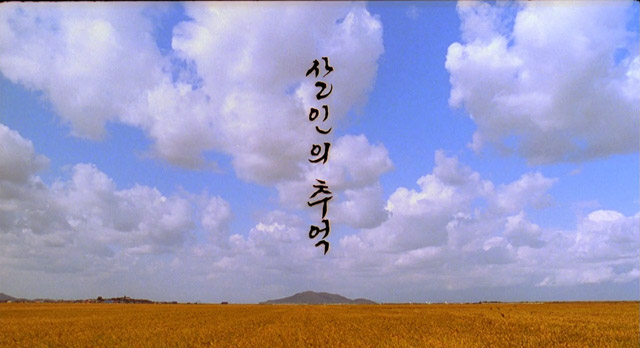
Beginning with one peaceful sunny autumn afternoon hovering over the field filled with the waves of golden rice paddy ready for the harvest, the movie shows us how this serial killing case throws the ominous shadow over one quiet country town. While the children are playing around the field, one tractor comes along the road. They cheerfully follow it, and the guy at the back of tractor responds to  these joyful kids in a funny way. The tractor is stopped at one point, and the farmer shows what he found in the drainage ditch to the guy who comes along with him. There is a dead woman who was bound and then murdered, and it seems her corpse was ditched there several days ago.

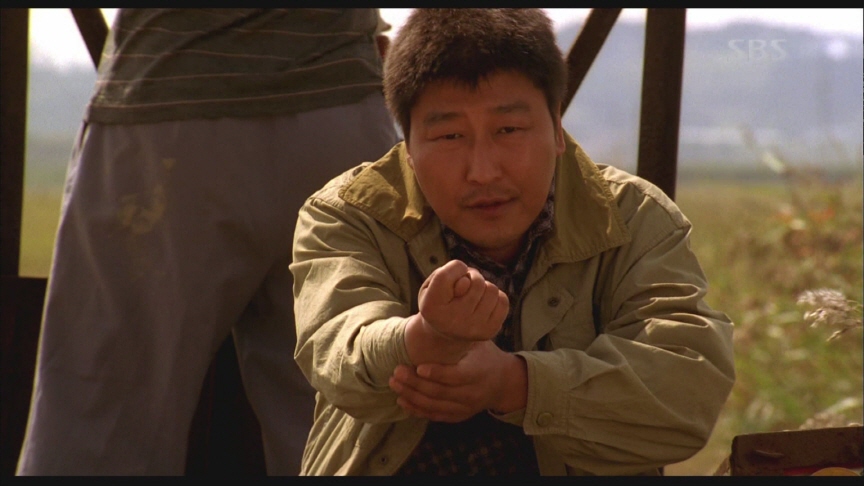
For the local detective Park Doo-Man(Song Kang-ho), it initially looks like an easy murder case. He gathers some possible suspects and questions them as usual, though he does not get any useful clue. Soon, the second victim is found in the same area under the similar circumstance. Now it is no more a simple crime case to him and his colleagues, and everyone in the station becomes frantic. In one memorable long-take sequence shot with the deft steady cam operation and precise comic timing, the camera moves around the crime scene along with Doo-man to show us how inept he and others are for their task. This is absurd and hilarious; there is nobody to prevent the people from ruining the crime scene(we even see the children running freely across the scene), and even the important evidence found on the road is destroyed by negligence no less than 2 minutes after it is found.

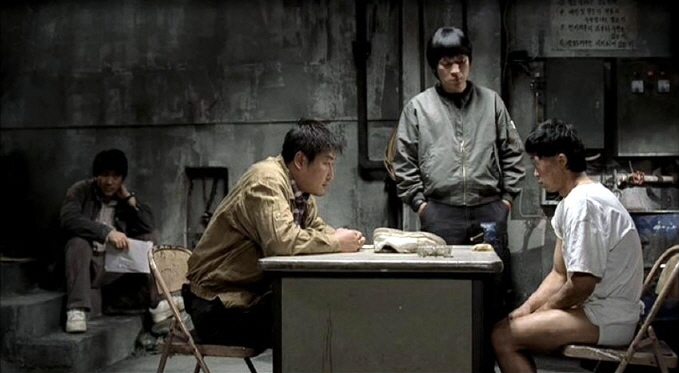
Anyway, Doo-man and others search for possible suspects, and they find one suitable suspect. He is a mentally retarded guy well known in the town, and it does not matter to the detectives much whether he is really guilty or not. Their No.1 priority is calming down the disturbance in the town and closing the case as soon as possible, so they arrest that poor helpless guy and take him to the drab boiler room/interrogation room at the basement of the police station. All they have to do is alternatively intimidating and cajoling him while feeding the details inside his head for extracting a ‘full confession’. The South Korean police were more or less than one of the swords owned by the military dictatorship during that time, and, if they wanted, it was a piece of cake to them to turn into you a criminal or, in a worse case, a North Korean spy with their ‘arrest and squeeze’ method. If there was a will, there were always many, many ways ready for them and they gladly used them.

The movie finds its black humor in their brutality as well as their ineptness in the investigation. In case of Doo-man’s hot-tempered bullying partner Cho Young-Koo(Kim Roi-ha), his military boots come first instead of his fists when he confronts the suspect to be interrogated. Not so long after that, he and Doo-man and the suspect happily watch their favorite TV show “The Chief Detective”(it is a sort of South Korean version of “Law & Order”) together while eating Chinese food delivered to them. Later, they take that poor guy to the mountain forest and threaten to bury him alive – they even force him to dig the ground.

The detective Seo Tae-Yoon(Kim Sang-kyeong), an urban cop dispatched to the town from Seoul, is none too pleased about this method. He believes in the evidences(“The documents never lie”, he says) rather than forced confession, and he tries to solve the case with several puzzle pieces thrown to them. He recognizes the patterns in the murder cases, so he discovers there is another victim. With the small help from one policewoman(Ko Seo-hee), he also gets another crucial clue to the identity of the killer. Somebody requested the specific song to one evening radio music program whenever the murder was about to happen. Is it just the coincidence, or the insidious prelude for murder?

Loosely based on Kim Gwang-rim‘s stage play “Come to See Me”, the director/co-writer Bong Joon-ho made a superb country thriller depending on the mood and atmosphere. With its stunning cinematography, the scenes are filled with the unique feeling of the specific time and place along with the subtle sense of uneasiness. I could appreciate its painstaking details on the screen while being immersed into its world. When I revisited the movie recently, I saw a small can of ointment, and it was the same brand my mother and others used when I got hurt. And I can also assure you that the car named “Maepsy” was actually produced during that time(If my guess is correct, it means “stylishness” in Korean, by the way).


The movie gives us one of the most vivid recreations of South Korean country town during the 1980s. If you want to know what I witnessed in my grandmother’s hometown during my childhood, this film can be a good guide for you. Although my grandmother’s hometown is in a different area(it is the Jeong-eup area in Jeonla province, far south to the Hawseong area), the town is also located near the wide field area covered with rice paddies. Her neighbours had the houses similar to the ones shown in the movie, and I recognized the same of kind of alleys and fences during one chase sequence. The movie was actually shot in various locations here and there in South Korea, but you can believe that everything in the film happens around one town.

With this wonderfully recreated background, the movie plays us like piano in its slow but steady pace. While there is offbeat comedy generated from its colorful characters, there is also dark thriller revolving around the horrific incidents. You are amused for a while, and then you realize that something horrible can happen. The small unidentified figure merely rising from the rice paddy and then slowly disappearing below at the corner of the screen is frightening enough to chill your spine. Even when you are sure something will happen, the movie slaps you with a devastating surprise. The murders keep happening, and the autopsy scenes reveal the more twisted side of the killer, who starts doing vile things to the victims’ bodies as if he were mocking the cops chasing after him.

The center of the story is the dynamic relationship between two contrasting cop who eventually find the common ground in their investigation. Their respective methods clash with each other a lot at first, and they naturally do not like each other much, but they are gradually linked by their mutual obsession toward the case. Both want to catch the guy so desperately, but they find themselves kept inhibited by the limits put upon them as well as their own limits. They have never encountered such a case like that before, and there are not enough evidences to help their investigation. DNA analysis of a semen sample luckily found in one crime scene was surely possible in the 1980s, so it can be a strong evidence to identify the killer, but the equipment is not available inside South Korea – they have to wait until the analysis result is delivered from US.
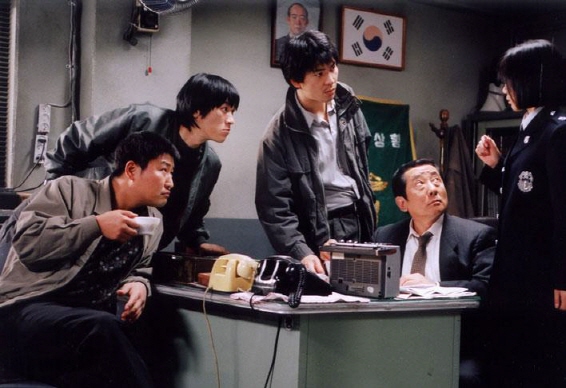
They are also frustrated by the system they belong to, and the movie slyly throws the critical comment on the South Korean society during the 1980s. When they urgently call for the additional forces for preventing another murder about to happen, the headquarter replies that they are not available because they are all busy with suppressing a big student demonstration protesting against the dictatorship in the nearby city. In one sad, emotionally-shattering scene, we see the town going through the routine civil defense drill. The people go inside and close the door and turn off the light. The town becomes completely silent. And another tragedy is going to happen nearby. Behind the restrained handling of this terrible moment, you can feel the quiet, sorrowful anger toward the society which has frequently failed to protect its individuals while only caring about maintaining and protecting itself. This tendency has not yet gone away even in these days; South Korean people were recently shocked by the news about the policemen casually ignoring the desperate call from a woman in danger, who was later found brutally murdered(at least, the murderer was arrested in this case).

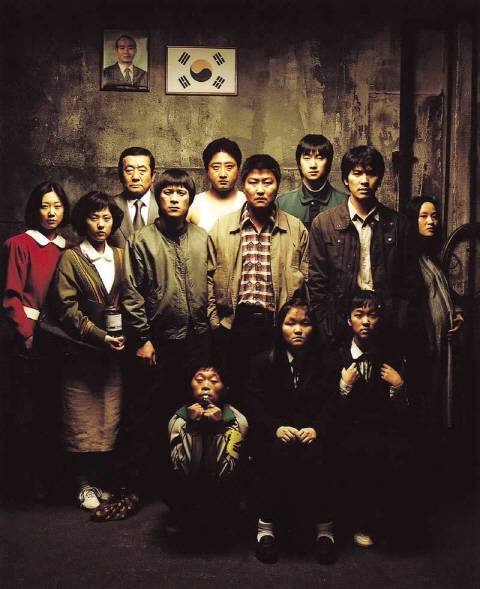
The movie has the terrific ensemble. Even though you are not familiar with most of the performers, their characters are not easy to forget. While we are watching their struggle closely and intimately, the detectives in the film are revealed as the characters free from the expected conventions thanks to the lively performances from the main actors. Song Kang-ho, who had just established as one of the leading South Korean actor around that time through several notable films including Park Chan-wook’s “Sympathy for Mr. Vengeance”(2002), plays Doo-man as a plain country guy tasked with the job way over his head. Doo-man is certainly not the brightest bulb in his station, but there are the times when his eyes and instinct work, especially when he and others have to find a runaway suspect among the men wearing the same work uniform at the quarry. Song Kang-ho always has the likable presence in his films while never reaching for the effect, and that quality works well in the film; you may not like what Doo-man does for extracting confession, but you cannot help but like this carefree guy who begins to realize what kind of labyrinth he is put into.

While Song’s easy-going performance holds the ground in the middle, his co-actor Kim Sang-Kyeong’s performance effectively swings from one side to the other side as the cop who is more reasonable than his peers but becomes slowly unhinged by frustration and helplessness. As Man-soo’s volatile partner, Cho Yong-koo is pretty repulsive at times, but you feel a little sorry for him while appreciating some kind of poetic/karmic justice done to him in the end. Byeon Hee-bong is their ineffectual chief, and Song Jae-ho is a sterner successor who also equally struggles with the case, and Ko Seo-hee is a policewoman whose intelligence deserves better than how she is regarded by male cops.
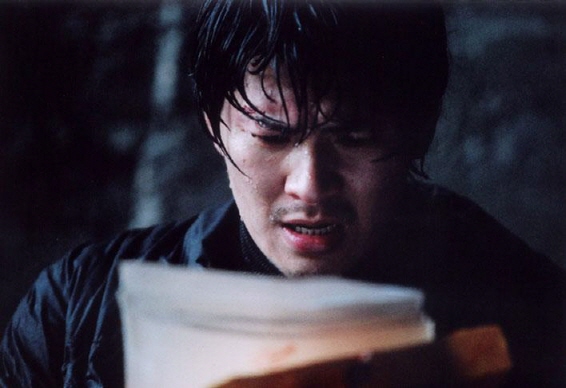

The other supporting performers are believable as the country people living during the 1980s, but the special mention must go the three actors who play the prime suspects. As a mentally retarded character who turns out to be more crucial in the case, Park No-sik steals the show while evoking both pity and impatience from the audiences. Ryoo Tae-ho, who originally played all of three suspects in the stage play, is impressive as the second suspect with the understandable private perversion. The wild card of the film is Park Hae-ill, who gives a good ‘closed book’ performance as a suspicious young man. All the circumstantial evidences are pointing toward him – but is it possible that he is just a defiant young man uncooperative with the intimidating cop in front of him?

Though it was only his second work, “Memories of Murder” quickly put the director Bong Joon-ho in the list of the prominent South Korean filmmakers. The movie shows his talent in full command. The scenes are carefully planned and executed, and the storytelling is masterful in tuning the ratio of humor and suspense to engage us. Bong has made four films so far, and all of them are interesting works. His first movie, “Barking Dogs Never Bite” (2000), is a quirky black comedy which will make some dog owners cringe as much as, say, “A Fish Called Wanda” (1988). “The Host”(2006) is not your typical monster movie but an eclectic cross between B-monster movies and a dysfunctional family drama seasoned with sly political commentary. His latest work, “Mother” (2009) is another country thriller reminding us that there is still a dark corner in police stations where unpleasant things can happen.
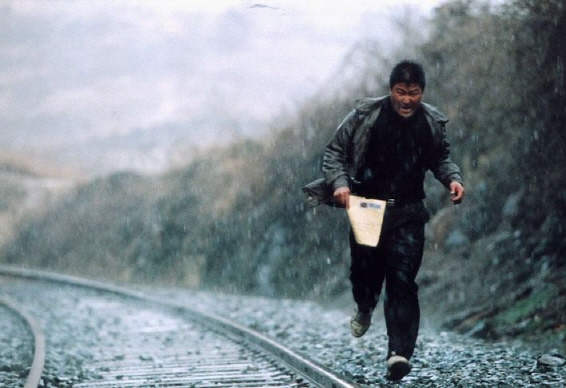
Though it is freer than “Zodiac” because it is a fictional story with a real-life background, “Memories of Murder” finds its own satisfying way of finishing its story while being true to the case left unclosed. There is a “climax” scene, which is neither a resolution nor a conclusion. The characters have to recognize what cannot be changed, and another moment of frustration resonates in the darkness in front of them while one possible lead is walking away from them.

And then the movie moves to a seemingly unnecessary epilogue sequence which turns out to be one of the most haunting closing scenes in my memory. The time has passed, and Hwaseong is more urbanized than before as one of the satellite cities surrounding Seoul, and one character coincidentally comes across one of the places in his memory. It feels sentimental at first, but, in the end, he and we are chillingly reminded that the memories of murder never leave him and others. And neither do the memories of that violent era.

Sidenote

1. 2003 was a great year for South Korean audiences. Along with “Memories of Murder”, we had “Oldboy”, an operatic no-holds-barred revenge film by Park Chan-wook, and “Spring, Summer, Fall, Winter… and Spring”, a beautiful masterwork by Kim Ki-duk, and that odd cult SF film “Save the Green Planet!” by Jang Joon-hwan. All of them are currently available at Amazon.com.

2. Bong Joon-ho is currently working on his new movie “Snowpiecer”, set to be released in the next year. This time, while collaborating with Song Kang-ho again, he is working with the actors more familiar to you, including Chris Evans, Jamie Bell, John Hurt, Octavia Spencer, Tilda Swinton, Alison Pill, and Ewen Bremner.

3. I recently watched “Texas Killing Fields”(2011), another country thriller about serial killing case which has everything it needs to be at least half as good as “Memories of Murder”. It surely has the good mood and the good actors, but it seriously lacks an engaging story, so it ultimately disappointed me a lot.
Posted in Movies | Tagged , , , , | 1 Comment

Dark Shadows (2012) ☆☆1/2(2.5/4) : When a Gothic Vampire meets the 1970s


There is one thing I learned about Tim Burton during my early moviegoing years; the last thing you can expect from him is a bad-looking movie. Whether you like his new film or not, you always get two or three nice things to admire when it is over. Even “Mars Attacks!”(1996), which was a cheerful homage to cheap SF movies, had lots of goodies to be appreciated although that movie itself was disappointing.

His new movie “Dark Shadows” is no exception. I have to say it certainly did not disappoint my eyes. Thanks to the funny juxtaposition of two different styles in its dark fantasy tale, I had some chuckles with the audiences while watching the movie during this Thursday evening. However, while the background and the actors are ready for the story to be told, the story lacks the direction it needs, so the movie just moves around the dark, moody, and big mansion on the top of hill and the town below it while we are not caring about what will happen much.

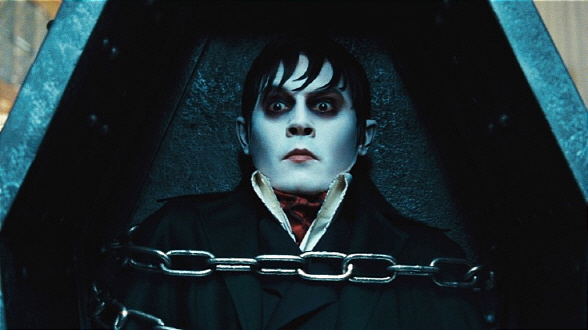
The town’s name is Collinsville, which was named after the British family from Liverpool came to this small beach town in Maine during the late 18th Century. As shown in the prologue sequence, they became wealthy thanks to their fishery business and built that big mansion with pride, but an unfortunate thing happened. Barnabas Collins(Johnny Depp), a young philanderer, broke the heart of a young woman named Angelique Bouchard(Eva Green), and Angelica, who turned out to be a witch, put a curse on Barnabas. She made a young woman Barnabas truly loved jump from the precipitous cliff facing the turbulent sea(just in case you think this is not gothically dramatic enough, I want to tell you that it was also a dark and stormy day). To make the matters worse, she made him into a vampire; she later had him chained in the coffin which was then buried under the ground.

About 200 years have passed, and it is 1972 now. Barnabas’ coffin is accidentally dug up from the ground by the construction site workers on one night, so Barnabas, after filling his hunger(poor guys!), comes back to his town which has been changed a lot since he was buried. Many of the comic moments in the film come from Barnabas’ confounded interactions with America during the 1970s, and this amusing cultural clash provides extra ironic amusement to the audiences living in the 21th century. To be frank with you, I have never been amused like that since I saw George Hamilton’s Count Dracula dancing with his lady at the disco club in “Love at First Bite”(1979).

His mansion and family has managed to endure the passage of time. The house is impressive thanks to those big, decorative sets along with dusts and webs on them, and only few people live there; the family matriarch Elizabeth Collins Stoddard(Michelle Pfeiffer), her rebellious teenager daughter Carolyn(Chloë Grace Moretz), Elizabeth’s useless brother-in-law Roger Collins(Jonny Lee Miller), his gloomy son David(Gulliver McGrath), the alcoholic family psychiatrist Dr. Hoffman(Helena Bonham Carter), an old housekeeper, a dim handyman/chauffeur Willie Loomis(Jackie Earle Haley), and, not so surprisingly, a young governess Victoria Winters(Bella Heathcore), who is, without a doubt, destined to meet the dark, handsome, and mysterious stranger of her life(and she uncannily looks like Barnabas’ lost lover, by the way). This is a nearly perfect ominous gothic environment, so it is no wonder that Barnabas is accepted as the family member not long after he enters the hall.

Barnabas is determined to lift his family to the former glory, but that is not an easy job, because his old enemy Angelique, still young and beautiful, has continued her lifelong work of destroying his family fortune(she has run the competing company). Barnabas still hates her, and so does she, but their stormy relationship is a little more than simple hate. Although Barnabas is a living dead in theory, he is a philanderer at his dead black heart, so he cannot resist the temptation of a seductive witch who still has some feelings toward him. As a result, we get one wild and hilarious lovemaking scene between them. Because this is not a R-rated film, we see them rolling over the floors and walls while not undressing themselves, but it is clear that Depp and Green have a lot more fun than Bella Swan and her vampire groom during their tepid honeymoon night in “The Twilight Saga: Breaking Dawn – Part 1 ”(2011).

With the edgy performance by Evan Green, Johnny Depp’s another offbeat performance in his career holds our attention to some degrees. It has already become cliché to call Depp’s performances ‘odd’ or ‘offbeat’, but he keeps giving good ones while drawing humor and sincerity from his characters. Depp plays Barnabas like a pale gothic horror version of Rip Van Winkle who is also a gentleman with a stiff, old-fashioned view on woman; it goes without saying that he is a blood-sucking monster who can suck every drop of blood from you within 10 seconds, but that is his acquired nature, so he shows some good manners to his would-be victims in one darkly funny moment.

Like Depp, the director Tim Burton, who has collaborated with Depp in eight films including this one, does a nice job of providing the good atmosphere for his movie again. The gray score composed by Burton’s long-time collaborator Danny Elfman frequently steps behind whenever the pop songs from the 1970s appear in the soundtrack for their comic effects. I liked the contrast between the moody atmosphere of the Collins mansion and the lightweight feeling of Collinsville, which reminded me of a lot of the similar contrast shown in Burton’s previous work “Edward Scissorhands”(1990). Although these two elements do not mesh together as well as we expect, we get a few glimpses of that possibility. When Barnabas decides to hold the ball at his mansion later in the story, he is correctly reminded that they do not have a ball any more in the 20th century, so he instead holds a rock party featuring Alice Cooper himself.

Despite several funny or amusing things to behold, the movie falls flat on several levels. It hurls many interesting things to be explored into its plot, but none of them is fully developed, and the talented performers, while looking good as the characters inhabiting Burton’s dark fantasy world, are regrettably wasted as a consequence. We certainly get the climatic confrontation around the end of the story, but it is more like an obligatory closing chapter rather than a satisfying payoff, and the movie leaves us unsatisfied with things remaining unresolved. There are also some surprise revelations in the tradition of soap drama, but they only make the plot messier.

The movie is based on the cult TV series “Dark Shadows”(1966-1971). If you are a big fan of this soap drama, you may enjoy this movie more than me while delighted by a small cameo by Jonathan Frid, who played Barnabas in that series. I can see that Burton had lots of a fun while bringing the characters of the TV series he loves dearly to the big screen, and I know that he wanted to tell another dark fairy tale of two clashing different worlds, but the movie does not know how to suck the rich potentials inside its premise. At least, your eyes will not be disappointed.

Posted in Movies | Tagged , , , , , , | Leave a comment

Melancholia (2011) ☆☆☆1/2(3.5/4) : The end of the world imagined by Lars von Trier

The end of the world is coming. This is inevitable, and nothing can abort it, and everything on the Earth will be destroyed forever along with the Earth itself. This is quite a depressing news, but Lars von Trier’s “Melancholia” surprisingly, and disturbingly, finds its serene beauty in the pit of the ultimate depression for everyone. Come to think of it, what is possibly more depressing than the end of the Earth, except the end of the universe? There will be no lower bottom for us to be plunged into, and the personal depression will look trivial in front of this melancholy of epic scale, so we may find the consolation in that fact even when the end is about to start in front of our eyes.

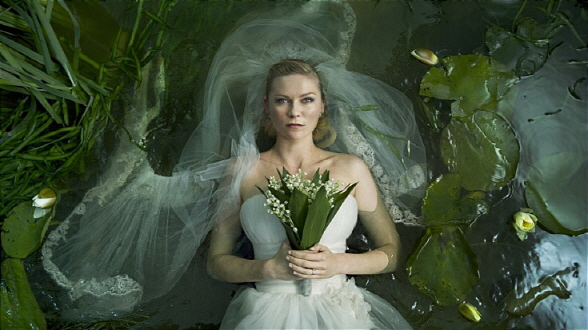
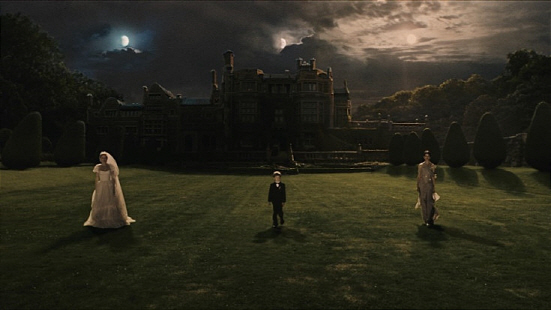
The opening sequence captivates us with the series of visually powerful scenes. The dead birds are fallen from the sky. The aurora is on the sky, and the sparks are generated from the tip of the fingers and other objects. The girl looks quite depressed but she looks gradually peaceful – especially when she, in her wedding dress, immerses herself in the pond like Ophelia in “Hamlet”. In the vast garden of the country manor, she and other two characters are waiting for something, and we know a horrible cosmic event will soon happen because the movie also shows the big planet moves toward the Earth in the space while the prelude for “Tristan and Isolde” by Richard Wagner is dramatically played on the soundtrack(I wonder… will it be as immortal as “Also Sprach Zarathustra” by Richard Strauss in “2001: A Space Odyssey”(1968)?).

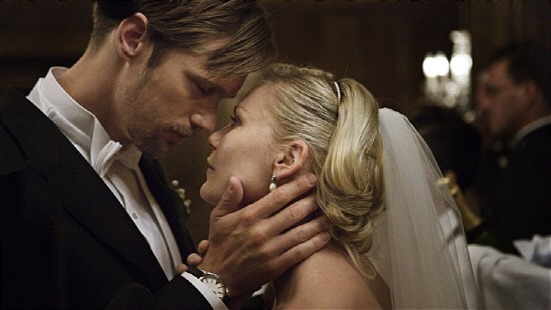
But the first half of the movie does not focus on this depressing disaster of the universal scale. When we meet Justine(Kirsten Dunst), she is on the way to her wedding party with her groom Michael(Alexander Skarsgård). They are very late for their wedding due to the amusing problem with their limousine on the road, but they look happy as the bride and the groom who are about to be a wife and a husband.

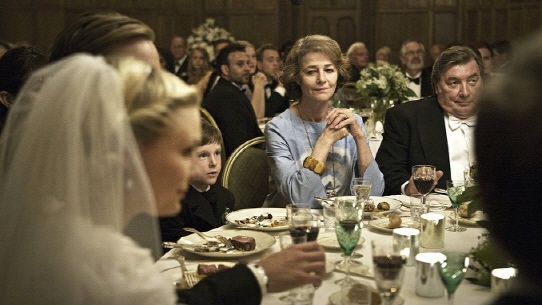
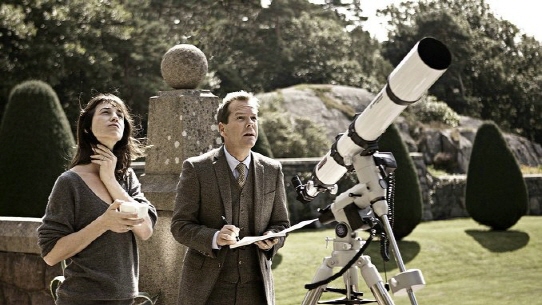
But when they finally arrive at the wedding held at the big country manor owned by Justine’s brother-in-law John(Kiefer Sutherland), we see the ceremony may not be as successful as intended by its fastidious wedding planner. While keeping her smiling face in front of everyone at the party, Justine is almost paralyzed by her chronic depression, and there is no one to help or comfort her. Her father(John Hurt) only cares about having a good time while casually giving formal gestures as the father of the bride. Her mother(snarky Charlotte Rampling), who still hates her divorced husband, gives a bitter speech about marriage which results in lots of awkwardness among the guests. John pressures Justine with how much he spends for this big event. Her older sister Claire(Charlotte Gainsbourg) also asks Justine whether she is really serious about the wedding. Her boss, played by Alexander Skarsgård’s father Stellan Skarsgård, keeps bugging Justine to get some important tagline for his business from her(it is implied that she has worked in an advertisement company). Michael is a caring man, but he does not know what to do his troubled wife.

With the handheld camera by the cinematographer Manuel Alberto Claro, the first half of “Melancholia” looks like a misanthropic version of “Rachel, Getting Married”(2008). While the camera moves around the wedding guests, most of them are pretty unlikable or despicable, but they come to us as the distinctive individuals even though they do not talk about themselves a lot.

When you have the performers like John Hurt, Charlotte Rampling, and Udo Kier(he plays the wedding planner in the film), the personality of their characters comes handy with their presences – you instantly knows who they are when you see them for the first time. The oddity always follows the actor like Kier, and Hurt is a fun to watch as the old man hanging around with his “two Betties”, and Rampling exudes a cold, venomous, and classy cynicism during her own moment. I’d love to see what will happen if she and Isabelle Huppert, another compellingly cold and enigmatic actress who always draws our attention whenever appearing on the screen, are in the same movie.

Kirsten Dunst, who received Cannes Best Actress award in last year, is stunning as the moody center of the film. Many of Las von Trier’ films usually test the talent of their lead actresses under the extreme conditions, and Dunst responds this challenge with one of the best performances in her career. Her character is not easy to like due to her severe emotional problem and the resulting effects on the people surrounding her, but, thanks to Dunst’ precise performance, we come to see that it is really hard for her to move on with others while still being stuck with her depression. She wants a happy wedding like others, but the darkness inside her mind cannot allow her happiness easily, and she becomes more depressed because of that and her dysfunctional family.

As a more stable and dependable sister, Charlotte Gainsbourg, who previously won Cannes Best Actress award for her brave performance in von Triers’ another dark film “Antichrist”(2009), wonderfully creates the interesting dynamic in the second half of the story with her co-actress. The new planet named Melancholia(who gave it such a depressing name, by the way?) is discovered, and now it is heading toward the Earth second by second. Claire, who has been so composed and strong, finds herself getting disturbed by the possibility of the doom, while Claire, who has recently been more depressed than before, finds the calmness in that dire possibility.

With that reversed situation, von Trier provides several beautiful moments with the increasing sense of approaching doom in the mundane atmosphere. It was initially only a small object eclipsing Antares on the sky, but Melancholia looks bigger and bigger in the sky with its pale blue light as the time goes by, and it eventually leads to the strange but ethereal scene which looks as if there were two moons in the sky. While the world outside the manor also seems to be deeply disturbed by Melancholia, von Trier stoically sticks to his characters and their small world surrounding them like Andrey Tarkovskiy did in his last film “The Sacrifice”(1986), so we are spared from usual stock scenes such as the one showing the people becoming panic and running on the streets.

I heard von Trier made his previous film “Antichrist” after going through the darkest moment in his life. That movie was unforgettable because it presented us a bleak, disturbing, and nihilistic view on human nature. “Melancholia” retains his misanthropic view(“Life on Earth is evil”, says Justine at one point), but, compared to “Antichrist”, “Melancholia” is somehow strangely optimistic with its annihilating catharsis. I guess, if you really hit the bottom, there is always the possibility of going up then. The world is surely going to end, but they confront it with their eyes opened – and so will von Trier and his camera if that happens, probably

Posted in Movies | Tagged , , , | 1 Comment

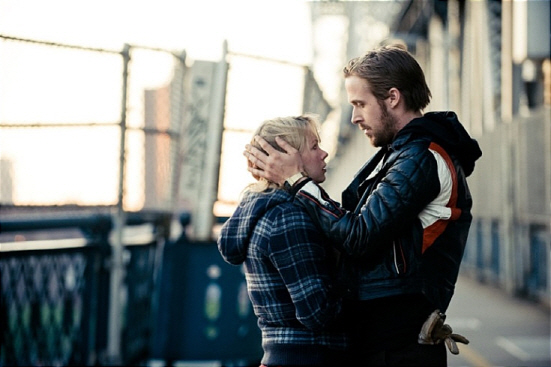
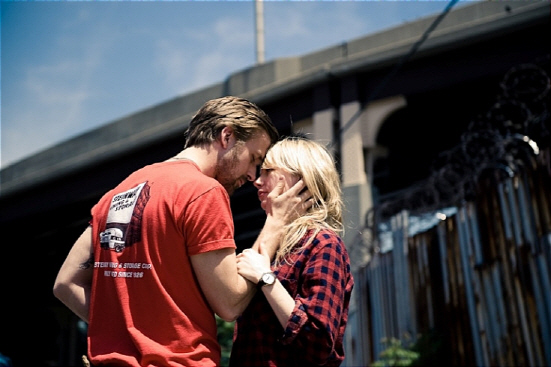
Blue Valentine (2010) ☆☆☆1/2(3.5/4) : It was love, but…

Was really it love? The couple in “Blue Valentine” probably asks that question many times to themselves while struggling to deal with the problem between them. Yes, it was love indeed, but the reality requires a lot more than love when you decide to live with someone you adore. Love may be necessary for the relationship, but it is not sufficient to support and maintain it, and they learn that harsh life lesson in a bitter way.

How they meet each other for the first time is a typical case of Meet Cute. Dean(Ryan Gosling) is a high school dropout who has started to work in a moving company. Though he has few options in his future, but he is optimistic and romantic; he thinks there must be someone he can spend the lifetime with, and he believes that he will meet such a girl someday.

On one day, he really happens to meet his dream girl. When he and other workers move an old man and his belongings to the asylum, he coincidentally comes across Cindy(Michelle Williams), who has just come to the asylum for taking her grandmother to her home for the family dinner. When their eyes are met, it is love at first sight, and Dean actively pursues her, and the mutual feelings between them gradually grow after their second meeting.

We are vaguely aware of what happens next, because the movie goes back and forth between the development of their relationship in the beginning and the deterioration of their marriage several years after. Right from the opening scene, it is apparent that Dean and Cindy have been stuck in the dysfunctional married life for a long time. They have a nice home and there is also a cute little daughter both care about, but they are not happy at all. Dean thinks they can fix the problem by rekindling the passion between them, but Cindy, tired and exasperated by not only the strained relationship but also her hard work, has doubts about that, though she follows her husband’s suggestion.

The director/co-writer Derek Cianfrance dexterously moves his story between two time points along with his two lead performers. Shuffling between the past and the present can easily disrupt the narrative flow, but the transitions in the plot are mostly exact and effective, and the strong contrast between the lively optimism in the past and the drab melancholy in the present is palpable on the screen. We see how they are quickly drawn to each other through in one intimate scene, and then we see how desperately they search for that feeling in the following scene. In the past, they can spontaneously create a warm, romantic moment between them even only with a simple tune played Dean. In the present, they have their private moment in some motel for lovers, but the cold, futuristic interior and lightings of their room clearly suggests that there is not much left between them. Even with music and alcohol, they do not regain the happiness they had once before, and the reality they have to deal with soon returns.

Michelle Williams and Ryan Gosling are captivating both as the couple fallen in love with each other and as the couple estranged from each other. Williams’ emotionally wrenching work here is as impressive as her charming performance in “My Week with Marilyn”(2011), and you can see the broad range of her talent from these two strikingly different performances. Like Williams, Gosling also has given impressive performances recently in several movies, and he ably supports his co-performer as the emotional counterpart in this film.

While Williams presents a bitter, hardened woman who was once a vulnerable girl hopeful about her future, Gosling shows us a man who has not grown up much despite receding hairline and other changes in his appearance. Watching how Cindy and Dean interact differently in the past and the present, we begin to see the cause of their problem. They love and care about each other, but their marital relationship does not work because there is little understanding or communication between them. Dean says he wants to solve their problem, but he does not listen to his frustrated wife. He is a nice dad to their daughter, but he never considers how hard his wife works as a nurse in the hospital to support them, and he should not have been that inconsiderate to her when she is hurt by the loss of their dog. Cindy does not want an unhappy married life she have seen from her parents, but she eventually finds herself stuck in the life probably not far from her parents’, and she does not know what to do about that. Considering her equally unhappy relationship with the previous boyfriend, I wonder whether she is inclined to be associated with the guys unworthy of her.

Persuaded by her husband, Cindy decides to give a chance to their crumbling relationship, but she painfully realizes there is nearly nothing left in her heart to give. When you see Williams’ agonized face in the close-up shot during the one memorable scene in which Dean and Cindy attempt to behave like the passionate lovers they were once, you can see how that makes her feel more wretched even though she does not say much.

After watching the movie early in 2011, I came across a very insightful blog post written by my Internet friend Greg Salvatore on Valentine’s Day. I still remember this paragraph: “People mistake love, or heart palpitations, as the foundation for relationships. It is not. It is what is added to already strong relationships to make them stronger. Relationships founded on love alone will fail, because the love has nothing to support itself with and, when tested, will crumble. That’s not to say that an attraction can’t lead to a strong relationship, but only if the couple focuses on understanding and respecting each other, rather than ogling each other’s beauty, or worshiping certain features of each other’s character, or rating how good the other one is in bed. Those aspects merely add to the whole, and it is the whole person that we must have the relationship with, not the parts.”

The couple in “Blue Valentine” did not know that simple truth about the basis of relationship, and both of them eventually come to bitterly recognize their failure in the end. The movie is surely melancholic and depressing, and it is hard to watch, but, thanks to good storytelling and wonderful performances, this is a vivid story of love found and lost, and you may learn one or two important things about the nature of the human relationship.

And that makes me recall what I observed from one couple. I watched them arguing toughly with each other while she was driving and he was sitting next to her. He was pissed about not being able to take me to some screening, and she kept saying why it was not possible. I was becoming nervous about their interaction while sitting behind their seats, but I can see that they were not mean to each other as the couple who had spent a long time together with love and understanding. They were frank about what they thought or felt to each other, and they understood each other well, so, as soon as their small quarrel was over, the mood in the car became as comfortable as it was before. And they are still one of the loveliest couples I have ever met.

Posted in Movies | Tagged , , , | 2 Comments

Keyhole (2011) ☆☆1/2(2.5/4) : Trapped in a house haunted with memories

   I visited Jeonju International Film Festival(JIFF) again on last Sunday. Though I can watch only one movie at a time, it has always been fun to see the international film festival held in my hometown city, and I have encountered a few good films through this festival during last 4 years. It is sad that I have not been able to attend Ebertfest and enjoy the films with my Far-flung correspondent friends for a while, but JIFF has been a small consolation to me.

In this year, I was particularly glad to know that “Terri”(2011), which was recently received well at 2012 Ebertfest, would be also shown to the audiences at JIFF. However, due to the time constraint in my lab schedule, I could not watch this good film at 2012 JIFF, so I instead watched it and wrote the review three weeks ago. And I decided to watch the other film at the festival which also drew my interest – Guy Maddin’s new movie “Keyhole”(2011).

I woke up early at my campus dormitory at Daejeon on last Sunday morning, and I went to Jeonju by bus in the morning. As soon as the bus arrived at the terminal, I immediately caught a cab, and then quickly arrived at the spot near the theater where the movie was supposed to be shown. Some of the theaters in Jeonju were used to be big, but now most of them are turned into the multiplex theaters. The seats are more comfortable, and they have changed the inner space a lot, but the theater I went into somehow evoked the old memories inside my mind – especially through the smell of the urinary.

Probably because of that, it was interesting to find that “Keyhole” was the film in which the various genre elements were mixed together in one haunted house full of ghosts and the memories associated with them. I have no clear idea about what happened in the past of the characters, but I was fascinated by the fragments of memories hurled to me and the other audiences. It is mostly confounding, but I was constantly interested by its striking style existing somewhere between film noir and silent film.


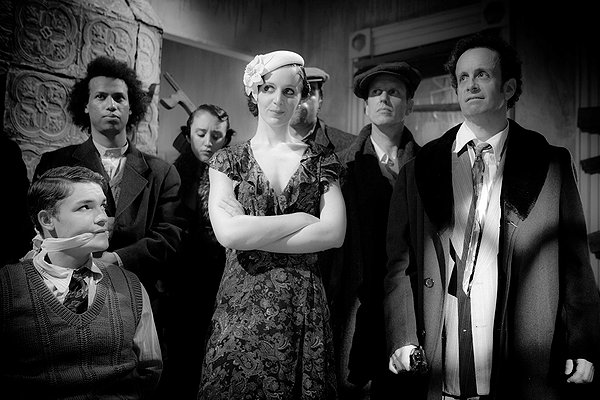
How can I describe its, uh, story? At first, it seems to start with a typical plot from gangster films. Several gangsters and one gun moll are trapped in some house, and it looks like they are surrounded by the police outside. They may get out of the place, but they are supposed to wait for their boss, so they continued to be stuck in the house.
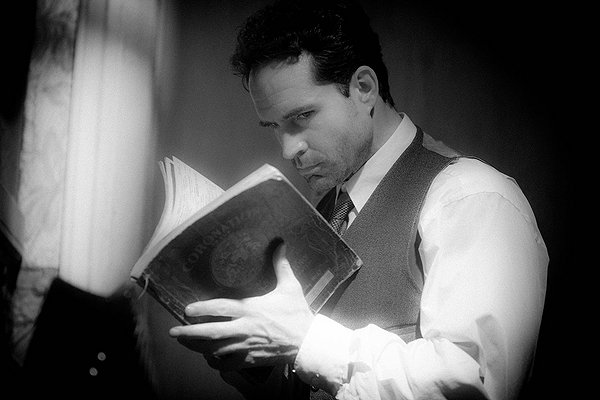
It looks like waiting for their boss instead of Godot, but soon their boss Ulysses Pick(Jason Patrick) appears along with a girl rescued by him. Her name is Denny(Brooke Palsson), and how they came across each other or how they managed to arrive at the house(where are the police, by the way?) is not clear, but Ulysses shows more kindness to Denny than his grudging mistress, who has some funny graffiti drawn on her underwear.

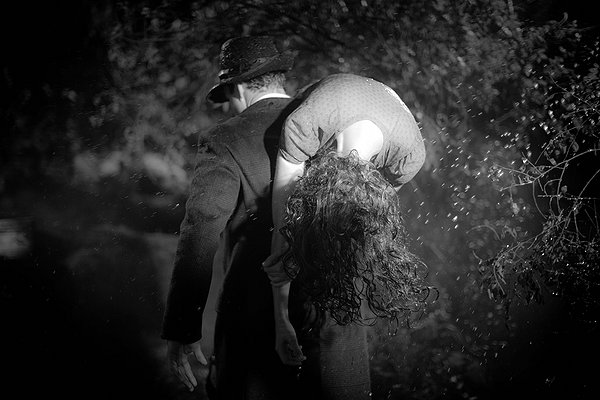
Ulysses does not seem to have any good plan for him and his gangs. The gangs still remain in the house, and he moves around the house with Denny – and a young man who are held as a hostage for some unknown reason. You think this is confusing, and there are more confounding elements to come. While they are in the downstairs, there are Ulysses’ wife Hyacinth(Isabella Rossellini) and her old daddy and her Chinese servant in the upstairs. It seems all of them are in the same house, but the house is some kind of supernatural maze in which Ulysses wander around to reach for his wife.

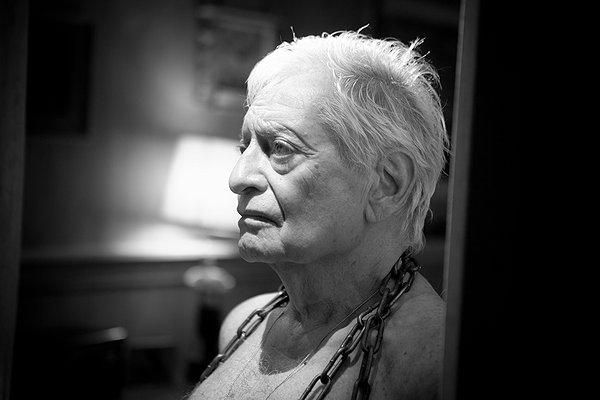
Now you may get some ideas, especially if you are familiar with Homer’s “The Odyssey”. The director Guy Maddin freely moves around this strange place while giving us the series of weird but humorous sights here and there. One of the funny scenes is in the film is the one where Ulysses orders his gangs to gather all of their firearms in one basket and throws them away to the furnace in the basement. I don’t know why he does that, but it leads to the circumstance which is hazardous to them but amusing to us. The funniest element in the film is Hyacinth’s old dad who is naked and bound to her bed with the chain. I was amused by what this old man did with ‘a dusty penis’ – it looks silly rather than dirty.

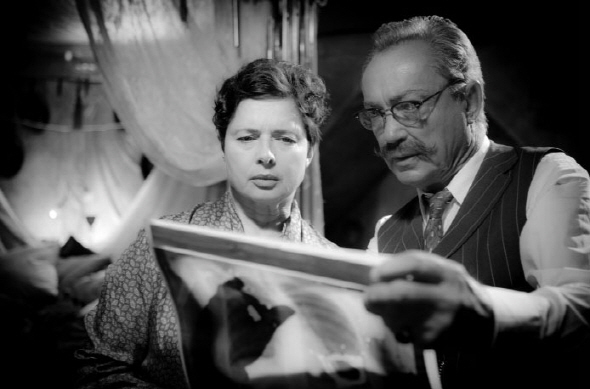
Even though I did not understand much of the movie, I enjoyed how it looks. The movie is shot with the digital camera, and it is quite faithful to the looks and feelings of those old silent black and white film(it is more faithful than “The Artist”(2011)). The cinematographer Benjamin Kasulke gives us the spooky show of lights and shadows on the screen, and the faces of actors are effectively utilized in this dreamy background. As the other audiences said after the movie was over, Jason Patrick looks dashing, and Isabella Rossellini is both compelling and elusive as the wife who does not much care about her husband, and Udo Kier gives a surprisingly normal performance as the doctor visiting them, even with the X-ray photography showing the cancer which looks like a handcuff.

I was not bored by “Keyhole”, but my mind went to Guy Maddin’s other quirky film “My Winnipeg”(2007). When I visited Chicago before attending 2010 Ebertfest, I stayed at one apartment in Des Planes, Illinois, and, on one inane Sunday morning, I watched “My Winnipeg” on DVD while waiting for the commuter train to Chicago. It was a wonderful moment to be treasured, and I revisited it again recently for writing this review, and I was easily drawn to its odd charm again.

“Keyhole” was a less satisfying experience than that. I was kept being interested, and I could see that some of the characters were dead or lost memories, and I could accept the increasingly blurred line between the living and the dead in the house – but I could not easily find the center to hold my attention. None the less, it was not the waste of time, and I happily went back to Daejeon without any complaint.

Posted in Movies | Tagged , , , | 1 Comment

Sunday Afternoon at the Campus (2012/04/29)

                                   
It’s getting hot, and there are flowers everywhere.
Posted in Photos | Tagged | Leave a comment