After My Death (2017) ☆☆☆1/2(3.5/4): Whose fault was it?

aftermydeath02.jpg

I winced at times while watching South Korean film “After My Death”, a stark, melancholic drama about the anger, frustration, and grievance revolving around one devastating incident. Although this is not a pleasant experience at all, the movie is alternatively compelling and harrowing even as calmly observing its main characters’ increasingly complex situation from the distance, and there are small but striking moments of considerable emotional power which you have to see for yourself.

The story begins with the sudden disappearance of a high school girl named Kyeong-min (Jeon So-nee). Considering the circumstance surrounding her disappearance, it is suspected that she committed the suicide, so the police search around a river bridge where she was witnessed for the last time not long before her disappearance, but she has not been found yet, and that only frustrates and exasperates her desperate parents more, who barely hide their fear and despair while phlegmatically assisting the search.

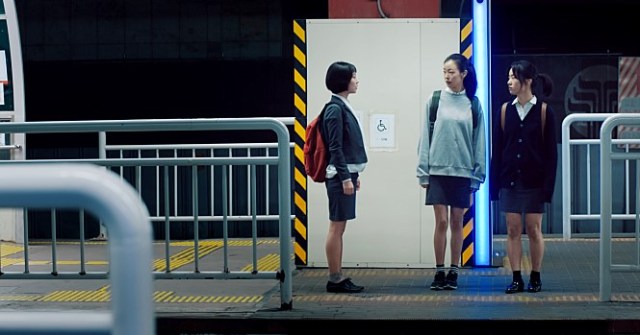
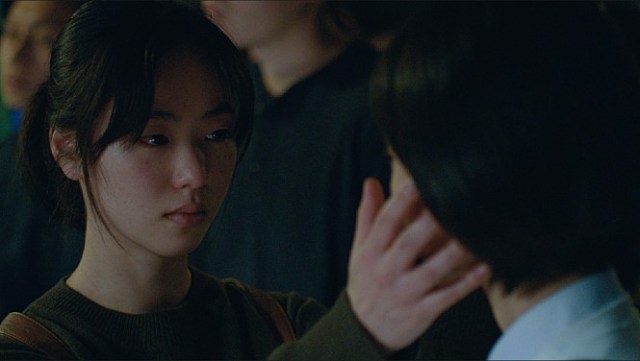
When Kyeong-min was witnessed for the last time, she was with her classmate Yeong-hee (Jeon Yeo-bin), who was once close to Kyeong-min but has recently been distant from her. The cop assigned to the case surely has lots of questions to ask when he meets Yeong-hee at her school, but Yeong-hee does not answer well to his questions, and the cop comes to suspect that she is not telling everything to him.

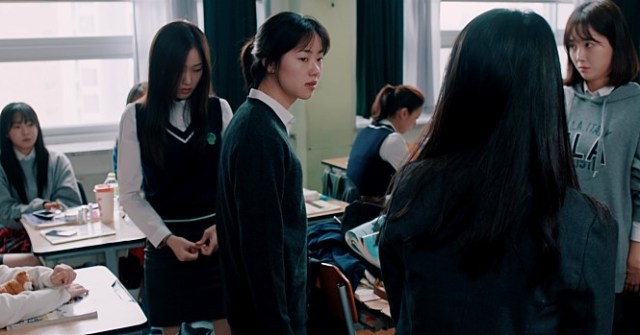
After that narrative point, we see how the situation gradually gets worse for Yeong-hee. As it becomes quite more possible that Kyeong-min did commit suicide, her classmates talk more about what might cause the tragedy, though they never cared about Kyeong-min before. Not so surprisingly, they soon come to gossip about whether Yeong-hee was actually responsible for it, and we get several uncomfortable moments as Yeong-hee is consequently ostracized and harassed by her classmates.
aftermydeath03

Yeong-hee naturally feels quite angry and frustrated, but she does not get much help from others around her. While her friend/classmate Han-sol (Go Won-hee) becomes quite distant to her, her class teacher is mostly occupied with protecting the public reputation of the school just like the principal and many other teachers in the school, and her father is not much of help to her either.

However, Yeong-hee is not an innocent victim at all from the beginning. She could have been more honest when the cop asked her questions, but she unwisely chose not to tell anything about a complicated emotional matter between her and Kyeong-min. As becoming more conflicted, she later decides to do the right thing, but her attempt only makes the situation more complicated, and that subsequently pushes her into more guilt and despair.

The other substantial characters in the story also come to show each own complex human side. Although she initially resented Yeong-hee, Kyeong-min’s mother comes to make amends to Yeong-hee even though she still feels tormented by her daughter’s absence. While letting Yeong-hee bullied by other classmates, Han-sol begins to feel guilty about her friend, and she turns out to have her own emotional matter to deal with.

The movie is the first debut feature work from director/writer/editor Choi Ui-seok, and I admire how he skillfully handles story and characters to generate emotionally impactful moments. I was impressed a lot by one particular sequence which slowly dials up the level of tension and eventually culminates to a shocking moment, and I also appreciated the chilly irony of one small but memorable scene where Yeong-hee silently makes a big personal statement in front of her classmates.
aftermydeath01

Choi also drew several excellent performances from his main cast members. Jeon Yeo-bin, who previously played a small but substantial supporting role in “Merry Christmas Mr. Mo” (2017), is superb in her nuanced performance, and she is especially fantastic when she has to convey to us her character’s thoughts and feelings without saying a word. Her acting here in this film is definitely one of the best South Korean movie performances of this year, and it will be interesting to see what will come next from her after this commendable breakthrough turn.

In case of other notable performers in the film, they are all believable in their respective supporting roles. While Jeon So-nee is haunting in her brief performance, Go Won-hee, who was one of the main characters in “Merry Christmas Mr. Mo”, is effective in her several crucial moments in the film, and Go Won-hee, whom you may remember for her small supporting role in Bong Joon-ho’s “Memories of Murder” (2003), is also very good as Kyeong-min’s mother.

Like a number of recent notable South Korean independent films such as “Last Child” (2017), “After My Death” is quite difficult to watch, but it is a superlative drama packed with considerable emotional power and sensitivity thanks to Choi’s confident direction and his main performers’ solid acting, and it is surely another significant South Korean film of this year. This is a tough stuff indeed, but you will not forget it easily once you watch it.

aftermydeath05

Posted in Movies | Tagged , , | 2 Comments

Crime + Punishment (2018) ☆☆☆1/2(3.5/4): Against a systemic injustice

crimepunishment01

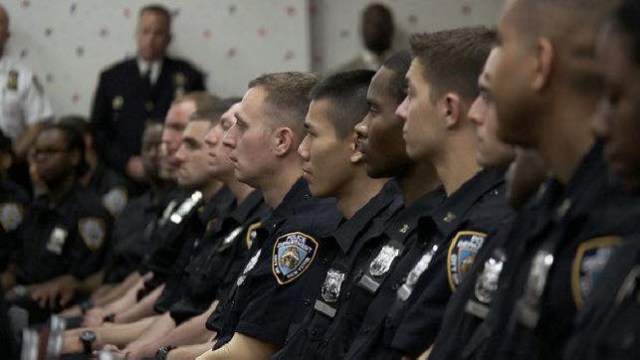
Documentary film “Crime + Punishment”, which is currently available on Hulu, exposes and examines a serious injustice in the system which is supposed to protect and serve people. Mainly via a group of brave people determined to fight against this huge systemic problem, the documentary vividly shows us how it has been prevalent in the system for many years, and its sobering presentation of corruption and inequity is often quite alarming to say the least.

In the beginning, we meet Sandy Gonzales, a Latino police officer who works in the 40th Precinct located in a neighborhood of Bronx in New York City. As presented through a phone conversation between him and director Stephen Maing, Gonzales has been pressured a lot by his direct superior as he refuses to increase his number of arrests in contrast to many other police officers in his police station, and we soon come to see how he is deliberately punished for that. He is ordered to stand alone on a neighborhood street for hours during one cold winter day, and he even receives a reprimand for a trivial matter involved with his winter cap.

We also meet several other NYC police officers who have been pressured and retaliated for the same reason. Edwin Raymond, a young black police officer who works in Transit Police District 32 located in a neighborhood of Brooklyn in New York City, has done everything required for his promotion, but he has always been pushed away just because he simply cannot arrest anybody for filling his quota of arrests as demanded by his direct superior. He protested about that in front of his direct superior, but, as revealed from the excerpt of a secretly recorded conversation, his direct superior did not give a damn about that while indirectly pressuring him further.

crimepunishment02

For Derrick Waller, a seasoned police officer who works in the 77th Precinct located in a neighborhood of the Crown Heights in New York City, he has been quite familiar with illegal quota practices for a long time. Several years ago, he sent a piece of police department document to a local newspaper for exposing it, and it surely drew lots of attention at that time, but neither the New York City Police Department (NYPD) nor the city administration did anything about that. Sure, quota practices are officially banned, but, as pointed out at one point in the documentary, criminal summons arrest-related fees have contributed quite a lot to the annual budget of the city administration, and that is the main reason why the high-ranking officials of NYPD and the city administration have turned a blind eye to illegal quota practices.

The documentary also points out how this serious illegal activity committed by NYPD has damaged many minority communities in New York City. For examples, Blacks and Latinos receive summonses five times more often than Whites, and the documentary later shows us the infuriating situation of a Latino lad named Pedro Hernandez. who has been incarcerated for almost a year after unjustly arrested for a shooting incident he was not responsible for. There is not any incriminating evidence against him, but the prosecution keeps him being held in the Rikers Island Prison just for plea bargain, and Hernandez’s mother is certainly angered by this injustice.

Fortunately, she has someone to help her, and he is Manuel ‘Manny’ Gomez, an ex-cop who has worked as a private investigator since his early retirement from NYPD. Knowing well that Hernandez is an unfortunate victim of illegal quota practice, Gomez is determined to prove Hernandez’s innocence, and we see him going here and there around in Hernandez’s neighborhood for getting the necessary testimonies from several people including a boy who was shot at that time. Although this process surely requires lots of time and effort from him, Gomez is persistent in his pursuit of justice, and we come to root for him as he gets his job done step by step.

crimepunishment03

Meanwhile, Gonzales, Raymond, Waller, and nine other police officers join together for filing a civil lawsuit against the city administration, and that instantly draws the attention from the media. While well aware of the risk in exposing themselves in public, they decide to do a TV interview without hiding their names and faces, and we get a brief uplifting moment showing them confidently walking together outside.

Of course, the situation soon becomes a lot more difficult for them as expected. As everyone in NYPD knows who they are, they are more bullied and ostracized than before, and one of them actually considers walking away from the group due to accumulating pressure. In addition, high-ranking officials including NYPD Commissioner William Bratton continue to deny anything about illegal quota practices, and there later comes a daunting moment when their civil lawsuit comes to be stuck in legal limbo.

Overall, “Crime + Punishment” is an important documentary film which deserves to be mentioned along with Ava DuVernay’s Oscar-nominated documentary film “13th”. Like that documentary, “Crime + Punishment” makes a sharp point on a complex social problem in the American society, and it is definitely one of the best documentaries of this year in my inconsequential opinion. Regardless of your opinion on its subject, it is worthwhile to watch for good reasons, and you will not forget those brave people in the documentary after it is over.

crimepunishment04

Posted in Movies | Tagged , , , | 1 Comment

Foxtrot (2017) ☆☆☆1/2(3.5/4): An absurd war drama dancing around pathos and humor

foxtrot01.jpgRight after the end of the first act of Israeli film “Foxtrot”, I completely caught off guard by a sudden shift in its mood and narrative. I will not go into details here for avoiding spoilers, but I can tell you instead that I instantly sensed that I was experiencing an exemplar case of masterful storytelling. Being so involved in the calm, gripping human drama of its first act, I was willing to observe what it was going to do next, and the movie did not disappoint me at all as giving me several emotionally resonating moments which lingered on my mind for a while after it was over.


After the brief opening scene which will turn out to be more meaningful later in the story, the movie puts us right into the devastating circumstance of Michael Feldmann (Lior Ashkenazi) and his wife Dafna (Sarah Adler), who are notified on one day that their son Jonathan (Yonathan Shiray), who has done his military service in the Israeli Defense Forces (IDF), was killed during his duty. While Dafna is totally devastated by this sad news, Michael struggles to hold himself despite his growing anger and grief, and we subsequently get a calm but gut-wrenching scene where he attempts to control himself in a rather drastic way.

The movie calmly and closely observes the progress of this grievous situation step by step. Michael’s older brother comes to the apartment for consoling Michael and Dafna, and he busily prepares for the memorial service instead of Michael. Dafna’s sister also comes for supporting her sister and brother-in-law, but she is not much of help to Dafna as Dafna is asleep after being heavily sedated. Michael later goes to a facility for the aged where his senile mother has resided, and he tells her that her grandson died, but she does not seem to grasp the gravity of the circumstance. In case of Michael’s daughter Alma (Shira Haas), she does not reply to her father’s several urgent phone calls, and he accordingly becomes more frustrated and exasperated.

foxtrot02

Some time later, Michael is visited by a military chaplain, and he comes to sense something wrong as the military chaplain explains to him about his son’s funeral procedure. While neither he nor his wife is particularly religious, Michael demands that he should see his son’s body, but the military chaplain only evades his demand while not explaining why Michael is not allowed to see his son’s body.

As Michael wonders whether IDF is hiding something about his son’s death, an unexpected news comes, and Michael and Dafna’s circumstance is completely changed as a consequence. Even at that narrative point, the movie steadily maintains its detached tone as before, and you have to see for yourself how its main performers ably handle the emotional turmoil swirling around their characters while never making any misstep.

And then the movie suddenly moves onto its second act, which is set in a military checkpoint located somewhere in the northern border area of Israel. Watching a few soldier characters being stuck in the remote barren background, I could not help but think of Samuel Beckett’s famous play “Waiting for Godot”, and then I was quite amused by a cheerfully absurd moment from one of these soldier characters.

After that impressive moment, the movie throws several other absurd moments into the screen. There is a recurring moment involved with a problematic trailer where these soldier characters have stayed, and I must confess that I cringed whenever the movie showed their toilet section which is in the serious need of cleaning. While these military guys are usually bored as nothing much happens around their checkpoint, the situation becomes a bit more eventful whenever someone is about to pass through their checkpoint, and there are a number of small nice deadpan moments which are as darkly humorous as the works of Aki Kaurismäki.

foxtrot05

And then there comes a striking moment of unexpected tragedy, which is subsequently followed by the sad, bitter irony of the third act of the movie. There is a conversation scene as hurtful as Ingmar Bergman’s chamber drama films, and then we later get a surprisingly tender, intimate scene showing us the importance of understanding and empathy.

The movie is written and directed by Samuel Maoz, who drew my attention for the first time through his first feature film “Lebanon” (2009). That movie, which won the Golden Lion award at the 2009 Venice Film Festival, was a small but intense war drama firmly focusing on a group of Israeli soldiers inside their military tank, and I was particularly impressed by its taut, economic storytelling and increasingly claustrophobic atmosphere reminiscent of “Das Boot” (1981).

Under Maoz’s skillful direction, the movie deftly dances around pathos and humor, and his main cast members are impeccable with subtle touches to notice. While Lior Ashkenazi, who was very funny in Oscar-nominated Israeli film “Footnote” (2011), brings quiet intensity to his character, Sarah Adler, who was fabulous in “The Cakemaker” (2017), is equally good as his character’s grieving wife, and several substantial supporting performers including Yonathan Shiray are also solid in their respective roles.

In conclusion, “Foxtrot”, which won the Grand Jury Prize award at the 2017 Venice International Film Festival and was selected as the Israeli entry for Best Foreign Language Film Oscar in last year (it was included in the short list for the category but did not get nominated in the end), distinguishes itself via dexterous storytelling and superlative performances as well as indirect social/political messages inside its captivating war drama. The movie confirms me again that Maoz is another interesting filmmaker to watch, and I will certainly have some expectation on what will come next from him.

foxtrot03

Posted in Movies | Tagged , , , | 1 Comment

Happy Death Day (2017) ☆☆1/2(2.5/4): A slasher movie in repeat mode

happydeathday01

To be frank with you, I am not a big fan of slasher horror films, but I sort of enjoyed “Happy Death Day”, another small, modest horror flick from Blumhouse Productions. Although it is not as entertaining as “Get Out” (2017) or “Upgrade” (2018), the movie is at least better than many of recent slasher horror films such as the pointless remake of “Friday the 13th” (1980), and it provides us a fair share of amusing moments as cheerfully spinning its blatantly borrowed story premise along with familiar genre conventions.

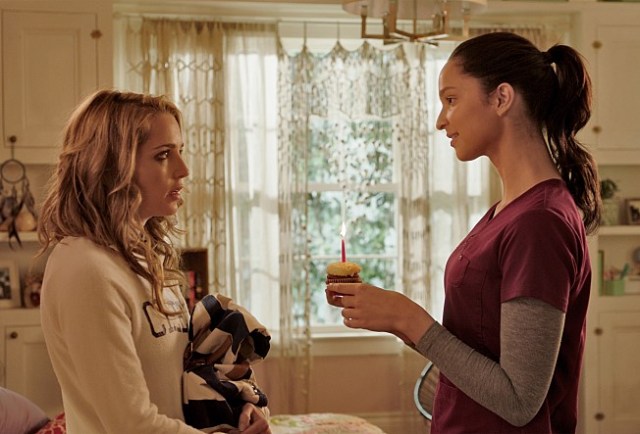
As reflected by its very title, the story of the movie is about the birthday of a college girl named Teresa “Tree” Gelbman (Jessica Rothe), and the opening scene shows how she begins that day. When she wakes up in the morning, she finds herself in the dormitory room of a male student named Carter (Israel Broussard), and she cannot remember much about what happened between her and Carter during last night. All she remembers is that they were pretty drunk during that time, and she hurriedly gets out of his dormitory room for returning to her sorority house. When she comes into her room, her roommate Danielle (Rachel Matthews) congratulates her on her birthday along with a cupcake, but Tree simply ignores Danielle’s cupcake as she does not care much about her birthday, and she also keeps ignoring the phone call from her father.

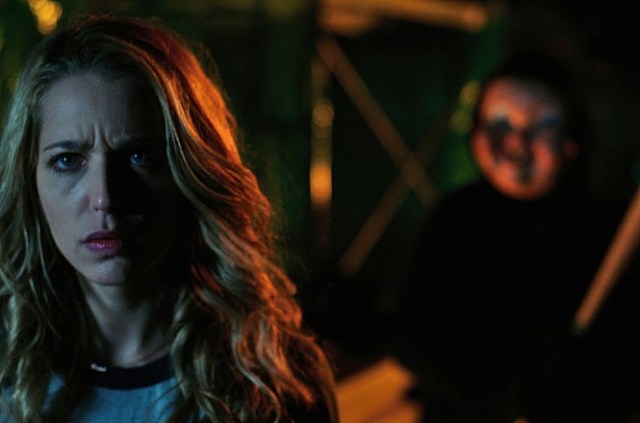
After her afternoon time is spent on a routine meeting with her sorority members and a very brief private meeting with a married professor with whom she has had an affair, the evening soon begins, and she is going to a party to be held in a nearby fraternity house, but then we notice something quite disturbing as watching her walking alone to the fraternity house. She happens to be stalked by a mysterious figure wearing a mask based on the college sports team mascot, and, alas, it is already too late for her when she finally comes to face that masked figure, who turns out to have a murderous intent as many of you already guessed.

happydeathday02

However, a strange thing happens to Tree right after she is killed by that masked figure. She finds herself waking up in Carter’s room again in the same morning, and it does not take much time for her to realize that she is being stuck in a sort of time loop. Whenever she gets herself killed, she is instantly transferred back to where she was at the beginning of her birthday, and this cycle is repeated again and again no matter how much she tries to get away from her eventual fate awaiting her.

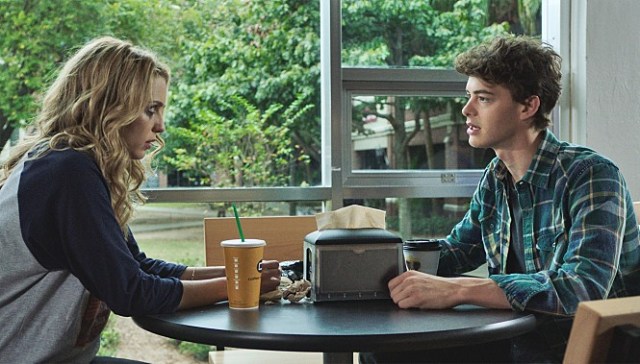
It goes without saying that this story premise is a slasher horror variation of “Groundhog Day” (1993), a hilarious classic comedy film about a man who suddenly finds himself going through the same day again and again. Like that film, “Happy Death Day” has some fun with its heroine struggling within her outrageous circumstance, and the most fun part of the movie comes from when she attempts to handle her situation with Carter, who somehow comes to believe her when she confides to him what is happening to her. He suggests that she should check potential suspects around her, and we accordingly get a funny montage scene as she checks a bunch of suspects one by one through her repeated death.

While the movie is a little too contrived during its expected climactic part, the screenplay by Scott Lobdell keeps things rolling along its plot, and director Christopher B. Landon steadily maintains the overall lightweight mood of the movie while giving us a number of nice variations of genre conventions. At one point, we see our heroine running up a stair like many female characters of slasher horror films, but she does that for an understandable purpose, and we come to cheer for her as watching her making a bold move in the end.

happydeathday03

And the movie works to some degrees in terms of story and character. As getting killed again and again, Tree comes to find her better self, and she becomes nicer to people around her including Carter and her father. During one intimate moment later in the film, she reveals her old emotional wound to Carter, and she comes to care about him more than before. Although we are not so surprised when she eventually comes to meet her father, their meeting turns out to be sincerer than expected, and we can clearly sense how much she is changed through her ongoing predicament. As the center of the movie, Jessica Rothe ably carries the movie, and the supporting performers surrounding Rothe fill their respective functional roles as required while having each own little fun through their repeated moments.

On the whole, the movie is a well-made product which is also modestly enjoyable, but it has several notable weak points. For example, you will probably be able to guess the killer’s identity from the beginning if you are well aware of my late mentor/friend Roger Ebert’s Law of Economy of Characters, and you may also need considerable suspension of disbelief for accepting the killer’s ability to appear here and there for eventually killing our heroine.

Although I did not feel like wasting time during my viewing, “Happy Death Day” is neither scary nor funny enough for recommendation, and I also think it could be more entertaining and refreshing if it pushed its story premise further than predicted. I give the movie 2.5 stars for these reasons, but I guess you will probably enjoy it more than me if you happen to come across it while having some free time to kill.

happydeathday04

Posted in Movies | Tagged , , , , | Leave a comment

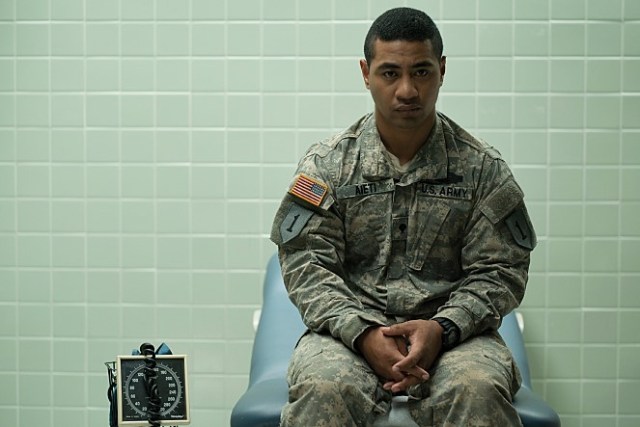
Thank You for Your Service (2017) ☆☆☆(3/4): Coming home from a war

thankyouforyourservice05.jpg

“Thank You for Your Service” is another war drama film associated with the second Iraq War, but it has an engaging story to interest us. Mainly focusing on the aftermath of what its main characters went through, the movie is often harrowing and gut-wrenching in its intimate depiction of their hard struggles with their psychological damages, and we come to be reminded of that unavoidable human cost in wars as observing their rocky emotional journey.

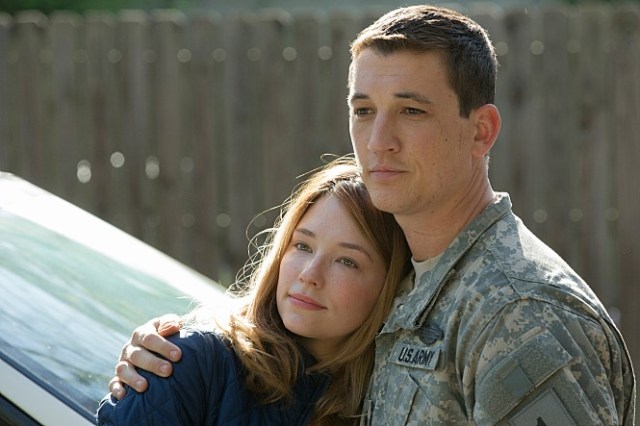
After the tense, gritty opening sequence which shows a group of American soldiers being suddenly ambushed by enemies during their mission in Iraq, 2007, the movie moves forward to when three of these soldiers are coming back to their country some time later. They are Adam Shumann (Miles Teller), Billy Waller (Joe Cole), and Tausolo Aieti (Beulah Koale), and we get to know a bit about them as watching them casually banter with each other. While Shumann has a wife and two kids waiting for him, Aieti is also a married man, and Waller is eagerly looking forward to seeing his fiancée again and then marrying her.

When they and other soldiers arrive in an airport, they are welcomed by many people including Shumann’s wife Saskia (Haley Bennett) and Aieti’s wife Alea (Keisha Castle-Hughes), but Waller’s fiancée does not come, and Waller becomes more flabbergasted when he later finds that his fiancée left his residence along with her daughter. Although he gets some consolation from Shumann and Aieti, Waller still feels glum and depressed as he has lost something he has lived for, and that leads to an irreversible tragedy when he decides to confront his fiancée.

thankyouforyourservice04

While shocked and saddened by what happened to their dear friend, Shumann and Aieti soon find themselves struggling with each own emotional matter resulted from their traumatic combat experiences. Shumann has felt guilty about how he inadvertently hurt his seriously injured comrade during that battle shown at the beginning of the movie, and he also is quite morose about the death of his direct commander, which happened not long after that traumatic battle. With his understanding wife and their loving kids, he tries to move onto the next stage of his life, but he is often moody and distant as aimlessly going through his uneventful days, and his wife certainly becomes more concerned about him.

In case of Aieti, he wants to go back to Iraq, but he is rejected due to his seriously damaged physical condition, and his wife wants him to stay with her as she gets pregnant. He mostly looks fine on the surface, but he occasionally suffers from memory loss caused by a brain injury he sustained during a terrible incident which has haunted his mind, and it is pretty clear to us that he is suffering from a severe case of post-traumatic stress disorder (PTSD).

As things become more difficult for both of them, Shumann and Aieti decide to try to get some help from Department of Veterans Affairs, but, not so surprisingly, they become frustrated to see that they will have to wait for a long time just like countless war veterans seeking help for the same reason. While Shumann manages to have a meeting with a counselor, Aieti faces an absurd bureaucratic problem, and he gets further frustrated while also being slowly being drawn to his old criminal life before his military years. For dealing with his worsening PTSD, he comes to look for drug outside, and that is how he later gets involved with a local criminal who understands him as a war veteran.

thankyouforyourservice03

While its third act becomes a little too dramatic as Aieti and Shumann are pushed further into each own desperation, the adapted screenplay by director Jason Hall, which is based on the non-fiction novel of the same name by David Finkel, steadily maintains its calm attitude as generating several poignant moments such as when Shumman eventually visits Emory (Scott Haze), that seriously injured comrade who fortunately survived in the end. Shumman is understandably awkward at first, but then he feels a bit better as spending some nice time with Emory, and he later comes to meet the widow of his direct commander for letting out his regret and guilt over that unfortunate death of his direct commander.

Under Hall’s unadorned direction, the main performers in the film give earnest performances while never overstating their characters’ emotional states. Miles Teller, who has been one of the most promising talented performers since his breakout turns in “The Spectacular Now” (2013) and “Whiplash” (2014), subtly conveys to us his character’s inner turmoil via his nuanced performance, and he is especially wonderful when his character tries to look fine in front of his wife despite what is being churned inside his increasingly unstable mind. Holding his own place well beside Teller, New Zealand actor Beulah Koale gives an equally solid performance to remember, and he and Teller are supported well by other performers in the film including Joe Cole, Haley Bennett, Haley Bennett, Keisha Castle-Hughes, Scott Haze, and Amy Schummer, who is surprisingly effective in her small supporting role while looking as serious as required.

Although I do not think it reaches up to the level of “The Best Years of Our Lives” (1946) and “Coming Home” (1978), “Thank You for Your Service” is still a commendable movie about war veterans, and I admire the considerable honesty and sincerity in its storytelling and performance. It is a shame that the movie did not draw much attention when it came out in last year, and I hope it will get more appreciation in the future.

thankyouforyourservice01

Posted in Movies | Tagged , , | Leave a comment

City of Joy (2016) ☆☆☆(3/4): From devastation to resilience

cityofjoy01

I like documentary films which enlighten me on unfamiliar subjects, and Netflix documentary film “City of Joy” is one of such cases. While looking into a small center for the female survivors of rape and other gender violences resulted from the ongoing civil war in Democratic Republic of Congo, the documentary tells us how despairing the situation has been for millions of women in the country during more than 20 years, but it also shows us how those female survivors in the center come to gain hope and resilience through their healing process, and their inspiring tale is something you cannot easily forget.

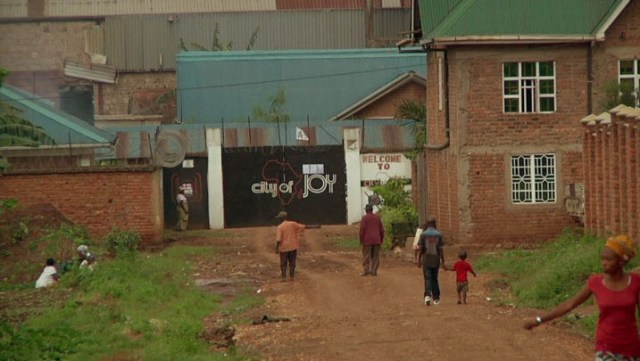
That center in question, named City of Joy, was established in Bukavu in 2011 by three passionate people who are at the center of the documentary: Dr. Denis Mukwege, Christine Schuler-Deschryver, and Eve Ensler. As his country came to be shaken and disrupted by the civil war during the late 1990s, Mukwege became concerned about what was happening in his country, and he tells us a horrifying tragedy at a rural hospital where he once worked. He fortunately got out of the hospital around that time, but many other people in the hospital were killed by soldiers, and there is an eerie moment as the documentary calmly looks around inside the hospital building, which has been empty and abandoned since that incident.

Mukwege considered leaving his country after that incident, but he eventually decided to stay for helping many desperate people in his country as before, and he came to work in a hospital located in Bukavu, where he often encountered female survivors of rape and other gender violences. As a number of militia groups expanded their territories around the rural areas of the country, their soldiers frequently committed atrocities against civilians, and their usual targets were usually women because, as pointed out at one point in the documentary, women are a crucial social/economic part of families and villages.

cityofjoy02

This terrible circumstance is still being continued even at this point, but it does not draw much attention from the outside world as the civil war is further propelled by many countries and corporations, which have snatched many natural resources via their shady connections with the militia groups operating in Democratic Republic of Congo. Besides gold and tungsten, a metallic ore named coltan has been one of the main natural resources in the country, and the documentary shows us how many different international corporations have gotten this precious metallic ore from Democratic Republic of Congo. Considering that coltan is mainly used in the production of computers and smartphones, many of us may be benefiting from this injustice right now.

Discerning that something had to be done about those many female survivors out there, Mukwege decided to make a special center for them, and he enlisted Schuler-Deschryver and Ansler in his project. As a local human rights activist, Schuler-Deschryver was initially skeptical when Mukwege introduced her to Ansler, but Ansler, who is a famous American activist/playwright mainly known for “The Vagina Monologues”, quickly impressed Schuler-Deschryver with her genuine passion and sincerity, and she eventually becomes another important figure in City of Joy besides Schuler-Deschryver and Mukwege.

The documentary closely observes how many female survivors staying in City of Joy are helped via education and counseling. As they attend several different classes including the one where they learn self-defense, they slowly come to rebuild themselves through knowledge and confidence, and we later get a rather amusing moment when Ansler casually talks about sex and female body in front of her amused students, who have not been that familiar with their certain body part but now are going to get to know quite more about it.

cityofjoy03Some of these women in the center talk about their painful past in front of the camera, and that is the most harrowing part of the documentary, In case of a young woman named Jane, what happened to her was unspeakable to say the least, but she is quite frank about that while also hoping for a better future for her, and the same thing can be said about other female survivors in the center. When they are about to finish their education at City of Joy, they all look spirited and hopeful, and it is touching to see how willing they are to step forward for the next stage of their life.

In the meantime, the documentary also shows us how things continue to be daunting for Mukwege and his two close colleagues. In 2012, Mukwege almost got himself killed shortly after delivering an urgent public message at the headquarters of the United Nations in New York City, so he came to leave his country for a while after recuperating from the injury he sustained during that incident. When he eventually came back in the next year, many people welcomed his return, but he still gets death threats at times, and we notice that he is constantly protected by several bodyguards whenever he is outside his hospital or City of Joy.

Although it could be longer as showing more of how the center helps female survivors, “City of Joy” is still a fairly informative documentary film, and director Madeleine Gavin handles well her human subjects with enough respect and admiration. The documentary may be modest on the whole, but it delivers its message well through its engaging storytelling, and you may reflect on its message for a while when it is over.

cityofjoy04

Posted in Movies | Tagged , , , | Leave a comment

RBG (2018) ☆☆☆(3/4): The indomitable RBG

rbg01

Ruth Bader Ginsburg is a remarkable woman for many reasons. While she has been known to us mostly for her enduring presence in the US Supreme Court during last 25 years, she already accomplished quite an impressive legal career before that period, and she argued no less than six cases before the US Supreme Court as fighting against gender inequality. It goes without saying that she is one of the most famous feminist icons of our time, and it is really inspiring to see that she is still willing to go on with her life and career even though she is already over 80 at present.

While it is rather plain considering its exceptional human subject, documentary film “RBG” is fairly good enough to engage us mainly thanks to Ginsburg. Although she may look quite and fragile on the surface, we come to sense her brilliant mind and indomitable spirit as watching her interview clips in the documentary, and we also come to admire her a lot as being reminded of how much she has accomplished for gender equality.

The documentary broadly looks around Ginsburg’s life and career. Born as Joan Ruth Bader in Brooklyn, 1933, Ginsburg grew up well under her supportive parents who wanted their young daughter to be educated as much as possible, and she did not disappoint her parents at all, though her mother died not long before she graduated from her high school and then went to Cornell University for higher learning. Remembering two things her mother always emphasized to her (“Be a lady; Be independent”), she went further as entering Harvard Law School several years later, and she talks to us about how it was often difficult for her and a few other female students in Harvard Law School during that time. They often faced gender discrimination, but they knew they must try hard for proving themselves, and Ginsburg surely made a big impression on others when she wrote an article for Harvard Law Review during her second year.

rbg03

It was during that period that she met and then married her husband Martin Ginsburg, who was quite different from his wife in many aspects but clicked well with her from the beginning. As a jolly and gregarious guy, he complemented Ginsburg’s more introverted personality, and he was also very supportive of her career as recognizing her ambition and talent. The situation became quite hard for both of them when Martin suddenly got very ill due to a serious case of cancer, but they stuck together as raising their children, and we hear about how busy and diligent Ginsburg was during that difficult time. Once she came back to their home in evening, she took care of their children along with Martin for a while, and then she resumed her study when he and their children were asleep at night, and then she only slept for a few hours during early morning before starting another busy day.

When her husband got hired by a law firm in New York City, Ginsburg moved to Columbia Law School, and she came to graduate in 1959, but she soon faced gender discrimination as looking for a job. At one point, her husband recommended her to his senior law firm partner, but that guy instantly rejected Martin’s recommendation just because Ginsburg was a woman. Eventually, Ginsburg was hired as a professor at Rutgers School of Law in 1963, and it did not take long time for her to become a prominent figure defending the women’s rights. In 1973, she won Frontiero v. Richardson, which led to the equal housing allowance for men and women in military service, and she also won Weinberger v. Wiesenfeld in 1975, which resulted in widowers being able to get special social security benefits for raising minor children just like widows.

In 1980, Ginsburg was confirmed to the US Court of Appeals for the District of Columbia Circuit after being nominated by President Jimmy Carter, and she was later nominated by President Bill Clinton for the US Supreme Court in 1993. Although she was initially regarded as someone a bit too old for the job, President Clinton was quickly impressed by Ginsburg during their meeting, and nearly all members of the US senate approved of her nomination after she did an exemplary job of presenting herself in front of the US senate hearing.

rbg02

In 1996, Ginsburg and her colleagues in the US Supreme Court handled United States v. Virginia, and their eventual decision on the case had Virginia Military Institute (VMI) break its conservative tradition and open its door to female cadets. She was disappointed with the court decision on Ledbetter v. Goodyear in 2007, which was involved with gender discrimination in wage payment, but she continued to work for the change wanted by her and many other women in US, and her efforts subsequently led to the Lilly Ledbetter Fair Pay Act in next year.

While quite disliked by many conservative figures for her liberal viewpoint, Ginsburg has gotten along well with her more conservative colleagues in the US Supreme Court, and that aspect is exemplified well by her long friendship with late Antonin Scalia, whose hardcore conservative viewpoint was quite opposite to everything Ginsburg represents. They frequently disagreed with each other over numerous cases, but they liked and respected each other, and there is an amusing archival clip showing them making a fun of each other in front of many audiences.

I wish “RBG” focused more on why her presence in the US Supreme Court is all the more important these days, but directors Julie Cohen and Betsy West did a nice job of presenting Ginsburg’s life and career on the whole, and I was entertained enough during my viewing although I was often distracted by its rather blatant utilization of several recognizable classic pieces on the soundtrack. It could do better, but I am mostly satisfied to get to know a bit more about Ginsburg anyway.

rbg04

Posted in Movies | Tagged , , , | 2 Comments

Megan Leavey (2017) ☆☆☆(3/4): A soldier and her military dog

meganleavey01

“Megan Leavey” is better than its rather plain title suggests. Based on a touching real-life story between one US Marine soldier and her military dog, the movie gives us a vivid, close look into a relatively unknown military subject, and I appreciated its considerable realism and verisimilitude while also moved by its poignant depiction of the strong emotional bond between its valiant heroine and her equally brave dog.

In the beginning, the movie succinctly establishes everything we have to know about Megan Leavey (Kate Mara), a young woman who has been stuck in her unhappy and frustrating daily life in a suburban area of the New York state. When she happens to spot a couple of marines entering a local army recruitment center on one day, she decides to join the US Marine without any hesitation, and we soon see her leaving the house where she has lived along with her divorced mother and then getting on a bus for going to the US Marine training camp located in Parris Island, South Carolina. Right from when she and many other new recruits arrive in the training camp, they are harshly treated by their drill instructors, and we get a quick montage scene showing her and other recruits enduring various difficult things during their demanding training period.

Anyway, Leavey and many of those recruits successfully complete their training in the end, and she is soon assigned to a military camp in California, but she is still not exactly sure about what she should do next now. During one evening, she and two other female soldiers have a rather wild drinking time, and she unfortunately gets caught when she attempts to urinate beside a building in the camp. As a consequence, she is ordered to clean the cages for the military dogs of the K9 unit in the camp for a while, and there is an amusing scene where she tries to clean the floor strewn with dog excrement on her very first day.

meganleavey03

In addition to cleaning the cages, she also assists the training procedures for the military dogs of the K9 unit in the camp, and that is how she gets more accustomed to a military dog named Lex. Although their first encounter was not very pleasant to say the least, Leavey comes to find a way to tame Lex and then gain its trust after she is instructed to handle Lex for herself, and that is how she comes to discover her true calling. With the assistance and guidance of her tough but generous superiors, she gradually forms a close relationship with Lex, and they are fully prepared to work together when they are sent to Iraq several years later.

During the second act, the movie focuses on the very risky condition surrounding Leavey and Lex in Iraq. Not long after she arrives in a military camp located near Ramadi, her fellow K9 handler warns her that military dogs and their K9 handlers are frequently targeted by their enemies out there, and she and Lex soon come to experience a number of tense circumstances filled with potential dangers. At one point, they and other soldiers must carefully handle a possibly dangerous vehicle while constantly watchful of the surrounding area, and director Gabriela Cowperthwaite, who previously made acclaimed documentary film “Blackfish” (2013), did a deft job of dialing up and down the level of tension during that moment. In case of a gritty, intense battle sequence unfolded on a remote spot, she wisely avoids shaky camera work and choppy editing while never losing the immediate sense of danger and urgency surrounding the characters on the screen, and the overall result is as emotionally impactful as intended.

It is during that perilous battle that Leavey and Lex are seriously injured. Once they and others safely get away from the battlefield, she is instantly sent back to US for treatment and recuperation, and she later comes to consider retirement, but she also misses Lex a lot, which also recovers from its injury but is about to be sent to Afghanistan. Naturally upset about her dog being put into another military mission, Leavey tries to prevent that, but it looks like there is nothing she can do, and she accordingly becomes frustrated and exasperated while still being rattled by her post-traumatic stress disorder.

meganleavey02

Instead of attempting cheap sentimentality, the earnest screenplay by Pamela Gray, Annie Mumolo, and Tim Lovestedt goes for unadorned honesty and sincerity, and its third act smoothly advances as its heroine eventually comes to regain her strong will and then becomes determined to do as much as she can for adopting her dog. It is not much a spoiler to tell you that she will reunite with her dear friend/comrade in the end, but the movie handles its finale better than expected, and that will be more enough for you to cheer for its heroine and her dog.

Cowperthwaite draws solid acting from its main cast members. Ably carrying the film with her strong performance, Kate Mara is believable in her onscreen interactions with the dog in the film, and she is supported well by notable supporting performers including Edie Falco, Tom Felton, Ramón Rodríguez, Bradley Whitford, and Common, who gives an entertaining supporting performance as Leavey’s no-nonsense unit commander.

I must confess that my viewing condition was not exactly ideal, but I could see at least that “Megan Leavey” is a feel-good drama which is both enjoyable and heartfelt, and you will certainly like it if you are fond of dogs. Yes, I still prefer cats, but I will not deny that I could not help but amused and touched as watching the dog in the movie.

meganleavey04

Posted in Movies | Tagged , , , , | Leave a comment

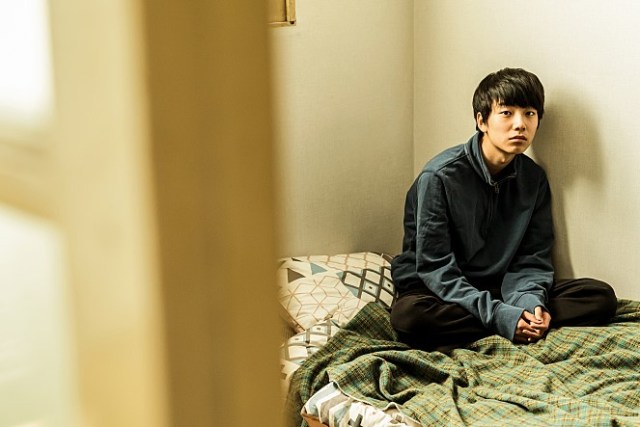
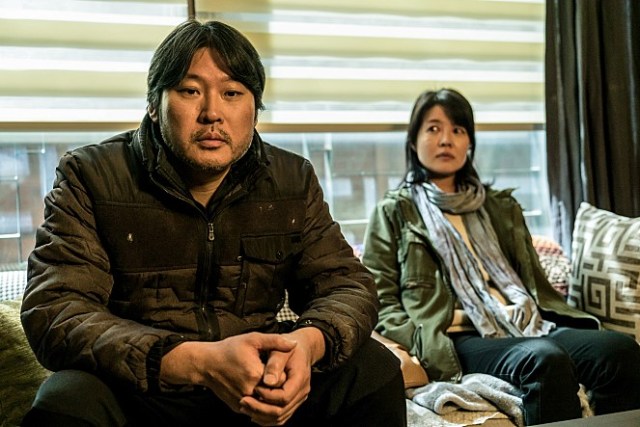
Last Child (2017) ☆☆☆1/2(3.5/4): After a tragedy

lastchild01

There is the palpable sense of grief and desolation right from the beginning of South Korean film “Last Child”. Calmly observing its three main characters who have been stuck in the gloomy and suffocating aftermath of one irreversible tragedy, the movie gradually reveals their respective pain, confusion, and guilt in front of our eyes, and that leads to a number of tough but undeniably powerful moments which will linger on your mind for a long time after the movie is over.

At first, the movie slowly lets us gather what happened to Seong-cheol (Choi Moo-sung) and Mi-sook (Kim Yeo-jin), an ordinary middle-class couple who has run a modest interior remodeling business for years. Their adolescent son recently died due to an unfortunate incident at a river outside the city, and he is going to receive a posthumous citation because, according to his high school friends who were at the river at that time, he sacrificed his life for saving one of them, but that is not much of consolation to Seong-cheol and Mi-sook. While Seong-cheol tries to go on with their life as focusing on his work as usual, Mi-sook desperately holds onto the memories of their dead son, and she later considers having another child because that was what their dead son always wanted. Seong-cheol is rather reluctant at first, but he agrees to do that because, well, it may give them a chance for the new beginning.

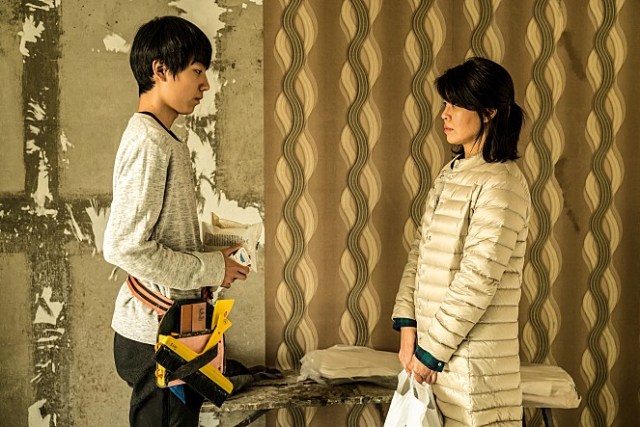
In the meantime, Seong-cheol approaches to Gi-hyeon (Sung Yoo-bin), the boy who survived thanks to his son’s sacrifice but then dropped out from the school for some reason. After coming to learn that there is no one to take care of Gi-hyeon, Seong-cheol decides to help Gi-hyeon, and Gi-hyeon is eventually hired by him as an apprentice. Although he does not seem that enthusiastic about this good opportunity at first, Gi-hyeon begins to learn about the trade bit by bit from Gi-hyeon and other employees, and he also starts to prepare for the upcoming examination for a certification of qualification.

lastchild03

Of course, Mi-sook soon comes to learn about what her husband has been doing with Gi-hyeon, and she is understandably not so pleased about that as being reminded again of that painful absence of her dead son, but she cannot help but feel pity and compassion toward Gi-hyeon. When she happens to come across him at one point, it goes without saying that the mood between them is pretty awkward, but she tries to be kind and nice to him at least. When he later happens to come to her residence, she shows him her dead son’s room, that leads to a small poignant moment between them.

As time goes by, things look a bit more optimistic for not only Seong-cheol and Mi-sook but also Gi-hyeon. After Gi-hyeon finally gets the certification of qualification, Seong-cheol decides to promote Gi-hyeon to a full-time position, and Mi-sook does not object to that at all as Gi-hyeon has become a son figure to her and her husband. We see them going outside together for celebrating this, and we cannot help but notice how their faces look more brightened than before.

However, as some of you have already expected, there is something Gi-hyeon did not tell to Seong-cheol and Mi-sook. I will not go into details here, but I can tell you instead that Seong-cheol and Mi-sook’s life is turned upside down again later in the story as they eventually come to learn of a hidden fact about their son’s death. Naturally becoming enraged and devastated, they try to do what should be done in their view, but they only find themselves more frustrated and despaired as facing the harsh reality in front of them.

lastchild05

Steadily maintaining its dry, realistic ambience as before, the movie keeps holding our attention via several seemingly plain but emotionally intense scenes reminiscent of the works of the Dardenne Brothers, and director/writer Shin Dong-seok skillfully handles his story and characters without any misstep. Carefully and thoughtfully balanced among its three main characters, his screenplay lets us understand and then emphasize with all of them, and we come to care a lot about what may happen among them as they continue to struggle with their complex moral circumstance.

Under Shin’s confident direction, his three main performers give what may be three of the best South Korean movie performances of this year. Choi Moo-sung, who drew my attention for the first time via his morbid supporting turn in Kim Jee-woon’s disturbing horror thriller film “I Saw the Devil” (2010), is simply superb in his nuanced low-key performance, and he ably conveys to us whatever is being churned behind his character’s plain façade. On the opposite, Kim Yeo-Jin gives an equally superlative performance, and she is quite good even during a brief scene showing her character visibly shaken up by the truth she cannot possibly ignore. As the third important part of the movie, Sung Yoo-bin, who previously appeared in “I Can Speak” (2017), holds his own place well between his two co-performers, and, considering his commendable performance here in this film, I think we can expect more good things from this talented young actor.

Despite its gloomy and uncomfortable subjects, “Last Child”, which was recently released as “The Child Who Survived” in South Korea, is worthwhile to watch for its compelling drama and flawless performances. To be frank with you, I do not know whether I will be able to watch it again, but I still remember well how much I was touched by a small glimmer of hope and redemption shown from its last shot, and that is more than enough for recommendation in my humble opinion.

lastchild04

Posted in Movies | Tagged , , | 1 Comment

Butterfly Sleep (2017) ☆☆☆(3/4): A romance before she is faded away

butterflysleep01

To be frank with you, I could not help but envy the heroine of South Korean-Japanese film “Butterfly Sleep”. As watching her cozy modern house filled with various books, I became curious about those books even though they are written in Japanese, and I amusedly observed what an ideal environment for writing her house is. Insulated from the outside world, her house is shrouded in soothing ambience along with considerable tranquility, and I wish I were writing this review there instead of where I am right now.

In the beginning, the movie shows us the daily life of Ryoko (Miho Nakayama), a middle-aged Japanese author who is working on her latest novel while also teaching a class in some graduate school in Tokyo. Although she has rarely talked about her works in public, but she is now quite willing to talk openly about them, and we see her giving a lecture on one of her works in front of a bunch of students.

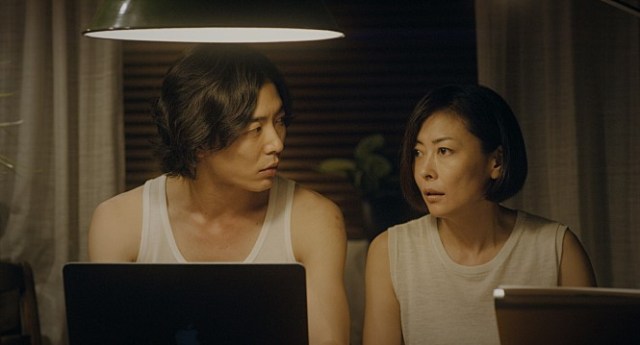
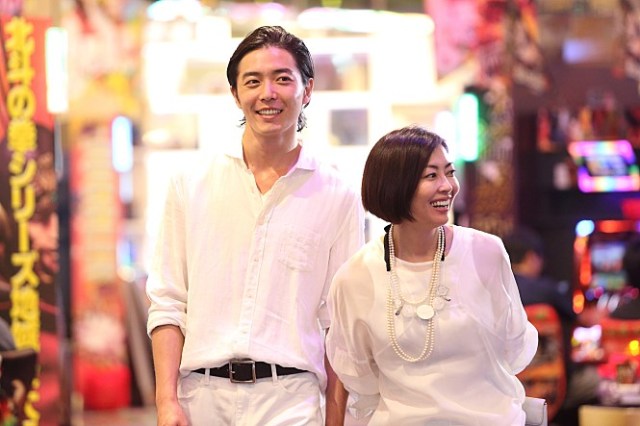
After that lecture, Ryoko and several students go to a nearby restaurant for drinking, and that is how she comes across a South Korean student named Chan-hae (Kim Jae-wook), who has worked there for earning the money for his tuition. Their first encounter was brief, but they encounter each other again when Ryoko later comes back to the restaurant for searching for her precious fountain pen, and she soon finds herself more interested in Chan-hae as subsequently getting to know him more.

At first, Ryoko asks him to rearrange the books in her library for bringing some change into the space, and then she suggests to him that he should assist her writing while also taking care of her dog, which has been her sole companion for several years. As a student studying Japanese literature, he is certainly interested in spending more time with her, though his Japanese is not that good enough for typing whatever she dictates to him via her tape recorder. For instance, he makes a rather glaring typing mistake which is quickly noticed by her, and that is one of small amusing moments in the film.

butterflysleep03

Meanwhile, Chan-hae begins to sense something strange about Ryoko, and he soon comes to know the reason. As revealed to us during an earlier scene where she confesses to her ex-husband, she has been going through the early stage of Alzheimer’s disease, and she is quite determined to finish the novel which is intended to be her last work. After realizing what she is going through, Chan-hae comes to care more about her, and that leads to the inevitable moment of romantic passion between them.

As Ryoko and Chan-hee continue to work on her novel together, the movie gives us several tender and sensitive scenes showing a young couple depicted in her novel. At first, the couple in the novel are happy together as complementing each other, but their bliss does not last that long, and there eventually comes a breaking point for their relationship, which is subsequently followed by a bittersweet moment which achingly emphasizes the irreversible gap between them.

Like the couple in the novel, Ryoko and Chan-hee come to arrive at their own breaking point as she is about to complete her novel. Around that point, her state of mind becomes more deteriorated than before due to the rapid progress of her disease, and she comes to sense that she must do what should be done for him as well as herself, even though she knows too well that he will not understand her decision.

butterflysleep04

The movie is surely a familiar melodramatic stuff reminiscent of similar films such as “Iris” (2001) and “Still Alice” (2015), but director/writer Jeong Jae-eun handles his story and characters with care and consideration. At one point, the movie makes a little fun of Ryoko’s most famous work which was incidentally inspired by her crumbling relationship with her ex-husband, but it respects her artistic passion and dedication nonetheless, and that is why it is often poignant to watch her struggle to write through whatever is still left inside her mind. Although her relationship with Chan-hae initially looks clichéd, both of them are presented as human characters we can care about, and it is engaging to watch how their relationship is developed along the story.

The lead performers of the movie support the movie well with their good performance. Miho Nakayama, a Japanese actress who has been fondly remembered by many audiences in Japan and South Korea for her charming performance in “Love Letter” (1995), deftly handles a number of obligatory melodramatic moments in the film, and she is fabulous whenever she is required to express a lot of things via her beautiful face. On the opposite, Kim Jae-wook, a South Korean actor who has mainly worked in several South Korean TV dramas, is solid in his understated acting which effectively functions as the solid ground for his co-performer’s showier performance, and, as far as I heard from others, he did a fairly nice job of speaking Japanese with some necessary awkwardness as required.

Although it is not so different from many other neat Japanese melodrama films during recent years, “Butterfly Sleep” distinguishes itself to some degree via its interesting setting and sincere storytelling, and its overall result is both entertaining and touching enough for recommendation. It may be predictable, but this is a well-made movie packed with genuine feelings, and it certainly earns its tears in the end.

butterflysleep02

Posted in Movies | Tagged , , , | Leave a comment