First Reformed (2017) ☆☆☆1/2(3.5/4): The Reverend in a Room

firstreformed03.jpg

Paul Schrader’s new film “First Reformed” is a calm but intense experience you will not forget easily. Intensely driven by its lonely hero’s moral and spiritual conflict, it gives us a number of sobering moments to impress you with their considerable emotional intensity, and the overall result deserves to be mentioned along with Schrader’s best works such as “Mishima: A Life in Four Chapters” (1985) and “Affliction” (1997).

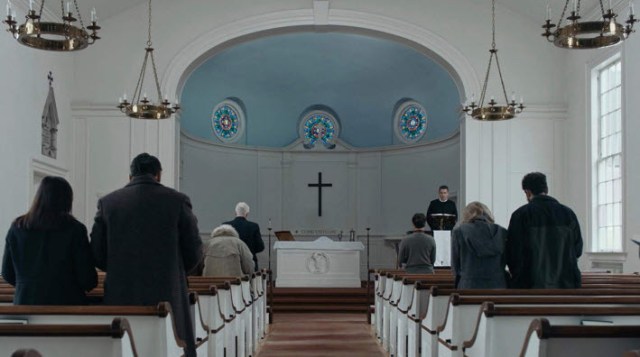
Ethan Hawke plays Reverend Ernst Toller, the minister of the First Reformed church in Snowbridge, New Yok. Since his devastating personal loss which happened several years ago, Ernst has strictly stuck to his stoic solitary life, and the early scenes of the movie phlegmatically present the small and big details of his daily life at the church. We see him presiding over a church service attended by a very small group of local people. We see him talking a bit with his deacon. And we see him retreating to his spartan private place at night and then pouring out his thoughts and feelings into a diary which he plans to keep for one year. As watching him writing his diary, you may be reminded of many of Schrader’s similarly lonely heroes such as Travis Bickle in “Taxi Driver” (1976).

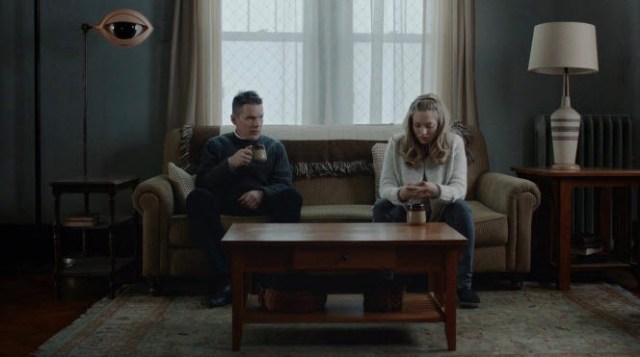
On one day, one of Ernst’s church members approaches to him for help. The person in question is a young pregnant woman named Mary (Amanda Seyfried), and she has been concerned about her husband Michael (Philip Ettinger), a former radical-environmentalist who recently returned after being released from a prison in Canada. She wants Ernst to have some talk with Michael, so Ernst later goes to Michael and Mary’s residence, and Michael makes a lengthy argument about why he does not want their baby to born into the world. Despaired and frustrated about the ongoing global climate disruption and the lack of social efforts to stop it, he thinks it is not right to have their baby live in the world which has become worse day by day in his opinion, and he has seriously considered abortion even though his wife is against that.
firstreformed02

Ernst tries as much as he can for persuading Michael to change his mind, but it eventually turns out that there is nothing he can do for Michael. Like the minister hero of Ingmar Bergman’s “Winter Light” (1963), Ernst is a helpless man full of doubt and conflict, and he finds himself more shaken and conflicted than before as musing more on what is exchanged between him and Michael. After coming to realize a certain fact associated with his church, he cannot help but become more obsessed with the hypocrisy of the system he belongs to, and his friend/superior Pastor Jeffers (Cedric Kyles) senses something wrong from him.

Meanwhile, probably because she needs emotional support and comfort, Mary approaches closer to Ernst than before, but he is not particularly willing to give what she wants from him, and he also remains distant to Esther (Victoria Hill) as before, a colleague who is clearly interested in coming closer to Ernst with love and comfort. During one brief but hurtful scene which is apparently influenced by one of memorable scenes in “Winter Light”, he cruelly rejects Esther’s sincere act as telling her how much he dislikes everything about her, and that only leads to more misery and loneliness for him.

In addition, his physical state is more deteriorated than before. It is quite clear that he needs to get medical treatment as soon as possible, but he only has his body and mind driven into more instability as a sort of punishment. In the end, he decides to do something quite drastic, and the movie accordingly becomes more intense than before while accompanied with the atmospheric score by Brian Williams, who is also known as Lustmord.
firstreformed01

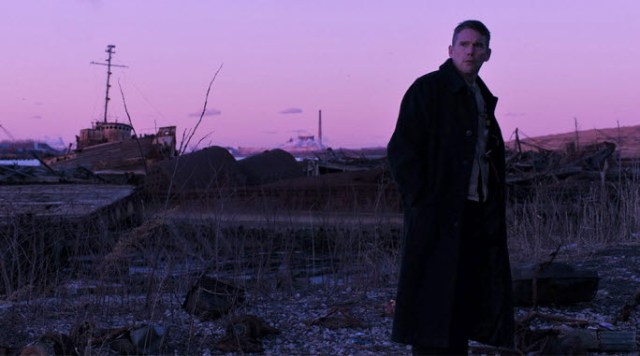
Even around that narrative point, the movie keeps sticking to its plain, austere storytelling approach, and Schrader and his cinematographer Alexander Dynan constantly hold our attention through their formal visual choice. Shot in the screen ratio of 1.37:1, the movie usually observes Ernst and other characters from the distance, and Dynan’s camera steadily maintains its static position throughout the film except a few certain scenes including the one where Ernst comes to have a sort of spiritual experience with Mary later in the story.

As the intense center of the movie, Hawke gives another excellent performance in his long, distinguished career. Looking paler and gaunter than before, he subtly conveys the thoughts and feelings churning and boiling behind his character’s detached façade, and he also shows considerable commitment when his character is pushed further to the extreme around the finale.

Around Hawke, several notable performers in the film give good performances as ably supporting him. Amanda Seyfried, who has shown that she can do something more serious than “Mean Girls” (2004) and “Mamma Mia!” (2008), brings some warmth and tenderness to the movie, and Phillip Ettinger is sympathetic as an unhappy man struggling with mounting despair and desperation. While Victoria Hill is effective in her small supporting role, Cedric Kyles, who is also known as Cedric the Entertainer, shows here that he can dial down his comic persona to some degrees, and he holds his own place quite well during his few scenes with Hawke.

With its stark, palpable sense of isolation and conflict enfolding its moody hero, “First Reformed” is another case of ‘the man in a room’ from Schrader, and I admire how his movie firmly sticks to its themes and subjects as generating some powerful scenes to remember. This is surely a tough stuff, but it is definitely worthwhile to watch, and I think it is one of the most significant films of this year.
firstreformed04

Posted in Movies | Tagged , , | 3 Comments

Won’t You Be My Neighbor? (2018) ☆☆☆1/2(3.5/4): Meet Mister Rogers

wontyoubemyneighbor03.jpg

To be frank with you, I am not that familiar with Fred Rogers, but I have heard about what a singular American TV celebrity he is. His famous popular children’s television program “Mister Rogers’ Neighborhood” may look too simple and tacky on the surface, but this gentle, decent guy effortlessly and gracefully delivered honest and sincere messages on love, kindness, and empathy for more than 30 years, and it is no wonder that he has been fondly remembered by lots of people even after his death.

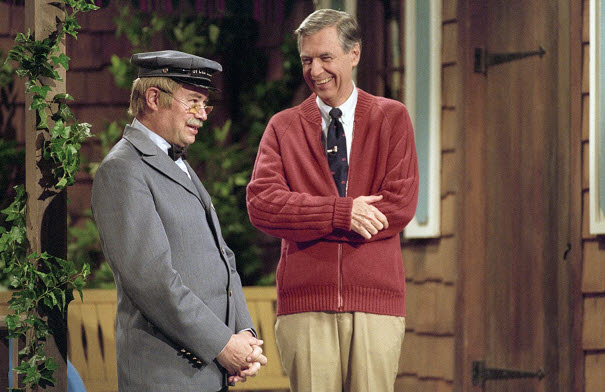
Documentary film “Won’t You Be My Neighbor?” may not show you anything particularly new about Rogers if you are familiar with him and his show, but it looks closely into his simple but profound humanity, and the result is informative and inspiring to say the least. While recognizing less bright aspects of his life at times, the documentary touchingly presents Rogers’ decency and goodwill based on his religious belief, and, just like his show, it surely reminds us of the importance of love and kindness in our life.

The documentary begins with the early years of Rogers’ TV career, which was started around the time when he was trained in a seminary for being a minister. When he happened to watch children’s TV shows while spending some time in his family home, he did not like much many of those TV shows, so he decided to try to make a better one, and he eventually got a chance to produce his first children’s show at a local TV station in Pittsburgh, Pennsylvania several years later. Although that show looked cheap and shabby mainly due to its low-budget production, it quickly became popular thanks to Rogers’ infectious charm and avuncular persona, and its small but significant success subsequently led him to the development of “Mister Rogers’ Neighborhood” in 1968.
wontyoubemyneighbor04
Through a series of archival footage clips from “Mister Rogers’ Neighborhood”, the documentary shows us the simple charm of the show. In the beginning, Rogers always stepped into his studio set as gently singing his theme song “Won’t You Be My Neighbor?”, and this routine opening segment was usually followed by “Neighborhood of Make-Believe”, which featured a bunch of various puppet characters including Daniel the Striped Tiger. Often accompanied with Rogers’ stock performers, all those puppet characters were handled and voiced by Rogers, and several interviewees including Rogers’ family members tell us a bit about how those puppet characters were the more colorful reflections of Rogers himself. For instance, Daniel the Striped Tiger was a persona representing Rogers’ younger self who was not so happy during childhood years, and there is a very poignant archival footage clip in which the importance of being loved is tenderly demonstrated through the conversation between an actress and Daniel the Striped Tiger.

As his show later moved onto Public Broadcasting Service (PBS) in 1970, Rogers became more popular than ever, and he accordingly became a prominent representative of PBS. He even gave a testimony before a US senate committee when President Richard Nixon tried to slash the government funding of PBS drastically, and his plain but sincere and passionate testimony eventually made the committee grant the 20-million-dollar budget for PBS.

And he boldly tackled sensitive social issues in his TV show while steadily maintaining his neighborly aura. As a person who was never condescending to children and always respected children’s thoughts and feelings, he was willing to talk about those sensitive issues, and we see several notable examples. Not long after the nation was shaken by the assassination of Robert F. Kennedy in 1968, the concept of assassination was frankly explained in his show, and then we also see another archival footage clip showing Rogers gently explaining divorce to a bunch of various kids.

wontyoubemyneighbor01

He was also quite opened-minded about race issues, and François Scarborough Clemmons, an African American performer who was one of Rogers’ favorite performers, reminisces how wonderful it was for him to work with Rogers. During one episode of the show, he and Rogers casually washed their feet together in a washbowl, and that moment was certainly more than enough to show Rogers’ belief in racial inclusion, though it took some more time for him to accept Clemmons’ homosexuality.

As entering the 21th century, Rogers tried to keep working, but his show was eventually ended in 2001, and he became less spirited than before – especially when whole nation was shocked to the core on September 11th, 2001. That horrific incident made him have lots of doubt on his belief in humanity, but he did what he had to do for the nation and its people as a public figure. On February 27th, 2003, he died due to stomach cancer, and his death was mourned by many people around the nation.

Deftly mixing archival footage and interview clips, director Morgan Neville did a commendable job of conveying to us Rogers’ unadorned human sides, and I also like a number of animation scenes revolving around the animated version of Daniel the Stripper Tiger, which movingly reflect Rogers’ spirit and personality. As far as I can see from “Won’t You Be My Neighbors?”, he was simply a wise, thoughtful human being who tried to show why it is always important to be nice and kind to others, and those valuable lessons of his are something we still need even at present, considering how our world has been disrupted a lot by the rising wave of apathy and cruelty during recent years.

wontyoubemyneighbor02

Posted in Movies | Tagged , , | 1 Comment

Love, Simon (2018) ☆☆☆(3/4): Conventional but Notable

lovesimon01

“Love, Simon” reminds me again of how things have been changed a lot for queer films these days. After the considerable success of “Brokeback Mountain” (2005), LGBTQ characters have become more common in American films during recent years, and now we come to have a mainstream adolescent comedy drama film which is quite comfortable with its young gay hero from the beginning. While it is often conventional to the core, the movie is funny, sweet, and poignant thanks to its thoughtful storytelling and likable performances, and I found myself touched at times during my viewing as reflecting on my own personal experience.

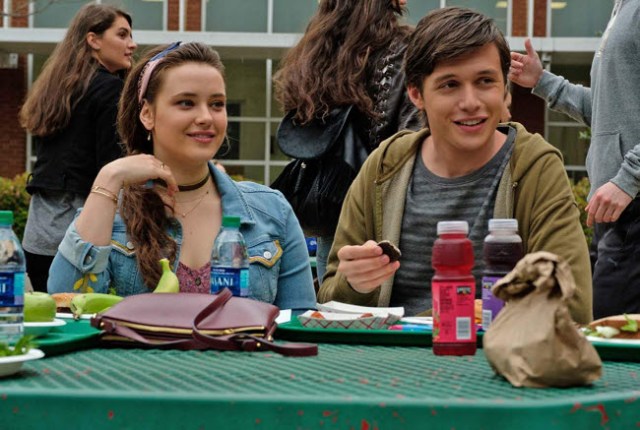
During the opening sequence, we get to know a bit about Simon Spier (Nick Robinson), a 17-year-old high school kid who has been hiding his homosexuality from others around him for several years. He surely wants to come out of the closet someday, but he is still not sure about when he should reveal his homosexuality to his family and his close school friends, and he is afraid of what may possibly happen once he comes out. As a gay man who quietly suppressed his sexuality for more than 20 years, I certainly understand how he feels; like him, I was also quite afraid, so I chose to turn a blind eye on my homosexuality as focusing more on study, books, and movies – until I decided to come out of the closet two years ago.

On one day, there comes a small but significant change into Simon’s life. Leah (Katherine Langford), one of his close friends, notifies him that an anonymous gay student of their school posted a personal online confession under the pseudonym ‘Blue’, and Simon becomes interested in getting closer to Blue after reading his personal online confession. He sends an email to Blue while using pseudonym ‘Jacques’, and they soon come to correspond with each other frequently as confiding many things to each other.

lovesimon03

While wondering about the real identity of Blue, Simon comes to feel more attraction toward Blue, but then, unfortunately, he happens to get himself into a serious trouble. Martin (Logan Miller), a student who participates in a musical class Simon attends, comes to learn of the correspondence between Simon and Blue by accident, and he threatens to Simon that he is going to expose Simon’s homosexuality unless Simon helps him win the heart of Abby (Alexandra Shipp), one of Simon’s close friends who has incidentally been attending the musical class along with Simon and Martin.

Because he is still afraid of being exposed as a gay, Simon has no choice but to help Martin. Although it is apparent that Nick (Jorge Lendeborg Jr.), who is another close friend of his, has had a crush on Abby, Simon deliberately blocks Nick’s approach to her while indirectly leading him to Leah instead, and he also tries to set up several suitable moments for Martin to approach closer to Abby, though she is not so impressed by Martin’s goofy demonstrations of his affection toward her.

As things become more complicated than expected, Simon continues to be conflicted about coming out of the closet. While his parents Jack (Josh Duhamel) and Emily (Jennifer Garner) are kind, generous, and open-minded, his younger sister Nora (Talitha Bateman) is your average sweet little sister, but he fears that his family will not accept his homosexuality, and we get an amusing montage sequence as he ponders on the fact that his heterosexual friends do not need to express their sexuality directly to their parents at all in contrast to him.

Meanwhile, he keeps wondering about who Blue actually is. There are several potential candidates in the school, but there is no definite clue, and he only finds himself having more romantic feeling than before. Although it will probably be pretty easy for you to guess the identity of his object of affection, the movie has some fun as playing with his expectation and ours, and that certainly provides extra amusement for us.

lovesimon02

Eventually, there comes an inevitable moment of disclosure later in the film (is this a spoiler?), but the movie wisely avoids unnecessary melodrama while becoming as serious as required, and the adapted screenplay Isaac Aptaker and Elizabeth Berger, which is based on “Simon vs. the Homo Sapiens Agenda” written by Becky Albertalli, often surprises us as having many of its archetype characters show more human depth than expected. Although he is sometimes quite self-centered and insufferable, Martin is sincere in his courtship to Abby, and you may feel a little sorry for him when he comes to embarrass himself in front of Abby and many other students at one point. In case of an openly gay student character in the film, he looks like a caricature at first, but then there is a brief but touching moment when he and Simon happen to have a frank conversation on being gay.

Under director Greg Berlanti’s good direction, his main cast members bring life and personality to their respective roles. While Nick Robinson, who previously appeared in “The Kings of Summer” (2013) and “Jurassic World” (2015), diligently holds the center with his unadorned performance, Katherine Langford, Alexandra Shipp, Jorge Lendeborg Jr., Clark Moore, and Logan Miller are solid in their respective roles, and the same thing can be said about Talitha Bateman, Tony Hale, Josh Duhamel, and Jennifer Garner, who has her own small moment when her character has an honest talk with her son around the finale.

“Love, Simon” is not exactly as groundbreaking as “Brokeback Mountain”, but it is undeniable that the movei brings some fresh air of diversity to its genre territory like “To All the Boys I’ve Loved Before” (2018), and I really appreciate its optimistic spirit. Yes, it is still hard and difficult for many LGBTQ kids out there (Remember that recent tragic incident of a 9-year-old gay boy who was bullied by his schoolmates after coming out to them and then killed himself?), but I sincerely hope many more mainstream queer movies like this will help them be more confident and positive about themselves.

lovesimon04

Posted in Movies | Tagged , , , , , | Leave a comment

The Endless (2017) ☆☆☆1/2(3.5/4): Two brothers coming back to their past

theendless01

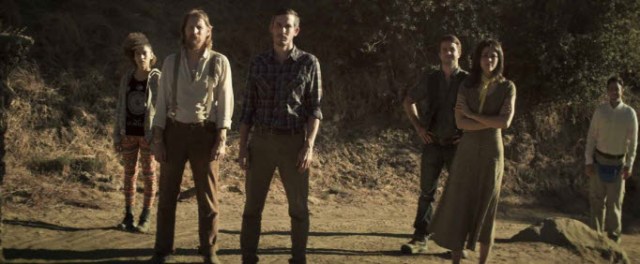
Sometimes I encounter little movies in the need of more attention, and “The Endless” is one of such cases. While it works as an engaging drama about two brothers struggling with their past, this small film is also quite intriguing with its increasingly ominous atmosphere and a number of memorable moments you have to see for yourself. During my viewing, I found myself quite impressed by its mood and storytelling, and it surely surprised me in the end while also generating some poignancy during its haunting finale.

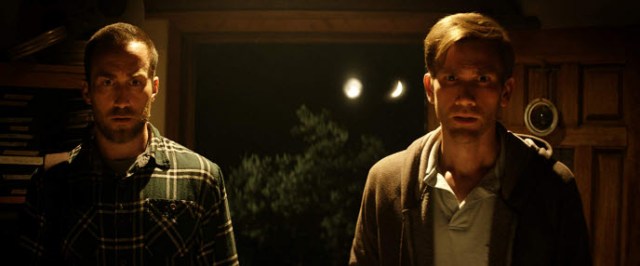
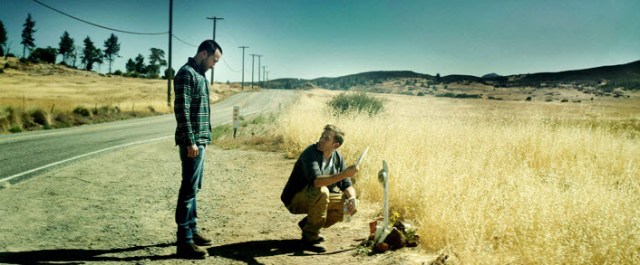
Directors/writers Justin Benson and Aaron Moorhead, who also worked as co-producers and co-editors for their film, play Justin and Aaron Smith, two brothers who left a cult many years ago but still cannot wholly adjust themselves to the outside world. While they earn their living through a cleaning job, their life has been going nowhere to their frustration, and Justin becomes worried as Aaron comes to miss those old days in that cult. According to what Justin said during a TV interview not long after they left the cult, its members believed in UFO and were going to commit suicide for ‘ascension’ someday, and it looks like Justin did a right thing for both him and his younger brother at that time.

On one day, a package is delivered to their residence. It contains a shabby video tape which shows Anna (Callie Hernandez), one of the cult members, and that tape makes Aaron think more about what he remembers about the cult. As far as he remembers, he was happy and safe as he and his brother were taken care of by the cult members after their mother’s unfortunate death, but Justin says that his memories of that time are not that accurate. Unlike Aaron, he wants to stay away from their past as much as he can, even though he is confused and frustrated with the outside world as much as Aaron.

theendless05

Anyway, Aaron only becomes more determined to visit the cult for getting any kind of closure, and Justin reluctantly agrees to join Aaron for protecting and helping his younger brother. They drive to a remote rural place where the cult members are still residing, and Justin is surprised to see that Anna, Hal (Tate Ellington), and many other cult members are living fairly well without much change. They all greet Justin and Aaron warmly, and Aaron is soon drawn more to his old world, but Justin remains skeptical and watchful for Aaron as it seems there is something unnatural about the cult members, who mostly look happy and contented but also look rather suspicious from time to time.

Furthermore, Justin and Aaron come to notice strange things happening in the area surrounding the cult community. For example, there is a weird grumpy guy who keeps walking around here and there in the area, and we come to wonder more about what the hell he is doing. During their first evening in the cult, Justin and Aaron come to participate in a simple but bizarre game involved with a rope, and we later get a rather spooky moment when Justin notices a really strange thing in the sky.

As he and his younger brother come to stay in the cult more than expected, Justin becomes more convinced that they must get out as soon as possible, but Aaron thinks differently. Feeling comfortable and relaxed, he begins to consider staying in the cult, and he also finds himself attracted to Anna. Although she is technically quite older than him, she remains same as before just like Hal and other cult members, and there is a nice intimate moment when she and Aaron come to have a little private time together outside at one night.

theendless03

And weird things keep happening around Aaron and Justin. At one point, Justin is instructed to get to the bottom of a nearby lake for finding whatever is waiting for him, and the movie does a good job of slowly dialing up the level of tension during that seemingly quiet scene. Later in the movie, we get a morbidly amusing moment associated with that weird grumpy guy, and there is also an eerie moment involved with a mysterious tent which seems to be harboring some terrible secret.

While I am not sure about whether I understand everything in the movie, I admire what Benson and Moorhead achieved here in this film. After effectively establishing the realistic mood around their main characters, they gradually accumulate the gloomy sense of dread on the screen, and Moorhead, who also served as the cinematographer of the movie, provides some excellent visual moments to be appreciated. Although the special effects of the movie look a little cheap, they are efficiently utilized for intended dramatic effects, and the result is often quite striking.

Moorehead and Benson are convincing in their plain but effective performance. As watching them on the screen, we can sense the close relationship between their characters, and they are constantly interesting to watch as their characters pull or push each other throughout the film. The supporting performers surrounding them are also solid in their respective roles, and Callie Hernandez and Tate Ellington deserve to be praised for handling well their rather tricky characters.

In short, “The Endless”, which was released in US early in this year although it was premiered at the Tribeca Film Festival in last year, is a small under-appreciated gem you should not miss. After watching it at last night, I came to reflect more on its story and characters, and I was reminded again of how appropriate its title is in several aspects. Not many movies can do that, you know.

theendless04

Posted in Movies | Tagged , , , | 1 Comment

Upgrade (2018) ☆☆☆(3/4): Upgraded to Kill

upgrade01.jpg

“Upgrade” is a mixed bag full of borrowed materials, and I sort of like that. While clearly reminiscent of “Death Wish” (1974) and other similar revenge thriller films, the movie is a pulpy science fiction decorated with familiar but amusing genre elements, and I appreciate how it has a little fun with its preposterous SF premise as occasionally jolting us with a number of violent but morbidly entertaining action scenes.

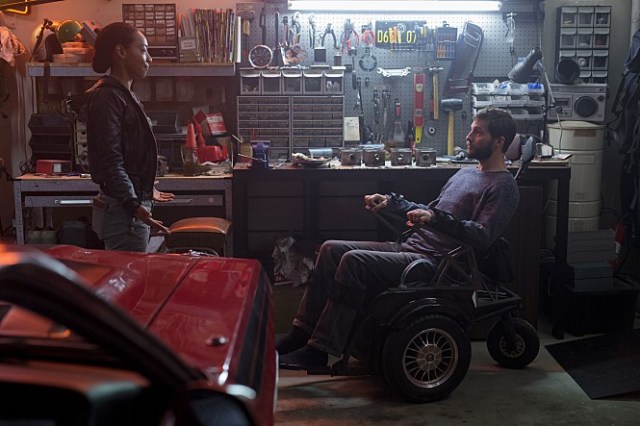
Its story is set in a near-future world which has advanced a lot with the considerable development in computer technology. While many other people have enjoyed the benefits from this technological advancement, Grey Trace (Logan Marshall-Green) has stuck to a more analogue lifestyle, and that aspect of his is quite apparent as we watch him diligently refurbishing a classic sports car for his latest client in his old-fashioned garage. As your average independent guy, he does not want to depend too much on technology, and his wife Asha (Melanie Vallejo) understands his preference without much complaint although her daily life and work rely a lot on technology in contrast.

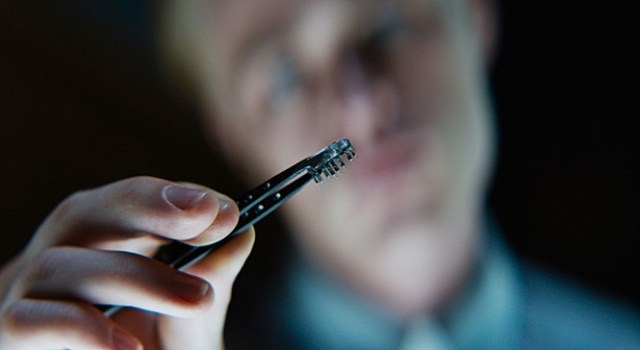
Not long after Asha comes back from her workplace, Grey drives that classic sports car to his latest client’s residence located in some remote place, and she goes along with him as he needs to be driven back to home by her self-driving vehicle. Once she arrives at the destination along with him, Asha is excited to see that his latest client is none other than Eron Keen (Harrison Gilbertson), a rich and successful computer technology wiz who eagerly shows them his latest invention. He recently developed an artificial intelligence chip called ‘STEM’, and he tells Grey and Asha a bit about how it can support human nervous system once it is installed inside human body.

upgrade02.jpg

After that interesting time with Keen, Grey and Asha go back to their home by her car, but her self-driving car happens to drive into his old crime-ridden neighborhood due to some malfunction, and then it eventually crashes into some spot in this dangerous neighborhood. Shortly after this accident, they are attacked by a quartet of goons, and Grey is forced to watch his wife getting killed by these goons while also becoming quadriplegic due a severe injury he sustains during that horrible moment.

While Grey becomes angry and morose as there is not much progress in the police investigation of the incident, Keen approaches to him on one day, and he makes an offer Grey cannot easily refuse. He wants Grey to participate in a clandestine test for STEM, and Grey eventually agrees to be the human subject of that test although he is understandably reluctant at first. Once STEM is put into his body via a special surgery, Grey is surprised to see that he regains the control of his limbs a lot faster than expected, but, of course, there is a catch. He must hide this remarkable physical improvement of his from others, and Keen even has him sign a non-disclosure agreement.

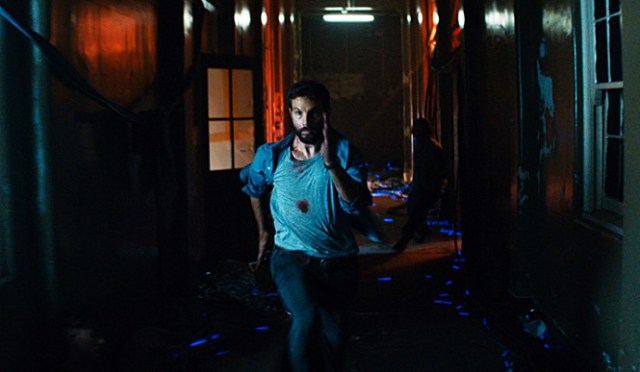
As enjoying his new freedom in private, Grey becomes more aware of the presence of STEM, who begins to talk to him on one day. While surely shocked and baffled by this sudden happening, Grey comes to accept STEM, and STEM turns out to be quite helpful when Grey looks into a bunch of investigation data which are sent by Detective Cortez (Betty Gabriel), a cop who has been investigating Grey and Asha’s incident. Thanks to STEM, Grey can find the identity of one of four suspects spotted by a drone at that time and then promptly goes to where that suspect resides, but this only results in a violent clash between him and that guy, and he is surprised again when he lets STEM take the total control of his body, which is instantly turned into a killing machine and then swiftly takes care of his imminent trouble.

upgrade04.jpg

As Grey tracks down other suspects while assisted by STEM, director/write Leigh Whannell, who has been mainly known for his contribution to “Saw” (2004) and “Insidious” (2011) and their respective following sequels, provides several tense, brutal moments peppered with a wry sense of humor. As cinematographer Stefan Duscio’s camera smoothly captures Grey’s every body movement, the movie generates some dark laughs from Grey’s visible awkwardness with his improved physical state, and I like how deftly it balances itself well between humor and suspense when Grey must handle his body for himself under a very urgent circumstance at one point.

Whannell draws effective performances from his main cast members. While Logan Marshall-Green holds the center well with his earnest acting, Betty Gabriel, who was memorable as one of creepy supporting characters in “Get Out” (2017), and Melanie Vallejo leave some impression despite their thankless roles, and Harrison Gilbertson and Benedict Hardie are suitably insidious in their mannered performance. As the voice of STEM, Simon Maiden is as calm and detached as Douglas Rain in “2001: A Space Odyssey” (1968), and you will probably sense something fishy whenever STEM speaks to Grey.

“Upgrade” is essentially a remorseless genre exercise without much human dimension, and I observed its story and characters from the distance, but Whannell did a fairly good job of bringing enough fun and style to his movie. This is certainly a quintessential case of guilty pleasure, and I will not deny that I was entertained during my viewing.

upgrade03

Posted in Movies | Tagged , , | Leave a comment

Adrift (2018) ☆☆1/2(2.5/4): Adrift Alone for 41 Days

adrift02

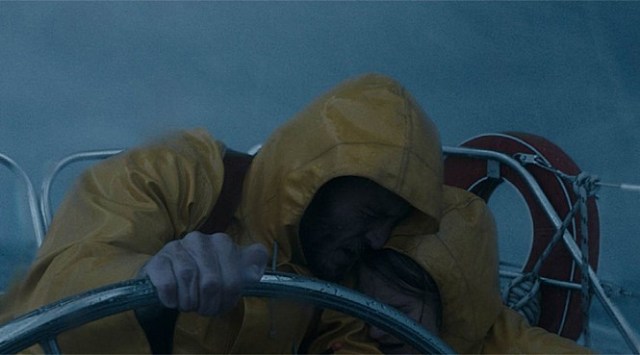
As your average survival drama movie, “Adrift” did its job as well as expected, but it somehow did not engage me enough during my viewing. While it is surely a well-made work which is also supported well by its lead performer’s good performance, the movie also feels rather plain and conventional compared to some other recent survival drama films, and I cannot help but wonder whether it could be better.

Based on the nonfiction novel “Red Sky in Mourning: A True Story of Love, Loss, and Survival at Sea” written by Tami Oldham Ashcraft and Susea McGearhart, the movie gives us a fictionalized version of the unbelievable real-life story of Tami Oldham (Shailene Woodley). In 1983, this 24-year-old American lass and her British boyfriend/fiancé Richard Sharp (Sam Claflin) embarked on their long-distance sailing across the Pacific Ocean for delivering a yacht to San Diego, California, but they happened to sail right into a big hurricane in the middle of their journey, and Oldham subsequently found herself in a very desperate situation which she endured for no less than 41 days before eventually being rescued (this is not a spoiler at all, you know).

At the beginning, we see Oldham regaining her consciousness in the yacht which is severely damaged by the hurricane. While there are maps and some basic tools for navigation at least, she only knows what she learned a bit from Sharp, who is nowhere in her sight at present. As realizing how helpless she is as being adrift in the middle of the Pacific Ocean, she becomes more frustrated and despaired, but it is clear to her that she must do anything for her survival, and she soon begins to do whatever is necessary for increasing her chance for survival.

adrift01

This terrible circumstance of hers is intercut with a series of flashback scenes which show us how Oldham came to fall in love with Sharp. Not long after she arrives in Tahiti, she happens to encounter him while working for earning more money for her ongoing trip around the world, and something is instantly and mutually felt between them during this accidental encounter of theirs. As spending more time together as fellow free spirits, they become more attracted to each other, and there is a lovely scene where Oldman shows Sharp her favorite spot somewhere in the island.

While they continue to enjoy their heavenly days of romance, there comes an offer from an elderly British couple close to Sharp. Like Sharp, they have been enjoying the sailing around the world, but now they must go back to London right now due to a personal matter, and they ask Sharp to deliver their yacht to San Diego for them. Because they are willing to give no less than $10,000 along with two first-class plane tickets for going back to Tahiti after the delivery, Sharp does not hesitate much to accept their offer, and Oldham is persuaded to go along with him although she is initially reluctant.

Things look fine and wonderful as they sail away from Tahiti, and Oldham is delighted when Sharp later proposes to her, but, of course, there eventually comes that dreadful moment as they receive an unexpected hurricane warning from the radio. They think they can avoid the hurricane, but, alas, they soon find themselves inside the hurricane, and the movie vividly depicts that perilous moment with all the sound and fury it can generate.

Meanwhile, we also observe how the circumstance becomes gloomier day by day for Oldham after the hurricane. At one point, she fortunately spots Sharp hanging on a small boat which has been floating near the yacht, and she immediately takes him up to the boat, but he is seriously injured and there are not many things she can do about that.

adrift04

Nevertheless, Oldham does not give up hope for them. Using maps and navigation tools, she discerns their exact location in the Pacific Ocean, and she comes to decide to sail to Hawaii instead of San Diego. That course is much riskier, but they can have more chance for survival at least, and she is willing to take a chance with that course.

The movie depends a lot on Shailene Woodley’s acting, and Woodley, an engaging actress who came to draw our attention through her wonderful supporting turn in Alexander Payne’s “The Descendants” (2011) and recently received lots of praises for her excellent performance in HBO TV miniseries “Big Little Lies”, is convincing as her character struggles more for survival along the plot. Although he does not have many things to do compared to Woodley, Sam Claflin clicks well with his co-performer on the screen, and I enjoyed the warm, sweet sense of intimacy which is palpably felt from their scenes unfolded in Tahiti.

“Adrift” is directed by Baltasar Kormákur, an Icelandic director who previously made “Everest” (2015). Like that film, which is also based on a grueling real-life survival story, “Adrift” is competent in technical aspects, and I particularly appreciate a number of breathtaking visual moments provided by cinematographer Robert Richardson. The movie surely reminded me again that I really do not like being in the middle of the sea, but I still think it could be as bold as “All Is Lost” (2013), which did a more impressive job in my inconsequential opinion. While I still remember those memorable moments in “All Is Lost”, I doubt whether I will remember what I saw from “Adrift” for a long time.

adrift03

Posted in Movies | Tagged , , , | Leave a comment

Searching (2018) ☆☆☆1/2(3.5/4): A smart, efficient digital era thriller

searching01

“Searching” is a lot better than you may expect. Sure, its small genre territory has been already explored by several recent notable films such as “Unfriended” (2014) and “Open Windows” (2014), but it is actually a very entertaining genre exercise which pushes its premise further with some thought-provoking aspects, and it also has several good moments of genuine emotions which make us care enough about what is being at stake for its increasingly desperate hero.

John Cho plays David Kim, a Korean American widower who lost his wife Pamela (Sara Sohn) a few years ago. During the opening sequence consisting of a series of various activities within a computer screen during several years, we see how David and Pamela raised their daughter Margot (Michelle La) with love and care, and we also observe how hard it was for him and Margot to see Pamela getting very ill before her eventual death. Within a few minutes, this sequence succinctly and effectively establishes everything about David’s life with his wife and daughter, and it is no wonder that this sequence is compared by many people to that poignant opening sequence of “Up” (2009).

After this sequence, we watch David and Margot going through their respective daily lives without much direct interaction. While he is mostly occupied with his work, she seems to have been busy for her study, and, as he points out in their online conversation, she forgets again emptying a trash bin in the kitchen of their house. As observing their plain online communication, you may be reminded of how much our communication technologies have advanced during last two decades – and how much our daily life revolves around them these days.

searching03

When Margot says she is going to spend the night at her study group friend’s house, David does not object to this at all, but she later calls him several times for some unknown reason. Unfortunately, David is asleep at that point, so he thinks his daughter already went to her high school when he wakes up alone in the house in the next morning, but then he gradually comes to realize that something is wrong. He keeps trying to contact with his daughter, but there is no response from her at all, and he is soon thrown into panic as fearing for the worst.

After he calls the police, he meets Detective Rosemary Vick (Debra Messing), who, according to what he finds via Google search, is a reliable and respectable detective. She requests David to get any information or clue from Margot’s friends, and he promptly embarks on his private investigation, but he only finds himself surprised and baffled as realizing he did not know that much about his daughter. For instance, her study group friends turn out to be no more than mere schoolmates, and she also quit her piano lesson several months ago while not telling anything to her father.

Now I should be more discreet for not spoiling your entertainment, but I guess I can tell you about a number of fabulous moments in the film. While I like an amusing moment showing David’s steady attempt to get the access to his daughter’s several social service network accounts, I enjoyed how he assembles pieces of information obtained from his daughter’s friends and acquaintances, and I was also entertained by how he later comes to discover where his daughter might go during that night.

searching04

And I also appreciated how deftly the movie rolls its plot elements within its limited spaces. Although most of the movie is presented via the monitors of David’s laptop computer and some other electronic devices, director/co-writer Aneesh Chaganty and his co-writer Sev Ohanian keep finding inventive visual ways to engage and intrigue us, and they did a commendable job of maintaining narrative momentum throughout the film. I must point out that the movie stumbles a bit during its last act, but nearly everything in the story clicks well together thanks to Chaganty and Ohanian’s dexterous storytelling, and you will admire that more during the second viewing as observing how several crucial story elements in the movie are carefully placed along its plot.

Furthermore, the movie is anchored well by Cho’s strong acting, which functions as the emotional center we can hold on. While he can be very funny as shown from “Harold & Kumar Go to White Castle” (2004), Cho has recently showed his more serious side via recent Star Trek movies and “Columbus” (2017), and “Searching” confirms to us again that he is an engaging performer with considerable talent. There are numerous moments in the movie which depend a lot on his performance, and Cho is believable as his character is pushed into more dread and desperation.

In case of the other main performers in the film, they fill their respective roles as required while holding their own places around Cho. While Debra Messing is effective in her functional role, Michelle La is convincing in her few scenes with Cho, and Sara Sohn and Joseph Lee, who plays David’s laid-back younger brother, also give fine supporting performances.

“Searching”, which deservedly received the Alfred P. Sloan Prize and the NEXT Audience Award at 2018 Sundance Film Festival early in this year, is not exactly groundbreaking, but its achievement is quite impressive on the whole, and it will probably remain on the top of its genre territory for next several years. This is indeed a smart, efficient thriller for our current digital era, and I assure you that you will have lots of fun and excitement from it.

searching02

Posted in Movies | Tagged , , , , | 1 Comment

The Prince and the Dybbuk (2017) ☆☆☆(3/4): A self-made filmmaker with hidden past

theprinceandthedybbuk02

To be frank with you, I had never heard about Michał Waszyński before watching documentary film “The Prince and the Dybbuk”, which recently shown at EBS International Documentary Festival. According to Wikipedia, this prominent Polish filmmaker once worked as an assistant director of the legendary German filmmaker F.W. Murnau, and he subsequently directed no less than 37 films in Poland during the 1930s. Considering that total 147 films were made in Poland during that period, that was quite an impressive filmmaking career, but then he went further as settling in Italy after the World War II, and he became a well-known international movie producer who participated in the production of several notable major American films such as Joseph L. Mankiewicz’s “The Quiet American” (1958) and Anthony Mann’s “The Fall of the Roman Empire” (1964).

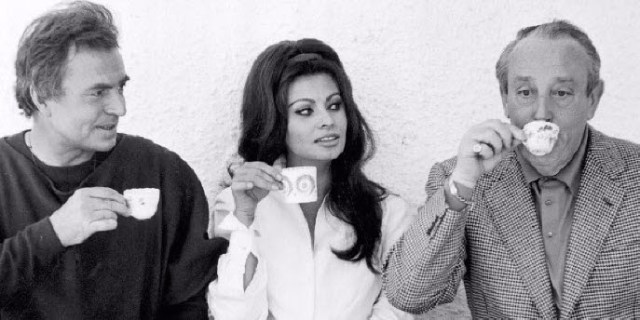
During that glorious time in Italy during the 1950-60s, Waszyński presented himself as a Polish royalty to others, and everyone around him had no problem with going along with that mainly due to his elegant and debonair appearance. Often hanging around with several beautiful movie star actresses such as Claudia Cardinale, Audrey Hepburn, and Sophia Loren, he surely enjoyed his own La Dolce Vita in Rome along with his friends and colleagues, and, as shown from one archival footage clip, he was still regarded as ‘the prince’ even when he died in 1965.

However, he seldom talked about his past in front of others, and the documentary reveals his hidden past to us bit by bit as moving around several different locations. An old photograph left by him reveals that he was actually a Polish Jewish guy who was born as Mosze Waks in Kowel, Ukraine, and the documentary subtly presents what happened to his family and many other Jewish people in Kowel during the World War II. In Tel Aviv, Israel, the surviving distant cousins of Waszyńsk gives us a bit of genealogical information on his family, and we are told that he left his hometown probably because he was disowned from his family for some religious matter.

theprinceandthedybbuk05

While never trying to clarify the reason behind Waszyński’s departure from his hometown, the documentary implies that he remained haunted by his past and heritage even after he came to Poland and began to live as a Catholic with his changed name. After making a number of popular films, he decided to make “The Dybbuk” (1937), and this mythical Yiddish drama movie which is based on a famous play written by S. Ansky surprised many people at that time. At present, the movie is regarded as one of the important works in the Polish movie history, but it received a very negative response from Joseph Goebbels in Nazi Germany, and, not so surprisingly, Waszyński had to leave Poland when Nazi Germany invaded Poland in 1939.

Several years later, Waszyński joined the Polish Army of general Władysław Anders, and we hear about what he did during that time via two old veterans who knew Waszyński. According to a piece of old record, Waszyński was regarded as a smart, resourceful guy who unfortunately lacked leadership, but he eventually became a member of the army film unit, and he certainly utilized his filmmaking skill well when the Polish Army fought in the Battle of Motnte Cassino in Italy.

Once the war was over, Waszyński re-started his filmmaking career in Italy, and he soon found himself associated with some prominent figures from Hollywood. For example, he became a close friend to Mankiewicz when Mankiewicz was making “The Barefoot Contessa” (1954) with Eva Gardner in Italy, and he even briefly appeared in that classic film.

We hear a bit about his relationship with a rich, generous Italian countess, but then we are informed that he was in fact a closeted homosexual. While he was usually discreet about his sexuality, he often spent evenings at public spots frequented by many other gay people, and an old former actor who was in a close relationship with him around that time tells us Waszyński’s rather amusing gesture upon him.

theprinceandthedybbuk01

In the early 1960s, Waszyński advanced more with the ambitious production of “The Fall of the Roman Empire”, and the documentary presents an archival footage clip showing the construction of those huge sets used for the shooting of the movie. We later meet an old man who was one of many extras in the movie, and we hear about how often Waszyński tried to get some glimpse into the dressing room for male extras.

All these various episodes in Waszyński’s life are often intercut with the excerpts from his private diary. While he never directly expressed whatever he felt behind his larger-than-life façade, a faint sense of guilt and regret is felt from his words, and it seems he was not very happy while constantly running away from the past from which he could probably never dissociate himself.

“The Prince and the Dybbuk”, which received Venezia Classici Award at the Venice Film Festival in last year, is not as informative as I hoped, but directors Elwira Niewiera and Piotr Rosolowski did an admirable job of presenting their subject with considerable mood and style to be appreciated, and I had a fairly good time during my viewing even though I often felt impatient. Thanks to this solid documentary film, I come to know about one interesting filmmaker to some degrees, and that is enough for me.

theprinceandthedybbuk04

Posted in Movies | Tagged , , , | Leave a comment

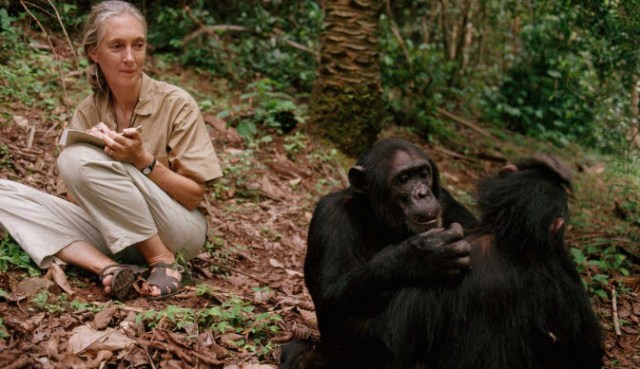
Jane (2017) ☆☆☆1/2(3.5/4): A vivid, riveting presentation of Jane Goodall’s life and work

jane03

Documentary film “Jane”, which was recently shown at the EBS International Documentary Film Festival during last week, gave me an experience both enlightening and enthralling. While I certainly came to learn a lot more about the life and work of Dr. Jane Goodall, I was also amazed and mesmerized by many vivid, riveting moments presented in this very special documentary, and I eventually came to appreciate more of her significant academic achievement as admiring her considerable spirit and dedication.

Mainly alternating between Goodall’s interview clips and archival footage clips, the documentary gives us a close, intimate look into her life and work. When she was sent to Gombe, Tanzania by her boss Dr. Louis Leakey in 1957, Goodall was merely a secretary working for him, but he saw something special inside her. Although she had no college degree or formal training experience, she was a young, open-mind woman with passion for knowledge and enormous patience, and, as she tells us at one point, she also had been a lot interested in nature and animals since she was very young.

After coming to Gombe along with her mother who was always supportive of her daughter’s ambition, Goodall soon embarked on studying the chimpanzees inhabiting in the forest area of Gombe, but she came to face a number of obstacles. At that time, there had not been any notable scientific research on the behaviors of chimpanzees or any other primate species, and the chimpanzees usually ran away whenever she approached to them for closer observation. She managed to make a record on their behaviors as watching them from the distance, but that was not enough at all, and she saw that she needed to go further for her study. Frequently being around their habitat, she patiently waited, and there eventually came a breakthrough point some time later. As recognizing that she was no threat to them, the chimpanzees slowly came to accept her presence, and she earned their trust as providing them some food.

jane02

While studying their behaviors as closely as she wanted, Goodall discovered many interesting facts about them, and one of these facts was quite a sensation to not only the academia but also the human society. She observed several chimpanzees using a branch for eating ants, and this observation of hers led to a significant paradigm shift in primatology. Around that time, many people thought only human beings are capable of using tools, but Goodall’s observation proved it totally wrong, and that was accordingly followed by more discussion on what exactly makes human beings different from animals.

Meanwhile, her life became a little more complicated than before. As funded by the National Geographic, she came to be accompanied with a wildlife photographer to record her study, and that photographer was her first husband Hugo van Lawick. As closely working together for a while, they came to fall in love with each other, and they eventually got married in 1964.

Even after their son was born, Goodall continued to study the chimpanzees in Gombe, and the documentary makes an interesting point on how she learned a lot about motherhood through her observation of the close bond between a certain female chimpanzee and its children. Like that chimpanzee, Goodall did as much as she could do for raising her son well, and you may be amused to learn that her son did not like chimpanzees much in contrast to his mother.

And she kept pursuing her academic passion as before. When her relationship with her husband became considerably estranged as they focused more on their respective careers, she became conflicted for a while, but her mother advised her not to give up anything just for maintaining her marriage, and she eventually divorced in 1974.

jane04

In the meantime, there came a couple of devastating changes in Gombe. At one point, many chimpanzees in Gombe suffered from polio, and Goodall tells us a heartbreaking moment when one of those unfortunate chimpanzees had to be euthanized for a humane reason. Not long after that polio epidemic, the chimpanzee community in Gombe was shaken by a sudden internal conflict, and Goodall and her researchers witnessed the dark, brutal side of animal nature. Nevertheless, she did not stop her research at all, and, as many of you know, she is still working even at present.

All those memorable moments in the documentary are palpably presented via a bunch of amazing archival footage clips edited from a hundred hours of never-before-seen footage shot by van Lawick, and some of them are simply spellbinding to say the least. While it is surely awesome to get a close glimpse into the tentative interactions between Goodall and her animal subjects, I was also awed by small but precious moments showing other animals and plants, and Philip Glass’ propulsive minimalist score adds an extra narrative force to what is being presented on the screen. I must point out that his score feels a bit too redundant at first, but then its detached attitude fits perfectly to the distant but reflective narrative approach of the documentary, and it is definitely one of his best film scores.

“Jane” is directed by Brett Morgan, who was Oscar-nominated for “On the Ropes” (1999) and then made several acclaimed documentary films such as “Kurt Cobain: Montage of Heck” (2015). While quite informative and entertaining as required, the documentary also works as a compelling human portrayal of one passionate researcher, and it is a shame that it was not Oscar-nominated early in this year (it was included in the short list for Best Documentary Oscar, though). This is indeed a terrific piece of work, and I urge you to watch it as soon as possible if you have not seen it yet.

jane05

Posted in Movies | Tagged , , , | 1 Comment

One Cut of the Dead (2017) ☆☆☆(3/4): Don’t stop shooting!

onecutofthedead03

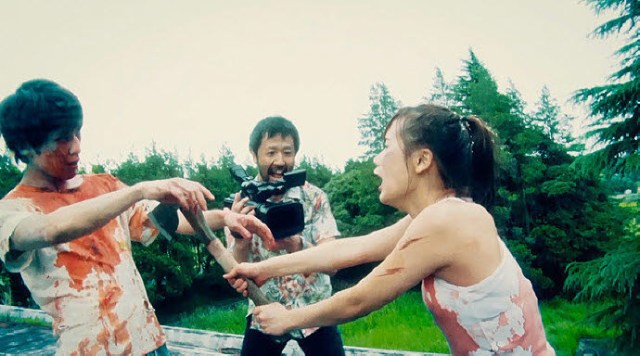
Japanese film “One Cut of the Dead” combines two least favorite genres of mine and then suddenly throws the mix into a farcical situation which turns out to be a lot more entertaining than it seemed at first. Although I already knew about that before watching the movie, I often could not help but laugh and chuckle along with other audiences around me as enjoying many uproarious moments in the film, and I came out of the screening room with considerable jovialness and excitement. Nevertheless, I think you should watch the movie without any information for maximum entertainment, so I recommend you not to read the following paragraphs.

The movie opens with a filmmaking process being done in some abandoned building. They are making a zombie film, and they are shooting a crucial scene where the heroine confronts her boyfriend who has been turned into a zombie, but the lead actress has a problem with showing genuine emotions even after 42 takes. Quite frustrated and exasperated about this problem, the director lashes not only his lead actress but also his lead actor, and then he walks away from the scene while still seething with anger.

As the cast and crew have some rest during the director’s absence, one of them tells the lead performers a creepy tale about their shooting location. According to the tale, their shooting location was actually used by the Japanese military for some secret medical experiment during the World War II, and it seems the director chose to shoot his film in this location for, uh, more realism. At first, the lead performers do not believe the tale much, but, what do you know, zombies soon appear around them, and, not so surprisingly, it turns out that the director deliberately puts them into this perilous situation. As more people are turned into zombies, the lead performers are thrown into more fear and panic, and the director becomes more willing to shoot everything with his camera.

onecutofthedead01

There is also the other camera which is constantly around these characters (Please don’t ask me who is handling it), and what we eventually get is an amusing cross between zombie flicks and found footage movies. It is both funny and fascinating to watch how that camera in question persistently follows or moves along characters without any single cut for around 30 minutes, and we come to forgive a number of glaringly sloppy aspects such as an oddly protracted climactic moment on the rooftop of the building.

And then it is revealed that what we have seen so far is a short film titled, yes, “One Cut of the Dead”, and the movie goes back to one month ago for showing how everything began for the cast and crew of that short film. When he has just finished another mediocre directing job in his very inconsequential filmmaking career, Higurashi (Takayuki Hamatsu) is approached by the executives of a new cable movie channel which is mainly going to show zombie movies, and they have a special project which may interest him. They want him to make a one-take zombie movie, and they also want it to be presented via live broadcasting.

While he is understandably reluctant at first, Higurashi eventually comes to agree to make that movie, and the middle act of the film focuses on how he and others prepare for the production of their movie step by step. We see the cast members being together for script reading, and then we also watch how Higurashi and his cinematographer carefully plan how to shoot the movie in one single shot as demanded, and then we see Higurashi and his cast and crew gathering at that shooting location.

onecutofthedead02

Of course, the situation becomes more challenging than expected, and we get plenty of laughs as watching how Higurashi and his cast and crew rise to the occasion for completing their shooting process without any disastrous interruption. For instance, Higurashi and his ex-actress wife have to substitute for two of his performers due to an unexpected accident, and one of the most hilarious moments in the movie comes from when Higurashi becomes a little too emotional in front of the camera at one point. As a young woman who has aspired to be a filmmaker just like her father, Higurashi’s daughter gladly supervises the shooting process instead of her father, and you will probably cheer for her as observing her irrepressible passion and enthusiasm.

While keeping throwing more craziness and outrageousness into this loony filmmaking process, the movie firmly maintains its deadpan attitude, and so do Takayuki Hamatsu and the other cast members of the film. Although most of characters in the film are more or less than broad archetypes, they are imbued with life and personality thanks to the spirited comic performances from Hamatsu and other performers in the film, and the movie is surprisingly sweet and poignant at times.

“One Cut of the Dead” is directed and written by Shin’ichirô Ueda, and he did a competent job of mixing different genres well into an enjoyable piece of work. While it may be mild compared to the sheer lunacy of Sion Sono’s “Why Don’t You Play in Hell?” (2013), the movie is still quite funny with its goofy and cheerful depiction of its characters’ problematic filmmaking process, and you will enjoy it a lot if you are familiar with the genres delightfully lampooned in the movie. In short, this is one of the funniest movies I saw during this year, and I am willing to watch it again for getting more good laughs.

onecutofthedead04

Posted in Movies | Tagged , , , | 2 Comments