Unicorn Store (2017) ☆☆(2/4): A whimsical mess

unicornstore02

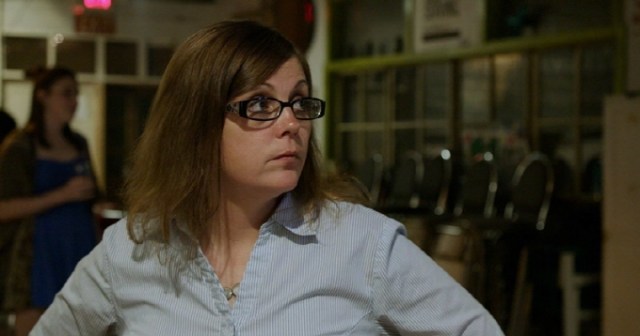
“Unicorn Store”, which was shown at the Toronto International Film Festival in late 2017 but only got released on Netflix yesterday, is a whimsical mess which is incoherent and confusing in terms of what is about as well as how it is about. As far as I can see, this is supposed to be a quirky little comedy about a flawed heroine struggling to get out of her state of arrested development, but the movie is not funny at all despite all those offbeat moments in the film, and it is actually tedious and annoying in its relentless quirkiness from time to time.
Brie Larson, who also directed the film, plays a young woman named Kit, who has recently got kicked out of her art college as showing no particular potential as an aspiring artist. In the opening scene, she zealously draws her abstract painting, but that does not impress her professor much, and I must confess that I agree to her professor’s written opinion, because the only thing to distinguish her, uh, artistic work from others’ is those bright rainbow colors which may remind you of your kindergarten years.

After that, Kit returns to her family house, where she is greeted by her irritatingly cheerful parents, played by Joan Cusack and Bradley Whitford. They sincerely want Kit to join their activities for those emotionally troubled young people, but she is not interested at all, and we soon see her spending her days on a couch with a TV turned on all day long.

Anyway, after coming across a TV advertisement at one point, Kit eventually decides to get a job for making her life better, and she is subsequently employed at an advertising company, where she is usually tasked with several menial jobs including copying magazines while getting some inappropriate attention from her rather creepy supervisor play by Hamish Lincklater. Like the other supporting performers in the film, Linklater looks and sounds so offbeat and mannered that I occasionally wonder about how he was directed by Larson behind the camera.

unicornstore01

However, the most bizarre performance in the film comes from Samuel L. Jackson, who plays a mysterious (and suspicious) character who approaches to Kit on one day via sending her a very colorful invitation letter. While quite baffled about this invitation letter, Kit decides to go to a place which is simply called ‘The Store’, and then she encounters Jackson’s character, who surely impresses her a lot with his strikingly colorful attire and campy attitude as explaining what is going to be given to Kit.

Of course, as you have already guessed, the object in question is a unicorn, and Jackson’s character tells Kit that there are several requirements for getting a unicorn, and she does not have much problem in accepting the condition just because, well, it really looks and feels like to her that unicorns really exist. Larson tries to make this weird moment convincing as much as she can, but, alas, it is so preposterous from the beginning that it does not work at all even with a talented actress like her.

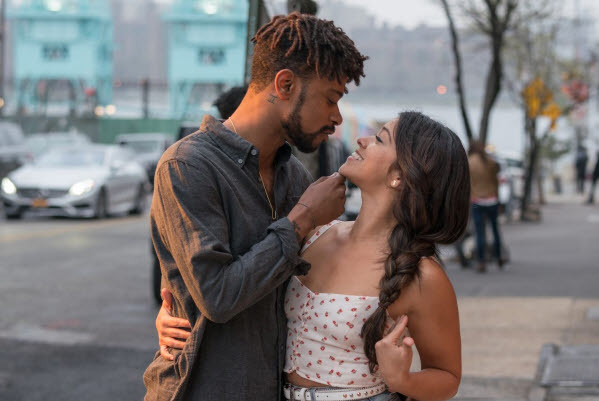
One of the requirements demanded by Jackson’s character is building a stable for the unicorn, and, because she does not know anything about building a stable, Kit comes to recruit a kind hardware store guy played by Mamoudou Athie, who does a bit more than functioning as the voice of reason in the movie. While often confounded by her odd aspects, Athie’s character is clearly attracted to Kit, and Athie’s no-nonsense acting conveys well to us why his character keeps hanging around Kit instead of instantly staying away from her.

Meanwhile, the movie continues to supply us lots of quirky moments. For instance, there is a predictable moment between Kit and her parents when she joins her parents’ activities for those emotionally troubled kids, and we later get a wacky moment of glittering exaggeration when Kit enthusiastically attempts to present her loony advertisement idea in front of her supervisor and other company executives.

unicornstore04

However, none of these and other supposedly comic moments in the film do not stick that well. The screenplay by Samantha McIntyre surely tries very hard in shoving whimsicality into its story, but the overall result is jumbled and disjointed to say the least, and we only find ourselves bored and annoyed while not so sure about how we should regard its story and characters.

“Unicorn Store” is the first feature film directed by Larson, who made two short films before her acting career became more prominent with “Short Term 12” (2013) and “Room” (2015). She certainly tries to expand the range of her talent here in this movie, and her efforts behind the camera are sometimes shown on the screen mainly through the constantly bright color scheme of the movie, but the movie is still a very disappointing dud on the whole. In addition, she and many other notable performers in the film are unfortunately wasted in their broad caricature roles, and this considerable waste of talent made me more depressed during my viewing.

In conclusion, “Unicorn Store” is not recommendable at all even if you are an ardent fan of Larson, and I strongly recommend you to watch “Short Term 12” and “Room” instead unless you can go to movie theater for watching “Captain Marvel” (2019), where Larson and Jackson are definitely more amusing and entertaining to watch in comparison. To be frank with you, I do not mind whimsicality at all, but “Unicorn Store” has too much of it, and it is not even interesting at all in my humble opinion.

unicornstore03

Posted in Movies | Tagged , | Leave a comment

Shazam! (2019) ☆☆☆(3/4): A goofy lightweight superhero movie

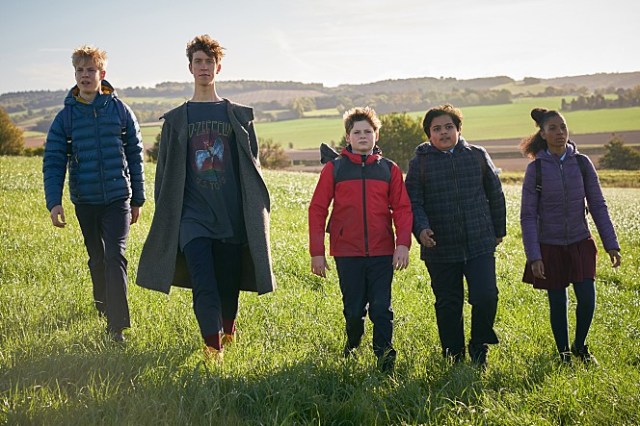
shazam01

“Shazam!”, the latest installment from the DC Extended Universe (DCEU), is a lightweight superhero movie as funny and goofy as expected from its silly promise, and that is surely a nice fresh change compared to the grim ponderousness of “Batman v Superman: Dawn of Justice” (2016) or the bloated campiness of “Aquaman” (2018). Although it sometimes feels like an overextended one-joke movie especially during its final act, the movie still has some spirit and charm to engage us, and the overall result is better than other DCEU movies except, yes, “Wonder Woman” (2017).

Mainly set in Philadelphia, the story of the movie is about a 14-year-old orphan named Billy Batson (Asher Angel). When he was a little kid, Billy happened to be separated from his dear mother at a local carnival, so he was put into foster care after being taken by the police, but he has stubbornly searched for his mother while becoming a troublemaker who has bounced from one foster home to another during next several years. After his latest trouble, he is sent to another new foster home, and his new foster parents, Victor (Cooper Andrews) and Rosa (Marta Milans), warmly greet him along with several other kids in the foster home, but he still wants to keep looking for his mother even though his search has already reached to dead end.

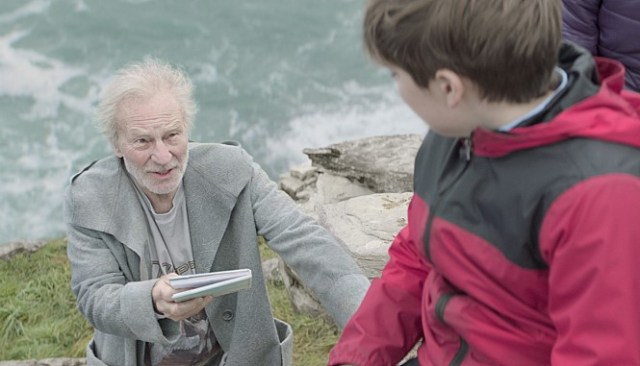
On one day, something very strange happens to Billy shortly after he runs away from a couple of school bullies and then gets on a subway to evade them. He is suddenly transported alone to a dark, mysterious place, and then he comes across an old wizard played Djimon Hounsou, who has been looking for a right guy to succeed him for many years. Although Billy does not look that promising as his potential successor to protect the Rock of Eternity, the wizard transfers all the power he has to Billy before being perished, and Billy is surprised to see himself transformed into an adult superhero played by Zachary Levi.

shazam03

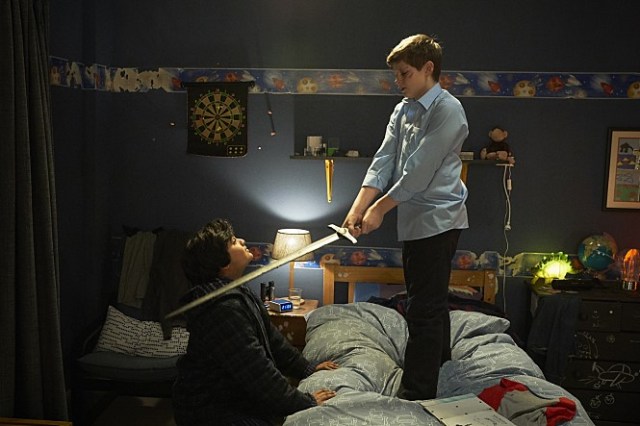
What follows next is not so far from those comic situations in “Big” (1988), which incidentally receives a nice homage at one point in the story. Quite perplexed and awkward with how he looks now, Billy seeks help from Freddy Freeman (Jack Dylan Grazer), one of the kids in Billy’s new foster home who is also your average nerdy superhero expert. Quite willing to be Billy’s sidekick, Freddy helps Billy testing his superpower step by step, and we accordingly get several humorous moments including a silly but uproarious scene where Billy and Freddy happen to come across a couple of armed robbers at a local supermarket.

Of course, their circumstance later becomes quite serious with the expected appearance of a powerful villain. Since he was rejected by the wizard many years ago as shown during the prologue scene, Dr. Thaddeus Sivana (Mark Strong) has looked for any possible way to access to the Rock of Eternity, and he finally goes to that place and then unleashes seven powerful demons named after, what do you know, the Seven Deadly Sins. Shortly after getting his own private payback moment, Dr. Sivana looks for his destined opponent as instructed by these demons, and it does not take much time for Billy to discern how serious the situation becomes for not only him but also several others around him including Freddy.

Although the movie loses its narrative pacing a bit around that narrative point, the Henry Gayden’s screenplay, which is based on the story written by him and his co-writer Darren Lemke, maintains its irreverent sense of humor at least, and director David F. Sandberg, a Swedish filmmaker who previously drew our attention via his first two feature films “Lights Out” (2016) and “Annabelle: Creation” (2017), steadily balances the movie between humor and drama. While we continue to get plenty of small and big laughs along the plot, Billy’s continuing search for his mother is handled enough gravitas and poignancy, and that is the main reason why his predictable moment of realization later in the film works on the emotional level.

shazam02

I must point out that the movie eventually becomes less interesting during its final act, which is packed with lots of busy CGI actions. At least, Sandberg and his crew did a fairly competent job of generating enough fun and excitement, and I came to forgive several notable shortcomings including those plainly hideous CGI monsters, which are not very distinguishable from each other in my humble opinion.

As the comic center of the film, Zachary Levi, who has been mainly known for TV series “Chuck”, willingly throws himself into absurdity and preposterousness. While I think his broad performance could be more organically connected with Asher Angel’s relatively more earnest performance, Levi ably delivers numerous comic moments with gusto, and he is also matched well by Jack Dylan Grazer, who simply steals the show with his authentic quirkiness. While Djimon Hounsou and Mark Strong look as serious as required, Cooper Andrews and Marta Milans imbue their supporting roles with warm, gentle decency, and Grace Fulton, Ian Chen, Jovan Armand, and Faithe Herman bring considerable colorful life and personality to their respective supporting roles.

While “Shazam!” is not something as ground-breaking as “Wonder Woman” or “Captain Marvel” (2019), I like its spirited moments of unadulterated fun and excitement, and I will not deny that I chuckled as watching its funniest moments during my viewing. Sure, it could have been more refreshing if it had been released around 10 years ago, but it is still an enjoyable product distinctive enough to distinguish itself from many other superhero films out there, and I guess we can have some expectation on what may come next after this promising start.

shazam04

Posted in Movies | Tagged , , | Leave a comment

Birthday (2018) ☆☆1/2(2.5/4): Remembering their son

birthday03

South Korean film “Birthday” is an earnest melodrama about the personal grief and sadness surrounding the sinking of MV Sewol on April 16th, 2014. While it is certainly well-intentioned and tactfully handles its subject with some restraint and respect, there are unfortunately a number of artificial aspects in terms of story and characters, and the movie often tries too much to pull our heartstrings in my inconsequential opinion.

At the beginning, the movie observes the estranged relationship between its two main characters. When he returns to South Korea after several years of absence, Jeong-il (Sol Kyung-gu) promptly goes to a shabby apartment building where his wife Soon-nam (Jeon Do-yeon) currently lives along with their little daughter Ye-sol (Kim Bo-min), but his wife does not respond at all for some reason when he repeatedly rings the doorbell of her apartment. Although he eventually meets her later, she is cold and distant to him while also ready for divorce, and we gradually come to see the reason. Around two years ago, their adolescent son Soo-ho (Yoon Chan-young) died along with many of his schoolmates due to the sinking of MV Sewol, and Soon-nam has been grieving a lot over their terrible loss while also angry and resentful about her husband’s absence during that horrible time.

Understandably feeling morose and regretful about not being there for his wife, Jeong-il tries to make amends to his wife and Ye-sol, who is usually perky but still misses her big brother nonetheless. When she goes to a beach along with her schoolmates, Jeong-il gladly accompanies her instead of his wife, but then he comes to see at one point that his daughter has not fully recovered from Soo-ho’s death yet.

birthday05

And we see how desperately Soon-nam has tried to suppress her painful feelings behind her frigid façade. When she and her husband go to the memorial for the sinking of MV Sewol, they come across several people who also lost their kids because of the incident, and they reluctantly join these people’s meeting, but Soon-nam cannot help but exasperated by the rather lively mood of the meeting, so she eventually walks away from these people after throwing some harsh words to them. As Jeong-il keeps hanging around her for restoring their relationship, she feels more pain and resentment than before, and that even affects her relationship with her daughter as shown from one brief hurtful scene.

Meanwhile, a guy from some association approaches to Jeong-il and Soon-nam, and he is sincerely interested in holding a private ceremony for Soo-ho’s birthday. Jeong-il has no problem with that, but Soon-nam flatly rejects this guy’s suggestion, and that causes more conflict between her and her husband. While he thinks the ceremony may give them an opportunity for healing and closure, she does not want to be reminded of her irreversible loss again, even though she misses her son more and more day by day.

In the end, there comes a point where Soon-nam finds herself quite overwhelmed by what has been accumulated inside her for last two years, but the movie does not provide enough emotional base for that. While it is often too blatant at times during its several contrived weepie moments including the one involved with Soo-ho’s passport, the screenplay by director/writer Lee Jong-eon does not bring much human depth to its two main characters, and it is also frequently deficient in the depiction of many of its substantial supporting characters, who are mostly flat and underdeveloped on the whole.

birthday04

Above all, we never get to know who Soo-ho really was, even after the finale sequence showing the aforementioned ceremony for Soo-ho’s birthday (Is that a spoiler?). It looks like he was a pretty good kid loved and liked by others around him, but the movie presents him without much life and personality, and that is the main reason why the finale sequence feels rather trite instead of being something genuinely touching.

Anyway, the movie works to some degree to thanks to its two reliable lead performers. Sol Kyung-gu, who recently gave an intense performance in “Idol” (2019), gives a low-key acting which mainly functions as the solid ground for his co-performer Jeon Do-yeon’s relatively showier acting, and Jeon, who has been always interesting to watch since she appeared in “The Contact” (1997) and incidentally appeared along with Sol in “I Wish I Had a Wife” (2001), ably handles her several melodramatic scenes without any misstep. In case of the other main cast members of the film, most of them are wasted in their respective thankless roles, but the special mention goes to young actress Kim Bo-min, who holds her own small place well between Sol and Jeon.

Overall, “Birthday” is sincere and respectful toward its subject, and, as far as I could observe from other audiences around me while watching it at a local movie theater during last evening, it is not entirely without emotional appeal, but I cannot recommend it due to a number of weak points including its clichéd narrative and thin characterization. I came out of the screening without much satisfaction, but you may be more generous to it, and I will be glad if the movie leads to more conversations on the sinking of MV Sewol and its traumatic aftermath which still continues even at this point.

birthday01

Posted in Movies | Tagged , , , | Leave a comment

Peterloo (2018) ☆☆1/2(2.5/4): A well-intentioned misfire by Mike Leigh

peterloo01

Mike Leigh’s latest film “Peterloo” attempts to give us a close look into the Peterloo Massacre of 1819, which has been regarded as a significant incident in the British history of civil reform. On August 16th of that year, around 60,000 people from Manchester and its surrounding towns came to St. Peter’s Field in Manchester for participating in a big public meeting for demanding Parliamentary reform and an extension of voting rights, but the overreaction from the armed government militias surrounding the meeting at that time resulted in a devastating tragedy, and, according to Wikipedia, as many as 15 people were killed and up to 700 wounded during this terrible incident.

During its first act, the movie observes the growing public discontent inside the British society during the 1810s. As the war with France is over after the victory at the Battle of Waterloo in 1815, the country seems to be going back to its normal state, but millions of working-class people around the country have felt more of the need of civil reform for their better living and working condition, and their situation becomes more urgent and desperate when the government bans buying cheaper imported grains.

When Joseph (David Moorst), a young soldier who served in the Duke of Wellington’s army in the Battle of Waterloo, returns to his family home in Manchester, his family warmly welcomes him, but he soon finds himself struggling to start his normal life again. He looks for any chance of getting employed, but there is not anyone willing to hire him, and his family members cannot help him much as most of them have struggled to earn their living as working at a local cotton mill.

Because there is nothing to do for him, Joseph attends a laborers’ meeting along with his father and brother. At this meeting, several local reform activists including Samuel Bamford (Neil Bell) express their strong political opinions about the civil reform for millions of laborers around the country, and everyone zealously agree with them while being secretly watched by a few suspicious guys at the corner.

peterloo03

One of them is Deputy Chief Constable Nadin (Victor McGuire), who works under a bunch of local magistrates who look as if they had just come right out of Charles Dickens novels. These government officials and other high-ranking government figures in the movie are so haughty and condescending in their stiff attitude that the performers playing them in the film frequently chew their scenes a bit too much, and that is one of the major distractions in the movie in my inconsequential opinion.

While the British government is ready to suppress the growing demand for civil reform by any means necessary (it even suspends Habeas corpus, for instance), Bamford and other activists in Manchester decide to hold a public meeting in St. Peter’s Field, and they invite Henry Hunt (Rory Kinnear), a renowned activist/orator who has risen with considerable reputation and influence. When he arrives in Manchester, Hunt is not so pleased about the situation and condition surrounding the upcoming meeting, but he reluctantly comes to agree to appear and then give a speech at the meeting, while also firmly emphasizing that there should not be any trouble during the meeting.

Of course, the local magistrates and Nadin do not welcome Hunt much, and they accordingly try to find any excuse for stopping the meeting. While they let the meeting held at St. Peter’s Field because there is no legal way for preventing it, they have the armed government militias surrounding the meeting, and then they wait for a chance to arrest Hunt when Hunt finally arrives at the meeting and is about to begin his speech in front of thousands of people eager to hear every word from him.

peterloo02

During its last 30 minutes, the movie presents the consequent pandemonium following Hunt’s arrest as expected, but the result is rather insipid even though you can clearly sense Leigh’s anger and indignation about the Peterloo Massacre. While he is surely one of the best filmmakers of our time, Leigh shows here that he is not that good at shooting and editing big crowd scenes, and the movie stumbles a lot in its scattershot presentation of the incident.

Furthermore, Leigh does not utilize well many of his cast members. While they are well-cast on the whole, their characters are caricatures mainly existing for making a point to us again and again, and this heavy-handed storytelling approach only makes us more distant to its story and characters. While Rory Kinnear manages to bring some human complexity to his character, the other substantial performers in the film do not have many things to do except filling their respective roles as required, and that is really peculiar considering how Leigh has always brought out the best from the performers in his films.

Despite being well-intentioned, “Peterloo” is a misfire hampered a lot by its weak storytelling and thin characterization, and it is a major letdown from a great filmmaker who has never disappointed us for more than four decades with a series of wonderful works ranging from “Bleak Moments” (1971) to “Mr. Turner” (2014). Sure, I came to learn a bit about the Peterloo Massacre thanks to this movie, but it did not engage me much, and I only came to wish for a better film in the end.

peterloo04

Posted in Movies | Tagged , , | Leave a comment

Hotel by the River (2018) ☆☆☆(3/4): One day of an aging poet guy

hotelbytheriver04

South Korean film “Hotel by the River”, the latest work from Hong Sang-soo, relatively feels more melancholic and reflective than Hong’s previous works. While there are several amusing moments of low-key humor as you can expect from his film, the overall tone of the movie is quite serious on the whole, and this may be the beginning of another small but significant change in Hong’s steady and consistent filmmaking career.

The story of the movie mainly revolves around Yeong-hwan (Ki Joo-bong), an old poet who has recently stayed at a rural hotel located by the Han River for two weeks. Because the owner of the hotel, who is incidentally never shown in the film, is an admirer of his poems, Yeong-hwan is allowed to stay there for free without any interference, but, as shown from the very first scene of the movie, he has been troubled by something inside him, and that is why he asked his two sons to come and then meet him at the hotel.

While waiting for his two sons at a cafe located inside the hotel, Yeong-hwan spots two young ladies walking outside the hotel. They are Ah-reum (Kim Min-hee) and her friend Yeon-joo (Song Sun-mi), and, as shown to us later, they come to the hotel for having their own quiet private time together. Having recently broken up with some married guy, Ah-reum looks a bit depressed, but she feels mostly fine, and she is often cheered up by her friend’s supportive presence as well as a few nice things she sees from the windows of the hotel.

When Yeong-hwan subsequently approaches to Ah-reum and Yeon-joo, he repeatedly compliments them for their beauty, and that took me back to those similar moments in many of Hong’s previous films. His main female characters are usually plain beautiful, so his main male characters cannot help but say again and again to these ladies how beautiful they are, and that has surely been a sort of running gag to Hong’s audiences.

hotelbytheriver02

The next comic moment in the film comes from a small happening between Yeong-hwan and his two sons Kyeong-soo (Kwon Hae-hyo) and Byeong-soo (Yoo Joon-sang). When Kyeong-soo and Byeong-soo arrive at the hotel, they are perplexed as they cannot find their father in the hotel cafe, while not knowing that their father is actually at a certain spot hidden from their viewpoint. After a brief moment of confusion, they eventually come to find their father, and their father later confides to them that he has been disturbed by the possibility of his death these days. Although he feels all right at present, it often seems to him that he may pass away sooner or later, and that is why he wants to have some meaningful time with his two sons.

While Kyeong-soo and Byeong-soo have no problem with what their father wants from them, their old family issues are gradually brought out as they and Yeong-hwan talk more and more. Many years ago, Yeong-hwan walked away from his family just because of a young woman, and now he feels more regretful about not being a good father and husband to his family. At one point, he clumsily tries to get closer to his sons as talking about how he named his sons respectively, and Kyeong-soo and Byeong-soo feel a little embarrassed as trying to handle the situation as courteously as they can.

When the evening comes, they all go to a nearby restaurant for having a dinner together, and the mood becomes a little more loosened among them as they drink some rice wine. I once heard that Hong usually shoots the drinking scenes of his films after making his performers really inebriated, but the performers in the film do not drink much on the whole, so I came to worry less about them while watching this scene.

hotelbytheriver03

In the meantime, Ah-reum and Yeon-joo happen to be at the same restaurant, and they are also having a dinner at a spot not so far from the table occupied by Yeong-hwan and his two sons. Especially after recognizing that Byeong-soo is a well-known filmmaker, Ah-reum and Yeon-joo become more curious about what is going on between Yeong-hwan and his two sons, but they decide not to approach to Yeong-hwan and his two sons, who eventually come to leave the restaurant after deciding that they ate and drank enough.

However, after wandering alone for a while, Yeong-hwan goes back to the restaurant, and that leads to a literally poetic moment inspired from somewhere inside his drunken mind. I must confess that I am not that good at assessing poems, but I can at least tell you that what is recited by Yeong-hwan feels simple but profound, and Ki Joo-bong, who was funny and poignant in “Merry Christmas Mr. Mo” (2016), brings touching sincerity to this wonderful moment. In case of the other cast members of the film, Kim Min-hee and Song Sun-mi did a good job of imbuing their characters’ private scenes with tender sensitivity, and Kwon Hae-hyo and Yoo Joon-sang are also solid in their respective roles.

Although I do not think it is one of Hong’s best works, “Hotel by the River” is worthwhile to watch mainly thanks to its dependable cast members as well as the stark beauty of the black-and-white cinematography by Kim Hyung-ku, and I am glad to see Hong bouncing back from the minor disappointment in “Claire’s Camera” (2017) and “Grass” (2018). I guess he still has more interesting things to tell, and I certainly hope that he will keep amusing us as before.

hotelbytheriver01

Posted in Movies | Tagged , , | Leave a comment

Loro 2 (2018) ☆☆1/2(2.5/4): The Great Banality

loro206.jpg

Italian film “Loro 2”, the second half of the latest work from Paolo Sorrentino, is not as tepid as the first half preceding it. While it still throws at us lots of debauchery and decadence as expected and that is not very pleasant to watch to say the least, it is a bit better mainly thanks to its solid lead performance, and I was relatively less bored during my viewing, though I am still not so eager to recommend it.

The movie starts at the point not long after the last scene of “Loro 1” (2018). Although he recently lost the election, Silvio Berlusconi (Toni Servillo), a notorious real-life Italian businessman/politician, slowly comes to plan his comeback shortly after his private meeting with one of his close associates (This character is also played by Servillo, by the way), and we accordingly get a funny sequence showing how he persuades six senators one by one to be on his side for bringing down the current administration – and how he manages to get away with his dirty deed even though it is later exposed in public.

Meanwhile, he becomes more associated with Sergio Morra (Riccardo Scamarcio) and Morra’s girlfriend/associate Tamara (Euridice Axen), who, as previously shown in “Loro 1”, are willing to get any favor from Berlusconi as smelling more of his sweet smell of success and power. For Berlusconi and his associates, they constantly provide many opportunities of fun and excitement, and Berlusconi has a fairly good time with that, but then he still cannot help but feel lonely and empty despite being on the top of the world as before.

loro201

And he is also reminded of how old he is now at present, especially during his private time with a young woman introduced to him via Morra. Although their meeting initially seems to be just for sex, the woman comes to say some truthful words to him, and he comes to feel more depressed than before while becoming more aware of his aging status.

Anyway, things get more exciting for him as he eventually becomes the Prime Minister of Italy again, but there soon comes an unexpected incident of earthquake in L’Aquila, and that is just the beginning for what will come upon him and his government next. While he frequently gets into troubles due to his numerous unwise comments in public, his associates demand that he should be more serious about his work and public image, but he does not listen to them much, and he soon finds himself facing another damaging scandal.

In case of his private life, it becomes quite more problematic as his wife Veronica (Elena Sofia Ricci) finally decides that enough is enough not long after coming back from her spiritual trip in Cambodia. Later in the story, they come to have a long argument between them, and Veronica certainly does not mince her words at all during that argument.

As briskly hopping from one episodic moment to another, the movie busily rolls around many different moods, and there are a number of good moments to remember. I enjoyed a wryly humorous scene showing Berlusconi trying to con some ordinary middle-aged woman just for confirming to himself that he has not lost any of his salesman skill yet, and I also appreciated the palpably devastating dramatic effect from the L’Aquila earthquake sequence.

loro205

However, these and other notable moments in the film do not mesh together well enough to generate any substantial narrative momentum, and this storytelling flaw only illuminates how banal and superficial many of its main characters are. Although Tony Servillo is reliable as usual and he does have a few nice scenes where his talent and presence shine, Berlusconi in the film does not have much depth or personality from the beginning, and that is what keeps Servillo’s good performance from being as memorable as his rich deadpan performance in Sorrentino’s previous film “Il Divo” (2008), where he was an utterly hilarious and compelling enigma as completely immersing himself into another notorious real-life politician in the Italian political history. In case of the other substantial characters in the film, they are merely unlikable caricatures we do not care much, and I frequently noticed how many of its female characters are blatantly objectified throughout the movie.

In conclusion, “Loro 2” is a little more enjoyable than “Loro 1”, but what we ultimately get from these two self-indulgent films is no more than a long series of hedonistic moments propelled by lecherous desire, and they only reminded me of several better films such as Martin Scorsese’s equally uncomfortable comedy film “The Wolf of Wall Street” (2013), which is far more acerbic and electrifying in comparison. Sure, many characters of that film are no less superficial and despicable than the characters of “Loro 1” and “Loro 2”, but their unpleasant story is handled with sheer energy and black humor at least, and the overall result surely makes whatever is presented in “Loro 1” and “Loro 2” pale in comparison.

By the way, after they were shown together at the Cannes Film Festival early in last year, “Loro 1” and “Loro 2” were combined together with around one hour being cut from this process, and the resulting version was subsequently released outside Italy. I have not seen that version yet, but I am not particularly interested in watching it now, and I would rather recommend you to watch “The Wolf of Wall Street” instead.

loro202

Posted in Movies | Tagged , , , | Leave a comment

Loro 1 (2018) ☆☆(2/4): The Bonfire of the Banalities

loro105.jpg

I often found myself numb and displeased as watching Italian film “Loro 1”, the first half of another ambitious work from Paolo Sorrentino. As relentlessly pushing us into many gaudy moments of hedonistic debauchery, the movie attempts to present vividly the banal evil and decadence of its superficial main characters, but it ultimately comes to us as a mere exercise in excessiveness, and we are just left with hollow impression without much expectation on whatever will follow next.

While the movie is supposed to be about notorious real-life Italian businessman/politician Silvio Berlusconi, its first act mainly revolves around Sergio Morra (Riccardo Scamarcio), a sleazy and unscrupulous business man operating in a rural Italian city named Taranto. When we meet him for the first time, he is trying to bribe a local political via one of young, sexy ladies working for him, and it does not take much for that politician to accept what is presented right in front of his eyes and then do some favor for Morra’s father, a honest man who is not so pleased about what his son did behind his back.

Along with his current girlfriend Tamara (Euridice Axen), Morra is eager to get out of Taranto and then go to Rome, and they are certainly quite willing to do anything for getting closer to the sweet smell of success and power emanated from Berlusconi and his dirty rotten associates. While Tamara, who is as cynical and decadent as Morra, has seduced an old politician who is one of the members of Berlusconi’s inner circle, Morra approaches to Kira (Kasia Smutniak) because she is known to have been in a very close relationship with Berlusconi, but Berlusnoci, who recently lost the election as facing a major scandal, is frequently unavailable no matter how much they try to reach to him.

In the meantime, Morra and Tamara throw themselves into lots of debaucheries along with numerous beautiful young girls quite ready to sell themselves. Cocaine and alcohol always come handy to them, and sex becomes more or less than a commodity to be traded between them and those horny politicians and businessmen in Rome. At one point, a certain young woman is sent to a mysterious figure who seems to be more influential than Berlusconi, and what she comes to do for that figure is not very pleasant to say the least.

loro103

Everything eventually culminates to a wild daytime party held at Morra’s mansion located in Sardinia, which happens to be right next to a mansion where Berlusconi is currently residing. During this part, Sorrentino and his crew members pull out all the stops for more excessiveness to behold, and we are served with a number of stylish moments including the one showing thousands of drug pills falling over Morra and other people at his party.

Nonetheless, Berlusconi, who finally appears on the screen after that loony party sequence, is not that interested in whatever is going on in Morra’s place. Quite concerned about what will be next for his political/business career, he tries to draw some attention from his wife Veronica (Elena Sofia Ricci), but she does not show much affection to him even when he wears silly Arabic clothes, and she is now considering having her own private time while being away from him for a while.

The movie continues to make a fun of Berlusconi through a series of absurd comic moments, but these moments are not so impressive compared to what we saw from Sorrentino’s previous works such as “Il Divo” (2008), “The Great Beauty” (2013), and “Youth” (2015), and the movie also considerably suffers from its lack of human personality to engage us. Compared to Giulio Andreotti in “Il Divo” (2008), who is incidentally another infamous real-life figure in the Italian political history, Berlusconi in the film is merely banal on the whole, and he does not even have enough self-awareness unlike the heroes of “The Great Beauty” and “Youth”.

loro102

In addition, other notable characters in the film including Morra remain to be unlikable caricatures we come to watch from the distance without much care or attention. While I guess Morra is supposed to be the reflection of how much the Italian society was willing to go along with Berlusconi’s corruption and decadence, the screenplay by Sorrentino and his co-writer Umberto Contrarello does not try much to give Morra any human depth except one very brief scene between him and Tamara’s children, and it is also often very uncomfortable to watch how the movie objectifies many female characters in the film along with Morra and other male characters in the film, who usually regard women as nothing but objects to satiate their lecherous desire.

At least, “Loro 1” is not entirely without good things to be appreciated. Like Sorrentino’s previous films, the movie keeps rolling with style and mood, and I did enjoy several nice stylish scenes such as the one involved with a sudden traffic accident. As Berlusconi, Toni Servillo, who was memorable in “Il Divo” (2008) and “The Great Beauty” (2013), gives another solid performance to watch, and his presence certainly elevates the film to some degree.

Overall, “Loro 1” feels like a pointless prelude to what will be shown next, and I was especially disappointed to see that it does not give much insight into its subjects while only scratching the surface. Maybe I should have learned a bit more about Berlusconi’s life and career in advance before watching it, but the movie still frustrated and confused me without much satisfaction, and that is all.

loro101

Posted in Movies | Tagged , , , | Leave a comment

Us (2019) ☆☆☆1/2(3.5/4): Another creepy work from Jordan Peele

us01

“Us”, the second feature film from Jordan Peele, is a wry and creepy horror tale packed with striking moments you will not easily forget. While it often tests our suspension of disbelief as going further and further with its decidedly unrealistic story premise which is not so far from those classic episodes of TV series “The Twilight Zone”, it is also quite entertaining as deftly balancing itself between stark surrealistic horror and a naughty sense of humor, and the overall result is one of the most impressive genre films of this year.

After the insidious opening sequence set in the beach area of Santa Cruz, California during one summer evening of 1986, the movie moves forward to the present, and then we are introduced to Adelaide (Lupita Nyong’o) and her affluent middle-class African American family. They are going to spend several days at their summer house located near Santa Cruz, and everything looks all right on the surface, but Adelaide cannot help but nervous when she and her family later go to that beach area of Santa Cruz. As already shown to us during the opening sequence, young Adelaide experienced something quite unnerving there when she happened to be separated from her parents for a while, and she finds herself still haunted by that unpleasant experience in the past as arriving at the beach along with her family.

While her husband Gabe (Winston Duke) and her two children Zora (Shahadi Wright Joseph) and Jason (Evan Alex) are having a good time on the beach, Adelaide’s bad feeling only gets increased with a few small but disturbing signs including the very place where that incident happened to her, which remains somehow intact even after more than 30 years. When her young son Jason later happens to be out of his mother’s sight, the mood becomes a little more ominous than before, and, not so surprisingly, he soon comes to encounter a mysterious figure standing alone at the corner of the beach.

us03

Anyway, Jason returns safely when his mother is frantically looking for him, and Adelaide and her family go back to their summer house in the evening, but she feels nervous again when she sees her son’s latest drawing, which is based on his encounter with that mysterious figure. Gabe tries to calm her down, but she still feels agitated, and whatever she fears seems to manifest itself when the electricity line of the house is suddenly cut off.

As some of you know, this is a classic set-up of home invasion movies, and Adelaide and her family naturally become more nervous when they see four sinister figures standing outside their summer house. While initially hidden in darkness, these four figures eventually break into their summer house and then fully reveal themselves to Adelaide and her family, and, what do you know, they turn out to be the doppelgängers of Adelaide and her family.

As it becomes quite apparent that their doppelgängers come upon them with a certain malicious purpose, Adelaide and her family are driven into an increasingly perilous situation, and the movie accordingly gives us a series of intense scenes peppered with suspense and violence while occasionally throwing some darkly humorous moments. In case of a tense moment involved with Gabe’s used motorboat, it will definitely make you both cringe and amused for a good reason at one point, and we later get an absurdly horrific sequence featuring a certain notorious classic rap song.

us02

During its third act, Peele’s screenplay becomes a little shaky while leaving numerous gaps and holes in its premise, and what will be revealed during that part may feel a bit too preposterous to some of you, but the movie still keeps holding our attention under Peele’s skillful direction as continuing to maintain the sense of dread over its main characters. Although it may be rather vague about what exactly it is about, the movie is still fascinating to watch in terms of mood and storytelling, and it surely strikes us hard when it finally arrives at its inevitable ending.

The movie depends a lot on its four main cast members, who are all convincing in their respective dual roles. In what may be her best performance since her Oscar-winning supporting turn in “12 Years a Slave” (2013), Lupita Nyong’o is simply fabulous as ably going back and forth between her two different characters, and she is especially wonderful during a certain scene which is presented like a brutal and vicious ballet between Adelaide and her doppelgänger. While Winston Duke, who recently became more prominent thanks to his notable supporting turn in “Black Panther” (2018), is entertaining in his nuanced performance balanced well between humor and terror, Shahadi Wright Joseph and Evan Alex hold their own places around Nyong’o and Duke, and the same thing can be said about Elizabeth Moth and Tim Heidecker, who have a little juicy fun with their substantial supporting roles.

Although it is not as precise and incisive as Peele’s Oscar-winning debut feature film “Get Out” (2017), “Us” is a commendable genre piece on the whole, and I admired a lot his deft handling of mood, story, and characters here in this film. I do not know whether it will be as iconic as “Get Out”, but, like “Get Out”, it functions as a morbid but compelling funhouse mirror to whatever has been hidden under the consciousness of the American society, and it also definitely confirms to us that Peele is a talented filmmaker willing to take risks for his artistic vision. While reminiscent of the works of various filmmakers ranging from Alfred Hitchcock to M. Night Shyamalan, his first two films look distinctive with his own style and touches, and I will certainly have some expectation on whatever may come next from him.

us04

Posted in Movies | Tagged , | 1 Comment

Stan & Ollie (2018) ☆☆☆(3/4): Laurel & Hardy during their later years

stanandollie03.jpg

First, I must admit that I have never seen any of those old classic Hollywood comedy movies of Stan Laurel and Ollie Hardy. Sure, I heard about “Sons of the Desert” (1933) around the time when I became more serious about movies, but that movie and many other Laurel and Hardy movies have somehow eluded me during last two decades, and I am now reminded of that shameful fact again after watching “Stan & Ollie”, which is incidentally one of more enjoyable comedy films which came out during last year.

The movie opens with Stan (Steve Coogan) and Ollie (John C. Reilly) in the middle of their prime period during the 1930s. While Ollie has been content with their current contract with their Hollywood studio boss Hal Roach (Danny Huston) mainly because of his easygoing lifestyle full of booze, gambling, and ladies, Stan thinks they deserve more payment considering their growing fame and popularity, and this difference between them later leads to a very bitter moment which causes a serious rift between them.

The story moves forward to 1953, and we see Stan and Ollie embarking on their music hall tour in Britain and Ireland. Although their fame and popularity have been fading during recent years, they still can click mostly well with each other on stage, and they surely give some good laughs to their audiences even though the number of their audiences is usually not as high as they hoped. While they diligently go through their tour schedule, Stan keeps working on a number of comic ideas for their possible new comedy film which may get financed someday, and Ollie is certainly willing to give some feedback to those comic ideas.

stanandollie04

Meanwhile, things gradually get better for Stan and Ollie once they agree to do more public promotion as suggested by their tour producer Bernard Delfont (Rufust Jones). While showing more of themselves to the public, they also do their music hall performances more diligently than before, and they consequently get a lot more attention than before when they finally are about to perform in front of many audiences at a big music hall in London.

Of course, there inevitably comes a point where some old resentments between Stan and Ollie are resurfaced, but the screenplay by Jeff Pope, which is inspired by A.J. Marriot’s book “Laurel & Hardy – The British Tours”, wisely does not overplay this conflict between its two main characters while never losing any of its comic spirit, and director Jon S. Baird steadily maintains the lightweight mood of the film as balancing it well between humor and pathos. While we cannot help but amused by how Stan and Ollie constantly push and pull each other whenever they are together, we also see how strong their bond has been despite many bad feelings between them, and several key scenes during the second half of the film are quite poignant because of that.

Above all, the movie is anchored well by its two wonderful lead performers. While wearing heavy makeups for looking chubbier as required, John C. Reilly, who has been one of my favorite character actors since I came to notice him via his supporting role in “The River Wild” (1994), effortlessly immerses himself into his role, and the same thing can be said about Steven Coogan, who drew my attention for the first time via “Around the World for 80 Days” (2004) and then has shown the considerable range of his talent via various films such as “The Trip” (2010) and “Philomena” (2013). Right from the beginning, they are thoroughly believable as their respective characters, and it definitely helps that they effectively complement each other through their effortless chemistry on the screen.

stanandollie01

And I particularly like how Coogan and Reilly deftly modulate the comic interactions between their characters for reflecting their characters’ dramatic arc along the plot. During the early stage performance scenes in the film, Reilly and Coogan deliberately dial down their comic vibe, so their characters really feel like merely going through their routine comedy sketches on the stage, and we are just as mildly amused as the audiences watching that. As their characters gradually get improved with more joy and rapport between them, Coogan and Reilly accordingly look more hilarious as demanded, and I must confess that I could not help but smile while watching a very funny comedy sketch scene where their characters keep looking for each other on the stage until a nice punch line is finally delivered and then followed by the uproarious response from the audiences.

Although Reilly and Coogan are inarguably the main show of the movie, several other main cast members of the film hold their own place well around Coogan and Reilly. While Danny Huston and Rufus Jones are well-cast in their respective supporting roles, Shirley Henderson and Nina Arianda do a lot more than expected as the caring spouses of Stan and Ollie, and they also provide plenty of amusement while showing how much their characters are different from each other just like Stan and Ollie.

On the whole, “Stan & Ollie” is a charming and entertaining comedy film supported well by the likable duo performance from Coogan and Reilly, and you will probably want to check out those Laurel and Hardy movies someday after the movie is over. As far as I could see from what is shown during the end credits of the film, Laurel and Hardy were indeed an impressive comic duo to remember, and the movie certainly works as a nice tribute to their life and career.

stanandollie02

Posted in Movies | Tagged , , | Leave a comment

The Quake (2018) ☆☆1/2(2.5/4): A catastrophe happens to them again…

thequake04.jpg

Norwegian film “The Quake” is your typical disaster film just like its predecessor “The Wave” (2015). Again, we are served many familiar genre clichés and conventions, and the movie surely does not disappoint us once its big catastrophe strikes upon its main background and characters as expected later in the story, but I must confess that I could not help but wish during my viewing that it could have some fun with how preposterous its story premise is.

At the beginning, the movie shows how things have not gone well for Kristian Eikjord (Kristoffer Joner) and his family since what happened in “The Wave”. Although they fortunately survived that massive fjord tsunami and Kristian was regarded as the hero who saved many people at that time, Kristian remains haunted by the death of those numerous victims of the fjord tsunami, and that was the main reason why he and his wife Idun (Ane Dahl Torp) got divorced a few years ago.

Kristian has believed that the fjord tsunami was a mere prelude to something far more disastrous, and he becomes more convinced when a small but alarming incident in an underground tunnel near Oslo happens on one day. After coming to learn that an old colleague of his was inspecting the condition of that underground tunnel before getting himself killed during the incident, Kristian decides to delve more into the incident, and that is how he gets involved with Marit (Kathrine Thorborg Johansen), who is the daughter of Kristian’s dead colleague and is quite willing to show Kristian what her father was working on before his death.

It does not take much time before Kristian comes to realize that his worst nightmare may be more imminent than he imagined, so he tries to warn others about that, but, not so surprisingly, nobody pays much attention to his warning. While his colleagues show understandable skepticism because, as far as they can see, there has not been any particular seismic incident around Oslo, Kristian’s wife thinks her husband has not still recovered from their traumatic experience, and she keeps herself occupied with her new life and job.

thequake02

While its first half is rather mundane and predictable to say the least, the movie slowly builds up the sense of dread and suspense as required, and it surely depends a lot on the increasingly agitated appearance of Kristoffer Joner, who did a convincing job of conveying to us his character’s traumatized psyche which is further trembled by the growing possibility of another catastrophe. As he previously did in “The Wake”, Joner keeps his performance straight throughout the film, and that is why, to some degree, we come to care about what may happen to him and his family.

As entering its second half, the movie gives us a number of ominous moments. There is a disturbing scene unfolded in a theater where Kristian’s young daughter is going to do her ballet performance in front of others (As some of you have already guessed, Kristian is too busy to come to see his daughter’s ballet performance, by the way), and there is also a small but chilling moment of revelation when Kristian comes to discern what exactly his dead colleague was checking in the underground tunnel.

Of course, when Kristian and Marit are about to do anything before it is too late for them and others, Oslo and its surrounding area are soon shaken by a massive earthquake, and director John Andreas Andersen and his crew members give us as a series of terribly spectacular moments to behold. Although the result may look rather modest compared to “San Andreas” (2015), special effects are utilized well on the whole, and the physical impacts during these moments are pretty palpable to say the least.

thequake03

During the following aftermath of the earthquake, the movie maintains its level of tension as providing a number of intense scenes which may make you cringe for good reasons. After stuck in an elevator together during the earthquake, Kristian and Idun try to get out of the elevator, but they soon come across several potential dangers, and there is a very tense scene where Kristian desperately tries to save Idun while she is barely holding onto a wire. After stuck along with Kristian’s daughter on the top of a building which may collapse at any point, Marit tries as much as she can for saving herself as well as Kristian’s daughter, but the situation gets worse and worse for them, and we accordingly get a frightening sequence involved with the window glass getting cracked second by second under the weight of one of them.

However, despite these and other effective moments in the film, I often noticed how it feels rather flat compared to its predecessor. While “The Wave” distinguishes itself a bit thanks to its own local flavor and the earnest efforts from its cast and crew members, “The Quake” is not that distinctive compared to “San Andreas” and other similar urban disaster films, and it is also a little too humorless for its outrageous story premise, whose preposterousness is pointed out only once in the film as far as I can remember.

I give “The Quake” 2.5 stars mainly because it is one or two steps below its predecessor, but I will not deny that it is a competent genre piece which does its job as much as intended. Sure, there are more enjoyable disaster films out there, but it did not bore me at least, and I think you may have a fairly good time with it if you just do not expect much.

thequake01

Posted in Movies | Tagged , , | Leave a comment