


They are back with increased number…
 South Korean period drama “Masquerade”, which is released at South Korean theaters as “Gwanghae – the man who becomes the King” on this weekend, is ironically a humorous human drama disguising itself as a serious historic drama. It goes without saying that the situation where its hero is placed in is so serious that it is the matter of life and death for him from the beginning to the end, but the movie is stuffed with small funny moments in its pockets while never forgetting what kind of clothes it is wearing along with its heart on the sleeves.
Its subject, Gwanghae-gun the 15th king of the Joseon Dynasty, is one of the interestingly complex figures in the Korean history. He had been regarded as an infamous tyrant since he was deposed, but, while it cannot be denied that he committed several brutal and ruthless deeds to secure his power, he was a good politician who helped restoring his country which had been ravaged by the war with Japan(1592-1598) and also secured the country from the Qing Dynasty of China for a while through his practical diplomatic policies. Now he is mostly regarded as a wise king unluckily stuck in the domestic political feuds which turned out to be the main cause of his undoing, and many historians say Joseon would have not suffered two disastrous invasions by the Qing Dynasty if he had not been dethroned by a coup d’état in 1623.
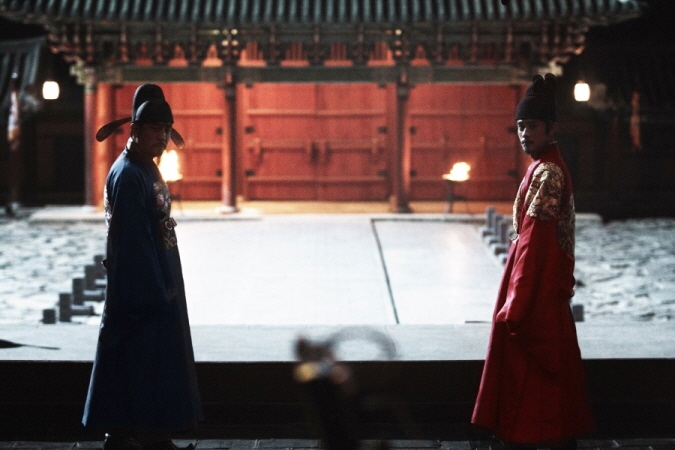
The movie, partly inspired by serious historic drama films like “Kagemusha”(1980) and also partly inspired by innocent comedy movies like “Dave”(1993), handles the contrasting sides of this king with a familiar fictional premise. As getting involved in the political feuds at his court, King Gwanghae-gun, played by Lee Byeong-heon, has been nervous about possible assassination attempts, so he needs a double for protecting him from constant danger. The king’s right hand man, Heo Gyun(Ryoo Seung-yong), finds a suitable man for the job. He is a clown named Ha-seon(also played by Lee Byeong-heon), and he has been earning a living through his silly antics imitating the king in front of people. When we see one of his performances, most of the people enjoying his performance never sees his uncanny resemblance to the king, because, well, the king rarely gets out the royal court to see and meet his people.
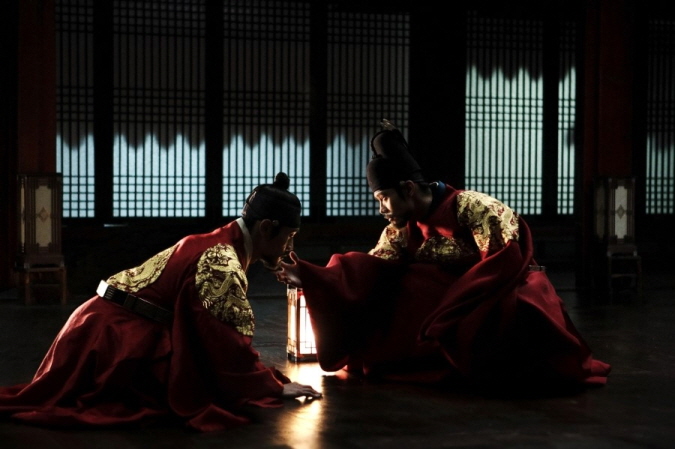 Ha-seon adequately does his job as ordered while the real king is having his own private time outside the court, but he is soon assigned with a far greater task. The real king suddenly loses his consciousness due to poison, and Heo Gyun is determined to prevent the chaos that may be resulted from that. His plan is simple but dangerous; because there is a chance for the king to regain his consciousness, for buying some time, Heo Gyun demands Ha-seon to disguise himself as the king for a while to deceive others at the court. Ha-seon is reluctant, but he quickly accepts his plan because he is promised that he will be paid well as soon as this masquerade is over.
The first half of the movie is a series of amusing small laughs as Ha-seon adjusts himself to a precarious full-time job under the guidance by Heo Gyun and the king’s eunuch. As Heo Gyun instructed before, all he has to do while sitting on the throne is saying few things to run the country, but Ha-seon realizes that there is not much privacy in the king’s daily life. Poor guy, at one moment, he finds himself to be watched by a group of court ladies while he is about to relieve his bowel. Now I have another good reason why I do not want to be a king – and a good reason for not wanting to be employed as a king’s doctor(A hint: the movie has the most hilarious coprophagic scene since “The Help”(2011))
Though the people at the court are a little confounded by little but sudden changes in His Majesty’s behaviors, Ha-seon does a pretty good job of playing the king with convincing dignity and authority while supported by two men helping him at his side. The king’s faithful bodyguard does not sense any difference even though he has encountered Ha-seon before. In case of the queen, she has been exasperated because the king is going to let his brother-in-law to be purged soon, so there is little danger to be exposed by her unless she wants to be, uh, a little closer to him than usual.
 The deceit goes well like that thanks to his excellent performance, but Ha-seon begins to approach to the line beyond which the performance is no longer an act. He belongs to a lower caste, but he is a smart guy who can read and learn, so he becomes more active than before at the council with his high-ranking officials. He may be less knowledgeable than them, but he deftly handles the council with his practical common sense, and nobody can easily say no to the king on the throne.
Yes, I know that the movie is not so far from those idealistic dramas like Frank Capra’s works which believe in the common sense of an ordinary man. But, like Capra’s best works, the movie is entertaining enough to overlook its naive sides due to the skilled storytelling and the competent performances to support the story and the characters. Though both Ha-seon and the king are less distinctive than they could be, Lee Byeong-Heon has enough presence to fill these two rather colorless roles. Ha-seon is a little too bland at the hero, but Lee makes him into a likable man we come to care about, and the gradual dramatic transformation inside Ha-seon initiated by his own performance is believable; he becomes excited about what he can do as the king, but he is also horrified later by what he can commit as the man wielding absolute power.
While the dynamic in the relationship between Ha-seon and the king is sadly not developed much in the story, how Ha-seon interact with the others is fun to watch thanks to the reliable supporting cast. Ryoo Seung-yong has a wonderful comic/dramatic chemistry with his co-actor as a man too noble to be the power behind the throne; Heo Gyun thinks little of Ha-seon at first, but he starts to admire and respect a plain man he ‘manipulates’ while discovering the king he wants from Ha-seon. Jang Gwang, who was a horribly abusive school principle and his equally horrible twin brother in “Silenced”(2011), gives a deadpan comic performance as the king’s loyal eunuch who usually holds his opinions while helpfully serving ‘His Majesty’. Balanced well between comedy and drama, Kim In-kwon is both amusing and poignant to watch as a bodyguard for all seasons with soft sides, and Han Hyo-joo is the elegant queen who gets suspicious about her ‘husband’ as she is warmed by the man who unexplainably becomes more romantic and casual than she remembers.
 As we have already predicted before it arrives, the third act revolves around the intrigue and subsequent dangers as Ha-seon’s disguise begins to show its seams, and how it is resolved is pretty predictable even when the movie attempts to pump the tension a lot into the screen during its climax. If you have some knowledge about the Korean history during the 17th century, its feel-good melodramatic ending feels a bit awkward to you considering what would happen later in the history, even though the movie openly recognizes the gloomy historical facts through its epilogue subtitles.
None the less, “Masquerade” remains entertaining as a whole. As a period drama, its production design and costumes are exemplary, and I enjoyed the performances as well as the story. Although I do not deny that it could have been better considering the rich potential inside its intriguing premise, at least we get a good entertainment, if not a great one.
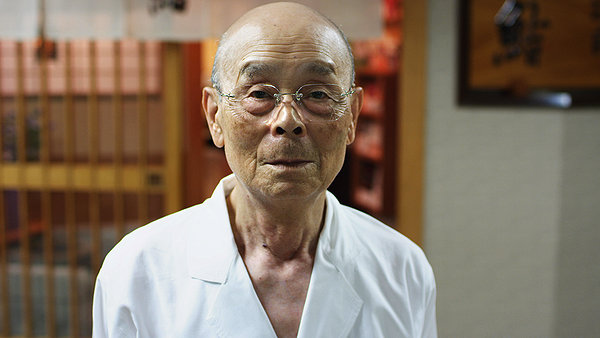 The documentary “Jiro Dreams of Sushi” is literally about a man who dreams of making sushi eve during his sleep. Jiro Ono, who was 85 when this documentary was made, runs a small but famous sushi restaurant in Tokyo, and he is a prime example of a master dedicated to his skill. Always reaching for the perfection and never being content with his respectable position, he searches for new ways to explore his skill with strict moderation every day, and he has never stopped that process while wholly devoting himself to his expertise.
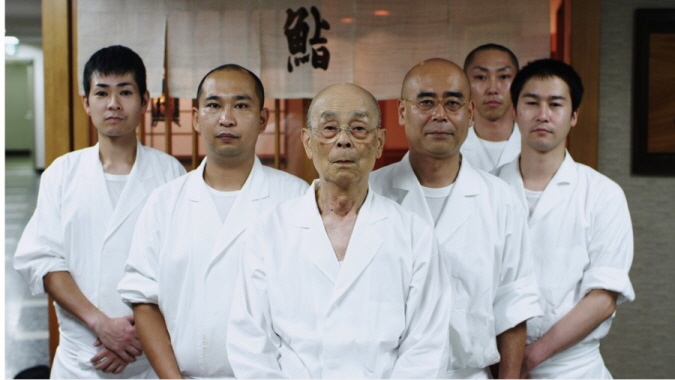
This is a man as simple and pure as the sushi served to the customers at his restaurant. The restaurant serves nothing but various kinds of sushi, but they are prepared with fastidious preparation while remaining simple as much as possible on the surface. We see how he and his employees keep the kitchen clean before working. We observe how they prepare rice and the other ingredients, which are well-selected and purchased from the vendors he trusts. We also watch Jiro managing the whole process including how to place his customers. There are only handful seats to sit at the restaurant, but he is meticulous about how to place them for the right condition he wants.
As we watch him at work with others, we are not so surprised to learn that his small restaurant actually gets three star rating from the Michelin guide(I heard that there are only 106 restaurants over the world which receive that prestigious honor). It may just look like a small restaurant located at a subway station, but this is a first-rate restaurant where you have to make a reservation in advance at least before one month(the price is at least $360, by the way). When one Japanese food critic enthusiastically praises Jiro’s sushi, he is not kidding at all; though we can only look at Jiro’s sushi pieces on the screen, but I must say they look really gorgeously tasty even though they are simply made of molded rice and various seafoods placed on the top of it.
 Having practiced his skill for more than 60 years, Jiro has rarely stops working. He seldom takes a day off, and the food critic says that Jiro even went straight back to his work right after he received an award from the Japanese government. His two sons tell us about one amusing tale from their childhood; because Jiro usually went out early in the morning before they woke up and came back late at night after they got asleep, they told their mother that some stranger was sleeping in their house when they found their dad taking a rest on one Sunday.
Though Jiro admits that he was not a model dad to his sons while occupied with his work, the sons respect their father for his mastery and dedication, and they have followed his footsteps. The first son Yoshikazu has been working under his father and, as an elder son, he will take over Jiro’s restaurant someday. His younger brother Takashi has been the head chef of the other sushi restaurant after going through many years of apprenticeship at his father’s restaurant(you’ll be surprised to see how many years it takes for an apprentice to be allowed to make sushi for himself).
Both are frank about how they will continue to live under the big shadow of their legendary father even after he passes away, though they are surely skillful professionals on their own. While Takashi has less burden because he has his own restaurant, Yoshikazu knows well that he will always be compared to his dad once he becomes the head chef of the restaurant, though he was crucial in getting three-stars rating from Michelin. His life story is interesting to hear; he did not like to work in the restaurant a lot while hoping to become a pilot or a car racer instead, but now he becomes an important part of the family business as his father’s second-in-command.
 It is his job to go to the seafood market for purchasing the ingredients instead of his father, who always went to the market for himself before he recently handed that job to his son. There is mutual trust between Jiro and the various vendors respectively selling tuna, shrimp, mackerel, eel, octopus, sea urchin, and many other seafoods; through their experience in the market, each of them knows well about which is the best thing to sell to their old customer. The rice is also important in making sushi, and we later see a pleasant conversation between Jiro and his favorite rice merchant.
Meanwhile, many of Jiro’s sushi pieces are prominently shown through clean, bright cinematography with the wonderful soundtrack mainly consisting of Philip Glass’ works and the other familiar classic works. There is a graceful moment when these delicious sushi pieces are presented to the customers one by one while the classic music is played on the soundtrack, and this scene will make you hungry from the beginning to the end. Each piece are carefully chosen, arranged, prepared, and served, and the result is effortlessly and harmoniously handed to the customers, who all look very satisfied with being served well by the master and his assistants.
“Jiro Dreams of Sushi” is a deliciously engaging documentary about one interesting man who really loves his job. It is always fun to watch the people lively occupied with their jobs, and Jiro is indeed one of them. Watching his admirably tireless professionalism, I recalled another good documentary “Bill Cunningham New York”(2010), which was also about another octogenarian who has never thought about quitting his professional job while having been living for the personal pleasure through his wonderful work. I seriously doubt whether they will ever quit even when they pass 90, unless something happens to stop them once for all.
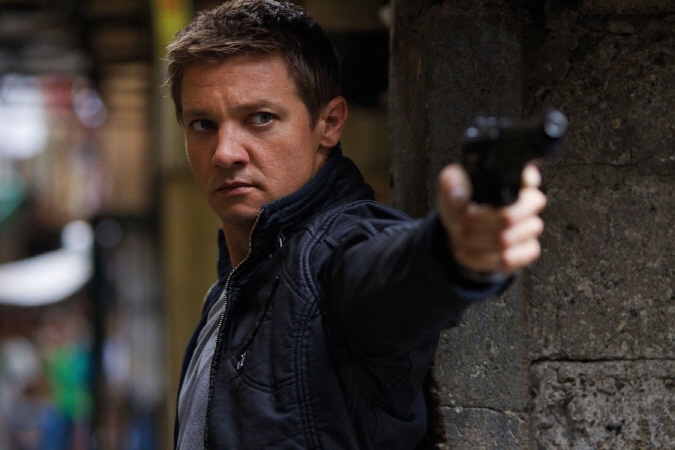 One major problem of “The Bourne Legacy” is that the movie is not so much about Jason Bourne, whose precarious quest for his identity was well told and shown in three previous films “The Bourne Identity”(2002), “The Bourne Supremacy”(2004), and “The Bourne Ultimatum”(2007). This time, he is only mentioned from time to time while never shown in the movie, and we instead get another story about another super-agent chased by the organization he has been working for. The result is at least watchable, but this well-made action film ultimately feels bland and hollow compared to its predecessors as it constantly reminds us of the absence of its titular hero.
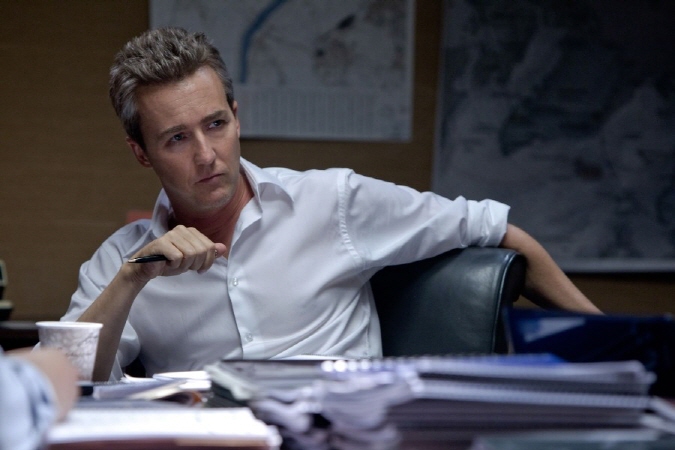
Its story starts around while the major events described in “Bourne Ultimatum”, the best film of the series, are happening on the other side. Many high-ranking officials at CIA become worried about the possible disclosure of their secret programs due to the troubles caused by Jason Bourne, and they are determined to do anything to cover their secrets before it is too late. While we see the familiar actors from previous movies including David Strathairn, Joan Allen, Albert Finney, and Scott Glenn, we also meet the other new important figures including Mark Turso(Stacy Keach) and Eric Byer(Edward Norton).
As usual, we get that familiar sight of a big room filled with agents and monitors, where Byer keeps receiving informations from outside while leading his team for a massive cover-up job. For some reason I did not understand very well, he decides that they should shut down the other projects connected with the project involved with Bourne, so they start cleaning everything – including the people associated with them.
 One of them is Aaron Cross(Jeremy Renner), who has no idea about what is happening outside while going through his training session alone somewhere in the remote area in Alaska. During the scene when he gets in trouble with a pack of wolves, I could not help but think of “The Grey”(2011), and Renner’s nice physical performance with considerable intensity shows that he could have been a competent alternative to Liam Neeson in that frightening movie about the men chased by wolves in the wilderness of Alaska.
As a participant of the special project, Cross has enhanced physical ability and equally enhanced intelligence, so we see him jump into a cold pool to retrieve something at its bottom(don’t ask me what that is) or leap from a cliff to land on the other side while trying to get to a certain cabin in the woods in a short time. That depends on two pills he regularly takes(one is green, and the other is blue), and now, after realizing that his agency wants to eliminate him just like others, he needs more drugs to keep him on, well, a smarter and faster mode for his survival.
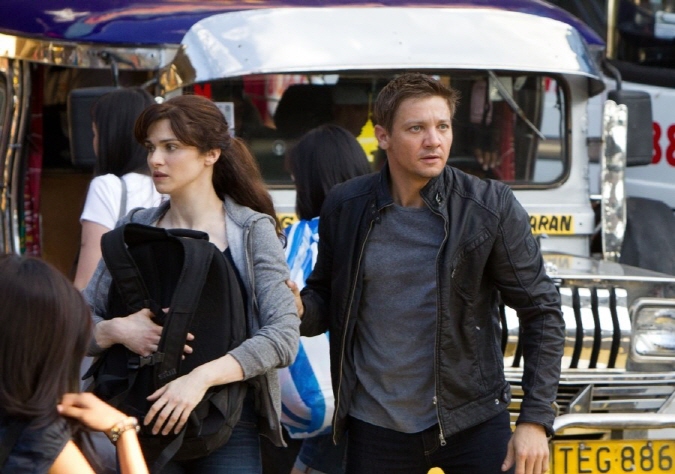
Searching for the chance to get his drugs, he gets the help from Dr. Marta Shearing(Rachel Weisz), who managed to survive a shocking incident at her workplace(how that was initiated is a rather unclear thing) and then finds herself running away with Cross from the people chasing after them. Fortunately for Cross, she is a talented and knowledgeable scientist(As she said, she could have had a more comfortable and rewarding career instead of working with many secrets), and she has a solution for his drug problem; it only takes a shot of a carrier virus to release him from his dependence on drugs and maintain his enhanced abilities(I am certain that this is another summer movie of this year with which my colleagues at the Biological science department can have many laughs).
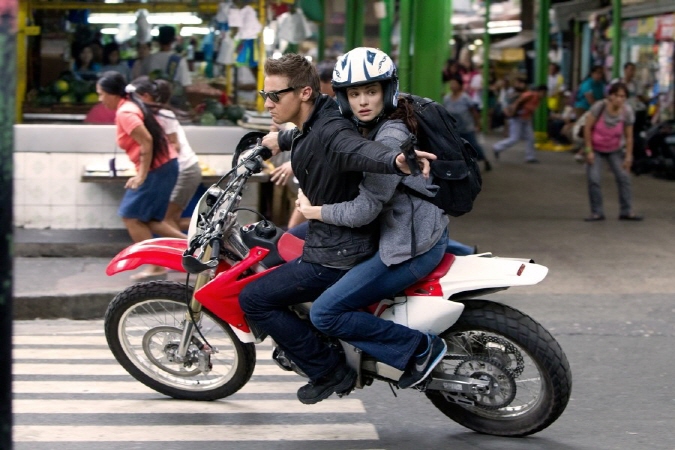 The story moves to Manila during its second half because they have to go there to get the virus, and we get an exciting action sequence where the characters jump on the roofs, run along the narrow alleys, and ride motorcycles as they attempt to evade the police. The director/writer Tony Gilroy, who wrote the screenplay for the previous Bourne movies, handles well this climatic sequence and other action scenes in the movie. The actions on the screen are thrilling, and I could see that Renner and Weisz really put themselves in some of them. Though her character is mainly a functional role, Weisz gives a credible performance amidst these frantic action scenes surrounding her.
But the story did not hold my interest much. Above all, Cross is a less interesting character than Jason Bourne. Unlike Bourne, he clearly knows who he was as well as who he is, so his story becomes less compelling than Bourne’s desperate drama even though he also has to run for his life. Renner, who showed us that he can be an excellent action hero in “Mission Impossible: Ghost Protocol”(2011) does everything he can do for his character, but there are not many things available for him to play from the beginning. The movie plods at times around its murky first part while not giving enough information to us for understanding the whole circumstance surrounding its characters, and Bourne’s absence feels more palpable as he is being kept mentioned throughout the film.
“The Bourne Legacy” is not a bad action film when viewed independently, and I was not that bored while enjoying its good contents. However, the problem is, it keeps letting itself being associated with the previous films, and it feels redundant and unnecessary as a consequence. There are several things I appreciated in the film including the good use of the locations(South Korean audiences will be disappointed to see that Seoul does not appear often in the movie), but the hole named Jason Bourne still remains. I do not know whether they will make another sequel as implied during the ending of this film, but maybe they should bring Bourne back in action if they are really going to make it.
 Kim Ki-duk’s “Pieta” has the usual strengths and weaknesses I have witnessed from his films. While watching the movie at the local theater at last night, I found its premise absurd and preposterous, but I and the audiences somehow took seriously what was happening on the screen. While there is some morbid humor in this dark and brutal morality tale of guilt and redemption, the movie treats a strange relationship at the center of its story with strict seriousness, and I was drawn to its drama while cringing at its brutality.
Many brutal deeds in the film are committed by its unlikable hero Kang-do(Lee Jeong-jin). Kang-do(‘Kang-do’ means ‘robber’ in Korean, by the way) works as a debt collector for some loan shark, and he is someone you don’t want to mess with especially if you happen to borrow the money from his boss. Even if his poor debtors really have no money to pay back, he gets the money back by any ruthless means necessary. These unfortunate debtors usually work at the metal shops located on the narrow alleys of Seoul, so they are forced to get their hands or feet injured by their machines for paying him back through the insurance money they will acquire. During one comic but cringe-inducing moment, one debtor nervously asks him to cut both of his hands instead of only one hand because he needs more money to pay his debts and support his baby to be born.
Kang-do’s life is as barren as his debtors’. While his home looks a little more comfortable, he has lived alone in his apartment. He cooks for himself, and he usually brings live animals to his home for his dinner. Seriously, I do not understand why he prefers to buy a live chicken and then butcher it instead of just purchasing a dead one at a supermarket, but I guess this savage behavior solely exists for representing his beastly nature.
 On one day, his life is disrupted by the sudden appearance of one mysterious woman(Cho Min-soo), who claims to be his mother and apologizes to him for abandoning him not so long after he was born. Resentful toward his mother he does not remember, he does not believe any of her words and brusquely rejects her, but she keeps coming to him. She slowly insinuates herself into his daily life while behaving like a mother who tries to compensate for her unforgivable fault in the past. Though he harshly treats her, she sticks to him while doing what mothers usually do for their dear sons. She cooks for him, and she says genially to this detestable man who has probably never experienced love or kindness for a long time.
Revealing or saying little about themselves, the characters of Kim Ki-duk’s films are usually fascinating to observe for how they behave rather than who they are. The characters of “Pieta” are no exception; we do not know a lot about them, but what happens between them is a darkly compelling drama. There is quite a disturbing scene where Kang-do cruelly attempts to violate her with his own twisted logic, and you may wonder how much she can tolerate him, if she is indeed who she seems to be. Induced by her love without condition, Kang-do slowly reveals a vulnerable child with lots of hurts inside him; he eventually finds himself depending on her care, and they momentarily have a nice time together as a mother and her son.
Is she really his mother? I don’t dare to tell anything about that matter for not spoiling your entertainment, but let’s say that I did not lose my interest while the movie changed its direction in the middle of the story for the reason you may easily guess in advance. Its second half is less engaging and less focused because of that, but the director/writer Kim Ki-duk provides a very realistic background for his relatively unrealistic story, and the gray, destitute underbelly of Seoul is vividly conveyed to us through its shabby metal shops and dirty alleys. His films have been well-known for their unflinching attitude to brutal violence, but “Pieta” thankfully takes a restrained approach to its equally savage violence while retaining its emotional impact intact. When I watched gleefully over-the-top violence in “The Expendables”(2012) right before watching this movie, I could have some chuckles, but I discovered that there was nothing laughable about the frighteningly realistic violence in “Pieta” even when it does not present it on the screen.
 The tension in the drama largely depends on the simple but fearless performance by Cho Min-soo, who deftly maintains the elusive side of her character even at the most emotionally anguished moment. You can feel the genuine emotions from her face, but you can never be sure about where they come from. Although Lee Jeong-jin feels strained and miscast compared to his co-actress, at least he supports her well during several tough scenes between them. Their characters may look silly when they behave like a mother and her little son, but we come to accept the emotional bond forming between them.
Although he recently went through a rough time, Kim Ki-duk remains as one of the most interesting South Korean directors along with Park Chan-wook, Bong Joon-ho, and Hong Sang-soo. I have watched most of his works, and I admired many of them while recognizing their disturbing side. The unforgettable scene involved with fish hooks in “The Isle”(2000) still makes me flinch whenever I recall it, and “Bad Guy”(2002) was another disturbing relationship between a violent man and a woman who is suffered and degraded by him while stuck with him. After his best work “Spring, Summer, Fall, Winter… and Spring”(2003), his subsequent films became a little more gentle, but they are still the movies tough to watch. I did not like his previous work “Arirang”(2011), a self-portrayal documentary which can be called his version of “I’m Still Here”(2010), because I found it both painful and embarrassing to watch him on his supposedly bad days, but I hoped everything would be soon all right for him.
Well, it seems things are going well for him again now. Last year, he had a moderate but satisfying success with “Poongsan”(2011), which was produced and written by him. “Pieta”, his 18th work, is currently in competition with other films at the Venice Film Festival while also being released at South Korean theaters on this weekend at present. I do not think it is one of his best films because of its several flaws, but I must say it is nice to see that this talented director is still capable of making a movie with conviction, power, and several interesting things to talk about.


If you have not heard about Stephen Glass, who was a former employee of the New Republic, you may think he is a nice lad who occasionally screws things up while you watch him at the beginning of “Shattered Glass”(2003). Sometimes it is not easy to be angry about him because he is so sweet and considerate to the people working with him on the surface. If it seems they find a problem or error caused by him, he quickly admits and apologizes to them while looking like he is nervous about whether they won’t like him any more for that. He frequently asks to them as if he wanted to check that: “Are you mad at me?”
With his boyish looks and insecure attitude to draw your sympathy, Glass, played by Hayden Christensen, can get away with many things in that way while remaining a likable guy in his workplace. In addition, he is a rising star journalist of his magazine; although Glass was the youngest employee among the staff members of the New Republic in 1998(their average age was 26, by the way), he was already a contributing writer to the other notable magazines including Harper’s magazine, George, and Rolling Stones.
I have not read any of his articles published in the New Republic except “Hack Heaven”, but I could understand the reason for his success while watching the film. A young boy hacker who attacked the homepage of a major software company and then made a lucrative deal between him and the company? The debauchery of young Republicans at the political convention? I would not hesitate to read them for a minute if I came across such interesting stories on the Internet.
However, they are really nothing compared to what was revealed about him; it turned out that most of his articles were either partially or entirely fabricated. In its relatively short running time(94 minutes), the movie succinctly shows us not only how he was exposed but also how his misdemeanors had not been noticed in a respectable political magazine like the New Republic, “the in-flight magazine of Air Force One”. Sure, the articles to be published always go through the painstaking multi-step process before the final approval while being moved here and there around the writer, the chief editor, the copy editor, the fact checkers, the lawyers and many other employees in the magazine, but, as Glass points out at one point, there is a big loophole in this strict system; if an article is mainly based on the writer’s notes, the fact-checkers only check the notes unless they want to go further than that for thoroughly verifying its contents.
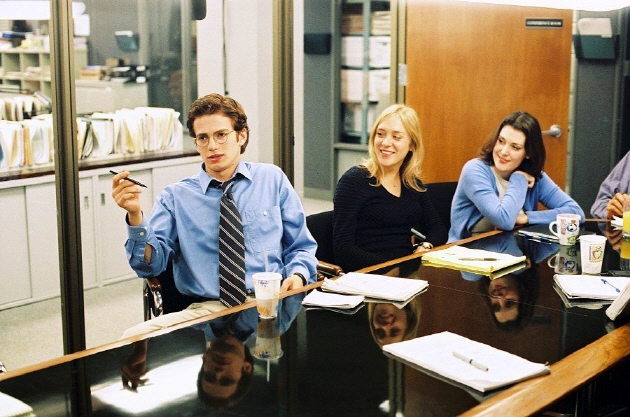 The people at the New Republic may have wondered about how Glass got the materials for his articles, but they are blinded by their understandable human flaws which are cunningly exploited by Glass. In their eyes, he is a good kid not so sure about himself even with his rising status, and that naturally draws the sincere support from Amy Brand(Melanie Lynsky) and Caitlin Avey(Chloë Sevigny), who regard Glass like their little brother to be taken care of. In case of Michael Kelly(Hank Azaria), who was their senior editor before replaced by Charles ‘Chuck’ Lane(Peter Sarsgaard), he had some suspicion on Glass when he was informed that one of his articles had a notable error, but, as a good senior editor devoted to his staff, he also had reservation on his doubt; he might ruin a young promising journalist’s career just because of a minor fault.
Based on Buzz Bissinger’s Vanity Fair article, the director/writer Billy Ray made a good movie which knows a lot about the world of journalists. While entertained by Glass’ fun stories, his co-workers want to be near the sweet smell of his success – and they want to be as successful as him. Brand tries to write something humorous and funny like Glass, but she is frustrated because, as she admits, she is not so good at it. Glass finds himself being ingratiated by the other worker who may be not so different from him – no wonder Glass is harsh to that guy when he criticizes what that guy wrote in their private moment.
All has been going pretty well for Glass and others so far, but, like the fall of Enron was initiated by one reasonable article pointing out its questionable success, Glass’ success starts being cracked by one reasonable doubt. Baffled by Glass’ recent article “Hack Heaven”, Adam Penenberg(Steve Zahn), a reporter of the Forbes digital, wonders about how the hell he is scooped by Glass, because, as an expert on his field, he has never heard of the names or the organizations in Glass’ article before.
While working with his co-workers including Andy Fox(Rosario Dawson) on this matter, he keeps discovering strange things about the article. He cannot find the major software company mentioned in the article, the Jukt Micronics, anywhere in US, and he gets no search result from Yahoo at all. There is no such a convention like “National Assembly of Hackers”. There is no such a federal law like “Uniform Computer Security Act”. There is no such a federal government organization like “Center for Interstate Online Investigation”. And there is no hacker named Joe Restil, let alone his agent Joe Hiert.
 Penenberg and his editor notify that to Charles Lane, who soon realizes that he is put in a very difficult situation while his doubts are growing minute by minute. Peter Sarsgaard is especially terrific when he quietly conveys to us the accumulating suspicion and fear behind his calm face. Watching Glass pathetically trying to evade Penenberg’s questions on the phone, Lane gradually senses that it can be a far bigger disaster then he initially thought.
While all these things are happening, the movie tells us little about Glass’ thoughts or the motive behind his fabrications, so he becomes a distant, enigmatic, and unlikable figure as his deceptions are getting exposed step by step, but how he tries to wiggle out of the straitened circumstance tightening around him by any means necessary is a compelling drama thank to Hayden Christensen’ good performance. The more desperately he tries to find an exit, the less chance there is for him to get out of his quagmire – and he still thinks he can do that while the mounting evidences are dragging him down to the bottom.
Christensen, who showed us through this film that stiff acting of his in the Star Wars prequels was not entirely his fault, is effective as a smart young man whose ingratiating attitude becomes increasingly smarmy and annoying in our eyes as it is reveled to us how insincere he actually is – even when he talks about his career at the classroom of his high school. The movie indirectly suggests that he is a pathological liar willing to say anything for being liked by whoever is around him. When his co-workers show the chagrin over the dismissal of Michael Kelly and the following appointment of Lane as a new senior editor, he goes further by saying negative things about Lane. But, when he comes to Lane’s office later, what do you know, he ingratiates to Lane by saying exactly what Lane likes to hear in his rather uncomfortable new position.
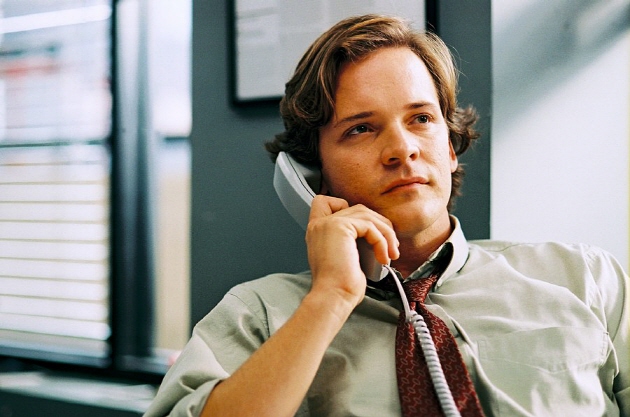 While getting more repulsed by Glass, we come to more identify with Lane on the opposite site, and Sarsgaard’s understated but strong performance becomes the moral center of the story(although he was not Oscar-nominated, Sarsgaard received several major critics awards along with Golden Globe nomination). While recognizing what should be done, Lane is a little reluctant about punishing Glass because that action would disrupt his staff; most of them do not like him much for replacing their beloved former senior editor, and he feels pressured a lot by that and other factors while handling this messy situation.
However, as a journalist with firm integrity, he becomes more resolute once he is confirmed that there is no doubt about what Glass has done to the New Republic. When Avey, one of the staff members defending Glass, protests to Lane for his drastic decision, he replies with the cold truth both will soon have to deal with. Sarsgaard and Sevigny play well together in that scene, and the interaction between their performances is crucial in making the transition in their next scene convincing rather than abrupt and awkward. He made the point clear and direct to her, and she comes to understand that with silent realization.
Besides Sarsgaard and Sevigny, there are the other good supporting actors who do more than filling the space in the story in spite of their small roles. Some of them are surprisingly believable as the people living and working in the journalism world, and you may be amused to see that Hank Azaria and Steve Zahn look a lot more serious than usual in their respective supporting roles.
While what is shown in the film is not a big shock to us any more at present(Around the time when the movie was released, as some of you remember, a similar scandal occurred at the New York Times), it comes to my mind that, with the rise of Internet journalism, we are now living in the digital era when everything is quickly written, read, and then discarded. In this environment, the misdemeanors committed by Glass can be more easily overlooked, though they can be also easily exposed as soon as they are detected.
“Shattered Glass” is a compelling drama about how the people can be manipulated and deceived in spite of their knowledge and experience – and its disastrous consequence after that. They enjoyed whatever he pitched at the staff meetings, and they printed his fictions just because they were entertaining, and they paid a heavy price for that in the end. At the beginning and the end of the movie, Glass emphasizes to us and his audiences; “You have to know who you’re writing for, and you have to know what you’re good at.” Well, he knew, didn’t he?


Though being a little ponderous at times, “The Turin Horse” can be a mesmerizing experience to you if you are willing to give it a chance. The movie may bore some of you because of its very slow progression for around 2.5 hours, but its austere observation on “the heaviness of human existence” is simultaneously curious and thought-provoking while requiring some degrees of patience from us. I think the movie is an acquired taste, but I was drawn to it about while musing on the hardships of our mere existence which will inevitably face the end waiting for us.
The movie starts with the narration which tells us about one episode about Friedrich Nietzsche in his final years. On January 3rd in 1889, while taking a walk in Turino, Italy, Nietzsche came across a stubborn horse refusing to move even when its owner angrily whipped it hard. Nietzsche interrupted the owner to save it from its misery and embraced that horse, but then he had a severe mental breakdown. After mumbling that “Mother, I was a fool”, he remained nearly silent until his death while being taken care of by his mother and his sister.
The movie does not confirm us whether a horse and a farmer going back to their home during its opening scene are the same horse and man Nietzsche encountered, but this long-take opening scene is captivating while the Steadicam camera fluidly moves around them. The camera follows and observes them closely while looking around several details to draw our attention; sometimes, it effortlessly moves away and watches them from the distance while moving in parallel with them. This is one of the long, uninterrupted scenes you will get relentlessly throughout the film(the movie is made up of only 30 takes, by the way), so you will soon find out whether you like the movie or not.

The story focuses on the six bleak and melancholic days of the farmer(János Derzsi), his daughter(Erika Bók), and their old horse(Ricsi). They have lived in a shabby house on the field which has only few basic things to support their meager life inside. The farmer is helped by his daughter a lot because he cannot use one of his hands. She helps him change the clothes when he is about to sleep or when he wakes up later. She helps him put the horse into the stable. She also cooks a meal for him and herself, which is always boiled potato. How does he earn his living with his cart and horse? I don’t know, and the movie has little interest in it, let alone the world outside their farm.
Anyway, they gradually become isolated in their place while going through their daily routine. The heavy wind roars around the house and the barren field, and the horse does not want to go outside. The farmer decides to take a day off, but the next day is pretty much same for them with the same ominous sound of gale outside the house. It feels like they are the only two people on the earth, and the monotonous interior surrounding them uncannily reminds me of Samuel Beckett’s play “Endgame”, in which its two main characters live alone in their barren house while separated from the world outside.
Unlike the characters in that Beckett’s play, the farmer and his daughter do not talk much with each other, even when some noisy visitor(Mihály Kormos) comes to their house for buying a bottle of brandy. The visitor talks a lot about the crumbling state of humanity and civilization with a view which Nietzsche may appreciate. Though the farmer disregards them as nonsense, his pessimistic words disturbingly resonate with the harsh weather outside, which looks a lot like a harbinger of the doom.

Their circumstance becomes more bleak and desperate as the days go by. The horse now begins to refuse to eat. The book given to the farmer’s daughter by the gypsies who briefly drop by the farm adds another ominous tone to their small world. After finding that the well near their house is dried, they finally decide to move out, but, for some reason not shown to us, they change their mind on their way and then returns to their house. While all these things happen, the wind keeps blowing outside the house as if it wanted to blow it away like the leaves flown away in the air. With the dirgeful score by Mihály Vig, you may think the end is approaching to them.
Everything I described above is masterfully shown to us under the co-director/co-writer Béla Tarr’s meticulous direction, and the movie is an interesting experience to say the least. The crisp black and white cinematography by Fred Kelemen is stunning with its bleak beauty and careful compositions, and his camera unobtrusively moves or lingers around the space and the characters while letting us immerse ourselves into the repeated rhythm of their plain daily life.
Watching its characters slowly shrouded by the feeling of doom, I recalled what I thought about the end of universe years ago. I heard that the universe will be a dark, cold place in the end, and I thought about how depressing it will be to face the end of universe while swallowed by darkness. The same thing can be said about the end of our life; everything in your life will be crumbled along with you, and nothing much will be left for you in the dark void though it won’t probably matter to you much at that time. We cannot change this, and we heavily struggle to live another day like the farmer and his daughter in the movie, while moving closer to that dark void day by day.
Béla Tarr, who made this film with his wife and the editor Ágnes Hranitzky, announced his retirement while the movie was made, though he is only 57 at present. Considering that it makes us think about the end of our existence in the world, “The Turin Horse” feels like the appropriate final chapter to the career of one fascinating director who deserves to be known to more audiences.
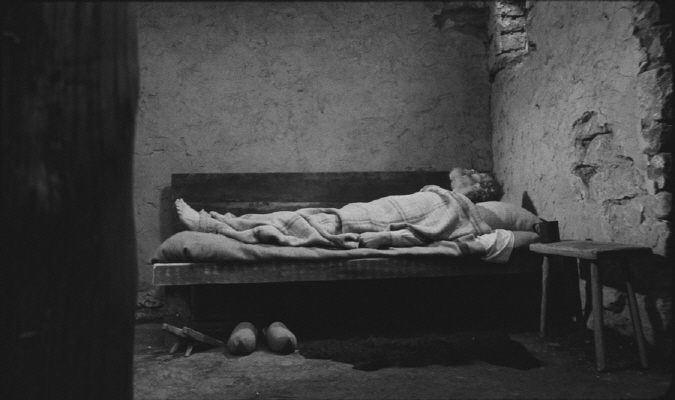
 As the story about the invention of a certain electronic tool which has provided considerable satisfaction to women since its invention, “Hysteria” is a charming and likable comedy in spite of its vulgar aspect which naturally attracts R rating in US and 19 rating in South Korea. We are tickled not only by how little they knew about female body during the late 19th century but also how serious they were about ‘the disease’ they thought they were handling with. Believe or not, the doctors at that time really thought hysteria was a woman’s disease, and they even treated their poor patients with a drastic measure like hysterectomy.
This looks quite outrageous in our views, but that was the time when the people did not have a lot of medical knowledges compared to our time. As we see at the start of the movie, the germ theory was a progressive scientific theory during that era, and there were many doctors who did not accept that germs are the cause of infections while not having the slightest idea at all that they were actually killing their patients.
In case of Dr. Robert Dalrymple(Jonathan Pryce), he has a far less harsh way to treat his female patients suffering from hysteria, and he is very popular among his clients thanks to that. His treatment is simple; all he has to do is massaging, uh, the private part of his patients with his clean perfumed hand for a while until they experience several jolts in the end while feeling *a lot* better than before they enter his office. You may describe the service provided by Dalrymple in a more vulgar way than me, but he is absolutely serious about his practice, and Pryce’s deadpan performance never loses that hilarious but calm professionalism.
The business has been going well for Dr. Darlymple, but he has been suffering from an occupational hazard; because he has used his hand too much, his hand is exhausted, so he needs another hand to help him. He fortunately employs Dr. Mortimer Granville(Hugh Dancy), who needs a job because he has recently been fired from his hospital due to the conflict with his senior doctor, but our Dr. Granville soon begins to experience the same occupational hazard in his hand. Massaging a female genital part is a simple job, but imagine that you have to massage the same part for more than 30 minutes – and there are more than one client during one day.
 That inconvenience of his is led to one clever idea. His rich libertine friend Edmund St. John-Smythe(dryly humorous Rupert Everett)’s hobby is inventing or buying several interesting electronic gadgets including an early version of telephone, and one of his fancy machines is an electronic feather duster. While he looks at that machine, it suddenly ignites a flash of genius inside Granville’s head: why not utilize it for his work?
I heard that its story is mostly fiction though inspired by a real-life story(For example, Dr. Granville invented it for himself in real life), but, as a fiction, the movie is fun to watch. We get lots of laughs while Granville and others execute the experiment with their curious electronic gadget, which would be called, of course, vibrator. While maintaining academic attitude as usual, these intelligent gentlemen have little idea about what they observe from their patient subjected to their machine(don’t worry about her – she gets an ecstatic moment of her lifetime).
Meanwhile, Granville gets involved with Dalrymple’s two daughters. First, he is formally introduced to Emily(Felicity Jones) by her father, who regards Granville as a potential successor to his practice and a future son-in-law. Though she is a little too serious about phrenology(do you know how serious they were about this ridiculous pseudo-science?), Emily is a bright and generous woman who can be a good wife to Granville, and they get close to each other in a lightweight romantic comedy mode.
 But then Granville finds himself drawn to Dalrymple’s other daughter Charlotte(Maggie Gyllenhaal), a feisty suffragette who flabbergasts him with her progressive socialistic view right from their first encounter. In the movie where the male characters frequently handle the private part of women, a modern woman’s view is a welcoming presence, and Gyllenhaal imbues her lovable character with lots of energy and belief to push the story into another direction later.
Against her father’s wish, Charlotte is not so interested in marriage; instead, she passionately cares about the social issues like women’s rights and the welfare of poor people. Though he does not agree all with her opinions, Granville begins to help her work as far as he can while admiring her courage and passion. Hugh Dancy has two nice separate chemistries with his two co-actresses, and the transition in his character’s heart along the story progression is convincing. This is a gentle movie with nice people, so, as a gentleman and two ladies, they take care of their matter of heart as courteous as possible.
“Hysteria” is a little enjoyable ‘sex comedy’ which draws good laughs from its seemingly vulgar story while none of the main characters takes off their clothes (After all, they are Victorian people, aren’t they?). The movie gives us a little bonus around its end credits, and I guarantee that you will be entertained by how that useful machine has been helpful to many discontented women while going through more developments. I don’t dare to tell you about one of its latest models – see it for yourself, and you may wonder about how it works.


