“The Dreamed Adventure”, which won the Jury Prize when it was premiered at the Cannes Films Festival early in this year and then was recently selected as the Bulgarian entry for Best International Film Oscar, engaged me more than expected, and I like that. Due to its rather slow narrative pacing and long running time (167 minutes), the movie certainly requires some patience from you from the very beginning, but it will gradually become a rewarding experience on the whole, and you will come to admire and appreciate its many good moments more after it is over.
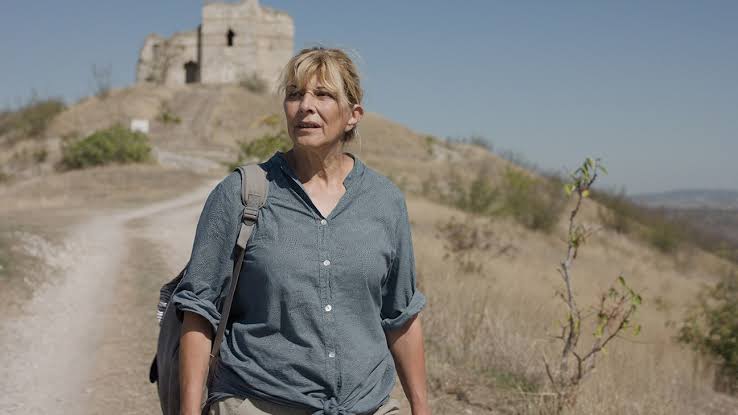
During its first act, the movie follows Said (Syuleyman Letifov), a middle-aged man who is driving his car to a rural border region of Bulgaria right next to Greece and Turkey for some business deal. Not long after his arrival in a small local city named Svilengrad, he unfortunately gets his car stolen, and then he comes across an old friend of his who is willing to help him a bit. That person in question is a middle-aged woman named Veska (Yana Radeva), and we come to learn that she recently returned to their hometown as an archaeologist supervising a little excavation project at an old historical spot outside the city.
As they come to spend more time together than expected, Veska accompanies Said as he makes some big deal with one of the local criminals in the region, and it does not take much time for her to see that Said’s deal can cause some serious trouble. There is a powerful criminal boss controlling almost every criminal business and deal in the region, and he is not so pleased about Said dealing with his opponent.
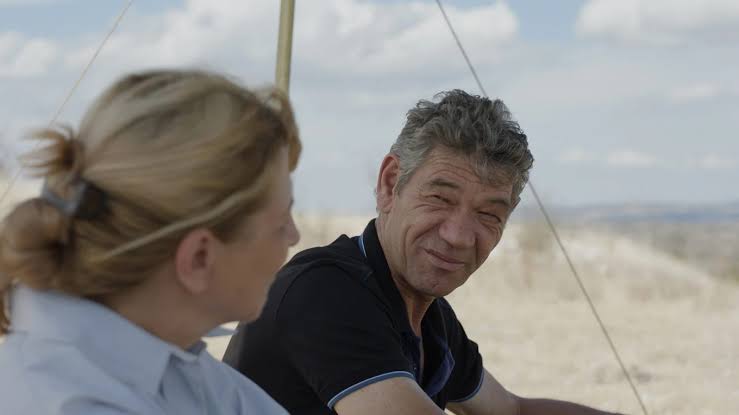
When Said is suddenly gone for no apparent reason later, Veska is naturally perplexed, but she continues to focus on her excavation project as before, though there is a big problem to handle sooner or later. The condition of the road leading to their excavation site is not so good to say the least, and Veska cannot help but feel quite frustrated as the mayor of Svilengard keeps avoiding her phone call instead of helping her and her excavation team.
As she tries to get any information on Said’s whereabouts, Veska finds herself gradually involved with the criminal world of Svilengard and its surrounding area. Many men in the region have a long history of crime, and, as Veska frequently encounters some of them along the story, we get to know more about how much the region has been riddled with poverty and crime for many years since the end of the Cold War era. In fact, before eventually leaving her hometown for a better life, Veska was a part of this gloomy and shabby world, and we are not so surprised to learn later that she was once close to the aforementioned gang boss just like Said.
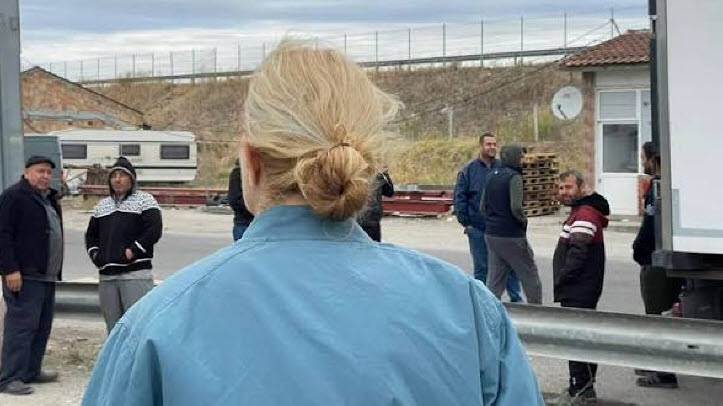
Around that narrative point, the movie comes to feel more like a mixture of western and crime noir drama, but the screenplay by director Valeska Grisebach and her co-writer Lisa Bierwirth does not hurry itself at all as patiently building up the story and characters more. The conflict between Veska and the gang boss becomes a bit more tense as she gets more involved in Said’s criminal deal later in the story, but the movie continues to focus on the interactions among its heroine and some other characters in the story, and we get more engaged as observing some interesting details from them. For example, when Veska joins a bunch of local women who were close to her and her family, their lively conversation reveals a lot about how much they had to endure and survive the prevalent misogyny in their world, and this makes an interesting contrast with a similar scene between Veska and a bunch of local dudes, who are often quite rude to her with their blatantly misogynistic behaviors and words.
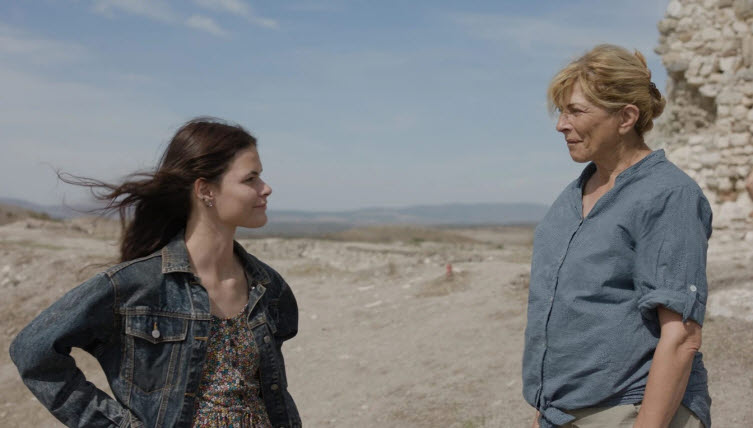
While she remains mostly reserved, Veska slowly and steadily embarks on doing what should be done in her viewpoint. Besides handling Said’s criminal deal for herself, she also helps several others around her here and there, and there is a tenderly amusing moment between her and a little plucky girl who is incidentally the daughter of the gang boss. Despite the conflict between her and the girl’s father, Veska is nice and gentle to the girl, and the girl’s father genuinely appreciates that even though he still regards Veska as a pesky problem to deal with sooner or later.
The main cast members of the film are solid in their natural acting. As her character gradually functions as the heart and soul of the movie, Yana Radeva’s earnest low-key performance comes to show more of her character’s inner will and strength, and she is especially wonderful when Veska confronts the gang boss for resolving their conflict once and for all. Although she does not raise her voice at all, we feel the considerable emotional weight behind what Veska flatly but sardonically points out to the gang boss, and that makes their private conversation quite intense. Around Radeva, a bunch of various performers hold each own place well as many different parts of the story, and Syuleyman Letifov and Stoicho Kostadinov make an effective contrast as the two different men in Veska’s past.
Overall, “The Dreamed Adventure” is worthwhile to watch for its good mood, storytelling, and performances, and it certainly demonstrates well Grisebach’s considerable talent. Although I have not watched this German female filmmaker’s several previous films including “Western” (2017), she is another talented filmmaker to watch in my trivial opinion, and I will certainly have some expectation on whatever may come next from her.