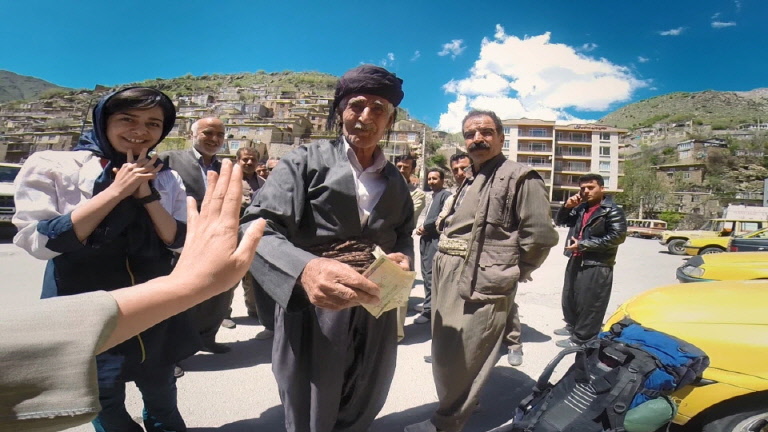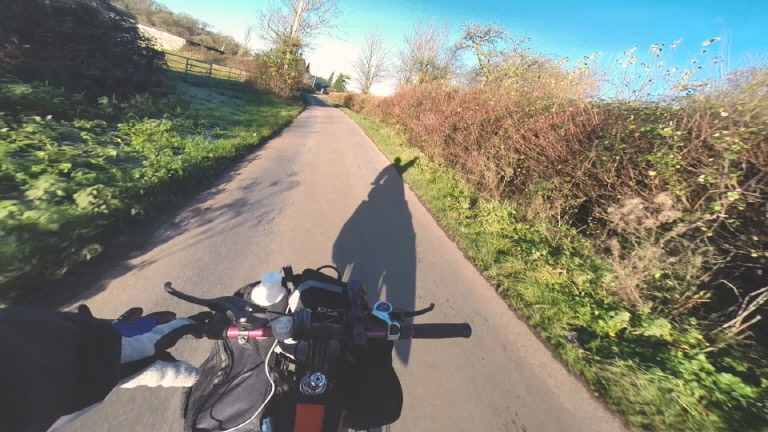
South Korean independent documentary film “Blanket Wearer” is a likable chronicle of one interesting personal quest. Yes, as shown from the documentary, its director/producer/cinematographer/co-editor Park Jeong-mi really attempted a penniless one-year nomad project after being so suffocated by her static and stressful status of life, and we are alternatively touched and tickled as she looks back at this unconventional journey of hers with witty and thoughtful reflection.
At the beginning, Park tells us how hard and difficult things were for her in London. When she moved to London for her new job, she hoped that she would feel much better than when she worked in Seoul, but, unfortunately, she still did not feel that good as her new job turned out to be no better than the previous one. In addition, she also struggled to pay a rather expensive rent for her tiny residence month by month, and this surely made her all the more frustrated at times.
And then there came one risky but seemingly feasible idea to Park. She decided to live without spending or earning any money at least for one year, and that actually turned out to be more feasible than expected. Thanks to some convenient online networking, she could usually find places where she could stay for days or weeks, and there is an amusing scene when she has to take care of a big river boat in exchange for taking care of it instead of its absent owner for a few weeks. We later see her staying in an empty building during several days thanks to her two “squatter” friends, and she attentively listens to them talking a lot about the problematic housing system in UK in front of her camera.
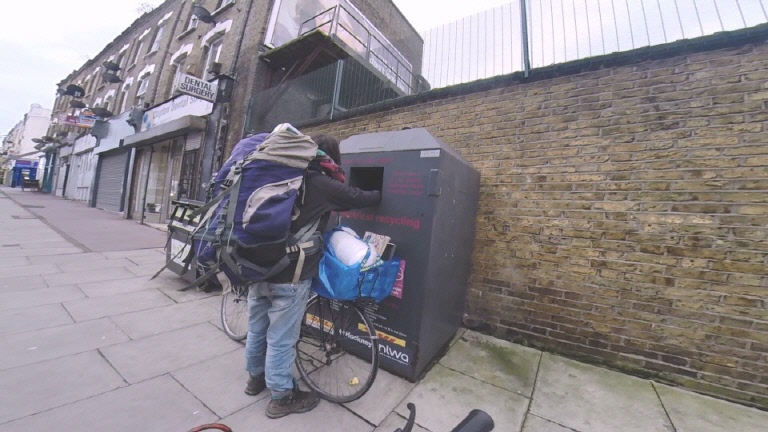
In case of getting food day by day, London turns out to have many different spots where Park could pick up a bunch of discarded food for free, and this instantly took me back to Agnès Varda’s wonderful documentary “The Gleaners and I”. Just like those gleaners in Varda’s documentary, Park freely acquired many different kinds of discarded food ranging from bread to vegetables, though her friends frankly recognize that they always have to cook and eat them as soon as possible for good reasons.
The documentary becomes more interesting when it shows Park staying and working at a couple of rural organic farms. In case of one of these two organic farms, its members try to live away from modern technology as much as possible, and there is an amusing moment when Park tries to handle her biological matter inside a very crude outhouse in the middle of one night.
While she initially intended to do her one-year survival quest within UK, the scale of Park’s ongoing quest eventually became quite wider when she subsequently decided to join a certain private festival to be held somewhere in Slovakia. Right from when she crossed the English Channel, she depended wholly on hitchhiking, and she was certainly quite willing to take the considerable risk from that (I am sure many of you heard about those numerous real-life horror stories involved hitchhiking).
Although her journey across the Europe continent via hitchhiking was not entirely without unpleasant moments, Park eventually arrived at the festival in time, and she came to reflect more on where her life had been going. She had yearned for freedom because of her stressful jobs, but she also often found herself in the need of any sense of control, and we are not so surprised to learn later that she once tried on military career in the past.
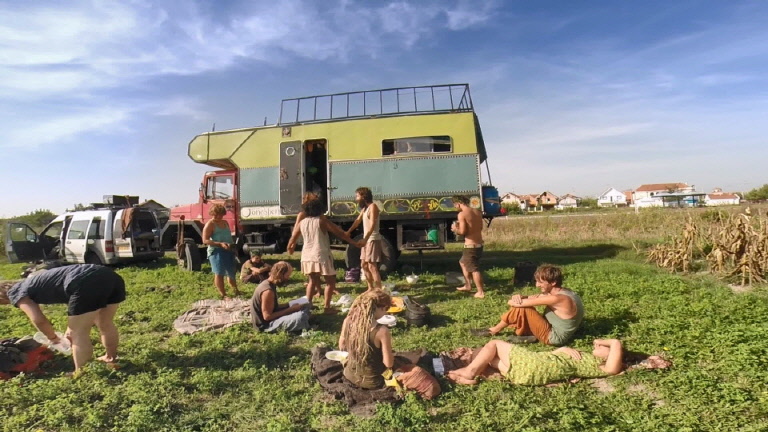
However, around the point where Park came across a group of hippies riding on a big camping vehicle, things became more unpredictable for her ongoing journey. She initially agreed to go to Turkey along with that for helping those unfortunate Syrian refugees there, but she eventually found herself entering Turkey alone by herself, and she got a series of small but precious surprises as she was often welcomed by those kind strangers she met along her journey. At one point, she was allowed to stay in a big empty hospital room, and she was certainly grateful to the generosity of the hospital staff.
As feeling more like a pilgrim in the search of the meaning of life, Park decided to visit a certain religious city in Iran. She had to make an exception due to paying for a tourist visa, but this did not matter that much to her, because one year had already passed even before she entered Turkey. Again, she was genuinely touched a lot by the hospitality of many different strangers on her way, but then there came a shocking incident which traumatized her so much that she came to have a lot of doubts on whether her journey project was really meaningful to her.
I wish the documentary allowed more time for this painful personal struggle of hers, but it thankfully maintains enough wit and spirit to engage us. While she is often behind her camera, Park’s presence and personality are palpable on the screen as she willingly shares her personal feelings and thoughts with us, and we come to cheer for her more as observing how she becomes wiser and more matured about her life after the eventual end of her quest.
In conclusion, “Blanket Wearer” is both funny and moving as an intimate presentation of one personal journey, and I was not surprised at all as observing how often the audiences around me actively responded to a number of key moments in the documentary. If you enjoyed not only “The Gleaners and I” but also Chloé Zhao’s “Nomadland” (2020), this solid documentary will certainly interest you from the beginning, and I assure you that it will bring you some smile in the end.