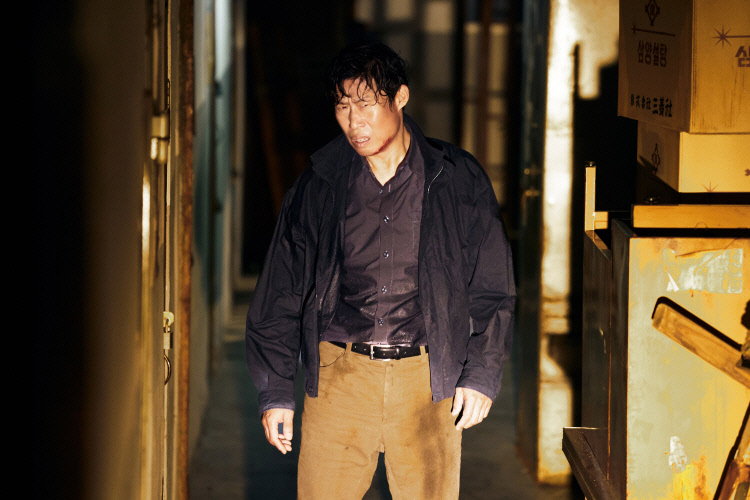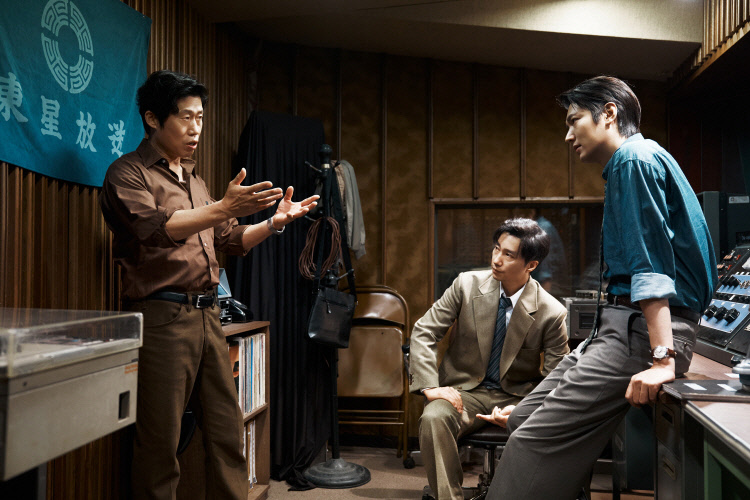
South Korean film “The Assassin(s)” is a well-made political thriller drama which does not go further than what I already know about its main subject and time period. Inspired by a lot of reasonable questions and doubts surrounding the attempted assassination of Korean President Park Chung-hee, the movie focuses on how its several fictional main characters’ desperate struggle against the following massive cover-up, and it did a fairly good job of bringing us back into that grim period. However, it does not distinguish itself enough from many other similar South Korean films out there, and I only came to observe its plot and characters without much care.
The opening part is the best part of the film. On August 15th, 1974, President Park attended an Independence ceremony along with his wife at the Seoul National Theater of Korea, but then there came several shots which threw everyone at the spot into panic and terror during next few minutes. A Zainichi Korean named Mun Se-gwang, who is incidentally presented as Moon Tae-kwang (Park Jeong-min) here in this film, was quickly captured, and President Park was not shot at all, but, unfortunately, his wife and a young girl were shot and then died not long after they were taken to a hospital.
While shocked a lot by this sudden incident, which happened to be broadcast on live TV, just like many others around him, Kim Jae-hwan (Park Hae-il), an editor of the social affairs department of some big local newspaper instantly embarks on what should be done as soon as possible. A rookie reporter named Han Young-il (Lee Min-hoo), who happened to be at the spot, quickly follows the instructions from him, and it does not take much time for them to see how serious the situation really is.
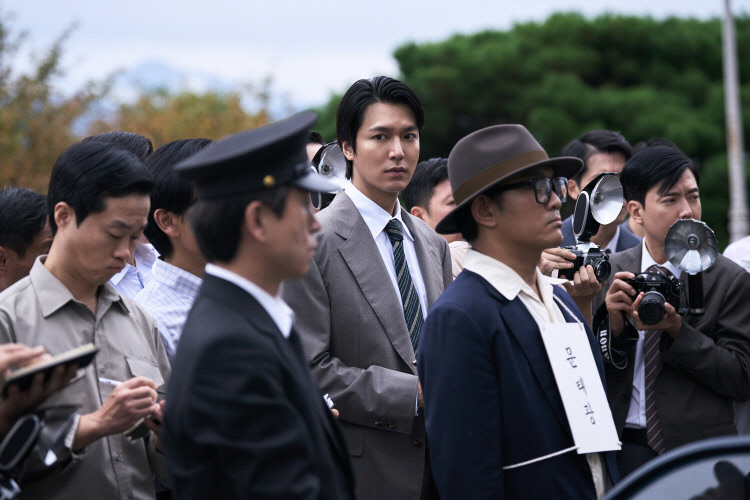
Just like many other TV and newspaper reporters, they are certainly ready to report on why and how the incident could happen in detail, but the South Korean government is not so willing to tell everything to say the least. It quickly concludes on the case once a full confession from Moon came after a few days, and Jae-hwan begins to sense something fishy after receiving a tip from Park Cheol-gu (Yoo Hae-jin), a police superintendent who was also at the spot along with many of his colleagues.
As Jae-hwan and Cheol-gu delve more into the incident together with some help from Young-il, they come to see that there are many odd and suspicious things in the incident. For example, six bullets were shot during that time, but it is undeniable that Moon could not shoot the last one because it was shot right after he was captured. In addition, all those bullets at the spot were taken away by Korean Central Intelligence Agency (KCIA), and the one which supposedly killed President Park’s wife was somehow gone.
Needless to say, Jae-hwan and Cheol-gu are soon cornered by KCIA in one way or another – especially they investigate more on the assassin’s background. On the surface, Moon is supposed to be a North Korean sympathizer who acted alone by himself, but there is a lot of difference between the investigation report from the South Korean government and what the Japanese Police discovered. Above all, it also becomes quite possible that Moon actually had someone who accompanied him when he entered South Korea.
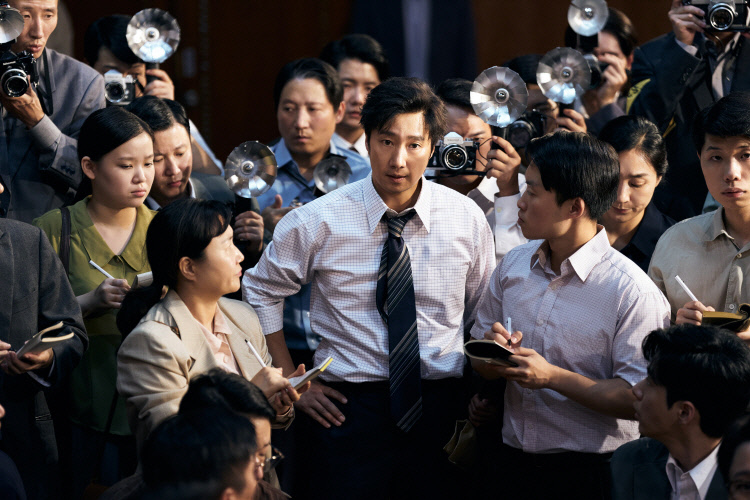
Although the possibility of conspiracy becomes more palpable to us, the movie thankfully does not go down into rabbit hole too much while showing and telling us how grim and volatile the South Korean society was under President Park’s dictatorship during the 1970s. For suppressing the growing demand toward democratization, he and his cronies were willing to do anything, and they were responsible for the kidnapping incident of congressman Kim Dae-jung in Japan, a prominent progressive South Korean politician who would become a South Korean president in 1998. This certainly put a lot of strain on the diplomatic relationship between the Japanese and South Korean government, and the movie presents a rather plausible theory on how this kidnapping incident might have led to the assassination incident one year later.
However, the movie did not interest me enough in terms of story and characters. The main characters are more or less than flat archetypes from the start, and the main cast members are simply required to fill their respective spots as much as required. Yoo Hae-jin, who also appeared in “The King’s Warden” (2026) early in this year, is a wonderful character actor to watch, but this is not exactly one of his best works, considering how he has steadily provided a series of enjoyable performances for more than 20 years. While Park Hae-il and Lee Min-ho are often limited by their thankless parts, the movie peppers the story with a heap of various notable performers including Bae Seong-woo, Park Ji-hwan, Jung Woo-sung, Shim Eun-kyung, Park Hae-joon, Oh Dal-soo, Shin Hyun-been, and Park Jung-min, and you may have some fun with watching them popping up here and there along the story.
On the whole, “The Assassin(s)” works to some degree with a number of competent moments including an effective chase sequence clearly influenced by that memorably rainy one in “Seven” (1995), but it is not one of better works from director Hur Jin-ho, who has diligently given us several good films such as “Christmas in August” (1998), “Happiness” (2007) and “A Normal Family” (2023). I was not bored at all during viewing, but I was not engaged or enlightened enough, and, in my humble opinion, it could do more than merely bringing us into its period background.