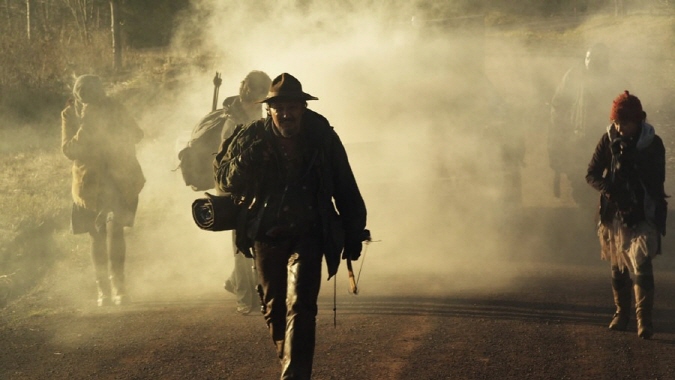
As usual, they were waiting for something thing to eat in the morning…
 There are interesting pieces here and there in South Korean thriller movie “The Neighbours”, but the result is an uneven combination which does not fully utilize the potential in its components. This is a well-made thriller with good atmosphere and competent performers, and it surely arrives at the point where every piece fits with each other nicely at the finale, but it lacks enough momentum to move or develop its pieces for an effective payoff in the climax.
Its pieces are set in one old apartment building that took me back to my childhood years. When I was 8, my family lived in such a building like the one shown in the film. There was no elevator because it was a building of five stories, and its dim staircase inside was as clean as its shabby appearance outside, and our apartment was so small that it even didn’t have a bath tub(but we could have a shower, and there was a public bath nearby). The building was built more than 10 years ago at that time, and it looked a far older around the time when I was about to enter my college(our family had already moved to the better -and more expensive- apartment building at that time). Not long after that, the building and other buildings were demolished for re-development, and now the place in my memory is gone, replaced by new fancy apartment buildings.
But let’s get back to the movie itself now. While they are concerned a lot about the re-development to come, the people in the apartment building are disturbed by a terrible incident in their neighbourhood. There is a serious killing case which has not been solved by the police yet, and its latest victim is a young middle school girl who lives in their apartment building. Her stepmother (Kim Yoon-jin) has been tormented by her guilt due to the fact that she could have saved her stepdaughter at that time, and now she sees her ghost coming back to their home every night.
 Meanwhile, some of her neighbors begin to sense that there is something strange about one of the residents in the apartment building. Because of his interest in the serial killing case, a pizza delivery boy(Do Ji-han) sees a suspicious pattern in one of his usual customers, who has ordered pizza every 10 days like the serial killer in question has committed murder every 10 days. The owner of suitcase store(Im Ha-ryong) is also suspicious about one reticent customer, who pays for a big suitcase with a questionable check, which is not bounced at the bank but written with a fake name.
The movie does not waste its time on this suspicion. Yes, they are suspicious of the same person and, this is not much of a spoiler, that guy is indeed that serial killer in question. When the movie shows his apartment of horror, I noted that it looks rather more spacious than others in the building – and I must say this is the first time I saw a South Korean apartment which was connected with a basement room below it.
The movie tries to build the suspense through how the killer finds himself unluckily cornered by his various neighbors while they don’t suspect him. There are a violent loan shark(Ma Dong-seok) who is pissed about how his creepy neighbour parks his car, a security guard with a skeleton in his closet(Cheon Ho-jin), a busybody mom(Jang Yong-nam) who frequently annoys the killer with the papers to sign or the resident meeting to come, and her young daughter whose striking resemblance to a dead girl upsets not only the killer but also a dead girl’s mom (both girls are played by Kim Sae-ron, a young promising actress I have watched since her stunning debut with “A Brand New Life”(2009))
 You may ask how the hell the people in the building have never noticed that resemblance before, but I guess that is a major point of the story. They are supposed to be neighbours to each other, but they rarely interact with each other except when they gather for their resident meeting while not knowing or caring a lot about who lives next to or below or above them. The movie is based on a popular South Korean Internet graphic novel with the same name, and I heard its dark thriller story is not only about the disconnection between people in urban society but also about the good will of ordinary people who rise to the challenge together when they face a diabolical evil disguising as their neighbor.
I have not read that graphic novel yet, but my Internet acquaintances say it is better than the movie, and even I could clearly see the reasons behind their dissatisfaction. The movie feels incoherent especially during its first half because it does not mix the individual subplots well in the story while suffering from its constantly shifting tone; there are some nice suspenseful moments, but their build-up process is frequently hampered by other things including a blatant tear-jerking melodrama. In addition, the ghost scenes are not as scary as intended; under the bright lights, the ghost just looks like an ordinary girl who gets wet because she does not have an umbrella on rainy day.
The actors give good performances to compensate for their weak story to some degrees, though the movie never gives them the chance to generate the synergy between them. Kim Seong-gyon is both creepy and petty as a serial killer who gets nervous by his neighbors, and Ma Dong-seok is sort of likable in spite of his character’s ruthless side(the guy even beats his family member because he does not pay him back). Kim Sae-ron does an adequate and convincing job of playing two roles, though she deserves a better film like “A Brand New Life”.
There are more failures than successes in “The Neighbors”. It maintains its unsettling atmosphere well on the screen, and its actors are appropriately cast for their respective roles. However, the movie does not seem to know what to do next; it clumsily handles its busy plot, and its climax lacks the punch it needs as a result, and the following ending seems redundant and unnecessary in spite of its ‘surprise revelation’. In the end, I felt an urgent need to read its original graphic novel as soon as possible when the end credits rolled. That’s not a good sign for an adaptation, you know.

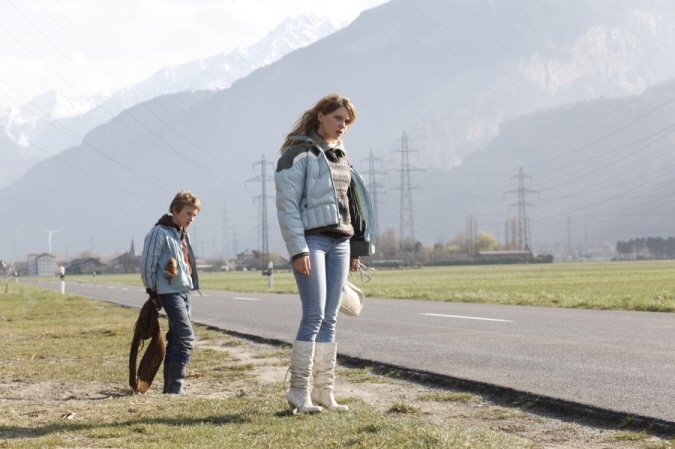 Simon, a young hero of “Sister”, is one of those resourceful poor kids we have seen before in other movies. He knows how to earn the money he needs, and he is very good at it. His town is near a ski resort in the Alps Mountains area where rich people come every winter season, so he goes up to the resort and steals many things including skis, sunglasses, helmets, and others he can sell. It is crime, but he does not think much about it: “They don’t miss them. They just go and buy new ones”
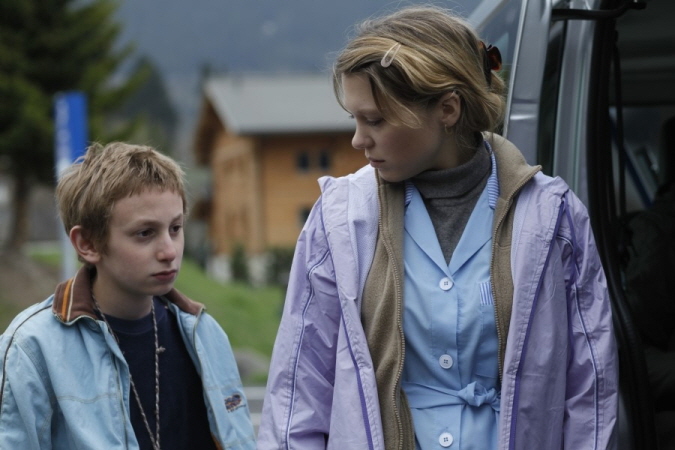
The movie closely observes this daily activity of Simon, played by a talented child actor Kacey Mottet Klein. First, he changes his clothes before he goes to the resort by cable car. While passing himself off as some rich kid at the resort with a pass card, he usually finds things to steal without being noticed by anyone(well, who can notice a little boy like him in the crowded place where everybody is busy with enjoying ski or working for customers?), and then he comes back to the town with a bag full of stolen things.
It seems that he has been doing this for a long time because he has already mastered his trade a lot(I wonder what he does during summer season). He knows how to make his ‘secondhand goods’ look like new ones(he can also do the opposite). He skillfully sells his stolen goods to his customers including his neighbourhood kids. When he is accidentally confronted by an English employee who is also taking advantage of the rich customers at the ski resort, he soon makes a deal with him for getting more money. It goes without saying that Simon is a criminal, but it is sort of darkly compelling to see how this little kid deftly moves around in the world literally on the top while hiding his true identity as a pilferer from the bottom. Artful Dodger would probably admire him.
 The motive behind his criminal activities looks simple on the surface. He lives with his older sister Louise(Léa Seydoux), who is an immature young woman who cares more about having fun with her boyfriends than settling on a stable job to earn money for them. She just comes in and out of their home at a shabby apartment building, and it is mainly Simon’s job to take care of their home. Though she does not show much appreciation to her little brother, he is willing to give money to his sister whenever she needs it, and she gladly takes it and goes out as usual.
While the movie organically reveals how their dysfunctional relationship has been somehow working, we also begin to sense what Simon really wants from his sister. On one day, he sees what he has yearned for from one of the rich guests at the ski resort, a British woman named Kristin(Gillian Anderson). He is drawn to her warm kindness, so he approaches to her while hiding his identity(he lies to her that his parents are involved with hotel business).
The director/co-writer Ursula Meier made an impressive debut with “Home”(2008), the movie I enjoyed when I visited the Gene Siskel Film Center in Chicago for the first time in 2010. Like that film, “Sister” is an unconventional family drama, and it moves the story in a calm and cool pace while maintaining the faint uneasiness in the relationship between its main characters until a hidden fact is suddenly blurted out at one point. Thanks to the cinematographer Agnes Godard, the harsh world surrounding Simon and Louise is accentuated by a notable contrast between the snowy world of ski resort at the top and the mundane world of the town at the bottom. The class distinction is clearly shown in this contrast(I heard that its original French title is “L’enfant d’en haut”, which means “the child up from high” in English).
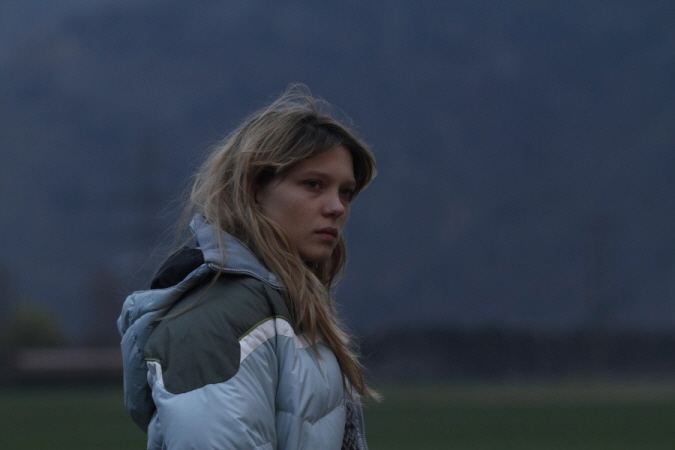 The movie depends on two fabulous performances at its center. Léa Seydoux, who was recently introduced to the international audiences as a pretty but lethal killer in “Mission: Impossible – Ghost Protocol”(2011), gives a very good performance as an immature woman who still does not grow up unlike her responsible brother. She is mostly selfish while so accustomed to being supported by him, but she cares about him at times although she is not so good at giving or receiving love. At one point, she actually tries to help him, but she soon goes out when her latest boyfriend comes for her with his BMW.
Kacey Mottet Klein, who appeared in “Home” as Olivier Gourmet and Isabelle Huppert’s young son, is terrific as a kid struggling through his harsh environment while hiding his deep loneliness. There is a sad, poignant scene when Simon asks his sister whether he can sleep with her in bed if he gives her money, and Klein’s acting quietly suggests the desperate yearning which has been growing inside his character. Watching Kline in the movie, I was reminded of the unforgettable hero of Ramin Bahrani’s “Chop Shop”(2007). Both of them are smart kids stuck with hard life, and they try to move on with admirable confidence by any means necessary. They are hardened through their struggles, but they are still kids with innocent hope, and they painfully come to learn that it is sometimes hard to fulfill dream in front of harsh reality even though they are determined.
Later in the story, the movie surprisingly reveals to us how much Simon and Louise are stuck with each other in their disjointed relationship – and it is more than we initially thought. “Sister” received Silver Berlin Bear award at the Berlin International Film Festival early in this year, and it deserves the award for the powerful moments it generates under its cool composure while never resorting to cheap sentimentalism. I thought the finale was rather abrupt, but now I feel that it is an appropriate and effective ending for the story – and it is a haunting one that will linger on your mind after the end credits roll.
 They say something like “they are just kids”, but we should not forget that bullying is a cruel thing to its helpless victims. Lee Hirsch’s documentary “Bully” presents us five kids as its painful examples and it shows us how hard it is or was for them to go to their schools every weekday. Following their respective stories, we see some of them get the help and support they need, while others did not, unfortunately.
In case of Taylor Long, a boy living in Murray County, Georgia, he hang himself in the closet in his room after being tormented by the bullies in his school for a long period. It was a shock to his family, and his parents want the teachers and the authorities to do something about bullying problem, but it seems they don’t do anything. Yes, they recognize their education system is not perfect when asked, but they do not take any particular measure to prevent bullying in school.
When we meet a 12-year old boy named Alex Libby in Sioux City, Iowa, we can instantly discern that he is an ideal target of bullying at his school. He is a scrawny kid with distinctive features including his face and his voice(in his school, he is frequently ridiculed that his face looks like fish). He is a nice kid, and he is not mean to anybody, but attending his school by bus is the first part of his hard school life. At one moment, the camera actually captures the other student annoying him with pencils. In the other scene, Alex tells his dad that how one high school boy bullied him, while pretending as if nothing serious had happened to him.
He has a nice family who love him and care about him. Alex’s parents are frustrated about the teachers at their son’s school. When they meet one of them, she keeps making an emphasis that she cares about Alex’s problem and will take care of it. But, while she looks like a good educator on the whole, the documentary shows that she does not handle bullying problem well. When she tries to deal with the problem between two kids in one scene, she does not see that the one behaving nicely in front of her is actually a bully. She keeps saying to a tormented kid that he should get along well with him, even while he protests that he has been constantly bullied by that mean kid.
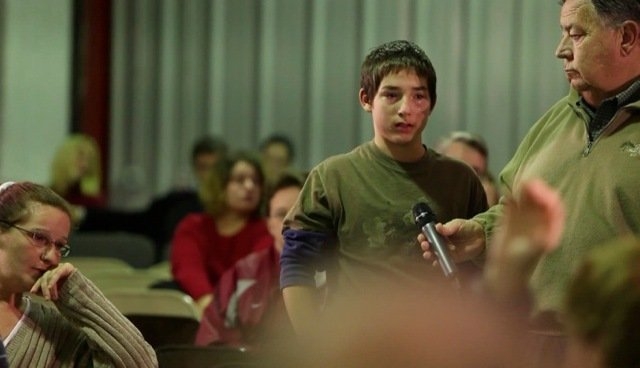
Another sad case is a high school girl named Kelby Johnson. Because she came out as a lesbian, she quickly became a pariah in her conservative town in Texas. We hear a lot from her about how she has been treated in her school because of her sexuality. She was a good basketball player in her team who could have gotten a college scholarship, but she left the team after being ostracized by her team members as well as other students at her school. In addition, even the teachers did not hesitate to hide their prejudice in front of her and other students. Whoever they were, I felt the urge to tell them that they do not deserve to be called teacher while listening to her bitter recollection about them.
It is really fortunate to Kelby that she has good friends who stand by her and do not give a damn about what the others say about her or them. Through their daughter’s pain, Kelby’s parents saw how ugly the people can be because of prejudice and ignorance; after Kelby’s coming-out, they have been avoided by many of their neighbours who were once close to them.
In case of Ja’Maya Jackson, this unfortunate young girl got herself in a very serious trouble when she decided that she had to take some action to stop the other students from tormenting her. Her action was unwise: she took her mother’s gun and wielded it in front of 22 students on the school bus. Never did she imagine that she was attempting a legally serious crime – now she is facing the possibility of the heavy prison sentence because more than 40 felony charges can be applied to her case according to the criminal law.

We also hear about another tragic case of a young boy named Ty Smalley, who killed himself with a gun at his home. His close friend tells us how Ty was bullied at his school, while also telling his personal story about how he came to learn that he was not good to other students and then has been nice to them after that realization.
While it also shows how the parents of bullied kids try to deal with this matter, “Bully” does not discuss a lot about how to solve the problem it presents. This is a hard and complicated problem, and I understand that the educators at schools have their limits in case of controlling their students, but should it have thought more about why bullying happens? While watching it, I thought of the movies dealing with the same subject more vividly in their fictions. “Welcome to the Dollhouse”(1995) remains one of the best films about being ostracized at school, and recent South Korean film “Bleak Night”(2010) was a complex teenager drama where the lines between the abusers and the victims are ambiguous.
Anyway, “Bully” is a well-intentioned documentary which serves its purpose well. I do not know whether it will really help other bullied students and their families, but, at least, it may tell them that they are not alone. The documentary honestly tells us how hurtful bullying can be to its victims, and it came to my mind that we also frequently hear the similar news about bullying at schools in South Korea on these days. I guess bullying is universal human cruelty which reminds us that we are still animals who can be harsh to the others different from us.


“Red Lights” promisingly starts with an intriguing matter to entertain us and then disappointingly exits with an ending too easy and simple compared to what it has played with. Although it maintains well the dramatic suspense between science and its opponent during its first half, but what eventually happens in its lackluster finale feels like a compromised ending considering the stakes it has raised from the beginning.
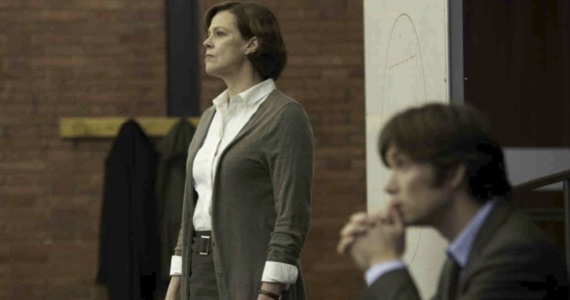
Maybe Because I do not believe paranormal activities a lot, I enjoyed how Dr. Margaret Matheson(Sigourney Weaver) and his assistant Tom Buckley(Cillian Murphy) investigate several paranormal activities. With the help of science, these skeptic scientists have debunked many ‘paranormal’ cases while gaining considerable reputation(or infamy) in their field. In fact, Matheson also has a college lecture on how much our eyes can be easily fooled by so-called psychics. Do you know that how much easy it is to shake or lift a table while not being noticed by others under the right conditions?
So far, they have had solid successes with their cases in spite of their tight budget, but now they come across a guy who can be an opponent of their lifetime. Simon Silver(Robert De Niro), a famous psychic who suddenly retired after a questionable incident a long time ago, recently makes a surprise comeback with no apparent reason. He gives the demonstrations of his supernatural power to the audiences again, and he becomes as popular as before with his shows, and that naturally draws the attention of our two scientists.
 While Matheson does not prefer to get involved with Silver due to her unpleasant experience with him in the past, Buckley gets obsessed with debunking him despite her sound advice. He has his own personal reason for that; when he was young, her mother followed a wrong advice from a psychic when she should have gone to hospital, and she died consequently. That must have been quite an impact to him, because he has assisted Matheson in their shabby laboratory filled with the secondhand equipments instead of pursuing a more promising career as a talented physicist.
Determined to prove that Silver is a charlatan, Buckley begins his investigation, but it seems something strange is going on. While it is quite hard to find anything suspicious from Silver, weird and unexplainable things keep happening around Buckley and Matheson. Buckely is especially disturbed by what happens during one of Silver’s shows while he tries to detect any trace of tricks. Is it possible that Silver does have a supernatural power as he has claimed? Or is it just his another trick to fool and defeat his opponents?
The director/writer Rodrigo Cortés previously made an impressive debut with that unforgettably claustrophobic thriller “Buried”(2010), where its main character must quickly find a way to get out of his dreadful circumstance which still makes me wince whenever I think about it. Though the story of “Red Lights“ has a far more opened and loosened than that movie, Cortés keeps the wheels turning at least during its first half. The movie is set with the good ambience to stick our attention to its mystery, and it is certainly helped a lot by good actors who do their respective jobs well.
 The mystery revolves around whether Silver really has a psychic power or not, and Robert De Niro amply exudes shady theatricality through his commanding presence whenever his character appears in front of the audiences. When those bent steel spoons appeared on the screen, I instantly thought about how Uri Geller fooled people, but De Niro effectively suggests the other possibility through his theatrical performance.
Cillian Murphy and Sigourney Weaver are competent as the characters who are slowly shaken by the possibility that their whole works may be demolished by the power they do not believe much; If they are proved to be wrong, then it will be the end of their research career forever, Weaver has been good at playing no-nonsense characters, and I liked the scene where her character points out to Dr. Shackleton(Toby Jones), the other researcher in her college who has tried to prove the existence of supernatural power scientifically, that his recent experiment has a major flaw to undermine the whole result. Murphy is well-cast as a man with growing anxiety, and he keeps the story in motion even while it loses considerable plausibility around the third act.
Because the movie has good elements with lots of potentials, it is disappointing to see the story going through its weak third act and then arriving at its rather flat resolution, which may not be predictable but awkward and artificial instead. I understand that such a story like that usually has a few possible ways for ending, so that kind of the resolution may be understandable, but I am still not unsatisfied with the story due to its several flaws and gaps. Because many parts of the story remain unclear, I still wonder about the motive behind the violent moment near the climax. And I think the movie could have utilized De Niro’s character more to make its mystery meatier,
At least, “Red Lights” is not a tedious thriller. I appreciated its nice moments including a tense scene where Buckley and Matheson skillfully works on one of their interesting cases, and I went along with it for a while at least for an hour. But I walked out of the screening room while less satisfied than when I watched “Buried” in 2010. That movie was a good dense thriller from the beginning to the end – this movie turns out to be not so good in the end in spite of its nice beginning.
 Here is another good documentary which reminds me that I still have a lot more things to know in case of art. Around the beginning of this month, I saw Kevin Macdonald’s documentary “Marley”(2011), which was a sincerer tribute to a great musician and his works I was not so familiar with. Now the end of this month is coming, and “Pina” will be released at South Korean theaters in the next weekend, and it is a respectful tribute to another famous artist and her works I had not even heard about before watching it.
Her name is Pina Bausch, a choreographer and modern dance performer who was well known for her impressive works performed in “Tanztheater” style. In 2009, the director Wim Wenders was about to make a documentary on her works through the collaboration with her, but, unfortunately, she was diagnosed to have cancer during its pre-production process. She died 5 days after the diagnosis – and 2 days before the shooting.
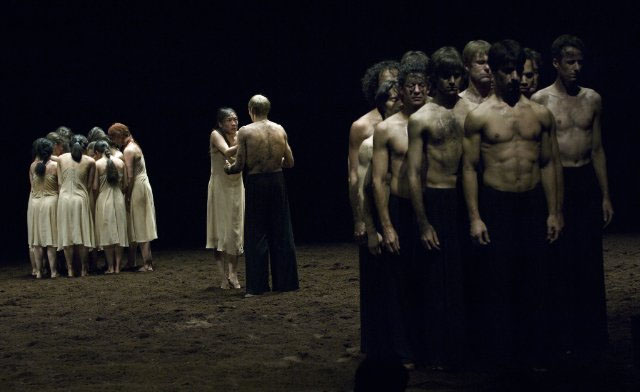
As a consequence, Wenders’s documentary mainly revolves around her works rather than Bausch herself, who is briefly glimpsed through archival footage from time to time. Her works are performed on the stage by the members of the Tanztheater Wuppertal for this documentary, and they are compelling enough to grip your attention instantly from the start. There are four pieces introduced in the documentary, and the first one is “The Rite of Spring”. We see a group of female dancers on the brown soil spread on the stage at first. After they go through several movements, we later see them dynamically move and interact with a group of male performers through various group/individual motions. I must confess that I do not know how to interpret this piece in words, but I sensed something beyond words was being expressed through the movements of dancers and the soil below them. Maybe it was about the vibrant but violent life force during springtime, I guess.
And there is another interesting piece named “Café Müller”, which was briefly shown in Pedro Almodóvar’s “Talk to Her”(2002). The stage is a cafe with many chairs and tables, and, while the performers are moving around, the positions of the furnitures on the stage are constantly changed by others, and they sometimes stumble upon them. This is followed by another frustrating cycle of movements between two men and a woman, which is repeated over and over.
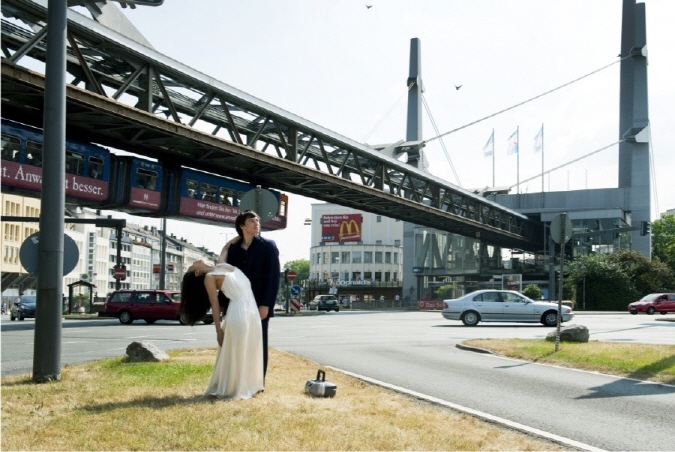 While the documentary shows us the excerpts from these two pieces and other two equally mesmerizing ones(“Kontakthof” and “Vollmond”), Wenders and the performers also try an interesting experiment. The performers do several solo or duo performances outside, so we get several odd sights like a woman ponderously walking into a monorail or a man frantically dancing on street with cheerful music. I am not sure about whether these scenes are as successful as intended, because it seems that they merely present the performances with different backgrounds while not doing much besides that.
We also get the interview clips from the various artists who worked with Bausch. They are typical talking head interview clips on the surface, but, interestingly, Wenders has them look to us without a word while they are talking about their experiences with Bausch on the soundtrack. They speak in different languages, but they all invariably talk about how great it was to them to work with an artist like Bausch, who brought the best out of their weaknesses as well as their strengths. The wordless faces of interviewees clearly convey us how sincerely they admire and respect her with their hearts.
For the effective presentation of the stage performances on the screen, Wenders used 3D effects throughout his documentary. I watched it in 2D, so I cannot talk about its 3D effects, but, like Martin Scorsese’s “Hugo”(2011), “Pina” proves my personal thought on good 3D film is right again; if 3D is used with skill and purpose in the movie, it shows you where they will be effectively utilized even when you’re watching in 2D. I am particularly curious about how one scene featuring a miniature stage looks like in 3D, and I am willing to watch the documentary in 3D again if I get a chance.
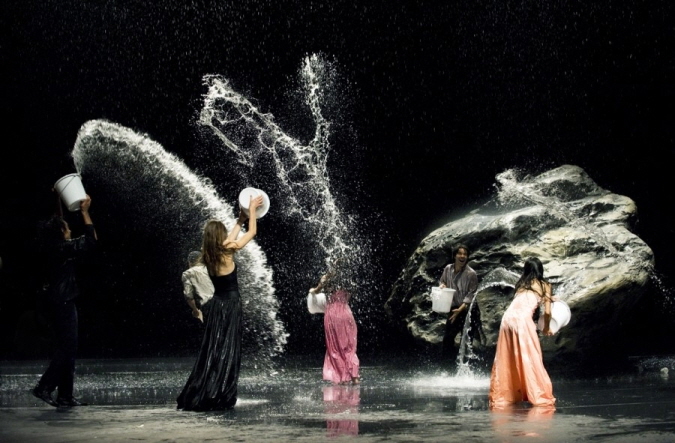
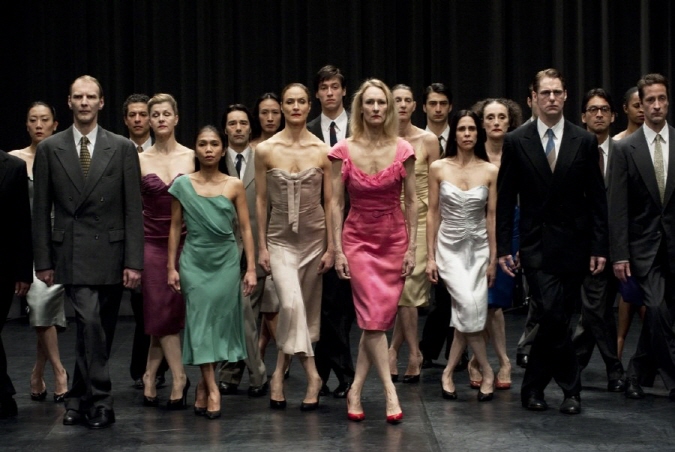 Anyway, you do not need 3D glasses to know that “Pina”, which was Oscar-nominated for Best Documentary early in this year(it was initially Germany’s official submission to the Best Foreign Language Film category), is an engaging documentary. In case of “Kontakthof”, Wenders used the editing technique to simultaneously present its three variations respectively performed by three groups in different ages, so we see how different they are from each other while retaining consistent elements and themes shared by them. In “Vollmond”, there is a big, huge rock in the middle of the wet stage, and it is sort of fun to see the performers on the stage throwing buckets of water to each other in front the rock.
The documentary gives little information about Bausch’s life or her work process, and that makes her absence more apparent and visible like a hole in the picture. Furthermore, it is not informative enough to the audiences like me not so familiar with her or her works, and, though they look vivid, I did not feel that the excerpts from the stage performances in the documentary are good alternative to watching a real performance on the stage. None the less, considering that it was not perfect from the beginning due to her untimely death, I think “Pina” is a good documentary which also works as a nice tribute to its subject and I enjoyed what it presented. I hope I will be able to watch at least one of her works on the stage someday for my snobbish satisfaction.
 When I watched “The Intouchables”(2011) at the local movie theater several months ago, I got a small nagging dissatisfaction with that crowd-pleasing film which was about the warm friendship between a disabled man and a caregiver hired by him. The movie was surely a pleasant drama with two amiable lead performances, but I found it a little too mild and superficial; it merely loitered around thin stereotypes and worn-out clichés and it went no further than that.
Its weakness immediately took me back to when I watched John Sayle’s “Passion Fish”(1992) in the last year. It can be said that this movie also loiters around its characters, but this is a small but richer character drama far from “the disease/disability of the week movie”. Its two main characters are believable and sharply drawn, and the interactions between them are compelling, and the movie does a lot more than depicting the tough struggles of wills between these two headstrong characters who come to recognize and depend on each other while stuck with each other.
At the opening scene, May-Alice Culhane(Mary McDonnell), a TV soap drama star living in New York, wakes up to find herself on the bed at the hospital. Due to T-10 complete spinal lesion caused by an unfortunate car accident, her legs become permanently paralyzed. That means her acting career is nearly finished, and TV in the hospital room shows that she is replaced in her show. “That’s my close-up”, she grunts in discontent while looking at TV.
After the physical therapy sessions which she has to endure with no particular enthusiasm, she decides to go back to her hometown, a small country town in Louisiana. Because she lives alone in her family house near the lake, she needs a full-time nurse/companion to take care of her, but she is not a model employer to say the least. Still resentful and sulky about what happened to her, she chooses to confine herself to a couch with TV and a bottle of wine, so we get the hilarious sequence where she encounters several employees who eventually leave or get fired not so long after they are hired. At one point, she throws an acerbic line to a blunt nurse with thick foreign accent: “Weren’t you in Ilsa: the She-beast of the Gulac?”
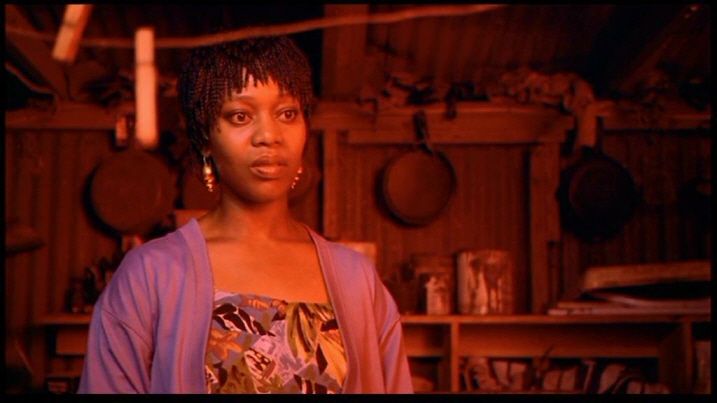 After going through five employees, May-Alice manages to get another one from the agency. She is a quiet, reserved woman named Chantelle(Alfre Woodard), and she also soon finds that the job is not going to be easy at all – but she is determined to do her work as much as she can while frequently clashing with her difficult employer.
The movie revolves around their constant tug-of-war. This is a typical circumstance we have encountered before in other similar movies about disability, but, in this case, it is fully energized by two stubborn women who won’t step back easily. Observing their sparky interactions with a plain realistic approach, Sayles’ smart screenplay presents the dynamics between them in various tones. Sometimes it is an angry shouting match, sometimes it is a passive-aggressive battle of wills, and sometimes it is a sensible persuasion followed by a grudging agreement.
As the time goes by, May-Alice and Chantelle approach to a certain level of equilibrium. Although she is the employer with money, May-Alice depends a lot on Chantelle. At one moment, she experiences how difficult it is for a paraplegic to take care of herself when she is alone in the house. The movie has a clear and unpretentious view on her disability; watching her physical therapy scene, I thought about how hard it is to live with a part of body no longer under one’s control.
In case of Chantelle, she may just walk away from her employer, but she really needs a stable job because of her personal reason. However, that does not mean that she will tolerate her employer’s willfulness. Though she admits that she is not a very good nurse, she does not neglect what she has to do as a good employee. She pushes May-Alice to do the exercise for strengthening her upper body. She strictly blocks her from alcohol when she thinks it is necessary. And she also gently convinces her employer that she may be the best option available to her at present(“Why would I want to do that?” – “Because the next one may not be so nice as me.”)
 With no conventional plot to follow, the movie gets lots of space for not only the developing relationship between them but also the colorful supporting characters with their own life stories behind them. Sayles provides a bunch of well-defined three-dimensional characters to his supporting cast, and they are impressive even when they appear briefly; even the caregivers before Chantelle are quite interesting to observe and listen to.
The best example is when May-Alice’s ‘literary’ uncle Reeves, deliciously played by late Leo Burmester, suddenly visits her house for drink. Within few minutes, Uncle Reeves succinctly tells us and Chantelle lots of things about May-Alice’s family and himself, along with the sweet affection between him and his niece remaining same as before.
Another interesting moment comes when May-Alice meets a surprise visitor looking for Chantelle. Though we quickly learn about who he is, his rather ambiguous intention casts faint uneasiness on that scene. When Chantelle’s young daughter comes to visit her mother along with her grandfather later in the story, she is happy to see her mother again, but their tentative private moment suggests that this young girl must have seen a lot from her mother on bad days in the past.
My favorite moment is when May-Alice is visited by her actress friends and the young actress who replaces her in the show(They are played by Angela Bassett, Sheila Kelley, and Nancy Mette). After we get some good laughs due to a funny confusion associated with the show(Its storyline seems to be as preposterous as an average American TV soap drama can be, by the way), they pleasantly talk about their acting careers, and then the conversation is led to a captivating monologue from one of them. While she confides to others one painfully funny experience from her early hard years, her fellow actresses listen to her with knowing looks.
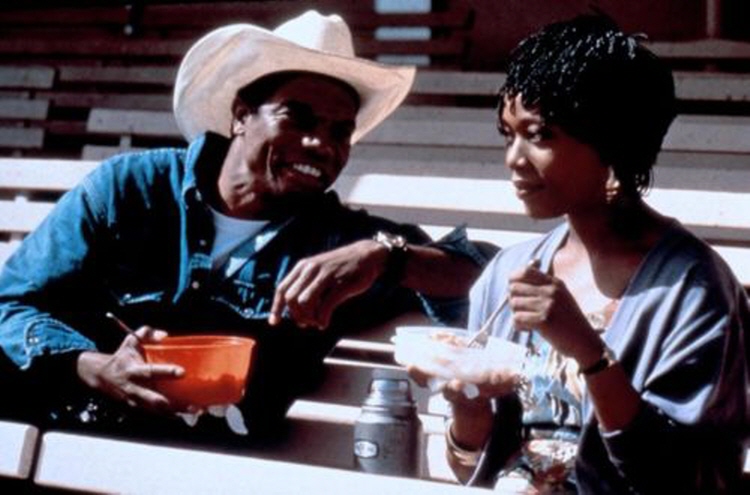 Meanwhile, May-Alice and Chantelle respectively find the possibility of romance. May-Alice is glad to see her high schoolmate Rennie(David Strathairn) when he comes to her house for repairs. They were not that close to each other in the past, but they are amiable to each other now, and it can possibly be more than that, though she is a paraplegic and he is a married man with five kids. Chantelle gets close to a jovial horse trainer named Sugar(Vondie Curtis-Hall), but she is not sure about whether she can be closer to him. The movie handles these downstairs and upstairs romances with warm sensitivity while leaving open possibilities to them.
Amidst these various elements freely flowing around them, Mary McDonnell and Alfre Woodard hold the emotional core of the film with their superlative duo performance. McDonnell, who was Oscar-nominated for this movie, gives nice little touches to her performance. Because she is still an actress to the bone, May-Alice plays herself in different ways while interacting with different people, and she gets a droll scene when she is visited by a couple of fascinatingly shallow high schoolmates who do not remember well about their high school years. McDonnell also conveys the shifts inside her character through small gradual changes in her face and accent; May-Alice was probably bitter and unhappy with her life before the accident and remains pretty much same after the accident, but she slowly reveals her softer sides while her tough sides remain intact with sarcastic wit.
 Woodard, who was regretfully not Oscar-nominated unlike McDonnell, is an equal match for McDonnell with her relatively restrained but equally indelible performance as a complex character uncertain about her future but resilient enough to stand up against her employer. The chemistry between McDonnell and Woodard is crucial for the tension in their relationship. May-Alice gradually accepts that Chantelle is someone she really needs while Chantelle gets some help from her, and they become a little more generous to each other with mutual trust in the end, but they still have too many things left unresolved between and around them to be good friends. Besides, these ladies are too proud to be sentimental; when they have a private conversation alone around the finale, it is mostly a practical talk on their future.
Notably less political than most of Sayles’ other works, “Passion Fish” is an unsentimental but heartfelt story about how two different people form a relationship amid their struggles. The movie wisely avoids falling into the traps of tiring melodrama clichés, and it also pays a great deal of attentions to the world and the people surrounding them. The cinematography by Roger Deakins gives us a natural view of bayou country, which sets a nice mood with good soundtrack in the film, and the movie has small but fabulous moments to be savored at its corners. This small gem is a pure human drama which can be tough, funny, and insightful at the same time. “It’s uphill!” – “So is life!”
Sidenote:
1. I heard that they are planning to remake “The Intouchables”. “Passion Fish” may be a good guide for a better remake.
2. According to IMDB trivia, the passion fish myth told in the movie is Sayles’ invention.
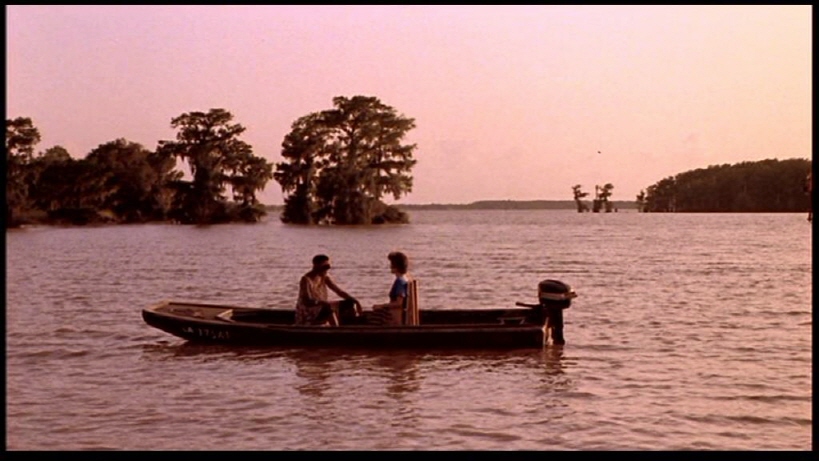


 Len Wiseman’s “Total Recall”, which is a remake version of the 1990 film with the same name, has several amusing things to talk about after watching it, but most of them are the faint echoes from the 1990 version. They tried to tell a different story by changing its background and modifying some aspects of its plot, but we are basically served with the same premise and the same story we have experienced and played with before. The result is not always tedious at least, but, folks, do we really need this?
If you love science fiction movies, you have probably watched the 1990 version at least once. Inspired by Philip K. Dick’s short story “We Can Remember It for You Wholesale”, the movie was exciting as a SF action film with thought-provoking premise and impressive visuals. It has many visible scientific errors in its depiction of Mars, but I enjoyed those red alien landscapes in the film along with many freakish things including a three-breasted woman, and its special effects are effective in spite of looking old-fashioned compared to the CGI special effects. In addition, Arnold Schwarzenegger was a likable action hero, and the movie rarely lost its sense of fun amid its over-the-top bloody violence which I remember rather fondly.
Unlike the 1990s version, the remake version remains on the Earth throughout its running time, and that is one of the major disappointments in the film. The sense of wonder is considerably decreased as a consequence, but we get instead the amusing sights of the massive transport vehicle called “Fall”, a very big gravity elevator going back and forth between two opposite sites on the Earth through its underground tunnel. As far as I remember, this elevator goes right through the core of the Earth during its operation, so I wondered how they built this transport system under extremely high pressure and temperature. The movie does not explain much about it, but I have to admit that it was rather fun to see a theoretical system I have encountered in a high school science textbook materialized on the screen despite its glaring scientific errors in the depiction of how it works.
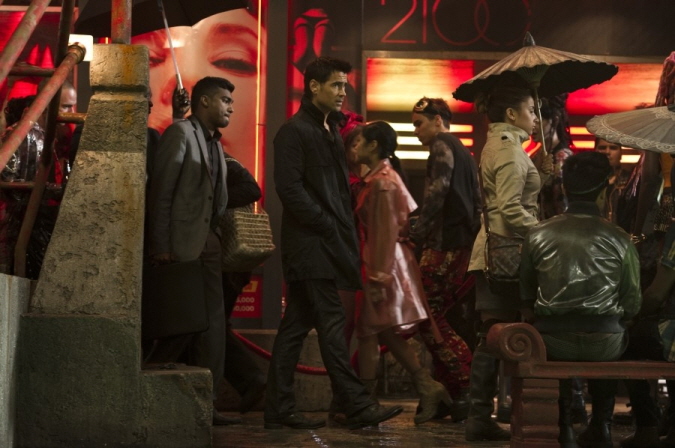 Fall is crucial in connecting only two places on the Earth remaining habitable for the people after the global chemical warfare at the end of the 21th century. One is the United Federation of Britain, and the other is The Colony, which was formerly Australia. For many workers in The Colony, Fall is their commuter train to UFB, where they work in the factory producing robot soldiers.
One of the worker is Douglas Quaid(Colin Farrell), and he has been unsatisfied with his boring daily life although he has a lovely wife Lori(Kate Beckinsale) and a close friend Harry(Bokeem Woodbine) near him. He also has some problem with recurring nightmares he does not understand; they are always about some violent situation in which he runs with a woman he does not know.
On one day, despite his friend’s advice, he decides to go to the company named Rekall, which may provide the satisfaction he has been yearning for. In this company, they will provide him artificial memories to be injected in his brain, and, after being implanted with them, he will vividly feel them even though he is well aware of the fact that they are not real. He chooses the memories of a secret agent, and everything gets ready for him in a short time.
As you see, the movie adds little to its original plot. Bewildered about what happened at Rekall during his visit, Quaid realizes that everything in his life may not be what it seems to be on the surface, so here comes that familiar question on reality and identity, but the movie does not do anything new with that question while blandly utilizing several circumstances in the original film. Most of us know how they will be played out, so there is not much suspense or drama in the story as a result, and the movie becomes a mere imitation of the 1990 version in the end.
 Nevertheless, the movie has some nice things to be appreciated. While I have many doubts about its practicality, I observed how Fall is operated with the certain level of interest. I liked the look of UFB and The Colony because they look wonderful as the overcrowded metropolises filled with high-rise buildings in different styles. The actions in the film are good, although I was pretty bored with those CGI robots moving in groups during the climax sequences. They lack personality except one robot painted in black, which is in fact not so different from its fellow robots.
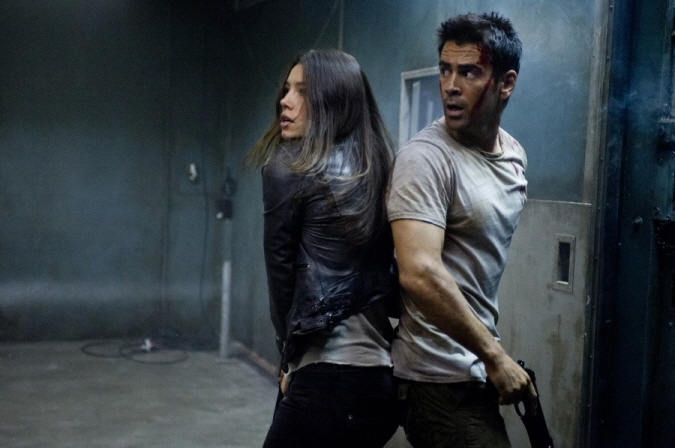
Compared to Schwarzenegger, Colin Farrell is surely a better actor; he is adequate as a more realistic action hero, though his performance is less enjoyable than Schwarzenegger’s fun performance due to its inherent seriousness. His notable co-performers do not have many things to do in the movie. Bill Nighy, who plays the leader of the resistance group, only appears in one moment, and Bryan Cranston is under-utilized as the top bad guy. While Jessica Biel is wasted in her thankless character whose main function is running along with Ferrell, Kate Beckinsale is relatively more distinctive than others as the main opponent of Ferrell’s character.
The movie is not the worst remake of this year at least in my view, but it goes without saying that it is less fun than the original version. When the movie was over and I walked out of the screening room, I came across a kid saying to his dad that he liked it a lot. I recommended him the 1990 version, but I also told him to watch it when he gets older – I thought he was a little too young to appreciate a three-breasted woman.
 “Stake Land” is too good to be dismissed as “another zombie movie” because of its impressive gray atmosphere and a nice bleak drama unfolded in its apocalyptic world. This small horror film pays attention to its world besides its stock zombies, and it also cares about telling a story besides how gruesomely its characters kill zombies on their perilous journey.
Its premise has been becoming something of a cliché due to the countless other zombie movies we have encountered before. Yes, as you have already guessed, an unidentified disease was suddenly spread throughout US, and now the American society we know is completely collapsed, and the number of the living dead has been steadily increasing while the uninfected have been struggling to move on with the remains of their world.
Two of them are a young boy named Martin(Connor Paolo) and a middle-aged man named Mister(Nick Damaci). Martin’s parents were killed by zombies when they tried to leave their house at one night, but Martin was luckily saved by Mister. As Martin’s dying father requested, Mister has been taking care of Martin, and they are now moving to the north for a relatively safe place called New Eden, which is said to be somewhere around Canada.
 Besides protecting Martin from the various dangers on their journey, Mister also teaches him how to kill zombies for survival. Actually, the zombies in the movie are vampires and they are burned by sunlight, but they behave pretty much like standard zombies. Some of them can speak while maintaining their normal appearances, but most of them just keeps growling as the hideous rotting corpses mindlessly craving for fresh new blood. To be killed, they must be shot right in their heads, or, like good old-fashioned vampires, their hearts must be impaled with stake.
While going through several small towns and some troubles, they soon find themselves accompanied with the other people who also want to go north: a young pregnant girl(Danielle Harris), a marine(Sean Nelson), and an old nun(Kelly McGillis), who is still horrified to see how quickly the world is collapsed into a horrible chaos thanks to the living people as well as the living dead. While there is always the constant possibility of zombie attack around them, they also should be careful of a religious military group roaming around the region they are traveling through. Its fundamentalist members are so fanatic that they believe spreading more vampires is doing God’s work, and we later meet one of its most vicious and brutal members, Jebedia Loven(Michael Cerveris). Even when the judgment day does seem to come, these annoying fundamentalists are no help to us at all, damn it.
The director Jim Mickie, who co-wrote the screenplay with Nick Damaci, does a credible job of filling the screen with the sense of cold desolation through the succinct use of locations. Though this is a low-budget horror movie, its gray landscape of barren forests, abandoned houses, and harsh cold weather feels as palpable as the one shown in “The Road”(2009), another apocalyptic tale about a lonely journey of a man and a boy surviving through their devastated world where heartless evil reigns. The story is as ruthless as its world can be, and the vampires in the film look convincingly disgusting, and I enjoyed the details like using the vampires’ teeth as some sort of currency at town bar or the bold use of religious symbols throughout the movie.
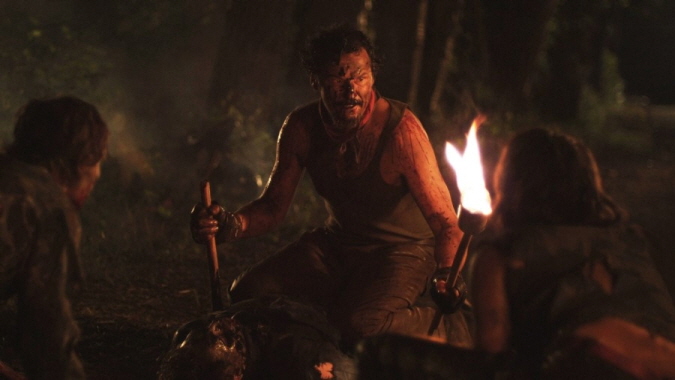 The actors are unknown to us except few cases, but they are competent performers. Nick Damici’s tough, taciturn performance works well with Connor Paolo’s weary innocence. They are believable as the characters who have been together for a long time, and that is the main reason why the scene where one of them makes a crucial decision near the ending feels quietly poignant. Michael Cerveris is effectively menacing and despicable as a hateful villain; he is someone you won’t feel sorry for even when he is about to meet a very horrific end. Kelly McGillis, looking far older than when she appeared in the popular films like “Top Gun”(1986) or “Witness”(1985) during the 1980s, gives a small but solid supporting performance as a counterpoint to Cerveris’ evil character.
After watching this film, I thought about how many zombie movies I have watched during recent years. Most of them were at least well-made, but many of them were bland because they just focused on that boringly relentless behavior of zombies. They do not have any motivation at all except functioning as scary monsters ready to bite anyone alive. They are not very interesting(how utterly boring it will be if they succeed in filling the whole planet), and I am not usually scared by them. To be frank with you, I think the tasty hilarity with zombies in the movies like “Shaun of the Dead”(2004) or “Zombieland”(2009) is more effective and enjoyable.
While the zombie vampires in “Stake Land” are scary on the average level, the movie has other good things besides its nasty creatures which turn out to be a little more various than I expected. Although it does not bring anything new to its genre, the movie is supported by a good story, and I appreciated its looks and atmosphere as much as its earnest approach to the story. I am sure we will soon get another zombie movie in a short time, but I won’t mind it if it is a good one like this movie.