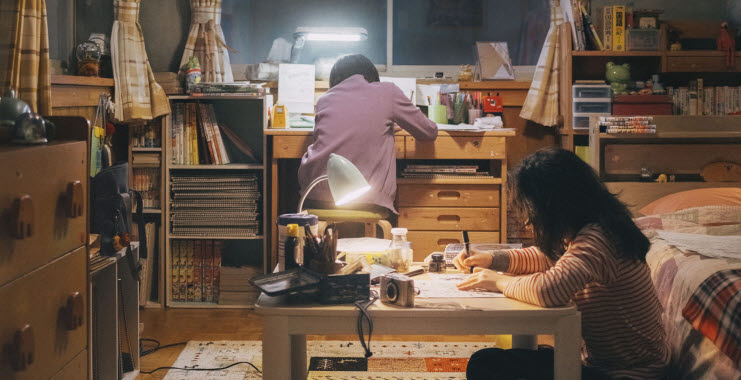
“Look Back”, another new film from Hirokazu Kore-eda in this year after “The Sheep in the Box” (2026), is a little but compelling story about friendship and artistic collaboration. Based on the 2021 one-shot manga of the same name by Tatsuki Fujimoto, which was already adapted into the 2024 animation film, the movie has its own mood and sensitivity to distinguish itself from the animation film version besides being a fairly faithful adaptation, and the result is quite engaging and touching on the whole.
The story begins with how its two main characters befriend each other during their elementary school years in some rural town in Japan. As a young girl who has been quite passionate about drawing manga, Fujino (Furi Nanase) is very proud of her little manga in the school newspaper, but then there comes an unexpected change for her on one day. On her classroom teacher’s suggestion, the school newspaper begins to put another student manga right next to Fujino’s, and, what do you know, this student manga instantly draws a lot of attention and praise from many other students due to its remarkable details and touches to be appreciated.
Needless to say, Fujino’s efforts are frequently compared to the works from the other student, and she naturally becomes more competitive. Sure, her manga is fairly good on the whole, but she cannot help but feel inferior whenever she and many of her schoolmates look at the latest work from Kyomoto (Rokka Okada), who has incidentally stopped coming to the school mainly due to being quite shy and introverted. No matter how much she tries during next several months, Fujino still feels like being way behind her competitor, and that eventually makes her quit drawing manga when her last elementary school year begins.
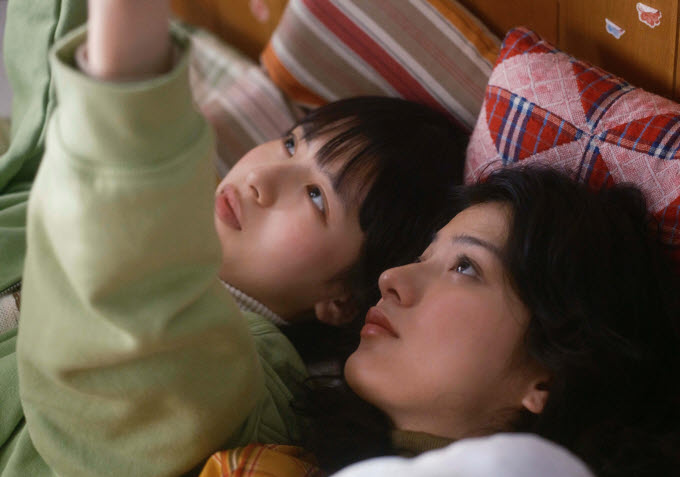
When the graduation day eventually comes for her and her fellow schoolmates, Fujino is asked to deliver a diploma to Kyomoto’s residence despite her reluctance, and then she encounters Kyomoto at last via a little coincidence. To her big surprise, Kyomoto turns out to be a longtime admirer of that little manga created by Fujino, and that is the beginning of their very special relationship. As they stick together more via their shared passion on manga, they spend a lot of their spare time on several manga projects of theirs, and, of course, they come to help and support each other more and more during next several years.
Although it is not so different from the 2024 animation film version in terms of story and characters, the movie actually does its own stuffs at times. Because it is relatively longer than the 2024 animation version (The running time of the former is 100 minutes while the latter is less than 60 minutes), it often adds some extra details to observe, and it also vividly illustrates the collaboration process between its two main characters with considerable realistic touches to admire and appreciate.
As the camera of cinematographer Senzo Ueno closely and intimately observes these two girls’ painstaking artistic efforts, our eyes are often marveled by a series of interesting touches and techniques, and this will surely remind you of why artificial intelligence may never surpass human acts of art at least during next several centuries. Sure, those drawings from artificial intelligence may be perfect to the bone on the surface, but they seriously and inherently lack human elements to which we can respond in each own way, and that is why they are and will always be nothing but inconsequential digital products.

Under Kore-eada’s sensitive direction, two young performers Furi Nanase and Rokka Okada are constantly engaging in their adorned natural acting, and they are also flawlessly connected with their older counterparts later in the story, who are convincing as their characters come to have a sudden conflict around the middle act of the story. While surely and sincerely appreciating how much her friend has helped her in getting out of her small reclusive world, Kyomoto, who is now played by Aju Makita, wants to focus more on honing her drawing skill, and this unintentionally leads to her following breakup with Fujino, who is now played by Natsuki Deguchi. Deeply feeling hurt by her friend’s decision, Fujino eventually decides to go her own way without Kyomoto, and we soon see Fujino becoming a promising new manga creator several years later.
However, the story subsequently takes an unexpected narrative turn during the last act. If you are familiar with Fujimoto’s original manga or the 2024 animation film version, you surely know this in advance, but it is still harrowing to see how Fujino becomes quite devastated as a consequence, and you will also be touched again by the genuine poignancy from a very moving example of the elevating emotional power of art.
In conclusion, “Look Back”, which won several collateral awards when it was premiered at the Venice International Film Festival in last month, works as well as the 2024 animation film version, and I am glad to see Kore-eda back in his element right after the mild disappointment in “The Sheep in the Box”, which let us down to some degrees despite its supposedly intriguing story premise coupled with the usual artistic touches expected from him.
Although I think “Look Back” is not one of his best works during last several years, you will enjoy Kore-eda’s thoughtfully sensitive handling of the story and characters, and you will also recognize and admire his artistic personality from a number of distinctive stuffs such as those tranquil shots of trains and landscapes. It may not aim that high from the beginning, but it does its supposedly modest job a lot better than expected, and I am impressed enough to give it a full recommendation.