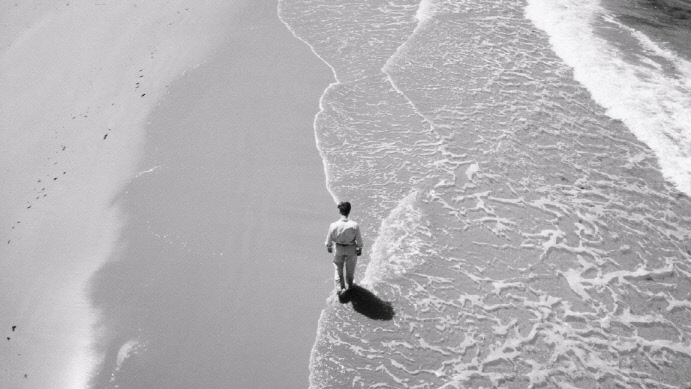
François Ozon’s latest film “The Stranger”, which is based on Albert Camus’ 1942 classic existentialism novel of the same name, is a detached but interesting character study. Mainly revolving around its thoroughly disaffected young hero, the movie is faithful to the dry and distant tone of Camus’ novel, and the result is another solid work from Ozon.
The hero of the story is Meursault (Benjamin Voisin), a plain lad living alone in French Algeria around the early 20th century. Around the beginning of the story, he is notified that his mother dies, and he immediately goes to a facility where she spent her last years. As her only close family member, he is expected to shed some tears, but he remains so aloof and emotionless that others around him are rather baffled by that.
After that, the movie flaccidly observes how he goes through his mundane daily life day by day. He is not entirely lonely as there are several people “close” to him, but none of them seems to matter to him particularly. He often hangs around with one of his neighbors, but he does not care that much about whatever this despicable dude has been doing behind his back. When he happens to meet a young lady on a local beach, something seems to click between them, and then he gets more involved with her, but he remains distant and elusive to her bafflement and curiosity.

These and many other moments during the first half of the movie are presented under a phlegmatic but occasionally unnerving tone, which is further accentuated by the crisp black and white cinematography by Manu Dacosse. As gradually immersing us into its vivid period atmosphere and details, the movie lets us somehow sense what has been accumulating beneath its hero’s detached attitude, which eventually reaches to sort of breaking point when he later lets himself get more involved with a certain seedy matter of that unlikable neighbor. When that neighbor is stalked and then menaced by several young indigenous guys, Meursault does not seem to care as usual, but then he later comes across one of these indigenous lads. In the end, he kills that indigenous lad for a reason probably elusive even to himself.
Like Camus’ novel, the movie does not explain a lot – even though it relies on its hero’s narration during several key moments along the story. During the following trial on his impulsive act of killing, Meursault remains quite detached and disinterested while not showing any remorse or fear at all, and that certainly gives a bad impression on both the judges and the jury members in the trial. He surely knows well how that will make his circumstance all the worse, but, again, he does not care at all.
Dryly observing the absurd aspects of its hero’s situation, the movie sometimes shows a bit of care in contrast. While Meursault’s girlfriend continues to stand by him as much as possible, she only finds herself more frustrated with his adamant detachment. In case of a woman who is the sister of that unfortunate indigenous lad, the movie clearly sympathizes with her as reflected by a couple of brief but crucial moments, and that will make you reflect more on the colonial/racial background of the story.
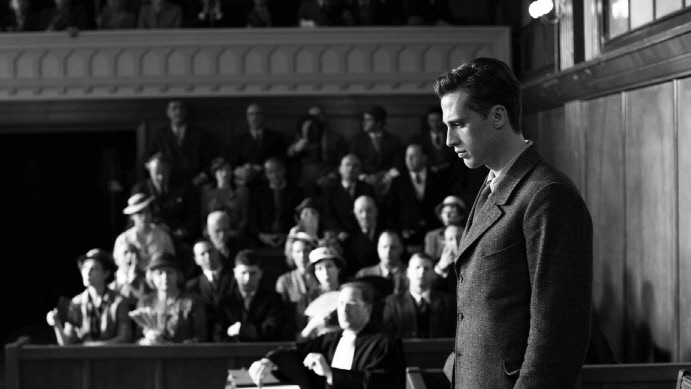
Although it is apparent to us from the beginning that the story is rolling its hero toward the inevitable finale waiting for him, the movie takes its time as usual even during the last act. It has been more than 20 years since I read Camus’ novel, I still remember well the part where its hero finally and furiously lets out whatever has been inside himself for years, and I must say that the movie did a commendable job of presenting it with enough intensity and competence. While this part made me muse more on the undeniably futile aspects of our existence in the universe, I was also reminded of my inconsequentially contradictory personal conclusion from Oscar-winning film “Everything Everywhere All at Once” (2022): “Nothing matters – so everything does matter.”
The main cast members in the film tune their acting well to its overall tone. Benjamin Voisin, who previously collaborated with Ozon in “Summer of 85” (2020), is effective in his low-key embodiment of his character’s emotional emptiness, and he also functions as a good counterpoint to the more colorful performances from several other main cast members around him. While Pierre Lottin is suitably loathsome as required by his supporting role, Rebecca Marder brings a little but precious warmth to the story, and Swann Arlaud is solid as a priest who has to face the sheer anger and despair inside Meursault later in the story. In case of Denis Lavant, who looks shabbier and older than usual, he steals the show as usual as wonderfully illustrating his character’s pathetic existence.
Overall, “The Stranger” may require some patience from you at first because of its glacial narrative pacing and deliberately detached tone, but it will eventually come to you as a rewarding cinematic experience to linger on your mind for a while. Although I am still not so sure about whether I fully understand Camus’ novel or the movie itself, I admire its mood, storytelling, and performance nonetheless, and I may revisit it sooner or later for appreciating more of its admirable qualities. Nothing matters to him to the end, but the movie does matter to me, and that is a good thing in my humble opinion.