Bernie (2011) ☆☆☆(3/4) : He’s the guy for your funeral

bernie05What a nice guy Bernie Tiede is. He is so nice and sincere that you cannot possibly imagine him doing something bad to you. Based on a weird real-life crime story which was quite stranger than fiction, Richard Linklator’s quirky black comedy “Bernie”(2011) keeps its straight face just like its odd hero even at its most outrageous moment, and we are both fascinated and amused by his story and the colorful background surrounding him.

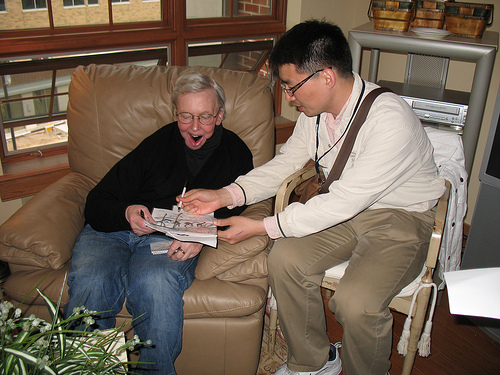
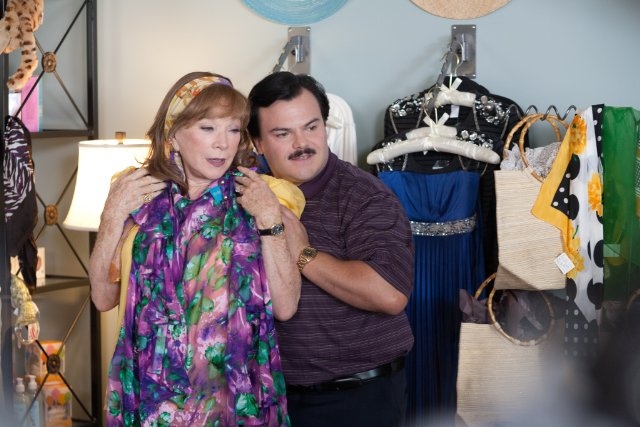
Jack Black, in one of the best performances in his career, plays Bernhardt ‘Bernie’ Tiede, who has always devoted himself to being nice to everyone in Carthage, Texas since he moved to the town. He has worked as the assistant funeral director of a local funeral home, and his employer tells us how he was lucky to have such an ideal employee like Bernie. He is a knowledgeable expert on how to make the dead look good no matter how they died. He can persuade any customers to buy a more suitable (and more expensive) coffin instead of cheap ones as showing genuine consideration and care to them. The funerals are done smoothly with his painstaking care and attention to details, and he always finds something to be improved in the ceremonies. My dear friend late Roger Ebert said in his review that he would buy a used coffin from him; Roger, I would have hired him for you and your wife Chaz if I had been able to.

Everyone in the town loves and likes him even though he is an outsider coming in from Louisiana. He can start a conversation with anyone within seconds, and one scene shows him giving a bunch of oil company workers a useful advice on tax deduction. He is a diligent churchgoer, and he is always the lead singer in front the choir whenever it is the time to sing the hymns together. He also actively participates in the local musical productions; he initially started as a minor helper, but soon he becomes not only a director but also a lead actor.
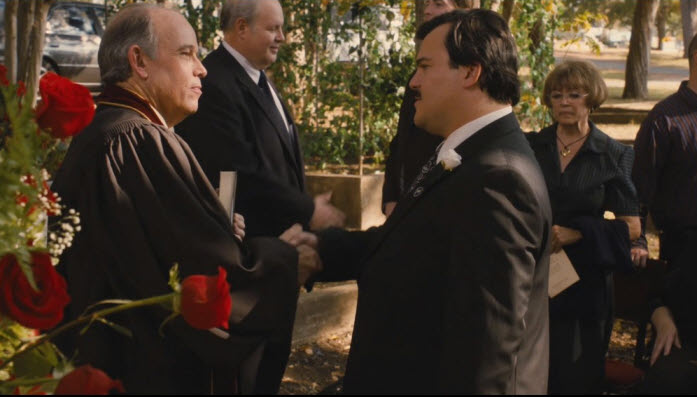
bernie10While he is popular especially among the old ladies in the town because of his splendid job at the funerals, he does not seem to be interested much in them or young ladies. The people in the town naturally have some idea about his sexual preference, but everyone still likes him anyway despite the gossips and rumors being passed behind fences around the town(“In a small town, people will always suspect the worst of someone. But they’ll also suspect the best.”). They take that “Don’t tell, Don’t ask” attitude, and so does the movie, which does not delve too much into that aspect.

And then he gets involved with someone in the town, and everyone is rather surprised because she is everything Bernie is not. Mrs. Marjorie Nugent(Shirley MacLaine), who recently becomes a widow after her husband’s death, is the most hated person in the town. Her husband is a rich business man who always loaned out money to the town folks through his local bank if it looked like a good investment, but now she makes it her personal business to reject the applications for loan whenever it is possible. Even her ‘close’ family members do not like this old mean hateful lady much; both her son and her sister have been estranged from her for years, and her granddaughter once sued her when Mrs. Nugent froze the trust fund for her.

Despite her notoriety as a harridan as vicious as the Wicked Witch of the West, Bernie approaches to Mrs. Nugent as usual after her husband’s funeral. Of course, he does not get any favorable reaction from a bitter(and meaner) woman, but his earnest persistence somehow scores some points from her, and, what do you know, he soon becomes a fixture in her big mansion because her cold heart is genuinely moved and melted by the warm attention she has never gotten during her last 50 years. Shirely MacLaine willingly throws herself into a pretty unlikable character, and she gives a spiky comic performance occasionally brightened by a few moments of tenderness glimpsed from her strict face.

She becomes happy to be with Bernie, and so is Bernie, always glad to be at her service. They attend the concerts together, and they also travel around many places outside Carthage and US. They have a really good time with each other while enjoying the first class airplane seats, the five-star hotels and resorts, the expensive restaurants, and the joint massages at the spas. They always sleep in the same room during their travels, and, according to a rumor going around the town, it seems Mrs. Nugent wants him to be more than an average companion, but, seriously, I do not want to know more about that.

small_bernie08In spite of all these changes, Bernie remains as the most likable guy in the town for he is as generous as before to the town people. He receives lots of expensive things from Mrs. Nugent as staying around her, but he is not a greedy guy at all, and he gives most of them to others. He keeps working as the assistant funeral director, and he continues to participate in many town activities, and nobody says any bad word about him or his relationship with Mrs. Nugent, who becomes a little nicer than before while being with Bernie.

It look like everybody is happy, but it doesn’t. Mrs. Nugent becomes more possessive and abusive as the time goes by, and Bernie’s daily routine is frequently disrupted by her constant demands. He naturally feels like being exhausted and suffocated, but he cannot leave her because it is against his good nature and principles. On one afternoon, he suddenly comes to the breaking point after he realizes he will never get away from her as long as she is alive, so….

What follows after that breaking point is a hilariously bizarre circumstance drenched with absurd black humor, so I let you discover how funny it is for yourself. The director/co-adapter Richard Linklater, whose screenplay is based on the 1998 Texas Monthly magazine article “Midnight in the Garden of East Texas” written by his co-adapter Skip Hollandsworth, keeps his movie tip-toeing between morbid humor and dry drollness as it goes back and forth between the main story and the interview scenes from the town people and other characters involved with the case and the following trial, and this documentary-like approach is the constant source of amusement and laughs.

I heard that it was difficult for Linklater to get his production financed because the screenplay looked plain and dull on the surface. It really could have been like that because the story itself does feel like another routine episode from one of those TV documentary programs about sensational real-life crime cases, but Linklater imbues his story with a delicious local flavor through the locations and his cast. I particularly enjoyed the interview scenes from the town people, which reminded me of that fascinating oddness observed from the Southern town residents in Errol Morris’ short documentary “Vernon, Florida”(1981). Although they are actually the mix of the real town people and the professional actors, they all look uniformly real as the people who have been living in the area for years, and the way they seriously talk about Bernie, Mrs. Nugent, their town, and other things is fun to listen and observe. I do not know whether Texas is really divided into several areas as told by one town folk, but it is certainly amusing even if it is not true.

bernie02Jack Black, who successfully collaborated with Linklater in “School of Rock”(2003) before, pushes his ingratiating persona to the new dimension here in this film. While he looks a lot different from the real-life counterpart of his character as shown before the end credits, he convincingly embodies a likable and courteous guy compulsively driven to be nice and generous to the others around him. He might hate Mrs. Nugent for a moment, but he still wants to treat her nicely even when it doesn’t matter to her any more under his irreversible situation, and his ‘nice’ behavior ironically puts him in the circumstance far worse than it could have been.

His odd nicety is well countered by the acidic meanness effectively personified by Shirley MacLaine. I recently watched Alfred Hitchcock’s “The Trouble with Harry”(1955), and that cheerfully morbid black comedy reminded me of how young MacLaine was in her debut film. Now more than 55 years have passed, but MacLaine has lost none of her comic talent as shown in this film, and she has lots of fun with her detestable but understandable character. According to the New York Times magazine article written by her nephew, the real Mrs. Nugent was a really insufferable woman, and I was personally tickled by one comment from the town people in the movie: “There were people in the town, you know, that would shot her for five dollars, you know.”
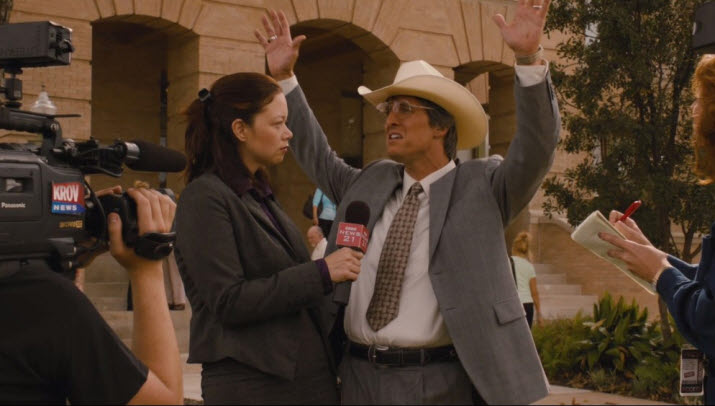
bernie03As the people associated with Mrs. Nugent, including her stockbroker Mr. Hornbuckle(Richard Robichaux), become very suspicious about her continuing absence for several months, the district attorney Danny Buck(Matthew McConaughey) comes into the picture. McConaughey, who has recently kept getting the roles he is born to play, depicts his character with that slick Southern charm amply exuding from his screen persona, and he relishes every moment he appears in the film. Although Buck goes a little too far in his obnoxiously self-righteous way for the justice and his reputation, I must say he has a good point when he replies to the town people asking him not to be too harsh on Bernie(A small trivia: one of them is played by his mother Kay McConaughey).

Richard Linklater, who has been making interesting films including “Waking Life”(2001) and will soon come to us again with his latest film “Before Midnight”(2013), makes a droll black comedy full of many weird turns, and Jack Black gives a terrific comic performance which deserves more attention. Even when he is arrested and then locked up in the county jail after full confession, Bernie occupies himself with teaching cooking to his fellow inmates, and he never loses his amiability no matter what happens to him. Sure, he did commit a crime to be judged, but he’s still the guy for your funeral.


small_bernie09

Posted in Movies | Tagged , , , , , | 1 Comment

Kinyarwanda (2011) ☆☆☆1/2(3.5/4) : The people amidst the Rwanda genocide

small_kinyarwanda02Most of you have probably heard about the Rwandan genocide in 1994. When I heard about it for the first time, it seemed to be no more than one of those small, trivial international news I got from TV, but I gradually came to learn about its sheer atrocity and countless tragedies, and I also watched several good movies about the Rwandan genocide including “Hotel Rwanda”(2004), which showed us how ineffectual the international community was at that time while 500,000-1,000,000 people were killed during that horrible incident.

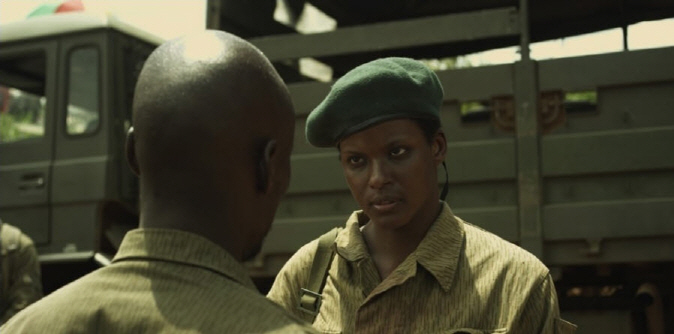
While “Hotel Rwanda”, which is powerful in its own approach to the subject, mostly focused on the one desperate situation surrounded by the Rwanda genocide, Alrick Brown’s small but strong film “Kinyarwanda”(2011) looks inside the Rwanda genocide with a wider view through the various local people who suddenly find their daily lives turned upside down after the Rwandan president Juvénal Habyarimana was assassinated along with the Burundian president Cyprien Ntaryamira on April 6th, 1994. As the narrator says, during the long darkness of the next 100 days, some people became heroes who rose to the occasion in front of the massive evil fueled by tribalism while others became villains who went along with others and participated in the massacre, and the movie presents some of these people through a group of short stories powerfully interwoven with each other.

The first story in the beginning is effective with the ominous mood slowly crawling on the screen as depicting a group of teenagers enjoying each other’s company in the room during one sunny afternoon. One of the girls, Jean(Hadidja Zaninka) sees the militia goons passing by the window outside, but the mood in the room remains joyful and comfortable with the music from a portable radio/cassette player – except when it is momentarily disrupted by that virulent and vicious propaganda radio message propagating the Hutu Power ideology around the country.

Jean and her boyfriend Patrique(Marc Gwamaka) are in love, and they do not worry about much even though they are well aware of the difference between them. In our view, they look same and they speak the same languages(English and Kinyarwanda), but I remember Lee Isaac Chung, the director of another Rwandan film “Munyurangbo”(2007), told us during the Q & A session at 2010 Ebertfest how easily the Rwandan people can distinguish from the Tutsi, which means “those rich in cattle”, and the Hutu, which means ‘servant’.

small_kinyarwanda04This class/tribe difference had already existed during the pre-colonial era, but this distinction was more standardized and officialized by the Belgian rule through measuring rib size and facial features because the Belgian people found it useful for their rule, and Rwanda ultimately became one of the worst cases of the combination between tribalism and colonialism as a consequence. The distinction through different ID cards was still maintained even after the end of the Belgian rule, and the ethnic tension between the Tutsis, the ruling minority, and the Hutus, the dominated majority, had steadily increased through the continuing conflicts. When the civil war in 1990 between the Tutsi rebel group, Rwandan Patriotic Front(RPF), and the Hutu-led Rwandan government seemed finally to reach to the end through the cease-fire, the aforementioned assassination happened, and that quickly triggered the violent brutality of massive scale all over the country which were virtually backed by the Rwandan government and military.

In such a dangerous situation in which ruthless tribalism rages through the reign of its savage terror, not only the Tusti people but also the Hutu people standing by them are targeted. Later in the movie, we see a Hutu husband and his Tutsi wife dealing with their private problem at their home while also talking about what to do with the perilous circumstance outside. Even though their world is going mad, a certain matter in their strained marriage seems to be a little more important to them, and their bitter conversation feels poignant as we realize what will happen to them in the end.

We also see the Tutsi priest, Father Pierre(Mazimpaka Kennedy), getting an unexpected help when he tries to run away with other people after being betrayed by his fellow priest. They are protected by the local Imam(Abdallah Uwimana), and, after the long discussion with him and other Imams, the Mufti of Rwanda(Mutsari Jean), the leader of Rwandan Muslims, issues the edict saying that all Muslims in Rwanda must protect and shelter the people in their mosques regardless of race and religion. They clearly know the limits in their power and resource to prevent mass killing, but they try none the less because it is a right thing to do in their moral/religious view, and it is touching to watch Muslims and Christians stick together in front of the approaching danger at one point.

There are other plain but memorable people in the movie, and all of their stories are juggled and shuffled well by the director/screenplay writer Alrick Brown. Based on the story written by the executive producer Ishmael Ntihabose, his screenplay rolls and connects its vignettes through several powerful moments, and we gradually see how its small pieces are gathered together to make a big human tapestry while encountering some surprising or revelatory turns waiting for us. While one small adolescent digression saves one character from danger by coincidence, one innocent interpretation of the word ‘cockroach’ ultimately causes a very suspenseful moment which is later turned out to be more dangerous than we thought.

small_small_kinyarwanda01Shot in Rwanda with the help from the local people, Brown made a film filled with the vivid local atmosphere and impressive verisimilitude, and it is rather remarkable that he and his crew made their film with around $400,000 under the tight shooting schedule(According to IMDB trivia, it was filmed in the total 16 shooting days). This small-budget film looks slick and natural, and I was very impressed to learn that they managed to shot one certain night sequence despite lots of grasshoppers flying around during that night. They found a way to deal with those insects though lighting equipments, so, as you will see in the film, this quiet but gripping sequence is devoid of grasshoppers.

Under Brown’s unforced direction, his cast, who consists mainly of non-professional actors, brings lots of life to the simple but vibrant characters through honest performances, and the few professional actors like Cassandra Freeman and Kena Onyenjekwe, who play RPF soldiers who come from Uganda to Rwanda for protecting the refugees, do not look awkward with others on the screen. The plot involving these soldiers feels like a cliché at times and they sometimes look like belonging to the other movie, but their part remains as another perspective added to the big picture.

The movie also has the sense of humor as one of its ingredients. For instance, a young boy named Ishamael(Hassan Kabera) is introduced to us in an unexpectedly colorful way which cheerfully incorporates the small details of his dire environment into his hopeful imagination. How his innocence causes and resolves the disturbance in his family house is amusingly balanced between humor and suspense, and there is an open question on how much he understands the situation happening right in front of his naive eyes while his family members are seriously threatened by a trio of menacing militia goons led by the leader Emmanuel(Edouard Bamporiki).

In another powerful moment involving the Re-edukation camp in 2004 , the camera stares at the faces of the people who participated in the genocide, and we see them talking about what the atrocities they committed. It is hard for both victims and perpetrators, but repentance is eventually followed by forgiveness, and the glimmer of hope is observed. Although it was devastated by the genocide on many levels, Rwanda and its people succeeded in moving forward, and, even though that turbulent time is still a touchy subject even at present, the tribal discrimination is erased now in the society. Last week, I watched several episodes on Rwanda from a TV documentary program, and, as far as I can see, it certainly becomes a better place despite other remaining social problems.

small_kinyarwanda03I once heard that “Hotel Rwanda” was criticized for its limited view on its subject. Its view is surely limited by its story, but it works as a very moving story about one ordinary but brave man who saves lots of people from the mass killing, and there are other movies like “Munyurangabo” and “Kinyarwanda” which can tell us more about the Rwandan genocide. While “Munyurangabo” tells so many things through one seemingly simple story about the friendship between two Rwandan boys, “Kinyarwanda” looks outside “Hotel Rwanda” and it powerfully shows us the ordinary people doing right things or wrong things amidst one of the biggest human tragedies during the late 20th Century.

While preparing this review, the sad news about the death of my dear friend/mentor Roger Ebert came to me. Rummaging through the tributes and obituaries and remembrances on him, I came across a video clip from Colorado Public Television Channel 12, and it showed him delivering a passionate speech on various subjects including film history, education, tribalism, and his hope for the mankind.

Maybe because of this movie, his thoughts on tribalism came particularly close to me. Tribalism, one of our most savage sides, makes us to label and vilify people different from us, and that is where most of the big tragedies in the human history originated from. It makes the people blind to what they do to the other fellow human beings with that horrible logic of ‘it’s us or them’, and that is well exemplified by the Hutu soldiers and goons in the movie, who regard Tutsi people as something no more than ‘cockroaches’ to be exterminated.

Observing the continuing bloody parade of human savagery around the world, I sometimes wonder whether we really learn anything from our stupidity and subsequent terrible deeds. But, as reflected by “Kinyarwanda”, we human beings are also capable of empathy and compassion even under the grave circumstance like what is shown in the movie. We will be still stupid as ever for a while, but, as my friend Roger believes, we are not that incorrigible. Like the characters in the movie, we can do better than we think – for the better world.

Posted in Movies | Tagged , , , , , | 2 Comments

Remembering Roger Ebert

sign

“So on this day of reflection I say again, thank you for going on this journey with me. I’ll see you at the movies.”

– from Roger Ebert’s last blog entry “A Leave of Presence”

Continue reading →

Posted in Ebertfest, Movies | Tagged | 5 Comments

Broken City (2013) ☆☆1/2(2.5/4) : It’s a corrupted city – no surprise

_MG_3142.CR2One of the usual symptoms of being a seasoned movie addict is that you sometimes make a certain list in your mind before you appreciate genre films. The list consists of many genre conventions and clichés you may have heard about at least once, and I must confess that it is a little fun to cross lines on the items in the list – especially when I get disinterested with what is shown on the screen.

I could not help but check its nuts and bolts while watching “Broken City” rather than enjoying its convoluted plot of greed, ambition, and corruption, but that does not mean that it is a bad film. Although my mind kept checking the stereotypes and conventions it diligently provides from its promising beginning to its lackluster ending, the movie is not boring at least, and it works to some degrees thank to its good cast.

First, the movie presents your average flawed noir hero to move around the dark streets of New York. Seven years ago, NYPD detective Billy Taggert(Mark Wahlberg) got into the serious trouble when he shot the suspect of a rape case under the questionable circumstance. He was charged with a manslaughter, but his chief Carl Fairbanks(Jeffrey Wright) and Mayor Nick Hostetler(Russell Crowe) took care of the trouble, so his deed was ruled as a self-defence at the court in the end.

However, Taggert had to leave NYPD instead, so now he works as a private investigator whose specialty is catching the sights of adultery. He always does his jobs as requested, but, mainly because of his clients who have not paid him yet, the management in his office has been suffering from financial trouble despite the efforts of his no-nonsense assistant Katy(Alona Tal), who is always ready to support him just like any loyal assistants in other noir movies about private detectives.

IMG_3114.CR2And then, not so surprisingly, a lucrative offer comes to his office. Hostetler, who is still the incumbent mayor of the Big Apple and is also determined to stay in his office, privately requests Taggert to get the definite proof on his wife’s affair. While he and his wife have been estranged from each other in their private life, her affair can be a serious blow to his campaign because Hostetler is currently in the tight competition with a young councilman Jack Valliant(Barry Pepper) in the upcoming election, and he won’t take any chance with this possibility. In front of $ 25,000 check given to him in advance, Taggert cannot refuse Hostetler’s request, and he immediately begins to spy on Hostetler’s wife Cathleen(Catherine Zeta-Jones).

Of course, the things do not look as simple as they seem. Something eventually happens thanks to his investigation, and Taggart finds himself being dragged into the world of deception and corruption where almost everybody hides something behind his/her back. It seems there has been the relationship between Cathleen and Paul Andrews(Kyle Chandler), the campaign manager working for Valliant, and it may be connected with a recent big deal involving 4 billion dollars realized through Hostetler’s support. Fairbanks, who is now the Police Commissioner, is looking for any chance for his benefits while mostly staying neutral between two candidates, and he is ready to get any useful information from his former officer.

The movie sets up its pieces solidly on its plate, but how it handles them is disappointing in comparison. As it unfolds and twists its plot, Brian Tucker’s screenplay does not try that much to distinguish itself from its senior noir films about urban corruption, and it looks like a mere imitation compared to them. I was not so surprised by what was revealed along the progression of the plot because I could easily predict its every turn in advance, and I also found that the conflict at its center was resolved in a way too convenient.

DSC_8217.NEFThe actors acquit themselves well, and they cover some of the holes in the screenplay through their adequate performances. Mark Wahlberg is suitably cast as a gray hero with the dark past he eventually comes to face again through his investigation, and Russell Crowe has several moments to act with gusto as a wily and bullying politician who never forgets what others did to him as well as what they did for him. Crowe’s best moment in the film comes when Hostetler participates in the debate with Valliant on TV; he smoothly and blatantly suppresses his competitor with no mercy in front of the camera, and Valliant knows he is losing to his rival even though he tries hard.

The supporting performers are mostly stuck in their functional paycheck roles, and it is a shame that most of them are not fully utilized in the movie. Catherine Zeta-Jones does not have many things to do except being aloof and bitter, and her scenes with Crowe suggest a lot about what could have been done with the frigid relationship between their characters. Jeffrey Wright is dependable and watchable as usual in his thankless role, and Barry Pepper is appropriate as a decent politician who realizes that he is a lot more vulnerable than he thought when something unexpected happens to him.

The director Allen Hughes did what he could do with the weak screenplay, and the result is a watchable but unsatisfying noir drama. There are lots of spots which could have been improved in the story, and the movie did not delve deep enough into Taggart’s relationship with his actress girlfriend Natalie(Natalie Martinez) although it later turned out to be closely related to his dark past. I must admit that I did not have a bad time with the movie, and I was amused even when checking my list, but, on the whole, I was not impressed enough.

IMG_3903.CR2

Posted in Movies | Tagged , , , , , | 1 Comment

Running Man (2013) ☆☆(2/4) : A running man in a hobbling thriller

small_runningman05 Ironically, new South Korean action movie “Running Man” does not run that much. It instead hobbles a lot while letting itself being saddled with many unnecessary story elements which could have been discarded without any problem, and I kept losing my patience during its running time. Some good action movies can get away with that kind of problem, but this movie is not quick or smart enough to do it, and what we have here is a bland action flick unsuccessfully mixed with comedy and melodrama.

Its premise is a familiar thriller set-up. Cha Jong-woo(Sin Ha-gyoon) is an ex-con who now works at a car repair shop during day and also works as a driver for drunken customers during night. On one evening, he happens to come across a mysterious customer offering lots of money for his immediate driving service, and he gleefully accepts this offer, but it turns out to be a pretty unwise choice. Not long after that, he finds his customer murdered in the car, and he soon becomes a wanted man because of the crime he didn’t commit.

He finds himself being pursued by many men who want to catch him. First, there are the cops who quickly conclude that Jong-woo is the man they should arrest, and there is a mysterious killer who wants something Jong-woo unwittingly has in his possession. It turns out that this case is associated with some important government project, so we also have a bunch of black suit agents from National Intelligence Service along with two shady guys who are probably international information brokers.

small_runningman01
This sounds indeed typical, but this is a nice starting point for any action thriller, and the movie surely has potentials inside its hero. Jong-woo is not a clever guy at all who can outwit the guys chasing after him, but he is a desperate rat who somehow manages to run one or two steps ahead of them. He usually runs or drives fast without much thought, but he usually finds the ways to get out of danger even when the situation is pretty hopeless, and it is exciting at times to watch him evading the police and the government agents through his quick improvisations. Seriously, I do not think an ordinary guy like Jong-woo can successively run that fast, jump that fast, and ride a cart and a bicycle that fast without getting any serious injuries during one busy action sequence at the crowded stadium, but, considering that he was very good at running away from the Police during the salad days of his criminal career, maybe I should accept that impossible aspect of his actions in the movie.

Unfortunately, while they are well-made, the action sequences in the movie are mostly too short for solidifying their presence in the story, and the remaining excitement in them is considerably hampered by the bad screenplay. With silly laughs and tearful family melodrama, the clumsy screenplay by the director Cho Dong-oh irritatingly keeps trying to jerk laughs and emotions from us whenever the story is not on action mode, and that cheap tactic hurts the momentum a lot throughout the movie; rather than lubricating its plot, it clogs up the plot, and the movie frequently feels tedious as a result.

The most deleterious part in the screenplay is the problematic relationship between Jong-woo and his rebellious teenager son Gi-hyeok(Lee Min-ho). The depiction of this relationship is unconvincing to say the least, and it continues to disrupt the flow of the story as Gi-hyeok also gets involved with his father’s trouble. Because of some anger issue associated with his dad and his absent mother, Gi-heyok does not give a damn about what will happen to his father, but, what do you know, he quickly comes to change his mind later while he still looks and sounds as stiff and hostile as before.

small_runningman02With a sympathetic cop(played by amiable Kim Sang-ho) and an eager female reporter(played by lively Jo Eun-ji) who senses something suspicious about the murder case, Gi-hyeok searches for anything to help Jong-woo while trying to find the motive behind the murder, but I must say he is actually not as clever as the movie wants us to believe. The things he notices or discovers are so simple that it is rather amazing that the cops did not notice them from the start, and we already have a pretty good idea about what is really going on even before he draws a complex diagram for his investigation on the window. As a matter of fact, when he luckily finds a very important evidence to prove his father’s innocence, he does not go to the character he trusts most. He goes instead to the other character he should not trust easily and then hands the evidence to that character because, well, there is still more running time left in the movie.

The movie eventually arrives at the climactic moment of showdown between Jong-woo and bad guys and good guys, but it lacks tension due to its deficient build-up process coming before it, and it is handled and resolved in a way so predictable that I could easily imagined what would happen next – and what kind of an epilogue scene would follow for providing a feel-good moment for the audiences.

Most of the actors in the movie trudge along with the plot while doing whatever they can do with their bland characters. Sin Ha-gyoon gives a competent physical performance as a runaway hero, but I have seen him and his co-performers giving better performances in other movies, and I was saddened by their talents being wasted on the screen. I am not familiar with young actor Lee Min-ho, but I could see that his embarrassingly wooden performance is not entirely his fault; his character is such an eyesore from the beginning that no talented actor can possibly give a good performance no matter how much he tries.

“Running Man” reminds me of another unsuccessful South Korean action film “Quick”(2011), which I also did not like because of its lousy storytelling filled with cheap laughs, manipulative melodrama, and the caricatures I didn’t care about. I understand well that comedy and melodrama are something that comes with the territory in case of many commercial South Korean movies, but that movie was still not good at all, and the same thing can be said about “Running Man”. Its characters are relatively less annoying compared to those despicable characters in that movie, and I sort of liked its actions scenes, but, alas, I began checking my watch even before its first hour went by. That’s not a good sign, you know.

small_runningman04

Posted in Movies | Tagged , , , , | Leave a comment

Rust and Bone (2012) ☆☆☆(3/4) : It’s always hard to start at the bottom

small_rustandbone04They say you can start your life again even if you find yourself hitting the bottom, but, as some of you know, starting at the bottom is not easy at all. While it is ultimately an optimistic film about healing process, Jacques Audiard’s “Rust and Bone” presents that hard truth first through the story of two different people with different challenges to deal with. While honestly observing the desperation and pain from its two main characters, it also touchingly shows how they respectively find the way to get better through their coincidental relationship, and its several flaws in the story are mostly compensated by its strong points including two terrific performances.

Alain(Matthias Schoenaerts), usually called Ali, is a young Belgian kickboxer who has been stuck at the dead end. He once had a promising career in the past, but he is currently a jobless guy, and now he is going with his young son Sam(Armand Verdure) to Antibes in Southern France for another chance to earn money. Because they do not have much money, Ali resorts to stealing at one point for buying a meal for them, and they later come to live in the house of Ali’s sister and her boyfriend(played by Céline Sallette and Mourad Frarema), who have also been struggling in their hard life.

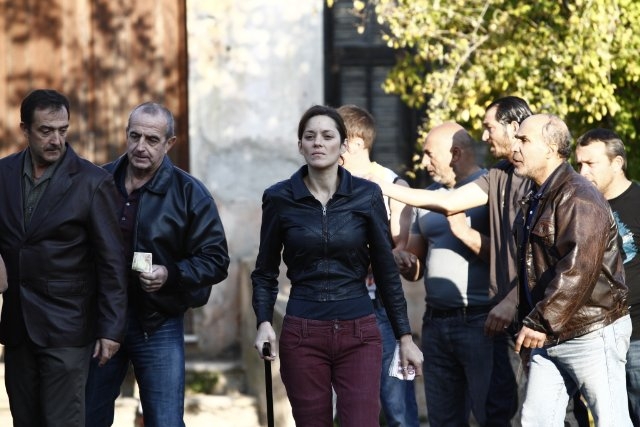
Ali soon finds a job. He starts working as a bouncer in a local nightclub, and that is how he comes across Stéphanie(Marion Cotillard), a young lady who works as a killer whale trainer at the local sea park. After pulling her out of one violent quarrel at the nightclub, he takes Stéphanie to her home and then he gives her his phone number.

Not long after that brief encounter between them, a terrible accident happens to Stéphanie during her killer whale show. When she wakes up at the hospital, she is devastated to find that she has lost both legs due to the accident. While it is quite difficult for her to adjust herself to her damaged body through rehabilitation process and prosthetics, her mind struggles through dark, depressing thoughts and feelings. When she stares at a scalpel placed near her, we can clearly see what she is thinking of.

rustandbone01Still feeling shattered inside, Stéphanie calls Ali, and a casual relationship is formed between them. She likes him because he is blunt, honest, and non-judgmental despite his insensitivity, and he is also attracted to her because, well, she is pretty. He takes her to the beach, and she has a very soothing time while swimming alone in the sea. When she wants to know whether she still can feel something, he does not mind having sex with her at all. He wants it from the beginning, and she is well aware of that, so their first sex is more like a business deal rather than a romantic behavior.

The director/co-screenplay writer Jacques Audiard’s previous film was “A Prophet”(2009), a dark, gritty prison drama which feels far different from the warm and sunny atmosphere of “Rust and Bone”. In that movie, a young Arab prisoner gradually builds his new identity as struggling for his life from the bottom under the harsh environment, and we can say that two main characters in “Rust and Bone” are not that different from him. While watching Ali passionately hurling himself to the illegal matches for earning more money, Stéphanie slowly finds the will and energy to climb up from the bottom inside her, and there is a poignant scene later in the story when she reencounters a killer whale trained by her at the sea park.

As the unlikely couple of the story, Marion Cotillard and Matthias Schoenaerts are always engaging to watch in the movie. Cotillard suddenly gained our attention through her Oscar-winning performance as Edith Piaf in “La Vie en Rose”(2007), and what this talented actress does in this movie is simply marvelous to watch. With her open, expressive face, she gives us a very believable portrayal of a woman being damaged and then recovering on both physical and psychological level, and it also helps that we can really believe her character lost both legs thank to the seamless special effects on the screen.

rustandbone02On the opposite, Schoenaerts imbues considerable complexity to a man who is not so likable for many reasons. Schoenaerts previously grabbed my attention through his electrifying performance as a tragic muscular anti-hero in Oscar-nominated film “Bullhead”(2011), and he gives another impressive masculine performance here in this film. Like the hero of “Bullhead”, Ali uses his body as the armor to live through his life, and that is well exemplified by those bloody illegal matches scenes in the film. It is surely painful to him, but he has trained his body for enduring pain – and, most of all, he gets money if he wins.

When I watched “Rust and Bone” twice in last year, I had some reservation about it because of the rather awkward transition around 15 minutes before the ending. The movie suddenly switches its course at that point, and then it strikes us with a quiet but gut-wrenching moment for quickly arriving at the finale. When I watched it again at last night, I still felt the same awkwardness in its storytelling, but I also could see more clearly how that part worked along with the rest of the story to some degrees.

On the whole, the movie is good enough to recommend thanks to Audiard’s sensitive but unsentimental direction and the strong performances from his two lead performers. While noticing its weaknesses, I also observed that its good moments felt as fresh as before during my third watching – I guess it will gain more admiration from me later as it climbs up to the place it probably deserves.

rustandbone06

Posted in Movies | Tagged , , , , | Leave a comment

The Perks of Being a Wallflower (2012) ☆☆☆(3/4) : His eventful first year

wallflower03“The Perks of Being a Wallflower” is an enjoyable coming-of-age drama to be appreciated. While it entertains us with various colorful characters surrounding its shy, awkward hero, the movie gives us a heartfelt story about how he comes to get out of a shell named loneliness through his fortunate relationship with nice friends who kindly reach to him. They show him there is nothing wrong with being himself and gladly invite him into their world, and that is a good start for this unhappy boy.

When he starts his first day at high school, Charile(Logan Lerman) has a good reason to be nervous. Besides being a freshman, he is one of those plain kids no one particularly cares about unless they are targeted, and he is well aware of that he will have to struggle through this daily predicament for several years till the graduation day.

At least, he manages to get connected with his English literature teacher(Paul Rudd) who understands his aspiration to be a writer, and the life outside the school is not bad for him. His father and mother, played by Dylan McDermott and Kate Walsh, are good parents who are really concerned about his school life because of his recent depression, and his elder brother and sister are also supportive to him. Charlie sometimes writes to a friend, but I am not so sure about whether his friend really existed or not because the tone of his letters is more like that of a diary(he later said that his friend committed suicide several years ago, but who knows?).

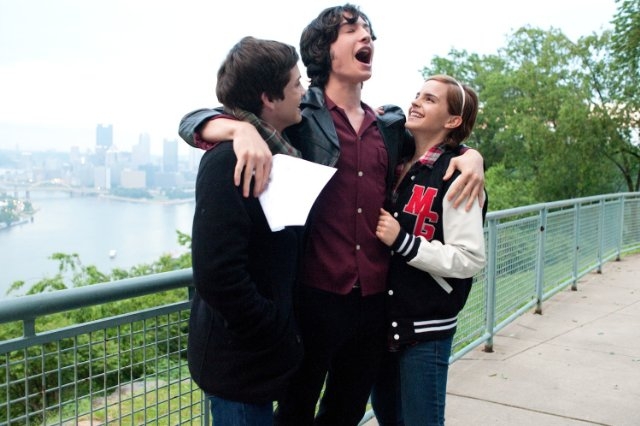
On one day, his lonely school life begins getting brighter when a senior student named Patrick(Ezra Miller) and his half-sister Sam(Emma Watson) come into his life. After meeting him at the high school football game, they take Charlie to the evening party, and that is just the start of many fun things Charlie will experience during his unexpectedly eventful first year. For instance, he accidentally eats marijuana brownies at the party, so he becomes quite dopey for a while to the amusement of everyone at the party – and that will not be his only experience with drugs.

wallflower01They become closer to Charlie as he has more fun with them. He has a terrific time with them while going through a tunnel by Patrick’s pickup truck. They also go to the theater show performing the highlights from “The Rocky Horror Picture Show”(1975), and, later in the story, Charlie gets a sudden chance to act as an emergent understudy in front of the cheering audiences. When Sam is worried about her SAT test, Charlie volunteers to help improving her SAT score, and she is grateful to him for his help(and she gets a good score).

Meanwhile, Charlie’s personal feeling toward Sam grows, but, like any introverted teenager kids, he is reluctant and indecisive about showing his feelings to her. The age difference is not a problem, but she is being involved with a guy named Craig(Reece Thompson), and the circumstance becomes more complicated when Charlie lets himself getting involved with Mary Elizabeth(Mae Whitman), one of Sam’s close friend.

The movie is based on the novel by Stephen Chbosky, who also adapted his novel and directed the movie for himself. I have not read the novel yet, but, thanks to a good adaptation job by Chobosky, I could discern why his novel has been popular among young readers. The loneliness, confusion, and angst of adolescent years are depicted with sensitivity and understanding in the movie, and the experiences shown through Charlie’s perspective reminded me of some memories from my high school years although my high school experience was a lot different from his.

wallflower04The movie leisurely rolls its story with humor and warmth, and its three young performers are well-cast in their respective roles. Logan Lerman, who appeared in “Percy Jackson & the Olympians: The Lightning Thief”(2010) and will soon appear in its sequel, is less showy compared to his co-performers, but he is credible as an emotionally troubled teenager. Frequently haunted by some dark memories associated with his dead aunt(Melanie Lynskey), Charlie is a moody kid not good at communicating with others, but Lerman brings likability to his character while not lightening his problematic sides he must deal with for moving forward in his life.

While supporting Lerman, Emma Watson and Ezra Miller surprise us as his good friends who have their own vulnerabilities. Although she does not perfectly deliver American accent at times, Watson gives a performance far different from Hermione in the Harry Potter series in this film, and she has a poignant moment when she indirectly reveals her wish to Charlie during their private conversation. Ezra Miller previously impressed me a lot as Tilda Swinton’s malicious teenager son in “We Need to Talk about Kevin”(2011), and what he does here is 180 degrees different from his despicably vicious performance in that film. Patrick looks like your average flamboyant gay teenager, but he is a lot more than that, and his unofficial relationship with a certain character is one of the interesting things in the story.

“The Perks of Being a Wallflower” is a warm and smart teenager drama which deftly pulls out hope and optimism from its depressed hero in the end. Through the friendship with his friends, Charlie learns a lot about many things as well as himself, and he tentatively comes out of his shell to move on. While his future is not entirely certain, but, like his dear friends, I can assure him of one thing at least – it certainly gets better after high school.

wallflower02

Posted in Movies | Tagged , , , , , | Leave a comment

Shadow Dancer (2012) ☆☆☆(3/4): A desperate mother forced into tricky circumstance

shadowdancer01While its story has a specific background, “Shadow Dancer” focuses on the universal human toil observed inside the murky world where trust can be dangerous and expose can be fatal. It is a slow, quiet thriller which may require you a certain amount of patience at the beginning, but it diligently builds the story and the characters around its stark world, and the tension gets more accumulated as the sense of danger feels more palpable around its sad, desperate heroine.

The movie begins its story with the opening sequence in Belfast, Northern Island in 1973. When her father asked her to go outside and buy a pack of cigarettes for him, Colette sent her little brother instead, and that small decision was led to a tragic incident which changed not only her life but also her family’s life forever. This sequence begins with the mundane atmosphere of normal family life, but, as the camera patiently observes young Colette being occupied with making a necklace with beads, the tension subtly arises until she finally sees what has happened because of her casual decision.

It was a turbulent time when Northern Island suffered from the ethno-nationalistic conflict which is commonly called “The Troubles”. The situation was still volatile even when this conflict was near its last chapter and the negotiation was on the process in 1993, and we see adult Colette, played by Andrea Riseborough, doing her latest mission as an IRA member. She walks into the London underground, and she is about to drop a bag containing time bomb at certain point.

shadowdancer05She does the job as ordered, but she does not succeed because she is already being watched by the British government agents. She is swiftly arrested as soon as she comes out of the subway station, and then she is taken to a hotel room monitored by the agents including Mac(Clive Owen), who has an offer she cannot refuse. Because she is closely associated with other high-ranking IRA members including her two brothers Gerry(Aidan Gillen) and Connor(Domhnall Gleeson), she can be a useful informer for them; if she refuses to cooperate with them, she will be incarcerated and mistreated in prison.

Although she does not seem to be persuaded at first, Colette comes to accept Mac’s offer because she deeply cares about her young son, who is probably only bright light in her drab daily life. She and her son live with her mother, and her brothers occasionally visit their house, but their interactions do not have much intimacy because of their long involvement with IRA. While they are nice uncles to their young nephew, Gerry and Connor more look like Colette’s superiors rather than loving brothers. Their mother(Brid Brennan) seems to care a lot about her children, but she remains calm and distant in the background while doing her housework. It seems that she knows well what they are doing but she does not want to talk about it – and they don’t want that either for their security.

Although the start is shaky, Colette becomes a good informer to Mac. They routinely make secret contacts at the coast, and the information given by her helps his agency preventing an assassination attempt at one point. The high-ranking IRA members like Kevin(David Wilmot) are naturally suspicious about this failure, and Kevin is not someone you can elude easily if he smells something fishy. There is a tense moment when he takes Colette to a shabby apartment along with his trusted man, and it is very apparent to her and us what he will do once he concludes that she is lying and must be taken care of immediately.

small_shadowdancer04Facing such perilous situations like that, Colette defiantly and passively keeps her exhausted face straight for not reveling anything to the people around her, Andrea Riseborough gives a nicely understated performance which slowly holds our attention while conveying the desperation beneath her striking red coat. She and other performers playing Colette’s family members look believable as the family being desolated by their volatile environment and themselves, and the movie provides a small insightful moment of Colette and her mother and other women wearily watching the people clash with the police during the funeral of a recently deceased IRA member.

On the opposite, Clive Owen plays a government agent getting frustrated about his work while trying to protect his informer. He is sincere when he promises safety to Colette, but he soon faces his limit in the system as he tries to shield her from the immediate danger. His icy direct boss(Gillian Anderson) and other people in his agency do not tell everything to him, and it seems they are hiding some crucial information about their operation from him. Owen is on his usual gloomy tough guy mode, but this dependable actor is good as usual, and his private scenes with Riseborough are handled well except few missteps.

The director James Marsh is mostly known to us through his Oscar-winning documentary “Man on Wire”(2008) or recent documentary like “Project Nim”(2011), but he is also a good movie director as shown in the second part of chilling crime thriller saga “The Red Riding Trilogy”(2009). The suspense in the movie is well-maintained under his deft direction, and its low-key thriller plot of the screenplay written by Tom Brandy(it is based on his novel) is absorbing with some foreshadowing and following surprises. This is a standard stuff, but it is a good one anyway.

small_shadowdancer02

Posted in Movies | Tagged , , | Leave a comment

In Darkness (2011) ☆☆1/2(2.5/4) : A light in darkness

small_indarkness01 First, I want to emphasize to you that there is nothing particularly bad in “In Darkness”, one of the Best Foreign Film Oscar nominees in last year. It was made with good intention, and its subject is treated with respect and sincerity, and its story is one of interesting ones inside one of the biggest human tragedies in the 20th century.

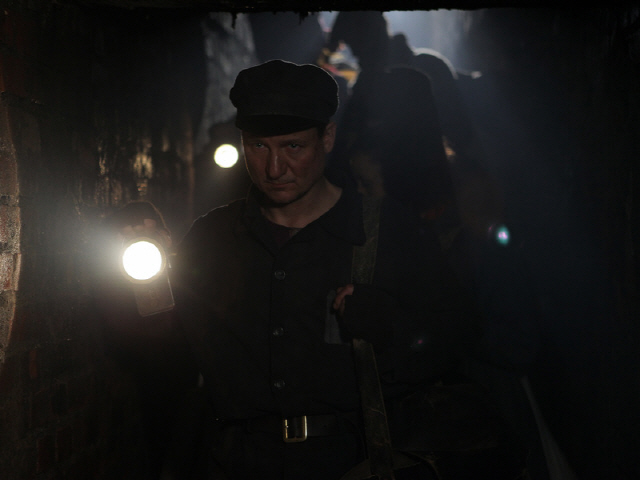
However, I kept noticing its redundancy while watching this well-intentioned film although the experience was far from being tedious. The story itself has compelling aspects, but there are too many familiar things we have seen from other films about the Holocaust including Steven Spielberg’s great film “Schindler’s List”(1993). The movie is not a bad film at all, but it has almost nothing to distinguish itself from the other Holocaust films except that impressive claustrophobic darkness its Jewish characters have to endure for 14 months.

The movie is about an ordinary man who managed to hide them from the Nazis for that long period. It is 1943, and Leopold Socha(Robert Wieckiewicz) is a sewer worker in the Nazi-occupied Polish city of Lwów, which is currently Lviv in Ukraine. It is economically hard for everyone in the city due to the ongoing war, and, like many opportunistic people at that time, Socha does not hesitate to grab any chance to earn extra money for supporting him and his family. We see him and his co-worker breaking into the house of some Nazi official for stealing anything valuable during the opening scene, and we also watch him illegally dealing with the Jewish people in the ghetto. There is hell to pay if he gets caught, but it is all right for him as long as he gets money.

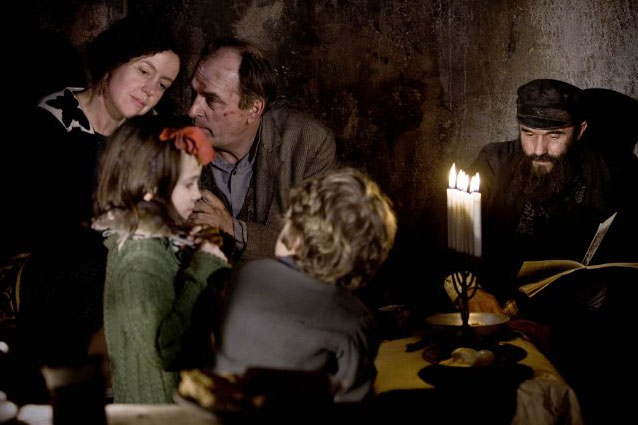
And then the circumstance for his major clients becomes harsher as the Nazis decide to liquidate the ghetto in June 1943. While most of the people in the ghetto are killed or taken to the concentration camp, some people manage to evade the capture and hide in the sewer system. As a man who knows a lot about the intricate sewer system below the city through his official job, Socha provides them a temporary hiding place in the underground, and then around 10 people are selected and moved to another hiding place under his protection.

small_indarkness03Like many people who helped the Jewish people during that time, Socha initially does this dangerous job for getting more money, but, not so surprisingly, he gradually finds himself caring about these helpless people protected by him as he frequently rises to the occasion. He usually makes sure that he gets paid as he demands, but he does everything he can do for hiding them and supporting them. Even when the refugees do not have any money to pay him, he chooses to keep helping them even though it will give him no profit but more danger.

While the movie and a good performance by the lead actor Robert Wieckiewicz wisely do not explain the motive behind it, Socha’s behavior reminded me of what an old man said to the hero of Cormac McCarthy’s “Crossing”. He said true evil has the power to sober the smalldoer against his own deeds, and I think it aptly summarizes the transformation Socha goes through. Like Oscar Schindler, this small-time crook is disgusted by a far greater evil he witnesses, and that eventually takes him to the point he has never imagined before.

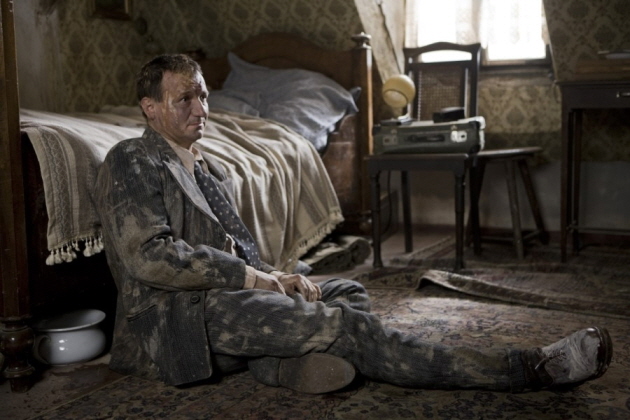
The movie also spends a considerable amount of time on the details of the underground shelter Socha’s people are forced to live in, and we can vividly see and feel that this is not a pleasant place to live at all. It is a dark, stuffy, and stinking place filled with big rats, and it is no wonder that they become constantly edgy and paranoid as the time goes by. At one point, the rain pours all over the city, and they find themselves in a grave danger as the sewer system gets overflowed. They cannot possibly go outside, so they have to stay in the shelter even though they are well aware of that they will be drowned within minutes if water does not go down.

indarkness02The director Agnieszka Holland and her crews do a nice job in creating the gloomy atmosphere through this murky background, but the story becomes less interesting whenever it gets stuck in this dark underworld. While the actors give competent performances as required, the characters and their desperate drama about survival are mostly remained limited and underdeveloped within their small stuffy world, and the climax sequence feels more like an obligatory chapter to break its monotonous feeling.

The drama above the ground also feels flat occasionally due to deficient characterization. As Socha’s worrisome wife Wanda, Kinga Preis has good scenes with her co-actor, but I also found that her character was rather a bit inconsistent. While it is understandable that Wanda does not like her husband’s dangerous work despite her sympathy toward Jewish people, her change from annoyance to full support around the ending is a little too awkward. She becomes very angry at him because he cares more about the refugees’ safety than their cute little daughter’s communion at the town church, but, although she almost leaves him, she comes back to him in the end. I wonder whether they have had similar marital conflicts and following reconciliations in the past.

In spite of my grumbles and reservation on it, “In Darkness” is a fairly watchable film based on another interesting real-life story behind World War II. I think it could have been shorter, but it is engaging to watch on the whole during its long running time(144-min), and its characters’ long struggle in the darkness feels harrowing at times thanks to good direction and nice performances. Too bad there have already been too many similar films on its historical subject.

small_indarkness06

Posted in Movies | Tagged , , , , | 1 Comment

Afternoon rest of the avian campus gangs(2013/03/28)

After having some snack, they decided to have a rest in broad daylight…

Posted in Photos | Tagged , , | 1 Comment