Monster University (2013) ☆☆☆(3/4) : When Mike met Sulley

small_monsteruniversity01  “Monsters, Inc.”(2001) was not one of the better animation films from Pixar Animation Studios, but it was an enjoyable one despite its weaknesses, and I had a nice personal memory about it. It was late December in 2001, and, right after enjoying the first Harry Potter movie which was released around that time, I quickly went to the other screening room showing that animation film, and I had another good time thanks to its colorful fun with ‘scary’ monsters and their wonderful closet doors.

Now I have moved forward from my adolescent/college years during that time in one direction, and “Monster University”, the prequel to “Monsters, Inc.”, moves in the opposite direction which may appeal more to the adult audiences little younger than me. They probably enjoyed “Monsters, Inc.” as young kids adoring its odd duo, and many of them may find “Monster University” paradoxically coming closer to them through going backward from the previous film.

The story is about how the odd couple of “Monsters, Inc.”, James P. “Sulley” Sullivan and Mike Wazowski, met each other during their first year at the Monster University, the Ivy League university of their world which usually guarantees the promising career as ‘scarer’ to its monster students after their graduation. Many famous scarers from this university work in the energy company named Monsters, Inc., and, as depicted in the previous film, they bravely go through the portals connected to the bedroom closet doors in our world to scare the hell out of the children sleeping at night. After harvesting the energy for their city from children’s screaming, they return to their world as soon as possible because, ironically, the monsters in the film are quite scared of children, which have been regarded by them as something as toxic as radioactive waste(this looks pretty silly if you remember how the story of the previous film ended).
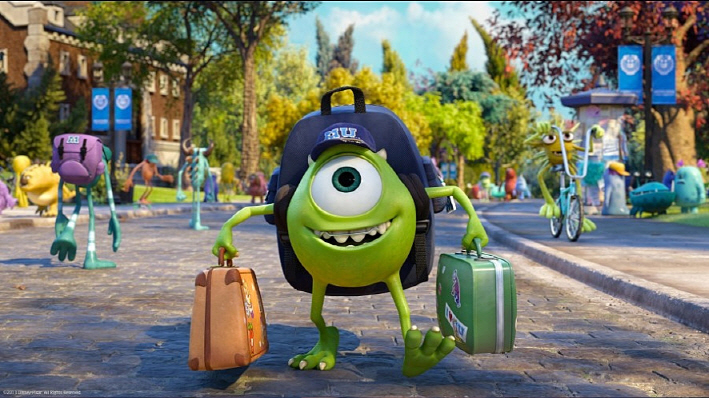
small_monsteruniversity03

Impressed by these scarers at their work when he and other kids visited the Monsters, Inc. during their field trip, young Mike immediately wished to be a good scarer like them, but the harsh reality reminded him that he did not look scary from the beginning. Compared to his classmates, who look actually pretty cute despite their teeth, claws, tentacles, and other weird appendages, Mike already looks like a born underachiever considering that he looks like a green billiard ball with one big round eye.

But he does not give up his dream even after several years, so he enrolls in the Monster University as a Scaring major. Although he still does not look scary, Mike(voiced by Billy Crystal from this point) is hopeful and optimistic, and he is ready to do anything for passing the final exam at the end of the semester. As soon as he walks into the university, we see him whirled around the busy atmosphere of the campus welcoming its freshmen, and I must say this sight was amusingly alien to me as an audience whose freshman year at KAIST was a lot more uneventful compared to that. I moved to my dormitory with others, and I bought textbooks, and I prepared for lectures, and that was all I can remember about my first days as an undergraduate student who only cared about study, books, music, and movies(and I was not that interested in girls, let alone boys).

Mike’s first day at the Scaring department does not look that promising. While his classmates including Sulley(voiced by John Goodman) have more potentials thanks to their inherent talents, Dean Hardscrabble(voiced by Helen Mirren), who looks like a cross between dragon and centipede if that ever happens, does not highly think of Mike or her other students. After all, she is a legendary scarer who won’t be easily impressed – or surprised, shall we say.

small_monsteruniversity02 While finding himself against the wall no matter how much he tries, Mike continues his diligent efforts, but he eventually gets stuck with the fraternity members of Oozma Kappa, the most unpopular(and the least scary) fraternity in the campus. Because of Mike’s determination to be accepted and recognized, Mike and Oozma Kappa members come to be in the competition with more talented fraternities in the Scare Game, and Sulley, who was kicked out of the program along with Mike due to their disastrous conflict, also joins them because Oozma Kappa needs one more member for the Scare Game and Sulley also wants to be reaccepted into the program like Mike.

Now you can see the movie following a typical plot of mismatched underdogs surprising themselves and others by how much they can rise to the occasion, but the story is driven with vibrant energy and enough wits, and there are several fun, exciting moments to be enjoyed as Mike and Sulley and their friends struggle to remain in the competition. The movie has more freedom and speed thank to the digital animation technology which has advanced a lot since “Monsters, Inc.”, and, while that aspect is no longer a surprise to us in these days thank to the constant stream of digital animation films at theaters(remember how much we were amazed by those painstaking details shown through Sulley’s fur?), the movie is entertaining to watch on the whole as it joyfully rolls its colorful characters on its small playground.

small_monsteruniversity06

As they did in the previous film, Billy Crystal and John Goodman have a nice chemistry together as two contrasting personalities recognizing each other through their adventures and disputes, and other notable actors like Helen Mirren and Steve Buscemi bring extra fun to the story as some of more distinctive monsters at the campus. I especially liked Don Carlton(voiced by Joel Murray), a chubby spectacled monster with tentacles who is not far from how I will probably look like if I spend ten more years at my dear campus.

Pixar has enjoyed many high points of their creativity and imagination during last 18 years, and, compared to them, “Monster University” is not exactly a high point to be mentioned with “Toy Story 2”(1999) or “Finding Nemo”(2003). It is surely a fun experience which made me and adult audiences laugh many times, and I enjoyed an effective and humorous use of the horror film conventions around the ending, but I must say the movie remains to be a lightweight effort compared to Pixar’s best works. At least, an average Pixar animation film looks a lot better when it is compared to more than half of animation films we see every year, and that is why we should cherish it for a while until Pixar surprises us again.

small_monsteruniversity04

Posted in Movies | Tagged , , , | 1 Comment

The Act of Killing (2012) ☆☆☆☆(4/4): This is one nutty filmmaking

theactofkilling03 This is one nutty filmmaking. “The Act of Killing”, an absurd and chilling documentary about how the perpetrators of one atrocious political purge are still enjoying impunity along with power in public even after more than 40 years, has a loony unorthodox filmmaking process at its center, and what is shown in front of us through that process is as hilariously terrible as the corrupt social environment surrounding it. We are shocked to see that these murderers have been supported and celebrated by the local government and media for their ‘patriotic’ killings, and they even openly talk about how they killed people during one TV interview in which, this will certainly make your eyes rolling, the interviewer praises them for their efficient and ‘more humane’ killing method without unnecessary brutality(and, believe me, the audiences applaud for that).

You may think this is too absurd to be real, but that massive political purge in question did happen during the Indonesian killings of 1965–1966, and US and other western countries chose to ignore this terrible incident just because they supported Suharto’s right-wing regime as a part of their Cold War tactic. The people responsible for killing more than one million of union members, poor farmers, left-wing/anti-government intellectuals, and ethnic Chinese people during this bloody period are still alive well in their country, and they have been the powerful leading members of their society since the purge; they casually wield their power, money, and notoriety in front of others, and not many people dare to talk openly about the past. As a matter of fact, it is rather revealing to see that many local crew members of this documentary including one co-director are merely listed as “Anonymous” in its strange end credit.

Now it sounds like it was really hard to make a documentary about this immense historical tragedy and the following injustice still reigning even at this point, but the director Joshua Oppenheimer and his co-director Christine Cynn found the very cooperative sources who could tell them anything: the perpetrators themselves. After all, they successfully got away with what they did, and they have been quite frank about that because no one in the Indonesian government will possibly hold them accountable for that. During one of the darkly hilarious moments in the documentary, the vice president of Indonesia attends their paramilitary group meeting, and he enthusiastically praises their continuing loyal service to the country while emphasizing that the country always needs the political thugs like them for its safety and maintenance. What a wonderful country Indonesia is.

theactofkilling07

These horrible guys are surely the ultimate examples of that famous expression ‘the banality of evil.’ It looks like they really do not have any thought on what they committed or what they have been doing, and they do not have any ounce of shame on that, either. At one point, the camera follows a local leader of the well-known paramilitary group named Pancasila Youth, and this guy does not particularly mind at all about showing his shameless extortion of Chinese shop owners in front of the camera. These helpless common people have no choice but to obey to him as bullied by him for any reasons such as the lack of respect or less payment for his protection.

The Indonesian society is no better than him and his peers. We see a parliament member blatantly talking about how he gets some extra money through his political position, and we also observe how much ugly it can be during the election season as it is flowed with money and accompanying political influence. As shown in the documentary, the Pancasila Youth exerts a considerable power over almost every aspect of this corrupt society, and it is really hopeless to see its younger members zealously following its fascistic spirit with no question. I am sure that, if they are ordered, they will have no problem with killing anyone labelled as communist as their seniors did.

Oppenheimer and Cynn met many people participating in the Indonesian killings of 1965-1966, and they eventually encountered a man who would give them something far more fascinating than they expected. He is Anwar Congo, an old man who looks as gentle as, say, Nelson Mandela in contrast to his brutal history of violence. He and his friend Adi Zulkadry were initially the small-time local gangsters, or “premen”, selling black market movie theater tickets in Medan in North Sumatra, but then they came to lead the most notorious death squad in North Sumatra during the purge, and now Anwar is a prominent member of his society as well as an respected founding member of the Pancasila Youth. The governor of North Sumatra cordially welcomed him when he visited the governor’s office at one point, and he sweetly talks about his fun childhood with Anwar even though he surely knows well about what Anwar did during that time.

theactofkilling08

Anwar does not seem to feel so guilty about his countless murders(it is said that he killed at least 1,000 people), and he even willingly shows how he killed his victims during his paramilitary operation. When there was too much blood on the floor, he improvised a less bloody method for killing through a wire noose, and he willingly reenacts his private method at the very place where he and others killed lots of people – as reminiscing about his good old bloody years.

While admitting that he was once haunted by the memories of that savage time and his victims, Anwar shows neither regret nor remorse, and he and others keep openly talking about the details of their atrocities such as how they disposed of the bodies(They dumped so many bodies into the river in the city that the river was virtually filled with them). With Oppenheimer’s assistance, Anwar goes even further; as a long-time movie fan, he sets out to make a movie defending his position, and, what do you know, he will work as the director and lead actor in the production.

As this outrageous production starts and then proceeds, many memorable moments in front of and behind the camera strike us with their dark absurdity. The terrible scenes based on Anwar’s own killings are cheerfully decorated with Anwar’s favorite genres including musical, western, and gangster film, and its ghastly surrealism generated from the silly juxtaposition between crudeness and cruelty eventually culminates to its climax during the jaw-droppingly insane musical finale which must be seen to be believed. When they make one torture/interrogation scene, the supporting actor playing Anwar’s victim is actually the stepson of one of Anwar’s victims, and you can clearly sense his nervousness behind his pleasant gestures when he keeps assuring to Anwar and his friends that he will not criticize them through his work – and he does as much as demanded by the director when the camera is rolled.

theactofkilling06

We also observe two other interesting people around Anwar. Anwar usually watches his completed scenes with Herman Koto, a jovial plump dude who comes to us as Anwar’ Sancho Panza in this crazy cinematic journey. As a man who has always revered Anwar, Herman gladly joins in the production as one of the supporting actors, and we can see that this misguided but likable guy is having a fun time with his gaudy costumes which will certainly be welcomed by any drag queen entertainer. There is a grisly scene where Anwar and Herman interact with each other as a dead victim and a gleeful, voracious killer, and this is an utterly priceless moment due to its deranged black humor behind its gory details to make you cringe(thank god this is a low-budget production).

Adi Zulkadry also participates in the production as a favor to his old friend, and he shrewdly sees what possible harm his friend’s film can cause. Unlike others, he is well aware of that he and others did unforgivable things to their victims, but he hides behind his justifications when asked about how he thinks about his killings. He chooses not to face or recognize his evil deeds, but, ironically, he later points out the moral blindness of one journalist who claims that he did not see much of what happened at that time even though he worked directly for a powerful journalist who determined many matters of life and death(that journalist in question is Ibrahim Sinik, and, as shown during Anwar’s visit’s to his newspaper company, he is still well-connected with Anwar and many other influential right-wing figures in Indonesia).

While we are constantly horrified to see more about the evil corruption of the Indonesian society and the vulgar outrageousness of Anwar’s movie production, Oppenheimer wisely lets his hero and the society surrounding him show and tell the story by themselves. He steadily maintains the position of an objective observer during his journey with Anwar as he pushes his documentary into a sheer black comedy which is both horrifyingly absurd and chillingly human, and his bold, crazy, but somehow thoughtful approach evokes those offbeat documentary works by Werner Herzog, who incidentally served as the executive producer in this documentary along with Errol Morris, who, like Herzog, knows two or three things about human peculiarity as shown in his wonderfully compelling documentaries.

theactofkilling02

 The documentary does not corner Anwar with difficult questions while he is making his movie, but we slowly see something awakening inside him as he tries to establish his own view on the killings committed by himself and search for any possible justification for him during the production. He is genuinely caught off guard by how the village attack scene turns out to be far more horrible than he envisioned. After watching one scene where he played an interrogated victim, he comments that he could feel the empathy toward his victims during his performance, though, as Oppenheimer calmly points out behind the camera, his victims went through far worse conditions before being killed.

“The Act of Killing” is a great documentary whose terrifying power comes from not only the startling human evil but also the equally astonishing obliviousness observed from its banal perpetrators. The documentary eventually arrives at a very powerful moment as it closely observes Anwar’s face around the finale, and you may see a man finally fully facing his monstrosity he has been trying to ignore for many years. While I am not 100% sure about whether Anwar’s reaction is genuine or not(one South Korean critic said he deserves to receive Best Actor Oscar if that was merely a performance) and I doubt whether this acclaimed documentary will inspire any change in the Indonesian society, I sort of wish that I witnessed a small but good proof of the power of filmmaking – but I don’t like to watch the end product itself in the documentary, by the way.

Sidenote: The documentary has two versions: the theatrical version(115-min) and the extended version(159-min). I saw the latter for this review, and I was reminded again that good movie is never too long. Yes, there are several minor scenes which can be trimmed without any problem, but I must say I seldom got bored while frequently shaking my head in disbelief.

theactofkilling01

Posted in Movies | Tagged , , , | 4 Comments

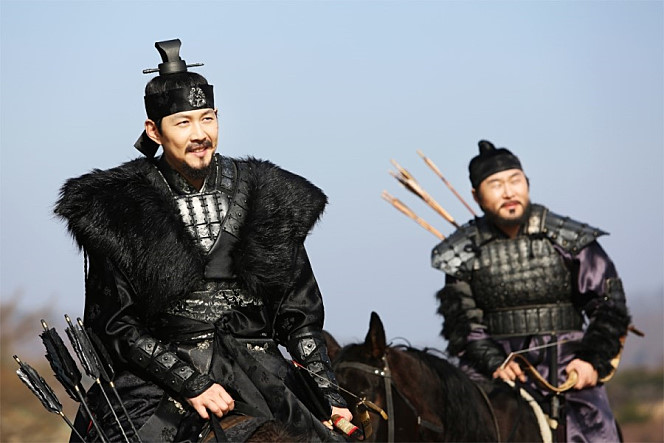
The Face Reader (2013) ☆☆☆(3/4) : A helpless hero in front of the big historical tide

thefacereader01 I do not have much interest or belief in phrenology, but, though it was a brief moment, I enjoyed watching how the phrenologist hero of South Korean period drama movie “The Face Reader” works during its first half. With his expert phrenological knowledge, he can discern lots of things from you including personality type once he observes your face. At one point, he is asked to help the law authorities solve one murder case, and, though there is not any solid physical evidence, he quickly spots the culprit as soon as he sees the face of the guy in question, and that guy is indeed the murderer.

Using his phrenological knowledge, he also works as an expert prognosticator who can tell you a lot about your fate if not all about it, and that is how he suddenly finds himself at the center of a dangerous historical event. Many people are going to die just because they happen to be on the side to be eliminated, and, though he already guesses what will ultimately happen, it becomes clearer to him that there is not much he can do as he bitterly comes to recognize his helpless position in front of the big historical tide.

He is Kim Nae-kyeong(Song Kang-ho), the elder son of the disgraced noble family during the Joseon Dynasty in the 15th Century. While living in seclusion with his younger brother Paeng-heon(Cho Jeong-seok) and his young son Jin-hyeong(Lee Jong-seok), he has been known as the most skillful phrenologist, or ‘face reader’, in the kingdom, and, on one day, he is visited by Yeon-hong(Kim Hye-soo), a wily, charming courtesan and fellow face reader running a very popular gisaeng’s house in Hanyang(it is an old name of Seoul). He is initially reluctant when she offers a job of face-reading her wealthy clients in Hanyang, but he eventually accepts her offer, so he and his brother go to Yeon-hong’s place a few days later.

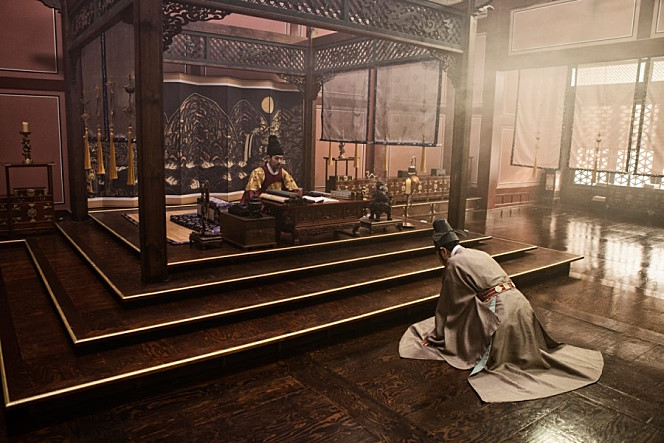
thefacereader03Although he unwittingly gets himself trapped in an unfair partnership contract due to Yeon-hong’s sneaky tactic not long after they arrive in Hanyang, Nae-kyeong does his job well as demanded, and reputation and money accordingly  follow. After solving the murder case mentioned above, he is called by the vice premier Kim Jong-seo(Baek Yoon-sik), and then he is brought to the palace for being received in audience by King Monjong(Kim Tae-woo), who urgently needs Nae-kyeong’s phrenological skill to find out any possibility of coup d’état from several powerful figures. King Monjong knows he has a few days to live due to his weakening health, and he naturally worries about the safety of his young son who will succeed him as the new king after his death.

We see that the king has a very good reason for his deepening concern. His ambitious brother Grand Prince Sooyang(Lee Jeong-jae) is growing his power and influence day by day, and he may usurp the throne from his young nephew after the king dies. Nae-kyeong is ordered to check the faces of the possible traitors including Grand Prince Sooyang, and this important job turns out to be not as easy as expected while he gradually realizes the danger accumulating around him and his family.

Probably because most of South Korean audiences including me know well about what will happen in the end(the historical incident depicted in the movie is one of the most infamous ones in the Korean history), the movie does not hurry itself to reach to its inevitable climax. It steadily builds its momentum as it moves from the broad comedy during its first half to the serious melodrama during its second half, and it seldom feels dragged despite its long running time(140-min) and pre-determined ending. Kim Dong-hyeok’s screenplay is solid in many aspects; I was confounded at first by its seemingly inconsequential prologue and a certain insidious supporting character wearing mask, but I came to appreciate how his screenplay utilized them for good dramatic effects later.

thefacereader06The story and characters are supported well by its talented cast which can grip our attention for more than 2 hours. Song Kang-ho, an engaging South Korean actor who has recently been lukewarm in several South Korean films, is back in his element lately with Bong Joon-ho’s terrific SF film “Snowpiercer”(2013), and he proves here again that he is still one of the most interesting South Korean actors. Even with his shabby appearance in the beginning, Song immediately wins our favor to become a likable ordinary hero we can identify with, and his good performance becomes a major asset of the movie as he effortlessly goes back and forth between humor and pathos along with the story.

The supporting performers around him are also entertaining to watch. Cho Jeong-seok, who stole the show in “Architecture 101”(2012), has a nice comic chemistry with Song as Nae-kyeong’s thoughtless brother, and Lee Jong-seok, who played Nae-kyeong’s good-willed son determined to restore his family’s reputation in a way more respectable from his father’s, is better than expected despite his short acting career. While Kim Hyeo-soo has her own small moments as a sole substantial female character in the movie, Baek Yoon-sik gives commanding dignity and gravitas to the man who was nicknamed “The Tiger of Baekdu Mountain” during his military campaign years, and Lee Jeong-jae is competent as the ruthless villain of the story although it came to my mind that his real-life counterpart was a lot more complex than the thuggish portrayal in the movie. Sure, he did kill lots of people to sit on the throne, but so did his grandfather and his great-grandfather, and he actually had the right stuff to become a good king compared to his young weak-willed nephew(Full disclosure for non-South Korean audiences: he has been regarded as one of the better kings of the Joseon Dynasty while still notorious for his ruthless ascent to absolute power).

While it is not entirely free from its flaws including its misplaced/overused score(I must confess that I felt an urge to shout “turn off the soundtrack, please!” several times during the screening at last night), “The Face Reader” is a smart enjoyable movie which successfully mixes comedy and drama to lead us to its tragic ending filled with the sense of bitter resignation. Sometimes, like Nae-kyeong, we have no choice but to be swept along with others as meek individuals even if we can clearly see beforehand what is going on around us – and, as you know, the history has proved that many times.

thefacereader05

Posted in Movies | Tagged , , | 1 Comment

Stories We Tell (2012) ☆☆☆1/2(3/5/4) : Their stories about her mother

storieswetell03  There is one secret to be revealed in the middle of Sarah Polley’s intimate documentary “Stories We Tell”, but, while it is surely a crucial turning point in its compelling narrative and I don’t dare to reveal it to you, it is not the main point of the documentary. It is more about how the interviewees, or “Storytellers” as Polley calls them, remember and tell us about one woman they knew and loved in their lives, and it is interesting to see how she is remembered after her death through a bunch of different views sometimes overlapping or conflicting with each other.

The center of the documentary is Sarah Polley’s mother Diane Polley, who died in 1990 when Polley was 11. According to many interviewees including Polley’s family members and Diane’s friends and acquaintances, she was an energetic force of nature always looking for the chances of joie de vivre, and they fondly remember how she brightened up the mood whenever she was with them. She was a tireless woman who was a wife, a mother, an actress, and, though it was not mentioned in the documentary, a casting director, and we see Polley’s siblings affectionately reminiscing in front of the camera about their never-boring life with her.

It was rather surprising that, after her first marriage which was quite disastrous, Diane married Polley’s father Michael, who was a lot different from her in many aspects. While Diane was a plucky woman of active and extroverted personality not so far from “I Love Lucy” or “Auntie Mame”, Michael was an introverted man who rather wanted to be alone for reading or writing in his room. If she was willing to dance or sing along with music, he rather preferred to sit and listen to it. This apparently looked like a mismatch, but their marriage somehow worked probably because their contrasting personalities complemented each other like yin and yang, and they were happy with their children during most of their married life in Toronto.

But, as Michael and others frankly admitted, there was discontent slowly seeping into their relationship. According to Michael, Diane fell in love with him right after watching his performance on the stage, but he chose to suspend his artistic career for being a responsible father who could support his family with stable income. That was a sensible choice in Michael’s view, but others say that Michael’s decision probably hurt and disappointed Diane a lot, who had strongly believed that Michael had the potentials for a greater artistic success to come and also was willing to sacrifice her own career to support him.

storieswetell05

More than 20 years have passed since her death, so nobody can tell how exactly she felt or thought during her married life with Michael, but she stood by her husband anyway, and then she began to pursue her career as an actress after her children grew enough. While having a separation period from her husband, she left Toronto, and she participated in a stage play in Montreal. According to her friends, it was not very good, but she gamely tried with her usual jubilant spirit.

Now I should be more discreet about describing what happened during this period which might have been both the best and worst time in her life. While Diane was like an opened book to the people around her, her friends point out that she had probably some personal secrets to hide behind her easygoing persona, and Polley and her family were well aware of the possibility of a certain secret even though they did not know its whole truth. While they frequently joked about that during their family conversations, they still loved her with understanding, and that was enough for them.

However, during her search for getting to know more about her dear mother, Polley comes across a hidden truth she has never imagined through one of her mother’s friends, and the story becomes more interesting as, with some subtly increasing tension, Polley and others exchange their opinions on how to tell and present this big surprise before and during the production of this documentary. As the interviewees freely talk about Diane in front of Polley and her camera during her ‘interrogations’, they playfully interact with Polley behind the camera sometimes, and it is amusing to see how they remember Diane in their different respective views.

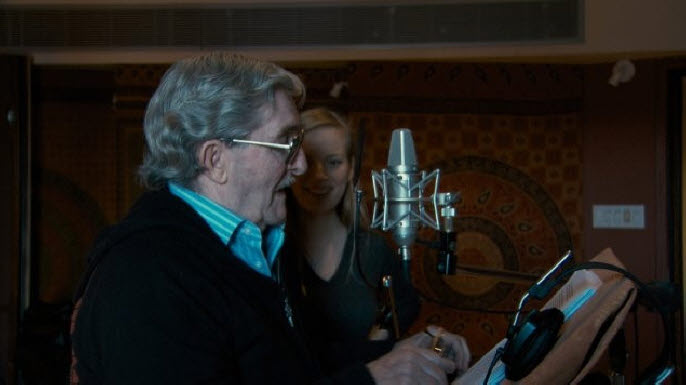
storieswetell04 As the narrative thickens with more facts about Diane’s life told through various views, Polley maintains her calm, respectful approach to her mother as well as her family members and interviewees while constantly reminding us of her humble objective position as the writer/director of the documentary. Right from the opening scene in which she takes her father Michael to the studio for recording the narration of her documentary to be read by him, she steps back from the center for her interviewees except when she throws some questions or demands to them. The interview clips are frequently intercut with home video footage and other materials including the believable reproduction of several moments of Diane and her family’s life, and they are well mixed together to form an engaging narrative to grip our interest. As an honest and thoughtful filmmaker, Polley never hides the artificial/subject aspect in her documentary, so we get not only the cheerful moments showing the preparation process before interviews but also the behind-the-scene moments showing how she made the reproduction scenes with her actors.

While she has been a wonderful actress who gave memorable performances in good films such as Atom Egoyan’s icy but harrowing drama “Sweet Hereafter”(1997), Sarah Polley has also showed another side of her exceptional talent as a young director/screenplay writer. Her directorial debut “Away From Her”(2006), which gave Polley her first Oscar nomination, was a haunting drama about an aging couple facing the problems associated with Alzheimer’s disease, and her next film “Take This Waltz”(2011) was a bittersweet romantic tale about how we can ruin our happiness sometimes while following our heart’s desire we cannot easily resist.

Like her previous two good films, Polley deftly handles her subject with the equal dose of sincerity and thoughtfulness, and the result is an incomplete but complex portrayal which feels both well-rounded and well-balanced. While it frankly recognizes that there might be other things which will be never unearthed in Diane Polley’s life, but we can see that she was a remarkable woman deserving to be loved and remembered by others in spite of her problems and faults – and to be told through the stories she and others tell to us.

storieswetell01

Posted in Movies | Tagged , | 7 Comments

The Bling Ring (2013) ☆☆1/2(2.5/4): A superficial shopping spree on celebrities

theblindring

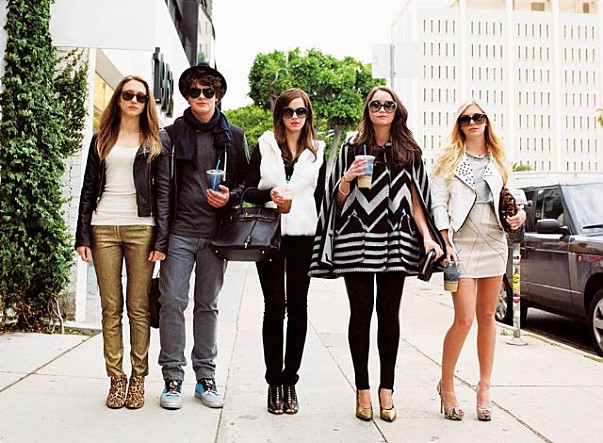
I was amused a bit by the absurdity shown in Sophia Coppola’s “The Bling Ring”, which is based on Nancy Jo Sales’ Vanity Fair article “The Suspect Wore Louboutins”. Considering that how superficial and empty-headed its characters are, their immorality is not very shocking to me, but it is rather unbelievable that they had almost no problem in breaking into the residences of the rich and famous. Yes, there were surely the security measures in the houses, but these kids virtually went into the houses and then walked out with stolen goodies while not getting arrested for several months.

Were they a bunch of poor, desperate kids who needed money? Not at all, because they all live in a very comfortable and affluent suburban neighbourhood in Los Angeles County. They know a lot more than me about those expensive fashion brands or those infamous celebrities decorating daily gossip news, and, as a guy always bored by the clothes and accessory sections at department stores, I would be asleep within a minute if I had a chance to talk with them in private(what the heck, I didn’t even know what Louboutins is before watching the movie).

Through its clinical approach, the movie shows us how these kids form a group together and then come to commit their crime spree. They know that the people in their neighborhood are not particularly keen on security, and they just grab the chances as following their impulsive desire and need. During one moment, two characters quickly steal the money and other things from the parked cars at one night because nearly all of them are left with their doors unlocked and, above all, nobody is watching them.

theblindring04 They are Rebecca(Katie Chang) and Marc(Israel Broussard). They met each other on Marc’s first day as a transferred student at Rebecca’s high school, and they soon hang around with other high school girls including Nicki(Emma Watson), Chloe(Claire Julien), and Sam(Taissa Farmiga). Marc does not seem to be interested in having sex with any of these pretty girls although he enjoys spending time with them, and you may wonder whether he is gay as watching him playfully wearing high heeled shoes in front of the girls or collecting a bunch of fancy accessories under his bed. Maybe he is just a shy, awkward kid glad to have the friends to be with him, but the movie never answers to that question although it implies he has some feeling toward Rebecca.

When Marc mentions that a house where one of his friends lives is currently empty due to the family trip, Rebecca, the smartest one among the bunch, suggests breaking into that house. After the front door is easily opened, Rebecca and Marc look around the interior of the house for a while and then they steal several things including cash, a credit card, and a sports car parked in front of the house.

Once they see how easy it is to break into the houses in their neighbourhood, they go more boldly with their friends, and the houses of the celebrities they envy become their natural targets. The first target is Parris Hilton’s residence, and they break into that place more than once as they break into the houses of other celebrities including Lindsay Lohan and Orlando Bloom(While briefly appearing as herself during a nightclub scene in the movie, Hilton also let Coppola and the crew shoot the movie in the very house burglarized in real life). All they have to do is checking whether their target celebrity is out of the town through Internet gossip news, and the rest is literally a piece of cake as shown in one quiet long-take shot depicting the entire process of their crime from the distance.

They have a big fun with the things obtained through their, uh, ‘shopping’. Wherever they break into, there are always expensive clothes, shoes, bags, perfumes, wristwatches, and other expensive accessories to dazzle them, and they eagerly snatch some of them along with money just because they want to enjoy the luxurious lifestyle of the celebrities they have looked at with envy. With the money earned through selling their stolen goods, they enjoy themselves every night at their favorite nightclub, and, not so surprisingly, alcohol and drug come handy to them.

theblindring02 The movie distantly looks at these superficial kids with no sympathy, and that is a right choice considering how incorrigible they are even in the end. As expected, this is not much of a spoiler, the police has been pursuing them as they keep committing their crimes with no thought on the consequence of their actions, and, once they are labeled as prime suspects, the evidences are quickly discovered when their houses and, of course, their Facebook pages are searched(you have probably heard about those idiotic criminals getting arrested after bragging about their crimes on the social network).

Despite the incredulity followed by amusement during my viewing, the movie still feels hollow as a superficial story about superficial characters. The actors give good performances, but their banal characters do not leave much impression although you may be amused by their sheer superficiality during the first half. I especially enjoyed an outrageous homeschooling scene featuring Leslie Man as Nicki’s equally shallow mom, and it is hilarious to watch her character cheerfully trying to teach to her daughters about the fashionable empty life lessons from those useless self-help books, but the movie only scratches the surface because there is not much it can dig up from it except laughing about it.

Sofia Coppola’s previous films may be shallow as her detractors have said, but she has successfully captured the melancholy and frustration inside the shallow sense of existence in her movies. Her great film “Lost in Translation”(2003) was a prime example, and her underrated films like “Marie Antoinette”(2006) and “Somewhere”(2010) had interesting character moments amid their luxurious empty worlds. In case of “The Bling Ring”, it merely feels empty and not much more than that, and it ultimately becomes a shallow misfire with little reward for us. After all, these pathetic kids in the movie are pretty uninteresting from the beginning, aren’t they?

theblindring03

Posted in Movies | Tagged , | 1 Comment

To the Wonder (2012) ☆☆☆(3/4) : To their thoughts and feelings

tothewonder01 You may not guess what is really happening between them. You may not know who they are or how they have lived. You may not understand what exactly it is all about. But you can closely listen to their thoughts and feelings, and these intimate elements are unfolded in front of us with the haunting sights encompassing them.

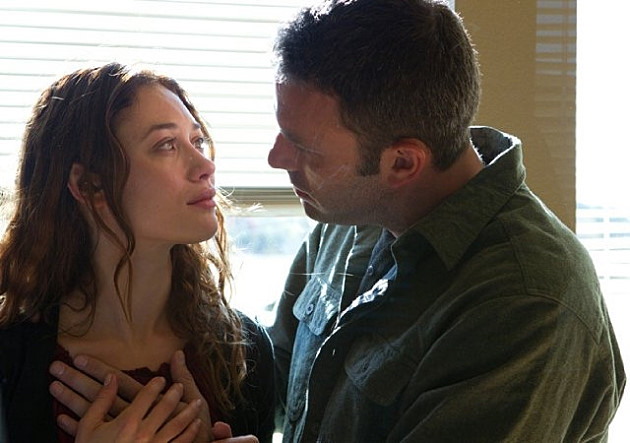
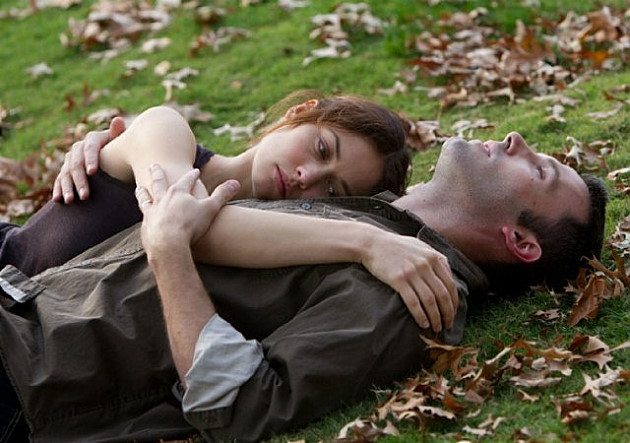
Terrence Malick’s new film “To the Wonder”, an impressive but elusive visual poem, is mainly a meditative observation on one rocky romantic relationship between Neil(Ben Affleck) and Marina(Olga Kurylenko). Like any couples, they feel happy and joyous as they fall in love with each other, and we see them having a good time in France. They walk together around the streets of Paris, and then they have an ethereal private time on the beach near the Mont Saint-Michel Abbey on one gray day.

As their relationship grows, they begin to consider living together in US, so they go to Neil’s hometown in Oklahoma with Marina’s daughter from her previous marriage. Tatiana(Tatiana Chiline) constantly feels like a stranger in the alien world, but she gets along well with her mother’s boyfriend, and maybe they can be a nice family together in Neil’s house if everything works out well for them.

And then we begin to get the glimpses of the problems inside Neil and Marina’s relationships. It seems Marina has some mental instability issues, and that puts lots of strain on their relationship. Marina looks increasingly unhappy and agitated, and Neil looks troubled and concerned while stoically doing his job outside as an environment inspector, and Tatiana feels that her happy time in US is being over.

movie_imageNow this sounds a lot like a typical melodrama story with predictable turns, but the movie freely flies along with the stream of consciousness inside the main characters who keep musing and talking to themselves in their narrations throughout the movie. Are they reflecting on what happened to them from the distance through the fragments of their memories, or is it just that we are directly listening to their inner thoughts?

I am not sure, but the random but somehow natural visual flow of the movie is fully supported by the gorgeous images provided by the cinematographer Emmanuel Lubezki, who did a dazzling job in Malick’s previous film “The Tree of Life”(2011). The gray tone of the scenes in France makes a striking contrast with the sunny ambience of the scenes in Oklahoma, and Lubezki’s camera deftly captures not only the wide landscapes worthwhile to be appreciated at the theater but also the genuine human feelings inside the characters. We never know a lot about Neil and Marina, but we can always sense how they feel during the individual moments in the film. The reasons behind their conflict are not very clear, but, come to think of it, every couple is bound to have a hard time in the end whatever their reason is, and there are universal aspects about their problems depicted in the movie despite the absence of several specific details; Neil and Marina surely love each other, but are they compatible with each other enough to live together for years?

The movie also looks inside other two people who just happen to be near them. As his relationship with Marina is getting deteriorated, Neil gets close with Jane(Rachel McAdams, who looks far different from her vicious turn in Brian De Palma’s “Passion”(2012)), his high school friend he has not met for years. The movie is mostly vague about their history, but there is something in their mutual interactions as we listen to Jane’s inner voice. Her ranch is messy for some reasons although she tries to manage it as much as she can(it is implied that it was mainly her ex-husband’s fault), and Neil might be a big comfort to her if he chooses to live with her.

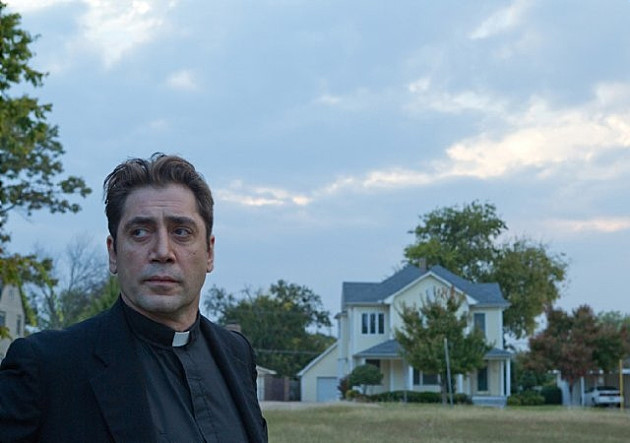
tothewonder03And we also observe and listen to Father Quintana(ever-mournful Javier Bardem), a local priest who must have come to US as a foreigner considering that he muses on himself and his life in Spanish like Marina does in French. While he sincerely handles his rituals at the chapel, he has been deeply troubled by his unanswered prayers to God for years. He is a decent man and good priest, and he always responds with kindness and compassion to his flock, but his inner unhappiness is apparent to everyone while he is frustrated to see that there is not much he can do for helping his flock.

So far, I have merely described the characters and their respective circumstances, but there is a lot more than that in this unconventional film which creates an engaging narrative flow of emotions inside its poetic visual kaleidoscope on the screen. Its individual moments are not clearly connected with each other, but they form a big picture together on the whole even though it does not seem to be complete.

There are some crucial points quite murky and opaque in the movie and I frequently wondered about what exactly happened while watching it, but, as my late friend Roger Ebert once pointed out, a film does not always have to explain everything, and “To the Wonder” is impressive to some degrees as it wondrously looks around its landscapes and people. It observes the characters with the somber care and compassion inside its natural beauty, and, shedding their respective star presence, the four principle actors are believable in their restrained performances as the human beings with each own problems and troubles.

Terrence Malick, who is one of the most spiritual directors in our time, has recently been far more prolific than before. While he did not made any single film for 20 years until he returned with “The Thin Red Line”(1998), “To the Wonder” was released less than 2 years after “The Tree of Life”, and he is currently working on three projects to be released in the next year. Whatever the reason is, I think that is a good thing considering what I experienced in this film.

tothewonder05

Posted in Movies | Tagged | 1 Comment

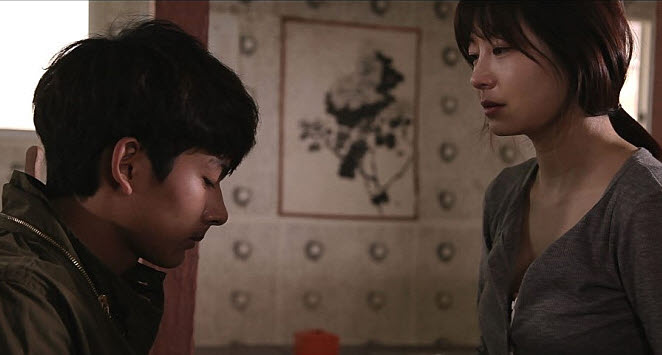
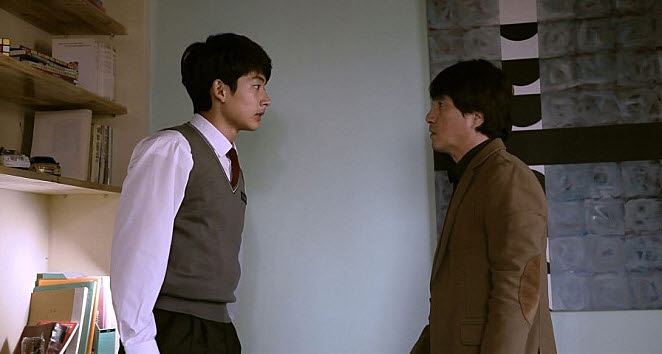
Moebius (2013) ☆☆☆(3/4) : A wordless family drama with extreme behaviors

moebius01 “Moebius” is a bizarre but compelling film full of the extreme behaviors committed by its twisted and tortured characters who are intertwined with each other in a truly disturbing way. This is not an easy film to watch at all, and you will have to brace yourself before watching it. I vaguely knew what I would get because this is a new film by South Korean director Kim Ki-duk, who has jolted us with many striking moments of morbid brutality in his films, but even I was shocked by the dark, brutal power inside its masochistic presentation of sex and violence. Compared to that, its last scene looked like a peaceful light at the end of the hopeless tunnel, no matter how confounding it was to me and a few audiences at the screening at last night.

Its story revolves around a barren isolated household consisting of three family members. There is a sense of icy resentment between Father(Cho Jae-hyeon) and Mother(Lee Eun-woo), and there is a good reason for that. Father is currently having an affair with a woman running a small shabby shop in the neighbourhood, and, boiling with anger inside her, Mother looks like a mute avenging angel ready to do anything to stop him – and punishing him.

Son(Seo Young-joo), who does not care much about his father’s infidelity or the conflict between their parents while silently leading his daily life in this loveless environment, suddenly becomes a victim of the marital war between his parents. During one night, Mother decides to do something drastic to punish her husband, and, after her attempt is failed, her irrepressible anger is quickly directed to another male in the household – her son.

moebius03The movie drew lots of attention and controversy due to the conflict with the director/writer Kim Ki-duk and the Korea Media Ratings Board. It initially got Restricted rating from the board, which is virtually a kiss of death to any film to be released in South Korean theaters considering there is no theater for that rating, but, after the director modified the original version with several cuts, the movie was eventually approved by the Board with 18 rating, and now it is finally released in South Korean theaters in this weekend.

Although its more graphic details of extreme violence were cut during this progress, the movie still can shock us during its unspeakable moment involving a certain part of male body. After committing a more unspeakable act which will certainly make your eyes rolling in disbelief(I don’t dare to talk about that), Mother walks out of the house, and Father and Son are left with devastation and guilt while not knowing what to do with a huge damage left behind her.

They try to continue their life, but that is not easy for both of them. Son always feels shame about what happened to him, and he is cruelly bullied by his schoolmates when one of them comes to discover his secret by coincidence. Father tries to find a way to give back a normal life to his son, but he becomes frustrated to know that he may have to wait for a while to get what he wants. The more he sees his son’s miserable state, the more he becomes tormented day by day.

moebius06The story becomes more bizarre as Son gets involved with his father’s mistress. Because she is also played by Lee Eun-woo, what we get here is a twisted sight of Oedipal attraction, and the movie pushes it to a more extreme and disturbing area as Son tests an unconventional method to get alternative sexual pleasure for him. After several painful but rewarding trials, he goes further with her, so we later see a really weird masochistic threesome scene involving a knife stuck on the right shoulder of one character. How all three characters get one hell of sexual pleasure is something you have to see for yourself to believe it.

All these weird and violent moments in the film are handled with conviction and seriousness as much as required. There is almost no dialogue in the film(so you won’t need the subtitle for watching the film), and the characters are defined by their behaviors which in turn fueled by the dark, destructive animalistic emotions which probably reside somewhere deep inside our human nature. There is always a raw power behind its stoic approach to its volatile and sensational materials, and the result is something we cannot help but observe even when the characters cross over many moral and ethical lines during their no-hold-barred abnormal deviations.

moebius034Three main performers go all the way with their director in their uncompromising wordless performances. Cho Jae-hyeon, who previously collaborated with Kim Ki-duk in “Address Unknown”(2001) and “Bad Guy”(2001), is relentless in his depiction of a tormented dad willing to pay any price for restoring his son, and Lee Eun-woo deftly goes back and forth between her two different roles. Seo Young-joo, a 15-year-old actor who gave a breakthrough performance in “Juvenile Offender”(2012) in last year, holds his own place between his two adult co-actors, and the remarkable range of emotions shown in his brave performance in this film confirms that he is definitely a young talent to watch.

Many of Kim Ki-duk’s films strike us hard with their gut-wrenching violence, but there is also a spot of surprising tranquility amid extreme human behaviors, and “Moebius” is no exception. Around the middle of the story, we encounter a mysterious figure repeatedly bowing to a Buddha figure in the shop as a part of his private ritual, and you may be surprised when the identity of this figure is eventually revealed. I don’t think I wholly understand its meaning or purpose, and it may be a part of the morbid black humor inside the story, but I must say it was nice to see a gentle human smile dawning upon the face after so many dark, ruthless moments of human violence.

moebius05

Posted in Movies | Tagged , , , , | 4 Comments

The Wind Rises (2013) ☆☆1/2(2.5/4) : And everything just floats by…

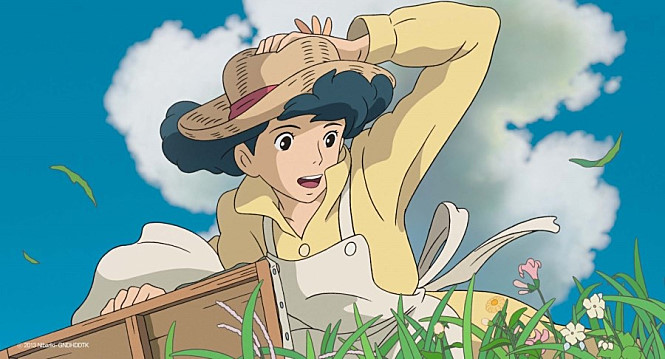
windrises01 “The Wind Rises”, a new animation feature film which will probably be the last work from a great master of Japanese Animation, looks as lovely as expected, but I did an unthinkable thing I have never expected; I checked my wristwatch in the middle of the screening, and I was rather disappointed that it was only half over. Sure, I appreciated its beautiful animation and several gorgeous sights, but I felt the increasing dissatisfaction with its standard old-fashioned story mainly stuffed with nostalgic romanticism. It does fly as its wind rises, but everything merely floats by like the clouds in the sky, and even the darkness of World War II, which is inexorably connected with its hero’s life no matter how he thinks about its devastating consequences, feels like a trivial footnote attached to the story.

While also partially based on Tatsuo Hori’s 1938 novelette, the movie is inspired by the life of Jirô Horikoshi(voiced by Japanese animation director Hideaki Anno), who designed the Zero fighter plane for the Japanese Army right before World War II. I do not know how much the film is based on Horikoshi’s real life, but that does not matter much because the movie is peppered with nostalgia and fantasy from the beginning. Everything looks nice, lovely, and optimistic to the main characters except few things, and nothing seems to be going wrong even when they mention the Depression or the possibility of war.

And all Horikoshi cares about is making good airplanes. The opening scene shows young Horikoshi dreaming about flying his plane above his country hometown, and the movie gives us more fantasy moments through what Horikoshi dreams or imagines in his nerdy mind fueled by many aeronautics books. His childhood hero is famous Italian aeroplane designer Count Caproni(voiced by Mansai Nomura), and Horikoshi’s imagination soars along with this brash, hearty Italian man and his airplanes which instantly take us back to the memories of “Porco Rosso”(1992), one of the director/writer Hayao Miyazaki’s famous works.

thewindrises02 Horikoshi happily grows up with his plucky sister under the care of their generous mother(we do not see his father, by the way), and we soon see him as a grown young man hopeful about his future career as an aeroplane designer. He goes to the college in Tokyo, and his first day is quite unusual due to a sudden disaster which happens right before he arrives in Tokyo. The year is not mentioned, but you can easily guess it if you have ever heard about the Great Kanto Earthquake in 1923, which really caused lots of damages in Tokyo and the surrounding areas as shown in the film(While watching this part, some South Korean audiences may be reminded of the post-quake massacre of Korean immigrants by angry mobs).

The years quickly pass as the city is restored, and, after getting an aeronautical engineering degree, Horikoshi begins to work as an engineer in Mitsubishi Heavy Industries. His direct boss Kurokawa(voiced by Masahiko Nishimura) looks like a grouchy and fastidious middle-aged man at first, but he turns out to be fair, generous, and helpful. Horikoshi is gradually recognized as a young, bright talent to be supported, and he is sent to Germany with others to look around Germany’s advanced aeronautical technique. Later, he gets a chance to supervise the project for making a new fighter plane for the Japanese Army.

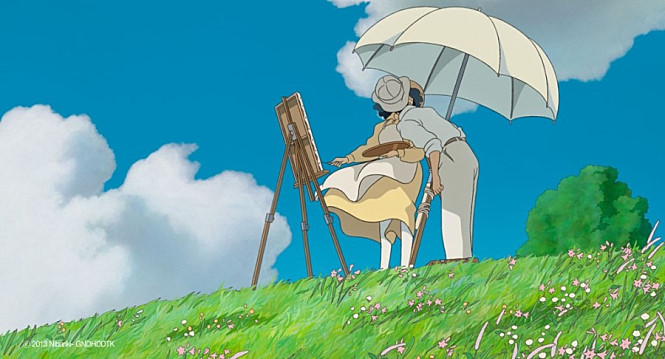
Meanwhile, our reserved but confident engineer falls in love with a young woman named Naoko Satomi(Miori Takimoto), whom he met during a rather dramatic Meet Cute moment during the Earthquake. They briefly got close after she was saved by him, and then they got separated, but, what do you know, he meets her again while he is having a vacation in a rural hotel which has a wide, beautiful green meadow nearby. The sky is refreshing, the wind is rising, the clouds are floating, the grasses are swinging, and she is painting right on the green hill when he reunites with her by coincidence.

windrises05 This surely looks lovely with their clothes and the surrounding environments heavily influenced by European styles(even Thomas Mann’s “The Magic Mountain” is mentioned by one minor character), but Horikoshi and Satomi’s love story is your average doomed romance due to Satomi’s terminal illness, and their story gets a pretty predictable ending except that Satomi does not suffer from Ali MacGraw syndrome. After all, this is an animation feature film, so she always looks pretty regardless of whether her illness gets worse or not.

As indirectly or directly told by other characters, the storm is coming to everyone in the world, but Horikoshi does not seem to mind about that much because 1) he happily keeps working for his project under the protection of his company(Due to his close encounter with a certain character, he finds himself on the watch list of the secret police) and 2) he can spend the time with Satomi at home as a happily married couple even though their precious time is sadly too short for them.

Horikoshi must be well aware of what is going on in the world, but the movie does not delve deep into the interesting contradiction occasionally acknowledged by him and others around him. His dream and ambition are indeed idealistic and innocent, but his creation is ultimately used as one of the main weapons by the Japanese Army during World War II, and the movie just looks at the dire eventual consequences for around one minute. After everything has passed away, Horikoshi merely laments around the ending that every plane of his did not come back.

windrises02 Did I get uncomfortable with the subject or contents of its story as a South Korean audience? I do not think so, because, despite a certain amount of boredom, I kept looking around and admiring the small touches and details in the painstaking efforts from Miyazaki and his animators on the screen. The movie is surely a lovely animation to be admired, and Joe Hisaishi’s score is effective as usual. While enjoying the flying sequences in dream and reality, I particularly liked the impactful scene depicting the landscapes shaken and rolled like carpets by the rapid shock waves of the earthquake, and I was also impressed by the aftermath scenes involving the fire, ashes, refuges, and ruins in the city(it is quite an irony that these gloomy sights leave more impression than the upcoming war in the film).

Hayao Miyazaki has always entertained me with his old and new works since I encountered his work for the first time through a pirate VHS copy of “Porco Rosso”(1992) in 1999. Three great animation films “My Neighbor Totoro”(1988), “Princess Mononoke”(1997), and “Spirited Away”(2001) further solidified my affection and admiration toward his works, and I enjoyed “Howl’s Moving Castle”(2004) and “Ponyo”(2008) while gladly going back to “Nausicca of the Valley of the Wind”(1984) and “Castle in the Sky”(1986). All have their own enchanting moments, and they powerfully remind us that good animation films can be a lot more than mere entertainment for kids.

On the whole, “The Wind Rises” is not a bad animation film at all(well, how can we possibly imagine that from Miyazaki?), but it only leaves a mild taste with little impression and lots of disappointment – especially if you are an admirer of Miyazaki’s better animation films like me. It is not enchanting or charming enough to be recommended, and its story and characters are less engaging compared to the memorably colorful or complex characters we encountered in his other works.

wind-rises-trailer-j Early in this month, Miyazaki publicly announced his retirement as the film was shown at the Venice International Film Festival. Although he has been keeping implying about his retirement for many years, he seems to be really serious in this time considering his age, and I respect his intention to exit quietly with this mild nostalgic work as his swan song, but I cannot help but think that he could have gone more boldly with his imagination or his humanistic belief which is certainly far from the current right-wing Japanese government as reflected in his recent public statement.

Compared to his towering career achievement, “The Wind Rises” feels like a minor footnote at the end of his illustrious career, and that will be a shame if his announcement of retirement really turns out to be true. Seriously, as feeling more conscious of its overlooked dark side, now I wonder whether my viewing of this film could have been improved by a double feature show with other Japanese animation “Grave of the Fireflies”(1988). That film really looks at the reality of World War II, but “The Wind Rises” keeps talking about how wonderful it was before the war. Yeah, it looks lovely, but, alas, that is all for us.

 Sidenote: I learned later from the review by Mark Schilling that the title of the film is inspired by a line from the Paul Valery poem “Le Cimetiere Marin (The Graveyard by the Sea)” that translates as: “The wind is rising! We must try to live!”

windrises03

Posted in Movies | Tagged , , , , | 2 Comments

Despicable Me 2 (2013) ☆☆1/2 (2.5/4) : Gru as an anti-villain hero

despicableme204

First, let me tell you about how skeptical I was about “Despicable Me 2”, the sequel to a charming but less-than-satisfying animation film “Despicable Me”(2010). In the previous story, our ‘despicable’ villain Felonious Gru attempted to exploit three young orphan girls as a part of his grand evil scheme, but, to his surprise, his mean heart was melt by their genuine affection while he tried to assume the role of their foster parent. In the end, he found that it is more rewarding to be a good daddy than a world-renowned supervillain, and he eventually retired from his larger-than-life supervillain career. Therefore, I naturally asked myself when I heard about “Despicable Me 2”: what is the point of making a sequel, if there is not anything worthwhile to talk about because of this completed character arc in the first film?

Well, the good news is that “Despicable Me 2” is as enjoyable as the previous film although it does not feel that fresh. Though the story and the characters are as thin as before, it manages to gives us fairly entertaining moments while trying to move its story into a new direction, and the kids and adults around me frequently laughed whenever a funny thing happened. To be frank with you, I also had some chuckles as tickled by its comic moments although they were not enough to cover my little cranky dissatisfaction remaining in the end.

After adopting three orphans in the previous film, Margo, Edith, and Agnes, Gru(voiced by Steve Carell) has been leading an ordinary life of a single daddy although he still keeps his fancy gadgets and those little yellow sidekicks named “Minions” at his secret lair below his suburban house. He loves his little girls more than before, and we see him trying his best for giving Agnes a really nice birthday party just like any good dad would. The girls also love him and care about him, and they even consider getting a nice date for their lonely daddy though that is the last thing Gru wants for now.

despicableme201

Now as an ordinary good guy, Gru tries to run a decent business, but the things are not easy for him. His minions are still a bunch of loyal but bumbling buffoons, and the strawberry jelly manufactured at his lair is probably the most tasteless one in the world. Dr. Nefario(voiced by Russell Brand), his faithful technician, dearly misses good old evil days of working as a villain’s assistant, so Gru has no choice but to accept Dr. Nefario’s wish to resign from his post when Dr. Nefario says he gets a better offer from somewhere.

But Gru is soon approached by someone, too. Lucy Wilde(voiced by Kristen Wiig), a perky agent from Anti-Villain League(AVL), takes Gru to her boss Silas Ramsbottom(voiced by Steve Coogan), and Ramsbottom asks Gru to help investigating their latest case involving the spectacular theft of a secret government laboratory in the Arctic area. Gru initially rejects this request, but he eventually agrees to help them and starts to work with Lucy, who has been sort of admiring his villainous achievements in the past.

Because it seems possible that the guy behind the case is one of the people running business at the local mall, Gru and Lucy set up a bakery at the mall as their undercover operation spot(its name is ‘Bake My Day’, by the way), and then they look around the possible suspects one by one. While they hang around together, a certain feeling seems to be growing between them, and they have a nice private time together after Gru’s disastrous date forced upon him by his annoying matchmaking neighbor. In addition, it looks like she can be a good mommy to Gru’s girls – and they feel all right with her.

despicableme203Meanwhile, Gru notices that one of their possible suspects in the mall, Eduardo Perez(voiced by Benjamin Bratt), uncannily resembles El Macho, a legendary badass villain who was supposed to be dead after his daredevil dive into an active volcano. He looks like a jolly chubby guy running a Mexican restaurant, but Gru is very suspicious about him, and his suspicion on Eduardo is further fueled by his personal feeling when he learns that Margo is fallen in love with none other than Eduardo’s son. Gru may look pretty unreasonable at that point to you, but I once witnessed how one of my friends, who has a young daughter, became homicidal when he came to know that a boy showed an interest to his adorable daughter, so I was not so surprised about Gru’s overreaction beyond reason.

As I said already, the plot is weak, and its mystery is solved with little surprise, but the movie keeps its story floated above boredom through its many gags and jokes which are mostly successful. Its animation looks good and colorful enough to be enjoyed by the kids, and the action scenes are fun and exciting, and Gru’s Minions steal the show again with their hilarious moments. I still have no idea about how Gru can distinguish one from the other even though they just look all the same except that 1) they have one eye or two eyes and 2) they look round or thin, but they are nice comic characters as before, and the movie generates more fun by turning them into something purple, hairy, and nasty later in the story.

In an objective view, “Despicable Me 2” is a well-made product good enough to be enjoyed, and I was rather glad to see that it is better than I expected. Nevertheless, considering that I gave 2.5 stars to “Despicable Me” and this animation film is neither better nor worse than its predecessor, I must stick to my damn principle, so my cranky side gives it 2.5 stars for several reasons including being a little too long. My softer side keeps reminding me that I did have a fun with many laughs during the screening, but at least both sides can agree that its 3D effect is unnecessary except when it is used during its obligatory gag scene decorating the end credit.

despicableme202

Posted in Movies | Tagged , , | 2 Comments

At Any Price (2012) ☆☆☆(3/4) : The field of modified American Dream

atanyprice01

When I went to Urbana-Champaign, Illinois for attending 2010 Ebertfest, I observed one thing still vividly remaining in my mind while I was on a morning train departing from Chicago. As soon as the skyline of Chicago was disappeared from my sight, the vast plain of Illinois was unfolded beyond the window, and it was a rather unsettling experience.  It surely looked amazing, but, maybe because I was used to being surrounded by mountains and mounds in South Korea, it also looked fearful to me for its seemingly endless scope.

Shot in the locations in the same state, Ramin Bahrani’s new film “At Any Place” exactly evokes that impression of mine through its authentic rural ambience. The landscapes and buildings in the movie are not far from what I observed during my train ride at that time, and I was drawn to its realistic contemporary sights of the American heartland as a curious outsider wondering what I would get, and I was surely not disappointed in the end.

Through its rather loose plot, the movie gradually presents a jaded portrayal of modified American Dream, which is not so pretty compared to its wide, beautiful landscapes. While modest rural farming is virtually impossible thanks to corporations, the mentality of “Expand or Die” dominates over everyone working in the agricultural business, and the determination to win at any price eventually drives the main characters to the darker area they never imagined before. The movie subtly presents their daily reality while slowly unfolding the contents of its seemingly conventional plot, and then it strikes us with unexpected things followed by the unconventional moments powerful enough to compensate for its several weak points.

atanyprice06At first, its story looks like a predictable drama about the distant relationship between a father and a son. Henry Whipple(Dennis Quaid) has been a successful farmer and businessman living in one county in Iowa, and he is proud of being the most successful salesman in his territory. Representing Liberty Seeds Corporation, his family company has been selling genetically modified seeds from that corporation, and he has more than 3,500 acres of land to grow corn and harvest the seeds to sell to many local farmers whom he always invites to his annual party as his trustful clients.

But the circumstance becomes harder for him recently, and we see the other side behind his success and pride. He is currently in the competition with the other major salesman in his area, and he is determined to snatch back his clients in a neighbouring county for being No. 1 again. He is willing to do anything for more wins and more success, and one scene shows him approaching to a grieving family at the funeral for buying the land belonging to the dead man. This is pretty shameless, but he thinks it is a chance too good to miss, and he is right.

He has probably done other indecent or illegal things for his family’s fortune, but his two sons are not very interested in their father’s work. The elder son Grant, who is only seen in the home movie montage at the beginning, left the home, and it looks like he will never come back despite the constant delivery of his postcards from Argentina. The rebellious younger son Dean(Zac Efron) is a racing car driver, and he may rise to the NASCAR level someday considering his continuing victories in the regional races.

atanyprice03While Dean seems to get closer to a big chance for his career, the movie also observes the other things in the world of him and his father and others. We see Henry showing the tricks of his trade to Dean’s current girlfriend Cadence(Maika Monroe), who turns out to be a lot smarter and wiser than we thought. We see how lousy Henry is as a husband and how much his practical wife Irene(Kim Dickens) has been putting up with that. We see the conversation between Henry and his aging father(Red West, who was memorable with Souleymane Sy Savane in Bahrani’s previous work “Goodbye Solo”(2008)), who still exerts stern authority on his middle-aged son. There is also a brief scene involving Dean and others’ minor criminal activity, and, while it looks like a trivial scene on the surface, it actually tells a lot about how Dean and his father are not that different from each other in case of competition and victory.

The movie seems to lack narrative focus at times as it looks around many other things, but the director/co-writer Ramin Bahrani and the cinematographer Michael Simmonds imbues their movie with considerable realistic atmosphere, and its naturalistic approach makes several crucial turns in the story feel less contrived than they could have been. The movie nearly approaches to the soap opera level in case of a minor character played Heather Graham, but that does not ruin its vivid realism even though the movie is not so sure about what to do with her.

As the movie is more focused during its third act, we come to see Henry as the center of the story, and Dennis Quaid effortlessly presents a flawed complex human being in one of his best performances. Behind Henry’s exaggerated likability and confidence, there is an ordinary man desperately trying to run ahead of others, and Quaid is always convincing in that aspect while never overplaying it. Henry eventually sees what he has become and what he has done to his friends and neighbours in the name of family business, but, despite his regret and guilt, he soon discovers how much price he is willing to pay for just keeping moving on.

atanyprice05The other actors around Quaid also give fine performances. Zac Efron, who has been showing his serious side through several drama films such as “Me and Orson Welles”(2008), is effective as the son changed as much as his father in the end, and Kim Dickens has her own moment when Irene quietly but firmly tells her conflicted husband what they will have to do as a respectable family. Clancy Brown and Chelcie Ross bring humanity to their respective characters despite brief appearances, and Maika Monroe is amiable as a sensible girl who will not tolerate her boyfriend’s irreversible mistake.

I came across Ramin Bahrani’s films in 2009, and I was quite impressed by their remarkable realism and his deft direction behind them. “Man Push Cart”(2005), a small story about a struggling Pakistani immigrant, resonated with my experience in New York in 2004 through its palpable verisimilitude, and “Chop Shop”(2007) immediately gripped my attention with a powerful story of a young, hopeful latino orphan kid trying to fulfill his small precious dream.

Right after I had a terrific experience with “Goodbye Solo” at the Jeonju International Film Festival in 2009 April, some audiences seemed to be disappointed by its unclear ending, and I would have told them that what happened inside its two main characters is more important than the ending itself. You may be disappointed by the somber and ambiguous ending of “At Any Price”, but, once you look back at what happened inside the characters, you will eventually feel the emotional weight inside the story – and its title.

atanyprice02

Posted in Movies | Tagged , , , | 1 Comment