Taxi (2015) ☆☆☆(3/4) : A taxi ride with a defiant Iranian filmmaker

taxi05Some of you have probably heard about Iranian director Jafar Panahi’s ongoing plight – and his defiant acts against his oppressive government. In December 2010, this internationally acclaimed filmmaker who has been critical about the Iranian government was sentenced to a 20-year ban on any kind of filmmaking and interview while also not allowed to leave the country, but that did not deter his artistic spirit at all. Surreptitiously working with his close colleagues, he has continued his career with “This Is Not a Film” (2011) and “Closed Curtain” (2013), and he also managed to have these two films smuggled out of the country for being shown outside Iran.

Of course, the Iranian government was not very pleased about this, so it subsequently put more pressure and restriction on Panahi, but, again, he did not step back at all. His latest film “Taxi”, which won the Golden Bear award at the Berlin International Film Festival early in this year, shows that he is as stubborn as before, and we observe how creative a talented filmmaker can be amidst limits and obstacles. While its view is virtually limited within its small space, the movie works as a warm, intimate glimpse into the Iranian society and its people, and we come to feel more of Panahi’s passionate filmmaking beneath the plain surface of this engaging docudrama.

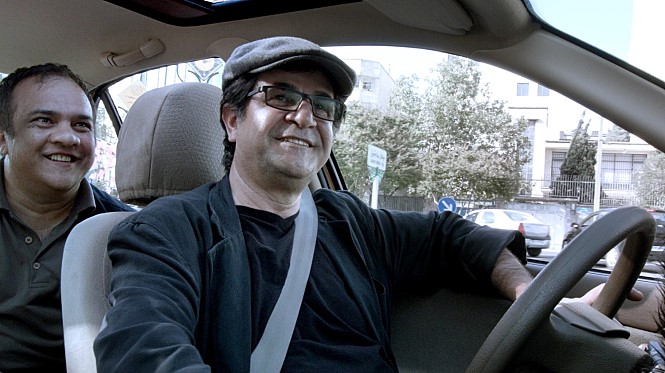
At the beginning, we see the streets of Teheran through a camera placed on the dashboard of a taxi being driven by Panahi himself. To avoid the unwanted attention from others, a small Blackmagic Design digital camera was hidden on a tissue box during the shooting, and its angle could be adjusted to shoot what was going on inside or outside the vehicle, though you can clearly notice that most of the shots in the film are shown from a few number of angles. In addition, Panahi had to utilize the sunroof for adjusting the lighting because using lighting equipments in his vehicle was virtually impossible under his shooting condition, but the movie mostly looks fine on the whole except its several understandable technical limits.

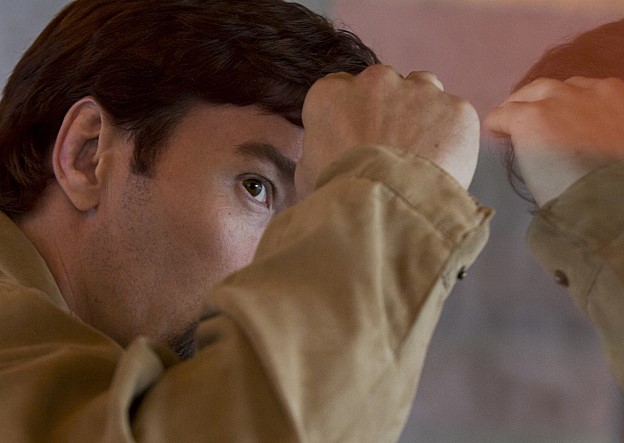
taxi06As three passengers get into Panahi’s taxi one by one, the camera angle is then changed to show the people inside the vehicle on the screen, and a conversation begins between a woman sitting on the backseat and a guy sitting on the passenger seat. While amused to discover the hidden camera, the guy begins to talk about the need of severe punishment on criminals, and the lady, who has a very different opinion, argues with him for a while until he gets off from the taxi at his destination.

Shortly after the lady alights from the taxi, the third passenger, a short chubby guy who has been sitting right behind Panahi, says he recognized Panahi right from when he got onto the car, for he is a pirate DVD vendor and Panahi was once his customer not so long ago. When he asks Panahi whether Panahi is shooting a movie in his taxi, we cannot help but notice a sadly amusing overlap between fiction and reality.

As Panahi’s taxi keeps going around the city, we encounter more people along with Panahi. A frantic wife and her seriously injured husband suddenly come into the car. As being taken to the hospital, the husband tries to leave his final will on a cellular phone video for ensuring his wife’s financial safety. We see the pirate DVD vendor meeting a young college student aspiring to be a filmmaker, and that lad gets a helpful advice from Panahi as deciding on the DVDs to purchase from the vendor. Two old ladies want Panahi to take them to some famous fountain for releasing their two goldfishes exactly at noon, but then Panahi, who is not a real taxi driver, has a problem in taking them to their destination as soon as possible.

taxi03And then there comes Panahi’s young niece, who is really his niece and accepted the award on his behalf at the Berlin International Film Festival. This sweet plucky girl is eager to make her first film to be distributed, and she and her uncle have an interesting talk on a number of restrictions on the filmmaking in Iran, including a ridiculous ban on depicting base reality. When she happens to be left alone in the taxi, she spots one interesting thing to be captured on her digital camera, and that leads to a humorous moment when she tries to manipulate the situation as she wishes for her movie.

Panahi also meets an old friend he has not seen for several years. He wants to discuss with Panahi on his private dilemma on crime and punishment, and there is a small surprise during their serious conversation on law and morality. Nasrin Sotoudeh, a real-life lawyer and human rights activist, appears later in the film, and she and Panahi encourage each other as two people being unfairly oppressed by their government.

After “Taxi” was shown outside Iran, the Iranian government was naturally not so happy about that while Panahi stated in public that he will keep going on his way no matter what will happen (“Nothing can prevent me from making films since when being pushed to the ultimate corners I connect with my inner-self and, in such private spaces, despite all limitations, the necessity to create becomes even more of an urge”). A sudden happening during the last shot and the following statement from Panahi remind us again of the oppression he is still struggling with even at this point, and I sincerely hope that the movie will be fondly remembered in the end as a small but precious work of defiance from one of the leading Iranian filmmakers. He is ready to go further, but how long will he have to endure?

taxi04

Posted in Movies | Tagged , | Leave a comment

Spectre (2015) ☆☆1/2(2.5/4) : Mr. Bond’s another personal problem to deal with

spectre01After all those bitter tough journeys he went through, James Bond still has other things to brood over. While serving us with a number of spectacular action sequences as well as many of its familiar conventions including pretty ladies, fancy gadgets, exotic locations, and a sinister mastermind, “Spectre”, the 24th James Bond movie, keeps digging into what makes its hero tick, but it is more like a big footnote to what was already explored in “Skyfall” (2012), just like “Quantum of Solace” (2008) felt like a minor epilogue to “Casino Royale” (2006)

The story begins at the point not long after what happened to 007 and MI6 in “Skyfall”, and the opening sequence, shot in six different places but seamlessly stitched together on the whole, shows Bond in the middle of the Day of the Dead festival held in Mexico City. Once he spots a certain guy, Bond quickly follows after his target, and this eventually leads to a breathtaking moment featuring a helicopter running amok right above the festival crowd in panic.

This public incident causes a major headache for his boss M (Ralph Fiennes), who has been dealing with a political struggle not so different from what his predecessor went through in “Skyfall”. MI6 is recently merged with MI5, and Max Denbigh (Andrew Scott), an ambitious bureaucrat who is going to be the head of Joint Intelligence Service, wants to shut down the ‘00’ section while promoting a new global surveillance intelligence network for UK and its major allies around the world.

spectre07Bond is suspended from field duty by M right after he returns to London, but we all know that will not deter 007 at all. The reason behind his rough time in Mexico City is a personal message left to him by the previous M before her death (Judi Dench briefly reprises her role), and, with some help from Miss Moneypenny (Naomie Harris) and Q (Ben Whishaw), he is determined to find out what exactly she wanted him to discover through her two simple but cryptic instructions.

It soon turns out that there is a powerful global criminal organization which has managed to keep its existence in secret for many years, and its name, which is the very title of the movie, will sound very familiar to you if you are a constant audience of Bond movies. In several early Bond films including “From Russia with Love” (1963) and “Thunderball” (1965), SPECTRE, the acronym of Special Executive for Counter-intelligence, Terrorism, Revenge, and Extortion, was James Bond’s main evil opponent to defeat, and its mysterious leader accompanied with his Persian cat in “From Russia with Love” has been one of many iconic images in the James Bond series.

While it is now simply called Spectre instead of “SPECTRE” here, we get a dark, ominous moment reminiscent of that memorable SPECTRE meeting scene in “Thunderball” when Bond manages to sneak into Spectre’s secret night meeting held in Rome. As some of its high-ranking members are solemnly reporting on their recent lucrative criminal operations around the world one by one, others silently and rigorously pay attention to their meeting, and then we are introduced to a shady man appearing in the middle of the meeting.

spectre03He is none other than the leader of Spectre, and, this is not a spoiler at all, he is played by Christoph Waltz, who has always been a delight to watch since his Oscar-winning turn in “Inglourious Basterds” (2009) but somehow looks less compelling here in this film. His character is just sour and vicious while solely defined by his long (and pretty petty) personal grudge against Bond, and Waltz does not seem to enjoy himself a lot even during that obligatory moment of Talking Villain Syndrome, which is incidentally unfolded at a big secret facility possibly influenced by the one shown in “You Can Only Live Twice” (1967). It is apparent that his character has an understandable motive when he willingly reveals the scope and details of his diabolical plan to his long-time arch-nemesis, but, sadly, Waltz is not allowed to be more gleeful or megalomaniac in spite of being surrounded by all those minions wearing black uniforms. As a brutal, imposing Spectre henchman, former WWE wrestler David Bautista is surely well-cast in his role, but I doubt whether his character, who utters only one single line as far as I can remember, will be remembered as well as Oddjob or Jaws.

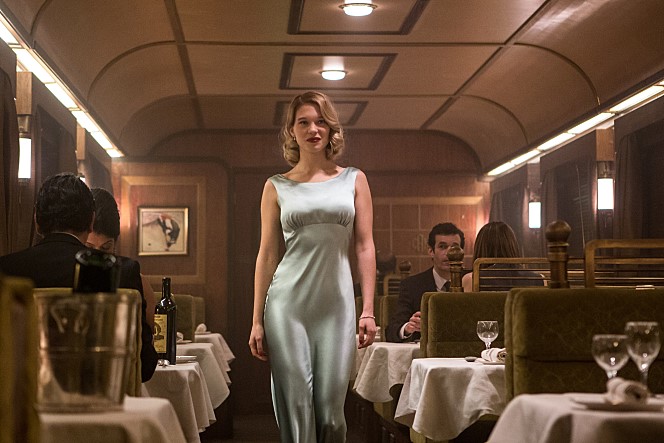
In case of two beautiful ladies Bond comes across on his perilous quest, all I can say is that 1) Monica Bellucci is still sexy and graceful although she recently had her 51st birthday and 2) Léa Seydoux looks fabulous with a glassy clinic located right on the top of a snowy mountain in the Alps, which may remind you of that insidious facility in “On Her Majesty’s Secret Service” (1969). While she appears only in a couple of scenes, Bellucci holds her own place with an exceptionally neat exit many of Bond’s girls did not get before, and Seydoux brings some feisty spirit into her role, though I began to miss her lethal operator in “Mission: Impossible – Ghost Protocol” (2011).

The screenplay by John Logan, Neal Purvis, Robert Wade, and Jez Butterworth aims higher as Waltz’s character is revealed to be connected with Bond’s life more than expected a la “Scream 3” (2000), but it frequently trudges during the second act. It tries too hard as bringing the three previous Bond films into the plot as approaching to its climax part, and I merely observed its ‘surprises’ rather than enjoyed them.
spectre04Fortunately, the director Sam Mendes, who did an excellent job in “Skyfall”, keeps things rolling along with Bond. While they are not as impactful as the aforementioned opening sequence, the other action sequences are skillfully handled with enough thrill and excitement, and the various locations visited by Bond are gorgeously presented on the screen thank to the cinematographer Hoyte van Hoytema. While the title song “Writing’s on the Wall” by Sam Smith and Jimmy Napes is forgettable to say the least, Thomas Newman’s score is effective as occasionally playing Monty Norman’s famous theme with gusto.

And Daniel Craig is dependable as usual. In his first Bond film “Casino Royale”, Craig showed us surprisingly vulnerable human sides of his character amidst gritty physical actions, and that was the superb beginning of a major change the franchise has been going through during recent years. While “Quantum of Solace” was a bland disappointment, “Skyfall” let Craig show more feelings behind his character’s tough exterior, and its finale was one of a few genuinely poignant moments in the franchise. According to recent news articles, Craig seems to be not very sure about whether he will appear in another Bond film, but, considering what he has so far achieved in his four Bond films, it is probably a right time for him to make an exit and move onto other interesting things to do.

Although it is not as good as “Casino Royale” and “Skyfall”, “Spectre” is not as lackluster as “Quantum of Solace”, and it does as much as it can do with its problematic story. Seriously, I have no idea on how long the James Bond series will go on, but James Bond will surely return as promised at the very end of the end credits, and we will probably be entertained again by his next adventure.

spectre05

Posted in Movies | Tagged , | Leave a comment

The Man from U.N.C.L.E. (2015) ☆☆1/2(2.5/4): So they come to work together…

themanfromuncle01“The Man from U.N.C.L.E.” shows some potentials for better things to come, but, though it is not wholly without entertainment, it ultimately fizzles in the end due to its mediocre plot and weak characterization. The whole movie feels like being no more than an expensive TV pilot episode, and we can only hope that the people behind it may fix problems in the next time, though I do not think that chance will come very soon.

As a matter of fact, the movie is based on a popular American TV series of the same name from the 1960s. The TV series, which was broadcast during 1964-1968, was about many risky adventures of two agents working for a secret international agency called United Network and Command of Laws and Enforcement (U.N.C.L.E.), and Ian Fleming, who was riding on the success of James Bond novels and movies around that time, actually contributed to the main concepts of this TV series and its sibling series “The Girl from U.N.C.L.E.”, which lasted only for one season in contrast.

The movie version tells us how its two main characters come to work together despite their opposing positions as soldiers of the Cold War. It is the early 1960s, and the opening sequence shows us when CIA agent Napoleon Solo (Henry Cavill) and KGB agent Illya Kuryakin (Armie Hammer) happen to come across each other while both of them reach for the same target at the same time. The target in question is Gaby Teller (Alicia Vikander), a young car mechanic living in East Berlin. She is the only daughter of a German scientist who was recently vanished right before completing his research on an advanced uranium enrichment technology in US, and she may help finding her father – and his priceless technology wanted by both CIA and KGB.

themanfromuncle03Although their first encounter in East Berlin is not pleasant to say the least, Solo and Kuryakin soon find themselves working together as ordered by their respective bosses. It turns out a secret organization involved with Nazi criminals is behind the disappearance of Teller’s father, and it a matter of time before this criminal organization uses his uranium enrichment technology for threatening the world. Accompanied with Solo and Kuryakin, Teller will go to Rome for introducing her Russian ‘fiancé’ to her uncle who has been working for the front business of the organization, and she is willing to take a risk for finding her dear father.

Not so surprisingly, Solo and Kuryakin do not get along well with each other, and the constant friction between this mismatched duo is the main source of comedy in the film. Solo’s laid-back attitude frequently clashes with the utmost seriousness of Kuryakin, and they keep being watchful about each other as before because, well, old habits never die. After all, they will be enemies to each other again once this joint operation is over, won’t they?

As they get closer to their target, the director/co-writer Guy Ritchie, who previously directed “Sherlock Holmes” (2009) and its following sequel, throws a number of action sequences into the film, but we do not get much thrill or excitement from them as the movie plods along its loose narrative which is often too relaxed and sluggish. While it is decorated with lots of glamor and style you can expect from the 1960s on the screen, there is not much sense of urgency or tension throughout the film, and that problem is evident even during the climax part, which is often disorienting in its busy and flashy presentation of actions as heading toward its predictable ending.

themanfromuncle04Henry Cavill and Armie Hammer are suitably cast as slick agent heroes with contrasting appearances, but their performances are not fun or interesting enough to float their film. It is surely nice to see Cavill in a less ponderous role after “Man of Steel” (2013), and he initially looks promising as Solo confidently improvises his moves against his chasing opponent during the opening sequence, but then the movie does not give him many things to do besides looking wily, dapper, and resourceful as a former professional criminal recruited by CIA. In case of Hammer, he keeps his performance straight as demanded even during the silliest moments in the film, but then he is stuck with the thankless job of playing a humorless straight man with some Freudian anger management problem.
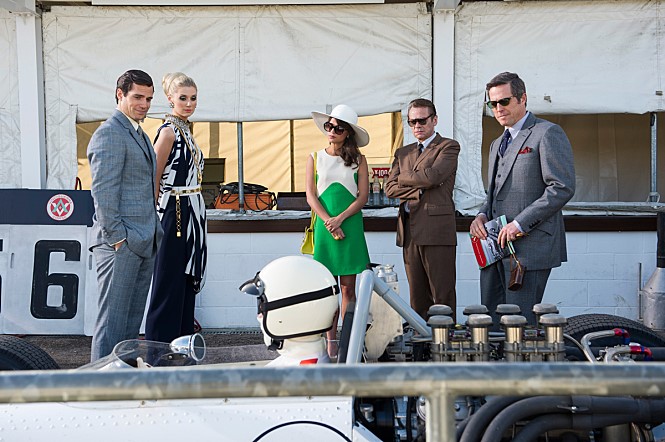
The supporting performers are also wasted in their disposable roles, though some of them end up leaving a bit of good impression as reminding us of their considerable talents. Alicia Vikander, who was unforgettable as an alluring artificial intelligent character in recent SF film “Ex Machina” (2015), looks fabulous in those fancy period costumes in the film while showing some tough sides, but then her character ultimately functions as a damsel in distress to be saved around the climax part, and the possible romantic relationship between her character and Hammer’s does not feel that engaging especially if you consider that sparkling chemistry shown between Tom Cruise and Rebecca Ferguson in “Mission: Impossible – Rogue Nation” (2015). Although her bland villain character is not so memorable or menacing, Elizabeth Debicki has a little fun with her scenes with Cavill, and Hugh Grant gets the most fun as a small but crucial supporting character who appears later in the story.

While I did not like “Sherlock Holmes” enough, I was mildly entertained at least, and I hoped there would be improvements in the next film, which was indeed a better one. “The Man from U.N.C.L.E.” also gives me a similar impression for its potentials, but it will be probably forgotten quickly because of several notable spy movies which came out in this year. In comparison, “Spy” (2015) was much more hilarious, “Mission: Impossible – Rogue Nation” was much more exciting, “Bridge of Spies” (2015) was much more compelling while also more humorous in fact, and then there comes “Spectre” (2015), a new James Bond movie. “The Man from U.N.C.L.E.” comes with a style indeed, but it sadly forgets that it needs more than a style to become something substantial enough to be remembered.

themanfromuncle02

Posted in Movies | Tagged , , | Leave a comment

Bridge of Spies (2015) ☆☆☆1/2(3.5/4) : The Lawyer Who Came into the Cold

bridgeofspies06Steven Spielberg’s new film “Bridge of Spies” is a compelling Cold War story deftly balancing itself between several different factors just like its no-nonsense lawyer hero who came into the Cold. Although it can be said that the movie is as unabashed as American apple pie in its historical/political messages, the movie delivers them through top-notch filmmaking skills and first-rate performances to draw and grab us during its 140 minutes, and you cannot help but admire how it simply but elegantly strikes the balance between warm, idealistic human drama and cold, ambiguous espionage tale.

Its quiet but increasingly tense opening sequence introduces to us Rudolf Abel (Mark Rylance), a Soviet Spy who had operated in a Brooklyn neighborhood for several years but was eventually arrested in 1957. As he begins his another day as usual, we notice a group of people steadily following after him. They are federal agents, and they immediately arrest him when he returns to his residence after one of his routine spy works. He manages to destroy the latest code message (how it is delivered to him is one of fine authentic period details in the film), but there are already plenty of evidences to incriminate him, so he is soon going to be put on a trial for his espionage activities against the US government.

While many American people would love to see Abel promptly sentenced to electric chair, the US government sees that he must be treated with a fair trial in due process at least on the surface, mainly because of maintaining its positive ideological image against the Soviet Union. Although the movie never directly points it out to us, this indirectly reminds us of how the US government deliberately ignored the legal and human rights of its ‘detainees’ during the War on Terror just because they were not technically prisoners of war. Yes, Al-Qaeda and its terrorist associates were indeed a serious global threat to US and many other countries around the world, but the US government could have shown good examples of how it was ethically and morally better than those fanatic terrorists.

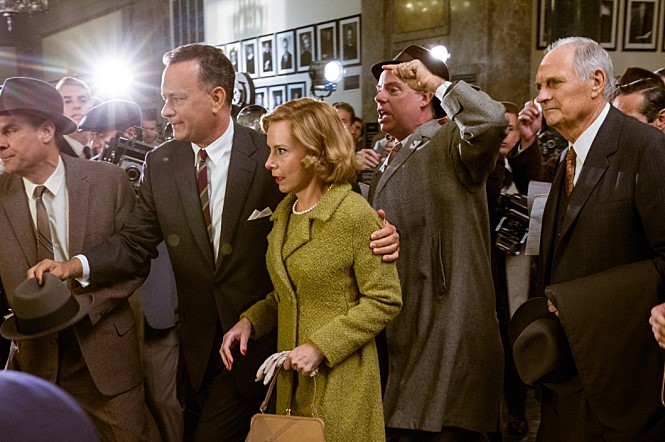
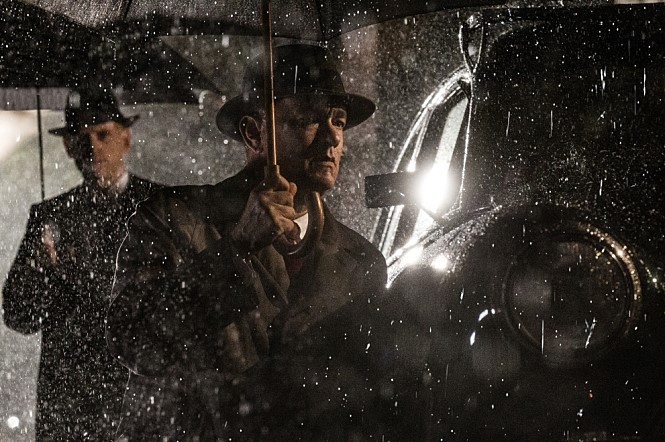
bridgeofspies01The unenviable job of defending Abel is handed to James B. Donovan (Tom Hanks), a prominent New York lawyer who has mainly dealt with insurance cases. When he is notified of that by his law firm boss Thomas Walters (Alan Alda), Donovan is well aware of how much the case will affect not only his career but also his private life, but he also knows that defending this infamous Soviet spy is a job which should be done by somebody anyway, so he accepts the case without much hesitation. His wife Mary (Amy Ryan) understandably worries about what will happen to their family because of her husband’s decision. Abel has already been the most hated man in US, and her husband will certainly be as unpopular in public as his client during the trial.

Donovan clearly sees from the beginning that there is no chance of winning, but he does as much as he can do for his calm, reticent client, who is ready to accept whatever will befall to him at the end of the trial. Mark Rylance, a veteran British actor mostly known for his Tony-winning stage performances and the recent TV drama series “Wolf Hall”, is superb in his understated performance as Abel gradually lets himself closer to his lawyer he comes to admire and respect. It goes without saying that Donovan and Abel are on the opposite sites in terms of ideology, but both of them come to find something common between themselves as men of integrity and principle, and that leads to a sort of friendship despite the gap remained between them.

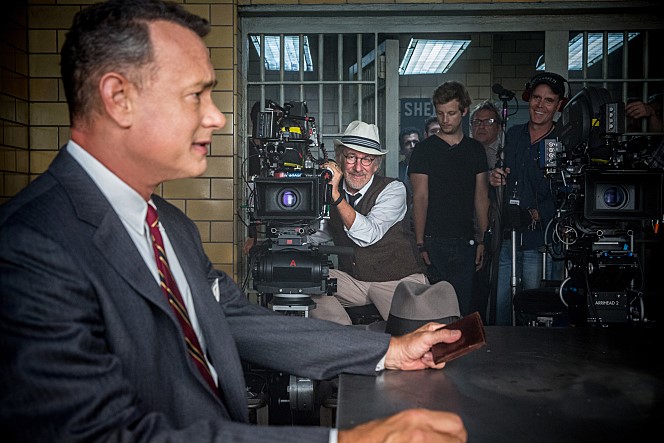
As gaining Abel’s trust and respecting his position, Donovan finds himself going far further than expected even though that will not change anything for his client. Making a good point on how Abel can be a valuable asset to be exchanged with American spy captured by the Soviet, he successfully persuades the judge not to sentence Abel to death penalty. He even takes the case to the US Supreme Court for appeal, and we accordingly get a somber but grand scene of passionate speech on American ideals. This may sound corny you, but Spielberg succinctly handles this scene with restraint and sincerity, and Tom Hanks shows us again how he can effortlessly exude decency and nobility through his everyman persona like James Stewart or Gregory Peck (A small trivia: Peck was actually interested in making the very same real-life story into a movie with him and Alec Guinness in the starring roles in 1965, though its production was never greenlighted in the end).

bridgeofspies02And then the story takes a more interesting turn when Donovan receives another unenviable assignment after the U-2 incident in 1960. The Soviet Union shot down an American U-2 spy plane then captured its pilot Francis Gary Powers (Austin Stowell) alive, and, as Donovan correctly predicted, Abel now becomes definitely more useful for the US government as someone to be exchanged with Powers.

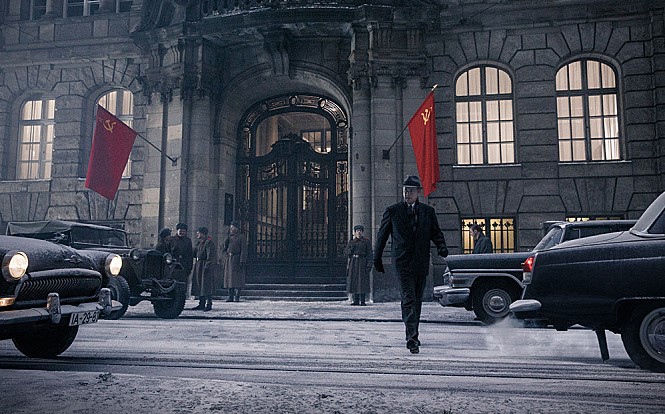
Because this swap needs a behind-the-scenes negotiation in advance, CIA requests Donovan to handle this process as its unofficial representative/negotiator, and that means Donovan must go to Berlin, which was becoming the emblem of the Cold War era during the 1960s. The Berlin Wall is being built as Donovan arrives in the city, and there is a brief but gut-chilling scene when Donovan and other people happen to witness the latest attempt to climb over that wall and its terrible aftermath. The bleak wintry atmosphere of the city still recovering from the wounds of the World War II makes a stark contrast to the soft brightness of the previous scenes, and that harsh, nervous political mood hovering around Berlin during that period feels palpable to us thanks to the cinematographer Janusz Kaminski and the production designer Adam Stockhausen.

As crossing the heavily guarded border between West and East Berlin several times, Donovan enters the gray uncertain world of espionage, and Spielberg is no stranger to such a shady world like that. “Munich” (2005), one of his best works during last decade, was about a group of Mossad agents struggling in shadows as carrying out their secret operation, and some of its memorable moments were reminiscent of those gloomy espionage novels by John le Carré.

While it is inherently less ambivalent in comparison, “Bridge of Spies” also has a number of tense low-key moments as Donovan faces unexpected setbacks on his way. Things become more complicated as American graduate student Frederic Pryor (Will Rogers) happens to be held in the custody of the East German government, so Donovan must be very careful and tactful for drawing the best outcome out of this very tricky situation between US, the Soviet Union, and East Germany.

bridgeofspies05The screenplay by Matt Charman and the Coen Brothers fluidly moves between suspense and humor, and its dry comic moments come from how Donovan is constantly underestimated by his opponents including Wolfgang Vogel (Sebastian Koch), a real-life East German lawyer who was known well for his involvement in many swaps of spies between the West and the Eastern Bloc during the Cold War era. Although he incidentally suffers from a cold and keeps saying to others that he really wants to go back to home as soon as possible (it becomes a major running gag in the film along with Abel’s priceless deadpan line you have to hear for yourself), Donovan patiently navigates the ongoing negotiation around obstacles through his unflappable common sense and pragmatic humanism, and everything eventually culminates to a long but gripping sequence unfolded around two historic sites of the Cold War era (the title of the movie comes from the nickname of one of them, by the way).

“Bridge of Spies” may be not as great as “Lincoln” (2012), but a well-made Spielberg film is at least better than 99% of what comes out of Hollywood every year, and this is indeed the work of a great filmmaker who can hold our attention even with a small effortless touch on the screen. Under his relaxed but dexterous direction, we appreciate its meticulous period details including those blinding flashlight bulbs quickly used and discarded by photographers or that silly education film on nuclear war (can you believe that people during that time actually thought they could survive nuclear war through “Duck and cover”?), and the score by Thomas Newman, who replaced Spielberg’s usual collaborator John Williams due to William’s brief health problem, is appropriately restrained while hitting bold dramatic notes whenever it is required.

Compared to other recent spy action movies including “Mission: Impossible – Rogue Nation” (2015) and “Spectre” (2015), “Bridge of Spies” is a slow and quiet stuff, but it is a smart, thoughtful film with lasting impressions. Its last two scenes could look clichéd and obligatory, but it earns them through its good storytelling, and we leave with neat satisfaction, as reflecting on that timeless value of common sense and pragmatic humanism.

bridgeofspies07

Posted in Movies | Tagged , , , , , | 2 Comments

The Priests (2015) ☆☆☆(3/4) : Two South Korean priests against a force of evil

thepriestsSince the big success of “The Exorcist” (1973), there have been lots of horror movies about exorcism, but, like those zombie movies, many of them were not particularly scary to me. Although “The Exorcist” may be not that shocking any more in these days, it still works as a well-made horror movie equipped with its own strong drama and evocative mood to support its memorable moments of shock and awe, and that is why it has retained its place way above many cheap imitators which merely tried to scare us with worn-out materials.

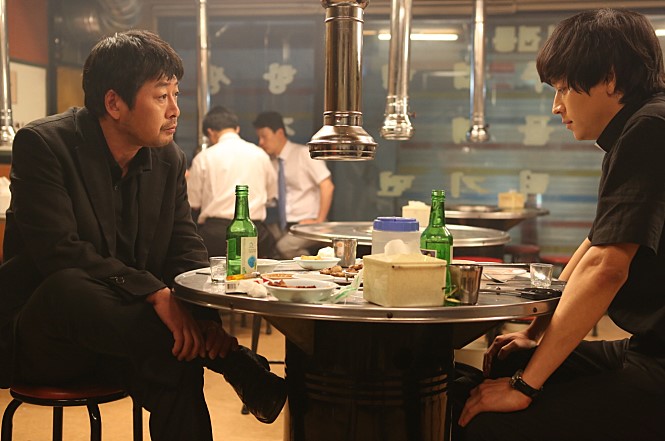
While not as scary as “The Exorcist”, South Korean film “The Priests” will not disappoint its target audiences because it has nearly everything its genre requires. It has 1) two priest characters with each own fear and guilt to face, 2) the menacing presence of a super-duper demonic force, 3) the time-honored details of Catholic exorcism ritual we have seen from many of its senior occult films, and 4) a possessed girl who can do lots of things including vomiting blood instead of that green sticky fluid ejaculated from Linda Blair’s mouth in “The Exorcist”.

After a couple of prologue sequences, the movie tells its story mainly through Deacon Choi (Kang Dong-won), a young priest who has been studying at his Catholic seminary for 7 years. Although he is not exactly a model student to say the least, he is personally chosen by the dean as a suitable assistant for Father Kim (Kim Yoon-seok), who is planning another exorcism ritual on a girl he has known for a long time.

Because Father Kim previously failed in the first attempt with a bad result, his superiors are reluctant to give him a permission for another exorcism. He firmly believes this is the only way to help that girl, but his superiors worry about how it will seriously damage the public image of their church if anything goes quite wrong as before. They believe in God, so that means they must believe in the existence of devils, but then any public exposure of exorcism ritual will make them look like living fossils against the age of reason and science.

thepriests02Being instructed to monitor Father Kim just in case, Deacon Choi is naturally skeptical about exorcism, but he soon begins to have bad feelings about his task. When he visits a friar who assisted Father Kim during the first attempt of exorcism, the friar is not so willing to talk about what he experienced with Father Kim. As he gets to know more about the girl’s case, Deacon Choi comes to realize that he may have to handle far more than he thought at first – and he also starts to feel the aura of something unwholesome around him.

While providing a fair share of spooky scenes to unnerve the audiences, the movie shows some sense of humor, and I was especially amused by a brief scene involved with a cute little pig, which is unfortunately going to be used as the container for an evil spirit to be purged away. The movie also provides some space for local shamanism, so we get another disturbing moment when a shaman ritual is disastrously failed not long after our priests’ arrival. I guess that explains why the Roman Catholic Church is still at the top of expertise in case of chasing away evil spirits in movies. Besides, they look pretty cool with all those rituals and items, don’t they?

As entering its third act, the movie pushes all the usual buttons to make its exorcism ritual sequence look sinister and terrifying. Besides Latin, Korean and Chinese are also spoken thanks to our multilingual demon who is so eager to wreak havoc on Asia besides its current host, and we are also served with those familiar body changes including white/black eyeballs, bleeding gums, serious skin problems, and stinking body odor (the movie has a small fun detail on how priests deal with the last thing). As the soundtrack is drenched in an utmost serious religious mood, cats, crows, rats, and insects come handy for demonstrating the threatening power of evil, and there is even an action sequence around the finale, which may take you back to that desperate drive to the church in “The Omen” (1976).

thepriests04While the movie is overblown at times, it is anchored by its two lead actors’ star presence. Kim Yoon-seok, who has always been an engaging actor to watch, fills his character with gravitas and authority, and Kang Dong-won, who previously appeared with Kim in “Woochi” (2009), is also well-cast as a young man who must overcome the fear and guilt originated from his old trauma in the past. Kim and Kang play well against each other on the screen, and the movie frequently feels like a buddy film as Father Kim teaches new things to his potential pupil.

The other characters surrounding them are played by a number of dependable performers including Son Jong-hak, Lee Ho-jae, and Kim Ee-seong. Park So-dam, who previous gave a notable supporting performance in “The Silenced” (2015), did another nice job here, and she surely goes all the way as her possessed character terrifies or torments Father Kim and Deacon Choi in various ways.

“The Priests” is the first feature film by the director/writer Jang Jae-hyeon, and he made a slick horror product with creepy things to enjoy. I do not believe much in those spiritual things, and I think exorcism is merely an old-fashioned shock therapy for the mentally disturbed, but I like the film as an entertainment anyway while appreciating its competent handling of routine genre elements. It does not bring anything particularly new to its genre, but it does things mostly right.

thepriests03

Posted in Movies | Tagged , , , , , | 3 Comments

Amy (2015) ☆☆☆1/2(3.5/4) : A painful look into Winehouse’s downward spiral

amy01Amy Winehouse’s tragically short life is a cautionary show business tale to say the least. She was young and talented with undeniable star quality, and she was lucky enough to be elevated to stardom within a few years, but, sadly, she was not prepared well for the price of fame and success she suddenly attained. As she desperately tried to hold onto her position, she only got her life and career into more troubles as struggling with her personal demons, and she eventually died on July 23rd, 2011.

Through the mix of various archival footage clips peppered with the interview recordings from many different people who knew or worked with her, Asif Kapadia’s documentary film “Amy” looks closely into Winehouse’s life and career. She was from a Jewish family of a North London neighbourhood, and everyone around her knew that she would be something because of her immense musical talent. Not long after she fantastically sang “Moon River” while backed by the National Jazz Orchestra in 2001, she took the first step of her professional music career, and she already did her promotional tour in 2003.

She had right persons to lift her up to the next stages waiting for her. Her manager Nick Shymansky was loyal and supportive like a good friend, and renowned music producer Salaam Remi was also dependable with his steady support of her talent. Like other interviewees personally close to Winehouse, both Symansky and Remi fondly remember how much Winehouse impressed them with her talent as well as her personality, and we can clearly see that from several video clips showing her performances. She was bright, lively, and charming like a free spirit, and she was natural on the stage with her deep, soulful vocals while showing her considerable potentials as a jazz singer.

After her first album “Frank” was released in 2003, her career was accelerated further with dizzying speed. When her second album “Back to Black” came out in 2006, it virtually catapulted her into the status of international pop star. Besides more positive domestic responses, that album was a huge hit outside UK, and she also received no less than five awards at the 2008 Grammy Awards ceremony, which she did not attend but instead watched it on TV along with her parents, friends, and colleagues in London. When she learned she had just won over other prominent nominees including Beyoncé, Jay Z, and Justin Timberlake, she could not be possibly more excited, and that was definitely the highpoint of her life.

amy02But, as she went up and up, her personal problems also became bigger and bigger. Even during the early stage of her career, Winehouse already had an addiction problem besides her chronic bulimia, and Symansky regrettably admits that he and others could have intervened in her problematic situation earlier. We see her often holding a drink in her hand, and we also hear about one unpleasant episode about how she had one of her bad days with bulimia during one recording session.

She surely knew she had problems, and she really needed some private time and space of her own to pull up herself, but that was the last thing she could afford as a new rising star hounded by paparazzi in every day of her life. Once her addiction problem was widely reported after her life-threatening overdose incident in 2007, it quickly became a new big gossip to devour, and her chance of rehabilitation accordingly became slimmer. If she had been just a mildly successful artist or managed to keep her addiction problem private, she might have been helped by that humble anonymity and honesty of AA meeting, but she only found herself checking into a rehabilitation center right in front of a herd of reporters and photographers.

Furthermore, she had a tumultuous personal relationship with a wild party boy named Blake Fielder, who also had a serious addiction problem just like her. While they were really in love with each other during their better days, they also hopelessly drove each other into the bottom of addiction as scratching at each other, and that became another lucrative source for gossip reporters, as shown by one cringe-inducing photograph capturing Winehouse and Fielder shortly after one of their worst moments. After Fielder was imprisoned in 2008, Winehouse went down further, and we get another ghastly moment showing her hitting another bottom.

amy03She often had her father Mitch around her, but, as far as we can see from how he is presented in the documentary, he was not much of help to his daughter either. Although he might care about his daughter, he also wanted to get a fair share of spotlight just like Fielder, and that negative aspect of his is clearly shown when the documentary shows an embarrassing footage clip of Mitch visiting his daughter’s vacation place along with a camera crew, which was the last thing she needed at that point (While he was initially cooperative like other interviewees during the production, Mitch Winehouse later expressed his objection against the documentary).

Things did not look wholly bad for a while with a few bright moments, but then Winehouse continued her endless downward spiral. After her productive collaboration with her lifelong idol Tony Bennett (how he gently handled his very insecure junior during their recording session is one of the most poignant moments in the documentary), she began to crumble down even on the stage, and that led to a painful breakdown during the concert held in Belgrade not long before her eventual death. Andrew Morris, who was her personal bodyguard and was also one of a few people she could lean on, describes the day when he found her dead body, and we can only imagine that devastating moment as listening to his phlegmatic description.

As he did in his previous work “Senna” (2010), the director Asif Kapadia steps back while letting the story be told through his interviewees and Winehouse herself, and he did an impressive visual job of presenting her best and worst times. I must point out that the documentary is very uncomfortable to watch at several points with Winehouse being shown through countless photographs and videos shot by those heartless paparazzi, but it handles its subject with honesty and respect, and the result is a penetrating and heartbreaking portrayal of one talented musician who left us too early. It is really sad to think about how much she could achieve more – and how she could be wiser to deal with her troubles as learning through more time and experience.

amy05

Posted in Movies | Tagged , , , | 3 Comments

Fatal Intuition (2015) ☆☆☆(3/4): She’s his only hope

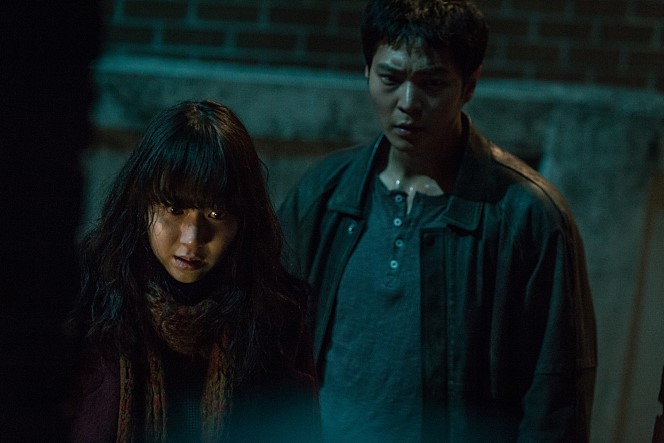
fatalintution01South Korean film “Fatal Intuition” is a thriller mixed with some supernatural elements as a part of its creepy atmosphere. For finding a cruel killer on the loose, our dogged hero works with a girl who often experiences disturbing premonitions of things to happen sooner or later, and she is the only one who can possibly help him now. This premise may sound preposterous to some of you, but the movie believes in its unlikely premise, and it provides enough tension and atmosphere to make us involved in their urgent matter – especially when they finally come to face their guy in question.

For Jang-woo (Joo Won), his teenager sister Eun-ji (Ryoo Hye-yeong) has been the sole bright light of his hard daily life in their rural beach town. Since their parents died when she was very young, he has been devoted to her well-being during many years of hard work, and he really wants to see her getting out of their hometown for her future – even if that means he will be stuck with his shabby laundry shop for the rest of his life.

Unfortunately, a terrible incident happens to Eun-ji. After they argue with each other over a matter involved with her future during one evening, Jang-woo goes out after leaving his sister alone in their house, and then someone breaks into the house during his absence. Eun-ji is brutally beaten and then killed by this mysterious intruder, and Jang-woo is devastated to discover his sister’s body later, which turns out to be hidden at an unexpected spot during one shocking moment.

While frustrated with lazy, ineffectual local cops who keep making wrong judgments on the case, Jang-woo witnesses a strange thing along with other town people when they attend a shaman ritual for his dead sister on the beach. In the middle of the ritual, the shaman begins to be unusually disturbed by something, and she is not the only one who can feel that unnatural aura at the ritual. Si-eun (Lee Yoo-wong), a pariah girl who has been ostracized by many others due to her uncanny ability to foresee bad things to happen in the future, sees the ghost of some little girl, and she soon becomes as agitated as the shaman. She met Eun-ji not long before her death, and she has been feeling guilty because she did not warn her only friend enough in advance, though there was probably nothing she could do to prevent what was bound to happen.

fatalintution03Meanwhile, Jang-woo happens to notice a man watching the ritual from the distance, as a certain object used during the ritual is carried by waves toward that guy in question. It can be a mere coincidence, but it is pretty apparent to Jang-woo and us that the man is very suspicious because 1) his identity is hidden by his attire and 2) he immediately runs away when Jang-woo starts to go after him.

After failing to catch this possible suspect, Jang-woo tells the detectives about what he saw, but, not so surprisingly, they do not believe him at all, and he eventually seeks the help from Si-eun, who reluctantly joins his private investigation. While she can inform him of whether anything bad will happen on their way, there are also a few other things which can help uncovering the identity of Eun-ji’s murderer, and one of them is Eun-ji’s cellular phone, which seems to be in the possession of the murderer at present.

It will not be much of a spoiler to tell you who the killer is because 1) the advertisements of the movie have already exposed its ‘secret’ and 2) you can easily guess the answer for yourself even before the murder, especially if you think about the Law of the Economy of Characters defined by Roger Ebert’s Glossary of movie terms. Even if you do not recognize a certain well-known South Korean actor right from his first appearance in the film, you can clearly see that his seemingly extraneous character will be crucial in the story in one way or another. Besides, there are not many plausible suspects in the story besides that guy.

fatalintuition02While it lacks surprise in its mystery, the movie is not deficient in terms of thriller. Two chase sequences in the film are handled well with each own mood and tempo, and I especially like the moment when Jang-woo intuits the identity of the murderer through an ominous visual cue suddenly appearing in the background. The movie also makes a good use of its real shabby locations; while the day scenes in the film are filled with the glum sense of hard reality surrounding its mundane characters, the night scenes in the film are creepy and foreboding in their moody atmosphere. We wince when one character is unwittingly approaching to a certain danger or when one cellular phone rings at a wrong moment, and the movie goes further with its melodramatic climax part, which is unfolded at a spooky abandoned place full of bad vibes.

The cast in the film give fine performances on the whole. Joo Won, who has been mostly known for his works in South Korean TV dramas, may look a little too clean for his role, but he looks adequate as a grieving young man driven by his urge to get the justice for his murdered sister. Lee Yoo-young is sympathetic as a girl haunted by the ability she cannot understand well, and Ryoo Hye-yeong leaves a lasting impression hovering around the film even though she makes an early exit. In case of the other main cast member I did not mention, let’s say he is effective in his against-the-type role, and he is especially good when his character sadistically toys with his opponent at one point.

“Fatal Intuition” is the debut feature film of the director/co-writer Yoon Joon-hyeong, who previously directed short horror film “Mokdugi” (2003). I have not watched that short film, but “Fatal Intuition” shows that he is skillful enough to continue his filmmaking career. It could be polished a bit more in several aspects, but this is still a solid debut work, and I think we can expect more good things from him.

fatalintution05

Posted in Movies | Tagged , , , | Leave a comment

The Gift (2015) ☆☆☆(3/4) : He wants to give them something…

thegift01Everything looks all right to them in the beginning, but then someone appears out of nowhere, and their life becomes threatened by the presence of this supposedly kind stranger, who begins to look more nefarious than before as time goes by. While reminiscent of those thriller movies about malevolent crackpot intent on terrorizing whoever is unlucky enough to be his prey (such films were pretty popular around the 1980-1990s, you know), “The Gift” takes its time in building its uneasy tension, and then it throws some fresh touches into the plot as it steadily keeps making us disturbed and uncomfortable.

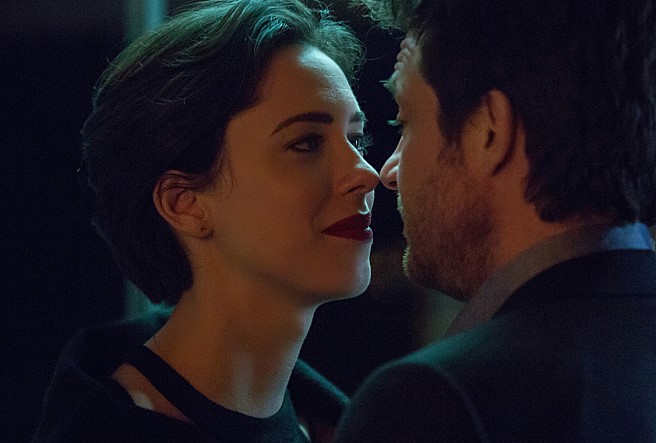
When Simon (Jason Bateman) and his wife Robyn (Rebecca Hall) move from Chicago to LA, they seem to have almost everything for their life as an affluent middle-class couple. While Robyn works as a freelance house designer, Simon is soon going to work at some rising security company, and he may get promoted further if everything works as he hopes. In the opening scene, they look around a nice house located in a suburban area around LA, and it does not take much time for them to decide that this will be their new home to live.

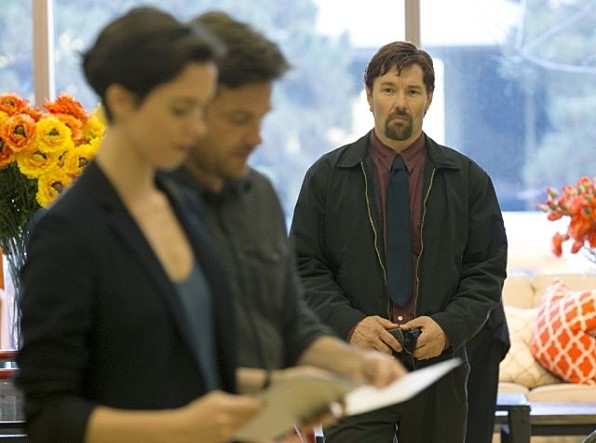
Their new neighborhood is incidentally Simon’s hometown, and that is how they happen to encounter Gordo (Joel Edgerton, who also wrote, directed, and co-produced the film). When he spots Simon being with his wife, Gordo instantly recognizes Simon, but Simon initially does not recognize Gordo when Gordo approaches to him like a guy glad to meet his good old friend again after a long time. He does remember Gordo as one of the schoolmates during his high school years, but he is not particularly pleased to see him unlike his wife, who is delighted to meet a person from her husband’s past.

thegift02
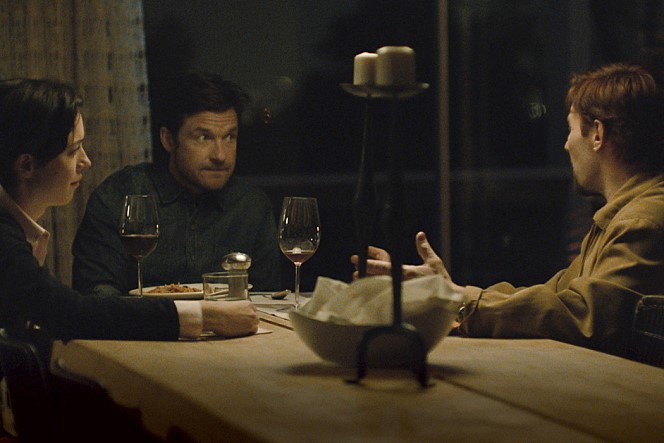
After that accidental encounter, Gordo approaches closer to Simon and Robyn. He sends them a bottle of wine, and then there come other gifts for them one by one. Curious about Gordo, Robyn invites him to a dinner at their house for showing her gratitude, and she begins to like this mild-mannered guy, but Simon is annoyed by Gordo’s persistent presence around him and his wife, though he does not directly show that to Gordo or Robyn. We wonder: were Gordo and Simon really good friends during their old time like Gordo suggests?

Of course, Gordo starts to look very suspicious to both Simon and Robyn – especially when he invites them to a dinner. A couple of disturbing incidents happen not long after a very awkward moment between them, and it is highly possible that Gordo is responsible for both of the incidents. Detectives come for investigation, but they only say that there is nothing they can do about this because of the lack of any substantial evidence to incriminate him.

Now this looks like a classic case of Mad Stalker on the loose, and the movie serves us with several quiet but tense scenes unfolded inside Robyn and Simon’s house. While her husband is at work, Robyn becomes increasingly nervous as it feels like there is someone else beside her in the house, and she even experiences what may be a sort of breakdown moment as being more aware of that insidious possibility day by day.

In the meantime, Robyn and Simon’s relationship becomes more strained and cracked under this stressful circumstance. Something very bad must have happened between Gordo and Simon in the past, and it is apparent that Gordo has an old score to settle with Simon, but Simon does not want to tell anything to his wife, who may be in a serious danger because of him.

thegift05The movie toys with our expectation. When we notice that Simon and Robyn has a pet dog, we fear for that dog for a good reason (remember that poor rabbit in “Fatal Attraction” (1987)?), and then we come to worry more about Robyn’s safety when she becomes pregnant later in the story. While two notable false alarm moments in the movie are clichés to the bone, they are handled well enough to surprise us, and one of them actually works as a nice plot turn.

After the lead role in “Kinky Boots” (2005) and a brief but important supporting role in “Star Wars: Episode III – Revenge of the Sith” (2005), the director/writer Joel Edgerton has been a notable actor to watch through his good performances “Warrior” (2011), “Zero Dark Thirty” (2012), “The Great Gatsby” (2013), and he has also been active as a screenplay writer. “The Square” (2008), which was written by him and directed by his older brother Nash Edgerton, was one of the better thriller films I saw during 2010, and I also liked “The Rover” (2014), a gritty thriller film which was based on the story written by him and its director David Michôd.

In “The Gift”, which is his first feature film, Edgerton shows that he is a competent filmmaker who knows how to engage or grip us through mood and storytelling, and he also draws solid performances from his two co-stars. While Edgerton functions as a constant source of menace and tension, Jason Bateman makes a smooth transition as his character reveals more of a nasty side hidden behind his likable appearance, and Rebecca Hall gradually gains our sympathy as being more than a woman in danger.

As the movie approaches to its finale, Edgerton and his lead performers effectively convey to us how twisted their characters’ situation really is, and the story firmly sticks to its devious plot logic to the end. As the final gift arrives on the doorstep, we come to see that far more clearly than before – and we begin to fear for the inevitability to be unwrapped very soon.

thegift03

Posted in Movies | Tagged , | Leave a comment

The Walk (2015) ☆☆☆(3/4): Between two towers

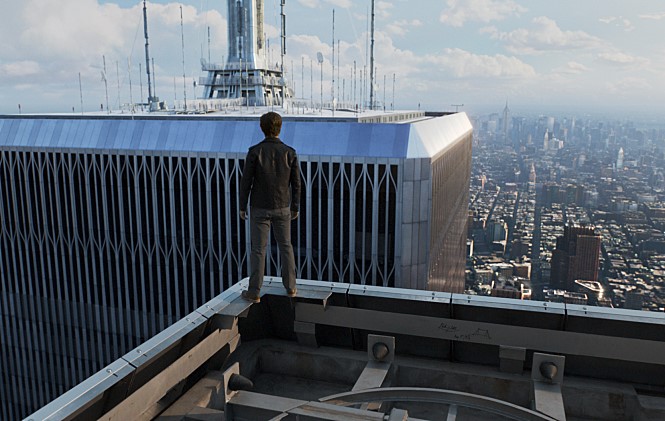
thewalk01Focusing on one amazing real-life incident which did happen around the top of the Twin Towers of World Trade Center, “The Walk” tries to take you to that very moment of danger and wonder to behold, and it accomplishes its goal – to some degrees. On the technical level, its climax part is so real and vivid that it ignited my aversion to high places during the screening. On the narrative level, it is distractingly overdone right from its first act, and then it manages to accumulate some dramatic momentum around its middle act, and then it does deliver its centerpiece as promised during its final act.

In the morning of August 6th, 1974, French high-wire artist Philippe Petit did a remarkable stunt at the World Trade Center, and it was certainly the day which would not be forgotten by him or many others who happened to be around there. Without any permission from local authorities, he and his colleagues sneaked into the Twin Towers in advance and then prepared the stage for him, and he successfully walked along a metal wire put between the rooftops of the Twin Towers while many New Yorkers looked at him with astonishment and amazement from the ground. His miraculous story was already told in James Marsh’s Oscar-winning documentary “Man on Wire” (2008), and I still remember well how enthusiastic and energetic Petit was as he talked about his unstoppable urge and ambition behind that daring attempt with enormous life-threatening risk. (“If I die, what a beautiful death!”)

In the movie version, which is based on Petit’s book “To Reach the Clouds” like the aforementioned documentary, Petit is played by Joseph Gordon-Levitt, and the first part of the movie broadly describes Petit’s life before his stunt of lifetime. Even when he was young, Petit already set his eyes on high wire, and he eventually grows up to be a young but skillful street performer who can impress his audiences with many things besides his wire walking skill. As an ambitious young man, he is eager for professional success and achievement to be remembered, and his determination is not deterred at all even after he leaves his home due to his disapproving parents.

thewalk03When he visits a dental clinic on one day in 1973, he happens to see a magazine article on the World Trade Center which is being built in Manhattan, and he instinctively knows what he wants to do. The adapted screenplay by the director Robert Zemeckis and Christopher Browne has Petit frequently talk and explain to us as if we could miss anything from what is being shown on the screen, and this distracting storytelling device feels quite redundant during many key scenes in the film including this one. We can instantly see and feel how important that moment is for him, so why do we have to be told about that?

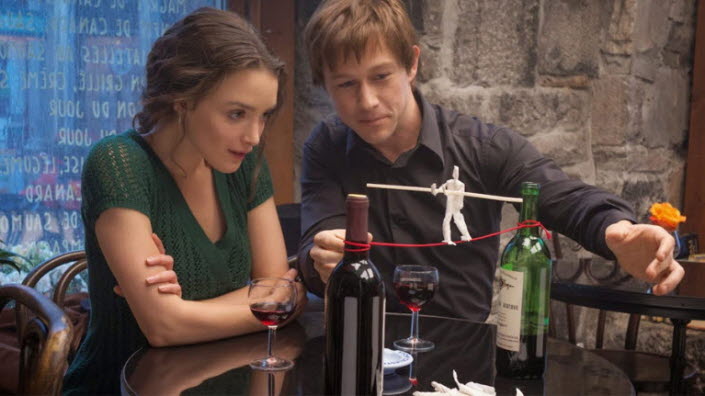
Anyway, the movie starts to roll as Petit enlists a number of people in his secret project. Besides his girlfriend Annie Allix (Charlotte Le Bon), he has Jean-Louis (Clément Sibomy) and Jeff (César Domboy) as his other accomplices, and he is also helped by his mentor Papa Rudy (Ben Kingsley), who can give several important advices on how to set a wire properly between the Twin Towers. After a sort of test run on the top of the Notre Dame de Paris, Petit gains more confidence on his project, and he and his gangs soon go to New York along with their tools and equipments.

As they look around the Twin Towers for finding any chance of entering the buildings without being caught, they are joined by more accomplices including Jean-Pierre (James Badge Dale) and Barry Greenhouse (Steve Valentine), an insurance salesman who happens to work in one of the buildings. While there are a number of setbacks including Petit’s unexpected injury, Petit is adamant about sticking to the original plan, so everything is ready to be set in motion during the evening of August 5th, 1974.

What follows after that is not so far from what we have seen from many heist films. They come across more problems as their time is running out, but they manage to handle them while approaching to their final goal step by step. In case of one of Petit’s colleagues, it was apparent from the beginning that he must overcome his acrophobia, but then it turns out he has to do more than just being on the rooftop – and he has no safety measure to protect him.

thewalk02The climax sequence in the film is indeed superb with terrifying verisimilitude to both shake and grip us, and Zemeckis and his crew did everything for vividly presenting Petit’s precarious wire walking between the Twin Towers, which are also realistically recreated on the screen with their monumental beauty of around 410 meter (1345 feet). Petit really went back and forth between the Twin Towers more than once – only with a balancing pole. Whenever the camera looks below the wire, some of you may wince or feel dizzy because of the overwhelming sense of height conveyed through the screen. While I cringed a few times as watching this sequence, my mother, who was sitting next to me, was visibly upset as clenching her fists, and she told me later that she could hardly watch it. Only God knows what would have happened if we had watched it in 3D IMAX instead of 2D.

However, the movie does not seem to be confident enough about its first-rate presentation of this awe-inspiring moment. Even at this point, it keeps talking and explaining to us through Petit to emphasize how sublime that moment was for him, and the movie is automatically compared to “Man on Wire”, which already presented the story in a similar but more compelling way through the mix of interviews, archival footage clips, and recreated scenes. Petit was unforgettable as the vivacious life force of that wonderful documentary, and it is inevitable that, with his rather strained French accent, Joseph Gordon-Levitt looks less interesting and authentic in comparison, though he does look believable on the wire with all those special effects surrounding him (he went through a training session with Petit before the shooting, by the way). Most of the other actors in the film are stuck with their uninteresting characters who are more or less than pieces to be moved in the story, and Ben Kingsley, who can always do something interesting on the screen, has a little fun with his broad but colorful character.

Despite its glaringly flawed aspects which place itself two or three steps below “Man on Wire”, “The Walk” is still recommendable for its impressive technical achievement to watch on the big screen. As indirectly reflected by its closing scene, the Twin Towers have belonged to the past since September 11th, 2001, and that horrible tragedy and Petit’s little big adventure remind us of how much we human beings are capable of. Driven by whatever makes us tick, we can often do pretty terrible things, but we can also do quite beautiful things sometimes.

thewalk04

Posted in Movies | Tagged , | 2 Comments

Dheepan (2015) ☆☆☆(3/4) : New identity, new place, and new family

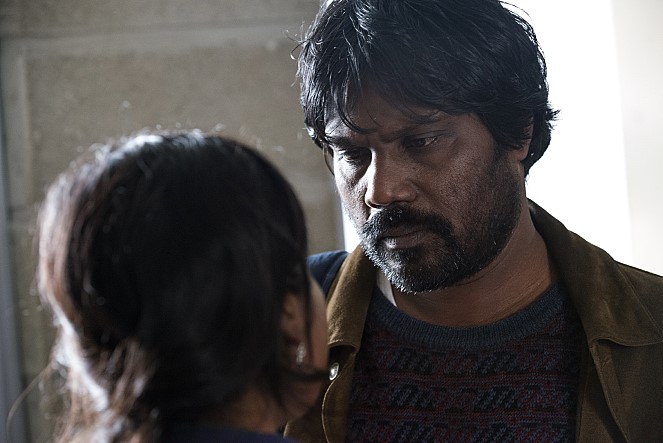
dheepan03Can they adapt themselves to their new identities? Can they settle together in a world new and alien to them? And, above all, can they accept each other as someone more than an accomplice? Through three strangers who happen to stick together for a new life far from their homeland, Jacques Audiard’s “Dheepan”, which won the Palme d’Or award at the Cannes Film Festival early in this year, gives us an engaging human drama supported by small, precious moments during its first two parts, and it mostly works in spite of the problematic third act, which is a little too jarring but does not entirely ruin what has been built up so well during the rest of the film.

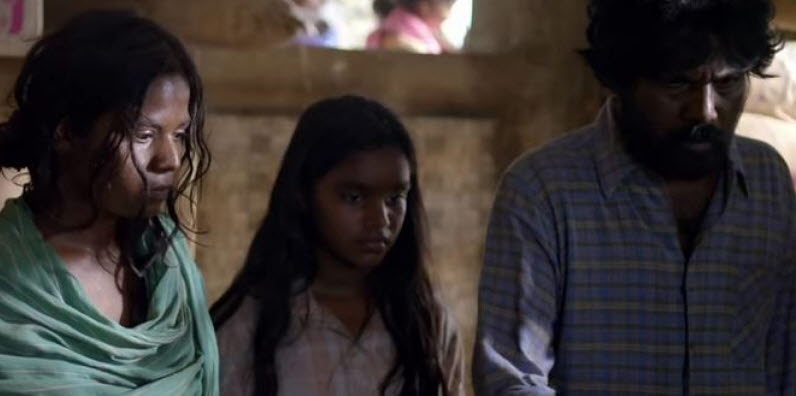
In the beginning, we see how its three main characters come across each other around the end of the long, violent civil war between the Sri Lankan government and the Tamil Tigers, which was officially ended in 2009 May with the admission of defeat from the Tamil Tigers. After his unit is disbanded with muted bitterness during the opening scene, Tamil Tigers militant Sivadhasan (Jesuthasan Antonythasan) must leave Sri Lanka for his safety, but then he needs a faux family for hiding his identity and securing a political asylum, and that is how Yalini (Kalieaswari Srinivasan) and Illayaal (Claudine Vinasithamby) come into the picture. Yalini wants to get out of Sri Lanka as well, and Illayaal is a young orphan girl who is not particularly wanted by anyone.

Three passports from a recently deceased family are already prepared for them when they join together at a refugee camp, and Sivadhasan becomes Dheepan while Yalini and Illayaal respectively become Dheepan’s wife and young daughter on paper. Not long after they come into France, they are granted temporary visas thanks to an unexpected help, and then they are allowed to stay in a housing project located in Le Pré-Saint-Gervais, a suburban area outside Paris which is known by locals as “Le Pré” (it means ‘the meadow’ in French). Their new place in one of the shabby apartment buildings in this housing project does not look that good, but it is certainly better than their former residence in Paris – and now they do not have to worry about getting deported.

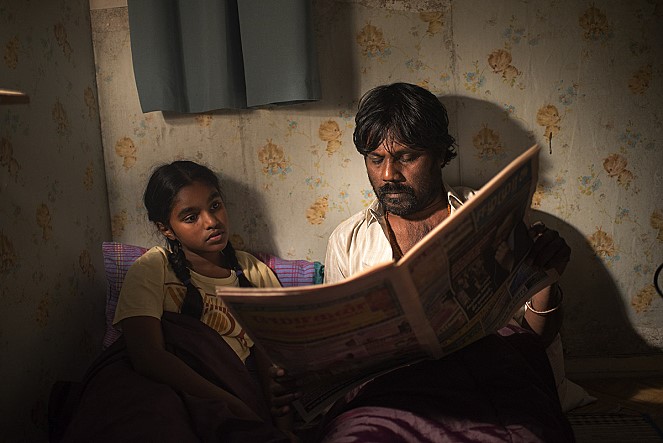
dheepan06 They get settled in their new environment bit by bit. As he does cleaning and fixing jobs around the housing project as a resident caretaker, Dheepan becomes a familiar presence to his neighbors of various origins while also being cautious about drug-selling gangs in the neighborhood, who usually hang around an apartment building right next to the one where Dheepan and his fake family live. Although she is as clumsy in speaking French as her ‘husband’, Yalini has no problem in taking care of Monsieur Habib (Faouzi Bensaïdi), a senile old man whose cozy apartment sometimes functions as a meeting place for the gang members operating downstairs. Illayaal has some difficulty during her first day in the school, but she soon gets over it, and she is useful whenever Dheepan or Yalini needs a translator.

They begin to look more like a real family as time goes by, but there is still visible awkwardness among them as they are strangers merely held together by their common pact. Dheepan still misses his dear family he lost during the war (the movie do not tell us what exactly happened to them, by the way), and there is always the distance between him and his synthetic family even when Dheepan comes to care more about them. Yalini has been frustrated as waiting for her chance to go to England, and she is not entirely comfortable with playing the wife of a man she does not know well. Unsure about her position between her ‘parents’, Illayaal demands more than casual affection from both of them, and Dheepan and Yalini are not prepared for that.

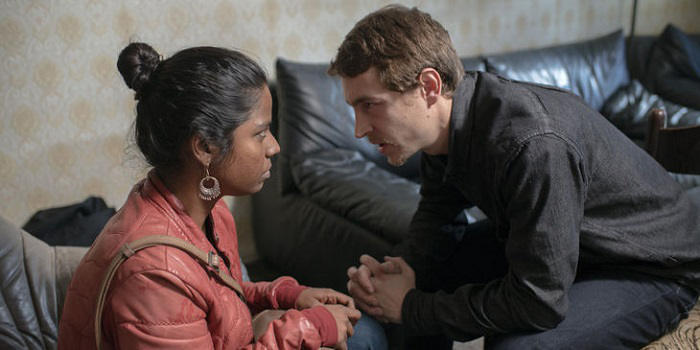
As Monsieur Habib’s criminal nephew Brahim (Vincent Rottiers) is released from prison, the movie takes a sudden narrative turn with increasing tension, and that is the point where it switches itself into a more conventional mode. Not long after Dheepan is painfully reminded of the violent past he wants to leave behind, his neighborhood is shaken by a local gangland war involved with Brahim, and he becomes as agitated as Yalini and IIlayaal while they watch the neighborhood being turned into a small conflict zone. Dheepan decides to do something about that, and his subsequent actions do not look well to other gangs in the neighborhood besides Brahim, who appreciates Yalini’s service to his ailing uncle but may consider a drastic choice if it is deemed to be necessary.

dheepan07This perilous situation eventually culminates into a gritty climactic sequence coupled with lots of shootings, and there is a restrained but striking moment unfolded around smoky staircase. I am not sure about whether this generic part works as well as intended, for it feels like an artificial climax which resolves the circumstance too conveniently and is then followed by the obligatory epilogue scene as required.

Nevertheless, the movie remains to be held up well together by the strong unadorned acting by its three main performers. We do not know much about their characters’ past in Sri Lanka, but we are involved in how they try to deal with their difficult present together or separately. Jesuthasan Antonythasan, who was actually a Tamil Tigers militant during his adolescent years and then later came to France as a refuge, fills his character with authenticity and dignity, and I heard later that a considerable part of the film was based on his own struggling years in France. Kalieaswari Srinivasan, an Indian actress who made a debut with this film, deftly handles her character’s emotional shifts along the story, and she is especially good when Yalini finds herself drawn to Brahim during their small conversation scene; despite their language barrier, what is being exchanged between them is clear to us, and that puts another strain on her relationship with Dheepan. Young actress Claudine Vinasithamby is also commendable as another crucial part of the story, and she and her co-stars are believable in the gradual changes in the interactions between their characters.

“Dheepan” is not as powerful as the director/co-writer Jacques Audiard’s previous films “A Prophet” (2009) and “Rust & Bone” (2012), but it comes with strong moments to compensate for its weak points. Like the mismatched couple in “Rust & Bone” or the young prisoner hero in “A Prophet”, the main characters in “Dheepan” struggle from the bottom in a daunting situation they are stuck in, and it is often poignant to watch them holding onto each other to go through another day of their uncertain life. My late friend Roger Ebert once said he liked movies about good people, and “Dheepan” surely qualifies as such a film. I wish it were more about their human matters than simple shootout.

dheepan04

Posted in Movies | Tagged , , , | 1 Comment