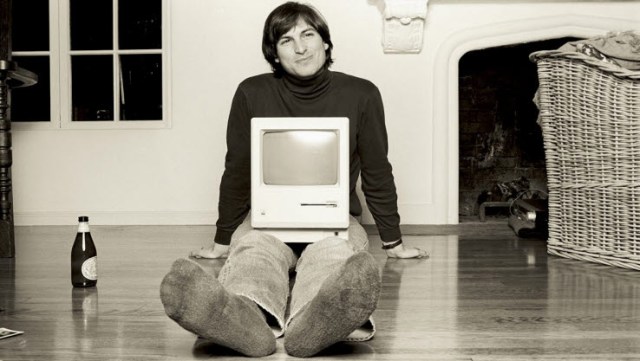
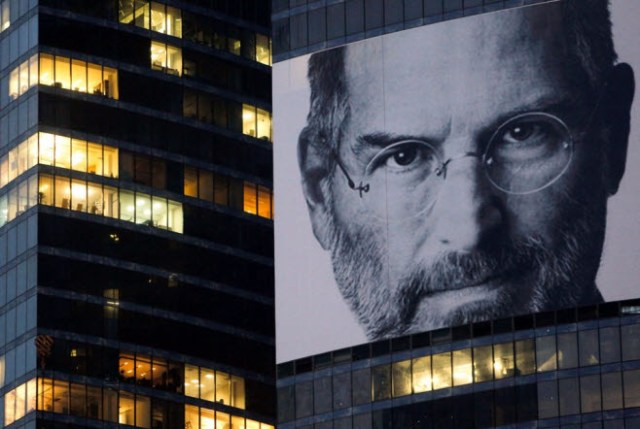
 Alex Gibney’s new documentary “Steve Jobs: the Man in the Machine” is both baffled and fascinated with many contradictions inside Steve Jobs, and so are we. While he will surely be remembered as one of the giants in the history of computer technology and business for many years to come, it has been known well to many of us that he was not a very nice person to many people in his life and career, but that did not stop us from mourning for his death in 2011 as remembering how his ambitious visions changed our relationship with computer technology forever.
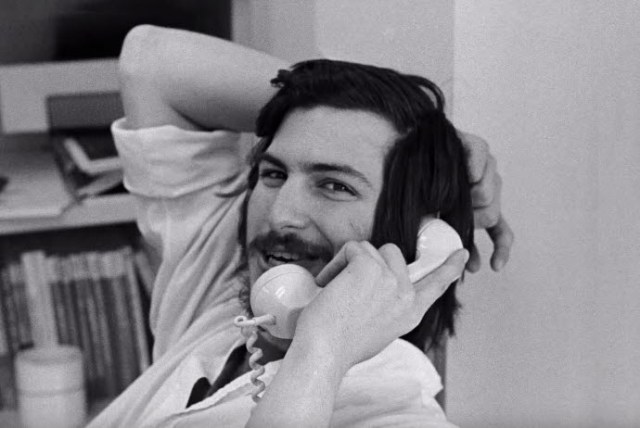
During its first part, the documentary looks around the major points during Jobs’ early years including his first meeting with Steve Wozniak, whose Apple I computer was crucial for their foundation of Apple in 1976. While Jobs saw Wozniak as an invaluable computer engineer to help him right from the beginning, he did not treat his close partner/friend well at times, and that is exemplified well by an episode involved with their development of arcade video game Breakout for Atari during 1973. After Wozniak did all the hard jobs on its circuit board, Jobs gave only $350 while telling his friend that he received only $700 from Atari, and Wozniak later happened to learn from an Atari executive that Jobs was additionally paid with the full bonus for the project – but he was not that angry about this deceit as your average nerdy computer engineer more interested in his profession than money.
After the successful launch with Apple I, Jobs was ready to compete with IBM, which was virtually the Goliath of the global computer industry around that time. With Ridley Scott’s legendary Super Bowl commercial inspired by George Orwell’s “Nineteen Eighty-Four”, the door was grandly opened for Apple’s new personal computer Macintosh in 1984, and that was another breakthrough in Job’s career, but then he was kicked out of his own company in the very next year due to his power struggle with John Sculley, the CEO of Apple who was recruited by none other than Jobs himself.
 Bob Belleville, who was the head of the engineering team behind Macintosh computer, shows us the very first one made by him and others, and he reminisces about how he and other Apple engineers were relentless driven by Jobs during many days and nights of their development project. While Jobs was ruthlessly demanding to him and many others, Belleville still remembers well those few precious moments when everything clicked together so fantastically under Job’s command, and you can see why Jobs has been admired by many of his people despite his abrasive personality. He was indeed an asshole, but he was a brilliant asshole who could assemble right people and then direct them toward his visions.
As the documentary goes deeper into Jobs’s personal life, we see more of his dark and nasty sides. Although his single-minded focus on computer technology boosted him as well as Apple to the top, that put lots of strains on his relationship with his girlfriend Chrisann Brennan, and he was very lousy to her and their daughter Lisa even after their break-up. While also naming his newly released Apple computer Lisa, he persistently denied that Lisa is his daughter until he reluctantly agreed to pay Brennan only $500 a month, and the documentary surely does not miss the irony in this heartless behavior of Jobs, who felt being abandoned throughout his childhood years as the adopted son of his parents.
Looking into Jobs’ life and business philosophy which was heavily influenced by Zen Philosophy, the documentary observes another interesting personal contradiction inside him. While the basic principles of clarity, simplicity, and cleanness from Zen Philosophy were clearly shown from many Apple products including iPod and iPhone, Jobs was too aggressive and tumultuous for the calm, harmonic peacefulness pursued by many masters of Zen Philosophy. Although he enjoyed its serenity coming through meditation, he was always eager for more challenges and accomplishments in his growing hubris, and the peace of mind was probably never possible for him until he got the ultimate one through his cancer in the end. For him, his life story was something which could be modified at any time just like computer programming codes, and he was not even that honest about the illness during his later years while seemingly candid about it in public.
 We also see how Apple has become the very thing it was supposedly fighting against during its early years. With Job’s timely comeback to Apple in 1997, Apple rebounded from its many years of gloomy slump, and it soon became one of the most powerful corporations in the world. As its CEO, Jobs did whatever was necessary to keep Apple in that position, and we get some very unpleasant sights behind those clean, idealistic public images of his company. Stock options were deliberately manipulated for some of Apple executives, and Jobs did not let his engineers go easily as shown from his e-mail exchanges with Google. When a magazine writer happened to obtain a new iPhone model by accident and then wrote about it, Jobs swiftly stomped on him with no mercy, even though he gave it back to Jobs as demanded.
In case of Apple’s major contract manufacturer company Foxconn, it has neglected the poor working condition of its Chinese factory workers as well as the environmental matters associated with heavy metal materials used for manufacturing electronic devices. As reflected by one sad case told in the documentary, Foxconn recently drew considerable attention from the media due to many suicide cases of its employees, and we see the nets set around the company buildings to prevent suicide attempts.
For better or worse, Jobs made an immense paradigm shift in how we use our computers. “Steve Jobs: The Man in the Machine” recognizes that with caution, and it is a well-made documentary on the whole although you will not learn anything particularly new from it if you are familiar with this remarkable entrepreneur’s life and career or you have ever read Walter Isaacson’s authorized biography. He knew where he was going, and he brought changes into our world as he envisioned, and, as the masterful and manipulative showman of his own life, he also made it sure that he would be remembered as a cultural icon as he desired. That was a pretty interesting life, wasn’t it?
 Documentary film “The Hunting Ground” cheerfully begins with the montage of video clips showing young girls excited to be accepted by the colleges they applied to for admission. They are all full of hope and pride as expecting what they will learn and experience more through their upcoming years of higher education, and Sir Edward Elgar’s Pomp and Circumstance March is prominently played on the soundtrack as those big college ceremonies welcoming new students are shown on the screen.
 But then they encountered the dark sides of campus life in a very painful way. Pino and Clark give us the detailed accounts of their respective traumatic experiences, and we cannot help but notice the similarities between their individual circumstances. Their incidents of rape happened while they were considerably drunk during campus evening party like many other students, and that made them pretty vulnerable to the perpetrators of their rapes, who approached to them nicely at first but then cruelly exploited their vulnerability.
 The director Kirby Dick previously made “The Invisible War” (2012), an equally devastating documentary which is about the numerous unjust cases of sexual assaults in the US military. He again tackles a very sensitive subject here, and he goes further with several big factors contributing to the overwhelmingly silent disregard on sexual assaults in campus among many American universities. Not so surprisingly, many campus fraternities have been visibly linked with sexual assaults, and we get some of very uncomfortable examples (“No means Yes! / Yes means Anal!”). Most university officials are usually more concerned about protecting the precious public image of their universities, and they certainly prefer to keep quiet about reports on rape in campus – especially if their popular star athletes happen to be alleged perpetrators.

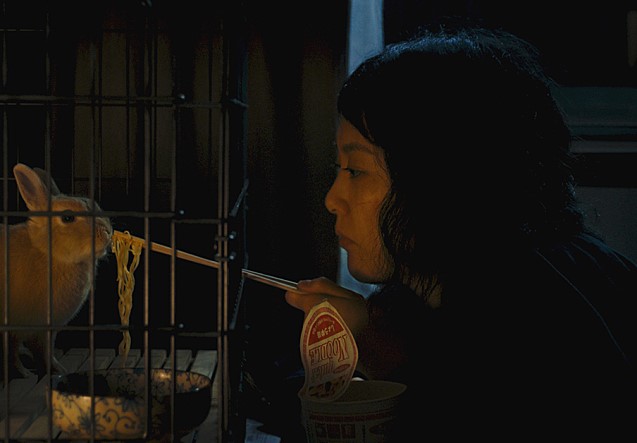

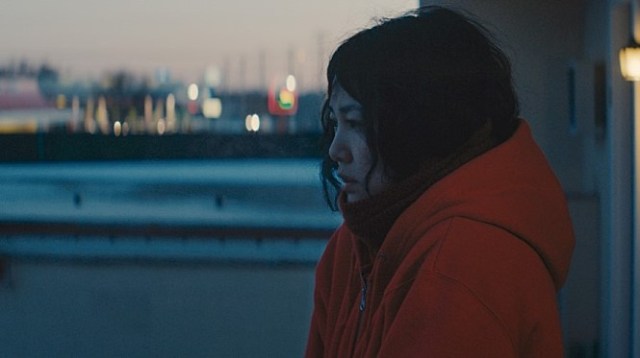
 Can they possibly connect with each other after those long years of separation between them? “The Second Mother”, Brazil’s official submission to Best Foreign Language Film Oscar in the next year, is a calm, gentle family drama revolving around a plain working-class woman who has worked hard for her daughter but never been around her for many years, and it tenderly observes how her mundane life happens to be stirred by one unexpected change. While not hurrying itself, the movie patiently generates subtle human moments to engage us, and it is touching to watch what has been changed inside its main character at the end of the story.
 We see the other people in the house. We meet Val’s fellow employee/best friend Edna (Helena Albergaria), and we watch the distant relationships among Fabinho and his parents during their dinner time. Carlos (Lourenço Mutarelli), who was once a painter, looks flaccid and detached as aimlessly going through his uneventful domestic life, and Barbara (Karine Teles) is busy with her work as before. While the movie does not tell much about her job, one scene involved with a TV interview held at her house suggests a lot about her prominent social/professional status.
 But then her presence creates a certain kind of tension below the surface as she spends more time in the house. We begin to notice something from how Carlos looks at Jéssica, and so do Val and Barbara, who is usually self-absorbed but is not oblivious at all to what is going on inside her house. While he may look like a big baby when he sneaks into Val’s room and spends the night on her bed, Fabinho is not a child any more, and there is a playful moment when he and his friend have some naughty fun with Jéssica in the house pool.

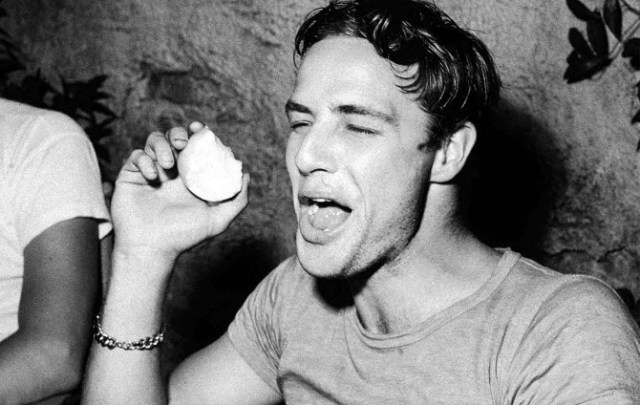
 He also went through a fair share of personal troubles. His divorce with his first wife Anna Kashfi in 1959 was followed by their bitter custody battle over their young son Christian, and he married and divorced twice after that. As some of you know, Christian later committed that infamous killing at his father’s residence in the Hollywood Hills, and it indirectly resulted in another painful incident in Brando’s life several years later.
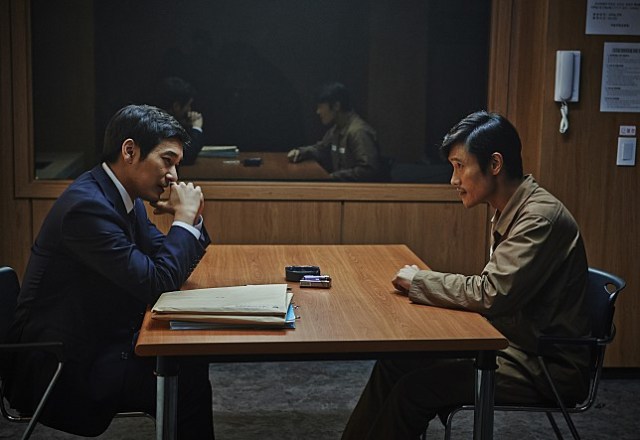 I watched South Korean thriller film “Inside Men” with bitter amusement on some of its darkest moments. Although it is a work of fiction as emphasized in its end credits, its dark, uncomfortable picture of power and corruption is not so far from the real ugly sides of the South Korean society, and it is often horrifyingly amusing to watch the cynical and ruthless depravities of the most rotten characters in the film. They all together in their power and corruption, and nothing seems to stop their reach for more power over the South Korean society, as they are served by others willing to do anything for what they will get.
 As Jang-hoon tries to acquire an incriminating financial document for his case, the movie shows us how things work through the intricate connections surrounding his targets. Lee Kang-hee (Baek Yoon-sik), the editorial columnist of a very influential conservative paper, is another close associate of the chairman, and he can write anything to swing the public opinion for the chairman or their current favorite politician, who will surely pay them back once he is chosen as the presidential candidate of his party and then wins the election later. Henry Kissinger once said power is the ultimate aphrodisiac, and these despicable guys proves that quite well as they are drunk with their booze and power at the chairman’s private place where a group of beautiful girls are ready to do whatever they desire.
 The rest of the story becomes predictable as it goes through familiar moments of ups and downs besides a number of implausible scenes to test your suspension of disbelief, but the movie keeps us entertained although it loses its pace at times during its middle part. Its finale may be a little too unrealistic, but it works as a satisfying ending anyway, and I enjoyed it even though I recognized its improbable aspects.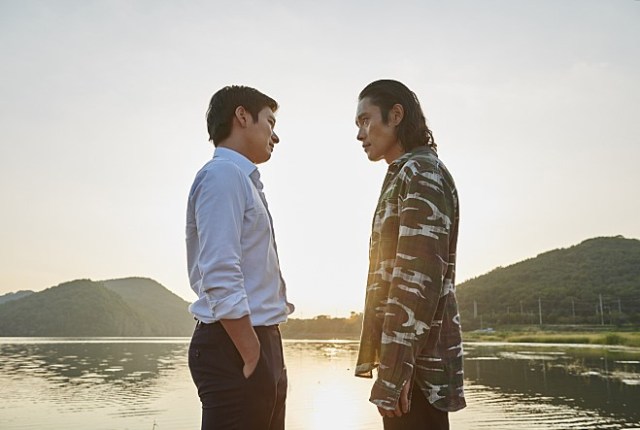
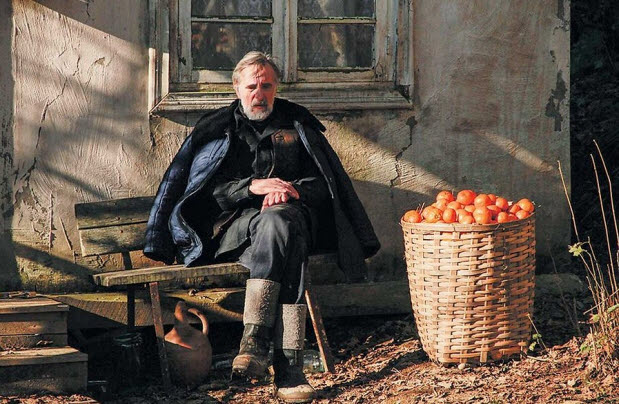
 “Tangerines”, a Georgian-Estonian film which was Oscar-nominated for Best Foreign Language Film early in this year, is a small war fable accompanied with some humanistic messages to deliver. While its intention is apparent right from the beginning, it takes its time in building story and characters, and it simply lets us get its points for ourselves just like its wise, reticent hero, who subtly and gradually brings some common sense into two troublesome strangers staying in his house.
 And then the harsh reality of the ongoing war breaks into their small world on one day. A couple of Chechen mercenaries fighting with Abkhaz Separatists stop by Ivo’s house, and Ivo, who does not want any trouble, lets them take whatever they need from his house. Not long after these soldiers leave Ivo’s house, they happen to come across three Georgian soldiers riding on a van, and a shootout instantly happens near Margus’s residence. When Ivo comes to the scene, it is already over, and then he and Margus find that one of the Chechen soldiers, named Ahmed (Giorgi Nakashidze), manages to survive alone while being injured during the shootout.
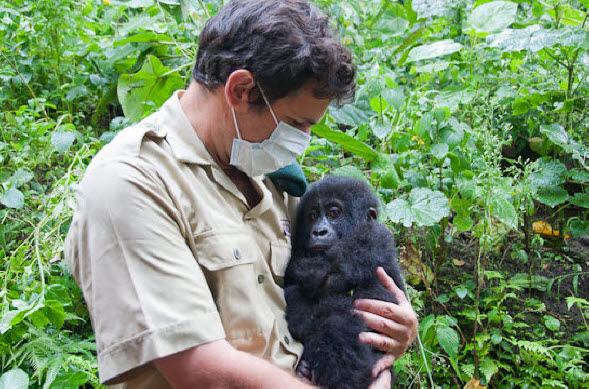
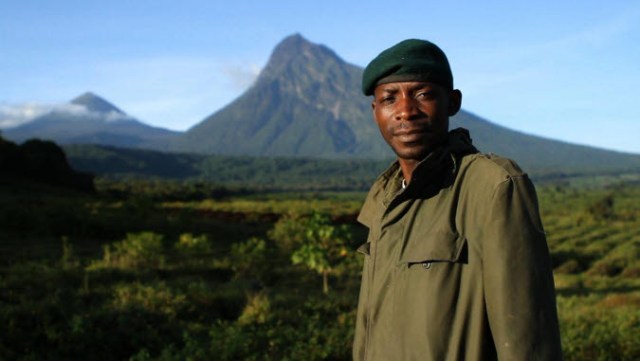
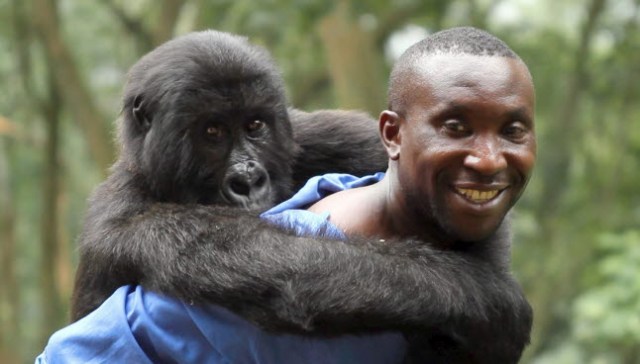 André Bauma is the caretaker of the facility for orphaned mountain gorillas, and he tells us the sad stories behind four young gorillas which are safe and happy now under his tireless care. One of them, which is incidentally the only male member in the group, is without his right hand, and one gut-wrenching archival footage scene shows several massacred mountain gorillas including the one which was the mother of two gorilla sisters in the facility. They were killed just because some guys did not like the park, and it is sadly touching to see local people treating these innocent gorillas’ unjust death with proper respect.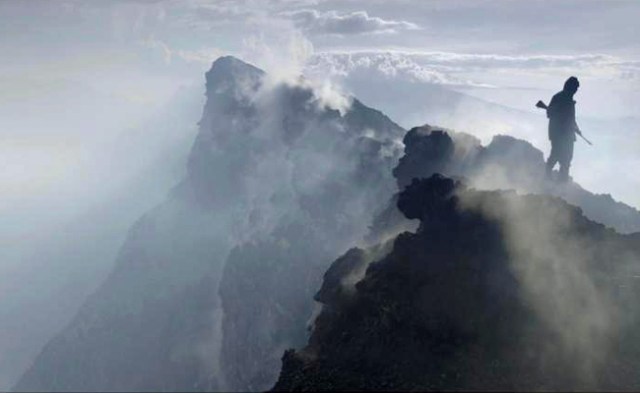
 So it ends here. After the intermission of one year, we finally get “The Hunger Games: Mockingjay – Part 2”, which starts right from the point where the first part was over. While the end of the war is indeed coming, there are still so many things our feisty heroine has to endure, and the movie grimly follows her another rough quest with less interest and excitement compared to the better films in its franchise. It sort of delivers the ending as promised, but it is also hampered by trudging pace and weak characterization just like the first part, though its lead actress’s irrepressible presence is fully functional as before.
 Anyway, after painfully experiencing what the Capitol has done to her fellow survivor and official lover Peeta Mellark (Josh Hutcherson), Katniss becomes more determined to get her revenge on President Snow, who has so far successfully destroyed nearly everything in her humble world as she knew before the Hunger Games. While the fall of the Capitol seems to be imminent especially after the surrender of its last loyal District (I still find it hard to distinguish one District from another in this dystopian world, by the way), Katniss wants to take care of the matter with her own hands, so she goes to the front line near the Capitol under siege.
 So this looks like another version of the Hunger Games, but the movie does not generate much tension or interest in its bland combat situation. While there was usually that uneasy tension between Katniss and other participants who could be turned into someone to kill her in the first two Hunger Games films, she is fully backed in this time by the people willing to help and protect her by any means necessary, and this is certainly a less compelling situation in comparison. The movie attempts to inject extra tension into its plot as Peeta is later sent to join the team even though he has not fully recovered from his problematic brainwashed state, but then the relationship between Katniss, Peeta, and Gale has not been a very interesting thing from the beginning, and Katniss’s eventual choice between her two men feel contrived to say the least (no, it is not her fault).
 The supporting performers revolving around Lawrence do their jobs as much as their respective roles demand. While Josh Hutcherson and Liam Hemsworth stand around Lawrence, many familiars performers including Woody Harrelson, Elizabeth Banks, Julianne Moore, Philip Seymour Hoffman, Jeffrey Wright, Stanley Tucci, Sam Claflin, Jena Malone, Mahershala Ali, Willow Shields, Elden Henson, and Donald Sutherland come and go as having at least one moment for acting. Sutherland has a usual snaky fun with his villainous character who ultimately gets his last laugh in the spirit of “The Treasure of the Sierra Madre” (1948), Moore is untrustworthy as a coldly zealous leader capable of drastic measures just like her opponent, and Hoffman’s final performance is seamlessly presented on the screen although he died in early 2014 before the shooting was completed. I do not know whether his silent facial expression in the climax scene is CGI or not, but we can see how this intelligent actor who left us so early can find something interesting to play even during such a brief moment like that.
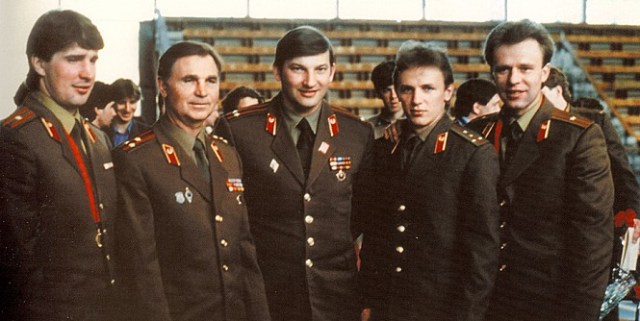
 Simultaneously amusing and compelling, documentary film “Red Army” tells us a dramatic story about the rise and fall of Soviet ice hockey. Mainly through some of its best players, the documentary looks around their best and worst times during the Cold War era and its aftermath, and it is alternatively funny and poignant to see how these exceptional athletes tried their best together or separately under a big restrictive political system which did not allow them much of individuality or freedom.
 After he was finally accepted into the training school, Fetisov and other young players were taught and trained by Anatoly Tarasov, a legendary coach who has been revered as ‘the father of Russian Hockey’. Inspired by chess and ballet, which were incidentally other major national assets to represent the power of the Soviet Union, Tarasov conceived elaborate team play strategies for his players, and we see how these strategies successfully worked through his players’ marvelous team work during the finals of the 1978 Junior World Championships held in Canada.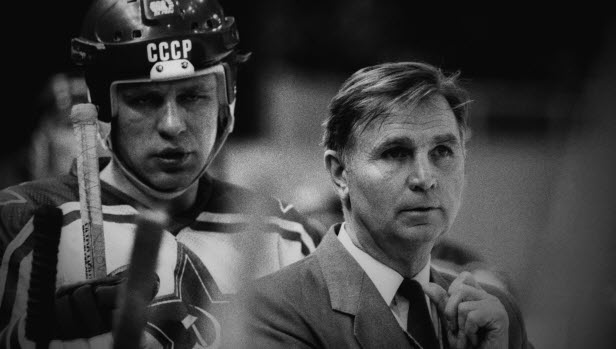
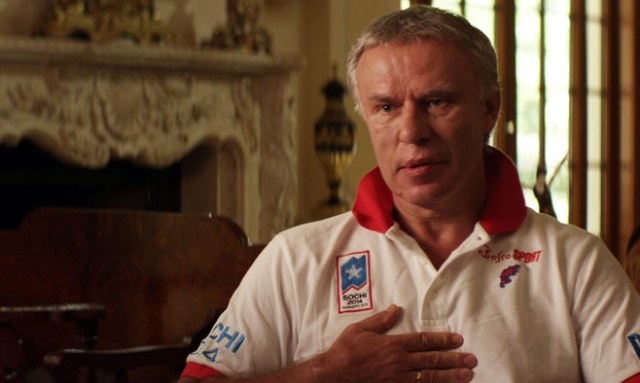 Deftly gliding around humor and pathos, Gabe Polsky, who previously co-directed small moving drama “The Motel Life” (2012) with his brother Alan Polsky, did a fabulous job of presenting his human subjects along with amusements and insights. Besides Fetisov, his three colleagues Alexei Kasatonov, Vladimir Krutov, and Vladislav Tretiak are equally interesting with each own perspective, and the other interviewees in the documentary also give us more understanding of their past era when sports and politics were almost inseparable from each other in many aspects. (I was especially amused by the interview scene of retired KGB agent Felix Nechepore, who is hilariously interrupted by his cute little granddaughter in the middle of his interview).