
 “Mistress America” is another witty New Yorker comedy from Noah Baumbach, and it is as acute and amusing as you can expect from him. While its two heroines are not that likable as we get to know more about their superficial sides, the development of their incidental relationship is observed with intimate and incisive moments of silly but recognizable human behaviors, and the result is a delightful lightweight comedy to enjoy.
Lola Kirke, who previously played a minor but crucial supporting character in “Gone Girl” (2014), plays Tracy Fishko, a young woman who has just begun her first year in the Barnard College of New York City. Like many other freshman students around her, she is eager to take the first step for her writing career in the near future, but things turn out to be not as exciting as she hoped. She is often bored by her classes, and she is also disappointed to learn that her recent short story is not accepted by some exclusive literary student club in the college. As she befriends her fellow student Tony (Matthew Shear) and spends more time with him, it seems possible that they can be more than friends, but then he begins a relationship with Nicolette (Jasmine Cephas Jones) before Tracy is more active about her feelings toward him.
Meanwhile, Tracy gets acquainted with Brooke Cardines (Greta Gerwig) through Tracy’s divorced mother (Kathryn Erbe), who is soon going to marry Brooke’s father. Thanks to her future stepsister, Tracy has a fun evening, and she also perceives that Brooke can be an inspiration for her next short story to submit. Brooke may be cool and confident as a lively girl on the surface, but it is apparent to us and Tracy that Brooke has been stuck in her wandering period for years; she did not go to college just because she did not feel any need for it, and now she is entering her thirties with no certain future ahead of her.
 It turns out Brooke has been planning her own restaurant project, but it is rather doubtful whether she will be able to pull it off or not. Her restaurant idea may be feasible, but she does not put any serious consideration on how to develop it practically. While she manages to draw some investment fund through her current boyfriend, the place where her restaurant is supposed to be built does not look that good, and there also comes a serious setback later thanks to her thoughtless behavior.
And Brooke does not see how silly and pathetic she looks to others, as Tracy correctly observes in her writing (“She could see the world with painful accuracy, but she couldn’t see herself or her fate.”). You may be entertained for a while as she talks about many things including her Twitter activity, but then you can see through her banal words within a few minutes. When she happens to be confronted by an old schoolmate who was bullied by her during their school years, she is so self-absorbed that she is utterly oblivious to her schoolmate’s deep resentment toward her, and we cannot help but roll our eyes as watching this embarrassing encounter.
Later in the story, Brooke and Tracy go outside the city along with Tony and Nicolette for visiting the house belonging to Brooke’s ex-friend Mamie-Claire (Heather Lind) and her husband Dylan (Michael Chernus), who was once Brooke’s boyfriend. Because they become rich due to an idea originally conceived by Brooke, Brooke thinks they owe her a lot, but Mamie-Claire does not agree with her, so the situation becomes more awkward for everyone in the house as time goes by. While this sequence sways in one direction or another with the increasing unpredictability of screwball comedy, the actors are quick and spontaneous in their exchanges, and we keep getting small unexpected laughs as their characters try to deal with their strained circumstance.
 Despite her unlikable aspects, Brooke comes to us as a distinctive character to watch thanks to the droll performance by Greta Gerwig, who also wrote the screenplay with the director Noah Baumbach. As an engaging actress with natural charm, Gerwig smoothly handles many comic scenes in the film such as when Brooke and Tracy visit a psychic to get any useful advice for Brooke’s imminent trouble at one point. She hits right notes in her character’s deadpan response during that scene, and we are amused by how Brooke seriously interprets the psychic’s words.
On the opposite, Lola Kirke complements her co-star as an insecure girl who is no better than her friend. While surely charmed by Brooke, Tracy also wants to get more writing materials from Brooke for her own benefit, and Kirke did a good job of conveying to us her character’s anxiety and frustration behind her detached face. Like any young aspiring writers, Tracy wants to be recognized by others as soon as possible, and her ambition naturally comes first before her friendship with Brooke.
Following “France Ha” (2012) and “While We’re Young” (2014), “Mistress America” is the third chapter of Baumbach’s unofficial New York trilogy. While they are loosely connected with each other through their common subjects as well as their urban background, they can be viewed individually as separate works, and they have each own funny moments generated from their characters’ understandable human flaws. Usually feeling unhappy and discontent, they are not so sure about what will be next for them as spinning around here and there, but they make a little progress in the end while growing up a bit – and I guess that is how things change for anyone.

 Sometimes I come across beautiful films which can instantly hold my gaze with their beauty and mood but somehow keep me from getting wholly involved in what or how they are about. I watch them with curiosity and admiration, but I also observe their wonderful visual moments and commendable filmmaking techniques behind them with a certain degree of detachment and reservation, and it takes some time for me to decide whether I actually like them or not.
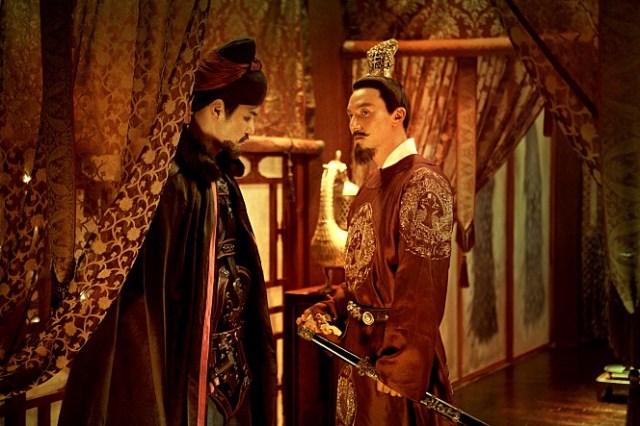 Yinniang is soon sent to a distant province called Weibo, and her new target is Tian Ji’an (Chang Chen), the powerful governor of this province who is also Yinniang’s cousin. We gradually gather that Yinniang and Tian Ji’an were once engaged but then happened to be separated from each other, and it is implied that Yinniang still has some feelings toward the man whom she could have married but now is supposed to kill sooner or later.

 Justin Kurzel’s “Macbeth” is a relentlessly dark and brutal adaptation of that ‘Scottish Play’ by William Shakespeare, and that is a right storytelling approach for its grim savage tale of corruption and madness, which is “told by an idiot, full of sound and fury, signifying nothing.” While the movie is definitely not what can be described as ‘entertaining’, its dark heart pulsates with its gritty style and malevolent spirit amid despairs and savageries to fill the screen, and that is certainly something compelling to watch at least.
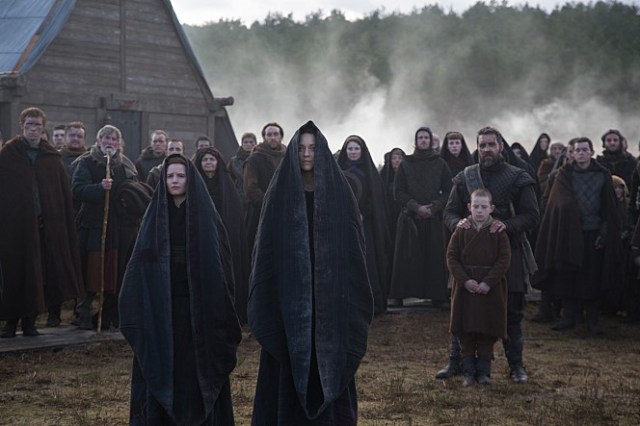 Both Macbeth and Banquo do not take these prophecies seriously at first, but then they soon learn that King Duncan (David Thewlis) has just appointed Macbeth as the Thane of Cawdor, and, despite his friend’s cautious warning, an insidious thought is germinated inside Macbeth as he thinks more about what the witches told him. He can just let things happen if he wants that way, but he finds himself thinking more about doing something he never imagined before – especially after King Duncan appoints his son Prince Malcom (Jack Reynor) as his rightful heir to the throne during his visit to Macbeth’s place.
 The two charismatic lead performers of the film give intense performances which hold our attention even at its darkest moments. As shown from his acclaimed performances in “Shame” (2011) and “12 Years a Slave” (2013), Michael Fassbender has always been good at playing edgy characters driven and consumed by their worst impulses, and his interpretation of Macbeth is another electrifying showcase from this very talented actor. When we see Fassbender’s solemn face in the opening scene, we can instantly sense the darkness inhabiting inside Macbeth, and that is just the beginning for what Fassbender is going to show us besides his despairing rendition of “Tomorrow, and tomorrow, and tomorrow” soliloquy later in the film.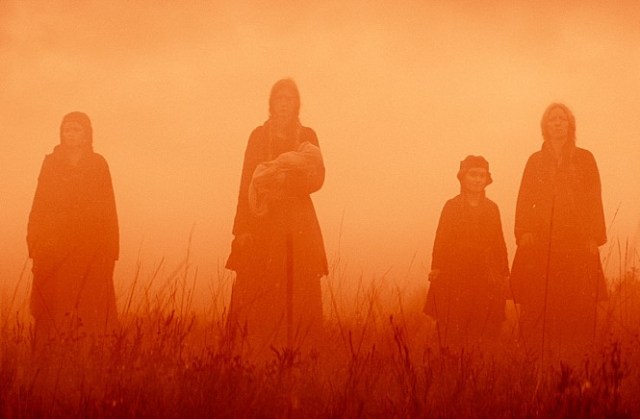
 At first, the heroine of “Sicario” does not exactly know what kind of situation she gets involved into, and neither do we, though the movie gives us a little more information. As she comes to know more about what is really going around her, we get the glimpses of the War on Drugs around the Mexico-US border, and they are not pretty sights at all. Although I wonder whether some elements in the movie are purely fictional, there are other things reflecting that harsh and violent reality around the border, and they often gave me chills during my viewing.
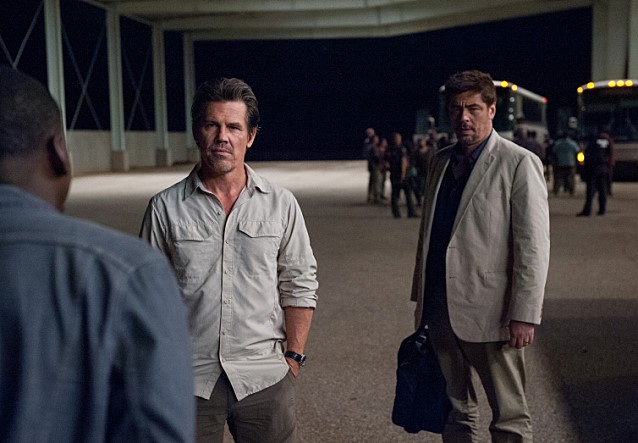 Mainly because she is determined to see the end of this case, Macer decides to go with Graver even though he does not tell everything to her as your average shady CIA guy. Before they fly to El Paso, Texas, she is introduced to his mysterious associate Alejandro (Benicio Del Toro), and this Mexican guy does not reveal much to Macer either, except that he seems to be haunted and motivated by something personal.
 As Taylor Sheridan’s screenplay continues to push Macer further into the dark, brutal, and ambiguous world of Graver and Alejandro, the director Denis Villeneuve steadily accumulates tension and agitation along the plot. Jóhann Jóhannsson’s dissonant score constantly amplifies the edgy nervous feeling surrounding the characters on the screen, and the cinematographer Roger Deakins, who may receive another Oscar nomination for his terrific work here in this film, serves us with a number of mesmerizing shots which effectively establish the barren atmosphere ominously hovering over the border region. During the climax part reminiscent of “Zero Dark Thirty” (2012), Deakins’ digital camera looks at Macer and others immersing themselves into the darkness below the wide, beautiful sky in twilight, and this memorable shot is more than enough for conveying to us the murky and perilous aspects of their risky mission to be executed.
 When I came across Herman Melville’s “Moby Dick” for the first time, what I read was a criminally abridged version for elementary school kids. I did not know that at that time, but I enjoyed reading it anyway, and then I was surprised to learn later that this classic American literature novel is a lot more than that relentless manic obsession of Captain Ahab. As reading the full version during my first high school year, I was particularly impressed by its vivid, detailed description of the whaling industry during the 19th century. I enjoyed small episodes among the crew members of Pequod, and then I devoured some interesting details on how they extracted and stored tons of oils from whales. When I read it in English a few years ago, that impression of mine remained same as before, and I appreciated again the painstaking efforts of Melville, who was not appreciated much by others except his friend Nathaniel Hawthorne when his monumental work was published in 1851.
 We hear about how things were not exactly ideal when Essex was about to leave Nantucket, Massachusetts in August 1819. Other whaling ships already left the port, and there is also considerable tension between its new captain and his first mate. Owen Chase (Chris Hemsworth) is frustrated to be notified by the owners of the ship that he will be the first mate of the ship again despite many years of work and experience, and he is certainly not so pleased to know that he is going to serve some younger guy from an influential family in the industry.
 However, the movie begins to spin its wheels after this big moment as the crew of Essex experience a fate worse than the one experienced by the crew of Pequod during the grand finale of “Moby Dick”. The screenplay by Charles Leavitt, Rick Jaffa, and Amanda Silver, which is adapted from Nathaniel Philbrick’s nonfiction book “In the Heart of the Sea: The Tragedy of the Whaleship Essex”, does not provide enough ground for this part, and it feels flat and meandering even when the characters come to face the grim logic of their impossible situation in the vast ocean.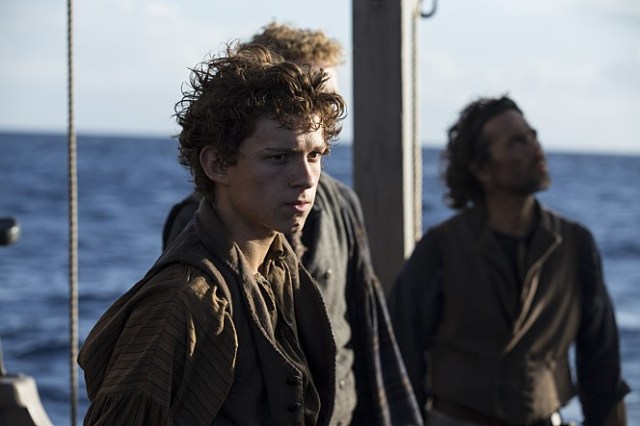
 During its epilogue, “Suite Française” belatedly reveals to us its most interesting aspect. The movie is based on a novella written by Russian Jewish novelist Irène Némirovsky during the World War II, and it was a part of her planned series “Suite Française”, which she unfortunately could not complete before she was arrested in France and then sent to Auschwitz. Her surviving daughter Denise later discovered her mother’s unfinished work after more than 50 years, and two first novellas of the series, completed before her arrest in 1942, were eventually published in 2004.
 Anyway, the war breaks into their life sooner than expected. More refugees come from Paris, and Lucille and Madame Angellier happen to witness how grim the situation really is when they come across the endless line of refugees outside the town. They and other town people are shocked by the news of their country’s defeat, and they become all the more nervous as their town is occupied by a company of the German Army a few days later.
 While their fragile relationship goes through several predictable ups and downs, there comes a serious incident involved with Benoit (Sam Riley), a sullen young farmer who could not join the army during the invasion due to his leg injury. When one of Bruno’s fellow officers comes to stay at the house where Benoit and his wife and children live, it is pretty apparent that there will be a big trouble sooner or later, and Bruno is eventually assigned to an unpleasant task while Lucille is more reminded of the harsh reality she has overlooked as occupied with her private feelings.
 “Youth” is amusing, baffling, and mesmerizing in its odd beautiful moments. It often feels uneven and random as juggling many various elements around its leisurely background, but then we are gripped by its fabulous moments, and its idiosyncratic musing around youth and aging is engaging to watch thanks to its two great actors, who have lived long enough to fully embody their respective characters.
 While time slowly goes by for everyone in the hotel, Fred and Mick become more aware of the closing time which will come to them someday. As two old friends who have known each other for more than 50 years, they often talk about their past during their occasional sunny strolls around the beautiful mountainous landscapes near the hotel, and they are reminded of how things in their past have been vague and distant to them in these days. They remember one sexy woman to whom both of them were attracted, but they did not remember well how exactly things went among them and that woman.
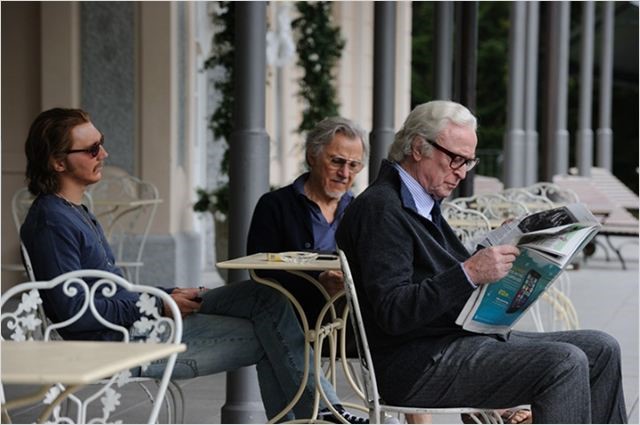 Slowly but confidently moving under its relaxed mood, the movie gives us a number of memorable moments which are more than enough for its several notable missteps including Tree’s misguided makeup attempt. While a brief scene where Fred tries one imaginative musical moment alone with cows and their bells on the field is sublime in its effortless execution of sounds and visuals, the deranged music video scene featuring Lena’s husband and his new lover is striking for its uproariously over-the-top style to tickle you. Although Mick’s young colleagues look clownish as sort of yes-men, the camera lovingly gazes upon them and Mick during one drowsy moment, and there is a poignant scene when Mick gives a small life lesson to one of them during their free time at a mountain observatory. The cinematographer Luca Bigazzi, who has been one of the director/writer Paolo Sorrentino’s main collaborators, did a terrific job again here, and we are absorbed into the visual details on the screen even during the most confounding moments.
 I will probably never, never, never forget his embarrassing supporting turn in that truly awful film called “The Last Godfather” (2010), but Harvey Keitel has always been a dependable actor since his debut in Martin Scorsese’s first feature film “Who’s That Knocking at My Door?” (1967), and he has his own moments including a fantastic scene which is clearly influenced by that bittersweet finale of Federico Fellini’s “8 1/2” (1963). Rachel Weisz is also excellent as a daughter who still has lots of personal issues with her father, and she somehow makes the scene work when Lena pours out her old resentful feelings to her father under a circumstance rather silly and awkward for that. While Paul Dano captures well humor and pathos in his superficial character, Jane Fonda does not waste any second of her brief appearance later in the film, and she and Keitel instantly establish the long history between their characters right from the start.


 In last month, I came across a
 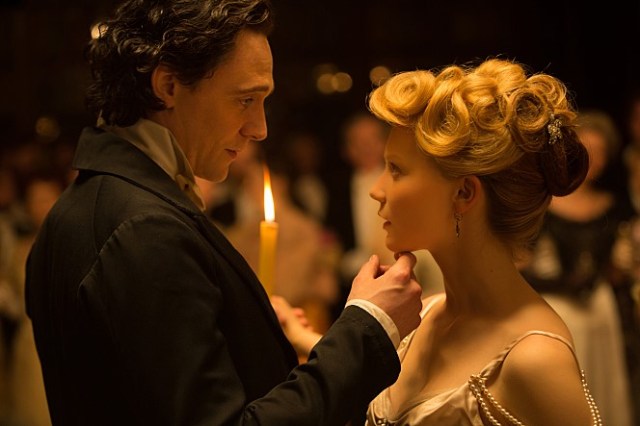 While she keeps trying hard for her career, there comes a man who sparks a romantic interest in her right from when they meet each other for the first time. He is Sir Thomas Sharpe (Tom Hiddleston) from Cumberland, England, and he comes to America with his sister for meeting Edith’s father Carter (Jim Beaver). Although Thomas’s business proposal associated with his invention does not impress Carter much, Edith finds herself attracted to Thomas, and she soon comes to spend more time with Thomas and his sister Lucille (Jessica Chastain), a frigid lady who certainly draws our attention with her striking first appearance at an evening social party.
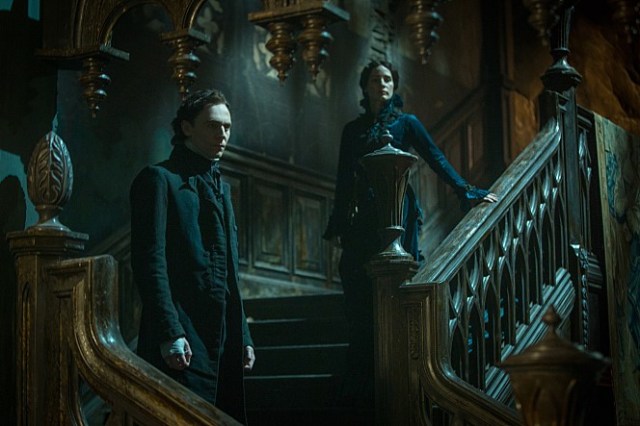 And Thomas and Lucille begin to look more suspicious than before. There is no one around Edith in the mansion besides them, and Lucille, who becomes colder to her sister-in-law than ever, is the one in the charge of its domestic businesses. She always carries a bunch of keys for many rooms in the mansion, and it looks like there is something in the mansion Edith must not discover. While Thomas is kind and generous to his wife as before, he often seems to be more occupied with enhancing his invention he is still working on, and Edith slowly begins to notice strange things around her – especially when she accidentally receives a letter not intended for her.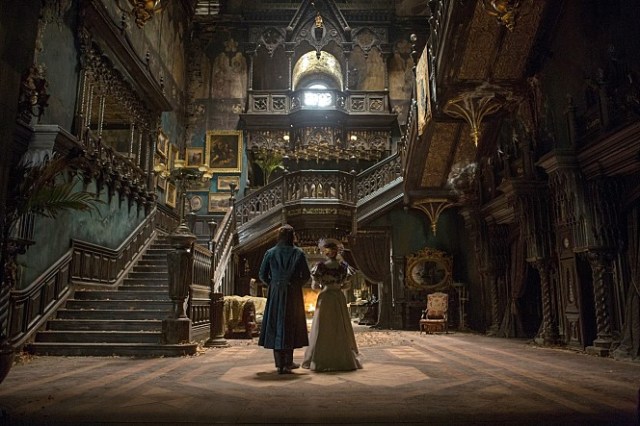
 Around the middle of the early morning screening of Mamoru Hosoda’s new animation feature film “The Boy and the Beast”, I became more conscious of its narrative flaws, but I was entertained in spite of that. While its plot is overstuffed at times, I enjoyed its bouncing style and energy, and I kept caring about its story even when I was keenly aware of that it tried too much especially during its final act.
 Because the aging leader of this alien world, Grand Master (voiced by Masahiko Tsugawa), is going to retire through reincarnation, everyone is interested in who will be his successor. While it seems Iozen (voiced by Kazuhiro Yamaji), a gentle but skillful fighter in the shape of boar, will be the successor as his master’s model pupil liked and respected by many others for his decency and integrity, Kumatetsu, a brash, rambunctious rogue pupil in the shape of big bad wolf, also wants to succeed his master, though he is far less popular due to his bumpy character problems. Once Grand Master decides on when and how he will be reincarnated, the duel between Iozen and Kumatetsu will be held, and its eventual victor will then succeed him.
 The story takes a detour around that point, and that is where it becomes less interesting. When he happens to come back to Tokyo several years later, Kyuta (voiced by Shôta Sometani from this point) encounters a pretty girl named Kaede (voiced by Suzu Hirose), and they instantly get close to each other as she helps him learning how to read. Kyuta also meets a person he still does not forget, and he begins to consider re-settling in his former world in spite of all those years with Kumatetsu and others in Jutengai.


