“Cartel Land”, which was recently Oscar-nominated for Best Documentary Feature Film, is sobering and disturbing to say the least. If you are already familiar with its subject through other movies and documentary films such as “Narco Cultra” (2013) and “Sicario” (2015), you will probably not that surprised by many terrible and despairing sights shown in this gritty documentary film, but it is fascinating to watch another dark side of the War on Drugs around the Mexico-US border, and the documentary confirms us again of how gloomy the current situation is for many people out there.
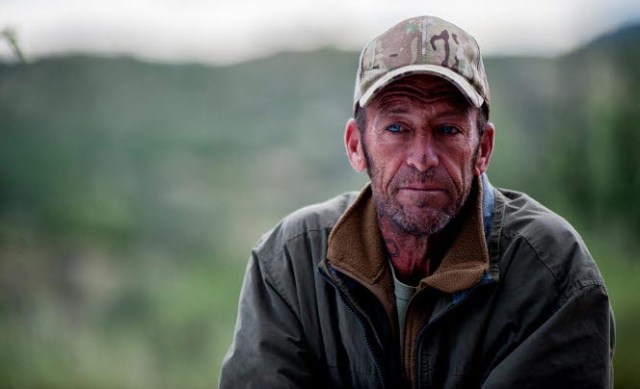
The documentary goes back and forth between its two vigilante leaders who decided to take the law into their own hands as a response to the ever-increasing drug-related crimes around Mexico and the Mexico-US border. Tim “Nailer” Foley is the leader of the Arizona Border Recon, and the documentary frequently shows him and his colleagues doing their routine patrol around Altar Valley in Arizona, which is nicknamed Cocaine Alley because this narrow, 84-km-long desert corridor has been often used by Mexican drug cartels as a route for bringing drugs as well as illegal immigrants into US. While nothing happens much during their patrols, Foley and his colleagues come across a bunch of illegal immigrants at one point, and we watch their usual procedure of handling captured illegal immigrants.
Foley believes that his paramilitary group stops Mexican drug cartels from endangering his state and country, but he and his colleagues do not have much good reputation around the area, and we naturally come to question the legitimacy of their vigilante activities around the border. Considering his hard, difficult life filled with many miserable moments, it seems his paramilitary group gives Foley some sense of purpose, and he tries to defend his position as emphasizing the increasing dangers around the border, but I must say that he and his colleagues look as ridiculous and dangerous as Ammon Bundy and his merry band of militants, though Foley is relatively pro-government at least.
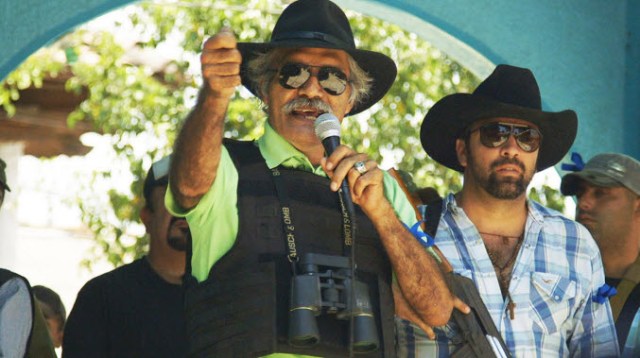 The other vigilante leader is more interesting with a far more complex and dangerous circumstance, and he inevitably draws our attention more than Foley. He is Dr. Jose Mireles, and this small-town physician of Michoacán, Mexico, is tougher than his mild, avuncular appearance suggests. He is the leader of a local paramilitary group called the Autodefensas, and we look into the conflict between the Autodefensas and a local drug cartel called the Knights Templar as following the activities of him and his militant colleagues. We are told that the Knights Templar has terrorized many areas of Michoacán with its brutal criminal rampages on innocent citizens, and there is a heartbreaking scene showing the mass funeral for 13 family members and two other people who were savagely murdered just because of a small dispute between the drug cartel and a lime orchard owner.
Dr. Mireles and his colleagues are not so safe from the Knights Templar either. In another memorable scene, the wife of one dead Autodefensas member tells us how she was pushed into an unspeakable situation and then punished further through being left alive alone and still vividly remembering everything she was forced to watch during that horrible time. In the tense scene observing the capture of two key drug cartel members, one of the Autodefensas members loses his control in front of these two criminals because they are responsible for the death of many people including his own uncle.
During his early scenes, Dr. Mireles looks confident as the Autodefensas gets more supports from many people who have been frustrated with the ineffectual responses of their government they do not trust much. When a group of Autodefensas members happen to be interrupted by Mexican Army soldiers during one of their latest operations against the Knights Templar, local people begin to gather around for protest, and the soldiers eventually step out of the scene for avoiding troubles.
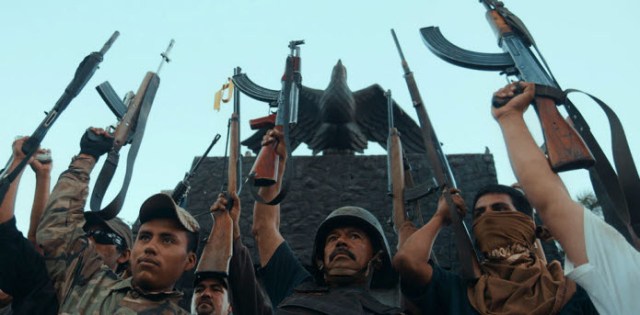 However, it is gradually revealed that the Autodefensas is not without problems. While Dr. Mireles is absent due to his recuperation process following a sudden accident, people start to complain that the Autodefensas is just another bunch with guns, and there also comes the pressure from the Mexican government, which demands the Autdodefensas to be incorporated into the government as the Rural Defense Corps. Dr. Mireles does not like this demand, but some other key members of the group think otherwise, and we begin to see the cracks in his charismatic leadership.
The director Matthew Heineman, who also handled the camera with his co-cinematographer Matt Porwoll, was permitted to delve quite deeper into the two worlds shown in his documentary, and it is rather amazing that he and his crew were allowed to shoot some of the unsavory moments in their film. While we come to learn about Dr. Mireles’s personal flaws, there is an alarming sequence involved with a seemingly innocent citizen who is arrested and then interrogated by an aggressive Autodefensas member, and we even witness the inside of a drab place where arrested people will be squeezed for any information about drug cartels (it will be an interesting moral question whether filmmakers knew what was going on around them when they shot this moment, by the way).
“Cartel Land”, which won the Best Director Award and Special Jury Award for Cinematography in the US Documentary Competition at the Sundance Film Festival early in last year, is tough and uncomfortable to watch, and it is not entirely successful with its narrative structure, but I recommend this well-made documentary anyway for the vivid, urgent presentation of its serious subject. Something should be really done about this futile, destructive war where violence leads to another violence, but, seriously, will that ever happen?
 Oscar-nominated documentary film “Winter on Fire: Ukraine’s Fight for Freedom” presents a close look into the Euromaidan protest in Ukraine, which was ignited in 2013 November and then blazed for 93 days until President Viktor Yanukovych left the country in 2014 February. While its focused viewpoint is inherently narrow and limited, the documentary did a competent job of taking us right into the middle of the protest, and it is also equipped with several powerful sights to grip and stir us.
 The director Evgeny Afineevsky is indubitably on their side in his tight focus, but I cannot help but wonder whether he should present the viewpoint of the other side for our better understanding of his subject. While we do get several pieces of TV footage to give us the glimpses of the whole circumstance, we do not learn a lot about what was going on in the other parts of Ukraine besides the Ukrainian government during the protest. In spite of his corrupt political career, President Yanukovych had the considerable support from the eastern regions of Ukraine which prefer Russia to EU, and it could be interesting to see how the protest was regarded in these regions, which have been another trouble in the country during recent years.
 Australian film “The Dressmaker” is mildly entertaining as it tries to stitch different patches together for dressing up its comic revenge story. The overall result is not that satisfying, but it is not wholly without fun and charm thanks to a number of enjoyable things including the lively performances from its talented main cast members.
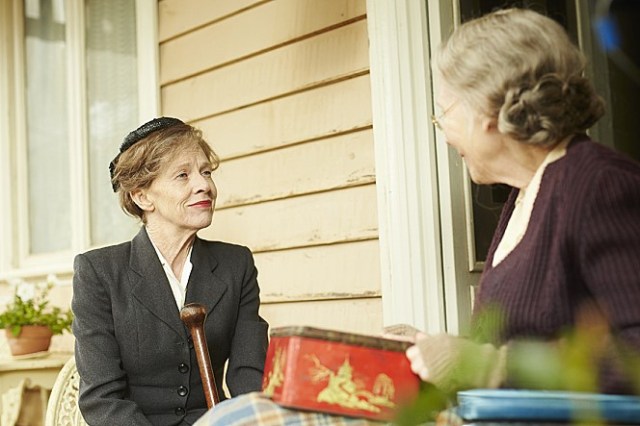 She soon initiates her dressmaking business as the first step of whatever she is planning in her mind, and she does know how to make ladies look sexy and gorgeous. When one of her old schoolmates visits Tilly’s house as her first client, she looks frumpy and mousy, but, what do you know, she is turned into the sexist girl in the town when she appears in the next scene. Sarah Snook, who gave a wonderful breakthrough performance in small SF gem “Predestination” (2014) and recently played a supporting character in “Steve Jobs”, deserved to be mentioned for her character’s effective transformation, and it is a shame that the movie does not utilize her talent much after that point.
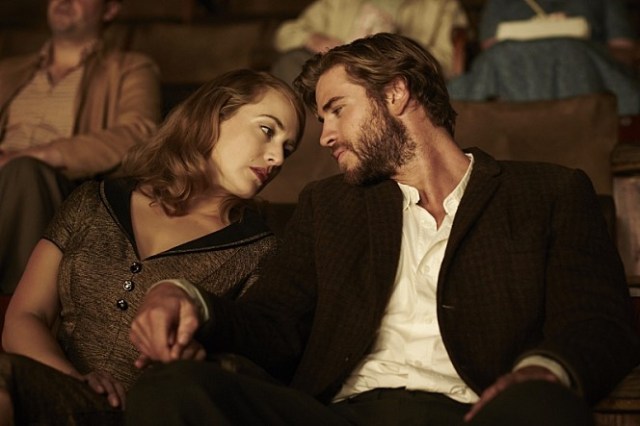 Its third act coupled with a sudden dramatic turn does not work as much as intended, but Winslet holds the center even during this weak part. Thanks to her radiant performance, the movie maintains a considerable amount of interest on her character’s drama, and Winslet also looks terrific with her clothes made by the costume designers Margot Wilson and Marion Boyce. As the possible love interest of Winslet’s character, Liam Hemsworth may be a little too young (she is 40 while he is 26), but he looks older compared to his recent turn in “The Hunger Games: Mockingjay – Part 2” (2015), and he and Winslet actually look convincing as their characters find themselves drawn to each other more.
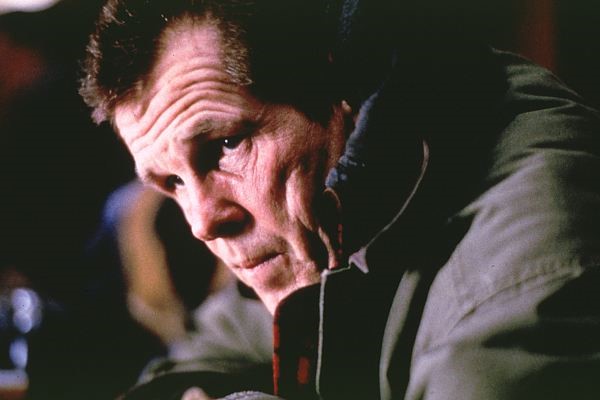
 After this disastrous evening, two incidents follow, and they respectively cause more trembles in Wade’s drab daily life. Some important union guy comes to the town for the hunting season and then happens to be shot and killed when he is hunting with his guide in a nearby forest, and everyone thinks it is just an unfortunate accident, but Wade, who works as a town police officer besides being one of the employees of a local businessman named Gordon LaRiviere (Holmes Osborne), does not feel right about this incident. Because there are some people who are going to benefit from that guy’s death, the incident may be not an accident at all, and he becomes more suspicious of not only his boss but also his close colleague Jack Hewitt (Jim True-Frost), who was the dead man’s guide and is the sole witness of whatever really happened in the forest.
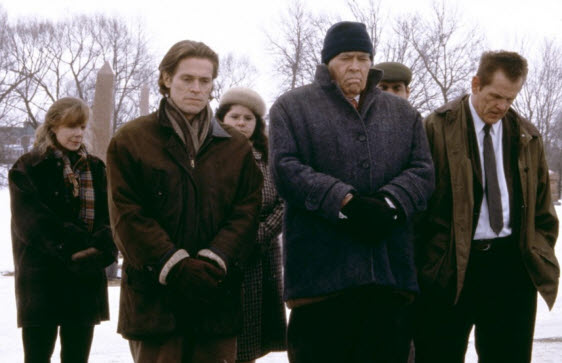 You will not be surprised to learn that Banks dedicated his novel to his working-class father he both loved and resented. While there were good times between him and his father during his childhood years, his father was also a violent drinker who was a constant threat to his family before he deserted them when Banks was 12. Like the hero of his novel, Banks found himself growing up to be a man not so different from his father, but he eventually followed his interest in literature and then started his writing career. The novel is not exactly autobiographical, but it often feels like Banks’s personal healing/exorcism process as indirectly reflecting that complicated love-hate relationship between Banks and his father in real life, who became a little closer to his son during his later years but never fully acknowledged the damages he inflicted on his family.
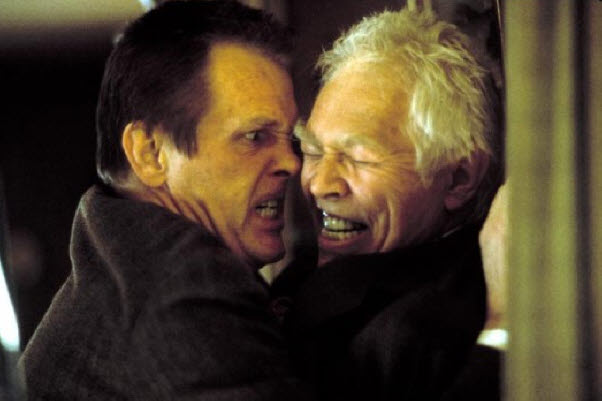 As Wade’s monstrous father, James Coburn is Nolte’s equal acting match during their intense scenes, and he gives an unforgettable supporting performance both towering and malicious. Shrader sometimes utilizes Coburn as a domineering presence to oppress Nolte on the screen, and Coburn’s imposing physical appearance, which is as bulky as Nolte’s, surely enhances that intended effect. When he was told that he had to be prepared well before shooting his scenes, Coburn promptly replied to Shrader that he was ready for the task (“Oh, you mean you want me to really act? I can do that. I haven’t often been asked to, but I can.”), and he deservedly won an Oscar for one of a few high points during his final years.

 Feeling more and more of her husband’s absence in their household, Maria gets some comfort from her occasional satellite phone conversations with her husband. They casually talk with each other as confirming their enduring relationship to each other, and their children are happy to talk with their father, but Maria worries about her dear husband because, after all, anything can happen in war.
 Two parallel storylines in the film converge during its second half as Pedersen is brought back to his country because of the death of several innocent civilians which was resulted from that decision of his. Feeling guilty about this unintentional tragedy and anxious about his upcoming trial, Pedersen considers accepting the cost of his devastating mistake, but Maria cannot imagine her husband taken away from her and their children again, and that only adds more agony and conflict to his situation.
 Desert is a harsh environment for any living creature. As watching those barren desert landscapes in Oscar-nominated Jordanian film “Theeb”, I wondered about how men came to live there many thousands years ago. This is a stark world where survival is usually the first priority above anything else, and, as reflected by the opening narration, trust and kindness can be dangerous for its wandering human inhabitants who have to deal with their meager living condition in the desert day by day.
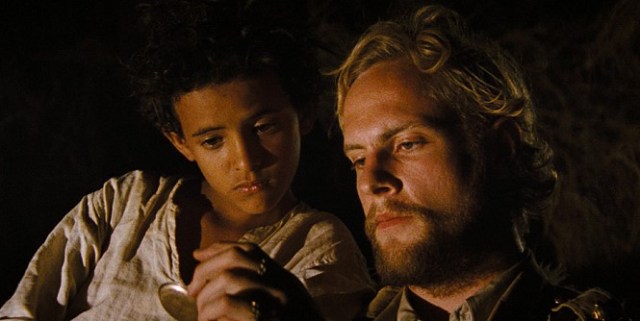 As these two strangers are welcomed by the chief who recently succeeded his diseased father and is also Hussein and Theeb’s eldest brother, Theeb cannot help but curious about the officer, who looks like a nice guy but is quite sensitive about a wooden box in his possession. It is implied that he is carrying out some secret mission, and it seems going through that dangerous route in question is essential for whatever he is going to do once he reaches to the destination near to the Ottoman railway.
 This is the first feature film by its director/co-writer Naji Abu Nowar, who previously made only one short film in his nascent filmmaking career but is quite impressive here in his confident handling of mood and story. He and his crew shot their film at the real desert locations in Jordan, and the cinematographer Wolfgang Thaler did a stunning job of establishing the stark atmosphere on the screen while vividly capturing the unnerving beauty of desert landscapes on Super 16 with an anamorphic lens. Some of these awe-inspiring landscape scenes in the film reminded me of “Lawrence of Arabia” (1962), and I was not so surprised to learn later that David Lean actually shot his great film in the same area.
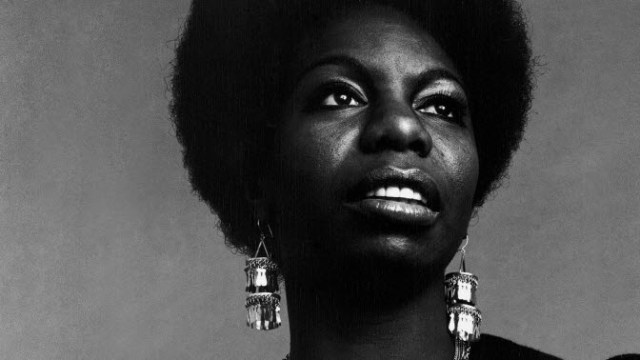 Oscar-nominated documentary film “What Happened, Miss Simone?” gives us close, intimate glimpses into Nina Simone, a legendary American singer who was called “the High Priestess of Soul”. Even if you are unfamiliar with her career like me (full confession: I do not know much about her except her famous rendition of “Sinner Man”), this documentary is still an informative and interesting overview on her dramatic life and career, and you will come to see and feel a dynamic but vulnerable artist who struggled hard against many obstacles including herself for a long time.




 The digital animation in the film is bright and colorful on the whole, and I liked its splendid sights which will certainly look dimmer in 3D. The spirit realm scenes in the movie are apparently intended for 3D visual effects, but I did not feel much of the need to wear 3D glasses, and I think you may save some money through watching the 2D version instead of the 3D version.
 They are young and free when we see them at first, and then they suddenly find themselves trapped inside their house turned into a prison for them. “Mustang”, which was recently Oscar-nominated for Best Foreign Language Film Award, often feels like a realistic horror film, and it is sad and infuriating to see how these spirited girls are repressed and mistreated in the name of family and tradition, but the movie also finds warm moments of humor and intimacy generated from their strong mutual bond, which deeply touches us as we look into their harsh predicament they do not deserve at all.
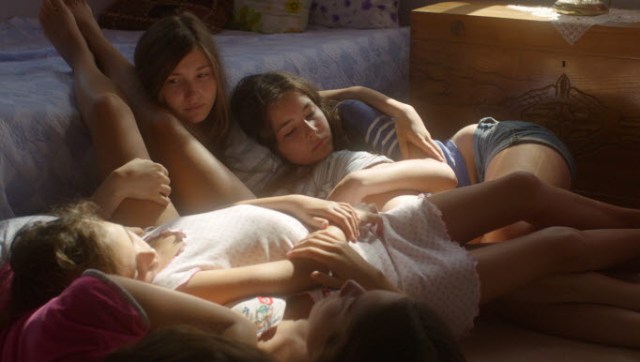 The girls are naturally unhappy about this, but they have no choice but to deal with their new situation. Several old aunts of theirs come to the house, and they and the grandmother begin to prepare the girls for their destined future role – housewife. We see these old ladies teaching the girls several things including cooking and sewing, and the girls actually enjoy their lessons at times.
 None the less, there is always the hard reality in their house, and they become more aware of it as they begin to be regarded as potential brides one by one. Suitors and their families visit the house, and some of the girls get married with different results. During her wedding night, one of the girls is very unhappy about her marriage which will be another prison for her, and then her wedding night ends with a humiliating treatment which is one of the most painful moments in the film.
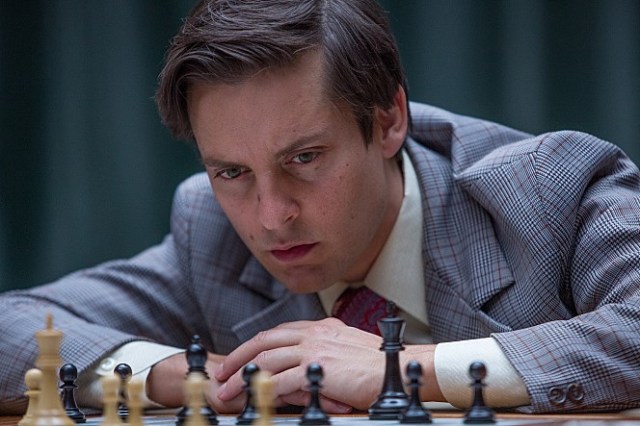
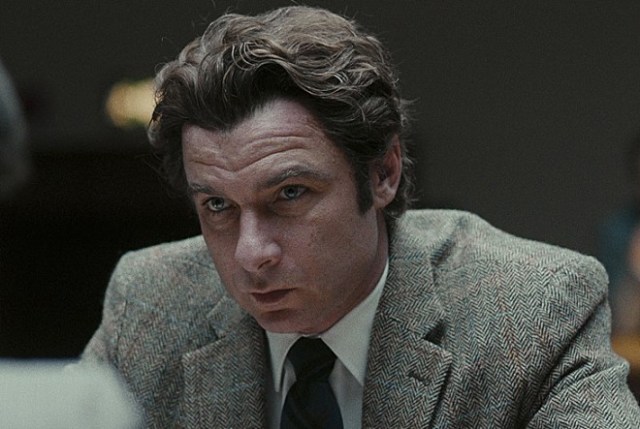
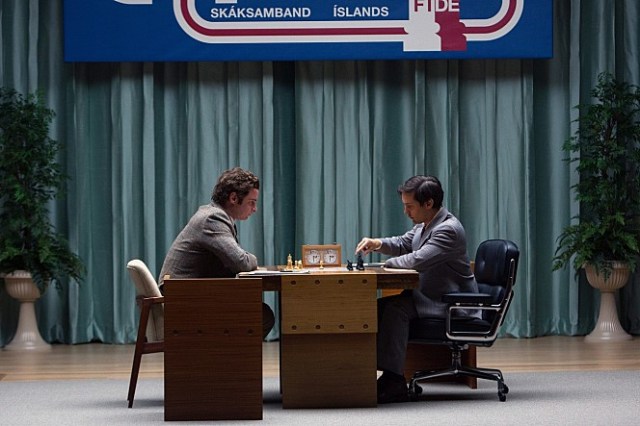
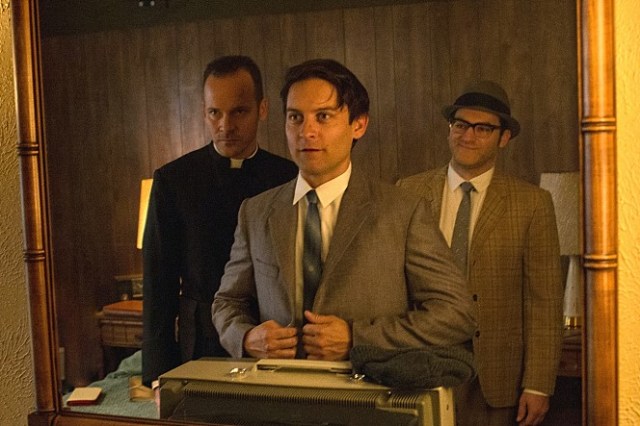 As Fischer’s main opponent, Liev Schreiber is a calm counterpoint to Maguire’s ticking intensity, and he is effective when his character is baffled by his opponent’s strange demeanors and tries to see what his opponent’s next move is. When Fischer and Spassky finally have a match in Reykjavík, Iceland in 1972, Fischer demands that they should play in a small, quiet room instead on the auditorium stage just because he does not want to be distracted by any noise. Spassky comes to accept this weird request, but then he makes his own odd move later. Schreiber ably handles that moment without any slightest hint, and we are never sure about the intention behind his character’s action.