Twinsters (2015) ☆☆☆ (3/4): Twin sisters’ reunion after 25 years

twisisters02

Documentary film “Twinsters” starts its story with one unbelievable encounter which can happen only in our digital era. Two young women suddenly came to learn of each other’s presence through online communication, and they were naturally surprised by their uncanny resemblance. As they got to know more about each other, it became apparent to both of them that this was not a mere bizarre coincidence at all, and they could not help but excited by their life-changing discovery.

Their stranger-than-fiction story began in 2013 February, when Samantha Futerman, who made the documentary with her co-director Ryan Miyamoto, was contacted by a French girl named Anaïs Bordier. Futerman tells us how much she was surprised when she checked Bordier’s Facebook page, and we also hear about how Bordier was equally surprised when she came across Futerman through a YouTube video clip. As a young aspiring actress in LA, Futerman has appeared in several films including “Memoirs of a Geisha” (2005), “Across the Universe” (2007), and “21 & Over” (2013), and she did star in that YouTube video clip in question along with her friend Kevin Wu, a.k.a. KevJumba.

Once these two girls began their online interaction, they quickly bonded with each other, while already having a pretty good idea on the possible connection between them. Besides the fact that they happened to share the same birthday, both of them were born in South Korea and then adopted by their respective parents not long after their birth, so it was logical to infer that they were identical twins, and all they needed for 100% confirmation was doing a genetic test together.

Although an expert told them about a small possibility of wrong assumption, Futerman and Bordier found themselves feeling more of that special connection we often observe from identical twins. They talked more with each other as time went by, and they also introduced to each other their respective friends and family members.

twisisters03

As we watch their lively interactions being continued, we come to notice how one’s personality can be influenced by both biological and environmental factors. While Futerman and Bordier have lots of common things between them in addition to their nearly identical physical appearance (Futerman is 2 cm taller, by the way), Futerman is the more outgoing one compared to Bordier, and we are not very surprised about that as we learn a bit about their respective families. While both of them grew up well under their decent middle-class parents, Futerman was the third child of her American family in New Jersey, and Bordier was the only child of her French family. While Futerman’s two brothers were always someone to hang around with for young Futerman, young Bordier was often conscious of how she looked different from other kids in her neighborhood, and that might have contributed to her relatively introverted personality, which is one of several visible traits to distinguish her from her sister.

Nevertheless, Bordier can be cheerful just like her sister as shown from their first physical encounter in London, and she is also smart and promising in her own way. We watch her working as a fashion design student of the Central Saint Martins, and we later see her work being presented on the stage along with other students’ works.

As the girls spent their fun time together around London, Futerman’s family arrived in London, and so did Bordier’s parents. Everyone was happy and excited during their dinner at a restaurant, and it soon became Bordier’s turn to visit her sister in LA. One particular moment showing them lying together on the bed is probably the most intimate presentation of their growing bond; only several months had passed since their first encounter, but the girls knew and understood each other so well that they did not have to tell each other what made either of them smile or giggle.

twisisters04

The third act of their story involves with their visit to South Korea during 2013 August, and the documentary maintains its lighthearted mood despite some bitter aspects inside their story. While watching them attending a conference for many Korean adoptees who were sent abroad at early age just like them, I was reminded of Laurent Boileau Jung’s animated film “Approved for Adoption” (2012), which is based on Jung’s graphic novel inspired by his early life as a Korean adoptee in Belgium. Like Jung, Futerman, Bordier, and their fellow attendees are foreigners in the country where they were born, but they hope to know more about their root anyway.

Although Futerman and Bordier failed to meet their biological mother, they got the next best thing instead, and the documentary wisely does not overplay this moment. I was touched by their optimistic attitude shown around the end of the documentary; what they wish may never happen, but they do not give up their hope none the less.

While it feels a little too nice and neat at times, “Twinsters”, which received the Jury award for a smooth editing job by Jeff Consiglio at the SXSW Film Festival early in last year, is a pleasant and thoughtful documentary which does not outstay its welcome during its short running time (89 minutes). Futerman and Miyamoto present her personal story well on the screen, and I found her personality as engaging as her sister’s. I do not know what will possibly come next for her in future, but I sincerely wish this good documentary will be a forward step for her nascent acting/filmmaking career.

twisisters01


Posted in Movies | Tagged , , , | Leave a comment

Spirits’ Homecoming (2015) ☆1/2(1.5/4): These women deserve better than this

Spiritshomecoming01

I am angry about South Korean film “Spirits’ Homecoming” for two reasons. I was angered as thinking about those many women forced into sex slavery by the Japanese Imperial Army during the World War II. I was infuriated about how their dark history was clumsily and blatantly presented through rote storytelling and incompetent filmmaking. Feeling depressed and disgusted more and more, I constantly sighed to myself with resignation during the morning screening on March 1st, which happens to be the Independence Movement Day in South Korea.

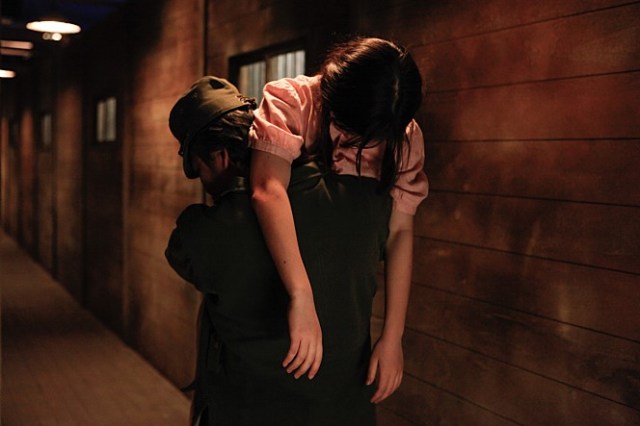
During the opening scene set in 1943, we meet a young Korean country girl named Jeong-min (Kang Ha-na), and then we see how she is suddenly separated from her dear family on one day by Japanese soldiers. Shortly after her tearful separation from her parents, Jeong-min is taken to a train going to somewhere in China along with other girls, and they soon find themselves becoming ‘comfort women’, which is a Japanese euphemism for prostitutes. Supervised by a sleazy Korean guy and a lofty Japanese madam, they are kept like prisoners at a military post, and they are forced to provide whatever those nasty Japanese soldiers desire.

Meanwhile, the movie occasionally switches to the other storyline set in 1991. We meet a shy, troubled girl named Eun-kyeong (Choi Li), and her mother, who is barely recovered from a recent terrible family tragedy like her daughter, takes Eun-kyeong to a local shaman for help. The shaman takes Eun-kyeong under her wing, and it looks like Eun-kyeong finds a right place for her. During one shaman ritual, she happens to notice an old man who seems to have something to tell, and that is how she comes to find her exceptional talent she never knew before.

Spiritshomecoming03

On one day, Eun-kyeong meets Yeong-hee (Son Sook), the shaman’s old friend who has run a traditional clothes shop for years. When Eun-kyeong touches one of the traditional charms made by Yeong-hee, she faints with several disturbing sights fueled into her mind, and, not so surprisingly, it turns out Yeong-hee has something she has kept to herself for a long time.

Of course, these two storylines are bound to converge later in the story with some revelations, but the movie is unfortunately hampered by sloppy writing and poor characterization. Both of its two stroylines feel trite and superficial without any clear sense of character development, and most of the characters in the film are too flat and bland from the beginning. Neither Jeong-min nor Eun-kyeong is interesting enough to hold our interest, and I especially dislike how they and most of the substantial female supporting characters in the film are defined only by their plights and nothing else.

As a result, they are frequently objectified instead of being depicted as human beings with flesh and blood, and that makes it all the more disconcerting to observe how the movie monotonously pushes its young actresses into degrading outrages just for squeezing anger and tear from us. For instance, I felt quite uncomfortable with the voyeuristic aspects of one particular scene; as the camera floats across several individual booths in a building, we see the girls being cruelly and brutally exploited by Japanese soldiers, and I guess we are probably supposed to witness the inhuman cruelties inflicted on these ill-fated girls, but the way the movie presents this horrible scene feels more like exploitation as the camera looks upon those atrocities one by one with a voyeuristic attitude. Although the movie is rated 15 as keeping its nudity to a minimum level (it is equivalent to PG-13, by the way), I doubt whether that is really an appropriate rating, and I am now worrying about young audiences who may come to watch the movie along with their parents for their, uh, history lesson.

Spiritshomecoming05

In case of the Japanese soldier characters in the film, they are certainly not good guys at all, and I am fine with that, but most of them are no more than sadistic/perverted cardboard villains existing only for doing many reprehensible actions to repel and disgust us whenever that is required, and many of their violent scenes push the movie further into that seedy realm of exploitation. While there is a subplot involved with one decent Japanese solider, its development is so predictable and clichéd that I felt embarrassed during what was intended to be one of the emotional highlights in the film, and it feels quite distasteful just like other deplorable scenes.

I am sure that the director/writer Cho Jung-rae was sincere and passionate during his difficult production which was partially funded by numerous individual donations as shown during the end credits. He tried to overcome his low budget, but I did not believe much in his story or characters while constantly being distracted by many artificial or hokey elements in the film, and I came to see more of its exploitative sides instead. You will roll your eyes when it tries a certain horror movie cliché at one point, and the finale is so shamelessly sentimental and melodramatic that it feels rather insulting to the sad memories of those unfortunate women in real life.

Still feeling angry about what I experienced during my viewing, I also felt sadden by a lost opportunity in “Spirits’ Homecoming”. Most of comfort women did not return to their home, and the surviving members were forced to be silent for many years even after the liberation of Korea in 1945. Most of them are gone now, and the remaining members have not yet received any proper apology or compensation from the Japanese government while also being treated not so well by the South Korean government. These women deserve better than this – and their sad, tragic tale of injustice and suffering deserves to be told through a movie better than this well-intentioned but seriously misguided mess.

Spiritshomecoming04

Posted in Movies | Tagged , , , | 2 Comments

Son of Saul (2015) ☆☆☆1/2 (3.5/4): The Holocaust viewed from inside

saulfia01
Unflinchingly grim and despairing but undeniably powerful and astonishing, Hungarian film “Son of Saul” will haunt you for a long time after its last shot. While never feeling artsy or exploitative at all, this extraordinary film firmly stays around the limited viewpoint of one desperate man trapped right within the dark center of the Holocaust, and there are many gut-chilling moments as the movie palpably conveys to us the unspeakable horror and madness of this systemic inhuman evil. We are horrified by the impossible circumstance which he and many others are helplessly and ruthlessly being driven into, we are disturbed by his own madness which seems to be fueled by overwhelming despair and desperation, and we are saddened by how much he is willing to go further for something which will probably not mean much to himself in the end.

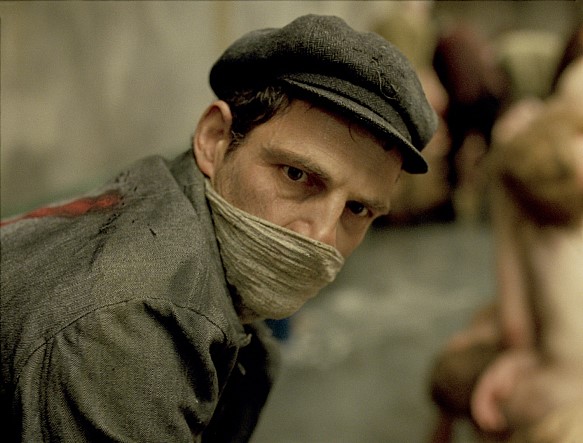
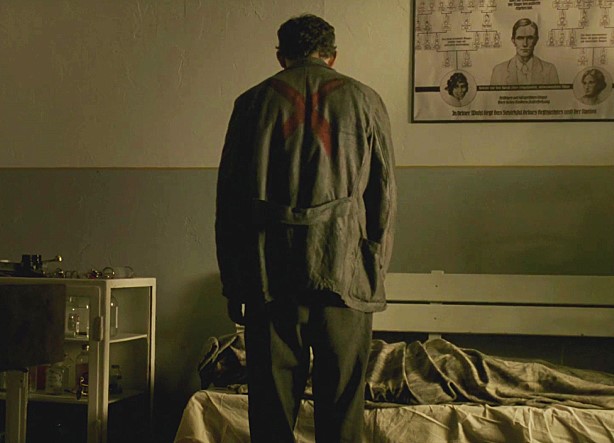
The background of the movie is not directly specified, but we come to gather its basic details during the opening scene which gradually reveals its dark horror to come and strike us. It is the Auschwitz concentration camp during the late period of the World War II, and we meet a Hungarian Jewish man named Saul Ausländer (Géza Röhrig). He and his co-workers are the members of a work unit called ‘Sonderkommando’ (it means ‘special unit’ in German, by the way), and they have been forced to aid in the mass extermination process at one of the gas chamber/crematorium facilities in the camp.

We look at another ‘usual’ day in this atrocious place as a bunch of people are sent there to be exterminated. They are told that they are going to have a shower for cleaning their bodies, and Saul and other Sonderkommando members lead these doomed people to the gas chamber after helping them taking off their clothes and personal articles in the ‘changing room’. Once the gas chamber finishes its ghastly job, Saul and his colleagues clean and scrub the gas chamber, and they also take care of dead bodies as well as whatever is left behind in the changing room. Bodies are promptly turned into ashes as soon as they are sent up to the crematorium operated by another group of Sonderkommandos, and then we see how Sonderkommandos dispose of heaps of human ashes later.

saulfia07

What Saul and other Sonderkommandos do is horrible to say the least, but their extreme human condition throws hard moral dilemmas at us as we observe their grim world where survival comes first above anything else. They are treated a little better compared to many other prisoners in the camp, and that may increase their chance of survival a bit, but they are still expendable as before. While doing their jobs as ordered to survive another day, many of Saul’s colleagues become nervous about whether they will soon be exterminated just like their predecessors, and it turns out they are actually planning something behind their back.

In case of Saul, he has the other matter to occupy himself with. When he and others are handling dead bodies from the gas chamber as before, they happen to find a young boy remained alive. The boy is quickly killed by a German doctor after a brief examination, but Saul becomes increasingly obsessed with the boy. He claims that the boy is his son, and he begins to search for a rabbi who can administer a proper burial for his ‘son’.

While never confirming whether Saul’s claim is true or not, the movie accumulates more tension on the screen as following his hopeless personal quest. He manages to secure the boy’s body for a while, but, not so surprisingly, he cannot find a rabbi to help him, though that does not deter him at all as he stubbornly continues his search. At one point, he gets himself hurled into one literally infernal moment along with hundreds of panicked people who have just arrived in the camp, but he is still looking for a rabbi even though he may get himself killed at any moment.

saulfia03

It is quite remarkable that the director László Nemes, who co-wrote the screenplay with Clara Royer for his first feature film, somehow strikes the right balance for keeping the movie under his austere control. We usually see no more than Saul, and that enables Nemes to present many of the grimmest moments in the film effectively without being too much or too less. For his handheld camera which usually sticks around Saul throughout the film, the cinematographer Mátyás Erdély used 40mm lens, and this technical choice, which creates the very shallow depth of field on the screen, accentuates Saul’s limited viewpoint along with the screen ratio of 1.37:1. While things often look blurry in this intentionally narrowed view, our ears come to pay more attention to the sound designer Tamás Zányi’s masterful mix of human sounds and other numerous sound effects on the soundtrack, and what Erdély, Zányi, and other technical crew members of the film achieve under Nemes’s confident direction is a stupefying example of the power of suggestion on audiences.

And everything in the film depends on the understated performance by first-time actor Géza Röhrig. We do not get to know a lot about Saul, but Röhrig’s weary, hardened face speaks volume for what Saul has gone through, and he did a tremendous job of embodying his character’s despair and madness as ably carrying the movie on his shoulders. Regardless of whether that dead boy is really his son or not, the decent burial of his ‘son’ seems to be a chance of redemption to Saul’s warped mind, and we come to understand to some degrees how important that is for him, but the movie does not overlook how his obsession inadvertently endangers not only himself but also others who are as desperate as him. The supporting actors surrounding Röhrig are also effective in their realistic performances, and it is interesting to note that one of the supporting characters in the film is a real-life figure who also appears in Tim Blake Nelson’s “The Grey Zone” (2001), another harrowing Holocaust drama which overlaps with “Son of Saul” in many aspects (both of their stories are partially based on a real-life incident which happened in the Auschwitz during 1944 October).

“Son of Saul”, which received several awards including the Grand Prize of the Jury award at the Cannes Film Festival early in last year and will probably win the Best Foreign Language Film Oscar in this year, is one of the most difficult movies to watch during recent years in my opinion, but the raw, stark emotional power generated from its grim but unmistakably human heart of darkness is something you have to watch and experience. I often found my mind being trembled and overwhelmed during the screening, and I was reminded of one memorable quote from “Chinatown” (1974): “You see, Mr. Gittes, most people never have to face the fact that, at the right time and the right place, they’re capable of ANYTHING.”

saulfia04

Posted in Movies | Tagged , , , | 3 Comments

My prediction on the 88th Annual Academy Awards

therevenant03

Again, we are near the end of the latest Oscar season. I and many others initially thought that “Spotlight” (2015) was the definite front runner, but then things became more uncertain and interesting than last year. Although Alejandro González Iñárritu previously won three awards including Best Picture Oscar for “Birdman” (2014) in last year, it is quite possible now that he may get two more Oscars for his another ambitious film “The Revenant” (2015), and there is also the growing possibility of upset by “The Big Short” (2015). While one of these three movies will probably be the eventual winner during the evening of February 28th, we may get a real big surprise from any of other notable Best Picture Oscar nominees including “Mad Max: Fury Road” (2015), “The Martian” (2015), and “Room” (2015).

In the meantime, most of the other categories have been pretty clear in comparison, but you can never be wholly sure about that. I have never been entirely correct in my prediction, and I will be wrong in some of several categories which have been still remained with uncertainty, but, what the heck, I am going to give you my annual Oscar prediction as usual for my last fun before the ceremony.

Continue reading →

Posted in Movies | Tagged | Leave a comment

Meru (2015) ☆☆☆(3/4): Reaching for a challenging peak in the Himalayas

meru01

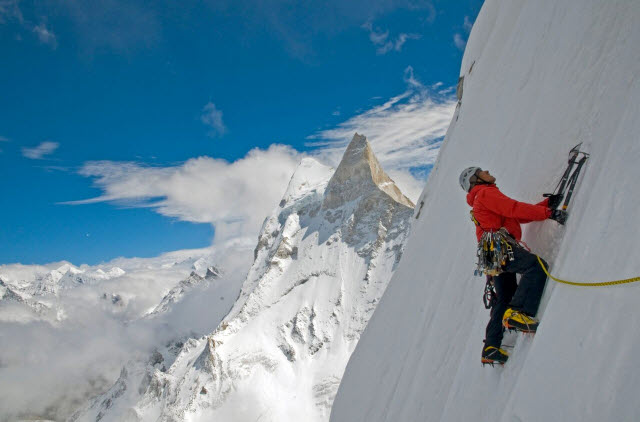
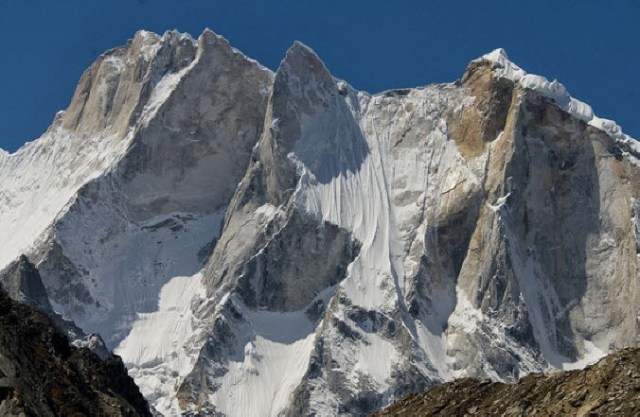
Documentary film “Meru” works best when it functions as a vivid, extraordinary record of one arduous quest for conquering one of the most challenging mountains in the Himalayas. Yes, those three mountaineers in the documentary really climbed up there with their cameras, and the documentary will give you some palpable glimpses into their cold, harsh, and exhausting experience on that mountain. While it is certainly not very sensible to put oneself into such an extreme condition like that, they were willing to take the risks because, well, they just could not resist the challenge as passionate and dedicated professionals, and many of their precarious moments in the documentary made me wonder about how they managed to shoot these footage clips as keeping focusing on the elusive goal waiting for them above.

They are Conrad Anker, Jimmy Chin, and Renan Ozturk, and the early scenes in the documentary show their expedition to Meru Peak in the Indian Himalayas during 2008 September. They tried to climb up to the central peak of Meru Peak through a notorious climbing route called “the Shark’s Fin”, and the fact that nobody succeeded on this route yet was surely a major attraction for these guys.

Jon Krakauer, the author of “Into Thin Air”, gives us the basic information on why the Shark’s Fin is quite a difficult route even for well-experienced mountaineers. It is easy to start at the base of Meru Peak at 4,440 meters (14,500 feet) as climbing up along a mild snowy slope, but you have to carry at least 45 kg (200 pound) of luggage for yourself because this is not the case where you can be assisted by Sherpas. While this is physically demanding to say the least, you also have to deal with an ice wall after that part, and, finally, there is a 460-meter (1,500 ft) vertical rock wall at the top of the mountain. Although this is technically the only obstacle to overcome for reaching to the peak at 6,310 meters (20,700 feet), you will have to spend 6-7 days at least as carefully climbing up along this clean, smooth, featureless granite wall, and you will be definitely in deep trouble if anything goes wrong during this perilous last stage.

meru03

Chin, who made the documentary with his co-director Elizabeth Chai Vasarhelyi, shot the progress of their expedition with Ozturk, and we watch them and their leader Anker approaching to their goal step by step. Three days after they left their base camp, they were at 4,970 meter (16,300 ft) while being near to the rock wall in question. As they could climb up the wall only 60-meter (200 ft) per one day, they had to depend on a special tent called portaledge while spending days and nights on the wall, and I could not help but notice how they were merely protected by ropes, metal frames, and tent cover (can you sleep well while you are virtually within a hanging fabric cart hung up high on a steep rocky wall?)

Unfortunately, things did not go as well for them due to several problems including bad weather and supply shortage, and they became more exhausted as staying there far longer than planned. They eventually made a difficult decision, and it was a big disappointment for everyone because they were so close to their goal at that time. As a matter of fact, they were only 100 meter (30 ft) away from the peak as shown from one moment in the documentary, but the risk of spending another day on the wall was too much even for them.

During its middle act, the documentary shifts its focus to the trio’s personal sides, and Anker, Chin, and Ozturk have each own stories to tell during their interviews. Anker tells us several things about his life and career (he located Geroge Mallory’s body on Everest in 1999, by the way), and we see many of photographies taken by Chin during his expeditions around the world. Chin is actually a renowned professional photographer whose works were featured in numerous publications including National Geographic, and one photograph shows him being dangled high in the air for shooting his photographs. While being less experienced compared to his colleagues in some aspects, Ozturk has established well his own career and reputation as a skillful rock climber, and we also see him working on his paintings.

Meru Expedition, Garwhal, India

The documentary feels sagged during its middle part as spending a little too much time on admiring and respecting them, but it thankfully regains its initial level of interest later as showing us how they came to attempt their second expedition in 2011 despite a sudden problem which seriously jeopardized their plan even before they returned to the mountain. They did worry about what could happen because of that, but they went there anyway, and they soon hurled themselves into that grueling experience again.

This part is rather repetitive at times, but Meru Peak and its surrounding landscapes are still awesome to watch on the screen, and Chin and Ozturk deserve praises for capturing many wonderful sights on their cameras in spite of their limited shooting conditions. Their footage clips in the documentary feel raw and rough at times but look mostly clear and crisp, and we are gripped by the potential dangers as well as the pristine beauty of nature surrounding their slow but steady climbing process.

While it is understandably less harrowing and compelling than Kevin Macdonald’s unforgettable documentary “Touching the Void” (2003), “Meru”, which won the US Audience Documentary Award at the Sundance Film Festival early in last year, did a solid job of taking us to the place where most of us are not so willing to go. What it presents is certainly more real than what we saw from movies such as “Everest” (2015), and that is more than enough to compensate for its weak spots. I still don’t like mountain climbing, but the guys in the documentary indeed give us something we don’t see everyday.

Posted in Movies | Tagged , , | 1 Comment

Best of Enemies (2015) ☆☆☆1/2(3.5/4) : Buckley Vs. Vidal

bestofenemies01

Focusing on the tense, dynamic progress of the infamous TV debates between two antagonizing American intellectuals, documentary film “Best of Enemies” observes their turbulent era which ironically mirrors the current sociopolitical status of the American society at present. Through their fierce verbal matches in front of the camera, the documentary gives us insights on the schism between conservatism and liberalism which was already growing there even before their debates began, and it is compelling to watch the moments when these two fascinating figures brought the best and the worst out of each other.

It was 1968 August, and the American society had been stirred and shaken by many social issues including the Vietnam War, and the circumstance became more tumultuous as its two major political parties were about to hold their National Conventions for choosing their candidates for the upcoming 1968 Presidential Election. Fed up with their country’s continuing failures, American people demanded changes in one way or another (isn’t it familiar?), and everyone’s attention was accordingly drawn to who would be eventually chosen as the candidate in the Republican and Democratic Parties, respectively.

Around that time, there were only three (!) television networks in US, and ABC was in the humiliating position of No. 3 (remember that fictional television network in “Network” (1976) was said to be No. 4 in its field?). While NBC had Chet Huntley and David Brinkley and CBS had Walter Cronkite for the full coverage of the Republican and Democratic National Conventions, ABC did not have anyone equivalent to them, so there came one seemingly nice idea; they would get two commentators in opposite positions together and then they would just let these two guys talk and discuss over two big political events which were going to affect the next four years of the country.

bestofenemies02

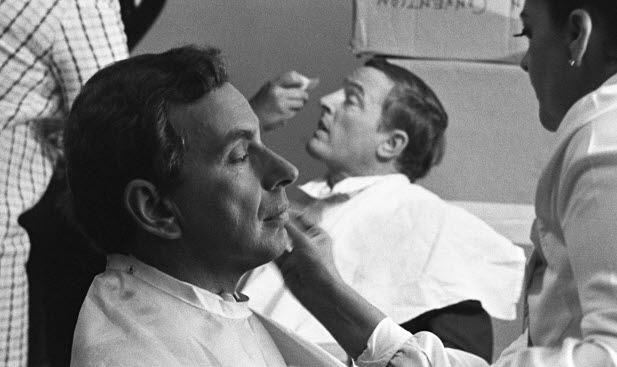
And there were two people right for the job. William F. Buckley Jr., a brilliant author who founded influential conservative magazine National Review, had been one of the most prominent voices of conservatism, and he was also close to Barry Goldwater and Ronald Reagan, who surely returned the favor to his good old supporter when he became the US president later. Gore Vidal, an erudite writer who was known well for his novels and other writings, had openly shown his liberal ideas on many subjects including sex and politics, and his novel “Myra Breckinridge”, which was made into the 1970 film starring Raquel Welch, was simply sensational for its daring satiric depiction of sexual roles and sexuality.

Even before their TV debates, there had been a considerable amount of animosity between Buckley and Vidal. Vidal represented everything Buckley disdained, and Buckley represented everything Vidal despised. While they actually had many common things between them as two ambitious intellectuals who grew up in each own prestigious background, they were so different from each other that one of the interviewees in the film joked that it was like the encounter between matter and antimatter when they sat together for their debates.

When their first round started with the Republican National Convention held in Miami, Florida during early August, Vidal was fully prepared to throw jabs and punches at Buckley, so he immediately went after Buckley as soon as they were on air. Although he was clearly surprised because he did not see that coming, Buckley rebounded to his competitive self during the next round, and that was just the beginning of a series of intense tug-of-war moments to be unfolded between them.

bestofenemies05
Deftly mixing the archival footage of Buckley and Vidal’s debates along with other archival footage clips and various interviewees including Buckley’s authorized biographer Sam Tanenhaus and late Christopher Hitchens, the directors/writers Robert Gordon and Morgan Neville generate a gripping narrative which eventually culminates to the moment when the tension between Buckley and Vidal finally reached to the critical point. As the Democratic National Convention was being held in Chicago during late August, there were violent clashes between demonstrators and the Chicago Police Department, and Buckley and Vidal argued with each other more aggressively than before while talking about what was happening in the city. When one of them failed to contain his anger toward the other in the end, it was certainly something to be remembered by them as well as millions of American people who were watching them on TV.

And their conflict was continued even after that. Hating each other’s guts more than ever, they sued each other at one point, and poor Esquire Magazine was unfortunately sandwiched between them for publishing their opposing articles. Vidal, who died in 2012, managed to have the last words when Buckley died in 2008, but, as bitterly pointed out in the film, both of them already belonged to the past around that point. Although Buckley and Vidal are not available for comments here, their writings are respectively read by Kelsey Grammer and John Lithgow in the film, and Grammer and Lithgow did a commendable job of conveying to us the spiky mutual hostility between Buckley and Vidal.

With its vivid, riveting presentation of one memorable TV event during that volatile summer of 1968, “Best of Enemies” reminds us of how the trend set by Buckley and Vidal has been more problematic during recent years. There are far more television networks now in US besides NBC, ABC, and CBS, and American TV has been louder than ever thanks to countless pundits and commentators with polarizing views. People say we should be open to many different views, but, folks, what good can that be if there is not any real productive exchanges for finding common ground?

bestofenemies03

Posted in Movies | Tagged , , , , | Leave a comment

Zootopia (2016) ☆☆☆(3/4) : A rookie bunny officer’s first case

zootopia03

While it is somehow released earlier outside US, new Disney digital animation feature film “Zootopia” is better than I expected. It is colorful and spunky with its amusing variation of buddy cop movie conventions, and there are enough funny, exciting moments to support its typical story about one plucky rookie who rises to the occasion while learning some important lessons through a relationship with her unlikely partner.

During the opening scene, we are introduced to a fantasy world where various mammal species are evolved to overcome their biological differences and live together harmoniously in their anthropomorphic modern society. For example, carnivorous mammals are no longer preying on herbivorous ones in this world while everyone is treated as equal society members, and that makes me wonder about whether those carnivorous animals still eat meat. We seldom see them eating something in the film, and my best guess is that they eat non-mammalian animals instead (or do they depend on something equivalent to… Soylent Green?)

Anyway, our heroine is an herbivore, so that matter can be put aside for a while at least. She is Judy Hopps (voiced by Ginnifer Goodwind), and this tiny bunny girl has always aspired to be a police officer since she was a child. Although her first days at the police academy are difficult for good reasons, she begins to show her resourcefulness as impressively overcoming many obstacles in front of her, and she eventually graduates as the top of her class in front of her proud parents.

zootopia02

Judy soon departs for Zootopia while her parents and other rabbits give her a hearty send-off, and we soon behold this huge, wondrous metropolis which can somehow accommodate several different environment sections within its one big area. As the train is transporting Judy and other animal passengers to the central area of the city, we see a sandy desert area, a rainy tropical forest area, and a snowy arctic area, and there is even a miniature area for tiny mice. We also see many big and small animals walking around the city, and it is rather amazing to see how the city seems to be managed quite well in spite of countless physical differences between its various citizens.

When Judy begins her first day at the Zootopia Police Department’s 1st Precinct, Chief Bogo (voiced by Idris Elba), a big, intimidating buffalo guy, does not regard highly of the new member of his precinct, but Judy keeps maintaining her feisty spirit none the less, and then she comes across a good chance when Mrs. Otterton (voiced by Octavia Spencer) visits the precinct again. There have been a number of mysterious missing cases around the city, and Mrs. Otterson desperately wants to know the whereabouts of her otter husband, who is one of the missing animals in question.

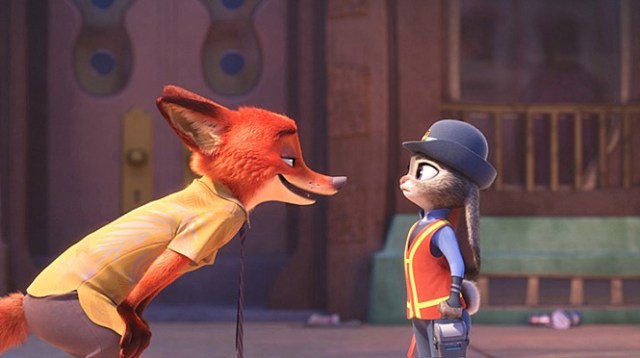
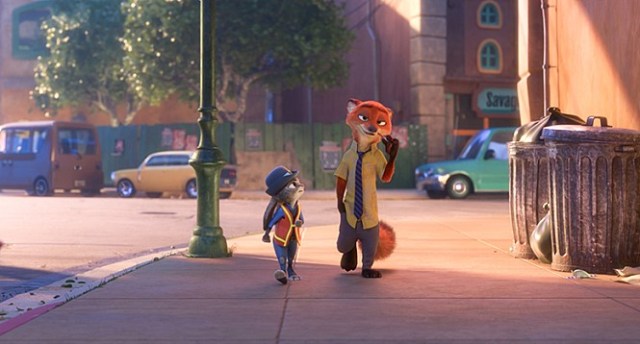
Thanks to the small support from Dawn Bellwether (voiced by Jenny Slate), a little sheep lady who is the long-suffering deputy of Mayor Lionheart (voiced J.K. Simmons), Judy takes the case under the grudging permission from her chief, who gives her only 48 hours for investigation. It initially looks like there is not any useful clue for her, but she finds someone to help her instead. Nicholas P. “Nick” Wilde (voiced by Jason Batesman), a street-smart red fox who has earned his living through small-time cons on streets, is not willing to cooperate with Judy, but he has no choice but to assist her when she blackmails him with a certain incriminating evidence against him, so that is the start of their uneasy partnership which will surely remind you of many classic buddy cop films such as “48 Hrs.” (1982).

zootopia04

As Buddy and Judy look for more clues around the city, the directors/co-writers Byron Howard, Rich Moore, and Jared Bush keep their film hopping around many comic moments and several action sequences. I cringed with amusement during one scene involved with a goofy Yak character who has a serious hygienic problem, and then I was tickled by the send-up moment of a famous gangster movie when Judy and Nick are taken to Mr. Big (voiced by Maurice LaMarche), who may order his henchmen to ‘ice’ them because of an unpleasant incident between him and Nick in the past. The funniest moment in the movie comes from when Nick and Judy go to the Department of Mammal Vehicles for their investigation, and I will let you discover its hilarious gag for yourself.

While the plot becomes more predictable during its third act, the movie does not lose its bouncy energy, and Ginnifer Goodwin and Jason Bateman give entertaining voice performances as a mismatched duo who come to understand and respect each other through their adventure. While Idris Elba shows his more lightweight side through his gruff character, Nate Torrence is amiable as a bumbling cheetah dispatcher, and the voice cast of the film is packed with reliable talents including J.K. Simmons, Jenny Slate, Octavia Spencer, Maurice LaMarche, Tommy Chong, Bonnie Hunt, Don Lake, Alan Tudyk, Kristen Bell, and Shakira, who also performs the main song for the film.

“Zootopia” is not something as memorable as “Inside Out” (2015), but it is an enjoyable animation movie while being more satisfying than “The Good Dinosaur” (2015). I do not know whether it will be successful at the US box office in the next month, but I really hope that its possible sequel will give us more dietary details about Nick and other predatory mammal characters. After all, they have to eat like other mammals, right?

zootopia01

Posted in Movies | Tagged , , , , , | 1 Comment

DongJu: The Portrait of A Poet (2015) ☆☆☆(3/4): The short life of a Korean poet

DongJu03

Wishing not to have
so much as a speck of shame
toward heaven until the day I die,
I suffered, even when the wind stirred the leaves.
With my heart singing to the stars,
I shall love all things that are dying.
And I must walk the road
that has been given to me.
Tonight, again, the stars are
brushed by the wind.

– The foreword of Yoon Dong-ju’s poetry collection “The Heavens and the Wind and the Stars and Poetry” (1948)

Like some famous poets who died too early, Korean poet Yoon Dong-ju (1917-1945) was unfortunately not able to see his poems recognized and admired by many people of his country. After his premature death which happened just six months before the end of the World War II, the collections of his manuscripts were published as “The Heavens and the Wind and the Stars and Poetry” in 1948, and he has been revered as one of the notable Korean poets during the Japanese Occupation period since then.

Through its partially fictionalized drama revolving around the friendship between Yoon Dong-ju and his close friend Song Mong-gyoo, South Korean film “Dongju: The Portrait of a Poet” looks around the last 10 years of Yoon’s tragically short life. While his several poems are often quoted, the movie presents to us that gloomy oppressive era which pressured this young, sensitive poet and his friend as well as many other Koreans during that dark time, and we come to get some understanding of his quiet artistic struggle which was sublimated into his unadorned but beautiful poems to be remembered.

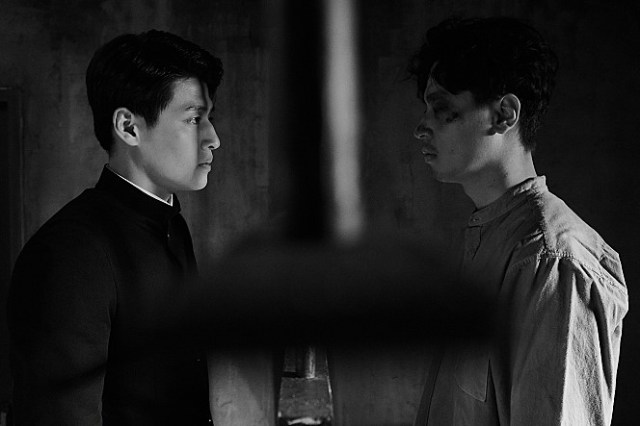
With the interrogation scenes between Yoon and a Japanese detective as its framing device, the story begins around 1935, when Yoon (Kang Ha-neul) and Song (Park Jeong-min) live with their families in Jilin, China. Because their parents are family members who moved together to China for getting out of their occupied country, Yoon and Song have naturally been close to each other since their childhood years, but they are different from each other in many ways. While aspiring to be a novelist, Song is an idealist eager to do anything for his country suffering under the Japanese oppression, but Yoon just wants to be a poet despite his father’s opposition.

DongJu05
After they graduate from a local middle school, Yoon and Song seem to part from each other as Song decides to leave their hometown for participating in the Korean Independence Movement, but their paths eventually converge several years later when they go to Korea and enroll in Yeonhui Technical School, which is Yonsei University in Seoul at present. While they passionately work together for their small literature magazine, Yoon meets Yeo-jin (Shin Yoon-ju), and she gladly introduces him to a famous poet he has admired.

Things look good for a while like that, but Yoon and others still cannot avoid the grim reality of their country as Japan becomes more determined to exterminate anything Korean than before. While Korean becomes a forbidden language, many people are forced to change their Korean names into Japanese ones, and Yoon feels conflicted as he is about to graduate. He wants to study literature more, but that means he has to make several compromises against his conscience.

In the end, he and Song come to change their names as demanded, and then they go to Japan because Japan seems to be a little more comfortable environment for their education. While Song goes to Kyoto, Yoon goes to Rikkyo University in Tokyo, and he is happy to study under a Japanese professor who instantly recognizes Yoon’s talent. The professor introduces Yoon to his stepdaughter Kumi (Choi Hui-seo), and she is also willing to help Yoon’s poet career.
However, as the World War II is being continued outside, Yoon finds himself in a more precarious circumstance. His professor kindly helps his transfer to Doshisha University in Kyoto, and Yoon is glad to meet Song again, but Song happens to be preparing for a secret plan with other Korean students who will be drafted into the Japanese Army sooner or later like Song and Yoon. Yoon does not particularly want to get involved with whatever his friend is planning behind his back, but it is apparent from the beginning that this will be bound to seal both of their fates.

DongJu04
Directed by Lee Jook-ik, “Dongju: The Portrait of a Poet” looks small and modest compared to his previous film “The Throne” (2015), but the result is more engaging in comparison. While its production design and costumes look rather plain, it did a competent job of establishing its period mood and background on the screen, and the black and white cinematography by Choi Yong-jin surely enhances that. The screenplay by Shin Yeon-shick, who previous wrote and directed “The Russian Novel” (2012), is intimate and thoughtful in its earnest handling of story and characters, and its two young heroes come to us as human characters who contrast and complement each other in interesting ways.

As the titular character of the film, Kang Ha-neul is likable in his tender, sensitive lead performance, and Park Jeong-min, who was one of three main characters in “Bleak Night” (2010), is equally good as the other half of the story. While Choi Hui-seo and Shin Yoon-ju are lovely as two women who briefly pass by Yoon’s life, Korean Japanese actor Kim In-woo is effectively loathsome, and he has his own moments as his character’s bullying façade gets crumbled inside later in the story.

On the whole, “Dongju: The Portrait of a Poet” is a humble but solid drama which also works as a sincere, respectful tribute to Yoon’s life and work. While its finale is inevitably melodramatic, the movie thankfully maintains its calm, restrained attitude, and the result is somber but poignant as we are reminded again of how short his life was. I can only guess what he could have done more if he had been more fortunate, but his poems have lived far longer than him at least.

DongJu01

Posted in Movies | Tagged , , , , , , | 1 Comment

Going Clear: Scientology and the Prison of Belief (2015) ☆☆☆1/2(3.5/4): Behind the belief

goingclear01

As far as I can remember, the first time I heard about the Church of Scientology was when I read a review on “Battlefield Earth” (2000), an infamous Hollywood turkey which was based on the SF novel of the same name written by the founder of the church. I learned later that some of prominent Hollywood celebrities such as John Travolta and Tom Cruise are the members of the church, and I have often heard about some weird stories involved with how the church exerted its considerable power and influence over many of its members.

Mainly because I have merely regarded the Church of Scientology with amusement and skepticism, I could not help but chilled and disgusted a lot by many dark, disturbing moments in Alex Gibney’s documentary film “Going Clear: Scientology and the Prison of Belief”. While it is amusing and interesting to see how the church was established from the wacky philosophical ideas of its controversial founder, it is also unnerving and chilling to see how his church has aggressively expanded its power and influence while ruthlessly manipulating and exploiting its members for many years, and you will be definitely alarmed as watching the sobering presentation of facts and testimonies in the documentary.

In the beginning, the documentary provides an overview on the life of the founder of the Church of Scientology. During his early years, L. Ron Hubbard, who is often referred to by his initials ‘LRH’, was initially a writer of countless pulp SF stories during the 1930s, but, after serving in the US navy during the World War II, he became involved in an occult group led by rocket scientist Jack Parsons in Pasadena, California, and that was how he came to meet his second wife Sara Northrup, who was Parsons’s girlfriend at that time.

1427745263781_lrh_22

Not long after marrying Northrup, Hubbard developed his own therapy method called Dianetics. He asserted that people can be improved mentally and physically through being regressed to their past traumas and then ‘going clear’ during a process called ‘auditing’, and he drew lots of public attention when his book “Dianetics: The Modern Science of Mental Health” was published in 1950. While his method was criticized and rejected by experts for good reasons, many people were willing to listen to him, and that led to the foundation of the Church of the Scientology.

Meanwhile, his relationship with Northrup became deteriorated, and several unpleasant episodes between them before their eventual divorce suggest that Hubbard had some serious mental problems. He was a liar and swindler in my humble opinion, but it seems he really wanted to believe that he could be cured through Dianetics, and his church was probably a tool to defend his unverified therapy method against the world. He was very serious about refining his ideas further with more details, and we see an intricate chart showing many levels of spiritual improvement through which church members will go step by step. In addition, he was a charming and charismatic guy like many cult leaders, and his devoted followers were ready to hear whatever he concocted through his wild imagination.

Because his church was not recognized as a non-profit religious organization by the US government during its early years, Hubbard and his followers had to drift around the Mediterranean for avoiding tax problems. The life on their ships was not so good, but his followers always looked up to him without question, and he surely enjoyed his role as their captain while having them do lots of small and big jobs on their ships everyday.

Hubbard eventually sneaked back into US several years later, and things began to change when Hubbard’s young protégé David Miscavige took the leadership of the church during the 1980s. After it was finally recognized as a non-profit religious organization by the US government, money was quickly accumulated in the church without any tax deduction, and its public image was boosted by a number of prominent Hollywood figures who often talked about how they were changed by the church in positive ways.

goingclear02

While mainly shown through archival footage, Miscavige, who declined to be interviewed for this documentary, looks like a ruthless, manipulative person who may be far more ambitious and egoistic than his mentor, and several ex-scientologists including Oscar winner Paul Haggis tell us how they became disappointed and disillusioned as opening their eyes to the harsh, questionable tactics of their church. In case of Sylvia ‘Spanky’ Taylor, who was a former liaison to John Travolta, she was put into a rehabilitation facility of the church just because she defied against the church for a small ethical reason, and she describes to us how she and others in the facility were treated like labor camp prisoners. While being allowed to sleep only for a few hours, they were pushed into a grueling labor schedule without any decent meal, and it was certainly an effective way to crush any defiant thought they might have.

Mark Rathbun and Mike Rinder, who were once the key church members around Miscavige, frankly talk about how they were abused and bullied along with other key members in a facility called “the Hole”, and they also tell us how their church has maintained its public image by any means necessary. For instance, many pieces of private information can be acquired during the auditing sessions of church members, and they can be used later for holding church members inside the church – or keeping their mouth shut outside the church. It is possible that Travolta and Cruise are no exception, and we are told about how much Miscavige has influenced Cruise’s life since Cruise became a church member.

Like Gibney’s previous documentaries including “Enron: The Smartest Guys in the Room” (2005) and “Taxi to the Dark Side” (2007), “Going Clear: Scientology and the Prison of Belief”, which is based on Lawrence Wright’s 2013 non-fiction book “Going Clear: Scientology, Hollywood, and the Prison of Belief”, is a darkly compelling one to watch, and I found its calm but scathing expose persuasive and believable. I understand and respect how others find comfort and peace from religion, but I did not see much of that from the Church of Scientology while watching the documentary, and I am now warier of Scientology than ever. Any good religion must open its door for anyone to come in or come out, you know.

goingclear04

Posted in Movies | Tagged , , , | Leave a comment

Deadpool (2016) ☆☆(2/4) : Isn’t he nasty? Isn’t he raunchy? Isn’t he funny?

deadpool01

“Deadpool”, the latest superhero film based on Marvel Comics character, is a one-joke stretched too long and too thin. It is amusing during its few early scenes, but then it ultimately follows those usual conventions of many other superhero movies we have seen during recent years. Every time it slaps or strikes us with its ‘subversive’ R-rated elements, it always throws winks and smirks at us just for making it sure that we get its nasty and raunchy jokes peppered with irreverent metafictional touches, and I was constantly annoyed by this while finding myself caring less and less about whatever was at stake for its decidedly unsavory superhero.

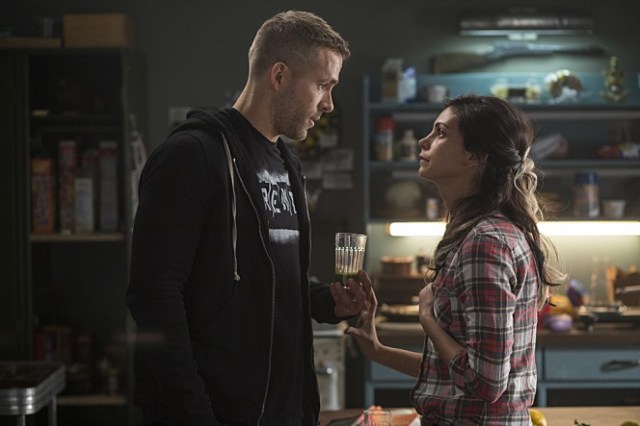
After the opening scene cheerfully coupled with a faux main title which makes a goofy fun of the movie itself, we meet Deadpool (Ryan Reynolds), and he is going to somewhere by taxi for his personal matter to be taken care of. While wearing a tight red costume reminiscent of Spider-Man, Deadpool is not your average superhero on the surface; he is a mean, vulgar, amoral, and impertinent wiseass who frequently hurls crude wisecracks at us or others around him, and you will not be surprised to see that this crass jerk does not care much about justice or heroism or whatever is associated with human goodness.

As a big, bloody, and violent action sequence is unfolded shortly after he arrives at his destination spot, Deadpool sometimes breaks the fourth wall for directly talking to us and getting more time for wisecracks, and listening to him is pretty much like being stuck with someone trying to impress and tickle you *too* hard. While you may be amused for a while by heaps of movie references to be sprung out from his chatty (and filthy) mouth, he is so self-conscious of his movie world that there is even such a line like this at one point: “A fourth wall break inside a fourth wall break? That’s like, sixteen walls!”
deadpool03
And we get a series of long flashback scenes which show, yes, how he happened to gain his superpower. When he was relatively normal, Deadpool was Wade Wilson, a former Special Forces operative who became a mercenary operating in his skid row neighborhood. Like his future alter ego, Wade was not a very good guy either, and he was happy and satisfied with his seedy life as long as he gets opportunities for wielding his particular set of skills (yep, he certainly mentions “Taken” (2008) and its sequels!) and then earning some money for spending at his frequent bar managed by his friend Weasel (T.J. Miller). When he came across a sexy woman named Vanessa Carlysle (Morena Baccarin) during one night at the bar, something sparked between them, but, alas, their hot dirty happiness, which is briskly presented through an outrageous montage of their debaucheries (one kinky moment involved with their changed sex roles is particularly cringe-inducing, by the way), did not last that long when he was diagnosed to have a terminal cancer and then let himself subjected to a secret experiment supervised by Francis Freeman a.k.a. Ajax (Ed Skrein), an evil, sadistic mutant who had a very special plan for Wade’s dying body.

Oh, now I realize I forgot to mention to you that the movie belongs to the universe of the ongoing X-Men franchise. While Professor Xavier and Wolverine are mentioned (another example of self-conscious line: “McAvoy or Stewart? These timelines can get so confusing.”), the movie has a few other mutant characters besides Deadpool and Ajax, and they are Angel Dust (Gina Carano), who is Ajax’s fierce, ruthless right-hand girl; Piotr Rasputin/Colossus (voiced by Stefan Kapičić), a big metal CGI guy who somehow can eat cereal for breakfast instead of bolts and nuts; and Negasonic Teenage Warhead (Brianna Hildebrand), who will probably change her rather corny name someday at the end of her moody adolescent years.

In case of Wade, he got the super self-healing/regenerating power thanks to Ajax’s extreme medical experiment on his body, and now he is nearly immortal, but there is a price; his body was stressed so much during the process that his face at present is somewhere between Freddy Krueger and that latex mask wore by Kevin Bacon in “Hollow Man” (2000), which is sadly not mentioned in the film. After managing to get away from Ajax, Wade became determined to get his payback time, so we are served with more flashback scenes as he begins to establish his new identity while continuing to hesitate about meeting his girl again.

deadpool04

If the first half of the film is spinning its wheels in the tedium of this unoriginal origin story I have described to you so far, the second half of the film drenches itself in lots of CGI actions during the predictably bombastic climactic sequence unfolded around an abandoned aircraft carrier, and there is very little to engage us here. Ajax and Angel Dust are quite bland villains from the beginning, and, regardless of their actual acting talent, Ed Skrein and Gina Carano do not have nothing much to do besides looking angry, tough, and menacing. Stefan Kapičić and Brianna Hildebrand are in a little better position as the straight foils for Deadpool, and T.J. Miller and Morena Baccarin have a small fun with their respective roles even though the movie does not utilize them well on the whole.

Ryan Reynolds, who already played Deadpool before in “X-Men Origins: Wolverine” (2009) and was pretty forgettable in that film, gives a spirited manic performance reminiscent of his another loony work in “The Voices” (2014), where he played a hopelessly nice serial killer for good dark laughs. It is undeniable that he does everything he can do with his superhero character here, and I actually admired his verbal comic intensity even while I was not so impressed by the movie itself. After all, not many guys can retain their sense of humor after what Wade went through, and Reynolds somehow keeps his character being believable with his good comic timing which is in the serious need of a better film.

As far as I can see, “Deadpool” is intended as a naughty parody of superhero films, but this is not a good parody because it fails to hit hard its genre conventions and instead becomes merely a more violent and unpleasant superhero movie in the end. Sure, you can make any jokes about superheroes, but, folks, they are inherently jokes no matter how serious they are, and there is not much point in making a fun of jokes themselves.

deadpool02

Posted in Movies | Tagged , , , , | Leave a comment