Hail, Caesar! (2016) ☆☆☆(3/4): There is no business like movie business

hailceasar01

The Coen brothers have never been boring throughout their long, illustrious career. For instance, after a gripping cold-blooded neo-noir thriller in their terrific debut film “Blood Simple” (1985), they went all the way for cheerful wackiness in “Raising Arizona” (1987), and then they swung into the dry, stark territories of “Miller’s Crossing” (1990) and “Barton Fink” (1991), and then they swung back to the deranged classic screwball comedy of “The Hudsucker Proxy” (1994).

Their latest film “Hail, Caesar!” proves again their consistently bouncy tendency. After a gray melancholic music drama in their previous film “Inside Llewyn Davis” (2013), the Coen brothers switch themselves onto a more lightweight and colorful mode here, and they have a fluffy but delicious fun with classic Hollywood film genres during the 1950s.

As Carter Burwell’s score and Michael Gambon’s narration set the wry deadpan tone of the film during the opening scene, we are introduced to Eddie Mannix (Josh Brolin), a Hollywood fixer working for Capitol Pictures as the head of physical production. His main job is preventing any public scandal of its movie stars while maintaining their precious public images, and, as shown from his another confession session with a priest, he has felt conflicted over his dirty thankless works for protecting the interests of the studio. He also feels guilty about how his strenuous job often keeps him from spending time with his dear family, and he is certainly tempted when a lucrative job offer with considerable incentives comes to him at one point, though he does not give any affirmative answer.

hailceasar03

Anyway, his another day at Capitol Pictures is busy as usual. Everyone expects a lot from the upcoming Roman epic drama film “Hail, Caesar!” while it is still in the middle of production at the studio, and there is an absurd moment when Mannix has a meeting with several religious figures for making it sure that it does not look offensive to Christian or Jewish audiences as a movie whose subtitle is “A tale of the Christ”. In addition, he must take care of the unexpected pregnancy of studio star DeeAnna Moran (Scarlett Johansson) before it is turned into the latest Hollywood scandal, and he is going to use other two studio stars as a diversion for competing twin gossip columnists Thora and Thessaly Thacker (Tilda Swinton).

And then there comes another trouble. Baird Whitlock (George Clooney), the star of the aforementioned movie, is suddenly disappeared, and Mannix soon receives a message from ‘the Future’, who demands $100,000 for sending back Whitlock. Mannix is willing to solve this potentially disastrous problem as soon as he can, and he quickly secures the ransom money in a rather tight briefcase, but, as you can expect from any Coen brothers movie, the movie takes a number of odd plot turns as he is trying to take care of other matters as well as this kidnapping problem.

Leisurely walking around many different genres, the Coen brothers provide us various goodies to enjoy. While Mannix’s no-nonsense tough guy attitude evokes film noir, several amusing scenes from Whitlock’s latest film poke fun at “The Robe” (1953), “Ben-Hur” (1959), and many other Roman epic drama movies made during the 1950s, and a grand water choreography sequence with Moran and lovely female extras is clearly a send-up of Esther Williams movies. While you will probably be tickled by a sly musical dance number sequence with naughty sexual undertone, one of the biggest laughs in the movie comes from when young western film star Hobie Doyle (Alden Ehrenreich) is put into a film where this simple-minded lad is apparently miscast. Even before the end of the first take, sophisticated European director Laurence Laurentz (Ralph Fiennes) becomes quite frustrated with Doyle’s strained acting, and that leads to a hilarious moment when Laurentz repeatedly tries to have his problematic actor deliver a certain line right.

hailceasar04

In the meantime, Whitlock finds himself stuck in a weird situation which adds another period genre to the movie. While he is one of the most dashing Hollywood stars, George Clooney can also look silly and clownish as shown from his previous collaborations with the Coen brothers including “Burn After Reading” (2008), and his deft comedy skill is utilized well as his half-wit character is ‘enlightened’ by the people behind his kidnapping.

While Whitlock and many wacky supporting characters in the movie are more or less than puppets to be wielded and manipulated, the movie cares a bit about Mannix and a few other characters. Josh Brolin, who previously collaborated with the Coen brothers in “True Grit” (2010), is dependable as a solid straight center to hold and support everything in the film, and the Coen brothers assembled an impressive array of cast members around Brolin. In addition to Clooney, Ralph Fiennes, Jonah Hill, Channing Tatum, Scarlett Johansson, Tilda Swinton, Frances McDormand, and Alison Pill get each own small moment, and you may recognize familiar veteran actors including Fred Melamed, Fisher Stevens, Alex Karpovsky, Christopher Lambert, Patrick Fischler, David Krumholtz, Clancy Brown, and Wayne Knight (you may not notice the very brief appearance of Dolph Lundgren, by the way).

Amidst this bountiful heap of performers to delight your eyes, Alden Ehrenreich steals the show as the ace in the hole of the movie. When Doyle happens to have a date with Carlotta Valdez (Verónica Osorio) as arranged by Mannix, it does not take much time for her to be charmed by his folksy sweetness, and we cannot help but smile as they come to fall in genuine love with each other. I also like the scene where Doyle attends the premiere of his new western film; because he just did his job as much as paid (and fed) during the production, he does not think that highly of his movie, but he comes to have a small revelation not so far from that memorable scene in Preston Sturges’s classic comedy film “Sullivan’s Travels” (1941).

“Hail, Caesar!” gleefully holds its tongue in the cheek from the beginning to the end, but its absurd satire comes with care and affection toward its targets to be lampooned. The movie may be all about styles, but it is a joyful pastiche to savor, and we get good laughs as many Hollywood archetypes are cheerfully juggled around its goofy plot. After all, there is no business like movie business, right?

hailceasar02

Posted in Movies | Tagged , , , , | Leave a comment

A Bronx Tale (1993) ☆☆☆1/2(3.5/4): A Bronx boy between two father figures

abronxtale02

Any good coming-of-age tale is bound to be evaluated by two questions. What happens to our young lead character in the end besides looking older on the surface? And what happens to us as observing that inevitable process of maturation? While the hero of “A Bronx Tale” recounts nostalgic memories of his early years, the movie takes us into his small world through its intimate drama and strong characters, and we see how much he was influenced by his two different father figures. As we become involved in their story, the relationships among these three main characters turn out to be more complex and poignant than we thought, and we are deeply moved when our young hero comes to learn some important lessons he will keep for the rest of his life.
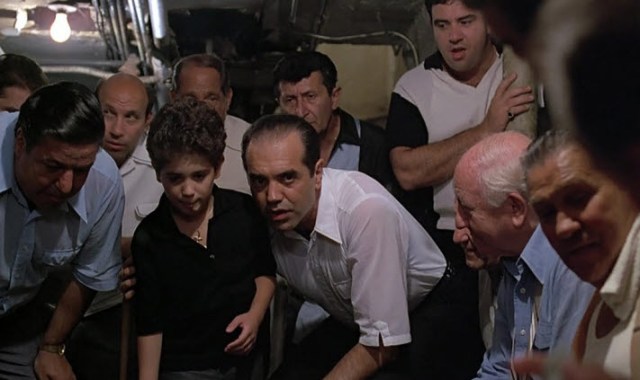
It is 1960, and Calogero Anello (Francis Capra) is a 9-year-old boy living in the Italian neighborhood of Bronx. Although his parents Lorenzo (Robert De Niro) and Rosina (Kathrine Narducci) keep telling him that he should stay away from a bar located right next to their modest apartment building, Calogero cannot help but attracted to that place because most of its patrons are local mafia members led by Sonny LoSpecchino (Chazz Palminteri), an assured, charismatic boss who is the de facto owner of the bar. The way these colorful figures are introduced to us one by one through Calogero’s viewpoint is reminiscent of a similar scene in Martin Scorsese’s “Goodfellas” (1990); like young Henry Hill in that scene, Calogero watches neighborhood gangsters from the distance with innocent awe and fascination, even though he knows that they are not good people.

On one day, Calogero happens to witness a sudden killing committed by Sonny right in front of his eyes under broad daylight. When two cops come to him for identifying the killer in question, Calogero chooses not to reveal what he saw because, besides that forbidding stare Sonny gave to him at that very moment, he does not want to be a squealer, but he later wonders whether he made a right choice. Lorenzo, who does not want to get involved with Sonny under any circumstance, respects his son’s decision: “You did a good thing for the bad man.”
abronxtale08

Not long after that incident, Sonny lets Calogero into his world as showing his appreciation, and Calogero is excited by this opportunity. While frequenting the bar more than before, he becomes another usual figure in the place, and he also enjoys his changed status in the neighborhood. At one point, he is allowed to participate in craps under Sonny’s guidance, and he has a really fun time along with Sonny and others as getting more money than he ever imagined.

Of course, Calogero’s parents are not so pleased to see their son being involved with Sonny. Lorenzo eventually confronts Sonny, but their conflict, which is put into a sort of cessation after that confrontation, does not turn out to be as simple as we thought. Although they are opposed to each other due to their different values, but both of them care about Calogero, and they are sincere when they respectively impart to Calogero their life lessons to guide and help him. While exemplifying working-class virtues through his diligent work, Lorenzo constantly reminds Calegro of what his son can do for a better life out there (“Nothing is more tragic than a wasted talent.”). Although he has many vices as a dangerous criminal, Sonny has his own streetwise wisdom, which can be distilled into a seemingly cynical but undoubtedly incisive motto often uttered by himself (“Nobody cares.”).

We identify more with their fatherly concerns as Calogero, now played by Lillo Brancato Jr. and usually called “C”, grows up more 8 years later. He still hangs around his childhood friends as usual, and we see potentials for trouble from Calogero’s friends especially when they casually show their racism toward African American people living near their neighborhood. Being more sensible than his friends, Calogero does not like this at all, but he cannot just walk away from them because, like many kids around his age, he is not so willing to think and act independently.

abronxtale05

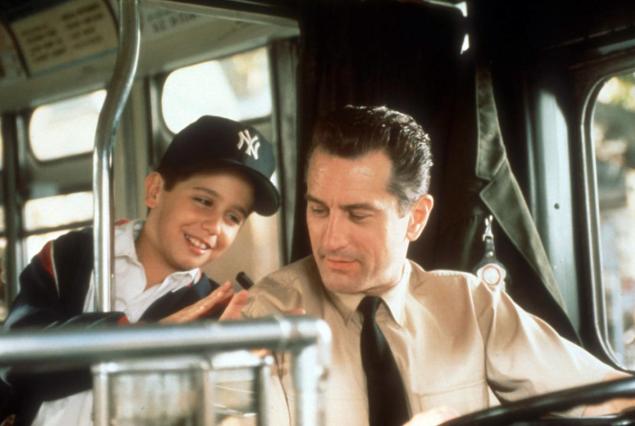
But then there comes a point where he has to make up his mind for himself. During his usual bus ride with his father, Calogero happens to notice a pretty African American girl in the bus, and then he sees her again at his school. After he spends a little private time with Jane (Taral Hicks), his heart is fluttered more than before, while also troubled by how his first love may be regarded by others around him.

Naturally, he seeks advices from both Lorenzo and Sonny, and how he gets their respective advices is one of the most humorous moments in the film. When Calogero asks a rather indirect question to Lorenzo, the father is not easily fooled by that, and he gives an equally indirect but wise advice to his son. In case of Sonny, Calogero tells him more openly about his interracial romance, and Sonny gives him a straightforward counsel along with a dating tip which, in my humble opinion, is far better than whatever you read from those throwaway self-help books about relationship. Their advices may sound different on the surface, but they both point out the same thing to Calogero, who soon comes to see that they are right.

The movie is based on the one-man show of the same name written by Chazz Palminteri, who also adapted it for the film. After getting fired from a club bouncer job due to his small mistake involved with famous agent Swifty Lazar, Palminteri, who was having a hard time as a struggling New York actor during that period, decided to write a story inspired by his early life in Bronx, and the eventual outcome led to the first major success in his career, which was then followed by a number of enjoyable movie performances including his wry Oscar-nominated supporting turn in “Bullets Over Broadway” (1994).

abronxtale01

As reflected by Palminteri’s real name, Calogero Lorenzo Palminteri, Calogero in the movie is the fictional counterpart of his younger self. Palminteri’s father Lorenzo was really a bus driver. Sonny is based on a local mafia boss who was close to young Palminteri. Some of other characters in his story are also based on local figures he knew during his early years. In case of an amusing supporting character as unlucky as William H. Macy’s character in “The Cooler” (2003), he was actually played by his real-life counterpart, and, not so surprisingly, it looked like the guy really brought bad luck to the production just like his character (It is small wonder that his character does not get himself into any serious trouble despite his uncanny losing streak).

Palminteri’s nuanced performance in the film presents Sonny as a compelling human character to watch. Like his real-life counterpart, he is a smart, intelligent man who could be a more productive member of society if he had grown up in a better environment. While he can open his heart a little to the boy he probably loves more than he admits, Sonny is still a creature of crime and violence who chose a tough, lonely life on his mean streets, and, as he flatly admits later in the story, he has accepted and lived with the price for that in the name of survival.

In addition to giving a performance as warm and thoughtful as his recent appearance in “The Intern” (2015), Robert De Niro also directed and co-produced the movie, which was dedicated to his father who passed away not long before it was released. This was his first attempt on directing, and, considering what he accomplished here, it is a shame that he made only one feature film since that. Thanks to the authentic period mood in his movie, we get enclosed in Calogero’s small world right from the start, and we come to notice more of social changes brought into his neighborhood during the 1960s. We may not be surprised about what inevitably happens between Calogero and Jane, but we are shocked when he makes a regrettable mistake in front of her, and their tender but fragile relationship indirectly reminds us that racial tension is still a relevant social issue in the American society even at present.

abronxtale03

De Niro also makes a good use of various popular songs from the 1950-60s. I enjoyed a couple of nice doo-wap scenes which reminded me of what I saw from Clint Eastwood’s passable musical film “Jersey Boys” (2014), and I liked how one of the famous songs by the Beatles was used as the prelude for a violent payoff during the sequence involved with a bunch of biker gangs who unwisely dare to mess with Sonny. As a matter of fact, De Niro and Palminteri recently worked together with Alan Menken for the stage musical version, which had its premiere in New Jersey early in this year.

Between De Niro and Palminteri, Francis Capra and Lillo Brancato Jr. function as the heart of the film. Their performances are seamlessly connected together, and what happened to each of them during subsequent years ironically mirrors its story. In contrast to Capra, who has been steady with his acting career while looking a lot different now (he played that biker character in TV series “Veronica Mars”, by the way), Brancato got himself tumbled down into serious troubles including addiction and murder, and some of you probably heard about his recent parole in 2014. As watching the YouTube clip of the Q&A session followed by the screening of the film at the 2015 Ebertfest, I could not help but notice how little Palminteri said about him while gladly talking about Capra and other performers in the film.

While tense and gritty at times, “A Bronx Tale” is a sweet, funny, and touching coming-of-age story thanks to its vibrant mix of humor and drama. Its last act feels a bit hurried as it goes through a series of intense moments during a relatively short span of time, but that works mainly because it is still driven by characters and human relationships instead of plot contrivance. Although there is an expected ‘fallen idol’ moment around the climax, it comes with real emotional impacts because of what has been established and built up to that point, and then we get another powerful moment as the story makes a full, satisfying narrative circle coupled with karmic poetic justice and the good cameo appearance by a certain recognizable actor. Sonny may not care, but Calogero and a few others care anyway – and so do we.

abronxtale04

Posted in Movies | Tagged , , , , | Leave a comment

Hunger (2008) ☆☆☆1/2(3.5/4): A striking debut work by Steve McQueen

hunger06

On one day in 2009 June, I happened to get a chance to watch Steve McQueen’s debut work “Hunger”, and it was one of the most memorable movie experiences during that year. The movie struck me hard with its uncompromising depiction of how a long clash between Irish Republican prisoners and the British government led to a devastating hunger strike in 1981, and that impression of mine was not changed at all when I revisited it at a local theater. Although it is belatedly being shown in South Korea now after McQueen’s subsequent works were introduced to South Korean audiences, the movie has lost none of its sheer dramatic intensity, and it certainly shook me as well as my mother, who closed her eyes during some of its most intense scenes.

In 1976, the British government refused to recognize the political status of its Irish republican prisoners as the Northern Ireland conflict, commonly called “the Troubles”, continued to be escalated outside. When Irish republican prisoners began to protest against this while making a number of demands, the British government responded to them with brutal oppressive tactics to quench the protest, and the situation got worse as both sides were adamant without any sign of stepping back.

Looking into the late period of this maddening situation, the movie takes us into the dehumanizing environment inside HM Maze Prison step by step during its first half. The opening sequence introduces to us one of prison guards working there, and we observe how he goes through his daily life. When he goes to work after his breakfast, he carefully looks around just for caution before getting into his car, while his concerned wife watches all of this from the front window of their house. He looks brightened a bit when he is with his colleagues in their locker room, but, as reflected by one brief solitary scene, he is apparently being emotionally stressed by his job – and we cannot help but notice more of his hands covered with scars.

hunger05

What he and other prison guards usually do in the prison is mainly shown through the viewpoint of two Irish republic prisoners going through ‘no wash protest’ along with their fellow prisoners. Refusing to wear prison uniforms, they and other Irish republic prisoners cover their bare bodies only with blanket, and they also fill their cells with lots of filths. As firmly holding its calm, non-judgmental attitude, the movie does not hesitate to show us how much they are willing to push themselves into such a horrifying condition like that. Food waste is left to be rotten in the corner of their cells, and we see maggots crawling on the floor. The walls are fully covered with their feces, and we can only imagine how much their cells stink.

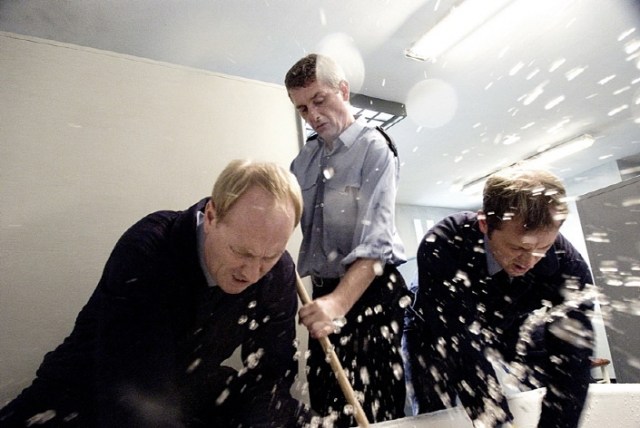
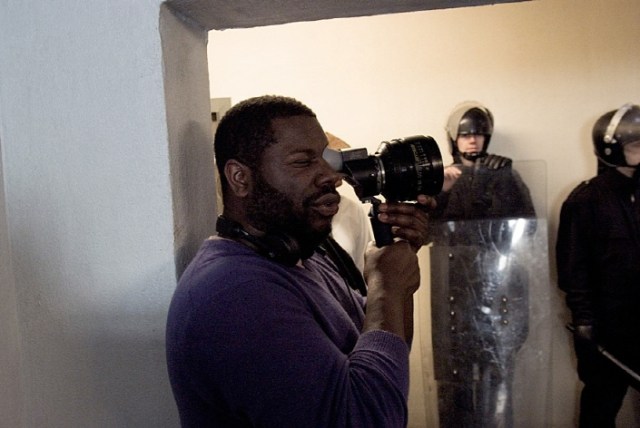
The prison guards are always ready to crush their prisoners’ spirit if that is deemed necessary. During one particularly brutal sequence, the prisoners are beaten and then shoved into a barbaric cleaning process, and the cinematographer Sean Bobbit’s handheld camera vividly conveys to us the chilling inhumanity of this shocking moment. As the prisoners protest more, the prison guards oppress them more in response, and the British government keeps sticking to its position, as reflected by Margaret Thatcher’s haughty public announcement.

Around the end of its first half, the screenplay by McQueen and his co-writer Enda Walsh shifts its narrative focus onto Bobby Sands (Michael Fassbender), one of the key Irish republican prisoners in HM Maze prison. Around early 1981, he and other prisoners decided to do the second hunger strike because their demands had been not conceded at all since their first hunger strike in 1980, and he was the first one to start it.

hunger02

Before his hunger strike, he is visited by Father Dominic Moran (Liam Cunningham), and their long conversation scene, which is presented mostly through a 17-minute uninterrupted shot, is another highlight of the film. After getting themselves loosen a bit during first few minutes, they start to push and pull each other as respectively making their different arguments on the hunger strike, and Michael Fassbender and Liam Cunningham are simply captivating to watch as the camera steadily captures their characters’ dynamic interaction.

What follows right after this sequence is a slow, agonizing process of self-destruction into which Sands plunges himself for his political belief. Losing 14-kg (around 30 pounds) for his role, Fassbender is fearless in his committed performance, and his deteriorating appearance during the last act of the film looks quite convincing to say the least. Except one delirious flashback moment which feels a little too heavy-handed, McQueen has his movie stay close and true to Sands’s worsening physical condition, and what he and Fassbender achieved was powerful enough to boost their respective careers. Fassbender has been one of the most electrifying actors in our time since this breakthrough point, and he and McQueen continued to work together in “Shame” (2011) and “12 Years a Slave” (2013), for which McQueen won an Oscar while Fassbender received his first Oscar nomination.

“Hunger” remains to be a difficult film to watch for good reasons, but this is a superlative work fueled by its undeniable realism and terrific performances. While he made only three feature films during last 8 years, McQueen is already on the top of his craft as the master of dark human conditions, and it will surely be interesting to see his next steps in the future.

hunger01

Posted in Movies | Tagged , , , , | Leave a comment

Batman v Superman: Dawn of Justice (2016) ☆☆(2/4): Dawn of Tiredness

batmanvsuperman01

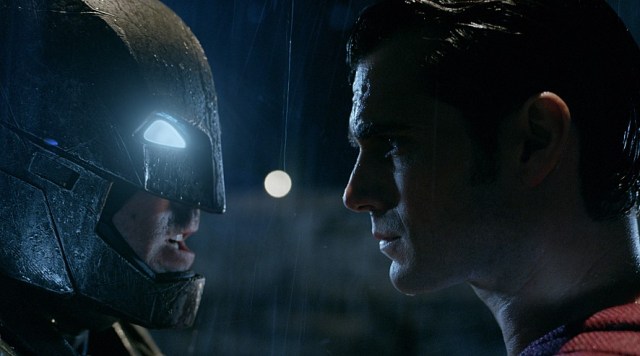
“Batman v Superman: Dawn of Justice” is a glum, humongous chunk of mess weighted further down by solemn ponderousness to bore us. Although its story doles out some interesting ideas and materials, they are all discarded, smashed, and pulverized in the end for lots of bombastic CGI actions. I found myself feeling tired and detached about whatever was going on the screen, and that is not a good sign at all for whatever will follow after this joyless experience.

During its plain, somber main title sequence which felt somehow hilarious to me, we get another version of how Bruce Wayne/Batman (Ben Affleck) came to be a superhero to terrify every criminal of Gotham City, and the movie moves forward to the climax part of “Man of Steel” (2013). As many of you probably remember, the downtown area of Metropolis was heavily damaged with thousands of casualties while Superman/Clark Kent (Henry Cavill) tried to save the humanity as well as his fellow Daily Planet reporter Lois Lane (Amy Adams) from General Zod (Michael Shannon), and Wayne, who hurriedly flied to Metropolis by a helicopter instead of his Batwing, found himself helplessly watching many of his Wayne Enterprises employees getting killed during this massive destruction.

After 18 months, Metropolis looks fully restored, but people around the world still feel conflicted about whether they can live with Superman. While he did save billions of people during that terrible time, many people including Senator June Finch (Holly Hunter) have expressed concerns over his uninhibited power. Wayne also regards Superman as a possible threat to mankind, but the most eligible bachelor in Gotham City is currently busy with investigating on another possible threat to his notorious city.

batmanvsuperman02

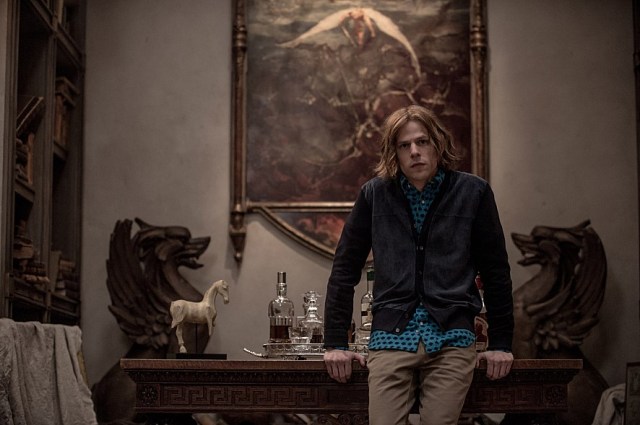
Anyway, his path is bound to cross with Superman’s, because his case is associated with none other than Lex Luthor (Jesse Eisenberg), a petulant young man who is also the CEO of LexCorp. As shown in his Oscar-nominated turn in “The Social Network” (2010), Eisenberg is always good at playing edgy, neurotic characters, and he looks well-cast during his first appearance, but then he does not have much to do except constantly chewing his one-note scenes as an annoying prick to be spanked sooner or later.

Not so surprisingly, Luthor has a devious plan for Superman and Batman, who become more hostile to each other after their first encounter. Despite the advices from his trustworthy butler Alfred Pennyworth (Jeremy Irons), Wayne becomes more obsessed with tackling Superman. As he is viewed more negatively in public, Superman becomes more conflicted about his position on the Earth, and that certainly throws shades on his relationships with Lois and his stepmother Martha (Diane Lane).

The clunky, jumbled screenplay by David S. Goyer and Chris Terrio spends too much time in building up its plot and then is tumbled into monotonous action mode along with several unintentionally funny moments. During the climax sequence, the movie emphasizes to us at least three times that the circumstance will be far less damaging compared to “Man of Steel”, but what it serves to us is a pretty much same thing except seemingly less body count. Lots of things get blown up or smashed in its heavily stylized CGI actions as the sound department people and the composers Hans Zimmer and Junkie XL try everything they can do for mercilessly assaulting our eardrum, and CGI figures including one hideous creature bounce around here and there with no visible sense of physical impact or dramatic stake. When I watched Norwegian disaster film “The Wave” (2015) on last Monday, what was at stake for its characters felt palpable to me even though I was well aware of its special effects on the screen. In case of “Batman v Superman: Dawn of Justice”, I only noted that the director Jack Snyder and his crew soaked their film into expensive special effects.

batmanvsuperman03

The movie actually has a few good things to mention. Henry Cavill embodies well his superhero character as he did in the previous film, and Ben Affleck is surprisingly solid although we will have to see whether he will be able to do something as memorable as Christian Bale in Christopher Nolan’s Batman Trilogy. As Diana Prince/Wonder Woman, Gal Gadot is the saving grace we all can agree on, though the movie is too busy to give enough time to her character. I heard that there will be a movie solely about her character, and, judging from what I observed from “Batman v Superman: Dawn of Justice”, I think Gadot is well-qualified for the job.

Meanwhile, many other notable performers in the film are stuck in their thankless jobs. While Amy Adams, Diane Lane, Laurence Fishburne, Harry Lennix, Michael Shannon, and Kevin Costner reprise their respective roles as required, Scoot McNairy, Jeremy Irons and Holly Hunter are unfortunately wasted due to their colorless supporting characters, and Ray Fisher, Jason Momoa and Ezra Miller are briefly glimpsed at one point as the characters to be introduced in Snyder’s upcoming Justice League movies.

“Batman v Superman: Dawn of Justice” is not a total disaster, but its glaring lack of awe and excitement further exemplifies what has been noticed among superhero movies during recent years. Confined in their genre conventions, they become increasingly familiar and predictable to our exhaustion, and I am now reminded again of how much Nolan’s Batman Trilogy achieved while testing the genre as much as it could. While that trilogy really surprised me, “Batman v Superman: Dawn of Justice” did not surprise me at all even during what was supposed to be a dark dramatic finale, and I came to worry more about what will come next.

batmanvsuperman04

Posted in Movies | Tagged , , | Leave a comment

The Wave (2015) ☆☆☆(3/4): A tsunami movie from Norway

thewave02

Norwegian film “The Wave” sets its modest goal and then delivers its goodies as intended from the start. When it stacks up various stock genre materials during its first act, it is lean and efficient as skillfully building tension on the screen. When all hell breaks loose during its middle act, it strikes us with shock and awe as promised. When it eventually enters its final act, there is enough dramatic momentum for its struggling human characters. While it breaks no new ground in its genre, it accomplishes the goal well with its plausible natural catastrophe, and it deserves some praises for that.

Like many of its senior disaster movies such as “The Towering Inferno” (1974), “The Wave” has a hero who happens to notice disturbing signs in advance. As a geologist, Kristian (Kristoffer Joner) has worked at an observatory located near to Geiranger, a small touristic village which does exist in the western area of Norway and has drawn tourists for those gorgeous sceneries of the Geirangerfjord area. Everything looks fine and peaceful in this lovely fjord area which has been listed as a UNESCO World Heritage Site since 2005, but there has actually been the increasing possibility of rockslide which can cause a big tsunami to damage the village and its surrounding region, and Kristian and his colleagues has been constantly monitoring for any small but significant geological warning around the area.

After a tiny aberrant happening is detected during his last day at the observatory, Kristian cannot help but think more about that incident as he and his family are preparing for their house-moving. While his wife Idun (Ane Dahl Torp) and their cute little daughter Julia (Edith Haagenrud-Sande) have no problem with moving to a city for his new position, their teenager son Sondre (Jonas Hoff Oftebro) is not so happy about this change, and there is a brief intimate scene in which he and Kristian have a heart-to-heart talk outside the house.

thewave04

Kristian can just leave the village along with his children while his wife remains there for a few days at a hotel where she works, but there inevitably comes a moment when he realizes the dire possibility behind what he and his colleagues observed. Of course, his colleagues are skeptical in their opposite position. They do recognize that he may be right, but, as scientific experts, they want more confirmations to convince them enough to push the red button for emergency. Kristian does not overlook that he may end up crying wolf, but he still cannot get rid of that uneasy gut feeling of his.

Often serving us with the grand landscape shots of the fjord area, the director Roar Uthaug steadily handles the build-up process accompanied with nice scenes to notice. I particularly enjoyed one quiet but tense scene where two characters climb down deep into a dark, narrow space for checking sensor cables, and I found myself still amazed by the notably late sunset time of the high latitude background in the film (it still looks like late afternoon there even after PM 9:00). The screenplay by John Kåre Raake and Harald Rosenløw-Eeg is plain and simple in its straightforward manner, and the lead actor Kristoffer Joner and the other main performers in the film convincingly inhabit their roles with small human touches.

As the main highlight of the film, the tsunami sequence looks real and terrifying thanks to its effective special effects. Although it relatively looks less epic and expensive compared to what we usually see from Hollywood disaster films, this sequence hits us hard with impactful sights of massive destruction. Besides the obligatory timers for countdown, the movie also features a digital watch which can instantly check altitude, and that functions as a good suspense device when characters are frantically running up to a higher place as the huge wall of water is rapidly advancing to sweep and smash everything in sight.

thewave03

Personally, the movie reminds me of South Korean blockbuster film “Tidal Wave” (2009), another disaster movie associated with tsunami. That movie was tepid and overlong as trying to sell itself too hard with redundant silly humor and cheap melodrama, and I did not care a lot about its cardboard characters. That mega-tsunami in the film did look humongous on the big screen when I watched it during one summer day of 2009, but that was merely one of a very few good things in that forgettable film which bored and annoyed me.

In contrast, “The Wave” succeeded in holding my interest thanks to its adequate attention to story and character besides its solid technical aspects. It keeps rolling even after the tsunami sequence, and we get several dark moments which contrast well with the bright mood felt from the early scenes of the movie. While it is easy to predict which character will survive or not in the end, we pay attention to what is at stake for Kristian and other few characters, and that is why a certain scene reminiscent of “The Poseidon Adventure” (1972) works despite a number of nearly unbelievable things in that scene.

In last year, “The Wave” was chosen as Norway’s official submission for the Best Foreign Language Film Oscar at the 88th Academy Awards. Considering the year which gave us “Mustang” (2015), “The Assassin” (2015), “Our Little Sister” (2015), “Son of Saul” (2015), and “A War” (2015), the movie is less memorable in comparison, but it is a well-made genre piece with earnest appeal anyway, and you will enjoy it if you are a disaster movie fan looking for something a little different.

thewave01

Posted in Movies | Tagged , , , | Leave a comment

The 33 (2015) ☆☆1/2(2.5/4): Trapped 700 meters underground for 69 days

the3301

Based on a dramatic real-life story which drew lots of public attention around the world in 2010, “The 33” attempts to give us a close, vivid look into that extremely risky period. As many of you remember, 33 miners of the San José copper–gold mine in Chile were really trapped 700 meters (around 2,300 ft) underground for no less than 69 days, and it is quite miraculous that they all were rescued in the end despite their very slim chance in the beginning. While their remarkable story is worthwhile to be told, the movie itself is deficient in its focus and narrative momentum, and its weak aspects are not wholly compensated by its good parts to notice.

The early scenes of the film introduce several notable members in the group as looking around their mining area located in the Atacama Desert, and they look pretty much like conventional characters for disaster drama, though they are probably not so far from their real-life counterparts. While one young rookie miner has a wife who is soon going to give birth to their child, there is an old-timer who is about to retire, and then there are also 1) a dependable family man dearly loved by his wife and daughter, 2) a diligent shift foreman dedicated to his work and duty 3) an alcoholic bum who has been estranged from his sister for years, 4) a husband currently (and openly) sandwiched between his wife and mistress, 5) a Bolivian lad who is not so welcomed by other miners, and 6) an Elvis impersonator.

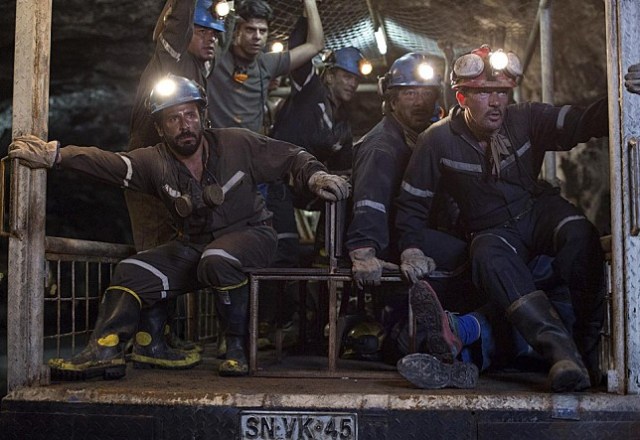
When they and other miners go to their workplace as usual in the morning of August 5th, 2010, it looks like just another usual day in their 121-year-old mine which has been riskier during recent years. We watch their long underground route winding down toward the lowest part of their workplace, and we are informed that it is higher than 30℃ in this underground sector. They are well aware of the dangers in their work environment, but they are willing to work there as long as they get paid enough to support their families.

the3302

Not long after the foreman finds the serious signs of the impending disaster, the mine is eventually collapsed during that afternoon. All of 33 miners who could not escape from the mine at that time fortunately survive the collapse, but they find themselves being stuck in their refuge spot. While a big diorite rock completely blocks the mine route, they do not have enough food, and, to make matters worse, there is not even any possible way of communicating with the outside.

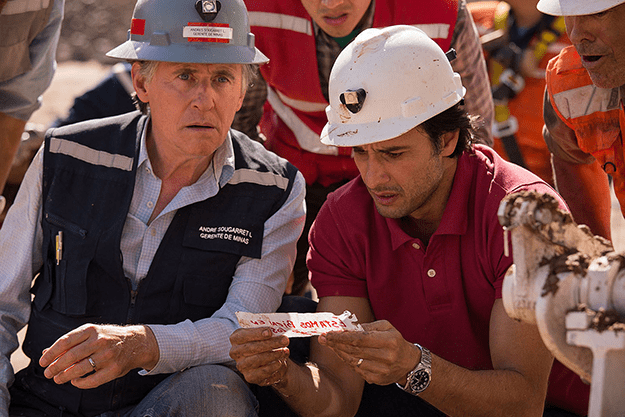
As the miners are worrying about the worst situation they may have to accept in the end, the movie observes the circumstance unfolded on the ground. As the news of the accident is quickly spread through media, many concerned family members come to the mine for demanding prompt actions for saving their loved ones, and Laurence Golborne (Rodrigo Santoro), the Minister of Mining of Chile, decides to handle the situation for himself under the reluctant permission of President Sebastián Piñera (Bob Gunton). While he does not have much experience or knowledge for supervising the rescue mission, Golborne tries his best in handling the media and the trapped miners’ family members, and his chief engineer André Sougarret (Gabriel Byrne) and other crew members race against the time as trying to drill correctly to where miners are trapped.

The miners are relieved to learn that there is still a chance for their survival, but the situation remains gloomy for them as Sourgarret points out to Golborne during one brief scene. Anything can go terribly wrong during that tricky drilling process, and they may be too late for the miners even if they succeed at last. As time goes by, the miners become more desperate, and so do their families, who are patiently waiting outside the mine with growing dread.

the3304

The movie works best when it focuses on the miners’ urgent situation in the underground, and the director Patricia Riggen did an effective job of establishing the gloomy claustrophobic atmosphere encompassing the miner characters in the film, who look believable in their weary appearances smeared with sweat and grime. While recognizable actors such as Antonio Banderas and Lou Diamond Phillips naturally draw our attention more, they are mostly mingled well with their fellow actors, and these cast members’ ensemble work functions as the solid ground to support the film.

However, the screenplay by Mikko Alanne, Craig Borten, Michael Thomas, and José Rivera, which is based on the nonfiction book “Deep Down Dark” by Héctor Tobar, begins to lose its focus as well as the sense of urgency especially after a major breakthrough point in the middle of the rescue mission process. The part involved with the media sensation surrounding the accident is clumsy and half-baked, and the expected climax is a mere reproduction of what happened during that dramatic moment on October 13th, 2010. The movie is also hampered frequently by its thin characterization, and it is disappointing to see talented performers like Juliette Binoche, Rodrigo Santoro, Bob Gunton, James Brolin, and Gabriel Byrne stuck with bland thankless roles.

Watching the finale followed by the footage clip of those real-life miners having a meeting together on the beach, I asked myself a variation of critic Gene Siskel’s famous question: “Is this film more interesting than a documentary of these people having lunch?” Although “The 33” is sincere and respectful in its intentions and I like some of its effective parts, my answer is no, but you may watch this run-of-mill disaster drama if you have some free time to spend without regret.

Sidenote: The movie is one of the last works by the composer James Horner, who died due to a sudden plane crash in last year.

the3305

Posted in Movies | Tagged , , , | Leave a comment

Snow Paths (2015) ☆☆☆(3/4): A confused alcoholic at Catholic sanatorium

snowpaths01

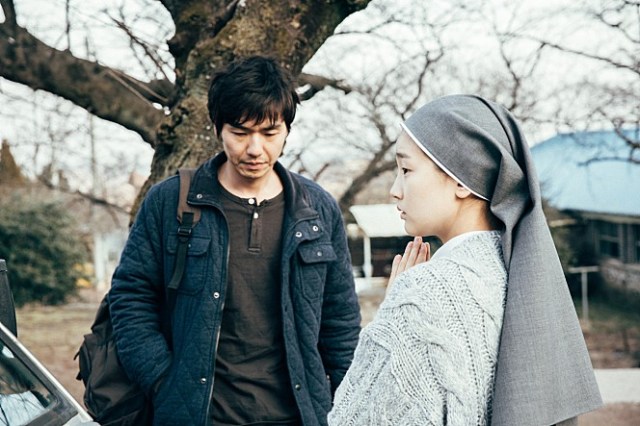
South Korean film “Snow Paths” is seemingly simple at first. A man struggling with his personal problems comes to a quiet place, and then he meets someone who brings some bright change into his troubled state. While this is a familiar premise, the movie is an engaging character drama mixed with religious elements, and it becomes more curious when it moves into unexpected areas during its second half.

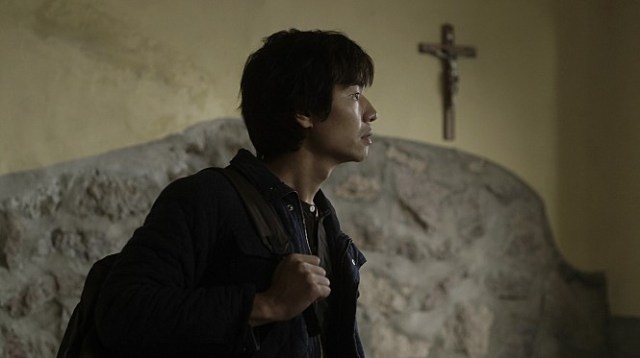
When we meet Jeong-woo (Kim Tae-hoon) during the opening scene, this young man is going to a Catholic sanatorium located in some remote rural mountain area. He is an alcoholic in the serious need of help, and his body already shows those alarming symptoms of alcoholism including trembling hands. Even when he is walking alone to the sanatorium, he drinks a bottle of soju (it is Korean distilled beverage, by the way), and then he hides another bottle in a toilet not long after he arrives at the sanatorium.

Anyway, he is gently welcomed by the director nun of the sanatorium during his first day. Although he has not been very religious compared to his mother, the director nun, played by Jeon Gook-hyang, is willing to help her old friend’s son, and Jeong-woo soon finds himself deprived of any chance of drinking. When he is checked by one of the nuns in the sanatorium, it looks like she handled many problematic alcoholics like Jeong-woo before, and there is no way to get a drink unless he drives to a village far from his current staying place.

snowpaths04

Constantly struggling with his craving for alcohol, Jeong-woo gets acquainted with Sister Maria (Park So-Dam). He is drawn to her as spending more time with her, and she seems to like him too, but neither of them are willing to get closer to each other regardless of whatever is being felt between them. There is something elusive about her, and the director nun, who took this shy young woman under her wing several years ago, sincerely advises Jeong-woo not to get too close to her.

Meanwhile, Jeong-woo begins to experience odd dreams and occasional blackouts as his mind becomes more unstable due to withdrawal symptoms. While his mind often teeters on the thin line between reality and delusion, he gets more confounded day by day, and we naturally come to wonder about the reliability of his increasingly agitated viewpoint.

His anxiously abstemious circumstance becomes more interesting when a beefy hunter guy comes to the sanatorium and stays with Jeong-woo in the same room. He somehow sees through Jeong-woo right from the beginning, and Choi Moo-seong, who was memorable as a ghastly supporting character in “I Saw the Devil” (2010), effortlessly switches back and forth between jovial and unnerving modes. Like Sister Maria, the hunter seems to touch something inside Jeong-woo, and the uneasiness between them eventually leads to a tense sequence unfolded during one snowy day.

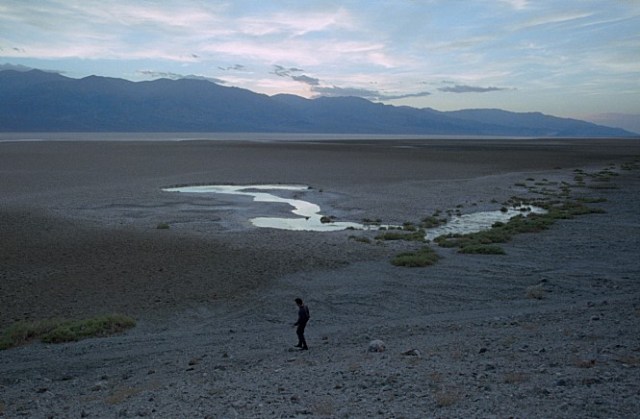
The director/writer Kim Hee-jung, who previous directed “The Wonder Years” (2007) and “Grape Candy” (2011), keeps her movie grounded in calm realistic mood. As her story is slowly developed, the tranquil sense of isolation surrounding her characters is further accentuated by the cold, barren wintry atmosphere on the screen, and Kim also makes a good use of plain rural locations for establishing a quiet solitary environment with considerable realism.

snowpaths05

As the movie subtly conveys to us the emotional undercurrents revolving around them, Jeong-woo and Sister Maria come to us as two damaged souls who sense emotional scars from each other. There is a crucial scene where Jeong-woo learns a little more about Sister Maria’s previous life through an impromptu night visit for someone who was once close to her, and Park So-Dam, who had an impressive breakthrough year in 2015 thanks to a series of solid supporting turns in several films including “The Priests” (2015), “The Throne” (2015), and “The Silenced” (2015), is terrific during an uncanny ambiguous moment which is left to our judgement while suggesting a lot about what her character has possibly kept to herself for years.

Kim Tae-hoon, who previously appeared as one of the supporting characters in “Gyeongju” (2014), gives a nice understated performance which gradually expresses his character’s guilt and torment. As the movie later reveals an important fact behind Jeong-woo’s despairing emotional state, we accordingly look back on what we have seen through his viewpoint, and then we come to see that the movie is ultimately about his torturous inner struggles followed by the difficult first step toward possible healing process. He hit the bottom indeed, but maybe he can climb up from there now thanks to the kindness of a stranger who cares about him.

In the end, “Snow Paths” leaves us with several unexplained or unresolved things to ponder on. Is Sister Maria really ‘special’ as the director nun says, or is she merely a troubled girl who found her solace in religion? And, above all, what exactly happens during the climax sequence? To be frank with you, I do not have any definite answer for these questions and other ones, but I enjoyed the movie for its mood and performances, and I appreciate how it lets us assess and interpret its story and characters for ourselves.

snowpaths06

Posted in Movies | Tagged , , , | 2 Comments

Knight of Cups (2015) ☆☆1/2(2.5/4): A Terrence Malick film floated in fragments

knightofcups01

Terrence Malick’s new film “Knight of Cups” is visually stunning and profoundly disorienting. We get lots of beautiful, mesmerizing moments as it is floated here and there along its visual stream-of-consciousness. We get fragmented glimpses into its detached, disillusioned hero and others revolving around him and his life. This amorphous approach could work as it did in Malick’s recent works, but, unlike them, the movie lacks a centrifugal life force to hold and support itself, and it ultimately feels muddled and superficial instead of being something transcendent it is trying to be.

Christian Bale plays Rick, a successful but disaffected Hollywood screenplay writer who has felt growing dissatisfaction with his life. Especially after an incident which suddenly happens on one day, he comes to reflect more on his life, and the movie accordingly listens to his inner thoughts as he continues to muse on how he has been lost during all those years in Hollywood – and how he can regain any sense of purpose for his life.

As his mind randomly wanders around its spacetime, we get to know a bit about several people in his life. We meet his brother Barry (Wes Bentley) and father Joseph (Brian Dennehy), and we observe how Joseph has been estranged from his sons, though we can only speculate about what exactly happened between them. We hear about the suicide of Rick’s other brother, but the details of that sad incident are never mentioned or discussed, except that Barry still seems to be angry about his father for that.

In case of his professional career, Rick keeps getting lucrative offers as usual, but he is not so interested. He lives in a slick modern apartment, but, as amusingly pointed out during one comic scene, his residence feels hollow and empty as if it reflected his current state of mind. He keeps getting mired in your average hedonistic Hollywood lifestyle, but he does not get much pleasure or excitement from that, and one sequence shows him simply meandering around others at a big mansion party held by Tonio (Antonio Banderas), a rich playboy guy who will keep partying as much as his money can afford.

knightofcups02

In the meantime, a number of women in his life fleet by the screen. There are some moments involved with his ex-wife Nancy (Cate Blanchett), and then there are the flashback scenes which glimpse how his affair with a married woman named Elizabeth (Natalie Portman) was bitterly terminated. We also meet Della (Imogen Poots), a spirited woman with whom Rick hangs around for a while; Helen (Freida Pinto), a graceful model who soothes Rick during their incidental encounter; Karen (Teresa Palmer), a plucky stripper whom Rick comes across in Las Vegas; and Isabel (Isabel Lucas), who gives Rick a small help later in the movie.

All these things mentioned above and many other things in the film keep getting shuffled like a deck of cards. As a matter of fact, there is a scene in which a fortuneteller tells Rick’s fortunes through her tarot cards. While the title of the movie comes from one of tarot cards, some other tarot cards function as the chapters of the film, respectively reflecting what is going to be presented in each chapter.

Christian and mythic elements are freely mixed together in the film, as directly reflected by not only tarot cards but also the quotes from the 1678 Christian allegory “The Pilgrim’s Progress” and the passage “Hymn of the Pearl” from the Acts of Thomas. The latter is the story about a boy who was sent to Egypt to retrieve a pearl from a serpent but became seduced and then lost instead while forgetting his identity and family, and you can easily draw the parallels between Rick and the boy who was “the son of the king of kings”.

While this aspect is surely intriguing, but the movie failed to engage me on the level of human interest, and that is rather surprising, considering how deeply humane many of Malick’s films are. The characters in his best films such as “Days of Heaven” (1978) and “The Tree of Life” (2011) may be no more than archetypes, but they are the emotional anchors to hold our care and interest. Even when it aims high with its vast canvass of space-time, “The Tree of Life” is always a small, intimate family drama at its meditative heart, and its hero’s parents played by Brad Pitt and Jessica Chastain come to us as vivid characters even when they represent or symbolize its philosophical/religious/spiritual ideas.

knightofcups03

I heard that Malick had his performers play their characters without many details during the shooting of his film, and I can only admire how they manage to fill blanks to some degrees through their screen presences. Looking more subdued and less intense than usual, Bale did a good job of internalizing his character’s emptiness, but his character is far less compelling compared to the equally disinterested writer hero of Paolo Sorrentino’s “The Great Beauty” (2013), which did a better job than “Knight of Cups” in many aspects. While those beautiful actresses passing by Bale have less things to do, Brian Dennehy, Wes Bentley, and Antonio Banderas manage to leave more impression on us, and we also get the brief appearances by Armin Mueller-Stahl, Ryan O’Neal, Cherry Jones, Nick Offerman, Joe Manganiello, Clifton Collins Jr., Jason Clarke, Joel Kinnaman, Dane DeHaan, Shea Whigham, and Ben Kingsley, who provides a small voice performance for the film.

Although I felt impatient and dissatisfied during my viewing, “Knight of Cups” is not a complete failure. Emmanuel Lubezki, a great cinematographer who previously collaborated with Malick in “The Tree of Life” and “To the Wonder” (2012) and recently won his third consecutive Oscar for “The Revenant” (2015), provides sublime materials for its visual collage of nature, civilization, and human memory. I also like the soundtrack which consists of the score by Hanan Townshend and many different preexisting works including Wojciech Kilar’s “Exodus” and Edvard Greig’s “Peer Gynt”. The movie feels redundant and repetitive especially during its parts reminiscent of Malick’s previous works, but it is nice to see him becoming more prolific than before anyway (remember his 20-year-hiatus between “Days of Heaven” and “The Thin Red Line” (1998)?), and I hope he will bring something more satisfying in his upcoming film which will probably be released around this year.

knightofcups04

Posted in Movies | Tagged , | Leave a comment

Bone Tomahawk (2015) ☆☆☆(3/4): Gritty and Gruesome

bonetomahawk01

“Bone Tomahawk” is a freakish mix of two pulpy genres. On one side, it is a gritty modern western film packed with colorful goodies to be enjoyed along its ride. On the other side, it is a gruesome horror flick which often strikes us hard with horrific moments of blood and mutilation. While I winced during some of its most violent moments accompanied with those familiar slashing and crunching sound effects, I appreciated the skills and efforts put onto the screen, and I sort of admired the bloody but engaging mixture of different genre elements in its grisly pot.

After the gut-chilling opening sequence involved with two seedy cutthroats, the movie introduces to us a number of residents living in Bright Hope, a small American frontier town of the late 19th century. Things initially look quiet and peaceful while everybody in the town is going through another usual day, but their peace is shattered when a suspicious man comes into the town at night. As Sheriff Franklin Hunt (Kurt Russell) and his old deputy Chicory (Richard Jenkins, who did a splendid job of channeling Walter Brennan) suspect, that guy is indeed hiding something, and he is sent to the town jail shortly after confronting Hunt and Chicory at the town saloon.

However, it turns out this is not the end of the situation at all. The guy in question was being chased by a bunch of cannibalistic troglodytes, and they soon strike upon the town during that night. Besides Hunt’s latest prisoner and his another deputy, a young housewife named Samantha O’Dwyer (Lili Simmons) is also kidnapped because she went to the jail for the prisoner’s medical treatment during that time, and her husband Arthur O’Dwyer (Patrick Wilson) is devastated when he hears this bad news in the next morning. The Professor (Zahn McClarnon, who was one of the memorable supporting characters in the recent season of TV drama “Fargo”), who is probably the only Native American guy in the town, tells Hunt and others that the kidnapped people will be eaten sooner or later once they are taken to these savages’ lair hidden somewhere in a remote desert valley far from the town, and Hunt promptly decides to go to that dangerous place despite enormous risk.

bonetomahawk02

Besides Chicory, Hunt has two other people willing to go along with him. John Brooder (Matthew Fox in a dandy mode not so far from John Carradine’s character in “Stagecoach” (1939)), a slick cad who does not feel any qualm about showing his racist hatred toward Native Americans, joins the posse because he was indirectly responsible for the kidnapping of Mrs. O’Dwyer, and O’Dwyer also volunteers even though this drover guy recently got his left leg broken due to an unfortunate accident. He and others know well that his injury may jeopardize their rescue mission at any point, but he is adamant about joining the posse, and Hunt reluctantly allows O’Dwyer into his group.

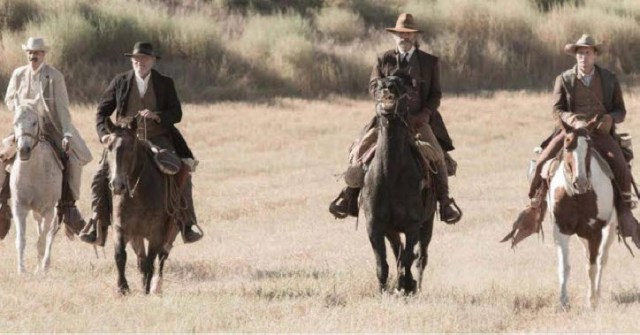
The movie takes its time in building its nervous atmosphere further as its four main characters ride across remote wasteland areas. While the cinematographer Benji Bakshi captures the barren beauty of dry landscapes on his camera, the sparse score by Jeff Herriott and the director/writer S. Craig Zahler accentuates the solitary mood encompassing its main characters’ perilous journey, which is always surrounded by the possibility of sudden danger even when they are sleeping during night.

As they get closer to their destination, their situation gets worse than expected, and O’Dwyer’s injured leg inevitably becomes a big serious problem no matter how much he tries to conceal his worsening condition from others. The movie thankfully takes a restrained mode during a number of grueling moments involved with his physical predicaments, and Patrick Wilson’s increasingly weary face effectively conveys to us that excruciating pain which his character has to endure at every difficult step of his.

BONE TOMAHAWK Richard Jenkins Kurt Russell

During its third act unfolded around the troglodytes’ lair, the movie pulls out all the stops for hurling itself into striking moments of extreme violence which are skillfully handled by Zahler and his crew. While the troglodyte characters in the film are no more than cruel, ruthless monsters to be eliminated, they are frightening foes to overwhelm and corner our heroes as depicted with several ghoulish details to notice. I was horrified by how they mercilessly butcher one of their prisoners at one point, I was rather fascinated with how they make their disturbing inhuman howl through an unspeakable mean you should see for yourself, and I was also chilled by one brief shot in their lair, which suggests far more horror behind its already horrible sight.

The movie has the cast consisting of reliable veteran performers. With his tough guy persona honed by the collaborations with John Carpenter, Kurt Russell is always a suitable actor for western films, and he ably commands his scenes as he recently did in “The Hateful Eight” (2015), another notable western film of 2015. While Patrick Wilson is equally good as another center of the movie, Matthew Fox and Richard Jenkins provide solid supporting turns around Russell and Wilson, and Jenkins is effortless as his seemingly goofy character comes to show more depth than we thought. Lili Simmons has nice intimate scenes with Wilson during the early part of the film, and you may be delighted to notice Sid Haig, David Arquette, Fred Melamed, and Sean Young among the cast members.

While it is certainly not everyone’s cup of tea, “Bone Tomahawk” is worthwhile to watch for its mostly successful exercise in genre hybrid. It could be shortened a bit for improving its occasionally lagging pace, and its violence often feels gratuitous, but this is still an admirable debut work which shows the considerable talents behind it. I recommend it with some caution, so please don’t say I did not warn you in advance.

bonetomahawk06


Posted in Movies | Tagged , , | Leave a comment

Z for Zachariah (2015) ☆☆1/2(2.5/4) : A triangle in the post-apocalyptic world

zforzachariah01

I do not mind ambiguity, but the ambiguous nature of “Z for Zachariah” frustrates me instead of intriguing me. As a sort of post-apocalyptic chamber drama, the movie focuses on the psychological tension being developed among three characters who may be the last surviving human beings in their doomed world, and it surely holds our attention with its subtle tension accumulated below the surface, but how it eventually arrives at the finale is disappointing compared to what has been built up so compellingly during the rest of the film.

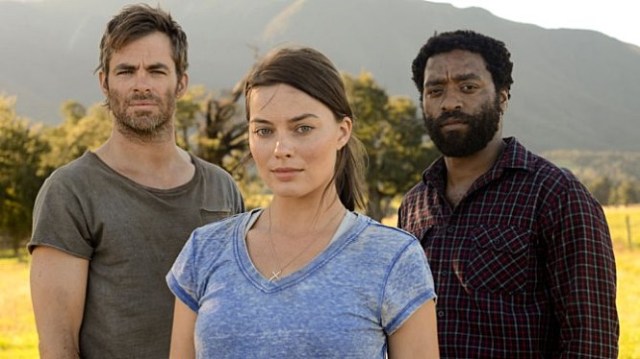
The movie opens with another lonesome day of Ann Burden (Margot Robbie), a young country girl living alone in her village which has been a safe haven for her since the collapse of human civilization. While it is not explained well in the film, it is implied that a global nuclear war broke out several years ago, and the world outside Ann’s village has been heavily contaminated by the resulting fallout while the village has been somehow protected thanks to its geographical and climactic conditions. Located in the middle of a wide field surrounded by mountains, the village has an abundant source of clean, uncontaminated water from the ground, and there are also other resources to help Ann maintaining her modest self-sustaining life.

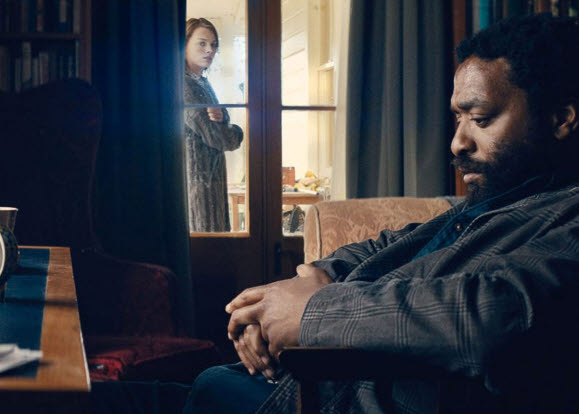
Not long after her brief venture into a small empty town over the mountains, Ann happens to come across a guy named John Loomis (Chiwetel Ejiofor). John is an engineer who was luckily in an underground bunker when the war began, and he has been wandering alone while looking for any safe clean place like Ann’s village. Due to his unfortunate mistake during their first encounter, John finds himself getting exposed to a heavy dose of radiation, so he comes to stay at her house as going through a difficult recovery process.

As days go by, John gets better while showing his gratitude to Ann. He helps Ann manually pumping gasoline at a nearby gas station, and Ann is happy to use her tractor again for her farm works. John also gets a nice practical idea about how to generate electricity for them, but Ann is reluctant about his idea because that will demand a certain personal sacrifice on her side. She knows well survival comes first in her changed world, but that does not mean this good Christian girl can easily give up something important in her spiritual life.

zforzachariah02

And we sense the emotional attraction between Ann and John while they spend more time with each other under the same roof. After all, they are probably the last man and woman in their dying world, so it is natural that they find themselves drawn to each other despite their several differences, and the movie puts a little too blunt reminder on the screen when John looks around the library of Ann’s father which is full of religious books.

While Ann and John wonder about whether they should go further along with each other, a new situation begins with the unexpected appearance of another survivor coming from the outside. Caleb (Chris Pine) says he is going to a possible safe place somewhere in the south, and John regards this young handsome guy with reserved caution, but Ann lets Caleb sleep inside her house.

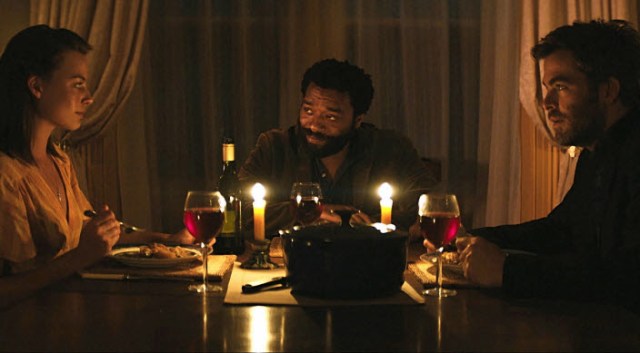
Not so surprisingly, the situation becomes more unstable as Caleb stays longer than expected. Ann and John are fine about getting extra help from Caleb during their farm works, but then Caleb begins to look less trustworthy as it seems he has some other thought in his head. Claiming to be a faithful Christian just like Ann, he approaches closer to Ann, and Ann does not seem to be so sure about which way her heart is inclined to. As the older man of the trio, John understands what may be going on between Caleb and Ann, and he is willing to accept whatever will inevitably happen – but then he finds himself grappling with how he feels about her.

zforzachariah03

The director Craig Zobel, who previously disturbed us with small but chilling drama “Compliance” (2012), did a good job of establishing the sense of desolation and isolation surrounding his three characters, and the cinematographer Tim Orr, who is David Gordon Green’s frequent collaborator, occasionally provides beautiful landscape shots while never overlooking the overall melancholic mood of the film. The three performers in the film are competent in their respective performances; while Chiwetel Ejiofor and Chris Pine make an effective contrast with each other, Margot Robbie, who has shown more of her talent since her breakout supporting performance in “The Wolf of Wall Street” (2013), holds the balance well between her co-stars.

Compared to the compelling set-up prepared by Zobel and his cast and crew, the finale of “Z for Zachariah” feels flaccid and underwhelming in its muted execution. I cannot go into details due to spoiler problems, but I can tell you that I was dissatisfied with how the outcome of one particular moment is clumsily left to our speculation without any substantial dramatic impact.

I am wondering about whether there is something lost in the adaptation process by Nissar Modi. I learned later that Robert C. O’Brien’s 1974 novel, which received the Edgar Award for Best Juvenile Mystery from the Mystery Writers of America after its posthumous publication in 1974, is different from the movie version in several notable aspects including characters, and now I feel more curious about the novel than before. Perhaps, it will give me a more palpable understanding of the title of the movie.

Sidenote: One of the other notable works by Robert C. O’Brien is children’s book “Mrs. Frisby and the Rats of NIMH” (1971), which was made into 1982 animation feature film “The Secret of NIMH”. I think you will probably have a better time with “The Secret of NIMH” than “Z for Zachariah”.

zforzachariah04

Posted in Movies | Tagged , , | Leave a comment