The Phenom (2016) ☆☆☆(3/4): A baseball pitcher with issues

thephenom02

“The Phenom” is a somber and restrained sports drama which focuses more on psychological elements than physical ones. Mainly revolving around one talented but troubled rookie baseball player, the movie calmly and tentatively examines his longtime emotional issues, and we come to have more understanding and empathy on him as he struggles to cope with those issues of his.

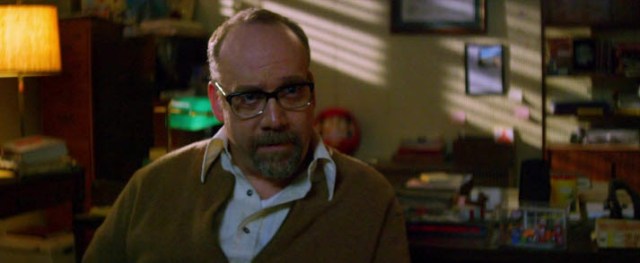
At the beginning, we see a therapy session between Hopper Gibson (Johnny Simmons) and his sports psychologist Dr. Mobley (Paul Giamatti). Gibson has been one of the most promising rookie pitchers in the Major League in US, but he recently becomes less stable and confident than before, and that is why he starts to meet Mobley, who, as mentioned later in the film, is known quite well as one of the leading experts in sports psychology. They initially talk about why Gibson did not feel that confident in the middle of a previous game, and Mobley listens to Gibson with phlegmatic care and attention as trying to grasp what has troubled Gibson.

The movie subsequently goes back to Gibson’s high school years, and we see how things were mostly fine for him during that time. While he was not exactly a good student as reflected by one scene unfolded at a classroom, he received considerable support and guidance from his high school baseball team coach as a star player expected to advance further in the future, and his mother was also willing to support her son’s athletic talent as much as she could.

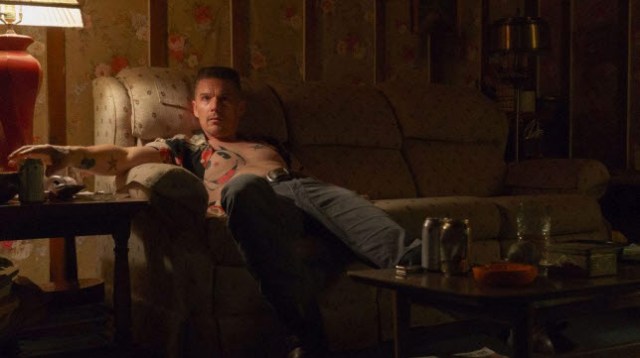
However, Gibson’s father, Hopper Gibson Sr. (Ethan Hawke), was not particularly nice to his son. Although he divorced his wife some time ago, he often came into the life of his ex-wife and son, and he usually bullied his son in the name of tough love because, well, as a guy who was once a very promising baseball player in the past, he was surely well aware of how talented his son is. He frequently pushed his son toward more focus and competitiveness, and, during another important game for his son, he deliberately provoked his son to the annoyance of everyone sitting around him including his ex-wife – and that certainly affected his son’s eventual output as reflected by a rather blatant visual moment during this scene.
thephenom01

We see how Gibson let himself more isolated as constantly driven by himself as well as his father. He had a nice girlfriend who genuinely liked him, but then they became quite estranged from each other after a small argument between them, and there is a bittersweet scene later in the film where they meet each other again in private several years later. It is clear that she still cares about him, but it is also quite apparent that they cannot possibly go back to where they were.

Meanwhile, we also observe a slow progress between Gibson and Mobley. Although he did not have much confidence on his sports psychiatrist at first, Gibson comes to reveal more of himself as talking more with Mobley, and Mobley’s gentle and caring attitude is naturally contrasted with how harshly Gibson was treated by his father, who still exerts a considerable influence on his son as shown from a scene where he appears in front of his son again shortly after Gibson rose quickly in his professional baseball career.

Leisurely moving from one episodic moment to another, the movie carefully builds up the emotional tension surrounding its hero, and that accordingly culminates to a crucial narrative point where Gibson and Mobley become more honest to each other as a patient and a doctor, but the movie still keeps sticking to its restrained storytelling approach. It simply shows us what may be the beginning of a healing process for its hero, and we come to accept the open-ended aspect of the following scene.
thephenom03

As the center of the movie, Johnny Simmons, who previously appeared in several notable films such as “The Perks of Being a Wallflower” (2012), carries the film well via his earnest performance. Although Gibson often feels a bit too colorless and amorphous, I guess that is what the screenplay by director/writer Noah Buschel intended from the beginning, and Simmons looks convincing as we observe how Gibson is shaped and influenced by several people around him.

In addition, Simmons are supported well by two veteran performers, who did a fabulous job of filling their respective roles with human nuances and details to be appreciated. Ethan Hawke, who has steadily been matured to become one of the most interesting actors working in Hollywood, presents an unexpected side of his talent here in this film, and he surely looks as tense and hateful as demanded on the screen. Paul Giamatti, who has seldom disappointed me since his breakthrough performance in “Sideways” (2004), is equally fine as ably supporting Simmons during their several scenes in the movie, and I admire how he conveys a lot to us even when his character makes a simple gesture around the end of the film.

“The Phenom” may disappoint you if you expect a conventional sports drama, but it is worthwhile to watch for its engaging psychological drama generated between its three main characters. Although I think it could go further, the movie succinctly delivers its story and characters during its rather short running time (88 minutes), and you may come to reflect on its subjects for a while when it is over.

thephenom04

Posted in Movies | Tagged , , , | Leave a comment

The Confirmation (2016) ☆☆☆(3/4): A weekend between father and son

theconfirmation01

“The Confirmation” is more entertaining and touching than I thought at first. While its overall mood is dry and glum just like its hero, the movie gradually reveals its sweet and humorous side as moving from one small good moment to another, and then we are moved as observing the small but significant changes in the relationship between its hero and his young but precocious son.

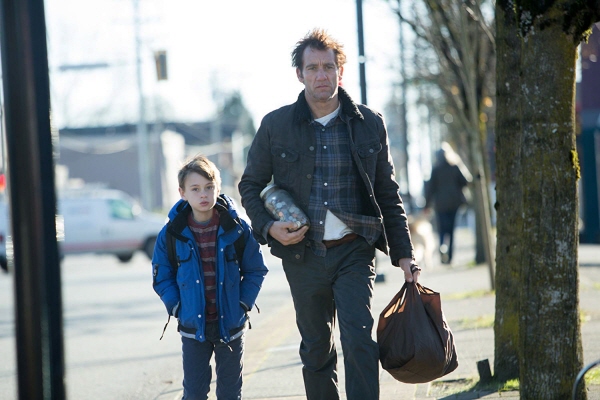
When we meet Walt (Clive Owen) at the beginning, he does not look like someone you can rely on. While struggling with alcoholism, he has been in a bad financial situation, and now he has to take care of his young son Anthony (Jaeden Lieberher) during a weekend in the absence of his ex-wife Bonnie (Maria Bello), who is going to take some personal trip along with her new husband Kyle (Matthew Modine). Because their son will have his communion and confirmation at her Catholic church around the next week, Bonnie is naturally a bit concerned, but Walter assures to her that he has been sober during recent years, and she trusts his words despite some reservation.

While not particularly enthusiastic about spending the weekend with his father, Anthony often looks at Walt with some concern because, as shown to us later in the story, this smart little kid knows well about his father’s drinking problem. When his father later goes to a local bar for meeting some guys, he initially waits inside his father’s truck while reading a book, but he eventually goes inside the bar some time later, and we get a subtly awkward moment when he spots his father in the middle of some conversation with a glass in his hand.

When Walt and his son subsequently leave the bar, Walt discovers that the precious toolbox in his truck gets stolen by someone, and that is a big problem because he really needs that toolbox for a job he will start to do on next Monday. Furthermore, his truck happens to have some engine problem, and then he finds himself evicted from his current residence as he has failed to pay his rent due to his difficult monetary situation.

theconfirmation03

While certainly frustrated with this bad circumstance, Walt tries to deal with his problems as much as he can. After managing to take out several things from his residence with his son’s help, he goes to his ex-wife’s residence along with his son, and then they look for any possible way to solve his trouble. Walt’s old friend Otto (Robert Forster) is certainly willing to help him, but there is not much he can do for Walt, so Walt begins to search for any information about his stolen toolbox, which is probably put in pawn for money already.

After meeting a guy named Vaughn (Tim Blake Nelson), Walt and Anthony go to some other guy who can probably help them. It is quite apparent that Drake (Patton Oswalt) is not a very reliable guy to say the least, but Walt has no choice because he is desperate for any information which may help him retrieving his toolbox.

While surely reminiscent of many other similar films such as “The Bicycle Thief” (1948) or “A Better Life” (2011), the movie steadily builds up its story and characters through a series of nice moments balanced well between comedy and drama, and some of the most amusing moments in the film come from Anthony’s innocently serious religious faith. Although he is quite passionate about science, he has also accepted the existence of God without much doubt, and there is a funny and intimate moment when Walt gives his son a wise and thoughtful advice on what to choose to believe for oneself. As going through a number of rather eventful moments with his father, Anthony comes to learn a bit about how complicated life is, and he later finds himself breaking some of the Ten Commandments as trying to do the right things.

theconfirmation02The two main performers of the film effortlessly complement each other on the screen. Clive Owen, who is no stranger to playing glum characters, is dependable as usual, and he is particularly good when he subtly conveys his character’s growing desperation without any trace of exaggeration. Jaeden Lieberher, who drew our attention for the first time with his memorable performance in Jeff Nichols’ “Midnight Special” (2016) and then moved onto “It” (2017) and “It Chapter Two” (2019), is equally wonderful in his unadorned performance, and he and Owen are believable in how their characters get closer to each other bit by bit along the story.

Director/writer Bob Nelson also assembles a bunch of reliable performers around Owen and Lieberher, and each of them has each own moment as bringing life and personality to their respective supporting roles. Robert Forster, Tim Blake Nelson, Stephen Tobolowsky, and Patton Oswalt are fun to watch as usual, and I particularly enjoyed Oswalt’s performance, which is alternatively silly and pathetic as required. In case of Maria Bello and Matthew Modine, they are rather under-utilized in comparison, but Bello has a little but crucial dramatic scene with Liberher around the end of the film, and she and Liberher deftly handle the humor and poignancy of their scene.

Overall, “The Confirmation” is a modest but solid character comedy drama to be appreciated for its considerate storytelling and a number of good performances, and I was surprised to find myself more emotionally involved in its story and characters than expected during my viewing. It may be a little too predictable, but it did its job as well as intended, and that is enough for me.

theconfirmation04

Posted in Movies | Tagged , , , | Leave a comment

Shoot the Piano Player (2018) ☆☆☆(3/4): A ‘blind’ piano player in trouble

shootthepianoplayer01

Indian film “Shoot the Piano Player”, which was recently released in South Korea as “The Blind Melody”, is a ridiculously funny black comedy thriller packed with some good laughs and wild twists. Although it is uneven and incoherent at times as trying too many things during its 138-running time, the movie often amused and tickled me in good ways, and I found myself gladly ignoring its several weak aspects such as broad characterization and frequent plot contrivance.

After the brief prologue scene which looks like the Indian version of Peter Rabbit (Yes, they do have rabbits down there in India), we are introduced to a young pianist named Akash (Ayushmann Khurrana), who, according to him, has been blind since he was hit by a cricket ball in his eyes at the age of 14. He has aspired for a successful musician career in Europe, but, despite his considerable talent, he has been so far stuck in his urban neighborhood without much progress while leading a rather lonely life at his shabby residence along with a cute little kitten, who, to be frank with you, drew my attention everytime it appeared on the screen.

And then there comes a substantial change into his life. During one afternoon, he happens to encounter a young woman named Sophie (Radhika Apte) in a downtown area, and she takes him to a restaurant run by her father, who happens to need a piano player to play music for his customers. Although there is only one piano in the restaurant as far as I could see, a series of your average Bollywood songs are loudly played on the soundtrack whenever Akash plays the piano on the screen, and I could not help but notice this aural discrepancy during my viewing, but you may not mind this at all as watching those restaurant customers joyously dancing near him.

shootthepianoplayer02

Meanwhile, Sophie and Akash come to feel attracted to each other, and it does not take much time for them to follow their romantic urge, but there is one problem. As already shown to us, Akash has actually pretended to be blind just because, as he confides at one point later in the film, he thinks this pretension of his will help focus more on honing his musical talent, and we accordingly get an amusing moment as he steadily maintains his disguise in front of Sophie when she visits his residence.

And then there comes a far bigger trouble to Akash after he happens to be hired by Pramod Sinha (Anil Dhawan), a rich real estate businessman who was once a very popular Bollywood star in the past. Pramod is eager to surprise his young wife Simi (Tabu) for their upcoming wedding anniversary, but it is clear that Simi is more occupied with her future acting career, which seems to be the main reason why she married Pramod.

When Akash subsequently arrives at Pramod’s posh apartment as requested, he is greeted by Simi instead of Pramod, and it soon becomes apparent to Akash that something quite serious happened in the apartment. What follows after that point is a morbidly funny scene where Simi and the certain other main character desperately try to fool Akash, and Ayushmann Khurrana thoroughly sticks to his straight attitude, which reminds me again that looking as serious as possible in front of absurdities is usually the best way for getting laughs from us.

Once he manages to get out of Pramod’s residence as keeping his disguise intact, Akash tries to get help, but, of course, there is no one to help him, and the situation becomes quite riskier than expected as Simi and her accomplice become more determined to get rid of any possibility of their serious crime exposed in public. As a result, we get a number of darkly humorous moments, and I particularly like a brief but nasty scene involved an old lady living near Pramod’s residence.

shootthepianoplayer04

The mood becomes darker as Akash becomes a lot more helpless than before, but the movie keeps maintaining its sense of humor as cheerfully doling out several plot turns, and we even get a wry song about kidney after our hero goes through another perilous moment. Although it trudges a bit during the finale which is not entirely successful for getting a little too serious, the story briskly moves from one narrative point to another on the whole, and the overall result feels relatively leaner compared to some other Bollywood flicks I saw during recent years.

Although the main characters in the film are more or less than simple caricature figures we usually observe from the distance, Khurrana and several other main cast members in the film play their respective roles with considerable gusto. While Khurrana ably goes back and forth between comedy and drama, Tabu is effectively droll in her femme fatale role, and she is especially good when her character has to think and act fast for herself during the climactic part of the film. In contrast, Radhika Apte is unfortunately stuck in her under-developed role, and it is a shame that she does not have much to do compared to Anil Dhawan and other more colorful supporting performers in the film.

In conclusion, “Shoot the Piano Player”, which should not be confused with François Truffaut’s “Shoot the Pianist” (1960) at any chance, is a solid entertainment which provides enough laughs and thrills for its audiences, and I appreciate the game efforts from director/co-writer Sriram Raghavan and his cast and crew members. It could push its story and characters harder for more twisted laughs, but I constantly chuckled during my viewing at least, and I think you will not be disappointed if you are looking for a crowd-pleasing product with distinctive local flavor.

shootthepianoplayer03

Posted in Movies | Tagged , , , , , | Leave a comment

The Monster (2016) ☆☆☆(3/4) : Mother and daughter menaced by a monster

themonster04.jpg

“The Monster”, which will belatedly be released in South Korea during this month, is a little independent horror film which works better than expected despite its rather thin premise and limited background. While it surely has a freakish creature as you may expect from its very title, the movie puts more emphasis on the troubled human relationship between its two main characters, and it is interesting to observe the dramatic development in their relationship while they try to cope with an unknown external threat.

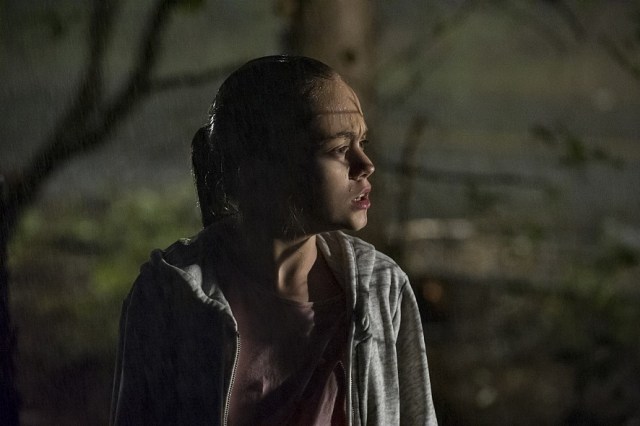
At the beginning, we see how things are problematic for a young divorced woman named Kathy (Zoe Kazan) and her young daughter Lizzy (Ella Ballentine). Seriously mired in alcoholism, Kathy does not show any responsible attitude while occasionally uncaring and abusive to her daughter, and she prefers to sleep more in her bed when her daughter wakes up early in the morning. Lizzy has been pretty sick of her mother, and she wants to leave for her father’s residence as soon as possible, but, anyway, she takes care of the aftermath of her mother’s another wild drunken night because she still feels emotionally attached to her mother despite many years of anger and resentment between them.

When she feels a bit better later around the late afternoon, Kathy leaves her house along with her daughter by her car, and the mood soon becomes quite awkward between them. It will take several hours to get to her ex-husband’s residence, but both Kathy and Lizzy do not have any particular thing to talk about, and Lizzy flatly suggests at one point that she may not want to stay in her mother’s house again.

themonster02

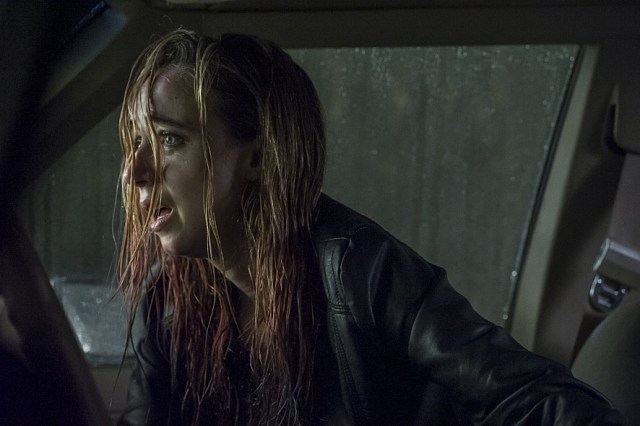
In the meantime, the night subsequently comes with lots of rain, and then something unexpected happens as Kathy is driving her car through some remote forest area. Her car hits a wolf which suddenly appears right in front of it, and she and her daughter find themselves stuck alone in their accident scene because her car is seriously damaged as a result. Fortunately, she can use her smartphone, so she instantly calls for help, but then she and her daughter will have to wait for a few more hours at least.

So far, everything seems okay, but Lizzy cannot help but feel unnerved after checking the dead body of that wolf on the road along with her mother. It turns out that the wolf was seriously injured already when it was hit by Kathy’s car, and Kathy discovers a certain sharp object stuck in the dead body of the wolf, which seems to belong to some big predatory creature.

And then the situation becomes more disturbing as Kathy and Lizzy keep waiting inside the car. Around the time when someone finally comes for help, Lizzy notices that the dead body of the wolf is somehow gone. While she finds it at a spot near the road, it is apparent that some of the dead body of the wolf was devoured by something, and then we see a big and dark creature moving in the background during that unnerving moment.

themonster01

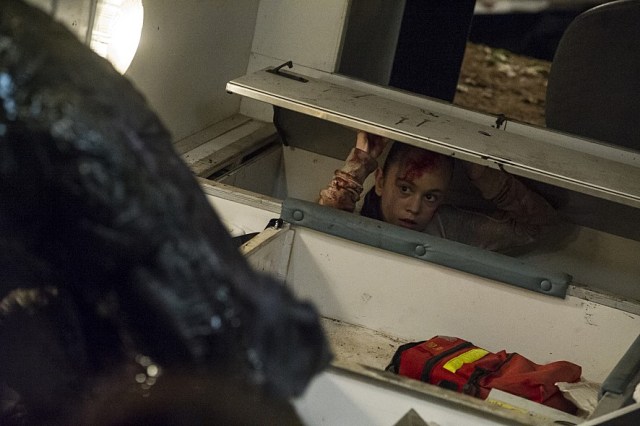
While rarely showing its titular creature throughout its short running time (91 minutes), the movie patiently builds up the sense of dread and suspense along the plot, and director/writer Bryan Bertino, who previously directed “The Strangers” (2008), did a solid job of establishing the tense and ominous atmosphere on the screen, and he also pays some attention to his two main characters. As the situation becomes more perilous and desperate for Kathy and Lizzy, the movie occasionally moves back to their hurtful past, and we come to sense more of how both Kathy and Lizzy feel pressured inside and outside as they come to discern that they have no one to help them except each other. While trying to protect her daughter as much as she can, Kathy realizes that she still cares about her daughter despite all those bad things she committed to her daughter, and there is a poignant moment later in the story when she decides to do what should be done right now for her daughter. In case of Lizzy, she must deal with her conflicted feelings toward her mother, and, as reflected by the allegorical opening narration of the film, she also has to confront whatever is lurking somewhere out there for growing up and then moving forward with her life.

It certainly helps that the movie is anchored well on the emotional level by its two main performers. Zoe Kazan, a likable actress who drew my attention for my first time with her breakthrough performance in “Ruby Sparks” (2012), is convincing during a number of intense moments in the film, and she is complemented well by her co-performer Ella Ballentine, who did far more than filling her spot beside Kazan. Thanks to their flawless interactions on the screen, we become more emotionally involved in Kathy and Lizzy’s dynamic relationship, and we accordingly come to care a lot about what is being at stake for them.

Overall, “The Monster” achieves as much as intended, and, in my trivial opinion, it is two or three steps above “The Strangers”. While I disliked that film for its barebone storytelling and characterization as well as its unpleasant nihilism without any human depth, I appreciated the considerable skills and efforts put into it to some degree, and it is surely nice to see that Bertino has advanced much from that starting point of his. In short, this is a solid genre piece to be admired for its competent aspects, and I think you should give it a chance someday, especially if you are a devoted fan of horror flicks.

themonster03

Posted in Movies | Tagged , | 1 Comment

It Chapter Two (2019) ☆☆☆(3/4): It returns…

itchaptertwo01

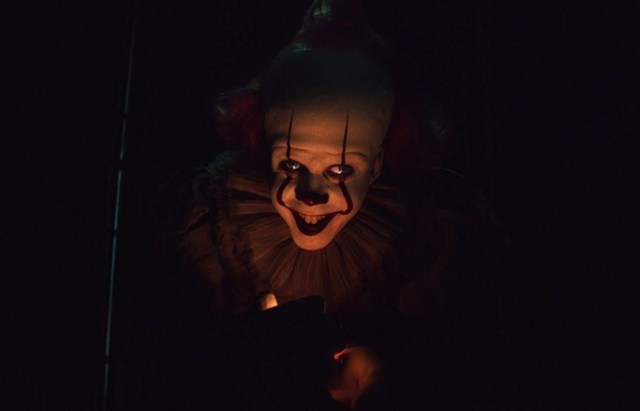
“It Chapter Two” attempts to deliver many scares and shocks just like its predecessor, and it succeeds to some degree. Although it is rather overlong as arduously building up narrative momentum for its expected big finale and closure, the movie is still entertaining on the whole, and its 169-minute running time is less burdensome than expected as it smoothly moves from one scary moment to another.

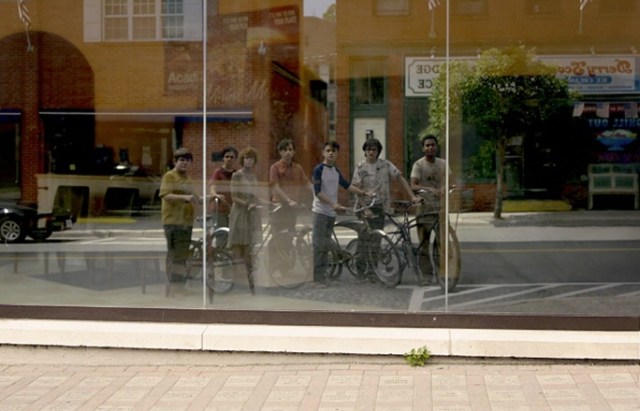
In the previous film, which is set in 1989, its seven young adolescent main characters stuck together for fighting against a powerful evil entity terrorizing their small city in Maine, and they eventually came to beat the entity in question, but this entity, which usually appears as a scary clown named Pennywise the Dancing Clown (Bill Skarsgård), is not dead at all. 27 years later, it returns and then begins its reign of terror over the city, and that is soon noticed by Mike Hanlon (Isaiah Mustafa), the only member of ‘The Losers’ Club’ who has remained in the city during last 27 years.

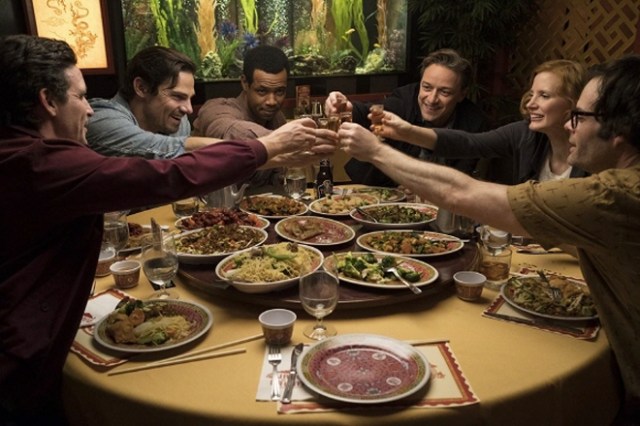
Hanlon subsequently contacts his six old friends one by one, who all instantly find themselves overwhelmed by that vague but fearful memories of what happened to them during the summer of 1989. It is clear that they should come back to their old hometown right now as they once promised to each other at the end of their scary adventure in 1989, and all of them except one certain member, who is too terrified to relive what he and his friends went through, come to gather for a reunion held at a local Chinese restaurant in their old hometown.

itchaptertwo02

While the members of the Losers’ Club are glad to see each other again, it does not take much time for them to discern that their old enemy is ready to settle its old score with them, and they subsequently come to face their old memories which have been suppressed for years but now become awakened as they respectively go around in their hometown. When he comes across his old bicycle, Bill Denbrough (James McAvoy) is certainly delighted, but then he is reminded again of his old childhood guilt which was the starting point for their battle against their enemy. In case of the other returning members of the Losers’ club, Richie Tozier (Bill Hader), Ben Hanscom (Jay Ryan), Eddie Kaspbrak (James Ransone), and Beverly (Jessica Chastain), they experience each own unpleasant moment, and I and the other audiences around me were particularly tickled and thrilled by a wryly creepy scene where Beverly visited an apartment where she and her abusive father lived.

As our main characters are menaced more and more by their diabolical opponent, the movie steadily maintains its mood and narrative pacing although trudging at times during its middle part. While the adapted screenplay by Gary Dauberman feels a little too uneven, it continues to dole out small and big scary moments coupled with some character development, and we come to care more about what is being at stake for our main characters. I must point out that the occasional flashback scenes feel a bit redundant, but they still function well as a part of the emotional base of the film, and it certainly helps that the main cast members of the film are flawlessly connected with their younger counterparts in the previous film.

In the end, everything in the story culminates to the climactic sequence where our main characters go back to their old battleground and then confront their old enemy together as before, but that is where I got impatient and less emotionally involved in what was shown on the screen. While the movie did not bore me much during its first two hours, it became relatively less interesting to me during its last 50 minutes as relentlessly throwing lots of special effects into the screen, and some of you may be disappointed to see that the finale is not as spectacularly and massively destructive as that of Stephen King’s famous horror novel on which the movie is based.

itchaptertwo03

Anyway, the movie is still a competent genre piece thanks to the skillful direction of director Andy Muschietti, and its technical aspects are commendable on the whole. While cinematographer Checco Varese did a good job of generating insidious ambience around the screen, the score by Benjamin Wallfisch is alternatively chilling and sensitive, and it surely goes wild as required during several big moments in the film.

The main cast members of the film are all well-cast in their respective roles, and their effortless chemistry on the screen is the main reason why the movie works despite its glaring flaws. While James McAvoy, Jessica Chastain, and Bill Hader are understandably more prominent, Isaiah Mustafa, James Ransone, and Jay Ryan also give solid performances, and Hader and Ransone are especially enjoyable as the more colorful members of the Losers’ Club. As the big bad villain of the movie, Bill Skarsgård ably conveys to us his character’s unspeakable evil and twisted sense of humor as before, and it is also nice to see the young main cast members of the previous film again on the screen.

In conclusion, “It Chapter Two” does not surpass its predecessor much while not entirely successful, but it is mostly watchable thanks to the good efforts from its cast and crew members, and you will be probably satisfied enough with its overall result if you have eagerly waited for it since watching its predecessor. I still feel some dissatisfaction, but I had a fair share of fun and excitement during my viewing, so I will not grumble here for now.

itchaptertwo04

Posted in Movies | Tagged , , | Leave a comment

Angel of Mine (2019) ☆☆☆(3/4): A disturbing maternal thriller starring Noomi Rapace

angelofmine01

“Angel of Mine” is a disturbing maternal thriller which constantly unnerves us through a number of dark, intense moments of grief and obsession. Although there are several deficient spots including its rather contrived finale, the movie mostly works thanks to another compelling performance from its very talented lead performer, and you will often brace yourself as watching its troubled heroine driven further into her emotional darkness step by step.

When we see Lizzie (Noomi Rapace) at the beginning of the story, we instantly sense that something is not quite right about her, and the movie gradually reveals to us how problematic her life has been. While she has managed to work at a local cosmetic shop day by day, she has been letting herself isolated from others including her ex-husband and their son, and we are not so surprised to see her having another session with her therapist later in the story.
As we wonder what happened to Lizzie in the past, the movie slowly begins to dial up the level of tension when she happens to come across a little young girl at a party for one of her son’s friends. For some reason, Lizzie finds herself becoming quite fixated on that girl, and we soon see her approaching to that girl and her mother Claire (Yvonne Strahovski), who warmly welcomes Lizzie into her house when Lizzie shows a fake interest in buying it.

After that point, Lizzie comes to spend more time with Claire and her daughter, and there eventually comes a moment revealing Lizzie’s hidden motive. Some years ago, she lost her baby daughter due to the horrible accident at a local hospital which is incidentally the same place where Claire’s daughter was born around that time, and Claire’s daughter somehow reminds Lizzie a lot of her lost baby daughter. Although there is no direct evidence, she eventually comes to believe that Claire’s daughter is actually her daughter, and we accordingly get a series of uncomfortable scenes including the one where she attempts to get closer to Claire’s daughter right before Claire’s daughter does her ballet performance along with her schoolmates in front of their parents.

angelofmine03

In the meantime, things get worse for Lizzie, and, no matter how much she tries to keep things under control, the people around her begin to sense her increasingly troubled status. Her son becomes more uncomfortable to be at her house especially after witnessing that she is still not fully recovered from the loss of her daughter, and her ex-husband as well as her parents are also quite concerned about her when it seems to them that she really needs medical help more than ever.

Steadily maintaining its nervous mood surrounding Lizzie, the movie lets us understand and emphasize with her increasingly agitated state mind even though we mostly observe her from the distance. While she may be well aware of how she is seriously obsessed with Claire’s daughter, Lizzie cannot help herself as behaving more like a stalker, and it is really disturbing to see when she tries to have a little private time with Claire’s daughter at one point despite the warning from Claire, who belatedly comes to learn more about Lizzie and understandably becomes quite determined to protect her daughter by any means necessary.

The screenplay by Luke Davies and David Regal, which is based on French film “Mark of an Angel“ (2008), stumbles at times during its last act, and I was a bit disappointed to see that the movie chooses to end the story in a way a little too easy and convenient considering what has been tensely developed up to that point. At least, the movie still holds our attention thanks to director Kim Farrant’s competent direction, and we keep dreading what may eventually happen between Lizzie and Claire.

angelofmine02

In addition, the movie is anchored well by the solid lead performance from Noomi Rapace, a wonderful Swedish actress who has advanced a lot since her memorable breakthrough performance in “The Girl with the Dragon Tattoo” (2009) and its following two sequels. While never hesitating to throw herself into several tough moments of raw emotions in the film, Rapace demonstrates again that she is capable of sheer emotional intensity like, say, Jennifer Jason Leigh, and she is terrific during one particular scene where her character desperately tries to explain and justify her growing obsession in front of others.

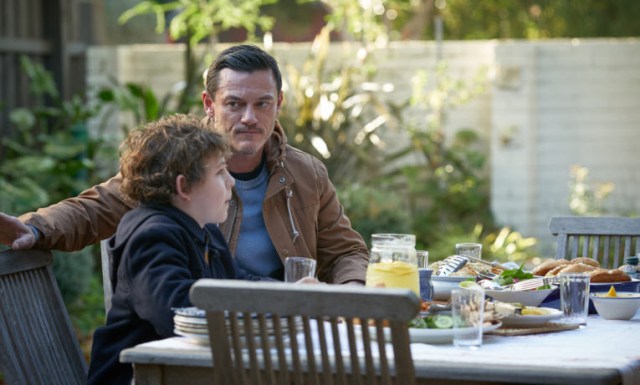
In case of a few other main cast members surrounding Rapace, they fill their thankless supporting roles as much as possible. While Luke Evans and Richard Roxburgh do not have many things to do as being stuck with their rather underdeveloped characters, Yvonne Strahovski, who recently became more notable thanks to her Emmy-nominated supporting turn in acclaimed TV series “The Handmaid’s Tale”, is effective as a counterpoint to Rapace, and young performers Finn Little and Annika Whiteley are also fine as holding their own little place well around Rapace and Strahovski.

While not entirely without flaws, “Angel of Mine” is a fairly engaging thriller film mainly because of Rapace’s strong lead performance. Considering that I still do not like its ending much, maybe I should give it 2.5 stars, but Rapace’s good acting here in the film is worthwhile to watch while also deserving an extra half-star in my inconsequential opinion, so I recommend it to you with some reservation.

angelofmine04

Posted in Movies | Tagged , | Leave a comment

Nothing Like a Dame (2018) ☆☆☆(3/4): Tea with the Dames

nothinglikeadame01

British documentary film “Nothing Like a Dame”, which was released in US as “Tea with the Dames” in last year, simply observes whatever is being generated among four old British actresses who have been well-known for their respective acting careers full of numerous distinguished moments. That may not look that interesting to some of you, but I assure you that it is undeniably fun to watch them talking about their small and big experiences with considerable wit and humor, and you will probably come to want more of them at the end of the documentary.

The setting of the documentary is pretty simple to say the least. Director Roger Michell, who has been known for several notable films such as “Notting Hill” (1999) and “Venus” (2006), had these four actresses gather at a small but lovely country cottage, and then he just let them talk together about anything in front of the camera while occasionally throwing a question to them.

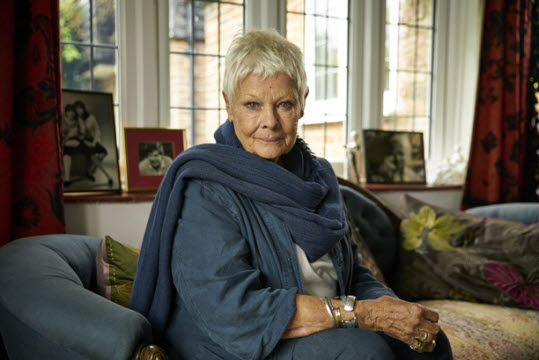
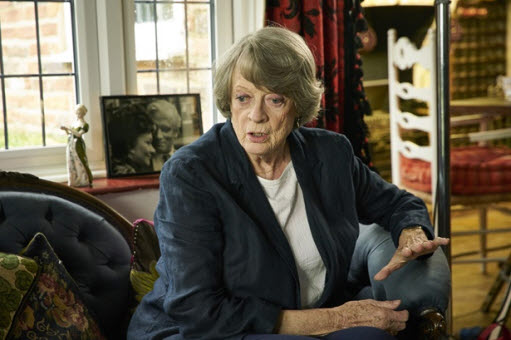
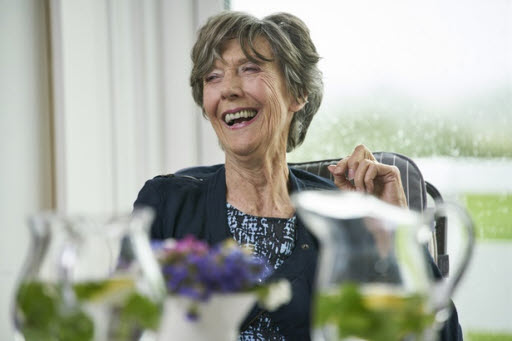
As some of the most prominent figures in the British theater and cinema, these four actresses certainly have lots of things to talk about. While Judi Dench, who drew our attention for the first time for her recurring supporting role in the several recent James Bond movies and then advanced further despite being over 60, and Maggie Smith, who became more familiar to young audiences thanks to her appearances in the Harry Potter movies and TV series “Downton Abbey”, are delightful as usual, the same thing can be said about Joan Plowright, who has done far more than being Laurence Olivier’s second wife, and Eileen Atkins, whom I fondly remember for her supporting performances in “The Dresser” (1983) and “Gosford Park” (2001).

nothinglikeadame02

In the beginning, they talk about their respective early years. Dench reminisces about how nervous she was as a young newcomer pressured by her stage director, and I must say it is rather surprising for us to see young Dench via a series of archival footage clips showing her theater performances. After all, like Maggie Smith, she has frequently played old British ladies during last two decades, and you may marvel at how pretty and radiant she was during her early career years.

Smith and Atkins also had each own difficult experience around the same time. Atkins’ parents expected her to become a dancer, but she eventually became more interested in acting after several years of frustration, and she later got more confident when her acting teacher said about how beautiful she was in an unconventional way. In case of Smith, she quickly rose to stardom during the 1960s while also winning an Oscar for “The Prime of Miss Jean Brodie” (1969), but she tells us that she was often agitated about working with Olivier due to his supreme status in the British theater and cinema, though Olivier was also nervous about sharing the screen or stage with her. At one point, Smith reminisces about when Olivier acted a bit too harshly to her while they were performing Othello and Desdemona on the stage: “It was the only time I saw stars at the National Theatre.”

nothinglikeadame03

Plowright, who married Olivier shortly after playing along with him in “The Entertainer” (1960), surely remembers a lot about her legendary husband like her three friends. Although she was merely a young newcomer when she agreed to appear in “The Entertainer”, she gradually built up her own acting career in addition to raising her children, and she and Olivier were happy and content together for a long time until his eventual death in 1989.

After that point, the documentary freely flows along with its four ladies amidst many different topics. Besides an obligatory part on acting in movies, there is an amusing scene where they recollect why they were all reluctant to play Cleopatra, and then we listen to each of them talking about how it was for them to work with their respective spouses, and then there is an humorous moment when they frankly talk about becoming Dames for their distinguished longtime service to the British theater and cinema.

In the end, their conversation eventually culminates to their approaching mortality. The mood becomes a little melancholic, but our four ladies do not lose any of their wit and humor at all while often poking fun at each other, and, like many of their fellow troupers, they are determined to keep going on as much as they can. As many of you know, Dench’s eyesight has been seriously deteriorated during recent years, but she is not daunted by that much while she has to cope with that everyday. Although she has been far less active than before, Plowright is also willing to go on as usual, and so are Atkins and Smith.

nothinglikeadame04

While rarely interrupting the flow of the conversation among his four ladies, Michell and his crew members actively interact with them from time to time, and that is another source of amusement. Although I wish he threw some hard questions, but that is just a minor complaint from me, and I will not deny that I often smiled and chuckled during my viewing.

In conclusion, “Nothing Like a Dame” is as witty and amiable as you can expect, and its rather short running time (84 minutes) will briskly pass by once you go along with their engaging interactions on the screen. While I think it could be a bit more coherent and focused, it is still a fairly enjoyable documentary which also works as a loving presentation of the humanity and personality of Dench, Smith, Plowright, and Atkins, and you should definitely check it out if you have admired their respective acting careers as much as I have.

nothinglikeadame05

Posted in Movies | Tagged , | Leave a comment

Falling Inn Love (2019) ☆☆☆(3/4): Falling in clichés with charm

fallinginnlove04

Some romantic comedy movies can charm us even though they fall into myriad genre clichés, and “Falling Inn Love”, which was released on Netflix two days ago, is one of such cases. Right from its very title, you can clearly discern what you should expect from it, and it exactly does as much as expected without a lot of surprise, but, at least, it has enough charm and humor to make us overlook its many conventional aspects for a while.

In the beginning, we see how its heroine begins another busy day of her daily life. As your average young, ambitious career woman, Gabriela (Christian Milian) is ready for what will be a big moment for her career, but she only comes to learn that her presentation is canceled by her insensitive boss at the last minute, and she does not get much comfort or consolation from her hunky boyfriend, who is too selfish to be willing to move onto the next stage of their relationship.

And then there comes another downturn for Gabriela. A few days later, her company is suddenly shut down, so she has to look for another job out there, but she soon gets frustrated as finding any suitable job position. In addition, she eventually comes to realize that her relationship with her boyfriend has been going nowhere, so she decides to break up with him, though she subsequently becomes quite depressed about that.

While mired in misery and melancholy, Gabriela comes across an Internet advertisement on some small inn located in a rural region of New Zealand. All she has to do is writing and then submitting a short essay on why she wants to have it, so she later decides to give a shot to that, and then, what do you know, she is notified on the very next day that she is now its owner.

fallinginnlove01

Of course, owning an inn is the last thing she wants right now, so Gabriela soon goes to New Zealand for taking care of the matter, but, not so surprisingly, the situation is not exactly ideal for her to say the least. When she finally arrives at a small remote town where the inn is located, she is horrified to discover how derelict it has been for years since the death of an old lady who managed it, and, needless to say, her first day at the inn is quite eventful for numerous reasons including one naughty stray goat inhabiting there.

Nevertheless, Gabriela is not daunted by this circumstance at all, so she soon embarks on planning the renovation of her inn, and she comes to get some help from a bunch of nice town people. For instance, there is an avuncular hardware store owner ready to supply anything requested by her, and then there is a cheerful lady running a local gardening shop, and there is also a delightful gay couple whose cafe/diner is one of the most popular spots in the town.

In case of a young contractor named Jake (Adam Demos), this handsome dude is surely the one whom Gabriela may really need more than anyone else for her renovation project, but she does not want to work with him much mainly because their Meet Cute moment was not so pleasant. She tries to avoid him as much as possible, but she only finds herself coming across him again and again because, well, they are in a pretty small town.

It is not much of a spoiler to tell you that 1) Gabriela eventually agrees to hire Jake, 2) he shows her what a nice guy he is besides the value of old things worthwhile to be preserved, and 3) she responds to him with growing affection while also coming to like the town far more than she ever imagined. These and other thing in the screenplay by Elizabeth Hackett and Hilary Galanoy are presented in very predictable ways, but the movie keeps the plot rolling under its lightweight mood, and it also manages to glide through several expected moments during its last act, where our heroine eventually has to make a couple of important decisions for what really matters to her most.

fallinginnlove03

It surely helps that Christina Milian and Adam Demos are appealing in their likable performance while clicking well with each other on the screen. In addition to looking believable in their characters’ initial obliviousness to mutual attraction, they are also convincing as their characters tentatively get closer to each other later in the story, and their eventual romantic moments are beautifully accompanied with several crisp landscape shots provided by cinematographer Dave Garbett, which may make you want to travel to New Zealand someday.

Like any good romantic comedy films, the movie has a substantial amount of humor and personality, and that mainly comes from a number of colorful supporting characters, who are mostly broad archetypes but are amusing and lovable thanks to a bunch of solid supporting performers surrounding Milian and Demos. Ann Jullienne, Claire Chitham, Blair Strang, and William Walker have a fun with their respective roles, and the special mention goes to that goat in the film, which steals the show as required whenever it appears on the screen.

“Falling Inn Love” is directed by Roger Kumble, who debuted with “Crucial Intentions” (1999) 20 years ago. Although the overall result is a rather mild compared to the slick and trashy sexual tension of “Cruel Intentions”, Kumble did a competent job on the whole, and I was amused and entertained enough to accept those clichéd moments in the film. It is not something you must watch right now, but it will probably satisfy you if you just want to kill your free time on Sunday afternoon.

fallinginnlove02

Posted in Movies | Tagged , , | Leave a comment

House of Hummingbird (2018) ☆☆☆1/2(3.5/4): This girl’s life in Seoul, 1994

houseofhummingbird02.jpg

South Korean film “House of Hummingbird”, which received the Grand Prix of the Generation 14plus International Jury when it was shown at the Berlin International Film Festival early in this year, observes a young ordinary girl’s life in specific place and period, but it eventually comes to us a universal coming-of-age tale packed with small but powerful moments. At first, I wondered a bit about why many critics have been so enthusiastic about the movie, but then I found myself emotionally involved in its adolescent heroine’s small world more than expected during the next 90 minutes, and that was why I was surprised as observing how strongly I reacted to what is superbly presented during the rest of the movie.

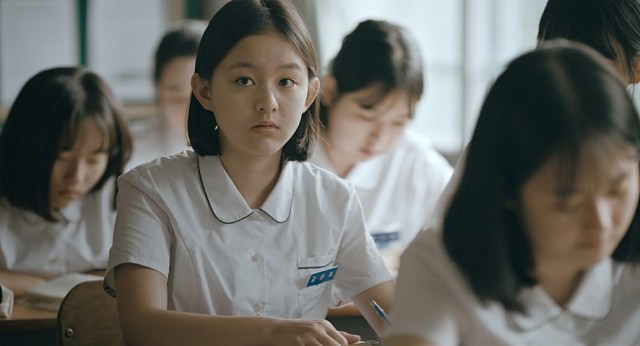
The story mainly revolves around the daily life of Eun-hee (Park Ji-hoo), a 14-year-old girl who lives with her middle-class family in some neighborhood area of Seoul, 1994. As the youngest child in the family, she usually does not get much attention compared to her two older siblings, and we see how unhappy she is in her family home from time to time. While her father is sometimes too harsh to her and her two older siblings, her mother is usually busy with trying to maintain the status quo in their home, and they often pay lots of attention to the future of their oldest child just because, well, he is their only son. As mostly overlooked by their parents, Eun-hee and her older sister frequently become rebellious in each own way, and that accordingly leads to a series of unpleasant situations in their home.

At least, Eun-hee feels a bit happier while she is outside. Although she and her schoolmates are about to be ground by that demanding process of the South Korean education system, she has a close friend to hang around with, and she and her friend share a lot between them during their private moments. Later in the story, we get a lovely scene where they are simply having a fun as jumping together on a trampoline, and that took me back to my own sweet memories of playing on trampoline.

houseofhummingbird01

In addition, Eun-hee also has a boyfriend, who seems to like her a lot as shown from his tentative interaction with her. When she suggests that they go a little further in their burgeoning relationship, he does not mind at all even though he is as inexperienced as she is, and that leads to one of small humorous moments in the film.

However, things get slowly worse for Eun-hee as days go by. The mood among her and her family becomes more tense as they conflict more and more with each other, and it also turns out that Eun-hee’s friend has her own domestic problem as reflected by the scene where she suddenly wears a mask to cover her mouth for an understandable reason. Furthermore, Eun-hee feels hurt when she discovers that her boyfriend’s attention is being drawn to someone else, and that prompts her to lean more on a junior girl who seems to want from her more than plain friendship.

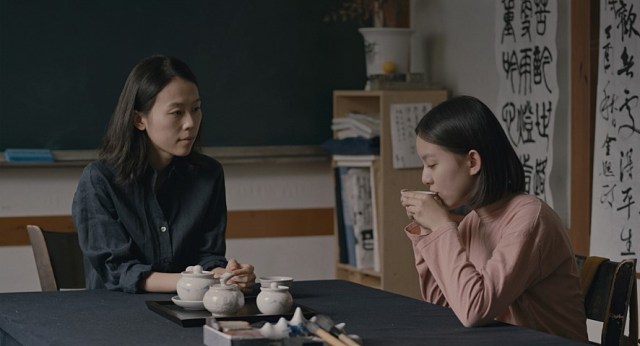
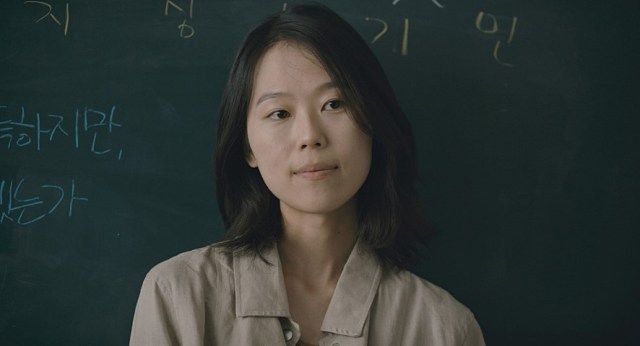
Meanwhile, the mood becomes a little brighter for Eun-hee when she comes to find an unexpected source of care and attention from Yeong-ji (Kim Sae-buk), the new teacher at a Chinese writing academy which Eun-hee and her friend usually go after their schooltime. Right from her first day, Yeong-ji leaves an indelible impression on Eun-hee, and this gentle and generous young lady often provides solace and comfort to Eun-hee, who is surely grateful for Yeong-ji’s kindness and empathy as spending more time with her.

As Eun-hee is struggling with the confusing changes in her small world, the screenplay by director/writer Kim Bo-ra, which is developed from her previous short film “The Recorder Exam” (2011), steadily rolls its story and heroine from what has been carefully established during its first act. The period atmosphere and details in the film are often impressive for mundane authenticity, and, without resorting to any cheap sentimentality or nostalgia, it did a superlative job of taking me back to Seoul during the early 1990s. For example, I particularly appreciated a certain small object containing sewing material and tools, which is incidentally not so different from what my mother had during that period.

houseofhummingbird07

I will not go into details on what will happen during the last act of the film, but I can tell you instead that the movie effectively utilizes two big real-life incidents well as dramatic elements in the story. Although I was only 11 years old during that time, I still remember well how much people around me were surprised and shocked by these two incidents respectively, and I admire how the movie handles them with considerable restraint without any cheap melodramatic tactics.

As the heart and soul of the film, Park Ji-hoo, who deservedly received the Best Actress award when the movie was shown at the Tribeca Film Festival early in this year (It also won the Best International Narrative Feature award and the Best Cinematography award, by the way), is utterly astounding in her unadorned natural performance full of subtle nuances and touches, and she is also supported well by a number of good performers. While Jung In-gi, Lee Seung-yeon, Park Soo-yeon, and Son Yong-beom are solid as Eun-hee’s family members, Park Seo-yoon and Seol Hye-in are also fine in their respective substantial supporting roles, and Kim Sae-byuk, who drew my attention for the first time with her breakout turn in “A Midsummer’s Fantasia” (2014), flawlessly complements Park during their several scenes in the film.

On the whole, “House of Hummingbird” is one of the notable debut feature films of this year in South Korea, and, in my trivia opinion, it is another excellent South Korean film of this year which definitely deserves to be mentioned along with “February” (2017), “Another Child” (2019), “The House of Us” (2019), and, yes, “Parasite” (2019). So far, considering these and many other good South Korean films in this year, it has been one hell of exciting year for me and other South Korean audiences, and I hope we will get more funs and surprises during the rest of 2019.

houseofhummingbird03

Posted in Movies | Tagged , , , , | 3 Comments

Tune in for Love (2019) ☆☆1/2(2.5/4): As they try to be in tune with each other

tuneinforlove01

South Korean “Tune in for Love” is so familiar in terms of story and characters that you will clearly guess what you are going to listen and watch even before tuning in to it at the beginning. While it is fairly competent in its commendable presentation of period mood and details to be appreciated, the movie is rather deficient in case of storytelling and characterization, and I only came to observe it from the distance while not caring much about its two good-looking lead characters.

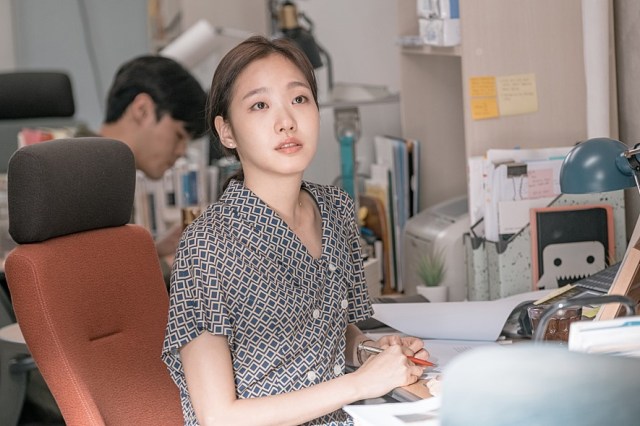
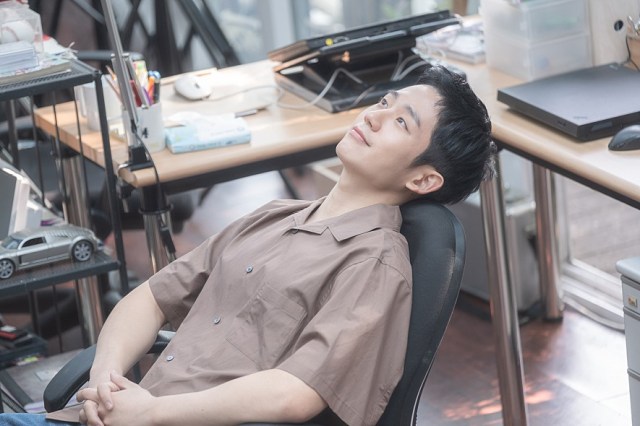
They are Mi-soo (Kim Go-eun) and Hyeon-woo (Jung Hae-in), and the movie begins with their Meet Cute moment in 1994. While Mi-soo is an adolescent girl running a small family bakery along with a family friend named Eun-ja (Kim Gook-hee), Hyeon-woo is a teenage boy who has just been released from a juvenile reformatory, and he happens to drop by Mi-soo’s bakery as looking for a certain thing for commemorating his release. Although their first encounter is pretty awkward to say the least, Hyeon-woo is eventually hired as a part-time assistant, and we gradually come to notice the growing mutual feeling between him and Mi-soo.

However, not so surprisingly, Hyeon-woo soon gets himself involved again with his several fellow juvenile delinquents, who were sent to the juvenile reformatory along with him after a very unfortunate incident at their high school. As shown from one brief flashback scene, the incident was caused by a reckless act of theirs, and they all are bitter and morose about how it has ruined their life, though the movie is rather vague about whether they feel any guilt about that irreversible consequence.

tuneinforlove03

Anyway, Hyeon-woo later comes to disappear from Mi-soo’s life without any explanation, and the movie promptly moves forward to 1997. As the whole country is struck by a big financial crisis, the resulting social/economic effect comes upon Mi-soo’s small neighborhood, and we see her bakery being out of business. At least, Mi-soo manages to finish her college education mainly thanks to Eun-ja, who has been like a big sister to her for years and did not mind at all paying her college tuition instead of her.

Not long after she gets employed as a clerk at some big factory, Mi-soo happens to come across Hyeon-soo, and both of them are glad to see each other again, but, alas, it turns out that Hyeon-soo is going to begin his military service on the very next day. After spending the cozy night along with him at her small and shabby residence, she makes an e-mail account for him for their future correspondence, and I must say that I could not help but become a bit nostalgic as watching her using Window 95.

However, Mi-soo and Hyeon-soo become disconnected from each other due to a small basic mistake. Of course, they come to encounter each other again by sheer coincidence in 2000, but then, not so surprisingly, they soon get separated from each other again because of a legal trouble which Hyeon-soo inadvertently gets himself into thanks to his old friends, and that surely hurts Mi-soo a lot.

I think any sensible woman would seriously consider staying away from Hyeon-soo once and for all, but Mi-soo still finds herself attracted to him when she comes across him again in 2004. While she is working at a small but fairly successful publishing company, several film students happen to move into the upstairs, and, yes, one of them turns out to be Hyeon-soo. We soon see them spending some time with each other, and the situation seems to be more stable than before as they come to get closer to each other than before.

tuneinforlove02

However, as many of you already guessed, there comes another trouble between them, and then the movie is hampered by several contrived melodramatic moments. While the part associated with Hyeon-soo’s past is rather half-baked, a subplot involved with a supporting character played by Park Hae-joon feels quite superficial, and the expected finale, which is accompanied with a certain famous real-life radio show which has often appeared throughout the film, does not work that well as merely pushing our two main characters toward the perfunctory ending.

Anyway, the two lead performers of the movie try as much as they can for filling their respective roles. Kim Go-eun, who drew our attention for the first time via her breakthrough performance in director/writer Jeong Ji-woo’s previous film “A Muse” (2012), is as charming and likable as required, and she and Jung Hae-in play with each other mostly well on the screen, though Jung’s acting is often a little too bland to compensate for his weak character. In case of several notable supporting performers in the film, they are not particularly utilized well on the whole, but the special mention must go to Kim Gook-hee, who simply steals the show as the most colorful character in the movie.

In conclusion, “Tune in for Love” is not entirely without charm and entertainment, and it will not disappoint you if you just want to watch a familiar and conventional romance drama, but I must point out to you that it is less interesting compared to several notable works in Jeong’s solid filmmaking career such as “A Muse” or “Fourth Place” (2015), a small under-appreciated gem which I belatedly came to watch a few days ago. No, I do not dislike it, but, to be frank with you, I said to myself “Thumbs down!” as walking out of the screening room, and I guess that says a lot about how I felt and thought about it.

tuneinforlove04

Posted in Movies | Tagged , | Leave a comment