The Souvenir (2019) ☆☆☆(3/4): Scenes from her toxic personal relationship

thesouvenir05

“The Souvenir” is a somber and detached mix of coming-of-age and romance drama which is occasionally emotionally painful to watch for good reasons. As calmly observing how things alternatively go up and down between its young heroine and a very problematic guy she happens to love, the movie gives us a sober examination of one toxic personal relationship, and you may be relieved when its heroine is ready to move onto the next chapter of her life around the end of the story.

Loosely based on the early years of director/writer Joanna Hogg, the movie mainly revolves around the daily life of Julie (Honor Swinton Byrne), a young woman aspiring to be a filmmaker in London around the 1980s. Although she is still searching for her own artistic voice as going through her education course at a film school, she has lived mostly well in her small but comfortable flat thanks to her affluent middle-class parents, and her mother Rosalind (Tilda Swinton) is fully supportive of her daughter’s aspiration while showing some motherly concern form time to time.

When Julie is holding a party for herself and her several friends in her flat during one evening, she happens to encounter an older guy named Anthony (Tom Burke), and it does not take much time for her to be attracted to him. Although often rather sullen and gloomy, Anthony, who incidentally works in the Foreign Office, is your typical world-weary guy equipped with some intelligence and sophistication, and he is usually willing to listen to her and then give some feedback, which she is glad to receive at any time.

thesouvenir02

We observe how they get closer to each other as time goes by. There is a romantic moment when Anthony shows Julie a small but lovely painting by Jean-Honoré Fragonard, whose title is, yes, “The Souvenir”. When one of Julie’s friends, who has lived in Julie’s flat for a while, moves out to somewhere, Anthony naturally fills the empty spot under her permission, and it looks like they can move onto the next stage of their developing relationship, especially after they have a fairly good time with each other’s parents.

However, of course, there soon come several bad signs to be noticed by Julie. At one point, she spots ‘bruises’ on one of Anthony’s arms, and one of her friends quickly discerns later that Anthony is a drug addict, but she does not want to recognize that because, well, she loves him enough to hope that things will get eventually better for both of them.

Of course, the situation only gets worse for them as Anthony lets himself driven further to the bottom of addiction. At first, he frequently asks for some money to Julie, but then her flat happens to be ransacked of all its valuables, and, not so surprisingly, it subsequently turns out that Anthony was responsible for this incident.

Julie tries to be patient and supportive to her lover as much as possible, but, of course, she soon finds herself running out of patience. Anthony keeps hurting her feelings even when they have a vacation in Venice, and their increasingly problematic relationship accordingly affects her academic progress in the film school. While she was initially eager to explore and examine the daily life of working-class people, her school project is not particularly going anywhere as she often feels confused and hurt by her relationship with Anthony, and she also finds herself depending a lot more on the financial support from her mother than before.

thesouvenir03

Nevertheless, things are not always bad for her and Anthony. Whenever he feels relatively better, Julie becomes a bit more optimistic as spending some private time with him, and he sometimes writes to her nice love letters. Leisurely moving from one intimate episodic moment to another, the movie lets us discern and then understand the emotional bond between them, and we are not so surprised when Julie comes to give Anthony the second chance later in the story despite all the heartbreaks which she had to endure because of him.

While sticking to its phlegmatic attitude from the beginning to the end, the movie builds up considerable emotional momentum under its low-key ambience, and it surely depends a lot on the presence and talent of its main cast members. In her unadorned performance full of subtle nuances to be appreciated, Honor Swinton Byrne, who is the daughter of Tilda Swinton, ably functions as the emotional center of the movie, and she is complemented well by her co-star Tom Burke, who did a good job of conveying to us the inner torment and struggle of his very unlikable character. In case of the other notable cast members in the film, Richard Ayoade briefly appears as Julie’s fellow filmmaker, and Swinton is superb as usual during one particular scene she shares with her daughter around the finale.

While it demands considerable patience from you due to its dry, austere storytelling, “The Souvenir” is still an interesting drama thanks to the skillful direction of Hogg, who received the Grand Jury Prize when the movie was shown at the Sundance Film Festival early in this year. As shown at the end of the film, she and her lead actress are ready to move onto the next story to tell, and I certainly have some expectation on that for now.

thesouvenir04

Posted in Movies | Tagged , , , | 1 Comment

Ophelia (2018) ☆☆☆(3/4): A Shakespeare story told from her viewpoint

ophelia01

“Ophelia” tries the feministic reinterpretation of one of the most famous works by William Shakespeare. Although its titular heroine may not be the most compelling character in the story from the beginning, the movie is often fascinating to observe the story and characters from her female viewpoint, and I sort of enjoyed that even though I could see some flaws and strains in its interesting attempt.

Based on the novel of the same name by Lisa Klein, the movie begins with one of the most tragic moments told in “Hamlet”, and then it moves backward to its heroine’s early years. Even when she was very young, Ophelia (Daisy Ridley) could not help but show her plucky spirit, and she soon found herself drawing the attention of Gertrude (Naomi Watts), the Queen of Denmark who took young Ophelia under her wing and then had her trained as one of her ladies-in-waiting in her court. As receiving the motherly affection from Gertrude, young Ophelia grew up to be a fair young lady, and it does not take much time for Gertrude’s son Hamlet (George MacKay) to notice Ophelia more than before, when he returns from his school several years later.

However, as many of you know, the circumstance surrounding Hamlet and Ophelia turns out to be not that ideal for the development of their mutual attraction. When she realizes that Hamlet is soon going back to his school, Ophelia becomes distant to him, and then the court is shaken by the sudden death of Gertrude’s husband, who is instantly succeeded by his younger brother Claudius (Clive Owen).

ophelia02

Around the time when Hamlet hurriedly comes back to the court after receiving the news of his father’s death, Claudius already married Gertrude, who did not hesitate about that at all because she has been attracted to Claudius since being frustrated with the lack of attention from her husband – and how she has been getting older and looking less youthful. As watching his mother standing by his uncle who is technically his stepfather now, Hamlet has no choice but to pledge his loyalty in front of Claudius, but then he becomes suspicious about his father’s death, and then he comes to learn the truth via Ophelia, who happened to witness what has been going on among Claudius, Gertrude, and a certain character living inside a nearby forest

While presenting Ophelia as someone far more than a merely tragic supporting character, the adapted screenplay by Semi Chellas gradually builds up the tension surrounding Ophelia and the other main characters around her. There are some moments of tenderness as she and Hamlet come to feel more of their mutual feelings and then secretly move together onto the next step of their relationship, and there are also a number of serious scenes including the one where they pretend to be estranged from each other while well aware of being watched by Claudius and his men.

Of course, the situation becomes more perilous for Hamlet and Ophelia as the story is heading toward those expected tragic moments in Shakespeare’s play such as the unintentional murder of Ophelia’s father by Hamlet, who is subsequently sent to England along with two certain friends of his as ordered by Claudius. As blamed by Gertrude for what happened to her son, Ophelia soon finds herself cornered and menaced by Claudius, who comes to regard Ophelia as a possible threat to his current position and is ready to do anything for getting rid of her once and for all.

ophelia03

Around its last act, the movie brings several necessary changes to Shakespeare’s original story, and that is where it stumbles a bit. Taking a more distant attitude along with its heroine, the movie comes to lose its narrative momentum, and its eventual finale feels rather perfunctory and bloodless although there is surely some blood to be spilt on the floor as demanded.

Anyway, the movie is mostly held together well by the engaging lead performance from Daisy Ridley, who has been quite prominent since her breakthrough turn in “Star Wars: The Force Awakens” (2015). While it is a bit of shame that she and George MacKay do not generate much romantic heat on the screen, that is not much of a problem because she ably carries the film alone with her strong acting, and she is particularly wonderful when her character must feign to become totally insane in front of many people including Claudius. In case of several other notable performers in the film, Naomi Watts brings some human complexity to Gertrude while also having a little fun with her other role, and Clive Owen is effectively brooding and vicious as required by his villainous role.

On the whole, “Ophelia” is not entirely successful, but it is still recommendable for its curious reinterpretation of “Hamlet”, and the overall result is relatively better than “Rosencrantz & Guildenstern Are Dead” (1990), which also tried a similar thing as revolving around the two certain minor supporting characters in Shakespeare’s play but ended up being quite tedious and lifeless mainly due to its inherent theatrical aspects. Although I still wish the movie contained more passion and interest, director Claire McCarthy and her cast and crew did a fairly commendable job here at least, and you may appreciate it more especially if you are familiar with Shakespeare’s play.

ophelia04

Posted in Movies | Tagged , | Leave a comment

Share (2019) ☆☆☆(3/4): After that night

share02.jpg

HBO TV movie “Share”, which was bought by HBO shortly after it was shown at Sundance Film Festival early in this year, is a restrained but undeniably harrowing drama about one adolescent girl whose normal life is suddenly turned upside down by a humiliating incident and its following ramifications beyond her control. As firmly sticking to her conflicted state of mind from the beginning to the end, the movie gives us a number of emotionally resonant moments to remember, and you may reflect a lot on its timely social subjects when it is over.

At the beginning, the movie opens with its 16-year-old heroine’s very confused status during one early morning. When she wakes up, Mandy (Rhianne Barreto) finds herself lying down on the front lawn of her family house, and she does not remember anything about what happened during last night except that she drank quite a lot at an evening party she attended along with her several schoolmates including her boyfriend A.J. (Nicholas Galitzine) While her mind is still suffering from hangover, she manages to go back to her room before being noticed by her parents, and she goes to her high school several hours later without saying anything to her parents.

At the school, things seem fine on the surface as she goes through daily activities along with her close friends including Jenna (Lovie Simone), but she receives text messages from her close friends not long after she returns to her family home. They send her a certain video clip being shared among many students, and that video clip clearly shows that she was taken advantage of by A.J. and some other male students while she was drunk and unconscious during that night in question.

Understandably shocked and confused, Mandy tries to look all right to others around her, but, of course, everyone around her including her parents comes to know about that terrible video clip, and we see how the situation slowly gets worse for her. While there is a painful moment when her parents try to talk to her about what happened during that night, there later comes a brief but pointed moment when she senses how much she is unwelcomed at her school, and then there is another hurtful moment for her when her incident comes to draw the unwanted attention of the local media.

share04

As suggested by her parents, Mandy goes to a therapist for remembering what exactly happened to her during that night, but there is not much progress probably because of the defense mechanism of her mind, and she only finds herself more confused and frustrated than before – especially after she becomes isolated further from her school and friends. While Jenna and her other close friends remain sympathetic to her plight, they all become distant to her gradually once she stops going to her school, and she surely feels hurts when she happens to see one of her close friends hanging around with A.J. and Dylan (Charlie Plummer), who is one of those boys possibly associated with her incident but genuinely seems to feel sorry about what happened to her.

Dylan later approaches to Mandy, and it looks like this shy, introverted kid can be the one she can lean on, but it soon becomes apparent that he does not tell everything to her. Sure, he is the one who took her away from the party after she managed to wake up shortly after the incident, but he seems to be very conflicted over something he is very reluctant to tell her.

Meanwhile, the circumstance becomes more frustrating and exasperating for Mandy and her parents. As her incident draws more public attention, the police investigation soon follows, but then she and her parents are only told later that the District Attorney decides to drop the case as there is not any strong evidence for prosecuting whoever is directly responsible for her incident. When they subsequently go to a civil rights lawyer for counsel, the lawyer warns in advance that their quest for justice may be quite longer and harder than they expected, and that advice certainly puts more burden on Mandy’s mind.

share03

Never resorting to any unnecessary sensationalism or cheap melodrama, the movie, which is based on director/writer Pippa Bainco’s acclaimed 2015 short film (It won the Cinéfondation Award when it was shown at the Cannes Film Festival), steadily focuses on whatever is churning behind Mandy’s seemingly detached façade, and Rhianne Barreto is excellent in her unadorned nuanced performance which deservedly won the US Dramatic Special Jury Award at the Sundance Film Festival (The movie also received the Waldo Salt Screenwriting Award, by the way). As deftly conveying to us her character’s inner struggle without any exaggeration, Barreto ably holds the center of the film, and the result is more than enough to show that she is another noteworthy new talent of this year.

Barreto is also supported well by a number of good supporting performers. While Poorna Jagannathan and J. C. Mackenzie are suitably cast as Mandy’s concerned parents, several young performers including Lovie Simone and Nicholas Galitzine are convincing in their respective roles, and Charlie Plummer, who has been more notable since his breakout turns in “All the Money in the World” (2017) and “Lean on Pete” (2017), deserves to be praised for another fine performance in his steadily advancing acting career.

Although it stumbles a bit during its last act, “Share” is worthwhile to watch for not only its sensitive and thoughtful storytelling but also the admirable acting from its main cast members, and Bianco demonstrates here that she is a talented filmmaker to watch. In short, this is surely a solid feature film debut, and it will be interesting to see the next step of her promising filmmaking career.

share01

Posted in Movies | Tagged , , | Leave a comment

Ray & Liz (2018) ☆☆1/2(2.5/4): On his two lousy parents

rayandliz03

“Ray & Liz” is a melancholic family drama which observes its human subjects and their squalid living environment with considerable emotional detachment. While this is surely not something you can casually watch on Sunday afternoon, it works to some degree as a fascinating presentation of personal memories via fictional approach, and you may cringe or wince for good reasons as sensing dark feelings hovering around the screen.

At first, the movie opens with an old man named Ray (Patrick Romer) beginning his another alcoholic day in his small and shabby residence inside one of Black County council flat buildings. He has lived alone since his separation from his wife Liz (Deirdre Kelly), and he usually spends his days on drinking homebrewed booze provided by one of his neighbours, who does not like Ray much but delivers the booze as much as he gets paid.

And then the movie moves backward to the Ray and Liz’s early married life during the 1980s. They have two sons, but neither Ray, played by Justin Salinger at this point, nor Liz, played by Ella Smith at this point, is particularly interested in taking care of their little sons, and their tiny residence is strewn with squalor and several pets including a dog and a pair of gerbils, which are also mostly unattended on the whole.

And then we meet Liz’s dopey cousin Lol (Tony Way), who is supposed to look after Liz’s younger son Jason (Callum Slater) while Liz and Ray go outside along with their older son Richard (Jacob Tuton) for shopping. Liz warns to Lol that he should not touch any booze, but, of course, he soon finds himself quite tempted when a young neighbor named William (Sam Gittins) comes into the residence and then finds bottles of whiskey and other liquors hidden somewhere in the residence, and it does not take much time for him to accept more than one glass of drink from William.

rayandliz01

When Liz and Ray eventually return to their home, they soon behold a mess in the house, and Liz understandably becomes quite pissed about that, though there is nothing much she can do except expressing her anger upon Lol’s nearly unconscious body. Some time later, she happens to learn of what really happened via a small coincidental piece of evidence, but, for a reason unexplained to us, she decides to destroy it without much hesitation.

After a brief flash-forward scene showing Ray at present, the movie moves to another past period in Ray and Liz’s married life. Now their two sons grow up much, but they still remain neglected by their parents, and Liz is usually more occupied with piecing puzzles together while her husband is always ready to give her a cup of tea.

And we observe how their two sons have managed to live for themselves as residing in one of the Black County flat buildings along with their parents. While Richard, played Sam Plant at this point, has been silently insulated in his own world, Jason, played by Joshua Millard-Lloyd at this point, often goes outside for playing with his school friends, and he finds himself sleeping alone in a shed during one cold night because, well, that is more preferable for him to going back to his home. That leads to a very serious circumstance which could cost his life, but he soon finds himself staying in a place where he receives a lot more care and kindness than before, and he does not complain at all when he is subsequently notified that he is going to be sent to a foster home.

When Ray and Liz come to learn that their younger son will be separated from him, they are not particularly upset about this change, though they feel a bit displeased about the fact that they will accordingly receive less welfare money. In case of Richard, he also wants to be taken away from his crummy parents, but he is only told that he is soon going to able to leave them anyway as an adult, and there is nothing he can do except waiting for a few more years.

rayandliz02

While it is inspired by director/writer Richard Billingham’s troubled childhood years under his problematic parents, the movie mostly restrains itself as seldom delving into the stark emotional currents surrounding its main characters. Shot in 1.33:1 ratio by cinematographer Daniel Landin, the movie is constantly filled with stuffy ambience coupled with the daunting sense of misery and frustration, and there are a number of striking visual moments throughout the film, but it feels rather hollow as it does not provide much insight or understanding on Liz and Ray’s relationship or their increasingly tenuous connection with their children.

At least, the main cast members of the movie ably suggest some glimpses of life and personality under Billingham’s competent direction. While Smith and Salinger are flawlessly connected with Deirdre Kelly and Patrick Romer, Millard-Lloyd and Pine are also solid in their crucial supporting roles, and the same thing can be said about Tony Way and Sam Gittins.

In conclusion, “Ray & Liz” feels a bit too distant in terms of story and characters, so I hesitate to recommend it to you, but I guess its adamantly detached attitude to its human subjects is the whole point, and that tells us a lot about how Billingham feels about his parents. He surely survived, and now he simply shows us how bad and pathetic his parents were – and that is all for us.

rayandliz04

Posted in Movies | Tagged , , | Leave a comment

One, Two, Three (1961) ☆☆☆1/2(3.5/4): A wild Cold War farce from Wilder and Cagney

onetwothree01

Billy Wilder’s “One, Two, Three” is often breathtaking for how relentlessly it drives its plot and characters for a barrage of laughs and chuckles from the beginning to the end. When I watched it for the first time in early 2004, I was utterly astonished by its breakneck narrative pacing coupled with numerous broad but sharp satiric touches to be savored. When I recently revisited it, I was surprised again as observing how exhilaratingly those funny moments in the film work, and I came to appreciate more of how daringly Wilder and his lead actor pushed their limits at that time.

James Cagney plays C.R. MacNamara, a high-ranking executive of the Coca-Cola company who has been not that happy about being stationed in West Berlin, 1961. Since his career took a downturn due to a disastrous fiasco in the Middle East several years ago, he has worked very hard for going up the corporate ladder again, and now he is supervising the production and sales of Coca-Cola in West Germany, but he is still not very content while eagerly waiting for any chance for the promotion to the head of Western European Coca-Cola Operations in London. To impress more his boss and others at the Coca-Cola headquarters in Atlanta, he has been working on the possibility of expanding the market to Russia and, possibly, other countries behind the Iron Curtain, but, not so surprisingly, dealing with Russian officials turn out to be a little too tricky as both sides keep refusing to step back more for the final agreement.

However, to MacNamara’s disappointment, it turns out that his boss is not particularly interested in dealing with Russians as your average conservative Southern guy. Instead, he asks MacNamara to look after his lively but problematic adolescent daughter Scarlett (Pamela Tiffin), who has been bouncing around here and there in the Europe for a while since causing the latest headache for her parents. MacNamara’s wife Phyllis (Arlene Francis) is not so pleased to hear that they have to cancel a family vacation for taking care of Scarlett, but, what do you know, it does not take much time for her to be amused and charmed by the incorrigibly irrepressible personality of Scarlett, who can be regarded as a precursor to those hippie girls in the late 1960s.

onetwothree02

While her stay in MacNamara’s house is eventually extended from two weeks to two months, it looks like MacNarama may finally get a chance for promotion as Scarlett seems to be having a really good time in Berlin without causing any trouble, but, of course, he belatedly comes to learn about what she has been doing behind her back. Several weeks ago, she met a hard-core communist lad named Otto Piffl (Horst Buchholz) in East Berlin, and they instantly got closer to each other as frequently spending time together. She does not have any problem with his staunch anti-American viewpoint (“Why, that ain’t anti-American, it’s anti-Yankee. And where I come from, everybody’s against the Yankees.”), and now they become a married couple ready to leave for Moscow (“They’ve assigned us a magnificent apartment, just a short walk from the bathroom!”).

Horrified by this unexpected revelation, MacNamara quickly embarks on taking care of this big problem because Scarlett’s parents will soon come to West Berlin for seeing their dear daughter. At first, it seems that all he has to do is pushing Otto away from Scarlett once and for all and then nullifying their marriage, but, alas, the situation becomes increasingly complicated for him, and he soon finds himself juggling numerous things together for getting the situation under control. Besides Otto and Scarlett, he has to handle 1) a trio of Russian officials, 2) a German assistant who frequently annoys MacNamara for his old army habit, 3) a German secretary who is quite willing to do ‘overtime’ for MacNarama, and 4) a bunch of other figures who can be easily persuaded to do MacNamara’s bidding via the power of, yes, money.

Cheerfully throwing more craziness to MacNamara’s circumstance, the screenplay Wilder and his co-writer I.A.L. Diamond, which was adapted from Ferenc Molnár’s 1929 Hungarian one-act play “Egy, kettő, három” with some clear influence from “Ninotchka” (1939), seldom stops as accelerating itself more and more, and its resulting comic intensity rivals that of those Hollywood classic screwball films in the 1930s such as Howard Hawks’ “Bringing Up Baby” (1938). As reflected by the instruction on written on the front of their screenplay, Wilder and Diamond were pretty clear about what they wanted from the beginning: “This piece must be played molto furioso. Suggested speed: 110 miles an hour–on the curves–140 miles an hour in the straightaways.” To be frank with you, if you think the characters in David Fincher’s “The Social Network” (2010) talk too fast, your mind may be overloaded especially during the second half of the movie.

onetwothree034

Like many of Wilder’s comedy films, the movie occasionally shows sardonic sides behind its broad comic moments. While generating some edgy laughs from the postwar Germany society still recovering from its dark, shameful past (One of the most amusing moments in the film comes from when MacNamara’s German assistant happens to encounter his old boss), it certainly makes a big fun on the ridiculous aspects of the Cold War, and there is even one particular moment foreshadowing that perilous international crisis which happened not long after the movie was released in 1961 (“We have trade agreement with Cuba: they send us cigars, we send them rockets.”). As a matter of fact, Wilder had to halt the shooting of the film in Berlin when the Berlin Wall went up on August 13th, 1961, and he and his crew had no choice but to move to Munich for completing the movie.

And the movie is also frankly cynical in case of depicting MacNamara’s capitalistic tactics, which surely remind us of how venal and selfish we can be from time to time. Almost everyone in the film has his price, and MacNamara does not have any problem with that at all. Fully focused on that elusive chance of promotion, he is prepared to accomplish his emergency mission within a few remaining hours by any means necessary, and he never feels any compunction as pushing himself and others around him as hard as he can – except when he faces the possibility of losing what matters most in his life later in the story.

Nevertheless, it is really fun to watch him trying to do his best in the name of survival and success, and we never get bored as the movie briskly glides along its bumpy narrative full of silly caricature characters and ridiculous plot turns. As Aram Khachaturian’s “Sabre Dance” is frequently utilized in André Previn’s bouncy score, we come to brace ourselves more for crazier moments to come, and we are not so surprised when even Otto finds himself swept along with others by MacNamara’s scheme, which eventually leads to quite an ironic outcome around the finale.

onetwothree06

Above all, the movie depends a lot on Cagney’s presence and talent. Watching him busily handling them on the screen is akin to beholding a virtuoso precariously playing at the extreme end of his talent. Although he was understandably reluctant to take the role at first, Cagney, who was 62 year old when the movie came out, threw himself into his role as much as he did in “Yankee Doodle Dandy” (1942), and it is often spellbinding to see him deftly handling a number of talky scenes in the film while never losing control or speed at all. As a matter of fact, it is no wonder that he subsequently retired from acting for next 20 years until he appeared in Milos Forman’s “Ragtime” (1981), which was the last theatrical film in his long, distinguished acting career.

Cagney is surrounded by several colorful supporting performers also willingly going for big laughs whenever they get chance. While Pamela Tiffin is hilariously naïve and superficial in her supporting role, Arlene Francis is wryly acerbic as MacNamara’s no-nonsense wife, and Liselotte Pulver has a terrific showstopper moment when her character joyously performs a sort of striptease for those Russian officials in the middle of the movie. In case of Horst Buchholz, he is the weakest link in the film due to his rather strained performance, but his abrasive attitude clashes well with Cagney’s forceful persona on the screen, and you may be amused to learn that Cagney disliked Buchholz so much on the set that he often felt urged to “knock him on his ass”.

Although it is relatively less stellar compared to the comic perfection of “Some Like It Hot” (1959) or the bittersweet sublimity of “The Apartment” (1960), “One, Two, Three” is one of Wilder’s finest works thanks to its sheer farcical ferocity fueled by Cagney’s vigorously committed performance, and I dare to say that it is far more exciting and memorable than whatever I saw from those recent big blockbuster action flicks such as, say, “The Fast and The Furious” (2001) and its disposable sequels. Just watch how Cagney and the movie run at full speed together, and you will see what I mean.

onetwothree05

Posted in Movies | Tagged , , , | Leave a comment

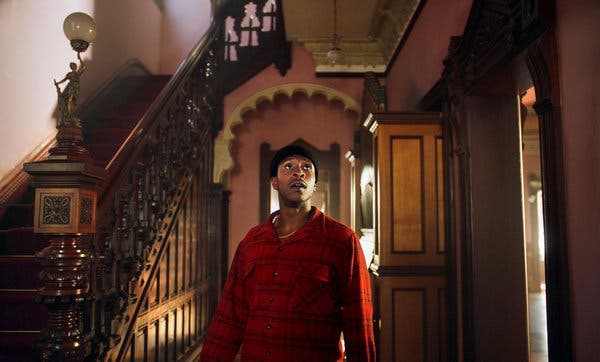
The Dead Don’t Die (2019) ☆☆1/2(2.5/4): A slow, languid zombie flick by Jim Jarmusch

thedeadontdie02

Jim Jarmusch’s latest film “The Dead Don’t Die” is as slow and languid as many of his previous works. Although I have no problem with that at all, the movie feels like a one-joke movie stretched a bit too long, and I found myself getting impatient at times even while appreciating the considerable efforts from its stellar cast and several nice comic moments to remember.

The movie is set in a small, quiet rural American town name Centerville, and its early part introduces us a number of its various residents. At first, we meet the town sheriff played by Bill Murray and his deputy officer played by Adam Driver, and then we also get to know several other substantial characters including 1) a crusty hermit played Tom Waits, 2) an equally cantankerous farmer played by Steven Buscemi, 3) a local hardware store owner played by Danny Glover, 4) a local gas station clerk played by Caleb Landry Jones, 5) another deputy officer by played by Chloë Sevigny, and 6) a new mortician in the town played by Tilda Swinton.

For these and other people in the town, things seem fine as usual on the surface, but it is clear to us from the beginning that something strange is going on in not only their town but also the outside world. Daytime unusually becomes quite long to everyone’s bafflement, and it looks like this odd happening is caused by a big shift in the rotation axis of the Earth, which, according to TV and newspaper reports, is possibly resulted from the extensive hydraulic fracturing in the arctic regions for more energy resource.

thedeadontdie03

Many of town people do not take this big change that seriously, but then we subsequently see a couple of zombies, played Iggy Pop and Sara Driver, slouching toward a local diner during the following night. The movie surely has some gory fun as these two zombies devour fresh human flesh as expected, and then we get a small amusing moment when they show some appreciation to good coffee like Dale Cooper did in TV series “Twin Peaks”.

In the following morning, the sheriff and his deputies are both baffled and shocked by what happened in the diner, and we get a little funny moment as each of them looks at the scene and then flatly utters the same comment. When one of his deputies suggests the possibility of zombie apocalypse, the sheriff does not believe that much at first, but, of course, he and some other characters soon find themselves surrounded by a bunch of zombies, and they should be ready to decapitate any of those rotten walking corpses.

Now you may expect more guts and blood, but the movie still sticks to its dry deadpan mode as before while leisurely sauntering along its loose narrative, and the overall result is rather bloodless despite a number of wryly humorous moments. It goes without saying that the zombies in the film are supposed to be as silly and satiric as George A. Romero’s classic zombie film “Dawn of the Dead” (1978), but the movie is not that fresh or edgy in its satiric approach, and it only reminded me again of how much I have been tired of zombie flicks these days.

thedeadontdie01

At least, I was entertained to some degree by how willingly it goes for more silliness and outrageousness during its second half. For instance, I like the constant utilization of a certain song by Sturgill Simpson throughout the film, and I also enjoyed how a certain line from Driver’s character functions as a nice running gag which is subsequently developed into a sort of meta-joke during the finale.

Above all, Jarmusch assembled a bunch of colorful performers to watch. Murray, who previously collaborated with Jarmusch in several films including “Broken Flowers” (2005), is no stranger to Jarmusch’s deadpan humor at all, and he is effortlessly funny as steadily maintaining his usual phlegmatic mode. Driver, who was simply fabulous in Jarmusch’s previous film “Paterson” (2016), is also solid in his earnest performance, and you will get a small chuckle when the movie throws a brief reference to a certain famous movie franchise he has been recently associated with. While Sevigny, Buscemi, Glover, Jones, Swinton, Waits, and several other notable main cast members including Rosie Perez, RZA, Carol Kane, and Selena Gomez simply fill their respective spots as demanded, they bring each own presence and personality to their supporting characters, and Swinton, who was mesmerizing in Jarmusch’s “Only Lovers Left Alive” (2013), has a series of juicy comic moments as an eccentric Buddhist mortician fully prepared to wield her Samurai sword for killing zombies out there.

On the whole, “The Dead Don’t Die” is a bit too tedious and unfocused for me, and that reminds me again of how some of Jarmusch’s films did not click with me well. While I surely admired “Broken Flowers”, “Only Lovers Left Alive”, and “Paterson”, I did not particularly react that well to “Dead Man” (1995), and I definitely hated “The Limits of Control” (2009), which is still one of the most boring movie experiences I ever had during last 10 years. While not as tepid and pointless as “The Limits of Control”, “The Dead Don’t Die” still dissatisfied me nonetheless, an I was not so surprised when I heard one of the audiences snoozing right behind me. It was a late-night screening, so that was understandable, and, to be frank with you, I also felt drowsy from time to time during that time. Maybe I should revisit the movie someday for a second opinion, but I know for sure that it did not elate me enough when I walked out of the screening room, and that is a shame.

thedeadontdie04

Posted in Movies | Tagged , , | Leave a comment

EXIT (2019) ☆☆☆(3/4): They must find a way out…

exit02

South Korean film “EXIT” is better than I expected. When I watched its trailer a few weeks ago, it seemed to be no more than another silly comedy action flick, but the movie does its job fairly well as bouncing along with its two main characters, and I was entertained by that even while noticing a number of distracting elements in the film.

During its first act, the movie takes some time for establishing the frustrating circumstance of Yong-name (Jo Jung-suk), a currently unemployed lad who has just been notified that his latest job interview was not as successful as he hoped. To many of his family members including his parents with whom he has lived for years, he has been nothing but a pathetic loser with no bright future, and he certainly feels awkward when he is about to attend his mother’s 70th birthday party along with many family members.

As managing to endure his mother’s 70th birthday party, which is being held at a banquet hall on the top floor of a building located in the center of some big city, Yong-nam happens to comes across Eui-joo (Yoona), who was once his university junior and is now working as an assistant manager of the banquet hall. When they spent a lot of time together as members of a mountaineering club in their university, Yong-nam had a crush on Eun-joo, but Eun-joo said that she simply wanted to be like a sister to him, and, as shown from a flashback scene, that certainly hurt Yong-nam a lot.

Anyway, both of them are glad to see each other again, and it looks like they may get closer to each other again, but there are two minor problems. While Yong-nam understandably comes to lie about his current status to Eui-joo, Eui-joo has to deal with her annoying boss, who is pretty oblivious to the fact that she is not interested in dating him at all, even though she tries to handle him as tactfully as possible.

exit03

And then something quite serious happens around the time when the birthday party is about to be over. At a spot not so far from the banquet hall building, a massive amount of lethal chemical gas is released by someone whose spiteful motive is revealed later in the story, and the city is soon thrown into panic and confusion as this toxic gas is quickly spread around the streets and alleys of the city. Fortunately, Yong-nam, Eui-joo, and Yong-nam’s parents and several other family members manage to evade the gas, but they soon find themselves stuck at the top floor of the banquet hall building, and the gas keeps spreading into the air bit by bit.

Once Yong-nam decides to be more active for saving not only himself but also others around him, the movie shifts its gear into full action mode. Although it has been several years since he left his college mountaineering club, Young-nam is still physically fit as shown from the opening scene of the movie, and Eui-joo is also willing to do more than assisting him.

For not spoiling your entertainment, I will not describe here in details how they tackle one obstacle after another until they eventually arrive at the expected climactic part, but I can tell you instead about how entertaining some of the highlight moments in the movie are. As a guy who does not like being at high places at all, I certainly braced myself while watching Yong-nam trying something not so far from what Alex Honnold did in Oscar-winning documentary “Free Solo” (2018), and I also winced as watching an increasingly suspenseful sequence where Yong-nam and Eui-joo must carefully move on a rope hastily installed between two buildings.

exit04

While rather contrived at times, the screenplay by director/writer Lee Sang-geun keeps things rolling to the end at least, and its efficient storytelling is thankfully not hampered much by several unnecessary plot elements. The movie often loses some of its narrative focus and momentum during the parts showing what is going on outside our two main characters’ situation, and I must say that I was occasionally distracted by how blatantly the movie swings back and forth between comedy and melodrama, which does not totally mingled well with the serious aspects of the story.

Anyway, the movie is carried well by its two engaging lead performers. While Jo Jung-suk, who drew my attention for the first time via his scene-stealing supporting role in “Architecture 101” (2012), is suitably cast in his role, Yoona holds her own place well beside her co-performer as bringing some pluck to her character, and they effortlessly click well with each other throughout the film in addition to looking quite believable in their action scenes in the film. In case of other supporting players in the film including Go Doo-shim, Park In-hwan, Kim Ji-young, and Kang Ki-young, they are merely required to fill their broad supporting roles, but that is not a particularly big problem considering that the movie does not require much characterization from the start.

As far as I observed from many other audiences around me during my viewing, “EXIT” succeeds as much as intended, and I recommend it because its strong elements are enough to compensate for its noticeable flaws. I do not think it will be remembered for a long time, but it mostly works well on the whole, so I guess I should not complain for now.

exit01

Posted in Movies | Tagged , , , , | Leave a comment

Glassland (2014) ☆☆☆(3/4): This young man’s hard daily life

glassland01

Irish independent film “Glassland” is a dry, somber character drama revolving around the daily life of one young man who has been driven to lots of frustration and desperation. He has tried to make things better for himself and a family member of his whom he deeply loves and cares about, but he is reminded again and again of how difficult their situation is, and he only becomes more exhausted and exasperated as being at a loss about his continuing misery.

In the beginning, the movie observes how messy and shabby life has been for John (Jack Reynor), a poor working-class lad who has earned his meager living as working as a taxi driver in Dublin. When he comes back to his house early in the morning after several hours of working, nobody is inside this barren house, and he comes to sleep for a while, but then he has to go outside when he gets a call from his friend Shane (Will Poulter), who needs his driving service for a private reason.

When John comes back to his house some time later, he finds that his alcoholic mother Jean (Toni Collette) returns, but she has been quite unconscious on her bed due to another bout of heaving drinking, and, once he realizes that his mother is in a very critical medical condition, he quickly takes her to a local hospital. While she fortunately survives in the end, a doctor warns John that she may soon need liver transplant if she does not stop drinking right now, and John certainly becomes more concerned about his mother as a good son.

We soon see how John attempts to get things under control in their house. For example, he does some cleaning job before his mother returns, and Jean naturally becomes quite angry and furious when she later finds that there is nothing to drink. As her alcoholism brings out her worst sides, John calmly shoots his mother’s alcoholic rage with his cellular phone, and we come to sense that he has been pretty accustomed to the ramifications of his mother’s alcoholism.

glassland04

Nonetheless, John still often feels confused and helpless like a little boy, and a few small private scenes between him and Jean show us how much they have been emotionally dependent on each other for years. When her craving for alcohol is decreased a bit at one point, Jean shows her better sides with some sad tenderness, and John looks a little happy and relaxed as functioning as someone his mother can lean on. We later get a poignant moment when they dance a bit together with some music played on the background, and things look fine for both of them for a while.

However, not so surprisingly, life keeps giving John troubles and difficulties as usual. His mother soon goes out for drinking again, and John finds himself becoming quite agitated when she does not come back. In addition, he continues to drive around streets and alleys during late nights, and he sees more of the seedy aspects of his world, which are mainly represented by several foreign women who are clearly prostitutes.

While never hurrying its story, the movie calmly conveys us to Jack’s accumulating frustration and exhaustion behind his quietly forlorn appearance, and director/writer Gerard Barrett steadily maintains the drab mundane atmosphere surrounding the characters in his movie. As we get to know more about John and a few other characters around him, we also come to sense more of hopelessness and desperation in their world, and we are not so surprised when his friend makes a certain big decision later in the story.

glassland03

At least, there comes a chance of hope and recovery for Jean when she is finally taken to a local rehabilitation center by her son, but he is told that she can only stay there for a week and needs to be taken to some better place, and that means he must get a substantial amount of money. Although a part depicting a shady job which he agrees to do for that money is rather murky and half-baked, the movie sticks to its restrained low-key mood even at that point, and that is why the following finale mostly works.

Like any other good character drama films, the movie depends a lot on its main performers. Jack Reynor, a promising young Irish actor who deservedly received the Special Jury Prize for his acting when the movie was shown at the Sundance Film in 2015 and has been more prominent during next several years thanks to his good supporting turns in a number of notable films such as “Sing Street” (2016) and “Midsommar” (2019), is effortless in generating genuine pathos from his sad, miserable character, and he is also complemented well by Toni Collette, who is fearless as usual while fully immersing herself into her deeply flawed and damaged character. In case of a few notable cast members around them, Will Poulter, who later appeared along with Reynor in “Detroit” (2017) and “Midsommar”, is solid in his supporting part, and Michael Smiley, who drew my attention for the first time through his supporting turn in BBC TV drama series “Luther”, is also fine as a generous figure who provides some help and counsel to John at the rehabilitation center.

In conclusion, “Glassland” is rather modest in its overall achievement, but this overlooked film deserves more attention considering its quiet but harrowing human drama, and it is surely worthwhile to watch for the haunting emotional moments generated from the wonderful acting by Reynor and Collette. They are thoroughly believable right from the beginning, and their characters will linger on your mind for a long time after the movie is over.

glassland02

Posted in Movies | Tagged , | Leave a comment

Skin (2018) ☆☆☆(3/4): His struggle to erase his racist identity

skin01

“Skin” is engaging whenever it focuses on its troubled hero’s inner struggle against his racist identity. Although I must point out that the movie is often hampered by its rather heavy-handed storytelling especially during its second half where it makes its points a bit too blatantly, it mostly works thanks to an undeniably captivating performance from its lead actor, and that is why I observed its story and characters with some degree of fascination during my viewing.

Its story is loosely based on the real-life story of a reformed white power skinhead gang named Bryon Widner, who is played by Jamie Bell in the movie. During the opening scene, we see Widner and his fellow gangs violently clashing with a group of demonstrators protesting against racism, and he is certainly quite noticeable for not only his aggressive attitude but also his skin heavily covered with numerous racist tattoos.

He and his fellow gangs are led by Fred “Hammer” Krager (Bill Camp) and his wife Shareen (Vera Farmiga), who have exerted considerable influence on them for many years. As shown from one moment, Krager often lures poor homeless kids into his ‘social club’ via the sense of acceptance and attachment, and Widner was once one of such kids. While Krager frequently brainwashes his men through the rituals and codes which are the twisted appropriation of Viking cultural elements, his wife functions as a warm, generous mother figure in contrast to his tough authoritarian personality, and they certainly work well together like a stick and a carrot to Widner and his fellow gangs.

skin02

So far, Widner has followed whatever Krager demands to him without any question, but there comes a moment of doubt and regret through two different people, and one of them is Julie Price (Danielle Macdonald), a young single mother whom he happens to encounter when she and her three young daughters come to Krager’s place for their musical performance. Although she does not like Krager and his racist gangs much, Julie needs to earn money for herself as well as her daughters, so she and her daughters try their best, but their performance only gets interrupted by some rude gang member, who soon gets punched by Widner for being not so courteous to her and her daughters.

After that incident, Widner approaches to Julie, and Julie does not mind that because she appreciates what he did for her while also discerning his soft, sensitive side behind his tattoos and belligerent attitude. As spending more time together, she and Widner become closer to each other, and he naturally comes to consider seriously about living with her and her daughters.

Of course, it does not take much time for him to realize that his racist activities will jeopardize his relationship with Julie. She does not like at all to see him keep getting involved with Krager and other racist gangs, so she decides to walk away from him during one fateful night when Krager suddenly calls Widner for their latest criminal activity, which subsequently puts Widner into more doubt and regret than before.

skin03

In the end, Widner comes to seek help from Daryle Lamont Jenkins (Mike Colter), a black activist who saw the possibility of reform from Widner right from when he spotted Widner during the opening scene. When Widner gives a clandestine phone call to Jenkins, Jenkins is ready to help him, and Widner soon embarks on his reformation process, but, of course, Krager and his racist gangs are not so pleased to see their key member leaving the group. As reflected by a series of flash-forward scenes showing the long, painful tattoo removal process on Widner’s skin, racism and violence are something he cannot easily get away from, and he becomes more agitated and troubled than before while being more aware of what may happen to him or the people he cares about.

During the last act of the film, his situation becomes more tense as expected, and the screenplay by director/writer Guy Nattiv, who recently won an Oscar for his short film “Skin” (2018) (This short film is not related to the movie although they share a common theme between them), stumbles from time to time due to several ham-fisted moments including a shrill scene between Widner and Julie’s eldest daughter later in the story, but the movie keeps holding our attention via the palpable intensity generated from Bell’s committed acting. Bell, who has steadily advanced for last 19 years since his memorable breakout turn in “Billy Elliot” (2000), did a superlative job of immersing himself into the troubled psyche of his character, and it certainly deserves to be mentioned along with his recent solid supporting turn in “Rocketman” (2019). In case of the other main cast members of the film, they ably fill their respective supporting roles as much as required; while Danielle Macdonald holds her own place well beside Bell, Bill Camp and Vera Farmiga deftly convey their characters’ deplorable banality of evil, and Mike Colter is effectively cast as these characters’ counterpoint.

Considering that its subject is still a very sensitive matter in the American society, “Skin” is definitely worthwhile to watch although it is not entirely without flaws. Sure, I still think some of its parts do not work that well, but I admire its strong elements including the commendable acting from its several main cast members, and they are enough good reasons for recommendation in my inconsequential opinion.

skin04

Posted in Movies | Tagged , , | Leave a comment

Hail Satan? (2019) ☆☆☆(3/4): An amusing documentary on certain Satanists

HailSatan04.jpg

I often chuckled while watching “Hail Satan?”, an amusing documentary film about the rise of a group of certain decent (!) Satanists. While they certainly look silly and weird at times with their rather unorthodox religious belief, it is interesting to observe them reaching for social goods as following their own faith, and it is also compelling to watch them eagerly depending the separation of church and state against the religious hypocrisy which has been prevalent in the American society for many years.

At the beginning, we see how the members of the Satanic Temple came to draw the attention of media and public in 2013 via their public endorsement of Rick Scott, a Tea Party Republican politician who was the governor of Florida and, at that time, signed a bill allowing school districts to create policies letting students deliver ‘inspirational messages’ at public events. The members of the Satanic Temple, led by a guy named Lucien Greaves, fully supported Scott because the bill technically allowed more freedom of expression for not only the Christianity but also other religions including, yes, theirs in schools, and they seemed very serious in their public statement.

Many people thought that this was just a satiric public stunt to mock that bill, but the documentary shows us how serious Greaves and his Satanic colleagues have been in their common religious belief. Openly presenting themselves as the worshipers of Satan, they often perform their religious rituals together in their headquarters, and we later hear about how their religion was related to the First Church of Satan, which was mainly represented by its infamous founder Anton LaVey.

HailSatan03

While, as one expert points out, the First Church of Satan was more like a carnival group rather than a religious group, the Satanic Temple is more serious in comparison, though its members are far less evil and demonic than, say, those devil worshipers in “Rosemary’s Baby” (1968). Most of them are pretty nice people on the whole, and they all believe in social justice and personal freedom as also being against any kind of repression and servitude. Sincerely concerned about how the American society has become more dominated by Christianity these days, they are ready to fight against that potentially dangerous trend while arguing for their religious freedom, and it is not so surprising that many of them are ex-Christians who were disillusioned with Christianity in one way or another.

After that amusing moment in Florida, they went further during next several years, and the documentary shows us several big moments of theirs. They deliberately desecrated the tomb of the mother of Fred Phelps Jr. for mocking what is represented by his infamous Church group, and they also tried to hold a Black Mass at the Harvard University, which is incidentally located around a certain major city known as the center of American Catholicism. When their plan for Black Mass was reported in public, many Christians in that city were quite more pissed off about that than the members of the Satanic Church expected, and their planned Black Mass was eventually canceled by the Harvard University.

And then their biggest public moment came when the Ten Commandments Monument was about to be established on the Arkansas State Capitol grounds in Little Rock, Arkansas. Greaves and his fellow Satanists regarded this monument as a serious violation on the separation of church and state as clearly stated in the US Constitution, so they demanded the Arkansas State to install a big Satanic statue along with that Christian monument, but, not so surprisingly, their demand was not welcomed much by many people in Arkansas including a state senator named Jason Rapert, who was a key figure behind the establishment of that Christian monument.

HailSatan02

Although nothing was certain at that point, Greaves and the members of Satanic Temple moved onto making the Satanic stature to be installed on the Arkansas State Capitol grounds, and we get a series of small amusing moments observed from the following preparation process. Thanks to a friend of one of the key Satanic Temple members, they quickly got the suitable design for that Satanic statue, and I must say I got some good laughs from its rather cheery appearance.

Meanwhile, the Satanic Temple gained more followers and chapters thanks to more exposure in the media and the public, and we meet a number of various people who are quite willing to talk in front of the camera about how they came to join the Satanic Temple. As their group became a lot bigger than before, Greaves and his Satanic colleagues came to form a sort of central council for supervising their numerous chapters in and outside US, and that is certainly ironic considering that their belief is based a lot on the defiance against the system.

In the end, the Ten Commandments Monument was installed at a spot behind the Arkansas State Capitol in 2018, but the members of the Satanic Temple attempted to protest against that at least. With that Satanic statue of theirs, their demonstration in front of the Arkansas State Capitol surely drew lots of attention as usual, and that is another absurdly funny moment in the documentary in my trivial opinion.

Overall, “Hail Satan?” is worthwhile to watch for its witty and cheerful presentation of Satanism, and director Penny Lane, who previously made “Our Nixon” (2013), did a competent job of handing her human subjects with humor and respect. Yes, I still find myself tickled by those Satanists shown in the documentary, but I do respect their religious freedom nonetheless, and I sincerely wish good luck on their continuing pursuit of justice and freedom.

HailSatan01

Posted in Movies | Tagged , , | Leave a comment