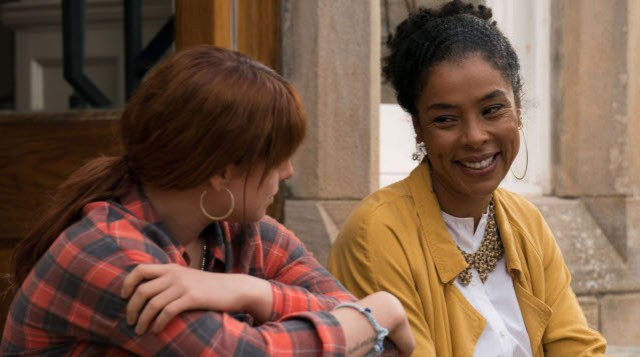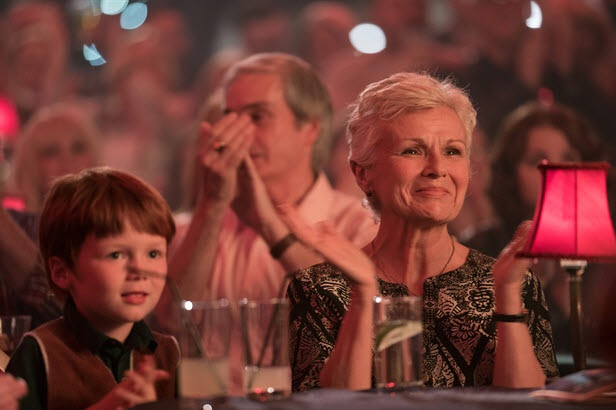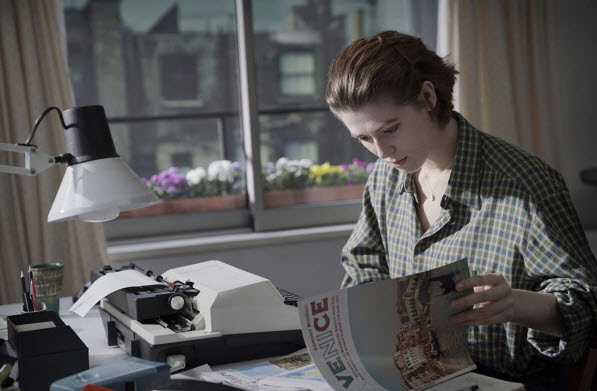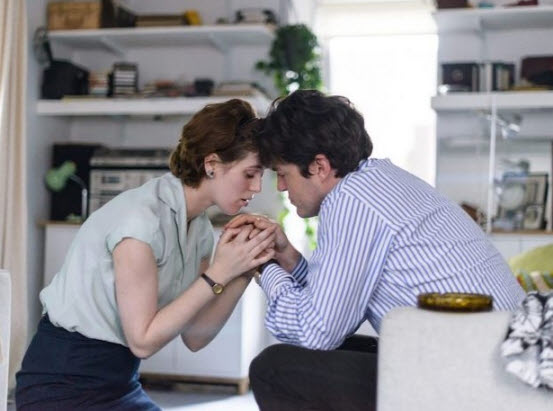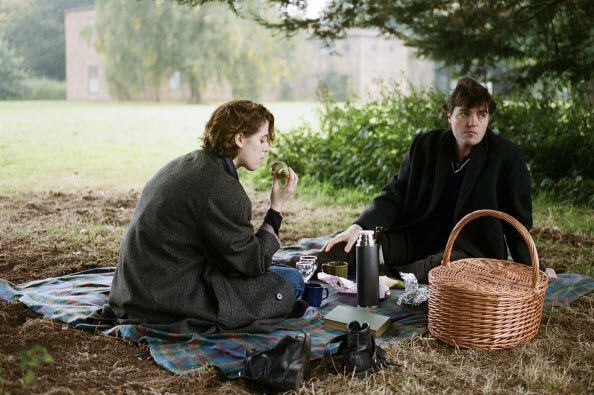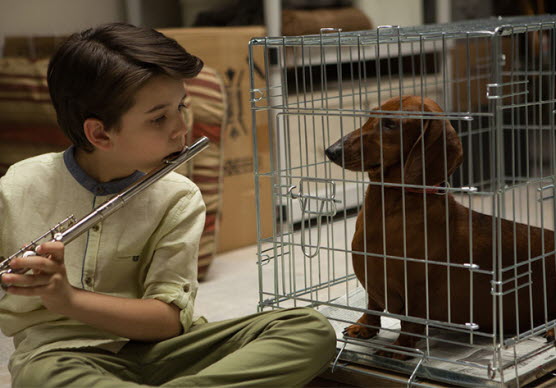
The Great Hack (2019) ☆☆☆(3/4): The rising digital threats to democracy

thegreathack04.jpg

Netflix documentary film “The Great Hack” gives us a closer look into a frightening social change driven by the swift advance of digital technology in our time. Sure, I have been well aware of how seriously most of us have been exposed to possible personal data exploitation by Facebook and many other social network service applications these days, but the documentary made me a lot more concerned about our personal data rights, and I am now seriously considering limiting my utilization of Twitter and a few other social network service applications more than before.

The narrative of the documentary mainly revolves around Cambridge Analytica, a British political consulting firm which became defunct in 2018 shortly after a big public scandal associated with the surprising outcome of the Brexit referendum in 2016. Based on billions of personal data points gathered via Facebook and other social network service application companies, this company strategically targeted thousands of potential voters who could be persuaded to vote for the Leave campaign, and it also turned out that the company later played a crucial role in the shocking victory of Donald J. Trump in the 2016 US presidential election.

At the beginning, David Carroll, an associate professor at Parsons School of Design in New York City, tells us how vulnerable we are to the data mining of Facebook and many other digital technology companies. Once we click yes to a Terms and Conditions agreement when we are about to install an application on our smartphone, we are bound to give our personal data points everyday to a company behind the application, and, unfortunately, there is no way to prevent ourselves from doing that because, well, most of us frequently use various applications on our smartphones everyday. In fact, I used Twitter and Instagram this morning as usual, and I am sure that my several digital activities during that short period are going through some data processing and analysis somewhere.

thegreathack03

Around the time when Carroll filed a lawsuit against Cambridge Analytica in England, the company had drawn the attention of British journalist Carole Cadwalladr, and she later published an article on the disconcerting connection between the company and the Leave Campaign, but then she found herself bullied a lot by the supporters of the Leave Campaign. At one point, we see a video clip ridiculing her serious concern on Cambridge Analytica, and that is just one of many cruel attacks and ridicules she had to endure.

Meanwhile, we also get to know about Brittany Kaiser, who was once a key employee of Cambridge Analytica and is probably the most fascinating figure in the documentary. She initially began her career as an intern working in Barack Obama’s US Presidential campaign in 2008, but, after she started to work in Cambridge Analytica, she soon came to be associated with the Leave Campaign as well as Trump’s US presidential campaign in 2016, and she surely did her best under her boss Alexander Nix, the CEO of Cambridge Analytica.

Around the time when Nix and his company were under the investigation by the British government, Kaiser boldly acted as a whistleblower, so she subsequently finds herself being a key witness to testify in public, but, while having some private time somewhere in Thailand, she often becomes unsure about herself. After all, she knew quite well what she and others in Cambridge Analytica were doing during that time, and there are a few moments of personal reflection as she phlegmatically muses on how she let herself get involved with Nix and his company from the beginning.

thegreathack05

And we get a bigger picture of what Cambridge Analytica did around the world before it got its two biggest hits in 2016. The company already operated on a number of important national elections around the world, and the prime example is the 2013 election campaign in Trinidad and Tobago. Mainly targeting a certain group of young voters in the country, the company manipulates them toward the disinterest in the election via social media contents specifically prepared for them, and the result was pretty successful for a local political party allegedly associated with the company.

Although Cambridge Analytica was eventually shut down as shown from the documentary, Pandora’s box was already opened, and we are reminded of how things will possibly get far worse for us in the future. As digital technology rapidly advances day by day, the foundation of democracy is being seriously undermined by this ongoing trend, but our societies and governments are still lagging behind it while stuck in shock and confusion, and people keep getting more separated from each other on the Internet as living in each own digital reality. As Cadwalladr warns to the audiences during her TED speech, this ongoing trend can possibly lead to a totalitarian dystopia in the future if we do not do anything about it, and her warning is certainly relevant considering the recent rise of fascism and tribalism around the world.

Although it comes to loses its focus and momentum a bit during its second half, “The Great Hack” is still a fairly engaging documentary on the whole, and directors Karim Amer and Jehane Noujaim, who was previously Oscar-nominated for “The Square” (2013), did a fine job of presenting the subject of their documentary with considerable interest and care. The story presented in the documentary is still being continued even at this point, and now I am wondering what will happen next during next several decades. We are surely bound to face our Brave New World in one way or another, and, as warned to us by the documentary, it may not be that pretty at all.

thegreathack01.jpg

Posted in Movies | Tagged , , | Leave a comment

Shusenjo: The Main Battleground of Comfort Women Issue (2019) ☆☆☆1/2(3.5/4): A sobering guide to the disputes surrounding the comfort women issue

ShusenjoTheMainBattlegroundofComfortWomenIssue03

As a South Korean guy, I must say that I cannot look wholly impartial to the subject of documentary film “Shusenjo: The Main Battleground of Comfort Women Issue”, which, as reflected by its rather long subtitle, focuses on that sensitive historical civil rights issue between South Korea and Japan. I will simply describe here what I observed and felt while watching it during this Saturday afternoon, and I hope my plain writing will be good enough to make you interested in watching this small but extraordinary documentary.

In the beginning, the documentary gives us a bit of historical background information. During the World War II, thousands of women from Korea, China, and several other Asian countries were sexually exploited as ‘comfort women’ by the Japanese military, but the Japanese government has not tried much yet in apologizing for this atrocious war crime or admitting its legal responsibility for many years, and this still remains as a hot issue at present for many people in South Korea and Japan.

In 2015, the South Korean government and the Japanese government reached to an agreement on the comfort women issue, but it angered lots of South Korean people because President Park Geun-hye and her South Korean government willfully disregarded what had been demanded by numerous people including a group of surviving comfort women for more than 20 years. In an archival footage clip shown at the beginning of the documentary, a high-ranking South Korean government official tried to talk with one of these old ladies not long after this unfair agreement was announced in public, but she was understandably quite angry and upset, and that official did not have anything to tell her except some empty platitudes.

ShusenjoTheMainBattlegroundofComfortWomenIssue04

And the documentary tells us about how its director/writer Miki Dezaki, a Japanese American who also served as a co-producer/editor/cinematographer in the production of his documentary, came to be interested in the comfort women issue. While he was working as an English teacher in Japan a few years ago, he suddenly found himself targeted by local right-wing groups after posting a YouTube clip on the racism in the Japanese society, and then he came to learn about a local journalist who was bullied and harassed by those right-wing groups for writing an article on comfort women – and that is how he became curious about why those right-wing groups are so sensitive about the comfort women issue.

For getting to know more about this issue, Dezaki subsequently approached to a number of people on both sides for interview, and all of them were quite willing to talk about it in front of his camera, though some of them, who are all associated with Japanese right-wing groups in one way or another, are pretty obnoxious to me and many other South Korean audiences for good reasons. According to these people, the ‘comfort women’ were nothing but prostitutes who willingly provided sexual service to Japanese soldiers for money, and they have actually been pretty active in spreading their gross historical viewpoint in not only Japan but also US for years. For example, they and their colleagues tried to stop the establishment of a comfort-woman stature in Glendale, California a few years ago, and they also tried the same thing when another comfort-woman stature was about to be established in San Francisco not long after that.

While calmly presenting the arguments from these people, the documentary sharply and thoroughly points out that their arguments do not have any solid base from the beginning. Their arguments, which mainly revolve around empirical evidence, the validity of oral testimony, the number of victims, the meaning of sexual slavery, and the definition of coercive recruitment, are instantly refuted by several experts on the comfort women issue, and the documentary later makes a very clear point on the toxic mix of racism, sexism, and nationalism shown from their arguments. In case of a pseudo-historian who can be regarded as the main center of several big Japanese right-wing groups (He is a distant cousin of Yoko Ono, by the way), he does not even hide his racist view on China and Korea at all, and his crude comments surely drew lots of sighs and snickers from the audiences around me.

ShusenjoTheMainBattlegroundofComfortWomenIssue01

The documentary also observes how the Japanese government has slowly and insidiously pushed its society and people toward the revised history of denial and oblivion. While many prominent politicians in Japan including Prime Minister Shinzō Abe do not hesitate to show their nationalistic side in public, they have also prevented comfort women and other Japanese war crimes during the World War II from being included in school textbooks, and they have even been trying to revise the constitution for the more active militarization of the country.

While it was often alarming and depressing for me to watch some of crucial moments in the documentary, I also found myself quite intrigued as appreciating its compelling presentation of the comfort women issue, and Dezaki did a competent job of handling various archival footage and interview clips on the whole. Steadily maintaining his calm position, he gradually reveals to us his sincere care and passion toward the subject of his documentary, and you may come to agree a lot to what he says around the end of the documentary.

In conclusion, “Shusenjo: The Main Battleground of Comfort Women Issue” works a sobering and informative guide to the comfort women issue, and I sincerely urge you to watch it as soon as possible, especially if you are not that familiar with its subject. So far, the documentary was released only in South Korea and Japan, but it deserves to be seen by more audiences around the world in my humble opinion, and I hope it will eventually lead to more public awareness in the future.

Sidenote: Shusenjo (主戰場) means ‘main battleground’ in Japanese.

ShusenjoTheMainBattlegroundofComfortWomenIssue02

Posted in Movies | Tagged , , | Leave a comment

Long Shot (2019) ☆☆☆(3/4): A sweet and smart political romantic comedy

longshot01

“Long Shot” is a sweet and smart political romantic comedy which does have some nice moments for good laughs. Although it could be sharper and wittier in some aspects, it is mostly entertaining thanks to the comic chemistry between its two engaging lead performers, and I came to overlook its several weak points to some degree during my viewing.

At the beginning, we are introduced to Fred Flarsky (Seth Rogen), an idealistic New York City journalist who gets himself involved with a bunch of hardcore right-wing guys for his latest article to be published. While he manages to accomplish his task in the end, he is notified later that his online newspaper company has been sold to a big media corporation owned by Parker Wembley (Andy Serkis), and, after arguing with his boss, he promptly quits even though he knows well how hard it is for a journalist to get employed again these days.

At least, Fred gets some consolation from his best friend Lance (O’Shea Jackson Jr.), who subsequently takes him to a charity fundraising event where a certain famous R&B vocal group is going to perform. While enjoying himself a bit, Fred happens to spot Charlotte Field (Charlize Theron), and he suddenly comes to realize that this woman, who is currently the US Secretary of State, was once his babysitter. Their following reunion is rather awkward to say the least, and then we get a silly slapstick moment which instantly goes viral on the Internet to his humiliation.

longshot04.jpg

After coming to learn more about Fred’s journalist career, Charlotte decides to choose him as her speech writer because she believes that he is talented enough to write a speech for what may be the most important moment in her political career. President Chambers (Bob Odenkirk), who was a popular TV actor before becoming the President of the United States two years ago, decides not to seek re-election as he hopes to resume his acting career in movies, and he personally promises to Charlotte that he will fully endorse her as his successor. While excited by the possibility of becoming the first female president in the American history, Charlotte also knows well that she must be careful in every step she takes in public, and she certainly feels pressured a lot as she must get the agreement from many political leaders around the world for announcing her global initiative on environment protection.

While initially not so eager to take the job offer from Charlotte because he does not want any compromise, Fred eventually agrees to work for her, and the movie serves us a series of comic moments as showing us how awkward he looks in his new position. Shabby and shaggy in his casual appearance, he certainly looks like an oddball as surrounded by Charlotte and many other posh and slick political figures including James Steward (Alexander Skarsgård), the Prime Minster of Canada who looks far more suitable to be around Charlotte compared to Fred.

While they do not click much well with each other at first, Charlotte and Fred come to respect and like each other as working more with each other, and the old feeling between them is gradually developed as they move together around a number of different spots around the world. After going through one sudden dramatic moment together, they let themselves swept by their mutual feeling, and it does not take much time for her assistants to notice how close Fred and Charlotte become to each other.

longshot05

Of course, Charlotte decides that her relationship with Fred should be kept hidden for a while, and Fred has no problem with that, but, not so surprisingly, things become quite complicated later in the story. As Charlotte tries to push the aforementioned global initiative as hard as she can, she inevitably finds herself in a conflict with President Chambers and Wembley, and Wembley, who is not so pleased with that initiative for good reasons, is quite willing to do anything for stopping her.

What follows next is predictable to the core, but the screenplay by Dan Sterling and Liz Hannah keeps things rolling, and director Jonathan Levin, who previously directed “50/50” (2011) and “Warm Bodies” (2013), did a competent job of balancing the story and characters well between humor and sincerity. Although its running time is a little too long in my humble opinion, the movie seldom loses its wit and spirit at least, and that is the main reason why its clichéd finale works.

Above all, the movie depends a lot on the star power of its two lead performers, and it is constantly fun to watch how they push and pull each other throughout the film. While Seth Rogen mostly sticks to a low-key mode except during a few raunchy moments including the one reminiscent of that infamous scene of “There’s Something About Mary” (1997), Charlize Theron, who can be not only quite tough as shown in “Mad Max: Fury Road” (2015) and “Atomic Blonde” (2017) but also very funny as shown in “Young Adult” (2011) and “Tully” (2018), deftly handles several juicy comic moments, and she and Rogen are supported well by a number of notable supporting performers including O’Shea Jackson Jr., June Diane Raphael, Bob Odenkirk, Alexander Skarsgård, and Andy Serkis, who is almost unrecognizable in his deplorable appearance.

In conclusion, “Long Shot” is a little disappointing for aiming rather low, but it works as much as intended, and I was entertained enough by Theron and Rogen’s delightful comic interactions on the screen. Sure, the movie often looks too naïve considering the current political circumstance in US, but it is a lightweight comedy enjoyable enough for recommendation, and I will not grumble about its weak points for now.

longshot02

Posted in Movies | Tagged , , , , | Leave a comment

Don’t Worry, He Won’t Get Far on Foot (2018) ☆☆1/2(2.5/4): His gradual new beginning

dontworryhewontgetfaronfoot02

Gus Van Sant’s latest film “Don’t Worry, He Won’t Get Far on Foot”, which is released as “Don’t Worry” here in South Korea, is a rather mild feel-good drama about alcoholism and disability. While surely giving us some darkly humorous moments as expected from its subjects and its real-life artist hero who hit the bottom more than once before eventually moving up to sobriety, the movie often feels a bit too thin and superficial in terms of storytelling and characterization, and I am particularly disappointed because it does not present well the creative process behind its hero’s simple but edgy cartoon works, which can be amusing or offensive depending on your individual viewpoint.

At the beginning, the movie moves around several different time points in the life of John Callahan (Joaquin Phoenix), whose life in Portland, Oregon was irreversibly changed on one day in 1972. During a private meeting with his fellow Alcoholic Anonymous (AA) members, he frankly recollects how he began that day with another bottle of booze – and how he subsequently threw himself into more alcohol during an evening party to which he went along with two female friends.

At that party, Callahan came across a guy named Dexter (Jack Black), who was drunk as much as him and later suggested that they go to some other party. Although both of them were pretty inebriated around the time they left for that party, Callahan did not prevent from Dexter driving his little vehicle, and they also drank more as stopping by several spots. Not so surprisingly, a big car accident eventually happened, and, while Dexter managed not to get injured much, Callahan found himself becoming a paraplegic when he regained his consciousness some time later.

That could have been a moment leading to rehabilitation, but, once he got out of the hospital, Callahan let himself tumbled further into his addiction. He kept drinking as usual even though he could not use his hands well, and he often exasperated his caregiver although he provided Callahan alcohol without objection while doing his job without much complain.

dontworryhewontgetfaronfoot01

During the scenes showing Callahan attending his AA meeting, we get to know a bit about his personal issue. As growing up as an adopted kid, he was often bitter about being abandoned by his biological mother, and he still feels bad about that fact even at present, but his fellow AA members see through his self-pity while sharply pointing out that he is a drunk because he drinks, and that is one of more effective moments in the film.

As he gradually takes a number of steps for recovery and sobriety later, Callahan is helped a lot by his sponsor Donnie Green (Johan Hill), the de factor leader of his AA meeting who is also your typical trust-fund kid. Green often holds his AA meeting in his luxurious residence, and we observe his positive influence on his fellow AA members, who come to feel comfortable enough to be honest and sincere in front of others under a calm, insulating private environment provided by Green.

While making progress step by step, Callahan comes to develop the artistic potential inside him, and we soon see him getting more attention as his several cartoons are shown to others via a local newspaper. Many of his cartoons, including the one which inspired the name of his memoir on which the movie is based, are pretty funny, but some of them are not very politically correct to say the least, and the movie does not neglect the fact that Callahan’s works often received negative responses for good reasons.

Anyway, as concentrating more on his newfound profession, Callahan finds himself getting much better than before. As a part of his recovery, he makes amends to a number of people who deserve his sincere apology, and we get a moment of understated poignancy when Callahan meets Dexter again, who has been struggling with his guilt and alcoholism just like Callahan.

dontworryhewontgetfaronfoot03

However, despite these and other good moments, the screenplay by Van Sant, which is based on the story by him and three other writers including Callahan, sometimes loses its narrative focus due to its unnecessary non-linear storytelling approach, and it also feels flat in case of the depiction of Callahan’s artistic activities. Sure, we get a number of his works being drawn on the screen, but that is all for us, and we do not get much insight on the sardonic inspiration behind these works of his.

The main cast members are suitably cast in their respective roles. Although he looks a little too old to play Callahan during the 1970-80s, Joaquin Phoenix did a good job of conveying his character’s constant struggle with personal demons, but I must say that the best performance in the film comes from Jonah Hill, whose low-key acting demonstrates again the other side of his talent behind his familiar comic image. While Udo Kier, Beth Ditto, and Jack Black are also fine in their respective supporting roles, Rooney Mara and Carrie Brownstein are woefully under-utilized in comparison, and I was particularly dissatisfied as watching Mara stuck with playing a character no more than your average pixie dream girl. In fact, I would not be surprised if her character turned out to be a mere fragment of Callahan’s imagination.

On the whole, “Don’t Worry, He Won’t Far on Foot” is not a total waste of time thanks to its several good elements, but it looks rather inconsequent compared to “American Splendor” (2003), a criminally overlooked film which did a far better job of presenting its similar subjects in my humble opinion. Maybe because of how much I was impressed and delighted by that movie when I finally came to watch it early in this year, I am not so willing to recommend “Don’t Worry, He Won’t Far on Foot” for now, but you may like it more than I did if you are ready to overlook its inherent flaws.

dontworryhewontgetfaronfoot04

Posted in Movies | Tagged , , , | Leave a comment

Sword of Trust (2019) ☆☆1/2(2.5/4): The trouble with one antique sword

swordoftrust01

Lynn Shelton’s latest work “Sword of Trust” is a little whimsical comedy film which could be better if it trusted its four likable main characters a bit more. While they are basically broad archetypes, they feel like real characters full of life and personality nonetheless mainly thanks to the good performers behind them, and it is rather disappointing to see that the movie later thrusts them into contrived silly scenes which are occasionally funny but do not wholly work in my humble opinion.

The first act of the movie mainly revolves a shabby pawn shop located somewhere in Birmingham, Alabama, and we get the first amusing moment in the film as Mel (Marc Maron), the owner of the pawn shop, tries to deal with some guy attempting to sell a tacky guitar and a pair of used boots. As they comically push and pull each other for a while, Mel’s goofy young assistant Nathaniel (Jon Bass) pays more attention to a YouTube clip on some loony conspiracy theory, and we are not so surprised when it is revealed later in the story that he actually believes that the Earth is flat.

The other two main characters of the film are Mary (Michaela Watkins) and Cynthia (Jillian Bell), a lesbian couple who come to Mel’s pawn shop on one day for selling an antique sword Cynthia inherited from her recently diseased grandfather. According to her grandfather’s rambling letter and a very questionable certification accompanying the letter, the sword was an important relic proving the victory of the Confederate Army in the American Civil War, and Mary and Cynthia want to sell it at a high price although they do not believe at all whatever Cynthia’s grandfather believed in his foggy mind deteriorated by Alzheimer’s disease.

swordoftrust04

Mel is not so eager to buy the sword at first, but then he changes his mind when Nathaniel informs to him that there are many people who really believe that the Confederate Army won the Civil War and that ‘historical fact’ has been somehow wiped out from history books and lessons (Wait, isn’t history always written by the winners?). Once discerning that some of those crackpots are willing to pay a lot for whatever will prove their crazy and pathetic conspiracy theory, Mel becomes more active in his subsequent dealing with Mary and Cynthia, but it does not take much time for Mary and Cynthia to see that Mel is trying to fool them, and Mel and they eventually agree to sell the sword together to a shady group represented by a guy named Hog Jaws (Toby Huss).

Meanwhile, we get to know a bit more about Mel via the appearance of his ex-girlfriend Deirdre, who is incidentally played by Shelton. At first, she simply looks like a mere customer trying to sell her supposedly precious ring, but we gradually come to sense the awkward mood generated between her and Mel, and Shelton and Marc Maron skillfully handle this wonderful personal moment as subtly suggesting a long history between their characters via small nuances and gestures.

Around the middle of the story, our four main characters find themselves confined within a vehicle taking them to somewhere in Tennessee, and that is the movie becomes more interesting to watch. As Mary and Cynthia confide to Mel and Nathaniel on how they came to postpone having a child while pursuing their respective aspirations, they come to show more of themselves to Mel and Nathaniel as well as us, and Michaela Watkins and Jillian Bell are spontaneous as touchingly presenting their characters’ loving relationship.

swordoftrust03

Mel also has lots of things to talk about besides how he happened to hire Nathaniel some time ago, and Maron, who has been mainly known for his supporting role in TV series “Glow”, ably holds our attention as revealing more human depth of his character. The camera merely focuses on his face, but his face tells us as much about his character as the accompanying long monologue on his character’s wild life in the past, and we come to reflect more on the previous scene between his character and Deirdre.

Around the time the screenplay by Shelton and her co-writer Mike O’Brien enters the last act unfolded in a place where its four main characters encounter a bunch of potentially dangerous people, the movie begins to spin its wheels as trying to be funny a little too much. A deliberately wacky scene where Mel and Mary attempt to deal with a guy who seems to be quite ready to pay a lot for the sword right now goes on a bit overlong, and the same thing can be said about the subsequent scene unfolded among them and some other characters in the story. Although the performers are clearly having a fun together during these scenes, I found myself becoming impatient in the end despite some amusement (I was particularly tickled by the silly confusion involved with the name of a battlefield associated with the sword), and I accordingly felt a growing urge to bring some common sense into their characters’ heads.

Overall, “Sword of Trust” is not satisfying enough for me to recommend mainly due to its weak last act, but it is mildly entertaining at least, and I do appreciate those several nice moments delivered well by Shelton and her talented cast members. It is a shame that they did not add up to something funnier, but I will not deny that I was amused to some degree during my viewing.

swordoftrust02

Posted in Movies | Tagged , , | Leave a comment

Missing Link (2019) ☆☆☆1/2(3.5/4): Around the World with Mr. Link

missinglink01

Animation feature film “Missing Link” is another delightful work from Laika Studios, which has steadily entertained us with a series of commendable stop-motion animation movies such as “Coraline” (2009) and “Kubo and the Two Strings” (2016). While dazzling us with its lovely visual moments to be cherished, the film also works as a funny and likable adventure story revolving around an unlikely friendship between its two different main characters, and I must say that I was frequently amused and delighted during my viewing at last night.

During the opening scene, we are introduced to Sir Lionel Frost (voiced by Hugh Jackman), an aspiring adventurer in the late 19th century England who has been quite interested in investigating mythical creatures. For many years, he has yearned to join a club of adventurers headed by Lord Piggot-Dunceby (voiced by Stephen Fry), and that is the main reason why he attempts to photograph the monster of Loch Ness, but, not so surprisingly, he fails in his mission although he manages to behold that monster in question.

Anyway, not long after he returns to London, Sir Frost receives a letter from some remote area in Washington, US, which tells him that a Sasquatch, which is also known as ‘Big Foot’, has been inhabiting somewhere in that area. Quite excited about another possibility of adventure and discovery, Frost comes to make a bet on the discovery of Sasquatch with Lord Piggot-Dunceby, and he soon embarks on his journey to the Pacific Northwest, but it turns out that his search for Sasquatch is quite easier than he expected. When he arrives at a spot from which the letter was sent, he spots a big figure watching him from the distance, and, what do you know, that big figure is indeed a Sasquatch – and this Sasquatch is the one who sent the letter to Frost.

missinglink02

The reason why this Sasquatch, who is later named Susan Link (voiced by Zach Galifianakis) although being male, needed Frost to come to his place is pretty simple. As the only surviving member of his species, he has been very lonely for many years, but he recently came to learn about Yetis, and he wants Frost to take him to the hidden habitat of Yetis, which is located somewhere in the Himalayas. Although he is a bit reluctant at first, Frost eventually agrees to help Link, and they subsequently go to California for meeting his old girlfriend Adelina Fortnight (voiced by Zoe Saldana), whose recently diseased husband, who was also an adventurer like Frost, left a secret map which may lead them to the hidden habitat of Yetis.

Although she is not that pleased to see her old boyfriend again at first, Adelina eventually joins Frost and Link, and they soon find themselves pursued by Willard Stenk (voiced by Timothy Olyphant), a sleazy bounty hunter who is hired by Lord Piggot-Dunceby for stopping Frost from winning the bet and is ready to do anything as demanded by his employer. At one point, he tries an ambush when Frost, Link, and Adelina are on a ship sailing from New York City to London, and that leads to an exhilarating action sequence which somehow reminded me of a certain memorable action scene in “Inception” (2010).

And the screenplay by director/writer Chris Butler, who was previously Oscar-nominated for “ParaNorman” (2012), keeps throwing many good moments for laughs. I was often tickled by Link’s constant clumsiness, and I was also frequently amused by how he usually takes words too literally, which functions as a running gag throughout the film. While I must say that the development of Link and Frost’s relationship is rather predictable, it is depicted well with enough sincerity and sweetness at least, and they become more endearing to us than before around the end of the story.

missinglink03

In addition, the film has numerous superb visual moments filled with vibrant moods and rich details to savor. In case of the snowy sequence unfolded in the Himalayas, it may remind you a bit of “Frozen” (2013) for good reasons, but it is still breathtaking to watch nonetheless, and you will appreciate more of the painstaking efforts from the technical crew members of the film, who surely worked very hard during the production of the film as briefly shown in the middle of the end credits.

Although the characters in the film are broad archetypes, they are imbued with a lot of colorful personality thanks to the spirited voice acting from its main cast members. While Hugh Jackman, who is no stranger to charm and bravado, deftly goes back and forth between silliness and seriousness, Zach Galifianakis dials down his comic intensity a little for his earnest deadpan voice performance, and he and Jackman are effortless in their many comic interactions throughout the film. In case of the other main cast members, Zoe Saldana holds her own small place well between Jackman and Galifianakis as bringing considerable fiery spirit to her character, and Stephen Fry, Matt Lucas, Timothy Olyphant, and Emma Thompson are also effective in their respective supporting roles.

Overall, “Missing Link” is a superlative animation film which can entertain both young and adult audiences, and it is a shame that it did not draw much attention from audiences although it received a lot of praises from critics when it was released in US several months ago. In short, this is one of the better animation films of this year, and I sincerely urge you to check it out as soon as possible.

missinglink04

Posted in Movies | Tagged , , | 2 Comments

Armstrong (2019) ☆☆1/2(2.5/4): Respectable but redundant

armstrong02

Documentary film “Armstrong” tries to present the life and career of Neil Armstrong, the most prominent figure in the Apollo Space Program. While its attempt is admirable, sincere, and, considering the 50th anniversary of that monumental moment, timely, the documentary does not tell anything new besides what I have watched and learned from many other numerous movies and documentaries about the NASA space programs during the 1950-60s, and that is rather disappointing in my trivial opinion.

At first, the documentary alternates between the final stage of the Apollo 11 mission and Armstrong’s early life. Born on August 5th, 1930 in a small rural town in Ohio, young Armstrong was a shy, quiet, and introverted kid who became quite interested in aviation as playing with a toy airplane, and he even got a flight license first before getting a driving license. After experiencing his first solo flight, he became more determined to pursue aviation engineering, but then he came to enlist in the US Air Force when the Korean War broke out in 1950, and he soon became one of the best jet pilots in his military unit thanks to his cool, unflappable professionalism shown during many combats.

After the war, Armstrong began to study at the Purdue University in Indiana, and that is where he met his first wife Janet, to whom he finally proposed only after his graduation. Not long after he moved to Edwards Air Force Base in California, he and Janet eventually married, and he continued to focus on his work while Janet took care of their two children. As a test pilot, he flied many different test jets including North American X-15, and we hear about how calmly he handled a sudden emergency situation during one of those risky mission of his.

Review: ‘Armstrong’ examines the man behind the moon landing

Like many other top-notch test pilots during that time, Armstrong was subsequently drawn to the ongoing space programs in NASA, and, again, he demonstrated his exceptional qualification as an astronaut. Without any complaint, he strenuously and diligently devoted himself to many hours of tests and training sessions, and he proved that he indeed had the right stuff during a very perilous and terrifying situation which could have led to the first space disaster in the history of NASA.

In the meantime, Armstrong and his wife had to go through a difficult personal moment. Their little daughter Karen was diagnosed with a malignant tumor of the middle part of her brain stem, and she eventually died at the age of 2 in 1962. As a father who dearly loved his daughter, Armstrong was quite heartbroken by his daughter’s death, and it is suggested that he never got over that tragedy although he and his wife later have their third child Mark, who incidentally serves as the writer of the documentary.

After the successful outcome of the Gemini Space Program, NASA moved onto the Apollo Space Program, but a terrible incident happened in 1967. Three astronauts were killed during a pre-launch test for the Apollo 1 mission, and that was certainly a devastating blow to everyone in NASA, but they kept moving on while learning a lot from that disastrous incident.

As the Apollo Space Program showed more and more progress, lots of attention was paid to who would be chosen for the Apollo 11 mission, and Armstrong was eventually chosen as the commander of Apollo 11. Along with Buzz Aldrin and Michael Collins, Armstrong constantly focused on the preparation for what would be a historic moment for the humanity, and the enormous efforts from them and many other employees of NASA eventually culminated to July 16th, 1969, when the launch of Apollo 11 finally happened.

armstrong03

Four days later, Armstrong and Aldrin embarked on the Moon landing, and, as all of you know, the rest was history. After safely coming back to the Earth along with Aldrin and Collins, Armstrong found himself getting lots of attention from the media and the public, and he was not so comfortable about that, but he did whatever he was expected to do along with his two colleagues because, well, that was a part of their job.

After that glorious moment of his life, Armstrong slowly went back to his usual introverted mode while also trying to spend more time with his wife and children. Not caring much about how he was regarded by others, he went his way as usual, and then he gradually found a route to the next phase of his life. After teaching engineering in an university for a while, he became a board member of the board of Taft Broadcasting, and then he soon came to join the boards of many other companies including Eaton Corporation, and he also served on the Rogers Commission, which investigated the Space Shuttle Challenger disaster. Although he and Janet eventually divorced in 1994, he subsequently married again, and he became more comfortable with being himself in public during his later years.

Overall, “Armstrong” is a fairly watchable documentary, and director David Fairhead did a good job of mixing archival materials, interview clips, and the reading of Armstrong’s personal letters and records by Harrison Ford, but I must point out that the overall result feels rather reluctant mainly due to what we recently saw and observed from “First Man” (2018) and “Apollo 11” (2019), which did a better job of presenting Armstrong and the Apollo 11 Mission. Sure, I enjoyed the documentary to some degree, but I did not feel particularly amazed and enlightened, and that is all.

armstrong04

Posted in Movies | Tagged , , , , | Leave a comment

Donbass (2018) ☆☆☆(3/4): Scenes from the ongoing war in Donbass

donbass02

“Donbass”, which was selected as the Ukrainian entry for the Best Foreign Language Film Oscar in last year, gives us a series of vivid, realistic slices of absurdities and horrors of a war which is still being continued even at present. Although it is often hampered by its lack of strong narrative focus, the movie still engages us to considerable degree as gliding from one darkly humorous vignette to another, and we are alternatively amused and chilled even though mostly observing the film from the distance.

The movie opens with a bunch of performers readying themselves for their work in a trailer. On the surface, it looks like they are merely participating in a filmmaking process, but it soon turns out that they are hired for playing traumatized citizens at the site of a fake terror incident, and we later get an indirect glimpse on how the resulting fake news is spread via the local media in the Russian-supported Donetsk’s People’s Republic, which is located in a region named Donbass and has been in a military conflict with Ukraine shortly after the Ukrainian revolution of 2014.

After a brief vignette showing a silly (and literally sh*tty) quarrel unfolded in a provincial hall in Ukraine, the movie goes back to Donetsk, and we are served with an absurd sequence unfolded in some shabby rural hospital. When an official comes into the hospital, it seems he is going to take care of some serious case of corruption, but, not so surprisingly, it is eventually revealed that this smarmy dude is as corrupt as a doctor supposedly responsible for this case, and we subsequently see him taking a bribe from another doctor.

In case of the sequence about a bunch of various civilians going back to Donetsk by a bus, the movie gives us a prime example of that toxic culture of masculinity frequently observed from wars. When the bus is going through another checkpoint guarded the soldiers of Donetsk’s People’s Republic, many of male civilians in the bus are harassed and humiliated by these soldiers, who coldly regard them as traitors to their new motherland. At the same time, a German journalist happens to be dealing with some of these soldiers, and he is not treated that well either just because of his nationality. He is instantly labeled as a fascist, and he is casually insulted by a particularly aggressive solider at one point: “If you aren’t a fascist. then your grandfather was!”

donbass01

After the rough vignette showing the German Journalist doing his job on the frontline, the movie moves onto the sequence unfolded inside an underground bunker located somewhere in Donetsk, which is full of desperate civilians struggling with their dire circumstance. Due to the ongoing war, most of them have no other place to stay, and you may wince at times while observing how miserable their living condition in this underground bunker is in many aspects.

At the end of this sequence, a woman comes into the underground bunker for taking away her aging mother, but she only gets frustrated and exasperated as her mother refuses to go with her, and she has no choice but to go back to a government office where she works as a secretary for some high-ranking official. Not long after she returns to her workplace, her boss happens to be visited by a trio of Christian group people eager to promote their religious event with some government support, but he does not care much no matter how much they try to emphasize the importance of their religious event, and we are certainly amused as he eventually sends them away without much promise.

What follows next after this vignette is a gut-wrenching moment showing the brutal punishment on two soldiers who committed a minor transgression, and then we are slapped with the sheer absurdity surrounding one small-time business man who happens to get his valuable asset expropriated by the Donetsk’s People’s Republic Army. He simply wants to get that asset back as soon as possible, but it soon becomes quite clear that there is really nothing he can do about this exasperating situation, and he has no choice but to follow a procedure forced upon him.

donbass03

In case of the sequence revolving around a captured Ukrainian soldier, it chills and disgusts us as how people can be quite cruel to others labeled as enemies. When this poor guy is presented as a foreign-backed ‘extermination squad’ on the street while guarded by two soldiers, civilians gather around him one by one, and then they ridicule and humiliate him more and more until he is eventually taken away to somewhere.

This part is later glimpsed briefly via a smartphone during the following vignette, which shows a wedding ceremony being held in the town hall of some rural town in Donetsk. The mood is bright and cheerful as guests gladly congratulate the bride and the groom, but we cannot help but notice some of the guests wearing military outfits, and we are not so surprised when everyone is swept by their nationalism around the end of the wedding ceremony.

I must confess that I was a bit confused from time to time during my viewing, but “Donbass” succeeds as much as intended in my trivial opinion, and director/writer Sergei Loznitsa, who won the Un Certain Regard award for Best Director when the movie was shown at the Cannes Film Festival early in last year, did a commendable job on the whole. The movie is not entirely without flaws, but it is still worthwhile to watch, and I think you will appreciate it more if you get some background knowledge on its subject in advance.

donbass04

Posted in Movies | Tagged | Leave a comment

Lying and Stealing (2019) ☆☆☆(3/4): A predictable but enjoyable heist flick

lyingandstealing01

“Lying and Stealing” is a predictable but enjoyable heist flick which has some good elements to cherish. Although it does not break any new ground in its genre territory, the movie did a fairly good job of handling its story and characters well along with enough sense of fun and excitement, and we gladly go along with that even though we can clearly see where its story and characters are heading right from the beginning.

Like many other heist flicks, the movie opens with its criminal hero’s latest job. While disguising himself as one of the guests at a party being held in a slick modern house located somewhere in LA, Ivan Warding (Theo James) waits for the right moment to steal a certain famous (and precious) artwork by Jeff Koons, and we soon see how this young thief works. In a simple but clever way, he swiftly accomplishes his mission despite one minor setback in the last minute, and then he promptly reports his success to his boss Dimitri Maropakis (Fred Melamed), for whom he has worked for years due to his father’s debt.

Because he thinks he has done almost enough for paying back all of his father’s debt, Ivan subsequently expresses his wish to quit to Dimitri, and, of course, Dimitri is not so pleased to hear that. He promises to Ivan that Ivan can quit after doing two more jobs for him, but his seemingly melliferous words are not so trustworthy to say the least. Ivan has no choice to accept that condition, as he does not want to provoke Dimitri at any chance, who can be quite ruthless if necessary.
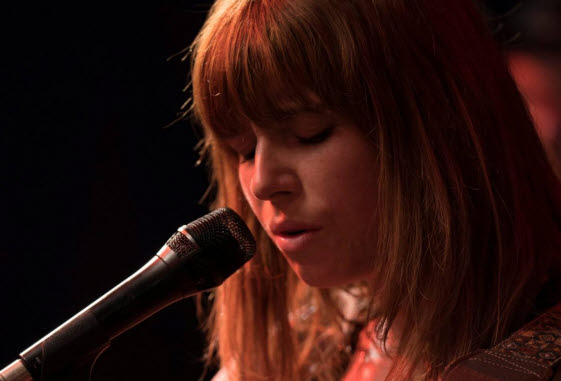
lyingandstealing03

Anyway, Ivan’s next job is stealing a painting by Philip Guston, which is in the residence of a sleazy Italian movie producer. Again, he effortlessly sneaks into the residence while a party is being held there, but then he comes across a young actress named Elyse Tibaldi (Emily Ratajkowski), whom he incidentally met at the site of his previous heist. As they spend some time with each other, they are gradually attracted to each other, but Ivan keeps focusing on that job nonetheless, and, again, he succeeds without being noticed by anyone.
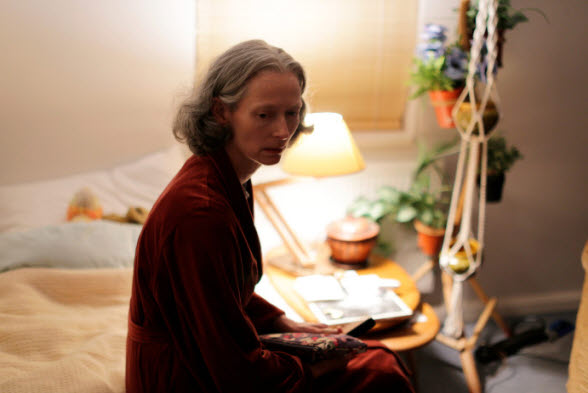
In the meantime, we see how Ivan’s private life is disrupted by his older brother Ray (Ebon Moss-Bachrach), who has been in a mental institution for his bipolar disorder but gets himself evicted due to his naughty criminal behaviors. Although Ivan prefers to live alone, he cares about Ray’s welfare nonetheless as his only close family member, so he comes to let Ray stay in his apartment for a while even though he knows well that Ray is not someone easy to live for many reasons besides his mental illness.

And then there comes another trouble for Ivan. His two latest heist jobs happen to draw the attention of a federal agent named Lyman Wilkers (Isiah Whitlock Jr.), and it does not take much time for him to track down Ivan. Although there is no direct evidence to incriminate Ivan, Wilkers deliberately approaches to Ivan at one point, and Ivan is certainly alarmed although he manages to keep himself calm on the surface.

Meanwhile, Dimitri orders Ivan to do what is supposed to be the last job. There is some rich guy who has collected a bunch of rare items associated with Nazi Germany, and one of them is the self-portrait by a certain infamous figure. Although the job in question turns out to be pretty simple, Ivan subsequently finds himself pressured by both Dimitri and Wilkers, and he must be very careful for his survival and freedom.

lyingandstealing02

Smoothly rolling the plot toward the expected finale, the screenplay by director Matt Aselton, who previously debuted with “Gigantic” (2008), and his co-writer Adam Nagata continues to provide several nice moments to be appreciated. For instance, I enjoyed how Elyse, whose acting career has been going nowhere since her very unpleasant incident with a powerful movie producer, comes to get herself more involved with Ivan (Is this a spoiler?), and I also liked a small twist involved with Dimitri’s henchmen.

As the center of the film, Theo James, who has been mainly known for “Divergent” (2014) and its forgettable sequels, is well-cast while being slick and likable as required, and he is surrounded by a number of colorful performers. While Fred Melamed, a dependable character actor who has seldom disappointed me since I noticed him for the first time via his hilarious supporting turn in the Coen Brothers’ “A Serious Man” (2009), is clearly having a fun with his shady character, Emily Ratajkowski has a nice chemistry with James during their several key scenes in the film, and Ebon Moss-Bachrach is equally solid as Ivan’s problematic older brother. In case of Isiah Whitlock Jr., who drew my attention for the first time via his wily supporting turn in acclaimed TV series “The Wire”, he surely adds extra entertainment to the movie whenever he appears, and I must confess that I often expected him to utter that amusing catch phrase of his from “The Wire”.

On the whole, “Lying and Stealing” is mildly entertaining while safely saying inside its genre boundaries, but I recommend it anyway because of its efficient storytelling and engaging performance. Sure, it is indeed predictable to the core as also being reminiscent of other countless heist films out there, but it is equipped with considerable personality at least, and you will probably have a good time with it as long as you do not expect too much.

lyingandstealing04

Posted in Movies | Tagged , , | Leave a comment

Night Comes On (2018) ☆☆☆(3/4): A young girl seeking vengeance

nightcomeson03

“Night Comes On”, which won the NEXT Innovator Award at the Sundance Film Festival early in last year, is a quiet and sensitive character drama about one troubled young girl attempting to seek vengeance. While calmly following its heroine’s emotional journey, the movie subtly conveys to us pain and torment insider her, and we come to empathize more with her as also more concerned about what may happen in the end.

When we see Angel Lamere (Dominique Fishback) in the beginning, this adolescent girl who is soon going to be 17 years old is about to be released from a juvenile detention center, and we gradually come to gather how problematic her life has been during last several years. After her mother was killed by her father, she bounced from one foster home to another while causing lots of troubles, and she also committed a lot of minor crimes, which eventually resulted in her incarceration in the juvenile detention center for a couple of years.

On the surface, Angel seems to be ready to make a new start outside. During the interview with her parole officer, she shows some eagerness for a better life, and her parole officer is willing to help her although he shows jaded skepticism at first. Although she does not have any close family member, she has a girlfriend who may let her stay in her residence for a while, and she is also going to meet her younger sister Abby (Tatum Marilyn Hall), who has currently been in a foster home along with other kids.

However, it turns out that Angel is planning to kill her father, who was recently been released as his sentence was considerably reduced due to a legal excuse. She tries to find where he is currently living, but, of course, she is not allowed to access to that information, and it seems that the only possible way for her is getting some help from Abby, who previously went to their father’s current residence.

nightcomeson01

When she comes to the foster home where Abby lives along with several other young kids, Abby is certainly delighted to see her older sister again, and the mood becomes a little gentler as they spend some time together inside the foster home. While the bedrooms for Abby and other kids are stuffy and shabby, the bedroom of their foster mother’s daughter looks pretty bright and clean in contrast, and we come to learn a bit about how Abby and other kids live day by day in this rather poor environment.

As the night comes, Angel goes to where her girlfriend lives, but, as they talk with each other outside, she is only reminded of how much she and her girlfriend have been distant to each other. While there is no hard feeling between them, Angel’s girlfriend cannot afford to let Angel stay in her residence, and we accordingly get a harrowing scene where Angel tries to sleep on the ground floor of some building.

Once everything is established in the story, the movie moves onto the next act, which revolves around Angel and Abby’s journey to where their father possibly lives. When they happen to be stranded on the road thanks to Abby’s certain biological matter, they fortunately get some help from a group of girls, and that leads to a nice scene where they and these girls cheerfully hang around with each other in the house where one of these girls lives.

nightcomeson02

However, Angel finds herself feeling more urge for revenge than before. As shown from an earlier scene, she already obtained a gun, and the gun is now being hidden in her bag, but she becomes more conflicted as more anger and anxiety are accumulated inside her. Not so surprisingly, Abby later comes to realize what her older sister is probably going to do, and there comes a very hurtful moment between them as Abby reveals something she did not tell Angel from the very beginning.

When the story finally arrives at its expected narrative point, the movie keeps maintaining its calm attitude even though the mood becomes a little too melodramatic. The resulting finale may feel rather anti-climactic at first, but it is presented with some human compassion and understanding, and that is why the last shot of the film works with considerable dramatic resonance.

It helps that the movie is anchored well by the strong lead performance by Dominique Fishback, who recently played a supporting character in “The Hate U Give” (2018). Even when her character does not say much, Fishback deftly depicts her character’s confused and conflicted emotional state, and she is also supported well by several other main cast members including John Jelks, Max Casella, James McDaniel, Nastashia Fuller, and Tatum Marilyn Hall, who does a lot more than holding her place well beside Fishback.

“Night Comes on” is the first feature film by director/co-writer Jordana Spiro, who has been mainly known for her acting works in a number of movies and TV series (She has recently been one of the main cast members in acclaimed TV series “Ozark”, by the way). Considering its realistic mood and details as well as its unadorned storytelling and performance, Spiro is another good filmmaker to watch in my humble opinion, and I guess we can have some expectation on what may come next from her in the future.

nightcomeson04

Posted in Movies | Tagged , | Leave a comment