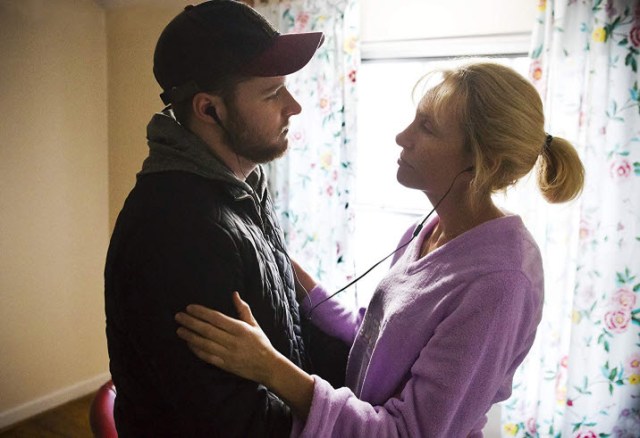
Ash Is Purest White (2018) ☆☆☆1/2(3.5/4): As she embodies a certain way of life

ashispurewhite03

Chinese film “Ash Is Purest White”, the latest work from Jia Zhangke, is a dry but compelling crime melodrama which fascinates us via its deft mix of personal drama and social background. Although it takes some time for establishing its story and characters before getting things rolling, the overall result is another interesting work from one of the most prominent filmmakers in China, and I admire it more as reflecting more on its strong aspects.

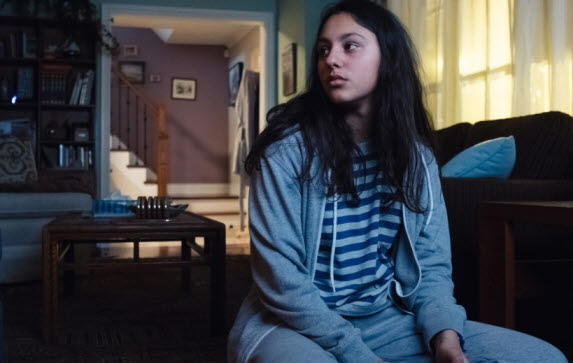
The early part of the movie is set in an old mining city named Datong, and we observe the daily life of Zhao Qiao (Zhao Tao) and her small-time gangster boyfriend Guo Bin (Liao Fan). It is 2001, and the economy of the city has been going downhill as the price of coal is getting dropped, but Bin and his associates are eager to move along with the ongoing social change in the country, which is exhilaratingly represented at one point by a nightclub dancing scene accompanied with a certain recognizable Western pop song.

And then there comes a trouble to Bin. His older associate, who has been doing a legitimate business of his own, complains about an annoying business problem, and, as a guy serious about the code of honor and loyalty represented by Chinese word ‘jianghu’, Bin is willing to take care of that problem, but then an unexpected incident happens. While trying to handle the aftermath, Bin also prepares for advancing further in his underworld as expected, but then he finds himself thrown into a tuft war, and that is when Qiao comes to do something she has probably never imagined before.

Thanks to her unexpected courage and gumption, Qiao saves Bin, but she subsequently faces the consequence of her action, and, without telling anything against her boyfriend, she willingly lets herself incarcerated in a prison for next five years. Although Bin never comes to see her, she does not give up her hope at all, and we soon see her released from the prison five years later.

ashispurewhite02

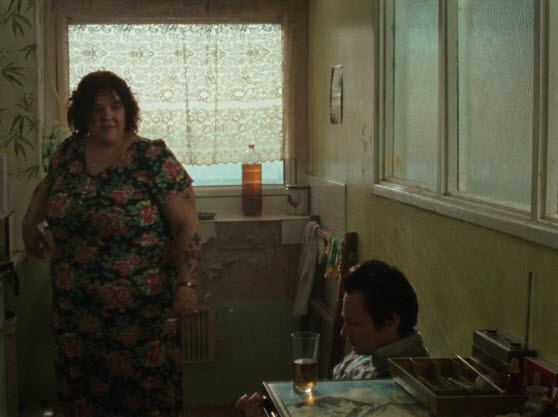
However, Bin is not there for Qiao, and, still believing in their relationship, she goes to Fengjie, a city located near the Yangtze River which is going to be changed a lot due to the ongoing process of the Three Gorges project. Before arriving at the city by a cruise ship, she happens to get all of her money stolen, but she is not easily daunted by that, and we later watch how she gets some cash in an amusing criminal way.

In the meanwhile, Qiao keeps trying to contact and then meet Bin, but it is already clear to us that Bin is not particularly eager to see her. Not so surprisingly, he has a new girlfriend, and there is an awkward moment when Qiao comes to have a little talk with Bin’s new girlfriend, who directly reminds Qiao of what has been changed since she was sent to the prison.

Eventually, Qiao meets Bin after virtually forcing him to pick her up at a police station (How she manages to do that is another little amusing moment in the film, by the way), but she is only reminded again of how much she and Bin have become distant to each other, and we accordingly get a calm but emotionally intense scene between them. As discerning more of how much her man has been changed, Qiao becomes saddened and devastated, but she keeps maintaining her phlegmatic appearance nonetheless, and Zhao Tao, who has been one of Jia’s main collaborators, did a wonderful job of conveying to us complex feelings and thoughts churning behind her character’s seemingly passive façade.

ashispurewhite04

And the story keeps moving on along with its heroine. Quite hurt about being abandoned by Bin, Qiao later gets on a train, and the movie gives us a number of breathtaking landscape shots as her journey back to Datong takes an unexpected turn. She happens to encounter a guy who introduces himself as a businessman developing a local tourism company in Shinjang, and it looks like he may be someone she can lean on, but then she changes her mind not long after deciding to accompany him.

The last act of the film, which is set around the end of 2017, shows Qiao and Bin under a very different situation. He is sent back to Datong due to his deteriorated physical condition, and Qiao, who is now running a gambling place to which she and Bin frequently went, takes care of him even though, as she casually admits later, she does not have much feeling toward him at present. She simply follows what she should do as a woman fully and fiercely embodying that code of honor and loyalty, and that certainly makes him ashamed and humiliated at times. Liao Fan, who drew my attention for the first time with his unforgettable performance in Diao Yinan’s “Black Coal, Thin Ice” (2014), is an effective counterpart to his co-star, and he and Zhao are particularly good when their characters have a bittersweet private time at a remote spot outside the city.

Like Jia’s previous films such as “A Touch of Sin” (2013) and “Mountains May Depart” (2015), “Ash Is Purest White” is demands some patience from you in the beginning, but it is an admirable piece of work on the whole, and, in my trivial opinion, it is more successful compared to “Mountains May Depart”, which was interesting to some degree but does not wholly work mainly due to its weak last act. Thanks to Jia’s skillful direction and Zhao’s strong performance, the movie comes to us as a rough but powerful tale of personal growth and social change, and its open-ended final shot lingers on your mind for a while. Whatever will happen next to her, she will endure as before – and she will prevail, of course.

ashispurewhite01


Posted in Movies | Tagged , | 1 Comment

Long Day’s Journey Into Night (2018) ☆☆☆(3/4): Confusion amid dreams and memories

longdaysjourneyintonight02.jpg

Chinese film “Long Day’s Journey Into Night”, which is not associated at all with Eugene O’Neill’s classic play of the same name (Its original title is “Last Day on Earth”, by the way), is often frustrating and confusing for good reasons. While the first half of the movie is strewn with fragmented pieces of memories and dreams, the second of the movie is equally elusive and disorienting even though it is presented in a more continuous way, and, to be frank with you, I am still scratching my head as wondering whether I really understand everything shown on the screen.

At the beginning, we meet its hero, named Lou Hongwu (Huang Jue), and his narration tells us a bit about his current state. He left his hometown many years ago, but now he returns to his hometown for his recently diseased father’s funeral, and he cannot help but haunted by the memories of his past. He recalls an old friend who was killed after frequently causing troubles due to gambling, and he also reminisces about a woman named Kaizhen (Tang Wei), who disappeared away from him around that time although they seemed to be passionately in love with each other.

As obtaining a few things which may lead him to Kaizhen, Lou Hongwu tries to find her as much as he can, but he only finds himself in more confusion and frustration. He encounters a number of folks who may help him, but what they respectively tell him only reminds him that he did not know her much from the beginning. For example, it seems Kaizhen is not her real name, and Lou Hongwu also comes to learn a bit about her seedy past.

longdaysjourneyintonight04

Nevertheless, he remains haunted by his memories of her, and the movie throws at us a series of flashback scenes, which may not be entirely true as reflected by its stylish mood and details. There is a wonderful nocturnal scene showing a sort of Meet Cute moment between Lou Hongwu and Kaizhen in a tunnel, and her alluring beauty is as mesmerizing as her emerald green dress. There is also a noirish moment when they later come to plan something dangerous for getting out of their miserable world, and we get an impressive unbroken shot as he is about to execute their plan at a movie theater.

However, the movie keeps being vague and elusive about the relationship between Lou Hongwu and Kaizhen. While it does not show or tell us whether that risky plan of theirs was successful in the end, it also does not reveal much about how they subsequently came to be separated from each other, so we only become more confused and frustrated just like our hero.

Furthermore, director/writer Bi Gan, who previously made a feature film debut with “Kaili Blues” (2015), adamantly maintains his slow, austere approach reminiscent of the works of Andrei Tarkovsky, which actually influenced him a lot during his college years. As the camera of cinematographers Yao Hung-i, Dong Jinsong, and David Chizallet calmly and steadily maintains its continuous movements, the movie constantly demands considerable focus and patience from us, and you may find yourself becoming quite impatient from time to time.

Nevertheless, the movie gradually becomes more interesting as serving us a number of haunting scenes to linger on our mind. During the scene where Luo Hongwu visits a prison for meeting someone who may tell a bit about Kaizhen’s past, the camera slowly comes to focus on that person in question, and the mood becomes a little poignant as that figure phlegmatically recollects her past with Kaizhen. In case of the scene involved with a man who once lived with Kaizhen for a while, the movie becomes a little humorous in the beginning, and then we come to feel some bitterness and wistfulness as he talks to Luo Hongwu about his past with her.

longdaysjourneyintonight05

During the second half of the film, Luo Hongwu happens to spend some time in a shabby movie theater where a 3-D movie is being shown, and that is when we get the main technical highlight of the movie: a 59-minute 3-D sequence shot in one unbroken shot. As the camera fluidly moves or flies along with our hero from one spot to another, we get to sense more of his yearning toward Kaizhen, and the movie engages us more with some stylish visual touches, though I must point out that its dialogues often feels a bit too static and contrived for me (“Clock is a symbol of eternity.” – “Firework is a symbol of transience.”).

Although the move did not entertain me a lot, I admired its technical aspects at least, and I also appreciated the good performances from its few main cast members. While Huang Jue holds the center with his earnest performance, Tang Wei, who has been more notable since her courageous breakout turn in “Lust, Caution” (2007), is simultaneously attractive and ambiguous as hovering over the film, and Sylvia Chang is also effective in her brief appearance as the mother of Lou Hongwu’s dead friend.

In conclusion, “Long Day’s Journey Into Night” is an unconventional piece of work which mostly depends on mood rather than narrative, and, though it may look languid and ponderous to you at first, it will be a rewarding experience if you are open to something different and challenging. I felt distant to what it is about, but I was fascinated nonetheless with how it is about, and that is enough for recommendation for now.

longdaysjourneyintonight01

Posted in Movies | Tagged , | 1 Comment

Manifesto (2015) ☆☆☆(3/4): 13 Manifestos delivered by Cate Blanchett

manifesto01

You should know in advance what you are going to get from “Manifesto”, a challenging but thought-provoking arthouse film presenting a bunch of many different ideas and messages via a series of manifestos. While it goes without saying that you can casually watch it for entertainment, the movie is constantly interesting thanks to its dexterous mix of text and visual, and it surely helps that it is anchored by another virtuosic turn from one of the greatest actresses of our time.

Here in this film, Cate Blanchett plays more than 10 figures for delivering 13 manifestos, nearly all of them are the textual collages of around 60 manifestos selected by director/producer/writer Julian Rosefeldt. The selected manifestos are from various figures ranging from Karl Max to Jim Jarmusch, and, as an inconsequential amateur film critic, I certainly was amused by a section titled “Film”, whose manifesto consists of the words from not only Jarmusch but also Lars von Trier and Werner Herzog.

In the section titled “Situationism”, Blanchett appears as an angry homeless guy who has a lot to say about capitalism, and she is impressive to say the least while completely immersing herself into her role. After all, she previously amazed us as playing one of several personas of Bob Dylan in Todd Haynes’ “I’m Not There” (2007), and I was not so surprised to learn later that Rosefeldt actually discussed with her on her uncanny performance in that film while meeting her for his project.

And then she keeps impressing us more as deftly moving from one section to another. In “Futurism”, she appears as a cool-headed stockbroker, and there is a wonderful visual moment to behold after the manifesto of this section is phlegmatically delivered by her on the soundtrack. In case of “Architecture”, she looks quite dowdy in comparison as a woman working in a garbage incineration plant, and the mundane work process in the garbage incineration plant makes a rather ironic contrast to the accompanying manifesto.

manifesto06

In case of the section involved with a scientist, titled “Suprematism/Constructivism”, it provides a couple of interesting visual moments to reflect on. At one point, we observe Blanchett and others walking around in some big research facility, and we later get a surreal moment which is apparently inspired by Stanley Kubrick’s “2001: A Space Odyssey” (1968). As watching that moment, I was a bit baffled, but, at least, I appreciated how willing the movie is to try anything to intrigue and engage its audiences.

While you may often struggle to absorb and understand those numerous statements on art and ideology in the film, Rosefeldt keeps things rolling with a bit of humor, and that is particularly exemplified well by “Pop Art”, the most droll section of the film which is solely based on the manifesto by an American sculptor named Claes Oldenburg. At the beginning, we see an affluent upper middle-class housewife played Blanchett preparing for a dinner for her and her family, and then the mood becomes quite absurd as she uses Oldenburg’s manifesto for the prayer before the dinner. As she keeps enumerating many things associated with art, her husband and children understandably come to feel awkward, and this section eventually ends with a deliciously naughty moment to be savored.

In case of “Stridentism/Creationism”, Blanchett goes for a little more wildness while appearing as a sour punk rock musician, and she later goes for more chuckles while appearing as a fastidious choreographer with a campy foreign accent in “Fluxus/Merz/Performance”. Although the mood becomes more somber when she appears as a puppeteer in “Surrealism/Spatialism”, Blanchett strikes the right balance between humor and poignancy, and you may also enjoy watching a bunch of various puppet figures in the background.

manifesto03

I also like the wryly comic mood of “Conceptual Art/Minimalism”, where Blanchett plays not only a TV anchor but also a reporter reporting on conceptual art. I must confess that I do not know that much about conceptual art, but I was tickled nonetheless by Blanchett’s double performance in this section nonetheless, and that somehow led to me to some reflection on art.

Although I continued to struggle a lot to understand everything presented in the movie, it still held my attention when it eventually arrived at “Film”, to which my mind quickly responded with eagerness because of its subject. In a classroom pack with little boys and girls, Blanchett sternly but warmly lectures a bit about filmmaking, and her utmost serious attitude brings extra hilarity to this section.

Overall, “Manifesto” is the cerebral tapestry of many different artistic/philosophical/ideological perspectives, so it certainly requires some patience from you, but it is still worthwhile to watch on the whole thanks to not only Rosefeldt’s skillful direction but also Blanchett’s undeniable talent. Since she drew our attention for the first time with her Oscar-nominated breakthrough turn in Shekhar Kapur’s “Elizabeth” (1998), she has been always compelling to watch during last two decades, and “Manifesto” is certainly another interesting moment in her exceptional career. If you have admired her career and talent like I have, this is surely something you should not miss at any chance, and I assure you that you will not regret at all.

manifesto02

Posted in Movies | Tagged , | Leave a comment

Maria by Callas: In Her Own Words (2017) ☆☆1/2(2.5/4): The Diva of the Century

mariabycallasinherownwords02.jpg

Documentary film “Maria by Callas: In Her Own Words” attempts to present the glimpses of humanity and personality from Maria Callas, one of the most extraordinary opera singers in the 20th century. Mainly consisting of various archival photographs and footage clips nearly all of which have never been shown to the public, the documentary is entertaining to watch especially when it focuses on numerous glorious moments in Callas’ artistic career, but, unfortunately, it eventually falters and meanders when it tries to show us who she was as a human being, and that was particularly disappointing to me.

At the beginning, the documentary gives us a brief summary of Callas’ early years. Born to a Greek immigrant family living in New York City, 1923, she already showed considerable talent as a singer even during her childhood years, and she was eventually sent to Greek by her mother for more study and training when she was only 13. Although she could not enjoy her childhood years much thanks to being constantly pushed by her mother, young Callas did not feel so bad about that, and she soon came to show more of her considerable talent and potential under the tutelage of her lifelong mentor Elvira de Hidalgo.

Shortly after the World War II, Callas took the first steps for her professional singing career, and a series of archival footage clips showed us her meteoric ascent to stardom during next several years. In many of her successful opera performances, she came to her audiences as a force to reckon with, and she frequently drew attention from the public and the media as performing here and there around the world.

mariabycallasinherownwords01

However, as often told to us via the reading of her personal letters by opera singer Joyce DiDonato, Callas was not particularly happy in her personal life. As she experienced more success, she became more estranged from her husband, and that eventually led to a civil lawsuit between them as she decided to end their marriage. In addition, she got some notoriety for being difficult and tempestuous, and she found herself becoming the target of public ire in Italy when a big opera performance of hers had to be canceled at the last minute due to a unexpected case of bronchitis, which not only affected her singing ability but also caused a sort of stage fright.

It looked like her career was going downhill as she kept facing troubles on her way, but Callas steadily maintained her public appearance with calm grace. After a brief period of hiatus, she successfully came back to stage around the early 1960s as impressing her audiences more than ever, and several archival footage clips show us her being at the peak of her career. While I must confess that I winced due to my sensitive aural nerves whenever she hit high notes on the screen, I could also see nonetheless why she still remains to be a legend even at present, and I came to consider listening to more of her performances.

However, mainly because these archival footage clips of her performances inevitably steal the show, the documentary inevitably becomes less engaging whenever it tries to focus on Callas as a human being, and, unfortunately, it does not have many interesting things to show and tell us during that section. Even though it courteously steps aside for letting Callas talk about herself and her life via her archival interview clips and personal letters, Callas still remains a rather distant figure as often restraining herself from fully revealing her feelings and thoughts, and that is the main reason why the documentary often seems a little too shallow at times.

mariabycallasinherownwords03

The documentary does not delve much either into Callas’ long relationship with Greek shipping magnate Aristotle Onassis, who became quite close to her not long after their first encounter in 1957. Around the time when her marriage was over, Onassis was the guy she could lean on, so it seemed that they would marry sooner or later, but then he suddenly came to marry Jackie Kennedy in 1968. While that certainly hurt Callas’ feelings a lot, her relationship with Onassis is not presented with enough depth or insight in the documentary, and that is the main reason why a part involved with their subsequent reconciliation does not resonate as much as intended.

During its last 20 minutes, the documentary merely shows what happened during the last several years of Callas’ life and career, and that is where it loses more of its narrative pacing. While it is surely touching to see how she made a triumphant comeback in the early 1970s, the documentary unfortunately skimps on a part involved with her collaboration with filmmaker Pier Paolo Pasolini in “Medea” (1969), and it is a shame that the documentary does not explore much how these two different but equally wonderful artists worked with each other.

In the end, Callas remains to be as elusive as before, so I left the screening room with lingering disappointment, but “Maria by Calls: In Her Own Words” is not a total failure at least. While handling his human subject with care and respect, director Tom Volf did a competent job of presenting a number of big moments of Callas’ artistic career, and I was not so surprised when I hear one audience giving a brief applause in the middle of the screening. Although I cannot wholly recommend it, the documentary is enjoyable to some degree, and you may be entertained more than I was if you simply expect to watch Callas as an artist.

mariabycallasinherownwords03

Posted in Movies | Tagged , , , | Leave a comment

Midsommar (2019) ☆☆☆1/2(3.5/4): Horror Under the Sun

midsommar01

Ari Aster’s second feature film “Midsommar” is one hell of horror film. Alternatively unsettling and spellbinding from the beginning to the end, the movie dexterously lures us into the weird and disturbing circumstance surrounding its main characters, and then it serves us a series of bizarre moments which are not only striking for sheer terror and madness but also morbidly entertaining for a dark, vicious sense of humor.

During the prologue sequence, we are introduced to Dani Ardor (Florence Pugh), a young college student who becomes quite concerned about one of her close family members after receiving a rather unnerving e-mail on one cold winter day. As time goes by without any success in her continuing attempt to find what is really happening, her fear begins to grow second by second, and there eventually comes an utterly devastating moment of loss and grief you should see for yourself.

Several months later, Dani looks a bit better on the surface, but she is still struggling with her grief over what happened on that terrible day, and her boyfriend Christian (Jack Reynor) does not help her much although he has stayed around her despite their increasingly estranged relationship. As already shown to us during the prologue sequence, he and his friends have been planning a travel to a commune located somewhere in the Northern region of Sweden, but he has not told anything about that to Dani yet, and the mood becomes quite awkward between them when Dani accidentally comes to learn of that while spending some fun time with Christian and his friends.

midsommar02

Anyway, Dani subsequently decides to go to Sweden along with Christian and his friends, and we soon see them arriving at a remote spot in the Northern region of Sweden. Although feeling a bit more relaxed than before, Dani cannot help but conscious of an alien environment surrounding her and others, and then she experiences something alarming not long after she and others ingest a certain kind of hallucinogenic substance.

While Dani remains to be disturbed by her hallucinogenic experience, she and others eventually arrive in that commune in question, and they are sweetly welcomed by the commune members, who are about to begin their big traditional summer festival. During next several days, these people will go through a number of rituals based on their own pagan belief, and, as graduate students majoring in anthropology, Christian and his friends are quite eager to observe these rituals and other cultural elements of the commune.

When the festival begins on the next day, everything seems to be joyful and peaceful in the commune, but the movie steadily accumulates the sense of fear and dread beneath its bright and sunny atmosphere. There is a calm but unnerving moment as the camera slowly moves across to reveal something rather uncomfortable step by step, and then we later see a certain commune member in deformed appearance, and there is also a big triangular wooden building, which outsiders are not allowed to enter at any chance.

As noticing these and other odd things in the commune, Dani becomes more nervous day by day, but Christian and his friends are willing to stay more in the commune – even after they are quite shocked by what happens during one of the festival rituals. As he becomes more interested in the cultural aspects of the commune, Christian becomes more distant to Dani, and we are not so surprised when he seems to be seduced by one of young female commune members.

midsommar03

Under Aster’s confidence direction, the movie keeps holding our attention as relentlessly pushing its story and characters toward the inevitable finale, and its technical aspects are superlative to say the least. While the editing by Lucian Johnston, who previously co-edited Aster’s debut feature film “Hereditary”, is precise and impeccable, the cinematography by Pawel Pogorzelski, who also worked in “Hereditary”, is often stunning for fluid camera movement and meticulous scene composition, and the score by the Haxan Cloak is effective while bringing some extra creepiness to the screen.

Above all, the movie depends a lot on the talent and presence of Florence Pugh, a wonderful British actress who drew our attention via her diabolical breakthrough turn in “Lady McBeth” (2016) and then has showed more of her versatility in BBC TV miniseries “The Little Drummer Girl” and family comedy drama “Fighting with My Family” (2019). Thanks to her strong performance here in this film, her character’s gradual descent into fear and madness along the story is constantly engaging even when we observe that from the distance, and she is also supported by well by a number of good supporting performers including Will Poulter, William Jackson Harper, and Jack Reynor, who does not flinch at all from whatever is demanded by his role.

On the whole, “Midsommar” is another impressive genre work from Aster, and its commendable overall result confirms to us again that he is indeed a very talented filmmaker who really knows how to engage and terrify us. Although its running time is a little too long (147 minutes), I was never bored while appreciating its rich mood and details a lot, and it looks more amusing as I reflect more on its numerous morbid moments including the one featuring a truly deranged case of empathy. In short, this is another very interesting horror film of this year, and I wholeheartedly recommend it to you if you are looking for any good horror film to watch.

midsommar04

Posted in Movies | Tagged , , | 1 Comment

An Elephant Sitting Still (2018) ☆☆☆(3/4): One long, hopeless day

anelephansittingstill01

Chinese film “An Elephant Sitting Still”, which won the FIPRESCI Award when it was shown at the Berlin International Film Festival early in last year, is filled with the glum sense of despair and hopelessness throughout its nearly 4-hour running time. While this is surely a tough stuff which can be very demanding and depressing for many of you, it will gradually immerse you into the gray melancholic world inhabited by its four main characters once you show some patience, and its stark gloominess will linger on you for a while along with a bit of humanity glimpsed from the screen from time to time.

The story is mainly set in one urban area of Jingxing County, a region located in the southwest of Hebei province, China. When we see Wei Bu (Peng Yuchang) around the beginning of the film, this adolescent high schooler is about to begin another day of his shabby daily life, and the movie slowly reveals some personal details of his as the camera steadily sticks around him. While he is not a very good student, he is not particularly close to his parents, and his father does not have anything good to say to him while being quite drunk and very bitter about his current state.

At his high school, Wei Bu tries to help his close friend deal with a bully, who is quite pissed about getting his smartphone stolen some days ago. He thinks Wei Bu’s friend stole his smartphone, so he bullies Wei Bu and Wei Bu’s friend along with his cronies, and a very serious consequence follows when Wei Bu and the bully later come to clash with each other.

anelephansittingstill02

Subsequently trying to find any possible way to run away from the police, Wei Bu suggests to his girlfriend Huang Ling (Wang Yuwen) that they should leave together for Manshouli, a city located on the border with Russia which, according to a tale told to us at the beginning of the film, has an elephant that simply sits still and ignores the world. While it is apparent that she cares about Wei Bu, Huang Ling is not so eager to leave along with him, because, though she certainly wants to get out of their depressing world, she is more practical and world-wearier than her boyfriend, and there are some personal matters she has to deal with. She has been quite frustrated with her mother who does not show much love or affection to her while being busy and tired as usual, and she also has been in an inappropriate relationship with an older guy who is incidentally the vice principle of her high school. She knows well that what has been going on between her and that guy is wrong, but she does not refuse him because, as she admits later in the movie, she feels loved and comforted a bit while spending some time with him

Wei Bu is soon pursued by Yu Cheng (Zhang Yu), a local hoodlum who is that bully’s older brother but is not particularly interested in vengeance due to his messy personal circumstance. During his first scene in the film, he wakes up in a small apartment belonging to a woman who turns out to be his best friend’s wife, and then there comes a tense, awkward moment when her husband happens to drop by her apartment. I will not describe in detail what eventually occurs at the end of this scene, but I can tell you instead that I admire how the movie succinctly delivers its sudden dramatic impact while firmly sticking to its restrained approach.

Feeling remorseful about the consequence of his unwise action, Yu Cheng tries to reconnect with his ex-girlfriend when they happen to come across on a street, but he only finds himself more miserable and despaired as she remains frigid and adamant in front of his petty blame on her. Simply staring at them for several minutes without any interruption, the handheld camera of cinematographer Fan Chao subtly conveys to us the quiet emotional intensity surrounding them, and the result is one of the most powerful moments in the film.

anelephansittingstill03

In the meantime, we also observe an old pensioner named Wang Jin (Liu Congxi), who will probably be sent to a nursing home by his daughter and her husband for an economic matter associated with their little daughter’s education and welfare. He tries to go on as usual along with his pet dog, but then there comes a very unfortunate incident involved with some stray dog, and then he finds himself getting involved with Wei Bu by coincidence.

It is not much of a spoiler to tell you that these four main characters of the film eventually converge on a certain narrative point later in the story. As leisurely rolling them along their respective plot courses, the movie takes its time to get us absorbed more into its realistic atmosphere and background, and we come to sense and understand more of its main characters’ despair and frustration even though they are initially presented as figures rather distant to us. During its very last scene, the movie merely observes from the distance, but then it catches us off guard via its sublime final touch, and we are touched by the resulting poetic impression.

On the whole, “An Elephant Sitting Still”, which is the first and final film of director/writer/editor Hu Bo (He committed suicide at the age of 29 shortly after completing the film in 2017 October), requires considerable patience from you for good reasons, but it is a solid work to be admired for its mood, storytelling, and performance, and I recommend you to give it a chance someday. Yes, the movie is pretty long to say the least, but I am reminded of what my late friend/mentor Roger Ebert used to say: “No good movie is too long and no bad movie is short enough.”

anelephansittingstill05

Posted in Movies | Tagged | 1 Comment

Guava Island (2019) ☆☆☆(3/4): A little modest showcase starring Donald Glover

guavaisland02.jpg

It took some time for me to see how interesting Donald Glover is. I came to notice this African American actor for the first time when he was one of the main cast members in TV sitcom series “Community”, and then he showed he could be more serious via his small supporting role in “The Martian” (2015), and then there came acclaimed TV series “Atlanta”, which was initially an acquired taste to me but confirmed me nonetheless that he is indeed a multi-talented guy to watch. In addition to demonstrating his considerable talent as an actor/writer/director through “Atlanta”, he has also been quite active as a musician under the name of ‘Childish Gambino’, and many of you probably saw his recent phenomenal music video “This Is America”, which drew lots of talks and discussions for its thought-provoking mix of music and images.

In case of “Guava Island”, a 55-minute musical feature film which was first exhibited at the Coachella Festival in this April and then was released via Amazon Prime Video two days later, it confirms again Glover’s talent as well as his endearing star quality, and I was mostly entertained during my viewing even while recognizing its weak aspects. Although the story and characters are a little too thin and superficial on the whole, the overall result is fairly amiable as leisurely floating along with its good mood and music, and that is enough to compensate for its flaws in my inconsequential opinion.

During the opening animation sequence, the movie quickly establishes the main background of its story via a bedtime story. According to that story, Guava Island, a fictional island somewhere in the Caribbean Sea, was initially created as a tropical paradise where everyone could live happily and harmoniously together, but it eventually went through modern industrialization many years later, and now it is full of numerous textile factories where most of its inhabitants work everyday while not getting paid much for their labor.

guavaisland03

For these people, music often provides cheer and joy, and a young local musician named Deni Maroon, played by Glover, is always ready to provide music for his fellow inhabitants of the island. Besides frequently appearing in a local radio music program, he is going to perform at the upcoming festival to be held during Saturday evening, and many people in the island certainly have lots of expectation on that.

Shortly after Deni arrives at his workplace, one of his colleagues talks a bit about his desire to get out of the island and then go to US for a better life, and Deni sharply reminds him of why things are not so different in US. His argument is eventually developed into an impromptu performance of “This is America”, and it is surely entertaining to watch Glover burst into sing and dance along with others on the screen.

Around the end of this performance, Deni is suddenly taken to Red Cargo (Nonso Anozie), a big, imposing local tycoon who owns those textile factories in the island. He is not so pleased because he thinks the upcoming festival will considerably affect the productivity of his textile factory workers, so he demands to Deni that he should announce on radio that he will not perform at the festival, and that certainly puts Deni in a very difficult circumstance.

Meanwhile, we get to know a bit more about Deni’s long relationship with his muse/girlfriend Kofi Novia (Rihanna), who is incidentally one of those textile factory workers. Due to an unexpected change, Kofi seriously wonders where they can move onto the next step of their relationship, but she does not talk about that when they happen to have some private time together on the beach, and there is a lovely moment when Deni performs his latest song for expressing his longtime affection toward Kofi.

guavaisland01

While it generates some little suspense when there eventually comes a moment of choice for Deni, the screenplay by Stephen Glover (He is Glover’s younger brother, by the way), which is based on the story written by him and four other writers including Glover, continues to stroll without much hurry, and director Hiro Murai, who previously collaborated with Glover in “Atlanta” and “This Is America”, did a good job of imbuing the film with distinctive local atmosphere. Shot in 1.33:1 ratio, the movie often feels rough with its grainy visual quality, but it also feels quite vibrant with its vivid utilization of colors, and this aspect is particularly exemplified well by two sequences later in the story.

Although the characters in the film are more or less than broad caricatures, Glover and the other few notable main cast members in the movie are engaging enough to hold our attention. It goes without saying that Glover is the main show of the film, but Riahanna holds her own small place well although she does not get any chance to sing here in this movie, and it certainly helps that she and Glover have nice onscreen chemistry between them. As the bad guy of the story, Nonso Anozie is suitably cast although he does not have any mustache to twirl, and Letitia Wright, who recently drew our attention for her plucky supporting performance in “Black Panther” (2018), briefly appears as Kofi’s friend/co-worker.

In conclusion, “Guava Island” looks like a sort of minor test run for Glover and his main collaborators including Murai, and it mostly works well as a little modest showcase of Glover’s talent and star quality although I still think its story materials are stretched a little too much at times. It is not wholly without flaws, but it is likable enough for recommendation, and you will probably like it if you have enjoyed Glover’s artistic activities during recent years.

guavaisland04

Posted in Movies | Tagged , , | Leave a comment

Stockholm (2018) ☆☆1/2(2.5/4): That absurd hostage crisis in Stockholm, 1973

stockholm01

“Stockholm” tries to give us a close look into that absurd real-life incident of bank heist and hostage crisis which inspired that infamous term ‘Stockholm syndrome’, but there is nothing much to surprise us in its fictional presentation. Although it manages to keep its story and characters rolling during most of its short running time (92 minutes), the movie does not show us anything particularly new or revealing on the whole, and it eventually becomes another run-of-the-mill bank heist film clearly influenced by “Dog Day Afternoon” (1975) and other countless similar crime flicks.

At the beginning, the movie puts us right into the ongoing situation surrounding its criminal hero played Ethan Hawke. Although he does not seem to be prepared much, this guy, who is assumed to be Kai Hansson at first, goes straight into a bank in Stockholm with a bag full of weapons including a machine gun, and everyone in the bank is soon thrown into panic and confusion as he casually shoots in the air. Once most of them get out of the bank under his permission, he holds three remaining people as hostages, and then he waits for the response from the Swedish police.

It subsequently turns out that Hansson wants something else besides money. He wants his old colleague Gunnar Sorensson (Mark Strong) to be released from a prison where he has been incarcerated, and he also demands a safe getaway for him and Sorensson in addition to a substantial amount of unmarked cash. Chief Mattsson (Christopher Heyerdahl) is not that willing to follow Hansson’s demand, but he is well aware of how risky and sensitive the circumstance is, especially when not only everyone in Sweden including the Prime Minister but also the whole world come to pay lots of attention to what is going on inside the bank.

stockholm02

Steadily maintaining his unflappable attitude, Chief Mattsson tries to deal with Hansson as sensibly as possible while also trying to figure out any good way to make Hansson surrender as soon as possible, but things keep getting more absurd and problematic as time goes by. Even after Sorensson is released and then sent into the bank as a sort of mediator between Hansson between Chief Mattsson, Hansson adamantly sticks to his position even though the situation becomes more disadvantageous for him, and Chief Mattsson and his men accordingly get more pressured and frustrated.

It goes without saying that Hansson is way over his head from the very beginning. Although there is not much chance of escape for him and Sorensson, he still believes that he and Sorensson will be free in the end, and we are not so surprised when he later comes to conflict with Sorensoon, who is actually not that close to Hansson and seems to be willing to betray him if necessary.

In the meantime, Bianca Lind (Noomi Rapace), who is one of Hansson’s hostages, finds herself getting more involved with Hansson than she ever imagined. At first, she simply wants to be released as soon as possible for returning to her dear family, but then, as getting more frustrated and terrified, she sympathizes a lot with Hansson, and her subsequent behaviors catch off guard the Swedish Police as well as the media. During her phone interview with a TV reporter, she casually expresses her growing sympathy toward Hansson, and she even comes to act as a peacemaker when the mood becomes quite tense between Hansson and Sorensson at one point later in the story.

stockholm03

Around that narrative point, the movie tries to generate more tension and suspense as pushing its main characters toward the inevitable finale, but its eventual outcome is rather disappointing compared to what has been steadily built up to that narrative point. While efficiently moving from one narrative point to another during its first two acts, the screenplay by director/writer Robert Budreau unfortunately falters during its predictable last act, and its lackluster ending does not help much to say the least.

The main cast members of the film try as much as they can do while filling their broad characters as required. Certainly getting many juicy moments to chew without any restraint, Ethan Hawke manages to bring some offbeat sensibility to his incorrigibly inept character, who eventually becomes sort of endearing to us even though he is the main bad guy of the story. In opposite to Hawke, Noomi Rapace is relatively under-utilized in comparison due to her underdeveloped character, but she did a fairly good job as ably conveying to us her character’s growing attraction to Hawke’s character, and she and Hawke are interesting to watch whenever they happen to interact with each other on the screen. In case of a few substantial supporting performers in the film, Mark Strong brings some moody intensity to his character as usual, and Christopher Heyerdahl holds his own place well as a strong-willed police chief ready to go for any drastic measure if that suits him.

Overall, “Stockholm” does not entirely fail mainly thanks to the good efforts from its cast and crew members, and I did enjoy some of its period details including several songs by Bob Dylan on the soundtrack, but it did not engage me enough while not going much beyond my vague knowledge on that real-life incident. For now, I am considering revisiting “Dog Day Afternoon”, and I think you will have a much better time if you watch that great film instead.

stockholm04

Posted in Movies | Tagged , , , , | Leave a comment

Hale Country This Morning, This Evening (2018) ☆☆☆1/2(3.5/4): Hale County, Alabama

halecountrythismorningthisevening04

Documentary film “Hale Country This Morning, This Evening”, which won the U.S. Documentary Special Jury Award for Creative Vision when it was shown at the Sundance Film Festival early in last year and then got nominated for Best Documentary Oscar early in this year, is a mesmerizing experience which is not so easy to describe here in this review. As firmly sticking to its calm, austere approach, the documentary attempts to immerse us in the specific mood and details of the mundane daily life in one rural African American neighborhood, and the result is hauntingly poetic to say the least.

As stated at the beginning of the documentary, director/writer/editor RaMell Ross, who also worked as a co-producer of the documentary, came to begin his day-to-day filming after he moved to Hale County, Alabama in 2009 for teaching photography and coaching basketful. While shooting around 1,300 hours of footage during next several years, he explored and examined how he and many other African Americans are regarded by their society, and that was eventually distilled to a film of less than 80 minutes.

While it does not seem to be driven much by any particular narrative, the documentary gradually generates the sense of time, places, and people via a series of seemingly random moments which will induce some active thoughts and feelings from you. At the beginning, the camera smoothly moves along a wide street for a while, and we become a bit curious about people and places glimpsed during this long-take scene. When the camera calmly looks at a wide landscape shown through the window of a moving vehicle, we get baffled at first as nothing seems to be happening on the screen, but the documentary somehow grabs more attention from us as we come to sense more of the flow of time and space than before.

halecountrythismorningthisevening02

We soon encounter two different African American lads who eventually become the human center of the documentary. When we see Quincy Bryant for the first time, we get a brief amusing moment as observing a little tear shed by him after his nose piercing is done, and he later talks to the camera a bit about how he has struggled to get better despite his poor economic circumstance. He has been living with his girlfriend Latrenda “Boosie” Ash and their little daughter in their modest residence, and he is determined to be a good father and husband to them besides finishing his education course.

In case of Daniel Collins, things relatively look a little better. He is an athlete with some potential, so he is allowed to study and play basketball in the Selma University, but he constantly reminds himself of how much he will have to try hard for his future, and there is a memorable scene where the camera closely and intensely follows his practice in the college gym.

Now it may look like to you that the documentary is going to follow the ups and downs in the ongoing life of these two young men, but, no, it keeps maintaining its low-key attitude as usual while casually flowing across time and space without any explanation or narration except several intertitles and statements. For example, we do not get to know much about the hardships in Quincy and Boosie’s daily life, and the documentary simply throws a rather funny statement at one point after looking at Boosie for a while. We sometimes observe Daniel interacting with his coach or his team players, but the documentary does now show us much about how well he has been doing in the team.

halecountrythismorningthisevening05

Nonetheless, the documentary is turned into something quite absorbing than expected as steadily providing lyrically sublime moments and making its subtle points from time to time. During one certain part involved with a big plantation house, the sight of the plantation house and its surrounding area is intercut with the clip from an old silent film featuring a performer in blackface makeup, and what is conveyed through this intriguing moment later resonates with a subsequent part associated with the frequent police brutality against young African Americans in US at present.

Although it is nearly devoid of dramatic narrative, the documentary is packed with life to behold. When the Quincy and Boosie’s daughter dances around in their residence, the camera simply follows her movements, but her little joy of dancing becomes more palpable in the process, and you may smile as appreciating her plucky spirit. When the camera phlegmatically looks at Daniel and his team players spending some time in their locker room, the casual interactions among them do not look particularly interesting, but then you may find yourself feeling like being in the middle of the situation with some occasional amusement. When something quite devastating later happens to Quincy and Boosie, Ross wisely puts some distance between the camera and his human subjects, and I admire how he presents this sorrowful moment with respect and restraint as never overlooking the sense of devastation around them.

Overall, “Hale County This Morning, This Evening” distinguishes itself with its superb poetic qualities while also powerfully working as a meditative slice of African American life. Although it definitely demands some patience right from the beginning, it is still worthwhile to watch for those haunting visual moments, and I assure you that you will not be disappointed if you look for something different from those conventional documentaries out there.

Hale County This Morning, This Evening - Still 1

Posted in Movies | Tagged , , | Leave a comment

Bisbee ’17 (2018) ☆☆☆1/2(3.5/4): As they straddle past and present

bisbee1701

Documentary film “Bisbee ‘17” presents a number of interesting and thought-provoking things via its unconventional approach, and I admire that a lot even though I often found myself struggling a bit to get how it intends to present its historical subject. As mainly revolving around the preparation steps for the recreation of an old tragic incident still haunting the places and folks in one small town in Arizona, the documentary often feels like a belated conversation between past and present, and we eventually find ourselves more involved in the process shown in the documentary than expected around the time when everyone is finally ready for action in front of the camera.

That tragic incident in question happened on July 12th, 1917 in a mining town named Bisbee. Due to a big copper mine near the town, Bisbee became one of the most populated spots in Arizona around the early 20th century as attracting lots of various workers and their families, but these workers often struggled with their harsh and difficult work environment, and that was how many of them came to join or support Industrial Workers of the World (IWW), which was often regarded as a radical group by those rich and powerful people associated with several big mining companies operating in Bisbee. They were willing to suppress IWW and its supporters by any means necessary along with the US government, which had been in the need of constant copper supply since it came to participate in the World War I.

Not long after a big strike was initiated by a group of IWW members of Bisbee in late June of 1917, those big mining companies took a drastic measure with the corporation of local authorities. Under the leadership of the sheriff of Bisbee, 2,000 strikebreakers and hastily deputized citizens arrested 1200 people who were striking miners or their supporters, and, once they were gathered in a local ball park, all these arrested people were swiftly deported to the desert area of New Mexico while warned that they would be killed if they ever tried to return.

bisbee1702

As the documentary calmly looks around the places and folks in Bisbee at present, we come to gather more of its historical background bit by bit. After its local mining business came to decline around the 1950s, the town accordingly became a lot less populated than before, and that aspect is frequently emphasized throughout the documentary via a number of barren moments including the opening scene where the maintenance man of a local high school introduces himself and then shows us the inside of the school building as talking a bit about its old history. The school once could accommodate around 900 students, but its number of students has been decreasing since the shutdown of that copper mine, and we cannot help but sense some bitterness from the maintenance guy when he shows the empty auditorium.

As the 100th anniversary of that deportation incident comes, the documentary closely observes the preparation process for the public recreation of the incident. While we see a meeting for discussing how it should be presented, we also meet a number of local people who are going to play some key figures in the incident, and we come to get to know a bit about some of these people, including a lanky lad who gradually becomes one of more memorable figures in the documentary.

They and other people in the town have lots of things to talk about as the descendants connected with the deportation incident in one way or another. While some of them think those copper company owners and others responsible for the incident did what had to be done for getting rid of a trouble which could have ruined their town, others have different opinions from that, and we can see why the deportation incident is still a sensitive subject for many people in the town even though nearly 100 years have passed.

bisbee1704

Although it could show more historical background information for us to understand more of its big picture, the documentary keeps sticking to the personal feelings and thoughts generated from the participants of the public recreation of the deportation incident, and Robert Greene, who previously directed “Kate Plays Christine” (2016), slowly builds up narrative momentum via a series of engaging moments such as the one where a conservative old man playing the president of a big mining company is visited by a bunch of guys playing IWW members. The guys sing a certain well-known period song with a different lyric, and that is subsequently followed by some thoughtful musing from the old man, who comes to have a bit of understanding on the social/political position of those striking miners at that time.

In the end, everything in the documentary culminates to the public recreation of the deportation incident as expected. While we are constantly aware of its artificial aspects, this event somehow results in the uncanny resonance between past and present as its many participants come to throw themselves more into whatever is demanded by their roles, and, as one guy subsequently points out, it often does feel a group therapy for the town and its people.

On the whole, “Bisbee ‘17”, which was shown at the Jeonju International Film Festival two months ago, is not a conventional documentary at all, and you may feel impatience at times for good reasons, but it is still a fascinating piece of work to be appreciated for its unorthodox exploration of history and people. In short, this is one of better documentary films of last year, and I am willing to revisit it more getting more from it.

bisbee1703

Posted in Movies | Tagged , | Leave a comment