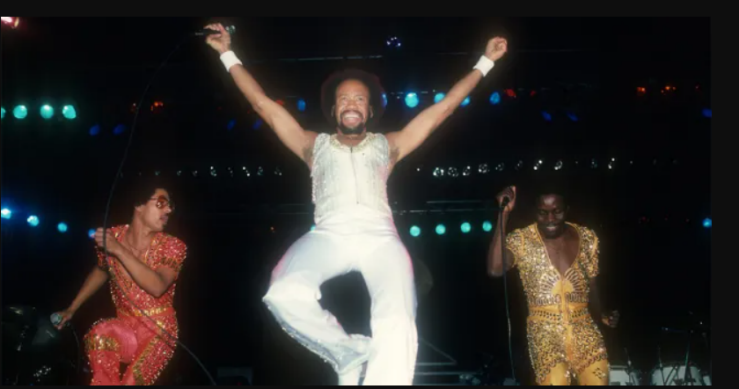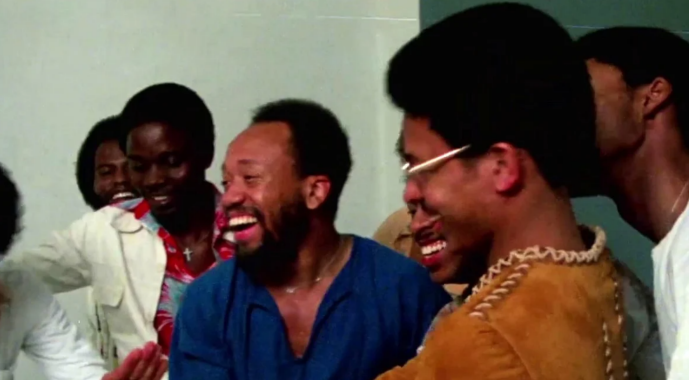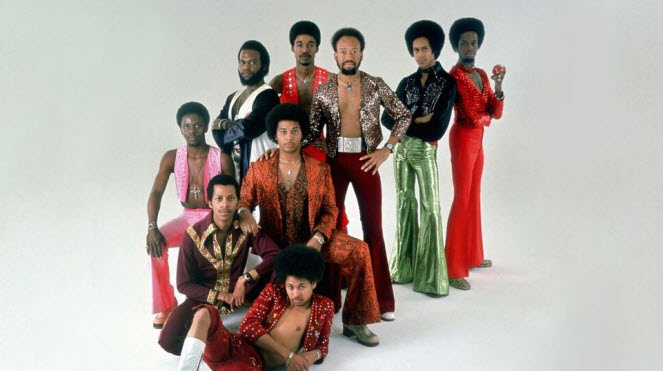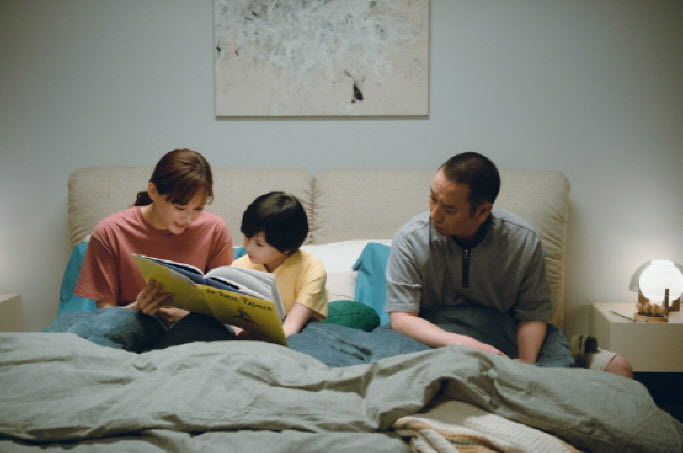
GOAT (2026) ☆☆☆(3/4): A young goat following his dream

Animation feature film “GOAT” is typical and familiar to the bone. With a fantasy background full of anthropomorphic animal characters not so from “Zootopia” (2016) and its recent sequel, the film presents your average underdog sports drama story, and you will easily be able to predict how the story goes here and there. Nevertheless, it works a little better than expected thanks to its vibrant animation style and an ample amount of wit and humor, and I enjoyed that even though I do not know anything about basketball, which is incidentally called “roarball” here.

The hero of the story is Will Harris (voiced by Caleb McLaughlin), a teenage American Pygmy goat who has aspired to become a professional roarball player since he was young. He is relatively tiny compared to all those big roarball players out there, but he does not give up his dream at all, while hoping for any chance for recognition.

And then there comes such a chance to him on one day. When a very popular roar player named Mane Attraction (voiced by Aaron Pierre) comes to his neighborhood, Will willingly challenges Mane without any hesitation, and, what do you know, he surprises others a lot with his considerable athletic skill, though he is eventually beaten by Mane. However, a video clip of their basketball duel goes viral on the Internet later, and that draws attention of Florence “Flo” Everson (voiced by Jenifer Lewis), a sleazy warthog who is incidentally the owner of the Vineland Thorns, a prominent local roarball team which Will has dreamed of joining someday. 

The Vineland Thorns have mainly been known for Jett Fillmore (voiced by Gabrielle Union), a black panther who has been its main star player for many years but has seriously considered retirement due to her age. Nevertheless, she does not want to quit right now because her team has not won all season yet, so she demanded a new player to assist her and then galvanize the team, and that is how Will gets chosen.

Needless to say, Will is overjoyed about this unbelievable chance, but it does not take much time for him to see that he is not particularly welcomed by Jett and the other team members. While Jett is not so pleased about being stuck with a rookie she never heard about, the other team members do not give a damn about Will as mostly being occupied with each own issues, and Will soon finds himself mostly stuck on the bench as another roarball season begins.

It is not much of a spoiler to tell you that Will eventually gets an opportunity to prove himself to others including Jett, but the film keeps us engaged with a lot of spirit unleashed upon the screen. A number of roarball sequences in the film are fun and exciting to watch as decorated with enough mood and details to savor, and you will get some extra amusement from how those various animal characters play roarball, which often looks like a mix between unisex basketball and a bit of violence from American football.

Will and Jett’s respective dramatic arcs are very predictable, but their dramas are fortunately equipped with enough gravitas to make us care more about them. As reluctantly recognizing Will’s talent and aspiration, Jett is reminded again of the undeniable importance of teamwork, and she certainly comes to prove her worth more than before. While he surely gets some moments of disappointment and disillusionment later, Will still remembers what has been important to him, and that certainly energizes not only him but also others around him.
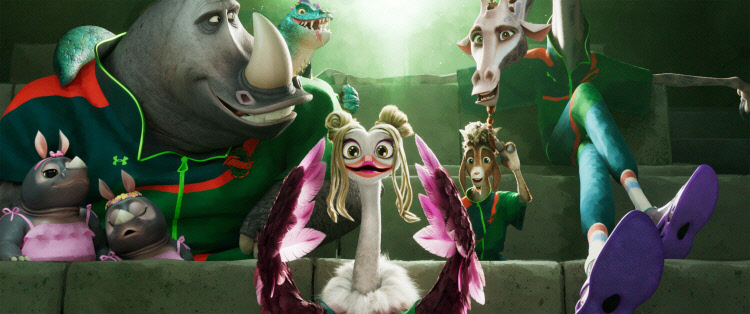
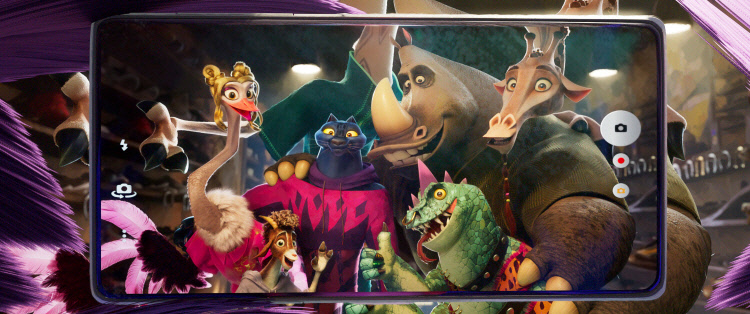
The film is still not that fresh as often reminding us of what we already saw from “Zootopia” and its sequel, but that is compensated to some degree by its distinctive style and details. While the animal characters in the film are broadly drawn, they are filled with colorful personality, their fantasy background is illustrated with a lot vivid details. In other words, this is basically a newly packaged version of “Zootopia”, but it is decorated with enough style and substance to distinguish itself at least.

The voice cast members of the film are solid on the whole. Caleb McLaughlin, who has been mainly known as one of the main cast members in Netflix drama series “Stranger Things”, dutifully holds the center with his earnest voice acting, and he is supported well by a bunch of performers including Gabrielle Union, Aaron Pierre, Nicola Coughlan, David Harbour, Nick Kroll, Stephen Curry (He also served as a co-producer of the film, by the way), Jenifer Lewis, Patton Oswalt, and Jennifer Hudson. While Union clicks well with McLaughlin during several key scenes of theirs in the film, Pierre is hilariously vain as demonstrating an unexpected side of his considerable talent, and Oswalt brings some extra fun as the team coach who becomes more active than before thanks to Will.

Overall, “GOAT”, whose very title comes from a certain term familiar to many basketball fans, did not surprise me, but it entertained me for a lot of wit, style, and mood nonetheless. Director Tyree Dillihay, who incidentally makes a feature film debut here, did a competent job, and I appreciate the game efforts from McLaughlin and several other voice cast members in the film. Yes, I knew exactly what I was going to get, and the film does not exceed that much, but I will not deny that I had some fun and excitement during my viewing.

Posted in Movies | Tagged , , , | Leave a comment

The Piano Teacher (2001) ☆☆☆1/2(3.5/4): Can she really play him like piano?

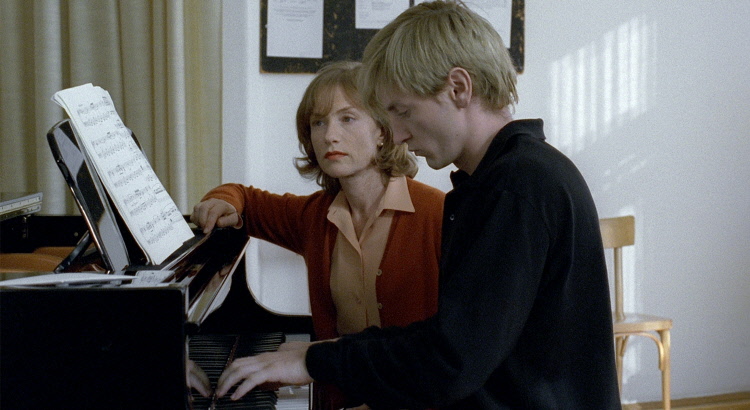
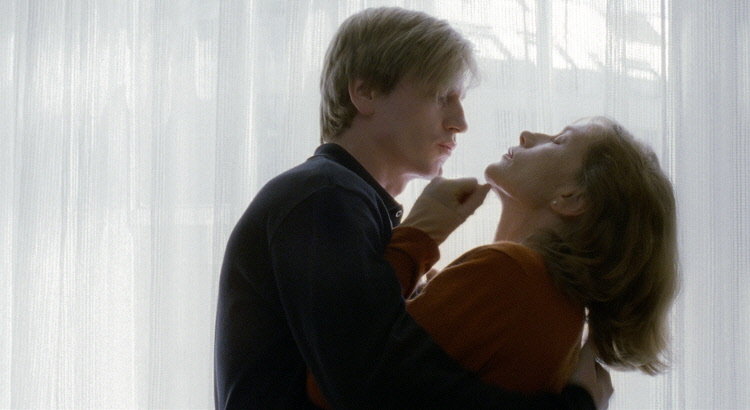
Michael Hanake’s 2001 film “The Piano Teacher”, which was released in South Korean theaters in last week, is a truly disturbing observation of one very, very, very twisted lady. While we never really fully understand her even at the very end of the story, the movie still works as a cold but undeniably compelling character study driven by its skillful direction as well as its two brave lead performances to admire.

The story, which is based on the novel of the same name by Austrian Nobel Prize winner Elfriede Jelinek, mainly revolves around Erika Kohut (Isabelle Huppert), a fortysomething woman who works as a piano professor at the Vienna Music Conservatory. She lives with her old mother in a small apartment, and the opening part shows the apparently toxic relationship between them. Her mother, played by Annie Girardot, is quite domineering and possessive to say the least, and Erika certainly hates her mother for that, but she remains stuck with her mother even after clashing with her mother a lot over a rather petty matter.     

In contrast to this troubling aspect of her private life, Erika has been known as a frigidly strict teacher who always demands perfection from her students. We observe how strictly she handles some of her students, and she does not show any sympathy or compassion at all when one of them struggles to meet her high standards. 

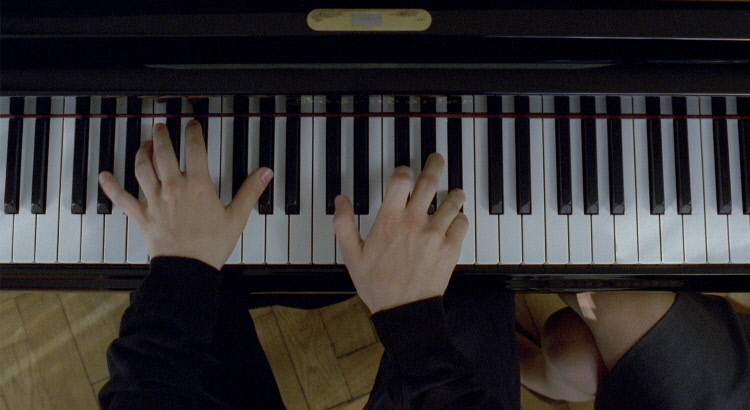
On one day, Erika encounters a young college student named Walter Klemmer (Benoît Magimel). While his major is engineering, he is also fairly good at playing piano, and he is really eager to study under Erika. Although she is not so interested at first, Erika gradually finds herself attracted to Walter as he eventually begins to study under her, and Walter is apparently well aware of that even though she does not signify much on the surface.

As things get more tense between them, the movie shows more of how morbid Erika’s sexual desire and taste are. Probably because of the sexually repressive influence from her mother, she often does some weird and disturbing behaviors just for her private sexual pleasure, and we naturally become more uncomfortable as observing more of her twisted sides. For example, she sometimes visits a local pornography shop for a certain kind of sexual activity which will unnerve many of you for a good reason. Later in the story, she goes to a drive-in theater during one evening for a certain sexual purpose, and the following voyeuristic act of hers is another moment of shock and repulsion for us.

While adamantly refusing to explain its heroine, the movie gives us some hints from Erika’s very unhealthy relationship with her mother. Having lived together for so many years, they often look like a bickering couple, and they even sleep together on the same bed. Nevertheless, they always present themselves as respectable figures in front of others, and it is clear that Haneke has some nasty fun with their hypocrisy.

As Walter keeps trying to approach closer to her, Erika eventually decides to take a chance with him, but, not so surprisingly, she is soon painfully reminded that everything can always be under her control. So far, she has controlled her loony sexual desire on her own deranged but strict terms just like she strictly handles the piano performance of her students, but now she needs to be less controlling and more opened for this desirable young man – and, unfortunately, that is something she is nearly incapable of.

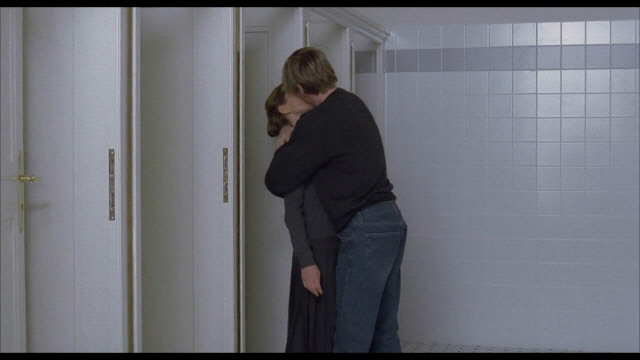
While its heroine struggles with getting her sexual desire under her control again, the movie serves us a number of nasty and disconcerting moments. We gasp when Erika commits an utterly cruel thing to one of her students just because Walter seems to get a bit closer to this student, and then we are all the more unnerved when Erika tries to go further with Walter.  

Around that narrative point, the movie becomes more uncompromising in the examination of its heroine’s sexual struggle, and Isabelle Huppert, who has always been a peerless master of twisted humanity during last several decades, gives a fearless performance to remember. Willingly throwing herself into all the baffling abnormalities and contradictions inside her character without any hesitation, Huppert is constantly captivating throughout the film, and we become more fascinated with Erika even while observing her from the distance without much care or sympathy.

On the opposite, Benoît Magimel, who won the Best Actor award for this movie at the Cannes Film Festival (The movie also won the Best Actress award for Huppert and the Grand Prix for Haneke, by the way), did more than complementing his co-star. While being relatively more opened than Huppert, Magimel also shows considerable commitment as their characters push or pull each other along the story, and he is particularly effective when Walter comes to show much more nastiness and cruelty than expected due to his accumulating anger and frustration caused by Erika. In the end, both Walter and Erika come to have a hurtful lesson associated with that famous phrase: “Be careful what you wish for, you just might get it.”

 In conclusion, “The Piano Teacher” is one of the notable achievements in Haneke’s interesting filmmaking career. Although I still loath “Funny Games” (1997) and its 2007 American remake, he also gave us several great films such as “Caché” (2005), “The White Ribbon” (2009), and “Amour” (2012) at least, and it is a shame that he has been not so active since “Happy End” (2017). Considering the misanthropy observed from many of his works, he does not seem to like people that much, but he expresses that with a lot of skill and artistry, and that is sort of admirable in my humble opinion.

Posted in Movies | Tagged , , , | Leave a comment

Soar (2026) ☆☆☆(3/4): She simply wants to escape…

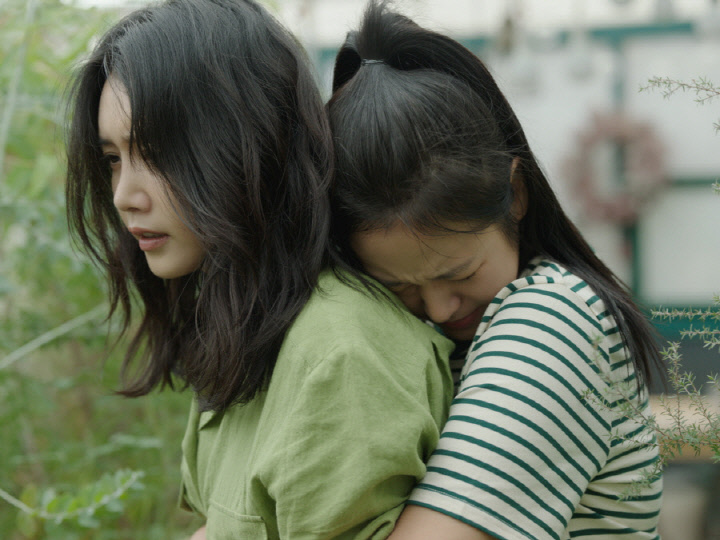
South Korean independent film “Soar” is an earnest coming-of-age tale about one desperate adolescent girl who wants to escape from her very unhappy environment. Calmly and sensitively observing how much she struggles to hold onto a rather unlikely opportunity for love and stability, the movie lets us have more understanding and empathy on her, and then we are moved by a bit of hope and optimism shown at the end of her emotional journey.

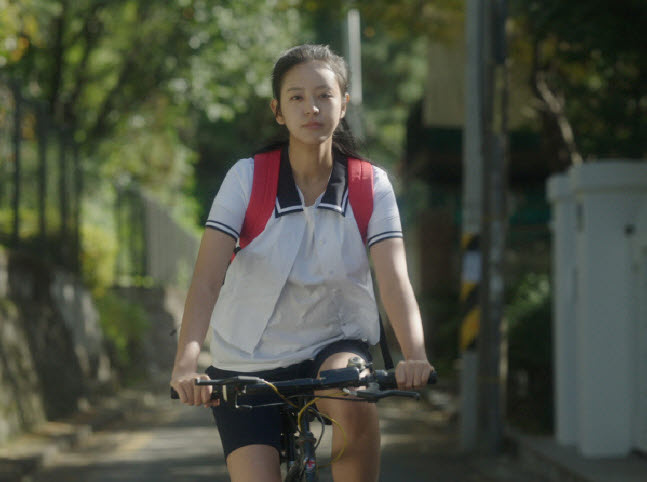
The early part of the film succinctly establishes the troubling daily life of its adolescent heroine. Hyeon-jae (Hwang Bo-un) lives in an apartment along with her parents and her younger brother, and the movie opens with her sleeping along with her mother and younger brother in one room after another domestic violence from her abusive father. Mainly because of her financial dependence on her husband, Hyeon-jae’s mother simply tolerates his abusive behaviors as usual, and Hyeon-jae certainly does not like this at all.

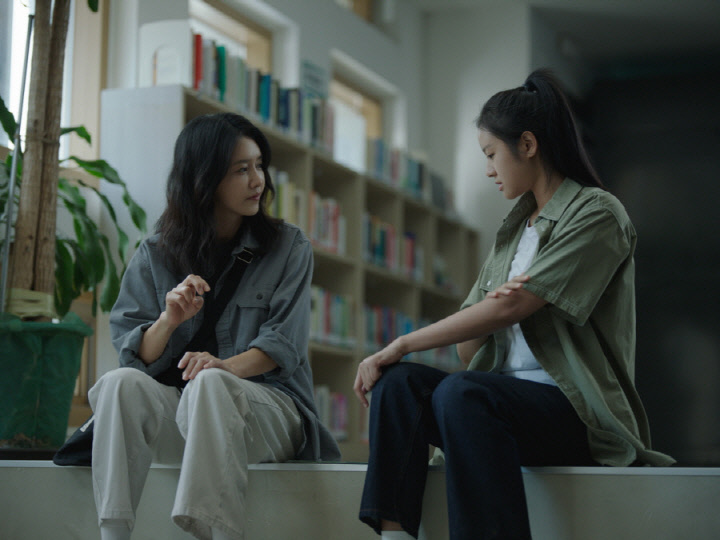
While she seriously considers escaping from her home someday, Hyeon-jae happens to encounter a lady named Hae-in (Chae Jung-an), who has been looking for her little daughter since she went missing ten years ago. Sincerely feeling sorry for this woman, Hyeon-jae shows some compassion to her, and Hae-in also comes to show a bit of concern when she notices a sign of domestic abuse from Hyeon-jae. When Hyeon-jae and her family later suffer another incident of domestic abuse, Hyeon-jae gets some help from Hae-in, and Hae-in willingly lets Hyeon-jae into her house.

As staying in Hae-in’s house, Hyeon-jae surely feels a lot safer and more comfortable than before. Hae-in has incidentally worked as a horticulturist, and her house is filled with many different flowers and trees, which certainly bring some soothing atmosphere to her house. As days go by, Hyeon-jae and Hae-in become more accustomed to each other, and it seems possible that Hyeon-jae will be a surrogate daughter for Hae-in.

However, Hae-in still cannot forget her lost daughter. She keeps looking for her as before, and Hyeon-jae willingly helps Hae-in, though she cannot help but want to get more attention from Hae-in. As her mother suggests that she should return to their home, Hyeon-jae becomes more anxious about her future, and this naturally leads to a growing conflict between her and Hae-in later in the story.

Needless to say, the screenplay by director/writer Kim Da-som subsequently becomes quite melodramatic as the conflict between Hyeon-jae and her benevolent guardian gets more intense. We see more anger and desperation from Hyeon-jae, and then we also sense more of how Hae-in still does not totally recover from that old emotional wound despite her longtime efforts.

Everything in the story eventually culminates to a crucial scene where Hyeon-jae and Hae-in go together to a certain place for a small possibility of closure for Hae-in. I will not go into detail here, but what follows next is emotionally harrowing to say the least, and then we get a little touching moment which speaks volumes in its delicate silence.

The movie certainly depends on the solid performances from its two main cast members, who did a commendable job of filling their respective roles with considerable human details to be appreciated. Hwang Bo-un, who was memorable in “Nobody’s Lover” (2021), is compelling even when her conflicted character does not signify much on the surface, and she is particularly good when Hyeon-jae finally lets out all of her desperation at one point later in the story. On the opposite, Chae Jung-an’s more restrained acting functions well as a stable counterpart for her co-star, and she also has her own moments as her character shows some gentle sides of hers along the story.

Around these two good actresses, several other main cast members in the film hold each own small place well on the whole. As Hyeno-jae’s long-suffering mother, Min Hyo-kyong has a heartbreaking scene where her character comes to face more of her difficult situation, and Bae Min-soo is also effective as a close friend of Hyeon-jae. In case of young performer Kim Geon-u, he provides a bit of cheeriness to the story as Hyeon-jae’s brother, who is mostly innocent but knows how bad things are in their home.

Overall, “Soar” is rather modest in terms of story and characters, and it could have explored more of its character details including Hyeon-jae’s choir activity, but it is still engaging thanks to Kim’s competent direction. She incidentally makes a feature film debut here after making several short films, and, as far as I can see from her result, she is another promising new South Korean female filmmaker to watch.

By the way, her achievement here in this film reminds me more of how much the future of South Korean cinema really depends on the considerable talent of many wonderful female filmmakers out there. Since the remarkable achievement of Bong Joon-ho’s Oscar-winning film “Parasite” (2019), South Korean cinema has mostly gone downhill during last several years, but there is still some possibility of rejuvenation considering the recent significant efforts of a bunch of notable South Korean female filmmakers such as Yoon Ga-eun, and I can only hope that they will advance further for South Korean cinema as well as me and many other South Korean audiences.

Posted in Movies | Tagged , , , | Leave a comment

Toy Story 5 (2026) ☆☆☆1/2(3.5/4): It’s still going well even after three decades

In my review on Pixar animation film “Toy Story 4” (2019), I observed that this is pretty much like another goodbye after what was supposed to be the near-perfect ending of “Toy Story 3” (2010). That is the main reason why I could not help but become rather skeptical about “Toy Story 5” at first, but, surprise, this latest Pixar animation film amused and touched me more than expected. As deftly mixing familiar and fresh stuffs well together, the film demonstrates that its enduring franchise still has some unexpected ideas and potentials to explore and play with, and that is very impressive in my humble opinion.

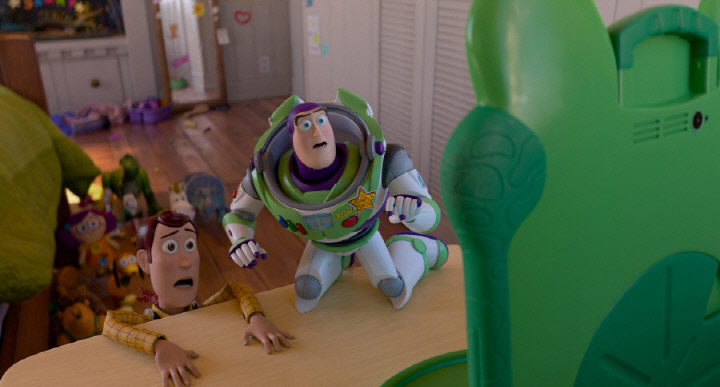
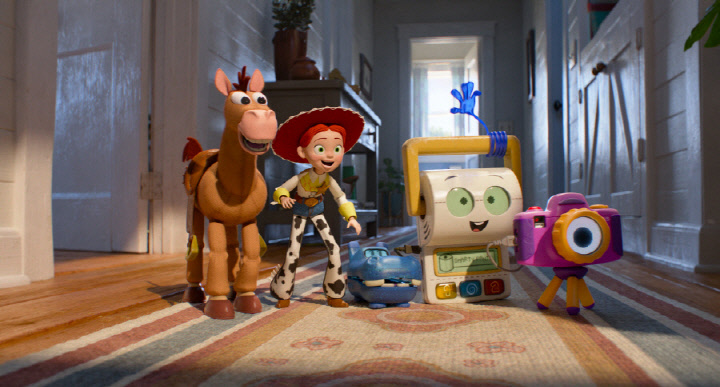
While Woody (voiced by Tom Hanks) and Buzz Lightyear (voiced by Tim Allen) are still the main toy characters of the story, the film actually focuses more on Jessie (voiced by Joan Cusack), who has been the leader of their fellow toys since Woody willingly left from his duty for his own life at the end of “Toy Story 4”. During last several years, Jessie and the other toys have been happy to function as playmates for a young girl named Bonnie (voiced by Scarlett Spears), but Bonnie has recently wanted to hang around with other kids around her age. Watching Bonnie struggling in her attempt to befriend other kids, Jessie is certainly ready to help her as much as possible, but Bonnie is quite afraid of looking silly to other kids because of her playing with toys.

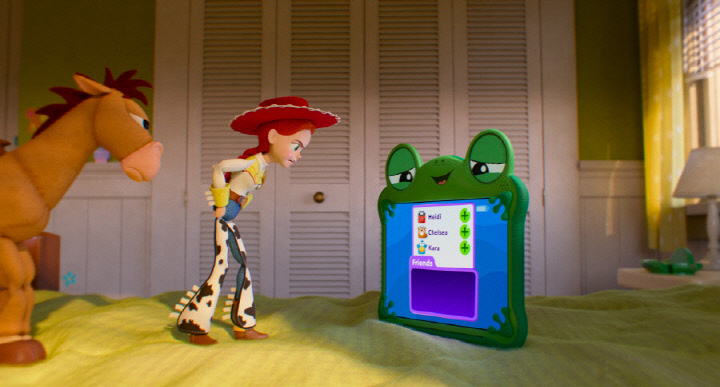
Just for helping their daughter communicating more with other kids, Bonnie’s parents later buy Bonnie a frog-like tablet called “Lilypad” (voiced by Greta Lee), and this certainly gives a shock to the system for Jesse and her fellow toys. As Bonnie comes to spend more and more time on her Lilypad, Jesse and her fellow toys soon find themselves often abandoned on the floor, and this brings Jesse back to her old trauma involved with being abandoned by her original owner many years ago.

Jesse and her fellow toys are more despaired as coming to learn more about what may actually be the real end of the era for them as well as numerous toys out there. As spending a lot of time on their tablets and smartphones just like adults around them, kids do not show much attention to their toys, and the film certainly makes us reflect a bit on the negative sides of our ongoing digital era – and how much our younger generation has been influenced by these disconcerting aspects during last two decades.

As observing the growing conflict between Jesse and that tablet, which is incidentally called “Lilly”, many of you will be reminded of the similar conflict between Woody and Buzz in “Toy Story” (1995). Again, the old and the new clash with each other, and it is not much of a spoiler to tell you that both Jesse and Lily come to learn some lessons via this conflict of theirs. Despite her antagonistic stance against Jesse, Lily sincerely cares about Bonnie just like any other toy of hers, and there is a little aching moment when she comes to realize how she inadvertently causes a heartbreak for Bonnie later in the story.

In case of Jesse, she happens to revisit her old trauma when she is accidentally taken to a place where her original owner once lived. Because this place looks pretty much same except its current residents including a young girl named Blaze (voiced by Mykal-Michelle Harris), Jesse struggles more with her fear and anxiety about being abandoned by Bonnie, but then there comes an unexpected moment of poignancy when she comes to learn something very important about her original owner.

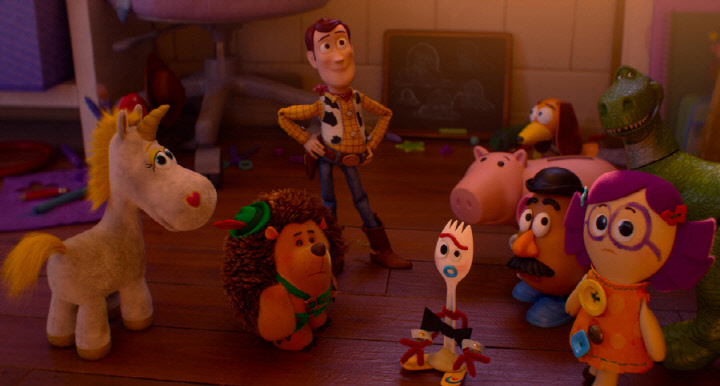
As generating enough gravitas to engage us, the film also throws a lot of humor into the story. While it is still fun to see Woody and Buzz bickering with each other once Woody is subsequently back in action, there are also a number of new toy characters to amuse us, and I particularly like the one voiced by Conan O’Brien. I will not go into details here for not spoiling anything, but I can tell you instead that, considering what my little 2-year-old niece is going through at this point, I may buy that toy for her if it is available.

In case of a subplot involved with a bunch of high-teach Buzz Lightyear units, I initially had some reservation because they merely felt like a more competent and intelligent version of Minions, but the film fortunately gives us enough witty gags and jokes until this subplot eventually joins the main narrative as expected. As our toy characters band together, the story recognizes and accepts new changes while also never forgetting how much toys can inspire and enrich the daily life of children, and this will certainly feel touching to you if you have enjoyed the franchise as much as I have during last three decades.

Again, the voice cast members of the film are uniformly solid on the whole. While the returning cast members including Tom Hanks, Tim Allen, and Joan Cusack effortlessly slip into their respective roles, several other cast members including Greta Lee, Craig Robinson, and Shelby Rabara, Ernie Hudson, Alan Cumming, Bad Bunny, and Keanu Reeves have each own moment to shine, and young performers Scarlett Spears and Mykal-Michelle Harris hold own each own small place well in the story.

In conclusion, “Toy Story 5”, which directed by Andrew Stanton, does feel like a redundant encore at times like “Toy Story 4”, but it is still quite fun and moving on the whole. I really do not know whether there will be another Toy Story film some time later, but, so far, Pixar Animation Studios has handled its beloved franchise quite well, so we may be surprised again.

Posted in Movies | Tagged , , , , | Leave a comment

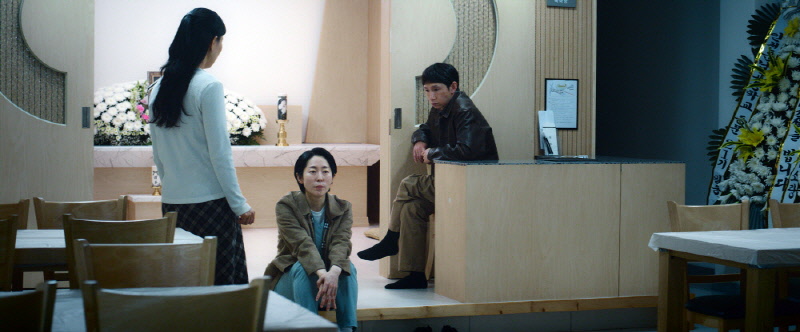
The Price of Goodbye (2025) ☆☆☆(3/4): A desperate funeral before death

South Korean independent film “The Price of Goodbye” is a low-key comedy ably swinging back and forth between absurdity and desperation, and I like that. While we are often amused by its several characters struggling in their silly little scam in one way or another, we also come to sense more of how desperate they are, and many of the funny moments in the film actually come from their accumulating desperation along the story.

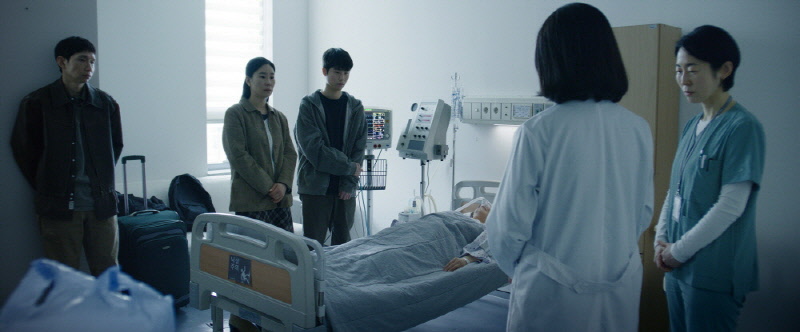
At the beginning, we are introduced to a hospital nurse named Seon-yeong (Kang Mal-geum). Her father has been in her hospital since he became comatose several years ago, and now it seems that his close family members including Seon-yeong will have to say farewell to him. Her younger brother Il-hoi (Bong Tae-gyu) and his wife and son soon come to the hospital, but Seon-yeong is not so pleased to see Il-hoi at all, because she knows too well that he is more interested in collecting condolence money during their father’s funeral.

In-hoi is impertinently opportunistic, but he is also quite desperate to say the least. He and his family have been pursued by several loan sharks for his considerable amount of debt, and they really need any money right now before those loan sharks locate them. In addition, his son, who has somehow grown up fairly well despite his lousy father, is about to enroll in a medical school, and both In-hoi’s wife and Seon-yeong really want to see him follow his aspiration to the end without any problem, though they do not have any money for his tuition.

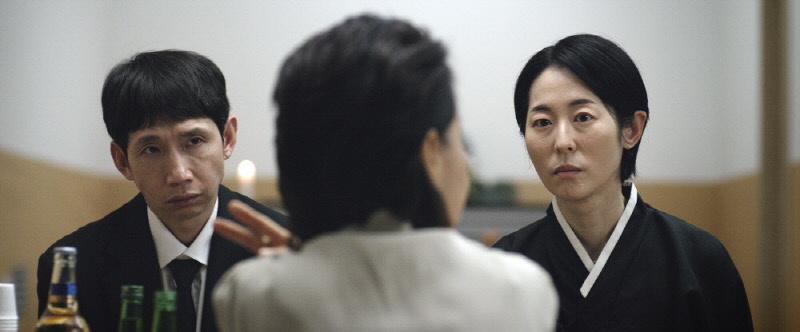
When In-hoi’s wife sends a text on his father’s funeral to a certain family member a bit too early, Seon-yeong comes to concoct a little scam which may benefit all of them in the end. They are going to hold a mock funeral for getting some money from that family member incidentally quite affluent, and Seon-yeong sees no problem in executing this scam at all. After all, it was diagnosed that her father will die within a few days, and, in her cynical viewpoint, they simply advance his funeral a bit for their convenience.

 While not telling anything to In-hoi’s son at all, Seon-yeong, In-hoi, and In-hoi’s wife quickly embark on setting up the mock funeral without being noticed by anyone in the hospital or the funeral service center inside it, and that leads to a series of small but intense comic moments for us. When that rich family member of theirs arrives earlier than expected, Seon-yeong and her accomplices must act as quick as possible, and they also have to be very, very, very patient before that rich family member eventually comes to show some generosity.

Needless to say, their situation later gets more complicated thanks to In-hoi, who becomes more selfish without any consideration on his family or his older sister. When he suggests that they should go further with their scam, Seon-yeong is naturally disgusted, but then she only finds herself going much further than he expected just for her dear nephew, and, what do you know, she and her accomplices come to handle a lot more than they imagined.

Steadily building up its comic momentum, the screenplay by director/writer Kwon Yong-jae, which was developed from his 2021 short film, also gradually fleshes out the complex human feelings among Seon-yeong and her other family members. Although her father as well as her younger brother has been a big emotional burden to her for many years, Seon-yeong still feels obliged to do anything necessary for her and her younger brother’s scam because, well, they are family. While she has been pretty tired of her husband’s irresponsibility, In-hoi’s wife tries to stand by him as much as possible, but he only makes her more despaired and frustrated instead. In case of In-hoi’s son, he mostly keeps his feelings and thoughts behind his passive appearance, but it is pretty clear to us that he does not like his father much, and we are not so surprised when he contributes to another unexpected plot turn later in the story.

The last act becomes darker and more serious as Seon-yeong and her accomplices desperately hold onto their scam to the end, but then the movie becomes surprisingly tranquil to our little surprise. This feels rather befuddling for us at first, but it somehow works because of what has been carefully built up along the plot, and we see a little glimmer of hope and optimism amid a lot of uncertainty around the main characters.

Like any good character comedy films, the movie depends a lot on the talent and presence of its main cast members, and its four principal performers are believable as realistic human figures to observe. While Kang Mal-geum, who has been more notable since her breakout performance in “Lucky Chan-sil” (2019) and was also the lead actress of Kwon’s short film, deftly conveys to us her character’s complicated emotional state even when her weary face does not seem to signify anything at all on the surface, Bong Tae-gyu, Jang Liu, and Jeong Soon-beom are equally effective in their respective parts, and the special mention goes to Yang Mal-bok, who was unforgettable in “The Apartment with Two Women” (2021) and effortlessly steals the show during her brief but indelible appearance here in the film.

 Overall, “The Price of Goodbye”, which I happened to miss in last December because I was busy with preparing for my little winter vacation in Australia, is a modest but engaging comedy film thanks to its solid storytelling and strong performances. Although this is his first feature film, Kwon shows considerable potential here as a good filmmaker, and it will be interesting to see what may come next after this promising starting point.

Posted in Uncategorized | Leave a comment

Remarkably Bright Creatures (2026) ☆☆☆(3/4): Her octopus friend

Netflix film “Remarkably Bright Creatures”, which was released early in last month, is unabashedly sappy but somehow remains fairly entertaining on the whole. While it takes some time for us to accept the fantasy aspects of the story, the story and characters are handled well with enough sincerity and sensitivity at least, and you may come to forgive a number of clichéd melodramatic moments later in the story.  

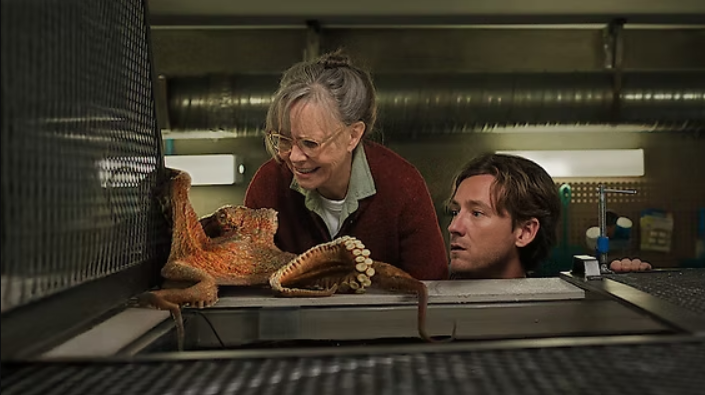
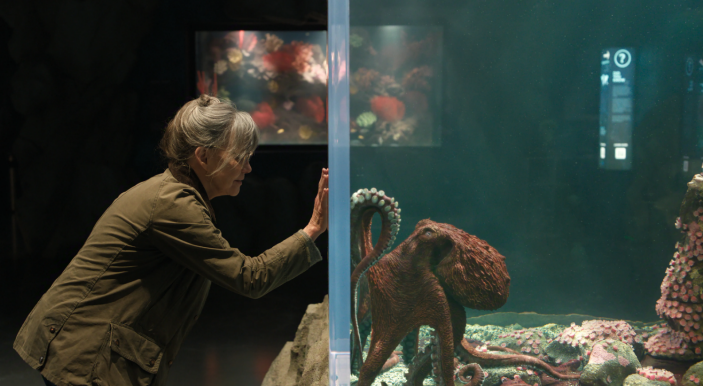
The story, which is mainly set in some nice little bay town located somewhere in the Washington state, is driven by the narration of an old male octopus named Marcellus (voiced by Alfred Molina), who has lived at a small local aquarium since it was rescued several years ago. Having been rather bored and frustrated with his current state of life, Marcellus often observes a number of humans outside his water tank, and, as a creature of considerable sensitivity and intelligence, he has noticed the melancholic sadness of Tova Sullivan (Sally Field), an elderly cleaning lady who has steadily worked in the aquarium for many years.

Tova lives in a cozy little house alone by herself, but now she is about to make a very important decision on the rest of her life. Her husband reserved her spot at a facility for old people not long before his death, and she comes to consider this option more seriously as being reminded that she does not any close family member at all. She and her husband once had a son, but their son died due to some unfortunate incident a long time ago, and she is still haunted by those personal memories involved with him.

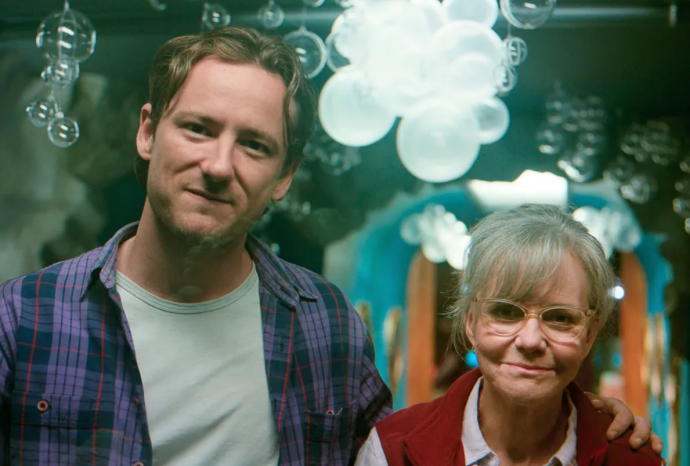
And then there comes an unexpected change into Tova’s life via Cameron Cassmore (Lewis Pullman), a young struggling musician who comes to her town on one day for a certain personal reason. When his old vehicle, which was inherited from his estranged mother who recently died, unfortunately gets broken, Cameron decides to stay in the town at least for while for earning enough money for repairing his vehicle, and, what do you know, he ends up getting employed as a temporary worker to substitute Tova when she gets seriously injured in one of her ankles.

Now you will get some pretty good idea on the rest of the story, and the screenplay by director Olivia Newman and her co-writer John Wittington, which is based on the novel of the same name by Shelby Van Pelt, does not exceed any of our expectation. Yes, Tova and Cameron do not get along that well with each other right from their very first day, but, with some little help from Marcellus, they eventually befriend each other more as time goes by. While Cameron comes to appreciate the generous attention from Tova, Tova’s daily life is brightened up a bit as she gradually allows him into her daily life, and she willingly assists Cameron a little in his ongoing personal mission, though the outcome turns out to be not so satisfying as she hoped.

In addition, Tova and Cameron encourage each other to go for their respective possibilities for some romance. When Cameron comes across a young lady running a little business of her own in the town, their Meet Cute moment is not exactly pleasant to say the least, but both of them soon find themselves more attracted to each other, after Tova gives Cameron some good advice on his sudden matter of heart. Although she still misses her dead husband, Tova decides to have a “meeting” with a local dude who has clearly been carrying a torch for her, and her several close friends are certainly delighted for that. In fact, they are instantly ready to support her in one way or another, and that expectedly leads to a rather awkward moment for them. 

Although he remains stuck inside the aquarium as usual, Marcellus functions as your average omnipresent narrator, and he even becomes a little more active later in the story. Around that narrative point, the movie often feels like a sort of cross between Oscar-winning documentary film “My Octopus Teacher” (2020) and Guillermo del Toro’s Best Picture Oscar winner “The Shape of Water” (2017), but this supposedly preposterous aspect of the movie actually works better than expected. Thanks to not only Newman’s sensitive direction but also the witty and colorful voice performance from Alfred Molina, Marcellus becomes the most interesting character in the story, and we come to care about him as much as several other main characters around him.

Whenever Molina’s voice acting does not steal the show, the other main cast members dutifully fill their respective spots in the story. Sally Fields and Lewis Pullman ably complement each other throughout the movie, and their earnest performances overcome some melodramatic plot contrivances during the last act. In case of several notable performers in the film including Joan Chen, Kathy Baker, Beth Grant, Sofia Black-D’Elia, and Colm Meaney, their good efforts are often hindered by their under-developed supporting roles, but Baker and Meaney have each own little moments to shine at least.    

In conclusion, “Remarkably Bright Creatures” is one of the more entertaining Netflix products during this year. Although it is sometimes a little too sweet and sentimental in my inconsequential opinion, the movie does its job as well as intended, so I will not grumble for now as fondly remembering that smart and amusing octopus.

Posted in Movies | Tagged , , , | Leave a comment

Earth, Wind & Fire (To Be Celestial vs That’s the Weight of the World) (2026) ☆☆☆(3/4): The story of that legendary band

HBO documentary film “Earth, Wind & Fire (To Be Celestial vs That’s the Weight of the World)” gives me a bit of enlightenment on one of the legendary bands in the American pop music history during the late 20th century. To be frank with you, I belatedly came to learn a little about Earth, Wind & Fire via one of its famous songs memorably utilized in Oscar-nominated animation film “Robot Dreams” (2023), and I was surely both entertained and enlightened enough thanks to this solid documentary.

The main center of the documentary is Maurice White (1941 ~ 2016), the founder and leader of Earth, Wind & Fire. The early part of the documentary focuses a bit on his rather unhappy childhood years in Memphis, Tennessee, and the documentary makes a point on how a certain childhood trauma of his often affected his relationships with others around him for the rest of his life. For herself as well as her son, his widow mother had to leave young White to someone else, and he did not recover from that trauma at all even after he came to live with his mother and her new family in Chicago several years later.

Anyway, as getting more interested in music, White eventually found comfort and stability in that, and he quickly showed a lot of potential as studying and practicing music. Not long after becoming one of the studio musicians at Chess Records in Chicago in the early 1960s, he joined the Ramsey Lewis Trio as a new drummer, and it seemed that he reached the top of his field as becoming one of the best drummers in the town.

However, White was not still satisfied enough as reaching for something more special, so he eventually decided to leave the band and then moved to California for making a band of his own in 1969. As many of you know, the American society during the 1960s was shaken up a lot by the demand for more freedom and change, and White was particularly influenced a lot by those New Age ideas which became pretty popular during that time. As a matter of fact, that rather weird name of his band was actually inspired by the astrological stuffs associated with him, and he was quite determined to go all the way with those New Age ideas represented by the name of his band.

However, the early years of Earth, Wind & Fire were not exactly successful to say the least. As often trying on the wild mixture between R&B, jazz, and gospel, the band surely shocked and confused audiences at that time, and even White became unsure about the prospect of his band because its first album was not sold that well.

Nevertheless, White did not give up at all, though his following drastic measure on the band hurt the feelings of his close collaborators a lot. He promptly fired most of his original band members, and then he gradually recruited the new members to fit with his artistic vision on the band. This was certainly a risky gamble, but it worked much better than expected. Once everything eventually clicked among the band members, Earth, Wind & Fire became much more popular than before, and it gave a number of hit songs to remember during the 1970s.

However, of course, this big success of the band did not last that long. White and his band tried to follow the changing trend during the late 1970s and then the 1980s, but, as shown from their tacky music video during the 1980s, the result was not very excellent to say the least. As many of their juniors ranging from Prince to Michael Jackson became much more prominent, the band only got pushed further toward past, and that made White decide to stop working on the band at least for a while.
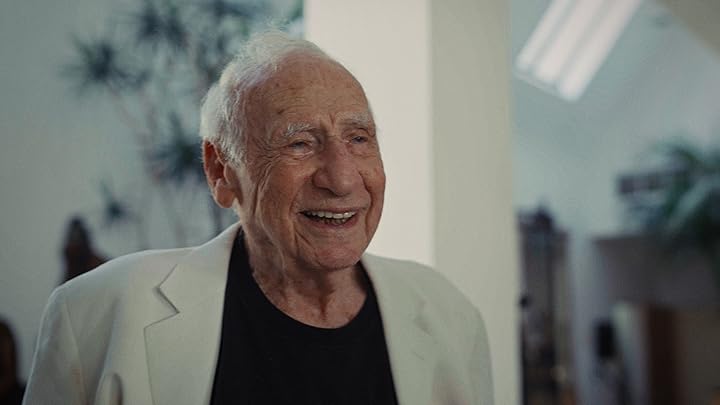
As the band went down, White came to show more of the worse sides of himself to others around him, and many of his close colleagues still remember how much they felt hurt when he suddenly announced the temporary hiatus of their band on one day without any consideration. In addition, he was not that good to not only his longtime partner but also his children, and all of his children reminiscent well how absent he was before opening himself more to them as well as his band members later in his life.

Compared to the extraordinary aspects of director/co-producer/co-composer Questlove’s previous Oscar-winning documentary “Summer of Soul (…Or, When the Revolution Could Not Be Televised)” (2021), the documentary feels relatively plain, but Questlove did a fairly good job of presenting the interesting human aspects of its main subject, and you will be often impressed by a number of prominent figures interviewed by him. While a number of the past band members and White’s close colleagues surely have a lot to talk about their experiences with White, several notable musicians including Lionel Richie and Stevie Wonder are certainly willing to talk about the considerable influence of Earth, Wind & Fire, and a certain very, very, very famous couple eagerly talk about how much the band has meant a lot to them (They used one of its most famous songs for their historical night in 2009, for example).

Overall, “Earth, Wind & Fire (To Be Celestial vs That’s the Weight of the World)” was both engaging and informative enough for me to check on the albums of Wind, Fire & Earth. As a matter of fact, I am listening to one of its compilation albums as writing this review right now, and I guess that says enough about how well the documentary works on the whole.

Posted in Movies | Tagged , , , , | Leave a comment

Sheep in the Box (2026) ☆☆1/2(2.5/4): A middling AI robot drama by Hirokazu Kore-eda

Hirokazu Kore-eda’s latest film “Sheep in the Box”, which was released in South Korean theaters not long after premiered at the Cannes Film Festival, approaches to its intriguing science fiction materials as gently and humanely as you can expect from him. As a matter of fact, it is actually a little too gentle to go further with its supposedly intriguing story premise, and it is quite disappointing for me to observe how it eventually fizzles as becoming too maudlin and contrived during its last act.

At the beginning, the story, which is set in the slightly futuristic world, introduces us to Otone (Haruka Ayase) and Kensuke (Daigo Yamamoto), a fairly affluent middle-class couple who lost their 7-year-old son two years ago due to some unfortunate incident. Although they have managed to go on with their life since that sad happening, both of them often cannot help but feel the lingering absence of their son between them, and then Otone is approached by a prominent AI robot company willing to provide a certain service for free. This company can make a humanoid AI robot based on their son and the memories of him, and they are told that this can actually provide them a chance to process their loss and grief.

While Kensuke is understandably reluctant, Otone eventually decides to request an AI robot version of their son after seeing how real a humanoid AI robot can be. Although it is well aware of its mechanical nature, the AI robot version of their son really talks and acts like him, and Otone soon gets more accustomed to this robot in contrast to Kensuke, who makes it clear to the robot that he does not want to be called “father” at all.

What follows next is a series of small episodic moments depicting how the robot gradually becomes a part of Otone and Kensuke’s domestic life. It acquires more information on their son as spending more time with them, and Otone, who is incidentally an architect, is more impressed by the robot when it shows some appreciation on the process of her latest project. Although there is still considerable distance between him and the robot, Kensuke allows it to be introduced to his work colleagues, and there is a brief but interesting moment between the robot and an old worker willing to share a bit of his expertise with it.

Needless to say, both Otone and Kensuke later become all the more conflicted about the robot. Even though they know that it is more or less than an object onto which they project each own human feelings, the robot really feels like their son to them at times, and that accordingly makes them face their pain and sorrow from losing him at that time. While Otone confronts the guilt of not being always there for her son due to her work, Kensuke turns out to have his own guilt behind his rather brusque appearance, and there is a sad scene where he desperately tries to get anything about his son’s death from the memories of his son stored in the robot.

Kore-eda’s screenplay unfortunately stumbles when it later attempts to show what the robot thinks and “feels”. Not long after meeting a bunch of other robots not so different from it, the robot embarks on a little project of his own without telling anything to Otone or Kensuke, and we are later served with a half-baked idea on how AI can learn humanity and creativity from us. Kore-eda seems quite sincere and serious about this, but, having seen too much of the negative aspects of AI during last several years, I cannot help but think of that familiar phrase: “Isn’t it pretty to think so….”

Furthermore, the finale does not work as well as intended while leaving us with a lot of shallow impression. In fact, I am now reminded more of how some notable science fiction movies and TV series did a much better job on those tricky possibilities between us and AI. Needless to say, Steven Spielberg’s “A.I. Artificial Intelligence” (2001) did a far more interesting and powerful job in the same genre territory, and the same thing can be said about recent American TV drama series “Alien: Earth”. While both of them impressed me for fresh and intriguing science fiction ideas, “Sheep in the Box” sadly does not have anything new to intrigue or impress me, and I was only mildly amused by its rather heavy-handed references on Antoine De Saint-Exupéry’s classic novella “The Little Prince”.

Although Kore-eda frequently struggles with the science fiction elements of his story, the movie is strewn with those distinctive artistic touches from him at least. As usual, he often uses trains or their recognizable sounds for little but precious poetic effects, and he also shows some skill and competence as usual in handling a number of child performers in the film. Although he is often limited by his under-written part, young performer Rimu Kuwaki holds his own place fairly well among his two adult co-stars, and Haruka Ayase and Daigo Yamamoto are effective in their modest but earnest performance.

In conclusion, “Sheep in the Box” is not a total dud at all, but it is still a major letdown considering how Kore-eda has steadily impressed us during more than 30 years since his remarkable first feature film “Mabrosi” (1995). Except “The Third Murder” (2017), all of his subsequent films are good or excellent in my humble opinion, and I would rather recommend any of them instead. Sure, the movie does have all the characteristics shown from many of his works, but it regrettably fails to generate enough interest or emotion from its very familiar genre elements, and I can only hope that Kore-eda will soon bounce from this passable misfire.

Posted in Movies | Tagged , , , | Leave a comment

Disclosure Day (2026) ☆☆☆1/2(3.5/4): Familiar but masterful nonetheless

Steven Spielberg’s new film “Disclosure Day” feels like watching a maestro handling his familiar repertoires with expected but undeniably impressive deftness. While it does not have the unadulterated awe of “Close Encounters of the Third Kind” (1977) or the sheer terror of the first half of “War of the Worlds” (2005), the movie is still a very compelling science fiction movie packed with ideas and intrigues, and you can instantly sense from the very first shot that you are at the hand of a masterful storyteller who can interest and then engage us a lot more than expected.

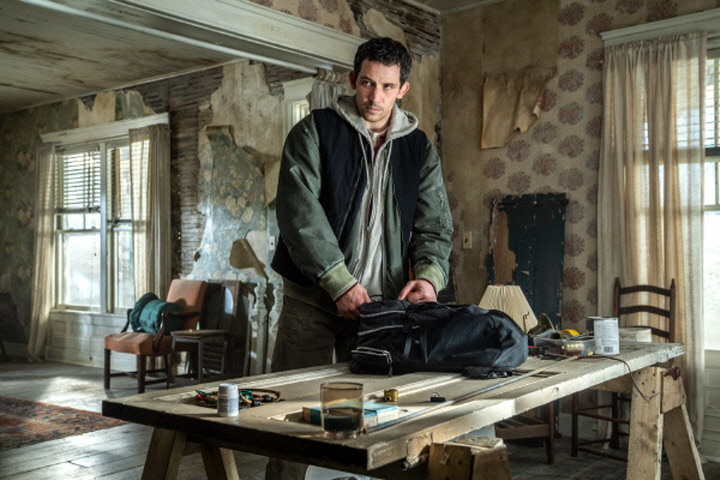
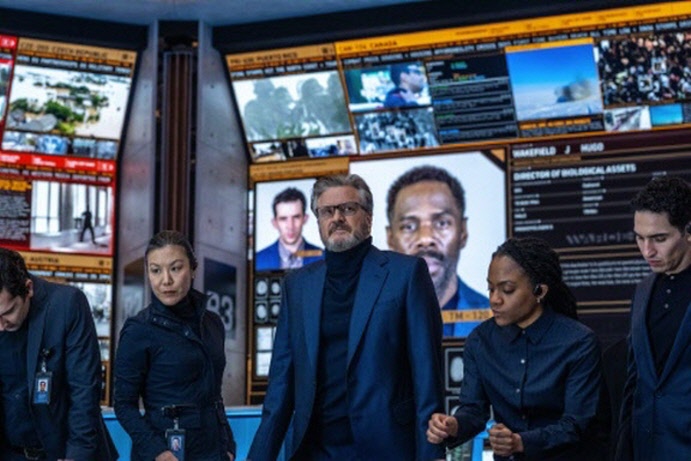
 The story premise of the movie is quite familiar to say the least. Since that famous incident Roswell, New Mexico in 1947, the existence of alien entities from the outer space has been steadily and thoroughly covered up by a powerful agency called Wardex during next several decades, but now this hidden truth is on the verge of being fully disclosed in public thanks to a small group of defectors inside Wardex including Daniel Kellner (Josh O’Connor). Needless to say, those Wardex agents led by Noah Scanlon (Colin Firth) are quite determined to stop Kellner by any necessary, and the opening scene throws us right into an urgent situation surrounding Kellner.

As Kellner keeps running away from the Wardex agents along with his girlfriend Jane (Eve Hewson), the movie also focuses on what happens to a Kansas City TV meteorologist named Margaret Fairchild (Emily Blunt). For some inexplicable reason, Fairchild suddenly finds herself capable of not only speaking several foreign languages but also sensing every personal detail of whoever she is looking, and she becomes all the more frightened and confused when another strange thing happens to her later. 

While it is not much of a spoiler to tell you that these two main plots eventually converge around the middle act of the story, the screenplay by David Koepp, which is developed from the story by Spielberg himself, does not hurry itself much as occasionally exploring its thought-provoking main ideas. If alien entities really exist out there, can the humanity possibly process this surprising fact well? And how much will it actually affect our religious and existential beliefs?

The movie wisely avoids giving any definite answer to these and other questions arising from its story, while only emphasizing the undeniable value of empathy and open-mindedness. At one point later in the story, Jane, who was once a nun, asks some big questions to one of the nuns in her former convent, and that nun’s thoughtful reply is certainly something we should remember if the existence of alien entities in the outer space turns out to be real in our life.

Meanwhile, the movie steadily keeps things rolling for engaging us more. Spielberg and his crew members including his longtime cinematographer Janusz Kamiński give us a series of splendid moments including the one where Scanlon attempts a sort of mind control via an alien device, and each of these superb scenes functions as a building block for the considerable dramatic power of the expected climactic part.

Some of you may think the finale is a bit anti-climactic, but I admire how skillfully and thoughtfully Spielberg handles this part. Some of the special effects in the film are not very realistic on the surface, and those alien entities and their spaceships in the film are not so far from what we have seen countless other similar stuffs including, yes, “The X-files”, but these elements are handled with a lot of confidence and competence at least. In the end, we become focused more on the human reactions amply presented on the screen, and the score by John Williams, who is thankfully active even at present despite being over 90, carefully modulates the complex emotional undercurrents swirling below the screen.

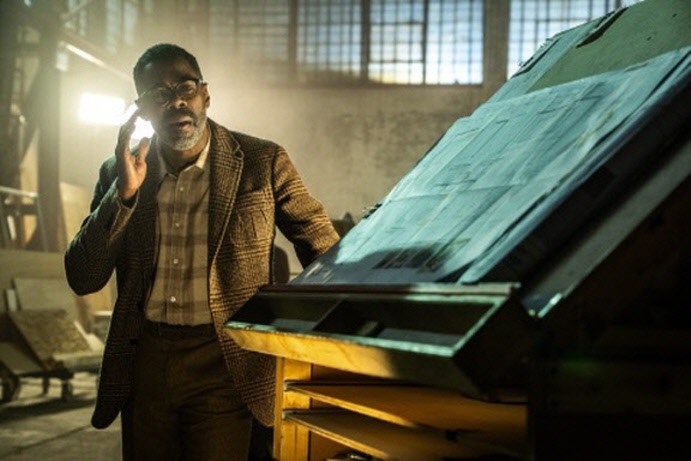
The main characters of the movie sometimes feel like more or less than plot elements, but Spielberg has a number of talented performers who can fill their respective roles with enough presence and personality. While Emily Blunt’s solid acting gradually occupies the center of the story as required, Josh O’Connor is also effective in his character’s inner struggle along the story, and Colin Firth and Colman Domingo complement each other well as the two opposing supporting characters in the story (It is really nice to see Domingo doing something much better than his embarrassingly cartoonish supporting turn in that disposable Michael Jackson biography film which came out several weeks ago, by the way). In case of Eve Hewson and Wyatt Russell, they manage to overcome their rather thankless parts, and Hewson is particularly impressive during a certain key scene of hers with Firth.

In conclusion, “Disclosure Day” does not reach to the greatness of “Close Encounters of the Third Kind” or “E.T. the Extra-Terrestrial” (1982), but it is definitely another terrific masterwork from Spielberg. Yes, he was once a young but talented director ready to impress us more in “Close Encounters of the Third Kind”, and, considering how much he has changed and evolved during last several decades, that time will never come again. Nevertheless, he demonstrates here that he can still handle his old familiar science fiction materials pretty well, and that is especially evident from the very last moment of the film. I instantly sensed where the movie must cut to the end credits, and, to my small delight, it did that at that exact point. That is something I cannot experience that often, you know.

Posted in Movies | Tagged , , | Leave a comment

Mel Brooks: The 99 Year Old Man! (2026) ☆☆☆1/2(3.5/4): His life and career full of ups and downs

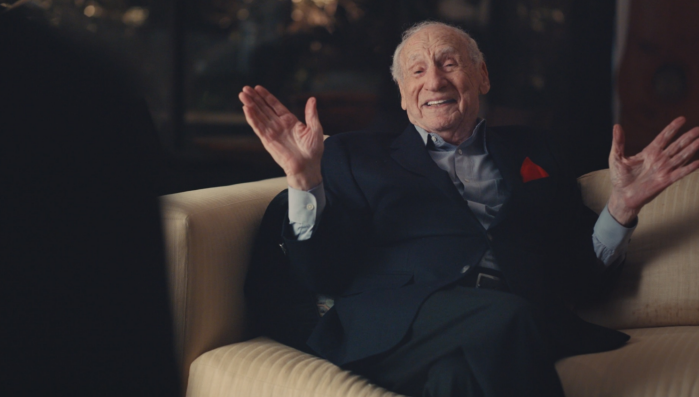
HBO documentary film “Mel Brooks: The 99 Year Old Man!” is alternatively funny and touching as looking into many ups and downs in the life and career of Mel Brooks, a legendary American entertainer who will soon be 100 years old in this month. Although he may be near the end of the last chapter of his life, Brooks remains witty and spirited as before, and his jolly presence holds our attention with a lot of amusement for more than 3 hours.

The first part of the documentary mainly focuses on Brooks’s early years before his filmmaking career. He was born to a Jewish family living in a Brooklyn neighborhood of New York City, and he gives us some funny anecdotes on how he entered entertainment business during his adolescent years. After being on a stage for the first time in front of a lot of audiences, he became more convinced that he wanted to be an actor, but then he was drafted to the US Army due to the World War II.

Not long after the war was over, Brooks came to work as a comedy writer under a famous TV comedian named Sid Caesar. Along with many other young talented comedy writers ranging from Neil Simon to Carl Reiner, he constantly provided a lot of comic materials to their boss’s popular TV show, and Caesar became his biggest defender – especially when Brooks later demanded a salary raise to their producer.

Around that time, Brooks married Florence Baum, who incidentally worked in Caesar’s TV show at that time. As they came to have three children between them, she became a housewife while Brooks busily kept advancing in his career, but their relationship eventually got quite strained due to the growing estrangement between them, and Brooks is quite frank about how much he was responsible for their subsequent divorce in 1962.

And things got worse for Brooks after the end of Caesar’s TV show. He found himself struggling again, but then he came across Anne Bancroft, who was already a very successful actress at that time. Thanks to his persistent romantic pursuit, he and Bancroft quickly fell in love with each other, and that was the beginning of their loving relationship which lasted more than 40 years. Even though she was more successful than him, Bancroft kept motivating Brooks more and more, and that eventually led him to a couple of significant highpoints for his career. After the considerable success of his TV comedy series “Get Smart”, he got an opportunity to make his first feature film “The Producers” (1967), which became an unexpected hit and then garnered him a Best Screenplay Oscar.

Right from “The Producers”, Brooks demonstrated his own comic style and sensibility. To him, anything can be comedy, and he did not hesitate at all in making jokes involved with very sensitive subjects including racism. No matter how vulgar his jokes can be, he was ready to, as he once said, rise below vulgarity, and that is the main source of good laughs for us. For example, you may roll your eyes as observing how much the two main characters of “The Producers” go low for their loony scam plan, but you cannot help but laugh when their plan later culminates to one of the most outrageously funny moments in the film.

Although his next film “The Twelve Chairs” (1970) was a critical/commercial failure, Brooks soon came back with two comic masterpieces to remember: “Blazing Saddles” (1974) and “Young Frankenstein” (1974). While the former is a truly anarchistic (and vulgar, of course) parody on old western films, the latter is a seemingly serious but ultimately hilarious homage to Frankenstein movies, and they surely demonstrated the immense range of Brooks’s talent.

As shown during the second part of the documentary, Brooks’s filmmaking career had some big ups and downs after “Silent Movie” (1976) and “High Anxiety” (1977). Although his next three films, “History of the World, Part I” (1981), “To Be or Not to Be” (1983), and “Spaceballs” (1987), were not that successful, he established his own movie production company, which produced a number of acclaimed (more serious) films such as “The Elephant Man” (1980) and “The Fly” (1986). In case of “Elephant Man”, Brooks gave a chance to a young filmmaker named David Lynch without any hesitation after watching Lynch’s first feature film “Eraserhead” (1977), and the following critical success of “The Elephant Man” certainly boosted Lynch’s career a lot.

Around the point when he made his final feature film “Dracula: Dead and Loving It” (1995), Brooks’s career seemed to be near the end, but, what do you know, there came another turning point thanks to the enormous success of his Tony-winning Broadway musical “The Producers”. During the next 25 years, he kept going as usual while receiving a number of awards including an Honorary Oscar, and we will get the sequel to “Spaceballs” in the very next year.

Nevertheless, Brooks has become more aware of the approaching mortality as many of his friends and colleagues passed away one by one. He was certainly quite devastated when his wife passed away in 2005, and he was also deeply saddened by Reiner’s death in 2020. He and Reiner often spent a lot of time together in Reiner’s house as longtime friends/colleagues, and the documentary becomes poignant when Rob Reiner, who sadly died in last year, talks about how close Brooks and his father were to each other.

Overall, “Mel Brooks: The 99 Year Old Man!” is a funny and sincere tribute to its exceptional human main subject, and directors/co-producers Judd Apatow and Michael Bonfiglio deftly assemble a various amount of archival footage clips and interviews to give an intimate portrayal of Brooks’s life and career. As far as I can see from the documentary, Brooks still has enough life and spirit for us as well as himself, and I sincerely hope he will amuse us more during next several years at least.

Posted in Movies | Tagged , , , | Leave a comment