A Separation (2011) ☆☆☆1/2(3.5/4) : A complex human conflict unfolded from one separation

 None of the characters is a villain in their complex human conflict in an Iranian domestic drama film “A Separation”. Each of them has each own priority among the moral/ethical/religious values in their world, and the difference between their views causes many clashes throughout the story. They decide to settle their problem in the court as we do sometimes, but, in the court where everything is defined into a simple matter of right and wrong, their situation only gets more complicated and uglier for everyone associated with this matter – and there are casualties hurt by the process.

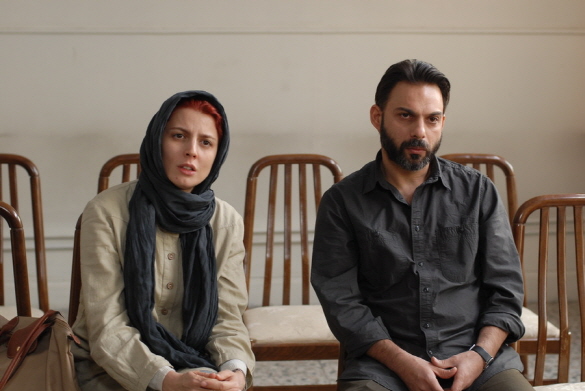
When we meet a middle-class couple Nader(Peyman Moaadi) and Simin(Leila Hatami) for the first time, they are in front of the judge not shown on the screen. To the judge(and us), they explain the reason behind their divorce. They have lived together for 14 years without a big problem, and they like each other, but now they have a huge disagreement over their plan. They decided to immigrate, but Nader gives up the plan at the last minute because of his senile father he has to take care of. Because they finally get the permission papers, Simin cannot accept that. She wants a better life for not only herself but also for their young adolescent daughter, Termeh(Sarina Farhadi).

Anyway, based on the agreement from both, their divorce is granted while who gets the custody of Termer is remained unsettled. Simin moves out of their house and stays at her mother’s home. Nader stays with his daughter. Because Simin has tended to his father(Ali-Asghar Shahbazi), Nader needs someone else to look after him, so he hires a woman named Razieh(Sareh Bayat), who comes to his house with her little daughter.

Razieh does not like much what she has to do. When she has to change old man’s clothes after he soils his pants, she calls some religious man and anxiously asks him whether it is all right to do that. She is not even comfortable about being with her employer, who is not her husband, though it is just for few minutes. The salary is low, but she needs the money for her poor family, In addition, she is pregnant – but she does not tell it to Nader.

 Now I should be more discreet about describing the plot, for it is gripping to watch how the plot gets thickened and multi-layered by a couple of incidents which happen on one day. I will not go into the details, but let’s say the damages are done to both sides and both Nader and Hodjat(Shahab Hosseini), Razieh’s volatile husband, become angry. Their conflict could have been resolved easily, but both of them stubbornly refuse to step back, so they go to the court to settle the matter.

However, the questions about the surrounding circumstances as well as the incidents themselves on that day are hard to answer for everyone. For example, did Nader really not know about Razieh’s pregnancy? Or, what really happened when he angrily pushed her outside his home? There seems to be no end in the arguments between Nader and Hodjat; everyone gets more frustrated and conflicted over the matters of religion, ethics, and family loyalty in this lawsuit.

While taking no side, the director/writer Asghar Farhadi equally treats his characters without judgments. Nobody is entirely clean or mean in this increasingly complex situation. As the time goes by, nobody is sure about what happened even when they try to recreate the situation. Furthermore, the matter becomes far more serious than they thought because they brought the matter to the court. Both Nader and Hodjat realize they can go to the jail if they are not careful in their shifty situation – so they rather stick to their respective versions of what happened on that day.

 With the movie’s unobtrusively intimate approach to the characters, while we are frustrated and maddened by their behaviors, our sympathy is pulled to every side – even to Hodjat, the most disagreeable character, who admits “I just lose my control too soon.” Hodjat is unemployed and depressed while mired in the debts, and he feels more humiliated because of what happened to his wife, but he is at least decent enough to direct his anger toward himself, not her. In case of Nader, we understand his anger because he does care about his father(but his father does not remember him now; he looks for Samin). However, as a man who has more options than his opponent, he should have been more thoughtful when a good opportunity to resolve the conflict comes to him in time. Samin and Razieh do their best to solve the problem, but, even when they openly talk with each other about their matter, they more realize how much they and their husbands are entangled in the difficult situation. All of them should take some compromise of each own if they want to settle their matter, but can they do that?

Through the realistic presentation of their compelling story, Farhadi also allows the audiences observe several specific sides of the Iranian society including class, religion, and custom. The most interesting part to me is how the legal system works, represented by the interrogator(Babak Karimi) who takes care of the case. His work is proceeded in a rather informal way in a small room with his desk and several chairs, and he even wears causal clothes. His stern but weary bureaucratic attitude to both sides implies that he has seen that kind of case before many times; he’d rather see them settling the matter by themselves.

Along with Golden Bear award at Berlin International Film Festival early in this year, the film also won a Silver Bear award for the acting ensemble. Four principle performers, Moaadi, Bayat, Hatami, and Hosseini, do deserve the award. There are many interaction scenes between them with lots of dialogues, and they never miss a beat even in their most emotionally intensive moments. Sarina Farhadi, Farhadi’s daughter, is also very good as a young girl who struggles through adolescent pain amplified by her parents’ separation and following complications. There is a crucial scene near the ending where she must answer a certain question. From her face, we know how hard it is for her to answer to that.

“A Separation” is a seemingly simple tale which is unfolded into something a lot more complex we expected, with several questions to think about. The title seems to be misleading, but, as the unfolded story is effortlessly folded back to itself in the end, we realize the title is very appropriate for the situation of the characters in the film. Sometimes, it is a lot better to settle the matter outside the court with compromise and understanding, rather than to hurt others inside the court.

Posted in Movies | Tagged , , | 3 Comments

Cats in KAIST (10/04/11)

                                                                
The cats in our campus is becoming a big family. If this trend continues, they will possibly do the revival of “Cats” someday.
Posted in Photos | Tagged , | 1 Comment

Biutiful (2010) ☆☆☆(3/4) : A dying man struggling in his seedy world

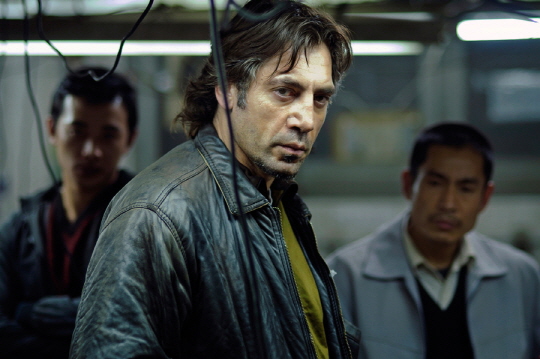
Sometimes the movie which is not the director’s best film has one of best performances in the actor’s career. Alejandro González Iñárritu’s “Biutiful” is not as successful as planned: a thin premise is extended a little too much, and I lost my patience at some points while watching it. However, whether you will be satisfied with the movie or not, we can agree that, after the end credit rolls, we will not forget its hero played by Javier Bardem, who shoulders the heavy story on his back while trudging along the streets of Barcelona.

Bardem plays Uxbal, a tired man whose daily life is filled with lots of things to take care of. Without his bipolar ex-wife Marambra(Maricel Álvarez), he raises alone his children, Ana(Hanaa Bouchaib) and Mateo(Guillermo Estrella), in his shabby apartment. Sometimes he loses his patience with the unruly behavior of his children, but he deeply loves them, and so do his children, who have accepted their dad’s hard situation for a long time.

Uxbal is a good man, but his job is not decent. He deals with the Chinese guys who exploit their fellow illegal immigrants in their small sweatshop where they make knockoff purses and handbags, which are sold by the Senegalese street sellers who do not sell these cheap products only. Though he does not like what he does, he needs the money to support his children, so he does whatever he has to do while trying to believe he is doing a good work.

 Uxbal’s main job is making the underground business going as smooth as possible. There are always problems, and he is always busy with taking care of them as a middlman. He gives bribery to a cop for protecting the business from the police raid. He talks with some of illegal immigrants for warning them not to cross the lines. Lately, his Chinese partners decide to lend out their illegal immigrants to some construction site for making more money, and it is Uxbal’s job to make a nice deal with the foreman. He is weary, but he keeps being nice to the people he basically exploits. The weather is getting cold, and he gets the heater for the stuffy basement where Chinese illegal immigrants sleep together, though he buys a cheap one.

He also has the gift to see and communicate with the souls of the recently diseased if the bodies are not moved yet. We see him visiting one funeral at night. I don’t know whether he can really see the dead people or not, but, as least in his view, he helps them leave the world of living comfortably and deliver their last words to the surviving families. When a horrible tragedy happens late in the story, he can feel the presence of the dead people at the site, and that breaks his heart with guilt because he is responsible for that tragedy.

And his life becomes drearier now with another burden on his shoulder. His urine comes out with blood, and, early in the movie, he is diagnosed as a cancer patient in the terminal stage. The fact that he has only few months left does not change his life much. He still has to work for supporting his children, while hiding that fact from others around him except his mother, to whom he can quietly let out the feelings inside him, including his worry and fear for his children’s future.

Javier Bardem, who was unforgettable as a chilling psychopathic killer with weird haircut in “No Country for Old Men”(2007), won Cannes Best Actor award in last year and got the Oscar nomination for Best Actor early in this year for his restrained but deeply sincere performance in this movie. With the gloomy face telling us a lot about his complex character, Bardem effortlessly grabs our attention throughout the film while embodying Uxbal’s pain and sorrow. Even when the movie meanders from time to time, his performance does not lose our attention, and it diligently carries the movie to the inevitable somber ending waiting for Uxbal.

 “Biutiful” is the first work written by Alejandro González Iñárritu himself. Unlike his three previous movies written by Guillermo Arriaga, the movie sticks to one character instead of going back and forth between multiple plots and characters. At first, it seems to be lack of direction, but the movie slowly builds the story around Bardem, and the cinematographer Rodrigo Prieto captures some beautiful moments on the screen while realistically presenting the seedy sides of Uxbal’s daily life. The supporting actors surrounding Bardem hold their respective places well, and Maricel Álvarez is especially notable as Uxbal’s troublesome ex-wife Marambra. There is still some affection between Uxbal and Marambra, and it may be possible that they can be happy together with their children again, but her uncontrollable nature is always a wedge between them.

The movie has noticeable flaws in the story. At times, it struggles hard while trying not to show that it struggles hard in its restrained approach. Its running time, more than 140 minutes, is a little too long; it might be boring for some audiences because there is not much change in Uxbal’s life or in him even when he has few days left. There are surely lots of things to show and tell to us, but the movie is not coherent as a whole. As shown in its ending, the movie indeed has the sincerity from Iñárritu, but it is less powerful than Iñárritu’s stronger films like “Babel”(2006) or “Amores perros”(2000). In my personal opinion, a recent South Korean movie “The Journal of Musan”(2010), a similar movie about a lonely man struggling at the bottom of the society day by day, is more powerful and suspenseful for the his decency is more fragile than Uxbal’s.

Though it requires some patience, “Biutiful”, which will be soon released in South Korean theaters in this month, is still worthwhile to watch. This is a sad, grim drama about a man who tries to go on while knowing that he is losing with little time left for him – and Bardem’s moving performance will linger on your mind like a small candle with its light slowly dying in the bottom of the darkness. He is worried, but he cannot afford to worry about himself even at the end.

Posted in Movies | Tagged , , , , | Leave a comment

Confessions (2010) ☆☆☆1/2(3.5/4) : Vengeance is hers

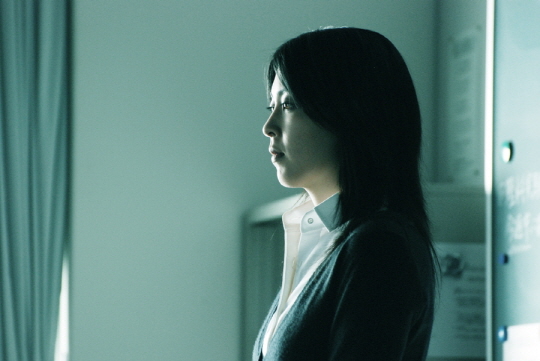
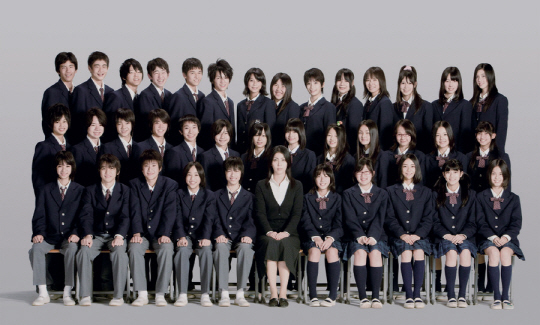
It begins on the last day of the semester at a classroom of some Japanese junior high school. Though they will return to their school after a month, most of the students are very excited while waiting for the time to leave their classroom and enjoy spring break. They are mostly occupied with talking with or texting to their colleagues in the noisy classroom. They do not give a damn about what their teacher tries tell to them, while never imagining the terror she will soon unleash upon them.

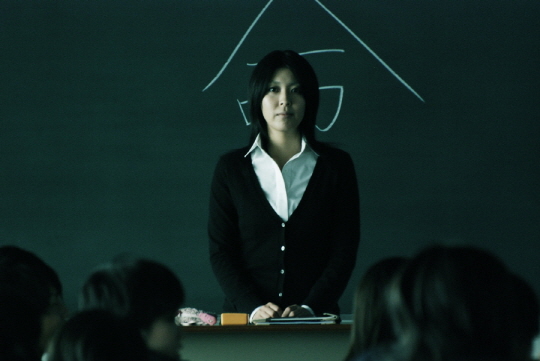
Her name is Yuko Moriguchi(Takako Matsu), who courteously begins her long speech along with the brief mention of the recent trial of the milk distribution at the school. A carton of milk is distributed individually to each student at the beginning; all of them drink it as usual under her supervision. In her flat, benevolent tone, she mentions about how it may benefit their biological growth at their age while most of her unruly students do not listen to her at all.

Then, they hear something curious. Miss Moriguchi announces that she will resign from her post – and today will be their last day with her. She talks about  a man whom she still deeply loves; he has been a passionate educator who has been well-known around Japan for his books and TV appearances. The students have heard about him, so they begin to show their interest with casual jeers, while their teacher is talking about how, like her lover, she has tried to teach her students with care. But she has been cautious about her teenager students who can cause a trouble because of temporal pique. She exemplifies one serious case in which a female student tries to frame her male teacher just because she wants to get him in trouble.

She says she is sorry for not caring about her students enough, but she seems not to intend to give them a conventionally idealistic farewell speech you can expect from the movies like “Dead Poet’s Society”(1989). She grabs their attention more with the hidden secret of her private life. Everyone is horrified to hear that, even though their teacher tells they have a misguided knowledge about a certain disease. Some of them hold their breath when Miss Moriguchi walks around their desks while phlegmatically continuing her speech which turned far more ominous than before.

 She goes on. She talks about the recent tragic incident that happened to her. Her young daughter was drowned in the school swimming pool, and everyone, including her, thought it was just a very unfortunate incident. But now she comes to know the truth about her daughter’s death. The classroom is not noisy anymore while she reveals that. The tension is slowly arising with the smooth, steady camera movement and occasional overhead shots looking over the students. All of the students now fully concentrate on what she is saying. I bet they have never done that before under her tutelage.

She knows who were responsible for the incident – they are two students in her class. Does she hate them? Sure, she wants to see them punished, but the juvenile law in Japan protects these two students who commit this unforgivable crime. According to the law, the juveniles cannot be tried for the serious crimes like murder for it is judged that they are not fully aware of the consequences of their actions due to their immaturity. The harshest punishment will be merely sending the boys to the correction center; it goes without saying that the authorities will let them out when their rehabilitation is thought to be completed. Therefore, it is no use of revealing the names to them, though Miss Moriguchi reveals everything but their names to the students.

As the ability of an individual has been vastly expanded along with the advance of our civilization, the kids in our time is more capable of doing something terrible. They are young indeed, but what if they know they can get away with the crimes like murder just because they are young? Shouldn’t we change our perception? If so, should we treat them like adult criminals?

But it is just my small inconsequential thoughts provoked by an interesting topic. The story moves on from that after striking us with the smashing ending of this long but fantastic opening sequence I described above while not trying to reveal anything crucial to spoil your entertainment. As a matter of fact, this great sequence was so involving that even I, vaguely aware of its synopsis, was fooled enough to believe that I was watching the wrong part of the movie.


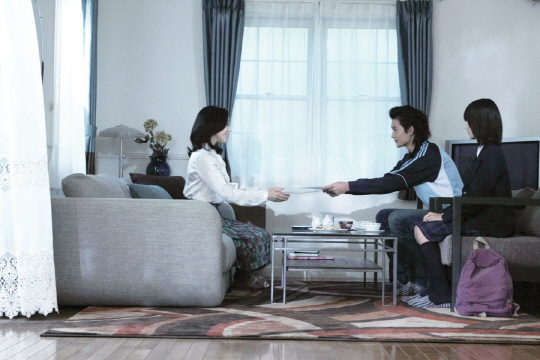
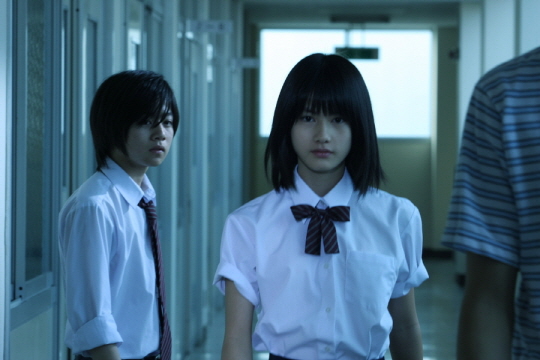
 Their new year begins. We see the consequences of Miss Moriguchi’s action after she leaves the school. The common secret in the classroom is hidden from a new school teacher, who is so cheerfully oblivious to what lies beneath his classroom that he unintentionally provides more misery to these two murderer kids. Their lives are turned upside down thanks to not only Miss Moriguchi and but also the cruel bullying of their classmates ignited by her action. One of two boys keeps attending his school despite constant taunts and scorns. The other becomes so disturbed that he turns into a little boy version of Howard Hughes on his bad days. He does not even go to the school any more, and he confines himself to his room at his home. His overprotecting mom is naturally frustrated about this sudden change she cannot understand.

A Japanese thriller movie “Confessions”(2010) is based on Kanae Minato’s gut-chilling crime novel of the same name. In the novel, each of its chapter is respectively narrated by its five principle characters, and they ‘confess’ to others and us about their thoughts and deeds. While it has the potential as a terrific audio book, its narrative method is not so easy to be translated onto the screen. The inherent flaws in the adaptation process are apparent. After that memorable start, it is a little disappointing to see that the movie loses some of its steam while constantly shuffling around the viewpoints/narratives of its characters.

However, it is still very compelling to watch despite its unlikable characters and their heinous deeds shown in the rest of the story. The director Tetsuya Nakashima’s previous work was “Memories of Matsuko”(2006), which cheerily depicts a very dour tragedy of its unfortunate foolish heroine with the bold, artificial Technicolor style and accompanying bright, cheerful musical numbers. It looks silly, but the clash between the style and the story creates the harrowing emotional effect not that far from that of Lars von Trier’s “Dancer in the Dark”(2000). The movie does not hide the fact it is a black comedy, so it is both painfully hilarious and sad to watch it.

In case of “Confessions”, it goes to the opposite direction; the cinematography has cold, gray tone with those ever-present gray clouds floating in the sky in the late afternoon. Many scenes are as stylish and drowsy as the music videos, with frequent slow motions(you can see every droplet whenever something is splashed) for depicting the daily activities at the school – including the savage bullying on the rooftop. We come to accept that the people in the movie are no more than broad caricatures and they are living in some sort of warped reality or daydream.

 The movie has a savage fun with the several kinds of cruelty committed on the screen. While horrified by the hell in the classroom, we start to enjoy its twisted sense of humor. These two murderers are despicable, but their classmates are equally heartless as a group, who feel little remorse about punishing them with no mercy while keeping happy faces for their new teacher. The soundtrack adds extra black humor. There is a brief exaggerated musical sequence to emphasize how insanely grotesque the situation is, and I have to mention that the movie uses the song “Last Flowers” by Radiohead in a way as memorable as the way “Incendies”(2010) used “You and Whose Army?”.  In the end, you may not care about whether they will be blown up or not, while still interested in what will happen rather than what will happen to these horrible teenagers.

Even though we cannot identify much with most of the main characters, we find them understandable or pitiable or pathetic to some degree. From these two boys, you may see what might cause the Columbine school shooting or the other cases of school shooting. One of them is lonely but he is also a vain, arrogant boy who really deserves a good spanking for disregarding the value of the life just because he wants to be recognized by someone he cares about. His motif, like his accomplice’s, is absurd, but, as shown in the movie, hasn’t the media always turned the terrible incidents like the murders committed by teenagers into a big event which may give the wrong impression on lonely, disturbed kids at schools, who want to be recognized for their ‘greatness’? Even if the law cannot protect them, they will become famous at least for 15 minutes, which is definitely something they have craved for.

Just in case I mislead you, let’s get this very, very straight to you. You will find that the movie is ultimately about the revenge. You will see that it carefully establishes the ground for a maximum effect. Some of the characters are not as honest as we thought – and the story turns out to be more fiendish then we expected. It is eventually revealed that Miss Moriguchi revenge is more calculating than we initially thought. Though we might say they deserve that for their wrong behaviors, she does a lot of harms to not only to her main targets but also to others surrounding them. Furthermore, her deed eventually opens the ways for other evils, so a lot of people can be hurt as a result. But, laughing at any possibility of melodrama in her situation, she goes all the way with a vengeance. We can say that she has a good reason for her revenge, but is she entitled to do that? Isn’t she the one who emphasizes the value of the life with a big Chinese character she writes on the blackboard?

Never mind, because that question does not matter to the movie, which gives us the grand finale as cathartically bleak as required. The Achilles’ heel is found. A truly merciless revenge is soon executed as an effective payoff. In the exaggerated moment which might be influenced by the prologue sequence in “The Curious Case of Benjamin Button”(2008), we certainly feel how much a certain character is devastated while literally, and emotionally, plunged into the bottom of the hell. We are sorry for that a little, but, as the perpetrator coldly points out, the target has it coming.

“Confessions” is a cold-blooded psychological thriller filled with dark, vicious humor which smirks at us and the victims even at the very end. With an uncompromising attitude, it handles well its disturbing subject with the impressive visual style and savage wit. The actors give very good performances, and Takako Matsu is polite but increasingly chilly as a graceful but ruthless Nemesis with nothing to lose. Some of you may not like it because the movie single-mindedly cares about serving a dish called revenge very, very cold, but, what the heck, isn’t it a diabolically sweet, elegant revenge to be appreciated by the dark side inside all of us?

Posted in Movies | Tagged , , , , | 3 Comments

Countdown (2011) ☆☆☆(3/4) : It’s not easy to get her liver

 It seems serious at first with the matter of life and death, but “Countdown” is an enjoyable action thriller funnier than I had expected. Above all, it has the terrific comic performance from Jeon Do-yeon, one of the most talented South Korean actresses, and she is really having a ball in this film. We know she is a beautiful actress, but, this time, she is so beautifully sly that we come to believe she can get away with anything. As a matter of fact, it is so entertaining to watch her performance that it is really shame that the plot drags her into the awkward melodrama during the shaky third act – but that’s a minor complaint thanks to her, at least.

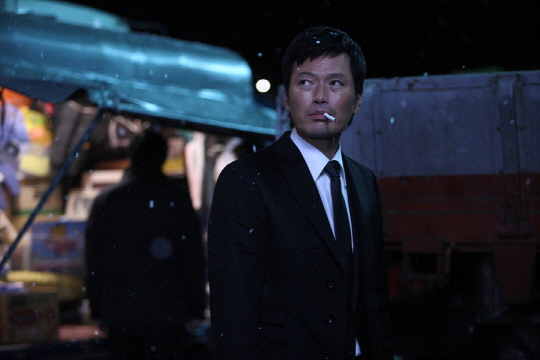
The movie is about the struggle of Tae Geon-ho(Jeong Jae-Young) for getting the liver from her character. Geon-ho is a ruthless debt collector working for some financial company. He is very good at finding people who do not pay the debt, and, whether it is a poor family with almost nothing to lose or a sleazy night club owner with goons, he shows no mercy or compromise while doing his jobs. It is not so surprising that no one has ever showed more excellent result than him in the company.

It can be said that the bright future is ahead of him, but, on one day, the unfortunate news strikes upon him; he has a liver cancer. He cannot believe it, but it is true and now he must have the liver transplant surgery within ten days. The problem is, he cannot find a suitable donor for him; he will be on the waiting list, but the time is not enough. His only family, his son, died several years ago.

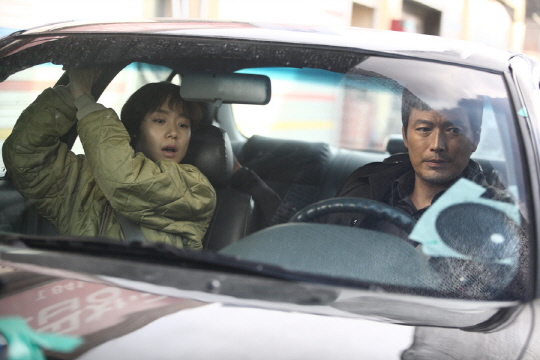
 But he has a nice idea. When his son died, his organs were donated to several people, so it is logical to think that these recipients might be his potential donors. After several trials, he finds a suitable donor, and that donor is none other than Cha Ha-yeon played by Jeon Do-yeon. She got his son’s heart, but she is a devilish con artist serving her time in the jail since getting caught by the police. Luckily for Geon-ho, she is about to be released from the jail, and she demands Geon-ho to do something for her in exchange for her liver. She asks him to find Jo Myeong-seok(Lee Kyeong-yeong), the man responsible for her imprisonment.

Myeong-seok turns out to be a big time con artist who has managed to elude the investigation of the police, so Geon-ho gets some help from the others to search for him. While following Geon-ho, we see some amusing sights in the world of con artists. One funny scene features the pyramid scam involved with a bizarre chair seen to be believed. You will wonder who will buy such a weird thing, but, with the trial performance on the stage, everyone in the room seems to buy what a con artist explains to them.

It takes some time, but Geon-ho locates Myeong-seok, and he gives the information to Ha-yeon. However, things do not progress as smoothly as he wants. He soon finds that it may be easy to give something to Ha-yeon but it is definitely not so easy to get something from her. She slips away as soon as she gets out of the jail, and now he has to find her till the operation day. Plus, Geon-ho is not the only person who wants to catch her. Besides Myeong-seok, who becomes enraged after realizing that Ha-yeon ruins his recent scheme as her payback, there is also a Korean Chinese gang leader(Oh Man-seok) who wants to settle an old score with her. Furthermore, Geon-ho’s health is deteriorating day by day.

 With this familiar action thriller formula, the first-time director Heo Jeong-ho skillfully made a competent film with several exciting moments. The car chase sequence on the marker alleys is well-handled; though it is not so speedy, the movie effectively utilizes the narrow alleys to create kinetic excitement. Personally, I like a cutthroat way Geon-ho solves his trouble when his car is stuck in the cul-de-sac along with the car chasing after him and Ha-yeon their behind.

As the most interesting character in the movie, Jeon Do-yeon has many delightful moments. After several serious acting jobs in “Secret Sunshine”(2007) and “The Housemaid”(2010), it is refreshing to see her lightly gliding around the screen.. While everyone else in the movie is trying to get her character by any means necessary, she is usually one or two steps ahead of them, and it is quite a fun to watch her to manipulate or fool others with her impish but ingratiating attitude. Even without the flashback showing her past, you can easily see that she is an expert who can swindle money out of you even after admitting to you that she is fooling you. But you cannot help but like her, as long as she does not take your saving account from you.

I was very disappointed with his stiff performance in “Moss”(2010), and it is good to see Jeong Jae-Young back in his element again. He is basically a foil with no-nonsense for Jeon Do-yeon’s care-free character, but he is a very good one for his co-actress. He is one of the rare South Korean actors who can almost perfectly deliver the humorous lines without a wink to us, and I had some good laughs with the audiences while he was acting with utmost seriousness as the man desperately chasing after his only chance to survive. None the less, catching Ha-yeon is indeed a serious matter to Geon-ho, and Jeong Jae-Youn manages to make us identify with him a little despite his callous, taciturn attitude.

By the way, I am not so certain about whether it was really necessary for the movie to drive the characters into the melodramatic third act. I do not think that works well. Though this direction does not entirely ruin the whole show, I don’t think Ha-yeon and Geon-ho deserve that. They become less entertaining characters when their respective private lives are revealed to us, and the pace becomes a lot slower than before with a fairly predictable ending waiting for them, and the ending is too sentimental compared to the rest of the movie. But, what the heck, when a beautiful actress like Jeon Do-yeon is having a big fun while dazzling us, we can forgive lots of flaws like that.

Posted in Movies | Tagged , , , , , , | Leave a comment

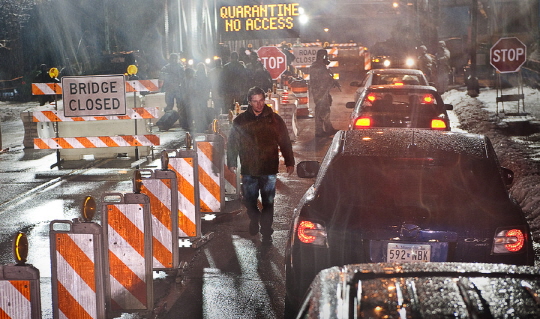
Contagion (2011) ☆☆☆(3/4) : Haven’t you washed your hands?

 Remember when your parents told you wash your hands after coming into the house? After watching “Contagion”, you probably think serious about washing your hands. Starting with the sudden outbreak of a new epidemic, the movie chillingly shows how easier it is for the epidemic to be spread all over the world than before thanks to the advancement in our civilization, especially if it is highly contagious. We move more widely and frequently, and so does the epidemic, always ready for generating its new generations.

On Day 2 of the outbreak, Beth Emhoff(Gwyneth Peltrow) is not feeling well, and we know why. She is probably the first patient of the virus that will soon run amuck around the world, and, while coming from Hong Kong to her home in Minnesota by plane, she spreads the disease around the people who happens to be close enough to touch her or touch the objects she has just touched. It sounds preposterous, but, as one doctor in the movie says, we touch our faces around 3,000 times a day – that means quite a lot of chance for the contagions to go from one person to another person.

Beth dies at the hospital, while other similar sudden deaths are reported around the other parts of the world. The officials and the scientists in CDC and WHO begin to sense the beginning of the disaster that will possibly kill lots of people. They quickly identify the virus responsible for the disease thanks to the genomic analysis of the samples obtained from the autopsies(so we have to see Peltrow’s scalp is peeled away in one scene), but this is a new kind of virus which has not been reported before. The number of infected people grows exponentially day by day. The countries all over the world soon go into the emergency situation within a month.

 Now it sounds like a plot of the disaster movie; we indeed have various characters played by well-known actors in this biological disaster of epic proportion. Beth’s husband Mitch(Matt Damon) luckily turns out to be immune to the virus but he worries about his daughter’s safety – and there is more to worry about for him while they and other people do not hear any good new from the media. There are experts who try to resolve the situation at CDC and WHO. While Dr. Cheever(Laurence Fishburne) sends Dr. Mears(Kate Winslet) to Minnesota for handling the situation, Dr. Sussman(Elliot Gould) in San Francisco works to find a way to culture this lethal virus for the study that can lead them into the production of the vaccine, and Dr. Orantes(Marion Cotillard) from WHO tries to pinpoint ‘the patient zero’ in Hong Kong. Meanwhile, there is a blogger named Alan Krumwiede(Jude Law) spreading the unconfirmed rumor about government/corporation conspiracy on Internet, which can be more harmful than virus.

This premise can be easily developed into a frantic thriller movie, but, while their situation is getting worse and worse, the director Steven Soderbergh maintains the cold, documentary-like approach not unlike the one we encountered in his Oscar-winning work, “Traffic”(2000). While moving around various places including London, Hong Kong, Chicago, he captures well the realistic presentation of the global society affected by the epidemic and the following responses from the people. I have no idea what will happen when the epidemic breaks out globally, but it will be similar to what depicted in the movie. While looking at this dangerous situation in a large scale, Soderbergh also observes the small details in a smaller, intimate scale, like when it shows how the virus can be quickly spread around people in our era. It is really scary to think that you can be infected by virus just with one small touch from someone.

I especially like its depiction of the experts, their tasks, and their limits, which are far more realistic than the movies like “Outbreak”(1995). The scientist struggle to find the vaccine, and it takes many trials and many times. Even if they succeed in producing the vaccine, there are the formal procedures to consume another valuable amount of time. Furthermore, it cannot be prepared immediately in the amount large enough to fulfill the need; there is the distribution problem to be followed and the movie briefly touches on that issue.

 Meanwhile, many people keep dying outside. The government officials try to keep the situation under the control, but people like Mitch see their world changed and then being crumbled step by step. The world goes on, but the end of the civilization may be possible even if the scientists finally develop the vaccine. The virus cannot wipe out the entire human race even in the worst scenario(lethality is 25%) and the experts in the movie predicts 1% of the global population will die, but please multiply 7 billions by 0.01.

Among the actors assembled for this movie, many of them were nominated for Oscar or won it before. While any of them will not get Oscar-nominated for this movie in the next year, they do exactly what their roles require them to do under Soderbergh’s direction. As the scientist who races against the time to develop the vaccine, Jennifer Ehle is more notable compared to the other actors, for her character’s story has a little more dramatic aspect than others. Other actors are wasted to some degree. Marion Cotillard is literally held as the hostage by the plot assigned to her character. In case of Jude Law, I find his character distracting like an unnecessary sore thumb. Maybe his character is supposed to be like that, but his motive is not clearly defined, and he functions as nothing but a noisemaker in the story.

After his success with “Traffic”, Soderbergh has gone back and forth between the commercial movies and small independent movies. “Contagion” is, like “Solaris”(2002), a hybrid between them, and it is a compelling work with scary elements to be lingered on your mind if you know what to expect from it. The epidemic has come upon the civilization several times in the human history, and, as the last sequence implies, this unseen menace can suddenly come out of the nature to start its disastrous rampage far bigger than the previous outbreaks. We have made our world smaller and smaller through planes, trains, and automobiles – and we have also made a certain danger bigger and bigger in that process.

Posted in Movies | Tagged , , , | 1 Comment

Silenced (2011) ☆☆☆(3/4) : It was very, very unfair to these molested kids

You will be aghast at what you will see in South Korean film “Silenced”, an angry movie about the horrid truth hidden beneath one school for the deaf kids. When the end credit rolls on the screen, you will be angry about the injustices depicted in the movie, while saddened by the fact that there is a very little justice for the weak like these young innocent kids, who are damaged by the atrocious adults who are supposed to take care of them.

What happened to the kids is something you hear from the media with disbelieving eyes. We usually ask ourselves; how could the people commit such horrible deeds? Can that really happen in our society? Though the movie is the fiction based on the bestseller novel written by Gong Jee-young, the novel itself was based on the real-life incident reported by the South Korean media in 2005. As depicted in the movie, it drew lots of attention from the people at that time, and there was the trial for this heinous crime later – but that was not the end of the story and there are still scars remained.

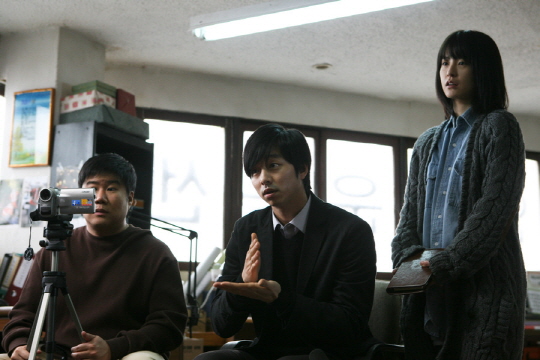
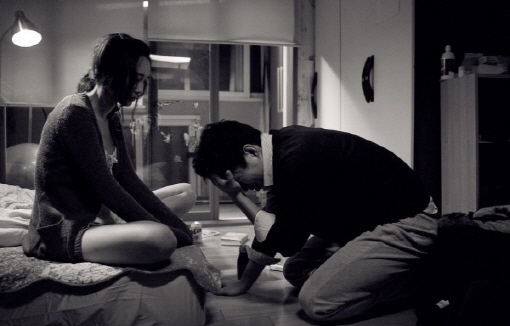
When we meet In-ho(Gong Yoo) for the first time, he is coming to the local area named Mujin as the new art teacher of the boarding school for the deaf students. While his daughter is taken care of by his mother in Seoul(his wife was dead), he lives alone in some shabby apartment. He does not particularly like his new job, but he needs a job for earning the money for his sick daughter. When the principle and the administration supervisor, the principle’s twin brother(both are played by Jang Gwang), demand In-ho to pay the considerable amount of money as the contribution for “school development fund” on his first day, he accepts their demand without question. It is not right thing to do, but he has no choice if he wants to keep his job.

 However, it turns out that is not the only thing he has to deal with while working at this school. He sees one of the teachers savagely beating one of his students in the teachers’ office while other teachers ignore the abuse being committed right in front of them. At one night, he hears a strange sound from the ladies’ room when he is about to leave. He tries to find out who is behind the bathroom door, but he is soon interrupted by the night guard, who assures him that nothing happens. Later, he witnesses the other teacher abusing the other student with the washing machine at the basement – while the washing machine is turned on.

Now I make this school look like hell even compared to the Dickensian orphanage, but there are more terrible things. After deciding to do something for the kids he care about, In-ho works together with the human right activist Yoo-jin(Jeong Yu-mi), whom In-ho came across on his first day in Mujin due to a minor car accident. From three students under their protection, they are horrified to learn what has been hidden behind the school. The teachers, including the principle, have not just abused them and others; they also have sexually molested them for several years. While In-ho and Yoo-jin listen to them, we see what happened to these kids. There are several horrifying flashbacks which made me and the other audiences wince, but they are made with considerable restraint while never exploiting young performers as well as losing its gut-wrenching effectiveness.

If you have some knowledge about the South Korean society, you will probably have some good idea about what will happen next. In-ho and Yu-jin want these disgusting people to be arrested, but, as shown in his expensive office, the principle is a well-respected member of the local society. He is also an elder of the local church(that means we will see some unpleasant side of Korean Christians), and he has some powerful connections to the local authorities. On the day when he comes to the office for the giving the money for the school development fund, In-ho happens to see a local cop stopping by the school for his money. Even when they try to report this crime to the other local government officials, they ignore them with bureaucratic indifference while saying it is not their job due to the jurisdiction rule.

 Eventually, after the kids’ story goes out on TV, the principle and others are quickly arrested and the trial soon follows, but In-ho and Yu-jin find themselves more helpless as the time goes by. The kids are willing to testify what happened to them, and there are some evidences to support their testimonies, but it is possible that their abusers will not be properly punished in the end. The counsel for the accused, a former law official, is well-connected to judges and prosecutors; as a custom inside the South Korean justice system, they give some advantages to him because it is his first trial after leaving his office. The kids’ parents are poor or disabled, so they can be easily persuaded to withdraw the suit on the behalf of their children. They even approach to In-ho, who has been in financially difficult situation.

The director Hwang Dong-hyeock wisely does not hurry his story. While providing the good atmosphere with the hazy fog covering the town, he effectively conveys the frustration inside the story. Though his character is rather bland and passive, Gong Yoo does a passable job as an ordinary man who tries to do the right thing while knowing that there is little he can do for the abused kids. Jeong Yu-mi is trapped in her flat character who mostly functions as the mouthpiece of the story, but she does as much as she can.

The movie really belongs to three remarkable young performers with little acting experience(Kim Hyeon-soo, Jeong In-seo, and Baek Seung-hwan) who steal and hold the show with their harrowing performances as the abused victims. They do not talk at all, but, only with their sign language and facial expressions, they poignantly express lots of pain and anger as the tragic heart of the movie. Thanks to their exceptional performances, several crucial scenes in the movie work powerfully, such as when one of them has to prove that she is not lying at all.

The movie is not free from its flaws. Despite its good intention, it sometimes stumbles with a heavy-handed approach. While the villains are played effectively by good actors, they are just mean and despicable in one-dimensional way. They seem to come from the other movie whenever confronting the other characters. The court scenes have some awkwardness although it is less stiff than other South Korean movies featuring the court scenes. The finale is overlong and a little too melodramatic while emphasizing the characters’ bitterness they have to face at the end of their struggle.

Nevertheless, “Silenced” has enough power to draw you into its anger, and you will identify with its indignation toward the unfairness in South Korean society. As reflected in the epilogue in the movie, the abusers were only sentenced to light punishment, and they did not even go to the jail. How could they let that happen? Will such a horrible thing happen again? Sad thing is, it is really hard for us to prevent the world from changing ourselves, let alone change the world.

Posted in Movies | Tagged , , , , , , | 8 Comments

The Day He Arrives (2011) ☆☆☆(3/4) : They drink and talk again…

One thought came to my mind several days after I watched Hong Sang-soo’s new movie “The Day He Arrives”. I am a lot different from his characters, but, has been my daily life on weekdays monotonously repeated with little variations noticeable enough to help distinguish Monday from Friday, like 4 days and 4 nights depicted in the film? I get up in the morning, I go to my lab, and then, after work and some exercise, I return to my dormitory at late night for movies and sleep. It sounds boring, but small things sometimes happen in my mundane daily life, and, whether they are good or bad, I am not bored much thanks to them.

And I was also not bored while watching “The Day He Arrives”. Like his previous films, Hong Sang-soo tells his story in his minimalistic style with his familiar stock characters. Their names are different, and the actors playing them are different, they are the same kind of men and women we have met from his other 11 works in the past. Again, they are associated with the filmmaking, and they spend their time with drinking and talking.

Seong-jun, played Yoo Joon-Sang, is a movie director who comes to Seoul for meeting his mentor/friend Sang-joong(Kim Yeong-ho), who works as a movie critic. It is not clear about what he is doing now, but it looks like Seong-jun is teaching movie in some university instead of making movie. While his movies were not particularly successful considering the conversations between him and others, the people he comes across know him and some of them say they like his movies.

Day 1 begins with Seong-jun trying to reach Sang-joong’s cell phone in the afternoon. He does not answer. Seong-jun does not know what to do while walking around the streets and alleys of Seoul. He encounters an actress he met before and they have a brief conversation. After that, he goes to the bar and drinks some rice wine. Coincidentally, there are the film students who recognize him, and Seong-jun soon joins in their drinking party.

Late at night, in inebriated state, Seong-jun suddenly runs away from his bewildered juniors. He goes to the apartment where his former girlfriend lives. She does not welcome him much, but soon they have a talk with beer at her small place, and Seong-jun, still drunk, keeps telling her he is sorry with pathetic self-pity. It sounds embarrassing, but it is funnier than you think, and the audiences around me frequently giggled while watching how they eventually share the bed at that night and…

In the next morning, they behave as if nothing serious had happened during last night. Day 2 begins, and Seong-jun is wondering around the same area. He meets the same actress and has some conversation with her again. In this time, he meets Sang-joong, and they go to the bar named “Novel” together with the film school professor Bo-ram(Song Seon-mi). They have a long, jolly conversation while drinking. Seong-jun even plays a piano for them, though he is not so good as Sang-joon says.

When the owner of “Novel” appears in front of them, Seung-jun looks a little confounded by her appearance. She is played by Kim Bo-gyeong, who also plays Seung-jun’s girlfriend. Are they the same person? No way, because there is a scene where one is with Seung-jun while the other talks to him through his cell phone. Are they related? Not so possible in my opinion.

When Day 3 begins for Seung-jun, we start to see that Hong Sang-soo is having a fun with the repeated situation for his characters; again, the drinking begins with another character joining the group. After having some conversation at the campus with warm cups of coffee in their hands, Seung-jun and Sang-joong meet Joong-won(Kim Ee-seong), a former actor who has recently come back from Vietnam where he did some business. Their drinking begins in the early afternoon, and, again, they go to the same bar with Bo-ram. And, yes, we are not surprised to watch Seung-jun play the same piece with the same piano.

Are they conscious of their days and nights of alcohol being continuously repeated to some degree? I don’t know, but I was amused by the actors’ droll, naturalistic performances. Hong Sang-soo repeats almost the same dialogues at the same places with the same compositions. The characters talk like they have never uttered the same words before. Lots of alcohol must have influenced their memory banks, I guess.

Though he is one of the leading South Korean directors and has been in the same league with Park Chan-wook and Bong Joon-ho, Hong Sang-soo’s films have been usually acquired taste to me. They are surely interesting, but I was not sure about whether I loved them or not. However, I think I am now on the way of getting used to his films while being both relaxed and amused by what is going on the screen. While I did not particularly love “Woman on the Beach”(2006) or “Night and Day”(2007) or “Like You Know It All”(2009), I enjoyed the conversations between his flawed characters with small good laughs. His two previous works in 2010, “Hahaha” and “Oki’s Movie”, were more playful and charming than his other movies, and I gladly added them to my list of the best South Korean movies of that year.

Like “Oki’s movie”, whose characters are juggled in the four different situations possibly related to each other, “The Day He Arrives” provokes the same question. Is its narrative linear or repeated? Or, are we looking at the story progressing over 4 days or the one being revised day by day? I have no idea. To be frank with you, I do not think I understand some of things in the film. Anyway, I want to say it is not often to watch the works of the director who knows how to write an engaging conversation between the characters sitting around the table(and drinks) – and Hong Sang-soo is one of them. In addition, he is good at drawing good performances from his actors. As usual, his actresses are lovely, while sharing the screen with the fellow male actors as your average petty (and drunken) South Korean males.

As a guy who knows several things about the drinking in South Korea, I was amused enough to like this pleasant movie. When you drink, you may embarrass yourself while talking a lot. You probably try to take care of your problem, but, with your brain influenced by alcohol, you just make yourself more embarrassing. In the end, the new day will begin for you – and there is always new night for drinking.

Posted in Movies | Tagged , , , | Leave a comment

Photos from My Town (09/12/11)


The following photos were taken on 09/12/11. My family, my uncle and his daughter had a nice time while walking around the streets of my town. After that, we had a nice lunch.

Posted in Photos | Tagged , | 1 Comment

Around the Dusk (09/11/11)

                                         
 September 11th of this year was quiet in my grandmother’s country town. Right after arriving at her house, I took some walk and took several pictures during few minutes before the sky was darkened.
Posted in Photos | Tagged , , | Leave a comment