Kittens are growing day by day while ruthless avian campus gang is active as usual
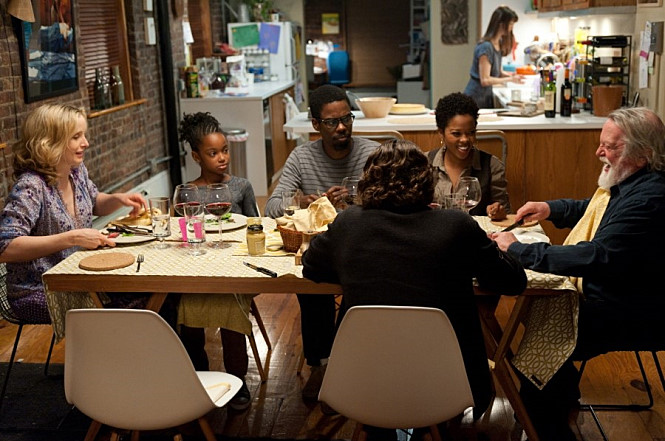 “2 Days in New York” is a charming little comedy which made me cringe and laugh through its broad humor and sharp wit. I winced along with its more sensible characters as the things kept getting messy and they were running out of patience, but I also chuckled at its funny scenes mainly involved with culture clash and personality clash. Their eccentric guests are certainly the last ones I want to invite to my family apartment, but they are funny although they are quite annoying at times, and somehow I came to like them in the end – to some degrees, though.
The movie is a sequel to the director/producer/actress/co-writer/composer Julie Delpy’s 2007 comedy film “2 Days in Paris”(2007). After suffering so many ghastly French stereotypes including Marion’s family and ex-boyfriends during his horrible 2 days in Paris, Marion’s boyfriend Jack, who was played by Adam Goldberg in that film, somehow saved their relationship and then returned to New York with her. They married not long after that terrible experience and had a son between them, and, according to the prologue scene narrated by Marion(Julie Delpy), they happily lived together in New York for a while.
However, they eventually separated, and Marion and her son are currently living at the Manhattan apartment belonging to her current boyfriend Mingus(Chris Rock), a journalist who met her at the Village Voice around the time when she was becoming estranged from Jack. While Mingus is running three radio programs, Marion is preparing the upcoming exhibition for her photography works consisting of the bedroom photographs of her and her many boyfriends in the past, and she has been more nervous and sensitive than usual(it is revealed later that there is another reason for her tumultuous behaviors besides her neurotic personality, by the way).
 Nevertheless, they have maintained a cozy household in Mingus’ small and rather shabby apartment(unless you are rich, it is a bit costly to live in New York even with that kind of apartment). Her son and Mingus’ daughter from his previous marriage get along well with each other, and Marion and Mingus are considering moving their relationship to the next step.
But the disaster begins when three supporting characters in the previous film come from France. Marion’s dad Jeannot(Albert Delpy, who is Delpy’s father), who recently lost his dear wife, visits New York to see his adorable grandson, and he is not alone; he is accompanied by Rose(Alexia Landeau, who wrote the screenplay with Delpy), Marion’s child psychiatrist sister, and Rose’s latest boyfriend Manu(Alex Nahon), who is also one of Marion’s many ex-boyfriends and is definitely not the guy Marion wants to see at her apartment at any chance. When you see him wearing T-shirts saying “Obama’s Homeboy”, you can immediately sense how unpleasant and vulgar he can be, and he really is; as soon as he comes into Mingus’ apartment, he deals with a marijuana dealer right in front of the kids with no sign of caution and shame, and then he and Roz casually smoke marijuana later right next to Marion’s fastidious neighbour played by Kate Burton.
While Rose keeps clashing with her sister and creating the embarrassing moments to others through her various partial nudity, Jeannot, a sweet but naughty man child in the appearance of an avuncular Gallic old man, is simply irrepressible to say the least. He is briefly detained at the JFK airport when he tries to smuggle French sausages and cheese, and that is just the start of his continuing innocent annoyance. He is not an unpleasant man at all, and he gets along well with the kids like a good grandpa, but not many grandfather would discuss frankly with his daughters about the size of his grandson’s certain body part while looking upon it together.
 In the middle of this dizzy craziness decorated with broad and possibly offensive humor, the movie retains its intelligence, and sometimes it becomes a little bit more insightful as it finds the unexpected moments amid its loony culture clash. While Mingus is frustrated by the language barrier between him and his future father-in-law, he is surprised to find how Jeannot can overcome the barrier with other people in more than one way. There is also a funny moment later in the story when Marion desperately tries to get back her soul sold at her exhibition as a part of the event, and a certain well-known actor rends a nice Faustian tone to the scene although he is not really a devil.
It is not easy to like Marion for many reasons, but Julie Delpy gives a comic performance enjoyable and likable enough for us to forgive Marion’s many flaws. She remains to be a difficult woman to live with, but at least the life is never boring with this flawed but lovely woman. One of the funniest moments is involved with her anxious encounter with an infamous art critic coming to her exhibition, and Delpy delivers a nice payoff for that scene through her hysterical tirade almost approaching to nervous breakdown.
A neurotic comedy film like this always needs a spot of sanity and common sense to hold the ground, Chris Rock ably provides it with his understated portrayal of an ordinary guy being overwhelmed by his girlfriend’s wacky family. Rock’s best moment comes when he privately talks with a life-size cardboard photo of Barack Obama in his private room, and we get a small respite as Mingus introspectively muses on the pros and cons of his relationship with Marion.
Although it resolves its comic circumstance too easily with several contrivances, “2 Days in New York” is a fun farce pulling laughs from its broad caricatures and subsequent hilarious moments of embarrassment. In spite of her sincere closing narration, I do not think Marion learns a lot from another 2 unforgettable days in her life, but people are not changed easily, so maybe we should expect another story from her and her rambunctious family.

 They have been close to each other, but now they are close to each other more than ever in their mutual entangled relationship. Anne Fontaine’s “Two mothers”, which was originally titled as “Adore”, is about four people finding themselves entangled in a very extraordinary circumstance, and we observe how the stable equilibrium among them is affected and disrupted by the matter of their hearts as the time goes by. Because of love and friendship, they try to be sensible as much as possible in their absurdly twisted romantic situation, but they only get hurt in one way or the other, and they still do not know what to do except maintaining their latest equilibrium.
Roz(Robin Wright) and Lil(Naomi Watts) have been close friend to each other since they were very young, and their friendship has been deepened along with many passing years. They are still living in their Australian hometown near some beautiful beach as close neighbors, and Roz was naturally someone to lean on for Lil when Lil’s husband suddenly died due to a car accident.
Both of them have a young son, and they are Ian(Xavier Samuel) and Tom(James Frecheville). Just like their mothers, they have been close friend to each other, and Roz and Lil are like mother and aunt to them. When we see these four people having a meal on the terrace, they really look like a family with Roz and Lil as lesbian parents although they are not lesbians and Roz has a husband. Harold(Ben Mendelsohn) does not mind much about his wife spending more time with her best friend than him, and, as a matter of fact, he looks more like a guest when he comes back to their home.
 So far, they have been happy to be together, but the trouble begins as Ian and Tom have become grown young men now. Ian becomes attracted to Roz, and he actively approaches to Roz during one late night when Harold is out of the town. Roz resists his approach at first, but the feeling is mutual, and she cannot help herself even though she knows well how unwise(and possibly unhealthy) it is. Technically, they are consenting adults and they are not related to each other, but it is rather disturbing considering how much they have been close to each other like an aunt and a nephew – or a mother and a son, perhaps.
This pseudo-Oedipal relationship can be remained as one night’s mistake, but the situation gets more complicated because Tom happened to see what his best friend did with his mom. Out of spite, he goes to Lil’s house to tell her what he witnessed, and then he also sexually approaches to Lil for, well, getting even with Ian. A funny thing is, this behavior also ignites what has been inside Lil and Tom, and, what do you know, they quickly become lovers just like Roz and Ian.
While Harold moves to Sydney because of his new job, everyone senses the tension between each other, so Roz and Lil finally confess to each other about their problem, but their frank talk does not solve the problem much. Still best friend to each other despite what happened(after all, both made a mistake, didn’t they?), they believe it will be over for all of them once their boys begin to show interest to other girls, so they decide to maintain this new equilibrium between them and their boys for now, but can everyone accept the change they think they will need sooner or later?
 Now this sounds like a trashy soap drama story, but the characters are presented as the human beings who are serious about their strained relationships and care deeply about each other. Although we cannot help but be amused by how absurd their circumstance is, their inner struggles along the plot are shown with genuine emotions, and the movie does not resort to cheap melodrama although there are the painful moments of tears and hurt feelings. There is a poignant moment when Roz and Lil calmly discuss about their matter while never bluntly mentioning it; both of them are confused and hurt, but they do not want to lose each other, and they cannot deny that their messy relationships with their sons somehow work and they are happy for that.
Based on Doris Lessing’s novella “The Grandmothers”, and the director Anne Fontaine made a darkly interesting domestic drama with her co-screenplay writer Christopher Hampton, who won an Oscar for his work in “Dangerous Liaisons”(1988). The movie mostly depends on the mood and interactions between its main characters in its languorous pace, and the gorgeous shots of beach and sea on summer days work as the nice contrasting backdrop for its odd, disturbing romance tale. There is a particularly impressive overhead shot looking over the main characters resting on a raft floated alone on the sea, and it tells us a lot about the isolated nature of their intertwined relationships.
The actors took the challenge without hesitation and then give convincing performances subtly revealing the flexible dynamic between their characters. Robin Wright and Naomi Watts(she also participated in the production as an executive producer) are instantly accepted as old close friends who have known each other for many years through their easy rapport on the screen, and these wonderful actresses never step back from showing their unglamorous sides in front of us. Roz and Lil are reminded of how old they are whenever they look at the mirror, and they are ready to accept that the boys will eventually leave them someday, but it always hurts to see someone you love drifted away from you even if you are ready.
 On the opposite, James Frecheville and Xavier Samuel are suitably cast as their young male counterparts; I can imagine them living closely with each other in the future just like their mothers. On the fringe of the story, Ben Mendelsohn, who previously appeared with Frecheville in “Animal Kingdom”(2010), gives a little sense of normality to the story as a good father and husband who manages not to get involved with his wife and his son’s personal problem, without having any idea about what is going on between them and his close neighbors.
While the movie maintains its somber and serious attitude, it also slyly injects some humor inside its sensational story, and I was tickled by its several humorous moments such as when Roz and Lil’s co-worker visits Lil to confess his feeling toward her while not realizing that she is not interested in him. While he is frustrated by the impossibility of his love toward her, she is troubled by the stubbornness of her love toward the man she should have not been involved with at any chance from the beginning.
They say the feeling of love is precious, but, despite our reason and intelligence, we human beings usually cannot handle it well as biological entities genetically programmed to be driven by it, and we sometimes become messy and miserable because of that. The sons and mothers of “Two Mothers” eventually come to learn about the incorrigibility of their complicated feelings in the end, but didn’t one old song say love is a tender trap?


“Now You See Me” keeps hiding some of its magic tricks even when the end credits roll, and that is one of its few good things. After all, magician is supposed to never reveal his magic tricks to the audiences, and we all know it is fun to guess how he did it after being dazzled by the surprise pulled out of his hat. It may look impossible on the surface, but we may eventually find it is actually possible and then we may admire his showmanship and skill.
The magic shows in “Now You See Me” are presented with style and gusto to draw our attention and I wondered about how they did it for a while, but, sadly, I kept seeing through many things in its story. The story starts with a good premise, but it merely pushes its cardboard characters along its predictable twists which do not make sense much when you think about them twice, and its big ‘reveal’ in the end is unsurprising because we can already guess it even before its third act.
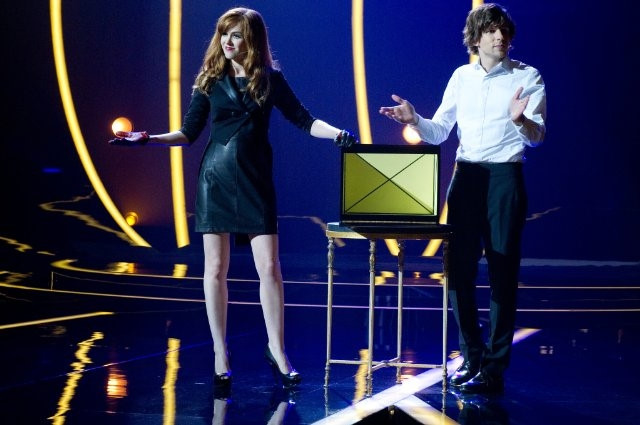
The magic shows in the movie are presented by four magicians who suddenly rise to the fame as a group in spite of their respective obscurity. Individually, they look average although they are good at what they respectively do. J. Daniel Atlas(Jesse Eisenberg) is a nerdy but confident magician whose main job is impressing girls with his simple but fun card tricks on the street, and Henley Reeves(Isla Fisher) is a plucky escape artist willing to do a dangerous escape show involved with a bunch of piranhas, and Merritt McKinney(Woody Harrelson) is a mentalist who is past his prime but still pretty good as shown in his introduction scene, and Jack Wilder(Dave Franco) is a wily street hustler who can effortlessly draw the attention of his target in one direction while fooling him in the other direction.
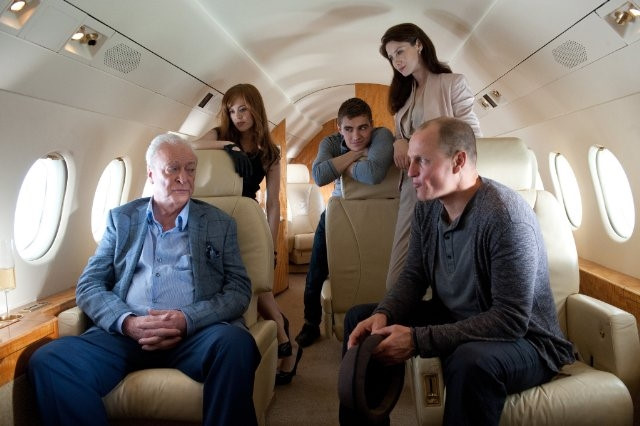 Sponsored by a wealthy business man Arthur Tressler(Michael Caine), they present themselves together as ‘Four Horsemen’, and they give their audiences a spectacular moment to remember during their big show in Las Vegas. One audience is randomly chosen, and then, surprise, he is miraculously transported from the stage to the safe vault of a major bank in Paris right in front of the stunned audiences. Not only he is transported back to the stage, but also the stacks of money in the vault are also transported to the stadium, and the audiences are excited to see the money thrown upon their heads.
Of course, the police and FBI quickly start to investigate this daring robbery case right after it is reported that the money is really stolen from the bank in Paris, and the agent Dylan Rhodes(Mark Ruffalo) and his colleagues soon find themselves facing a hard case to solve. Four Horsemen members keep their mouth shut about how they did that, and there is no evidence or clue about their crime except what was shown in the show, so Rhodes has no choice but to release Four Horsemen after interrogating them for a while.
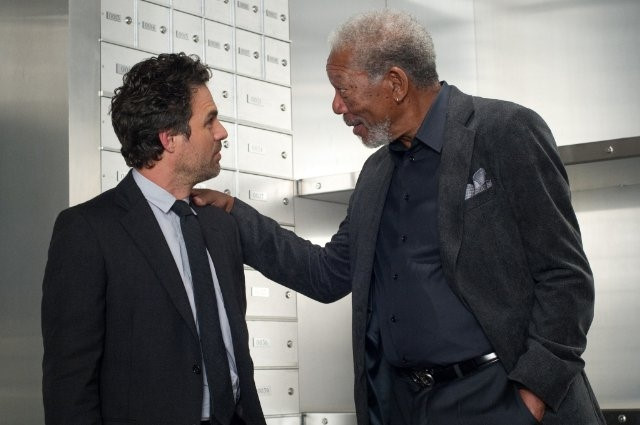
Becoming more popular with the increased attention from everywhere, Four Horsemen promptly move to their next big act in New Orleans, and Rhodes and Interpol agent Alma Dray(Mélanie Laurent) follow them to catch any chance of arrest. He also gets some help from Thaddeus Bradley(Morgan Freeman), an ex-magician whose current occupation is revealing other magician’s tricks in his own show. Bradley gladly shows how Four Horsemen could do their bank robbery to Rhodes and us, and Freeman, a great actor who is also a terrific narrator, makes his explanation scene engaging enough to listen to even though his character is as functional as any other characters in the story.
 And the movie keeps playing its hand as the hidden plan of Four Horsemen is executed step by step on their stage. While we see a good old-fashioned trick like a rabbit disappeared in the magic box, we also get an amusing moment of group hypnosis, and then there is an unbelievable moment when almost every audience at the show literally gets far more than what they paid to see the show as a certain big written number is being changed by a mere flashlight on the stage.
Can the magic scenes in the movie be possibly done in the real life? I do not know, because many of them are decorated with CGIs. We all know that everything is possible with CGI in the movie nowadays, so we are not surprised to see one of Horsemen members being floated in the air while trapped inside a soap bubble. Maybe it can be really done in the real life, but I was constantly conscious of the CGIs in the film despite some degrees of amusement toward the various magic tricks shown in the movie.
The director Louis Leterrier gives us a slick entertainment product here while maintaining the pace of the story well throughout the film, but the story and its characterization is too weak and mechanical to hold our interest to the end. Four horsemen and its secret supporter who gathered them at the initial stage(this is not a spoiler at all because this is shown right at the start) are always at least three or four steps ahead of Rhodes and other agents, and it rather feels monotonous while we watch Rhodes and his colleagues fooled by these magicians at every chance. Even though I could not see through everything in the magic shows, I could predict the twists and turns in the story in most cases, and, to be frank with you, you will not be very surprised by the finale if you have ever heard of the Law of Economy of Characters.
Considering two Oscar winners and three Oscar nominees in the cast, the actors assembled for the movie look impressive to say least, and the movie is not tedious to watch thanks to their engaging presence although most of these talented actors are wasted in their roles which are no more than the nuts and bolts functioning in the plot. The movie is not bad for your mild entertainment at least, but it is all trick but no substance, so my mind quickly departed from it for better things to watch as soon as the movie was over.
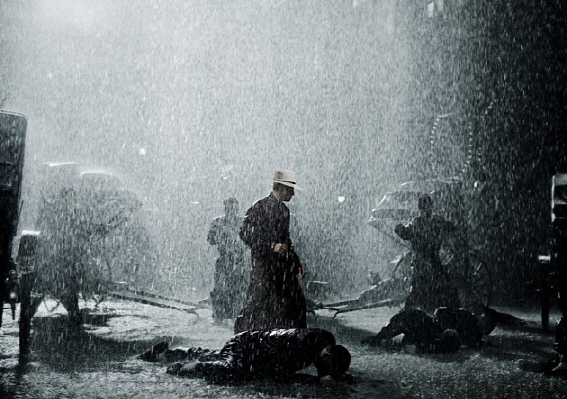 Faces, fists, palms, feet, arms, legs, hats, dresses, coats, shoes, closets, chairs, clocks, tables, stairs, doors, knives, water/blood droplets, puddles, smokes, snow, wind, lights, a monkey, a train, and a dog. These were the items I wrote down in my mind while watching Wong Kar-wai’s latest film “The Grandmaster”, and I must report to you that they surely look as beautiful and romantic as you can expect from Wong Kar-wai’s work. The movie also present several stylish martial arts action scenes unfolded with the sumptuous production design and the gorgeous period costumes, and it goes without saying that every frame is filled with artistic care and attention.
But… do these lovely things add up together to generate something deeper than the series of gorgeous scenes? I do not know, for I got frequently confused as many minor characters appear during its first half. There are many faces along with many kinetic bodies surrounded by lots of beautiful interior decorations, and I appreciated how they look and feel, but, please, do not ask me to tell you who is who, or explain to you how one character is connected with the other, or give you the background information you need to understand some vague aspects of the story.
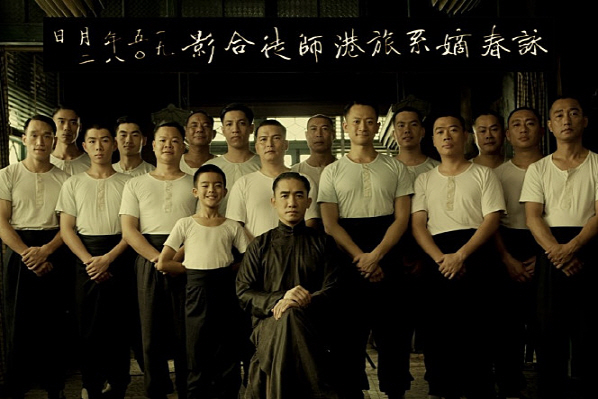
The movie revolves around Ip Man(Tony Leung Chiu Wai), the legendary Chinese martial arts grandmaster, and Gong Er(Zhang Ziyi), his rival martial arts master who comes to have some feelings toward him as they have interacted with each other personally and publicly for more than 10 years. The story starts with the impressive action sequence in which Ip Man fights with a bunch of guys with bare hands or various weapons at a dark, rainy night, and this is surely a gripping moment. Every physical move and every resulting effects is artfully and dramatically captured on the screen along with the rain drops keeping falling on their heads, and this dynamic moment is intercut with Ip Man telling his simple philosophy on his martial arts, called Wing Chun, to others in a quieter place, and the level of our expectation is increased as a result.
 This is an effective opening by itself, but when and where this scene exactly happens? After a long montage scene accompanied with your average Wong Kar-wai’s introspective monologue to give us Ip Man’s basic biographical information about his long years of practice and his family life, the movie goes straight to Foshan, China in 1936, and we can only vaguely assume that the opening fight sequence happens around the time when Gong Yutian(Wang Qingxiang), the aging leader of northern Chinese martial arts society, comes to Foshan and announces his retirement in front of his southern colleagues. He has already decided on his heir to lead his group, and it is apparent that Ip Man and others should decide on who can be the representative of their group matching against Gong or his apparent heir Ma San(Zhang Jin).
As everyone around him concedes that Ip Man should be their representative despite his reluctance, we get the series of confrontation scenes supervised by the action choreographer Yuen Woo-Ping(he is well-known for his participation in many notable films including “The Matrix”(1999) and “Crouching Tiger, Hidden Dragon”(2000)) within the characters’ gathering place filled with ornate furnitures and well-dressed/well-manicured people. These action scenes are terrific to say the least, but they always come with a certain distant feeling as the extras increasingly look like a bunch of waxworks pensively watching on the confrontations behind the walls and windows inside this place. Considering that the place functions as a bar where these stoic tough guys test each other’s skill as a part of their greeting instead of tapping on their fists, I began to wonder whether the collateral damage on the furnitures is included in their bills when they leave.
The story becomes a little more focused after Ip Man is eventually recognized by Gong Yutian through their rather metaphysical confrontation. Gong’s daughter Gong Er challenges against Ip Man to reclaim her family honor, and that is the beginning of their restrained relationship behind their public interactions. Tony Leung Chiu Wai is a master of hidden coiled feelings as wonderfully shown in Wong Kar-wai’s “In the Mood for Love”(2000) and Ang Lee’s “Lust, Caution”(2007), and Zhang Ziyi is his equal match as a sad woman who has to sacrifice lots of things not only because of the moral codes in their closed world but also because of what she fiercely believes in. Like many memorably restrained movie couples, they seldom touch each other and rarely talk about their inner feelings, but we can see how much they admire and attract each other even during a brief moment when their bodies closely flit over each other in the air.
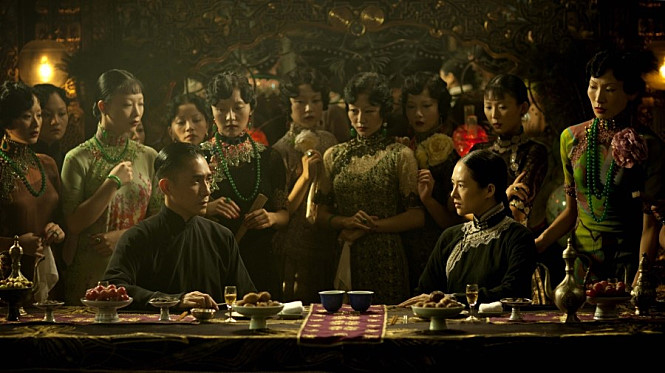 But then the movie becomes messy as the story becomes more fragmented and convoluted during the second half. It is right before the World War II, so many things happen before, during, and after the war, and the movie increasingly feels like a 2-hour version of some epic TV miniseries as the characters keeps coming in and then going out with no particular purpose. Especially in case of the character played by Chang Chen, his sideplot feels so redundant and unnecessary that I am willing to forgive Harvey Weinstein if he mainly focused on cutting Chang Chen’s scenes while preparing his shorter version for US theaters.
And the human dimension of the story is lost as it is swept to here and there in its big historical background. Although Tony Leung Chiu Wai is an engaging actor to watch, his Ip Man eventually comes to us a passive enigma who mostly stays back from what is going on around him except when he has to be on his professional mode. Zhang Ziyi is elegant and feisty, and her character is actually more compelling than Ip Man, but her story ultimately fizzles out in the end due to the scattershot plot. The movie never goes deep into Ip Man’s relationship with his devoted wife, and, to South Korean audiences’ disappointment, Korean actress Song Hye-kyo looks like as if she is more or less than one of small beautiful details of the production design.
I am not as enthusiastic about Wong Kar-wai’s films as some of you, but I watched some of his works and admired them as they grew in my mind. “Chungking Express”(1994) may be a one-time experience, but it certainly felt fresh to me when I incidentally came across it on TV at one night in 1996, though the characters sometimes looked like a bunch of narcissistic romantic idiots. Right after watching “The Grandmaster”, I finally watched “In the Mood for Love”, and I was immensely touched by its vividly intimate moments delicately observed from one fleeting bittersweet romance between two decent neighbours living in a small apartment building.
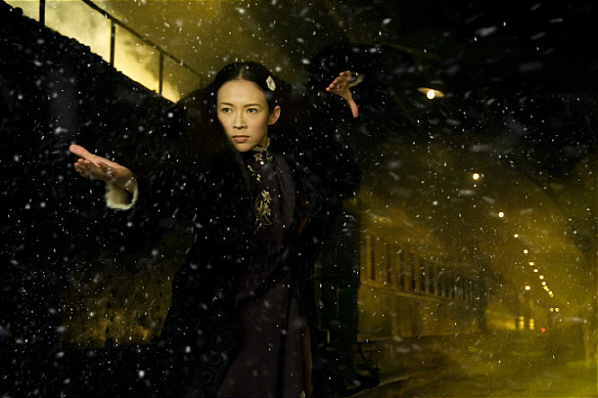 While watching that terrific romance film deserved to be mentioned with David Lean’s “Brief Encounter”(1945), I got a small idea about how “The Grandmaster” went wrong and becomes a misfire instead of a fresh perspective on its genre like “Crouching Tiger, Hidden Dragon”. The problem is, Wong Kar-wai’s intimate style does not fit with the story he tries to tell from the beginning. He successfully retains his distinctive style in this film as shown through his usual step-printing technique and the same clock from “In the Mood for Love”, and that works nicely for the small character moments as it did in his previous successful films, but his loose and leisurely storytelling unfortunately clashes with the big, crowded background of the story. The movie loses the control and the focus as a consequence, and we get confusion rather than delirium in many cases, and we only distantly look at the movie despite our admiration toward its technical aspects.
Anyway, we all can agree on that the movie is a beautiful film to look at, and I sort of understand why Martin Scorsese was willing to lend his name to the movie for its US distribution. Philippe Le Sourd’s cinematography is superb, and the production and costume design by William Chang, who also edited the film, shows painstaking efforts as we can expect from any well-made period drama films, and the score by Nathaniel Méchaly and Shigeru Umebayashi is excellent.
It is indeed pretty to admire, but “The Grandmaster” is still one of those ‘pretty hollow’ films which momentarily mesmerize you with their beauty and then drift away from you without leaving any deep impression. Around its long closing part, the movie attempts to evoke the elegiac sense of loss with Ennio Morricone’s classic score for “Once Upon a Time in America”(1984), and it partially works thanks to its two competent lead performances, but I could not help but think that it could have been more effective and emotional if it had more focused on the story and the characters. It was a sad and mournful moment, but, folks, what I saw inside it were the characters limited by a flawed storytelling, not the characters inhibited by themselves.
 Although we get little information about the current state of his career or his life, it is apparent that Joby Taylor, the sad and lonely hero of “For Ellen”, is a man stuck in the dead end. He looks blank, confused, and crestfallen all the time, and sometimes his mind seems to be wondering somewhere out of the room when he talks with others. He does not look so old, but he looks as if he barely exists just because of his living body, and, except his less-than-ideal career, he seems to have no purpose or aim in his life – until now.
Joby, well played by Paul Dano in one of his exceptional performances, is a heavy metal rocker who comes(or is drifted, shall we say) to a cold, snowy, and desolate winter town in the New York state for settling several matters on his imminent divorce. Not long after he manages to arrive in the town, he has a meeting with his ex-wife Claire(Margarita Levieva) and the lawyers on the both sides, and it does not go well for him because he somehow neglected several crucial details during the settlement process. The ownership of their house will be equally divided and that is fine with him, but, in case of their daughter Ellen, the sole custody will go to Claire and he does not like it at all.
Jody is perplexed by this situation, for he is determined to be closer to Ellen although he rarely saw her after her birth. He is frustrated to know that there is no possibility that Claire will change her mind, and he is further depressed to know that he will have to sign the divorce paper no matter how much he tries to see his daughter. We later see him alone in his shabby motel room, and he looks more desolate than before as a man feeling lost more than ever.
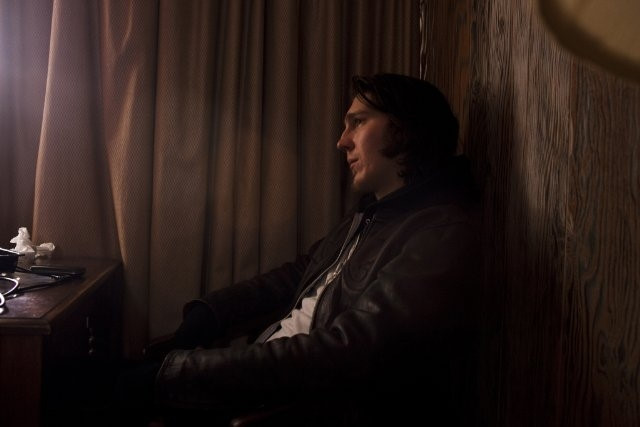 As we feel pity about his miserable state, we also see how pathetic he is through Dano’s quietly sad performance. It looks like he has been drifted around here and there for many rough years of his life, and he now sees something to hold on in his life through his daughter, but it is very clear to us that he cannot possibly be a good dad despite his sincerity. Looking detached and isolated with the appearance of your average rocker and many tattoos on his body, he always has the difficulty with communicating with others, and we can feel the emotional barrier between him and them even when he really struggles to be nice and sincere.
We observe this problem of his through the series of his awkward interactions with the other characters around him. His lawyer Fred Butler(Jon Heder) invites Joby to his home for dinner probably because he feels sorry for his client, but Joby’s mood is not lightened up much, and Fred’s mother does not help a lot as she keeps asking Joby about his life. Fred and Joby later get out of the house and then spend some time together at a local bar, but it only deepens Joby’s melancholy despite Fred’s genuine concern to his client.
Joby eventually gets a chance to meet his daughter through a rather mean tactic, but that only confirms how much he is unprepared and immature to be her father. Even though she is very young, Ellen(Shaylena Mandigo) sees their situation far more clearly than her dad, so he rather looks like a big baby compared to her as they spend their small precious private time together. She points out to her dad that his gift is the same doll she already has, so she virtually leads him around a local shopping mall for finding what she wants instead. She wants to go bowling, and he takes her to a local bowling alley because there is nothing else he can think of. They have a fairly good time together on the whole, but they eventually arrive at the moment where Ellen reminds his dad of the reality in a clear, unadorned way which feels both natural and precise for the story.
 The movie is directed by So Young Kim, a Korean American director who previously made a haunting film “Treeless Mountain”(2008) in South Korea as her second feature film. That movie was a sad but ultimately hopeful story about two young sisters waiting for their mother who left them to their relatives, and I liked a lot because of its several wonderful realistic moments resonating with my own childhood memories. Although I had far sunnier childhood with my little brother during the era depicted in the movie, I could identify with how the kids in the movie spent their free time in their neighborhood, and that was why I found that film so special.
While “For Ellen” can be regarded as the opposite of “Treeless Mountain” considering its plot, its story is presented through a similar naturalistic approach. Its handheld camera patiently observes the characters, and its somber atmosphere feels real and authentic with the cold weather surrounding the characters, and the director So Young Kim also draws a bunch of good realistic performances from her small cast. Paul Dano, who also participated in the production of the movie, never hesitates to look unlikable and incorrigible in front of the camera, and, under Kim’s competent direction, he and child actress Shaylena Mandigo hit every right note during their emotionally tentative scenes.
“For Ellen” is a depressing but heartfelt character study thanks to its direction and performances. The movie particularly reminds me of Paolo Sorrentino’s “This Must Be the Place”(2011), another sad film about a burned-out rocker. The hero of that film has also been stuck in his own dead end while hiding behind his persona as a rocker, but we gradually feel someone slowly being awakened through a sudden incident coming into his static life. In case of Joby, he desperately yearns in his inert mind for such a chance, and he wants to believe he finds it right in front of him, but the problems are 1) he is still not ready for it and 2) he may already be beyond repair because of the hopeless nothingness behind his miserable appearance. What a wretched guy he is.


The symptoms shown at the beginning of South Korean action thriller film “The Flu” are depressing rather than alarming. The symptoms are 1) flat characterization full of bland or annoying characters we do not give a damn about, and 2) heavy-handed thriller plot driven by lots of artificial contrivances, and 3) overbearing melodrama with no solid emotional base, and 4) persistent need to giving ‘touching’ or ‘funny’ moments to lighten up the desperate mood shrouding the characters. If you know well about these symptoms and you are not immune to its cause, I urge you to avoid it for not suffering it for 2 hours.
Its premise will probably remind you of similar films such as “Outbreak”(1995) and “Contagion”(2011). A lethal avian flu virus H5N1 strain is suddenly spread around one urban area, so we get familiar stuffs: the people getting quickly infected one by one, the hospitals full of dying patients, the hysterical and maddening situations inside and outside the quarantined area, and, of course, one desperate attempt to find a cure for saving the day along with lots of people including the main characters.
After showing how the virus happens to be flowed into South Korea during the opening scene(one of illegal immigrant workers sent to South Korea in one container turns out to be a carrier/patient zero), we are introduced to its two main characters through a Meet Cute moment. Kang Ji-goo(Jang Hyeok) is a lifesaver working in Boon-dang area of Seong-nam, one of the satellite cities surrounding Seoul, and he encounters a young doctor named Kim In-hae(Soo-ae) for the first time when he is assigned to save her from her car which is about to fall deep into the underground construction site. He succeeds in saving her in front of a serious danger, but all our lovely doctor cares about are her expensive skirt, which is torn during the process, and her research work in the car.
 Although she does not show much gratitude to him, our heroic lifesaver is attracted to her probably because that is what should happen after Meet Cute moment. At her request, he goes down to the crash site and gets her bag containing her work and her cellular phone, and that is how we get another cloying Meet Cute moment. He incidentally gets acquainted with In-hae’s cute little daughter Mir(Park Min-ha), and this sweet girl has no problem at all with getting close to a stranger she has never met before while behaving as cutely as possible as your average movie kid. She seems a bit gloomy when she says her dad left her and her mom several years ago, but don’t worry, folks, because she still looks pretty plucky to melt your soft heart.
Anyway, the story eventually goes into the emergency mode as that unfortunate illegal immigrant in question and other subsequent infected people unintentionally spread the virus all around Boon-dang. The patients get fever along with red spots on their body while coughing a lot during the initial stage, and then they begin to vomit blood before they die within a few days. As soon as Boon-dang is hurled into the pandemonium after the infection crosses the threshold level, it is quickly quarantined by the South Korean government to prevent the spread of the virus, and the national emergency is announced in public as the president and cabinet members and experts try to handle and control this disastrous situation in the underground briefing room.
The movie has a bunch of terrible moments which can happen in such a situation, and some of them are effective as the devices for infusing the plot with more tension and horror. We see lots of people helplessly stuck in the massive quarantine area as harshly regulated by heavily-armed soldiers, and the movie later throws in a horrible moment at the stadium to reveal how much devastating the virus epidemic is and to show how small the individuals in the movie are in front of this big catastrophe. As the situation gets worse and the time is running out, the people in the underground briefing room start to consider a very drastic measure, but the president is strongly against it because, well, there may be a better way to solve the situation.
 It could have been a good thriller based on these materials, but, compared to its big scenes, the characters and their drama in the movie are weak and bland to say the least. The relationship between Ji-goo and In-hae feels flat and unconvincing even before the disaster begins, and I began to wonder why they should be the main focus of the story. As a matter of fact, they do not do many things in the story as swept along with others till the climax, and they sometime look pretty unlikable and idiotic while doing what any sensible character will not do in their situation. I know well that Jang Hyeok and Soo-ae are good actors as shown in their previous films, but the lack of the chemistry between them is apparent and it further amplifies this serious weakness of the story.
These two lead actors try their best with their two-dimensional roles, and the same thing can be said about the other actors equally struggling with their one-dimensional roles. While it is disheartening to see the reliable actors like Yoo Hae-jin and Ma Dong-seok being wasted in their respective cardboard roles, it is also depressing to watch young actor Park Min-ha locked in the stereotype role only demanding her to look lost/dying or cry hard when she does not need to look cute and innocent. Her worst moment is involved with her incidental encounter with the patient zero, and, through this unpleasantly cloying moment, the movie almost makes that minor supporting character look like an escaped animal even though it later tries to show some care and respect to him.
Like “Deranged”(2012), another South Korean movie about a deadly epidemic and resulting social panic, “The Flu” reminded me of better movies in its genre while disappointing me a lot. It feels effective at times, but it suffers from its bad screenplay, and it ultimately loses its control amid its frantic moments. After watching “Contagion”, I was scared enough to think twice about washing my hands; after watching “The Flu”, I was annoyed enough to reminisce about how nice it was to have a rest with good movies when I had a cold.

 Some of the most engaging movies I have seen tell their stories through unlikable characters I can hardly identity with or care about, and these movies remind me that we do not always have to like or identify with the hero/heroine to care about what will happen next in the story. No matter how much dirty or unpleasant they are, good movies can present their characters to us as compelling human beings to watch and observe, and we sometimes come to wish that they will be all right in the end even if they remain to be irredeemable.
In case of “Arbitrage”, we have a New York financial business man pretty good at using everyone around him including his family and then justifying his every dirty deed in the name of survival and family, and he is as despicable as those Wall Street scoundrels responsible for the recent financial crisis. Desperately trying to cover his serious financial mistake, he is going to sell his big investment company which is virtually a rotten apple, and now he also tries to cover his another crime for protecting that deal and himself. He is not a good man we can care about, but how he tries to maintain his cool, steely façade while busily juggling his multiple crises behind his back is thrilling to watch, and, thanks to Richard Gere’s superb performance, we somehow come to care about his eventual fate even though we dislike him a lot.
Richard Gere plays Robert Miller, the current CEO of the Miller Capital Company. During the opening scene, he is introduced as a prominent figure of the New York financial business world(At one point, we see his picture on the cover of the Forbes Magazine), and everything seems to be going well for him, his company, and his family, but it is slowly revealed that Miller is actually in a very desperate situation. He needs to sell his company at high price to another investment bank for erasing his recent big investment mistake – and accordingly saving himself from being arrested for fraud.
 He is currently going through a private deal negotiation with that investment bank, but the deal is going nowhere due to his opponent’s continuing postponement with no apparent reason, and the time is running out for Miller hour by hour. He has managed to hide his loss from others, but there can a special audit on his company at any moment if the opponent requests, and, to make the matters worse, his daughter Brooke(Brit Marling), who works as the chief investor of his company, starts smelling something fishy inside the financial structure of his company, though this bright young woman has never imagined about how dirty and deceptive her dear father can be.
It looks like he really cares about his family during his birthday party at his home in Manhattan, but we soon sense his cold, estranged relationship with his wife Ellen(Susan Sarandon), and then we see him having an affair with a young art gallery owner Julie Côte(Laetitia Casta), who loves him but knows well that she will not be his second wife no matter how many times he says he loves her and needs her. Sure, he really needs her for having some private rest from his stressful circumstance, but, as she clearly sees, that is all.
And then, unfortunately, he comes across another trouble. While driving Juile’s car with her outside New York during one late night, he momentarily dozes off, and a fatal car accident happens as a result. He luckily survives without serious injury, but she is dead, and he knows this can ruin his ongoing negotiation due to the resulting scandal. Fortunately for him, there is no one around at the time of the accident, and there is not any incriminating evidence at the scene when the police arrives, and he manages to get back to his home without being noticed through a young kid named Jimmy Grant(Nate Parker), who was helped a lot by Miller in the past as the son of Miller’s former driver.
Miller seems to be safe for a while, but the situation becomes worse for many other reasons besides the persistence investigation by Detective Michael Bryer(Tim Bryer), and Richard Gere subtly depicts a pressured poker player hiding behind his confident mannerism while not making that aspect too transparent on the outside. Miller feels cornered at every minute, but he knows that maintaining his assured appearance is the best option for getting any chance of escape, so he continues to play his perilous game with that attitude without looking back.
 In a terrific scene where he has the private meeting with a certain important character, he looks very casual in front of his opponent, but only we can see how much desperate he actually is thanks to Gere’s quiet but riveting performance. With no card to play except his own ability and luck, Miller does what any good poker player will do in such a circumstance like that, and we are thoroughly entertained by how good he is as a dirty wily business man determined to get out his trouble by any means necessary.
Meanwhile, we are also disgusted by how much lousy Miller is as a human being, and the actors surrounding Gere do good jobs on that as interacting with him on the screen. As a conflicted daughter finding more about her dad than she ever wants to know, Brit Marling has a hurtful conversation scene with Gere when Miller becomes a little more honest to his daughter, and Susan Sarandon is a bitter woman who has chosen to be oblivious to what her husband does outside their cozy house but is finally angry about what he has done to his family. Tim Roth is a detective eager to do anything to send the 1% people like Miller to the trial or jail, and Nate Parker is effective as a decent young man whose sense of loyalty and integrity is one of the crucial suspense elements in the plot.
The director/writer Nicholas Jareski gives us an engaging thriller which also fabulously works as a compelling character drama, and Richard Gere gives one of his best performances here in this film. Miller is not a good man at all, but he is a smart man who may get away with what he did, and we come to care about what will happen to him in the end while observing his behaviors and tactics with some degrees of fascination and interest. He is indeed a crook who certainly deserves to be punished, but isn’t it always a pleasure to watch a smart guy doing his best for getting his job done?

 What is told in the documentary “West of Memphis” is still outrageous and infuriating to watch although I have already heard and known a lot about one evil crime which shocked the whole town, three suspects who were wrongfully accused and then mistreated by the legal system eager to close the case as soon as possible, and a very long, long way these suspects and their supporters had to take until they saw the light at the end of the tunnel.
In the evening of May 5th, 1993, the missing of three 8-year-old boys, Steve Branch, Michael Moore, and Christopher Byers, was reported to the local police in West Memphis, Arkansas by one of their parents. On the next day, their dead bodies were found in a ditch in their neighbourhood during the police search, and their parents and the other town people were shocked by this horrible crime. They were brutally murdered with the alarming traces of mutilations on their bodies, and the police wondered whether this case was involved with some sort of Satanic ritual.
And then they found their suspects, who were quickly arrested and interrogated. They were Damien Echols, Jason Baldwin, and Jesse Misskelly Jr., and they were teenager boys who had some bad reputation in the town as local juvenile delinquents. The cops extracted the confession from Misskelly, and all three suspects were soon tried and convicted of the murders which many people strongly believed they committed. Echols was sentenced to death, and Baldwin and Misskelly was sentenced to life sentence, and everyone in the town was relieved with the sense of closure.
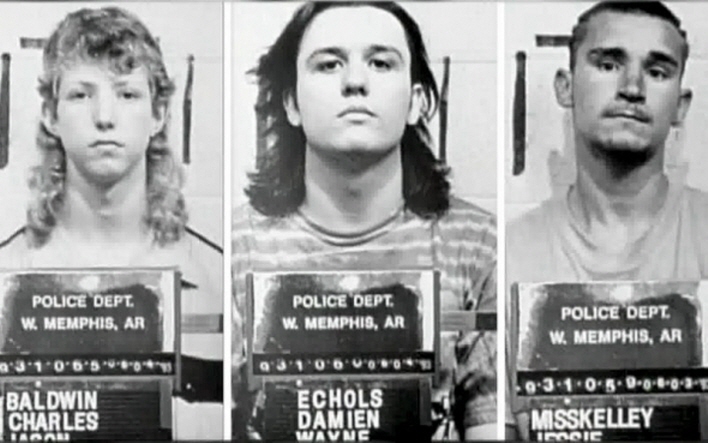 However, as the time went by, it became apparent that these boys were wrongfully accused of the murders they did not commit, and Joe Berlinger and Bruce Sinofsky’s documentaries “Paradise Lost: The Child Murders at Robin Hood Hill”(1996), “Paradise Lost 2: Revelations”(2000), and “Paradise Lost 3: Purgatory”(2011) showed how the legal authorities incompetently and unfairly handled the case and their suspects during the investigation and the trial. The crime scene was not preserved well although they managed to get several crucial evidences including a hair not belonging to the victims or the suspects, and the statements from Misskelly, which were virtually only direct evidence presented by the prosecution, were filled with inconsistency and errors. As a matter of fact, Misskelly was a dim-witted boy with borderline mental retardation(he was just a little smarter than Forrest Gump, by the way), and he was interrogated by the cops all day long before he gave them his ‘confession’.
The movie keeps mounting lots of things to show us how unfair the trial was. Even before the trial began, these boys were already labelled as the horrible devil-worshipping criminals by the media and the prosecution. Although Misskelly had a strong alibi(he was around 40 miles away from the crime scene during that evening) and Echols also had a credible alibi, the prosecution kept emphasizing the graphic details of the murder case in front of the jury, and they even brought in very unreliable witnesses who were later revealed to be forced or coerced to testify against the defendants. Furthermore, it was strongly suspected that some major evidence presented by the prosecution was not involved with the case at all.
Anyway, the jury accepted the prosecutor’s shaky argument in the end amidst the furor caused by this case, and they found all the defendants were guilty as charged. However, thanks to the critical success of “Paradise Lost”, many people came to pay attention to these wrongfully accused boys, nicknamed West Memphis Three around that time, and the boys came to have lots of prominent supporters including Eddie Vedder, Johnny Depp, Dixie Chicks, and Peter Jackson and Fran Walsh, who had given lots of help and support to West Memphis Three after learning about the case several years ago and then produced this documentary with the director Amy Berg.
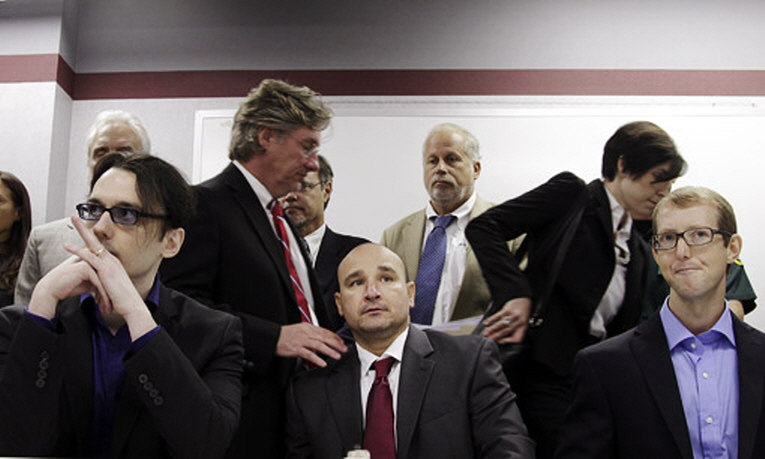 The documentary adds more details and information to the long, frustrating process which was previously depicted in “Paradise Lost 2” and “Paradise Lost 3”. The lawyers and investigators and experts hired by the supporters looked closely on the case, and more revealing things were found as a result. For example, several independent forensic experts concluded that the ‘mutilations’ on the bodies were caused by post-mortem animal predation rather than a knife which was presented as one of the major evidences at the court. That could change the whole perspective on the case, but West Memphis Three continued to be imprisoned even while it became very possible that they were innocent.
As the documentary makes a compelling crime story through juggling the interviews from many various people associated with the case and the following trial, it gives us a big, clear picture of the legal injustice inflicted on West Memphis Three while also presenting us several suspicious things about one very possible suspect. Did this suspect really commit the crime? The documentary does not answer that question while trying to be objective to its target, but we cannot help but be suspicious of this seemingly normal-looking suspect as we look at many questionable aspects.
“West of Memphis” is an absorbing documentary which works as a powerful summary of 18 years of the unfair ordeal and the long fight against it. Finally, as shown in its final scenes, West Memphis Three became free in 2011 through a special deal with the prosecution, but they are still technically guilty because of Alford Plea, a rather oxymoronic legal measure which allowed them to assert their innocence while accepting the plea bargain between their lawyers and the state prosecution. This can be regarded as a half-victory, but everyone supporting them was very glad to see that the justice they had demanded for many years was eventually done in the end.
This is a happy ending indeed, but one nagging question still remains at the end of the documentary: who killed these poor innocent children? – and what exactly happened during that dreadful evening of May 1993? Sadly, it is quite possible that the case will remain in mystery forever, and it is really creepy to imagine that one heinous child murderer is walking freely around somewhere at present without getting caught for what he did.
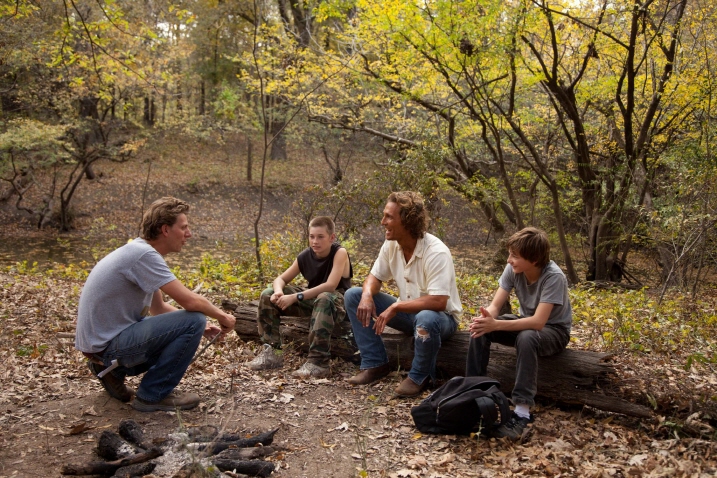
 The water is wide. That sentence was floated around my mind while I was watching the Mississippi river and the surrounding landscapes in Jeff Nichols’ latest film “Mud”. It looks plain and mundane at first, but the movie has a vivid sense of specific locations along with the natural beauty inside them, and we are naturally drawn to its rich coming-of-age drama wide enough to encompass many story elements flowed into it.
The story is mainly told through the eyes of two young boys at the beginning of their adolescent years. Ellis(Tye Sheridan) and Neckbone(Jacob Lofland) have their special place outside their river town in Arkansas, and it is a small unnamed island in the middle of the river. We see Ellis sneaking out of his boathouse home without being noticed by his parents early in the morning, and then he and Neckbone go to their island by their motorboat for having their own free time for a while.
In the island forest, they find a big abandoned boat stuck in the middle of a tree, which was probably swept to that spot due to a big flood. They decide to have that boat for themselves, but they realize there is someone in the island besides them, who must have been living in that boat for several days. They soon meet the guy in the question on the beach when they are about to get back to their town, and that is how Mud(Matthew McConaughey) and the boys encounter each other for the first time.
 Mud, a shabby young fugitive who needs some help from others for his personal plan, asks the boys to deliver him some food, and then he also asks them to do the other things beside that as the boys come to spend more time with him in the island. Although the boys instantly discern that there is something suspicious about Mud, he is one of those charming guys who can easily persuade others to do something for them, and he offers a tempting deal to the boys; if they help him repair the boat for his plan, he will give them his gun. Despite their initial suspicion on Mud, Ellis decides to help him, and Neckbone willingly follows his best friend’s decision.
As they help Mud without telling anyone, the boys come to know more about Mud and his plan. He is determined to reunite with his girl Juniper(Reese Witherspoon) and then get away with her, and, as a teenager boy who begins to sense the estranged relationship between his parents(Ray McKinnon and Sarah Paulson) and becomes more aware of the girls in his town, Ellis comes to believe Mud’s sincere feeling toward Juniper. Not so surprisingly, Mud becomes not only his friend but also his romantic idol with a little mythic quality(their first encounter scene is imbued with a bit of mysterious feeling – how can Mud suddenly appear behind them out of nowhere?), and that is not changed much even when Ellis comes to know later that Mud is a wanted man being chased after by the police and others for a crime he unwisely committed because of his love.
However, as it happened in many other memorable coming-of-age dramas, an innocent heart is bound to be broken in one way or the other in the end as one step toward adulthood, and Ellis’ story is no exception. Handling his story with quiet humor and understated sensitivity, the director/writer Jeff Nichols gives us the acute moments of adolescent heartbreak and disillusionment. Ellis falls in love with one of older high school girls and she seems to accept his rather rough courtship, but he later painfully realizes his misguided notion of their relationship. The relationship between his parents is far more deteriorated than he thought, and he may have to accept the resulting inevitable change sooner or later. In addition, as the situation becomes more serious and dangerous than before, the past between Mud and Juniper turns out to be not as romantic as Ellis wanted to believe.
 The movie rolls its main plot and other subplots together effortlessly without losing balance in its leisurely pace, and the result is a rich mixture of bittersweet coming-of-age tale, tarnished love story, and intimate character drama. It is further enhanced by its realistic atmosphere, and the cinematographer Adam Stone, who previously collaborated with Nichols in his first two films, gives us several wide and beautiful sights of the Mississippi river and the nearby plains while vividly capturing the local atmosphere of Arkansas. The river looked like a big lake to me at times, and I was especially impressed by a brief twilight shot on the beach which nearly approaches to the ambiance of black and white film.
Nichols also draws the excellent performances from his cast. As I said before several times in my previous reviews, Matthew McConaughey has been recently getting the good roles he is born to play after long years of being wasted in disposable films, and he gives a terrific performance again here in this film(As a matter of fact, Nichols already decided to cast McConaughey for the film when he wrote his screenplay). Mud turns out to be unreliable as suspected, but he is still a likable guy thanks to McConaughey’s electrifying performance, and the movie does not let Mud be turned into a simple case of fallen idol even when Ellis becomes angry and disillusioned after learning some important facts about Mud through Juniper and Mr. Blankenship(Sam Shepard), Ellis’ close neighbour who has known Mud since Mud was young and whose close relationship with Mud in the past might have been not that different from the growing relationship between Mud and Ellis at present.
 Two young actors Tye Sheridan and Jacob Lofland hold the center of the story with their unadorned performances, and they are supported well by the adult performers surrounding them. Ray McKinnon, Sarah Paulson, Sam Shepard, and Michael Shannon are absolutely convincing as the people who have been living in their town for years, and Reese Witherspoon, whose career has been rather lukewarm recently since her Oscar win, finally gets a chance to fully utilize her talent as a weary woman as messy and flawed as the man she loves; the wordless moment between her character and Mud is understated but effective none the less, and the same thing can be said about the last scene of the movie, which says a little on the surface but tells a lot to us through its mood and performances. The movie also gives some human aspects to its bad buys in the story, and, as a vengeful old man with the personal score to settle with Mud, Joe Don Baker subtly suggests in his brief scenes that he may be not as evil as Mud describes to the boys despite what he is going to do for punishing Mud.
Jeff Nichols made a stunning debut with “Shotgun Stories”(2007), a somber but tense family drama with a touch of classic tragedy, and then he gave us “Take Shelter”(2011), an equally intense story about a man getting disturbed by his ominous dreams. Both films drew our attention to their universal human stories through the distinctive and specific backgrounds, and “Mud” is no exception. With the rural mood evocative of Mark Twain’s “The Adventures of Tom Sawyer” and “The Adventures of Huckleberry Finn”, it leads us to a familiar but touching coming-of-age drama about friendship, love, loyalty, redemption, and maturation, and we can clearly sense the changes inside its characters in the end. It hurts to grow up, but it is always better to grow up as our life flows with us.