10 movies of 2013 – and more: Part 2

And here are the other 5 movies in my list – with other films good enough to be mentioned.

Continue reading →

Posted in Movies | Leave a comment

10 movies of 2013 – and more: Part 1

Here are the first 5 movies in my list.

Continue reading →

Posted in Movies | Leave a comment

10 movies of 2013 – and more: Introduction

autumn

Continue reading →

Posted in Movies | 1 Comment

The Past (2013) ☆☆☆1/2(3.5/4) : They’re not through with the past yet

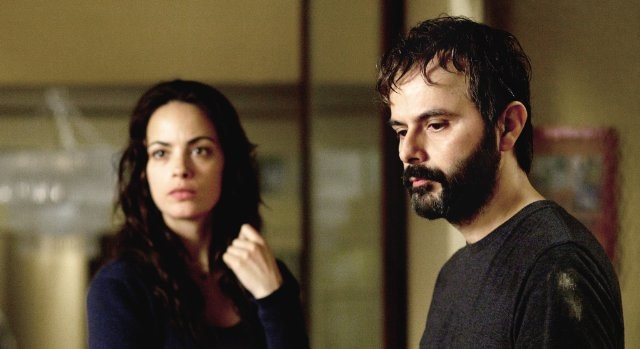
thepast01 Sharply observing the troubles and dilemmas between its reserved characters we do not know entirely even in the end, Asghar Farhadi’s new film “The Past”, a quiet but compelling domestic melodrama, shows us how the present and future can be held back or influenced by the past. As its intriguing story revolving around a certain incident shrouded in a murky surrounding circumstance, the characters in the movie try to solve their problems associated that incident, but the truth becomes more elusive as more things are revealed to change the perspective on the incident, and they get more frustrated and confused with more questions and more uncertainties.

 Like Farhadi’s previous film “A Separation”(2011) initially looked like a mundane case of separation between a husband and a wife, “The Past” opens the story with a simple case of divorce between an ex-husband and an ex-wife. Marie(Bérénice Bejo) and Ahmed(Ali Mosaffar) is arriving at the final stage of their divorce, and the opening scene at the airport shows us that there is no hard feeling between them as an ex-couple accepting their end of relationship. Every matter in their case has been settled in their mutual agreement, and all they have to do now is going to the court to be in front of their judge on the next day.

 Right after arriving at the airport, Ahmed, who seems to return to France after several years in Iran, is picked up by Marie, and we get more information about them as listening to their conversation in Marie’s car. Because Ahmed has no place to stay at present due to Ahmed or Marie’s mistake(the movie is never clear about that), he comes to stay at her house for a while, and he meets his two stepdaughters(it is implied that he was Marie’s No.3 husband) and Fouad(Elyes Aguis), a young son of Marie’s current boyfriend Samir(Tahar Rahim).

thepast05 Marie and Samir plan to marry after her divorce, but nothing is certain for them. We learn that Samir has a wife who has been in coma at the hospital, and, through the series of the conversations, we pick up the puzzle pieces one by one as getting an incomplete but fairly recognizable picture of what happened in their past. Probably because she had been suffering from depression, Samir’s wife suddenly attempted suicide on one day, and, considering that there has been no positive sign in her vegetative state, it may be better for her and her husband to turn off the life-supporting machine, but Samir is rather reluctant about that, though he likes to live with Marie as a husband and a wife.

 Marie’s younger daughter Léa(Jeanne Jestin) does not mind about her mother’s another marriage while playing and getting along well with Fouad, but Marie’s elder teenage daughter Lucie(Pauline Burlet) does not seem to approve of her mother’s decision even though she does not hate Samir. Though Samir is a little too stern to his son and Léa at one point, he is mostly a good guy on the whole, and the movie has a moment of silent humor when he and Ahmed are left alone at the kitchen table while not knowing what to say to each other as an ex-husband and a future husband under the same roof.

 After solidly establishing the characters and their circumstance on the ground, the terrific screenplay by the director Asghar Farhadi and Massoumeh Lahidji masterfully tantalizes our interest as it carefully rolling the plot while continuing to serve us with more information about them and that ambiguous situation surrounding the suicide of Samir’s wife. Reluctantly getting himself involved with his former family’s matter as a sort of neutral mediator, Ahmed tries to know and understand why Lucie has disapproved so much of her mother’s relationship with Samir, but, as he talks with her and others more, it is gradually turned out that the suicide incident in question was not as simple and clear as it looked at first, and things get more complicated step by step with more revelations to come.

thepast04 Even while recognizing the maddening elusiveness at the center of its story, the movie deftly pulls the strings of our attention to the characters and their increasingly frustrating circumstance. Most of them do not tell everything about themselves and their lives, and it still looks like there are much more things to be talked even when the end credits roll, but Farhadi dexterously moves the story around them and their ambiguous aspects, and we come to identify with their confusion and frustration, which are always looming below the calm but unstable mood surrounding many of their conversation scenes.

 The movie naturally depends on the performances of its cast, and, as he did from the cast of his Oscar-winning film “A Separation”, Farhadi brought out a fine, well-rounded ensemble performance from his actors. While Bérénice Bejo, who replaced Marion Cotillard due to scheduling conflict, received the Best Actress Award at the Cannes Film Festival in this year, Ali Mosaffa, Tahar Rahim, and Pauline Burlet are as good as Bejo with their equally nuanced performances, and they make every step of the changing dynamic between them convincing and revealing. Two child actors Elyes Aguis and Jeanne Jestin are also wonderful as the parts of the ensemble; while they look natural as the kids at their age, they hold their own small places as the supporting characters of the story, and Farhadi did an excellent job of mixing their performances with adult performances especially during one scene where they are admonished for their small naughty deed.

 Like his fellow Iranian filmmaker Abbas Kiarostami did with his recent works “Certified Copy”(2010) and “Like Someone in Love”(2012), Asghar Farhadi attempted to make a film in different language outside his country, and the result is one of the most engaging dramas of this year while confirming that his talented storytelling skill can be transcribed well to the other language. While the background details were specific in “A Separation”, the human matters unfolded on the screen were quite universal to us in that great film, and the same thing can be said “The Past”, too. As one character says in the movie, it is better to let the past put behind you when you want a possible new start, but, sometimes, it is pretty difficult to be through with the past even when it is already through with us.

small_thepast02

Posted in Movies | Tagged , , | Leave a comment

Laurence Anyways (2012) ☆☆☆(3/4) : As he goes through a change

laureanceanyways01 A funny thing about “Laurence Anyways” is that it takes quite a long trip to arrive at a simple answer to the problems and following struggles in its story. I guess that is what would happen when 1) your dear husband announces that he has been a woman in man’s body 2) you are still in love him even when his appearance is going through a big change. While watching the movie at last night, I wrote a note in my mind: “I am sure they will be very comfortable at the Jerry Springer show.”

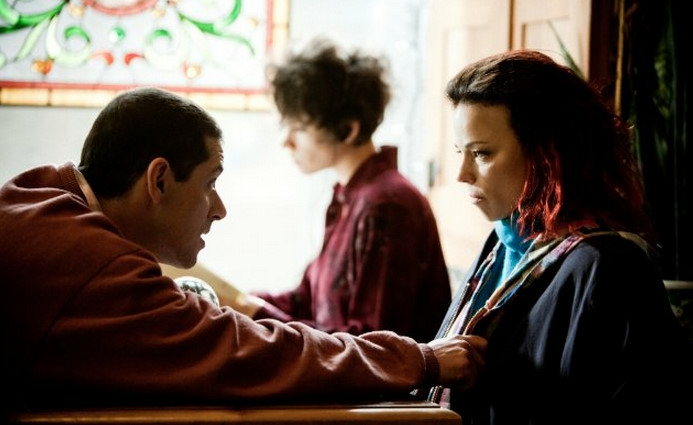
 The movie tells this odd life story as reminisced by Laurence Alia(Melvil Poupaud) his(or her, shall we say) interview 10 years later. Around the time he began to face the feminine side inside him, he worked as a literature school teacher well-liked by his colleagues and students, and he had lived a cozy married life with his wife Fred(Suzanne Clément), who worked as a commercial director.

 It was a joyful life for both of them, but, on his 35th birthday, Laurence experienced some revelation, and then he honestly and directly confesses to his wife; he really needs to be a woman, and he cannot possibly live as a man as before. Fred is naturally shocked by this sudden news(and the fact her husband tried some of her clothes when she was not around), but, as a woman who has loved and lived with him for a long time, she decides to stand by her husband.

 Although whether he would go to the point of sex change operation is never discussed in the movie, an interesting question arises as we watch Laurence going through his metamorphosis with Fred’s patient help. He loves her, and she also loves him, but can she still love him even when he does not look much like a man she has known? And should their internal relationship be redefined by this external change of his?

small_laureanceanyways03 His change also perplexes others besides Fred. He makes the announcement of his sex change in advance to the others at his school before starting his first day as a woman, but it certainly draws attention and awkwardness as soon as he appears in front of others. The students look at him with puzzled curiosity as we would, and the same thing can be said about the faculty members except his close colleague, who is unsurprisingly turned out to be a gay later in the story. In case of Laurence’ mother Julienne(Nathalie Baye), she is not so pleased about the news brought by her son, but she sensibly respects Laurence’s wish, though she chooses not to tell about her son’s decision to her ailing(and demanding) husband.

 Because it is around 1990, we get the expected sights of prejudice and intolerance, and Laurence and Fred come to realize that the change is not as easy as they thought at first. Due to the protests from the students’ parents, the school board decides to fire Laurence based on his ‘mental disease’, and Laurence also experiences a nasty brutal incident at the bar due to his appearance. Fred also goes through a hard time of her own, and Suzanne Clément, who received the Best Actress Award in the Un Certain Regard category for this film at the Cannes Film Festival in last year, has an emotionally explosive scene when one unintentionally insensitive comment from a bystander finally ignites her anger accumulated by the frustration with her husband and the mounting challenges in her daily life.

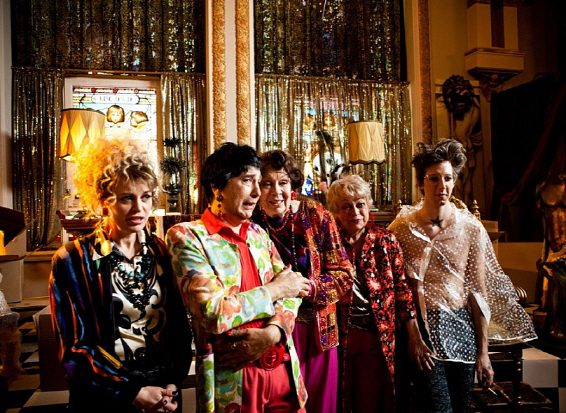
 The movie continues the story while Laurence and Fred are eventually separated, and the director Xavier Dolan, who quickly drew attentions in a short time with his first three works including this film, lets the story go wildy around contrasting styles. While its main approach to story and characters is plain and realistic, the movie sometimes flaunts its flamboyant styles on its plain canvass, and it even approaches to a campy mood when Laurence encounters a fellow transvestite who introduces him to a band of aging ladies and one old drag queen. They seem to spend most of their time at their gorgeous private place, and, while filled with many nice antiques, this place also has a nice surprise behind the curtain.

small_laureanceanyways04 Meanwhile, in spite of their painful failure, Laurence and Fred realize that there are still feelings between them. Laurence has published his poet book, and now he lives with a new girlfriend while writing his novel, but he cannot still forget Fred, and he even lives near her new place while hiding that fact from her. The movie is not very clear about what Charlotte(Magalie Lépine-Blondeau), Laurence’s current girlfriend, thinks about his decision. She seems to be conscious of Fred’s presence as shown during one brief scene, but she ends up to be more or less than an accessory plot tool, and the movie does not seem to be interested in her relationship with Laurence.

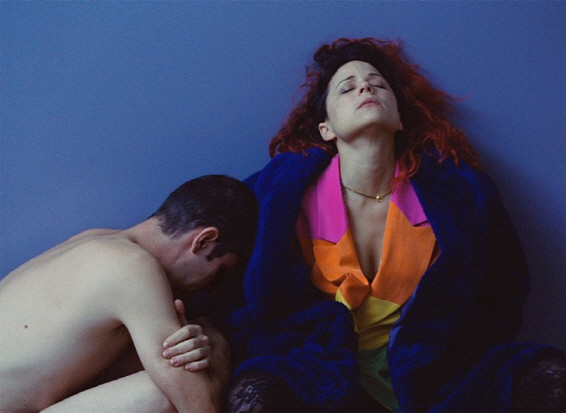
 As Fred experiences again her old emotions associated with Laurence, Dolan, who took the multiple jobs of screenplay writer, editor, and costume designer for himself(and he also appeared briefly in the film), throws a number of beautiful scenes to the audiences. There is a fantastic scene when these two old lovers are joyously walking down the street alone as a bunch of colorful clothes are falling from the blue sky, and Laurence’s mother has her own dramatic moment along with the stylish excess fueled by the Beethoven symphony No. 5.

 I enjoyed its different tones and appreciated how they make an interesting contrast between them, and “Laurence Anyways” lightly passes by us during its long running time(168-minute). While Fred ultimately becomes the main character we come to care more about, Melvil Poupaud gives a credible transvestite performance, and Poupaud and Clément keep the ball rolling under Dolan’s confident direction. I personally think the ending is too much of an easy exit, and the movie does not go deep into its main question as losing the focus on it, but, what the hell, it’s a charming film anyways.

small_laureanceanyways06

Posted in Movies | Tagged , | Leave a comment

The Suspect (2013) ☆☆1/2(2.5/4) : A taxi driver from the North

small_thesuspect02 “The Suspect” is a well-made action film which will remind you of many, many thriller films about a lone guy on the run. Its busy style represented by quick cuts and shaky handheld camera movement is certainly influenced by none other than the Bourne Trilogy, and its cat-and-mouse game between its two characters is definitely borrowed from “The Fugitive”(1993) and any other thriller films about a crime, a wrongly accused suspect, a doggedly persistent investigator, and, of course, exciting chase actions.

 That is not essentially a bad thing because all these things mentioned above have been becoming genre conventions, but the movie also reminds me of several recent South Korean films about the action heroes coming from the North. In this year, South Korean audiences saw “The Berlin File”, “Secretly Greatly”, and “Commitment” released at South Korean theaters, and now “The Suspect” gives us another story about North Korean agent stuck between North and South, and it is somewhere in the middle of these films in case of quality and quantity.

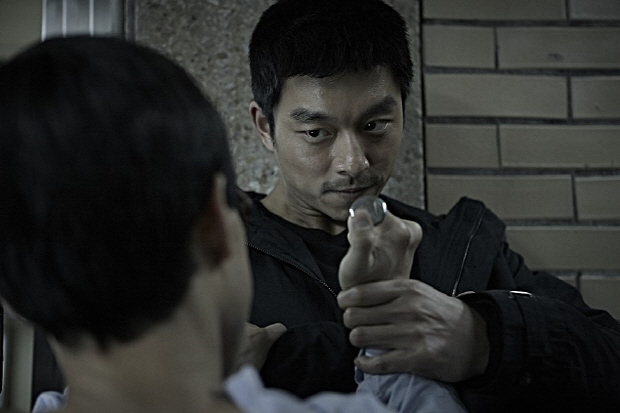
 On the surface, Ji Dong-cheol(Gong Yoo) looks like a plain North Korean defector currently working as a taxi driver in Seoul, but he has the past he is not so willing to talk about. He has some reason for coming into South Korea, and we see a map of Seoul on the wall in his shabby room filled with lines and marks all over it. He seems to be searching for someone in Seoul, but looking for someone in Seoul only with his name is pretty much like searching for a needle in the haystack – especially if the person in question does not want to meet him.
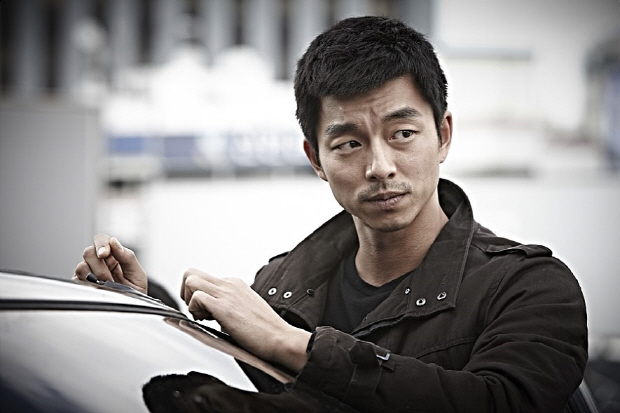
small_thesuspect01 He has been helped by the chairman of some big corporation, who, as a man who has been separated from his son in North Korea, has done lots of things to make the relationships between North and South Korea less hostile despite the criticisms toward him and his company for helping North Korea too much. Not long after their meeting, the chairman is assassinated and Dong-cheol kills an assassin on the spot, but he soon finds himself becoming the prime suspect of this case, and the police and National Intelligence Agency are instantly chasing after him.

 Other main characters besides him are introduced to the plot subsequently, and we get acquainted with each own motive while Dong-cheol is on the run. As the primary chaser, we have Colonel Min Se-hoon(Park Hee-soon), your average tough military guy who encountered Dong-cheol during one disastrous incident in Hong Kong which resulted in his recent career downturn. As the main bad guy, we have Kim Seok-ho(Cho Seong-ha), an arrogant and slimy high-ranking agency official who orchestrated the assassination for some purpose and is going to eliminate Dong-cheol and cover his crime by any means necessary. And, finally, as a typical female character who somehow gets involved in the situation, we have Choi Kyeong-hee(Yoo Da-in), a plucky young reporter who, like others, turns out to be associated with Dong-Cheol a lot more than she seemed to be.

 The movie runs quick and fast with its hero, and it has several good, exciting action scenes set to impress or disorient you with its pace and intensity, though they look awfully familiar. As the camera busily looks here and there and the soundtrack is propelled by the ostinato reminiscent of John Powell’s scores for the Bourne Trilogy, Dong-Cheol tries to get away from the guys chasing after him, and Colonel Min and others at the headquarter watch over the situation through, yes, those big, fancy widescreens in the control room.
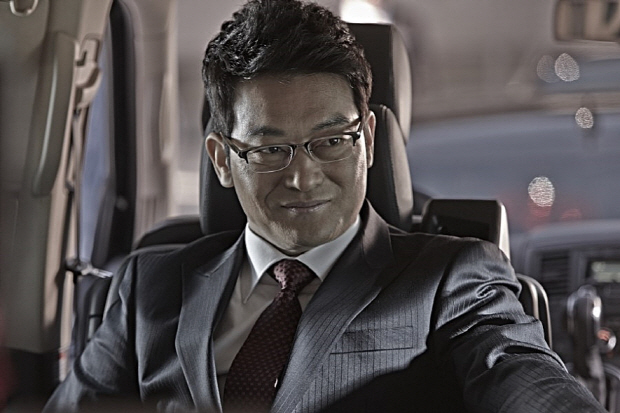
small_thesuspect04 And we see our gritty hero sometimes suffering from his traumatic past when he is not chased. With another approach straightly borrowed from the Bourne Trilogy, the movie scans through his painful memories associated with his wife and young daughter when he is sleeping, and we also get his background information through others, who conveniently have some time to talk and explain to us about 1) what’s going on and 2) why Dong-cheol runs around Seoul instead of disappearing from their sight. Not so surprisingly, Dong-cheol was one of the elite officers of some infamous North Korean special military unit, and there is an almost unbelievable scene when he manages to rescue himself when he has just been hanged by his neck after so many tortures including a horrible cross between water and electronic torture.

 With such a resiliently combative character like him, you will not be surprised to see how he just keeps going on and on despite a number of intensive physical fights and car chases. The technical quality of the movie is impressive, and Gong Yoo shows lots of commitment to his physical performance besides his well-trained body. I like how smartly the movie uses those small, narrow alleys in Seoul for one of its brutal car chase scenes, and I was also amused by how Dong-cheol finds a way through the police barricade ready for him while simultaneously taking care of a chasing police patrol car at the same time.
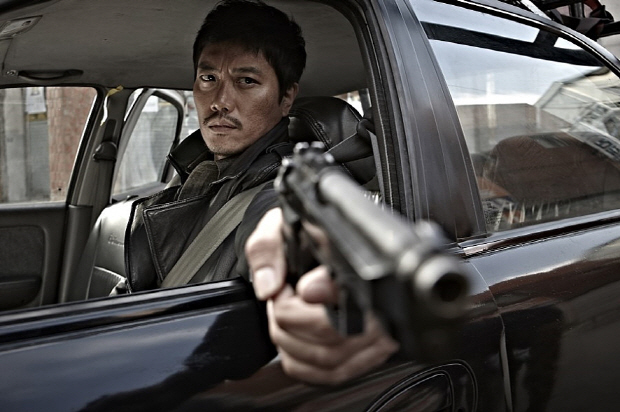
small_thesuspect03 But I kept being distracted and disoriented by its shaky camera movement and busy editing, and I got a distant feeling toward to its exciting moments. As shown in the Bourne trilogy and other action films, we usually need a certain amount of emotional gravity for caring about the actions on the screen regardless of whether they feel shaky or not, but Dong-cheol feels rather bland in Gong Yoo’s stoic functional performance; he just pushes on while revealing little about what he feels or thoughts even during a short respite in the middle of his plight, and the movie does not delve deep enough into a tragic irony in his clashes with the former North Korean agents who must kill him for their survival in South Korea. The movie also feels too long and too exhausted especially around the climax, and its sentimental epilogue does not look particularly necessary in my opinion.

 Besides Gong Yoo, Park Hee-soon and Cho Seong-ha are dependable in their performances, and Yoo Da-in somehow makes us overlook the implausibility of her character’s situations. Even after going through so many violent things thanks to her scoop, this reporter does not look that affected much while doing her duty as a reporter all right. Seriously, someone really should send her to Syria or South Sudan as a foreign correspondent right now.

 The director Won Sin-yeon and his crew made their film as ferocious and exciting as any average Hollywood action blockbuster film, and their efforts deserve to be admired considering their equal technical achievement with lower production budget. But, still, they could have added a little more style and substance for playing music rather than notes.

small_thesuspect05

Posted in Movies | Tagged , , , | Leave a comment

Blue is the Warmest Color (2013) ☆☆☆1/2(3.5/4) : This Girl’s Life

small_theblueiswarmest02 Although it has been mainly known for its very frank depiction of sex scenes since its premiere at the Cannes Film festival in this May, “Blue is the Warmest Color” is a lot more than that. This is a close, intimate observation of one romantic relationship, and its long running time is packed with many small and big details glimpsed during the initiation, elongation, and termination steps of this relationship. This is surely a big, vivid chunk of life, and we cannot help but be involved in a long but emotional journey unfolded on the screen as feeling the passage of the time around them.

The story is mainly viewed through Adèle(Adèle Exarchopoulos), a young teenager girl who has just awakened to her sexuality. She tries a date with some hunky male student at first, but she slowly discovers her lesbian side especially after encountering Emma(Léa Seydoux), an artist girl she came across once and then encounters again later at a lesbian bar. It was apparently love at first sight from the beginning, so they are quickly drawn to each other, and then they meet each other again and again.

The first half of the story focuses how Adèle’s life is changed by her relationship with Emma, and Adèle experiences almost everything which can happen to a girl who has a homosexual relationship for the first time. While most of her friends including her gay friend see no problem with her being a lesbian, one of her friends shows outright disgust for a petty reason. While Emma’s sexuality is no secret to her sophisticated parents who kindly welcome Adèle at their dinner, Adèle hides her relationship with Emma from her parents. When Emma comes to her house, she introduces Emma to her parents as a very close friend helping her philosophy study, and Emma does not seem to mind about that deception at all.

small_theblueiswarmest03 They are happy to be with each other, and every moment with Emma is precious to Adèle, who is certainly exalted by the first serious romantic relationship in her life. Because the movie closely captures their private moments through handheld camera, its wide screen is usually filled by the frequent close-up shots of its two lead actresses, and they ably respond to their challenging condition with a engaging duo performance fully packed with their plain but strong presence to hold our attention for around 3 hours. Whatever they do, they are constantly interesting to watch, and we accordingly follows their life drama to be progressed.

The movie received the Palme d’Or award at the Cannes Festival, and, for the first time, the award was given to not only the director/co-adapter Abdellatif Kechiche but also its two lead actresses, who indubitably deserved such an exceptional decision for carrying the movie with their performances under Kechiche’s dry, austere direction. While Léa Seydoux, who previously impressed us with “Sister”(2012) and “Farewell, My Queen”(2012), is flawlessly immersed into her role, it must be said that Adèle Exarchopoulos gives a fantastic breakthrough performance here as the emotional center of the film. Like Seydoux, Exarchopoulos always draws our attention even when she is doing mundane things on the screen, and her performance feels so uncannily naked at times that it is simply hard to regard it as a mere acting even when she just looks sleeping in front of the camera.

Speaking of being naked, the movie has gained lots of publicity thanks to the explicit nudity in its several sex scenes, and all I can say about those scenes is that they feel as serious and naked as the copulation scenes in “Lust, Caution”(2007). The sex scenes are handled with the serious attitude to the emotional ecstasy of characters fully enjoying mutual carnal pleasure, and Exarchopoulos and Seydoux go all the way with their body parts for showing various sex acts in front the camera while barely avoiding the area of pornography.

small_theblueiswarmest04

It goes without saying that these scenes inherently have an uncomfortable voyeuristic aspect, but the movie has a voyeuristic intention as closely observing Adèle’s life from the start. As reflected in its original French, “La vie d’Adèle”(The Life of Adèle), the movie is intended to be an intimate window to her life, and Abdellatif Kechiche, who wrote the adapted screenplay with Ghalia Lacroix based on Juli Maroh’s comic book “Le Bleu est une couleur chaude”, has his handheld camera closely but coolly following or watching his two characters throughout the film, and he also pays lots of attention to the other things in Adèle’s life besides her relationship with Emma especially during the second half of the story.

The second half of the story takes a less bright turn like many consummated love stories in their aftermath, and the movie keeps its unflinching attitude as the problems begin to arise between Adèle and Emma after they start to live together as a couple in Emma’s house. While working as a school teacher, Adèle feels increasingly abandoned as Emma mostly occupies herself with her paintings to be drawn and exhibited(well, who said the life with an artist is easy?), and her loneliness is ironically(and painfully) shown to us when she is busy with serving Emma’s dinner party guests.

What eventually happens between them and the following aftermath are also handled with the same steady pace in its inevitable course, and Exarchopoulos and Seydoux go through several difficult scenes well while never striking a false note in their performances. Its ending feels anti-climatic compared to what we saw for more than 2 hours and 50 minutes, but the movie is a rare emotional experience to be seen and absorbed, and, as I was watching the ending, one of few French expressions I know came to my mind: C’est la vie.

small_theblueiswarmest05

Posted in Movies | Tagged , | 1 Comment

Don Jon (2013) ☆☆1/2(2.5/4) : He has a problem… with Internet porn

small_donjon03 “Don Jon” wants to talk about an interesting subject, but it only keeps scratching its surface. As a more humorous cousin of Steven McQueen’s “Shame”(2011), the movie tries to look cheerfully at a certain form of sex addiction and its unpleasant aspects as making some good points on the excessive self-indulgence associated with it, but it is hampered by its thin plot and broad characterization, and its third act is particularly unsatisfying due to its half-baked resolution.

Joseph Gordon-Levitt, who also wrote and directed the movie, plays Jon Martello, a young, handsome guy who usually hangs around local nightclubs while working in the service industry. It is said he works as a bartender, but I do not remember any single scene depicting him at work, so I naturally wondered at time about how he manages to earn enough for his fancy lifestyle as depicted in the movie.

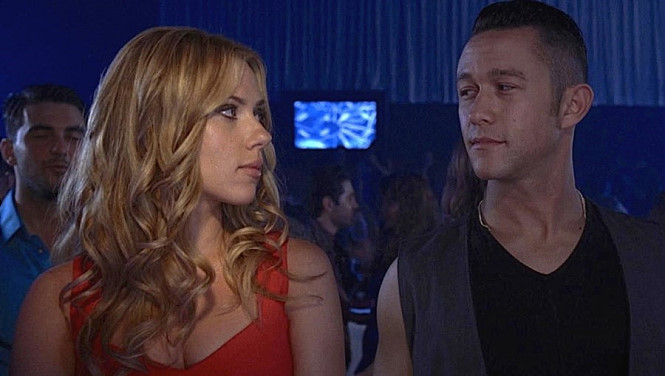
Thanks to his diligent gym exercise, Jon has good physique along with his nice-looking face, so he can quickly approach to any girls in his sight while his friends, Bobby(Rob Brown) and Danny(Jeremy Luke), enviously look at how easily their friend works on girls. One of their night routines is looking around the girls near them in the nightclub, and, as your average horny guys objectifying female body, they score girls based on their faces and bodies in the scale of 1 to 10 before Jon goes for a girl he sets his eyes on.

As nicknamed ‘Don Jon’, he always succeeds in his pursuit for pleasure, but he is not exactly satisfied with that. Girls scoring 8 or 9 do not say no to him as he smoothly works on them, and they enjoy sex with him later on his bed, but Jon is rather dispassionate about them although he keeps going for the sex with these sexy girls at every night. He may get orgasm as wished, but the outcome is not as satisfying as he wants, so he prefers a more convenient and satisfying activity in his daily life: watching Internet porn. All he has to deal with is his own genitalia, so he has no problem with spending all night for finding any good porn to satisfy his biological needs, and his waste basket always contains at least one or two tissues consumed by this routine(his current record: 10 tissues on one day).

small_donjon04

As showing him mired in this addiction, the movie draws small laughs from the cyclic nature of Jon’s lifestyle as he goes between his friends, his family, and other things in his life. For instance, when he routinely visits his family who seems to be living in some alternative sitcom world, he goes to the church with them where he confesses to a priest about his load of sins to be absolved. After that, he soon goes through his another sinful quest as usual, and then, of course, he comes to the church again for another confession.

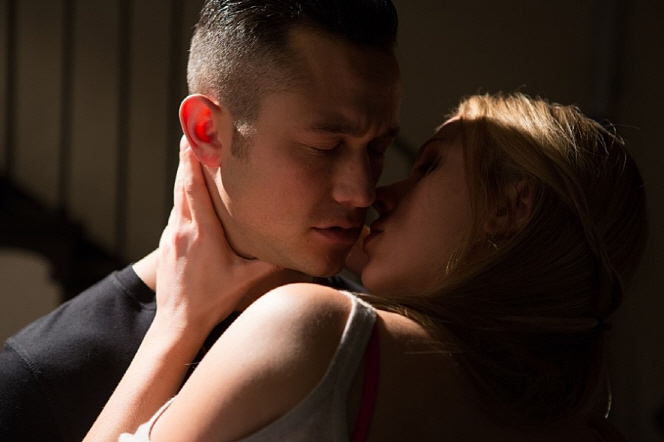
But now he sees that he cannot keep going on like that when he starts a relationship with Barbara(Scarlett Johansson), who instantly scored 10 when he saw her. As their relationship becomes a little more serious than before, his addiction to Internet porn becomes a major problem. Their sex life is fairly good, but, not so surprisingly, Jon eventually comes to want more, and he finds himself drawn to Internet porn again.

The movie effectively shows the state of Jon’s addicted mind through the quick cuts of hardcore porn clips as he blankly and intensively looks at his laptop monitor(they are not shown explicitly enough to get the movie rated NC-17, by the way), and Joseph Gordon-Levitt, who has established himself as one of the talented young actors working in Hollywood through a string of well-reviewed films, willingly shows the unsavory sides of his character although he is a bit awkward in his accented narration. Like the hero of “Shame”, who locks himself in objectified sexual pleasure to distance himself from others, Jon essentially blocks himself from real human relationships as throwing himself into the unrealistic sexual fantasies provided by Internet porn, and the main irony in the story is that Barbara is no better than him because she is also isolated in her own fantasy through many unrealistic romance films she keeps watching(but you might say her addiction is relatively a little healthier than his).

donjon01 It is disappointing that the movie handles this interesting contrast in its story in a lackluster fashion. Scarlett Johansson surely looks sexy as required, but the movie does not provide enough material for her performance, and she is more or less discarded during its third act. One of the major flaws in the movie is the broad characterization of its supporting characters, and that problem is especially apparent during the scenes involving Jon’s family. As Jon’s bickering and caring parents, Tony Danza and Glenne Headly virtually chew their scenes with their overacting, and I was rather sad to see how the movie wasted Brie Larson, who was a lot better in “The Spectacular Now”(2013). She plays Jon’s silent sister who mostly occupies herself with texting all the time, and we all know she will eventually speak something revelatory to her brother sooner or later – and we are not particularly surprised by what she says.

Only supporting character who does feel real in the movie is Esther(Julianne Moore), who happens to encounter Jon at a college class he attends. Although Moore provides warmth to her scenes as demanded, there is not much surprise there, either; right from her very first appearance, we can easily predict that this thoughtful woman will give a meaningful life lesson to our lothario hero, and, again, we are not so surprised about what happens between them.

I did not like much “Don Jon” at first, but it gets improved although it still feels unsatisfying as reaching to its conclusion. I appreciated how the movie gradually shifts from a slick, artificial tone during the first half to a warmer and intimate tone during the second half, and Gordon-Levitt shows promise and competence in his direction although there is still more to be improved in his direction skill. You know there is a problem in the movie if you instantly get the impression during the viewing that they shot recurring scenes all on the same day.

donjon02

Posted in Movies | Tagged , , , , | Leave a comment

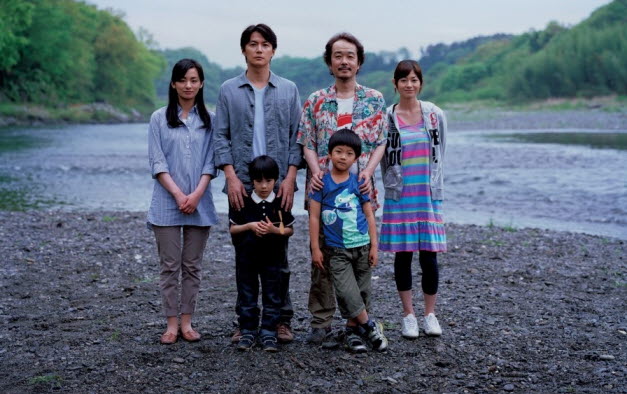
Like Father, Like Son (2013) ☆☆☆1/2(3.5/4): Two couples, two switched sons

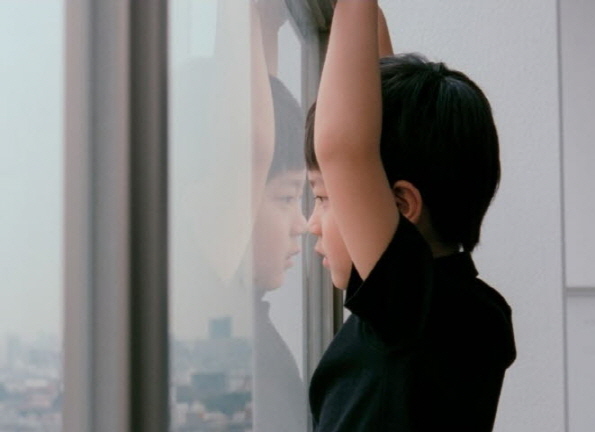
likefatherlikeson01 Hirokazu Kore-eda’s new film “Like Father, Like Son” serenely observes its characters with deep sympathy toward their hard, difficult circumstance. Slowly and delicately immersing itself in the rhythm of daily life, the movie never overplays the accumulating emotions inside the characters as they struggle with a complex matter between them, and we come to muse on a difficult human question at the center of the story.

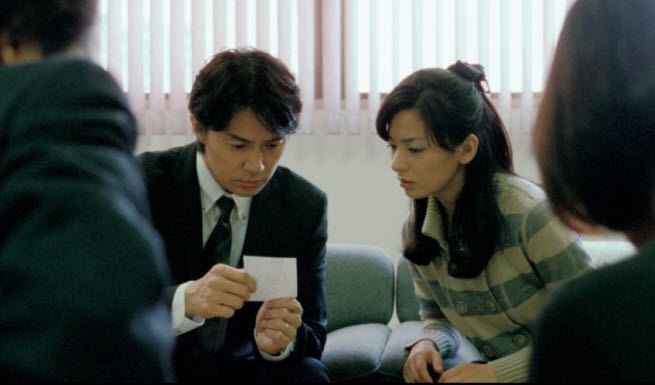
The story starts with a premise you have probably heard about through fictions or news articles. Ryota(Masaharu Fukuyama) and Midori(Machiko Ono), an affluent middle-class couple living in their cozy apartment in Tokyo, have a young son named Keita(Keita Ninomiya), and the opening scene shows Keita and his parents going through the interview for Keita’s enrollment to a private school. Like many parents would, Ryota and Midori emphasizes how much Keita resembles their good sides, and then Keita tells an interviewer how much his father spends his time with him.

Although it is soon revealed that he lied about that(he just did it as told by his teacher), they are a good family on the whole. While Ryota is a workaholic driven by the need to win and succeed and he is rather disappointed by his son’s underachieving status, he loves his son like any good dad should, and his strict side is complemented by the soft side of Midori, who gently dulls her husband’s abrasiveness when they are with their son at their home.

likefatherlikeson03 And then a sudden news breaks into their comfortable life and everything looks quite different as a consequence. It turns out that her son was switched with the baby belonging to the other couple not long after Midori gave a birth to him six years ago, and the hospital belatedly notifies that fact to Ryota and Midori after the other parents happened to discover that their son is not biologically related to them. After hearing that news, Ryota and Midori are naturally shocked, and their loving son now looks like someone else to Ryota, who, like many fathers in Asian countries, thinks blood relationship matters a lot.

Rather than going all the way for heightened emotions, the movie takes a quiet route as calmly watching the characters going through the next several months. Ryota and Midori meet the other parents, Yukari(Yôko Maki) and Yudai(Rirî Furankî), and two couples go through the negotiation with the hospital for compensation while the investigation is started to clarify how the switching happened at that time. Two families soon meet each other while the truth is hidden from the boys, and the parents begin to discuss about what should be done to them.

It is fortunate that the boys are still young and may adjust quickly to their exchanged environments, but both couples see that it is not that easy to resolve their intertwined relationships with these two boys. Ryota and Midori are certainly glad to get their biological son back as much as Yudai and Yukari, but how can they let themselves separated from the son they have nurtured for six years? And how can they possibly move on from that?

likefatherlikeson04 With the agreement from both sides, the things get slowly progressed as days and months go by. Ketia and Ryusei(Hwang Shogen) begin to spend more time with their respective biological parents, and we get to know more about not only Ryota and Midori but also Yukari and Yudai, a working-class couple who also has two other kids in their relatively humble household. Yukari and Yudai do not give an impression of model parents to Ryota and Midori(and us) during their first meeting, and Ryota even considers taking care of both boys instead of them, which is pretty insensitive to say the least. It is gradually shown to us that Yudai and Yukari are good parents to their kids in spite of their human flaws; still childish at his heart, Yudai is good with kids, and Yukari is quickly connected with Midori as the mothers who understand the situation better than their men.

Maintaining a tranquil tone through careful setting of moods and compositions, the director/writer Hirokazu Kore-eda moves his story in leisurely pace, and we get gradually absorbed into their developing circumstance. You may say they look a little too civilized to be real, but they are presented as ordinary people coping with the pains and agonies resulted from their difficult situation, and we come to care a lot about what they will decide to do at every point in the story.

small_likefatherlikeson05 While the movie equally looks around its characters, it can be said that its main story is Ryota’s emotional growth as a father. When he visits his aging father during one small scene, we sense that his father was not exactly a model dad to Ryota and his aloof demeanors may be the consequence of his unhappy childhood. He has probably been trying to distance himself from his loser dad for many years, but he only finds that he is no better than his father, regardless of whether he is with Keita or Ryusei. While Masaharu Fukuyama is believable as a detached man who slowly comes to learn more about fatherhood through his mistakes, his adult co-actors bring human colors to the story in their good performances, and it should be mentioned that the child actors in the movie give wonderfully natural performances as the small but substantial supporting characters in the story(this won’t be much of surprise to you if you are familiar with Kore-eda’s previous films such as “I Wish”(2011), whose breezy charm mainly comes from a lovable duo performance by its two young lead actors).

As he has done in his best works, Hirokazu Kore-eda, who received the Grand Jury Prize for this film at the Cannes Film Festival in this year, handles his story and characters with understated sensitivity and warm humor, and the movie effortlessly goes around laughs and poignancy with its characters. The ending may be predictable, but it arrives with heartfelt emotions, and, after touched and amused a lot by the movie for 2 hours, I come to wish that the kids will be all right – and the adults, too.

small_likefatherlikeson02

Posted in Movies | Tagged , , | 2 Comments

The Spectacular Now (2013) ☆☆☆1/2(3.5/4) : That spectacular freshness

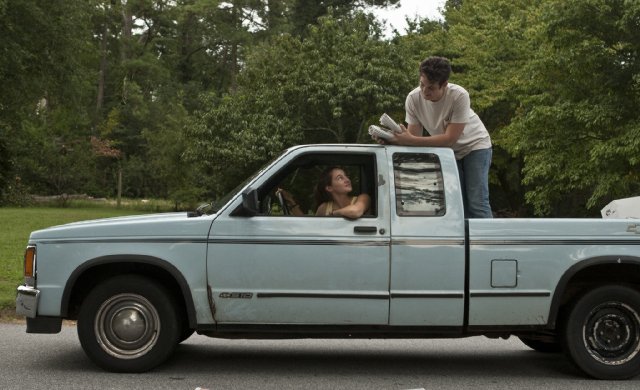
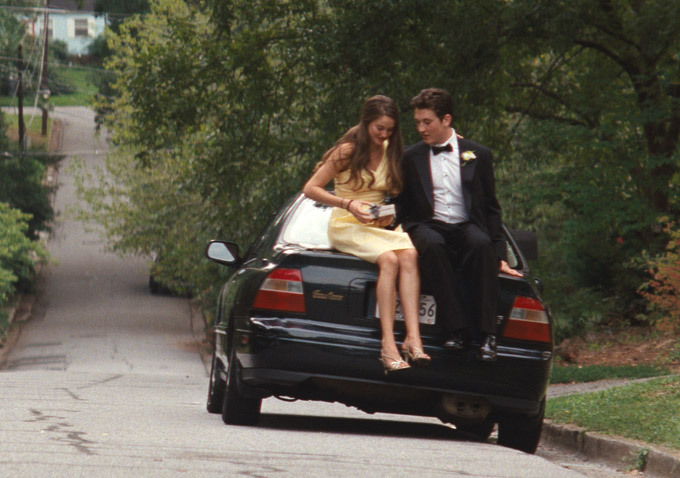
spectacularnow05A boy meets a girl, and then something begins. Yes, this is a cliché indeed, but “The Spectacular Now” brings fresh air into that cliché we have encountered in countless movies about young teenager couples, and it grows on us through its young couple both smart and interesting. They only talk with each other at first while nothing much happens, but that is enough for us to see and feel the mutual attraction between them, and the movie handles their relationship with a considerable amount of care and intelligence. Needlessly to say, this is something we do not come across often in these days, and I enjoyed it wholeheartedly.

Like many teenagers near the next important stage of their lives, our adolescent hero Sutter Keely(Miles Teller) has been wondering about what he should do next, but this amiable boy chooses to keep his carefree attitude on the surface while trying to ignore all the worries and insecurities inside him. The movie opens with his long answer to one of the questions in the online application form for college enrollment, but it seems he is not very interested in going to college; he is not sure about why he should, and he rather wants to enjoy the present for now although he knows he must decide something for himself sooner or later.

His days at the high school are numbered as the graduation day is coming, and he frequently drinks as much as I did during my last summer days of the undergraduate course at KAIST. Once I saw that I did not have to prepare myself for another load of lectures to come as before, my summer nights were frequently filled with 3-4 liters of beer at the campus bar(I could go further if it was right after my routine gym exercise), and the scene of drunken Sutter driving his car at night made me reminisce on how many times I rode my poor bicycle with a high level of alcohol in my blood.

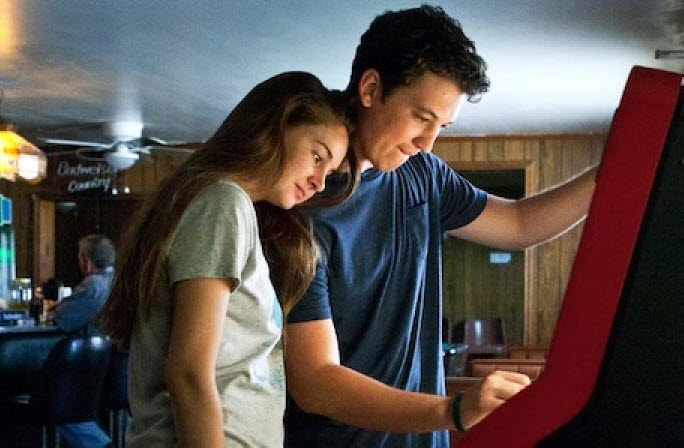
spectacularnow04Anyway, in the next morning, Sutter finds himself lying on the lawn in front of somebody’s house while his car is not around him, and that is how he happens to meet Aimee Finicky(Shailene Woodley), a girl to whom he has never paid attention although she and he go to the same high school. She is delivering morning papers around the neighbourhood instead of her mother, so they do the delivery job together as looking for Sutter’s car, and they get to know a bit about each other in the process. He is soon invited to her home to know more about her, and a certain feeling between them grows more especially when they have some private time at a party in the forest. The camera just keeps looking at them as they walk together for a long time, but their ongoing conversation between them is fun to listen to as it also becomes clear to us that they will go to the next base sooner or later.

While Sutter is Aimee’s first boyfriend, Sutter had a girlfriend named Cassidy(Brie Larson), who recently broke up with him. It initially looks like it was merely caused by a silly misunderstanding, but it turns out there was a more serious problem in their relationship, and one of the fresh aspects in the movie is that Cassidy is not one of those mean, selfish girls you may expect from lesser teenager movies. While she is now meeting the other boy, she considers restarting the relationship with Sutter, but her attempt only reveals to both of them that she cannot get what she seriously wants from him(no, it’s not sex), and the movie has an unexpected moment when Sutter is confronted by Cassidy’s current boyfriend Marcus(Dayo Okeniyi), who turns out to be a lot more sensible and serious than his first impression to us.

The director James Ponsoldt keeps surprising us with very good moments while freely rolling the romance between Sutter and Aimee amid different moods. There is an expected sex scene between them around the middle of the story, but Ponsoldt and his two lead actors handle this crucial scene admirably while not resorting to cheap laughs. Both of them certainly know about sex, but they are still inexperienced though they wisely use a condom, and their tentative approach to each other is presented with frankness without gratuitous nudity.

The Spectacula Now_ Day ten 80812_20120808.JPGThe adapted screenplay by Scott Neustadter and Michael H. Weber, which is based on Tim Tharp’s novel, deftly juggles many other things within its short running time, and one of its most precise moments comes from when Sutter visits his absent father(Kyle Chandler) later in the story as he promised to Aimee before. What he eventually learns from this visit results in a crucial turn in the story, and how he and Aimee deals with that is touchingly mature and thoughtful.

The charm of the movie depends a lot on its performances, which are fabulous to say the least. Miles Teller is a likable kid who is far better than he thinks he is, and he quickly wins our affection right from the start. Shailene Woodley, who was previously praised for her good supporting turn in “The Descendants”(2011), is lovely as a shy, observant girl getting to look more charming in our view as well as Sutter’s view, and the unaffected chemistry between Woodley and Teller makes their scenes constantly watchable. The movie also allows enough space for its supporting cast; while Larson and Okeniyi are good as the adolescent characters we come to like more than expected, we also have a bunch of veteran actors like Mary Elizabeth Winstead, Jennifer Jason Leigh, Bob Odenkirk, Andre Royo, and Kyle Chandler as the adult characters influencing Sutter in one way or another, and they imbue their respective characters with considerable emotional depth in their brief scenes.

“The Spectacular Now” is one of the nice surprises in this year, and it will probably be remembered along with other good films about adolescent romance and growth including “Say Anything…”(1989) or “Flirting”(1991). Its young characters really feel like real teenagers, and they do grow along the story – and we clearly see that they become wiser and better in the end, while there are still many things to learn in their next spectacular nows to come.

spectacularnow01

Posted in Movies | Tagged , , , | Leave a comment