Fruitvale Station (2013) ☆☆☆1/2(3.5/4) : One day of his life

small_frutivalestation02 “Fruitvale Station” presents us the last slice of one plain life which was ended too soon by a sudden incident. As shown in the movie, his life was rather unremarkable before his death drew the attention of the media in the aftermath, but, as observing his last day, we slowly come to see a young man hoping for a better life for him and his family, and, when the movie ends, his unfortunate death on New Year’s Day in 2009 feels more tragic than before along with the sense of loss hovering over the story.

After the brief prologue scene featuring the actual footage of the events during that night(the incident was shot by several digital video cameras and cellular phones present at that time, and the footage was instantly spread around Internet and the media as it ignited public outrage from all directions), we meet Oscar Grant(Michael B. Jordan), a 22-year-old young man who is currently living with his girlfriend Sophina(Melonie Diaz) and their young daughter Tatiana(Ariana Neal). When they happen to be together on the bed around the midnight of December 31th, 2008, they look happy to be together with the visible affection between them, but things are not so perfect in their lives. While they love each other, Sophina is still pissed about Oscar’s recent mistake with some other girl, and Oscar has been trying to make up for his mistake

The day goes on normally for everyone several hours later. They take Tatiana to a daycare center in the morning, and then Sophina goes to her workplace, and then Oscar goes to his former workplace to get his job back. It turns out that he was fired for being late several times, and we also come to learn that he has been hiding that fact from his family just because he thought he could take care of this problem in a short time.
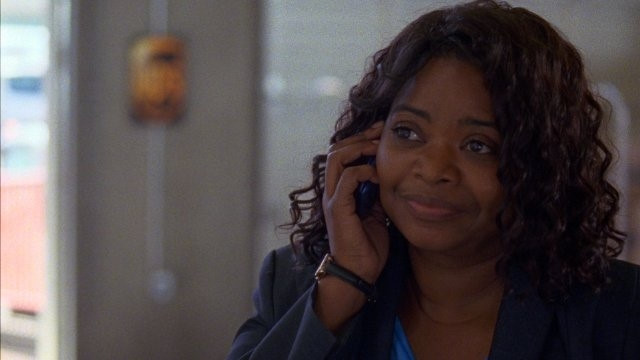
frutivalestation06As he goes through this day while considering going into drug business again or getting ready for his mother’s birthday party in the evening, the movie stays around Oscar while making us feel like being with him on the spot through its steady handheld camera approach. The movie makes a momentary stop at one point with the flashback sequence showing his time at the state penitentiary 2 years ago, but that comes naturally as he becomes reflective about his life, and that scene painfully shows how he let down his dear mother Wanda(Octavia Spencer), who worried about the future of Oscar’s young daughter as well as her son’s and made a tough decision at the end of their meeting.

While, as a seasoned movie audience, I am well aware of that there are probably many differences between Oscar Grant in real-life and the dramatized version in the movie, Oscar in the movie comes to me as a good-natured guy who screwed up lots of things in his past but has tried to get another chance to lead his life properly, and Michael B. Jordan, a promising young actor who recently drew more attention through his good supporting turn in “Chronicle”(2012), gives us a strong, honest performance to hold us to the mundane daily life of his character. One scene shows how he kindly and thoughtfully helps a young shopper at the supermarket, and, while this scene may feel a bit too artificial, we see how he can approach to others easily through his likability and good will.

The quiet poignancy beneath this scene and other ones is increased as the time goes by, mainly due to our knowledge on what will happen to Oscar in the end. He attends her mother’s birthday party along with other family members who enjoy his company, and then he and Sophia and others go to San Francisco for watching the firework show around the midnight. Before going to San Francisco, Oscar and Sophia drop by the home of Sophia’s sister to have their daughter sleep overnight in that place, and a small moment between Oscar and his daughter is touching and poignant in an understated way. Oscar sincerely promises her daughter another good time, but that is the promise which will never be kept, for, as we all know, this will be the last conversation between them.

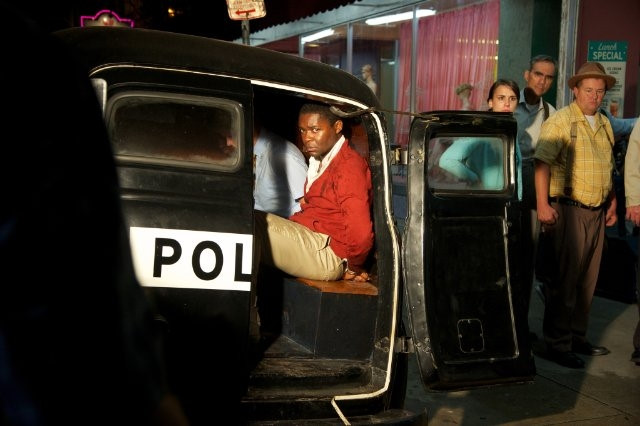
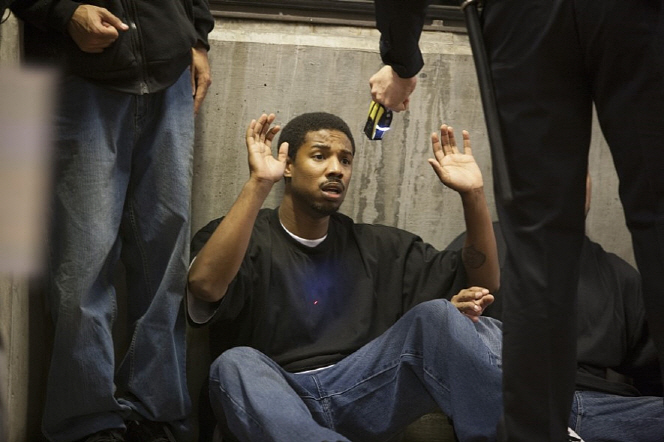
small_frutivalestation03The movie eventually arrives in that fateful moment at the Fruitvale Station stop of the Bay Area’s BART line during the early hours of New Year’s Day, and the movie maintains its calm attitude even when the situation suddenly becomes dark and violent. During this devastating scene, the movie clearly shows how wrongly the BART police officers behaved based on their misjudgment and racial prejudice, but the movie gives us some understandings on the two officers mainly responsible for the tragedy. They felt threatened as much as Oscar and his friends, but that does not change the fact that they should have been more careful and sensible about the situation they were supposed to handle professionally, and the same thing can be said about Oscar and his friends, who could have been less provocative in their words and behaviors.

The movie is the first feature-length film from the director/writer Ryan Coogler, who has received lots of acclaims and awards for his debut work since the it was shown at the Sundance Film Festival early in this year, where it received the Grand Jury Award and the Audience Award(it also won the Best First Film Award at the Cannes Film Festival). While showing his passion and sincerity through the respectful and restrained approach to his subject, Coogler gives us a vivid glimpse of human life behind the incident, and we come to accept Oscar as a guy not so different from us despite several specific background details including race and social status. Coolger also pays considerable attention to the people surrounding Oscar as the parts of his life, and Melonie Diaz and Octavia Spencer give the performances as real as Jordan’s; Spencer is particularly good when Wanda calmly handles the bad news thrown at her and others out of blue, and Diaz fills her character with warm presence while making her private scenes with Jordan tender and sensitive.

Simply presenting Oscar Grant as a human being who did not deserve to be killed, “Fruitvale Station” subtly induces several thoughts and discussions on race and other social issues while not heavily emphasizing them in its powerful story(As listening to a small conversation during the scene in which Oscar encounters a young white couple, I began to wonder about how more social advantages this couple had compared to Oscar and Sophina). Whatever you think about these issues, it is undeniable that a tragedy happened and one life was irreversibly lost, and that is a really sad thing above all.

small_frutivalestation04

Posted in Movies | Tagged , , | Leave a comment

The Attorney (2013) ☆☆☆(3/4) :He just can’t stop once he opens his eyes

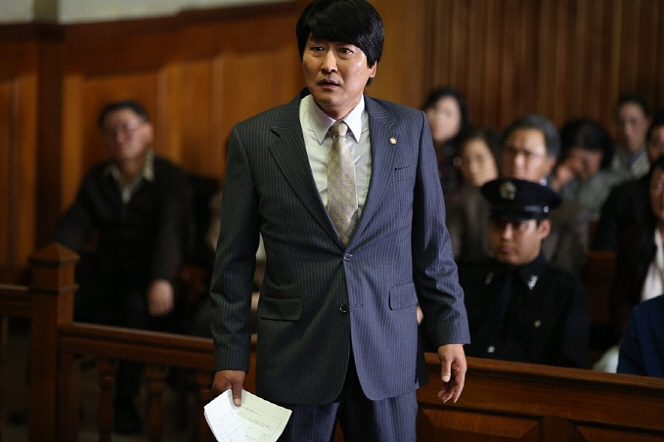
small_theattorney01 South Korean movie “The Attorney” has its heart at the right place inside its generic mix of gentle comedy and angry courtroom drama, and its big heart sometimes beats powerfully to resonate with my own heart. The story is riddled with several weak points, and I think the movie could have been better, but it shouts its urgent message loud and clear to us through a typical but moving tale of a man who opens his eyes to the social injustice surrounding him. Once his eyes are opened, he just can’t stop, and he is determined to fight against that injustice with all the strength he has.

At first, Woo-seok(Song Kang-ho) was merely a successful lawyer who climbed up the ladder of success through his luck and efforts. As reflected by the lines uttered by him and others, he never went to college, and he almost gave up his law study at one point, but he kept trying and now he becomes a lawyer with solid background and experience. After working as a judge in Daejeon for a while, he decides to move to Pusan for entering the private practice, and he is fortunate enough to find lucrative fields ready for him; he starts with handling real estate matters, and then he moves on to tax law, and, thanks to his growing reputation, he later receives a recruitment offer from one of the leading corporations in South Korea.

Everything looks good for him and his employees and his family, but he gradually faces the volatile reality of South Korean society during the 1970-80s, the dark era when lots of people were brutalized in the name of national security by the consecutive dictatorship regimes. When the dictatorship of Park Jung-hee, who was the father of the current South Korean president, was over in 1979, another dictatorship quickly followed, and nothing was changed; the government trampled on any protest or demonstration as usual, and they also arrested innocent people and then labelled them as North Korean spies/sympathizers after beating and torturing them for extracting false confessions out of them.

small_theattorney03

While showing South Korean legal authorities preparing their latest brutal political circus to jolt South Korean people again on the other side, the movie focuses on how the life could be easy and comfortable during that terrible time through Woo-seok’s daily work and life. Money keeps coming into his office, and he and his family move to a better home he has always wished for, and he also buys a yacht for his hobby. While the nation is shaken by the news on the students’ demonstrations, he does not care much about that because, as a jaded guy who knows two or three things about South Korean society, he cynically thinks a few protests cannot change the society overnight.

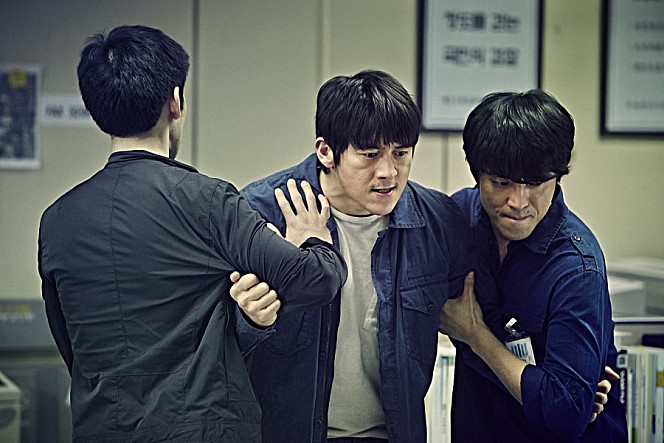
However, when he sees the injustice inflicted on one of the people close to him, he comes to see how wrong his society has been far more clearly than before. Jin-woo(Lim Si-wan), the son of Woo-seok’s favorite restaurant owner Soon-ae(Kim Yeong-ae), is suddenly arrested along with his friends by the cops lead by Inspector Cha(Kwak Do-won), and, after two months of imprisonment and torture, Jin-woo and his friends are now about to be put on the trial. Everything is already set from the very beginning; the judge, the prosecutor, and even the defense lawyers representing the accused have all been set to give sentences even before the trial begins, and their major concern is how they can make this process done swiftly and smoothly.

This outrageous and infuriating incident depicted in the movie really happened in Pusan in 1981, and I heard many details in the movie are very close to the real-life incident. The prosecutor labels the accused as subversive communists just because these young men shared ‘subversive’ books including “What is History?” by E.H. Carr between them and others, and only direct evidence he has is the ‘confessions’ obtained during the police interrogations. Most of the defense lawyers do not try much because they know they are on the losing side; in their opinion, the best thing they can do as these unfortunate young men’s lawyers is lessening the sentences to be given as much as possible.

small_theattorney05 But, unlike them, Woo-seok has a different thought. He was reluctant to be Jin-woo’s defense lawyer when he accepted Soon-ae’s tearful plea, but then something gets ignited inside his jaded heart after he happens to witness what the police have done to Jin-woo. He is well aware of that he has almost no chance of winning, but he does not pass any single chance to fight and protest against the oppressing system at the courtroom, and he eventually goes further to the point he has never imagined before in his life.

There are lots of dramatic scenes during the second half of the movie, Song Kang-ho, who is having a fantastic year with this film and “The Face Reader”(2013) and “Snowpiercer”(2013), is simply magnificent during these scenes as the everyman hero of the story. As one of few South Korean actors who can be both casual and commanding at the same time, Song fluidly carries the movie from comedy to drama, and his comic scenes are brimming with warm humanity while his dramatic lines palpate with the righteous passion and anger erupting from the inside of the character.

The other supporting actors surrounding Song are less impressive in comparison, but they function well as the parts of the story. Oh Dal-soo, who plays Woo-seok’s assistant, is a good comic foil during the first half of the story, and Kwak Do-won is menacing and despicable as a bullying police officer who absolutely believes in what he is ordered to do; it is rather chilling to think that the people like him are still walking freely with no particular remorse even after the eventual democratization of South Korea in 1987.

small_theattorney04

Although the movie emphasizes at the beginning that its story is a fiction, I and other South Korean audiences all knew too well that Woo-seok is a fictional version of late Roh Moo-hyun, the former South Korean president who did passionately defend the accused in 1981 and then became a notable leading figure of democratization movement since that trial. After his presidency and following tragic suicide in 2009, his name and legacy have been virtually tarnished and butchered by the local right-wing politicians including the current South Korean president, and I even heard that no reporter dared to mention his name at first during the press screening of this movie, as if he had been something equivalent to Lord Voldemort in Harry Potter films.

While the director/co-writer Yang Woo-seok intended to give us a fictional story, “The Attorney” is still closely tied to the life story of Rho Moo-hyun, and there is a certain degree of awkwardness in the movie as it strains to balance itself between fiction and reality. The story itself feels clumsy and heavy-handed at times, and its several characters are underdeveloped including Woo-seok’s wife(Lee Hang-na), who naturally shows concerns about her husband and family during the obligatory scene of a worrying wife.

Nevertheless, its power and appeal are strong enough for compensating for its flaws, and, maybe because of the democracy being strangled to death by the current South Korean administration who keeps surprising its citizens with its bold, brash, and arrogant attitude, the urgent message inside “The Attorney” came quite close to me and other audiences during the screening at last night, and I could see some of them were moved to tears during its several highpoints.

I must confess that I have my own jaded cynicism as a guy over 30 and I criticized President Roh several times during my youthful years(I once called him a ‘buffoon’ in front of others and I still regret my thoughtless words on him), but the movie reminds me again that I and others should not ignore what is happening in South Korean society right now. It seems the movie is destined to be another box office success at South Korean theaters thanks to its big publicity surrounding its inspiration, but, seriously, what will I and other South Korean audiences think of it after 5 years?

small_theattorney02

Posted in Movies | Tagged , , , | 3 Comments

The Hobbit: The Desolation of Smaug (2013) ☆☆1/2(2.5/4) : So they go there…

thehobbit201 Many beloved fantasy worlds depend on small and big details to make us believe and accept them, and the Middle-Earth, that enchantingly bountiful world of J.R.R. Tolkien’s “The Hobbit” and “The Lord of the Rings” trilogy, is no exception. While the story itself is already big and wide to encompass lots of things, Tolkien surrounded his story with an epic amount of historical, cultural, and geological details for creating a vivid, believable reality for his fantasy world, and that is the one of the main reasons why the Middle-Earth has been beloved and admired by many fans for years.

While “The Hobbit: The Desolation of Smaug” reminded me again of how wondrous that world is, the movie has the same problem “The Hobbit: An Unexpected Journey”(2012) suffered. Compared to the long starting process in the previous film, the movie rolls faster along the plot as the middle part of the trilogy, but the movie still feels bloated and dragged sometimes – and neither 3D nor high frame rate compensates for that.

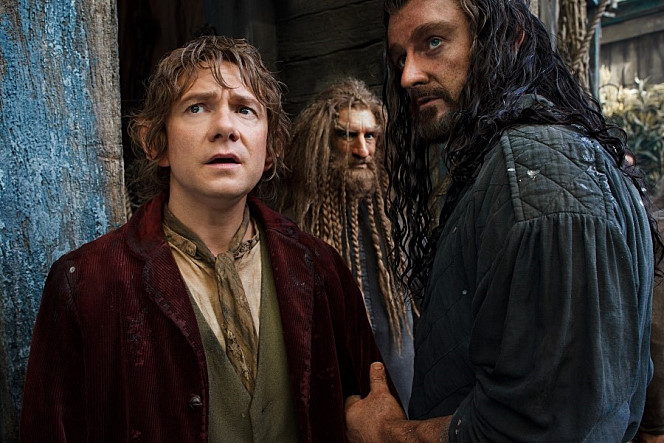
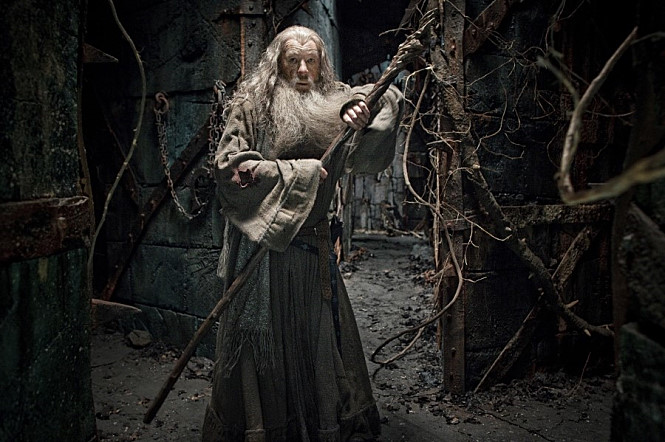
After the opening scene showing how Thorin Oakenshield(Richard Armitage) happened to encounter Gandalf(Ian McKellen) before they began their journey to the Lonely Mountain with other 12 dwarves and Bilbo Baggins(Martin Freeman) in the previous film, the movie goes straight to where the previous film ended. While still chased by those nasty Orcs, they manage to find shelter and get some help from Beorn(Mikael Persbrandt), but there are more dangers on their way, and Thorin and others become more vulnerable especially after Gandalf temporarily leaves them for some urgent matter to deal with.

thehobbit204 But they have Bilbo, a timid hobbit who has found unexpected courage and resourcefulness inside him while going through the journey with them. Using an elvish sword and a mysterious ring he happened to acquire in the previous film, he rises to the occasion to save him and others, and the first hour of the movie passes by as they tumble around several action scenes including the one featuring the big, monstrous spiders inhabiting in the dark forest. I must say they become less scary when they talk in squeaky voices, but these big bugs will certainly make you cringe if you don’t like spiders much.

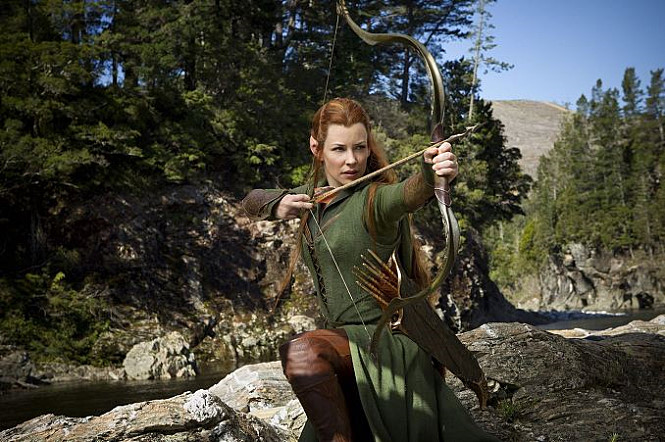
Around the point when Bilbo and dwarves see the Lonely Mountain more clearly than before, the movie is already stuffed with lots of matters to be handled. Besides a bunch of the Orcs persistently chasing after them, we also have 1) the elf king Thranduil(Lee Pace) and other elves including Legolas(Orlando Bloom) and Tauriel(Evangeline Lilly), 2) the people of Laketown including a glum bargeman named Bard(Luke Evans) and selfish Master of Laketown(Stephen Fry), and 3) a dark, fearful entity embarking on the evil plan of regaining his power(I’m sure many of you already know who that is, by the way).

And there is Smaug(voiced by Benedict Cumberbatch), that vicious dragon who has occupied the underground palace in the Lonely Mountain while resting in the heaps of gold and other treasures like spa guests resting themselves in mud bath. Using Bilbo’s newly emerged burglar skill, Thorin and dwarves plan to steal a certain precious jewel to restore Thorin’s royal position, but Smaug is not an easy opponent, and there is a tense scene where Bilbo must depend on his wits during his encounter with Smaug, who does not mind playing a cat-and-mouse game before having a little night snack.

I was not bored as enjoying its good moments, but the movie still looks problematic to me. While a few parts in Tolkien’s book were handled more briefly than expected, the screenplay by the director Peter Jackson and his co-writers did lots of expansion/insertion jobs on the story, and many of these expanded/inserted elements feel like merely existing for filling its long running time rather than bringing something new into the story. The movie understandably leaves behind many unfinished businesses to be resolved in the next film to come, but its expected cliffhanger ending feels abrupt with no sense of momentary closure, and that certainly made me and some audiences unsatisfied when the movie was over.

thehobbit203 Furthermore, 3D and high frame rate are again the major source of distraction, and I kept getting that familiar distracting impression during my viewing although it was less awkward compared to the previous film. Its 3D effect looks fairly good, and the landscapes of the Middle Earth may look more vivid due to high frame rate, but the actors and special effects do not look that real in contrast because everything looks so unforgivingly clear and apparent in the 3D HFR version. To be frank with you, I occasionally felt like staring at the actors in front of the camera, not the characters on the screen.

I am reluctant about recommending the movie, though I was entertained by it to some degrees. Ian McKellen has less screen time than before, but he always attracts our attention whenever he appears on the screen, and Martin Freeman gives an engaging lead performance as the center of the story while not engulfed by its overblown scope. I must confess that I still do not know which dwarf is Bifur or Bofur, but some of Thorin’s colleagues look a little more distinguishable from each other in this time, and there is even a romantic subplot involving with Kili(Aidan Turner) and Tauriel. He may be short, but he looks handsome, so we do not need much explanation for why this lovely elf girl suddenly finds herself attracted to a dwarf guy she has never met before.

Although I am glad to see that the Middle-Earth is still a nice place to look around, “The Hobbit: the Desolation of Smaug” is as overlong and redundant as the previous film, and I am afraid we will probably get the same thing in the next year. Due to my distraction with 3D and high frame rate, I am now wondering whether my opinion can be changed a bit after watching it again in 2D, but I don’t expect much about that.

thehobbit202

Posted in Movies | Tagged , | Leave a comment

The World’s End (2013) ☆☆☆(3/4): An ultimate drinking adventure of old buddies

theworldsend01 “The World’s End” walks and runs around many things to be appreciated and savored during its increasingly outrageous journey, and I was alternatively excited and amused by that during my viewing. Switching busily between several genres including comedy, horror, SF, and action, the movie also cheerfully brandishes its sense of humor even during its darkest moment, and there are plenty of laughs and surprises as the characters are frantically approaching to the last point of their journey to be finished.

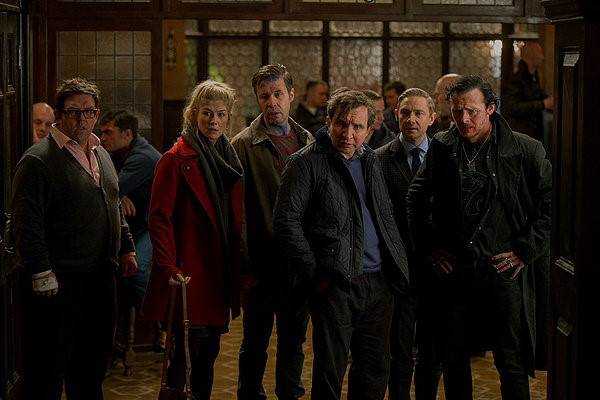
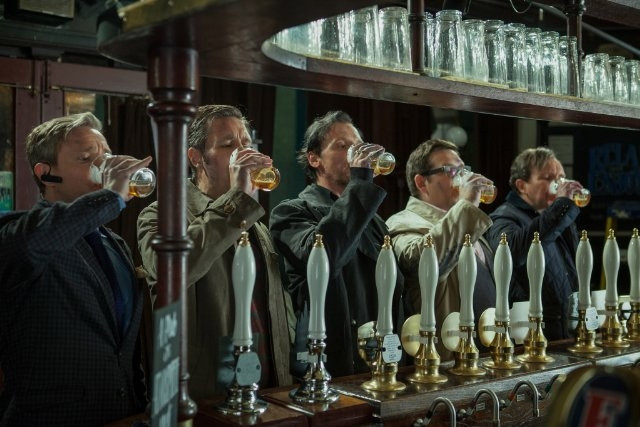
When they were young and reckless in 1990, Gary King(Simon Pegg) enjoyed every moment for fun and excitement while hanging out with his four friends, and, according to his ‘selective memory’, the highpoint of that good old time of theirs was their thoughtless attempt of a marathon pub crawl around their hometown Newton Haven. They tried to go around all of 12 pubs in the town, but they failed due to too much of alcohol consumption, and then the next day naturally came with sunshine and accompanying hangover.

All of them left their hometown since that night to remember(or forget, shall we say), and everyone has been moving on with each own life – except Gary. Unlike his friends, he has been going down and down while never growing up, and we listen to his wistful reminiscence of those good old days during the opening scene before watching him attending some meeting at the hospital.

He still clings to his glorious bygone past, even though it was 20 years ago and he is no more than a jobless bum now. For recapturing his old private glory, he invites his old friends to join him in their second pub crawl in Newton Haven. In this time, he is determined to succeed in dropping by all of these pubs during one day while drinking one pint of beer at each place, and I am again amused by how aptly the last pub in this journey is named: The World’s End.

theworldsend02

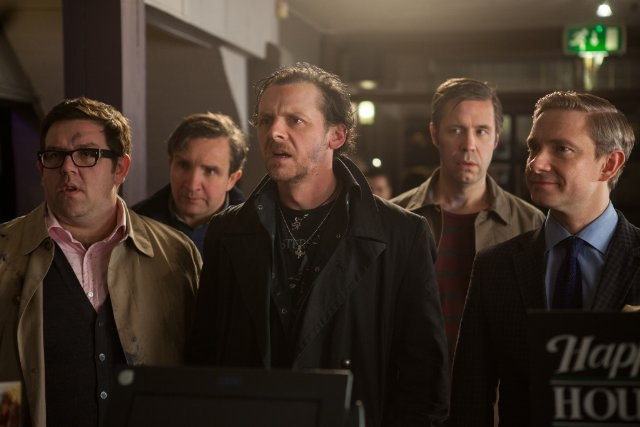
His four friends, Andy(Nick Frost), Oliver(Martin Freeman), Steven(Paddy Considine), and Peter(Eddie Marsan), are reluctantly persuaded by Gary and then go to Newton Haven together, and, thanks to five talented actors, we are constantly served with many comic moments of embarrassment. Gary is not exactly a likable loser, and Gary’s friends are not particularly pleased to be with him although they decided to come with him for old time’s sake. Gary behaves as if he were still young and irresponsible, and that makes his friends embarrassed and annoyed from the start while he believes that, as conforming to middle-class standards, they have forgotten how much they were fully alive. He feels pissed and betrayed especially in case of Andy, his closest friend who, as a recovering alcoholic, has been sober for many years. He does drink with others, but he stubbornly chooses to drink tap water instead of beer.

Now I should be a little more discreet about describing the plot, so please stop here if you want to fully enjoy the movie for yourself, though its trailers already exposed some of its surprises. As they manage to drop by the first four pubs as planned despite the personal frictions between them, Gary and his gangs are not so surprised to see that the pubs they knew have been changed a lot, but they slowly come to sense something is not quite right in their old hometown. Some of the people they knew in the past do not recognize them, and there is also faint but ominous air of uniformness around the places and the people in the town. That disturbing feeling becomes more palpable as Gary and his friends become more drunk and accordingly more visible, and the town people around them begin to look a lot like the extras from “Invasion of the Body Snatchers”(1956) in our view.

The movie switches its main mode from comedy to action around that point, but it keeps hurling many moments of good laughs amid its tense, dynamic action scenes as tumultuous as “The Raid: Redemption”(2011) at times. The director/co-writer Edgar Wright keeps our attention held to his story while lots of things are happening simultaneously around the characters during several frantic scenes in the movie, and these fabulous moments are fueled by jolly humor to tickle us as well as brisk speed to excite us. They are surely fast and dizzy due to their quick rhythm, but, as proven in “Hot Fuzz”(2007), Wright a competent action film director with the good sense of space and movement, and we are seldom confused even when we are thrust into the middle of action where many body parts are crazily moved on the screen.

theworldsend04And the movie becomes more interesting and involving as its plot gets thickened along with pints of beer. As they realize they must stick together for coming out of the town alive, the old feelings among Gary and his friends are raised upon the surface, and it is sometimes pretty hilarious to watch as they are bickering with each other even though they are all facing the grave matter of life and death at present. Although making lots of fun of the conformity to mediocrity through not only Gary’s friends but also some powerful entity to be revealed later in the story, the movie also bitingly points out Gary’s pathetic immaturity; even at the most urgent moment, he still wants to complete his journey just because that becomes only thing he may accomplish in his failed life, and he is going to accomplish it by any means necessary no matter what will happen to him and his friends in the end.

The cast members are having lots of fun with their respective characters here, and their chemistry is excellent thanks to good comic timing and visible comradeship between them. Simon Pegg, who wrote the screenplay with Edgar Wright, and Nick Frost were an effectively complementing comic duo in their fun collaborations with Wright in “Shaun of the Dead”(2004) and “Hot Fuzz”, and they again hit every note right in their comic performances. While Martin Freeman, Paddy Considine, and Eddie Marsan hold their own places besides Pegg and Frost, Rosamund Pike brings some sparks to the movie as the sole substantial female character among these old boys, and you may recognize several notable British actors popping up here and there around the story as following their journey.

The movie is the final entry of ‘Cornetto trilogy’, and, while “The World’s End” does not have many common things with other two films “Shaun of the Dead” and “Hot Fuzz”, the distinctive touches by Wright, Pegg, and Frost are visible all over these films. Through their smart and hilarious stories mixed with many goodies and lots of wits, they show love and affection to the movies they have cherished while irreverently lampooning them, and their sense of fun is infectious to say the least. As a zombie film, “Shaun of the Dead” was as humorous as George A. Romero’s “Dawn of the Dead”(1978). As an action film, “Hot Fuzz” was a lot smarter than many brainless action blockbuster films we have to endure during every summer season.

As a witty hybrid of different genres, “The World’s End” is as funny as other two films, and I must point out that it does a good job of making incorrigible human stupidity into a sort of human triumph against all odds during its ironic ending. After all, there is nothing you cannot do when you have just drunken more than 10 pints of beer, isn’t it?

theworldsend03

Posted in Movies | Tagged , , , , , | Leave a comment

Way Back Home (2013) ☆☆☆(3/4) : It’ll take very long for her and her family

waybackhome01

As a tear-jerking melodrama, South Korean movie “Way Back Home” is so transparent in its plot that I always knew every bright moment in the story would be soon followed by another punishing moment for its ill-fated heroine and her poor family. For instance, when things look better for them at one point, I checked my watch, and I predicted there would be another hard moment for them because there were still around 40 minutes left – and I was not wrong at all.
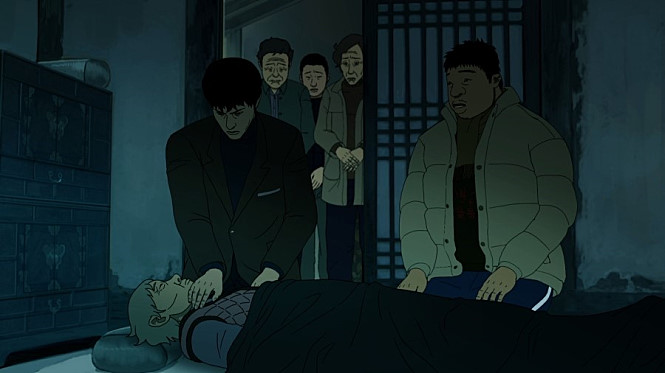
Its story is one of those nightmarish stories about nice, ordinary people unwittingly getting involved with crime and then being punished much more than they deserve. Jeong-yeon(Jeon Do-yeon) is a wife and mother who has been leading a plain but happy life with her husband and daughter, but her world is suddenly turned upside down thank to a big mistake of her husband Jong-bae(Ko Soo), who unwisely stood guarantee for one of his friends who loaned around 200 million won($ 180,000). After that friend commits suicide out of desperation, Jong-bae has to pay off the huge debt instead now, and the life of his family is tumbled down to the bottom as a result; they have to give up many things including their cozy home as well as their garage, and then they move to a shabbier place later.

They try to move on as much as they can while living far more poorly than before, but the circumstance becomes more difficult for them day by day as anger and resentment grow between them. They still have more debt to be paid even after they used all of Jeong-yeon’s savings, and their landlady keep pressuring on them due to their delayed rent payment.

In such a situation like that, a seemingly harmless offer from another friend of Jong-bae looks tempting to both of them. This guy has been doing a lucrative business of smuggling something expensive into South Korea, and he needs one more carrier to deliver his stuff right now. He assures to them that this illegal activity will not be much of a problem even if it is detected by the customs officials; even in the worst possible circumstance, carriers will just pay fine for their minor crime and then walk out of the airport with no serious problem.

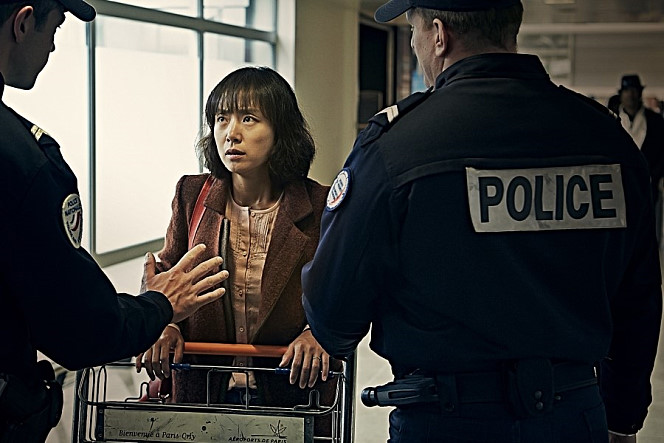
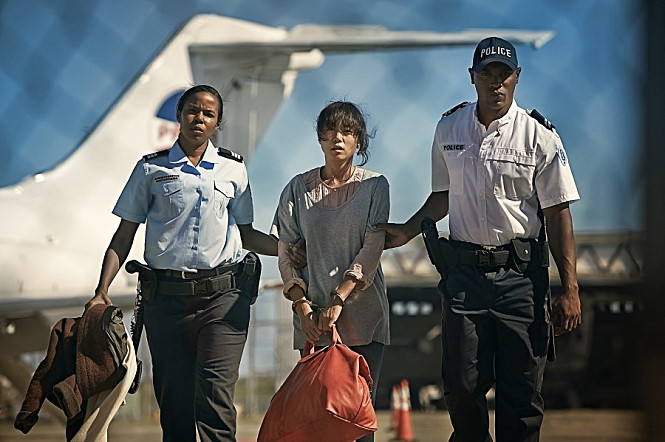
waybackhome02 It does not take much time for us and Jeong-yeon to see that this guy is not very trustworthy, but, after going through another moment of frustration with her husband, she decides to accept his offer, and, not so surprisingly, she dearly pays for her wrong decision. When she is arrested by the police at the Orly airport in France, it turns out what she attempted to smuggle are not gold ores but packages of cocaine, and, even though she cannot speak English or French, she gradually realizes her grim situation; she can be incarcerated at least for 10 years for getting involved with this crime even though she had absolutely no knowledge of the contents of her suitcase.

Fortunately, there is some hope for her, but she will not be released easily because of the strict legal procedures in France, and she feels more isolated as days go by in her cell. As soon as learning that his wife is being incarcerated in France indirectly because of him, Jong-bae frantically tries to get his wife sent back to South Korea, but he also finds himself against the wall as much as her. While there are several legal matters to be handled and resolved, the officials at the Korean embassy in Paris basically ignore her situation just because they are not interested in her case(they care more about the visiting politicians from their country, by the way), and the cops in South Korea are lazy in their investigation of the case even after Jong-bae desperately urges and pleads to them.

Compared to them, French law officials are fair and efficient, but their hands are tied unless they receive the legal documents to confirm Jeong-yeon’s innocence from South Korea. Time keeps going by with no trial, and, after several months, she is eventually transported to the prison in the Martinique Island in the eastern Caribbean sea. As she struggles to adapt to her new environment, the movie hands down to her many familiar elements from prison movies including a cellmate who slowly bonds with her despite language barrier and a cruel prison warden abusing and exploiting her prisoners. To be frank with you, I could not help but think of “Papillon”(1973) when Jeong-yeon inadvertently attempts escape during one scene in the jungle nearby.

waybackhome03 The movie is a bit too long, and I sometime found myself becoming impatient mainly due to its predictable story line, but the director Bang Eun-jin, who has also worked as an actress in several notable South Korean films, handles her story with enough sincere feelings although the movie tries its melodrama too much at times to make our eyes teary. The feeling of confinement is palpable throughout the movie, and the movie also makes a good use of the locations in France and Dominican Republic to establish the unfamiliar environments surrounding Jeong-yeon. In case of the prison scenes in the Martinique Island, they actually shot them at a prison in Dominican Republic, and I was not surprised to learn later that they actually used real prisoners as extras.

As the heroine who keeps getting cornered and crushed by the injustices inflicted on her, Jeon Do-yeon, who is mostly known for her great performance in “Secret Sunshine”(2007) outside South Korea, supports the movie with effective melodramatic performance. While the movie gives her many weepy moments to be handled, Jeon Do-yeon plays her character as someone we can identify with from the beginning, and the movie is more effective when it lets Jeon to do more subtle things such as when Jeong-yeon gets an unexpected peaceful moment at the beach.

The movie was inspired by a real-life story, and, while there are certainly fictional elements here and there in the movie, I heard that it also took a long time for that unlucky woman to return to her dear family in South Korea as shown in the movie. In spite of many notable flaws including its rather cartoonish depiction of several despicable supporting characters functioning as the villains of the story, the movie mostly works thanks to Jeon Do-yeon’s good performance and its sincere approach, and I think I may deliver a mild judgment on the movie in this time.

waybackhome05


Posted in Movies | Tagged , , | Leave a comment

The Russian Novel (2012) ☆☆☆(3/4): It’s good, but it needs more proofreading

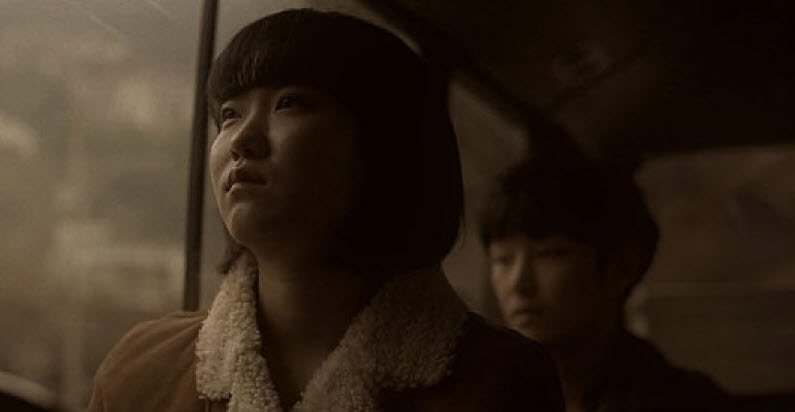
therussiannovel08 Everyone has at least one story to tell inside him, and the hero of “The Russian Novel”, a small but interesting South Korean movie about writing, has many stories to tell, and he is eager to get his stories read by others who may recognize him as a real writer. As reflected in his stories frequently quoted on the screen throughout the movie, it seems he will eventually publish his book, and the movie tells us how he comes to write them in its engaging and humorous way as he bumbles around a small world of writers like a clueless child who still needs to grow up and learn more.

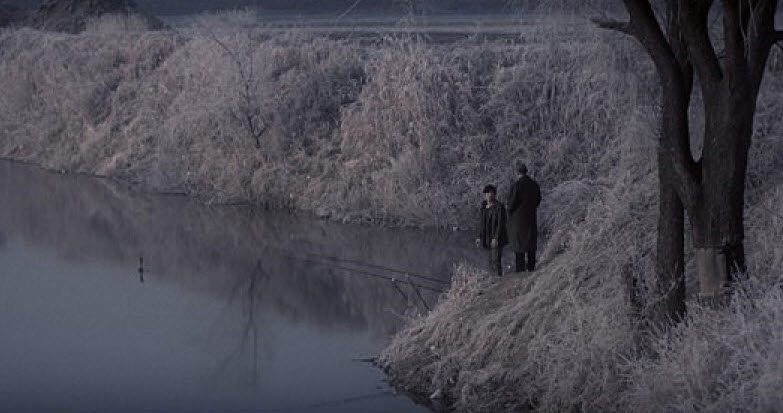
As a matter of fact, he really needs to learn more about writing – especially about how to write properly enough to hold the attention of readers. As some of the characters around him sharply point out, his writing skill is hampered by many external flaws including incorrect grammar and awkward sentences even though the stories themselves indeed sound interesting. The movie begins with the serenely foggy opening scene at the lake both depicting and narrating the opening paragraph of one of his stories, and you can see his story is worthwhile to read despite his problematic writing skills.

Sin-hyo(Kang Shin-hyo) knows too well that he really needs to polish his writing skill further. He did not even go to high school due to his poor household condition, but, since he was inspired by the novels written by a famous writer named Kim Ki-jin, he has tried hard to write something good while working in a factory to earn his living, and he also tries to get any helpful tips from the writers with whom he hangs out at several places including the workshop belonging to Kim Ki-jin.

therussiannovel07 This sounds desperate to you, but the movie is actually funny and silly at times as watching Sin-hyo bouncing around other writers with no particular result. Driven by the inferiority complex fueled by his envy toward the writers who looks more educated and more knowledgeable than him, Sin-hyo keeps emphasizing his uneducated background to others, and that becomes a running gag throughout the first half of the movie because, mainly due to his self-absorbed ego as a writer, he rarely advances from where he was at the beginning. Any good writer should know that he/she must read a lot while writing a lot, but, my god, this guy does not even try to read anything besides the books written by his worshiped writer just because he cannot read other books due to the lack of interest. To be frank with you, while watching the movie, I personally wanted to slap this guy with “On Writing”, Stephen King’s invaluable book about writing which emphasizes many things including reading books as many as possible – and using correct grammars.

The movie playfully rotates a bunch of literate characters around this silly guy as their thoughts and feelings are reflected on the screen through the texts narrated by him or them, and it is gradually revealed to us that his experiences with them will become a source of inspiration for our aspiring writer. While Kim Ki-jin seems to be out of reach for everyone in the movie, it looks like his son Seong-hwan(Kyeong Seong-hwan) is the only one who can arrange private meeting with his father. Miserably living in the shadow of his famous father, he spends most of his time on a mediocre stage play which he puts on the stage every year, and he has no desire to be a writer even though he knows two or three things about writing.

In case of Jeong-seok(Kim Jeong-seok), a middle-aged writer stuck in writer’s block, he seems to be more interested in fishing than writing, and a young talented newcomer Gyeong-min(Lee Gyeong-min) is rather cold to Sin-hyo while focusing on her writing, but Sin-hyo finds himself drawn to her and her talent. While talking with her, he keeps saying “even though you’re young”, and that phrase becomes another running gag in the film.

therussiannovel02This certainly makes his No.1 fan Jae-hye(Lee Jae-hye) very unhappy. Although she is as knowledgeable as Sin-hyo in case of writing, she believes in his writings as a devoted supporter, and she sticks to him even when he is at the bottom, though her loyalty and devotion are not appreciated much by him. We also have a teenager girl named Ga-rim(Lee Bit-na), and this quiet but seemingly observant girl is my favorite character in the movie. One of the best moments in the film is the scene in which she make a comment so shrewd and insightful on Sin-hyo’s writing even though she has absolutely no interest in being a writer or attending school, and Lee Bit-na brings a considerable degree of innocent liveliness to the grey, melancholic tone shrouding other characters.

As far as I can see, the first half of the movie is around 80 minutes, so that could have been enough for a feature-length film, but the movie goes forward to 27 years later to start its second part, and that is where the movie becomes far less interesting than before. After writing several stories, Sin-hyo happens to be thrown into comatose state, and, when he miraculously wakes up as a middle aged-man now played by Kim In-soo, the world has changed a lot along with him, and there are some big surprises waiting for him.

The mystery associated with these surprises is neither compelling nor believable especially if you are familiar with publishing business or you have ever read “On Writing”, and there are glaring mistakes made by the director/screenplay writer Shin yeon-sik everywhere in the second half of the movie. I understand Sin-hyo is pretty ignorant about publishing and writing, so I can pass a silly scene where he accuses his publisher of meddling with his writings, but I find it pretty implausible that he can give lectures on his works even though he does not read any single published word of his – and he seems to have no interest in reading his published works until he comes to be reminded of something strange. Seriously, how can that be possible?

therussiannovel04Because of these flaws, the second half of the movie, which focuses on the identity of a guy who corrected and modified Sin-hyo’s works while he was in the hospital, feels like a long, dragging epilogue rather than an equal part complementing the first half. Whoever did that job secretly, he(or she) did Sin-hyo a big favor because Sin-hyo is now regarded as one of the most revered writers in South Korea, so there is not much to complain or angry about, isn’t it?

Despite my dissatisfaction with this part, I enjoyed its first part with lots of amusement, and that is enough for me to give this flawed but fascinating film 3 stars instead of 2.5 stars. The director Shin Yeon-sik gives us a solid film supported by the good performances from his cast as well as two good contrasting moods in the movie, and its long running time(140-minutes) is less burdensome than expected, and the movie feels like reading a nice big book during one uneventful afternoon. But still, I think he could have done more proofreading while writing his screenplay.

therussiannovel05

Posted in Movies | Tagged , | 2 Comments

The Butler (2013) ☆☆1/2(2.5/4) : The modern American history seen through a butler

thebutler01

While not as bad as I feared, “The Butler” is not as good as I hoped. The movie attempts to mix its personal drama the modern American history for presenting an interesting perspective to us, but it feels too blatant and artificial at times, and there several glaring points where its good actors cannot cover its weaknesses despite their nice efforts. We are surely served with those important historical moments throughout the movie, and we are naturally reminded of how much change was brought to the American society during the 20th century, but we do not get much from the story itself, which frequently feels like a standard product rather than a real human drama.

Its humble hero is Cecil Gaines(Forest Whitaker), an African-American who worked as a servant at the White House for more than 30 years. In the prologue scene where he is waiting to meet someone at his old workplace, Gaines looks back on how his life has been, and the movie accordingly goes back to his painful childhood memory during the 1920s. His parents worked in a cotton plantation in Georgia at that time, and young Gaines(Michael Rainey Jr.) directly witnessed a cruel moment of racism; Gaines’ mother was raped by the vicious owner of the plantation, and Gaines’ father was killed by the owner when he tried to protest about it.

After suddenly becoming an orphan because of this horrible tragedy, Gaines was fortunately taken cared of by Annabeth Westfall(Vanessa Redgrave), the old lady of the house. She taught him the skills for being a good servant, and her teaching later becomes very useful to him when adolescent Gaines, now played by Aml Ameen, luckily gets the job at some hotel after a chance encounter with Maynard(Clarence Williams III), the master servant of the hotel who becomes the second mentor in Gaine’s life. While he does not allow Gaines to use that negative word “house nigger”, Maynard’s teaching is same as Annabeth’s; always do the job silently as demanded while never drawing attention to yourself.

thebutler03

Gaines, now played by Whitaker at this point, sticks to that principle while working at a luxurious hotel in Washington D.C – and then starting to work at the White House in 1957. He also becomes a family man with a loving wife and two good sons, but he dedicates to his profession so much that his wife Gloria(Ophra Winfrey) becomes lonely and morose in spite of her lively spirit, and, as gradually becoming an alcoholic, she finds herself having an affair with one of their neighbors while her husband is busy with his work at the White House, the place to which he has not taken her yet.

While Gaines keep working with two co-workers who become his closest friends, the series of US presidents glides by them as giving the moments to be witnessed by Gaines. The Civil Rights movement against racism is being initiated around the country, and President Eisenhower(Robin Williams – no kidding) and President Kennedy(James Marsden) are horrified by the ugly side of America, and they do what they have to do as the leaders of the country respecting individual rights and freedom. While having some bathroom problem, President Johnson solidifies the position of the US government on the race problem through the Civil Rights Act, and Gaines and others see the progress in their world.

But, as many of you know, this progress was not easy at all, and the movie shows the dark, turbulent side of that time through one of Gaines’ sons. Unlike his father, Louis(David Oyelowo) is far more direct and active about the social problems of their world, and he keeps getting himself into trouble while participating in the Civil Rights Movements. That naturally causes the conflict between father and son due to their different views, and the gap between them becomes more widened when Louis joins in the Black Panthers.

thebutler05

The movie has several effective moments as Gaines and his son walk in parallel along the years of the Civil Rights Movement. During one sequence, the movie goes back and forth between Louis and Gaines respectively devoting themselves to each own assignment, and the message is blatant but clear; they are reaching for the same thing while viewing things differently. Later in that movie, Louis is reminded that how his father and other exemplary African-American servants have been eroding the racial barrier with their silent but steady diligence, and that is how he starts to respect his father more in spite of growing mutual estrangement between them.

The screenplay by Danny Strong is based on 2008 Washington Post article “A Butler Well served by This Election”, and Gaines is a fictional character loosely inspired by a real-life White House butler Eugene Allen, who died in 2010 but lived long enough to see that rapturous moment in 2008 along with other African-Americans. I was well aware of that the movie is mostly fictional, and I was merely amused by that familiar phrase “Inspired by a true story” at the beginning of the film, but the story did not feel particularly real to me because of its clumsy juxtaposition of personal drama and history events. The movie becomes less compelling as it leaves behind the turbulent era of the 1960-70s, and the 2008 scenes feel like a long epilogue which could have been shortened.

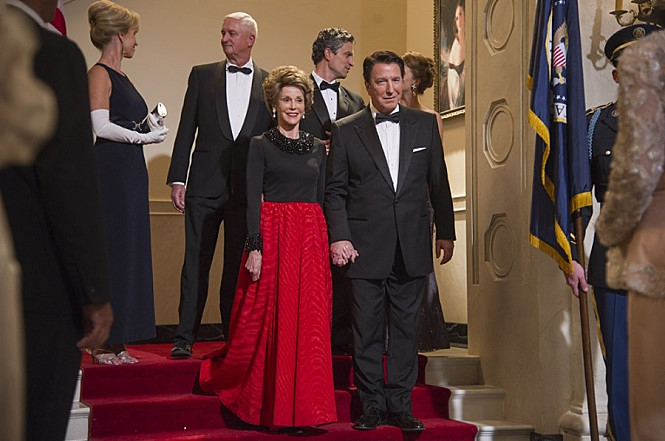
thebutler04 The actors do their best with their thinly characterized roles, and some of them are good while others are pretty awkward or wasted. Forrest Whitaker brings quiet dignity to his role while admirably carrying the movie, and Ophra Winfrey ably grabs her every Oscar moment, but I must say this movie is not their best moment. In case of other good actors like Terrence Howard, Cuba Gooding Jr., and Lenny Kravitz, they just come in and then go out, and the movie assembles quite an odd array of actors for playing US presidents. While Robin Williams surely looks awkward, the most bizarre miscasting in the movie belongs to John Cusack, who is very unconvincing as, surprise, Richard Nixon. Alan Rickman and Jane Fonda seem to having a small fun as Ronald and Nancy Reagan, but the movie quickly passes by them to reach to its ending.

Interestingly for the audiences here in South Korea, three films by the director Lee Daniels have been released in theaters one by one during this year. “Precious”(2009), which is still his best work to date, belatedly came early in this year, and then we had a flawed trashy amusement with his next work “The Paperboy”(2012) in this summer, and now we come to watch his latest work as winter is approaching. Compared to his other two distinctive works, “The Butler” feels like a mild safe product, and, though I could understand its good-natured intention and sentimental sincerity, I am not touched enough to recommend it.

thebutler02

Posted in Movies | Tagged , , , , , , | 2 Comments

The Hunger Games: Catching Fire (2013) ☆☆☆(3/4) : Fire gathering around her

thehungergamecatchingfire01While more or less than a bridge between the previous film and the next two films to come, “The Hunger Games: Catching Fire” goes into a more serious territory compared to the first film as its strong, independent, and distinctive heroine finds herself becoming the center of a big movement which may topple her futuristic dystopian society. Whether she likes it or not, she must deal with her another difficult situation, and, as literally shown in the film, more fire is gathering and whirling around her.

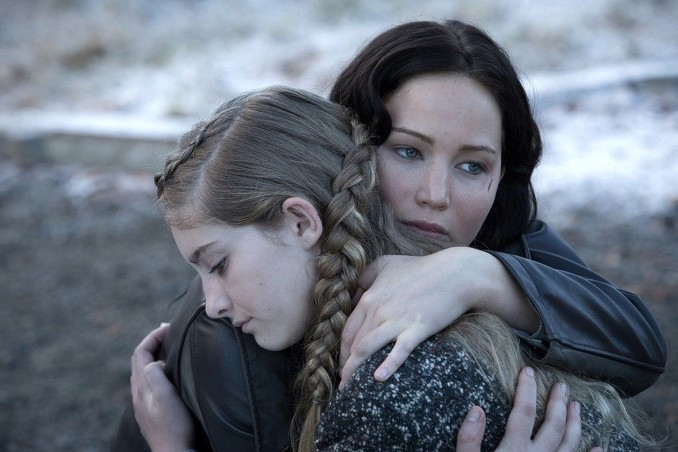
Without much explanation for the audiences who have not watched “The Hunger Games”(2012) yet, the movie goes straight to our cool heroine Katniss Everdeen(Jennifer Lawrence). It is a cold winter day several months after her exceptional joint win with her fellow tribute Peeta Mellark(Josh Hutcherson) in the 74th Hunger Game, and, as she tries to focus on her routine hunt in the forest, we see that she is suffering from post traumatic stress disorder along with the survivor’s guilt. Although she did not kill everyone in that deadly game, she killed some of them to survive with Peeta, and she also feels guilty about her failure to protect a little girl from District 11.

At least, her life in District 12, the poorest one among the twelve districts of Panem which have been ruled and oppressed by the Capitol at its center, has been a little better since her victory. She and her family now live in an area relatively comfortable and affluent compared to other poor areas in the district, and Peeta lives right across the street from her house with Haymitch Abernathy(Woody Harrelson), a previous victor who helped them win the game.

She wants to lead a quiet life along with them, but she knows well that it is impossible, for her crucial act for survival at the end of the game has spread the mood of rebellion among the districts. President Snow(Donald Sutherland), an aging sinister man who will do anything to keep his control intact, is certainly not so happy about this, and he has been looking for a chance to eliminate this possible danger inside ‘the girl on fire’ while not further provoking the districts.

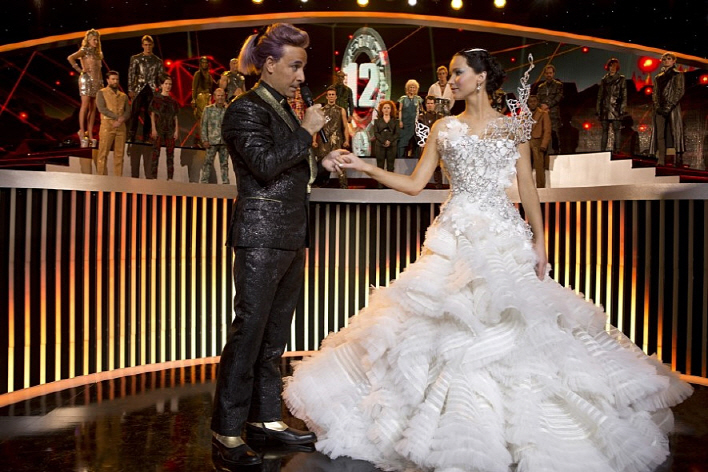
thehungergamecatchingfire07The first half of the story is mainly focused on the tension surrounding Katniss and others as she and Peeta go through the customary victor tour with the guidance of Haymitch and Effie Trinket(Elizabeth Banks, who is again having a good fun with the superficiality rivaling that of Marie Antoinette). Katniss and Peeta do an adequate job of looking like a romantic couple in front of many viewers and the flamboyant host Caesar Flickerman(Stanley Tucci with a slick wig and sparklingly shiny teeth), but there are the signs of rebellion everywhere even though she sticks to the procedure for protecting the people she loves and cares about.

Meanwhile, the 75th Hunger Games is approaching, and President Snow, with the new gamemaker Plutarch Heavensbee(Philip Seymour Hoffman) on his side, has a ‘twist’ for not only entertaining his people but also squelching the possible rebellion along with Katniss once for all. In this time, the previous winners during last 24 years will be thrown into the arena, and this will surely not be a pretty picture, considering that how close many of these winners have been to each other as friends or lovers.

As Katniss and Peeta are preparing for their another peril, we get to know a bit about some of their senior winners. Johanna Mason(Jena Malone) is a spunky and blunt woman who has no problem at all with taking off her annoying clothes completely in front of others, and that certainly amuses Peeta and Haymitch(but not Katniss). Beetee(Jeffrey Wright) and Wiress(Amanda Plummer) look nerdy compared to others, but they are the smartest ones who may survive through their intelligence as before, and Beetee has a nice plan to eliminate some of the competitors while temporarily allying himself with others including Katniss.

Based on the adapted screenplay by Simon Beaufoy and Michael Arndt(under the pseudonym Michael deBruyn), the director Francis Lawrence made a competent commercial film which moves its story at brisk pace during its long running time(146 minutes). The gray, wintry atmosphere of the first half makes a sharp contrast with the grand production design and gaudy costumes at the Capitol, and the jungle atmosphere inside the arena, which again reminds me of that big dome in Peter Weir’s “The Truman Show”(1998), is well established with several deadly threats including poisonous fog and a murderous herd of baboons. This is basically the familiar situation with different kinds of dangers, but the movie keeps its plot rolling with enough amount of suspense although we can easily predict in advance where it is heading to.

small_thehungergamecatchingfire05While many things in the previous film and this film do not feel that fresh, Katniss is a compelling heroine to remember, and Jennifer Lawrence, who keeps advancing along with her recent Oscar for “Silver Linings Playbook”(2012) under her belt, is convincing again as a strong-willed girl who just draws others’ attention by being herself and eventually, and reluctantly, comes to accept her role as a feisty symbol of defiance against the oppressive society. The movie depends a lot on Lawrence’s strong presence, and, as a SF movie strangely more obsessed with fashion design rather than futuristic technology, it boosts her star quality with several nice dresses designed by Cinna(Lenny Kravitz), who certainly gets on President Snow’s nerve thanks to his bold surprise involved with Katniss’s white wedding dress.

Many of the supporting performers in the film reprise their roles, and they are interesting parts of the story as before. While Elizabeth Banks, Toby Jones, and Stanley Tucci gleefully go into their respective caricature roles, Donald Sutherland and Woody Harrelson handle well their more serious parts, and other talented actors like Philip Seymour Hoffman, Jeffrey Wright, Amanda Plummer are enjoyable as new additional characters, though I think their roles could have been filled by lesser actors with no problem. Liam Hemsworth, who plays Katniss’ best friend, and Josh Hutcherson get the thankless job of playing two guys who happen to love Katniss, but their relationships with her are at least more thoughtful and mature than the Twilight films; they know that they are facing a problem far bigger than their trivial personal matter, and they are ready to deal with that just like her.

If “The Hunger Games” was a decent start for the franchise with considerable potentials, “The Hunger Games: Catching Fire” is a good development to satisfy its fans and other audiences like me. Although the movie does not delve deep into its futuristic setting(I still do not know how every district except District 12 came to have exactly two winners to be thrown to the game), I was sufficiently entertained while not bored, and Lawrence’s performance constantly held my interest. As implied in its cliffhanger finale, we will get two films based on the last book of Suzanne Collins’ trilogy, and, whatever we will get, Lawrence and Katniss will not disappoint us at least.

thehungergamecatchingfire03

Posted in Movies | Tagged , , , | 1 Comment

The Fake (2013) ☆☆☆(3/4) : A dark, disturbing animation from South Korea

thefake02 South Korean animation “The Fake” is so bleak and hopeless from the beginning that I even found myself wondering during its first 30 minutes how further it would possibly go – and it did go further as I was horrified by its merciless depiction of rampaging human evil and its devastating consequences. With its gritty and uncompromising style, this unnerving animation film presents us a seedy, depressing world where nobody is entirely clean while almost everyone is evil or foolish in each own way, and, to me and other South Korean audiences, this is a frightening nightmare reflecting our reality inside South Korean society.

Its two main characters are utterly contemptible to say the least, but we cannot help but watch them and their virulent interactions with disgust and morbid fascination. In case of Min-cheol(voiced by Yang Ik-joon, who previously made a remarkable debut with his brutal family drama “Breathless”(2009)), he is a middle-aged alcoholic loser with very violent temper, and we can instantly sense that he is not a good man; his rugged face virtually exudes hate and malice, and his words are seldom free of those profanities including ‘bitch’ or ‘f*cker’, and his behaviors propelled by alcohol are cruel and barbaric.

If he is miserable, his family becomes more miserable when he returns to their home after a short period of absence. His nervous wife is always frightened of him as before, and his daughter Yeong-seon(voiced by Park Hee-bon) is devastated to learn that he has snatched all the money she has been saving for her college education. Because she has just received the news of her passing the college enrollment examination, she protests in anger and tears, but all she can get from her lousy father is another domestic abuse to suffer.

thefake07 In desperation and frustration, Yeong-seon tries to find solace in the religion just like her mother has done, but, unfortunately, she turns to a wrong place along with her mother and other people in their country town. Because the town will be soon submerged in water due to the upcoming construction of dam in its area, and each of the town people received compensation money for moving to other places, and that was how a wily opportunistic scoundrel came into the picture. With a young gullible pastor as his front, Kyeong-seok(Kwon Hae-hyo) has been swindling lots of money out of the town people, and he is now near the final stage of his despicable scheme while keeping promising to the town people of their promised land to be purchased and prepared for them – and, of course, their places in the heaven above.

We see how he has been manipulating these poor people, and it is rather frightening to see how easily they are fooled by his ‘religious’ words and then how blindly they stick to their belief. They buy bottles of ‘miracle water’ from him without any doubt, and many of them have already given everything they have to him while absolutely believing in their places in the afterlife, and the meetings at the church are always full of hysterical chanting and prayers I once witnessed from a South Korean protestant church.

But the movie does not paint them as totally innocent victims at all. While giving some understanding to their confused state due to the imminent loss of their hometown, the movie also points out how petty and selfish they are. During a twistedly humorous scene, a woman forces her neighbour to confess something about her husband’s infidelity in front of others just because everyone has to be honest in front of God as a true believer, and then we see a dying wife demanding her reluctant husband to give everything to their church as soon as possible because she fears that there will not be any place left for her in the heaven if he doesn’t. The pastor(voiced by Oh Jeong-se), a good but flawed man with something to hide in his past, treats the town people with all the sincerity he has, but he chooses to remain silent even when he finally comes to learn what kind of evil he is being involved with.

thefake06 The dark irony of the story is that Min-cheol, the most evil man in the town, clearly sees what kind of evil Kyeong-seok is committing to the town people. Min-cheol happens to learn by coincidence that Kyeong-seok is actually a criminal wanted by the police, but, not so surprisingly, nobody believes his words at all. The local policemen mostly ignore him because they are sick of his repulsive attitude which will repel any decent person, and so do the town people, who have known well what a scum he is.
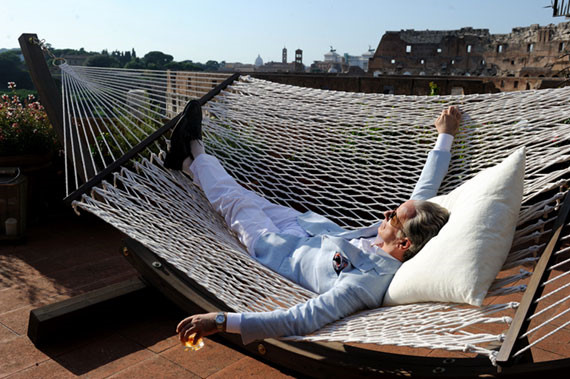
After beaten up by the goons hired by Kyeong-seok, Min-cheol is more determined to expose him as a fake, and Kyeong-seok also sees that he must do something about this SOB who can possibly ruin his scheme. The movie stays with its grim, pessimistic world view even at this point, and what we get eventually here is a very uncomfortable clash between two evils who are no worse than each other – and we come to slowly fear for what will happen to a few nice characters in the story including a hulking town idiot and poor Yong-seon, whose exhausted spirit is plunged further to another bottom thanks to two monstrous men in her ruined life.

The director/writer Yeon Sang-ho previously made a striking debut with “The King of Pigs”(2011), an equally disturbing animation film which shook me a lot despite its low-budget style while evoking a number of bad memories from my high/middle school years. Like “The King of Pigs”, “The Fake” was not a very pleasant work as a story about several serious social issues inside South Korea, but Yeon Sang-ho drives his uncomfortable story with style and conviction, and it is something I cannot forget easily. You may not like it, but it is definitely refreshing to see a talented artist using animation to show us something far more serious than what we usually expect from animation films.

thefake01

Posted in Movies | Tagged , , , , , | 3 Comments

The Great Beauty (2013) ☆☆☆1/2(3.5/4): An old man still strolling in La Dolce Vita

thegreatbeauty02 “The Great Beauty” is a grand visual tapestry from Paolo Sorrentino, who has established his status as one of the most interesting directors from Italy. As an apparent homage to Federico Fellini’s great film “La Dolce Vita”(1960), the movie serves us with various intriguing or dazzling sights as strolling around the days and nights of Rome with its jaded hero, and we willingly follow its loose, episodic stream of visuals from the beginning to the end even when it confounds or baffles us with its grand gestures to behold.

The movie is packed with many memorable moments to talk about, and its opening scene is a prime example. We see a singing choir above a fountain somewhere in Rome at first, and then we also see a group of Japanese tourists accompanied with their guide, and then everything is smoothly presented in a wide shot. This moment is soon interrupted by a sudden incident which feels like a striking discord in the middle of the performance; I wondered for a while about what this scene meant, but I think this sets the kaleidoscopic tone of the film, which, as it looks at its city lovingly and bitingly, goes for many various things contradicting or resonating with each other in their odd, distinctive combinations.

And then we are thrust into a wild, energetic night party on the rooftop, which is literally a crazy mix of music and dancing bodies. If “La Dolce Vita” shows us how exciting and decadent the night life in Rome was during its time, “The Grand Beauty” shows us nothing has changed much even in the 21th century. Music and clothes and hairstyles have surely been changed, but the people at the party are still going for fun and pleasure as before, as if it were the last party of their lives.

Amid his friends and other familiar faces, Jep Gambardella(Toni Servillo) observes everything in his usual detached mode although he is always at the center of every night event he attends. As listening to his introspective words, you may think of him as an older version of Marcello Mastroianni’s gossip journalist hero in “La Dolce Vita”; Jep also came to Rome when he was young, and, after getting the fame through his first(and only) novel which is pretty much forgotten now, he has been working as a celebrity gossip journalist for around 40 years while enjoying his own La Dolce Vita.

thegreatbeauty03He does not just live in this world but presides over it as a man at the top, and he has been rather weary of fun and excitement recently since his 65th birthday. He considers writing his second novel, and the signs of possible inspirations are spotted everywhere in his sight as he strolls around the streets of Rome, but he finds himself still stuck in his lifestyle. When we see him spending night time with his friends at his residence, it looks more like a meeting of addicts; their fun time is being over for them as they get aged, but they keep joining parties as they always did, and, as Jep points out in his acerbic response to the hypocrisy of one of his friends, they sort of comfort each other through being together as the fellow addicts who still cannot give up their jet-set lifestyle.

While reluctant about getting out of his comfort zone, Jeb also wonders whether there is any chance to discover the great beauty he once searched for as two women come into his life in their respective ways. One is a woman who was once his girlfriend a long time ago; after being notified of her death by her husband, Jeb slowly begins to wonder about their relationship in the past although he does not remember much about that except their brief time at the beach. The other woman is the stripper daughter of Jep’s long-time friend(she works in a strip club managed by her father, by the way); although they do not get that close, they become friendly with each other, and she indirectly reminds him of how he has wasted his time despite his awareness of it.

And the movie keeps throwing interesting moments to us as things keep happening around Jep and other colorful figures in his world. There is an absurd scene of a plastic surgeon promptly taking care of his patients, and his work rate is as fast as that of a fast-food chain employer taking orders from his customers. The private conversations between Jep and his dwarf editor have an extra dose of humor thanks to a big bear doll in the editor’s office, and there is a wonderful scene in which a living giraffe is placed at some historic site for the rehearsal of a magic show. We also see the countless photos on the wall capturing a man’s face being changed in the course of time, and there is a certain amount of poignancy as Jeb silently looks over them.

thegreatbeauty05While filled with so many things we are supposed to absorb, the movie seldom loses the control during its long running time(142-min), and the director/co-screenplay writer Paolo Sorrentino did a stunning job of giving us a bountiful and entertaining visual experience. Like his previous film “Il Divo”(2008), a darkly cheerful film about a notorious real-life Italian politician, the movie freely bounces around in its loose story structure but it never loses its way even when we become confused at times. Every scene looks interesting and compelling because of careful scene compositions and camera angles, and the cinematographer Luca Bigazzi beautifully captures the streets and bridges and buildings of Rome while Lele Marchitelli’s score has its several moments to shine amidst various types of music on the soundtrack.

And everything is revolving around an understated but graceful performance by Toni Servillo, who is simply fabulous as the emotional anchor of the movie to hold on for us. While looking mostly suave and reserved, Servillo masterfully handles the humor and emotions inside his character, and he and the movie eventually arrive at a small, bright realization in the end. While it feels like a glimmer of hope and change, it is also surrounded by sadness and melancholy over the time which will never be regained, and that feeling is further resonated with a slow but immersive long-take scene during the end credit. Nothing substantial happens on the screen during that scene, but, as leisurely showing another beautiful side of Rome, this coda certainly adds another layer of melancholic beauty to the film already full of sad wistfulness.

thegreatbeauty01

Posted in Movies | Tagged , | 1 Comment