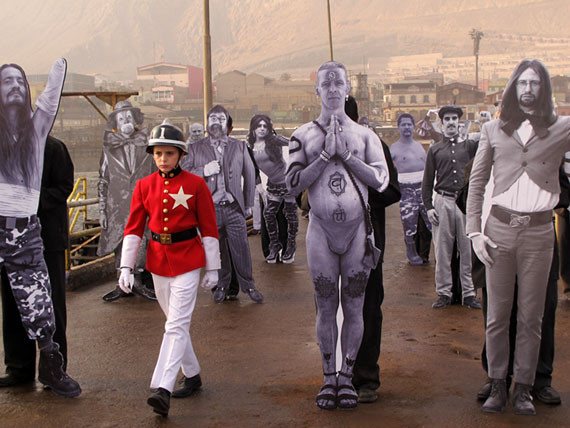
The Dance of Reality (2013) ☆☆☆1/2 (3.5/4) : Jodorowsky’s gentle but glorious comeback

thedanceofreality03

If you want something new, odd, and strange, Alejandro Jodorowsky is your movie director who will show something you will never forget for the rest of your life. With the bizarre and unforgettable mix of symbolism and mysticism shown in his two cult classic films “El Topo” (1970) and “The Holy Mountain” (1973), he quickly rose to prominence as a filmmaker of wild poetry and uninhibited imagination, and then, after more than 15 years, he returned with “Santa Sangre” (1989), a harrowing horror masterpiece which will dazzle and befuddle you with its dark, perverted phantasmagoria revolving around one tragically and murderously traumatized soul.

After his unpleasant experience during the production of the following film “The Rainbow Thief” (1990), Jodorowsky’s filmmaking career seemed to be halted for more than 20 years, but then he slowly began to draw attention as “El Topo” and “The Holy Mountain” were finally released from their long years of obscurity thanks to the end of his long conflict with their copyright holder Allen Klein. Around the time when “Santa Sangre” received a fantastic blu-ray treatment in early 2011, I heard about his possible comeback, and that surely induced curiosity in my brain, which still retains the vivid memories of a double feature show of “El Topo” and “The Holy Mountain” at a local arthouse movie theater during one afternoon of May 2007 (I remember that sensational tagline in the promotional leaflet: “Don’t you dare to imagine anything!”).

Two years later, Jodorowsky eventually made a comeback with “The Dance of Reality” at the Cannes Film Festival in May 2013 while Frank Pavich’s “Jodorowsky’s Dune” (2013), an engaging documentary about Jodorowsky’s failed dream project during the 1970s, was incidentally shown at the same festival. While it is gentler compared to his other works, “The Dance of Reality” shows that Jodorowsky is still full of wild imagination with no compromise on his idiosyncratic artistic vision, and this semi-autographical film gives us a heap of impressive moments through its superlative dance between personal memory and magic realism. As looking back at his rocky childhood, Jodorowsky reveals his deep personal feelings more directly than ever here in this film, and that is often quite poignant to watch as we come to sense that the movie also works as a sort of personal therapy for him to make a peace with his past.
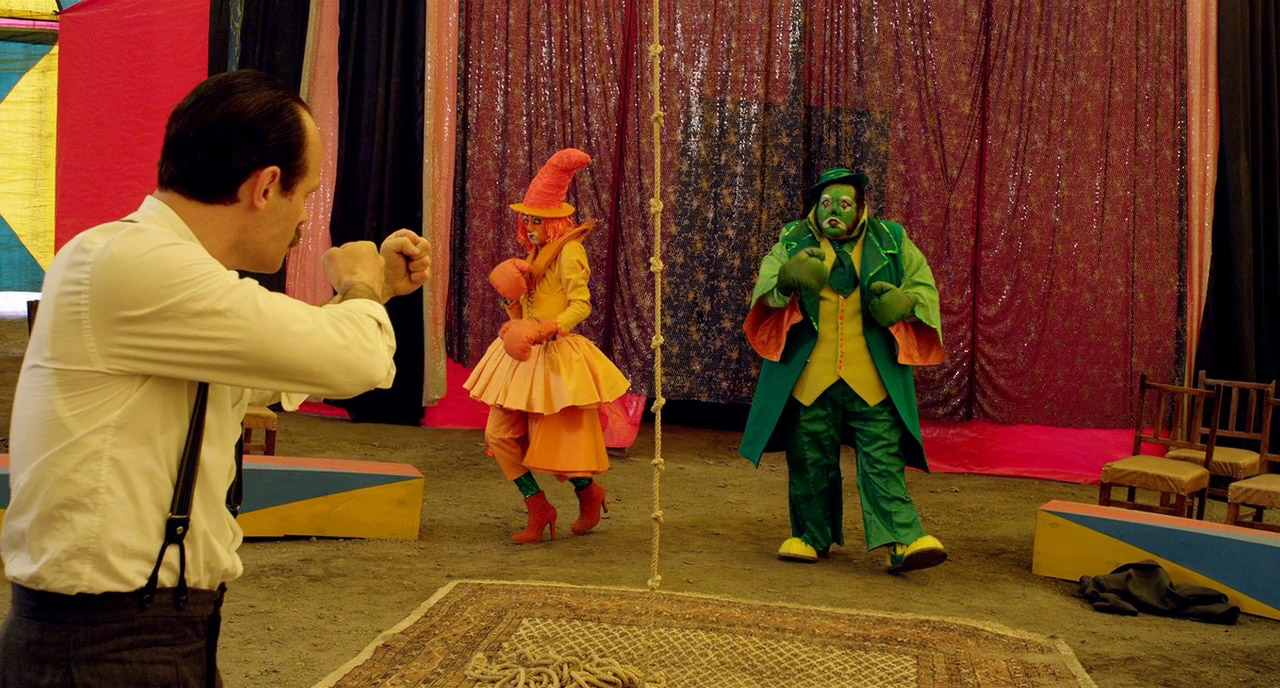
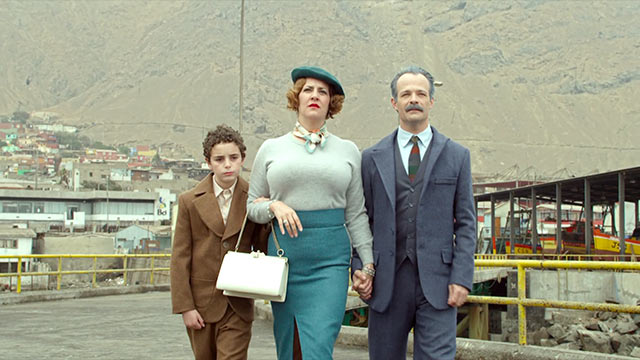
dancereality01Right after his arresting opening monologue about money and greed, Jodorowsky guides us into his childhood memories re-imagined through his own surreal approach which deserves to be compared with Federico Fellini’s “Amarcord” (1973). At first, we see a group of unknown people moving across the barren landscape of Chilean desert for some reason, and their shabby black clothes and umbrellas make a striking contrast to the next scene, which shows Young Alejandro (Jeremías Herskovits) and his father Jaime (Brontis Jodorowsky, who is one of Jodorowsky’s sons and also appeared along with his father in “El Topo”) visiting a circus troupe Jaime once worked with.

The gaudy ambiance of this scene clearly evokes those colorful circus scenes in “Santa Sangre”, and there are also many other scenes reminiscent of the bizarre touches we observed from Jodorowsky’s previous films. As watching the broad fictional depiction of young Alejandro’s troubled relationship with his parents, I was reminded of that twisted relationship between the disturbed hero of “Santa Sangre” and his differently oppressive parents. There is a harsh moment involving a bunch of people carrying some contagious disease, and their arrival in the town and the subsequent harsh response from town people took me back to one of the crucial scenes in “El Topo”. We also meet a dwarf hired to attract customers for Jaime’s clothes shop by any amusing means necessary, and then we get a weird moment of deformity when Jaime comes to confront a group of poor ex-miners variously and horribly crippled by their hazardous mine work.

For adding extra authenticity to his film, Jodorowsky went back to Tocopilla, a Chilean beach town where he spent childhood years during the 1930s, but he also freely hurls fantasy elements into his life story without hesitation. While his son Brontis plays Jaime with bold, broad style as a stubborn Stalinist who constantly enforces machismo on his shy, sensitive son, Pamela Flores gives literally operatic performance as Jaime’s buxom wife Sara while always singing through her lines in soprano voice, and this interesting combination of two different stylized performances on the screen is surprisingly compelling to watch even when we are conscious of its artificial aspects.

thedanceofreality06Besides being bounced between his parents, Young Alejandro has other issues to deal with during his unhappy childhood. As the son of a Jewish Ukrainian immigrant couple, he does not get along well with other boys in the town, and he feels hurt a lot when they cruelly reminds him of how he is different from them. Jodorowsky sometimes appears on the screen as comforting or communicating with his younger self, and the scene where he quietly soothes his tormented younger self on the cliff is one of the most heartfelt moments in the film (I learned later that he shot this scene on the same cliff where he really considered suicide during his early years).

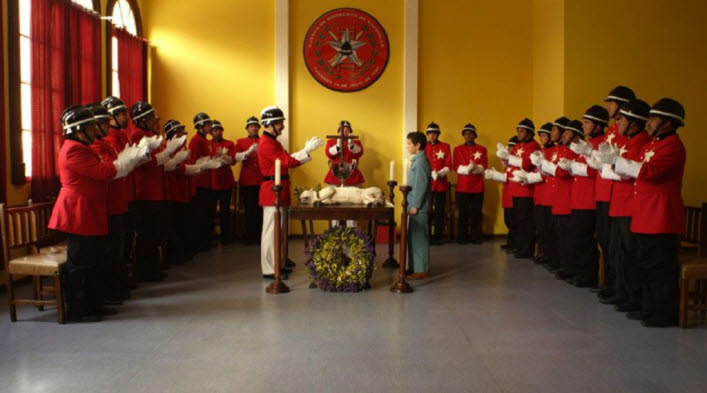
In the meantime, the movie keeps delighting or striking us with other fantastic scenes to remember or reflect on. As a smart, perceptive kid, Young Alejandro gets the first lesson of his life philosophy through beholding one unbelievable moment at the beach you have to see for yourself, and we witness the possible origin of his spiritual view through his cheerful and meaningful encounter with Theosophist (Cristóbal Jodorowsky, Jodorowsky’s other son who played the hero of “Santa Sangre”). Not long after becoming the new mascot of the local fire department because of his father’s insistence, Young Alejandro participates along with his father and others in a big funeral march for some deceased fireman, and he suddenly finds himself literally suffocated by a truly unnerving hallucination about death and decay in the middle of the procession.

And then there comes a very powerful scene which makes that infamous scene in “The Paperboy” (2012) looks mild in comparison. When Jaime happens to be in a very serious medical condition at one point, Sara does what she should do for him as a woman who still loves her husband despite all these abuses from him. Her emergency treatment coupled with her operatic singing is a bizarre sight simultaneously weird, poetic, vulgar, sublime, and touching, and Jodorowsky and his two main actors do not step back at all during this challenging scene which will grip you attention regardless of whether you are love or hate it.
thedanceofreality05After this turning point, the movie becomes rather sketchy and unfocused during its second half, though it does not entirely lose its power to hold our attention. As soon as he recovers thanks to his wife’s efforts, Jaime becomes determined to assassinate the Chilean dictator Carlos Ibáñez (Bastián Bodenhöfer). His botched assassination attempt at the dog show is followed by a long, torturous personal journey around religion and politics (Adán Jodorowsky, who also appeared in “Santa Sangre” like his brother Cristóbal, appears as Jaime’s accomplice), and he comes across several moments of personal enlightenment not only through Ibáñez but also others including a kind old carpenter who accepts Jaime as his temporary assistant when he is in desperate need of help.

In the end, the movie eventually culminates into a dramatic payoff which can described as a therapeutic act exemplifying Psychomagic, Jodorowsky’s own psychological/spiritual method for healing personal traumas. In his opinion, the subconscious area of mind can be liberated from traumas through the performance of symbolic act, and the haunting final scene in the film further emphasizes this as he says farewell to the pieces of his early years as a wise old man with understanding and compassion. Although I heard that his parents were more mundane while also more unpleasant in real life (for instance, his father never attempted any assassination, and his mother did not love her son much from the very beginning just because he was the product of one of many abuses from her cruel husband), Jodorowsky approaches to what Werner Herzog called “ecstatic truth” through his eclectic mix of fantasy and memory, and you may agree to what he said in one of the interviews on his film: “Everything in the film is true, but it’s explained with the language of art.”
thedanceofreality04“The Dance of Reality” is Jodorowsky’s most accessible work to date, and this can be a good entry point for you especially if you are not so familiar with Jodorowsky’s other works. The movie is not perfect, and I must point out that its special effects look as tacky as “Sharknado” (2013) and those cheap made-for-TV movies. While they do show the limits of production budget, they are used with purpose and imagination as adding more odd quality to the film, and the overall result is in fact far more refreshing than what I usually saw from those slick but forgettable blockbuster films drenched with bland CGI.

Recently passing through his 86th birthday in last month, Alejandro Jodorowsky is already set to make another film which will be a follow-up to “The Dance of Reality”, and it also seems that he has not yet given up the idea of making the sequel of “El Topo”. As shown in his lively interview clips in “Jodorowsky’s Dune”, this aging master is ready for whatever will come next in his career, and it is really nice to be confirmed through his latest work that he still has more awesome things to show us after all these long years.

thedanceofreality08

Posted in Movies | Tagged , , , | Leave a comment

Run All Night (2015) ☆☆☆(3/4) : A long night’s running into day

runallnight04Around two weeks ago, I came across the advertisement of “Run All Night” when I went to a neighbourhood movie theater with my brother, and I could not help but be sarcastic about that action movie in question. Not long after “Taken 3”, which was incidentally a pretty lousy way for me to begin the first week of this year, we were going to get another action movie starring Liam Neeson, and that was an understandable reason for my initial skeptical reaction to the movie, though I should not judge a film before watching it.

Anyway, I am glad to report that, though it is indeed another typical case featuring a moody, depressed tough guy which has been Liam Neeson’s own specialty since his first trial in “Taken” (2008), “Run All Night” turns out to be a lot better than “Taken 3” (2015). While there are surely lots of shootings throughout its running time, there is also considerable dramatic weight in the story, and its simple thriller plot is more engaging than expected as it occasionally focuses on its characters and their relationships between action scenes.

There was a time when Jimmy Conlon (Liam Neeson) was a notorious gang member feared by everyone around his neighborhood in New York, but now he looks more like an alcoholic loser leading his lonely daily life without much care about himself or others. Haunted by many crimes he committed in the name of survival, he is usually drunk while not being much help to his gang organization, and he even botches a simple job of playing Santa in front of kids at a party held at the house of his boss Shawn Maguire (Ed Harris).

runallnight02Conlon could have been eliminated or excluded from his organization if it had not been for the kindness of Maguire, who understands well Conlon’s moroseness as his close friend. When they are alone in a bedroom in Maguire’s house during one scene, they confide to each other on their old days with the bitter regret of survivors, and Neeson and Harris ably evoke the dark history of violence between their characters as they are reminded that they have no one but themselves as someone to share their old memories with. While these two old veterans of crime survived as winners on their mean streets, that prize came with an emotional price for both of them, and, as Conlon bitterly says to Maguire, they have no choice but to go on together along with their guilt and regret till the end waiting for them somewhere.

And it seems that inevitable point is near for them now. Maguire’s only son Danny (Boyd Holbrook), a reckless and volatile guy eager to impress his father, gets himself involved with the drug business of a local Albanian gang organization, and that eventually leads to his impulsive killing of two Albanian gangs. While this incident can cause a big problem to his father’s business, Conlon’s son Mike (Joel Kinnaman), an ex-boxer currently working as a limousine driver for supporting his family, happens to witness Danny’s killing, and that naturally puts Mike in a very dangerous circumstance.

After notified about this serious trouble between their sons, both Maguire and Conlon try to manage the situation as much as they can, but they soon arrive at the fateful point as they have to make a choice as two fathers caring about their respective sons. Although Mike still holds lots of grudges against a man who was far from a good dad to him in the past, his father is only possible option for him to save his family as well as himself from an imminent danger, and Conlon is already determined to do anything necessary for what may be the last chance to do something good for his son and his son’s family – even that means he has to fight against a man to whom he has been close for years.

runallnight03As Conlon and his son run away from Maguire’s gangs and the New York Police during their long, sleepless night, the director Jaume Collet-Serra, who previously collaborated with Neeson in “Unknown” (2011) and “Non-Stop” (2014), keeps the story moving under steady pace in spite of several clunky contrivances here and there in the plot. The action scenes in the film are a little too frantic because of choppy editing, but they are well-made ones while placed well along the plot to hold our attention, and there is also a suspenseful moment when Mike and his family must be quiet and careful for not getting killed.

Liam Neeson did another competent job of bringing human vulnerability to his character while looking tough and resolute whenever it is required, and Ed Harris is also effective as Neeson’s opponent. Like Neeson, Harris can be commanding in his own way, and it is always interesting to watch these two talented actors finding something to show and tell about their characters whenever they share the screen. While Boyd Holbrook plays his loathsome character with nervous intensity to admire, Joel Kinnaman holds his place well besides Neeson, and Common, who recently won Best Song Oscar for “Selma” (2014), gets a thankless task as a professional killer chasing after Conlon and Mike. Some of the small supporting roles in the film are filled by notable actors like Vincent D’Onofrio, Lois Smith, and Bruce McGill, and the brief but crucial cameo appearance by a certain well-known actor is another good element to mention in the film.

“Run All Night” is not the best work among Neeson’s recent action films, but it has more good things to enjoy compared to most of them, and Neeson shows again that he is still a dependable action movie hero with particular sets of skills. I gave “The Grey” (2011), which is the best of the bunch, 3.5 stars while giving “Unknown” and “Non-stop” 2.5 stars, so I guess it is fair to give “Run All Night” 3 stars considering the enough amount of entertainment I had during my viewing. I do not think I will remember it well after several months, but this is definitely a better alternative to “Taken 3”.

runallnight01

Posted in Movies | Tagged , , , | Leave a comment

Cinderella (2015) ☆☆☆(3/4) : A straightforward fairy tale with charm and pluck

cinderella02

“Cinderella”, another adaptation of a famous fairy tale known well to most of us, takes a straightforward approach to its original story, and that is sort of refreshing to me after many revisional versions of fairy tales I encountered at the movies during recent years. While we all know what will happen in the end, the movie has a number of nice touches in the story as being decorated with style, humor, and a bit of magic and wonder, and the result is a likable Disney family movie with enough fun and charm for both young audiences and their parents.

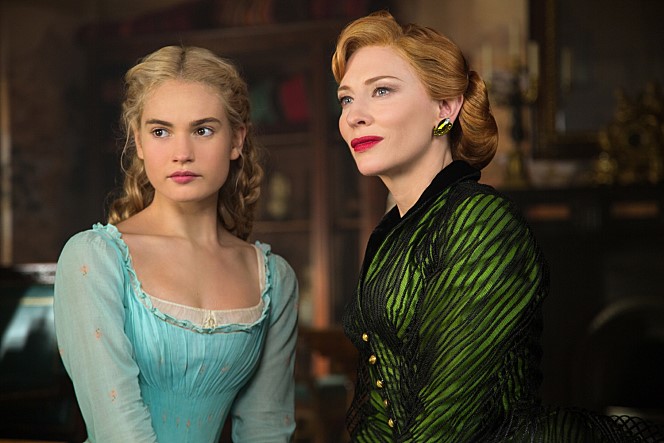
Lily James, a young British actress who fills her character with lots of warmth and pluck in her amiable lead performance, plays Ella, a kind, warm-hearted girl who always remembers her dying mother’s last words as the motto of her life. Ella’s mother (Hayley Atwell), who died early due to her sudden illness when Ella was a little precious girl, told Ella that she should never lose the ability to be kind and courageous, and Ella certainly grows up to be a young woman her mother would be proud of. She usually brightens up the mood of her household through her sunny, optimistic personality, and she is kind and generous even to a quartet of mice in her big house.

Her loving father (Ben Chaplin) has lived for his dear daughter since his wife’s death, and they have been happy together for many years, but he recently begins to consider marrying again for a practical reason. When he brings out this matter during his private conversation with her, Ella gladly encourages her father’s decision because she cares about her father’s happiness as much as he hopes the best for his daughter.

cinderella04Ella is ready to welcome her father’s second wife who is a widow left alone with her two daughters after her first husband’s death, but Ella’s stepmother is a mean, selfish lady who only regards Ella as someone disagreeably standing on her way. While her character is on the lightweight level compared to other memorable Disney villainess such as Maleficent or Cruella de Vil, Cate Blanchett has a fun with her character’s vicious side thinly veiled behind her expensive dress and duplicitous smile, and we also cringe at the sight of Ella’s two horribly superficial stepsisters, who are broadly played by Sophie McShera and Holliday Grainger on the level of sheer caricature.

After Ella’s father unexpectedly dies during his another business trip not long after his second marriage, Ella’s stepmother begins to abuse and exploit her stepdaughter with no hesitation. Besides being sent to the attic which is going to be her new place, Ella is treated as more or less than a mere housemaid by her stepmother and stepsisters, and we also see how she happens to get her new name at one point. As a strong-willed girl who never stands back from adversities, Ella manages to keep her spirit high in spite of this unfair mistreatment for a while, but then she finds herself being near the breaking point when she is cruelly prevented from going to a grand ball to be held at the royal palace.

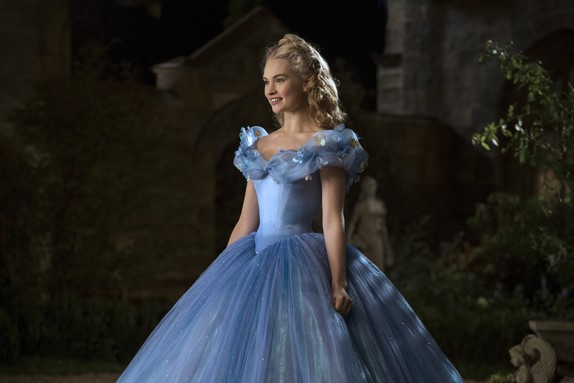
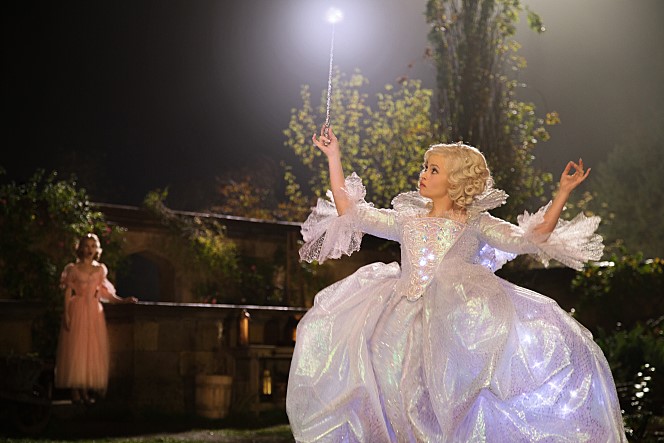
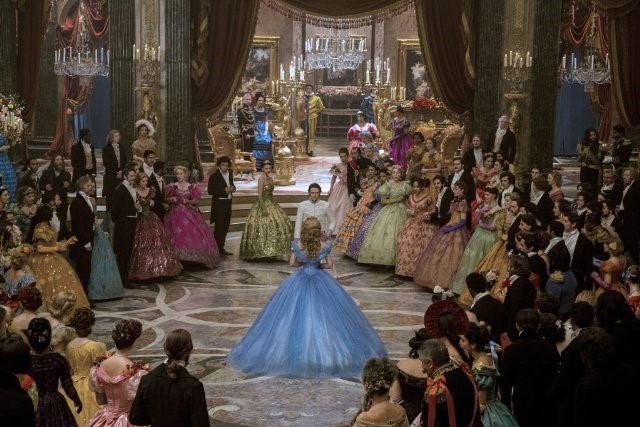
Of course, that is the point where Fairy Godmother (Helena Bonham Carter in cheerfully dotty mode) suddenly appears right in front of our unhappy heroine, and you know the rest of the story. There is an expected magical moment of transformation for Ella and other animals who willingly assist her ride to the royal palace, and then we get the series of gorgeous moments full of sumptuous production design and exquisite costumes by the courtesy of multiple Oscar winners Dante Ferretti and Sandy Powell. The cinematography by Haris Zambarloukos is deft in its fluid movement around sets and costumes, and Patrick Doyle, who has steadily collaborated with the director Kenneth Branagh since Branagh’s directorial debut work “Henry V” (1989), provides a number of excellent pieces of dance music for this part.

cinderella03While there surely comes Prince Charming for Ella (is that a spoiler to you?), the screenplay by Chris Weitz adds more substances to the relationship between Ella and Prince (Richard Madden). They already came across each other before in a forest near Ella’s house, and it was a love at first sight for both of them although they hid their respective identities from each other at that moment. Prince was charmed by her beauty while also touched by why she tried to spare a stag he and others were hunting, and Ella saw a man of decency and honesty from this handsome ‘apprentice’.

When they meet again at the royal ball, they are confirmed of their mutual feeling as having a chance to spend their own private time together, but then such a happy moment quickly passes by as the clock is about to chime midnight. In addition, Prince may have to marry someone else for the future of his small kingdom, and that puts another complication into their situation. The King (Derek Jacobi) clearly sees what his son’s heart wants from the very beginning, and there is a small moment of poignancy later in the story when he gives a sincere advice to his son as a dying man with very little time to live.

Compared to “Thor” (2011), a bland, colorless superhero film which was also one of the lowest points in the ongoing Marvel Comics franchise in my opinion, “Cinderella” shows Kenneth Branagh back in his usual colorful mode of grandeur and exuberance we saw from his brash adaptations of Shakespeare works. The movie is packed with considerable amount of flair and energy under his skillful direction, and I was entertained by its visual moments while also caring about the story. This may not be the definite version to replace the 1950 Disney animation, but it is a lovely version with gentle heart behind its nice efforts.

Sidenote: Short animation film “Frozen Fever” is shown before the beginning of the screening. If you love Oscar-winning animation film “Frozen” (2013), you will probably enjoy it.

cinderella05

Posted in Movies | Tagged , , , | Leave a comment

Socialphobia (2014) ☆☆☆1/2 (3.5/4) : A Death on the Social Network

socialpobia02 South Korean film “Socialphobia” is a very disturbing mystery film for our advancing era of online communication. Thanks to the rapid development of communication technology, we have more freedom to exchange and express our thoughts and feelings with many other people on the Internet, but this useful technological development also opens the door to many unpleasant cases of human indecency we hear about from time to time. Behind the mask of anonymity or the armor of mob mentality, people can be very mean and cruel to someone else at the other end of the communication line, and, sadly, what is shown in the movie is not so far from our reality.

Everything begins with one thoughtless twitter comment on the recent suicide incident of a deserter which becomes the news of the week as drawing lots of attention on the Internet. The online quarrel between this anonymous female twitter user in question and other angered users ensues right after that crude comment, and then almost everything about Ha-yeong (Ha Yoon-kyeong) is virtually exposed to everyone who has any slightest interest in the ongoing quarrel. It may be easy to hide behind anonymity on the Internet, but it is also pretty easy to get yourself naked in front of the unforgiving stare of many unknown people once you are marked – and it is also not that easy to take back whatever you said or wrote on the Internet.

After getting more provoked by Ha-yeong’s hostile responses, a group of young guys decide to shame her with a full exposure through online broadcast during one night. As approaching to an apartment building where she lives, they cheerfully broadcast their progress on the Internet and they even take a group photograph before embarking on this petty and vulgar act of public humiliation which will surely give them a moment of sweet revenge.

socialpobia05However, their mean fun is quickly dissipated as they slowly come to realize something is terribly wrong. The front door of Ha-yeong’s apartment is unexpectedly left opened when they finally arrive at the spot, and then they come to discover the horrifying consequence of their action after entering her apartment. It seems Ha-yeong has committed suicide not long before they arrive, and now they have labeled themselves as the perpetrators of this regretful tragedy in front of everyone watching their online broadcast, though they are not technically guilty in legal sense.

In case of Ji-woong (Byeon Yo-han) and Yong-min (Lee Joo-seung), they find themselves in a particularly difficult position as realizing more of how much this incident can affect their future. They have been preparing for joining the police, and it goes without saying that the incident will be a permanent blemish in their record, which will certainly not look that good to their interviewers even if they pass the exams. To make the matters worse, Ji-woong becomes the next target of online witch-hunt after his involvement in the incident is exposed on the Internet, and his plight is not just confined within the online world as reflected by one brief but painful scene.

As their situation becomes gloomier day by day, Ji-woong is drawn to a small possibility suggested by Young-min. As they think more about that fateful night, there was something suspicious about Ha-yeong’s sudden suicide, and then they come to learn that she was actually a notorious troll who had annoyed and infuriated many other online users through her cruel, vicious trolling activities. It begins to look possible to Ji-woong and Young-min that someone killed her and then made her death look like a suicide, and this possibility looks more plausible as Ji-woong and Young-min join others to search for any useful clues to help their private investigation.

socialpobia01Mainly because it is clear to us how biased they are from the very beginning, we look at their rather clumsy investigation process with a certain amount of skepticism as their conspiracy theory with no solid basis becomes an increasingly (and alarmingly) popular gossip topic around other online users, but the director/screenplay writer Hong Seok-jae steadily maintains the level of intrigue and mystery on the screen. He carefully doles out bits of information to us and his characters one by one, and there are a number of calm but tense moments solely based on the interactions between the main characters and possible suspects through Twitter or other kinds of social network services. The movie further utilizes this simple approach for gut-wrenching emotional effects during one grim scene, and it is eventually followed by the climactic sequence simultaneously ironic and devastating.

The characters in the film are not very likable due to their superficial sides and selfish or unpleasant behaviors, but, Byeon Yo-han, Lee Joo-seung, and other actors in the film look believable in their good performances as banal online users you may come across if you wander around South Korean online communities for several hours. The movie becomes a little more humorous at one point when they happen to confront one of their possible suspects who turns out to be as affluent as he seems on the surface, and it also shows some pity, if not sympathy, to Ha-yeong when Ji-woong and Yong-min come to learn more about her troubling personality through an accidental encounter later in the story.
While there are a number of loose ends along with several predictable turns, “Socialphobia” remains to be a compelling film with thought-provoking subjects, and you may think more seriously about how to deal with online communication after watching this small but impressive work. In case of me, I have been so far comfortable with using my real name for years on Twitter and other online services, and I have been well aware of harms and annoyances on the Internet, but who knows what can possibly happen to me in the virtual space where anything is possible?

socialpobia06

Posted in Movies | Tagged , , | 1 Comment

Force Majeure (2014) ☆☆☆1/2 (3.5/4) : Trouble in family vacation

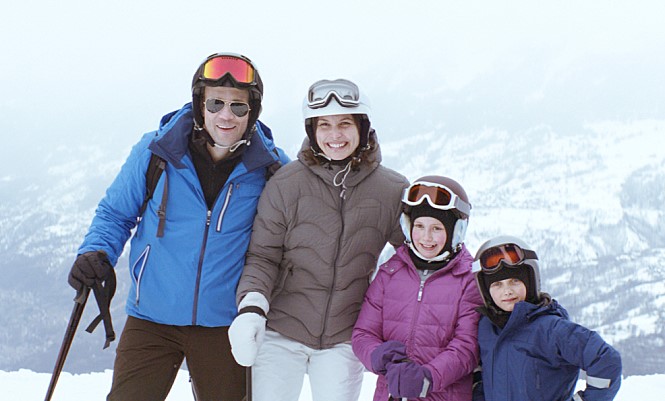
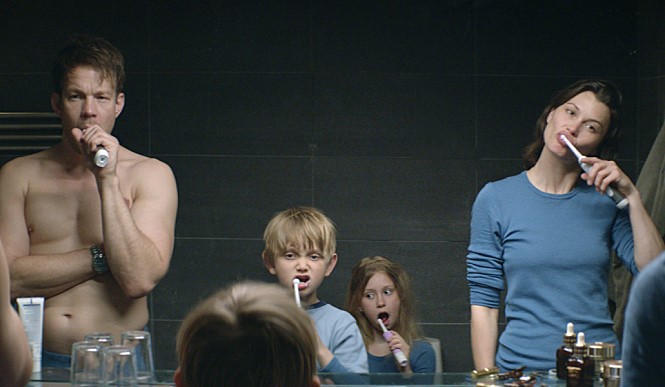
forcemajeure01Swedish film “Force Majeure”, which is probably the funniest and smartest film I have seen during this month, handles its intimate but edgy drama with wits and elegance to savor and admire. Like many good stories, it presents fully established characters at the beginning, and then it simply observes what they are going to do next once they are put into a circumstance to deal with. As enjoying its many bitingly humorous or amusingly insightful moments generated from their serious personal matter, we come to ask ourselves: how will we respond if we are in such a circumstance like that?

At the beginning, it just looks like your average family vacation at some nice ski resort in the French Alps. Tomas (Johannes Bah Kuhnke) is glad to have a break from his busy business work, and his wife Ebba (Lisa Loven Kongsli) and their two kids are looking forward to having more fun together with him as happily spending the first day of their vacation in this wonderful winter vacation spot. Surrounded by snowy peaks and many ski slopes, the resort looks fantastic outside while providing a warm, comfortable modern interior environment for its guests, and I must confess that I felt the urge to visit this place even though I have very little interest in ski or any other kinds of winter outdoor sports.

And then something happens when Tomas and his family are having a lunch at the rooftop restaurant after enjoying their morning ski on the second day. One of those occasional reports in the ski resort causes another artificial avalanche as usual, and everyone including Tomas’ family at the diner looks at the avalanche with wonder and excitement, but then this approaching avalanche, which seemed to be under control at first, begins to look alarmingly big enough to engulf them all. As soon as people start to run away in panic, the dining spot is immediately covered with the white shroud of snow smoke, and we get a brief but unnerving moment of blank uncertainty filling the whole screen for a while.

forcemajeure02Fortunately for everyone, they merely got scared just because of a little bigger avalanche which did not reach to the restaurant at all, and everything goes back to normal not long after that, but this causes the rift in Tomas’ family due to what he did during that very moment of possible danger. While Ebba clearly sees and remembers that (you can confirm that she is not wrong at all, if you focus closely on that sequence in question), Tomas stubbornly denies that to her befuddlement, and that troubles Ebba more. She has believed that a man she loves is someone she and their kids can always depend on, but now a nagging doubt creeps into her mind.

Needless to say, it was really lucky for them and others that nothing serious happened, but she is still conflicted on how she can deal with that undeniable fact she witnessed with her very own eyes. She talks about what she saw from her husband when they have a dinner with a couple later in the evening, but Tomas still sticks to his version, and that causes another conflict between them. Spending her own time alone on the next day, she has a conversation with a woman who has a more flexible view on marriage and family, but that does not help her much and she has more doubts on her relationship with Tomas.

The strain between Ebba and Tomas begins to grow more and more even when they try to look all right in front of their kids, who are not oblivious at all to what is going on between their parents. Tomas’ close friend Mats (Kristofer Hivju) comes to the ski resort with his young girlfriend later, and he and Fanni (Fanni Metelius) find themselves in a very sensitive situation they must tread carefully when Ebba speaks again about the avalanche. Becoming the reluctant mediators for Tomas and Ebba’s marital conflict, Mats and Fanni try to make things resolved well for everyone in the room, but then they come to see the fragility of their own relationship as defending or supporting Tomas and Ebba, and that leads to a very amusing conversation scene which brought lots of laughs and chuckles from the audiences around me during the screening.

forcemajeure06Under the director/screenplay writer Ruben Östlund’s smooth, assured direction reflected by thoughtful scene composition and precise narrative rhythm, the movie effortlessly tiptoes on a thin line between tense drama and absurd comedy. It finds an abundant source of black humor in Tomas and Ebba’s increasingly frustrating conflict as recognizing their pain, anger, embarrassment, and humiliation resulted from it, and the excerpt from Antonio Vivaldi’s Summer Concerto gradually sounds like a running gag as frequently played again and again on the soundtrack along with wintry outdoor scenes. I especially like how Östlund deftly stages two different comical scenes involved with a resort employee, and then there is a hilariously embarrassing scene which is so painfully funny that you may wonder whether you can laugh about that or not.

Nevertheless, the movie never overlooks how serious the circumstance is for its characters, and the actors give excellent nuanced performances to maintain human interests in the film. Johannes Bah Kuhnke and Lisa Loven Kongsli are convincing in their every step of depicting the constantly shifting dynamic between their characters; Kuhnke is particularly good in his subtle presentation of the gradual implosion inside Tomas as he comes to find it more difficult to deny that he made a wrong choice when his family urgently needed him, and Kongsli is equally terrific as the more opened one of the pair. While Kristofer Hivju and Fanni Metelius bring some lightweight mood into the film, young performers Clara and Vincent Wettergren have their own small moment as Tomas and Ebba’s kids, and it reminds us again of what is being at the stake in Tomas and Ebba’s conflict.

“Force Majeure”, which received the Jury Prize of the Un Certain Regard section at the Cannes film festival in last year and was also selected as Sweden’s official submission to the Best Foreign Language Film at the Academy Awards of this year (it was not nominated although it was selected in the final list before that), is a very funny comedy about human nature and relationship. The movie may be vicious in its barbed humor, but it observes recognizable human behaviors with amusement and understanding, and its sly finale winks at us with something to think about. As someone said, nobody’s perfect, and maybe that is what you have to keep in your mind as starting a relationship with someone.

forcemajeure0r

Posted in Movies | Tagged , , , | Leave a comment

Leviathan (2014) ☆☆☆1/2 (3.5/4) : A moody, fatalistic social drama from Russia

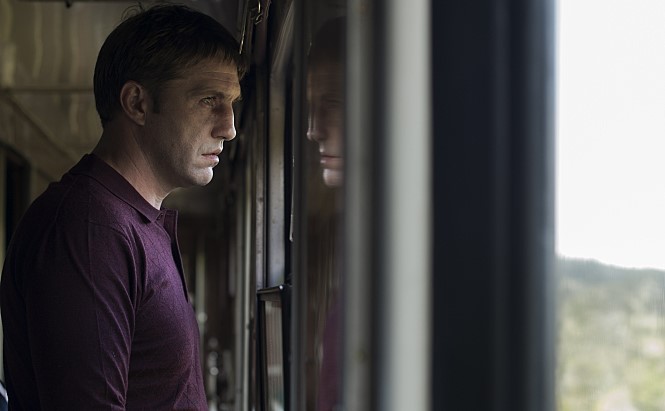
leviathan03Reticent and foreboding right from during its first scene, Russian film “Leviathan”, which was recently Oscar-nominated for Best Foreign Language Film early in this year, is shrouded in a moody, fatalistic aura of ill fortune. Even when things seem to become a little better for its ordinary main characters, there is always a subtle but palpable sense of the wheels of fate inexorably operated under the surface, and we come to witness a bitter irony in how that pitiless operation is further lubricated by power, greed, and corruption in their desolate world.

When we meet Kolya (Aleksey Serebryakov) at the beginning, he has been going through a legal conflict with Vadim (Roman Madyanov), the powerful and corrupt mayor of his beach town which is located somewhere in the Kola Peninsula in northwest Russia. While we are not informed a lot about their conflict, we slowly gather that Vadim forced Kolya into a rather unfair deal because he wanted to buy Kolya’s land with a cheaper price for some important business deal. Kolya already submitted a petition to the local court, but, not so surprisingly, the petition was denied for the reason pretty clear even to us even though it is not mentioned at all.

However, it seems that Kolya has a good chance in this time although his petition is flatly and swiftly denied again at the high court along with the monotonous fast-reading of the final judgment. His lawyer Dmitri (Vladimir Vdovichenkov), a smart, resourceful guy who comes to help Kolya from Moscow as an old military buddy (we later get a brief glimpse of their past through one small photo of them), acquires certain incriminating documents detailing the long history of Vadim’s corruption, and they may get a better settlement with Vadim outside the court if they use these documents in blackmailing him.

leviathan05But then we observe more of how formidable Vadim is in his territory. This is a guy who has secured his position through many connections with high-ranking officials above him, and this loathsome fat cat is certainly not so pleased to learn that some hotshot lawyer from Moscow has gotten his weak spots to expose. Mainly because the election is coming, Vadim has no choice but to step back in front of the possible full exposure of his corruption in public, but he is still a man of power and influence none the less, and he even gets a pep talk from a local bishop, who has probably turned a blind eye to Vadim’s many sins for his own benefit.

And we can surely see his big influence even when he does not appear on the screen. During one scene where Kolya and Dmitri go to the local police station for reporting Vadim’s drunken disturbance in front of Kolya’s house during the previous night, Kolya’s inadvertently gets himself arrested thanks to his hot temper, and Dmitri and Kolya’s wife Lilya (Elena Lyadova) are frustrated to see how they are deliberately blocked by the corrupt, ineffectual system, though Kolya is eventually released later.

While not hurrying itself, the screenplay by the director Andrey Zvyagintsev and his co-writer Oleg Negin, who received Best Screenplay Award at the Cannes Film Festival in last year, slowly reveals more about its main characters bit by bit, and the actors in the film are believable in their natural performances as people struggling through their mundane daily life without much hope. When Lilya goes to some cheap apartment to check her family’s new place, the blank space in front of her eyes quietly suggests her frustration with life, and we are not so surprised when she later chooses to do something which is not so wise for her as well as others around her.

That unwise behavior of hers eventually leads to a crucial turning point which is incidentally not shown on the screen, and the movie only lets us watch the resulting effects on her and others in the aftermath. Kolya’s son Roman (Sergey Pokhodaev), who has a fair share of his own problems as an adolescent boy, is deeply troubled by what happened, and there is a short but heartbreaking moment when he tries to deal with his mixed feelings alone on the beach. Mired in more despair and misery through the series of bad incidents, Kolya begins to ask himself how things become worse for him and his family, but then fate slaps him much harder as he realizes how helpless he is in front of an absurd and cruel twist of fate. While Zvyagintsev said that he got the main idea of his story from a real-life incident in US, there is an apparent parallel between the story and that biblical tale of Job, and that makes the climactic scene of the film all the more ironic as we reflect on what is said during this scene, which is full of hypocrisy to amuse and disgust us.

leviathan02
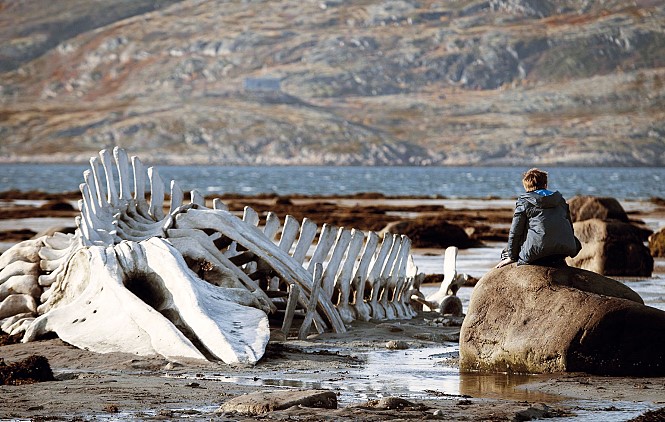
There are several murky aspects in its story, and I sometimes felt it held itself a little too much, but “Leviathan” is a compelling work thanks to Zvyagintsev’s confident direction. The grey, chilly landscapes on the screen emphasize the nervous mood of ambiguousness as accentuating the sense of despair and desolation surrounding the characters, and there are a number of striking moments of bleak beauty as the camera shows a couple of ruined sea-faring boats nearly submerged in the water or a big, giant white skeleton of whale left alone on the beach. While music is mostly absent throughout the film, the excerpt from Phillip Glass’s opera piece “Akhnaten” is impressively used during the opening and closing scenes, and its relentless detached cyclic rhythm effectively complements the moody ambience of ominous sea landscapes shown on the screen.

The overall mood is grim and depressing indeed along with the frequent appearance of vodka bottles, but the movie is not without humor. During a family picnic of Kolya and his two close friends, there is a moment of wry humor when the portraits of several Soviet political leaders including Lenin and Gorbachev are used as additional shooting targets, and the movie throws a small indirect jab at the current status of Russian society when one character makes an amusing remark on why they do not have the portraits of recent Russian political leaders for shooting targets.

Like Zvyagintsev’s two previous films “The Return” (2003) and “Elena” (2011), “Leviathan” is calm and distant as taking its time to establish story and characters, and it may test your patience if you are not a fan of those ‘slow’ arthouse movies. Of course, this is not exactly for entertainment, but there are lots of things to admire once you follow its slow pace, and you may sense anger and concern behind its reticence as getting chilled by how a beast called system can crush an individual with no mercy.

leviathan01

Posted in Movies | Tagged , , , , , | 1 Comment

Sunshine on Lieth (2013) ☆☆☆ (3/4) : Love, music, and Edinburgh

sunshineonlieth01
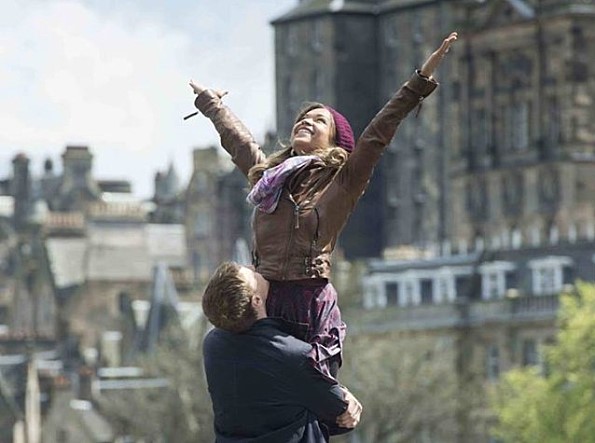
Although it has usual weaknesses as a musical film mainly depending on individual moments of music and choreography more than plot and characters, “Sunshine on Lieth” is not without charm and energy to entertain us. Its plot revolving around several romantic relationships is more or less than an excuse for its parade of various well-known songs by The Proclaimers, and it often feels contrived and superficial as juggling its plot lines, but it serves us with lovely feel-good musical moments while its background certainly gives it a nice raw touch of local flavor to appreciate.

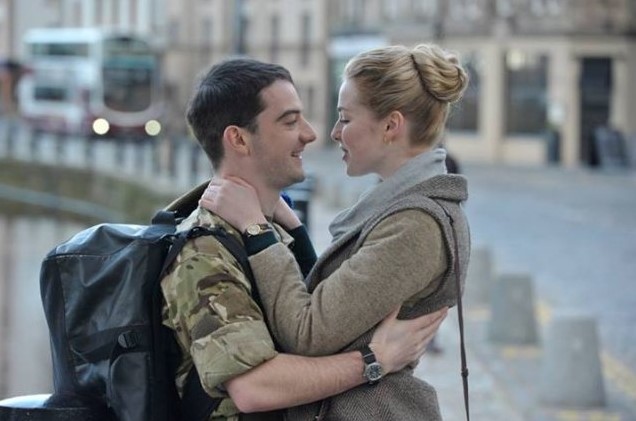
After the moody opening scene accompanied with “Sky Takes the Soul” sung by a group of British soldiers on a mission in Afghanistan, the movie moves to a more lively scene showing the homecoming of two Scottish lads Davy (George MacKay) and Ally (Kevin Guthrie), who have just returned to their neighbourhood in Edinburgh after finishing their military tour in Afghanistan. Regardless of whatever they endured during the tour, they are happy to come back to their dear city, and their jolly mood is nicely expressed as they lightly sing and dance with “I’m on My Way”.

Liz (Freya Mavor), Davy’s sister who is also Ally’s girlfriend, is happy to see them again as much as her parents, and she soon arranges a double date for introducing her brother to Yvonne (Antonia Thomas), Liz’s co-worker at a local hospital. As a girl from England, she is pretty much like a foreigner in Edinburgh, but she and Liz get along well with each other, and something clicks between her and Davy as they spend more time together along with Ally and Liz.

sunshineonlieth03As trying to adjust himself to normal life like Davy, Ally begins to consider proposing to his girlfriend, but then there is one complication which will affect their relationship. Having always hoping for going around the world beyond Edinburgh, Liz recently comes across a good chance to get her wish; she applies for a position in some hospital in Florida, and that means she may be separated from Ally again, which naturally makes her conflicted between love and dream.

Meanwhile, we also look at the relationship between Liz and Davy’s middle-aged parents, who are about to have the 25th anniversary of their marriage. While there is no question about how much Robert (Peter Mullan, who was wonderful in “Tyrannosaur” (2011)) and Jean (Jane Horrocks from “Little Voice” (1998)) love and care about each other, it turns out that Robert had a brief affair he has been hiding from his wife for more than 20 years, and now he has to decide how to deal with this matter when he is notified that he has a grown-up daughter he has never known before.

It will not be much of a spoiler to tell you that all of these storylines will be driven to the point of conflict along with the big musical scene which mainly functions as the dramatic end of the first act. Things happen exactly in a way you can predict in advance during this scene, and the same thing can be said about the rest of the story; there are a number of artificial plot turns and melodramatic moments to be accentuated through music, and you can clearly see its predetermined finale from the distance.

sunshineonlieth02

This weak aspect of the film is mostly covered by its good cast members who also sing for themselves as well as the solid handling of musical scenes by the director Dexter Fletcher, but the movie feels clumsy especially when there is not music. While Geroge MacKay and Antonia Thomas have a nice romantic vibe between them as two different characters drawn to each other, the depiction of their relationship is actually the least convincing element in the film as it is thrown into one direction and then another one during a little too short running time. In case of Ronnie (Paul Brannigan from “The Angel’s Share” (2012)), Davy and Ally’s army friend discharged for his battle injury, his main function is merely giving a small dose of difficult reality to the story, and his brief scenes feel rather underdeveloped and redundant despite the inherent sense of loss and damage in these scenes.

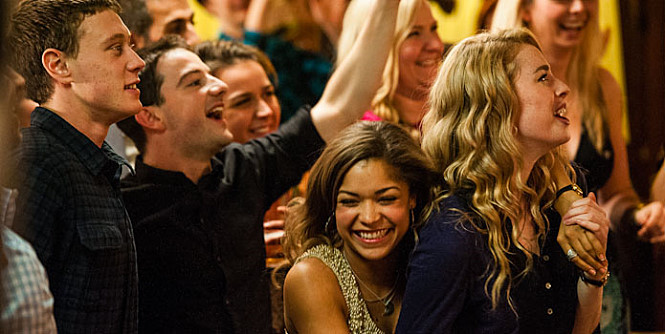
None the less, the movie still works whenever its music is turned on. I liked that rambunctious pub scene featuring “Over and Done With”, and I also enjoyed another equally cheerful moment coupled with “Let’s Get Married”. Although Peter Mullan may be not a very good singer compared to his co-actors, his plain, gruff performance of “Oh Jean” is one of the key moments in the film as Robert expresses his deep, unadorned affection toward Jean through his singing in front of others. As Jean’s co-worker at the National Museum, Jason Flemying has a small fun with his flamboyant rendition of “Should Have Been Loved”, and Jane Horrocks has her own moment as Jean tries to sort out her mixed feelings through “Sunshine on Lieth”.

“Sunshine on Lieth” is based on Stephen Greenhorn’s jukebox musical with the same name (he also adapted it for this film). I did not have an opportunity to watch the stage version, but I can say that “Sunshine on Lieth” is a fairly solid adaptation with good mood and music to enjoy, and its earnest musical presentation fits well with those nice locations in Edinburgh. Although it is not something as wild as “Across the Universe” (2007), the movie is less tiresome compared to those slick, bland products such as “Mamma Mia!” (2008) and “The Jersey Boys” (2014), and you will probably find that it is not so difficult to accept its conventional ending as a certain very famous song by The Proclaimers is played on the soundtrack. I knew that song would make an appearance sooner or later, but, what the heck, it is a pretty good song I can always listen to, and the movie does its final job better than expected.

sunshineonlieth05

Posted in Movies | Tagged , , , , , | 1 Comment

The Well-Digger’s Daughter (2011) ☆☆☆ (3/4) : A relaxed rural tale in Provence

AWELLDIGGERSFrench film “The Well-Digger’s Daughter” gives us a likable case of how good storytelling can engage, surprise, and touch us. While its main characters may be broad and simple, they are presented as people filled with life and personality, and its several apparent melodramatic devices actually serve the story better than expected as we come to care about not only its young heroine but also other characters around her.

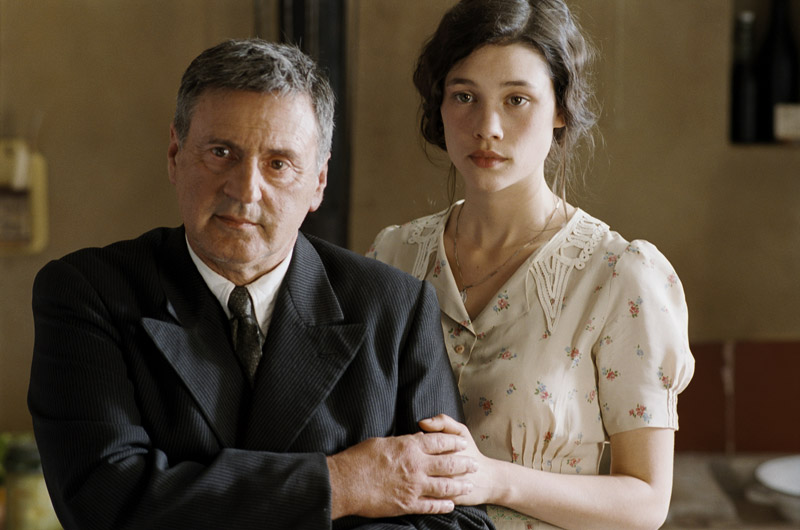
For Pascal Amoretti (Daniel Auteuil, who also directed the film), a middle-aged well-digger in some country village in Provence, his daughter Patricia (Àstrid Bergès-Frisbey) is the most precious one among his six daughters left by his dead wife. When Patricia was very young, some rich lady kindly took her to Paris for providing her better environment and education, and that makes Patricia look a lot different from her sisters or other girls in her class. After the recent death of her benefactor, she came back to her hometown while being her father’s dutiful daughter in their household like her sisters, but she looks more like a fair lady rather than a mere country girl as the opening scene shows her walking across the field with the lunch basket for Pascal and his employee Félipe (Kad Merad).

Because she is now 18, Pascal has been considering marrying off his daughter to someone suitable for her, and Félipe looks like a good match in his view. Although this nice guy is a bit too old for Patricia, it looks like an ideal marriage to her father; besides having enough money to support a family as her future husband, Félipe likes Patricia a lot, and Pascal is certainly glad that his loyal employee is willing to be a new member of his big happy family.

thewelldiggersdaughter03Patricia does not like Félipe enough to marry him, but she goes along with the plan because of one of her sisters who has been hoping for Félipe’s attention. She and Félipe soon have their first official date at the air show held in a nearby town, and that is where she meets again Jacques Mazel (Nicolas Duvauchelle), a young, handsome pilot she came across in the forest when she was bringing the lunch to Pascal and Félipe. Whatever was faintly felt between them during their previous brief encounter attracts them more to each other than before, and that eventually leads to a day to remember for Jacques and Patricia while poor Félipe has no idea on what is going on behind his back.

However, there is a matter of class in this budding romantic relationship. Jacques is the son of a rich village store owner, and that means his parents will not easily approve of their son’s relationship with a common girl from poor background no matter how much she looks fair and pretty. When he has to leave his home after receiving a sudden order from his unit, Jacques asks his mother to send his letter to Patricia, but, like many hysterically protective mothers in those TV soap dramas, Jacques’ mother hastily decides that Patricia is not good enough for her adorable son, and that results in a quietly heartbreaking moment during one sunny afternoon.

While the story becomes darker with the shadow of the World War I, the movie steadily maintains its relaxed narrative pace as serving us with small intimate moments which reveal more about its characters. While her innocence is gone after her relationship with Jacques and its following consequence, Patricia turns out to be a resilient girl with integrity as admirable as Tess of the d’Urbervilles, and she even refuses an easy option of getting out of her impending difficult circumstance at one point. Although he is visibly upset to hear about her daughter’s serious trouble, Pascal tries to do his best for his ‘lost daughter’ as a man of down-to-earth dignity, and we have no doubt about that even when he comes to make a hard decision on his dear daughter. While he often looks dim-witted, Félipe turns out to be a lot more decent and caring than we thought, and we also come to see that Jacques’ stiff parents have their own feelings, though it goes without saying that they were very cruel to Patricia and her family from the very beginning.

thewelldiggersdaughter05The movie is a remake of the 1940 film written and directed by Marcel Pagnol, and I heard that Auteuil’s screenplay is mostly faithful to the original story except that the background is changed from the 1940s to the 1910s in the remake version. Besides playwriting and filmmaking, Pagnol also wrote several novels, and some of them were later adapted into excellent films such as Claude Berri’s 1986 films “Jean de Florette” and “Manon of the Spring” and Yves Robert’s 1990 films “My Father’s Glory” and “My Mother’s Castle”.

All of these movies, which deserve to be known more for good reasons, are beautiful to watch mainly thanks to those gorgeous landscapes of Provence, and “The Well-Digger’s Daughter” is no exception. Its rural locations are wonderfully captured on the screen with warm, unadorned natural beauty, and Alexandre Desplat’s understated but delicate score is judiciously used along with a number of different versions of Neapolitan song “Core ‘Ngrato” on the soundtrack.

“The Well-Digger’s Daughter” is the first feature film directed by Daniel Auteuil, a renowned French actor who drew my attention for the first time through his memorable turn in Michael Haneke’s disturbingly baffling masterpiece “Caché” (2005). The movie shows his competent handling of mood, performance, and storytelling, and Auteuil has already made two films based on Pagnol’s plays since this successful directorial debut (he was also one of the main characters in “Jean de Florette” and “Manon of the Spring”, by the way). With the vivid sense of life surrounding its characters, its crucial plot turns feel like surprises rather than contrivances, and it surely earns its ending like its heroine does in the end.

thewelldiggersdaughter02

Posted in Movies | Tagged , , , | Leave a comment

The Salvation (2014) ☆☆☆(3/4) : Western Revenge

thesavation06“The Salvation” looks and feels like an authentic American western film, and you will probably be surprised to know that it was actually made by a Danish director in South Africa. Drive by its terse storytelling coupled with harsh, remorseless violence, this dark, compelling western drama works as an earnest homage to its genre, and it also injects a number of interesting variations into a familiar revenge plot revolving around good and evil.

Its story is about a Danish immigrant named Jon (Mads Mikkelson), who has tried to settle in some American frontier area during the late 19th century. After the war in their country was over seven years ago, Jon and his brother Peter (Mikael Persbrandt), who were soldiers participating in the war during that time, came to America for starting a new life for them and Jon’s wife and young son, and the opening scene shows them waiting for Jon’s wife and son to arrive at the train station in a nearby town.

Jon is happy to see his family again after long years when they finally arrive, but, unfortunately, his joy does not last long because of their accidental encounter with two strangers who happen to ride along with them in a stagecoach. It is soon revealed that these strangers are dangerous criminals, and then they eventually kill Jon’s wife and son during their savage robbery. Devastated by this shattering loss, Jon subsequently executes his revenge on these criminals after tracking them down, and he and Peter begin to prepare for their departure after the burial of his wife and son.

thesavation01However, they soon face the consequence of Jon’s vengeful action not long after they arrive at the town. One of two criminals killed by Jon turns out to be the brother of Delarue (Jeffrey Dean Morgan), and Delarue, an ex-soldier who leads a bunch of intimidating armed goons while extorting the town people in the name of protection, is naturally very angry about this. He wants to catch a man responsible for his brother’s death, and there is no one in the town who can stop his urge for vengeance. Keane (Jonathan Pryce), the mayor of the town who also works as an undertaker, is a spineless guy who cannot possibly say no to Delarue while gladly taking any chance for more benefit, and Mallick (Douglas Henshall), the helpless sheriff of the town who is also supposed to be its spiritual leader as a pastor, has no choice but to bend to this evil, ruthless man’s will – even when he and others in the town are forced to make an impossible choice during one sad, shocking moment of violence.

And we also meet Madelaine (Eva Green), a scarred mute woman with elusive and unnerving intensity. While belonging to Delarue’s dead brother after being saved by him from Indians a long time ago, Madelaine has also worked as the financial accountant for Delarue’s growing criminal business associated with some big oil company, and Delarue does not mind becoming her new man at all even though his brother was buried not that long ago.

The screenplay by the director Kristian Levring and his co-screenplay writer Anders Thomas Jensen gradually builds tension step by step as Jon and Delarue inevitably take their collision course. Like many other western films, the movie ultimately arrives at the climax decorated with gunshots and other kinds of violence to strike us, and Levring deftly handles this part with taut efficiency and emotional impact. He also utilizes his South African locations well to create the alien but believable ambience of the Wild West on the screen, and his cinematographer Jens Schlosser provides several wonderful shots which clearly evoke the impression of classic western films in their thoughtful composition.

thesavation02The actors in the film look convincing as inhabiting the world their characters belong to. Mads Mikkelsen, a stoic, resilient master of understated feelings as shown in Oscar-nominated film “The Hunt” (2012) and recent TV series “Hannibal”, is well-cast as a tragic hero who silently grieves and suffers along the course of his unfair plight, and he is compelling to watch even when his face barely expresses pain, sorrow, fury, and many other dark feelings churning inside his taciturn character. While generating a real sense of brotherhood between him and Mikkelsen, Mikael Persbrandt has his own small moment when Peter slowly manipulates his opponent for a certain purpose, and that scene is certainly better than when this good Swedish actor was rather wasted in “The Hobbit: the Battle of the Five Armies” (2014).

On the opposite, Jeffrey Dean Morgan is effectively menacing as the main villain of the story. It goes without saying that Delarue is a vile, vicious man, but he seems to have his own miserable side as indirectly suggested at one point, and his lonely, barren lair surrounded by burned buildings further accentuates his wretched status full of murder and corruption. Eva Green, who was one of a few real good things in “Sin City: A Dame to Kill For” (2014), always draws our attention with her terrific wordless performance while her ambiguous character constantly holds the cards behind her back as a potential wild card in the story, and other actors including Jonathan Pryce, Eric Cantona, and Douglas Henshall bring some personalities to their stock characters.

Compared to Tommy Lee Jones’ “The Homesman” (2014), another modern western film which incidentally came out in the same year, “The Salvation” feels less polished and resonant in comparison (Its occasional use of CGI is a little too blatant at times, for example). I think it could have dug deeper into its subjects, but it is still an engaging genre piece, and it certainly confirms us again of Mikkelsen’s undeniably captivating screen presence.

thesavation05

Posted in Movies | Tagged , , , , | Leave a comment

Wyrmwood (2014) ☆☆☆(3/4) : Road of the Dead

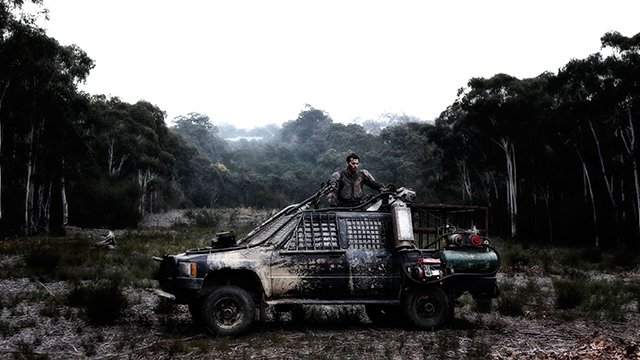
wyrmwood01Australian movie “Wyrmwood”, a.k.a “Wyrmwood: Road of the Dead”, is a little horror film mainly consisting of familiar spare parts borrowed from other zombie movies. As you have probably guessed right from my first sentence, the movie has your average grim apocalyptic background where its few human characters must survive for themselves amid the walking dead, and it also serves us with typical bloody or disgusting moments you can expect from those pale zombie extras wearing lots of make-ups and emitting inhuman sounds. This is nothing new to you especially if you are a connoisseur of horror movies or a fan of TV series “The Walking Dead”, but it is equipped with local humor and style to distinguish itself from countless zombie movies, and that certainly leaves some impression on the whole.

After the opening scene showing a number of characters ready for taking care of their imminent zombie problem, we are told about how their normal world gets suddenly turned upside down. In case of Barry (Jay Gallagher), an ordinary mechanic with loving wife and little adorable daughter, he gets a frantic late night call from his sister Brooke (Bianca Bradey), who was doing a photography work with two friends at her warehouse around the time when a meteor shower occurred in the sky. For some unknown reason which may be associated with that meteor shower, people begin to be turned into zombies, and Brooke finds herself being cornered by her zombie friends while stuck in her warehouse.

Alarmed by what her sister tells him, Barry soon finds that the same horrible thing is also happening in his neighbourhood. He quickly drives out of his house with his family, but it turns out that it is not safe for them at all even if they avoid zombies. It seems this zombie plague can also be spread through air, and Barry, who happens to be immune to it (as told later in the story, the plague somehow does not affect the population of blood type A-), comes to face a very difficult circumstance when his wife and daughter eventually become zombie on the very next day.

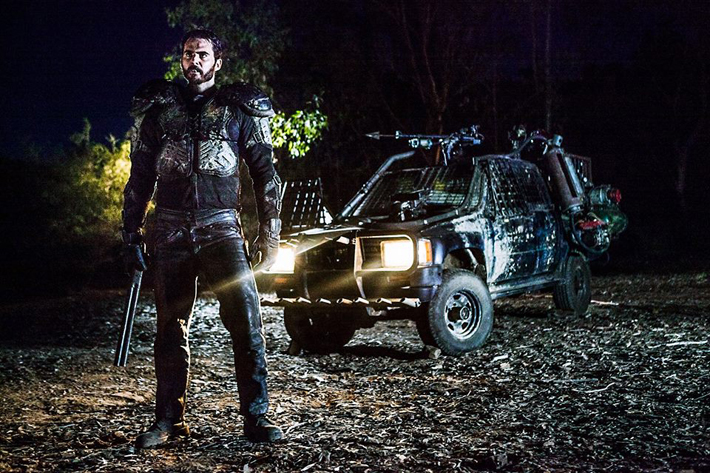
wyrmwood04Devastated after doing what he must do for them, Barry comes across other few survivors who luckily survived the night like him. One of them is Benny (Leon Burchill), and this sweet but bumbling Aboriginal guy gradually becomes a sort of comic relief/sidekick to Barry during their perilous road journey to Brooke’s place. At one point, they learn that there is a strange fuel problem which inexplicably happens along with the zombie outbreak, but then they come to find an amusing solution for that, which is something you have to see yourself for appreciating how the director Kiah Roache-Turner, who wrote the screenplay with his brother/producer Tristan Roache-Turner, adds one refreshing touch a la “Mad Max” (1979) to the genre they enthusiastically play with.

Meanwhile, Brooke is not in a very good condition although she managed to survive her first encounter with zombies. She is taken by two masked soldiers to some hidden facility not long after that, and that is where she meets a sadistic doctor who has been cheerfully doing his pervert scientific experiment on zombies as well as normal human beings. Again, this mad scientist’s deranged savagery will not surprise many zombie movie fans, but this gruesome part is decorated with morbid humor like Sam Raimi’s Evil Dead films or Peter Jackson’s infamous gory comedy film “Dead Alive” (1992), and I must point out that a loony biological experiment accompanied with a certain famous song by KC & the Sunshine Band is something you cannot see everyday.

While it is inevitable that these two plot threads will come together around the final act, the Roache-Turner brothers did a competent job of maintaining mood and tension on the screen. Establishing the grey, barren atmosphere well through their effective use of rural outback locations, they provide a couple of intense moments when their characters have to defend themselves against the living dead, and I also enjoyed several little humorous touches in the film which certainly lighten up the mood a bit.

wyrmwood02

In case of the zombies in the film, well, they do look as hideous as required while going back and forth between only two modes which can be applied to any zombie movies in the past and future. Sometimes they just slouch like their old seniors in George A. Romero’s zombie movies, and then they become quite fast and rabid like the ones in Danny Boyle’s “28 Days Later…” (2002), and that is all I can describe about them.

As I think more about zombies, they are not particularly scary or interesting horror creatures to me, but I must admit that, despite my increasing tiredness with zombies, “Wyrmwood” is a good zombie movie even though I was constantly conscious of many other zombie movies including the aforementioned ones during my viewing. Its borrowed elements are mixed well together along with a number of new enjoyable ingredients, and, in spite of its fair share of limits and deficiencies, this low-budget movie is a commendable debut work to watch for skill and enthusiasm put behind the screen.

According to IMDB trivia, it took 4 years for the Roache-Turner brothers to complete their film because they had to work only during weekends, and, considering the positive responses to their labor of love, they surely get what they reached for through their debut work. As implied during its last scene, they are planning the sequel at present, and it will be interesting to see what they can do in the next step of their burgeoning career.

wyrmwood03

Posted in Movies | Tagged , , | Leave a comment