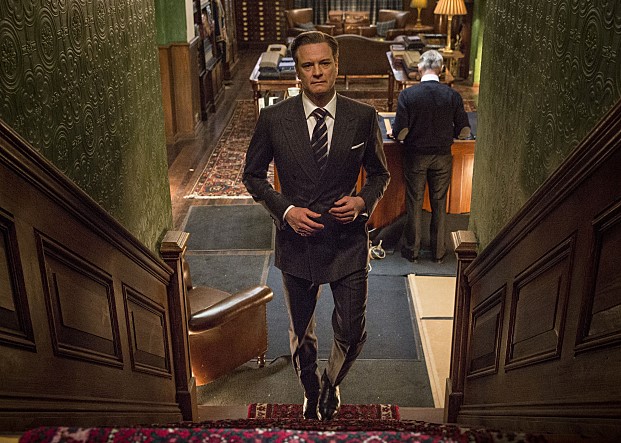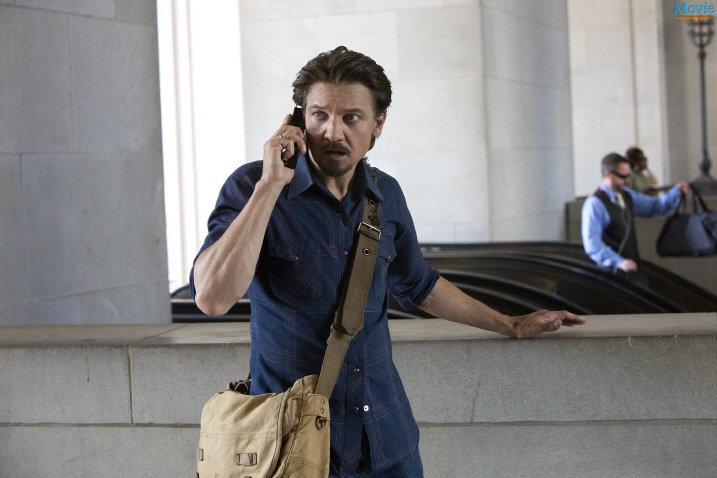
Kill the Messenger (2014) ☆☆☆(3/4) : The devastating price of reporting a truth

small_killthemessenger05The tragedy of Gary Webb, the ill-fated journalist hero of “Kill the Messenger”, was that he was not exactly in a good position when he happened to get a big chance for the scoop of his lifetime which ultimately shattered his life and career in the end. If he had been in a more advantageous position with more supports and resources from his peers and other journalists who should have stood by him, he might have survived his plight – and he might have been saved from his eventual doom.

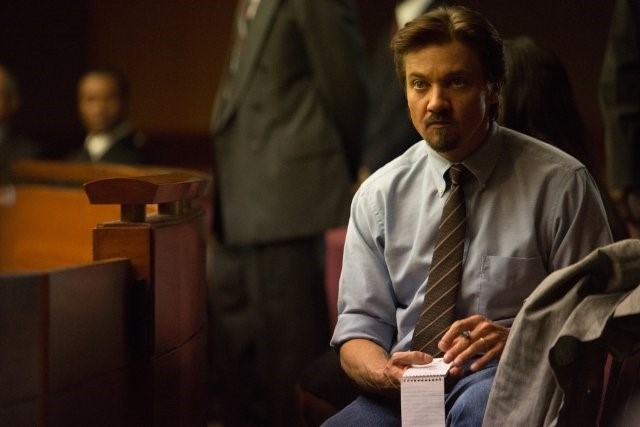
In 1996, Gary Webb (Jeremy Renner), who worked as a reporter of the San Jose Mercury News at that time, drew considerable attentions and criticisms through the series of his articles on the connection between the drug trade in LA and a covert CIA operation, and the first half of the movie gives us a fictional account of how he came across that unbelievable scoop. While continuing his reporting job on a local drug business, Webb is approached by an arrested drug dealer’s girlfriend on one day, and she gives him the first lead for his investigation, a sensitive government file which reveals a hidden connection between the US government and a major cocaine/crack supplier in US.

After finding that this supplier in question, who is now a major witness covered and protected by the government, was associated with CIA, Webb keeps digging into this matter, and he eventually unearths a dirty deal between CIA and the Contra rebels in Nicaragua during the 1980s. For preventing Nicaragua from becoming another communist threat after Cuba, the Reagan administration sought for any other possible way to fund the Contra rebels due to the domestic opposition to direct funding, and CIA let the Contra rebels get the money for weapons and other supplies through the massive supply of drugs into US, which accordingly caused serious drug problems around the poor neighborhoods of American major cities.
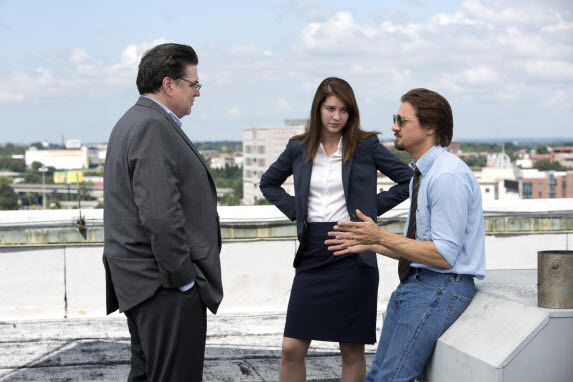
killthemessenger03As Webb gets more information in Nicaragua and Washington D.C., it also becomes apparent that some people are not so pleased about what he is doing. A high-ranking government official he meets in Washington D.C. still does not want talk directly about what he failed to stop a long time ago, and Webb soon faces the pressure from the US government. While paranoia begins to grow inside him, he becomes more convinced that he must print his story no matter what will happen, and Anna Simmons (Mary Elizabeth Winstead) and Jerry Ceppos (Oliver Platt), his bosses in the San Jose Mercury News, give him a full support while also being cautious about their situation.

When his articles are printed on the paper at last and shake the whole nation, this initially looks like a proud journalistic triumph for Webb and everyone around him in the San Jose Mercury News, but then it is followed by a long, gloomy downfall for Webb. While the public relations guys at CIA begin their damage control, many other journalists of more prominent newspapers such the Los Angeles Times are pretty pissed about how they get themselves beaten by a minor newspaper reporter, and they start to focus more on the other thing: the legitimacy of Webb’s articles.

Unfortunately, Webb’s articles are pretty easy to be smeared and criticized thanks to several reasons beside his unreliable sources who instantly change their words after his articles were printed, and things quickly become nightmarish for Webb. Constantly blasted by other newspapers, he becomes more frustrated day by day as the media pays attention more to him rather than what he tries to report, and his relationship with his family also gets strained as reflected by a small hurtful moment when Webb has to talk about his old personal fault to his teenage son.
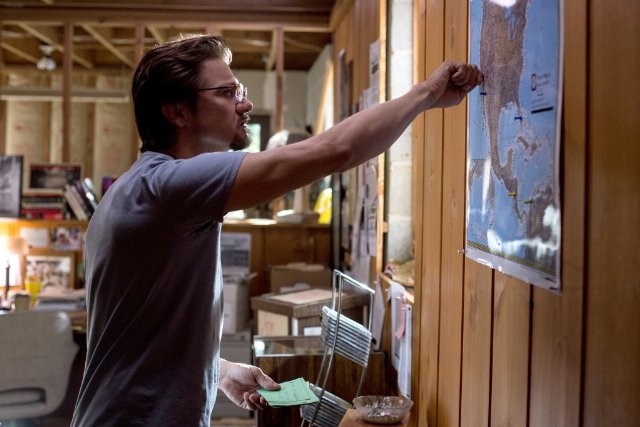
killthemessenger02Around that point, the director Michael Cuesta tries too hard to hold our attention as his movie becomes incoherent in its overall tone. Although the thriller mood pumped up during the first half serves well Webb’s investigation process, this blatant approach does not mesh well with the somber, despairing second half, and the frequent insertion of archive footage and rough flashback shots throughout the film sometimes looks like a distracting overkill. The screenplay by Peter Landseman, which is based on two non-fiction books respectively written by Nick Schou and Gary Webb, delivers the message as intended, but it spins its wheel in its jumpy depiction of Webb’s downward spiral, and the ending particularly feels weak along with the following lackluster epilogue.

Despite its notable flaws including the under-utilization of its good supporting cast, the movie works mainly because of the intense lead performance by Jeremy Renner, who previously impressed us a lot with his breakthrough performance in Kathryl Bigelow’s Oscar-winning film “The Hurt Locker” (2008). While capturing well Webb’s focused determination, Renner also does not flinch from showing Webb’s abrasive sides which partially contribute to his ordeal. Webb could just step back a little as his colleagues tactfully advise to him, but he stubbornly continues to go on his way as ruining several professional relationships, and that results in the irreversible damage on his journalistic career as well as his life.

Uneven and heavy-handed at times, “Kill the Messenger” often stumbles, but its bitter chronicle of Webb’s rise and fall is worthwhile to watch for its topic still relevant at present, and the movie is mostly held well together by Renner’s compelling performance which is one of better turns in his career. As told in the epilogue, Webb never got a chance to clarify his tarnished reputation even when what he reported was fully exposed in public later, and we can say that they surely did a heck of job on him. Telling a truth sometimes comes with a price for that, and it was really unfortunate for Webb to realize belatedly how big it was in his case.
killthemessenger01

Posted in Movies | Tagged , , , | Leave a comment

Focus (2015) ☆☆☆(3/4) : Romance or Con game?

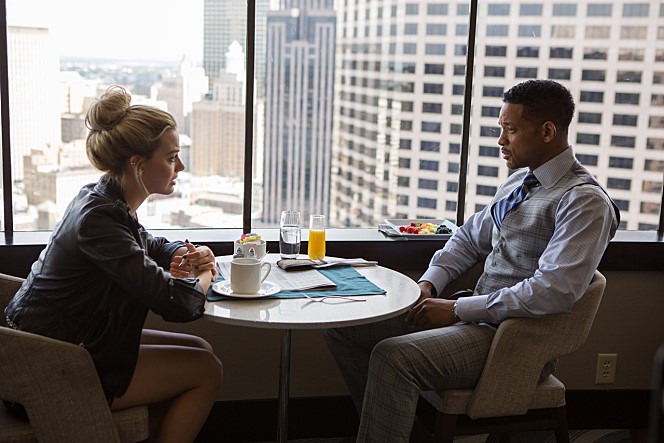
focus01As a comedy movie about con artists, “Focus” is entertaining enough to overlook its several weak points. Mainly because there is always a possibility that its main characters are holding something behind their back, we come to look at them with a certain level of distrust and accompanying distance in the end, but the movie cheerfully handles its tricky plot with the sense of fun, and it is also supported well by the nice chemistry generated between its two likable lead actors.

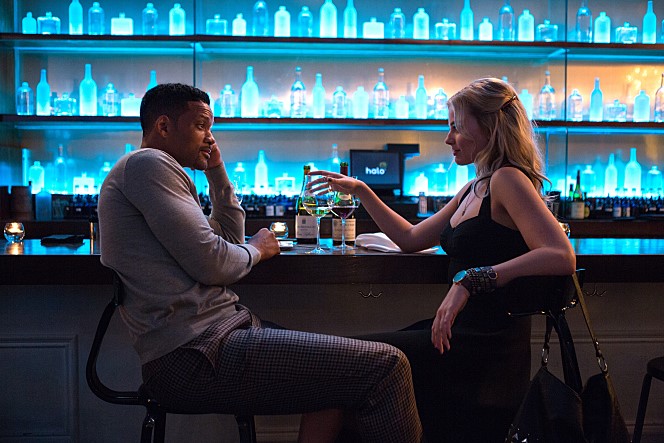
When Nicky (Will Smith) and Jess (Margot Robbie) come across each other for the first time during one evening at a fancy New York restaurant, something clicks between each other as they enjoy their time together, but their Meet Cute moment is far from being ordinary. As a first-class con artist, Nicky sees through Jess and her intention right from their first minute, and Jess eventually learns that she still needs more skills and experiences for being a very good con artist like Nicky, who later gives her a nice little lesson on how to distract target’s focus.

Fascinated and thrilled by Nicky’s skills, Jess wants to learn more of the art of con game from Nicky, and she soon finds herself joining Nicky’s big team consisting of various professional con artists including Farhad (Adrian Martinez) and Horst (Brennan Brown), Nicky’s two dependable – and crafty – lieutenants. A big football championship game is going to be held at New Orleans, and Nicky and his accomplices do not mind having another member to assist them in their many various schemes to snatch money and many other expensive goodies from thousands of small and big targets visiting New Orleans for the game (and Nicky’s crew is not the only ones coming to this big, lucrative hunting ground, by the way).

focus04As shown in “The Sting” (1973) or “House of Games” (1987), it is always fun to watch how smart con artists get away with their devious schemes while taking money or something valuable from their unsuspecting targets, and “Focus” has a number of exciting moments as showing how Nicky and others handle their criminal operations with quick timing and smooth effortlessness. During one wonderful sequence in which Jess has to show that she is good enough to work with Nicky’s crew, this sequence fluidly follows the series of her sly movements around a bunch of targets on the busy street of New Orleans, and we cannot help but admire every step of her deft choreography which sometimes depends on a couple of clever improvised acts.

While they and other accomplices have lots of fun and thrill along with money during their successful operations, it looks like some feeling has been developed further between Nicky and Jess, but there is always a reserved attitude on Nick’s side for a very good professional reason. They are surely enjoying each other’s company regardless of whether they are working or not, but their way of living is based on lies and deceits, and trust is naturally not something easily earned in their deceptive world. Although he is nicknamed “Mellow”, Nicky is too experienced to fully accept the adoring approach of Jess, who may have some other thoughts behind her back even if she really likes Nicky.

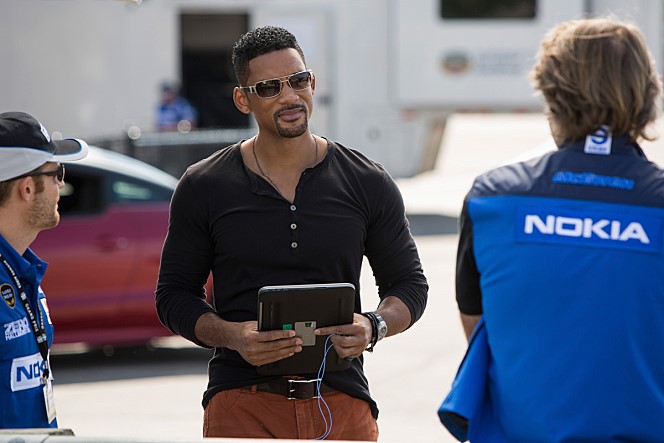
The screenplay by the directors Glenn Ficarra and John Requa, who previously directed “I Love You Philip Morris” (2009) and “Crazy, Stupid, Love” (2011), takes a left turn around its second act and then enters a new situation in which Nicky and Jess encounter each other again three years later. In Buenos Aires, Nicky happens to be hired by Rafael Garriga (Rodrigo Santoro), a billionaire guy who also owns a leading world-class motorsport team. As a guy who will not mind any dirty tactic necessary for his win, Garriga wants to make it sure that his team will beat other competing teams in an upcoming race, so it is Nicky’s job to disguise himself as an angry Garriga’s employee willing to sell the crucial information to Garriga’s main opponent team.

focus05However, when everything is ready for his first step into this scheme, Nicky sees Jess appearing along with Garriga at the party. While they must hide their past from Garriga, they are again drawn to each other as Nicky approaches to her more actively in this time, but nothing looks simple between them as usual despite some sparks still remained between them. Is this another part of Nicky’s plan? Did Jess really say goodbye to her former career to be Garriga’s girl?

The movie loses some of its interest as it continues to toy with that uncertain possibility in its increasingly unreliable plot, but the engaging interactions between Will Smith and Margot Robbie keep their film being floated amidst its lightweight mood during most of its running time. Compared to his very bland and regrettable turn in “After Earth” (2013), Smith is back in his element here with his intact star presence, and he and his co-star Margot Robbie, who held her own small place among the dirty rotten boys of “The Wolf of Wall Street” (2013), play off each other well with that tantalizing possibility of romance – or another con game. There is always a sort of heat between their characters, but we are never entirely sure about where it will lead them, and Smith and Robbie are clearly enjoying their performances on the screen.

They are also supported well by good actors having a small fun with their colorful archetype characters. B.D. Wong is flamboyant as a Chinese high roller during one turning point in the middle of the story, and Rodrigo Santoro is suitably obnoxious as a rich prick who deserves to be suckered, and Gerald McRaney is stern, formidable as Owens, Garriga’s right-hand guy who slowly begins to corner Nicky and Jess with his suspicious stare. As Nicky’s main accomplices, Brennan Brown and Adrian Martinez are amusing to watch in each own way, and Martinez is especially dexterous in his comic timing during his small conversation scene with Robbie.

Although its resolution is weak and predictable compared to the rest, “Focus” works as a breezy entertainment on the whole. Its story and characterization are thin to say the least, and there are many plot holes you can notice even during the viewing, but I liked its style and performances although it did not distract my focus as much as intended. I could often see through its moves, but I enjoyed how it made its moves anyway.

focus06

Posted in Movies | Tagged , | Leave a comment

Citizenfour (2014) ☆☆☆1/2 (3.5/4) : A close, gripping look into one big expose

Russia Snowden Thanks to the rapid development of communication and information technologies, we can freely exchange or share information and opinions with many other people around the world, but then there are also dark possibilities in this technological advance. Through its close look into the cautious steps leading to an expose which shook the whole global world in last year, Oscar-winning documentary “Citizenfour” soberly presents a fearful fact we should worry about more. It is really unnerving to see how easily our life can be monitored by government agencies, and it is all the more disturbing to think that we are possibly in the middle of the ongoing process to a brave new world where personal privacy is no longer possible. You may have nothing to hide at all, but, seriously, can you possibly imagine freedom with no privacy?

At the beginning, the director Laura Poitras, who previously directed an Oscar-nominated documentary “My Country, My Country” (2006), tells us how she got connected with Edward Snowden in early 2013 when she was planning a documentary about the War on Terror. As a Booz Allen analyst loaned to the National Security Agency (NSA), Snowden had a government secret which he thought should be known to the public, and he also warned her that she had to be far more careful than before. While making “My Country, My Country” and the following documentary film “The Oath” (2010), Poitra got herself included in the Department of Homeland Security’s watch list just because of these two documentaries on the ramifications of the aggressive foreign policies of the US government after 9/11, and she understood too well Snowden’s carefulness in their secret communication.

While showing her several occasions of clandestine correspondence with Snowden, Poitra gives us the basic background information on how far the US government has gone into dark areas in the name of national security during recent years. More concerned about domestic security since 9/11, the US government has let the National Security Agency (NSA) expand its surveillance network further along with other intelligence agencies including the Government Communications Headquarters (GCHG) in UK, and that trend has been continued as reflected by one short scene which shows one of its new major facilities being built on the field. There are a number of global mass surveillance programs including PRISM to filter and analyze the vast amount of information collected from not only America but also other foreign countries, and, as many of you already know, they have monitored internet/telephone communications through the cooperation of several prominent Internet and telecommunication companies such as Google Inc. and Verizon Communications.

citizenfour02 William Binney, another well-known whistleblower from NSA, has openly expressed his concern over how this nearly uninhibited surveillance system can be a serious threat to the civil rights as well as the US constitutions, and we see him giving a sincere talk on that disconcerting topic to others. At a meeting of Occupy Wall Street protestors, one expert is invited to tell them how easily they can be profiled when they are targeted by government agencies. Only with your credit/traffic card and mobile phone records, it is already more than enough to know many things about you, and they also can get every detail of your online activities – from your private e-mail communications to trivial keywords you type into web search engines.

Several months after their first contact, Poitras and Snowden eventually had their secret rendezvous with two Guardian journalists Glenn Greenwald and Ewen MacAskill at the Mira Hotel in Hong Kong, and Poitra’s camera looks closely into the series of their secret meetings at Snowden’s room. As Snowden shows the scale of global mass surveillance by NSA to Greenwald and MacAskill through many classified government files he acquired, it becomes pretty clear to everyone in the room that they must be really careful and watchful about every step they are going to take, and the mood surrounding them begins to resemble John Le Carre’s espionage novels as the time goes by.

There is always that nagging uncertainty on how NSA and the US government will react to their expose (“Assume your adversary is capable of one trillion guesses per second.”), and it seems NSA begins to smell something suspicious about Snowden, who is currently on a ‘sick leave’. When the talk in his hotel room is suddenly interrupted by a minor disturbance within the hotel, it turns out to be nothing to their relief, but then it keeps throwing an uncomfortable discord into that moment as they continue their talk as before.

citizenfour04 Regardless of whatever you think of Snowden, this young man is presented as a smart, decent ordinary guy in front of Poitras’ camera. Believing in what he is going to do, he seems to be ready for the personal cost of leaking classified government files to the outside, but he also looks nervous at times as spending more time with Poitras and others in his hotel room. Although he and others are very cautious about planning how they should present their news in public while damaging him and others as little as possible, that does not change the fact that he will be instantly labeled as a criminal and traitor by the US government, and he certainly looks agitated as preparing his checkout after passing the point of no return on June 9th, 2013

As Snowden managed to find a temporary shelter in Russia in the end (he is still staying there, by the way), Poitras and Greenwald got a fair of troubles as expected because of their involvement with Snowden. Greenwald’s partner David Miranda was unfairly detained for hours at the Heathrow airport, and Poitras had to move to Germany for completing her documentary under a more protected environment coupled with security precautions. When her completed documentary was selected to be shown at the New York Film Festival in last year, she and the festival staff members were very discreet about its screening for apparent reasons until it was included in the festival’s screening schedule in the last minute.

While it is maddening to see how the US government has tried to smear Snowden by any means necessary after what may be the biggest leak scandal in its history since Daniel Ellsberg, it is also frightening to observe that not many things have been done since that, and that is why “Citizenfour” feels more chilling as I reflect more on its story and message. I did some search on the Internet for preparing this review, and now I am wondering whether someone is watching me right now as I am typing the last paragraph of my review. Maybe I am a bit paranoid, but you will probably never laugh about that after watching this gripping documentary which is also one of the scariest films of 2014.

citizenfour03

Posted in Movies | Tagged , , , , | 1 Comment

My prediction on the 87th Annual Academy Awards

birdman06 We used to complain that the Oscar season became too predictable, but now we are grouching about how the Oscar season in this year has become the most unpredictable one compared to previous seasons. In the beginning, Richard Linklater’s masterpiece “Boyhood” looked like the definite front runner, but then Alejandro González Iñárritu’s whimsical work “Birdman” became the new favorite of the town as reflected by its consecutive victories at SAG, PGA, and DGA, and then BAFTA slapped its wing while giving its Best Picture award to “Boyhood”. In such a dizzy confusion like that, you will not be surprised to see “The Grand Budapest Hotel” or “American Sniper” or “Selma” win the award in spite of their low chance at present.

While the Academy Awards made one of its biggest snubs in the history as giving no more then 2 nominations to “Selma”, we can say that the Academy Awards in this year managed to distinguish itself with its three unconventional front runners at the spotlight. Richard Linklater, Alejandro González Iñárritu, and Wes Anderson have all pursued each own artistic vision for long years, and all of them now reach to the peak of their career as incidentally spotlighted by the Oscar season of this year. In the other words, this year is as fine as other years despite several egregious mistakes and omissions in the nominations.

Meanwhile, thanks to the diligence of many award season experts on the Internet, we already have pretty good ideas on who will likely win or who may make a surprise upset win at the ceremony on February 22th, and I have my own prediction based on what I have observed during this award season – and a bit of my intuition. As I said before, I have never been entirely correct in my prediction, but that is where fun comes from, you know.
Continue reading →

Posted in Movies | Tagged | 3 Comments

The Tribe (2014) ☆☆☆1/2 (3.5/4) : A tribe of deaf criminals

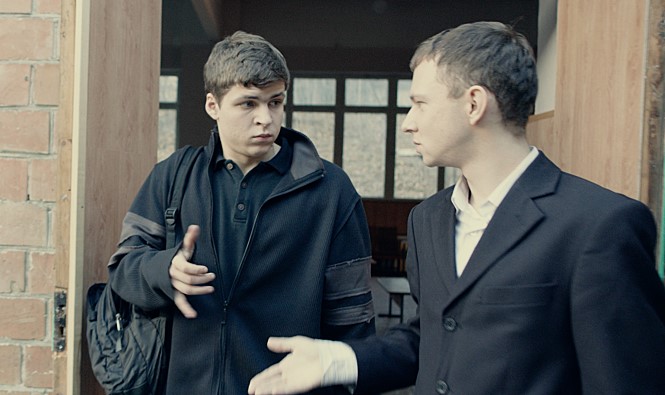
thetribe03 Ukrainian film “The Tribe” attempts its audacious storytelling experiment right from its very first scene. While there are sounds on its soundtrack, there is no spoken dialogue in the film as it observes the interactions between its main characters who are the students of a boarding school for the deaf, and it does not even provide us the subtitle for understanding their sign language. This is not a comfortable experience at all for many other reasons besides that, but it is also a simple but compelling work fueled by its tense, uncompromising look into the gloomy criminal world of its main characters, and you may come to admire more how skillfully the movie did its job under its plain, restrained attitude.

Its story is mostly told through Sergey (Hryhory Fesenko), a young deaf teenager who has just enrolled in his new boarding school, and we get the first glimpses into the school while watching him arriving at the boarding school alone. Its students and teachers and others are beginning their another year with a ceremony we only observe from the distance with the camera, and Sergey looks like a guest very late for the party at the end of this scene.

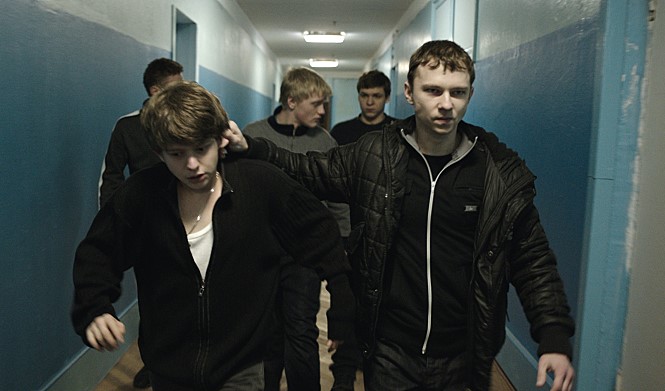
The school does not look that bad at first, but it soon reveals its hidden side as Sergey starting his first day. There is a criminal system operating inside the school, and he has no choice but to obey to its rules while being coerced by a group of older students in the school. Like any new young gang member, he goes through an initiation ritual after enduring some humiliation, and he soon gets actively involved in several criminal activities of his gang, which is turned out to be also associated with a couple of the faculty members in the school.

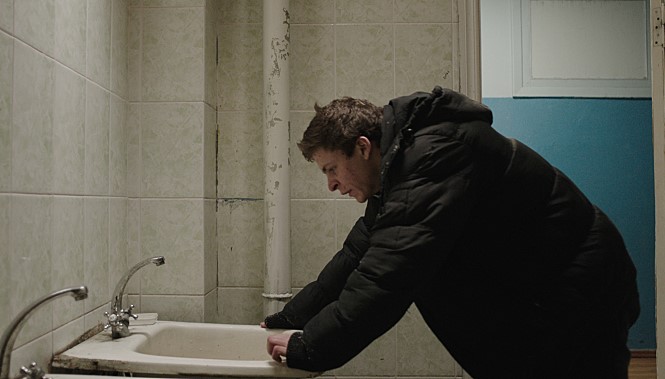
thetribe02 As firmly holding its objective view, the movie calmly shows us how things work in their closed world – and how they get money from the outside. They sometimes sell stuffed toys on train, and we see how ruthlessly they can be when some other deaf guy happens to come into their territory at one point. They also often slip out of their dormitory at night, and there is a quiet but chilling nocturnal sequence which gradually reveals what Sergey and other gang members are going to do to some unfortunate citizen.

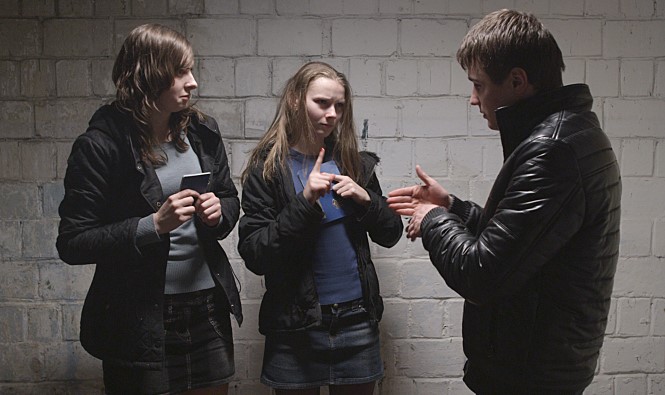
And we also meet two deaf school girls who have worked as prostitutes for the school gang. With one gang member and the woodwork school teacher as their handlers, they are frequently taken to a local resting place for truckers, and we witness how their seedy business is operated. It is revealed later that these girls will be sent to Italy for an apparent reason, and, probably because of their desperate wish to get out of their world, the girls do not seem to think much about what kind of fate may wait for them there.

Filling the empty position after a very unlucky accident of his predecessor (that darkly funny moment is one of a few humorous moments in the film, by the way), Sergey becomes unwisely drawn to one of these girls. Yana (Yana Novikova) is officially a girl belonging to the leader of his gang, but Yana and Sergey begin their secret affair after one poignant scene in which they literally bare their feelings to each other. They become closer to each other as the time goes by, but then Yana is being ready for going to Italy, and Sergey is clearly not very pleased about this change – and there comes a big trouble for that.

thetribe01 While not giving any background information on Sergey or any other main characters in the film, the director/writer Myroslav Slaboshpytsky keeps us engaged in his story through his austere storytelling solely based what is shown and felt through mood and body language. Many scenes in the movie are presented through long, uninterrupted shot, and the cinematographer/editor Valentyn Vasyanovycy’s camera flawlessly alternates between fixed position and fluid movement as steadily accumulating tense beneath the screen, and the stark, realistic mood on the screen further emphasizes the bleak environment surrounding its characters with no visible hope.

Unless you are familiar with Ukrainian sign language, you will have no idea on what exactly the deaf characters say to each other during their many mute conversation scenes in the film, but we are slowly drawn to their silent drama as curious spectators thanks to Slaboshpytsky’s deft direction. We are not entirely sure about everything in the story, but the movie evokes that simplicity of silent movies while letting you infer what the characters feel or think from their facial expressions and body movements, and the unadorned performances by its deaf non-professional actors add considerable power and authenticity to the film. Some of them enter the areas which are even challenging for professional actors during several demanding scenes, and the movie is as unflinching as its actors in its direct, unpretentious handling of these difficult scenes.

“The Tribe” is the first feature film by Slaboshpytsky, and he received many praises when it was shown at the 2014 Cannes Film Festival’s International Critics’ Week section (it won three awards including the France 4 Visionary Award in the end). This is surely a cold, tough stuff to some of you, but my eyes were fixed onto the screen by its dark, unsettling drama until it finally reached to its devastating finale with sad fury and despair, and I was constantly intrigued by its fascinating approach to story and characters. They are silent, but, as you will see, they speak volumes through their silence – and their bodies.

thetribe05

Posted in Movies | 1 Comment

Finding Vivian Maier (2013) ☆☆☆(3/4): A nanny who was also a photographer

lookingforvivianmaier05The photos shown in Oscar-nominated documentary “Finding Vivian Maier” are something to watch and appreciate for the mood and feelings they evoke. Mostly shot in black and white, they vividly capture the places and people of bygone eras, and then you cannot help but be curious about an elusive woman who took all these photos and many other ones throughout her plain life. She was a very talented amateur photographer, but she was just remembered as an odd nanny until her legacy happened to be discovered not long after her death.

The story begins with the co-director/co-producer John Maloof’s accidental discovery in 2007. At that time, Maloof was planning on writing a history book on the Portage Park neighborhood of Chicago, and he was searching for any old useful photos when he came across a box filled with photo negatives at a local auction. Although they turned out to be not exactly what he was looking for, these photo negatives drew his attention for the apparent talent of someone behind the camera, so he began to search for their mysterious owner – Vivian Maier.

Only with her name, it was pretty difficult for Maloof to find Maier because she was not some famous photographer, but he eventually acquired the basic information about who she was. She worked during most of her life as a nanny for many families around the North Shore suburban area of Chicago, and, as a matter of fact, she was very much alive when Maloof discovered her photo negatives, though she died in 2009 while probably never imagining that her photographs would get lots of attention from others.

As her photos posted on his blog went viral on the Internet, Maloof naturally became more interested about Maier. He and his directorial partner Charlie Siskel, who is a nephew of late Chicago critic Gene Siskel, approached to various people who knew Maier as their nanny or employee, and the interviewees including Phil Donahue (he was one of her employers) tell us about each own experience with Maier in front the camera.

lookingforvivianmaier03

While she was not exactly a pleasant or intimate person, Maier was surely someone to be remembered for good and bad things, and we come to feel more curious about this rather eccentric woman as we hear more of many episodes about her. As reflected by a number of her self-photographs, she was usually with her camera for whatever to be captured in her photographs, and she was sometimes focused on her hobby a little much during her work time. She often went around the city with children in her charge just for taking photographs, and she even went to the urban areas which were not so suitable for children – but that certainly gave them amusing experiences to talk about as they remember their quirky nanny.

And these photos she shot on the streets clearly show us that she could have a nice professional career if she had wanted. Many of her photos show various people you might have come across during the periods when they were shot, and you cannot help but curious about who they were or what they were thinking as looking at them. One of the most memorable photos to me is a little African American boy shining a Caucasian boy’s shoes. Were they conscious of their racial difference when they happened to be captured by Maier’s photo? Or was that Maier intended when she shot it?

While Maier becomes more visible as a photographer through her vast amount of works unearthed by Maloof, she still remains elusive as a person in comparison despite his continued search. Besides more photo negatives, he also found home movies, audio tape recordings, and other various documents left by her, but nothing can tell much about her. Considering her scant family records discovered in New York, we can only guess that Maier was an extremely private person for some unknown personal reason; she never told her employers about her life in New York, and she even disguised herself with a fake European accent.

lookingforvivianmaier02Some of the interviewees tell us about Maier’s dark sides later in the documentary, and their disturbing episodes suggest that she suffered from mental disability/illness. For instance, she was very obsessive about collecting whatever came into her private life, and one of the interviewees tells us how Maier became quite hysterical after she casually took some of newspapers collected in Maier’s small private room, which was already full of stacks of newspapers.

After she could not work any more during her later years, her condition became worse, and Maier did not have much money to support herself. Thanks to a kind help from two brothers who once grew up under her charge, she could spend her last years in a small apartment of Rogers Park community area of Chicago, and she was merely remembered as a quiet old lady who sometimes sat on a nearby bench by her neighbors until her death caused by one unfortunate accident.

It is possible that Maier probably did not want any attention on her works or herself, so Maloof naturally wonders at one point whether showing her photos to the public is a right thing to do. While we will never know what Maier would think about that, two things are very clear to us; 1) Maloof is sincerely caring about Maier’s works, and 2) her photos are good enough to be shown to us. As Maloof suggests around the end of the documentary, his late discovery and promotion of her works would be approved by her, considering that it probably does not matter to her now.

lookingforvivianmaier01

Posted in Movies | Tagged , , | Leave a comment

Jodorowsky’s Dune (2013) ☆☆☆(3/4) : It could have been awesome, maybe

jodorowsky One of my fond memories involved with an arthouse movie theater near my KAIST campus, which is gone now, is involved with a double feature showing of Alejandro Jodorowsky’s “El Topo” (1970) and “The Holy Mountain” (1973). The promotional leaflet given to me at that time boldly proclaimed “Don’t you ever imagine anything!”, and his movies did gave me many bizarre imaginative moments to blow my mind, which are still remained vividly in my mind for their weird, striking impressions. These movies were really something new to be watched by any serious movie audiences, and they led me to Jodorowsky’s another masterwork “Santa Sangre” (1989), which is also filled with memorably odd moments to talk about.

Frank Pavich’s respectful documentary “Jodorowsky’s Dune” focuses on Jodorowsky’s big career disappointment which happened during the period between “The Holy Mountain” and “Santa Sangre”. Thanks to the considerable cult success of “El Topo” and “The Holy Mountain”, Jodorowsky became more confident about his next spiritual/artistic cinema adventure, and that was how he came to pay attention to Frank Herbert’s famous SF novel “Dune”, which is the first chapter of Herbert’s long SF saga.

In front of Pavich’s camera, Jodorowsky, who still looks vivacious despite his old age (he is soon going to be 86 in this year), is ready to tell and show everything about his creative process which was sadly aborted in the end. He shows us a very big book containing countless conceptual designs which could have been evolved into something very fantastic on the big screen, and you may be surprised to learn that he and other talented artists envisioned such marvelous things even before the era of “Star Wars” (1977) arrived later.

jodorowsky03As some of you know, Jodorowsky was a man of wild, uninhibited imagination even during the early years of his artistic career. His very first film, “Fando y Lis” (1967), was casually made by him and his small crew with no permission from the Directors Guild in Mexico, and the end result was so sensational in many of its bizarre moments that its premiere induced very violent reactions from the local audiences and then it was eventually banned in Mexico. Undeterred by this, Jodorowsky moved more boldly than before, and the scenes excerpted from “El Topo” and “The Holy Mountain” reminded me again of how wonderful it was to experience these two mesmerizing cult films together in 2007.

Even though he had some struggle during his reading of “Dune”, Jodorowsky soon became convinced that he could make something great and awesome out of Herbert’s novel, and, after easily obtaining the film rights to the novel from Hollywood, he recruited a number of artists willing to work with him while eagerly supported by his producer Michel Seydoux. With French cartoonist Jean “Moebius” Giraud, he carefully planned how to film many important scenes in his sprawling adapted screenplay through their storyboard sketches, and then British illustrator artist Chris Foss and Swiss set designer H.R. Giger joined later to provide more conceptual designs to further enhance Jodorowsky’s ambitious vision. Rock band groups Pink Floyd and Magma were persuaded to provide the music, and Dan O’Bannon was recruited for special effects after Jodorowsky decided Douglas Trumbull, who became a prominent special effects master after his monumental work in Stanley Kubrick’s “2001: A Space Odyssey” (1968), would not fit into his project mainly due to Trumbull’s, uh, lack of spirituality.

While O’Bannon is mostly represented by his words and his widow due to his death in 2009, we hear more about that fascinating pre-production process through the interview clips of Seydoux, Giraud, Foss, and Giger, who incidentally died not long after the documentary was released in US theaters. Propelled by Jodorowsky’s passion every day, they went wildly with imagination just like him, and the documentary provides not only the wonderful glimpses into their bountiful conceptual designs but also a number of interesting animation scenes based on the storyboard sketches which were drawn during that time.

jodorowsky02And we hear some amusing behind stories about the casting. Jodorowsky’s son Brontis, who already appeared with his father in “El Topo”, was cast as the lead character, and Brontis gladly tells us about how much he prepared for his role which would have probably been demanding to any adolescent actor. While David Carradine and Mick Jagger were easily cast in their respective film roles, it was more difficult to persuade Salvador Dali and Orson Welles, and we get a funny story about how Jodorowsky managed to make Welles agree to appear in his film despite Welles’ reluctance.

When everything seemed to be almost ready for the first step into the production, the process was suddenly halted to the dismay of everyone involved with the project, and that disappointing end still hurts Jodorowsky a lot. The film rights to Dune was eventually passed to Italian producer Dino De Laurentiis, and that led to the 1984 film directed by David Lynch, an impressive ugly cinematic disaster which was the bottom for nearly everyone in the film including Lynch.

At least, besides getting a small last laugh thanks to the big failure of Lynch’s film, Jodorowsky and his collaborators got small but meaningful consolations as watching how their brief but exciting joyride of creative artistic imagination has influenced subsequent SF movies. For instance, you can easily recognize how Giger’s strikingly disturbing conceptual designs for Jodorowsky were ultimately flowered into what we saw in “Alien” (1979), and the documentary emphasizes how much other famous films are also influenced by Jodorowsky’s collapsed project in one way or another.

While several notable filmmakers and film critics keep talking about how awesome its final result would have been, I came to have some skepticism for several reasons (how many audiences are willing to a movie with the running time of, say, 10 hours?), but those marvelous details inside Jodorowsky’s unfulfilled vision are undeniably fascinating to watch, and that makes “Jodorowksy’s Dune” into an informative and entertaining experience. As told at the end of the documentary, Jodorowsky recently stroke back with his new film “The Dance of Reality” (2013) after long years of silence, and I certainly don’t dare to imagine anything about it before watching it.

jodorowsky04

Posted in Movies | Tagged , | 2 Comments

A Most Violent Year (2014) ☆☆☆(3/4) : A gloomy, fateful pastiche of crime movies

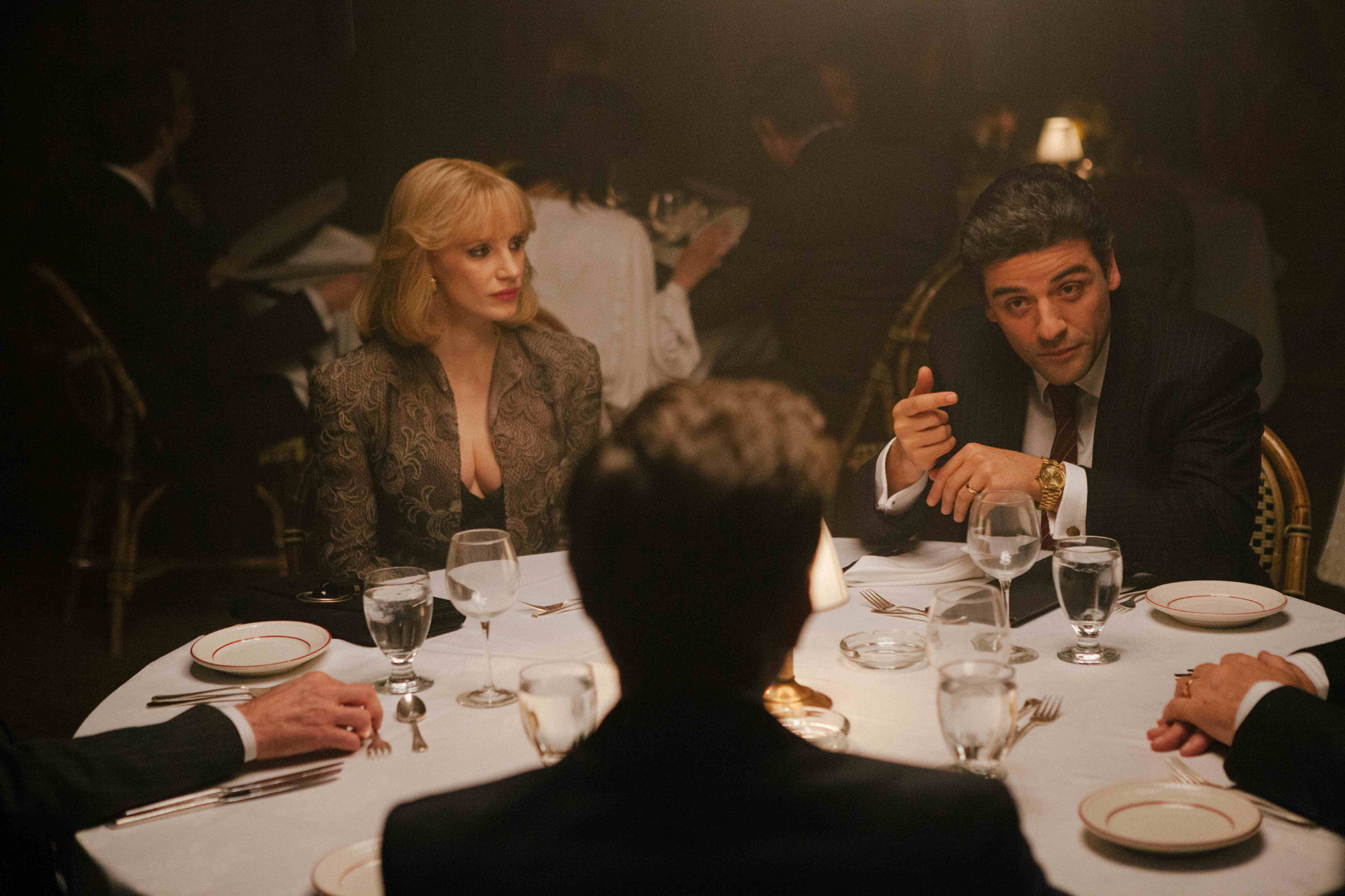
amostviolentyear04 In “The Godfather” (1972), crime comes to look more like business at the end of its story. In case of “A Most Violent Year”, a dark, tense drama about an ambitious New York business man trying not to lose everything he has achieved while desperately trying to maintain his integrity, business comes to look more like crime as its story arrives at the eventual ending. With the authentic period mood evoking the gloomy American crime drama movies made around the 1970-80s, the movie is a fateful pastiche of those films to which it attempts to pay a thoughtful homage, and it is gripping to watch at times even though it is already clear to us from the beginning where its story will inevitably arrive in the end.

The title of the movie refers to its period background – New York in 1981. It was the year which is regarded as one of the most violent years in New York’s history due to the rising number of crime cases during that year, and what happens during the opening sequence of the film does feel like another usual violent criminal incident in the city. An oil truck is suddenly ambushed by a couple of guys when it is delivering considerable amount of oil as scheduled, and its driver is helplessly beaten by these robbers because he does not have anything for defending himself.

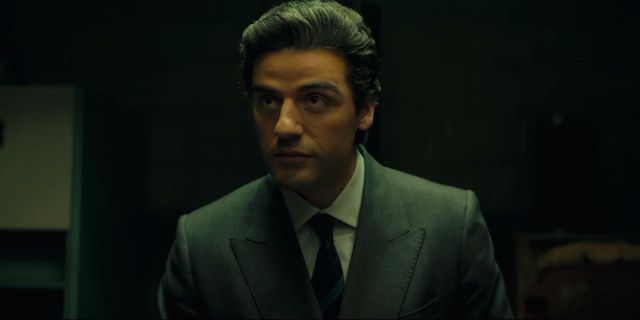
The truck in question is one of many oil trucks belonging to Abel Morales (Oscar Isaac), whose rising heating oil company happens to be at the crucial moment for a bigger success to come when that hijacking incident happens. After the negotiation with a local Jewish group headed by Josef Mendellsohn (Jerry Adler), Abel purchases a big fuel oil terminal near the East River from them, and this facility will give his company a direct access to oil barges coming through the East river while guaranteeing more profit to be accumulated through its considerable oil storage capacity.

amostviolentyear01 While everything looks fine at first, it is gradually revealed that the situation is not exactly ideal for Abel and his company. It seems those unknown hijackers are only targeting his company’s oil trucks, and it is also possible that somebody is trying to ruin his company through this serial hijacking. Considering that his local competitors do not welcome the emergence of a new serious competitor in their field, at least one of them may be involved with this, and such a dirty tactic like that is probably nothing new to these seasoned businessmen, who look like mob bosses at times when they gather together to be confronted by Abel during one scene unfolded at a local restaurant.

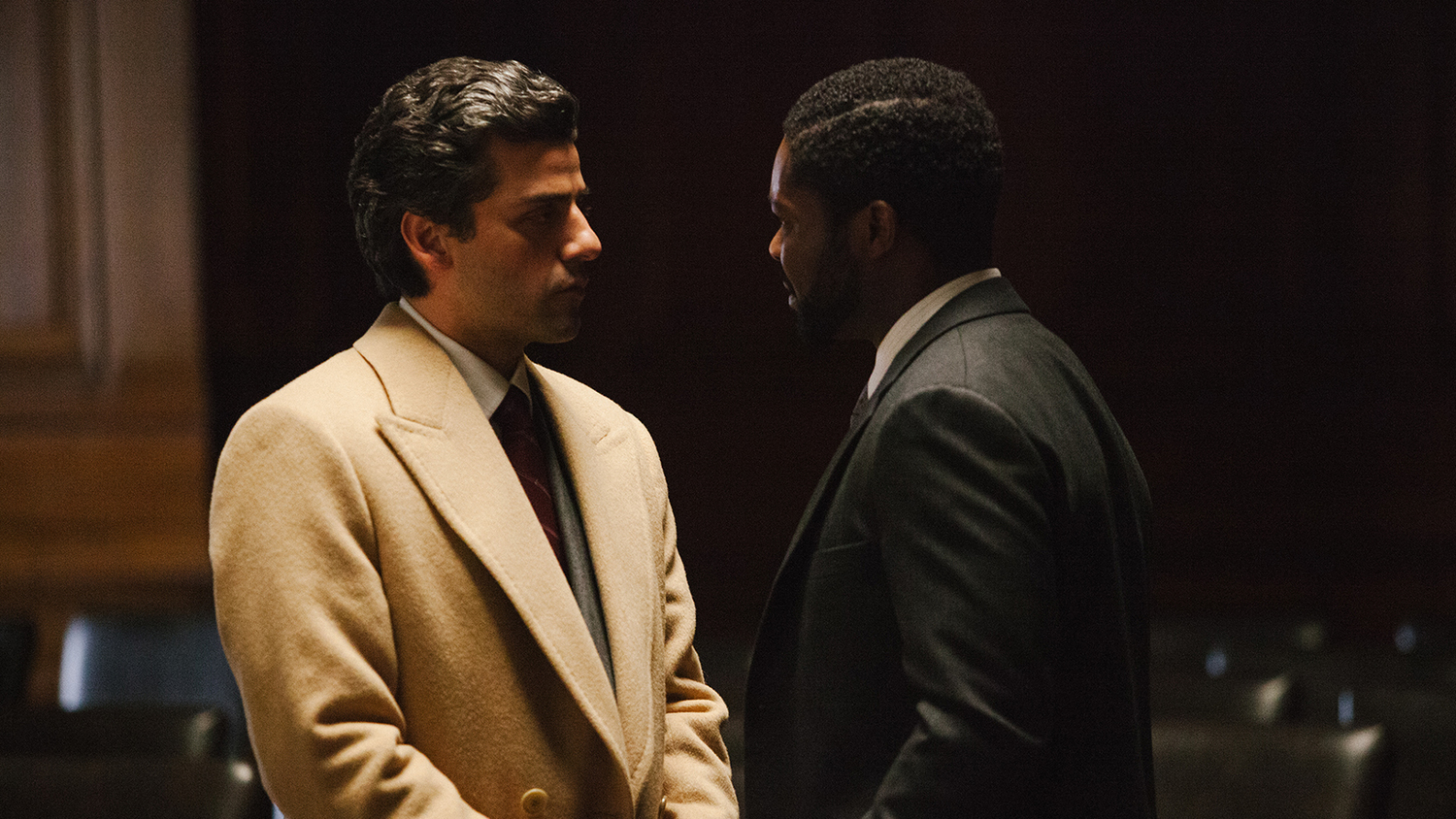
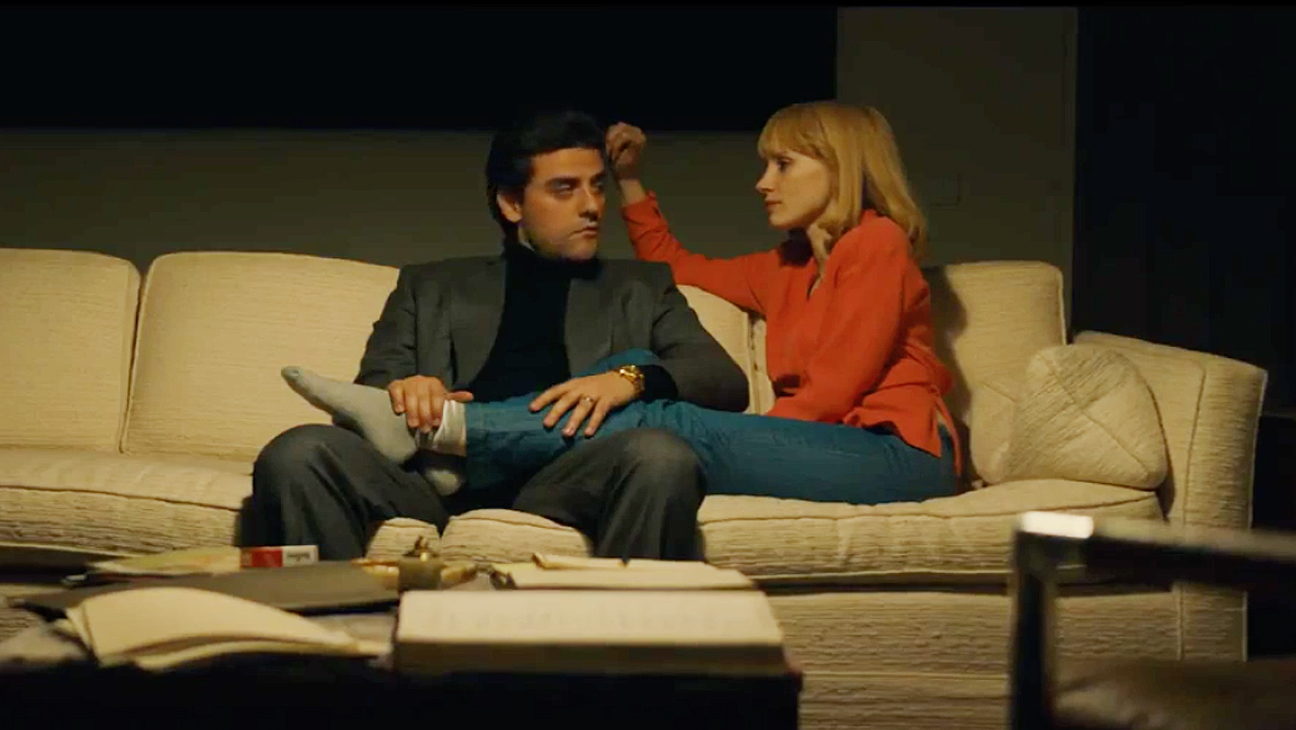
In addition, they and Abel have become the focus of the federal investigation led by Assistant District Attorney Lawrence (David Oyelowo, who recently gave a memorable performance as Martin Luther King Jr. in “Selma” (2014)), who is quite determined to expose any illegal business conducts including price fixing and tax invasion through his investigation. Abel is willing to cooperate with Lawrence, but, though he often emphasizes that he is a clean, honest businessman, he also has many things to be washed before Lawrence’s investigation on his company, and that is the main job of his lawyer Andrew Walsh (Albert Brooks in an almost unrecognizable appearance) and Abel’s wife Anna (Jessica Chastain), who begins to check their account books thoroughly as the main accountant of his company.

And then there come more headaches for Abel and his close associates. The hijackers continue to attack his oil trucks, and somebody tries to break into his family’s new house during one night. Abel tries to maintain the situation as much as he can, but he finds himself getting cornered far more than ever especially when a big bank supporting his deal with Mendellsohn decides to back out of their financial agreement due to the increasing disturbance around Abel’s company. Now he must find other ways to get 1.5 million dollar for closing the deal before its expiration date, and that looks more difficult as he is running of the time available to him.

amvy_day6-219.CR2 The director/writer J.C. Chandor, who previously directed “Margin Call” (2011) and “All Is Lost”, slowly builds the momentum in his story while steadily maintaining a nervous mood around his characters. While the composer Alex Ebert provides a moody score of gloomy ambience which appears whenever something serious is going to happen sooner or later, the cinematographer Braford Young gives us a number of impressive visual moments which may you take back to late Gordon Willis’ work in the Godfather trilogy. The characters in the film are often shown with the stark contrast between light and darkness on the screen, and that further accentuates the dramatic tension in the film as Abel finds himself pulled into a shady area he never wants to be associated with.

Functioning as the compelling center of the story with another excellent performance in his career, Oscar Isaac is also surrounded by talented supporting actors including Albert Brooks, Alessandro Nivola, David Oyelowo, Elyes Gabel, Catalina Sandino Moreno, and Jessica Chastain. Although their characters are mostly underdeveloped, they vividly shape their characters through good performances, and Chastain, who had another terrific year with this film and other ones including “Interstellar” (2014) and “The Disappearance of Eleanor Rigby” (2013), is especially wonderful as a feisty woman ready to do anything for her family and her husband’s business. The movie does not go deep enough into Anna’s interesting personal connection with crime, but Chastain imbues a strong presence into her character, and she has a terrific scene with Issac when Abel has just gone through what is probably the most difficult day in his life.

While there are a few gritty moments of action, “A Most Violent Year” is mainly driven by mood and characters, and I enjoyed that aspect as admiring the skills and efforts put into it. It could have been more than a mere homage staying inside the conventions of its genre, but it is still an engaging film worthwhile to watch for several good reasons, and it did its job as well as required, if not better than expected.

amostviolentyear03


Posted in Movies | Tagged , , , | Leave a comment

Winter Sleep (2014) ☆☆☆1/2 (3.5/4) : Dormant in his own hypocrisy

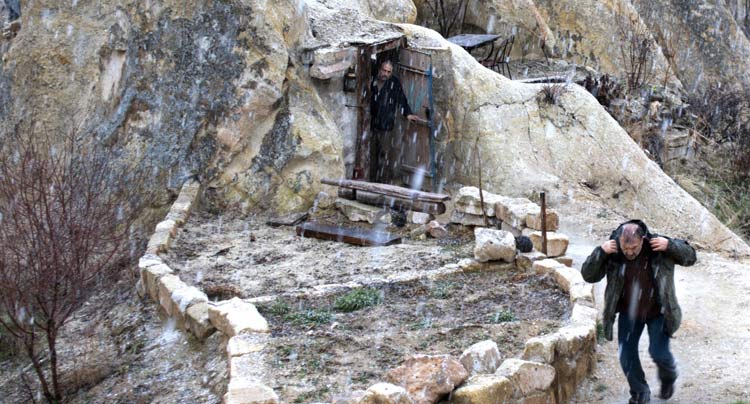
Haluk Bilginer in Winter Sleep The first thing to draw my attention in Nuri Bilge Ceylan’s new film “Winter Sleep” is the rocky, mountainous landscape of Cappadocia, Turkey. While making wonderful sights for tourism in their weathered appearances, those soft rocks, which were formed from volcanic deposits a long time ago, were also carved out by local people to be used as their homes or churches, and I was especially impressed by one house shown in the film, which looks as if it were embedded within a big rock.

The story of the movie mainly revolves around a local tourist hotel owned by Aydin (Haluk Bilginer), a former actor who has lived comfortably thanks to the wealth he inherited from his dead father. Besides his nice hotel virtually carved into the top of one of those rocky mountains of Cappadocia, he is also a landowner of several houses in his hometown, and his daily business matters are usually taken care of by his assistant Hidayet (Ayberk Pekcan) while Aydin spends most of his time on writing columns for local newspapers or preparing for a book on the history of Turkish theater at his own private place near the hotel (but he has not written any single word for the book yet, by the way).

He is usually kind and generous to his guests at the hotel, but we slowly begin to see his deceit and hypocrisy beneath his seemingly benevolent appearance through the intimate observation on the interactions between and him and others around him. When Aydin and Hidayet go to one of his tenants for their trouble with a little village boy who is the tenant’s nephew, it is pretty clear to us why that sullen boy is angry about Aydin, but Aydin only notices other things to judge and criticize later while being oblivious to his tenant’s poor situation. When the tenant, who happens to be a local imam, visits him later for fixing the situation as much as he can, Aydin merely notices the imam’s obsequiousness, and then he writes a critical column based on his impression while never considering the social gap between him and the imam.

wintersleep01 Having been insulated within his self-absorbed view, he is not very nice to two people living with him: his recently divorced sister Necla (Demet Akbağ) and his young wife Nihal (Melisa Sözen). When Necla throws some comments on her brother’s recent writings during their conversation at his private place, he seems to be ready to accept any criticism at first, but then he quickly switches to a more defensive mode as she begins to point out his superficial side, and both of them eventually become frustrated with their conversation going nowhere. While the camera is calmly observing them, Bilginer and Akbağ handle this long scene with their fluent and precise delivery of lines and reactions, and their performances make it captivating to watch.

Akbağ also has another very good scene when Necla shows her own hypocrisy during her conversation with Nihal. While taking about her ex-husband, Necla sticks to her distorted view on her unhappy marriage along with her rather misguided opinion of tolerance, and Nihal sees that there is nothing much to say except her resigned agreement to her sister-in-law. Necla clearly perceives her brother’s flaws, but, ironically, she does not see her own flaws just like him – and we are also reminded that we are not so free from such ironic ignorance in our life either.

In case of Nihal, she has been distant from her husband for years, and all she cares about in her unhappy life is doing some local charity work through his money – and she does not want her husband’s involvement at all. When Aydin suddenly shows an interest in charity at one point after reading one sentimentally pleading letter sent to him, she is apparently not very pleased about that, and their estranged relationship becomes more strained then ever when Aydin tries to ‘help’ her recent charity project later in the story.

Although the screenplay by Ceylan and his wife Ebru is loosely inspired by Anton Chekov’s two short stories “The Wife” and “Excellent People”, “Winter Sleep” is more reminiscent of Ingmar Bergman’s chamber dramas considering its mood and subjects. While focusing on a handful of main characters, the movie gives us a number of emotionally hurtful moments amid its bleak atmosphere, and Sözen has a powerful moment later in the story when Nihal finally decides to speak directly to her husband on how he is actually a person he should despise more than others willfully judged by him.

wintersleep06The crisp cinematography by Gökhan Tiryaki, who did a terrific job in Ceylan’s previous film “Once Upon a Time in Anatolia” (2011), wonderfully captures the barren beauty of wintry landscapes on the screen, and some of the interior scenes in the film also look fabulous thanks to their evocative mood and lighting. As looking around Aydin’s hotel, we come to sense more of the emotional distance between the main characters, and their private places begin to look a lot like caves with some fire where they retreat from each other and then nurse resentment or dissatisfaction inside them.

The movie leisurely takes its time to establish story and characters while allowing some space for other crucial supporting characters in the story, but its slow pace feels detrimental at times. Although I heard that its rough cut was around 4.5 hours, the running time of the final cut, which is more than 3 hours, is still a little too long, and there are several redundant elements which can be cut without much problem – and I personally think its last 50 minutes could have been shortened a bit.

None the less, “Winter Sleep”, which was honored with the Palme d’Or and the FIPRESCI Prize at the Cannes Film Festival in last year (it was also Turkey’s official submission to the Best Foreign Language Film at the Academy Awards of this year, though it was not selected in the final list), is another absorbing work from Nuri Bilge Ceylan. It is not perfect, but it is supported well by many engaging things including its actors’ nuanced performances, and the overall result is a slow but rewarding journey to reflect on later.

wintersleep04

Posted in Movies | Tagged , , | Leave a comment

Kingsman: The Secret Agent (2014) ☆☆1/2(2.5/4) : Prim and violent

kingsman05“Kingsman: The Secret Agent” is an over-the-top spy action film going wildly between casual ultra-violence and occasional self-conscious humor. It is prim and violent while giving us a little wink with its self-aware attitude, but I only observed its story and characters from the distance as mildly entertained by a handful of amusing moments to notice and talk about.

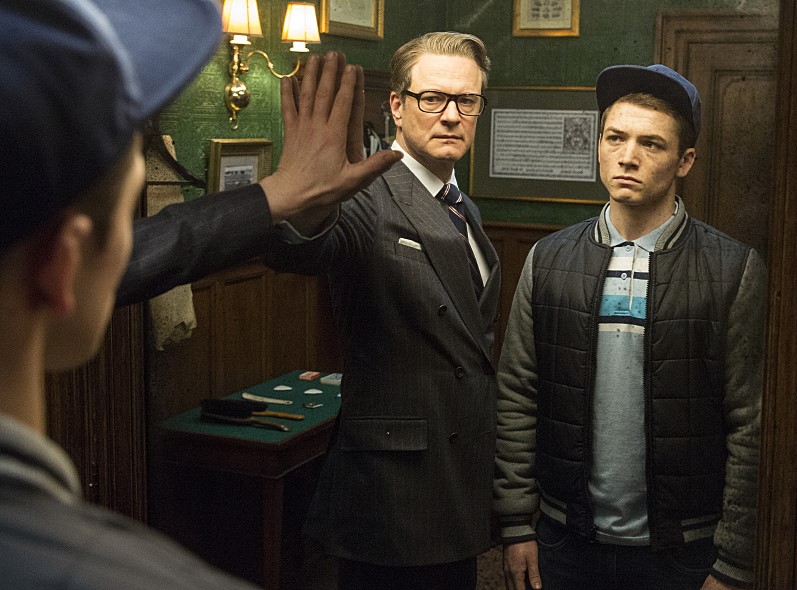
Its story is about how Gary “Eggsy” Unwin (newcomer Taron Egerton) is suddenly drawn into the hidden world of secret agents he never imagined before. When this bright but problematic lad gets himself into a serious trouble with the local police on another day of his unhappy and hopeless working-class daily life, he uses a phone number left to him after his father’s death a long time ago, and that is how he comes to encounter Harry Hart (Colin Firth), a man who knew Eggsy’s father as his recruiter and also sees the same potential inside Eggsy.

Not long after their first meeting which is ended rather inconveniently at a local bar, Eggsy becomes one of the young candidates to fill the position of a recently diseased member in the secret agency named “The Kingsmen”, and we get some bits of background information about this powerful clandestine agency whose headquarter is hidden inside a posh tailor shop located somewhere in London. Thanks to its enormous wealth, the agency is equipped with many various gadgets and vehicles which would impress James Bond, and Hart and other agents have handled many secret operations for keeping the world safe while not getting noticed by ordinary people. Headed by Arthur (Michael Caine), they have operated under the code names from the Arthurian tale, and they all wear prim business suits and special glasses, which make it a little too difficult for us to distinguish one from another when we see them during their meeting.

kingsman04While Hart, called Galahad in his agency, investigates who is behind the murder of their recently diseased member, Eggsy and other candidates go through a number of harsh tests from which only one candidate will emerge as a new Kingsmen agent, and Merlin (Mark Strong), who has worked as a technician/trainer after retiring from his field work, always knows how to surprise his trainees at unexpected moments. At one point, he suddenly fills the trainees’ bunk room with water in the middle of one night just for testing their quick response for survival, and that is just the beginning of what they will have to endure under Merlin’s crafty supervision.

As Eggsy is approaching to his possible success step by step, Hart’s ongoing investigation leads to his discovery of a conspiracy masterminded by Richmond Valentine (Samuel L. Jackson), a megalomaniac billionaire who recently gets more attention on the media thanks to his free distribution of mobile phone SIM cards all over the world. Valentine is usually accompanied with his henchwoman Gazelle (Sofia Boutella), and she has a very nasty way of using her metal prosthetic legs which can be utilized as swift lethal weapons to slash or slice her opponents.

While Eggsy eventually gets involved into Hart’s operation and then tries to save the world along with a few people he can trust, the movie often pokes fun at spy movies in knowing ways. While that famous James Bond movie cliché is mentioned during one scene, the climax part features your typical secret base where everything is almost ready for Valentine to enjoy the final step of his diabolical plan, and we even have a big red digital readout to generate more suspense as Eggsy and others race against the time during the climax part.

kingsman06There are a number of action sequences which remorselessly brandish ultra-violence with no inhibition, and the director Matthew Vaughn, who previously directed “Kick-Ass” (2010) and “X-Men: First Class” (2011), makes them look quick, slick, and brutal through his stylish approach. During one sequence unfolded within some backward American church, the movie gets itself pumped up once its button is literally hit, and then it strikes us with a long, rapid series of violent shots as the characters on the screen are driven into savage embroilment. Not so surprisingly, the climax part is supplied with plenty of extras to be killed off like video game characters, and it culminates into one loony moment which uses Sir Edward William Elgar’s “Pomp and Circumstance” in an outrageously sensational way to be appreciated by late Ken Russell. As a matter of fact, this moment is so outrageous that the final showdown scene looks pretty tame in comparison.

Looking as suave and sophisticated as we can expect from him, Colin Firth comfortably fits into his unflappable character, and Taron Egerton is a nice counterpart to Firth as a young brash hero in the need of some extra polish for looking and talking like a model upper-class British superspy. While Mark Strong has a fun with his wily, resourceful supporting character, Michael Caine brings authority and experience to his small role, and Sophie Cookson is competent as a female recruit who is nicer to Eggsy than other snobbish recruits. In case of Samuel L. Jackson, he throws himself into a full campy mode as relishing or chewing every scene of his, and I must say he frequently looks as ridiculous as some of lesser Bond movie villains.

“Kingsman: The Secret Agent” is based on the comic book “The Secret Service” by Mark Millar and Dave Gibbons. While I am not familiar with Millar’s works, I have seen two movies based on his comic book works, and “The Kingsman: The Secret Agent” is somewhere between “Wanted” (2008) and “Kick-Ass”. While the movie is less uncomfortable than “Kick-Ass”, it is not as entertaining as “Wanted”, and I am reluctant about recommending it. As a parody, it is not fun enough for me while sometimes bothering me with its sexist aspect. As a spy action movie, it does not bring anything particularly new to its genre in the era of countless cases of hyperkinetic CGI action. It is a well-made product with some class provided by Firth, but I am not that impressed.

kingsman01

Posted in Movies | Tagged , | Leave a comment