Selma (2014) ☆☆☆1/2(3.5/4) : A March to Equality

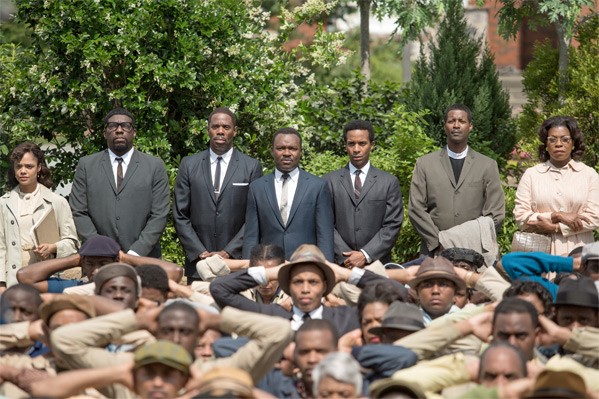
selma01Focusing on one of the monumental moments during the 1960s Civil Rights Movement, “Selma” instantly takes us to that turbulent era viewed from Martin Luther King Jr. and other civil rights activists. While being a complex portrayal of its hero, the movie is also a compelling drama which illuminates on a dark, difficult period he and others had to endure before ultimately rising to the occasion, and their story reminds us of how far the American society has advanced since that point – and how much progress it still needs to make even at present.

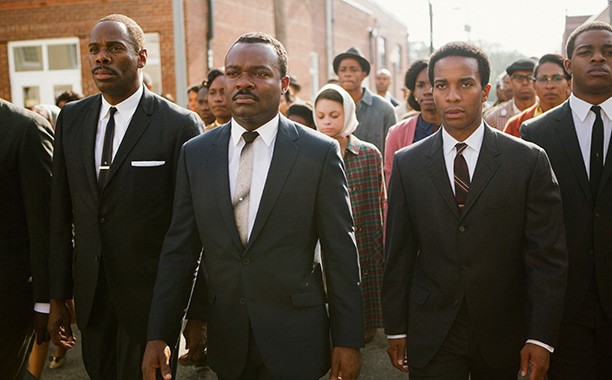
The movie begins with Martin Luther King Jr. (David Oyelowo) preparing for the Nobel Prize ceremony with his wife Correta Scott King (Carmen Ejogo) on October 14th, 1964. His acceptance speech at the ceremony held in Oslo, Norway looks like the peak of his civil rights activity at first, but then the following scene, which is based on a shocking bombing incident in 1963, shows that it is not yet over for him and others participating in the 1960s Civil Rights Movement. There were lots of people in the Southern states who did not welcome the civil rights activity during that time, and their prejudice and hate toward African Americans and civil rights activists resulted in not only that bombing incident but also other notorious incidents of brutal violence and murder.

Although President Lyndon B. Johnson (Tom Wilkinson) and his government got the Civil Rights Act passed in the Congress in 1964, this act still could not prevent the racial discrimination in the voter registration of Southern states. As shown during an infuriating scene early in the film, local authorities could block African American citizens from voter registration by any means necessary, and Alabama governor George Wallace (Tim Roth) remained to be indifferent to many unfair cases of injustice in his state while maintaining his contemptuous disregard of the civil rights in public.

selma03   The movie gives us a dramatic account of how the Selma to Montgomery marches eventually led to the passing of the Voting Rights Act of 1965. After his fruitless private conversation with President Johnson at the White House, King becomes more determined to take a big action for voting rights, so he and his fellow civil rights activist go down to Selma, Alabama in early 1965. After perceiving that it is a suitable place to start their long protest march to Montgomery, they begin to prepare for their plan step by step, and they finally come to attempt their first march on March 7th, 1965, an infamous day which was nicknamed “Bloody Sunday” for the brutal suppression of the marchers by the local police force.

While vividly recreating the local period mood palpable with the sense of oppression on the screen, the movie never steps back from cruel, violent moments of racism, and the director Ava DuVernay gives us a number of striking moments including a memorable sequence unfolded on the Edmund Pettus Bridge during Bloody Sunday. Alternatively looking inside and outside the pandemonium on the bridge, this sequence effectively shows us how much this barbaric incident, which was one of the most painful and shameful moments in the modern American history, shocked the whole nation at that time, and it also makes a point on how it indirectly brought the best out of many good people who came to Selma for helping and supporting the march.

As Martin Luther King Jr., David Oyelowo, a British actor who initially drew my attention through his solid supporting job in “The Last King of Scotland” (2006), gives an astounding breakthrough performance which was sadly not Oscar-nominated in this year. As fully embodying his character on the screen right from his first scene, Oyelowo is simply magnetic and eloquent in his committed performance, and he also masterfully conveys King’s human sides to us when the movie closely observes the interactions between King and others close to him. When he is criticized by some of his people after he suddenly decided to step back even though everything seemed to be ready for him at that point, King defends his decision with a good strategic reason, but he is not sure about whether he will succeed or not in the end, and he comes to have moments of self-doubt as the circumstance surrounding him and other is getting more intense and volatile.

The screenplay by Paul Webb also does not overlook the strains in the relationship between King and his wife, who has gone through many things since he became a prominent civil rights activist in public. While firmly standing by her husband with the belief shared between them, Coretta confronts her husband at one point after a certain recording tape was sent to her, and Carmen Ejogo, who holds her place well besides Oyelowo, slowly and sternly reveals her character’s personal pain during this quiet but painful scene. Knowing how deeply his wife feels hurt, King has almost nothing to say while feeling guilty about the pain he foolishly caused, and Oyelowo and DuVernay add intriguing ambiguity to the end of this scene when King has to answer to his wife’s final question.

selma07  Besides Oyelowo and Ejogo, the movie is packed with various actors who fill their respective supporting roles with respect and a bit of personality. While more notable actors including Tom Wilkinson, Tim Roth, Oprah Winfrey, Cuba Gooding Jr., Martin Sheen, Dylan Baker and Common draw our attention at first, they are more or less than small parts of the cast along with other good actors including Wendel Pierce, Ruben Santiago-Hudson, Giovanni Ribisi, Alessandro Nivola, Keith Stanfield, and Andre Holland.

Since its release, “Selma” has drawn lots of controversy due to its rather negative depiction of President Johnson, who actually supported King and the 1960s Civil Rights Movement more than how he was depicted in the film. While it goes without saying that Wilkinson looks as awkward as Liev Schreiber in “The Butler” (2013), “Selma” is a fiction from the beginning, and I must point out that DuVernay and Webb simply chose a more dramatic setting to emphasize the role of King and other African American activists in the history. Like Alan Parker’s “Mississippi Burning” (1988), which heavily (or grossly in some people’s view) modifies the details of a real-life incident for creating a more vivid and electrifying version to make us feel the heated vibes of the 1960s Civil Rights Movement, their movie is intended to be more dramatically effective as a fiction rather than being historically accurate, and the result is powerful enough to be truthful to the mood and emotions generated from its real-life story.

Despite its few notable flaws including a couple of storytelling devices which feel a little too artificial at times, “Selma” remains as a superb historical drama with the right mix of nobility and humanity thanks to DuVernay’s excellent direction and Oyelowo’s magnificent lead performance. Its finale coupled with the depiction of one significant forward step in the American history is surely expected from the start, but it is movingly delivered with lots of emotional resonance to touch us none the less, and the movie comes to us a sincere and passionate tribute to King and other brave, righteous people behind it.
selma02

Posted in Movies | Tagged , , , , | 1 Comment

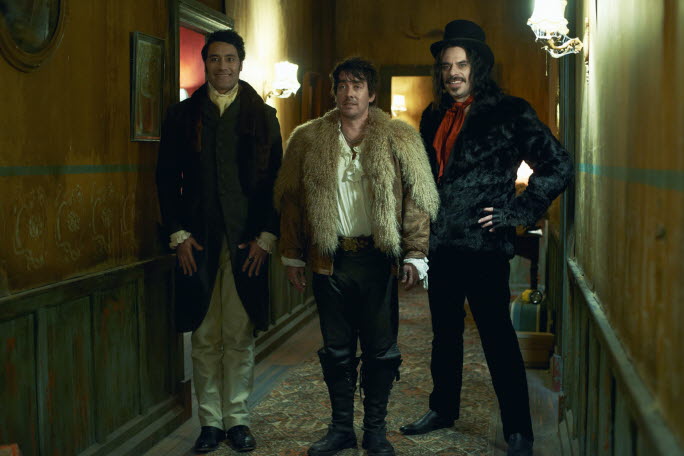
What We Do in the Shadows (2014) ☆☆☆1/2(3.5/4) : Meet vampire flatmates

small_whatwedointheshadow02“What We Do in the Shadows” is one of the most hilarious comedy films I saw during recent months. It is indeed an one-joke comedy as I guessed from its trailer, but this is a smart, funny horror comedy which cleverly finds many ways to have a fun with its outrageous comic premise as well as many horror genre conventions to be lampooned, and I must confess that I laughed a lot to myself throughout its short running time as enjoying its witty, uproarious jokes on its goofy vampires and their unenviable night lifestyle.

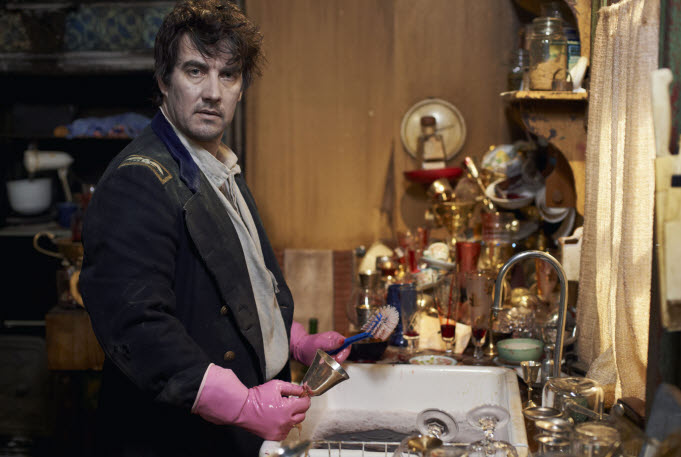
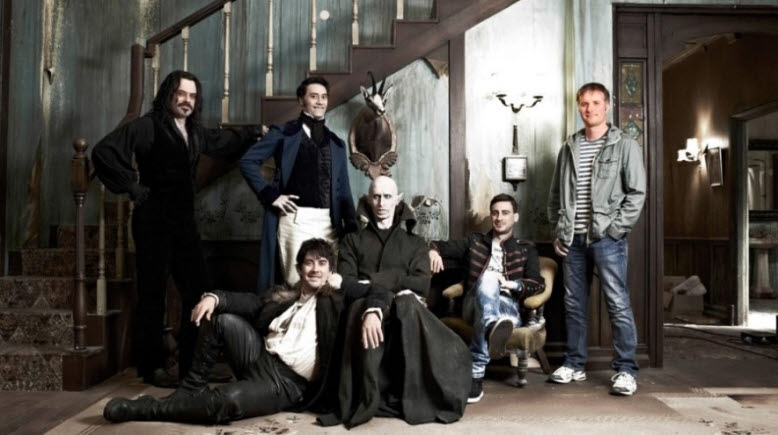
Through its mokumentary approach, we are introduced to four vampires who have been living together for many years in an old big house somewhere in the suburban area of Wellington, New Zealand: Viago (Taika Waititi), Vladislav (Jemaine Clement), Deacon (Jonathan Brugh), and Petyr (Ben Fransham). While Viago, Vladsislve, and Deacon are more than 100 years old, Petry, the oldest one who sleeps inside his stone coffin in the basement, looks like having lived for several thousand years at least, and his rather inhuman appearance makes me wonder whether he is a relative of Count Orlok in great vampire film “Nosferatu” (1922).

While these vampires have been accustomed to sucking the blood of any human being targeted by them, they agreed to make an exception on some documentary crew who made a contact with them in advance, so their story is presented through the cameras of this documentary crew, who are almost never shown on the screen (we are told at the beginning that the crew took a couple of safety measures as required during their risky shooting). In front of the camera, Viago, Vladislav, and Deacon talk about their long past with casual frankness during their individual interview scenes; while Deacon, aged 183, recounts his unfortunate encounter with a vampire during his last day as a human being, Vladislav, aged 862, reminisces the savage past during those old bloody years of his, and Viago, aged 317, tells us his personal story about how he settled in New Zealand around the 20th century.

small_whatwedointheshadow03As we watch them through the documentary crew’s cameras, they look pretty much like your average flatmates who try to live well along with each other, and they also have several common domestic matters including house cleaning or a messy (and bloody) kitchen sink. Although they are technically dead bodies, these bloodsucking guys do have feelings inside their dead hearts, and it seems their certain body parts function pretty well despite their low body temperature.

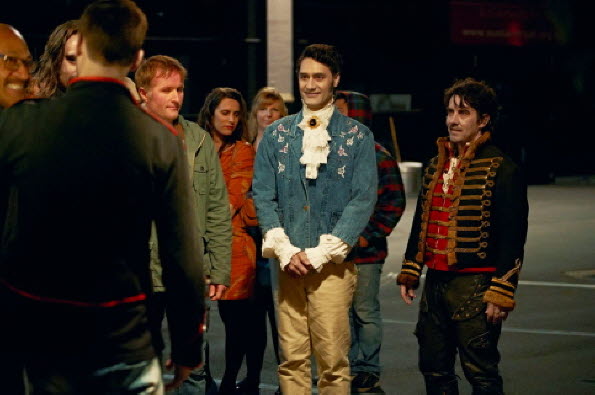
Whenever the sun goes down, they are ready to suck the blood of their possible preys on the night streets of Wellington like other vampires in the city, but it is not always easy for them to get what they crave for, and the movie constantly tickles us with small funny moments based on those familiar genre conventions associated with vampires. While they are hopelessly out of touch with the 21th century world, our vampire trio has difficulties in getting themselves dressed (they cannot be reflected in mirror, you know), and they sometimes get prevented from entering night clubs when nobody is going to formally let them into their potential hunting grounds.

Although their bloodsucking business is not a pretty sight to say the least, the co-directors/co-writers Jemaine Clement and Taika Waititi keeps their film bouncing with a cheerful deadpan tone, and they also give likable comic performances along with their co-star Jonathan Brugh while mostly looking serious as ‘documentary subjects’. As a fastidious vampire with soft sides, Waititi is hysterical when his character tries to deal with his unspeakable nature as courteously as possible during one hilariously nasty scene, and Clement is equally funny as a grumpy vampire who has a very old score to settle with someone he called “The Beast”. As the third member of the clan, Brugh has his share of funny moments to shine, and there is an amusing moment when Deacon and Vladislav talk about why they prefer virgin’s blood even though that actually does not mean much to them.

small_whatwedointheshadow05 The movie becomes more hilarious as other characters appear later. We meet Jackie (Jackie Van Beek), a human housewife who has been frustrated with her nearly thankless job of serving her master Deacon and his flatmates (Deacon promised her an eternal life, of course), and then there comes Nick (Cori Gonzalez-Macuer), who was supposed to be a meal to suck at first but eventually becomes a new flatmate. While enjoying some cool abilities gained from his transformation, Nick also gets a very hard lesson on his strict diet, and I was reminded again of why I do not want to be a vampire at all. Immortality or sunlight hazard may be something I can deal with, but it is pretty depressing to think that you only have to drink red protein shake for the rest of your endless life, isn’t it?

Anyway, thanks to Nick and Nick’s friend Stu (Stu Rutherford), Viago, Vladislav, and Deacon learn a bit about the convenience of modern technology, and Stu quickly becomes their another human associate although he does not exactly serve anyone. As a matter of fact, Nick’s fellow vampires like Stu so much that it takes some time for them to realize at one point that Stu is in a very perilous situation thanks to his close friendship with them.

There were several times I could not help but notice the contrived aspect of its setting (how can the documentary crew keep documenting everything with their cameras even when they are in a serious danger or a very unethical circumstance?), but “What We Do in the Shadows” is an unrealistic comedy based on a preposterous premise from the very beginning, and its bloody but ultimately sweet comedy has plenty of laughs to overlook its contrivances for a while. These funny vampire guys can be pretty bloodthirsty enough to suck you all, but it is their nature, isn’t it?

whatwedointheshadow01


Posted in Movies | Tagged , , , | Leave a comment

The Skeleton Twins (2014) ☆☆☆(3/4) : Estranged Twins’ reunion

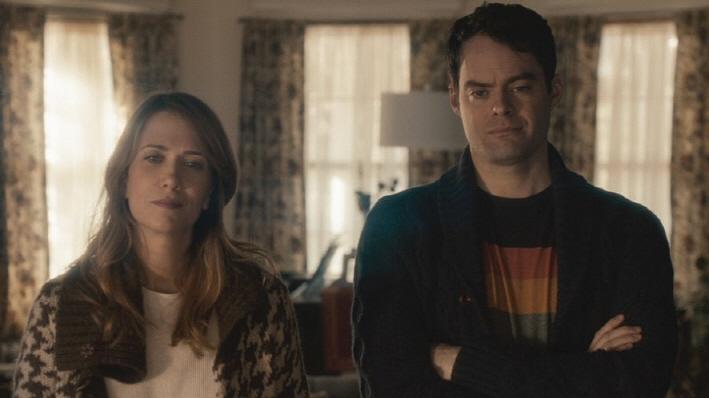
small_theskeletontwin01While not flinching from the dark, gloomy side of its story, “The Skeleton Twin” works as an intimate and humorous story about the rocky relationship between two estranged siblings who respectively struggle with each own personal problems. As observing their close but troubled relationship, the movie enters a familiar territory of dysfunctional family drama, but its story and characters feel sincere and genuine thanks to good writing and performance, and we come to care a lot about its two flawed main characters who still can lean on each other as before despite their problems.

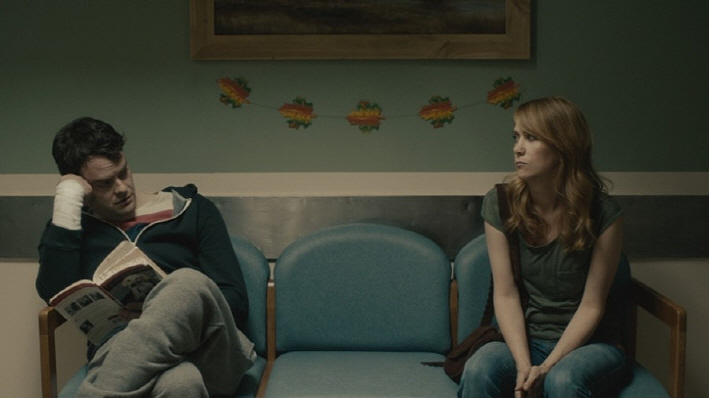
When we meet Milo Dean (Bill Hader) during the opening scene, he is at the bottom of his ongoing depression. He once hoped to be a successful Hollywood actor, but he has merely worked as a restaurant waiter without getting no chance to realize his dream, and it is implied that he had a recent break-up with his gay lover. Driven by overwhelming despair and frustration, he decides to kill himself at his small apartment in LA, but, fortunately, his suicide attempt is failed, and, ironically, it incidentally saves his twin sister Maggie (Kristen Wiig), who is also on the verge of committing suicide right before she hears about the news of her brother’s suicide attempt.

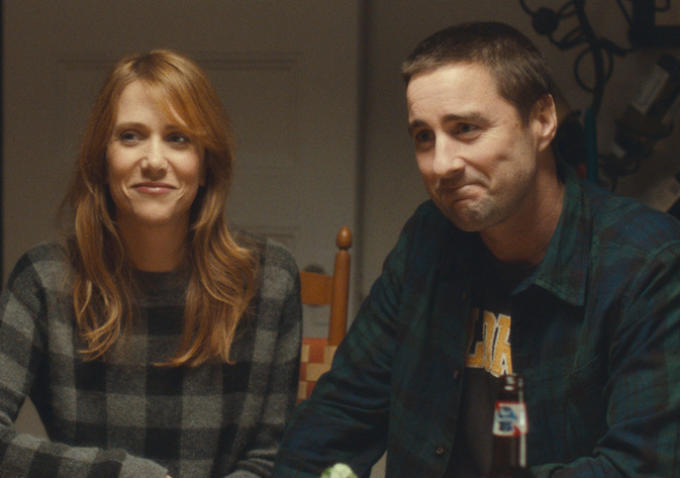
Maggie instantly flies to LA to see her brother she has not seen for several years since he left their hometown in New York, and, after spending some time for recuperation at the hospital, Milo reluctantly comes back to their hometown with Maggie, who is willing to provide a resting place for her recovering brother along with her husband Lance (Luke Wilson). Lance is one of those cheerfully good-natured guys you cannot possibly hate, and he gladly takes Milo to his workplace for giving his brother-in-law some work to do while pulling himself together.

theskeletontwin03And we get to know about Maggie and Milo’s unhappy past through their interactions and occasional flashback shots. While there were happy times to remember during their childhood, they are still haunted by the memories of their dead father, and their selfish mother Judy (Joanna Gleason) does not help them much when she happens to drop by Maggie’s house. Although Judy and her children do not talk a lot about their past while they have a dinner together with Lance, Maggie’s bitter attitude shows her deep resentment toward her mother, and Gleanson’s brief but effective performance tells us everything we need to know about her character. It is no surprise that Maggie is unsure about whether she can be a good mother; while Lance is eager to be a father, she has secretly avoided pregnancy using birth control pills, and he has no idea on what she is doing behind her back.

And she also has other secrets to hide from him. During her scuba diving lesson, she finds herself attracted to her handsome instructor, and this turns out to be not the first time in her life which has been filled with many other guys besides Lance. She hates herself for that, but she just cannot help herself, and she feels more guilt along with self-hate especially when she miserably fails to abort her latest affair.

Meanwhile, Milo also finds himself in a complicated situation when he approaches to Rich (Ty Burrell), Milo’s ex-lover who was his high school teacher when they happened to get romantically involved with each other. While their relationship in the past was unethical and illegal to say the least, Milo still has some feelings toward his first lover, and he and Rich soon resume their old affair although Rich has been trying to lead a new life while hiding his homosexuality in the closet as before. Milo feels good to be with Rich again, but then he is reminded again of how hopeless their relationship is, and that makes him depressed as before.

theskeletontwin04Depicting his characters’ messy personal troubles with care and understanding, the director/co-writer Craig Johnson sometimes lifts up the melancholic mood on the screen with the precious moments of warm intimacy between Milo and Maggie. Sometimes they do not get along with each other well, but they are still close to each other as brother and sister, and there is a wonderful scene when Milo tries to cheer up his sister with Starship’s lively song “Nothing’s Gonna Stop Us Now”. He may look silly at first, but her face gets slowly brightened up by his dance, and we cannot help but smile at this.

While having been mainly known for their comic roles since their early years in “Saturday Night Live”, Bill Hader and Kristen Wiig, who previously appeared together in “Adventureland” (2009), try more serious acting here in this film, and they always hit the right notes as deftly handling humor and drama in their scenes. Hader has a sad, poignant moment when Milo talks to his sister about how much he has disappointed with his life, and Wiig is very good when Maggie finally faces the inevitable point of her married life. In case of the supporting actors, Luke Wilson is amiable as a husband who may be too good for his wife, and Ty Burrell, another actor in the film who has been famous for his comic roles, gives a surprisingly understated performance as a man who is as flawed as his old lover.

Although its main subject is surely a moody one, “The Skeleton Twin” finds warmth and humor inside its story through the realistic depiction of a problematic but reliable sibling relationship, and it is supported by well the solid performances from Hader and Wiig. I think the movie arrives at the ending a little too abruptly and uncertainly, but that is just my minor complaint considering its small hopeful tone it earns in the end.

small_theskeletontwin02

Posted in Movies | Tagged , , , , | Leave a comment

St. Vincent (2014) ☆☆☆(3/4) : Murray as your average cranky old neighbor

small_stvicent01As watching Bill Murray in “St. Vincent”, I thought about how Murray has steadily maintained his screen persona for more than 20 years. While he looks shabbier than usual here in this movie, he is still Bill Murray we have been familiar with for years, and his usual deadpan attitude reminds us again of why he has been so successful in his own territory. He is always accompanied with that odd, melancholic aura of an outsider on the thin line between drama and comedy, and that is one of the main reasons why “St. Vincent” is constantly entertaining to watch.

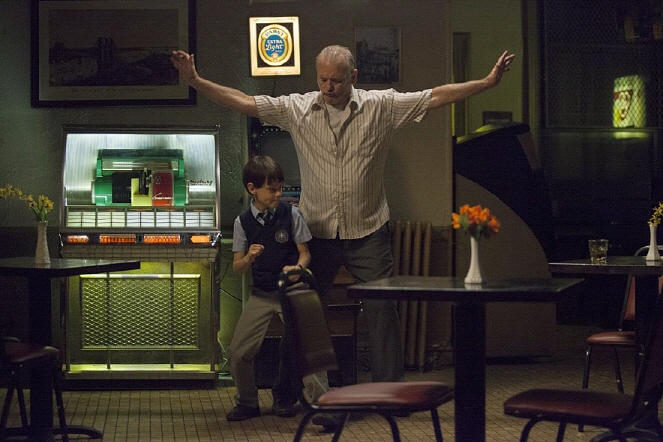
In the movie, he plays Vincent MacKenna (Bill Murray), an old Vietnam War veteran who has gone through his moody and lonely daily life in Sheepshead Bay, Brooklyn during recent years. While having a financial problem associated with his gambling at the racetrack, he lives alone with a Persian cat in his house, and only people close to him are the patrons of a local bar he frequents – and a Russian stripper girl named Daka (Naomi Watts), whom he gives some help as she enters the late stage of her pregnancy (considering their sex scene early in the film, we can only guess that Vincent is her baby’s father).

When he wakes up in the morning after another drinking night, Vincent finds that he is going to have new neighbors on the next door. Maggie Brotstein, played by Melissa McCarthy who looks more down-to-earth compared to her usual brash comic persona, is a recently divorced mother who tries to start a new life with her young son Oliver (Jaeden Lieberher), and her first encounter with Vincent is not very pleasant thanks to his cranky attitude and an unfortunate incident during her moving process.

small_stvicent04Anyway, when she is too busy with her work at a local hospital (she works as a MRI scan technician), Maggie asks Vincent to take care of her son for a while, and he agrees to be Oliver’s babysitter on the condition of regular payment. Although Vincent is not a model babysitter at all, he and Oliver gradually become  close to each other as spending time together in his house, and he comes to care about Oliver more than he admits. After he sees Oliver in a trouble with other kids of Oliver’s Catholic school, Vincent teaches some fighting skills to Oliver, and Oliver gets a moment of payback when he finally decides that enough is enough at one point. They have more fun when Vincent takes Oliver to the racetrack and his usual bar during one day, and Vincent looks a little more joyful than before as hanging around with Oliver.

The movie takes a predictable course we can easily see from the very beginning, but the director/writer Theodore Melfi takes time in establishing his characters and their relationships, and there are small scenes to amuse us with their warm-hearted humor as the movie looks around the other things besides the growing friendship between Oliver and Vincent. For instance, when Oliver begins his first day at his school, he is gently greeted by his teacher Brother Geraghty (Chris O’Dowd), and we get a warm, humorous moment as Brother Geraghty kindly reminds his new student that his class is open to every kind of religion – including atheism.

In the meantime, Murray slowly reveals the pathos behind his cranky character while never losing his sense of deadpan humor. We are later introduced to Vincent’s senile wife Sandy (Donna Mitchell) through his routine visit to her nursing home, and Murray deftly balances his performance between humor and poignancy when Vincent visits his wife with a simple but thoughtful disguise. Although she does not recognize him any more, he still wants to support her as much as he can, and that leads to a very unwise decision later when he is notified that he must pay the money for keeping his wife stayed in the nursing home.

small_stvicent03After a certain point in the story, the movie becomes more sentimental, but Murray and other actors keep the story rolling steadily through their performances. He and young actor Jaeden Lieberher form natural rapport on the screen, and Lieberher’s unadorned performance works well as an equal counterpoint to Murray’s seasoned performance. As Oliver’s hard-working mother, Melissa McCarthy shows a more serious side of her acting talent, and she has a good scene when Maggie has a private meeting with the school principal and Brother Geraghty, who show more understanding and compassion than she expected. While Terrence Howard does not have much to do with his small thankless role, Naomi Watts brings lots of spirits to her stereotype character who is more than a stripper with a heart of gold, and Chris O’Dowd is instantly likable in his amiable supporting performance.

When the story arrives at the expected finale, it comes with a certain cliché which is virtually announced in advance, but Melfi wisely lets Murray and Lieberher carry this scene for themselves, and Murray is simply effortless as suggesting the thoughts and feelings behind his character’s silent face during that big feel-good moment. It could have been quite sappy, but Murray stays true to his character, and that makes this scene genuinely touching in spite of its sentimental aspect.

On the whole, “St. Vincent” is a pleasant lightweight comedy, and Murray gives another fine comedy performance to be added to his long, productive career, which is already filled with many other notable performances including his Oscar-nominated turn in “Lost in Translation” (2003). While the unlikely relationship in “St. Vincent” is far more conventional compared to the one in “Lost in Translation”, Murray is still fun to watch as he has always been, and he and other actors in the film make it into something worthwhile to watch and enjoy.

small_stvicent02


Posted in Movies | Tagged , , | Leave a comment

Inherent Vice (2014) ☆☆☆(3/4) : A Californian film noir shrouded in marijuana haze

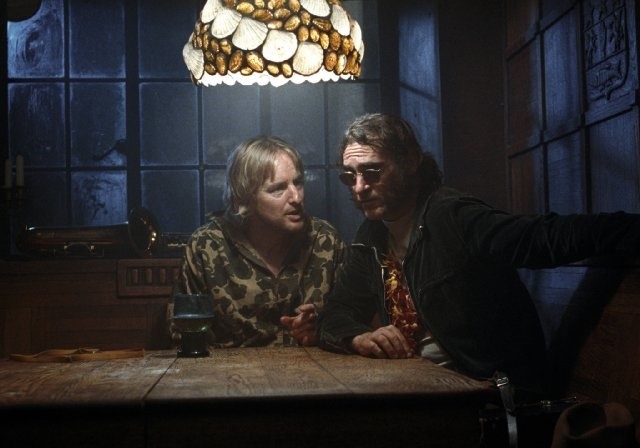
inherentvice01At the end of my reserved review on Paul Thomas Anderson’s previous work “The Master” (2012), I asked, “What will be the next step for him?” I could not get the answer at that time, but now I’ve got it from his next film “Inherent Vice”, a Californian film noir shrouded in marijuana haze. While it is equipped with unexpected plot turns and colorful stock characters like many other film noir works, the movie languidly floats around its loose detective story like marijuana smoke in the air, and it is alternatively frustrating and fascinating to watch its goofy detective hero passively rolling along with its baffling offbeat mood which somehow holds our attention even when we are not that sure about where the story is going – or where it is not going, perhaps.

It is 1970 in California, and local private investigator Larry “Doc” Sportello (Joaquin Phoenix, who looks far more relaxed than his Oscar-nominated turn in “The Master” (2012)) is going through another drowsy afternoon of pot smoking at his place when his former girlfriend Shasta Fay Hepworth (Katherine Waterston) unexpectedly appears in front of him like many sexy ladies did in old hard-boiled detective fictions. She is currently in the relationship with a wealthy, influential real estate developer named Michael Z. “Mickey” Wolfmann (Eric Roberts), and she is worried because it seems his wife Sloane (Serena Scott Thomas) is scheming with her lover for snatching Wolfmann’s money.

Although he does not look very interested in taking the case, Doc accepts Shasta’s request as a favor, but then Wolfmann is suddenly disappeared not long after Doc took his first step into the case. Shasta is also disappeared with no trace, and it is clear to us that the case may be a lot more complicated than it seemed at first, though Doc’s fuzzy brain is probably more interested in another marijuana to smoke than solving the case (Did I tell you that he and other characters in the film smoke marijuana as frequently as classic film noir characters smoke cigarette?).

inherentvice04And his circumstance does become more baffling along with a couple of other strange cases to handle. First, he is visited by Tariq Khalil (Michael K. Williams, who is very good in his short scene), a local Black Power gang leader who wants to find a member of Aryan Brotherhood gang for settling some old business matter with him. That guy in question also happens to be associated with Wolfmann, and it is possible that he is involved with Wolfmann’s disappearance.

Meanwhile, Hope Harlingen (Jena Malone), a young mother who is also a recovering heroin addict, asks Doc to find her missing husband Coy (Owen Wilson), a saxophone player who went missing while leaving considerable amount of money to her and their kid. While it does not take much time for Doc to find Coy, it turns out Coy is not what he seems to be on the surface, and that is another mystery to confuse us as well as Doc.

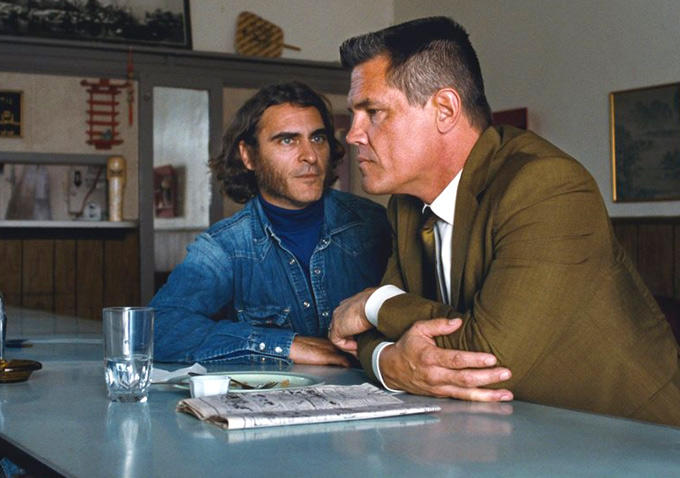
As slowly searching for more clues during his laid-back investigation, Doc comes across more troubles on his way, and it becomes plausible at least in his dopey view that his three different cases are interconnected with each other. At one point, he wakes up to find himself lying down right next to a dead man’s body after getting himself knocked on the head at a suspicious massage shop, and he accordingly draws the unwanted attention of Detective Christian F. “Bigfoot” Bjornsen (Josh Brolin), a sullen cop who does not even try to hide his contempt on Doc’s casual hippie appearance. In addition, there are also a couple of FBI guys who have an interest on Doc’s case for some motive, and Doc has no choice but to deal with not only Bigfoot and these guys but also Deputy District Attorney Penny Kimball (Reese Witherspoon), who had a relationship with Doc in the past.

inherentvice02There are many other things in the story I have not described yet, and you will be more disoriented because of its maddeningly labyrinthine plot, but the director Paul Thomas Anderson, who also adapted Thomas Pynchon’s acclaimed novel for his film, constantly maintains the level of our interest as establishing the authentic period mood on the screen. Anderson’s usual cinematographer Robert Elswit, who won an Oscar for their previous collaboration in “There Will Be Blood” (2007), does an excellent job of evoking the sunny and leisurely counterculture atmosphere of California during the 1970s, and the production design and costumes in the film are impeccable in colorful period details which look pretty amusing in our time.

Under Anderson’s relaxed but confident direction, we are served with many bizarre moments of offbeat humor while various broad characters come and go amidst hazy confusion, and Anderson assembled the impressive supporting cast revolving around Joaquin Pheonix’s easygoing comic performance. While Katherine Waterston imbues alluring quality into her character, Joanna Newsom, who plays Doc’s loyal assistant, adds another absurd touch to the film through her dry hard-boiled narration, and Martin Short is hilarious during his brief appearance as a loony dentist who does not mind show his inappropriate relationships in front of Doc. While Benicio del Toro has a small fun as Doc’s lawyer, Reese Witherspoon, Jena Malone, Owen Wilson, and Eric Roberts are also solid in their small but distinctive roles, and Josh Brolin is terrific in his wry deadpan performance as a tough cop who is in a sort of complex love/hate relationship with Doc.

In the end, “Inherent Vice” arrives at its anticlimax finale with many loose ends left behind it while not making much sense, but such a narrative flaw like that usually does not matter much in the stylish world of film noir (Remember that elusive question of who killed a certain character in “The Big Sleep” (1946)?), and the movie is filled with ample amount of mood and style to admire. I must admit that I still have difficulties in connecting dots in its dizzy plot, but I also understood that it depends on mood and characters rather than plot, and I certainly enjoyed its mood, humor, and performance although I felt impatient at times with its slow pace. With its cheerfully offbeat spirit, it deserves to be mentioned with Robert Altman’s “The Long Goodbye” (1973) and the Coen Brothers’ “The Big Lebowski” (1998), and I believe this weird creature will be remembered as another idiosyncratic entry in the singular career of a very interesting American director.

inherentvice05

Posted in Movies | Tagged , , , , | Leave a comment

The Humbling (2014) ☆☆1/2 (2.5/4): A ‘romance’ before his last act

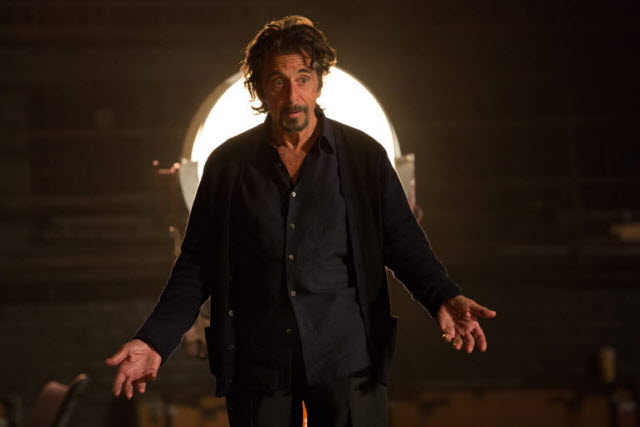
thehumbling01Like King Lear, the aging hero of “The Humbling” is a character to be played with age and experience. He feels getting old and tired more than ever as he faces the last act of his remaining life, and he is usually helpless with his increasing bafflement and frustration over what is going around or inside him. Although it feels jumbled due to its uneven narrative, the movie is not without amusement, and it also gives Al Pacino a nice chance to give one of his better movie performances during recent years.

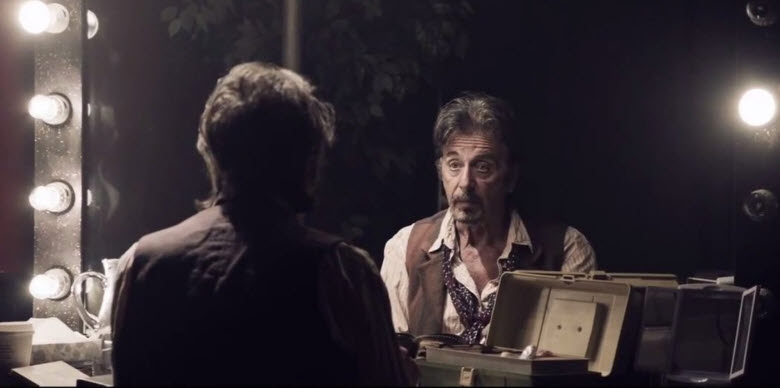
Pacino plays Simon Axler, a Broadway stage actor who passed his prime a long time ago but has tried to go on as a trouper. Right before his another stage performance of Shakespeare’s “As You Like It”, he is alone in his dressing room, and he seems to be almost ready for the show as warming himself up with soliloquy, but then he only finds himself tumbled into a bad situation. He happens to be locked out of the theater when he is about to appear on the stage, and then, though he manages to arrive on the stage despite this silly incident, he experiences a mental breakdown right in front of the audiences, who surely get a night to remember and talk about.

While watching this opening sequence, some of you will probably be reminded of the similar sequence in Alejandro González Iñárritu’s recent film “Birdman” (2014). Besides having anxious actor hero in personal/professional crisis at the center of their stories, both of these two films also have a fair share of delusional moments to reflect their heroes’ unstable state of mind, and the overlap between them are quite visible although they are also different from each other in many other ways.

Compared to the bouncy mood of “Birdman”, “The Humbling” takes a sedater route. Thanks to his doctor, Axler gets some rest at a nice sanitarium after his breakdown, but then he happens to get himself into a tricky circumstance. A fellow patient at the sanitarium approaches to him on one day, and it is apparent that Sybil (Nina Arianda) is not all right in her mind, especially when she directly asks him to kill her husband. Regardless of whether what she says is true or not, it looks like she needs more medical help, but, like those self-absorbed actors, Axler distances himself from her matter even when she confides to him on why she wants her husband’s death.

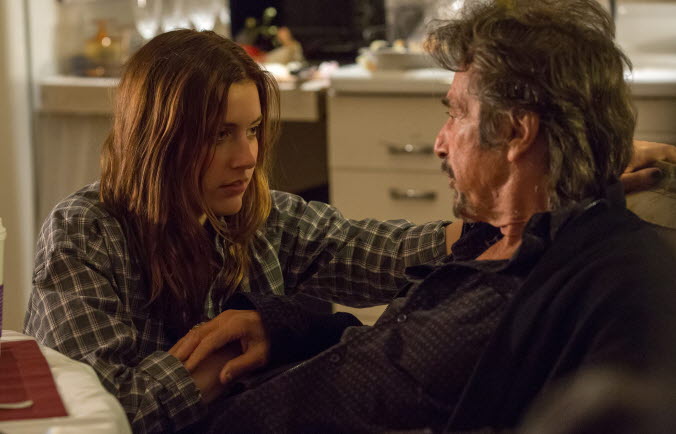
IMG_1372.CR2After his recuperation period at the sanitarium, Axler returns to his home with no particular future plan, and then he meets Pegeen (Greta Gerwig), the young daughter of Axler’s longtime friends. Although she went through a number of romantic relationships with women, Pegeen reveals her old feeling toward Axler, and he does not mind her approach at all although he knows well from the beginning that their possible romance will not last long mainly due to his old age.

Even with his acknowledgement, things do not go that well for him, and the screenplay by Buck Heny and Michal Zebede, which is based on Philip Roth’s novel, throws absurd moments of humor into the story as Axler faces many complications resulted from his relationship with Pegeen. While he experiences odd encounters with a couple of her ex-lovers (one of them recently went through a sex change operation, by the way), he also has to confront Pegeen’s parents at one point, and they are understandably not very happy to see their close friend being their daughter’s latest lover.

And he becomes more confused than ever as his mind frequently goes astray with delusions. Persuaded by his agent, he decides to come out of his retirement later, and he soon begins to prepare for his comeback through a modern interpretation of “King Lear”, but the line between reality and delusion gets more blurred than before, and we come to wonder whether many things shown through his increasingly unreliable viewpoint are real or not.

_MG_1853.CR2The director Barry Levinson, who previously worked with Pacino in HBO TV movie “You Don’t Know Jack” (2010), tries to keep the film floated amid its hero’s accumulating confusion, but the screenplay suffers from its jarring shifts between different tones, and the result is an incoherent mix of lightweight absurdity and gloomy pathos. Maybe you can ignore the distracting use of handheld camera in the film, but the story loses the focus as being drifted with its confused hero, and we become distant to its several key scenes including an uncertain moment of revelation around its third act.

In addition, the movie fails to make its central human relationship look convincing. Although Greta Gerwig is surely a good actress with natural charm as shown in “Frances Ha” (2012), we cannot see much of what attracts Axler to her elusive character who is supposed to have a mesmerizing influence over not only him but also her past lovers, and the development of their relationship never feels convincing at all. The other good actors in the film including Kyra Sedgwick, Dan Hedaya, Dylan Baker, Charles Grodin, Nina Arianda, and Diane Wiest are unfortunately wasted in their broad, underdeveloped roles, and Baker gets a particularly thankless job of phoning in his character (or skyping in his character, shall we say).

Even without that unavoidable comparison to “Birdman”, “The Humbling” remains to be a misfire which does not leave much impression on us, but Al Pacino gives a performance to remind us that he is still a compelling actor to watch even when he is going through what may be the last act of his career. Besides his successful movie career, Pacino has also been known well for his acclaimed stage works and his personal passion toward to Shakespeare’s plays, and the ambiguous finale of “The Humbling” reminds us that it will be really fantastic to watch Pacino playing King Lear on the stage. To be frank with you, I want to see that instead now.

_U6C0651.CR2

Posted in Movies | Tagged , , | Leave a comment

Cheap Thrills (2013) ☆☆☆(3/4) : They will be ready for anything….

cheapthrills04“Cheap Thrills” is a mean, vicious black comedy with recognizable human traits as its major driving factor. Some of the uncomfortable behaviors presented in the film are so cringe-inducing that we cannot help but roll our eyes with more horror and more incredulity, but then we are also reminded that we will probably be no better than those desperate guys in the movie if we are put into their increasingly insane circumstance instead.

When he starts another frustrating day of his daily life in the morning, Craig (Pat Healy) looks all right as an average family guy on the surface, but he and his family have recently been going through a difficult economic situation. He once wanted to be a successful writer, but now he is a merely expendable employee in a local garage, and he is even not paid enough to support his family. His wallet becomes almost empty after his wife asks him for $20, and then we see an eviction notice on the front door of his small home.

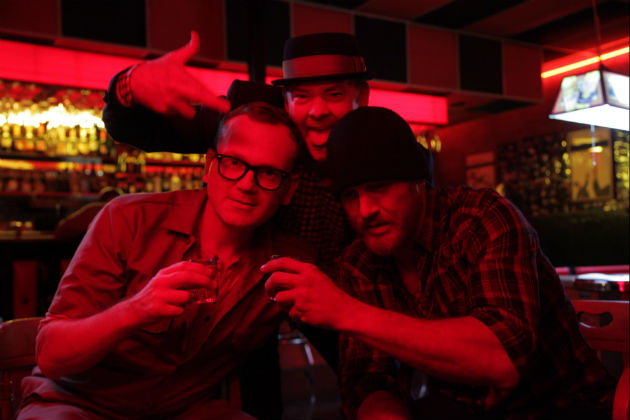
To make the matters worse, Craig gets suddenly fired on this day, and he later goes to a local bar while feeling like hitting another bottom of his hopeless life, but then he comes across his old school friend Vince (Ethan Embry) at the bar. They are glad to see each other again after a long time, but that does not brighten up their mood much because Vince turns out to be as desperate as Craig. As a high school dropout who recently got out of the jail, Vince is at the bottom of his shabby life with no future, and it seems all he and his friend can do at present is being mired together in self-pity mixed with alcohol.

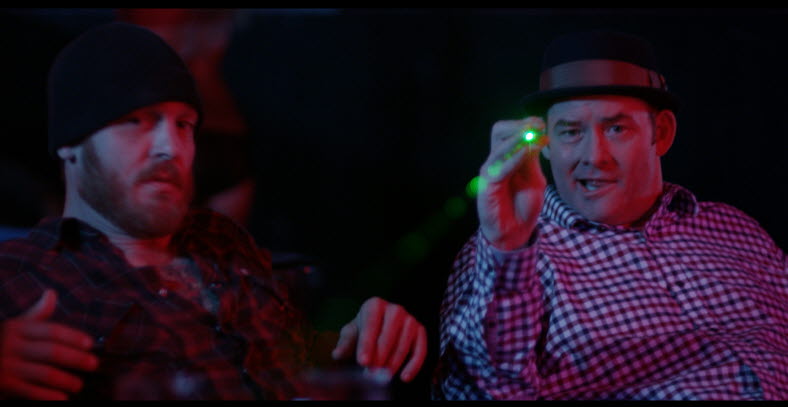
And then Vince and Craig meet Colin (David Koechner) and his young wife Violet (Sara Paxton), who are also spending some time like other customers at the bar. Colin, who is clearly a very rich guy, is ready to get any kind of fun and excitement for him and his wife, and this brash, jolly guy does not even mind using cocaine right in front of others. The employee at the bar is certainly not pleased by this, but he sees no problem at all because, well, he is a customer ready to pay for anything.

small_cheapthrills06While Craig and Vince come to have a more fun drinking night after joining Colin and Violet, things become a bit more interesting as Colin suggests Craig and Vince a series of small bets. All they have to do is to take whatever challenge suggested by Colin, and Colin promises that the winner will be instantly paid by him. Though it is merely drinking a shot of tequila at the beginning, the circumstance gradually becomes more serious and disturbing as Vince and Craig continue to put themselves into more challenges with higher risk – and more money, of course.

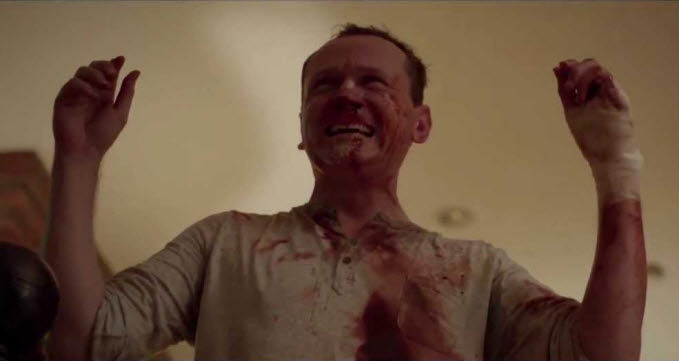
The screenplay by Trent Haaga and David Chirchirllo pushes its premise with no mercy as Craig and Vince push themselves down to another low level at every challenge thrown upon them. As they descend into more pain, disgust, and humiliation through Colin and his wife, the movie strikes us with a number of very twisted moments, and a hard punch in the face looks like a minor humiliation compared to what they have to go through during some of these scenes.

While more frightened by the horror emerging from them, we also see more of the dark absurdity inside Colin’s cruel manipulation on Craig and Vince – and how they let themselves be manipulated. They can just stop and leave the spot while not looking back, but they cannot possibly resist the money being dangled in front of them, and then they find themselves more driven by their resulting combativeness over one-upmanship. They are not going to step back just because of how far they have gone, and they eventually come to throw away many things including self-respect and decency as they go down further and further into darkness.

small_cheapthrills03Observing this madness on the screen, I was reminded of Craig Zobel’s “Compliance” (2012), a small but chilling drama film about a dark side of human nature not so far from what is shown in “Cheap Thrills”. Like the ordinary characters of “Compliance” are manipulated to commit horrible things by a perverse prank call with the false sense of authority, Craig and Vince cross the lines step by step as more tempted by Colin’s money, and they eventually arrive at the point where they really should think about what they have become now – if they have any common sense left inside them.

As a comedy thriller film driven by characters, the movie depends on its small cast, and the director E.L. Kats has talented actors who give convincing performances under his tight direction. As the average hero of the story, Pat Healy, who incidentally appeared in “Compliance” as an anonymous man behind that sick prank call, is believable in his character’s gradual fall into amorality and indecency (the movie feels sort of karmic considering his nasty performance in “Compliance”, by the way), and Ethan Embry is also good as a halfwit loser fueled by his own frustration and desperation. David Koechner, a comic actor mainly known for his supporting role in the Anchorman movies, is terrific in his jovial but ultimately chilling performance which feels more devious as we get to know more about his character’s evil side, and Sara Paxton is subtly unnerving as an aloof woman who may be as depraved as her husband.

While it is not comfortable to watch, “Cheap Thrills” is skillfully made while supported by good performances, and I like how its story ruthlessly pushes the logic in the character’s circumstance to the inevitable conclusion. To be frank with you, as watching its final scene, I could not help but think of Noah Cross’ memorable line in “Chinatown” (1974): “You see, Mr. Gittes, most people never have to face the fact that at the right time and the right place, they’re capable of ANYTHING.”

maxresdefault

Posted in Movies | Tagged , , | Leave a comment

The Good Lie (2014) ☆☆☆(3/4) : From Sudan to America

thegoodlie05 “The Good Lie” approaches to its simple story with not only good intention but also honest attitude, and that is a good thing. While it is partially about the kindness of strangers, it is mainly about how its outsider characters try to settle in a safe but alien world after many difficult years of theirs, and their long, hard journey from Africa to America is touchingly presented with empathy and understanding even when the story becomes a bit maudlin during its second half.

At the beginning, we get the brief background information on the tragic modern history of Sudan. Not long after its first civil war during 1955-1972, Sudan was tumbled into another civil war between the North and South regions in 1983, and this war was continued until the peace agreement in 2005, which led to the independence of South Sudan in 2011. During this long, brutal civil war, at least 2 million people died, and thousands of orphaned children had to flee from their villages and then endure their long, grueling journey on foot until they reached to the refugee camp in Kenya.

While its main characters are fictional, what they go through during the first part of the film is based on that unfair ordeal those unfortunate Sudanese kids experienced during the war. When they are having another usual day with other kids, their village is suddenly attacked by soldiers, and they and several other orphaned kids manage to escape from the village while many others including their parents are killed during the attack. They know they have to go south for their survival, and that is the beginning of their long, harrowing journey which strikes them hard with danger and despair. While they have to endure hunger and dehydration during their journey, they can be suddenly attacked by soldiers at any point, and there is a striking scene in which they must swim across the river as dead bodies are being carried down the river.

The-Good-Lie-3 Not all of them finish this journey in the end, and that remains as a painful memory to Mamere (Arnold Oceng), Jeremiah (Ger Duany), Paul (Emmanuel Jal), and Mamere’s sister Abital (Kuoth Wiel) even when they grow up to be adults after 13 years. It is 2001, but the war is still being continued in their home country as before, and they have been stuck for years in the same refugee camp they arrived at when they were young. They have dreamed of going to America someday, but they just only hope for that like many others in the refugee camp, and all they can do is wishing that their names will appear on the next notice to be put onto the board.

As shown during the opening scene, their dream eventually comes true on one day, and they happily board their plane to America, but then they come across one problem right after they arrive at the airport. Due to the recent regulation changes, Abital cannot stay with the boys, and she is sent to Boston to live separately while the boys are sent to Kansas City.

While hoping that there can be a way to bring Abital back to them, Mamere, Jeremiah, and Paul start their first day in Kansas City, but, not so surprisingly, it takes some time for them to get accustomed to the new world they have never experienced before, and many of little humorous moments in the film come from their awkward encounter with mundane things in American daily life. At one point, they look at a plate of big green jello while not having any faintest idea on what to do with it, and they do not even know what telephone is. There is always something to learn during every day of their new life in America, and their innocent inexperience sometimes causes bafflement to others around them.

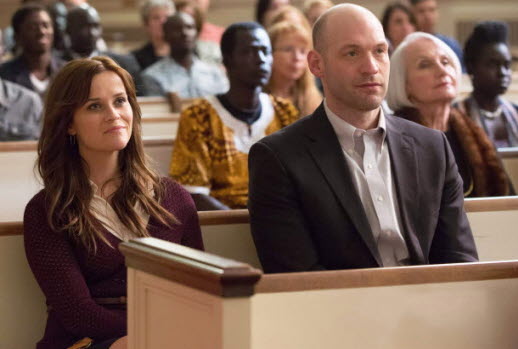
One of them is Carrie (Reese Witherspoon, who admirably dials down her usual perky presence with her dyed brunette hair), a social worker who met these boys for the first time when she was asked to go to the airport for taking them to the staying place prepared for them. All she has to do is merely providing job opportunities to these outsiders from Sudan, but then she comes to care about them more than before as getting to know about them and their hard past, and she tries to help them more along with Jack (Corey Stoll), a kind local farmer who gladly lets the boys have some nostalgic comfort through his cows in the farm.

thegoodlie04 Because Witherspoon’s name is placed first in the cast list, you may think her character is going to take the center of the story, but the screenplay by Margaret Nagle is too thoughtful to allow that happen, and the movie continues to focus on our Sudanese boys as observing each own personal struggle. While they are living more comfortably than ever, they are still haunted by the memories of their past, and they all miss Abital, who can contact with them over the phone but cannot come over to their place yet because the US government has become more strict on foreigners after 9/11.

Calmly unfolding the story on the screen, the director Philippe Falardeau, a Canadian director who received acclaims through his quiet but touching Oscar-nominated film “Monsieur Lazhar” (2011), draws good performances from his cast mainly consisting of relatively unknown actors, and they imbue authentic natural quality to their characters. As shown during the end credits, Ger Duany and Emmanuel Jal were child soldiers during the second Sudanese civil wars who were fortunate enough to survive and find new home later, and I heard that the child actors playing orphaned characters during the first half of the film are actually the children of real Sudanese orphans who went through similar hardships during the war and then were relocated to US later like the main characters in the film.

While its second part accompanied with a couple of melodramatic turns is less successful than its more powerful first part, “The Good Lie” does not resort to cheap tears at all, and it instead earns its expected emotional moments as maintaining its restrained but sincere attitude. The overall result may be modest, but it is still moving none the less with its big, humble heart beating at the center of the story.

thegoodlie03

Posted in Movies | Tagged , , , , | 1 Comment

Open Windows (2014) ☆☆☆(3/4) : A thriller unfolded within one laptop screen

openwindows01 As a thriller literally unfolded within one laptop screen during most of its running time, “Open Windows” is more entertaining than expected. Its storytelling device is an apparent gimmick to say the least, but the movie uses it to full effect with several nice ideas for its increasingly preposterous thriller plot, and the overall result was good enough for me to forget its gimmick and overlook many ridiculous things during my viewing. This is a thriller film which will not hold itself well if you look closely at its shaky plot after it is over, but it does work at least during its thrilling storytelling stunt, and it is surely fun to watch how it keeps digging up new thrills and surprises from its Hitchcockian premise with a stylish touch a la Brian De Palma.

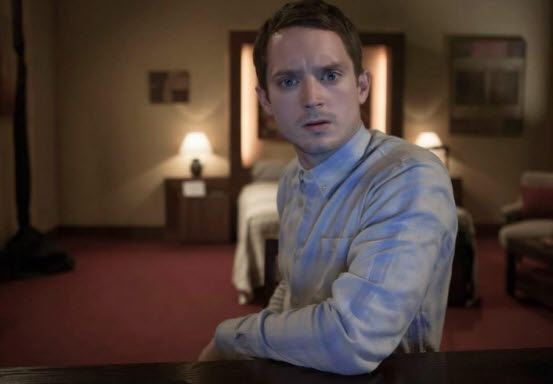
The laptop in question belongs to Nick Chambers (Elijah Wood), a young man who has run a fansite of Jill Goddard (Sasha Grey). He recently won the blogger contest for a chance to meet and have a dinner with his favourite actress, and now, after arriving in Austin, he is waiting in his hotel room while watching Goddard and others in the press conference being held right in the same hotel for her latest film.

When the press conference is approaching to its end, Chambers gets a strange call through his laptop. Introducing himself as a campaign manager, Chord (Neil Maskel) notifies to Chambers that the meeting happened to be canceled, and then this mysterious man begins to lure Chambers into something a devoted fan like Chambers cannot easily resist. Through Chord, Chambes gets a chance to watch Goddard more closely than before, and then he even comes to peep into her private secret during the moment which is clearly influenced by Hitchcock’s classic thriller film “Rear Window” (1954).

Of course, it soon turns out Chord has a sinister purpose behind this seemingly harmless voyeuristic service, and Chambers suddenly finds himself trapped inside Chord’s diabolical plan. While it is quite possible that he may not get out of this trouble alive, Chambers does not see any other possible option besides following Chord’s orders, and the situation becomes more difficult for him as he is pushed further with his every move coerced by Chord.

openwindows04 As I said above, nearly everything in the film is shown within Chambers’ laptop screen, and the director/writer Nacho Vigalondo keeps the situation rolling with style and confidence. Even when Chambers has to get out of the hotel, the tension is maintained well as the movie skillfully juggles various viewpoints shown on his laptop screen, and the result is something to be appreciated by the fans of Brian De Palma’s thriller films. Vigalondo sticks to his gimmick even when the movie shifts its gear into action mode during one exciting action sequence around the climax part, and it surely helps that those small webcams prominently featured throughout the film provide fairly good video quality thanks to technological advance.

And things in the film become all the more outrageous in a way I do not dare to reveal to you. Through a rather unbelievable coincidence, Chambers comes to learn more about his ominous opponent who is gradually revealed to be as twisted as those deranged killers in Giallo films (did I mention that he has black leather gloves and a shiny big knife besides his unrealistically awesome hacking ability?), and, yes, he is going to do something very, very bad to Chambers’ favourite actress – and it goes without saying that Chambers will also be his other victim in the end if Chambers does not find any chance to turn the table in this perilous situation.

And you may notice that many things in the movie do not make sense at all as you think more about them after the movie is over. While losing some of the tension accumulated during the first two acts, the third act is utterly implausible as generating many logic holes here and there in the plot, and you may not like a major surprise which will instantly make you look back at the whole story and then scratch your head for its sheer implausibility.

openwindows02 Nevertheless, the movie works thanks to Vigalondo’s taut direction which holds everything in his film together even when it becomes quite shaky while being on the verge of collapse. We begin to sense his wily manipulation behind the screen more and more through many plot contrivances solely existing for pushing the story forward, but it is always accompanied with humor as well as suspense, and we sort of come to accept its unabashed embrace of preposterousness.

As being more or less the components of its plot, the main actors in the film keep their performances straight and functional as demanded. Wood, who incidentally went through a very similar situation in another equally outrageous thriller film “Grand Piano” (2014), functions as the center we can hold onto as the plot keeps going through more twists and turns, and Sasha Grey gives an adequate performance while testing her acting ability during a couple of crucial scenes in the film. Neil Maskell is effectively vicious with his bullying voice, and his unseen presence functions as one of the main sources of the suspense in the movie.

Vigalondo previously made “Timecrimes” (2007), which I enjoyed for how it played with its tricky science fiction premise within a very small scale. While “Open Windows” looks confined within its premise at first, it plays well within its limited space despite many moments in the need of suspension of disbelief, and it accomplishes its goal with enough entertainment to compensate for its noticeable flaws. It is not without problems, but it is one hell of loony joyride to be appreciated for its undeniable skill and style covering its total nonsense.

openwindows03

Posted in Movies | Tagged , , | Leave a comment

Cake (2014) ☆☆1/2(2.5/4) : Broken Body, Broken Mind, and Cake

cake01  There are good parts in “Cake” which almost make it look like a film worthwhile to watch, and then there are also bad parts which could have been discarded or modified without any serious problem. The movie wants to tell a small, intimate drama of personal grief and pain, and it has everything required for engaging us, but then it is ultimately hampered by several glaring missteps in the story. The result is like a cake partially ruined by its misguided decoration, and this is particularly disappointing considering the solid materials inside it.

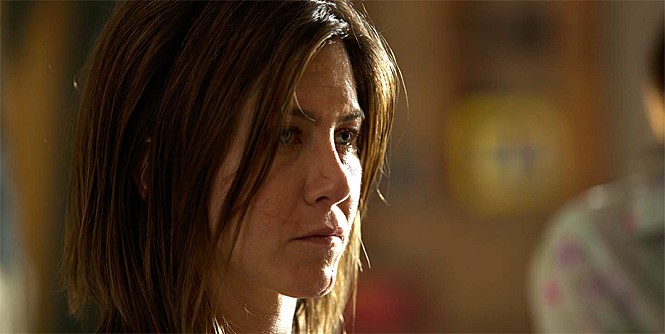
Its story revolves around the difficult and depressing daily life of Claire Bennet (Jennifer Aniston), a woman who has been suffering the physical and mental pains resulted from some automobile accident. While she is addicted to painkillers due to the chronic pain of her damaged body, she still grieves over her personal loss caused by that terrible accident which shattered her life in the past. Her marriage with Jason (Chris Messina) was ruined because of that, and now she lives alone in her house while mostly being isolated from the outside.

Always looking bitter and exhausted, she is not very cooperative during her support group meeting which she routinely attends. One of their members recently committed suicide, so the support group counselor, broadly played by Felicity Huffman, suggests that they express how they feel about it while pretending that dead woman is right in front of them, but, unlike others, Claire is not so inclined to do that. When her turn comes, she throws a barbed comment on the circumstance surrounding that sad incident instead, and that gets her promptly expelled from her support group meeting.

Along with her alcohol and painkillers, Claire prefers to stay inside her miserable shell rather than trying to get any better. While having wasted her physical therapy sessions with no particular advance, she just wants to lie down on the bed in her bedroom without moving her suffering body, and she merely remains passive and unmoved even during her one-night stand with a handsome handyman she lets into her bedroom during one night.

cake02 At least, she has been taken care well by her caring Mexican housemaid Silvana (Adriana Barraza), who has tolerated her employee’s unpleasant sides mainly because she understands that her employer is a damaged woman who needs help. This kind, thoughtful woman sometimes drives for Claire while Claire is lying down on the passenger seat, and there is an amusing moment when they go to Mexico together for buying a bunch of painkillers without prescription. Of course, smuggling drugs across the border turns out to be not as easy as Claire thought, but, as a Mexican pharmacist points out, she is a suburban middle-class Caucasian lady, and she can certainly get help easily even when she gets in trouble at the border checkpoint.

Meanwhile, Claire begins to experience the hallucination involved with that support group member who killed herself. While feeling some guilt on the death of Nina (Anna Kendrick), Claire also becomes curious about the circumstance surrounding Nina’s death. She goes to the site where Nina committed suicide, and she even comes to Nina’s house and meets Nina’s Australian husband Ray (Sam Worthington), a nice guy who is still at a loss while not knowing what to do with his life as well as his young son.

The movie works when it depicts how Claire slowly comes to realize her need to pull herself together through her small, tentative interactions with the people around her. Through the possible beginning of her relationship with Ray, she becomes a little nicer to others, and Silvana also helps Claire getting out of her shell bit by bit.

cake03 And then “Cake” takes a sudden turn as going into its problematic third act, and it never recovers from that as losing its focus and direction. The screenplay by Patrick Tobin stumbles especially when it attempts very obvious moments of symbolism (hint: they are associated with its title), and it is also riddled with several problems including underdeveloped supporting characters. While the movie wisely does not push Claire and Roy into a romantic situation, it fails to develop their relationship further into something more meaningful, and it also does not go deep into the relationship between Claire and her ex-husband, who still cares and worries a lot about her even after their divorce.

In case of Jennifer Aniston, she deserves praises for doing something which would probably be appreciated by my late friend Roger Ebert. He once said this immensely likable actress should take more difficult roles rather than her usual lightweight comic roles, and Aniston did throw herself into a challenging role here in this film. While never asking for pity or sympathy, she stays true to her unlikable character, and Claire’s gradual inner change along the story is believable thanks to Aniston’s good performance. Although most of the other actors in the film are sadly not utilized well, Adriana Barraza, who is mainly known for her Oscar-nominated turn in “Babel” (2006), is wonderful as the counterpoint to Aniston’s character, and the movie becomes more interesting whenever these two actresses are together on the screen.

“Cake” is directed by Daniel Barnz, who made a debut with “Pheobe in the Wonderland” (2008). While appreciating its good parts, I disliked that movie for its annoying parts including its young heroine’s exaggerated hallucination, and the same thing can be said about “Cake”, which falters whenever Anna Kendrick’s hallucinatory character appears (this is certainly not the fault of Kendrick, who is always a welcoming presence on the screen). Its story surely deserves to be told, and Aniston gives a rare dramatic performance to notice, but I only wish the movie could have handled them better than this.

cake05

Posted in Movies | Tagged , , | Leave a comment